Author: Mike Vizard

  • GrammaTech Discovers Vulnerabilities in Third-Party Code

    GrammaTech Discovers Vulnerabilities in Third-Party Code

    GrammaTech today launched a CodeSentry software composition analysis (SCA) for binaries that inventories third-party code used in custom applications and identifies known vulnerabilities.

    Vince Arneja, chief product officer for GrammaTech, said the bulk of custom applications today are made up of binaries based on components developed by a third-party that comes in the form of open source, commercial-off-the-shelf (COTS) or existing custom software.

    CodeSentry detects these components and vulnerabilities associated with third-party code, including network components, graphical user interface (GUI) components or authentication layers. It uses deep binary analysis to create a detailed software bill of materials (SBOM) and a comprehensive list of known vulnerabilities.

    Arneja said that as responsibility for security continues to shift left toward developers, there is a need for tools such as CodeSentry that make it easier to identify vulnerability issues in binaries because many developers may not have access to the underlying source code used to construct the binary. CodeSentry identifies components present in native binaries using a range of matching algorithms to gather version number ranges, create an SBOM and provide links to CVE and CVSS scores, said Arneja.
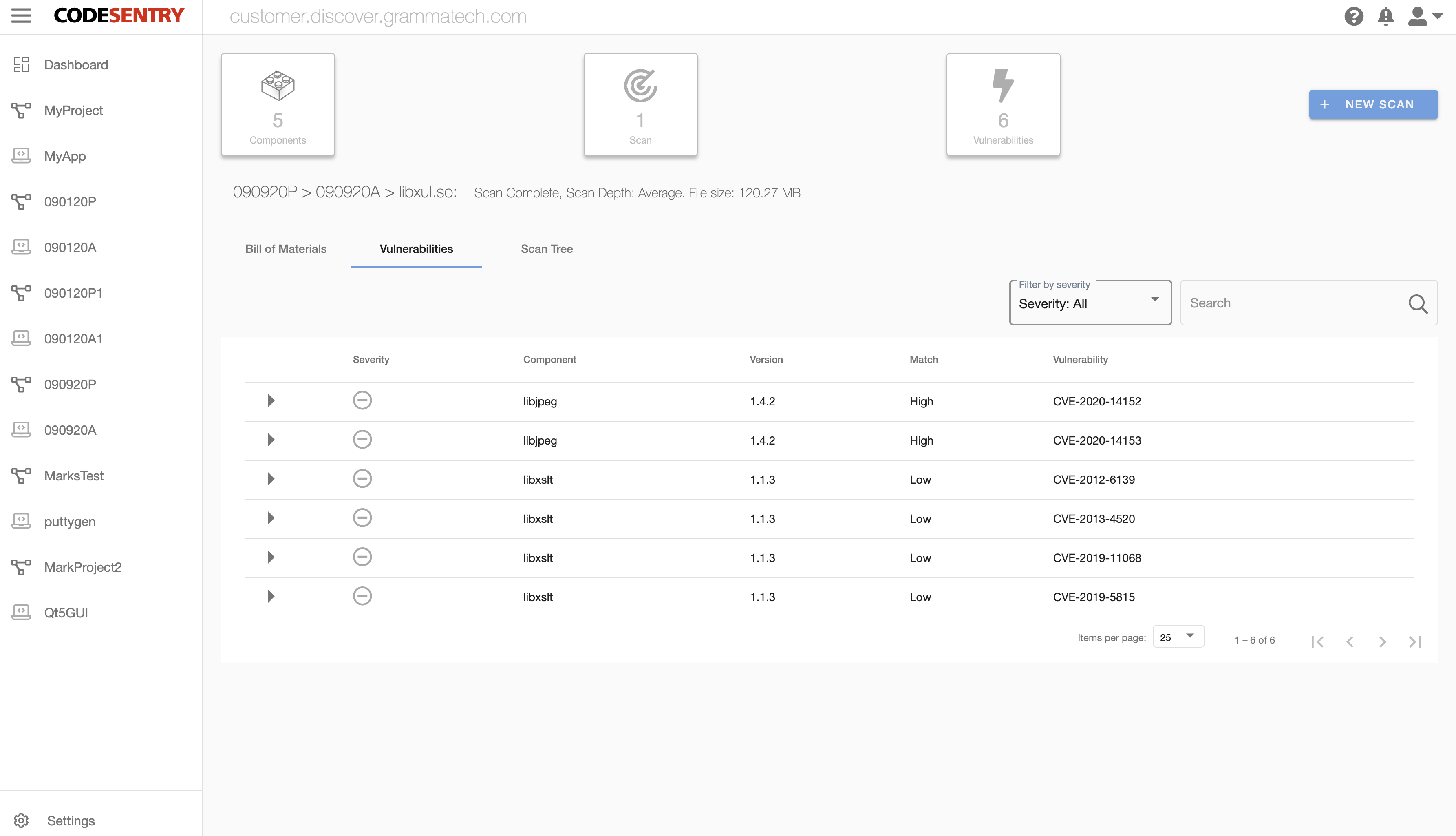
    CodeSentry extends algorithms that GrammaTech developed to detect components in applications, including strings used in natural language processing. It maps components to multi-dimensional vectors and compares them to vectors derived from the components. The upload interface for the tool accepts native binaries, zip files and other archives. Once those files are loaded, CodeSentry analyzes the code that will run rather than the build environment to reduce the number of false positives that would be generated in build environments or components that are not actually being employed.

    GrammaTech next year intends to make CodeSentry available via a software-as-a-service (SaaS) platform, noted Arneja. GrammaTech ultimately envisions CodeSentry being employed as part of DevSecOps workflows driven by a continuous integration/continuous delivery (CI/CD) platform using a set of open application programming interfaces provided by the company, said Arneja.

    While there’s a lot of focus these days on melding DevOps and cybersecurity workflows as part of an effort to embrace best DevSecOps practices, the easiest vulnerability issue to resolve is the one that never existed in the first place. As developers gain access to cybersecurity tools, the number of vulnerabilities making it into applications should significantly be reduced in the months ahead. The challenge IT leaders face is making sure developers have access to those tools, which in turn will ultimately boost the confidence level cybersecurity teams have in application developers, who are often viewed as the primary cause of the problems cybersecurity teams are trying to resolve.

    Regardless of how IT organizations achieve that goal, the return on that investment is likely to be substantial. The amount of time and effort IT teams spend tracking down vulnerabilities that are much more expensive to fix after an application is deployed in a production environment is incalculable.

  • Grafana Labs Looks to Simplify Observability

    Grafana Labs Looks to Simplify Observability

    Grafana Labs, at its online ObservabilityCON conference today, unveiled a distributed tracing platform dubbed Grafana Tempo that makes it possible to leverage existing object storage platforms and services to analyze traces.

    At the same time, Grafana Labs announced version 2.0 of Loki, which normalizes different structured, unstructured or JSON log formats in a way that allows DevOps teams to extract additional labels as well as enable additional filtering and grouping. IT teams are also not required to define labels in advance and store those labels in the database.

    A Loki 2.0 query can also be used to directly generate an alert statement using a new distributed rules evaluation engine. Previously, Loki would have to have been configured as a Prometheus data source, which then would allow the distributed instance of Prometheus, dubbed Grafana, to generate alerts.

    Tom Wilkie, vice president of product for Grafana Labs, says Loki 2.0 also serves to make the database employed to observe events in real-time smaller, resulting in faster queries. The result is an approach to analyzing log data that is significantly less expensive than legacy platforms, he said, noting DevOps teams should expect to see Grafana Labs also use Loki to address security use cases.

    Wilkie said both Loki and Grafana Tempo are intended to reduce the barriers to achieving observability in a way that doesn’t require nearly as much time, effort and skills on the part of a DevOps team. Grafana Tempo supports the same Tempo data discovery engine employed by Loki and the open source Prometheus monitoring platform and the Grafana platform built on top of Prometheus. That level of integration makes it easier for IT teams to narrow in on a specific trace using open source tracing protocols such as Jaeger, Zipkin and OpenTelemetry. Users of the platform can jump from log to trace and back again easily, he said.

    There is also no need to set up and maintain a separate index that IT teams must maintain, Wilkie added. In addition, Tempo is compatible with object storage systems commonly found on cloud services, so the total cost of achieving observability drops significantly compared to platforms that rely on a proprietary database, he said.

    Despite observability being a core tenet of DevOps, it remains an elusive goal for most IT organizations. There is no shortage of tools for monitoring individual applications and systems, but aggregating all the data the tools generate into actionable intelligence requires a significant amount of time and effort. Loki makes it much easier to analyze the relevant logs at the right time in a way the average IT administrator can navigate without having to become a superuser of more complex platform, said Wilkie.

    It’s too early to say how the observability wars will play out. The good news from an IT perspective is at least now there is no shortage of options.

  • Survey Sees Surge in Demand for DevOps Skills

    Survey Sees Surge in Demand for DevOps Skills

    The Linux Foundation and edX, a provider of an online learning platform, jointly released an annual report today that for the first time finds organizations are looking for more IT personnel with open source DevOps skills (65%) than developers (59%).

    Clyde Seepersad, senior vice president and general manager for training and certification at The Linux Foundation, said the 2020 Open Source Jobs Report shows that as more workloads shift to the cloud in the wake of the COVID-19 pandemic, the number of organizations looking to embrace best DevOps practices is increasing substantially. The report finds 70% of respondents are more likely to hire an IT professional with cloud computing skills.

    Based on a survey of 175 hiring managers and 900 IT professionals with open source expertise, the report also finds that despite the economic downturn brought on by the pandemic, 37% of hiring managers say they will be looking to hire more skilled IT professionals in the next six months.

    The report also finds 93% of survey respondents report difficulty finding open source talent. An overwhelming 81% of hiring managers said recruiting open source talent is a priority for 2020, with 56% looking to recruit IT professionals with open source skills in the next six months. Nearly two-thirds (63%) said their organizations have begun to support open source projects with code or other resources for the explicit purpose of recruiting individuals with open source software skills.

    More than half of hiring managers (52%) said they are more likely to hire someone with a certification, while 80% of survey respondents reported providing online training courses for employees to learn open source software. Nearly three-quarters of organizations (74%) are now offering to pay for employee certifications, according to the survey results.

    An equal percentage of hiring managers also identified Linux as the most in-demand skill they seek in new hires, while 63% also said they are looking for IT architects who can build solutions based on open source software.

    Seepersad said given the difficulty attracting talent many organizations are focusing more on training their existing staff rather than trying to recruit talent in an open market where demand for open source expertise remains high.

    The talent pool is more global as more organizations become accustomed to working with staff who are now largely working from home, which, coupled with current economic realities, is limiting how much organizations are willing to pay for IT talent. More organizations are also keen to make sure there is a cultural fit with their organization when hiring, he added.

    In general, it’s clear more IT organizations will need to focus on growing their own farm teams with open source DevOps skills rather than hoping to lure away superstars from other organizations. Rather than simply trying to fill open positions, organizations need to think more in terms of acquiring and managing talent in the same way a general manager manages a sports franchise.

  • Tricentis Applies Visual AI to Improve Application Testing

    Tricentis Applies Visual AI to Improve Application Testing

    Tricentis this week announced it has added visual test design and automation technology based on artificial intelligence (AI) to its Tosca platform.

    Dave Colwell, vice president of AI and machine learning at Tricentis, said Tosca 14 automatically recognizes and identifies visual user interface elements and controls across any form factor to identify the most appropriate tests to run as an application is being developed. That approach enables testing to be shifted further left during the application development process as successive iterations of an application are developed, he said.

    While AI has been incorporated into other AI tools, Colwell said Tricentis is applying the same types of machine learning algorithms that are employed to enable self-driving cars to detect objects to the testing of controls included on an application screen.

    Colwell said it’s now only a matter of time before most developers routinely expect testing capabilities based on visual AI technologies to be included in testing tools. Rather than having to continually encounter the same design issues, visual AI will enable developers to craft applications that end users will employ much faster.

    Given the large numbers of applications that many end users haven’t embraced because of user experience issues, there’s clearly a base of developers who could use some advice from AI tools that have been trained to identify common problems that have affected previous generations of applications. Tricentis is now not only committing to providing testing tools but also curating the content required to train AI models.

    It may take a while for developers to fully trust those recommendations, but the number of potential issues that could be averted earlier in the application development life cycle has significant implications for the productivity of DevOps teams. In theory, at least, the number of applications successfully moving through the build process should increase. The amount of testing required after an application is created should also decline as well.

    Less clear is to what degree the shifting of testing of visual elements of an application might have on dedicated application testing teams. Arguably, IT organizations should be able to devote more resources to building versus testing applications.

    Whatever the outcome, AI is not going away. Providers of testing platforms are now effectively engaged in an algorithms arms race. In fact, it’s becoming increasingly apparent AI will be applied with greater frequency across the entire application development and deployment life cycle. It may take a while for IT organizations to adjust to that new reality, but the fact remains that organizations that don’t incorporate AI into their DevOps processes will be at a distinct disadvantage compared to those that do. Members of DevOps teams would be well-advised to start assessing what manual processes today are most likely to be automated by algorithms tomorrow.

    In the meantime, the overall quality of the user experience should also soon improve—assuming, of course, the AI models being created to test applications are indeed being trained properly.

  • Harness to Apply AI to DevOps

    Harness to Apply AI to DevOps

    Harness, at its {Unscripted} 2020 conference today, announced its plans in the fourth quarter to make available as a beta a module that leverages machine learning algorithms to optimize build and test cycles on the Harness Continuous Integration (CI) Enterprise platform.

    At the same time, Harness is adding a beta of a Continuous Features module to enable DevOps teams to employ feature flagging to simplify the application development process. A visual dashboard for feature verification and analytics monitors all flags, including active, inactive, live and unrequired flags, as well as customer issue tickets, to simplify the management of new capabilities being added to an application.

    Harness is also updating its continuous delivery (CD) platform to include a revamped user interface, GitOps and pipelines-as-code processes, bi-directional synchronization and conflict management, and templates to standardize deployments across teams.

    Finally, Harness is adding a Harness Next Generation Continuous Verification tool to provide visibility into the impact changes have on IT environments. This tool can be deployed standalone or used in conjunction with any CD platform and is intended to make it easier for DevOps teams to discover the root cause of issues that typically stem from recent changes made to an otherwise stable IT environment.

    Harness CEO Jyoti Bansal said artificial intelligence (AI) in the form of machine learning algorithms are poised to play a major role in taking DevOps automation to the next level. The Harness AI module can reduce test cycle time by up to 75% by correlating and isolating tests to changed code rather than requiring all tests to be executed with every change. The Harness approach means only relevant test cycles are run, he said.

    Continuous Integration Enterprise will also be able to identify gaps in test plans by highlighting code changes that are not covered by existing test cycles. Library caching and container image size optimization will also be added in the future to make builds more efficient.

    Harness also announced its intent to apply machine learning algorithms more broadly. Algorithms will enable DevOps teams to control, optimize and accelerate the flow of software pipelines rather than requiring engineers to manually verify builds, tests, deployments and releases. Harness will also apply data science techniques to observe the quality, performance, cost and reliability of code as it flows through each pipeline step and, if need be, automatically abort or roll back the delivery of software.

    As each build is committed, the opportunity to collect even more metadata about the workflow process only increases, Bansal added.

    Obviously, Harness is not the only provider of a CI/CD platform looking to apply machine learning algorithms. Thanks to machine learning algorithms, the rate at which applications are developed and deployed could increase by several orders of magnitude in the months ahead. The issue now is to what degree the rest of the business will absorb that potential rate of change.

  • Azul Adds OpenJDK Migration Services

    Azul Adds OpenJDK Migration Services

    Azul today announced today it will provide migration services for IT organizations looking to transition from the proprietary Oracle Java Standard Edition (SE) developer platform to the Zulu edition of an open source OpenJDK equivalent.

    OpenJDK is based on the HotpSpot edition of the Java virtual machine, the Java Class Library and the Java compiler. The Zulu edition was originally developed by Azul and Microsoft and has since been supported by Oracle, IBM, Apple, Amazon, SAP and Red Hat.

    Azul CEO Scott Sellars said that while OpenJDK is compatible with Oracle Java SE there are some minor differences that enterprise IT organizations need help with to make the transition. While distributions of OpenJDK have been around for years now, Sellars said the fees for support that Oracle has been charging for Oracle Java SE have reached a point where more organizations are now ready to make the jump to OpenJDK.

    In the wake of the economic downturn brought on by the COVID-19 pandemic organizations of all sizes are looking to reduce costs by transitioning to open source software whenever possible, he added. Rather than reduce the size of their IT staff most organizations would prefer to rein in their IT budgets by reducing their dependency on proprietary software, Sellars noted. The United States Transportation Command (USTRANSCOM), for example, earlier this month revealed it is replacing Oracle Java SE with Azul Zulu builds of OpenJDK to in part lower Java support costs. Taboola, an online advertising platform, also made a similar switch.

    Azul is now offering two classes of migration services. A Level 1 offering helps organizations migrate directly from Oracle Java to Azul Zulu builds of OpenJDK and includes creating an inventory of the Java estate by vendor, by Java version, by Java security patch level and by which Java runtimes are currently being employed. A Level 2 service brings in a third-party IT services firm to enable organizations to migrate older implementation of Java Virtual Machines (JVMs) to either the Java 8 or Java 11 platform.

    A recent Forrester Consulting study commissioned by Azul finds the Azul Zing Java Virtual Machine pays for itself in less than three months by reducing development and infrastructure costs, with a three-year 224% return on investment (ROI).

    Regardless of the open source instance of a Java platform, it’s clear that going forward most of the ongoing innovation is shifting to platforms that multiple vendors are now contributing to more frequently. OpenJDK, for example, is now on a release cadence of every six months. Each distribution of an open source Java platform serves to reduce costs in a way that enables IT organizations to achieve backward compatibility.

    Despite first being employed in the enterprise more than two decades ago, reliance on Java platforms remains high. There has been widespread adoption of multiple programming languages but most back-end systems in the enterprise are still based on Java. Many developers that have mastered Java have also been reluctant to abandon it no matter how many other programming languages they may learn.

  • Snyk Brings AI to DevSecOps

    Snyk Brings AI to DevSecOps

    Snyk today at its SnykCon 2020 conference announced a static application security testing (SAST) dubbed Snyk Code that incorporates an interpretable machine learning semantic code analysis engine the company gained through its acquisition of DeepCode earlier this year.

    The company also announced it has extended its alliance with Docker Inc. to become the exclusive provider of security insights for both Docker Official Images and future content certification programs from Docker. Available via Docker Hub, Docker Official Images are a collection of 166 curated container images that developers frequently reuse.

    At the same time, Snyk today announced it has integrated its vulnerability database with the IT monitoring service provided by Datadog as well as the IBM Cloud service.

    Snyk President Guy Podjardny said Snyk Code is aimed specifically at developers as part of an effort to advance the adoption of best DevSecOps practices. It provides visibility into application source code, open source libraries, container infrastructure and infrastructure as code to enable developers to better secure applications as they are being built.

    The company claims Snyk Code is up to 50 times faster than traditional SAST solutions, which would represent a major boost in productivity for developers who often don’t have the patience required to scan code as much as IT security teams would prefer.

    Snyk Code also curates machine learning models using the company’s curated vulnerability database to significantly reduce false positives. It also automatically models application programming interfaces (APIs) based on the best practices observed by the platform.

    Snyk Code is also designed to be integrated with CI/CD platforms to streamline DevSecOps workflows.

    Podjardny said Snyk went beyond simply productizing the Deep Code tool to incorporate capabilities that would specifically appeal to developers rather than cybersecurity teams. Given the volume of code that needs to be scanned before and after code is deployed in a production environment, Podjardny said it’s apparent that DevSecOps isn’t going to be achieved without augmenting developers with artificial intelligence (AI) tools.

    It’s not clear at what rate responsibility for IT security is shifting left toward developers. Beyond simply providing developers with the tools required to analyze code, workflows that DevOps and cybersecurity teams currently rely on must be better integrated. That’s a challenge, because the current rate at which DevOps teams are updating applications typically exceeds the ability of a limited team of cybersecurity professionals to keep pace. The days when cybersecurity teams could have weeks to review an application before being deployed are all but over.

    It may take a while for DevOps teams to gain confidence in AI tools. However, it’s clearly not feasible for human developers to identify every potential vulnerability within thousands of lines of code running on multiple platforms that can have any number of vulnerabilities which developers are not likely to know much about. As such, it’s not so much a question of if AI will play a major role in enabling DevSecOps as much as when.

  • Splunk Adds Plumbr and Rigor to Observability Portfolio

    Splunk Adds Plumbr and Rigor to Observability Portfolio

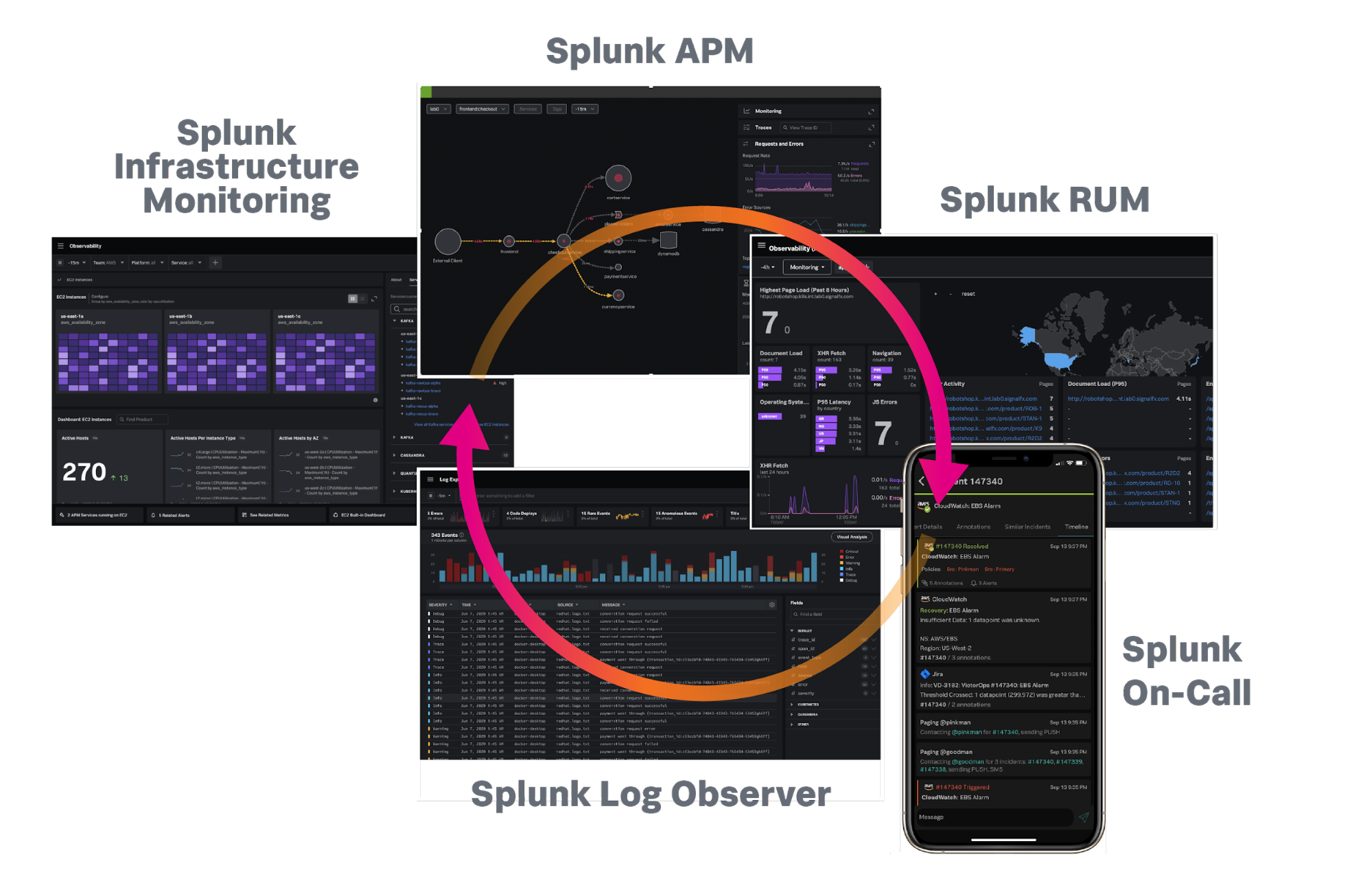
    Splunk this week at its online.conf20 conference revealed it has acquired Plumbr, a provider of an application performance management (APM) platform, and signed a definitive agreement to acquire Rigor, a provider of synthetic monitoring and application optimization tools.

    Both platforms are destined to be integrated with the Splunk Observability Suite, a suite of IT management tools the company launched this week as well.

    Splunk CTO Tim Tully said the goal is to provide a full-fidelity platform that leverages machine learning algorithms to observe IT environments in real-time.

    Plumbr, which includes real user monitoring capabilities as part of its platform, will extend real user monitoring (RUM) capabilities, currently in beta, that Splunk has developed on its own.

    Tully said Splunk is also committed to making its platforms available across hybrid cloud computing environments by leveraging cloud-native technologies such as Kubernetes, Docker containers, Envoy, Istio and Terraform.

    Splunk has embraced observability, a core tenet of best DevOps practices, as part of an effort to provide a range of digital experience management capabilities at a time when many organizations are accelerating their investments in digital business transformation initiatives. Splunk last year acquired SignalFX for more than $1 billion to gain access to another APM platform that would expand its reach beyond its core IT operations analytics platform.

    It’s not quite clear how many platforms and services will ultimately make up the Splunk Observability Suite. The company is clearly moving toward a model for consuming its services based on value rather than the amount of data collected. Determining that value will naturally be different for each customer, but in the wake of the economic downturn brought on by the COVID-19 pandemic, the pressure to reduce IT costs has intensified. In many cases, the cost of acquiring an observability platform can easily be justified by eliminating the licensing fees organizations pay to employ a dozen or more tools from different vendors that typically are not integrated.

    Competition across providers of observability tools has also intensified. In addition to every provider of an APM platform recasting itself as a provider of observability tools, there is a range of startups that address all or some aspect of observability. A wave of consolidation among providers of observability tools and platforms is all but inevitable.

    Much of the focus on observability is being driven by the rise of microservices-based applications that have levels of dependencies requiring a level of context to successfully manage what isn’t possible to achieve by relying on legacy tools that monitor applications and infrastructure in isolation. The lack of integration is also one of the primary reasons why IT teams waste so much time in “war rooms” trying to deduce the root cause of an issue, which, once discovered, only takes a few minutes to fix.

    Splunk, of course, enjoys a considerable advantage in the observability wars. Its core IT operation platform is widely employed by internal IT operations and security teams. However, much of the transition to observability is being driven by DevOps teams who take the lead when it comes to instrumenting applications. Many of those teams are far less committed to any specific platform no longer how established it may be.

  • Dell Launches Project Apex to Deliver IT as a Service

    Dell Launches Project Apex to Deliver IT as a Service

    Dell Technologies today launched Project Apex, an initiative that promises to significantly expand its ambition to deliver IT as a service from the edge to the public cloud.

    Announced at the online Dell Technologies World 2020 conference, this initiative builds on the Dell Technologies Cloud Platform through which Dell manages IT infrastructure as service on behalf of customers.

    Sam Grocott, senior vice president of product marketing at Dell Technologies, said via a single pane of glass organizations will be able to deploy and manage application workloads running on IT infrastructure provided by Dell as well as public cloud service providers using the Dell Technologies Cloud Console, which is currently available as a public preview.

    In the first half of next year, Dell plans to roll out Dell Technologies Storage as a Service (STaaS) for on-premises IT environments, which also can be managed via the Dell Technologies Cloud Console.

    In addition, Dell is reducing the entry-level cost of its existing hybrid cloud offering built on top of Dell Technologies Cloud Platform to $47 per instance per month with a subscription, in addition to making the service available in the UK, France and Germany.

    Dell is also making a pre-approved Flex On-Demand pricing option that charges organizations on a usage basis for IT infrastructure, and has expanded its managed data protection services to include multiple public clouds.

    It’s not clear whether organizations will prefer to rely on Dell to manage their IT versus continuing to manage it themselves or rely on a third-party IT services provider. In theory, organizations will be able to invest more in application development that would eventually consume more IT infrastructure than is consumed today. However, it’s not clear internal IT organizations are prepared to cede control over IT infrastructure and applications to a single IT vendor, especially if they employ IT technologies provided by a broad spectrum of vendors.

    In the wake of the economic downturn brought on by the COVID-19 pandemic, however, Grocott noted the number of organizations that prefer to treat IT as an operational expense has increased substantially. In addition, with more employees working from home organizations are looking for a more flexible approach to IT that is a challenge for them to achieve relying on legacy systems. To facilitate that transition, Dell is expanding the refurbishment and recycling services it makes available to customers.

    In effect, Dell is enabling a cloud operating model to be applied to all of IT regardless of where applications or IT infrastructure is deployed.

    Of course, Dell is not the only IT platform provider with such ambitions. Not only are longtime rivals in the data center expanding the scope of the managed services they provide, but every major provider of a cloud service has also expanded the reach of their offerings to include on-premises and edge computing platforms. It may be a while before this titanic struggle for control over IT plays out, but the one thing that is for certain is the way IT is consumed is changing utterly.

  • Cisco Revamps Portfolio at the Network Edge

    Cisco Revamps Portfolio at the Network Edge

    Cisco today announced a series of Catalyst offerings that combine the functionality of a secure software-defined wide area network (SD-WAN) and a router in a single platform.

    Archana Khetan, senior director of product management for enterprise routing and SD-WAN infrastructure within the Intent Based Networking Group at Cisco, said the Catalyst 8000 series is made up of both physical devices and virtual appliances that eliminate the need for organizations to deploy separate SD-WAN and routers at the network edge.

    The high end of the Catalyst 8500 platform line is based on a third-generation Quantum Flow Processor, a proprietary ASIC that Cisco employs in its networking equipment. It is designed for data center, colocation and aggregation sites and, for the first time for Cisco, integrates 40G and 100G Ethernet ports.

    The Catalyst 8300 Series Edge Platforms are designed for branch offices that are transitioning from relying solely on routers to embracing SD-WANs. In addition to providing 4X better performance than legacy Cisco routers, the Catalysts 8300 series is designed to allow organizations to insert modules that are compatible with existing Cisco’s ISR 4400 routers. Compute and switching capabilities can also be added via a UCS-E Series blades and UADP-based switch modules can be added to create a software-defined branch office capable of running microservices-based applications based on containers on x86 processors. Cisco also unveiled today a Catalyst Cellular Gateway, for organizations that want to connect branch offices over 4G LTE wireless networks with support for 5G networks planned.

    Finally, Cisco has added Catalyst 8000V Edge Software, which enables IT teams to deploy Cisco networking software on a public cloud. While most public clouds already provide networking services, Catalyst 8000V Edge Software provides more advanced networking and security capabilities that can be managed as an extension of an existing enterprise network, said Khetan.

    Each member of the Catalyst 8000 series has been integrated with Cisco Umbrella to provide a means of managing networking and security policies via the cloud, while Cisco SD-WAN Cloud OnRamp integrates with cloud services from Amazon Web Services (AWS), Google and Microsoft to provide visibility into those environments.

    In addition, each platform provides access to a programmable application programming interface (API) library as part of Cisco’s ongoing effort to meld network operations and DevOps workflows.

    While Cisco remains the dominant provider of networking equipment in the enterprise, the rise of SD-WAN platforms that essentially replace routers in branch offices has created a slew of competitors that are gaining footholds in branch offices at the expense of Cisco. With the launch of the Catalyst 8000 series, Cisco is aiming to bridge the gap between routers and SD-WAN appliances within a single platform that promises to be easier to manage via the cloud.

    It’s not clear to what degree that approach will resonate with enterprise IT environments, but it’s clear Cisco is now more than ready to strike back.