Author: Mike Vizard

  • Grafana Labs Expands into Incident Management Realm

    Grafana Labs Expands into Incident Management Realm

    During its online ObservabilityCON 2021 conference, Grafana Labs this week previewed an incident management platform in addition to making available an on-premises edition of its distributed tracing tool.

    Tom Wilkie, vice president of product for Grafana Labs, said the Grafana OnCall incident management platform is a natural extension of the observability tools the company already provides using the widely employed open source Grafana dashboard. The platform, which is expected to be generally available in 2022, is based on software Grafana Labs gained by acquiring Amixr earlier this year.

    Grafana OnCall unifies all the alerts created by Grafana, Prometheus and the Alertmanager tool the Prometheus community created to streamline the number of alerts generated by the platform. The goal is to reduce the alert fatigue a DevOps team might experience when dealing with an IT issue that can be traced back to a single root cause, noted Wilkie.

    Grafana

    At the same time, Grafana Labs made Grafana Enterprise Traces available for on-premises IT environments. It is based on Grafana Tempo, a cloud service that makes it possible to store and then analyze distributed traces using inexpensive object storage resources. The latest version of the core open source Tempo project has also been updated to add service graphs and the ability to search recent traces.

    Grafana Labs this week also updated Loki, an open source log management platform, to add support for out-of-order log lines, custom log retention policies per log stream and per tenant and a deletion API that makes it easy to scrub log data. Version 2.4 of Loki also adds additional high-availability capabilities.

    Other updates to the Grafana Labs platform include support for recorded queries, a set of pre-built dashboards that enable users to quickly drill into their Prometheus metrics data, the ability to consume metrics from the AWS CloudWatch service provided by Amazon Web Services (AWS), improvements to its ability to monitor Kubernetes clusters and updates to the open source load testing tool the company gained by acquiring k6 last year.

    Grafana Labs is also committing to expanding its integration with Microsoft Azure cloud service alongside its integrations with AWS, noted Wilkie.

    While competition among providers of observability platforms is already fierce, Wilkie said an observability platform based on an open source dashboard that can already collect data from more than 100 sources provides a unique advantage. At the core of the Grafana Labs platform is a centralized framework for collecting data generated primarily by the open source Prometheus monitoring platform being developed under the auspices of the Cloud Native Computing Foundation (CNCF).

    While Prometheus is used most often in Kubernetes environments, it is starting to gain traction in monolithic application environments as well; it provides an open source approach to defining a de facto standard for collecting metrics and other data that can be consumed by an observability platform.

    It’s not clear yet to what degree IT teams are distinguishing between monitoring and observability. Monitoring focuses on predefined metrics to identify when a specific platform or application is performing within expectations. Observability combines metrics, logs and traces to instrument applications in a way that makes it simpler to troubleshoot issues without relying solely on a limited set of metrics that are pre-defined and monitor a specific process or function.

    Regardless of whether IT teams view observability as being distinct from monitoring, it’s clear that the ability to manage IT environments is improving at a rapid rate. The challenge, of course, is the IT environment itself is becoming more complex with each passing day.


  • Microsoft Expands Azure DevOps Portfolio

    Microsoft Expands Azure DevOps Portfolio

    Microsoft has made available a bevy of updates to its DevOps portfolio that, collectively, are intended to increase its share of a wave of applications that will be rolled out across the extended enterprise.

    Additions to the Microsoft DevOps portfolio were announced at the Microsoft Ignite 2021 conference and include DevOps Workflow Generator, a free tool designed to help DevOps teams visualize their toolchain, and updates to Azure Automanage, a framework for automating the management of virtual machines on Windows Server and, in preview, on Linux.

    At the same time, Microsoft has added support for open source OpenTelemetry agent software to Azure Monitor and made available a preview of Azure Chaos Studio, a service for testing application resiliency.

    Microsoft is also making available a preview of Windows Server 2022 that adds secure-code capabilities for workloads deployed on the platform. Microsoft also previewed updates to backed databases such as SQL Server 2022, Cosmos and its implementation of the Redis database created by Redis Labs.

    Finally, Microsoft has also made available a preview of integration between GitHub Actions for automating software development tasks and Azure Active Directory (Azure AD) using Open ID Connect, an authentication protocol advanced by the OpenID Consortium.

    Microsoft CEO Satya Nadella told conference attendees the next 10 years will witness more digitization than the previous four decades as IT shifts from an era defined by mobile and cloud computing to one defined by ubiquitous computing and ambient intelligence.

    Applications built in everything from procedural code to the Microsoft Power Fx, a low-code tool that Microsoft created using the programming language it originally built for users of the Microsoft Excel spreadsheet. Microsoft envisions those applications will primarily be built on its cloud and distributed everywhere. On the backend, a range of database and artificial intelligence (AI) services will be invoked primarily via application programming interfaces (APIs).

    Of course, every major cloud service provider has similar ambitions. Most organizations today are not standardizing on a single cloud. Rather, they are determining which class of workloads run best on which cloud computing platform regardless of whether that approach increases the total cost of IT. Each additional platform adopted typically requires IT teams to master separate tools. However, Microsoft is now also making a case for a cloud-native framework that can be deployed anywhere to build, deploy and manage applications.

    In the meantime, the number of workloads deployed on cloud services continues to grow. The market research firm Canalys reported worldwide spending on cloud infrastructure services reached $49.4 billion in the third quarter of 2021, a 35% increase. Microsoft currently trails Amazon Web Services (AWS) in overall market share but continues to steadily make gains. Microsoft and AWS collectively account for roughly half of all cloud infrastructure service consumption.

    DevOps best practices will need to evolve to meet the challenges of multi-cloud computing. In addition to cloud platforms and on-premises IT environments, applications are now starting to be deployed at the edge in greater numbers. DevOps teams need to be able to continuously deploy applications and their associated updates across a wide range of platforms. The challenge, of course, is that all those platforms have unique attributes that make truly automating the entire process on an end-to-end basis an elusive goal.

  • Oxeye Platform Helps Fix Code Vulnerabilities

    Oxeye Platform Helps Fix Code Vulnerabilities

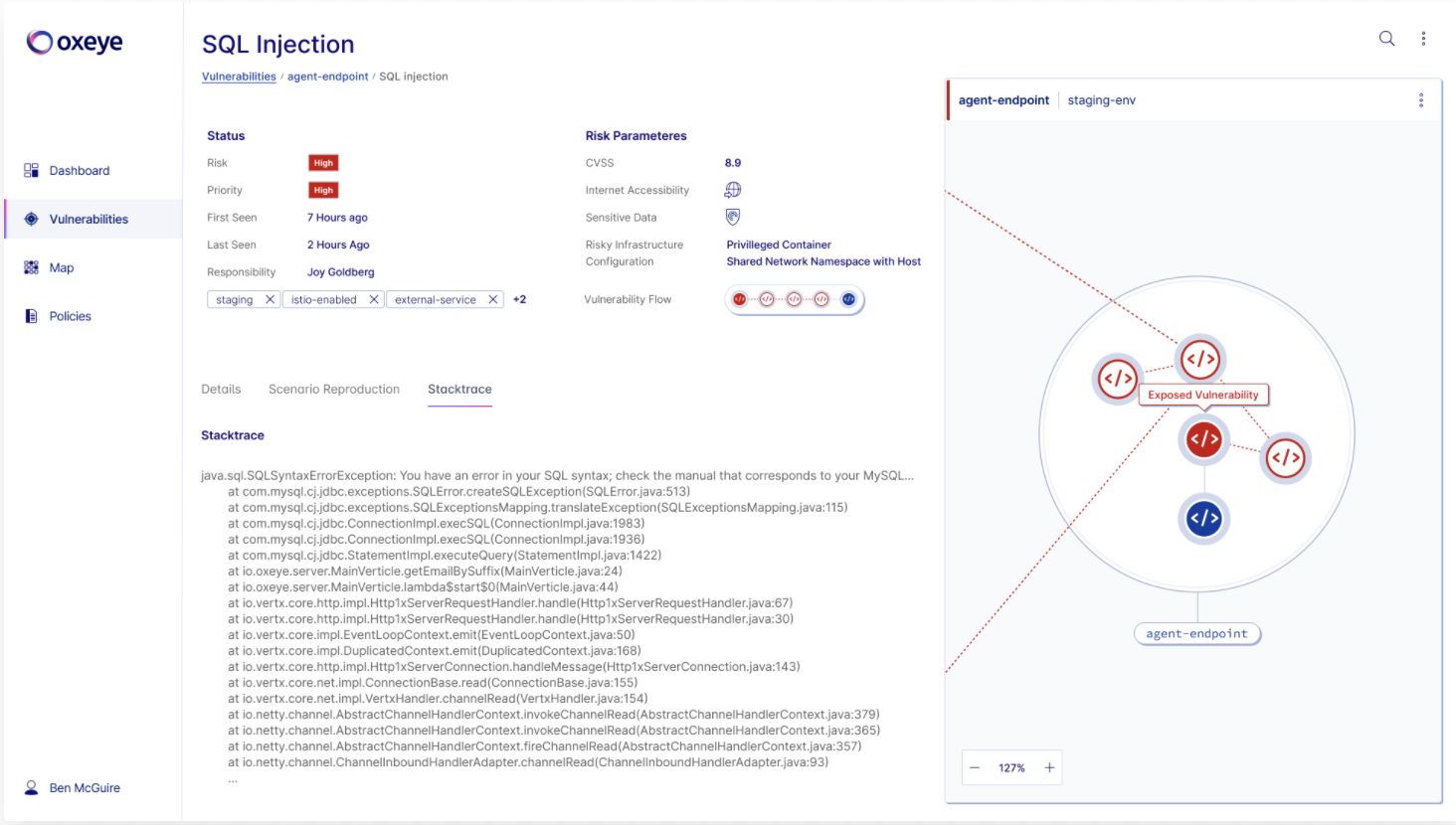
    Fresh from raising $5.3 million in seed funding, Oxeye emerged this week from stealth to launch a namesake application security testing platform that, in addition to pinpointing issues in code, also provides advice to best remediate the issues it found.

    The Oxeye platform requires developers to download an observer tool that scans code for vulnerabilities. Once pinpointed, the Oxeye platform guides developers through the remediation process without requiring them to inject agent software into every application.

    Oxeye CEO Dean Agron noted developers don’t typically have a lot of cybersecurity expertise. As application environments become more complex—thanks to the rise of microservices-based applications—it only becomes more likely that mistakes will be made. The only way to resolve security issues before applications are deployed in a production environment is to augment developers using a platform that finds vulnerabilities all the way down to specific lines of code, he said.

    In theory, responsibility for application security is being pushed further left toward developers as organizations embrace DevSecOps best practices. However, making developers more accountable for security without providing them the tools required to achieve that goal is not going to improve the overall state of application security.

    The challenge organizations face today is finding a way to empower developers to address security issues without slowing down the rate at which applications are built and deployed. The best way to achieve that goal is to give developers access to a security tool designed to both analyze code for vulnerabilities and explain how to avoid encountering that issue again, said Agron.

    Left unaddressed, the current software supply chain crises will only deepen, added Agron. According to International Data Corp. (IDC), more than 500 million digital applications and services will be developed and deployed using cloud-native platforms by 2023. That’s roughly equal to the total number of applications and services deployed over the last 40 years, according to IDC.

    It’s not clear to what degree the rise of digital applications might force the DevSecOps issue within more organizations. It’s is clear that a new generation of more complex applications based on microservices is being rolled out to drive a wide range of mission-critical applications. The more business value an application has the more attention it inevitably attracts from cybercriminals.

    Regardless of the type of application, it’s apparent that there is a pressing need for a way to better secure applications. The further left that process starts the less costly it becomes to achieve and maintain security. Cybersecurity teams have a vested interest in helping developers do the right security thing as early as possible if no other reason than to reduce the number of vulnerabilities they will inevitably discover later.

    Making developers more aware of security issues is, of course, only the first step. However, in the absence of any tools that can be easily incorporated within an application development workflow, the concerns being raised will amount to little more than yet another sermon that will be ignored as developers once again rush to meet yet another application delivery deadline.

  • NextArch Foundation Launched to Focus on Microservices

    NextArch Foundation Launched to Focus on Microservices

    The Linux Foundation this week launched the NextArch Foundation to define frameworks and specifications that promote interoperability between microservices that span multiple cloud computing environments.

    More than 40 organizations, including Tencent, Arm, Kong and Ampere, have committed to contributing to 10 technology projects in 2022 in addition to frameworks for three vertical industries.

    Mark Shan, chairman of Tencent Open Source Alliance, said within the next five years the NextArch Foundation expects to have defined a set of standards and best practices that will have been widely adopted.

    The NextArch Foundation’s mission is to provide a home for a set of emerging technologies that would otherwise not get the attention they deserve within the confines of an existing consortium, said Shan.

    NextArch Foundation’s areas of focus will include how continuous integration/continuous delivery (CI/CD) platforms are employed to build microservices and reducing latency between microservices residing in highly distributed computing environments, added Shan.

    It’s not clear where the efforts of NextArch will begin and end as compared to the Cloud Native Computing Foundation (CNCF), another arm of the Linux Foundation that focuses on platforms such as Kubernetes that are widely used to build and deploy microservices-based applications based on containers.

    In general, however, it’s already apparent that microservices are at the core of most digital business transformation initiatives that span everything from artificial intelligence (AI) projects to edge computing environments. The global digital transformation market size was valued at $336.14 billion in 2020 and is expected to grow at a compound annual growth rate (CAGR) of 23.6% from 2021 to 2028, according to market research firm Grand View Research.

    As organizations embrace microservices to build and deploy software, the need to establish a set of DevOps best practices to manage them given the level of dependency that exists between multiple microservices within any application.

    Challenges associated with managing microservices are not likely to deter organizations from adopting them, but they do slow down the transition. Most new applications are intended to run on mobile devices that access cloud services, and typically run more efficiently when constructed as a set of microservices that scale up and down based on usage. The levels of agility and resilience that microservices have are crucial to any digital business transformation initiative, so the general expectation is that the percentage of microservices-based applications that will be running in production environments will increase sharply.

    The challenge, of course, is that, over time, microservices-based applications are more challenging for developers to build and maintain than a traditional monolithic application, though they are easier to update. It’s not likely microservices-based applications will replace existing monolithic applications overnight, but many existing monolithic applications are being converted into a set of microservices that makes it easier for developers to reuse the core functionality of that application.

    Of course, it’s still early days as far as microservices in the enterprise are concerned, but as developers shift toward a new way to build software, the need for a wider range of de facto standards should become more apparent.

  • Apollo GraphQL to Provide More Control Over APIs

    Apollo GraphQL to Provide More Control Over APIs

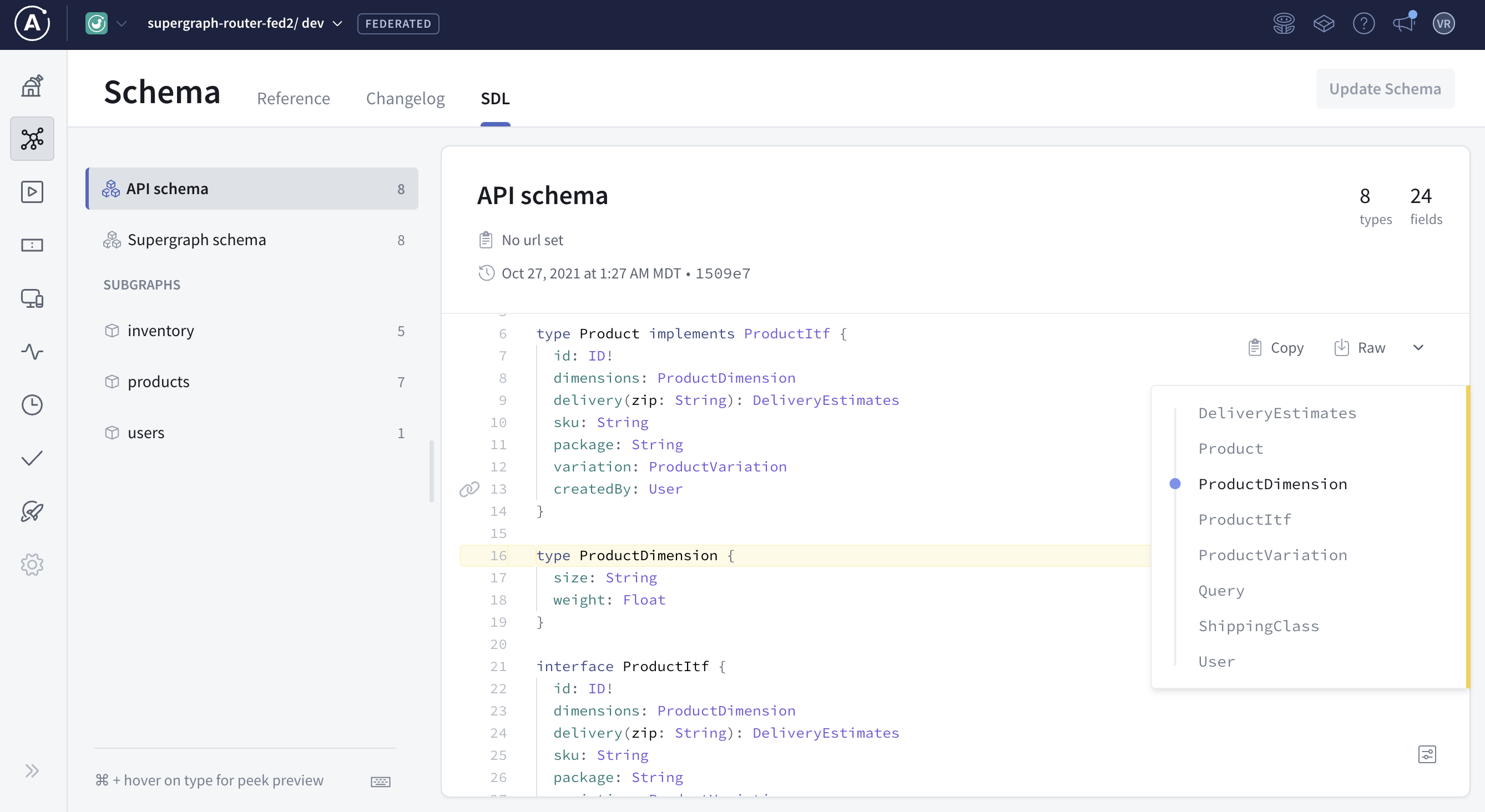
    Apollo GraphQL today previewed an update to its Federation platform for tracking and managing application programming interfaces (APIs) based on the GraphQL query language to give organizations more control over how APIs are reviewed and ultimately approved.

    Matt DeBergalis, founder and CTO, Apollo, said the alpha edition of the Federation 2 platform provides a unified view of distributed APIs based on GraphQL so they can be more easily governed.

    Federation is based on a unified graph created by Apollo GraphQL to initially provide more visibility into how APIs based on GraphQL are employed within an organization. That capability makes it simpler to increase collaboration among development teams that typically build APIs in isolation from one another, noted DeBergalis.

    The latest version of Federation also adds a shared ownership model that empowers teams to evolve unified graphs across smaller teams, he noted.

    In general, DeBergalis noted that Federation reduces the chances developers are going to create redundant APIs because they can more easily discover existing ones. They can then either employ those APIs as-is or modify them to suit their requirements as they increasingly compose an application using tools such as Apollo GraphQL Studio versus building every capability from the ground up themselves.

    GraphQL

    Overall, Apollo GraphQL claims that Federation is currently being downloaded more than one million times a week, with more than 30% of Fortune 500 companies such as Netflix, PayPal, Zillow, Walmart, Peloton and Priceline already using its tools.

    The company is also now making Federation and the rest of its tool portfolio available under the Elastic License 2.0 which provides the right to use, copy, distribute, make available and prepare derivative works of the software, but prevents organizations from offering a managed service, circumventing license key functionality or removing/obscuring features protected by license keys or remove or obscure any licensing, copyright or other notices.

    GraphQL, originally created by Facebook, is gaining traction as an alternative to REST APIs because it gives developers more control over how data is accessed via an API using a set of query capabilities. That capability is especially appealing when constructing digital business processes that require access by specific classes to large volumes of data. In fact, DeBergalis notes that, in many cases, it’s the existence of a rich set of APIs that enables organizations to construct digital processes that bridge the various isolated processes organizations previously had in place.

    Most IT teams will not be replacing REST APIs with GraphQL-based APIs overnight. However, there will soon be enough APIs based on GraphQL to have a significant impact on how applications are built and deployed. Many applications may wind up invoking external services via both REST and GraphQL-based APIs for many years to come.

    In the meantime, the rate at which applications are being built should substantially increase as tools such as Federation make development teams more productive. The challenge many DevOps teams will soon face is managing a large volume of deployments and associated application updates as more applications are deployed in production environments.

  • Oracle Adds AI Services to Cloud Portfolio

    Oracle Adds AI Services to Cloud Portfolio

    Oracle today unfurled Oracle Cloud Infrastructure (OCI) AI services, a collection of services that make it easier for developers to use application programming interfaces (APIs) to invoke a wide range of services based on algorithms trained by Oracle on their behalf.

    Elad Ziklik, vice president of product management for AI services and data science at Oracle, said the primary goal is to offload the data engineering tasks associated with machine learning operations (MLOps) from organizations that simply want their developers to include AI capabilities within their applications without having to necessarily hire and then retain a dedicated data science team.

    However, organizations also have the option of uploading their own data into OCI AI services to retrain the models provided by Oracle, he noted.

    Ultimate, the goal is to make OCI AI services a simple extension of DevOps workflows by making it simpler to employ AI models; these models become just another software artifact that can be stored and updated in a Git repository alongside all the other artifacts managed by a DevOps team, said Ziklik. In effect, Oracle wants to make AI ‘boring’ in the sense that these capabilities can now be readily invoked by any development team, he added.

    The OCA AI services include OCI Language, a text analysis capability that enables developers to add sentiment analysis, key-phrase extraction, text classification, named entity recognition and other similar capabilities to their applications, and OCI Speech, which converts file-based audio data containing human speech into text transcriptions.

    Oracle has also included OCI Vision for image recognition and document analysis tasks, OCI Anomaly Detection to create models that flag irregularities in processes, OCI Forecasting for tracking business metrics over time and OCI Data Labeling for creating datasets to train AI models.

    These services are designed to address the most critical AI requirements of the average enterprise rather than attempting to outperform on a set of AI benchmarks that don’t reflect the requirements of business development teams, said Ziklik.

    In addition, Ziklik noted Oracle has also made it easier to address AI compliance requirements that will eventually require organizations to document precisely how their AI models work.

    At some point soon, just about every application will be invoking AI capabilities to one degree or another. That shift creates a major workflow challenge for DevOps teams. AI models are typically created by data science teams that typically don’t successfully deploy an AI model in a production environment more than a handful of times a year. Those AI models, however, need to be integrated with applications that, in many cases, are being continuously updated via DevOps workflows.

    Oracle said that goal becomes easier to achieve using models it creates versus allowing data science teams to build out a set of custom MLOps workflows on platforms that then need to be maintained by IT professionals. Instead of having to set up, for example, a feature store to track and manage AI models, the models created using OCI AI can be stored in an existing Git repository.

    Naturally, each organization will need to determine the degree to which they will converge MLOps and DevOps best practices. Oracle, however, is betting that the simplest way to achieve that goal is via AI models surfaced via a cloud service that developers can readily invoke whenever required.

  • Newly Independent VMware to Focus on Multi-Cloud

    Newly Independent VMware to Focus on Multi-Cloud

    As an independent company once again, VMware will focus its efforts on providing management planes that span multiple cloud computing environments after officially spinning out of Dell Technologies.

    Ray O’Farrell, executive vice president for the cloud-native apps business unit at VMware, said the company now has a unique opportunity to work closely with providers of cloud services, builders of on-premises IT infrastructure and providers of telecommunications services.

    The terms of the spin-off included an $11.5 billion special cash dividend that resulted in a $27.40 per share dividend payment to all VMware stockholders. VMware claims the simplified financial structure that arises from the deal will provide it with additional operational and financial flexibility.

    Going forward, much of the development work will focus on providing management planes that not only span multiple clouds but also address specific cross-platform requirements such as security. It’s not likely there will ever be one single uber control plane for all of IT, noted O’Farrell. Rather, IT teams should expect VMware to deliver a series of well-integrated control planes to automate specific tasks in a way that breaks down IT silos, he said.

    VMware, however, under terms of its existing alliance, will also continue to work closely with Dell to create server environments that are optimized for VMware hypervisor platforms, O’Farrell said.

    Key to the strategy is a portfolio of observability tools that VMware plans to continue to expand, noted O’Farrell. VMware will also address the requirements of both traditional monolithic applications running on virtual machines as well as cloud-native applications running on distributions of Kubernetes, such as VMware Tanzu, that may be deployed on top of a hypervisor or on a bare-metal server, he added.

    Given the complex state of IT environments today, it’s all but inevitable something will go wrong, said O’Farrell. The challenge and the opportunity for VMware is to provide IT teams with the observability tools required to discover as many issues as possible before they adversely impact the business, he added. Once those issues are discovered, IT teams should be able to automate the remediation process using the rest of the portfolio of VMware management frameworks, he noted.

    Those management frameworks will also provide the foundation for unifying traditional approaches to IT service management (ITSM) with DevOps best practices that are now being used more widely, especially to manage cloud-native applications, said O’Farrell.

    When it comes to on-premises IT environments, VMware continues to dominate. Its hypervisor is, by far, the most widely used on servers in local data centers. VMware has spent much of the last two years expanding its reach into multiple clouds to enable IT organizations to standardize on a series of management frameworks. The goal is to reduce the total cost of IT by reducing reliance on what would otherwise be a hodgepodge of isolated management frameworks. The challenge VMware regularly encounters is the IT teams that manage cloud computing environments are not always the same ones that are managing on-premises IT environments. As such, many IT teams that have deployed cloud applications tend to embrace the management frameworks provided by their cloud services provider.

    VMware, however, is betting that as more organizations look to reduce the total cost of IT, the economic pressure to converge IT management using its frameworks will be simply too great to ignore.

  • Couchbase Revamps DBaaS Based on Document Database

    Couchbase Revamps DBaaS Based on Document Database

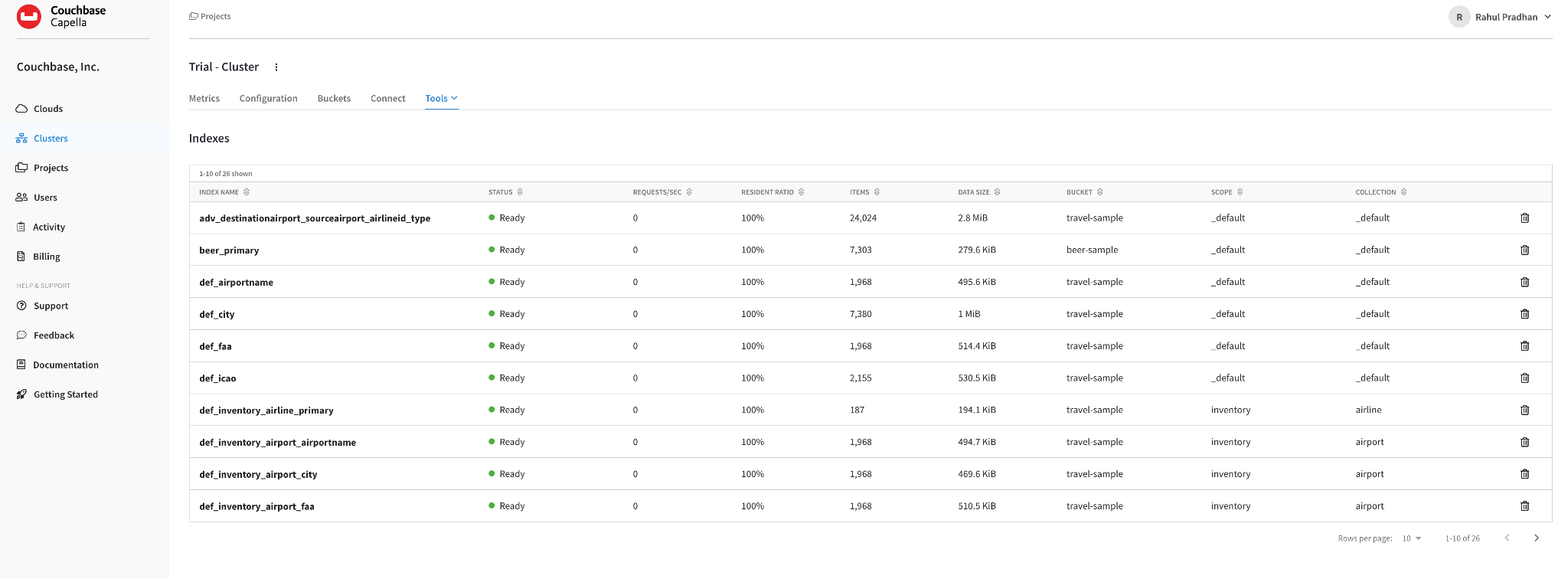
    Couchbase Inc. has unfurled a revamped database-as-a-service (DBaaS) platform dubbed Couchbase Capella hosted on the Amazon Web Services (AWS) cloud.

    Scott Anderson, senior vice president for product management for Couchbase, said that as application development continues to evolve, it’s becoming apparent more organizations prefer to have providers of databases manage those platforms on their behalf. That approach frees up database administrators (DBAs) to spend more of their time building and deploying applications, he noted.

    Couchbase Capella is based on Couchbase Server 7, which added multi-statement SQL transactions capabilities to the document database, based on a JavaScript Object Notation (JSON) format, to make it possible to also run in microseconds transaction processing applications that previously would have required a relational database to process SQL ACID transactions.

    That release of Couchbase Server 7 also added schema and table-like organizing structures, called “scopes and collections,” within the schemaless database to make it possible to add a table while transactions are running.

    As a document database Couchbase has gained traction mainly thanks to developers who have opted to employ a database they could download and deploy themselves to build applications instead of requiring a DBA to set up a relational database. However, as the number of instances of a document database proliferates, a need to manage them across fleets of servers and cloud services has emerged.

    The challenge then becomes determining whether to hire a dedicated administer or employ a DBaaS managed by a vendor. Many organizations are opting for the DBaaS approach because it eliminates the need to hire a full-time administrator. Once an organization opts for the DBaaS approach, however, it next needs to integrate that service within its DevOps workflow to build those applications.

    There is, of course, no shortage of options when it comes to DBaaS platforms. The global cloud database and DBaaS market size is expected to reach $26 billion by 2025, according to a report from Adroit Market Research. Overall, the as-a-service market reached a record $13.4 billion in the third quarter, up 55% from prior year, according to a report published by Information Services Group (ISG).

    It’s not clear to what degree organizations will ultimately wind up relying on as-a-service platforms, but since the start of the COVID-19 pandemic, the shift to this approach to consuming IT resources has increased significantly. As a result, the way internal IT teams are organized is shifting as lower-level tasks are either automated or handled by an external IT team that works for a vendor.

    Regardless of approach, the amount of data being created and analyzed within organizations is only going to grow. Organizations will need to determine to what degree it makes sense for them to manage that data versus relying on an external services provider. The challenge, of course, when relying on an external service provider isn’t just technical; it introduces a new cultural dynamic that takes some time for many IT teams to appreciate fully.

  • Salt Security Adds Support for GraphQL APIs

    Salt Security Adds Support for GraphQL APIs

    Salt Security has extended its platform for securing application programming interfaces (APIs) to include support for APIs built using GraphQL.

    GraphQL is an open source data query and manipulation language for APIs that was originally developed by Facebook. It provides a more efficient approach to querying data than the REST APIs that are widely used today.

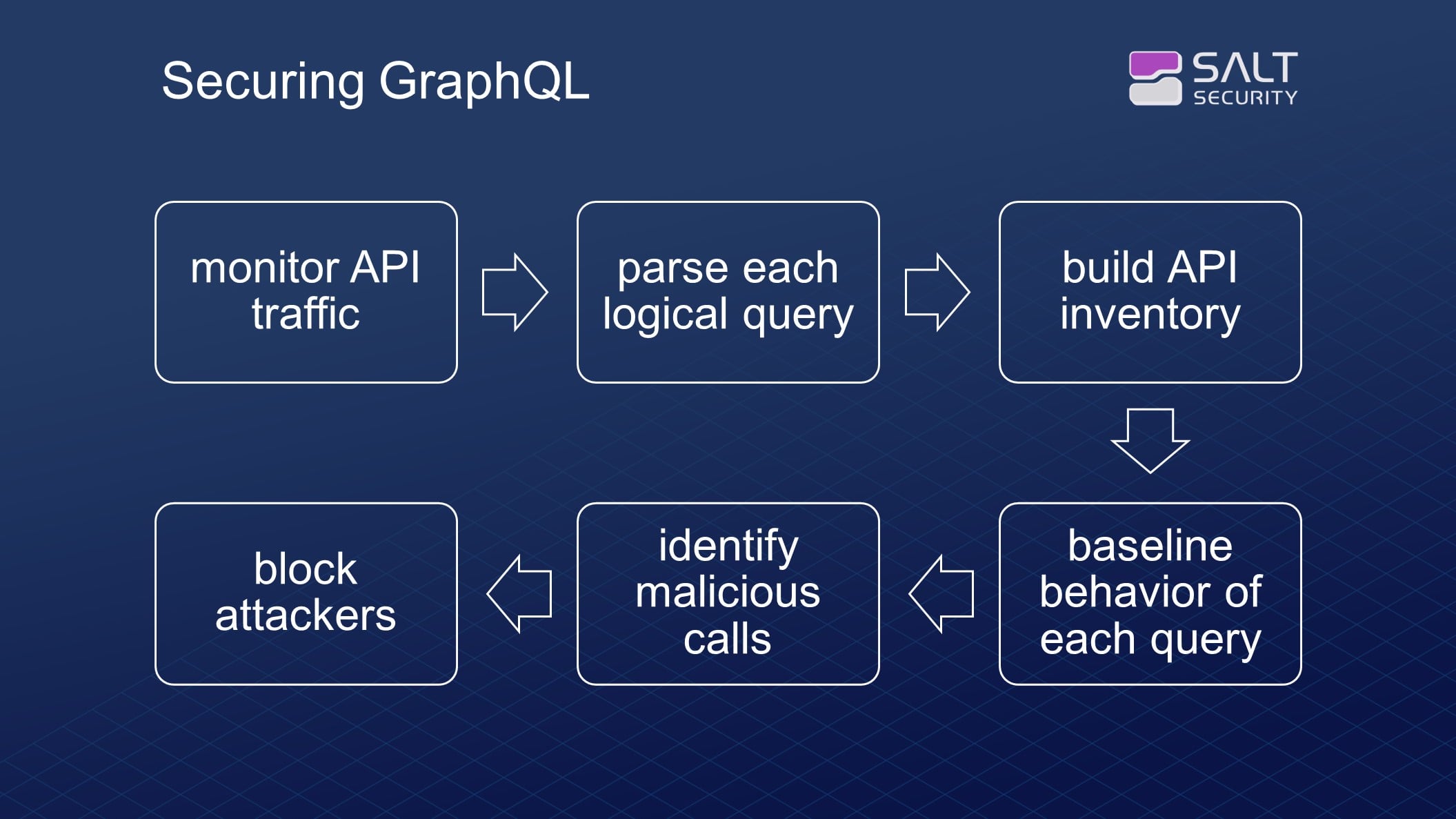
    Elad Koren, chief product officer for Salt Security, said adding support for GraphQL alongside existing support for REST APIs to the Salt Security API Protection platform will make it possible for security teams to discover those APIs, mitigate data exposure, stop attacks and eliminate vulnerabilities. The Salt platform parses the complex structure of each GraphQL query to identify unique object entities that are then used to create a complete inventory of the GraphQL APIs being employed.

    APIs built using GraphQL are more challenging to secure because of the unique call and response formats, noted Koren. Cybercriminals can also, for example, leverage GraphQL capabilities such as nested queries and query batching, to launch distributed denial of service (DDoS) attacks, he said.

    Many developers will tend to assume that, because GraphQL is relatively new, most cybercriminals are primarily focused on exploiting REST APIs. However, as more developers employ GraphQL, it’s only a matter of time before cybercriminals begin to find ways to exploit APIs that may not be as secure as the REST APIs that many organizations already know how to secure.

    The Salt Security platform itself is based on a big data engine that employs machine learning algorithms and other forms of artificial intelligence (AI) to identify attacks in real-time. It creates a baseline to identify legitimate system behavior while preventing cybercriminals from using penetration testing tools to perform reconnaissance.

    From a DevOps perspective, the Salt Security API Protection Platform integrates with tools such as Jira and Slack to ensure that remediation details are routed to the right development team in addition to helping track tickets to ensure remediation fixes are implemented. It also can be integrated with security information event management (SIEM) platforms from vendors such as Splunk and Sumo Logic to enable incident response for both DevSecOps and security operations teams.

    Most IT teams will not be replacing REST APIs with GraphQL-based APIs overnight. However, there will soon be enough APIs based on GraphQL to warrant additional security measures. Less clear is to what degree those security measures will be put in place by DevSecOps teams versus a security operations team.

    One way or another, however, the number of APIs that need to be secured is accelerating rapidly as organizations roll out a new generation of microservices-based applications that drive mission-critical digital business transformation initiatives. Each microservice has its own API that needs to be built and then secured. Unfortunately, most APIs are built by developers that don’t always have the greatest appreciation for security. As such, while more responsibility for API security is shifting left toward developers, many security teams would be well advised to make certain every API being deployed is fully secure.

  • Dynatrace Survey Sees Continuous Delivery Challenges Ahead

    Dynatrace Survey Sees Continuous Delivery Challenges Ahead

    A global survey of 1,300 application development and DevOps leaders conducted by the research firm Coleman Parkes on behalf of Dynatrace finds, on average, organizations expect to increase the frequency of their software releases by 58% over the next two years.

    Andreas Grabner, director of strategic partnerships at Dynatrace, an observability platform provider, said that while it’s clear organizations are embracing DevOps best practices to achieve that goal, the survey also found that more than a quarter (27%) of DevOps teams’ time is spent on manual continuous integration/continuous delivery (CI/CD) tasks. Nearly a quarter (22%) admit they’re often under so much pressure to meet the demand for application deployments that they must sacrifice code quality.

    In response, nearly two-thirds of respondents (62%) are investing in automation to eliminate manual tasks, while a similar percentage are looking to automate incident response processes. Another 45% are investing in observability tools, with nearly three-quarters (74%) noting that end-to-end observability will be essential to DevOps in the future.

    A full 98% also noted that extending DevOps to more applications will play a crucial role in driving digital transformation and optimizing customer experience. A total of 71% said a unified platform that seamlessly integrates their toolchains will be critical to scaling DevOps, while 79% said extending artificial intelligence to IT operations (AIOps) into the realm of DevOps is critical for their future success.

    Survey respondents, however, also identified siloed team cultures (75%) and application complexity (70%) as the primary barriers to achieving DevOps success. Organizations, as a result, are investing in the automation of manual CI/CD tasks (62%), eliminating manual incident response (62%) and end-to-end observability (45%).

    Grabner noted that, as more organizations build and deploy next-generation applications based on microservices constructed using containers and application programming interfaces (APIs), it will only become more challenging to automate DevOps processes. As part of an effort to reduce the cost of delivering those applications, Dynatrace donated Keptn, an open source enterprise-grade control plane for automating the continuous delivery of cloud-native applications, to the Cloud Native Computing Foundation (CNCF), added Grabner. The overall goal is to reduce the total cost of implementing DevOps as part of an effort to instrument more applications, he noted.

    While most organizations that have embraced DevOps have a good handle on how to implement continuous integration, achieving the continuous delivery side of the DevOps equation has proven to be more challenging. In the absence of standardization among the platforms, each application deployed on individual IT systems is a “snowflake,” in that it is unique to that platform. That issue, in part, is why so many IT teams still rely on manual processes to deploy applications.

    It’s only a matter of time before organizations begin to more aggressively automate the deployment of applications. That may become even easier to achieve if they standardize on a Kubernetes application programming interface (API) that can be implemented across any platform.

    In the meantime, however, it’s clear that, as the pace of digital business transformation increases, one of the most limiting factors organizations will encounter is the pace at which applications can be deployed and updated.