Author: Mike Vizard

  • Postman Acquires Akita Software to Gain API Observability

    Postman Acquires Akita Software to Gain API Observability

    Postman today announced it has acquired Akita Software to gain access to a platform for monitoring and observing application programming interfaces (APIs).

    The first integration of the respective products offered by both companies will arrive in beta this fall.

    Postman CEO Abhinav Asthana said the acquisition of Akita Software will make it much simpler for organizations to discover what APIs are being employed across an enterprise. A recent Postman survey found that 28% of developers are now deploying APIs at least once per week.

    The Akita Software platform will make it simpler for organizations to discover both rogue APIs that have been created by a shadow IT project and zombie APIs that have been inadvertently left exposed long after they are needed.

    Akita Software’s CEO Jean Yang said the integration with Postman’s API management platform will provide a rich source of data that can be used to add artificial intelligence (AI) capabilities to Akita’s API observability platform. For example, generative AI capabilities should make it simpler to create summaries in natural language that explain the calls an API is making to specific data sources.

    In addition, the combined company will be in a better position to enable organizations to better secure their APIs after deployment by surfacing anomalous behavior indicative of an API that is being used to exfiltrate data, she added.

    The merger with Postman will, in effect, enable the combined entity to provide a complete ecosystem for managing APIs, noted Yang.

    Most APIs are used primarily to interconnect internal-facing applications and systems, with a subset used to integrate partners. Only a relatively small percentage of APIs are externally facing in the sense that they expose data to the internet. Many organizations, however, fail to appreciate how quickly an internally facing API can become externally facing over the course of its life cycle. As such, IT teams need tools and platforms that can manage and secure APIs as they evolve.

    As APIs continue to play a crucial role in advancing business goals, there is a clear need for increased visibility as the types of APIs employed also continue to expand. Most APIs in use today are based on the REST format, but there are also APIs based on GraphQL, event-driven architecture and various messaging platforms. None of these newer APIs will supplant REST APIs any time soon. Rather, they are being applied to drive additional processes alongside REST APIs.

    In the longer term, it’s not clear how many APIs will be managed by the developers that created them versus a centralized DevOps team. However, the more APIs that are deployed in a production environment, the less feasible it becomes for developers to manage their life cycle. The challenge is making sure there is some type of structured workflow in place that, at the very least, makes everyone involved in the process aware that a new API has been created and deployed.

  • Webb.ai Launches AI-Based Continuous Root Cause Analysis

    Webb.ai Launches AI-Based Continuous Root Cause Analysis

    Webb.ai today opened an early access program access to a Continuous Automated Root Cause Analysis platform that uses artificial intelligence (AI) combined with a knowledge graph to dynamically keep track of and analyze changes to IT environments.

    Manish Gupta, CEO of Webb.ai, said the platform uses a mix of machine learning algorithms and generative AI capabilities based on large language models (LLMs) to aggregate alerts into higher-order insights that are presented in natural language to members of a DevOps team.

    That approach differs from legacy approaches because it tracks causal relationships between changes versus relying on probabilistic models that tend to create a lot of false positives, he noted.

    Webb.ai is also taking advantage of Kubernetes clusters to enable its platform to scale up and down as needed when analyzing data, added Gupta. That platform is also more efficient than other approaches to observability that require IT teams to store massive amounts of data. In contrast, the Continuous Automated Root Cause Analysis automatically surfaces anomalous events that DevOps teams can choose to save rather than requiring them to save all the metrics, logs and traces that would otherwise need to be tracked, he noted.

    Most IT incidents can be traced back to the most recent changes made to an IT environment. The challenge is as IT environments have become more complex, it’s not feasible for humans to keep track of those changes without relying on AI and a knowledge graph, said Gupta.

    As businesses become more dependent on software to drive digital processes, the cost of downtime is exponentially increasing. The need to identify the root cause of an IT incident as fast as possible has become a critical requirement, he added.

    Webb.ai doesn’t see AI technologies replacing the need for DevOps professionals and site reliability engineers (SREs) for at least another 10 to 15 years. In the meantime, many tasks that today are completed manually will be increasingly automated, said Gupta. A DevOps engineer dragged out of bed at 2:00 A.M. to address an issue does not want to have to sift through alerts. Instead, generative AI tools will summarize the issue at hand with recommendations on resolving it, noted Gupta. In effect, DevOps teams will be augmented by AI so they can manage IT environments at even higher levels of scale, he said.

    There is always going to be some sense of fear and loathing when it comes to AI, but ultimately, AI should reduce the burnout rates that today adversely affects any organization’s ability to retain DevOps professionals. Far too much time is spent trying to identify the root cause of a slowdown in a cloud-native application’s performance that could be caused by any number of issues involving one dependency or another. The frustrating thing, of course, is that while it may take days to identify the root cause of an issue, it often takes just a few minutes to resolve.

  • Splunk Adds Generative AI Tool and OpenTelemetry Collector

    Splunk Adds Generative AI Tool and OpenTelemetry Collector

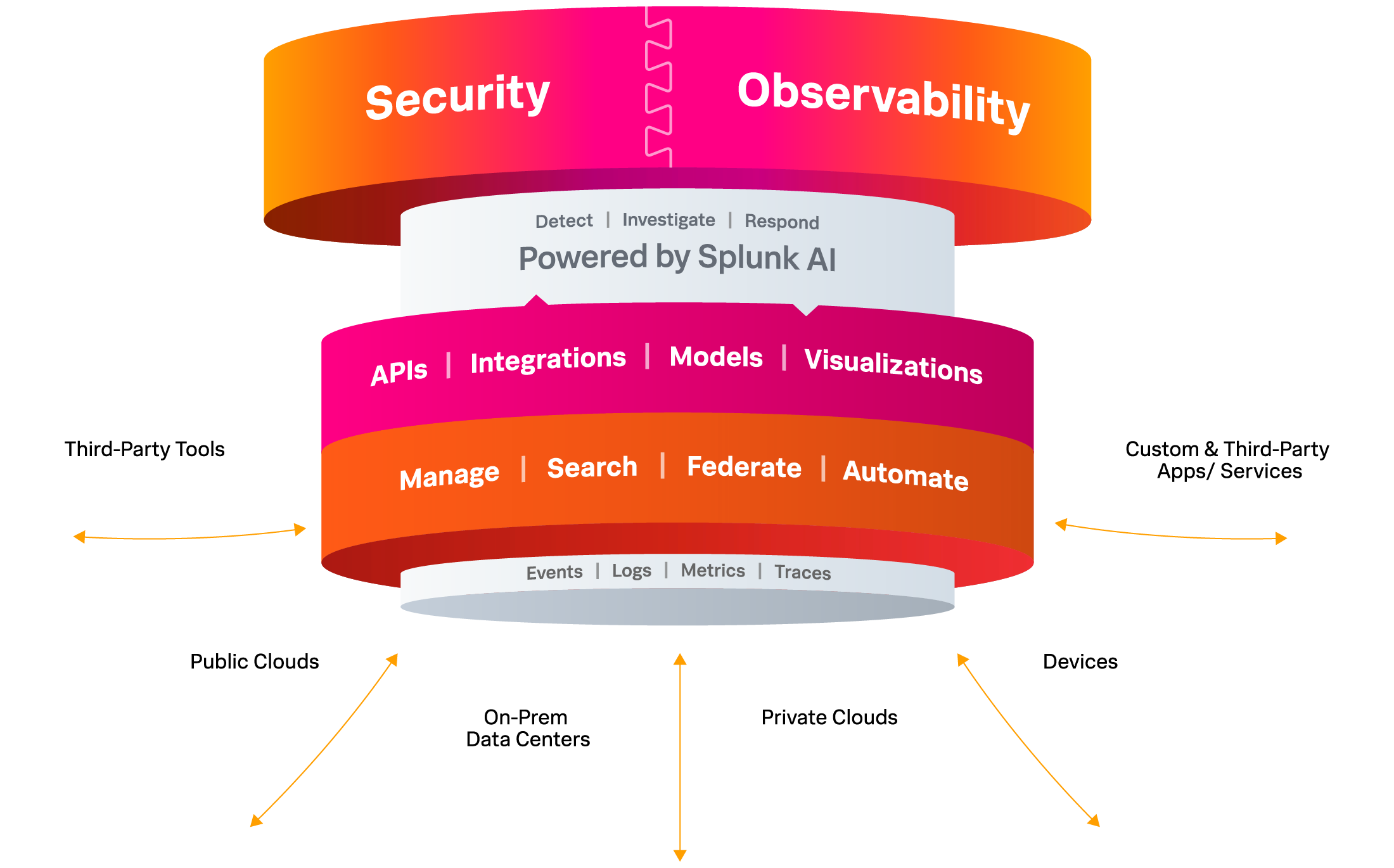
    At its .conf23 conference, Splunk today revealed it added a slew of capabilities to its portfolio of operational analytics tools, including an assistant that leverages generative artificial intelligence (AI) capabilities that use large language models (LLMs) the company developed to enable IT teams to use natural language to invoke the Splunk Processing Language (SPL).

    In addition, Splunk is also previewing OpenTelemetry Collector, an add-on that uses open source agent software being developed by the Cloud Native Computing Foundation (CNCF) to capture metrics and traces. It is designed to enable IT teams to use OpenTelemetry alongside existing agent software that Splunk uses to capture metrics.

    Tom Casey, senior vice president for products and technology at Splunk, said the domain-specific LLMs that the company created enable Splunk Assistant to write or explain customized SPL queries in a way that augments rather than replaces the need for IT professionals. Splunk Assistant is designed to surface recommendations to optimize IT environments to reduce toil rather than automate entire processes, he noted.

    Splunk is adding other tools infused with machine learning algorithms to its portfolio. These include the Splunk App for Anomaly Detection and an Outlier Exclusion for Adaptive Thresholding to detect and omit abnormal data points that has been added to version 4.17 of the Splunk IT Service Intelligence platform.

    In addition, Splunk is previewing an ML-Assisted Thresholding tool for Splunk IT Service that uses historical data and patterns to create dynamic thresholds with a single click.

    The company is making available a 5.4 update to the Splunk Machine Learning Toolkit (MLTK) 5.4 and a Splunk App for Data Science and Deep Learning (DSDL) 5.1 toolkit that provides access to additional data science tools that can extend MLTK to enable organizations to build their own custom LLMs and AI assistants.

    Finally, Splunk added Unified Identity to make it simpler to access Splunk Cloud Platform and Splunk Observability Cloud along with an update to Splunk Cloud Platform and Splunk Enterprise that make it simpler to ingest, route, search and export data.

    It’s still early days as far as the application of generative AI is concerned, but it’s already clear that the way IT is managed is about to be transformed. Coupled with tools such as OpenTelemetry that make it less expensive to collect massive amounts of data, the opportunity to train LLMs that streamline a wide range of processes is immense. Those capabilities won’t replace the need for humans to manage those processes, but they will most certainly cause staff realignments as many manual tasks become increasingly automated.

    In fact, it’s hard to imagine an IT team that would not want to take advantage of AI capabilities to simplify the management of complex IT environments that now function at a level of scale that few IT professionals can successfully manage on their own. One way or another, AI is going to be broadly applied to IT workflows. The only thing left to be seen now is the ultimate impact.

  • Splunk Adds Hub to Extend Observability to Edge Computing Platforms

    Splunk Adds Hub to Extend Observability to Edge Computing Platforms

    Splunk today launched a platform for ingesting data from sensors, industrial equipment and internet-of-things (IoT) platforms so that it can be analyzed alongside data collected from IT environments.

    Announced at the company’s .conf23 conference, the Splunk Edge Hub extends the reach of the troubleshooting platform Splunk provides that increasingly involves various types of edge computing platforms.

    Tom Casey, senior vice president for products and technology at Splunk, said Splunk Edge Hub is designed to be deployed in those edge computing environments and reduce the total amount of data that needs to be transferred back to an instance of the Spunk analytics platform running in a data center or in the cloud.

    That approach makes it possible to remotely monitor everything from environmental conditions to identifying anomalies indicative of an outage that might be prevented. The overall goal is to unify visibility across IT and operational technology (OT) environments as these systems and applications become more integrated, said Casey.

    It’s not clear how quickly that integration is occurring, given the historic cultural divide that has existed between IT and OT teams. But with the rise of digital business transformation initiatives, the data collected from edge computing platforms is increasingly being incorporated into a wide range of applications deployed at the edge, in local data centers and in the cloud.

    In general, observability tools are being used to not only improve processes but identify and block suspicious activity. Of course, OT teams have been monitoring edge computing platforms for decades, but observability platforms make it feasible to interrogate logs, metrics and traces to hopefully discover issues before there is a disruption to services. The challenge, of course, is that not everyone on either the OT or IT team necessarily knows how to shape the queries required to discover the root cause of a potential issue. The Splunk approach essentially leverages the skillset of IT professionals that have mastered its platform to address that issue; something most OT professionals are not going to be able to do using their existing tools and platforms.

    One way or another, DevOps teams will soon need to be able to remotely diagnose edge computing issues as the number of workloads deployed on these platforms expands. IT teams are not going to be able to travel to the physical location of every edge computing platform every time an issue arises. In many ways, the rise of edge computing will force a transition to observability tools that will enable IT teams to more proactively manage IT environments rather than responding after a metric that OT teams are monitoring has already exceeded its threshold.

    In the event there is still an issue, observability platforms should also reduce mean-time-to-remediation (MTTR) as visibility into IT environments, including edge computing platforms, is improved.

    It’s not likely that OT and IT teams will ever be completely unified, but as observability platforms continue to evolve, there will be much greater opportunities for collaboration.

  • Five Great DevOps Job Opportunities

    Five Great DevOps Job Opportunities

    DevOps.com is now providing a weekly DevOps jobs report through which opportunities for DevOps professionals will be highlighted to better serve our audience.

    Our goal in these challenging economic times is to make it easier for DevOps professionals to advance their careers.

    Of course, the pool of available DevOps talent is still relatively constrained, so when one DevOps professional takes on a new role it tends to create an opportunity for others.

    The five job postings shared this week are selected based on the company looking to hire, the vertical industry segment and, naturally, the pay scale being offered.

    We’re also committed to providing additional insights into the state of the DevOps job market. In the meantime, for your consideration:

    Indeed.com

    ServiceNow
    San Diego, California
    Senior Software Engineer – DevOps
    $119,970 to $204,030

    LinkedIn

    Fox Tech
    New York, New York
    Senior DevOps Engineer
    $118,000 to $157,500

    SimplyHired.com

    GM Financial
    Arlington, Texas
    DevOps Automation Engineer III
    $113,000 to $143,000

    CareerBuilder.com

    Edward Jones
    Henley, Missouri
    DevOps Technical Architect
    $109,696 to $186,781

    Dice.com

    Suremind Solutions
    St. Louis, Missouri
    DevOps/Site Reliability Engineer (SRE)
    $100,000 to $140,000

  • JFrog Adds Curation Capability for Open Source Software Components

    JFrog Adds Curation Capability for Open Source Software Components

    JFrog today announced it is adding a curation capability for open source software to its portfolio that will use metadata generated by binaries to identify malicious packages and software components that have licensing issues.

    Sharan Hiremath, senior product manager for JFrog, said JFrog Curation is an extension of the JFrog Artifactory binary repository that the company provides to enable organizations to manage their software supply chains.

    JFrog Curation also validates software packages against JFrog’s Security Research library of recorded Critical Vulnerabilities and Exposures (CVEs) and publicly available information to help establish a trusted repository of pre-approved, third-party software components.

    That approach automatically employs the JFrog Xray scanning tool to eliminate the need to individually scan each package before developers employ them, said Hiremath.

    Making sure open source software components are secure is often problematic because developers download them from public repositories that are frequently targeted by cybercriminals. There have now been more than 100,000 instances of malicious software packages discovered in repositories in the last year alone, noted Hiremath.

    In addition, cybercriminals have become adept at creating fake repositories that mimic legitimate repositories; that can result in developers downloading software components infected with malware.

    JFrog Curation takes the shift left concept of application security to the next level by automatically blocking the use of risky open source software packages, noted Hiremath. The JFrog platform will also surface advice on how to remediate any vulnerability discovered, in addition to creating an audit trail to enable organizations to comply with various regulatory mandates.

    While open source software components reduce the cost of application development, from a cybersecurity perspective, it’s the wild, wild West, noted Hiremath. Organizations are trying to bring more discipline to the way software is constructed by adopting DevSecOps best practices, but they need an approach that doesn’t introduce any additional friction into the application development process, he added.

    JFrog Curation addresses that issue by addressing cybersecurity and compliance issues before any open source component becomes part of the build, said Hiremath.

    As regulations to hold organizations more accountable for the security of the software they deploy are being proposed around the world, it’s only a matter of time before organizations must revisit the security of their software supply chains. Cybercriminals have already proven how adept they are at injecting malware into software components that could be used in thousands of downstream applications. In the eyes of regulators, organizations that don’t scan open source software for malware and vulnerabilities are engaging in reckless behavior that will warrant stiff penalties.

    The challenge is that, after giving developers free rein to develop software any way they see fit, organizations are now faced with a challenge that is as much cultural as it is technical. Automated processes will naturally play a key role in curbing aberrant behavior in application development, but there is, as always, no substitute for some good old-fashioned common sense.

  • Tricentis Acquires Waldo to Further Advance Mobile Testing

    Tricentis Acquires Waldo to Further Advance Mobile Testing

    Tricentis has acquired Waldo as part of an effort to expand the scope of the automated testing capabilities it provides for mobile applications.

    Waldo adds a software-as-a-service (SaaS) platform that provides IT teams with a no-code tool for generating mobile application tests. Waldo uses a virtual environment to simulate iOS and Android devices in a way that eliminates the need for physical devices to conduct tests. Instead, DevOps teams record their applications and then use the no-code tools to generate tests directly from within a browser.

    Tricentis CTO Mav Turner said Tricentis opted to acquire Waldo because it makes it simpler for IT teams to generate tests that can be integrated across a DevOps workflow.

    There currently is a lot of debate over how far application testing should be shifted left toward developers. In theory, the more developers test applications themselves the fewer issues there should be once an application is deployed in a production environment. However, there is still going to be a need for dedicated testing teams to conduct tests across multiple stages of the application development process to ensure quality, noted Turner.

    The difference is more of those tests can include edge use cases that previously there would not have been enough time to conduct, he added.

    Earlier this year, Tricentis added the ability to test native iOS and Android applications to its Testim software-as-a-service (SaaS) platform as part of an effort to extend the reach of that platform to applications that run natively on a mobile device.

    Testing mobile applications is more critical than ever because the cost of failure—in terms of impact on the business—is now much higher as more organizations depend on software to drive business processes. The challenge is that many of these app developers don’t have a software engineering mindset, so they need testing platforms that automatically create and run tests on their behalf in a way that can be customized for specific use cases.

    Over time, the quality of applications should steadily improve as many of the low-level mistakes that developers make are eliminated. That should improve everything from application security to the user experience as applications are continuously updated.

    In addition, organizations that embed testing within DevOps workflows are steadily reducing the number of issues that need to be addressed before applications are deployed.

    Hopefully, as more artificial intelligence (AI) is applied to the testing process, the number of reasons tests are not run as frequently as they should be will steadily decline. Today, it is still too difficult for many developers to author tests, so they don’t conduct as many as they should. Of course, many of them also simply run out of time when writing the code that drives the application takes longer than anticipated.

    One way or another, developers will run out of excuses for not running tests as accountability for code quality increases.

  • BigPanda Extends AIOps Platform to Embrace Generative AI

    BigPanda Extends AIOps Platform to Embrace Generative AI

    BigPanda today added generative artificial intelligence (AI) capabilities to analyze incidents surfaced by its AI for IT operations (AIOps) platform.

    Blair Sibille, field CTO for BigPanda, said Generative AI for Automated Incident Analysis leverages generative AI platforms based on the general-purpose large language models (LLMs) created by OpenAI.

    The goal is to make it simpler for IT teams to discern the root cause of an issue by, for example, taking advantage of summaries of alerts enabled by generative AI to make it simpler for IT professionals of any skill level to understand what requires their most immediate attention, he added. Today, insights are lost in the sea of alerts that often inundate IT teams, Sibille noted.

    BigPanda has been at the forefront of applying machine learning algorithms to automate IT operations management. Now, the company is incorporating external general-purpose LLMs to further augment IT teams, said Sibille.

    As IT environments continue to be more complex, it’s becoming essentially impossible for IT teams to manage them at scale without relying more on automation. AI technologies take automation to another level, but they won’t eliminate the need for DevOps teams to manage IT environments, added Sibille.

    BigPanda claimed generative AI capabilities will make it possible to reduce the amount of time required to resolve tickets by seven minutes each, with an accuracy rate of 95% during beta testing. Over time, those capabilities not only reduce mean-time-to-resolution but also reduce the level of toil that often conspires to burn out DevOps teams, said Sibille.

    At the core of the BigPanda AIOps platform is a data lake capable of consuming data generated by multiple applications and systems. That data then provides the foundation on which machine learning algorithms are applied to surface insights.

    It’s not clear how much generative AI will automate DevOps workflows, but in effect, more IT teams will be able to take advantage of having the equivalent of a DevOps engineer that they can query any time an issue arises using natural language, noted Sibille.

    AI doesn’t mean that IT outages will be completely eliminated, but it does mean they will become a lot less stressful, he added.

    Naturally, there’s a lot of speculation concerning the impact AI will have on DevOps. Some contend it’s only a matter of time before the entire software engineering process is automated. As those advances are made, the cost of building applications will effectively drop to zero. Others argue that AI will simply augment DevOps teams in a way that makes it simpler to manage IT at scale using either the same number or possibly even fewer engineers.

    The one thing that is clear is that AI will soon be pervasive. DevOps teams should start evaluating today which tasks will be automated with an eye toward planning how DevOps roles will evolve as AI advances accelerate.

  • Roadie Adds Scorecard Tool to Backstage SaaS Platform

    Roadie Adds Scorecard Tool to Backstage SaaS Platform

    Roadie today made generally available a tool that automatically tracks and reports how software development teams are performing against engineering standards defined by a DevOps team. The Tech Insights tool is an addition to Roadie’s implementation of the open source Backstage developer portal and is delivered via a software-as-a-service (SaaS) platform.

    Roadie CEO David Tuite said Tech Insights is a proprietary tool that Roadie developed as an extension to its platform. Tech Insights provides scorecards that track software assets in the Backstage catalog and ensure they are meeting predefined quality and compliance targets.

    Tech Insights comes with built-in, pre-defined data sources; alternatively, DevOps teams can define them using external application programming interfaces (APIs) or files in a repository. A rule known as a Check can then be created to validate whether a project complies with the engineering standards defined by the DevOps team. Each DevOps team can create an unlimited number of scorecards.

    In addition, teams can create prompts and notifications to warn engineers when they are about to make a change that will violate an engineering standard. DevOps teams can also employ gamification techniques to show teams how their performance compares to others.

    While Roadie is now adding its first proprietary tool to the platform, Tuite said the company remains committed to enabling organizations to migrate their instance of Backstage to another environment should they ever deem it necessary, he added.

    Originally developed by Spotify, Backstage makes it possible to create and manage a catalog of blueprints that developers can readily consume rather than requiring them to repeatedly build these capabilities themselves. The goal is to create scaffolds that developers can consistently reuse across multiple application development projects.

    Spotify has since donated Backstage to the Cloud Native Computing Foundation (CNCF). However, Backstage currently requires a significant amount of DevOps expertise to set up and maintain, an issue that Roadie is addressing by making it available as a SaaS platform that can be accessed by any application development team, said Tuite.

    The concept of a self-service portal through which developers can address their own needs may not be new, but as an open source project, Backstage is lowering the cost of improving overall developer productivity. At the same time, many organizations are now embracing platform engineering as a means of centralizing the management of DevOps.

    Ultimately, every minute developers spend on tasks other than writing code is one less minute they are spending writing the business logic that drives an application. Measuring developer productivity is, of course, an inexact science. No one knows for sure when inspiration might strike, but if developers are busy maintaining code that they created to provision infrastructure, it’s less likely they’ll be struck by a flash of brilliant insight that improves and application. The easier it is to spin up a development environment, the more likely that inspiration will one day turn into code that runs in an actual production environment.

  • Loft Labs Makes Tool for Creating Dev Environments Open Source

    Loft Labs Makes Tool for Creating Dev Environments Open Source

    Loft Labs has made available an open source software project that enables DevOps teams to programmatically create developer environments using a tool that runs entirely on a local client.

    Lukas Gentele, Loft Labs’ CEO, said DevPod provides an alternative to cloud-based approaches such as Codespaces from GitHub that lock organizations into a specific platform for building applications.

    Instead, DevPod can automatically spin up developer environments as code on any public cloud or on-premises IT environment that can run a devcontainer.json file, he added.

    In addition, DevPod will also automatically put developer environments to sleep when not being used to reduce costs, noted Gentele. Other capabilities include support for prebuilds, Git and Docker credential synchronization.

    DevPod was created by Loft Labs to streamline the development of a virtualization platform for Kubernetes clusters. The company is now making DevPod available as open source software that any DevOps team can use to manage developer environments as code more easily than complex server-side alternatives, said Gentele.

    It also makes it easier for developers to switch between cloud-hosted and local environments as needed seamlessly, he noted. That’s critical because it enables organizations to reduce dependencies on cloud computing environments for writing code by allowing developers to use their local machine whenever they prefer, noted Gentele.

    Despite the ubiquitous availability of cloud services, most developers continue to prefer to write code on a local machine. The challenge is that replicating a developer environment elsewhere to foster collaboration has been problematic. DevPod provides a means for developers to collaborate with each other and with software engineers without giving up the inherent flexibility a local development platform provides.

    At a time when organizations are more dependent on software than ever, there is much more focus on developer productivity. DevOps teams have historically tended to focus on DevOps Research and Assessment (DORA) metrics that focus more on deployment frequency and mean-time-to-recovery than they do on developer productivity.

    Of course, measuring developer productivity is an inexact science. An organization might once have tracked lines of code written to gauge productivity, but that is not especially good metric. In more recent times, metrics have been developed that, among other things, keep track of how much time developers spend actually coding versus maintaining their software development environment.

    The issue that most IT leaders will immediately encounter is that every minute developers spend on these tasks, however, is one less minute they spend writing the business logic that drives an application.

    Obviously, there’s no way developers are going to write business logic daily for eight hours straight; there are maintenance windows. However, application development is as much art as it is science. No one knows for sure when inspiration might strike, but if developers are busy maintaining code created to provision infrastructure, it’s less likely they’ll have a flash of brilliant insight that allows them to make an application better. The easier it is to spin up a development environment, the more likely it becomes that inspiration will one day turn into code that runs in an actual production environment.