Author: Mike Vizard

  • Five Great DevOps Job Opportunities

    Five Great DevOps Job Opportunities

    DevOps.com is now providing a weekly DevOps jobs report through which opportunities for DevOps professionals will be highlighted to better serve our audience.

    Our goal in these challenging economic times is to make it easier for DevOps professionals to advance their careers.

    Of course, the pool of available DevOps talent is still relatively constrained, so when one DevOps professional takes on a new role it tends to create an opportunity for others.

    The five job postings shared this week are selected based on the company looking to hire, the vertical industry segment and, naturally, the pay scale being offered.

    We’re also committed to providing additional insights into the state of the DevOps job market. In the meantime, for your consideration:

    LinkedIn

    DuckDuckGo
    Remote
    Senior DevOps Engineer
    $170,000

    CareerBuilder.com

    Credit Acceptance Corp.
    Remote
    Staff DevOps Engineer
    $145,000 to $150,000

    Indeed.com

    NASDAQ
    New York, New York
    DevOps Engineer
    $104,400 to $174,000

    SimplyHired

    U.S. Bitcoin
    Remote
    Software DevOps Engineer
    $100,000 to $130,000

    Dice.com

    ITBMS
    Remote
    DevOps OpenShift Engineer
    $80,000 to $100,000

  • FinOps Gaining Ground, But Progress is Slow

    FinOps Gaining Ground, But Progress is Slow

    A CloudBolt Software survey found that while the majority (98%) of respondents worked for organizations with a formal FinOps team (82%) or are actively considering adding one (16%), realizing value from FinOps is slow. More than half of existing FinOps teams (54%) were formed just 12 months ago or less, the survey also found.

    The trouble is, only one in of 500 respondents claimed to achieve any material value from FinOps to date. More than three-quarters of respondents (76%) said they will have to wait two to three years to see real FinOps-driven results.

    The survey polled 500 executives, engineers and developers at companies with over 5,000 employees in the U.S., Canada, United Kingdom and Australia. It was conducted by Wakefield Research on behalf of CloudBolt Software, a provider of a platform for managing distributed computing environments.

    A total of 45% of respondents also questioned FinOps efficacy in the real world. Specifically, 15% flagged FinOps as being “theoretically easy but harder in practice,” with another 13% regarding it as “much ado about nothing.” Another 10% said it is “nothing more than a suggested framework,” while 7% labeled FinOps as “a necessary evil.”

    Nevertheless, a full 89% also described FinOps as the silver bullet for reining in the complexity of cloud cost management, with 68% noting that FinOps is among their organization’s most strategic priorities for 2023. The average size of a FinOps team is now 4.1 people, with the “director level” being the senior-most leader on the team 53% of the time, the survey noted.

    A total of 71% noted that achieving this year’s IT goals without a FinOps practice would pose a significant challenge, with 74% reporting that FinOps is now on par with ITOps, DevOps, SecOps and other IT disciplines.

    In addition, 71% of respondents said funding for FinOps initiatives increased in 2023, with 58% reporting key performance indicators (KPIs) and metrics to the C-suite or board of directors.

    CloudBolt Software CTO Kyle Campos said it’s clear that when it comes to reining in costs, large enterprises are struggling to effectively manage IT across multiple silos. In many cases, organizations were investing heavily in IT before and during the COVID-19 pandemic to drive digital business transformation initiatives without many cost controls being put in place, he added.

    Now that organizations are encountering economic headwinds, many chief financial officers are now asking IT leaders to be a lot more efficient, noted Campos.

    Developers, in particular, have for years been provisioning cloud infrastructure resources with little to no oversight. Unfortunately, developers are prone to leaving the proverbial lights on by, for example, leaving application development environments running over a weekend or simply forgetting that a virtual machine has been left to run for weeks—sometimes even months.

    Developers are also not especially good at alerting IT leaders of possible spikes in consumption due to, for example, a data-intensive workload being constructed. No finance team likes to be surprised by a monthly bill for a cloud service that is twice as much as the previous month.

    The one thing that is certain is that time is of the essence. FinOps, at its core, may not necessarily be a new idea, but IT organizations that fail to practice it may soon find themselves being held more accountable than any time in recent memory.

  • Tabnine Unveils Beta of Generative AI Automated Testing Tool

    Tabnine Unveils Beta of Generative AI Automated Testing Tool

    Tabnine this week made available in beta a tool that enables developers to use natural language to interact with the artificial intelligence (AI) models embedded within its test automation platform.

    Brandon Jung, vice president of ecosystems for Tabnine, said Tabnine Chat extends generative AI capabilities the company developed to make it simpler for developers to invoke its test automation platform from within their integrated development environment (IDE).

    In addition to making it possible to search a codebase more efficiently, that capability can also be used to explain how a piece of code functions, said Jung.

    Developers can also generate new code via a natural language interface using Tabnine Chat in the same way other generative AI tools do, he added.

    In addition to developing its own LLMs, Tabnine previously announced it will be integrating LLMs provided by Google as part of a strategy to mix and match LLMs regardless of where they are hosted.

    Unlike general-purpose LLMs, the ones used by Tabnine were trained using a narrower base of testing code that the company curated using tests made freely available on the internet. No customer data was used to create any of those tests, so developers do not need to worry their code may inadvertently be accessed by anyone else, noted Jung.

    In general, as AI makes test creation simpler, tests will be run more frequently, said Jung. Over time, those AI capabilities and more frequent tests should significantly improve the overall quality of applications running in production environments, he added.

    It’s now only a matter of time before generative AI is applied across the entire software development life cycle (SDLC). Testing, however, may be one area where it will have the earliest impact.

    In the meantime, the debate over the impact generative AI will have on DevOps continues. Some proponents contend most of the software engineering process is about to become automated, while others suggest there will always be a need for a human to be in the loop of any process automated using AI models. Much of the current level of toil associated with DevOps today will be reduced, but the need for software engineers to manage the overall process will remain, they contend.

    The one thing that is certain is that the pace at which applications are built and deployed is about to be greatly accelerated. Prior to rise of generative AI, testing processes were barely keeping pace, so as more code is created with the help of AI, the need for similar advances in testing will become acute.

    There is as much irrational exuberance about AI as there is fear and loathing, but DevOps teams that committed early on to ruthless automation will naturally be at the forefront of adoption. The immediate challenge is assessing what functions will be automated and the impact those changes will have on the way DevOps teams are currently structured. Ultimately, the goal is to eliminate as many of the bottlenecks that conspire to slow application development and deployment while simultaneously improving the quality of the application experience.

  • Applitools Acquires Preflight to Further Apply AI to App Testing

    Applitools Acquires Preflight to Further Apply AI to App Testing

    Applitools this week revealed it has acquired Preflight, which provides a low-code automation platform infused with machine learning algorithms that makes it possible for developers to write their own tests.

    Applitools COO Moshe Milman said Preflight extends the company’s efforts to leverage artificial intelligence (AI) to shift more testing capabilities left toward application developers using its existing test automation platform. The Applitools platform is compatible with frameworks such as Selenium, Playwright and Cypress.

    One of the major challenges organizations encounter as they encourage developers to run more tests is that many of them don’t have the skills required to write them. Applitools’ AI capabilities reduce the cognitive load required to create and run tests, noted Milman.

    The goal isn’t so much to replace dedicated application testing teams but to enable developers to more easily test code as they build it, noted Milman. There will always be a need for dedicated testing teams to evaluate more complex use cases for applications, he added.

    The issue is, thanks to advances in DevOps automation, the pace of application development is outpacing the testing resources available, said Milman. IT teams need to invest in test automation to close what has become a quality gap because not enough code is being thoroughly tested, he noted.

    Test automation also serves to reduce the total cost of creating tests. That enables organizations to conduct more tests without slowing down application development, noted Milman.

    In the longer term, Applitools also plans to leverage large language models (LLMs) to provide generative AI capabilities alongside existing support for machine learning algorithms to further automate testing, noted Milman. Applitools is already making use of computer vision to automate app testing. Preflight adds a set of tools infused with AI to create tests.

    The reasons behind inadequate application testing aren’t entirely clear. Whether it’s because tests are too difficult to create or development teams simply run out of time because of scheduling delays, the impact is the same. Too often, developers convince themselves they will address any issues that might arise with the next update only to become distracted by other priorities. Regardless of the reason, however, there are more poorly-tested applications running in production environments than many DevOps teams would prefer. In fact, much of the technical debt IT organizations need to manage today can be traced back to inadequate testing.

    However, as testing tools become more automated, the overall quality of applications should improve and technical debt may become less of an issue. In the meantime, automated testing promises to improve overall developer productivity as it becomes simpler for developers to create code that has been, at the very least, vetted by algorithms before being added to a codebase. In effect, developers are running out of excuses for not testing applications before delivering them to unsuspecting end users.

  • HashiCorp Acquires BluBracket to Extend Secrets Management Reach

    HashiCorp Acquires BluBracket to Extend Secrets Management Reach

    HashiCorp this week revealed it has acquired BluBracket to add a set of scanning tools for discovering static secrets to its portfolio.

    James Bayer, senior vice president of research and development for the Secure product line at HashiCorp, said the existing Vault platform for managing secrets is designed to enable developers to manage them as they build applications. BluBracket has developed a secrets management tool that makes it possible to discover secrets in applications that have already been deployed in production environments, he said.

    The amount of secrets management-related technical debt many organizations have can be enormous, especially if they’ve been deploying applications for decades. IT teams need a tool that discovers secrets in applications that, in many cases, were deployed by application developers that are no longer with the company, Bayer added.

    The BluBracket tools make it possible to discover those unmanaged secrets even before efforts are put in place to improve application security, he noted.

    HashiCorp will initially integrate BluBracket’s functionality into HashiCorp Vault to expand HashiCorp’s zero-trust capabilities, and add detection and remediation workflows via additional capabilities expected later this year. That’s critical, because for decades, developers have been storing secrets in applications and forgetting to remove them before an application is deployed.

    In general, HashiCorp is moving to transform its Vault platform into an orchestration engine for managing secrets regardless of where those secrets might be stored, said Bayer. That approach will enable developers to build applications and store their secrets on, for example, the Amazon Web Services (AWS) cloud in a way that can be centrally managed via the Vault platform, he added.

    Most organizations today are at varying stages of embracing DevSecOps best practices to improve software supply chain security. It’s not clear how readily secrets management is being embraced as part of those modernization efforts, but as cybercriminals routinely scan for application secrets stored in clear text, the need to encrypt secrets becomes a higher priority.

    The core DevSecOps issue most organizations are wrestling with is how involved cybersecurity teams should be in application development. There’s clearly a concerted effort to push more responsibility for application security further left toward developers. The challenge is, even when those tools are provided, it’s not clear that developers can distinguish between the severity of one vulnerability versus another.

    Conversely, most cybersecurity teams don’t really understand how modern applications are developed. That doesn’t necessary mean cybersecurity professionals need to dive deep into application development workflows, but it does mean they should, at the very least, understand how applications are constructed to make sure the appropriate security guardrails have been put in place.

    Regardless of approach, it’s clear there is a need for some type of centralized security function to better ensure application security. Unfortunately, the cultural divide between application developers and cybersecurity teams remains fairly wide. The DevSecOps journey ahead will be long, as each organization determines how best to bridge that gap when the supply of available cybersecurity expertise remains constrained.

  • Survey Surfaces Raft of Enterprise IT Challenges

    Survey Surfaces Raft of Enterprise IT Challenges

    A survey of  enterprise IT leaders found less than a third (32%) are extremely confident that they have the right technology, processes and people in place to execute an effective approach to IT management.

    The survey, conducted by Rocket Software, polled 275 U.S. IT leaders in organizations with more than 1,000 employees. A full 93% of IT leaders are also committed to maximize the value of investments in existing platforms.

    As a result, the top priorities for IT leaders are hybrid cloud computing (65%), data and content management (68%) followed by DevOps and infrastructure and application modernization, tied at 58%, and automation (57%).

    A total of 62% noted they have a much greater focus on efficiency due to the economic landscape, with faster DevOps processes, automated processes and increasing overall output as the top three improvements that would be most impactful for increasing efficiency.

    The survey also suggested many organizations still have much work to do to achieve those goals, with 63% of respondents spending anywhere from six to 15 hours on manual data entry and analysis each week.

    Phil Buckellew, president of infrastructure modernization for Rocket Software, said most organizations are still trying to determine the right level of DevOps to adopt. Few organizations have implemented DevOps workflows on an end-to-end basis, with many employing a mix of DevOps and waterfall processes to build and deploy applications across a hybrid cloud computing environment, he noted.

    Overall, IT leaders are most worried about improving overall IT performance (60%), data security (50%), process risk and compliance (46%) and the need to improve agility (41%), the survey found. Respondents also noted that they measure success within their IT organization by increased efficiency (71%), optimized resources (67%) and reduced risk (63%).

    The survey makes it clear that, despite challenges, enterprise IT organizations are committed to hybrid cloud computing as they become more comfortable with using various platforms that are fit for purpose, said Buckellew.

    Mainframes, for example, continue to play a major role in running online transaction processing (OLTP) applications alongside analytics applications that are now being infused with artificial intelligence (AI) capabililities, noted Buckellew.

    A quarter of survey respondents also identified providing cloud applications with access to mainframe data as an area where they need additional tools, followed by automation (22%).

    The biggest automation obstacles are the complexity of implementing automation (18%), resistance to process change among workforce (18%) and lack of skillsets to implement automation (18%), the survey finds.

    As always, the biggest challenge in enterprise IT environments is often simple inertia. Organizations that have been building and deploying applications on mainframes, for example, have been relying on waterfall processes for decades. Many of them have now adopted DevOps processes to varying degrees, but few have completely replaced legacy approaches to building and deploying software, noted Buckellew.

    It’s not likely the management of complex hybrid cloud computing environments will be simplified any time soon, but progress continues to be made. Soon, AI may automate many existing manual tasks. In the meantime, however, the number of enterprise IT organizations standardizing on a single IT platform remains few and far between.

  • Bionic Extends Application Security Posture Management Platform

    Bionic Extends Application Security Posture Management Platform

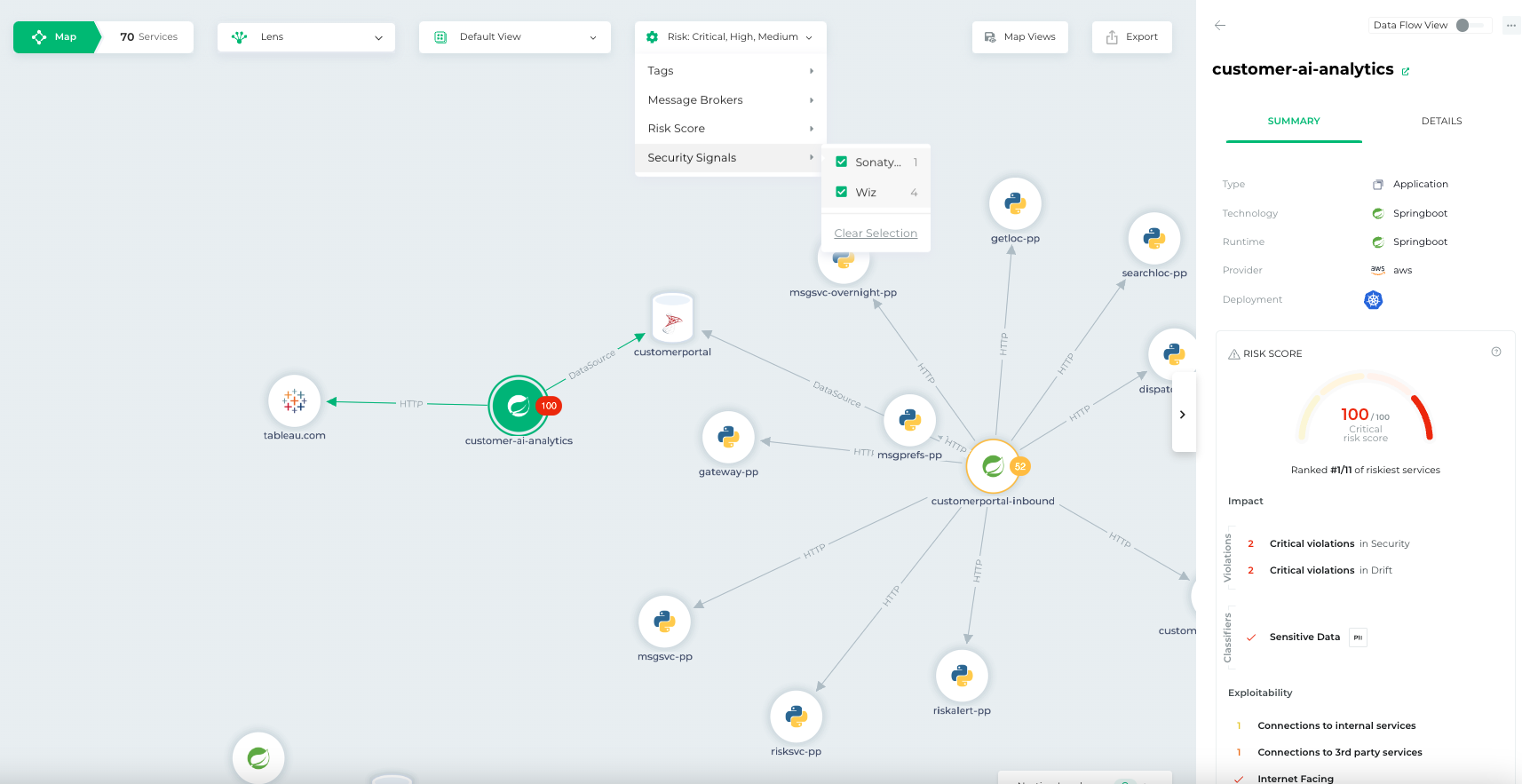
    Bionic this week added a pair of tools to its application security posture management (ASPM) platform that make it simpler to triage threats based on severity and attach a risk score.

    Josh Cho, senior director of global systems engineering at Bionic, said the Bionic Signals and Business Risk Scoring tools ingest data from third-party security tools to provide analytics capabilities. The first two vendors with which Bionic has integrated its ASPM platform are Wiz and Sonatype.

    The goal is to partner with additional vendors that provide unique cybersecurity capabilities that don’t compete with one another, said Cho.

    The agentless Bionic ASPM platform enables organizations to manage application risks by continuously collecting data from services and their dependencies, application programming interfaces (APIs) and DevOps data flows both in pre-production environments and after applications are deployed. Bionic then assesses any changes made to those environments based on a set of cybersecurity policies it provides. If an issue is discovered, the platform will create an alert informing the appropriate development team of best practices that eliminate the issue.

    While there is a lot of effort being made to shift more responsibility left toward application developers, there is often not enough cybersecurity context provided, said Cho. Bionic’s ASPM platform aggregates data from multiple tools to enable DevSecOps teams to better prioritize their remediation efforts, he added.

    It’s not clear how much organizations have embraced DevSecOps best practices, but one of the issues that needs to be addressed is the often-conflicting alerts generated by the various tools being used. Bionic is making a case for an ASPM platform that synthesizes data from multiple sources to streamline DevSecOps workflows.

    One way or another, more organizations will be embracing DevSecOps to better secure their software supply chains as more regulations are mandated. The challenge they face today is that most application developers—and the DevOps teams that support them—don’t have a lot of cybersecurity expertise. As a result, it becomes difficult to discern which vulnerabilities require immediate attention and which can be addressed in a regular update. In some instances, an alert generated by a cybersecurity team may not even been relevant—because the application in question is not internet-facing or the impacted module has not been loaded.

    In fact, it’s that very lack of context that often results in application developers disregarding the alerts generated by cybersecurity teams. Whenever there is a breach, however, cybersecurity teams always demand to know why their alert was ignored.

    No developer, of course, deliberately sets out to build and deploy vulnerable applications. In the race to meet delivery deadlines, there are always going to be tradeoffs. The issue then becomes keeping track of the cybersecurity technical debt that accumulates over time. An ASPM solution provides a means to keep track of that debt to enable DevSecOps teams to keep the risk in perspective.

  • Survey Sees Value But Limited Understanding of Platform Engineering

    Survey Sees Value But Limited Understanding of Platform Engineering

    Platform engineering is emerging as method for managing DevOps at scale, but a survey suggested that many organizations are still not clear on the concept.

    A survey of 100 DevOps engineers, platform engineers, developers, site reliability engineers and IT managers conducted by Civo, a cloud service provider, found 85% of respondents work for organizations that have partially or fully embraced a DevOps culture, with nearly two-thirds (65%) identifying platform engineering as the next evolution of DevOps. Nearly, a third (30%) of respondents work for organizations that are already currently evaluating whether they should adopt platform engineering.

    Overall, the survey found 50% of the respondents at organizations that have adopted platform engineering reported improved standardization, with 43% also seeing faster product delivery.

    However, only 41% of the respondents in DevOps roles that were familiar with platform engineering said they had a moderate to high level of familiarity with the concept.

    Saiyam Pathak, director of technical evangelism at Civo, said the survey makes it clear that, in terms of understanding how platform engineering best practices should be implemented, there is need for more clarity. Many organizations initially adopted DevOps to spur innovation, so any approach to centralization shouldn’t come at the expense of developer productivity, he noted.

    Historically, DevOps adoption of DevOps workflows in most organizations has been driven from the bottom up. As a result, it’s fairly common for multiple application development teams within an organization to have adopted multiple DevOps platforms to manage workflows. Advocates for platform engineering are making a case for eliminating many of those redundant platforms in favor of, for example, a single continuous integration/continuous delivery (CI/CD) platform that serves as a corporate standard.

    At the core of those efforts is the assumption that centralization will reduce costs by eliminating redundancy. At a time when more organizations than ever are sensitive to the cost of IT, there is always going to be a natural tendency to rationalize platforms. Challenges arise, however, when centralization results in a loss of flexibility. Many of the teams adopt DevOps because they want to be able to add and replace tools as they see fit. If there is a corporate standard that narrows their tool options, those teams may start to look for ways to do an end-run around the corporate standard.

    The philosophical IT battle between advocates for centralization and proponents of decentralization has been around since the first PCs showed up in enterprise IT environments. As always, organizations need to strike a balance between both extremes, said Pathak.

    It’s not clear how much platform engineering might accelerate the pace at which applications are built and deployed, but the total cost of DevOps should decline as various tools and platforms are consolidated. The challenge, of course, is that centralizing DevOps workflows is likely to disrupt the application development workflows on platforms that may about to be rationalized.

    Regardless of what platforms become the corporate standard, the one thing that is certain is the cultural challenges associated with successfully making that transition will loom large within most organizations.

  • Mendix Embraces DevOps for Next Era of Low-Code App Development

    Mendix Embraces DevOps for Next Era of Low-Code App Development

    Mendix, a subsidiary of Siemens, today updated its namesake low-code application development platform to add support for DevOps workflows and make it simpler for developers to compose applications and embed artificial intelligence (AI) capabilities.

    Sheryl Koenigsberg, vice president of product marketing for Mendix, said Mendix 10 makes it possible to use Git repositories for version control along with Mendix Pipelines, currently in beta. Mendix Pipelines is a continuous integration/continuous delivery (CI/CD) environment that will be embedded in the low-code platform. In addition, Mendix is adding support for Webhooks that can be used to integrate Mendix with existing CI/CD platforms.

    Mendix has also added a Solutions Kit, now generally available, to make it possible to customize applications in a way that ensures those changes will be preserved as application environments are upgraded.

    There is also now a Portfolio Manager tool to track projects and a connector for integration with the Jira project management software from Atlassian.

    Later this year, Mendix will also make generally available Adaptation Insights to provide insights into application extensions.

    In the future, developers will be able to leverage an extensibility framework to tailor the Mendix Studio Pro integrated development environment (IDE) by adding their own plugins, wizards, editors and third-party integrations. Later this year, Mendix 10 will also add, in beta, a version of its Studio Pro IDE for MacOS.

    The Mendix approach to composability is also being extended to incorporate AI. The company is adding Mendix Assist, a bot that generates validation logic for data entry. This module is the second AI capability that Mendix has developed after previously previewing Mendix Chat, a tool based on a large language model created using Mendix data that will be integrated into the Mendix integrated development environment (IDE) later this year. Mendix Assist will be incorporated into Mendix Chat.

    Mendix is also developing additional LLMs for creating applications and will as part of its commitment to composability plans to make it possible to integrate third-party AI services and LLMs into the Mendix Runtime to create “smart apps.” AI models will be converted to the Open Neural Network Exchange (ONNX) format, an open standard for machine learning models, to provide that capability.

    In addition, Mendix is adding support for event-driven architectures via Business Events and an Event Broker, to build more complex applications.

    Other capabilities being added to Mendix 10 include updated REST and database connectors, support for visual data filters, rich properties and design controls, a Start from Spreadsheet tool, end user survey tools, a PDF document generator and a revamped set of governance and risk assessment tools.

    Finally, Mendix is adding a Terraform module to make it simpler to deploy its low-code platform on the Amazon Elastic Kubernetes Service (Amazon EKS) in addition to providing a reference implementation for building private clouds to develop applications using the Mendix Cloud service.

    As AI-infused low-code applications are developed faster, it’s not clear to what degree organizations are prepared to embrace the inevitable disruption that will ensue. However, the one thing that is clear is that the DevOps workflows used to deploy these applications at scale will soon be put to the ultimate test.

  • OutSystems Embraces Generative AI to Speed App Dev

    OutSystems Embraces Generative AI to Speed App Dev

    OutSystems, via a Project Morpheus initiative, intends to leverage generative artificial intelligence (AI) technologies to make it possible to automatically generate an application that developers will then use low-code tools to customize for specific use cases.

    In the meantime, the company is extending an existing alliance with Microsoft to provide a connector that integrates its namesake low-code platform with instances of ChatGPT. These instances are made available via Microsoft’s Azure OpenAI cloud service to make it possible to build a low-code application in a matter of minutes.

    Rodrigo Coutinho, director of data science for OutSystems, said that as generative AI continues to evolve, it will become possible for developers to use a natural language interface to create an application. However, there will also be plenty of instances where end users still prefer to access applications via a graphical user interface that developers build using low-code platforms, he noted.

    An application editor will also provide ongoing suggestions for everything from how the user interface is designed to the way data is managed.

    Developers will also be able to verify how code functions using the OutSystems visual language. In addition, The OutSystem compiler will be able to deterministically detect threats and code patterns produced by generative AI platforms that will include Google, Amazon and others alongside Microsoft.

    Ultimately, citizen and junior developers will be able to build sophisticated applications that previously would have required the skills of a professional developer, noted Coutinho.

    It’s not clear how much developers will embrace a low-code platform to build software. However, the one thing that is certain is the whole process of defining requirements before an application can be built will soon become obsolete as the building of an application becomes more iterative and involves developers working alongside subject matter experts, added Coutinho.

    It may awhile before that vision of application development is realized, but the pace at which applications are built and deployed is clearly about to accelerate. The impact of all that code will naturally vary, but it’s already apparent that the cost of building many applications may soon drop to almost zero. Developers will soon be spending more time on making sure workflows are logical than writing actual code, noted Coutinho.

    In addition to relying more on AI to build software, organizations should also rely more on AI to deploy it at unprecedented levels of scale. The days when application development projects were measured in months, sometimes years, is coming to an end. AI platforms will enable organizations to experiment at will because the time and effort required to build and deploy a new iteration of an application will be virtually nil.

    Of course, no one can predict what impact all that code will have on society as we know it. But the only limit going forward may soon be what our collective imaginations can conceive than the level of developer expertise that can be marshalled at any given time.