Author: Jules Louis
-
Docker Engine 1.12 is now GA and Docker for Mac/Docker for Windows is in production.
Docker 1.12 adds the largest and most complex set of features into a single release since the beginning of the Docker project. Dozens of engineers, both Docker employees and external contributors, have made substantial contributions to every aspect of 1.12 orchestration: core algorithms, integration into the Docker Engine, documentation and testing.
- Swarm Mode Simplifies Distributed Application Definition, Deployment and Reliability
With the latest updates to Docker Engine, developers can build more complex applications with multiple services, container-defined networking and powerful security. Docker 1.12 dramatically simplifies the process of creating groups of Docker Engines, also known as Swarms. A Swarm is a decentralized and highly available group of Docker nodes. Each node is a self-contained orchestration subsystem that has all the inherent capabilities needed to create a pool of common resources to schedule Dockerized services. The self-organizing, self-healing capabilities of Swarms are now backed by automated service discovery and a built-in distributed datastore. As a result, it takes just one command to add a Docker Engine and horizontally scale a Swarm.
- Swarm mode is available in every Engine to automatically discover each other and self-organize into decentralized Swarm
o Swarm mode is an option to be switched on; batteries included but swappable
- Built-in, strongly consistent distributed store
- Self-healing Swarm handles node failures to restore desired application state
- Dynamic role promotion and demotion of Engines in the Swarm
- Zero-downtime node management, including maintenance mode and advanced diagnostics
- Robust architecture infrastructure with zero-SPOF (single point of failure) architecture
- Service deployment API to run and scale services : The new service deployment API describes all the resources and components with a single command that allows operations teams to run and scale a service. Through the API, the Swarm is aware of the application defined and will continuously check and reconcile the environment against the requirements of the application when something adverse happens. Unlike other systems, the Swarm itself has no single point of failure. The state of all services is replicated in real time across a group of managers so containers can be rescheduled after any node failure.
- Declarative services API with desired state reconciliation of applications as an abstraction above containers. Declare services, image, scale and ports
- Rolling updates to enable blue/green, canary and other deploy models
- Application-specified health checks
- Powerful Routing mesh – Docker orchestration includes a unique in-memory caching layer that maintains state of the entire Swarm, providing a non-blocking architecture which assures scheduling performance even during peak times. Additionally, the system has a built-in routing mesh technology that addresses the challenge of how to provide container-aware load balancing. The routing mesh ensures that requests are made to the right containers regardless of where they have been scheduled within the Swarm.
- Out of the box multi-host overlay networking
- Automatic service discovery by DNS available out of the box
- Built in container-aware load balancing, through which load balancing and global port definition by service dynamically reroutes traffic to the right container
- Secure by default: Each Engine is automatically assigned a cryptographic identity which ensures that only validated Engines can be accepted into a Swarm. Moreover, Docker Engine comes with mutually authenticated TLS, providing authentication, authorization and end-to-end encrypted communications among every node participating in the Swarm, without the operator having to take any steps to enable it. Specific capabilities include:
- Out of the box TLS configuration ensures all nodes in a Swarm communicate with each other using mutual TLS.
- Cryptographic Node Identity is general purpose framework that allows for trusted workload dispatch. It enables cryptographically secure decisions about which nodes can runs sensitive workloads, or access sensitive networks.
- Seamless PKI with automatic certificate rotation
- Configurable acceptance policies to configure how nodes can join a Swarm: automatic, manual or require a secret.
There are three really important themes in this release:
Fault-tolerant application deployment platform
Modern applications are increasingly designed in a microservices architectural pattern where the process of serving back data to a user may need to invoke several different services. Real world machines fail all the time and these microservices need to continue to be available even in the face of such random failures. Docker 1.12 gives you this power by providing a zero-SPOF design leveraging a quorum of managers, plus a service abstraction that spawns multiple replicas and quickly reschedules them if their host disappears.Scale and performance
Docker 1.12’s Swarm mode orchestration was designed from the ground up with scale and performance in mind. The internal Raft distributed datastore has been optimized for lightning fast reads from a memory cache, and the cluster management design minimizes writes that would invalidate this cache.Secure networking
In many systems, security is something you have to “turn on” by generating TLS certificates, running the system on a different port, and figuring out traffic flows to make sure no packets traverse an insecure network unencrypted. With Docker 1.12, all of these things are done for you out of the box. The system is “secure by default,” which means that you don’t need to be a security expert to get a secure application management platform.Related Links:
- Docker 1.12 Blog – Deep Dive into 1.12 Architecture
- Docker 1.12 Swarm Mode Deep Dive Part 1: Topology
- Docker 1.12 Swarm Mode Deep Dive Part 2: Orchestration
Docker For Mac/Docker for Windows in Production
Docker for Mac/Docker for Windows is an integrated, easy-to-deploy environment for building, assembling, and shipping applications from Mac or Windows. Docker for Mac and Windows contain many improvements over Docker Toolbox. It is fast and more reliable – no more VirtualBox! The Docker engine is running in an Alpine Linux distribution on top of an xhyve Virtual Machine on Mac OS X or on a Hyper-V VM on Windows, and that VM is managed by the Docker application. You don’t need docker-machine to run Docker for Mac and Windows.
There is also tool integration as Docker for Mac is a Mac application and Docker for Windows is a Windows application, including a native user interface and auto-update capability. The Docker tool set comes bundled with it: Docker command line, Docker Compose, and Docker Notary command line.
Since its introduction early this year, tens of thousands of users have tested the solution and provided feedback for further enhancements. Docker for Mac/Docker For Windows offers:
- A faster and more reliable experience – native development environment using hypervisors built into each operating system. (No more VirtualBox!)
- Improved Docker tools integration – all the Docker tools you need to develop locally are bundled in the app.
- Improved development flow – Volume mounting for your code and data, and easy access to running containers on the localhost network. In-container debugging with supported IDEs also help you live debug projects, and iterate code quicker with less effort.
- Enterprise network support that lets Docker for Mac and Windows work easily with VPNs.
- All the new features available in Docker Engine 1.12.
- Automatic updates, with different channels for stable and beta.
With Docker for Mac and Windows maturing and widely adopted, we want make sure that it’s a reliable and dependable tool. But we also want to keep up the rapid pace of innovation and progress that Docker for Mac and Windows beta users have come to know and love over the past months.
Docker for Mac and Windows are available from two channels – stable and beta. New features and bug fixes will go out first in auto-updates to users in the beta channel. Updates to the stable channel are much less frequent and happen in sync with major and minor releases of the Docker engine. Only features that are well-tested and ready for production are added to the stable channel releases.
Related Links:
- Swarm Mode Simplifies Distributed Application Definition, Deployment and Reliability
-
AppDynamics Unveils AppDynamics Summer ‘16 with New Microservices iQ—Setting a New Standard for Application Intelligence for DevOps
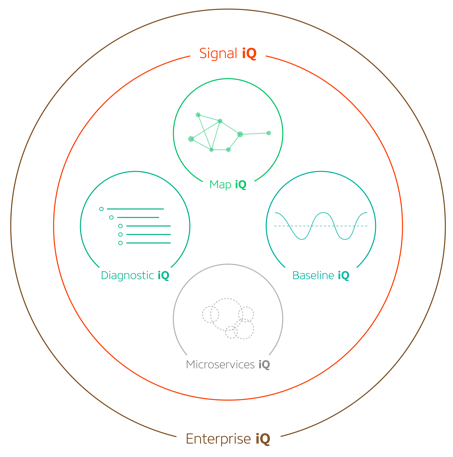
San Francisco – Aug. 1, 2016 – AppDynamics, an application intelligence leader powering enterprise digital transformation, today announced its Summer ‘16 release, which includes the new Microservices iQ, the industry’s first solution built for the enterprise to accelerate digital transformation powered by microservices. Microservices iQ, a new Performance Engine in the App iQ Platform, will help enable enterprises to deliver application performances that exceed the scale, sophistication and velocity expectations of today’s customers.
Uber and Amazon have established the new standard for customer experiences—global, mobile and at internet scale. Many enterprises envy their speed and scale and are attempting to emulate their disruptive innovation by investing aggressively in technology. As proven out by these industry leaders, one of the fastest paths to continuous and scalable innovation are microservices—one of the most promising trends in enterprise IT architectures. Companies like GE and Walmart are moving to microservices from m onolithic applications for their agility and the fact that they can reduce application development lead times by nearly 75 percent. In fact, approximately 70 percent of organizations are using or investigating microservices, according to a recent report.
With the AppDynamics Summer ‘16 release, AppDynamics will deliver Microservices iQ with capabilities for the monitoring, management and optimization of microservices architectures. Enterprises are breaking up their large, rigid, monolithic applications into smaller, more manageable pieces with microservices. Microservices require many more application server instances to run the smaller pieces, creating a significantly larger footprint of application instances.
Until Microservices iQ, companies didn’t have the means to monitor, manage or bolster their performance in enterprise production environments. Now, they can accelerate their microservices deployments and gain control of their performance with Microservices iQ capabilities, including:
- Service Endpoints—Microservices iQ automatically detects the service endpoints of a microservices architecture, enabling companies to shine a spotlight on a particular microservice without worrying about potentially multiple business transactions that use it. DevOps teams can then monitor that microservice’s key performance indicators (KPIs) like calls per minute, average response time, and errors per minute from early in the development lifecycle through production. Snapshots with detailed diagnostics enable DevOps teams to drill down and isolate the root cause of any performance issues affecting any microservices. Microservices are developed in isolation, and then used by one or more business transactions. Now DevOps teams can focus on their areas of responsibility, making them more efficient, while AppDynamics helps ensure the broader business is performing.
- Elasticity Management—In highly dynamic environments, with microservices deployed in containers or the cloud, underlying infrastructure nodes can scale up and down rapidly, creating a significant operational challenge to track their performanc
e. Microservices iQ uses a logical identity system to solve this and maintains historical data under these identities, making it easy and efficient to keep track of them continuously. Companies can now focus on the health of their microservices overall, without being distracted by fluctuations of hosts or containers starting and stopping. - Contention Analysis—Microservices often must scale to support thousands of simultaneous requests, which raises the likelihood of bottlenecks as requests try to access the same data. When used within the scope of service endpoints the new thread contention analyzer helps identify methods where threads are blocked–identifying block time, blocking object and the blocking line of code. Thus significantly minimizing the time required to isolate and resolve application performance issues with microservices and the business transactions invoking them. Now companies can scale their microservices with confidence that the potentially thousands of simultaneous requests will succeed.
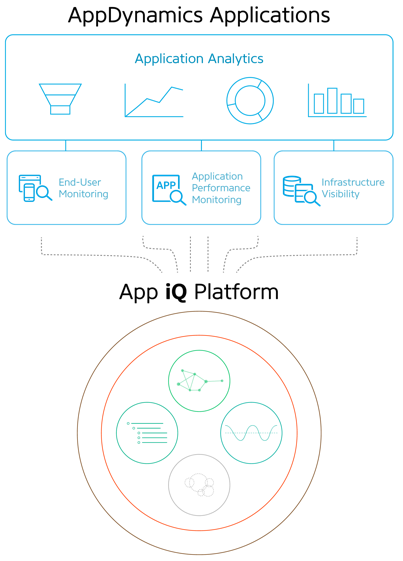
Microservices iQ extends AppDynamics’ existing App iQ Platform that enables enterprises to deliver performance that exceeds the scale, sophistication and velocity expectations of today’s customers. The platform is the foundation to AppDynamics’ customers’ success and powered by intelligent Performance Engines. These intelligent performance engines work in concert to help ensure enterprises can deliver peak performance across any application, user engagement and business transaction.
Comments on the News
- “When it comes to risk management, our application is more than business critical—our customers rely on our application to ensure their employees’ safety,” said Nuno Pereira, CTO, iJET International. “By using microservices, we have the ability to scale our application based on desired business outcomes and can make updates more effectively. With AppDynamics, we gain better visibility into how microservices interface with the rest of the components of our application, the ability to proactively troubleshoot emerging issues, and the increased velocity to resolve issues faster than ever.”
- “Every company wants to become the disruptor in their industry, but doesn’t have the means to overcome the complexities presented by digital transformation,” said Donnie Berkholz, research director of Development, DevOps and IT Op, 451 Research. “Microservices are the future of how enterprises swiftly make the change and AppDynamics has the smart approach to managing performance during the transition with its platform.”
AppDynamics empowers enterprises, including DIRECTV, eHarmony, Kraft, MTV Networks, NASDAQ, Pearson, Progressive Insurance and Sephora to deliver performances that exceed the expectations of today’s customers. With a single view of their application portfolios, the ability to drill into any particular line of the potentially billions of lines of code flowing through their environments, enterprises can then deliver peak performance during their digital transformation. AppDynamics’ industry leading unified monitoring suite of applications, including Application Performance Management, End-User Monitoring, Infrastructure Visibility and Application Analytics enables companies to optimize every endpoint, node and microservice on the journey.
Pricing and Availability
- AppDynamics Summer ’16 is expected to be generally available in August 2016
- Microservices iQ Performance Engine will be included in licenses of AppDynamics’ Application Performance Management solution for no additional cost
Additional Information
- Learn more about Microservices iQ Performance Engine at http://blog.appdynamics.com/news/introducing-microservices-iq/`
- Learn more about App iQ Platform at www.appdynamics.com/product/app-iq-platform
Connect with AppDynamics
- Follow @AppDynamics on Twitter
- Like AppDynamics on Facebook
About AppDynamics
AppDynamics is the Application Intelligence Company. With AppDynamics, enterprises have real-time insights into application performance, user performance and business performance so they can move faster in an increasingly sophisticated, software-driven world. Our leading application suite is built on the App iQ Platform, the industry’s most intelligent approach to managing performance. AppDynamics is the leader for its proven success and trust with the Global 2000, helping them as they transform into digital enterprises. For more information, visit appdynamics.com.
-
Veracode Puts Developers in the Driver’s Seat When It Comes to Creating Secure Software
Burlington MA—July 25, 2016—Veracode today announced Veracode Developer Sandbox, a patented new feature in the Veracode application security platform. Developer Sandbox changes the dynamic between developers and security/risk teams, giving developers more control of the application security process early in the development lifecycle while improving the accuracy and effectiveness of formal policy-based software review processes.
With Developer Sandbox, developers can scan full applications or individual components as they write them, so they can make improvements before sending the software for a formal policy or security review. This helps eliminate the ‘scan and scold’ dynamic that’s existed in the past, where even scans of early versions of code fed results to security and risk teams, creating the perception of software risk or compliance failures for the business well before the application is launched or the developer had a chance to make changes.
Developer Sandbox also helps developers working in agile or DevOps environments, because it enables earlier, more frequent testing of code for security risks as software is being developed, fitting into shorter development cycles and more frequent release cadences. The result is higher-quality code entering the formal review process, reducing the chance that critical security risks are identified late in the development process which can force a no-win decision between delaying release or incurring business risk.
“Developers have sometimes been left out of the security discussion in the past,” said Sam King, Chief Strategy Officer for Veracode. “The reality is developers want to write great code that’s secure code, but often don’t have access to tools that fit with the way they work. Developer Sandbox will help change that equation, giving them access to the industry’s most powerful application security platform in a way that works for them.”
Software developers often don’t have formal training in secure coding practices. In fact Veracode’s State of Software Security report shows that security risks are sometimes introduced through misconfigured SSL or encryption – the very features initially implemented to improve security. Veracode Developer Sandbox uses the full Veracode static scanning engine, which has been tuned and improved through the experience of scanning nearly 2 trillion lines of code. This gives these developers who may not have deep security skills a powerful aid in creating more secure code, as well as a place to practice and learn to code securely.
In conjunction with tools such as Veracode’s Software Composition Analysis, which identifies risks in the open source components often used in software development today, and Veracode’s in-line education tools that help developers learn how to fix vulnerabilities as they write their code, Veracode is making secure software development an easier, more seamless part of the entire software development lifecycle.
About Veracode
Veracode is a leader in helping organizations secure the software that powers their world, whether it is software they make, buy or sell. Veracode’s SaaS platform and integrated solutions for application security provide an end-to-end approach from code creation to application deployment. The Veracode platform incorporates technology, expertise and workflows into a unified, efficient solution for developers and security teams as well as enterprise risk and compliance functions.
Veracode serves over a thousand customers across a wide range of industries, including nearly one-third of the Fortune 100, three of the top four U.S. commercial banks and more than 20 of Forbes’ 100 Most Valuable Brands. Learn more at www.veracode.com, on the Veracode blog and on Twitter.
Veracode is a registered trademark of Veracode, Inc. All other brand names, product names, or trademarks belong to their respective holders.
-
PagerDuty Doubles Business Growth and Appoints SaaS Industry Veteran Jennifer Tejada as CEO to Spur Enterprise Momentum and Help Customers Accelerate Digital Transformation
Former Keynote CEO and Puppet board member joins PagerDuty as the company closes the first half of 2016 with 1,200 new customers and 95 percent increase in enterprise revenue
SAN FRANCISCO — July 21, 2016 – PagerDuty, the leader in modern incident management, today announced the appointment of Jennifer Tejada as chief executive officer and a member of the board; 95 percent year-over-year increase in revenue growth from enterprise business; 90 percent year-over-year revenue growth; and acquisition of over 1,200 new customers globally. New enterprise customers include IBM, A&E Television, Red Bull, Providence Healthcare, WeWork and TrendMicro, for a total customer roster of over 7,700 organizations worldwide. Tejada is an industry veteran with a track record in leading and accelerating revenue growth and profitability for enterprise software companies in every asset class, including high growth venture backed, highly profitable, moderate growth private equity backed, and public companies. Tejada previously served as president and CEO of Keynote Systems, a mobile and web cloud testing and monitoring company acquired by Dynatrace. Tejada’s strategy, operations, and go-to-market background complements that of previous CEO and co-founder Alex Solomon, who will remain on the board and executive team, focusing on product strategy.
PagerDuty was founded by Solomon, Andrew Miklas and Baskar Puvanathasan in 2009 with the vision of disrupting the market with a de facto incident management platform to help organizations accelerate their digital transformation. Under Solomon’s leadership, PagerDuty has rapidly become one of the fastest growing SaaS companies and was recently honored as a Bay Area News Group Top Workplaces 2016. With the addition of Tejada to the PagerDuty team, Solomon will continue to lead the company’s product strategy as chief technology officer. He will also remain on the board of directors.
“I am excited to welcome Jennifer to PagerDuty,” said Solomon, co-founder and CTO of PagerDuty. “Jennifer is clearly the best person to lead PagerDuty as we scale the business through product innovation in new markets. A champion of customer experience, Jennifer brings depth in building markets, driving operational excellence and leading high-performing teams, with breadth in innovating products and services that support enterprises in digital transformation. Jennifer’s leadership enables me to invest more time in innovative customer solutions, and I am excited to partner with her on PagerDuty’s product and growth strategy.”
Tejada joins PagerDuty with nearly 20 years of experience growing highly-respected, global technology companies by driving innovation in product development, marketing, sales, strategy, and culture. Prior to her leadership role at Keynote, Tejada was executive vice president and chief strategy officer of Mincom, a $200M plus global enterprise application software company. She also held senior positions with Fortune 1000 software and consumer products companies including Procter & Gamble and i2 Technologies. She currently serves on the board of DevOps-industry powerhouse Puppet.
“With every business transforming to deliver faster and dynamic customer experiences, PagerDuty has a massive market opportunity to help these organizations deliver on the promise of innovation and reliability,” said John O’Farrell, general partner at Andreessen Horowitz. “PagerDuty has already demonstrated extremely rapid growth, and with Jennifer’s leadership, the company will accelerate even further. Jennifer uniquely embodies the mindset of a founder, a passion for customer success, and a commitment to mission-driven culture, along with a track record of execution at scale. I am excited to have Jennifer leading PagerDuty through its next chapter of growth.”
As organizations gear up to be relevant, competitive and customer-centric in the digital era of disruption, they are seeking partners on their journey to help them solve unfamiliar problems, deliver delightful customer experiences and uncover new areas of growth. According to the “IDC FutureScape: Worldwide CIO Agenda 2016 Predictions” report, two-thirds of CEOs plan to focus on digital transformation strategies for 2016. The report shows CIOs will play major roles in leading every organization through this shift, yet only 25 percent of CIOs report feeling confident in how they are driving the new digital revenue streams.
“PagerDuty’s market opportunity is huge as it becomes the obvious choice for enterprises looking for validated and agile solutions to help them succeed with their strategic digital initiatives. I have been extremely impressed by Alex, the team and the business they have built thus far, and I am honored to be entrusted to lead PagerDuty during this exciting time,” said Tejada. “PagerDuty delivers products loved by DevOps, IT Ops and helpdesk teams alike, empowering leading brands and their employees to leverage digital disruption to their advantage and acquire a competitive edge to deliver rapid growth. I look forward to working alongside PagerDuty’s high caliber team, digital network of partners, and customers to push the boundaries of innovation.”
PagerDuty is one of the fastest growing SaaS companies in the world and has rapidly become a key enabler of digital transformation for over 7,700 organizations. In the first half of 2016, PagerDuty also expanded its partner ecosystem to more than 200 native integrations with leading technology partners including ServiceNow, Splunk, Slack, and Cisco. These integrations augment the value creation and provide enterprise teams with integrated solutions that work seamlessly together to streamline incident management lifecycles and help deliver faster better customer experiences.
“For us, PagerDuty ensures that we can get the right people connected and committed when incidents occur,” said Peter Kosmalski, manager of hosting operations support, IBM. “PagerDuty has helped our teams manage purposeful escalations during incidents, which has resulted in smoother operations and overall team efficiency.”
“With PagerDuty, the power of managing incidents within and across teams allows us to be more effective and efficient,” said Jason Riggins, director of production engineering, Manheim. “We rely on the stability and accuracy that we get through PagerDuty to manage incidents for faster resolution, which helps the business function better.”
About PagerDuty
PagerDuty is an agile incident management solution that integrates with IT Ops and DevOps monitoring stacks to improve operational reliability and agility. From enriching and aggregating events to correlating them into actionable alerts, PagerDuty streamlines the incident management lifecycle by reducing noise and resolution times. With hundreds of native integrations with operations tools, automated scheduling, advance reporting and guaranteed reliability, PagerDuty is trusted by over 7,700 organizations globally to increase business and employee efficiency. The company is headquartered in San Francisco and backed by leading venture capital firms Andreessen Horowitz, Bessemer Venture Partners, Baseline Ventures, and Ignition Partners. Try PagerDuty for free at www.pagerduty.com.
-

Webinar: Using APM to Turbocharge Continuous Integration
RECORDING
RECORDING
[seoslides embed_id=”a1b6f7efd4dc” script_src=”https://devopsy.kinsta.cloud/embed-script/usines-apm-turbocharge-continuous-intergration/16806/” overview_src=”https://devopsy.kinsta.cloud/slides/usines-apm-turbocharge-continuous-intergration/” site_src=”https://devopsy.kinsta.cloud” site_title=”devopsy.kinsta.cloud” title=”Usines APM to Turbocharge Continuous Intergration” /] -
Webinar: Top 5 Things You Need To Know When Selecting a DevOps Release Management Solution
RECORDING
SLIDES
[seoslides embed_id=”cfdee7b6fc5f” script_src=”https://devopsy.kinsta.cloud/embed-script/webinar-62316-deliverbetterapps2-top-5-things-need-know-selecting-devops-release-management-solution/16715/” overview_src=”https://devopsy.kinsta.cloud/slides/webinar-62316-deliverbetterapps2-top-5-things-need-know-selecting-devops-release-management-solution/” site_src=”https://devopsy.kinsta.cloud” site_title=”devopsy.kinsta.cloud” title=”Webinar: 6/23/16 DeliverBetterApps2 Top 5 Things You Need To Know When Selecting a DevOps Release Management Solution” /]