Author: Alan Shimel

  • DOES 15 – Jeffrey Snover on Windows Nano Server

    DOES 15 – Jeffrey Snover on Windows Nano Server

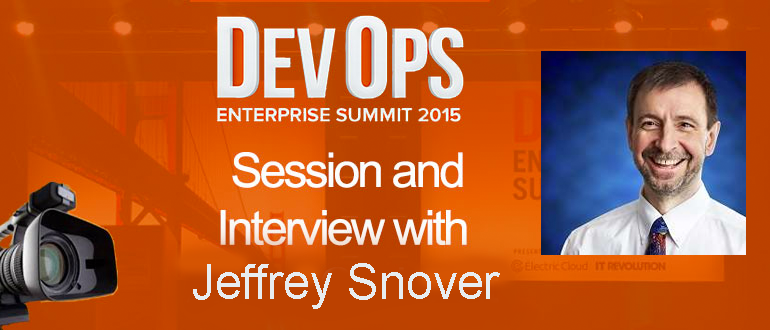
    One of my favorite presentations at the recent DevOps Enterprise Summit 2015 was Jeffrey Snover of distinguished engineer at Microsoft talking about his 16 year quest to bring what is today called Windows Nano Server to market.  Interestingly when I spoke with Gene Kim about what he thought were some of the best presentations  of DOES he also brought up Snover’s presentation as well.

    Windows Server without Windows was something once considered heretical from anyone at Microsoft. As Jeffrey relayed to me in the interview below and on stage, he paid a price for evangelizing for this. But today we have a version of Windows Server that has only 1/20th of the footprint of regular Windows Server. It runs on mainframes, command lines and has virtually (no pun intended) all of the functionality that you need for a server in the cloud without the GUI overhead that Windows usually brings.

    As importantly for me, Jeffrey also gave us a glimpse of what it is like to work in Satya Nadella’s Microsoft. It sounds like a very different place than when Steve Ballmer was CEO.  Is also sounds very refreshing as well.

    Here is my interview with Snover:

    :

    Here is Jeffrey’s actual presentation at DOES ’15


  • DevOps Days Ohio

    DevOps Days Ohio

    The Inaugural DevOps Days Ohio is being held on November 18th and 19th at Bluestone in Columbus Ohio (http://www.devopsdays.org/events/2015-ohio/ ). From fledgling startups to established industry, the Midwest is home to a large, vibrant technology community. Ohio in particular has been a flurry of activity in the past several years, drawing attention from around the globe.

    There are over 300 people expected at the event to discuss culture and technology needed to improve the ways that organizations operate and deliver products to their customers. The keynote speakers include:

    Courtney Kissler from Nordstrom, Vice President of E-Commerce and Store Technologies, who will be speaking on “Transforming to a Culture of Continuous Improvement” on Thursday morning.

    Carmen DeArdo, Technology Director at Nationwide Insurance will be discussing the Columbus based company’s journey over the last several years which started with the application of Agile practices and has expanded to focus on improving their end to end delivery capability.

    One common theme of both Courtney’s and Carmen’s talks will be on the application of lean practices as a key enabler of reducing delivery lead times.

    Other keynote speakers include:

    David Mortman, former Chief Security Architect at Dell

    Malilka Iyer from Pivotal,

    Fred Hatfull from Yelp,

    Dustin Collins from Conjour

    Kelly Looney and JP O’Donnell from CoverMyMeds.

    Courtney and Carmen recently spoke at Gene Kim’s DevOps Enterprise Summits. You can see their interviews with Alan here (https://www.youtube.com/playlist?list=PLGnigCNRJjp67gfI72P1Y9O8NqIv13PLW)

  • 9 more open source DevOps tools we love

    9 more open source DevOps tools we love

    A while back we ran an article by Tomer Levy of Logz.io about 9 open source DevOps Tools that we loved. Of course how can you pick just 9 among so many worthy choices?  So we wanted to revisit the open source DevOps tools space and add another 9 tools to the list.  In a few months we will be adding more open source DevOps Tools to the list as well. In the meantime here are 9 more must have open source DevOps Tools that we love:
    Kubernetes1. Kubernetes is an open source orchestration system for Docker containers. It handles scheduling onto nodes in a compute cluster and actively manages workloads to ensure that their state matches the users declared intentions. Using the concepts of “labels” and “pods”, it groups the containers which make up an application into logical units for easy management and discovery.Originally developed and owned by Google,Kubernetes was offered to the Cloud Native Computing Foundation to seed other complementary technologies to enable a set of common container technologies. It is an integral part of CoreOS’s Tectonic product, in addition to being tightly coupled with Mesos and the Mesosphere DCOS.Kubernetes offers the promise of Google-like container usage for everyone. It seems no matter what the basic container technology we use, it is being used with many of the container-based PaaS stacks today

    Chef_HORl_CCan_Reg2. Chef – From the official what is: “Chef is a systems and cloud infrastructure automation framework that makes it easy to deploy servers and applications to any physical, virtual, or cloud location, no matter the size of the infrastructure. Each organization is comprised of one (or more) workstations, a single server, and every node that will be configured and maintained by the chef-client. Cookbooks (and recipes) are used to tell the chef-client how each node in your organization should be configured. The chef-client (which is installed on every node) does the actual configuration.

    More than the above though, for many Chef along with Puppet Labs and Jenkins are the heart and soul of DevOps tools. Moving beyond its original configuration management mission today Chef represents the move to “everything as code” while still maintaining its open source commitment. Chef Delivery, Chef Compliance move Chef into the realm of a tool that is involved in the entire DevOps workflow.

    PL_logo_horizontal_RGB_lg3. Puppet – The Romulus to Chef’s Remus, Puppet Labs is one of the founding members of the DevOps movement. Built on open source and still fully supporting its open source heritage going forward, Puppet like Chef has moved beyond  its original mission of configuration management and automation of single machines or instances to orchestration of your entire stack.

    From Puppet’s open source doc, Why Puppet

    Puppet has been developed to help the sysadmin community move to building and sharing mature tools that avoid the duplication of everyone solving the same problem. It does so in two ways:

    • It provides a powerful framework to simplify the majority of the technical tasks that sysadmins need to perform
    • The sysadmin work is written as code in Puppet’s custom language which is shareable just like any other code.

    This means that your work as a sysadmin can get done much faster, because you can have Puppet handle most or all of the details, and you can download code from other sysadmins to help you get done even faster. The majority of Puppet implementations use at least one or two modules developed by someone else, and there are already hundreds of modules developed and shared by the community.

    Maven_logo.svg4. Maven – a Yiddish word meaning accumulator of knowledge, Maven was originally started as an attempt to simplify the build processes in the Jakarta Turbine project. There were several projects each with their own Ant build files that were all slightly different and JARs were checked into CVS. We wanted a standard way to build the projects, a clear definition of what the project consisted of, an easy way to publish project information and a way to share JARs across several projects.

    The result is a tool that can now be used for building and managing any Java-based project. We hope that we have created something that will make the day-to-day work of Java developers easier and generally help with the comprehension of any Java-based project.

    Maven’s primary goal is to allow a developer to comprehend the complete state of a development effort in the shortest period of time. In order to attain this goal there are several areas of concern that Maven attempts to deal with:

    • Making the build process easy
    • Providing a uniform build system
    • Providing quality project information
    • Providing guidelines for best practices development
    • Allowing transparent migration to new features

    gradle_logo5. Gradle – the yin to Maven’s yang, Gradle and Maven are much like Puppet and Chef. In this case though Gradle was born out of frustration with Maven and other tools.  From the Gradle, Inc. site:

    Gradle was founded by Hans Dockter who was working in Enterprise software development and ran into an intractable build problem. At the time he was using Apache Maven. After three days and nights of exhaustive research, he discovered that the problem could not be fixed with the tool at all. Hans vowed to cure this problem for himself, for his team, his company, and for developers everywhere. He was joined in this mission by founder CTO Adam Murdoch.  After releasing Gradle the open source project out into the wild in April of 2008, Hans and Adam then hired all of the key contributors whom they met along the way.  These included world renown Gradle experts from companies like Thoughtworks, Typesafe, and Pivotal.

    Many developers and shops today use one or the other of these open source tools.

    6. Mattermost (& Zulip) Today is all about ChatOps. In many organizations it is replacing email as the primary communication method between teams and even outside members now. While there are plenty of commercial solutions in this space like HipChat and Slack, there are some worthy open source tools available as well. One of the biggest advantages to these open source solutions is you don’t have to use a hosted version if you are worried about control, governance or security issues. You can install these on your own server and maintain yourself if that is your preference.  Here are two of the leading open source ChatOps tools:

    mattermostMattermost – is an open source Slack alternative. The company behind it is a Y Combinator funded startup with founders who come from Microsoft Office engineering. Frustrated that in using a SaaS hosted chat program they were locked out of their own data unless they paid to use the app they set out to create their own self-hosted app and so Mattermost was born. Not sure where the commercial element ill join this, perhaps open core type premium features? Support? Time will tell.

    zulip-icon-512x512Zulip – Acquired and then released as open source under an Apache license by DropBox, Zulip is a modern take on ChatOps.  Not based on IRC and XMPP, Zulip features: Threaded group conversations, One-on-one and group private conversations, Persistence, History, Full-history search, Team presence and buddy list, Inline image, video, and tweet previews, Drag-and-drop file uploads, Stream-wide announcements, Emails for important missed messages, Desktop notifications, Audible notifications, Hotkeys, Emoji, Code, Lightweight markup,  Message editing, Invite-only streams, Starred messages, Integrations, API, Mobile apps, Desktop apps

    7. OWASP – A developers and DevOps best security friend, OWASP has become the place for web application security. Their mission is to make software security visible, so that individuals and organizations worldwide can make informed decisions about true software security risks. OWASP is actually an umbrella for a number of different projects including tools, lists (OWASP top 10) and groups.  Their website says it best:

    OWASPThe OWASP Foundation came online on December 1st 2001 it was established as a not-for-profit charitable organization in the United States on April 21, 2004 to ensure the ongoing availability and support for our work at OWASP. OWASP is an international organization and the OWASP Foundation supports OWASP efforts around the world. OWASP is an open community dedicated to enabling organizations to conceive, develop, acquire, operate, and maintain applications that can be trusted. All of the OWASP tools, documents, forums, and chapters are free and open to anyone interested in improving application security. We advocate approaching application security as a people, process, and technology problem because the most effective approaches to application security include improvements in all of these areas. We can be found at www.owasp.org.

    OWASP is a new kind of organization. Our freedom from commercial pressures allows us to provide unbiased, practical, cost-effective information about application security. OWASP is not affiliated with any technology company, although we support the informed use of commercial security technology. Similar to many open-source software projects, OWASP produces many types of materials in a collaborative and open way. The OWASP Foundation is a not-for-profit entity that ensures the project’s long-term success.

    8. Zabbix (& Observium) – OK so lots of people have grown to hate Nagios. There are still lot of people who use Nagios too. That being said, we wanted to highlight some open source options in the network and application monitoring space.  Two we like are Zabbix and Observium.

    zabbix_logo_500x131Zabbix – The basic work sphere of Zabbix LLC is development of open source software for monitoring of networks and applications. Apart from that the company offers a wide range of professional services designed to fit every customer’s unique business demands including implementation, integration, custom development and consulting services as well as various training programs.

    Zabbix team’s mission is to make a superior monitoring solution available and affordable for all.

    The company’s flagship product is Zabbix, one of the most popular open source monitoring software in the world. It is already used by a vast number of companies, who have chosen it due to real scalability, high and robust performance, ease of use and extremely low costs of ownership.


    observiumlogoObservium – is a low-maintenance auto-discovering network monitoring platform supporting a wide range of device types, platforms and operating systems including Cisco, Windows, Linux, HP, Juniper, Dell, FreeBSD, Brocade, Netscaler, NetApp and many more. Observium focuses on providing a beautiful and powerful yet simple and intuitive interface to the health and status of your network.

    Professionally developed and maintained by a team of experienced network engineers and systems administrators, Observium is a platform designed and built by its users. Observium Community is available free to everyone and recieves updates and features twice annually. Observium Professional adds priority access to daily updates and new features for a small yearly fee.

    cucumber9. Cucumber – OK raise your hand if you use Cucumber. It is one of the best kept secrets in the business. I am constantly amazed out how many developers and DevOps folks mention this open source tool. It’s actually several tools as their are different versions for different languages with each one having a slightly different feature set.

    For those of you who don’t know, “Cucumber has revolutionalized the software development lifecycle by melding requirements, automated testing and documentation into a cohesive one: Plain text executable specifications that validate the software.”

    So those are our latest 9 open source DevOps tools we love. We know there are more.  Leave comments with worthy choices for our next article.
  • DOES 15 videos – Adrian Cockcroft

    DOES 15 videos – Adrian Cockcroft

    At this years DevOps Enterprise Summit we were very happy to partner with Gene Kim’s IT Revolution and Electric Cloud to conduct on site interviews with just about all of the speakers from this years conference, as well as many other attendees. All in all devopsy.kinsta.cloud conducted something like 86 video interviews over the 3 days of the Summit.

    Over the coming weeks we will be highlighting some of the best of the best here for you. We will present them in different formats.Some will have commentary around their sessions, others will feature background info on the topic and speaker and finally we will have updated info for some of the others.

    In that vein I wanted to lead off the series with this interview of none other than Adrian Cockcroft of Battery Ventures and formerly Netflix. My conversation with Adrian touches on really just three questions:

    1. What was his presentation about: Systems integration or systems thinking. It offered an inside look at the Netflix culture and talent density.
    2. what did he think of DOES 2015 – Adrian is on the program committee though by his own admission he was a bit pre-occupied on other business this year to help too much. But like many who attended Adrian is was really impressed at how deep the penetration into different verticals were.
    3. What does he see in the next 3-5 years for DevOps? Adrian says that companies that don’t adopt DevOps ways run the risk of disappearing.

    if the short 7 minute interview above wasn’t enough, here is Adrian’s complete session at DOES 15 (warning it is 31 minutes long)


  • PagerDuty acquires Event Enrichment HQ to speed incident resolution   

    PagerDuty acquires Event Enrichment HQ to speed incident resolution   

    Together PagerDuty and Event Enrichment HQ Integrate Event and Incident Management

    I had a chance to speak yesterday with CEO Alex Solomon, PagerDuty’s Product VP Jonathon Wilkinson and Ophir Ronen, Event Enrichment HQ Co-Founder and now Product Director at PagerDuty.  They all believe that this is a significant move by PagerDuty to help overcome the desensitization that many IT teams suffer as a result of so many alerts about incidents and events.  Trying to turn down the signal to noise ratio and allow IT team members to concentrate on what is most important is a big part of the Event Enrichment platform.

    The company already has begun integration into the PagerDuty and the whole Event Enrichment team is staying on with PagerDuty.

    Below is the press release:

    San Francisco – November 3, 2015 — PagerDuty, the leader in operations performance management, today announced that it has acquired Event Enrichment HQ and their Event Enrichment Platform (EEP). IT operations teams are facing a flood of monitoring data and notifications as the number and sophistication of monitoring tools increases. Integrating the Event Enrichment Platform with PagerDuty reduces noise, surfaces actionable alerts, and delivers context-rich remediation information so businesses resolve critical incidents faster.

    “Event Enrichment HQ realized early that the proliferation of tools within IT operations generates a lot of additional noise and wastes critical time,” said Alex Solomon, PagerDuty CEO and Co-Founder. “The company’s work directly aligns with PagerDuty’s continued commitment to helping businesses deliver uptime and great customer experiences.”

    The integrated solution helps businesses decrease resolution times by reducing noise so incident responders can spend less time on manually triaging events and by providing remediation information within the notification itself as the first source of truth. PagerDuty’s core functionality has addressed the challenge of assembling the right incident responders on the issue, but now teams have even better focus with intelligent control of monitoring system events.

    “Having felt the pain ourselves for many years, we set out to provide the IT operations community with the tools to suppress noise and enrich events” said Ophir Ronen, Event Enrichment Co-Founder and PagerDuty Product Director. “Joining PagerDuty allows us to continue that vision and extend into helping customers streamline the entire incident lifecycle to decrease downtime.”

    PagerDuty now offers a private beta of the Event Enrichment functionality to select customers. Additional details are available here.

    ABOUT PAGERDUTY

    PagerDuty’s operations performance platform reliably increases the uptime of businesses’ applications, services and infrastructure. By connecting people, systems and data into a single view, PagerDuty helps all teams — from DevOps to Enterprise IT — deliver powerful visibility and improved incident resolution times. PagerDuty has over 100 platform partners, and is trusted by Fortune 500 companies and startups alike, including Adobe, Airbnb, Etsy, GitHub, Intuit, National Instruments, New Relic, Panasonic and Rackspace. The company is headquartered in San Francisco and backed by leading venture capital firms Andreessen Horowitz, Bessemer Venture Partners, Baseline Ventures, Ignition Partners and others. To try PagerDuty for free, or to get more information, visit www.pagerduty.com.

    ABOUT EVENT ENRICHMENT HQ

    Event Enrichment HQ’s Event Enrichment Platform (EEP) allows IT professionals to significantly reduce their downtime by eliminating noise and enriching actionable events with remediation information. IT teams using EEP have the ability to route, manage, and enrich their alerts without interacting directly with critical production monitoring systems or code. Privately held, Event Enrichment HQ is made up of IT operations veterans who are focused on providing solutions for reducing downtime. The company is headquartered in Seattle, Washington. For more information, or to try EEP for free, visit www.eventenrichment.com.

  • Chef rolls out some tasty new dishes

    Chef rolls out some tasty new dishes

    Chef has announced some major additions to their lineup today. We will look at each of these but in total here is the news from Chef today:

    Screen Shot 2015-11-03 at 12.25.29 AM


    First of all the previously announced Chef Delivery is now in GA for everyone. Chef Delivery defines and manages the entire DevOps workflow. The diagram below is a good illustration of this:

    Screen Shot 2015-11-03 at 12.27.28 AM

    According to Chef, Delivery, “provides a prescriptive process to automate changes to infrastructure, applications and containers in a single prescribed pipeline.”

    Beyond the general availability of the previously announced Delivery, Chef also announced that they are moving into services in a big way. They are spinning up a new DevOps transformation practice to help enterprises adopt DevOps and transform their models. Justin Arbuckle, chief enterprise architect at Chef is heading up this new practice.  I would assume they will compete with professional service organizations like IBM, HP, PWC and others in helping large enterprises transform and adopt DevOps practices. It is a natural move for Chef as it continues to mature along with the DevOps market in general.

    Finally, Chef is going to roll out compliance as code, part of something Justin Arbuckle has spoken to me before of compliance at velocity. In order to bring this capability to market Chef has bought a smaller German security provider called VulcanoSec.  VulcanoSec has done a good job of developing a shift-left security product that allows for continuous compliance. I am sure we will see the Chef team expand this as they seek to bring more and more security into the DevOps process and they see opportunity for improving the entire development/deployment environment to make it more secure. They will also have to integrate and work with existing enterprise security solutions.

    All in all this is quite a series of announcements from Chef, which were made at the European Chef Community Summit in London.  Chef has been a leader of the DevOps movement from the very start and they continue to show that they will continue to lead and innovate in bringing DevOps and everything as code to enterprises everywhere.

  • DevOps Chat: Sunil Rajasekar, CTO of Lithium

    DevOps Chat: Sunil Rajasekar, CTO of Lithium

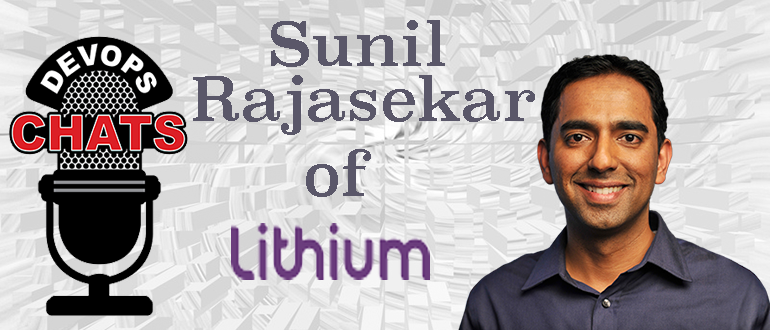
    hero-sunilContinuing our DevOps Chats, Leadership Series I recently sat down with Sunil Rajasekar, CTO of Lithium.

    As Chief Technology Officer, Sunil oversees core product, development and delivery of Lithium’s enterprise platform. Sunil is a seasoned technology executive who brings more than 15 successful years of enterprise, small business and consumer software experience. Prior to joining Lithium, Sunil served as Vice President of Engineering, Operations and Program Management at Intuit Financial Services and held a variety of senior roles in the Intuit Small Business and Central Technology groups. His passion is building innovative and successful web and mobile offerings that companies and end users love. Previously, Sunil worked at Oracle, Cisco and several startups.Sunil holds a MBA from the University of Toledo.

    Sunil and I had a nice chat about what it means to lead transformation at at organizations today using the many tools and options available. Regardless of tools though, Sunil emphasized what leaders have to do to enable transformation. It was a great chat that I hope you enjoy!

    [soundcloud url=”https://api.soundcloud.com/tracks/230736526″ params=”color=ff5500&auto_play=false&hide_related=false&show_comments=true&show_user=true&show_reposts=false” width=”100%” height=”166″ iframe=”true” /]
    Alan Shimel:                Hi, Alan Shimel at devopsy.kinsta.cloud here for another Dev Ops Chat in the Leadership Suite. Today’s guest is Sunil Rajasekar, CTO of Lithium, Lithium Technologies who are helping people with their social customer service software and social software in general. Sunil, welcome to Dev Ops Chats.

    Sunil:                           Thank you, Alan. Happy to be here.

    Alan Shimel:                So Sunil, for those of our listeners who may not be familiar with Lithium, can you give us just sort of a quick background on what it is Lithium does?

    Sunil Rajasekar:          Sure. So we’re in the business of helping companies engage with their customers in new patterns and what they’re dealing with now, right? Where consumers have all the power, they have access to all the data that they need and companies don’t own their brand anymore. The consumers are the ones that determine the brand. So we help companies deal with this environment in this reality that they are dealing with by helping them engage with their customers at scale through social channels and also facilitate conversations between customers.

    Alan Shimel:                Sure. And Sunil, I thought this was such a great topic for our Leadership Suite because I’m sure many of our listeners are grappling with this issue right now. There’s just a new way of doing things including a new way of engaging with customers. A new way of presenting your brand in the marketplace. And so much of it is wrapped around the social media and social communications that we see today. And companies who aren’t grasping this are quickly becoming dinosaurs. People tend to think of it’s the Unicorns, the Googles, the Facebook, the Twitters who are getting this or the startups. But that’s not really who your customer base is, is it Sunil? You guys work with some large customers?

    Sunil Rajasekar:          We do, yes. So we work with a wide variety of customers. We work with companies that have been a really long time so AT&T, Telstra, Cisco, HP; these are all customers of ours and they’ve seen a lot of success _____ [inaudible]. And we do work with a lot of the new companies that have been born in the “digital age” as well. So we work with companies like FitBit. We actually do work with Google, they are huge customer of ours as well. So we actually have a variety of customers across the spectrum, those who are new who get this new reality and those who get this reality but are adapting their business to adjust to it as well.

    Alan Shimel:                Sunil, I’m sure we have some people out in our audience today who are leaders in their respective companies and they are faced with an evolve or die reality. What, as a CTO, as someone who founded companies and so forth and you are background, what would your advice be to them?

    Sunil Rajasekar:          I would say three things, Alan. So one is make sure you have a diverse network. And so and the reason I bring that up first is we were talking about this earlier as well. Things are changing so fast in the tech world right now, it’s hard to keep pace and it’s hard to know whether it’s a passing trend and what’s here to stay. And it’s hard to digest all this data and then figure out the _____ [inaudible]. And if you’re going to try to do it by yourself, I would say it’s going to be next to impossible. And if you stick to just your countered network, right, the people you work with day in and day out, you’re probably getting the same level of information and you do end up with a group think type of situation. So making sure that making the time to engage with people in other industries, similar roles who are probably trying to figure out the path forward just like yourself. I think that’s the way to do it. You want to make sure you’re plugging into these other networks, you’re sharing your learnings and learning from others as well. So this is something that I’ve made a conscious effort to do in the past couple years and it’s been invaluable so I would say that’s one.

    In the second thing is, it does boil down to good old change management as well. Yes, there are some great trends that are out there and you should probably thinking about implementing it. But at the end of the day, you’ve got to know how to take this trend or new technology or new process and make it work for your organization. And that’s good old change management, right? So you need to know about your team. You need to know about the business needs and make sure that you can tailor whatever transformation you want to drive to the needs of your company. So what does boil down to change management?

    And then the third thing I would say is just resilience. And anybody who has made it up the ranks, they probably know this already but it’s a good reminder. Anytime you’re driving a large transformation, there are going to be challenges along the way. And you need to make sure that you are resilient and your team is resilient and the rest of your executive staff has bought into the transformation you are driving and they come here to support you and there are roadblocks as well. So as those are the three things. Make sure you have a diverse network, focus on change management and make sure you don’t forget about being resilient.

    Alan Shimel:                Sure. Sunil, I have questions I’d like to follow up with you on two of those points you’ve made. First of all, in terms of a diverse network which as you said you have pursued over the last couple years, what advice can you give our listeners on what kind of group should they be looking for? Where do they find them? How do you make that a reality?

    Sunil Rajasekar:          Sure. So there’s three ways I’m going to do it and there’s a plan to do it, I would say, here as well. One is of course your personal network. There are people you’ve worked with in the past who you admire, probably have gone on to do other things and have other experiences. So making sure that you really cultivate your network and you reach out to people and check in and if you have a situation you’re dealing with, reach out and ask for advice. Or if you’re contemplating a big technology decision or a business decision, reach out to these folks who are in your network and get the advice.

    Another thing that we’ve done is we’ve set up a technology advisory board so we have course have the board for the company. We’ve got a special technology advisory board that we’ve set up as well. And this has people from companies like Google, LinkedIn, Netflix. So some very, very strong background for all these folks and we’ve use this technology advisory board extensively for some key decisions that we’ve made. So that’s been invaluable.

    And then the third thing I would say is plug into meet ups that are going on. Chances are whichever city you’re in, there are a ton of tech meet ups that are going on and if there’s not that many, start one and get people from other companies to come and share their learnings on different topics. So we have a _____ [inaudible] ops meet up that we set up and we meet pretty regularly in our office and it started off as a small thing and now we have members who participate from again, the Googles of the world, the Air B&Bs of the world and we have over 1000 members. And that’s been great as well.

    Alan Shimel:                Yeah, no, that’s fantastic. Sunil, jumping to one of the other points you made which was about change management, so something else – just my opinions, observations and advice is sometimes it’s about embracing change. Too many people look at sort of the new technologies, the new ways of communicating, the new ways of doing things as oh my goodness, I’ve got to learn something new. Or this is changing what I do and no one likes to change what they are used too. I get all that. But sometimes embracing change is what makes the difference. Right? Embracing this change, looking at it as how can I make it a positive rather than just defending my turf if you well? Way too often people are just defending their turf, it seems, instead of embracing the change and running with it. And that would be my advice as well is don’t think of these changes as yet another thing you have to do. Think of them as ways that are going to make your life easier, make you more successful, make your organization and those around you more successful. So I –

    Alan Shimel:                That’s part of it.

    Sunil Rajasekar:          That is so true, Alan. There was a time when I think leaders were looked up to for stability and making sure that things stayed stable. But I think that paradigm has changed. In this time and age, the leader is looked at primarily for their ability to predict change and guide the organization on the path that they can adapt to this change and be successful in the future as well. So as a leader, that is one of our key responsibilities, looking at what’s coming around the corner and making sure that you are guiding the organization in the right direction. So it’s changed in my opinion.

    Alan Shimel:                Absolutely. Well, Sunil, the problem with changes sometimes it moves too fast and so does the time we have for our web chats unfortunately. We are well over our 10 minute kind of target so were going to have to wrap it up. But for people who want to find out more about Lithium and kind of how you guys can help, where can they find you on the web?

    Sunil Rajasekar:          Oh, it’s easy; www.lithium.com. And from there, you can connect to a lot of good information and hopefully you know me as well; if you have follow-up questions or comments.

    Alan Shimel:                Fantastic. Sunil Rajasekar, and I may have messed that up; I apologize. Thank you for appearing on this episode of Dev Ops Chats for the Leadership Suite. And continued success with Lithium.

    Sunil Rajasekar:          Thank you very much, Alan. Thanks for having me. 

  • DevOps Connect: cdSummit SoCal

    DevOps Connect: cdSummit SoCal

    I know we have mentioned it before but we haven’t officially announced our DevOps Connect: cdSummit SoCal event on December 3rd in Los Angeles.  The event co-produced with CloudBees, the enterprise Jenkins company, IBM and devopsy.kinsta.cloud will take place from 9am to 6pm at:

    The Olympic Collection Banquet & Conference Center
    11301 W. Olympic Blvd., #204
    Los Angeles, CA 90064

    We have a great line up of speakers and sessions for this event and I wanted to share 4 of them with you today:

    JohnWillis11st Keynote/Headliner: John Willis, evangelist at Docker – That’s right, the one and only @botchagalupe will be kicking things off. If you have been lucky enough to catch John present before you know that he never disappoints.  Partly because his experience and knowledge give him superior insight into the issues and problems that IT teams face today, but also because he is so passionate about what he presents on.  John will be presenting:

    Kata

    Mike Rother in his book Toyota Kata implied there was an invisible side to why Toyota was so successful over the years.  As we we have explored the transitions from Lean to Agile and now to Devops we often fight the visible versus the invisible in accomplishing our goals.  This presentation will take a look at what Kata meant at Toyota, Alcola over the years and bring it full forward with companies line Netflix and Etsy.

    andypem2nd Keynote: Andy Pemberton, Sr. Director, Solution Architecture at CloudBees. I have seen Andy present several times now and he does a great job of showing how the technology we are using everyday in our lives is being pushed, pulled, stretched and shaped by DevOps, Continuous Delivery and Agile. Andy will be presenting:

    Orchestrating the Continuous Delivery Process

    Continuous delivery is an end-to-end process and orchestration is the engine that drives continuous delivery. Automating the continuous delivery pipeline starts with understanding the process and of the entire toolchain. It sounds daunting, but it can be approached in stages to keep up with the demands for application delivery speed.

    522972Boyd Hemphill, Director of Evangelism, StackEngine. Boyd is one of the great Austin DevOps folks. He runs the Austin DevOps Meet up Group, helps with Austin DevOps Days, Container Days and so much more. Like John Willis and Andy Pemberton, I have seen Boyd present a few times and he also just really brings a great talk. Boyd presented on “HomeOps, lessons he learned about DevOps while doing work at home.  It is funny, insightful and a really great presentation.

    HomeOps – Learning DevOps At Home

    DevOps is great. You can see the benefits. All the success stories have you champing at the bit to become your very own Unicorn. Oh, but you are smarter than that. You know that every one of those success stories comes with many, often hidden, trials and tribulations.

    HomeOps is the way I have become familiar with many of DevOps models such continuous delivery, lean thinking and cultural impact. Bringing these models to work with the ability to anticipate problems helped me save nearly $1.0m in costs while opening $1.8m in revenue.

    Come gain some of the missing insight to your continuous delivery journey.

    bobBob Reselman – Publisher and Managing Writer: The World in Which We Live. Bob is half of the ROELBOB team that has been creating some of the funny cartoons here on devopsy.kinsta.cloud. Bob also has many, many (did I say many?) years of tech experience under his belt which gives him the perspective he needs in his role at The World in Which We Live. Bob will be presenting:

    Making a Linux Container: My pain and agony in grueling detail

    Allow me to share an intimacy: I an experienced technology writer. Also, I am a container newbie. But, I understand that containers are an important step forward in computer virtualization. Knowing the stuff is a whole lot better than not knowing it.

    So I took the plunge and decided to get down and dirty by building a containerized microservice.

    I do have a method. I am a learn by doing guy. First I get the concepts down, then I get hands-on and write about it as I go. I assumed there must be a lot of Hello World type stuff out there to get me up to speed with the basics. Then, I could take things a bit further and build my microservice container on what I learned in the Hello Worlds.

    I mean, it can’t be that hard, right?

    Wrong!

    It turns out that making my first container was a journey into pain and agony. No human should have to go through such an ordeal. So I am going to share my story with you in grueling detail so that you don’t have to experience such torture… ever.


    We have another 5 or 6 sessions/speakers that we are finalizing right now and will announce next week.  However, there are still one or two slots open and if you are interested in presenting you can write me at editor@devops.com with contact info and we will contact you.

    Besides the great sessions and speakers, we will be featuring demos of Jenkins, CloudBees, IBM BlueMix and more. Also lunch, refreshments and more will be served.  There is plenty of free time built in for networking as well including caricatures by the ROELBOB team and more surprises in store. We will also be announcing additional sponsors in the coming days.

    So if you are in the Southern California area and into DevOps, CD, Jenkins, BlueMix or want to learn more, this is a can’t miss event. You can get more info here. You can register for the event (there is a $99 charge for the day) on Eventbrite.

    We hope to see you in Southern California on December 3rd.

  • The DevOps Dozen

    The DevOps Dozen

    After over 2500 votes cast in the final round and almost 5000 votes in total we are very proud to present the winners of the inaugural DevOps Dozen awards. These companies were voted by you our readers as the top companies in the DevOps market. They are not companies that are necessarily using Devops internally (though many of them are and have had their own DevOps journeys).  They are the companies/organizations who are producing the tools and services that are helping make DevOps the force for change that it is.

    Also a quick word about all of the companies that we nominated for these awards. There were originally something like 100 companies to choose from. We then narrowed it down to the final 32.  Any one of the final 32 were worthy of being in this list. of the DevOps Dozen  At some point yes it is a popularity contest. Some companies are better at turning out their voters then others (just like in real elections).  But on the other hand there were some companies that didn’t campaign at all.  They are here because by consensus they belong here.  With so many votes cast, you have to believe that  the companies that made the final 12 do belong here.

    Congrats to the 12 companies/organizations listed below!

    (Please note that you can download

    [seoslides embed_id=”0e545f934454″ script_src=”https://devopsy.kinsta.cloud/embed-script/dd-finalists-final/10755/” overview_src=”https://devopsy.kinsta.cloud/slides/dd-finalists-final/” site_src=”https://devopsy.kinsta.cloud” site_title=”devopsy.kinsta.cloud” title=”DD Finalists Final” /]

    In the coming months we will hold additional DevOps Dozen awards for companies that are leveraging DevOps most successfully and for those individuals who are the current leaders of the DevOps movement. Stay tuned for those after the first of the year.

  • Live blogging DOES 2015

    Live blogging DOES 2015

    We will be live blogging from DOES 2015. Ericka Chickowski and Alan Shimel are live at the show in case you can’t be here yourself.