Author: Alan Shimel

  • DevOps Chat: Randy Newell, IBM InterConnect 2016

    DevOps Chat: Randy Newell, IBM InterConnect 2016

    Last week I had a chance to sit down with Randy Newell, Marketing Director for DevOps at IBM.  We talked about the buzz starting to build around InterConnect 2016 this February in Las Vegas.  The call for speakers is open until September 25th.  Randy and I spoke about last years event and what to expect this year,
    Below is the audio of our conversation and below that is the transcript if you would like to follow along.  Enjoy!

    Alan Shimel:                Hi. This is Alan Shimel and this is another DevOps chat. Our guest today is a friend of mine, Mr. Randy Newell, Worldwide Marketing at IBM. Randy, I’m pretty sure I messed up your title. Why don’t you correct me for our audience?

    Randy Newell:             Sure. I’m Marketing Director for DevOps at IBM.

    Alan Shimel:                Fantastic. Randy, we’re on today to talk because the buzz has already started building for InterConnect 2016, which is February 21st though the 25th, if I’m not mistaken, out at the MGM Grand in Mandalay Bay Hotels in Las Vegas. Is that correct?

    Randy Newell:             That’s right, Las Vegas, Nevada, USA.

    Alan Shimel:                Welcome to fabulous Las Vegas. Randy, for a few people in our audience maybe who are not familiar with InterConnect, can you give us a quick background on the conference?

    Randy Newell:             Sure. IBM InterConnect is IBM’s Premier Cloud and Mobile Conference. The first time event was actually last year. It was a mash-up of three different events that IBM has been doing previously, Impact, Pulse, and Innovate, all having different angles to them. We mashed them together and then kind of put in an overall mobile and cloud focus on it.

    We ended up having somewhere in the neighborhood of 20,000 attendees last year, and delivered an enormous amount of curriculum and content, about 2,500 sessions. It was a tremendous success. So we’re excited to be back at it and planning it now for next February.

    Alan Shimel:                Randy, near and dear to the hearts of our listeners here on devopsy.kinsta.cloud, under those 2,500 or so sessions there was a tremendous amount of dev-ops related content and curriculum at the show, wasn’t there?

    Randy Newell:             Yes, there was. I think in all the number was something like 385 dev-ops sessions, and that includes presentations, labs, workshops, et cetera. So it was one of the major streams. I think we had five total streams last year. Dev-ops was one of them. Streams is just conference vernacular for a grouping of tracks. We’re essentially doing a similar approach this year, so there will be a similar major presence for dev-ops, somewhere in the neighborhood of 300 or 400 total sessions.

    I think what’s interesting about this year is you’ll actually see dev-ops in addition to being in its own stream, its own set of tracks, will actually permeate a number of the other streams as well like hybrid cloud, mobile, Internet of things, security, et cetera. So that’s kind of neat because we’ll see it put into the context of some of these other streams.

    Alan Shimel:                And that very much is in line with where dev-ops is in the market today. It seems to be everywhere. Randy, for those who are listening, I wrote an article just the other day about “Up Your Game” when you go to these conferences. Rather than participating by listening, participate by speaking. The call for speakers is still open, correct?

    Randy Newell:             That’s right. It actually closes out on Friday, September 25th. So those who are reading your blog and taking the challenge to get themselves out and present this year, we really encourage them, if they’ve got a good story of their dev-ops journey, to really consider putting together a response to that call for speakers and getting that submitted by this Friday, by September 25th.

    Alan Shimel:                Randy, I’ve spoken to dozens if not more of people who say, “Oh, why do people want to hear about me? What do I have to say to people?” Can you give us sort of a peek into what are the kinds of stories or presentations that you guys are looking for, for InterConnect this year?

    Randy Newell:             I think that’s a great question. First of all, just maybe a minute on the way that we’ve organized dev-ops at the conference, the way that the stream looks. Dev-ops is the overall stream, and then think of it organized into a couple of interesting tracks. One really positions dev-ops overall as an enabler of transformation. So if you’re thinking about submitting and you have stories about the way dev-ops has helped transform application development delivery generally or transform for faster innovation, which is really where we’re seeing a lot of these come in now, consider that particular track.

    Then there are a series of tracks that are knitted together that dive into what we refer to as option paths or phases of the software delivery lifecycle, so focus on plan, dev, test, deploy, operate. So if you’ve got a particular story in that space, then I would encourage you to think about that context.

    Then we’ve got a track that actually addresses the unique considerations of dev-ops in large enterprise, where you’ve got multi-platform environments, so considerations relative to Z mainframe, for example, power environments, and get into neat concepts like variable speed IT, bimodal, those sorts of concepts within that context.

    Then of course the other tracks that I mentioned are streams on hybrid cloud, on mobile, security. So first I’d think of, “Hey, do I have a story that fits particularly well into this framework,” not that you have to work within that framework, but it would give you some context.

    Then I think what we saw playing particularly well last year, so conference sessions that end up getting scored particularly well are about your dev-ops journey, and think of sharing it at really one of two levels, because InterConnect is very broad and we should probably talk about that a little bit. But what’s interesting is we have management topics and we have technical topics. So I would generally think about whether you’re grouping your story into one of those two.

    The management topics and technical topics can actually play against everything that I’ve mentioned so far, but the important thing is sharing the journey. What were your successes and also your challenges? Envision yourself sitting in the seat. Am I learning something? What am I learning from this particular session? So I’m listening to the presenter. Tell me about their journey and not just, “Hey, we hit the following KPIs around speed or quality or engagement,” or what the particular metric might be for your particular execution, but what were the challenges politically, especially cultural issues. How did we get that first starter project through? What were the challenges on scaling for the next project?

    I think it’s those sorts of things that work particularly well. I would encourage people the way to get your track approved and, importantly, that in most cases will get you a free conference pass which is worth a couple thousand dollars, which is good, is to get specific about the learnings, the metrics, what you were able to accomplish with some good quantitative aspects behind it.

    But as I indicated, don’t forget some of the qualitative aspects that would say, “Hey, while this was dev-ops and was largely about increasing speed or increasing quality, what did it allow the business to do?” Because in the end we were after gaining some business agility or some increased market speed, and what did that mean. Increased market share. Were we able to launch a new business venture? Did we increase customer sat? Those sorts of things come out extremely well, especially if you’re talking some of the management tracks.

    Then if you’re looking at a technical track, really peel back and look at some of the leading edge implementations and use cases. I think that’s where we’re going to see a lot of excitement.

    Alan Shimel:                Absolutely. Randy, I always like to tell people talk about what you’re passionate about, and chances are there will be other people who are passionate about the same thing, and birds of a feather will flock together and they’ll join in your passion. There’s nothing better than a presentation where you have a room full of people that are passionate about the subject that’s being presented. It makes for the best presentation.

    So I highly, highly encourage you. If you are thinking about it, dipping your toe in, whether you’ve spoken before at conferences or not, if you’ve got something you think you want to share with the world and talk about your dream and your path and your journey, as you said, Randy, it is open till September 25th, the call for speakers.

    I believe you can get to it at www.ibm.com/cloud-computing/us/en/interconnect. But don’t worry if you didn’t write that down. We do have it up on our website at devopsy.kinsta.cloud. You can find it there under an article I wrote called “Up Your Game: Speak at a Conference” or something to that effect.

    Randy Newell:             You can also just use your favorite search engine to just search on IBM InterConnect 2016 call for speakers.

    Alan Shimel:                That sounds too easy.

    Randy Newell:             It might take you right there.

    Alan Shimel:                Yeah. That’s another way. Randy, all work and no play makes us dull boys and girls. The other great thing about InterConnect is it’s such a great networking event. I don’t mean switches and routers. I mean human networking. Talk a little bit about some of the social activities maybe from last year and what we might look to see this year.

    Randy Newell:             I think one thing to note and obviously anybody that’s paying attention to devopsy.kinsta.cloud knows that there are an awful lot of conferences that are going on in the industry. I think what’s neat about InterConnect and what’s maybe a little bit different than some of the other conferences is the breadth of the conference itself.

    As I indicated earlier, we intentionally blended a number of prior events into this, and then obviously have extended the curriculum to be largely around mobile and cloud. Surprise, surprise, it’s about the enterprise. That’s where IBM plays. So it’s a very rich enterprise environment.

    But what really hit home last year, we used to have a prior event called Innovate, which was a dev conference. We had another conference called Pulse, which was kind of an operations conference. We had another conference that was Impact, which was largely about middleware integration concepts, et cetera. All of those, every one of them had 4,000, 10,000, 12,000, and now this is combined and we’ll do well over 20,000 at this event this year.

    When you put all those together and you have a topic, especially like dev-ops, and we might have addressed in prior years and it might lean towards a dev topic. It might lean towards an ops topic, depending on which of these events. When you put this attendance base together, it really is exciting because you’ve got major enterprise customers that are sending in some cases dozens if not over 100 attendees from a given organization, and they’re from different parts of the organization, yet you’re hearing the same major conference topics. You’re able to segment your path, your personal roadmap through the event to get what you want out of it, but you’re able to basically go share experiences as well.

    So if you want to go onto the show floor, going back to your question about what’s going on socially, the mix of sessions and labs and workshops and going out onto the show floor, whether it’s demos and touch and feel and let’s build an app together and those sorts of things, especially when you do it with your colleagues who might represent your dev-ops team. That’s kind of cool.

    Alan Shimel:                I agree, Randy.

    Randy Newell:             We do some neat stuff, too, and I know you were there last year and I appreciate your collaboration around the event. IBM knows how to throw a party as well. Last year we had Aerosmith there and we took over the MGM coliseum. Obviously it was sold out. I think it was well over 12,000 or 13,000 people. And it rocked.

    We end up kind of blending what turns out to be very long days with lots of excitement and lots of technology and lots of learning and sharing and networking, but there’s an awful lot of play time, and Vegas is certainly a great place to do that. There’s certainly an awful lot of distractions and opportunities for –

    Alan Shimel:                For those who want to partake. Randy, I will just mention as a participant last year, as an attendee, as an observer, what I really loved about the InterConnect experience was it is a really big show, and sometimes though one can get lost in a really big show. What I liked about InterConnect was the keynotes were by the kinds of luminaries you would expect to see at a show of this magnitude. These were real headliners, not just keynotes, headliners.

    But because of the breadth and width of this show, almost 400 dev-ops tracks, if there was a particular aspect that you wanted to explore and take a deeper dive into – so many shows have dev-ops and three-quarters of the things are: what does dev-ops mean to me? What is dev-ops? Why should you care? At a show like InterConnect you could slice minute slices into stuff that you’re really important on. How can I facilitate better continuous delivery and better feedback loops in a banking scenario, in a financial institution scenario? How is a Fortune 100 bank delivering mobile applications based upon mainframe technology?

    Those are the kinds of deeper dives that you’re not going to get at a show that doesn’t have that depth, doesn’t have that breadth. So I highly recommend it for that reason.

    Randy Newell:             I don’t think we’re unique in this, but I think what we’re getting better at with the InterConnect Conference and IBM conferences in general is tagging the content. So if you go on to your personal agenda builder as you’re readying for the conference, you can build yourself a personal track based on: am I looking for management tracks on this topic? Am I looking for technical tracks? When I’m thinking about how advanced the tracks are, am I signing myself up for novice stuff? Am I going for double black diamond? Those sorts of things.

    So I think there’s ability in all of that breadth to actually really find a personal track through it. I think we uncovered some gems last year based on ratings, based on attendance, and of course our updating that based on what we’ve been hearing over the last year, since the last conference, is we’ve evolved in the dev-ops space from a lot of clients trying to understand what dev-ops is, and we still answer that question and will answer the question this year with sessions that are designed for that, but we’ve seen customers evolve not just from doing pilot dev-ops projects or drilling down in a particular adoption path area like deployment automation or agile planning or something like that, but to actually now start to build full integration across the lifecycle so that they’re actually achieving real continuous delivery. That’s really cool.

    For the clients that haven’t gotten to that point, there becomes a question that says: how do I get started? One of the things that we delivered last year and I think you’re aware of is we ran some workshops. The workshops were designed to do a dev-ops assessment. Where are you on your readiness for dev-ops?

    These were kind of cool environments where you’d bring in either a single client and you’d actually get 10 or 12 people in the room all from that client, or you might run it in a multi-client environment and just a common topic. But the point was you do an assessment right there live as a workshop, and these things are run by pretty heavy-duty folks from IBM. These are distinguished engineers. They might be IBM fellows. They might be global services partners or directors who bill out for a fair amount of money. You’re talking about live, basically included in the price of your conference fee, consulting on how ready are you for going towards dev-ops and getting to a point of, “We understand where we’re broken and where the right starting point is.”

    We’re going to keep building on that for this year. So we’ll continue to see those types of workshops, like I just discussed, but we’ll actually progress it and blending it with some of the stuff that we’re doing now in our Bluemix Garages, for example. I don’t know if you’ve heard about this, but we’ve opened up a whole host of Bluemix Garages and these utilize a neat approach. It’s a startup methodology that they use.

    What we’re finding is that enterprise customers are coming into that garage environment, and they’re understanding how you can very rapidly use this kind of startup culture as well as a kind of rapid methodology that’s there, to go from ideation to MVP in a matter of a couple of weeks. If you’re talking about line of business, being able to see that kind of responsiveness, that’s exciting, and that becomes kind of the way that you can go back to the enterprise and scale that sort of startup culture within the enterprise environment. We’re trying to harness that.

    So being able to put that kind of environment into InterConnect to say, “Let’s go from your assessment,” if that’s where your readiness is, to understand where you are, for those who have progressed and want to understand some of the design thinking and aspects that go into this very rapid movement from ideation to MVP, so that you can start to show this to your business stakeholders. That’s a neat thing that we’ll be experimenting this year as well within the context of InterConnect.

    There are a few things that have enabled that. Last year we were working off of a beta version of Bluemix, which is IBM’s platform as a service. Bluemix together with SoftLayer have become a really pivotal part of the way that we can deliver dev-ops in a hybrid cloud environment. Bluemix has since gone GA last summer and is now actually the fastest growing platform as a service in the industry right now, and that’s the tip of the arrow for doing rapid dev-ops environments. So you have this immediate standup environment that’s available on the Bluemix platform, and then you have this integrated experience for your dev-ops team within that environment, and able to go right from build to test to automated deployment instantaneously, literally a one-click environment within that context.

    So that’s something that we’re going to leverage in the InterConnect environment, to be able to show that speed with which you can get to that initial end.

    Alan Shimel:                Fantastic. Randy, we’re way over time here, so I’m going to have to wrap it up. You know what? We’ll be doing more chats as we get closer to InterConnect certainly.

    Just a quick reminder again, if you listened to nothing else today, if you want to speak at InterConnect September 25th is the deadline. Don’t miss it. There are a lot of openings, a lot of slots. So I encourage everyone to share their journey and apply.

    Randy Newell, thank you very much for giving us a little InterConnect 2016 insight today. We look forward to having you again as a guest on our show.

    This is Alan Shimel for devopsy.kinsta.cloud. Till next time, thank you very much.

    Randy Newell:             Thanks, Alan.

  • DevOps Chat: Varun Singh, CTO of ScaleArc

    DevOps Chat: Varun Singh, CTO of ScaleArc

    singhI recently had a chance to sit down with Varun Singh, CTO and founder of ScaleArc. ScaleArc was recently named a Gartner Cool Vendor and is the leading provider of database load balancing software.

    Varun and I spoke about why IT leaders need to ensure that their databases are performing optimally.  On top of that Singh has had a colorful career in India as a pioneer in the Internet.  You can listen to our conversation and follow along with the transcript. Enjoy!

    [soundcloud url=”https://api.soundcloud.com/tracks/224505149″ params=”auto_play=false&hide_related=false&show_comments=true&show_user=true&show_reposts=false&visual=true” width=”100%” height=”450″ iframe=”true” /]

    Alan Shimel:                Hi everyone, this is Alan Shimel, editor in chief of devopsy.kinsta.cloud. Very happy to be joined today by our guest, Mr. Varun Singh, founder and CTO of ScaleArc. Varun, welcome to our webcast.

    Varun Singh:               Thank you, Alan. Thank you for having me today, it’s going to be fun.

    Alan Shimel:                I think so. So Varun, we were talking a little bit before we went live, or recorded, as the case may be, and you were giving me a little bit of your background. You’ve had quite an interesting career working on OS/2 Warp and BBS’s in India, running the first BBS based on Linux in India and hosting a TV show there as well.

    Varun Singh:               Yep, yep. I’ve really sort of aimed for diversity, if you want to put it that way, in my career. I’ve tried anything and everything. Been a writer. Been a journalist, sort of reviews and everything else. Started a website called TechTree.com, which is now like the number one tech website in India at this point in time, and a whole bunch of other stuff. Joined CNBC sort of at the peak of their build up and joined them primarily as a tech editor, but they wanted me to be the CTO, so I did that sometime. Built a whole lot of websites with them, and when we did that, essentially learned the value of how to scale databases. And from there came the idea of ScaleArc.

    Alan Shimel:                Excellent. So Varun, excellent lead in for our audience who may not be familiar with ScaleArc, can you give us a quick background?

    Varun Singh:               Sure. ScaleArc is database load balancing software. We essentially ship you a virtual machine, and that virtual machine includes the database load balancing software that let you scale, provide a zero downtime environment, and essentially make your transactional apps completely zero downtime. This is the kind of tech that pretty much Google, Facebook, everybody else have had within their networks, because they’ve built it for themselves. What we’re doing is building it for the rest of the world.

    Alan Shimel:                So as some others have been wont to say, the CoreOS people, you’re bringing sort of Google-like experience to the masses.

    Varun Singh:               Yes, at the database layer, yes. So CoreOS is doing it essentially, the OS layer, and there’s a whole lot of stuff that’s going on in the container world, which is all very, very exciting and we’re participating in that in someway as well. But essentially what we do is we sit at the transaction box. So applications and websites, they connect to us with an abstraction layer, and once they connect to us, we then go ahead and establish connections to multiple database servers in the background and make sure that no matter what happens, that application gets its transactions through.

    Alan Shimel:                Excellent. And Varun, ScaleArc is sort of a six-year overnight sensation, right? You guys have been around for some time since 2009?

    Varun Singh:               Yep, it took us about 2.5 to 3 years to sort of build the tech itself, because it’s pretty complicated to build what we’ve built, because we’ve built essentially the world’s first transparent database engine. If you look at the four patents that we filed in 2010, they’re all about transparency and how we’ve basically made this possible for any and every app. So all an app has to do is just transfer its connection over to us and immediately they get access to an entire cluster, they get access to zero downtime, they get access to deep SQL  analytics, and all of that is available to them as part of that one single package that we provide.

    Alan Shimel:                Excellent. So Varun, our talk today is really aimed at C-level, VP manager level people. Why should – without getting too far into the weeds on the technology or feature set, why should executives care about what ScaleArc is doing and what problem are you solving that executives care about?

    Varun Singh:               Sure. So at this point in time I’m sure a lot of executives are looking at how to migrate to the cloud. The moment you go to the cloud you’re essentially running into smaller machines, you’re running into unpredictable arrangements windows, and you also have to worry about how to aggregate capacity across multiple machines to be able to make your performance numbers.

    A lot of applications that are running on very large servers on prem don’t have a way, don’t have a path into the cloud right now. So ScaleArc is basically the thing left that’s the last step in being able to migrate to the cloud as far as large mission critical database intensive apps go. So that’s the first thing that we do.

    We’re making it a lot easier for your application developers to develop these apps and not have to worry about the HA piece, not have to worry about the failover piece and all those things. And that makes your developer’s life so much easier. We provide you a lot of APIs and all those APIs let you automate pretty much all of these functions. You could go ahead and do a rolling upgrade. You could do a rolling patch. All of that can be automated, and you can do all of that using our S API’s that are provided by us.

    Alan Shimel:                Excellent. So Varun, when you guys typically – well first of all, is it mostly larger enterprises that are looking for this kind of thing or is it across the board?

    Varun Singh:               It is across the board, but we’re specifically at this point in time targeting larger enterprises. So some of our largest customers are like Dell.com. So every single transaction on Dell.com works with us and we’ve been with them through the last two Black Fridays and just preparing now for a third Black Friday with them. We work with NASDAQ, so NASDAQ pretty much all price feeds at this point in time come through our system. We work with Answers at Microsoft.com, so all user queries that are going through Answers to Microsoft.com come through us. And that’s one of our large deployments that is across the board, four regions, multiple datacenters, active active. So pretty complex applications and pretty complex deployments.

    Alan Shimel:                Excellent. And Varun, when you engage customers of this size, where is the engagement coming from? Is it executive led or are there sort of technical champions that are bringing ScaleArc technology to the exec team?

    Varun Singh:               Sometimes it is executive led, sometimes it’s architecture led. Sometimes it’s even DBA or application developer led. It’s across the board. We’ve seen all kinds, but the most consistent one we’ve seen is the architecture, and that’s a pretty good fit I think with your show as well.

    Alan Shimel:                Yeah, yeah, I believe so.  So Varun, as I think we were speaking earlier, we live in interesting times. It’s sort of a boundary layer as we move into a world dominated by movements like DevOps and automation and continuous delivery integration, continuous integration, continuous everything. How has that played into your life and ScaleArc?

    Varun Singh:               It’s helping us massively. That’s pretty much exactly what people want. They want that application infrastructure to be continuously available. So from that perspective, the fact that databases are the last thing remaining in that stack which are hard to manage, we’re sort of flying at this point in time.

    Alan Shimel:                Exactly. So the database is one of the last pieces of the stack to kind of get the message about doing more faster and getting sort of a DevOps approach to things, or agile.

    Varun Singh:               Yep, and essentially what customers are right now aiming at is to be able to get to a point where they really understand their database stack and have full control over their database stack. And we’re kind of becoming that one control panel that they look at every day and essentially find out exactly what’s happening, whether it’s new users that are logging in to their database stack or new queries that are being executed that have never been executed before. And what we’re providing them is that entire stack as well as the ability to do zero downtime maintenance, being able to mark a server offline in the middle of the day, put a patch on it, upgrade it, and bring it back online. And you have never been able to do it in the past because you would have always had a ton of application errors, and what we’re doing essentially is eliminating all of those application errors and providing a transactional engine that works with pretty much any application engine and allows that application engine to become a zero downtime app.

    Alan Shimel:                Excellent. Varun, for executives listening in on here, what do you see as the next frontier or the next thing that CTOs, CIOs, VP, managers should be looking for in terms of database management, database performance, database load and so forth?

    Varun Singh:               I think at this point in time, they have to look at figuring out a way to expand out, scale out and get to what we call shared nothing. Shared nothing is essentially a way to store database information on servers in a way that you don’t have to worry about interdependency issues. So each server is its own individual isolated zone and even if you have five servers, you can have four of them go down and the fifth one will still be alive. So that’s the architecture that I think everybody is headed to right now. That’s the architecture that MySQL sort of made famous, and now at this point of time pretty much all databases are headed to that architecture. And databases are getting more and more sophisticated. But apps really haven’t been able to use that because the issue right now is that quite a lot of these apps are written to older versions of SQL databases. So what we do is provide all the new features that are coming in from the new databases to the apps without a single change on the app.

    Alan Shimel:                Excellent. Varun, we’re almost out of time here, believe it or not. We try to keep these chats relatively short. But a question I always ask people ending up is, for people listening in, whether they be managers, C-levels or people who want to be managers or C-levels. If you had to pick one book to read that would help them further their career and understand what’s happening and where they need to be, what would that book be?

    Varun Singh:               I could give you two or three right now, but if you really want one as far as an entrepreneur is concerned, I think The Hard Thing About Hard Things is really still the flavor of the month. It’s going pretty well still, I’ve sort of re-read it twice and it gives new meaning sometimes if you re-read it because you’re sort of analyzing a situation from a completely different perspective, and it’s a pretty interesting book to read.

    Alan Shimel:                So The Hard Thing About Hard Things.

    Varun Singh:               Yes, that’s by one of the partners from Jason Horowitz – Ben Horowitz.

    Alan Shimel:                Ben Horowitz, sure, I know the book well. Varun, and of course if people want to find out more about ScaleArc, is it ScaleArc.com?

    Varun Singh:               ScaleArc.com, and we’ve got a whole bunch of videos, we’ve got some webinars, we’ve got a lot of other stuff available as well as customer case studies as well.

    Alan Shimel:                Excellent. Varun Singh – founder/CTO of ScaleArc – thank you very much for appearing today on DEVOPS Chats and continued success with ScaleArc.

    Varun Singh:               Thank you. Thanks for having me.

  • DevOps Chat: Tyler Jewell, CEO, Codenvy why leaders need DevOps

    DevOps Chat: Tyler Jewell, CEO, Codenvy why leaders need DevOps

    tyler jewellI had a chance to sit down with Tyler Jewell, CEO of Codenvy.  Tyler is an experienced tech exec and VC participant.  I met Tyler recently at the CloudBees CD Summit and Jenkins User Conference in Santa Clara. Tyler’s present company is Codenvy.  I spoke to Tyler about why and how leadership should engage DevOps.  Tyler says leaders need DevOps. You can listen below or read along. Enjoy!

    [soundcloud url=”https://api.soundcloud.com/tracks/224505270?secret_token=s-gFEIj” params=”color=ff5500&auto_play=false&hide_related=false&show_comments=true&show_user=true&show_reposts=false” width=”100%” height=”166″ iframe=”true” /]

    Alan Shimel:                Hi, Alan Shimel, devopsy.kinsta.cloud here for another Devops web chat on the Leadership Suite. Our guest today is Tyler Jewell who’s CEO of Codenvy. Tyler, welcome to Devops chat.

    Tyler Jewell:                Thanks for having me.

    Alan Shimel:                Tyler, I guess we should start off with those of our listeners who may not be familiar with yourself or Codenvy, why don’t you give us a quick background?

    Tyler Jewell:                I have been working at Enterprise Software for 25 years. I started off as a software engineer and then held a number of positions in product management at companies like BEA and Quest Software. The past six years I have been a venture capitalist, a partner at Toba Capital, investing in midware, Devops, and developer related technologies and while there at Toba Capital I founded and run Codenvy, which is now three years old.

    Alan Shimel:                Great. So another overnight success, huh?

    Tyler Jewell:                Business is good and there’s a lot more to be had.

    Alan Shimel:                So Tyler, for those of our listeners who may not be familiar with Codenvy, what are you guys doing over there?

    Tyler Jewell:                We are in the business of providing continuous development solutions, which is a part of Devops and continuous delivery. We do that by delivering on demand develop or work spaces that are easy to replicate, are constraint free, and collaborative.

    Alan Shimel:                Great. So Tyler, our audience for these chats are really managers, executors who are managing software – well, every companies a software company today, right? But these are people who are managing software departments and managing software delivery. Why should they care about what problems Codenvy is solving?

    Tyler Jewell:                Well, I think that there’s an interesting statistic that says 88 percent of organizations are now pursuing a Devops strategy and that’s just a phenomenal statistic in my mind considering that the term Devops did not appear before 2010. So in five years we have had essentially market saturation, and so why is that? And that’s the case because ultimately organizations that can release more frequently are able to drive customer happiness and this ceiling, this philosophy, has so many truths to it that software organizations are assessing their ability to deliver continuously at all stages of the pipeline.

    Where Codenvy fits into this is that we are providing continuous concepts to the pre-commit or the pre-merge phase of the pipeline, which is where the developers spends his time, and frankly where the developer spends a lot of their time configuring it and not coding.

    Alan Shimel:                Tyler, what about sort of system architects, system planners? Are they part of the Codenvy value chain as well, sort of even before the code, the proverbial papers taken into pen to paper, when we’re planning new apps and new software?

    Tyler Jewell:                Well, I think that historically the code has been the domain exclusively of the developer and there’s really no reason for that and that the code can become the domain of all audiences that are part of the software team, including the architect, but also the QA engineer, the product manager, the project manager as well. And essentially if you’ve been someone who has wanted to bill code or to run or debunk the code you needed to be a developer and set up a developer work space.

    That was a very technical skill set that you needed to have. In this day and age with the advent of containers and a lot of the automation that has been built into our technologies there is no reason that you need to be technical to recreate a developer environment. You can do that with URLs. You can do it online without installing software. And when you do you can allow users, your QA engineers, and product managers to get a feedback on to the code along with the engineers having these environments without overhead.

    Alan Shimel:                Got it. And Tyler, so we have this – to many people and especially to a lot of managers, execs, Devops is sort of developer led, but we’re also seeing this movement of IT ops, right? And as IT ops folks between to code more and infrastructure code starts happening more do you think we’ll see a migration from sort of Devops to IT ops being dominate here with this?

    Tyler Jewell:                Well, I think what we’re looking at is it’s a feedback driven initiative here. So whether it’s a developer or a development organization or an operations organization that is the driving initiative, the common goal here is to find ways to get feedback earlier into the life cycle. So whether that is an operation’s engineer or a developer it’s really about the people who value that feedback the most and can benefit from it.

    And feedback exists at every stage of the pipeline among all the different departments that are there and they all benefit from having that feedback as well. So I think they’re all gonna become drivers in their own way and they’re – any barriers that exist between them are gonna increasingly come down including perhaps their titles and job responsibilities as well.

    Alan Shimel:                Sure. Tyler, one of the functions of executives, especially IT executives, is we service somewhat of a translator between our very technical teams that we work with such as developers, such as IT ops or QA and even security. Between that group and then translate that into business speak for our peers who are perhaps CFOs or CEOs or nontechnical executives in the team. When we talk about the kinds of problems that Codenvy tackles, how can executives translate that into business speak that they’re CFO and CEO understands?

    Tyler Jewell:                Well, I think that if you are an organization that depends upon software either to be differentiated with your products out in the market place or to just be more efficient, the leap that CIOs need to make with their peers is that software teams that are high functioning are those that are able to release the most frequently here.

    So having a benchmark of release frequency, comparing that to your own ability, and then assessing your technological people in cultural capabilities along those lines is a simple way that you can start to communicate the benefit of having a very efficient software development organization that is embracing these technologies and philosophies. If that kind of assessment and narrative does not work then I think you have to take it back to perhaps manufacturing fundamentals, the theory of constraints here, which goes that if you want to produce a high volume, high quality parts, physical parts, you have to focus in on the portion of the work flow that is the slowest and most _____. And by resolving that and making that the most efficient then the entire manufacturing process becomes more efficient and software is the same philosophy. It’s just done with bits as opposed to screws and bolts.

    Alan Shimel:                Got it. Tyler, let me ask you to step back from your role as CEO of Codenvy for a second and put on your hat as someone as you said has 25 years’ experience in IT who’s served on the venture side of the house. What do you see as the biggest innovations or trends that executives should be watching around this whole new way of doing software and apps?

    Tyler Jewell:                Well, I think that they’re – as an investor at the very basic investment thesis in that the demand for software is increasing at a faster pace than the supply of engineers exist to produce it here. And so the only way to revolve this demand supply curve or this inequality that exists is that there’s gonna have to be tremendous innovations that show up that allow us to create software 10 or potentially even 100 times faster than we have in the past. And businesses and technologies that play to those trends are going to have outsized returns versus vendors who are not playing to those trends.

    So I think that’s the way I think about it and that’s abstract level. At a very concrete level the things that are playing to that, containers are absolutely fantastic. They provide low overhead. They also provide the programmatic definition of infrastructure which is something that we’ve never had before. So their rising adoption and popularity are a reflection of that. At the same time we’ve started to see new evolution of programming languages.

    Programming languages that are special purpose or domain specific are particularly geared towards Cloud development and those are making developers a ton more productive. And at the same time I also think that we’re continuing to see the rapid mobilization of knowledge workers around the world. We still have not seen a high penetration of that and there’s a lot more penetration to come. So those trends are inevitable trends that are playing into this Devops’ philosophy.

    Alan Shimel:                Got it. Last question, Tyler, and it’s the same one we ask everyone who appears on our show. For your executors out there, if they should read one book that will really help them with trampling with all of these kinds of issues and further their careers, what would you recommend?

    Tyler Jewell:                I’m a huge fan of Stephen O’Grady’s book that he wrote. It’s a two hour read. The title of that book – and this is my older age slipping my mind here – it is Developers are the New Kingmakers.

    Alan Shimel:                I know the book.

    Tyler Jewell:                It’s a fantastic read and I think that the book provides a very non-emotional explanation for why developers and development teams behave the way they do.

    Alan Shimel:                Yep. Excellent. Hey, Tyler, Tyler Jewell, CEO of Codenvy, thanks for being this week’s guest on Devops chats and much continued success with Codenvy and we hope to have you on again soon.

    Tyler Jewell:                I look forward to coming back. Thank you so much for having me today.

  • ‘Tis the season to up your speaking game

    ‘Tis the season to up your speaking game

    Well it’s football season in the US, that means Fall is here.  It also means that we are coming up to conference season. No matter what segment of the IT market you live in, there are probably a slew of conferences both local and national/international vying for your attention and attendance. For the overwhelming majority of attendees, going to a conference means watching and listening to others speak on topics of interest.  Maybe this is the year you should really up your game by speaking!

    This was driven home for me last week when I was speaking with the IBM DevOps team.  We were discussing how plans for IBM’s InterConnect 2016 conference were coming along. The call for speakers for this major event is open until September 25th. The IBM team was very pleased that the DevOps stream is tracking among the leading topics for submissions for InterConnect 2016.

    That is really quite a feat when you consider the scope and scale of the event. InterConnect 2016 is IBM’s Premier Cloud and Mobile event, February 21-25 in Las Vegas, and is expected to draw over 20,000 attendees, delivering 2,500 sessions, workshops and labs in 10 major topic areas – including DevOps – and infinite networking opportunities. But it also speaks to both the popularity of DevOps in general and IBM’s focus on it in particular.  In fact, the DevOps stream covers key DevOps adoption paths: Plan, Develop, Test, Release and Deploy, and Operate.  There is a track specifically focused on transforming application delivery with DevOps, and another track called DevOps for Enterprise Systems that will focus on topics related to continuous delivery for two-speed IT including z Systems and Power Systems. There are other streams such as App Platform, Hybrid Cloud, Mobile and Security where DevOps topics will appear. Each track is packed with quality client success stories, technical deep dives, labs, meet-the-expert panels, interactive workshops and more.  What’s nice is the sessions are tagged for interest for management and techies and for skill-level.  There is a ton of content.

    To find out more join me and 14 great DevOps leaders on the crowd chat DevOps: Code, Culture & Community on September 22, 2015 @ 1pm eastern time (60 minutes). You can visit https://www.crowdchat.net/ibminterconnect2016 to add to your calendar or follow along on Twitter #ibminterconnect2016.

    So what does this mean to you?  It means that there are still some great slots available to share your DevOps skills, lessons and experience with the world.  Having spoken at numerous events over the years, I can tell you that participating as a speaker in an event brings a completely new level of learning and understanding.  It is also a great way to meet your peers, other speakers and attendees and expand your own network.

    What should you talk about?  That is probably the biggest obstacle for many people submitting to speak. Randy Newell, Director, DevOps Marketing at IBM, commented to me,”highly-rated sessions are typically DevOps journeys told by peers – shared candidly, complete with the successes and the challenges around technology and culture. Transparency and passion, told from the front lines, go a long way.” I feel that you should speak about what you find interesting. If you find it interesting, chances are others will find it interesting as well.  Also, when you are speaking about something interesting to you, your passion for the topic will shine through and others will feed from and join in your passion.

    In a large show like this, the good news is that with all of the session slots available they have the ability to afford people to explore specific aspects of a subject that might not be available at a smaller event.

    If IBM’s InterConnect is not the event that you choose to share your thoughts and ideas with the world, that is OK too.  Pick another event and submit to speak there.

    Of course speaking at conferences like InterConnect is a great career move, raising your stature and visibility among your peers.  But beyond your own personal benefit, it really benefits the whole community. The best way for us to learn is to share our experiences and stimulate the discussion.

    I realize that some of you reading this may still be hesitant to take the plunge and submit to speak.  If that is your final decision, of course that is OK, too.  You can still be an active participant in sessions by asking questions, joining the conversation. Don’t be a passive conference attendee.  You get out of these conferences what you put into them.

    As for me, I have two or three different speaking topics that I am submitting this week. Some are panels where I will be with key DevOps thought leaders and influencers who are also my colleagues to discuss key trends defining the future of DevOps. Panels are a great way to get your feet wet with speaking at events, btw.

    So what are you going to do?  Share your lessons learned, explore new frontiers, advance the state-of-the-art.  Call for papers for IBM InterConnect 2016 is ending on September 25th. Don’t miss the opportunity to up your game by speaking at the biggest DevOps event of the year! Submit to speak at IBM InterConnect 2016 today. http://www.ibm.com/cloud-computing/us/en/interconnect/

  • The Women of DevOps

    The Women of DevOps

    No, this isn’t about some new calendar featuring scantily clad IT chicks. In fact the fact you even thought that is half the problem. This article arises out of the fact that I was speaking with a colleague the other day and once again had to regretfully recite that something like 95% of you reading this article are male (as well as every other article here).  Why is this? Why aren’t there more women in DevOps specifically and IT in general?

    Don’t get me wrong this is not a DevOps specific issue. We go through the same issue in the infosec realm as well. In spite of the fact that many trade mags in security have featured prominent woman in security and many security conferences have featured panels and discussions on this. The good news is slowly but surely this is starting to change. We are seeing more woman in the infosec world.

    So lets take that strategy from infosec and lets use it for DevOps.  Lets feature some prominent woman in the DevOps world.  I want to emphasize that these woman are here not just because they are woman and not men, but irregardless of their sex, they are remarkable people worthy of the recognition.

    Also before we get started, let me say that I compiled this list based upon people I have met, heard or read about. I don’t know all of these woman personally, though many of them I have met. Feel free to comment and add your favorites and choices.

    So here is my first list of the women of DevOps:

    1.

    bridgetBridget Kromhout is a Principal Technologist for Cloud Foundry at Pivotal. Her CS degree emphasis was in theory, but she now deals with the concrete (if ‘cloud’ can be considered tangible). After years in site reliability operations (most recently at DramaFever), she traded in oncall for more travel. A frequent speaker at tech conferences, she helps organize the AWS and devops meetups at home in Minneapolis, serves on the program committee for Velocity, and acts as a global core organizer for devopsdays. She podcasts at Arrested DevOps, occasionally blogs at bridgetkromhout.com, and is active in a Twitterverse near you.

    So that is the official bio (from her speaking appearance at Velocity). I only met Bridget in person recently but have been a fan for a long time. From her leadership in turning the DevOps Days MSP into one of the best in the world, to designing the DevOps against humanity cards and just the respect she gets from her peers in the DevOps community she is worthy to be the first person on this list.


    1. julie tsaiJulie Tsai,
      here is her official LinkedIn bio:Director of Engineering, Information Security for retail giant. Technical Operations leader and Systems Architect with proven decision-making and managerial ability. Experienced as CISO reporting to CEO, and concurrent Ops/IT head, for privately-held $100 mm Internet Advertising company with Fortune 1000 clients. IPO-readiness audit response; PCI,GLB compliance; SOX significant deficiency remediations; forensics experience. Ops due diligence representation; post-transaction department merging; deep budget cutting. Contract negotiation and budget optimization. Change management, incident management, uptime and DR/BC. Developed intuition for “what’s going to break next.”


    Notwithstanding the above, I couldn’t wait to add Julie Tsai to this list. She presented at our DevOps Connect: DevSecOps at RSA Conference last year (8 months pregnant and all) and just blew me away. She was so bright it was like a shining star up there on the stage. Her accomplishments speak for themselves. To me she represents the kind of person I would want my daughter or son for that matter to grow up and be professionally.

    3.
    helen
    Helen Beal
    , fanatical about making life on earth fantastic – with nearly 20 years’ experience working with companies to elicit real business value from software, Helen heads up the DevOps practice at Ranger4 focusing on how organisations can embrace DevOps philosophies to influence their IT culture and behaviours and implement tools for change. Helen is also a bibliophile and fond of llamas.

    The first person on this list that I also consider a personal friend, Helen has become a DevOps evangelist bar none over in the UK and beyond. She is constantly appearing, speaking and evangelizing on behalf of Ranger4 while organizations should adopt DevOps. She has also developed several DevOps workshops and lift offs.  If you get a chance you should catch Helen at a DevOps event near you.

    4.

    terri_potts1Terri Potts is an Engineering Fellow at Raytheon where she is the Information, Intelligence and Services Business Software Technical Director. She has worked at Raytheon since 1998 and has been an advocate and champion for modern software development methods since 1999. Her current professional interests include software and systems architecture, model driven software development, domain specific languages, software product lines, software factories and DevOps. Terri has been successful leading adoption of DevOps on Raytheon programs. Prior to working for Raytheon Company, she served eleven years in the United States Air Force in all phases of software acquisition and development of defense systems.

    Another speaker from last year DevOps Connect: DevSecOps at RSA Conference, she is also speaking at DOES next month. Terri is a dynamic individual who is spreading the DevOps gospel in the federal market and is smart enough to relate the story as a lesson for us all. Terri is a true leader, man or woman in the DevOps world.


    1. HeatHeatherMickmanher Mickman
      is the leader for the API and Integration team at Target and a DevOps enthusiast. Throughout her career, Heather has continuously embraced hard technology challenges from consulting large Fortune 50 companies on Supply Chain approach, implementing warehouse automation technologies, running large Ops & Support organizations, and establishing enterprise security approaches. She has a passion for technology, building high performing teams, driving a culture of innovation, and having fun along the way. Heather lives in Minneapolis with her 2 sons and 2 dachshunds.

    Taking the disaster that was Target IT and using it as a tool for transformational change via DevOps is worthy of all of our praise. If you get the chance to hear how Heather has helped lead this transformation (another DOES speaker) you should not miss it. Interesting note is how many large retailers have adopted DevOps successfully. Somewhat of a little known secret, but retail seems to be a prime vertical for DevOps adoption.

    6.
    Rosalind-Radcliffe1Rosalind Radcliffe is a Distinguished Engineer within the IBM. She is Chief Architect for CLM and DevOps. She is responsible for driving the DevOps for multi platform architecture. This includes z System and Power system. In addition she is responsible for the architecture for the Collaborative Management capability for Enterprise solutions. This includes UrbanCode Deploy and Rational Team Concert’s support for standard Mainframe development activities. She is a member of the IBM Academy of Technology and a Master Inventor. Prior to Rational, she was in Tivoli responsible for the SOA Management Strategy for IBM.

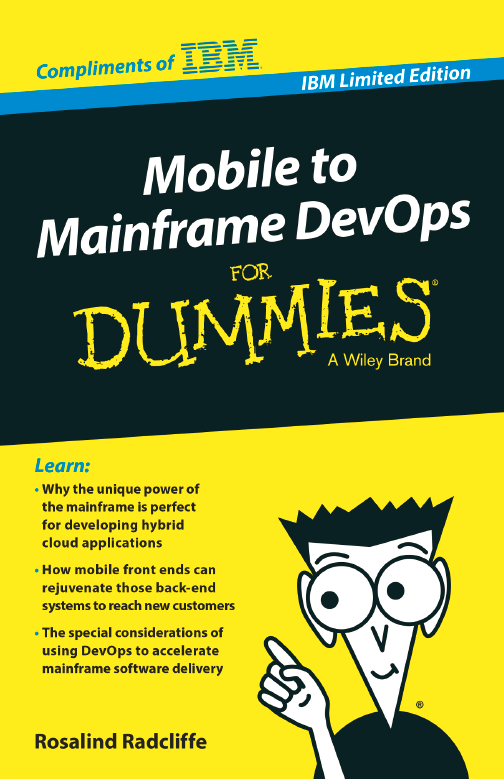
    Another person I have met in person and interviewed several times here on devopsy.kinsta.cloud.  Rosalind’s CV is beyond impressive. Speaking with her though you know you are in the presence of intelligence.  I enjoy speaking with her and reading what she writes. She recently wrote Mobile to Mainframe DevOps for Dummies as well.  Rosalind is a real thought leader in every sense of the word.

    These are my first 6 women of DevOps. I will add to this list in the weeks ahead.

  • DevOps Chat: Gary Gruver, Leading the Transformation

    DevOps Chat: Gary Gruver, Leading the Transformation

    I recently had a chance to sit down with Gary Gruver, well known DevOps leader and author. Gary’s new book, Leading the Transformation, Applying DevOps and Agile Principles at Scale is a great how to for managers looking to lead the transformation at their respective teams.  Gary put on a very informative webinar which you can listen and watch that goes into much greater depth than this short conversation.

    I have posted both the audio file to listen to and a transcript of our conversation below.  Enjoy!

    [soundcloud url=”https://api.soundcloud.com/tracks/224098337″ params=”auto_play=false&hide_related=false&show_comments=true&show_user=true&show_reposts=false&visual=true” width=”100%” height=”450″ iframe=”true” /]

    Here is the transcript of the conversation with Gary Gruver. You can follow along with the audio file or just read if you like:

    Alan Shimel:         Hi. This is Alan Shimel, Editor in Chief of DevOps dot com, and welcome to another DevOps chat in our leadership suite. Today’s guest is DevOps thought leader, and well-known author, Gary Gruver, who has just published his book, Leading the Transformation, Applying Agile and DevOps’ Principles at Scale.

    Gary, welcome to DevOps Chats.


    Gary Gruver:                Hi Alan. Good to be here.


    Alan Shimel:                Thank you. Gary, first of all, let me just commend you. The new book is great. I think I mentioned to you offline, I read it on the way out to California, and back. I went back and actually highlighted a bunch of stuff, which I don’t often do with books anymore, but it was that good and that important to me.

    So great job on the book. For those of our readers who may not be familiar with both yourself and the book – why don’t you give us just a quick background and synopsis of Gary and the book?


    Gary Gruver:                Well I’ve been in high tech for a long period of time and the last, probably eight years, leading large scale transformations of software development projects in different organizations, first at HP as the Director of the Imbedded Firmware Organization, over about – we started with 800 developers.

    And I wrote my first book because the results and benefits that we saw with that were so dramatic, and I learned so much from the organization and the transformation that I just felt that I had to share it with everybody else, do that’s a practical approach to large-scale actual development. It’s kind of a case study at HP.

    And that kind of gives you a feel, a short, quick, easy to read, not very technical book for executives that just – here’s what a transformation looks and feels like. I’ve gotten more actively involved in the Agile and the DevOps community and learned a lot by going to a large retailer, and was head of QA Release and Operations at that retailer, and led a large transformation towards continuous delivery there.

    And what I found through the process is, it’s easy for engineers to go to different conferences and understand how to develop differently, but if the executives don’t engage in leading the transformation, they’re going to come back, and the organization is going to throw a wet blanket on it. So what I tried to do with the second book, which Leading the Transformation is, is write down and capture in a book that was short enough – 100 pages – so that executives would read it, but had everything I wished I knew before I started on my transformation. So look, there’s going to be uniqueness and differences with different organizations.

    But the more they can avoid the bumps on the heads and the learnings that I’ve already gotten to on my own, and moved forward, and kind of moved the process and the technology forward, I think the more effective they’re going to be. So I created a lot of passion around trying to get some great business benefits.

    And I really wanted to share with others and try to figure out how I could help others to be more successful too.
    Alan Shimel:                Absolutely. So, Gary, one of the interesting things I got out of your book was – you know, many executives, they hear of the benefits of Agile and DevOps, and where do they sign up, right? Sign me up for that. I’d love to see those kinds of exponential improvements in all of these metrics.

    But one of the things you say is – executives who are just looking to do sort of Agile in and of itself aren’t going to see that sort of success, correct? It’s not just doing Agile, if you will. As a matter of fact, if you say that you do just Agile, you’re probably not going to be very successful. Do you want to expand on that?


    Gary Gruver:                Yeah. I would say it’s too large of a transformation and too large of a turmoil. If your current development processes are meeting all the needs of your business, you really shouldn’t go through this much effort and turmoil in your organization and cultural change.

    But I think what most organizations are seeing is – they’ve got larger, and software has become more and more important to how they compete in the marketplace, that their current software development processes just aren’t able to react and respond to where they need to add value as a business.

    And so, start with what is not being delivered to your business from your software development processes and your business objectives. You know at HP, it had been two decades that firmware had been the bottleneck for the business, and so we really started by saying – we want to be able to add a new product anytime we want without firmware being the bottleneck, and we wanted to free up capacity for innovation.

    And it was with those business objectives that we were able to prioritize the things we went after, and I think if you start with your business objectives and fundamentally looked at the rest of your toolbox, whether it’s to add to laying DevOps, sort of combined automated – just any of those things are just tools in your toolbox that are there to solve a problem.

    And then you go on a journey of continuous improving. That’s where you get the business results. It’s not going after one of those principles and hoping that you’ll get business results. It’s driving for business results and using the tools as appropriate.


    Alan Shimel:                Got it. And Gary, you use the term a lot, continuous improvement. In a world where continuous is the new black, and we hear about continuous delivery, and continuous integration, and continuous testing, and continuous security – briefly, what is continuous improvement?


    Gary Gruver:                Well it’s really wanting to go out and learn what’s between you and your organization delivering software better and more effectively. And then it’s constantly just chipping away at those barriers and learning and getting better involved. You’re not going to know everything.

    You know, at HP, we got two to three X improvements in productivity, but we didn’t go off on a three year plan to make that work. We took it month by month, and assessed some objectives, and tried to get better. And you’re going to learn so much as you really start getting out there in trying to figure it out that, what you’re going to find is, if you create a three year plan, or even if your could, it’s going to inhibit you from getting better because you’re going to learn something new that was getting in the way.

    And so, don’t try to lock in too much. Software developed and improved effectively can be very flexible and responsive. Learn and adjust, and learn and response, and just take on the biggest barriers to your productivity one at a time. And when you improve that, you’re going to learn what’s next and continue to improve that.

    But it’s getting the executives to come together once a month to review what they said they were going to get done, what got done, and what didn’t get done, and what you’ve learned in the process, to set the objectives for the next month. You know, at HP, we went off trying to get 10X better, and we did it a month at a time.

    And when we looked back three years later, we had gotten, you know – my co-author would say, 10X better in terms of frequency, and builds, and those things, but business results – easily 2 to 3X better, but it wasn’t by executing a four year plan, it was by getting up after continuous improvement, and learning and adjusting along the way.


    Alan Shimel:                Sure. You know Gary, in the book, one of the things I got out of it is, you sort of refer to CD, continuous delivery, as a lot of the tools and maybe processes that we follow along this Agile and DevOps journey, if you will, or process. But DevOps specifically is largely cultural in the book anyway. Is that correct?


    Gary Gruver:                Yeah. It depends on whether you’re talking to Gene or Jez. Jez will focus more on the technologies, and Gene will rely on the culture. I can’t really separate the two. You can’t get the cultural changes without the tools, and you can’t implement the tools and get the benefits without the cultural changes.

    I like the definition where you just lump them together and say – it’s the cultural and technological changes that enable us to release code on a more frequent basis, in a more stable way, and get feedback from our customers on an ongoing process. And so that’s the definition that kind of resonates with me, and I have a hard time getting between the two.

    But you know, in a large organization where you’ve got tightly coupled code that requires people to develop, qualify, and deploy in unison, the technologies of continuous delivery, whether you deploy everyday or not, is the forcing function that ensures all your code is going together and stays aligned.

    And so the first order of effect in a large organization is to help it come together to deliver code, or deliver value to their customers, on an ongoing basis. And the second order of effect is how the individual teams work, continuous delivery, and some of those principles are the forcing function that allows working code to provide that alignment across a larger organization, and not develop code that either won’t work together or won’t work in a production like environment.


    Alan Shimel:                So Gary, another sort of debate – and I don’t know if it’s a Gene and Jez debate, but it’s certainly within the community – is, do you do DevOps from top down, bottom up? Do you do it from both and meet in the middle? You have a very unique perspective in having led several transformations now and, obviously, you come at it from a top up perspective. What should leaders, listening to you here today, what should they take out of that?


    Gary Gruver:                I think if they’re going to be successful, the leaders need to lead it because you can’t have some groups decide to do it, or some groups decide not or do it in a different way, if their code has to come together and be delivered as a unit. But, at the same time, it’s not management.

    It’s more lead it. Set the direction. Set the priorities, and engage with the organization to learn what’s working and what’s not working. And so, you know, the continuous improvement, executive-led continuous improvement process I describe in my book really shows how the executives engage in the organization to lead that because you need all the learnings in everything that’s getting in the way from the bottom.

    And you need kind of the set of priorities from the top, so it’s that constant interaction between the leaders and the organization that gets all the best ideas and all the learnings out on the table, that gets you to prioritize the right things and go after the right improvements.


    Alan Shimel:                Yeah. Gary, the last chapter in the book is entitled, Getting Started, and it kind of represents, okay – after you’ve learned what you can from this book, here’s how you can get started in your organization. Of course, people should read it for themselves and learn from it, but what can you take out of that last chapter to give people a jump start on that?


    Gary Gruver:                You know, you really need to start where the most pain is. And one of the things that DevOps causes you to do is do things more frequently. And what you’ll find is your organization has been brute forcing its way through the same issues for years. And as you start to increase the frequency, you’ll have to start fixing that.

    And it’s hard to tell. For different organizations, it’s different places, which is why I put that piece at the back end because it depends on what you already have in place. If you’ve got a web micro services architecture that enables teams to work independently, it may be as easy as a cultural shift, and putting an operations person on that team, and letting him own things end to end.

    If you’ve got a more tightly couples system, you’ve got to think about how do you coordinate the work across them? And the first step may be, can you do continuous integration of as much of the enterprise system as you can, with a few simple tests? And make sure you’re automated correctly. So it’s that step of learning and evolving. And then as you try to do it and increase your frequency, you’re going to find different pain points.

    And that’s why I’d say it’s the continuous improvement stuff. And you know I do work shops with different executive teams to really try to bring out, and try to understand their development processes to the point that we can figure out where to start the continuous improvement process.

    We hold a work shop with their technical and manager leaders and everybody in the organization, and try to really nail – what’s that first month’s objectives? And then we do ongoing mentoring calls for the first six months to make sure they’re off on the right path.

    But you know, as opposed to spending forever trying to figure out where to start, if you can think about starting your continuous improvement process, even if you pick the wrong things first, you’re only going to go down that path for a month before you have a chance to learn, and adjust, and go after the things that are really in the way between you and your organization being productive.


    Alan Shimel:                Great. Hey, Gary, we’re about out of time.


    Gary Gruver:                Okay.


    Alan Shimel:                Thank you very much for appearing on today’s DevOps chat and, again folks, the book is, Leading the Transformation, Applying Agile and DevOps’ Principles at Scale. And for any executive or manager out there who is contemplating or perhaps is already engaged in leading a transformation around Agile and DevOps around software development, I highly, highly recommend it.

    You can get the book on Amazon. It is from IT Revolution Press, and just Google it. I think we also have a two chapter download, which we’ll put a link to up on the webinar page for this. Gary Gruver, thank you very much. This is Alan Shimel, of DevOps dot com. Have a great day.

  • Chef raises $40m and a full house

    Chef raises $40m and a full house

    Big news today from Chef who announced a $40m Series E round of financing. This round and its size is indicative of the continued high demand of DevOps in general and for a leader in the space like Chef. The round was led by DFJ Growth. Existing investors Battery Ventures, Citi Ventures, DFJ (venture), Ignition Partners, and ScaleVP also participated. Other noteworthy new investors in this round are: Millennium Technology Value Partners & Hewlett Packard Ventures (as a strategic investment).

    Chef Office

    I had a chance to speak with Barry Crist, CEO, Chef.  Of course Barry was very excited about the raise (what CEO wouldn’t be) but what really made an impression on me is that Crist was excited on several levels about this announcement:

    1. While Chef didn’t need the capital right now, as Crist says, “the best time to raise money is when you don’t need it.”, The money came at a time when the global market for DevOps is exploding and Chef is exerting its leadership in taking DevOps to the mainstream. With more than half of the Fortune 50 using Chef, 80 percent of Chef’s exponentially growing revenue comes from enterprise businesses.
    2. Chef has scored a rare double of both DFJ Growth and DFJ Venture investing in Chef. Having both arms of the well known investment house among Chef’s investors is both a testament to how much they value Chef and how well Chef has performed to date.
    3. The strategic investment by HP Ventures represents one aspect of a deep and growing relationship between HP and Chef.  HP is poised to be a strategic partner bringing Chef to its large world-wide channel. This investment speaks volume about HP’s commitment to this relationship.
    4. A full house for Chef. With the HP investment, Chef now has deep strategic relationships with Microsoft, AWS, IBM and HP. This represents a “full house” of major technology partners and bodes well for Chef to continue its dominance as the leader in DevOps automation.

    This was a series E round for Chef and I did not ask Crist what type of valuation this money was raised at. But one of the nice things about raising money when you don’t have to is that generally you can afford to be a little pickier and get better valuations when you raise money.

    I had a chance to speak with Crist about his outlook on the VC and investment market. With many voices chiming in that we might be seeing a dip in investment and valuations in the tech market, Crist said he didn’t have a crystal ball. But all the more reason to raise this money now. If the market does turn those with cash in the bank and dry powder will be in the cat bird seat to leverage their capital for strategic purposes. We might very well see Chef as an acquirer of technologies to tuck in as they continue to grow.

    In the meantime, a rising tide will lift all boats. This kind of investment and buzz in one of the DevOps market leaders should help other DevOps companies in their own capital raising activities. While few may achieve the heights that Chef is rising too, there is lots of room in the market for DevOps companies of all shapes and sizes.

    Congratulations to Barry and the rest of the Chef team on this raise and looking forward to see what the future holds.

  • Come to DevOps Connect: CD Summit in Austin, October 8th with Jez Humble

    Here at devopsy.kinsta.cloud we are very happy to announce that we are teaming up with Prospera Events (producers of the InnoTech Conferences), CloudBees, the enterprise Jenkins company and IBM to bring a DevOps Connect: CD Summit to Austin, Texas on October 8, 2015. The event will be held at the Austin Convention Center as part of the InnoTech Austin Conference.  Full details can be found here.

    jezThe event will be headlined by renowned author and Continuous Delivery/DevOps expert Jez Humble. Jez will speak about architecting CD. Additional keynotes will be by Andy Pemberton of CloudBees and IBM. Additional topics will be covered in two separate tracks, one technical and one business related. Additional speakers in the tracks include DevOps pioneer Ernest Mueller, of the Agile Admin and Boyd Hemphill who will speak on “HomeOps”.

    In addition to lunch and an after conference reception, CD Summit attendees will join with and have full access to the InnoTech Conference taking place at the same time. An expo floor of exhibitors will include a demo theater to showcase some of the leading apps and technologies in DevOps. Among these IBM will demonstrate Bluemix, its market leading cloud application development platform.

    Attendance for DevOps Connect: CD Summit requires a separate $99 admission which includes InnoTech admission too. There are sponsorships available as well. More information is available on the DevOpsConnect site.

    Besides the Austin event, additional CD Summit events are scheduled for December 3rd in Los Angeles and later in December in Boston. Further details on these events will be announced shortly.

  • Vote for the DevOps Dozen

    Vote for the DevOps Dozen

    canstockphoto18996369At the end of July we opened up nominations for our inaugural DevOps Dozen, to recognize the top 12 companies in DevOps. Over 1500 of you voted (thank you) selecting from over 120 different companies.  We have taken the top vote getters in each category to come up with a list of the final 32 finalists for the DevOps Dozen.

    Frankly 32 finalists was more than we were planning on. But so many companies were so closely grouped in the nomination voting that we didn’t feel comfortable selecting one company for the finals and leaving another out.

    So now we are opening the final phase of voting to you our readers. Voting will be open for the entire month of September. But you can only vote once.  On our DevOps Dozen site most of the finalists have sent us information that they would like you to know before casting your vote. Please take the time to read some of this, especially for companies you may not be familiar with.

    The finalists range from open source projects, to cloud service providers, DevOps tools vendors to service providers.  When voting you are allowed to select 12 of the 32 as DevOps Dozen winners.  So take the time and make your selections carefully.

    Just a word about the 32 finalists. Every one of them is already a winner. Having made it past the nominations means that at least 350 of the 1500 people voting voted for them.  On top of that if you take the time to check out these companies why they are here is pretty obvious.

    So help us recognize excellence in DevOps and vote today!

  • DevOps Chat: Rosalind Radcliffe, Mobile to Mainframe DevOps for Dummies

    DevOps Chat: Rosalind Radcliffe, Mobile to Mainframe DevOps for Dummies

    mtmdummies_large

    I recently had a chance to sit down with IBM Distinguished Engineer Rosalind Radcliffe about her new book, Mobile to Mainframe DevOps for Dummies. The book is actually quite a bit deeper than your usual “for Dummies” book and an excellent read. Of course you would expect as much coming from Rosalind who has quite a list of well deserved accomplishments and accolades on her CV.

    Saleem Padani of IBM has a good post up on LinkedIn announcing the book as well that you may want to check out.

    FYI, we will be doing more DevOps Chats in the future. If you would like to be a guest on a future episode please contact editor@devops.com

    Above is an embedded audio player to listen to the interview of Rosalind. Below that is the transcript if you would like to follow along or just skip the audio and read the interview. You can download the free e-book copy now by visiting https://ibm.biz/m2mdevops


    Audio Transcript

    Alan: Hi, everyone, this is Alan Shimel, Editor in Chief of devopsy.kinsta.cloud, and we’re kicking off a new feature here at devopsy.kinsta.cloud—DevOps Chats. Each episode will feature me speaking with a thought leader around a particular topic of devops.

    Kicking off our series today with a very special guest, Rosalind Radcliffe of IBM, and we’re gonna be talking to Rosalind about a new book which she has just offered called Mobile to Mainframe: DevOps for Dummies. Rosalind, welcome to devopsy.kinsta.cloud.

    Rosalind: Thank you.

    Alan: Okay, let me briefly give our listeners a little background on Rosalind, and Rosalind, I don’t mean to embarrass you, but you have quite a résumé. Rosalind is a Distinguished Engineer in IBM. She’s Chief Architect for CLM and DevOps, and she is responsible now for driving devops for multi-platform architecture. This includes System z and Power Systems. In addition, she is responsible for the architecture for the Collaborative Management capability for Enterprise solutions, and this includes both UrbanCode Deploy and Rational Team Concert’s support for standard mainframe development activities.

    Beyond that, Rosalind is a member of the IBM Academy of Technology and a master inventor. Prior to her current development related responsibilities, she has been responsible for IBM’s SOA Management Strategy and Services, responsible for deploying Systems Management solutions, and she started with ISPF development.

    Rosalind, I hope I didn’t embarrass you too much, but once again, welcome to devopsy.kinsta.cloud, and congratulations on this great new addition to the DevOps for Dummies series, Mobile to Mainframe DevOps for Dummies.

    Let’s start today’s chat, if you can share with our audience a bit more about you and where you are in your career.

    Rosalind: Thank you, and I’m looking forward to this chat. So, a little history on why I wanted to write the DevOps for Dummies book. I started in IBM 28 years ago in ISPF development, as you mentioned, and I’ve been in different roles and different responsibilities along the way, including spending a good amount of time in the Systems Management organization, responsible for actually doing operations like tasks and deploying our Systems Management solutions for clients.

    I’ve also spent a number of years in the application development space, providing and building application development tools. And so, as this developed over the years, working in operations, I used to blame development, and then when I moved to development, it was, “Oh, I guess I can’t blame operations.” So it’s deemed appropriate that I would move into this devops space of trying to bring these teams together.

    In looking out at the industry today, I see that there are lots of questions, especially in the mainframe space, about, “How does this devops really apply to that environment, and with all the drive for mobile and mainframe together, how do we really make this play as an environment?” And so, that’s how I got here and why I wanted to write this wonderful book.

    Alan: So, let’s dig in quickly to the book. You know, I think everyone in our audience is familiar with the “For Dummies”, if you will, franchise, and some of them can be rather fluffy, some are better than others, obviously, depending on authors and so forth. My initial reaction when I read it, Mobile to Mainframe DevOps for Dummies was, “Wow, that’s a pretty heavy topic for a For Dummies book.” Why write this book in the first place and why now?

    Rosalind: Well, I think now is a perfect time, with the industry evolving, with the mobile frontier and everybody focusing on mobile, and with mainframes truly being our systems of record. So, everybody needs to connect mobile to mainframe, and if we look at the development environment, most mainframe development shops look remarkably like they did when I started 28 years ago, and that’s not necessarily a good thing.

    So what I wanted to do was help explain to executives, senior leaders, and anyone in the industry, how mobile and mainframe play together and, in using the devops transformation helping them work together, they can get more value out of the systems that they currently have.

    Alan: Absolutely. And just so we can mention, of course, Rosalind, the book is available for download, we’ll have links on it up on devopsy.kinsta.cloud. But, as I mentioned, it’s not a fluffy book—there’s a lot of great content here. I can tell how much time and effort you put into this thing.

    But, give our audience a sense—how much, how big an effort was it for you?

    Rosalind: It was a significant amount of time in writing. I spent a lot of time on plane flights back and forth to Europe, and that gives you a lot of time when you can’t do anything else, and so I spent a significant amount of that time writing. It’s a relatively short book, it’s only 70-something pages, so it’s not as long as a very long book, but it did give me the opportunity to hopefully give some background, explain more about the current environment, and give people an insight as to what I’ve been seeing with clients and help them move forward.

    After you write it, then you have to edit it, and I have to thank the many people that helped me work on this and help provide contributions and pieces of the document, because they helped me put this together, and helped me do a lot of editing as well to make sure that it was complete in the environment.

    Alan: Sure. I mean, I’ve been lucky enough to have a chance to see a pre-publication version of it, and I do think—you’re right, it is only 70-some odd pages, but it’s pretty in depth. But it really benefits from the sort of, the For Dummies kind of franchise—you know, the icons they use to help you focus in on what’s really important and giving you Cliffs’ Notes version if you wanted to not read every word. You used the format very well, and I think people will get a lot out of the book.

    Let’s dive in a little bit, though, into some of the key points that you’ve brought up in the book. You know, just picking some random ones that I thought were important—in chapter 3, for instance, you speak about why we need to understand why devops is so critical for mainframe environments. And we need to start with the dev side.

    But devops is about breaking down silos, it is about cross functions—and nowhere, in my mind anyway, nowhere are these silos more separated than between the mainframe teams, like you said, haven’t changed sometimes in 28 years when you started, and the distributor mobile development teams, who are today all about cloud and virtualization and instant up and instant down.

    Can you elaborate a little bit more on this point for our audience?

    Rosalind: Yeah, I’ll be happy to. This is one of the key points as to why devops matters more than ever now in the mainframe space—this transition to mobile, this transition to systems of engagement and their dynamic changes, their need for speed, and the need to access these back end systems of record. So now is the time for us to evolve the environment, the mainframe development environment, to modern technologies and modern tools to allow these teams to actually work together.

    There is absolutely no reason that mainframe environments need to do development the same old way. They don’t need to be done using waterfall development practices. There’s no reason not to apply the same agile and lean IT practices across the development organization from mobile to mainframe, and using the same tools and the same capabilities so these teams can work together, they can share information, they know what each other’s doing, and you can break down those silos.

    One other reason those silos are there is, you know, if your mainframe development team is using ISPF, I’m not sure those mobile guys using X code even want to look at a green screen. So this has to change. The perfect time—bring these teams together, use modern development practices, use modern tools, and this allows the silos to be broken down, allows the teams to work more efficiently together, and helps deal with this variable speed IT issue that we have. Mobile needs to move fast. Those systems of engagement need to be moving.

    But the back end systems of record need to be able to define standard APIs. They need to provide those services that the front end needs, and they need to do it fast enough—so they need to do it at the speed of business, and devops helps them do that.

    Alan: Excellent. And so, Rosalind, you actually touched on something here, and it’s this variable speed IT—variable speed devops, I’ve heard some analysts call it a bimodal  IT—and it, I mean, you nailed it right on the head. These mobile development teams that are running at the speed of today’s business, tearing it up, putting it up, tearing it down, putting it back up—changing, changing, changing thousands of hundreds of times a day, even, in some cases.

    We can’t expect the mainframe systems of record to perhaps move at that pace, but there’s no reason they can’t move faster, especially using modern tools, modern development environments, though I still find something comforting about a green screen. [Laughter]

    But, that being said, you know, this was the subject of a whole series of webinars we did here on devopsy.kinsta.cloud on variable speed IT and variable speed DevOps. Can you help our audience understand why it’s so critical for mainframe environments to embrace devops and why now, more than ever, now is the time?

    Rosalind: Yes, so with this variable speed IT, and as we talk about it, it’s not that the back end is slower because mainframe development is slower, it’s that, in variable speed IT, you need to move at the speed of business, and if you define services as your back end systems of record, those don’t need to move as fast.

    What we need is to define those as services so the front end system can use them, so these systems of engagement can call back into the function. So the need to define these services based on the existing legacy code means development teams need to be able to respond at the speed of business. They need to be able to move faster. And the old ways of doing things—you know, making a change and testing it for three months—just isn’t gonna work. We need to apply the principles of automation, automated testing, virtual services, and interface testing, and bring all of those concepts to allow you to build those services based on the existing business function into the environment so that they can then be called by the systems of engagement.

    Companies have significant assets sitting on the mainframe systems. Mainframes aren’t going away. They’re gonna be here forever. They provide the qualities of service needed for large scale transaction performance systems. And so, with mobile, large scale transaction performance systems—that’s perfect. Mobile backed with mainframe is a perfect environment. And companies with the assets that they’ve built up, if they can service-ify them fast enough, they can provide disruptive technology today.

    And that’s what the companies need to do. They need to take advantage of the assets they have, providing services using the new development practices, and then it all fits together and they get the business value at the speed they need to. And you know, I helped build ISPF, so I do like that green screen, too—but it’s not really the right development platform for developers today.

    Alan: Yeah. But what about—look, you know, people make fun of COBOL developers, but there’s still a lot of jobs out there for COBOL developers.

    What about the shortage of experienced mainframe IT skills in the marketplace, Rosalind?

    Rosalind: Yeah, so that’s one of the points I make in the book. Developers can write any language. You know, get a good developer, they can write COBOL—and there’s nothing wrong with COBOL. COBOL serves its purpose. PL/I serves its purpose. And some people will cringe as I say this—Assembler serves its purpose. But you know, I’m not gonna write it using ISPF.

    If I’m a kid coming out of college and you give me a modern IDE that has all of the language syntax in it, it has code rules, it has the ability to build unit tests for me—I can write COBOL. Not a problem. It’s the—give me an ISPF screen, and I don’t even know how to use it, much less how to do COBOL.

    Alan: Understood, understood. Let me—we’re running low on time, so let me turn to some other questions I had prepared, if it’s okay. In the book, you talked about some of the best practices—devops best practices on System z which, for our listeners who may not be IBM aware, System z is the IBM mainframe platform.

    Rosalind: Correct.

    Alan: And there are several good ones that you have highlighted in the book. Are there specific devops practices that you would recommend for System z to get started down the path of continuous delivery, which some people think is the ultimate aim of devops, or the ultimate goal?

    Rosalind: Yeah, so there are a number of different practices, but a few call out based on the way many mainframe organizations are working today, and it has to do with where they are today. How do they improve the process from where they are to get into more continuous delivery practices?

    And before someone says something, I’m gonna say—continuous delivery does not necessarily imply continuously delivering into production. It means continuous delivery into a pre-production, et cetera, environment. You may still need to stage those based on an outage window, especially for systems of record, because you can’t afford to have a transaction change mid-flight.

    So there are some—you know, continuous delivery within reason. But if we think about those things, one of the key practice is modern development tools to break down the silos. And one of the others that is absolutely critical is automated testing. There is no way to get to continuous delivery without automating testing, and since you’re building services out of your back end systems, services are a perfect thing to use automated testing against.

    So, building up automated testing based on the service interface, being able to test the function without having to have users go in and test the business function—just run a bunch of automated tasks and make sure you’re picking the right automated task based on the code that you’re changing, but automated testing is probably the biggest change that is needed for mainframe environments and, in many ways, the most valuable. We look at many shops and they’re spending months running lots and lots and lots of manual tests that they hope will find the problems.

    Alan: Got it, got it. Rosalind, we only have time for maybe another question or two, but I have one very IBM specific one, one a little bit more general.

    So recently, the new z13 launch really put the mainframe front and center as the core element for IT infrastructure.  Is this the rebirth of the mainframe? How do we see this new mainframe fitting into this seemingly ever changing IT landscape? More importantly, what do existing mainframe clients do to prepare for this new age of mobile to mainframe?

    Rosalind: So, the z13 has lots of additional capability and functions along with the updated compilers to increase the speed to allow you to provide more function faster, COBOL improvements using the new system hardware, Java improvements to be able to do more Java development on the mainframe, as well as significant memory availability changes.

    So, with the combination of the system, you can look at it as the best Linux environment that you can use for your cloud environment, so you can have—use Linux on System z to provide your Linux environment for your front end applications, and then, looking at z/OS, you can start to take advantage of this new memory that’s available to increase and improve your performance from a caching standpoint, numerous other things from a performance standpoint with the new compilers, and the mobile connectivity into the system. If we think about the fact that that could drive huge numbers of transactions—could drive huge numbers of transactions—we get the mainframe as the perfect platform to handle that variable load.

    So you never know—you know, I guess if you’re a retailer you know if it’s Thanksgiving or near Christmas it spikes, but many times, you don’t know where the spike’s gonna come, so it’s important to have that capacity on demand, to have that variability, and so the system plays very well.

    I think there are a lot of clients and a lot of organizations that are taking a new look at the mainframe of the latest z13 because of its capability, because of its enhancements from a memory standpoint, and because they think—you know, reality. People are realizing the mainframe is not going anywhere, and it really is the best platform for those high transaction systems and allows you to consolidate things together in a Linux platform. So it’s a great advantage that customers were already using we they have, and it’s something other customers are looking at to do, “You know, I can take advantage of that as well.”

    Alan: Okay. Rosalind, again—I’m sorry to keep saying this, but I’m trying to keep it short for our listeners, and relevant, but there’s just so much here. So you’re constantly out talking to clients that utilizing mainframes, and kind of living this devops and mobile to mainframe way of doing business—can you give me two or three quick examples of companies that are, that you think are doing it right?

    Rosalind: So, if we look at the industry and we look at the publicly available references, Nationwide is one of them that’s been out talking and describing their devops transformation and how they’re exploiting the fact that they’ve brought their teams together to provide value faster in the environment. We can look at Fidelity, who’s talked about their improved deployment capability and their improvements overall in their environment. Or, one of the examples I like that Walmart and their example of using services on the mainframe to actually provide infrastructure services to all their distributed applications from a caching service.

    And so there are numbers of good examples that talk externally, and then there are a whole bunch more examples who consider their transformation to devops a business advantage. They see that, by transforming to devops, they’re getting a leg up on their competition, and so they’re not as willing to let us use their names—but there are lots of wonderful examples of people who have transitioned and who are getting the value out of it, including IBM itself. We have numbers of examples that we provide to show our development process significantly improving and breaking down the silos within our own organizations and improving our ability to deliver.

    Alan: Excellent. Rosalind, I think this was very helpful, as is the book—a great guide for, as you mentioned earlier, both executive managers and practitioners.

    What about you, Rosalind? You’ve had such a successful and storied career—what’s next? What’s next for Rosalind?

    Rosalind: Yeah, so the next thing next week, actually, I’ll share. So, next week, we have one of the major user conferences or the major user conference happening in Orlando. And, as part of SHARE, obviously, we talk about mainframes and development activity as well as lots of different topics, and I’m looking forward to that in particular, because we’re doing a series on mainframe and mobile. More specifically, we’re doing a discussion about hooking Bluemix, our development app platform as a service along with IBM devops services to the back ends, and helping show the relevance of Bluemix to mainframe environment through a series of sessions as well as showing System z as the new cloud disruptor, and there are numerous sessions by other clients like Walmart who will be speaking.

    And so it’s a great opportunity for me to, first to hear stories from our clients as well as to provide some additional sessions for our clients and show what we’re doing, and it will be my first opportunity to have hard copies of this book and do a book signing for any of the client who are there.

    Alan: That’s what I was gonna say—there’ll be plenty of copies of the book there available and signed by yourself.

    Rosalind: Absolutely.

    Alan: Great. Okay, we’re gonna—I think we’re gonna call it a wrap here, Rosalind, and thank you so much for your time. I know you’re busy and I appreciate it. Rosalind Radcliffe, author of Mobile to Mainframe DevOps for Dummies, available now for download or if you’re attending SHARE in Orlando next week, you can get an autographed copy. Rosalind, thank you so much for your gracious time and spending some time with us today. We hope to—you know, best of luck with the great book, highly recommended, and we hope to have you back here soon.

    Rosalind: Thank you for having me, and I’m happy to come back and talk to your audience whenever is appropriate.

    Alan: Okay. Rosalind Radcliffe, IBM, and author of Mobile to Mainframe DevOps for Dummies. This is Alan Shimel for devopsy.kinsta.cloud, and thank you for listening into this DevOps Chat, and join us again soon for another one. Have a great day.

    That’s a wrap on this DevOps Chat. If you would like to be interviewed for a DevOps Chat please contact me at editor@devops.com