Author: Alan Shimel
-
Can’t Miss Events at InterConnect Next Week
devopsy.kinsta.cloud will be live from IBM’s InterConnect conference in Las Vegas all next week. You can expect a pretty steady stream of updates in all forms of media. We will be posting articles, live blogging, tweeting, podcasting and even broadcasting video throughout the week. So if you can’t make it out to Vegas, you can follow along here on devopsy.kinsta.cloud
Whether you are going to Vegas or following along from home, I wanted to give you my picks for the top DevOps related content at InterConnect next week. Here are my top picks:
- Well I would be remiss if I didn’t start-off with my own panel which I am moderating. I am joined by Michael Azoff from Ovum, Dan Berg of IBM, Raghunath Ragman of Kaiser Permanente and Gene Kim. The topic is what will DevOps look like in 3-5 years. It should be a great discussion.
- Right before my panel is another great panel on DevOps and multi-speed IT. That panel features my friend Carme DeArdo of Nationwide, Hayden Lindsey and Sanjeev Sharma of IBM, Brad Schick of Skytap and Tapabrata Pal of Capital One. That is an all star cast and it should be a great discussion.
- Both of the above panels are on Wednesday, the keynote on Wednesday morning looks like another great one. It features IBM VPs Angel Diaz and David Linquist, Gene Kim, Tapabrata Pal of Capital One, Sam Ramji of the Cloud Foundry Foundation and John LeFreniere of Hertz. The topic is Innovate Like a Startup and Scale for the Enterprise.
- Talking about innovation like a startup and scaling like an enterprise, a different kind of session is the workshop that Sanjeev Sharma and Mustafa Kapadia, two of my friends at IBM are putting on. I have seen these two conduct this workshop before and it really is a great experience to help in your DevOps journey.
- Bluemix Garage Method on the Expo floor. There is a large DevOps Zone on the expo floor and there is also a full set up with the Bluemix Garage Method. We have featured the Bluemix Garage method in a few articles before. If you are not familiar with it you should check it out as it really represents lessons learned on IBM’s own DevOps journey.
Well those are my top 5 but it is hard to pick from over 200 DevOps related sessions. There are 3 and half days chocked full of learning here, so this barely scratches the surface. Not to mention an Elton John and/or Pitbull concert Wednesday night thrown in.
If you want to see more can’t miss DevOps activities at InterConnect below is a YouTube that has all of the above and more. If you are going to InterConnect look for us and say hi. If not you can read, hear and see all about it right here.
-
DevOps Chat: Rachel Reinitz, IBM Bluemix Garage Method
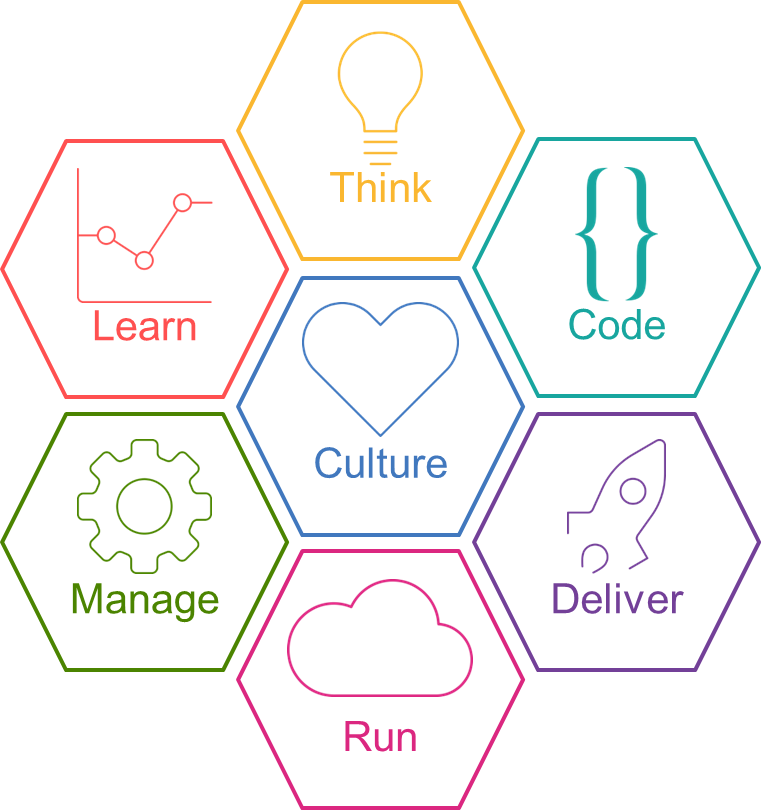 In advance of InterConnect next week in Las Vegas, I had a chance to sit down with Rachel Reinitz,Distinguished Engineer & CTO of IBM Bluemix Garage. I have met Rachel several times and it is always a pleasure to catch up on all of the innovative things her and her team are doing with Bluemix Garage. In this conversation, Rachel and I spoke about open technologies which is a focus for us this month, as well as a big focus of the Bluemix Garage method. We also spoke about “innovating like a startup, while scaling for the enterprise”. To learn more about the IBM Bluemix Garage Method, please visit: https://www.ibm.com/devops/method/
You can find our conversation below and a transcript of it below that. Enjoy!
Alan Shimel: Hi, everyone. Alan Shimel, devopsy.kinsta.cloud here for another DevOps chat. Today’s special guest is Rachel Reinitz of IBM. Rachel, welcome.
Rachel Reinitz: Thanks, Alan. It’s always nice to be talking with you.
Alan Shimel: Yes, actually I think the last time we spoke was DevOps Enterprise Summit in San Francisco. And Rachel, for our listeners who may not be familiar or didn’t get a chance to see our video which is on YouTube from DevOps Enterprise Summit, why don’t you tell them a little bit about yourself.
Rachel Reinitz: So I am a distinguished engineer at IBM and I co-founded and I’m the technical lead for the IBM Bluemix Garages.
Alan Shimel: Excellent. And you know, Rachel, there’s been a lot of announcements and news and developments, no pun intended, coming out of the IBM Bluemix Garages that some in our audience may not be familiar with. So give us some of the highlights. First of all, what is the IBM Bluemix Garage? And what’s happening with it?
Rachel Reinitz: So we are a consultancy within IBM. We work with customers making them successful in adopting Bluemix. And we are unique in that we are housed in startup communities. We work with both startup customers through to enterprise customers. And really what we work on is taking an idea, a problem or a concept and applying IBM design thinking, lean startup, extreme programming, DevOps to go from that idea to the definition of a minimal viable product and then onto building it and getting it out there and testing it out with users, testing the business hypotheses, all the really good DevOps practices and utilizing Bluemix which also gives us a lot of acceleration because of the kinds of services in the environment that we are in. So that’s what we do. It’s an exciting place to work and we have – and for clients to come into with designers, architects, developers. That’s pretty much what we do.
Alan Shimel: Got it. Rachel, I was lucky enough to visit an IBM Bluemix Garage. I guess it was at the DevOps Enterprise Summit, around that time in San Francisco. And the best way I can explain it was it’s sort of a lab, kind of a living lab where experimentation was going on as well as education and development. And it seemed like a pretty cool environment. And both for enterprise as you mentioned, anything from enterprises on up to startups.
Rachel Reinitz: That’s right. I think that that’s a good summary of it. We are in the startup community so we work with the startups there. And it really helps enterprises to innovate like startups, to get kind of out of their environment into our environment, a very collaborative space as you saw, when you were visiting right in the hardest heart community, we’ve actually, in some of environment news, we’ve moved to a different space still within the galvanized community in San Francisco, a bigger space, which is really exciting. We just had a little party there. And we have other locations. We are in Toronto and in London and we have a location in Nice. Each one is in a different kind of startup community. And we are working on Melbourne. So you’ll have to come investigate some of our other locations.
Alan Shimel: Absolutely. We are actually doing a series of roadshows, one of which will be in London in April. We’d love to get some of the IBM Bluemix Garage folks at that. But we will talk off-line. Rachel, one of the reasons I invited you on was this month on devopsy.kinsta.cloud, we are really focusing on what we call the open technologies and open enterprise. And by that we don’t mean just open source software, though certainly open source software is part of it. But there’s more to open then software, isn’t there?
Rachel Reinitz: Yeah, I agree. I think that’s knowledge sharing is a big part of open, sharing different kinds of knowledge in different kinds of mediums. And I think where you’re going is to the fact that we’ve now taken what we’ve been taking in the Garage and actually merged it with what we’ve been doing in open source and DevOps Transformation within IBM and we published that as the IBM Bluemix Garage method which is out there in public, open for people to use. And we’re also looking for contributions.
Alan Shimel: Absolutely. And it is open, right? The whole methodology, if you will, is open. And I happen to know only because I’ve spoken to you folks before, a lot of the tools you are using are open source tools, traditional open source software. But really, when we talk about the open garage method, as I’ve heard it referred to, it’s open through and through, if you will, right? It truly is open technology.
Rachel Reinitz: Yes. So it’s taking the lessons that we’ve been learning, it’s providing prescriptive paths and recommendations and that crosses from our software to what we are doing in the open community and open source, open-source testing tools, third-party tools. It’s what we find is working in projects that we are doing and recommendations around specific kinds of applications like a mobile application. What do we recommend? What did we learn and are sharing those learnings as you were saying out in the open? How do you go about testing them, for example? What are your different options? Things like that.
Alan Shimel: Fantastic. Rachel, how big is Bluemix a part of this garage method, though?
Rachel Reinitz: It’s definitely a big part of it in terms of we think that using Bluemix and other IBM technologies is a way to really accelerate building these kinds of applications. But it’s not exclusive to that. So when we talk about innovative practices, when we talk about some of our toolchain, no, it could be used with other technologies. Obviously I think there’s a lot of good reasons to use it with Bluemix.
Alan Shimel: Sure, sure. And again, you know what, Rachel? We may have some folks who perhaps aren’t even familiar with Bluemix, why don’t we quickly give them a level set. When we say Bluemix, what are we talking about?
Rachel Reinitz: So Bluemix is IBM’s platform as a service. It exists in public which is then hosted in our data centers, our public data centers for software. We also have a dedicated version where we provide a managed single instance of that same capability. And then we have what we call local which can deploy onto your own systems behind your firewall. And Bluemix has multiple models for writing applications with Cloud Foundry containers and VMs. And it has a whole range of services. At last count, I think we were at about 140 and those are IBM services like our SQL DB which is a form of DB2. But it’s also third-party services like New Relic. And as I said, it runs Cloud Foundry, it runs open-source runtimes. You can bring your own runtimes. So there’s a lot of openness to it.
Alan Shimel: Excellent, excellent. And Rachel, you mentioned IBM was looking to work with third-party partners around this open methodology, open-source. What kind of partners, what kind of contributions would you be looking for that you think makes sense?
Rachel Reinitz: So we have the concept of an open toolchain where different technologies can be integrated, again, around solving a particular kind of problem like mobile. And our toolchain team works with different partners. So we are very open to partners coming in and saying hey, can we be part of the toolchain and talking about how you integrate? So for example Slack is part of what we talk about there. That’s one kind of integration. Another level of integration we have is in Bluemix itself. So we have third-party services there and we have a whole program for how a company that’s providing capability that would be of interest to developers can integrate into Bluemix and be part of our ecosystem.
Alan Shimel: Got it, got it. And Rachel, believe it or not, we are coming up on the – I promised you it would be about 10 minutes. We are going to run a little over but I wanted to quickly pivot, if you will. Besides this month being open technologies on devopsy.kinsta.cloud, we are also featuring our coverage of the upcoming IBM Interconnect Conference in Las Vegas. And I would imagine, pardon me, I haven’t pre-checked; but I would imagine IBM’s Bluemix Garage is going to have a prominent place at Interconnect, correct?
Rachel Reinitz: Yes, yes. I’m really excited about Interconnect. We have, in the expo area, we actually have basically a mini garage set up, even with a motorcycle, I’m told. And we basically take you through the journey with a focus on our innovation path and we are sitting right next door to our DevOps team who also support the method so you can come and see what we are doing in terms of serving your innovation process and we show code, of course, and delivery pipeline. And that if you want to get even deeper and know the different options, we have the DevOps booth right near us. We have customers coming and talking about the work they’ve been doing with the Bluemix Garage method. We have workshops where you can get into a roundtable and really dive into it. So there’s a ton of things going on at Interconnect around the method. And of course, I’m presenting, too.
Alan Shimel: Really? What are you presenting on, Rachel?
Rachel Reinitz: I’m presenting on the Garage and on the method. I’ll be speaking, I think it’s Monday at 6:00 PM and then there’s a variety of different sessions. And then most exciting is I have some of my clients presenting with us.
Alan Shimel: Really? In case anybody listening is actually attending Interconnect as they very well might, can you give us – I don’t mean to put you on the spot, but can you tell us maybe customers and which sessions customers are talking at?
Rachel Reinitz: I’d have to look up specific sessions but we have KS2 and ManualLife, clients I’ve worked with really closely. Those are a couple of the – oh, and we have Spigot which has a really interesting cloud sourcing platform. So those are some of the customers that are going to be speaking. And there’s maybe a couple others that are ready to be talked about yet.
Alan Shimel: Fantastic. And of course, on the expo floor, people can actually get hands-on with the Garage for themselves and see what it’s about.
Rachel Reinitz: Absolutely.
Alan Shimel: And just again, in case anyone listening, Interconnect is February 21-25, I believe. And it’s at Mandalay Bay and MGM Grand in Las Vegas. Rachel, just one more question. What’s next?
Rachel Reinitz: More. More services. More services coming on Bluemix. We just had some – there’s new analytics, there’s new Watson services. It’s more coming, more projects with clients, cool Internet of things kinds of projects, more garages in the future building up the ones we have. Lots is going on. And in the method, too. More tools in the method, more prescriptive paths.
Alan Shimel: Do you think we will see a Bluemix Garage method 2.0?
Rachel Reinitz: Not 2.0 because we continuously deliver.
Alan Shimel: That’s exactly right. Good jump on the answer.
Rachel Reinitz: We came out with our MVP at DevOps Enterprise and now we will be having, you’ll see a lot more in there for Interconnect. We will just keep on going.
Alan Shimel: Fantastic. Rachel, we are way over time so I’m going to need to call it a day here. But Rachel Reinitz, distinguished engineer of IBM and sort of mother of IBM’s Bluemix Garage. Welcome. Or thank you for being on DevOps Chats today. Look forward to seeing you at Interconnect February 21 out in Vegas. And look forward to continuing development on the IBM Bluemix Garage and Garage method. Thanks for appearing today.
Rachel Reinitz: Thanks, Alan.
-
February is Open Technology Month at devopsy.kinsta.cloud
As part of our continued evolution here at devopsy.kinsta.cloud for 2016 we have designed an editorial calendar. Each month we will feature a particular topic of interest to our readers. For February the topic is open technology. This means we will have a feature section on all things open; this will include open source, open enterprises, open methods, etc.
You will be able to find this featured section off of our front page right under the newsletter sign up. Every month this will change to reflect that months theme.
There are a few good articles already in there and there will be more added the rest of the month. I would also point you to a good DevOps Chat I had on open technology with Dan Berg in the InterConnect@IBM section.
In addition to content related to the featured theme, we will also have special content regarding the theme. For open technology month we will have a report by Tony Bradley on open technology, open source and the open enterprise. Look for that later this month.
The open theme also dovetails nicely with our coverage of IBM’s InterConnect conference, coming February 21-25 in Las Vegas. Open is a major theme for this years event. We will feature interviews and coverage with some of the presenters at this years event. There is also a special sponsored section “DevOps@InterConnect” where all of the InterConnect related content can be found. With something approaching 300 sessions regarding DevOps there is a DevOps related session for everyone.
BTW, you can get a copy of our editorial calendar within our media kit. If you would like to contribute content on a future monthly theme, we welcome the input and look forward to sharing it with our readers. Also if there are topics you think we missed in our editorial calendar write me at editor@devops.com with your ideas.
So enjoy open technology month at devopsy.kinsta.cloud. Next month is Rugged DevOps, so there is more to come!
-

DevOps Chat: Dan Berg on Open Technologies and the Open Enterprise
I had a chance to speak with Dan Berg, distinguished engineer at IBM. Dan and I discussed open technologies, open enterprise and open tool chains. A whole lot of open there. We also talked about how open technologies will be part of the upcoming IBM InterConnect event. Below is the stream of our conversation and below that is the transcript if you would like to read along.
Enjoy!
Alan Shimel: Hi everyone, this is Alan Shimel, Editor and Chief of devopsy.kinsta.cloud, and welcome to another DevOps chat. Today, our guest on DevOps chat is Dan Berg of IBM, and we will be talking about DevOps and open technologies. Dan, welcome to DevOps chat.
Dan Berg: Thank you, Alan.
Alan Shimel: So Dan, before we jump into the whole open technologies, open enterprise subject, can you give our listeners just a little bit of background of who you are, what you do and why you’re here today?
Dan Berg: Sure. So as you pointed out, my name is Dan Berg. I do work for IBM. I’m a distinguished engineer, working in our cloud platform organization, which fundamentally means I’m responsible for working with a set of very energetic teams that are building out services in our cloud foundation. So the IBM cloud platform, specifically in IBM Bluemix, things like our container service, log-in and monitoring services, several DevOps based services. So services such as things like we call active deploy that help deploy microservices within a cloud architecture. So I do a lot in that space, helping the teams identify the strategy and the architecture that we’ll use. I’m also very much involved in our DevOps organization within IBM cloud, focusing on both cloud native applications, as well as hybrid cloud applications.
Alan Shimel: That’s fantastic, and Dan, you know, we talk about DevOps, and certainly when we talk about cloud, one could say we’d have no DevOps or no cloud without open source. What do you think about that statement?
Dan Berg: I think that’s a pretty profound statement. Open source is a strong component of cloud strategies.
I think almost all customers are looking at cloud as a direction. I talk to a lot of our customers, and I can’t say any of them that do not have a cloud strategy or at least pursuing a cloud strategy.
And one of the areas that comes up quite often is this notion of being able to have the flexibility of choice. I want to be able to choose my cloud provider and I might want multiple cloud providers.
And the only way to really achieve that is to have an open community and open standards that allow you to develop your workloads, develop your applications in such a way that you can move them from one provider to the next in their run, as you would expect them across multiple providers.
And as I pointed out, you’re not gonna get that unless you’re focusing on a strong open community that is driving open standards.
Alan Shimel: Yeah, you know Dan, so I’m old and I remember when I first got into IT and technology, there was a time where there was tremendous pushback about open sourcing the enterprise.
We’ve all read the books and we’ve listened to Richard Stallman and the book is escaping me now. What’s the great book about open source? Something about the bazaar and the – oh, whatever.
Gosh, I’ll find it but the more important thing is you know we’ve – and what was the pushback?
How can the enterprise rely on open source without support, without vetting and all of that?
And really it’s been companies like IBM and dare I say, even Microsoft now that have kind of helped pave the way for open source into the enterprise. What do you – what’s your thoughts on that?
Dan Berg: Well, so it’s interesting to see how the open source has evolved, how developing in the open has really changed the way in which developers learn, and how they adopt technologies.
You first and foremost look to the open communities as a way to understand new technologies and to join a community in which those technologies are evolving and you’re right.
Enterprises often look at or have in the past looked at open source as, okay, that’s cheap software that people are doing on the side. They’re not part of any company. How can we trust this?
Is it enterprise ready? We’d better not touch it. Right, we’d better develop our own. I think that mentality has changed dramatically for a number of reasons.
One, the communities have become extremely large. I mean look at things like the open stack community or the cloud foundry community, the Docker community.
These communities have established a base set of users and contributors, and have grown substantially over the last several years, and what they’re developing is being developed with an enterprise mindset. I mean it’s not just for kicking the tires or playing around.
We’re developing enterprise grade solutions in the open, and the reason why it’s being done in the open is because with the community around these initiatives, you end up getting more input from various stakeholders and ultimately at the end, you get better solutions that cater to a larger set of stakeholders.
I know within IBM, I mean we’ve been developing in the open for many years. I can remember way back, 15 years ago, working in the open.
While it may be difficult initially, when you’re thinking oh, I’ve got to work with a community of people and get agreement, that is true to some degree.
But what you find is that as more people start working together and collaborating across the globe on a set of technologies, an open set of technologies, it actually picks up pace and you can innovate much faster, because you just have a larger pool of resources and developers working on that code base.
And that’s what we’ve been seeing, and adopting that back into an enterprise and using it has become easier because you’ve got enterprises like IBM, like Microsoft, like others that are contributing to these open communities and ensuring that enterprise requirements are added into those code bases, so that they can be consumed by an enterprise.
So it is shifting. I think more and more, enterprises are adopting open source capabilities because of the innovation and the enterprise grade quality that’s coming out of those communities.
Alan Shimel: Absolutely. By the way, Dan, the book was The Cathedral and the Bazaar.
Dan Berg: Yeah.
Alan Shimel: By Eric Raymond, and I’m sure you read it too. It’s – you know what, at this point, I’m ashamed to tell you. It’s like 15, 20 years old but, whatever, it’s still good.
So Dan, let me pivot a little bit with you and let’s quickly turn. This month we have the IBM interconnect show, which is sort of IBM’s big cloud in mobile and I like to say DevOps event as well.
And the open enterprise and open source is front and center, and rightfully so, in light of what you’ve just told us.
What can you highlight for us a little bit maybe about the open source, open enterprise at Interconnect this year?
Dan Berg: Yeah, so there’s gonna be a number of exciting things. I mean we do really drive the notion of open source and open technologies.
We’re gonna be discussing obviously some of our core initiatives around open stack, around node and JavaScript, Docker as well.
We’ve got a number of exciting sessions and activities that we’re driving within those communities.
The open container initiative, another big one that we’re involved with and discussing the direction that we’re helping to forge in that community to drive where we see containers going.
So that’s Docker based containers and other containers, really driving a stronger community around the container movement. Even around DevOps, the great, great thing that we’ll be showing off there is some of the work that we’ve done with the IBM garage method.
So it’s an open set of processes and practices that we announced late last year, and then moving into this year in the envelope a little bit further, and what we’re doing is associating with the practices, a set of tools.
And these tools are obviously some tools that we provide, services that we provide, but a lot of them are open tools as well that are being developed and made available in the open communities.
But one of the exciting things in this area that we’re driving is something we call the open tool chain, and open tool chains are a set of capabilities that allow organizations to define their best of breed practices and DevOps capabilities in a tool chain.
An integrated set of practices and tools that can be instantiated by other parties.
So we’re pretty excited about that initiative. It’s still early days but we do see the potential there and the flexibility that’s being achieved by bringing together these open technologies into a unified tool chain that drives cloud native deployment and delivery mechanisms.
So we’re very excited; lots going on in these communities and we’re really excited about sharing that information at Interconnect in about two and a half, three weeks.
Alan Shimel: Absolutely, you know, Dan, I think I might have been out with you in San Francisco when they announced the open garage method at – I forgot what conference it was but in any event, it was a DevOps enterprise summit.
Dan Berg: That’s right.
Alan Shimel: As you mentioned.
Dan Berg: That’s right.
Alan Shimel: And you know, to me that was a little different, especially for an IBM in that it wasn’t an open source project. Right, it wasn’t a particular tool.
This was really more of an open methodology with tools tied into it and you talk about a supply chain.
It is a sort of that software supply chain where the software or the app you’re developing, not all of it is going to be open source.
But there are open source components that make it easier for us to develop apps in real time continuously, with continuous delivery and integration, and all of this goodness we see in DevOps.
And to me that was sort of the power of the garage method, right, was this software supply chain, if you will, with open source components, making up a lot of it, wrapped around IBM’s experience and know-how in bringing this together. I think it’s powerful.
Dan Berg: I definitely agree, and as I pointed out it’s still early days but it’s showing the promise. I mean we all know how difficult it is sometimes to piecemeal together your delivery tool chain with the various open source tools as well as third party vendor specific tools.
It can be quite complex and what’s really nice about the open tool chain is it takes some of that complexity out of your way and really helps you focus in on your key initiative, and that is deliver high quality code as quickly as possible.
So I’m really excited about it. It does build upon some of our core technologies, but I’m really excited about how it brings in some of these key open technologies and open communities to drive better DevOps experience overall.
Alan Shimel: Yeah, agreed. You know, Dan, unfortunately we’re coming up on the clock but this is – you know, the whole subject of open source of software supply chains, of the open enterprise.
And how enterprises are incorporating open source components into their supply chain is one that fascinates me and one that I think you’ll see more of on devopsy.kinsta.cloud, as well as it sounds like quite a bit of it at Interconnect later this month.
Dan Berg: Absolutely, and if anyone’s gonna be out at Interconnect, definitely look me up. You can find me. I’m doing a number of different sessions, and you can grab me on Twitter at DanCBerg.
Alan Shimel: Yeah, well and they could also look for you on the Interconnect site, Dan and probably search by speaker.
Dan Berg: Absolutely.
Alan Shimel: Just we don’t have any time but which of your talks or sessions are you most looking forward to?
Dan Berg: Oh gosh, there’s a number of sessions but there is one, and I’d have to look. I forget the name but it’s a DevOps panel that I’m looking forward to.
And there’s a number of us on there including myself and Gene Kim are gonna be on the panel. I believe it’s on Tuesday, if I’m not mistaken.
Alan Shimel: I believe that would be my panel.
Dan Berg: I’ll have to look in my —
Alan Shimel: What does DevOps look like in the next five years?
Dan Berg: Ah, that’s right, it’s yours
Alan Shimel: Thanks for the plug, Dan
Dan Berg: Not a problem.
Alan Shimel: I welcome people to come out and check it out. We’re looking forward to a great panel. What a way to end our conversation.
Dan Berg, distinguished engineer for IBM, thank you so much for joining us today on DevOps chat, and I’ll see you later this month at Interconnect.
Dan Berg: Absolutely, looking forward to it.
Alan Shimel: Okay, bye bye. This is Alan Shimel for devopsy.kinsta.cloud and we’ll see you on another DevOps chat.
-
DevOps Connect: Rugged DevOps @ RSA Conference
Once again this year devopsy.kinsta.cloud along with Sonatype, The Nexus Community, Gene Kim, Josh Corman and Mark Miller are producing DevOps Connect: Rugged DevOps @ RSA Conference.
The full day event takes place at the Moscone Center on the Monday of RSA Week, February 29 (it only comes once every 4 years), 2016. After the day packed full of sessions there will be a cocktail reception* as well. *Cocktail reception requires separate registration.
Last years event had over 700 people in attendance and featured a great lineup of speakers. This year’s lineup is even better we think. It features leaders from both the DevOps and security communities with some great practitioner accounts of how DevOps helps security and how security helps DevOps.
Thanks to the generosity of our friends at RSA Conference, we have a larger room this year to accommodate more people. Anyone with any type of RSA pass is welcome.
What’s that, you don’t have an RSA pass? No problem. Use code 1U6DEVXPO when you register and save $100 off of an RSA full Expo pass. This should make your pass free if you register right away or only $25 if you register later.
With your RSA Expo pass not only do you have a ticket to to DevOps Connect: Rugged DevOps event, but you have a ticket to a full week of attending the RSA Expo floors. Sounds good to me. You can head over to REGISTER here. But don’t wait, there are less than 30 days to RSA!
Also you can get a lot more info about the speakers, abstracts, backgrounds etc. on the DevOps Connect: Rugged DevOps website.
So don’t wait. Register today as seating is limited and on a first come, first serve basis. Looking forward to seeing you at DevOps Connect: Rugged DevOps!
Here is a quick look at the full agenda:
- 8:30 AM – 8:50 AM |Doors Open
- 8:50 AM – 9:00 AM |Welcome & Overview | Alan Shimel, Mark Miller
- 9:00 AM – 9:20 AM |Chocolate and Peanut Butter (or some such) | Josh Corman, John Willis
- 9:20 AM – 9:40 AM |What’s Hiding Under Your DevOps Rocks? | Jez Humble
- 9:40 AM – 10:00 AM |The State of DevOps Data Science | Nicole Forsgren
- 10:00 AM – 10:40 AM |The Darker Side of DevOps and Security | Bruce Potter
- 10:20 AM – 10:40 AM |Break
- 10:40 AM – 11:00 AM |2016 in Review: Failures in Public Safety and Privacy | Kim Zetter
- 11:00 AM – 11:20 AM |Seven Habits of Rugged DevOps | Amy DeMartine
- 11:20 AM – 11:40 AM |Applying DevOps principles to address dynamic changes in Cybersecurity | Aaron Volkman, Hasan Yasar
- 11:40 AM – 12:10 PM |Panel: “DevOps Engagement: Politics, People and Process” | Goerlich/Thrasher/Corrierre/Wang
- 12:10 PM – 1:20 PM |Lunch Break
- 1:20 PM – 1:40 PM |The Journey to DevSecOps | Shannon Lietz
- 1:40 PM – 2:00 PM |Rugged DevOps: Compliance at Velocity | Justin Arbuckle
- 2:00 PM – 2:20 PM |Building Security Controls Around Attack Models, Not Gut Feel | Stephan Chenette
- 2:20 PM – 2:40 PM |Release Engineering’s Role in Rugged DevOps | J. Paul Reed
- 2:40 PM – 3:00 PM |Silver Linings for Miles: DevOps for Building Secure Solutions | Andrew Becherer, Zane Lackey
- 3:00 PM – 3:20 PM |Break
- 3:20 PM – 3:40 PM |Security Wargames | Sam Guckenhiemer
- 3:40 PM – 4:00 PM |Bridging Security and DevOps using an Attack Driven Approach | Earnest Mueller, James Wickett
- 4:00 PM – 4:20 PM |Architectures, Design Patterns, and Coding for Rugged DevOps at Scale | Rich Mogull
- 4:20 PM – 4:50 PM |The R.O.A.D. to Rugged DevOps for a Major Airline | Dan Glass
- 4:50 PM – 5:00 PM |Final Thoughts | Alan Shimel, Mark Miller
Also a special thank you to our sponsors:
HPE, Illumio, Cloud Passage, Evident.io, CA Technologies, TwistLock and RSA Conference!







-

devopsy.kinsta.cloud State-of-the-Union
Well it’s already almost the end of January, well past the time when we still wish people Happy New Year. I think that now is a good time to post a “State-of-devopsy.kinsta.cloud 2016.
Entering our 3rd year (we launched March, 2014), we are so grateful for all of the support we have received from the community and all that it has enabled us to accomplish. But we can’t rest on our laurels and we have so much more to do. So I wanted to outline to you our readers what we have in store for 2016:
Site Redesign: If you haven’t noticed we have given devopsy.kinsta.cloud a facelift. We knew the original design was far from perfect and this iteration isn’t either. But it does address a lot of the shortcomings the first design had. We will continue to iterate and improve in true DevOps fashion.
We also have a new Media Kit that lays out all of the ways we are interacting with our audience as well as our editorial calendar. The calendar will help you determine when we are focusing on a particular facet of DevOps. We are always looking for original, vendor neutral content.
Container Journal: We launched Container Journal last summer. We have been building up container-based content since then and now Container Journal has a great amount of container related content and news. We will continue to publish everything containers there, but will have deep integration between devopsy.kinsta.cloud and Container Journal.
DevOps Connect: Our conference schedule this year is beyond ambitious. Teaming with our friends at CloudBees and IBM we are producing a roadshow called CD Summit – Jenkins Days. There will be 8 or 9 US based stops, 4 European dates and even one in Bangalore next fall. You can get full details on our DevOps Connect site. We have other sponsor opportunities for these events, as well as looking for good speakers and topics. Strong preference given to practitioners.
In addition to the DevOps Connect: CD Summit – Jenkins Days, we are also producing two DevOps Connect: Rugged DevOps events this year. One is at RSA Conference and one will be at InfoSec Europe in London. These are in partnership with Sonatype and the Nexus community.
Also on the conference front we will be sponsoring many DevOps related events, including Scale, several DevOps Days, Container World, Container Days and more. Wherever there is DevOps news and events, we will try to report on it.
Local DevOps scene – We started this last year but we are looking for more correspondents who want to report on what is happening with local DevOps scenes the world over. Email editor@devops.com if you are interested.
Stack Analysis – You will see it mentioned in the Media Kit. Much of our research, surveys and long form reports will be under the Stack Analysis brand. More than the articles that we usually publish here on devopsy.kinsta.cloud, more in depth reports and research will be released under this brand. Look for the first reports soon.
The DevOps Institute – DOI has had a year to work out its mission and with over 30 registered education providers providing DOI courses over the world, the future is now for DevOps training. The DOI will be expanding its curriculum and footprint this year. They will be regular contributors here on devopsy.kinsta.cloud and at our conferences.
It’s an ambitious plan but we think we can do it. We have doubled the amount of staff here and anticipate adding more through the year. We think the future is now for DevOps and devopsy.kinsta.cloud. If you have any suggestions or ideas you would like to see us do please write me at editor@devops.com
Like any Sate-of-the-Union, let me end this by saying that the state of devopsy.kinsta.cloud is strong. With your help we want to make it stronger!
-
DevOps Chat: Rosalind Radcliffe and Bimodal IT
I had the pleasure of sitting down with IBM distinguished engineer Rosalind Radcliffe the other day to talk about bimodal IT, systems of engagement, variable speed DevOps and IBM’s upcoming InterConnect 2016 event. I have interviewed Rosalind many times over the last few years and it is always informative and interesting. I hope you find it to be so as well.
Below is the SoundCloud streaming audio interview, followed by the transcript of our talk. Enjoy!
Alan Shimel: Hi, Alan Shimel here with another DevOps Chats, and my guest is – for this session is a friend of mine, Rosalind Radcliffe of IBM. Rosalind, welcome.
Rosalind Radcliffe: Thank you.
Alan Shimel: Rosalind, I think you’ve appeared on DevOps Chats before, and of course we have done webinars and videos together, and so many other things. But for members of our audience who may not be familiar with who you are; do you want to give a brief background?
Rosalind Radcliffe: Sure. So I’m Rosalind Radcliffe, I’m a Distinguished Engineer at IBM, and I’m responsible for our DevOps strategy for Enterprise Systems. So I am not only responsible for driving our product direction, but I really spend a lot of time with clients helping them with their DevOps transformations for their Enterprise Systems – mostly mainframe, and their systems of record.
Alan Shimel: Excellent. Rosalind, of course, we’re going to talk a little bit about today about this term that’s been creeping up, Bimodal IT, and then I want to spend some time talking to you about the upcoming InterConnect Conference as well. Maybe we can combine Bimodal IT and InterConnect; I don’t what we would call that, but Trimodal. Anyway, so Rosalind in talking offline before we jumped on here I think we both agreed that we weren’t big fans of the term Bimodal IT, and all that seems to have entailed now. Do you want to share with our audience why you may not be a fan?
Rosalind Radcliffe: Yeah. I think the term and the way it’s used isn’t implying that there is a defined slowness for the systems of record. I think it’s important instead of saying Bimodal to say more variable speed IT or something that implies that the systems may move at different speeds. I’m not going to disagree with that, but it’s not that one is inherently faster and one is inherently slower. It’s that hopefully for your system of record you’ve built that as a set of API’s or services, and so you don’t have to change the services as often as you need to change that system of engagement to entice the users to stay connected.
So it really should be about how the systems of record and the systems of engagement can work together through loose coupling, and through proper services. I do think that is going to happen; there are going to be different speeds at different times. Sometimes, honestly, the systems of record might be moving faster than the systems of engagement, because there are changes needed – regulation changes, etc. But it’s – we need to pay attention to it from that standpoint and that’s the reason why I don’t like Bimodal IT. It’s really variable speed.
Alan Shimel: Yep. The other point that gets me with it is this whole idea of Bimodal IT, it almost takes that we have two tracks if you will, that move at different – or two trains on a track that move at very different speeds. But they never interact; it’s almost – it almost reminds me of civil rights, separate but equal. We have the water fountain for the mainframe guys, and a water fountain for the cloud dudes, and they both serve water so that’s okay. But the mainframe guys can’t drink from the cloud dude’s water fountain.
It didn’t work for civil rights, and – I don’t think it works for IT either. I think a better model when we talk about systems of record, systems of engagement, and this whole world, is more – I call it the Swiss watch model. Where you have gears that turn at different speeds, but they all mesh together in a fine tuned timepiece. To me, that’s a much better model than this idea of separate tracks, if you will. What do you think about that Rosalind?
Rosalind Radcliffe: I actually think that’s a wonderful way of putting it. Because I think that – it would be a much better interpretation with the gears and the Swiss watch, and Swiss watch timing is always excellent with their gearing system; so that’s exactly what it is. The teams need to work together, and they need to be using the same tools, the same practices, the same processes, and each system needs to go at the speed that is required for the changes that they need to make. But they’re obviously interacting. Your systems of engagement is nothing without your systems of record. So they need to interface properly, they need to work together to provide this end-to-end solution for their end users.
So they have to be collaborating, and I – honestly I think the organizations that have brought the teams together, that do the systems of engagement and the systems of record into one team, actually do the best. They’re the most efficient; so they may have variable ability in the speed they’re delivering on different parts. But they’re all working together, they’re all collaborating, they’re all one team; not this separation idea. I think your example is very good, it’s not separate, but equal, it’s one team.
Alan Shimel: I agree wholeheartedly. I’m not here blaming Gartner for pushing this whole Bimodal IT name and paradigm. But, Rosalind at last year’s InterConnect I remember having a bunch of conversations with you and Sanjeev Sharma and Carmen Diardo, and we were using the term variable speed IT. Right?
Rosalind Radcliffe: Yes, absolutely.
Alan Shimel: To talk about it – the similar thing, and, of course, I – we’ve heard other people use the term two speed IT. But I think in larger organizations, there’s actually more than two speeds; there’s a lot of different pieces that move at different speeds.
Rosalind Radcliffe: That’s really the right answer. I really think it’s important have that ability to move at the speed required by businesses – the business demands, and that’s why it’s necessary. I think there’s a lot of thought process about Bimodal IT, because there are still or there seem to be people out there that still think the mainframe can’t move as fast, that it can’t use DevOps practices. I think that’s actually the core of the issue. We have to break down this thought process that the systems of record – the mainframe can’t move as fast, can’t be DevOps. It really can be, and it’s a reality – I guess it’s a hot button in a sense right now. I’ve just spent the last two weeks with two different clients, and this week with one of them – the first principle they put up was that there’s nothing about the mainframe that means it shouldn’t be DevOps. That the first principle is it needs to be DevOps, it needs to take advantage of the same pipeline, the same functions, the same capability to be able to move as fast as required in a reliable, consistent way with all the advantages of automated testing and automation.
Alan Shimel: Absolutely. Rosalind, let’s turn a little bit to this year’s InterConnect where we will have – whether you want to call Bimodal IT, variable IT. There are out of the 200 or 300, I forget how many DevOps related tracks there, there will be some great ones, and I want to talk to you a little bit about that.
Rosalind Radcliffe: Yeah, I’m looking forward to the event as well, though I’m not ready for it yet. There will be a lot of discussion and a number of sessions, both customers as well as IBMers talking about the variable speed IT or the different ways that different parts of the application development need to interact, and need to work together. One of the clients I was speaking with this week will be there talking about their DevOps development, particularly about how they’re literally building brand new applications on the in COBOL CICS applications using DevOps principles. So I look forward to all the different client discussions that are held there, bringing their teams together, and I think your Swiss gear interpretation is a good way of putting it. Because that’s what they’ll be talking about, how they’ve geared the teams together to be able to work together to provide the value the company needs.
Alan Shimel: Absolutely. Rosalind, are you allowed – can we mention to our audience what company is that presenting? Are you allowed to say at this point or no?
Rosalind Radcliffe: So in that case, it’s Rabobank, because they’re published as a session speaker; so they’ll be speaking. There are actually quite a few. Rabobank’s one, UBS is another; there are numerous speakers scheduled – client speakers scheduled who are going to be speaking about their efforts and their transformations.
Alan Shimel: Rosalind, what about you? I’m sure you’re speaking.
Rosalind Radcliffe: Yeah, I have quite a few sessions that I’ll be discussing DevOps overall, working with clients and their transformations, the capabilities available, as well as having more discussions on the ops side of DevOps. I think one of the things that has been an interesting challenge is the how do we really bring ops into DevOps since we really do have ops organizations. That’s going to sound really strange, but when we think about DevOps a lot of the discussion has really focused on automation and delivery, not really focused necessarily on running the systems. So I’m trying to help some of the discussions bring more of the ops side in. How do we really get the ops collaboration coming in? How do we tie the teams together from a complete end-to-end standpoint?
Alan Shimel: Excellent. Rosalind, it’s hard to pick among many, but what do you – besides the ones you just mentioned, give our audience – if they’re wondering should I go, should I not go, not sure; what are the two or three biggest either sessions or points of learning that you think people should know about to jump in here?
Rosalind Radcliffe: Honestly, I think there are too many sessions to name, but the way to think about it is there are too many sessions to name. There are lots of client sessions, we’re going to be discussing their experiences. So the value out of a conference like this, one of the key values is the ability to hear from your peers, and to network with your peers to understand how they’ve done this, how they’re getting value. That’s the best way to learn from other people who are already experienced or who are experiencing. You’re going to learn from people who are headed for you, and you’re going to be helping people who are behind you. So it’s the networking, it’s the opportunity – hear those sessions, and the opportunity to meet all of the different people who are working in this space.
I think that’s the value of conferences like this; the chance to network and take advantage of that. Many people I’ve met in prior InterConnect’s have said it’s the collaboration, it’s the conversations, it’s the meeting of people that have given them the most value. Attending the sessions is also very important, but it’s the sessions that give them those contacts. So they learn in the session, and then they have this contact that allows them to continue to discuss. You always get fun – learn something new, you get some fun stories, you get something you’re really going to be able to take back and provide value to your organization.
Alan Shimel: Absolutely. Rosalind, believe it or not we’re just about out of time; we probably have gone over. As usual it’s always — when this happens whenever we talk I apologize. But, I am looking forward to seeing several of your sessions at InterConnect, as well as I should mention – this is a quick plug, I am moderating a session myself on what DevOps will look like in the next three to five years, and I have none other than Gene Kim on the panel with me, which should be a lot of fun. So if anyone listening is attending Interconnect, please come on down for that one.
But, Rosalind, it should be quite a show, and I’m looking forward to how this whole Bimodal IT, variable speed IT, how it plays out. We’ve said it before, mainframes aren’t going anywhere, and the new way of doing things like DevOps and Agile and stuff it’s going to influence how we use our systems of engagement, but it’s not going to negate them. It’s always a pleasure to speak with you, and look forward to seeing you in Las Vegas February 21 to the 25th correct?
Rosalind Radcliffe: Correct. I’m looking forward to it as well, and as you mentioned the panel discussions, those are always wonderful. I’m hoping that I can make it to your session with Gene Kim if I’m not in another session myself. So I’m looking forward to it, and it’ll be a great week.
Alan Shimel: Absolutely. Rosalind Radcliffe, Distinguished Engineer IBM, thanks for joining us today on this edition of DevOps Chats
-

John Willis on Kata Presentation at cdSummit SoCal
I didn’t really have a chance to report much on the DevOps Connect: cdSummit SoCal we held late last year. The event featured a full day of some great DevOps, CD/CI sessions. It was co-produced with CloudBees and IBM, with SauceLabs, Sonatype, Sumo Logic and JFrog joining as sponsors. For me, the highlight of the day was John Willis on Kata. It was the headline presentation of the day.
If you are lucky enough to have caught John’s presentation on this before, good for you. According to John, there really is not a good recording of him presenting this. Hearing that, we ran out and bought a video camera to capture what I think is one of John’s classic presentations and one that is very important to understanding DevOps.
For those who don’t know, Kata is about how Toyota became a world power in auto manufacturing by following lean principles and other teachings of Deming. Sometimes called the patron saint of DevOps, Deming is certainly a hero to John and many others in the DevOps movement. But I think it is John’s unique style that really makes this presentation such a classic.
So here is John “Batchagalupe” Willis on Kata from the DevOps Connect: cdSummit SoCal:
Also, we are going to be producing a roadshow of cdSummit-Jenkins Days in conjunction with CloudBees and IBM. The full schedule will be on DevOpsConnect.com shortly, but the first event is slated for April 6 in Dallas. Other cities include New York, Boston, Chicago, Los Angeles, Atlanta, Denver, Austin, London, Paris, Amsterdam, Berlin and Bangalore. Each will feature a day of workshops and a full day of multi-track sessions on Jenkins, CD and DevOps. If you are interested in speaking or sponsoring any of these, you can contact me at editor@devops.com.
Hope you enjoy John’s presentation. We will be posting several other presentations from the cdSummit SoCal event in the next few days.