Tag: vmware

  • VMware Looks to ‘Ruthlessly’ Automate IT

    VMware Looks to ‘Ruthlessly’ Automate IT

    VMware, at VMworld 2018 this week, advanced an ambitious campaign to automate IT management by announcing a deal to acquire CloudHealth Technologies and then previewing a Project Magna initiative that employs machine learning algorithms and other forms of artificial intelligence (AI) to create what VMware describes as self-driven data centers.

    VMware CEO Pat Gelsinger told conference attendees that, as part of achieving that goal in the era of the cloud, every aspect of IT now needs to be automated.

    “The rule of the cloud is to ruthlessly automate everything,” he said.

    Project Magna represents an effort to centralize AI research and development to enable IT organizations to reallocate resources to building applications by eliminating many of the manual tasks that conspire to make IT inflexible.

    At the same time, increased levels of automation will serve to reduce the cost of labor associated with managing IT, which remains the single highest cost within most IT budgets. Without increased levels of automation, those costs inevitably will rise as IT organizations embrace not only public clouds but also emerging new platforms such as Kubernetes.

    Gelsinger this week made it clear VMware views being able to automate the management of Kubernetes as an opportunity to expand the reach and scope of its management offerings.

    The addition of CloudHealth Technologies to the VMware portfolio adds a cloud operations platform that spans Amazon Web Services (AWS), Microsoft Azure and Google Cloud Platform (GCP). Once the acquisition is formally closed, VMware has pledged to integrate its cloud automation services, Secure State and Wavefront cloud services with the CloudHealth platform. The CloudHealth platform will be rebranded VMware Cloud Operations. Those moves come on the heels of a significant expansion of the portfolio of DevOps tools the company also announced this week.

    VMware also revealed its is working on the Dimension project with Dell EMC and Lenovo, which will create a hyperconverged architecture optimized for deployment at the network edge. Project Dimension will make use of VMware NSX network virtualization software and the software-defined wide area networking (SD-WAN) platform gained by the company’s acquisition of VeloCloud to connect servers running at the network edge. That initiative complements the existing Pulse project for managing internet of things (IoT) devices, for which VMware announced REST application programming interface (API) support and which will be available as an on-premises or a software-as-a-service (SaaS) application.

    VMware this week also unveiled updates to updates to its vRealize automation portfolio that enable organizations to rightsize workflows and automate host-based placement of those workloads. The core vRealize Automation platform also sports a new user interface and integration with open source Ansible Tower automation software and integration with Pivotal Container Service (PKS), an instance of Kubernetes. Version 7.5 of vRealize Automation 7.5 also features enhanced AWS and Azure support.

    It’s unclear to what degree increased automation will transform how IT is managed within the context of modern DevOps processes. But the one thing that is clear is the economics of IT are being altered. Via automation VMware is sharply reducing the need for IT specialists in favor of “super” administrators capable of managing compute, storage, networking and security at unprecedented levels of scale in a much more integrated fashion. How much of that will be accomplished by AI is still anyone’s guess. But it’s already clear the job of the average IT administrator will soon be transformed utterly.
    — Mike Vizard

  • VMware Extends DevOps Reach via SaaS Apps

    VMware Extends DevOps Reach via SaaS Apps

    VMware, at the VMworld 2018 conference today, announced it will be delving deeper in the realm of DevOps with the launch of a continuous delivery pipeline dubbed Code Stream.

    In addition, VMware announced Cloud Assembly, a set of declarative tools that enable IT organizations to spin up a cloud in as little as 10 minutes by managing infrastructure as code, and Service Broker, a catalog through which services residing on multiple clouds can be published, governed and secured.

    Milin Desai, vice president and general manager for the Cloud Services Business Unit of VMware, said these offerings extend the reach of VMware’s Cloud Automation Services that are all invoked as software-as-a-service (SaaS) applications.

    VMware also today announced a beta release of Secure State, a set of tools for tracking security alerts across Amazon Web Services (AWS) and Microsoft Azure that also can be used to investigate when changes to those environments were made. Secure Slate is based on the technology the company gained by acquiring CloudCoreo earlier this year. What’s more, VMware is updating the Wavefront by VMware monitoring service to add support for deeper support for containerized workloads running on Pivotal Kubernetes Service (PKS). Wavefront also now supports the Amazon Lambda serverless computing framework made available by Amazon Web Services (AWS).

    Code Stream is designed to track code across multiple platforms and comes with pre-built plug-ins for Wavefront, Harbor, Nexus, Pivotal Kubernetes Service (PKS), Ansible and Slack. VMware is also committed to providing integrations with continuous integration/continuous deployment (CI/CD) platforms such as Jenkins, Desai said.

    VMware has previously made extensive investments in software-defined data centers (SDDCs) based on a layer of management software deployed on top of VMware vSphere. As part of that effort, VMware today announced version 6.7 of VMware vSphere, which adds tools for verifying the state of a virtual machine, and a new Platinum edition of the platform that includes VMware AppDefense, to secure application workloads running on VMware vSphere.

    Beyond the virtual machine level, the scope of VMware’s DevOps portfolio has been limited. By adding a range of DevOps tools that are made available as SaaS applications, VMware now can provide tools spanning just about everything, from cloud orchestration to code delivery, Desai said.

    The expanded push into DevOps comes at a time when VMware is also extending the scope of its alliance with AWS. The company earlier this week announced it has lowered the cost of entry of VMware for AWS by 50 percent for a limited time and is making available a three-node configuration option. Previously, VMware required customers to set up a minimum four-node configuration. VMware will enable IT organizations to configure a three-host software-defined data center (SDDC) for the cost of two hosts.

    The company is further helping to reduce costs by make it possible for IT organizations to also specify the number of processor core counts for Oracle and Microsoft applications running on AWS, along with new options for deploying NSX network virtualization software.

    It’s unclear to what degree VMware will be able to leverage its historic strengths in server virtualization to become a significant force in the realm of DevOps. The acquisition of Wavefront in last year was clearly a significant step in that direction. But the individuals with an IT organization who decide what virtual machines to employ are not necessarily the same individuals selecting DevOps tools. VMware is clearly hoping that as more IT organizations embrace DevOps processes spanning multiple clouds, many more of them will view the company’s growing portfolio of SaaS applications as a natural extension.

    — Mike Vizard

  • Red Hat Takes Virtualization Aim at VMware

    Red Hat Takes Virtualization Aim at VMware

    Red Hat, as part of on going drive to wean enterprise IT organizations off proprietary virtualization technologies, today launched a set of Red Hat infrastructure migration tools and services.

    Joe Fernandes, vice president of cloud platforms products at Red Hat, said that as organizations move to modernize their application environments by lifting and shifting them to the cloud, they are simultaneously looking to take greater advantage of open source virtual machines and containers specifically as an alternative to VMware.

    The Red Hat initiative includes a consulting engagement as well as a pilot project that enables legacy application workloads to be deployed on kernel-based virtual machines (KVMs), an instance of OpenStack or the Red Hat OpenShift platform based on the open source Kubernetes container orchestration software. The core tool used to migrate those workloads is the Red Hat Ansible Automation, Fernandes said.

    As management software stack the company now provides on top of those foundations has matured, Red Hat is finding more customers willing to consider transitioning away from commercial virtualization software, he noted. At the same time, he added, wider adoption of KVM by cloud service providers (CSPs) is making open source technologies a much more attractive option to foster deployment of application workloads across a hybrid cloud computing environment without having to refactor them.

    Those two trends in combination, Fernandes said, are making it easier for Red Hat to make a case for organizations to move way from VMware.

    Red Hat may have lost the virtual machine wars to VMware early on, but it’s clear the company is gearing up for a new phase. Many organizations have adopted an open source-first philosophy that Red Hat clearly is trying to exploit at VMware’s expense. At the same time, rising interest in alternative approaches to virtualization in the form of Docker containers and Kubernetes is creating another wedge that Red Hat is looking to exploit. For example, the company is testing Kube-Virt, an open source project that makes it possible to run KMVs within a container. Red Hat has already signaled its intention to apply that technology to other hypervisors as well.

    It’s unclear to what degree containers and Kubernetes will be deployed on virtual machines and used in place of virtual machines altogether. Red Hat is prepared for either eventually, but Fernandes said virtual machines will continue to remain relevant in enterprise IT environments for many years to come. Reliance on container and virtual machines will come down to both the nature of the application workload and the relative cloud-native maturity of the organization deploying them, he said.

    It also remains to be seen the degree to which VMware can stave off a new virtualization challenge from Red Hat. VMware has allied with Amazon Web Services and IBM in the public cloud, while partnering with sister company Pivotal to embrace Kubernetes running on top of VMware. The issue, of course, will be how much enterprise IT organizations are willing to pay for commercial virtual machine licenses in support of the initiatives.

    — Mike Vizard

  • Wavefront by VMware Extends Monitoring Reach

    Wavefront by VMware Extends Monitoring Reach

    The gap that exists between the DevOps tools typically made available to traditional enterprise IT sites that have standardized on VMware and what’s typically employed by web-scale companies continues to close.

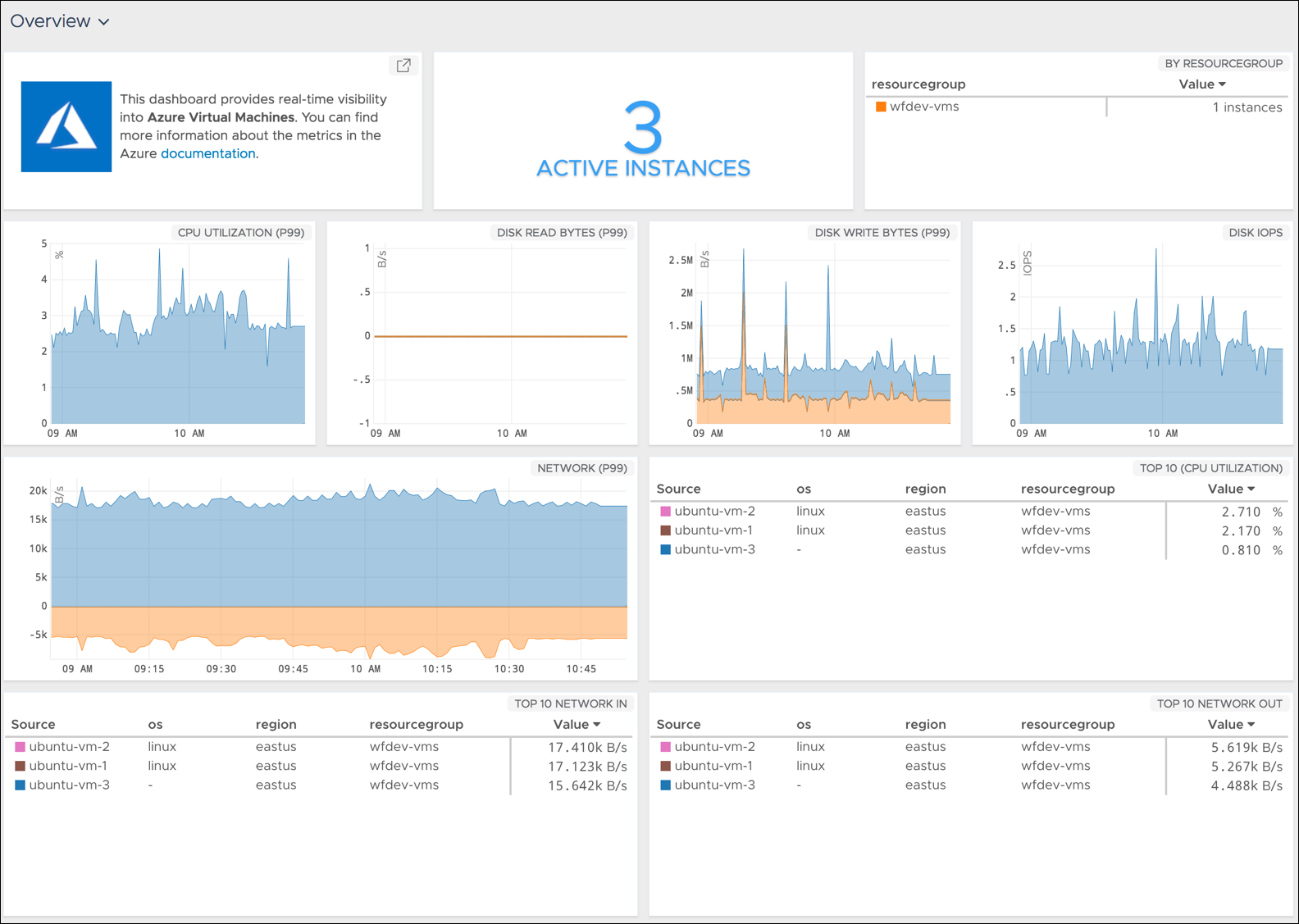
    The latest edition of the Wavefront analytics and monitoring tools from VMware now comes with pre-packaged support for a range of services running on the Microsoft Azure public cloud in addition to a significant expansion of support for a range of services provided by Amazon Web Services (AWS) and Google.

    Rob Markovich, senior director of marketing for the VMware business unit, said Wavefront has added 35 “out of the box” integrations for third-party applications and services to the software-as-a-service (SaaS) application.

    Wavefront has also added pre-packaged dashboards for Kong, Micrometer, Github and Bitbucket, VMware vRealize Operations, Hadoop MapReduce, Yarn, HDFS, Ceph, FluentD, Couchbase, Lighttpd, CoreOS, PHP-FRM, Papertrail, Rollbar, Suse Linux, Fedora Linux, FreeBSD, NetBSD, OpenBSD and Oracle Linux. Any Wavefront dashboard can be customized using more than 100 analytics functions, including correlation and predictive functions on any metric data source, he said.

    Those additions come on the heels of a wave of investments VMware has made over the last few months spanning everything from cloud extensions to VMware vSphere to embedding analytics within the VMware vRealize IT automation framework.

    Markovich said Wavefront is adding integrations at the rate of 10 to 20 a month—the total number he said should increase to more than 200 by the end of 2018. As organizations embrace various types and classes of cloud-native applications such as microservices, there is a much greater need for monitoring and analytics, especially as organizations begin to better understand the level of dependencies that exist between thousands of microservices, he said.

    In addition, Markovich noted the number of companies encountering that challenge is also starting to increase as almost every company begins to realize it is a software company that happens to sell something else. That doesn’t necessarily mean every organization will be updating applications at the same rate as a web-scale company, but it does means existing IT processes will need to be modernized, he said—for example, more enterprise IT organizations are starting to create site reliability engineering (SRE) teams.

    That shift may not result in every enterprise application being monitored, but it will most definitely increase the number of application workloads within those enterprise IT environments that are continuously monitored.

    There is, of course, no single definition of what officially constitutes DevOps. Every organization will tailor DevOps best practices to fit within the confines of their existing IT culture. In some organizations that shift will be driven from the bottom up, while others will be transformed by an initiative led from the top. At this point, the single biggest inhibitor to DevOps adoption has more to do with IT culture than any given set of technologies. But regardless of an organization’s level of DevOps maturity, VMware is betting there will soon be many more traditional enterprise IT organizations employing monitoring and analytics a lot more broadly than ever.

    — Mike Vizard

  • Rackspace Aims to Push VMware Everywhere

    Rackspace Aims to Push VMware Everywhere

    Rackspace is expanding its efforts to provide managed services for private clouds based on VMware that can now be deployed anywhere.

    Peter FitzGibbon, vice president and general manager of VMware at Rackspace, said Rackspace Private Cloud Everywhere, powered by VMware, is making an effort to provide infrastructure services that enable IT organizations to devote more resources to building applications. As part of the effort, Rackspace is making the managed services it provides a natural extension of an organization’s DevOps processes.

    Previously, Rackspace provided support for VMware in data centers it owns. Now Rackspace will manage instances of VMware deployed anywhere, including public clouds such as Amazon Web Services (AWS), FitzGibbon said.

    FitzGibbon noted Rackspace already has more than 70,000 VMware virtual machines under management—a number the company expects to expand significantly as more instances of VMware are deployed on the cloud in addition to on-premises IT environments.

    Longer term, FitzGibbon said IT organizations should also expect to see Rackspace extend the reach of the managed services it provides for VMware to include storage and network virtualization, as well as Pivotal Container Service, an instance of a container platform developed jointly by Pivotal and its sister company VMware.

    FitzGibbon said most organizations are on a multiyear journey when it comes to making the transition to the cloud. Most are still analyzing which classes of workloads make the most sense to deploy on a public cloud. Also slowing that transition are new data sovereignty requirements that force organizations to rethink where data is hosted around the world, he said.

    As they make that transition, many of those organizations are concluding they don’t want to manage the underlying infrastructure that is now distributed across multiple data centers. Instead, they want to reallocate their own limited resources to developing software faster, FitzGibbon said.

    FitzGibbon also noted that taking advantage of advanced cloud capabilities such as cloud bursting or moving workloads back and forth between environments requires a level of expertise many organizations don’t have in place today.

    As more organizations realize they need to become software companies to remain competitive, many are rethinking how IT infrastructure is managed within the context of a integrated DevOps processes. As part of that transition, many are starting to evaluate how much of the management of IT infrastructure they can outsource within the context of those DevOps processes. Rackspace is essentially making the case for retraining the existing IT staff focused on IT infrastructure to focus more on managing applications rather than physical and virtual infrastructure.

    Naturally, that level of cultural IT transformation inside any organization will take time to achieve. Not every organization is comfortable giving up control over its IT infrastructure. Others will prefer to collaboratively manage IT infrastructure with a service provider. Just as significantly, not every member of the IT staff managing infrastructure wants to be retrained.

    Nevertheless, as the sheer volume of IT infrastructure that needs to be managed becomes more distributed, it’s unlikely most IT organizations will be able to manage all those systems on their own.

    — Mike Vizard

  • VMware Extends vSphere Hybrid Cloud Reach

    VMware Extends vSphere Hybrid Cloud Reach

    VMware this week extended its campaign to automate IT environments based on its hypervisors by adding a link capability that enables the VMware vCenter platform to manage instances of VMware vSphere running on-premises and in public clouds such as Amazon Web Services (AWS) and IBM Cloud from the same console.

    Mike Adams, senior director of cloud platform product marketing for VMware, said the linking capability added to VMware vSphere will enable DevOps teams to deploy the VMware hypervisor anywhere without having to invest in a separate management framework for each environment.

    At the same time, VMware is also updating VMware vSAN storage software that, among other capabilities, adds a self-healing feature designed to minimize disruptions in the event of underlying hardware failure.

    Version 6.7 of VMware vSphere and VMware vSAN also now support enhanced client software based on an HTML5 interface that can manage VMware NSX network virtualization software, vSAN and vSphere along with additional third-party products.

    Other new features in VMware vSphere include ESXi Single Reboot, which reduces patch and upgrade times by halving the number of reboots required to one, and vSphere Quick Boot, which will skip hardware initialization steps to gain further re-start efficiencies.

    VMware is also adding support for persistent memory to speed vSphere performance and adding support for graphics processor units (GPUs).

    There’s also now support for both Trusted Platform Module (TPM) 2.0 Support and Virtual TPM 2.0, which serves to protect virtual machines and hosts from being tampered or compromised by the loading of unauthorized components or allowing a guest operating system running on the hypervisor to circumvent existing security controls.

    Finally, VMware is making available an instance of VMware vCenter management software running on a dedicated appliance.

    Adams said VMware today has 500,000 customers running VMware vSphere, compared to 10,000 that have elected to also run VMware vSAN storage software. The goal for the company is to enable more IT organizations to embrace hyperconverged infrastructure by moving storage software on to the same server where VMware vSphere runs. That approach dramatically reduces the total cost of operations for most organizations, he said.

    As VMware makes an arguably belated push into the public cloud, the unit of Dell Technologies is counting on a massive installed base of on-premises customers to move and expand their existing investments in VMware vSphere on public clouds. While there’s no doubt that approach will appeal to significant part of the VMware installed base, many customers have already invested in the hypervisor platforms used by AWS, IBM and Microsoft.

    When it comes to lifting and shifting an existing legacy applications into the public cloud, VMware clearly has the inside track. But when it comes to development of greenfield cloud-native applications, VMware vSphere is not often the first choice of application developers, many of which view VMware vSphere as part of an inflexible on-premises legacy IT environment that they deliberately left behind.

    To its credit, however, VMware is making significant strides in embracing advanced automation technologies that one day soon might put those developer concerns to rest once and for all.

    — Mike Vizard

  • VMware Adds Analytics to Automate IT Operations Based on Intent

    VMware Adds Analytics to Automate IT Operations Based on Intent

    VMware is moving to make it easier for organizations to automate data centers and public cloud based on its core hypervisor technology by injecting advanced analytics into its VMware vRealize Suite, enabling them to manage IT environments based on intent rather than having to manually manage every process themselves.

    At the core of those update is the Capacity Analytics Engine, which is being added to version 6.7 of vRealize Operations. Mahesh Kumar, senior director of product marketing for cloud management at VMware, said the capacity analytics engine makes use of Autoregressive Integrated Moving Average (ARIMA) techniques to forecast future system events based on historical data points that identify a long-term trend of sudden spikes in usage. Armed with that data, vRealize Operations can now provide cost analytics that include advice on ways to adjust application size and reclaim idle resources on either a public cloud or inside a local data center. IT organizations can also run “what if” scenarios, Kumar said.

    On top of that capability, VMware is also now adding predictive analytics that enables IT organizations to define a set of intents such as workload balancing to reduce software license cost, prioritize one set of application to maintain a service level agreement (SLA) or make sure certain workloads only run on servers that have been shown to comply with a specific regulation or mandate. Tighter integration between vRealize Operations 6.7 and vRealize Automation 7.4 then can be continuously employed to automate DevOps processes in a closed-loop manner at higher levels of scale without having to add additional headcount, Kumar said.

    In addition, the latest version of VRealize Automation includes more than 120 free, curated blueprints and OVF (Open Virtualization Format) files out of the box. VMware has teamed with Bitnami to add 20 new blueprints and 100-plus new OVFs of applications and databases including GitLab, Hadoop, Jenkins and MongoDB to speed application development and deployment. VMware also updated the Custom Form Designer and added multitenancy capabilities.

    Finally, VMware vRealize Operations is sporting a new user interface and integrates with VMware Wavefront monitoring software.

    Longer term, Kumar said vRealize Operations will be where VMware applies machine learning algorithms to enable artificial intelligence (AI) models to automate the management of VMware environments.

    Collectively, Kumar said the VMware vRealize Suite moves IT organizations that have standardized on VMware in both their local data centers and in the public cloud much farther down the DevOps maturity curve. In effect, VMware vRealize Suite creates an “easy button” for managing complex VMware environments spanning multiple clouds, Kumar said.

    VMware is also betting that AI models will make it a lot easier for organizations to make a cultural adjustment as the management of compute, storage and networking becomes more unified. It’s not clear how long it will take for those machine learning algorithms to manifest themselves in VMware management software. But it’s clear most IT organizations running VMware soon will need to rethink who is responsible for running what inside an IT operations team.

    — Mike Vizard

  • VMware Adds More DevOps Depth to Cloud Strategy

    VMware Adds More DevOps Depth to Cloud Strategy

    VMware today added a bevy of services to its portfolio that make managing instances of its software running in a public cloud easier.

    Additions to the VMware cloud portfolio include VMware Hybrid Cloud Extension Service for Private Cloud, a software-as-a-service (SaaS) offering that enables IT organizations to employ a self-service portal to move workloads between public clouds in a way the minimizes downtime.

    Other additions include the ability to apply both the Wavefront by VMware monitoring service and VMware Cost Insight Service against VMware Cloud on AWS, in addition to other public clouds. VMware has also added 45 integrations to expand the number of processes this SaaS application can monitor.

    Finally, VMware has added a VMware Log Intelligence Service to provides access to real-time analytics of log data.

    The arrival of these services coincides with the availability of VMware Cloud for AWS in the London region of AWS, which will be followed by the VMware stack becoming available in the Frankfurt, Germany, region of the AWS cloud.

    Chris Wolf, vice president and CTO of global field and industry for VMware, said that as more organizations look to move out of data centers they operate, they are asking VMware to extend the mobility capabilities the company developed for its hypervisor into the public cloud. In fact, many of them are now moving to deploy VMware software across multiple clouds, he said.

    Naturally, that expansion of VMware beyond the local data center is creating a raft of DevOps challenges, many of which the company is trying to address by making available a series of SaaS applications under the moniker VMware Cloud Services.

    VMware is making a concerted effort to expand its DevOps portfolio at a time when many developers have shifted application workloads onto public clouds based on virtual machines other than VMware. Obviously, VMware has developed many partnerships with cloud service providers. But the number of VMware hypervisors running in public clouds remains a relatively small percentage of the total number of hypervisors. VMware is hoping that will change, however, once developers discover VMware hypervisors on public clouds, which in many cases can reduce the headaches associated with trying to manage hybrid clouds based on disparate hypervisors. As part of that overall strategy, VMware also has been aggressively embracing emerging cloud-native platforms such as Kubernetes that can run anywhere.

    Most enterprise IT organizations are still learning to walk when it comes to hybrid cloud computing. The most common use case is still disaster recovery. Most IT organizations are a long way from dynamically moving workloads between clouds. Most of the use cases for moving workloads initially will be confined to simply lifting a workload from an on-premises environment. But as IT organizations also gain more experience, soon there may be as many workloads moving between clouds as there are workloads moving between servers in a local data center.

    — Mike Vizard

  • VMware Adds vRealize Automation to Cloud Platform

    VMware Adds vRealize Automation to Cloud Platform

    At the core of the VMware approach to cloud computing is a VMware Cloud Foundation platform that combines storage and network virtualization software with the company’s core hypervisor platform. Now via the release of VMware Cloud Foundation 2.3, integration with the VMware vRealize portfolio of IT automation software is being added.

    Matt Herreras, director of product marketing for VMware, says the inclusion of VMware vRealize Automation, vRealize Operations and vRealize Log Insight will make it easier to deploy application workloads on a platform that VMware manages on behalf of customers, whether it’s deployed on-premises or in a public cloud.

    IT organizations will also be able to use the management console VMware provides with VMware Cloud Foundation to configure the vRealize automation framework.

    At the same time, VMware is adding support for heterogeneous servers within a single rack, including be able to specify specific servers for each workload domain.

    Additionally, VMware has revealed it is working with Intel to include the latest family of Intel Xeon Scalable processors in an existing Intel Select Solutions for VMware Cloud Foundation program. Those processors are expected to be certified in the first half of 2018.

    VMware Cloud Foundation is rapidly becoming a centerpiece of the VMware approach to DevOps. VMware claims that a VMware-based cloud can be spun up six to eight times faster using VMware Cloud Foundation, while total cost of ownership of a private cloud will drop 30 percent to 40 percent and administrator productivity will increase by a factor of two.

    IT organizations that have standardized on VMware are under significant pressure from developers to become more agile. In many cases, those developers end-run the internal IT organization by programmatically invoking cloud services, even if it would be more cost-effective for the application workloads to deploy locally. The challenge those administrators and VMware both face is convincing developers that VMware environments are flexible enough to meet their need to access IT infrastructure on demand, now that an IT automation framework has been tightly coupled with VMware Cloud Foundation.

    In the meantime, VMware is also betting that as large numbers of existing applications are lifted and shifted into the cloud, most IT organizations would prefer to not have to refactor them. To allow IT organizations to avoid that issue, VMware is making VMware Cloud Foundation available jointly with Amazon Web Services (AWS), while partners including IBM provide their own managed instance of VMware Cloud Foundation. Herreras notes that the VMware vRealize automation suite also includes tools for managing AWS and Microsoft Azure environments as an extension of a local VMware environment.

    In addition, VMware has invested in container technologies including Docker containers and Kubernetes clusters, which can be deployed on VMware. Herreras says that from an IT operations perspective, the company is betting that most IT organizations will prefer to deploy legacy monolithic applications and emerging microservices applications on top of a common base infrastructure to minimize costs.

    It might be a little while longer before VMware can completely pull all the elements of its DevOps strategy together. But the one thing that is clear is that, at the very least now, the company understands just how much of its continued future relevance in enterprise IT is at stake.

    — Mike Vizard

  • Nutanix Extends DevOps Ambitions

    Nutanix Extends DevOps Ambitions

    Nutanix at its .NEXT Europe conference has signalled its ambitions now extend into the realm of DevOps. The company announced it will make available an Acropolis Compute Cloud (AC2) and an Acropolis Object Storage Service on top of its Enterprise Cloud OS software that creates an instance of a hyperconverged infrastructure (HCI) platform that can be deployed on-premises or in a public cloud.

    In addition, Nutanix is embedding an App Marketplace in its Nutanix Calm orchestration software through which applications developed on top of Enterprise Cloud OS can be accessed.

    Finally, Nutanix has added Veritas Technologies to the list of providers of data protection software that can be employed to provide backup and recovery software for applications running on top of its core AHV hypervisor.

    Greg Smith, vice president of product marketing for Nutanix, says his company is now moving well beyond simply trying to combine compute and storage in a locally deployed appliance. It envisions organizations employing Enterprise Cloud OS to drive hybrid cloud computing applications across a consistent set of automated orchestration services based on a common platform optimized around an HCI architecture.

    HCI architectures were pioneered by cloud service providers, and Nutanix applied those concepts to local data centers in the form of an appliance. The company then took the software it developed for the appliance to create a portable cloud operating system environment it is now extending with, for example, an object service that is compatible with the S3 interface defined by Amazon Web Services (AWS).

    Smith says Nutanix is making the compute and storage services available on top of Enterprise Cloud OS as an alternative to more expensive compute services based on platforms such as VMware. Nutanix is essentially in a race against other providers of HCI software to extend the reach of its platform. VMware, for example, has made its software stack available on the IBM Cloud and similarly is working to make its software available on AWS. Smith says the Nutanix approach gives IT organizations more control over where they want to deploy HCI software on any platform, including server platforms from Cisco Systems, Dell EMC, Lenovo and Hewlett-Packard Enterprise (HPE) if they so desire. All three of those vendors also provide access to rival HCI software platforms.

    Nutanix developed its own hypervisor on which Enterprise Cloud OS is built to enable its software to be deployed on multiple platforms. But just to make things more interesting from an IT operations perspective, Nutanix also has HCI software that can be deployed on a VMware hypervisor.

    Against that backdrop, IT organizations are trying to determine the rate at which they want to replace traditional rack-based systems with HCI platforms, which combine compute and storage to reduce the total cost of operating an IT environment. Most legacy applications still expect to access external storage. But as new applications are developed, the expectation is that most of them will run on some form of an HCI platform that can scale out to support a much broader range of applications.

    It’s not likely legacy applications running on rack systems will go away anytime soon. But it is apparent that IT operations teams will be managing a mix of rack and HCI systems for years to come.

    — Mike Vizard