Tag: software development

  • Enterprise Software Development Will Break the Speed Limit in 2021

    Enterprise Software Development Will Break the Speed Limit in 2021

    For some, 2020 was the year for software development speed … but not for everyone. Startups and SMEs climbed on board the CI/CD, shift-left and agile development train en masse – and reaped the benefits of faster iterations and tighter release schedules.

    But the “big kids” got left behind. Core enterprise applications – the legacy systems with 1+ million lines of code that do the heavy lifting in many corporations – have not yet made the switch to the world of rapid release cycles. And this is natural; enterprises are rightfully more cautious by nature, and because the technology driving this evolution was not mature by enterprise standards.

    But in 2021, that’s going to change.

    Here are four speedy predictions for pushing enterprises over the speed limit in 2021, and some of the companies making it happen.

    Four Enterprise Software Development Speed Predictions

    #1: AI-based test generation will make enterprise development faster and better

    Testing automation is crucial for any software development organization trying to transition to CI/CD. But enterprise stakes are arguably high, and enterprise code is by nature inflated, often carrying significant technical debt. Preparing suitable test coverage manually is resource-heavy, to say the least. But a new generation of AI-powered testing automation tools solves this problem for you. Solutions from companies like Ponicode and Diffblue allow enterprises with large code base apps to embrace CI/CD by bridging the technical debt gap in testing while still meeting release cycles.

    #2: Test avoidance tech will make a dent in unnecessary testing

    Running tests on an entire build for one small code change is overkill – no one’s arguing that. But until recently, there wasn’t much of an alternative to ensure the ironclad quality that enterprises require. In 2021, solutions from companies like Sealights and Launchable (which counts among its investors Jenkins creator Kohsuke Kawaguchi) will help enterprise software development teams deliver quality at speed. The key is the effective use of machine learning to reduce test cycle times and run only relevant tests, not the entire test suite, to ensure faster iteration cycles.

    #3: High Performance Computing will move toward distributed computing

    Compute power will remain a bottleneck to development in 2021 – but the processing arms race will likely change. As enterprises get used to virtualizing their infrastructure, they will think twice about investing heavily in dedicated multicore build/render machines powered by next-gen processors. Instead, they will look to virtualized processing power like distributed computing, cloud bursting, and spot instances – which provide the massive scalability enterprises require at build time, while still maintaining a more reasonable price-performance ratio.

    #4: Managed CI/CD in the cloud will automate enterprise release pipelines

    Managed CI/CD, like Amazon’s CodePipeline and Azure Pipelines, help enterprises save time setting up and maintaining CI/CD infrastructure, scaling up during peak times and maintaining security. These services, while not for everyone, will continue to gain popularity in 2021. A key reason for increased adoption is that they allow companies to scale much faster: without hardware or software, development teams can push a button and suddenly gain 20 more build servers. Moreover, managed CI/CD enables faster onboarding of new teams, simpler creation of repositories and more streamlined work with multiple geolocations. Finally, pay-as-you-go models, no upfront fees and no commitments are increasingly attractive to enterprises in tough times.

    Put the Pedal to the Metal

    Newly released AI-powered products and mature hosted services from big-name cloud providers are changing the face of enterprise-level development. In 2021, we’re going to see teams supporting backbone enterprise applications increasingly moving to CI/CD, shift left and agile development methodologies. Because everyone – even enterprises – deserves to break the speed limit.

  • Rookout Tool now Debugs Third-Party Code

    Rookout Tool now Debugs Third-Party Code

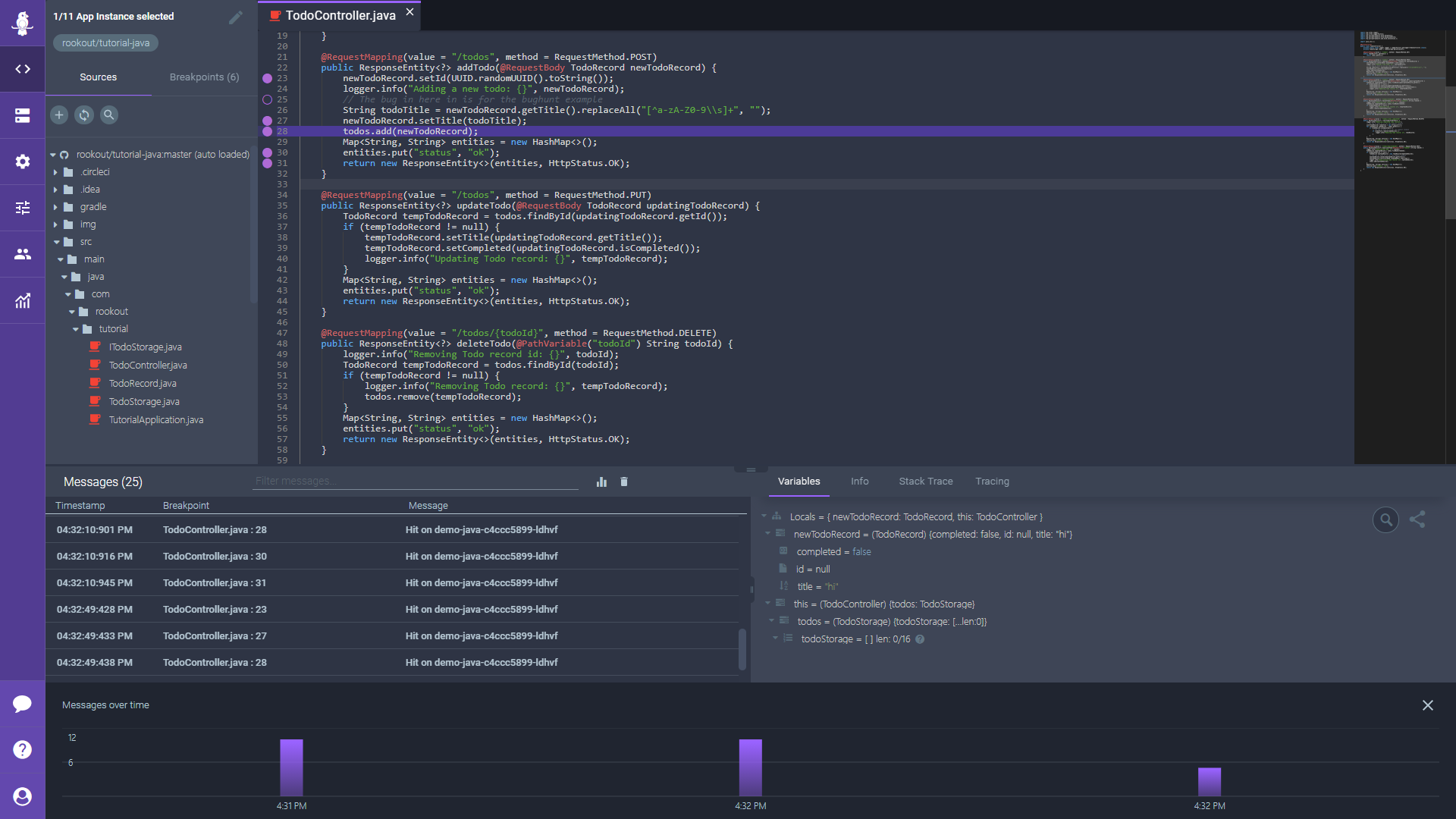
    Rookout revealed today it has extended its eponymous debugging tools to include third-party applications.

    Shahar Fogel, Rookout’s CEO, says most organizations today are building applications that rely heavily on code or modules developed by a third party. Rookout now makes it possible to analyze and debug that code before it is incorporated within a larger application environment, Fogel said.

    That’s crucial, because many of the operational issues a DevOps team is likely to encounter can be traced to flawed code written by someone outside of the IT organization, Fogel said. This new capability will reduce the amount of time DevOps teams spend trying to deduce the root cause of an issue, he said.

    Many IT organizations erroneously assume that all the code running in their environments has passed through a continuous integration/continuous deployment (CI/CD) environment, Fogel said. In reality, it’s not uncommon for developers to deploy code directly into a production environment in the name of expediency. Not all of that code, however, may have been written by the developer. Many developers wrongly assume the code they download from a repository was properly vetted and debugged.

    Rookout now makes it possible to debug both open source code and proprietary code written by a third party or present on an application deployment platform, said Fogel. Rookout collects the local variables, function arguments, tracing data, call stack and other relevant data, and can identify issues down to specific lines of code. Support for third-party code has been extended to the call stack level to enable developers to see how code execution flows across their own and third-party code.

    As more responsibility for applications shifts left toward developers, organizations need to provide them with tools to analyze applications and the platforms they run on. Beside building applications faster, one of the primary theoretical benefits of DevOps is the notion that developers can build more resilient applications, because it’s ultimately their responsibility to remediate any issues that arise after an application is deployed in production. In practice, that’s difficult to achieve when developers have no visibility into code that they didn’t write themselves.

    Going forward, there’s going to be a lot more third-party code running in production, as developers reuse application code encapsulated in containers downloaded directly from registries, Fogel said.

    The degree of accountability developers have for their appliations’ code currently varies widely by organization. However, given the right tools, and enough time, most developers would prefer to debug both the code they write and any they have incorporated, even if it were written by someone else. That desire, however, requires more time to build and test applications. Of course, it’s worth the tradeoff if developers encounter fewer incidents that require developers to debug applications after they are deployed in a production environment.

  • Guide for Software Development & Software Security

    Guide for Software Development & Software Security

    In order to ensure an efficient, secure and successful software development project, there are many factors that you and your team must consider when starting a new project. The most common and pertinent considerations for many include defining the requirements of the project, selecting the correct processes for each stage of the software development project, selecting the right software development tools and ensuring the proper practices are implemented for software security.

    As meeting each of those considerations for an effective software development project can be a daunting and time-consuming challenge, we recommend you follow this step-by-step guide that will help walk you through how to organize a secure and successful project.

    Understand Your Software Development Project Requirements

    As you begin your software development project, there are several details that you must complete to help you better understand your software development project requirements.

    • Outline the project
    • Define the project vision
    • Identify compliance requirements
    • Select a flexible programming language
    • Develop a code design
    • Establish code architecture

    By completing the above tasks, you are able to create a reliable and secure framework for your software development project.

    How to Define Your Software Development Process

    As your development process will be unique to the needs and requirements of your software development project, we recommend that you consider including the following details into your process:

    • Identify what software security best practices will need to be enforced
    • Align on a development methodology
    • Organize your environment setup
    • Use repository tools
    • Enforce software security with secure coding practices
    • Incorporate checks into your development pipeline
    • Have a definition of “done” for your software development project tasks and features
    • Encourage feedback and communication

    Including the above details into your software development process helps to ensure software security as well as increase the success of your software development project.

    How to Choose the Right Software Security Tools for your Software Development Project

    One of the most important parts of your software development project is to choose the right tools. With the right tools, you are able to standardize your project and enable your entire team to work together more efficiently and effectively. Regardless of what the specifics of your software development may be, we recommend that your toolset includes:

    • Version control system
    • Static code analyzer
    • Application lifecycle management tool

    These tools help to ensure that your project is well-organized; your software reliable, compliant and high quality; and that software security is enforced.

    How to Set Up DevSecOps for Your Software Development Project

    DevSecOps is essential for efficient and secure software development, as it can help your team:

    To read more, please visit: https://www.perforce.com/blog/kw/software-development-and-software-security

  • 5 Reasons Why DevOps Needs AI

    5 Reasons Why DevOps Needs AI

    AI and DevOps together make a powerful combination of efficiency and intelligence

    Supervising and managing a DevOps environment can be complex. The proliferation of data has made it challenging for DevOps teams to effectively absorb and implement information to evaluate and tackle customer issues. Imagine a team navigating through data in exabytes to search for important events that triggered an event; they would end up investing hundreds of hours in identifying the issue.

    A lot of such critical issues can be resolved with artificial intelligence (AI)-powered technologies. Organizations can transform their DevOps environment by deploying AI systems. Since it is difficult for humans to handle large volumes of data, AI has gained traction as the solution that transforms the way teams develop, deploy, deliver and manage applications. Before understanding the role of AI in transforming DevOps, however, we first must understand how AI and DevOps are interrelated.

    DevOps and AI Work Together

    DevOps takes a business-driven approach to deliver, and AI can be integrated into the system for improved functionality. By using AI-powered technologies, DevOps teams can utilize volumes of information to the best of their ability, which in turn helps streamline testing, coding, releasing and monitoring products with precision and efficiency. It also plays a central role in improving automation, quickly identifying and resolving issues and enhancing collaboration amidst teams.

    AI provides a major boost to DevOps efficiency. Various AI tools enable users to map and integrate data at the speed of business, driving business decision-making and delivering delightful customer experiences. Machine learning systems can simplify the way DevOps systems work with data to deliver value.

    Here are five reasons why implementing artificial intelligence-based solutions in a DevOps culture is necessary:

    1. Increased Data Access

    The lack of unfettered data access is one of the most important issues that surfaced in the DevOps environment. It inhibits business users’ capability to leverage data for making decisions, ultimately making organizations difficult to do business with. AI-powered data mapping technologies enable them to deal with data silos that can help them get the right information at the right time so they can make good decisions. AI-powered data mapping, for example, helps users map troves of fragmented data faster, which can then be integrated into a unified database. They can employ machine learning algorithms to map data faster without succumbing to inaccuracies or errors.

    In short, machine learning data mapping tools empower users to map big data with ease and precision. Moreover, they can integrate the data silos present across the business ecosystems to gain accurate customer insights to improve data quality and efficiency. So, AI can tackle organizational silos to help users make decisions without compromising speed or accuracy. AI can combine data from multiple sources and get it ready for consistent and repeatable analysis.

    1. Timely Notifications and Alerts 

    DevOps teams must have good alerts and notifications systems to identify flaws without delay. There are times when notifications come in enormous numbers, all marked with the same severity. Such huge numbers can have a negative impact on the response rate of teams. AI can help prioritize the responses based on the information derived from past behavior, the intensity of the alert and the source of the alerts. As a result, teams can manage the tsunami of data with confidence.

    1. Improved Execution Efficiency 

    The transition from a rule-based, human management of analysis to self-governed systems can be realized through AI. This helps business users alleviate the complexity of analysis and enable a level of change adaptation for digital transformation.

    1. Anomaly Detection Capabilities

    For any business, protecting security systems is extremely important. AI and machine learning can help enhance security by enabling an encrypted data environment wherein, only authorized personnel have the authentication to access data (AI-powered data integration tools play a vital role). Machine learning algorithms help users streamline anomaly detection to boot. Simply put, combining AI and DevOps will facilitate performance and stop breaches or thefts.

    1. Efficient Collaboration

    The minimum the disruption is, the maximum is productivity and collaboration. And AI mechanisms help developers release code at high velocity to minimize the disruption. AI can create a collaborative DevOps environment that helps companies deliver maximum value, maximizing ROI and ultimately making them easier to do business with.

    AI-powered systems can support the teams by offering a single, unified view into data and applications across the chain of DevOps. Along with that, it can improve the accuracy of data analysis as anomalies can be detected and rectified right away.

  • Integrating Security in the Development Process With DevSecOps

    Integrating Security in the Development Process With DevSecOps

    Occasionally, it’s worthwhile to reflect on how we develop and deliver software during times of rapid change and significant disruption. In those moments of reflection, we learn from the exciting trends and changes that are taking place. Recently I had the opportunity to commiserate with two technical thought leaders at Perforce: Stuart Foster, product manager, and Steve Howard, static code analysis evangelist.

    The disruption caused by COVID-19 goes much deeper than just the rapid shift to work-from-home. Development teams are being asked to keep up developer velocity, while the organization as a whole accelerates digital transformation projects, shifting priorities and emphasizing investments needed to successfully navigate difficult and uncertain economic and market conditions.

    In our conversation, we note how investments already made in shifting to the cloud, remote and cloud-based development, automated testing and pipeline automation and security tools are helping organizations today. We also explore how current conditions influence product roadmaps, causing software teams to take a holistic look at their development processes and tools, and organizations to rethink how to take their software delivery capability to the next level.

    Stuart and Steve share their software best practices on collaboration, automation, security, standardization and more.

    Explore our conversation in more depth by viewing the video and transcript below.

    Transcript

    Mitch Ashley: Well, I’m happy to be joined by Stuart Foster, who’s product manager with Perforce, and Steve Howard, static code analysis evangelist, and I think a lot of other things, too—does a lot with Perforce. So, welcome, gentlemen—good to be talking to you today.

    Stuart Foster: Thanks, Mitch.

    Steve Howard: Hello.

    Ashley: You know, we’re talking about—you know, Perforce does a lot of things, and I think we’re just kind of focusing on what maybe some of the current conditions, current best practices are. There’s a lot happening right now in everybody’s world—a lot of change, a lot of disruption.

    But before we get to that, could I have you both introduce yourselves? Maybe Stuart, would you start first?

    Foster: Yeah. Hi, everybody, I’m Stuart Foster, I’m Perforce’s product manager for our static code analysis products.

    Ashley: Great—Steve?

    Howard: Yeah, and I’m—well, I have, as you say, many jobs and roles within the organization, but primarily focusing on the evangelism around using static code analysis for both of our products, Klocwork and QAC, here at Perforce, yeah.

    Ashley: If you’re working with developers, you gotta be doing evangelism, right?

    Howard: Yeah. [Laughter] 

    Ashley: They expect you to give them support, and be talking to them, in a different kind of way. Tell us—would one of you tell us a little bit about Perforce and what all you all do?

    Howard: Yeah, sure—well, I’ll take that. So, Perforce is an organization, obviously as, you know, originally comes out of the version control software. But really, it’s about developer tools and how we can help make the developer’s life easier in the day to day tasks. So, whether that be trying to prove compliance to standards or just trying to get the stuff out the door in the first place—anything that we can do to help make that process smooth and reliable is kind of where we are. And, you know, these days, that has a bit of a—a buzzword, if you will, around the DevOps tooling ideas, but essentially, it’s developer tools and making their life more comfortable.

    Ashley: That’s great, because you all fit into a number of places in the sort of tool chain, pipeline, workflow process across the development life cycle.

    Howard: That’s right, yeah.

    Ashley: So, that’s awesome. Well, let’s get into this. I’m really curious about what you’re finding in market, and one of the things we like to do when I’m talking with experts like yourself is, let me just try to share some of the things that we’ve experienced within the past, but also kinda recently that it’s happening, because we’re all dealing with economic change, disruption, COVID, work from home, all of those kind of things, but you know, we’ve done some research at my company and there’s a lot—of course, a great, great emphasis on acceleration of digital strategies and, of course, that puts a lot of pressure and emphasis and people are betting money on software being the answer to helping them implement their strategies.

    Are you seeing the same kind of thing, that acceleration of digital transformation and software—elevation of software projects?

    Foster: Yeah. We’re seeing that across the board, even in our own company here. You know, a lot of us have transitioned to work from home, and then you have to start thinking about the considerations for that, right? 

    And what we’re finding ourselves and working with our customers is, a lot of people are shifting more technological tools, right, to be able to better produce workflows and code reviews, how to—working from home, security, right? How secure are your remote development work stations? How is security being built into your software and your workflow? So, tools are being used across the board for that. Just being able to rely on a piece of software versus in-office workflow has become more and more important. And amongst all that, then there’s the goal to, you know, keep development velocity up, which could be a challenge when working from home, right? So, we’re seeing a lot more DevOps automation of, you know , a lot of workflow process and things like that.

    Ashley: Yeah, there’s no more popping over the edge of the cube or to the table next to you, right? Somebody sitting there at the café, in the office, or down the street. It’s a fully digital world, right? You’re not sitting with people very often.

    Foster: Yeah, we’re relying on Slack, we’re relying on Slack calls, Zoom videos, everything to just stay in touch and work and collaborate with one another, yeah.

    Ashley: Steve—yeah.

    Howard: But I think that’s where—yeah, so, I was gonna say, I think that’s where those centralized processes that we’ve kind of all been working towards, luckily, for the last few years, are really gonna pay off. Because how do we not have that? If you imagine how things were maybe five years ago, it would’ve been a much bigger transition to get to where we are now, whereas it was almost like most of our organization was kind of ready to go. We were already there, just—you could call foresightful, but really, it was a little bit of chance, I think. Yeah, those processes have held things together remarkably well, and we’re very lucky for it.

    Ashley: You know, nobody would wish for something like COVID or a pandemic on any of us, but if you look back, you know, I think back when we were virtualizing things and developers were starting to be able to just create a fully self-contained environment to develop on their laptop—I saw people working on planes, right? First time I saw somebody writing code on a plane—that’s awesome.

    But so many things, and then of course, adding the cloud and all the services and software and tool chains and pipelines that we can create now, it—I mean, I think we’re lucky, if you were gonna have something like this happen, now is the time where we can actually continue to be productive, and put more emphasis or pressure on ourselves to deliver software. Do you agree?

    Howard: Yeah.

    Foster: Yeah, absolutely.

    Howard: Yeah—sorry, Stuart.

    Foster: [Laughter] We agreed at the same time, that was great.

    Ashley: [Laughter] 

    Foster: But you’re right, I think, like, some of it—you know, it’s a little bit accidental, but as you mentioned, setting up the development workflow to be able to do it on a laptop, people are shifting their hardware, they’re removing their hardware and going to the cloud, right? So, it’s kind of been like an expansion and a reduction, all—just naturally, but also, you know, you think about DevOps and there’s also, you know, cost savings to be had by not having to have this footprints, not having to worry about these things.

    So, this could be, in some ways, pretty revolutionary or changing for development costs for a lot of companies.

    Ashley: Steve, you were gonna jump in there—anything to add?

    Howard: Yeah, no, exactly the same. I think the fact is that we—you know, a lot of that infrastructure is being built up and the idea of being able to run our development pipelines kind of in a cloud environment or whatever and having that all ready to go just meant that we didn’t have to pick up ginormous work stations. I remember back in my days of developing in aviation software, we used to literally have, you know, Unix boxes stacked up on the side somewhere that we had to go and log in on each one and run our testing for each single one. It’s just unthinkable. It would never have been possible.

    Ashley: That would be insane today. You would never. I mean—

    Howard: Yeah.

    Ashley: – if you have a choice, you would never do that, right? [Laughter] 

    Howard: Well, exactly, and the very fact that, you know, 10 years ago, we still had to do that, how could we have transitioned? It wouldn’t have been possible. And so, it really is testament to how far we’ve really come in 10, 15 years to see where we are with our testing processes, the fact that we can do, you know, 99 percent of it, if not all of it can be done completely with no connection to the physical space.

    Ashley: Mm-hmm.

    Howard: It’s all—and that can even mean, you know, in the cloud completely, so it’s not even within our organization. It’s securely being done off site somewhere in the ether. [Laughter] 

    Ashley: Yeah.

    Howard: And that process is still completely manageable, it’s something we can all see as developers, everyone can get to see where we currently are with that process, you know, what the latest test run gave us across the whole—

    Ashley: I’m really curious—yeah, I’m really curious what your experience in market is. Do you see more people who are kinda doubling down and getting even more serious about their DevOps implementation and taking it to the next level, or do you see more people coming to you that maybe are relatively new to DevOps and are looking for tooling and looking for ways of helping them, you know, not just get started and learn all the problems themselves, experience them themselves, but looking from the experience of a software provider like yourself, or is it a little bit of both?

    Howard: I’d say a little bit of both. I mean, obviously initially, there was such a lot to do already and everyone kind of had no time to really think—understandably, but probably within, you know, since the end of the summer, maybe, things have started to come back and people are actually going, “Well, hang on a minute. We’ve got a process, but now, how can we actually make this a lot easier for ourselves?” and looking to improve that.

    And I think, you know, for a lot of the organizations where, perhaps, doing things off site would never have even been considered. And I think this was to Stuart’s point—that kind of, that’s been forced upon people and it’s almost gonna change the way we develop forever now as a result of that, because we have now, we’ve done it, we’ve experienced that it’s possible, and it’s safe and it’s secure. 

    How can we now make that better and make our lives easier by not having that massive footprint that Stuart was mentioning? We’ve actually got something that’s very, very lean, it’s in the cloud, we’ve got machines when we need them, but not when we don’t need them, and how can we really make that process as efficient as possible from the results side, you know, making sure we’re doing what we’re supposed to be doing as quickly as possible, but also actually trying to reduce our footprint on process and power, for example? You know, the development time that’s involved in that, how can we make that as efficient as possible?

    Foster: Yeah, and I also think what we’re seeing, too, is, you know, our existing customers, they’re doubling down on their tools, you know, because they need to rely on something, right? And that’s also, what it’s done is also, I think, is changing some of the roadmap items that all products are looking at, right? There’s a whole new—not a whole new paradigm, but you know, there’s a little bit more seriousness being taken in terms of some of these features and functionalities of being able to work remote, or the requirements for more cloud usage, right? We’re talking ease of use, we’re talking about things that are, you know, related to workflows to make working in these conditions—not just in these conditions. Assuming you get back to the office, just more efficient as well.

    Ashley: Mm-hmm.

    Foster: So, we’re seeing that at the same time, too. And then, you know, from the perspective of new customers coming in, they’re almost expecting these things to already be there, right? Because they’ve run up to these problems as COVID has created and they’re trying to find the solutions that are gonna be kinda turnkey out of the box.

    And also, I’ve done, I’ve been talking with various analysts related to our product, but it seems as though the analyst community itself is, they’re seeing the requirement for, you know, ease of use in DevOps becoming more important as well at the same time.

    Ashley: Mm-hmm. I think that may be also, in part, the expansion of DevOps into the organization. They may have had a core group of teams that were really taking the challenge of DevOps and implementing it and now, how does the rest of the organization do the same thing, but accelerate their adoption of it?

    Foster: Yeah, and I think also, a lot of development groups within a single company—you know, you may have a security team, you may have a development team, you may have a LiveOps team—they’re starting to recognize that there are choke points in the development processes.

    Ashley: Mm-hmm.

    Foster: And so, how do you unblock that? How do you make it more easy? How do you offload some of that choke point onto a broader group, right? A lot of the idea of DevOps, DevSecOps, whatever you wanna call it, right, is that developers are owning the code that they produce in more broad ways. That’s writing unit tests, that’s making sure they do the QA on it, right? That’s when they’re, you know, they have to implement the security requirements then and there, right? They need to ensure the traceability is done, right? They have to—they’re taking that into their hands. It’s becoming not so much that there’s a DevOps group that magically handles all this infrastructure, it’s becoming part of each developer’s responsibility as well, right?

    Ashley: Hmm. Interesting. You know, I know, as you scale things out and you adopt new tools, tools do a lot of things for you, but there’s oftentimes, there’s approaches that you need to adapt into your tools, things like what are our coding standards, what are our testing, what level of testing do we do? How do we break it into chunks? When do we do security testing of our code?

    And that’s part of that learning curve to is, how do you adapt a tool set to both what your requirements are, but also, you would like it to kinda take you to the next level. What are some of the things that really can help people kind of propel their expertise in the organization’s ability to deliver software more effectively?

    Howard: Yeah, that’s a really good point. So, one of the things, you mentioned coding standards there, but obviously, you know, those can come from multiple sources, they can be something that’s actually being required by a standard, for example, if it’s in a safety critical, security critical world. It could be something that’s actually demanded by the organization itself—they have their own rules or there’s certain things in any particular project that, if you do things in a certain way would make, you know, it would be dangerous or insecure or something. So, they have some controls, as well, of that.

    And what we do see is, the more that we can get that information out to our developers, for example, the more value that has as well. So, yes, we can help enforce coding standards, for example, with our Static Analysis tools. But that’s only half the story. Enforcement is one thing; actually getting the developers to understand what the problems are as they’re creating them and to have easy access to the help and the quick feedback of those problems makes it much more powerful, because it gives them, (a) you know, all the resources they need to deal with the problem quickly and to not perhaps find it a challenge to have to deal with, but also, they learn. 

    And so, the next piece of code they write doesn’t generally have the problem. So, there’s a developer learning element there as well, which we can control centrally, and then spread out to all of these remote workers working—you know, without that team collaboration that we used to have, we’re still able to do the same things. So, that’s become something that’s really focused people’s minds on the capability there in terms of what that means. And as I say, that applies to security standards that are well known or requirements for quality that we have to work to for a security or safety standard—

    Ashley: Mm-hmm.

    Howard: – but also the company’s own rules.

    Foster: Yeah, and I think, you know, outside of just simply the tools, development teams are, you know, taking a step back and re-evaluating or thinking more about what their software development process is, holistically, right? You know, Steve mentioned there some of the tools, best practices, but you know, you also have to think what kind of, you know, software development methodologies might you be using. You know, sometimes it doesn’t matter whether it’s agile, waterfall, whether you’re using Scrum or Kanban, you know, I think it’s giving people a moment to think about what’s the most important kind of Dev process that is gonna fit this team or how you have to work now, how it fits the businesses. 

    And then implementing processes to ensure the organization, communication, and what systems need to be put into place to help prevent any problems that arise during development and kinda identifying and understanding that. Then you’re picking the tools, you’re building your development workflow, whether it’s in environments, it’s setting up DevOps pipelines to ensure that everything’s followed correctly. It’s the tools, but it’s the process, and that’s changed, too.

    Ashley: That’s interesting. You know, we’ve done some research about the influence that developers have had on the organization, too. Even outside of development teams, you’re seeing DevOps and agile kind of principles, even though they aren’t calling it that—daily standup meetings, shorter intervals of deliverables, more kinda asynchronous communication tools and collaboration kind of tools, which really makes it easier, I think, for the development teams, the product teams—you’re a product manager yourself, Stuart.

    Foster: [Laughter] 

    Ashley: And beyond—operations, security—everyone is kind of forced to work a little bit differently, but also can benefit from what each other knows about how to do that more effectively. And we seem like we’re at this sort of serendipitous time of being able to leverage that, which fits right into the tooling approaches that we can take.

    Foster: Yeah, and you know, when you look at it, like, it always just ends up communication. Whatever the communication is, whether that’s the workflow, whether that’s in-person, whether that’s meeting, whether that’s documentation, it’s all about communication, and that’s true not for just development, but for business, right? Developers working, you know, with other groups—marketing, sales—everything, it’s all communication. It just keeps business running. And that’s kinda the funny kinda perspective that may not necessarily be outright visible by simply saying, “It’s communication.”

    Howard: What’s interesting is, that’s also kinda mirrored in the tooling, because a lot of the work we’ve been doing recently is about how to make sure the tools have all got open interfaces to communicate with the next thing in the pipeline or to feed that data back up to some dashboard that’s gonna be shared with the rest of the team.

    So, yeah, it’s kind of an interesting point, but that also applies with the tooling that we’re trying to build around that.

    Foster: Mm-hmm.

    Ashley: Mm-hmm. A really great point. So, to give you fair warning, I’m gonna ask you your three recommendations on best practices in the current climate, so be thinking about that.

    I was thinking about your comment, Steve, about being able to better integrate tools together and then taking the data from the tool sets, the pipeline of the process that we’re going through and the pipeline of work—there’s so much value in that data that sometimes ends up as exhausts or on the cutting room floor, right, to use two different metaphors. But that information could be extremely valuable, putting it into dashboards, feeding it into continuous improvement processes, shortening the window for getting feedback for, “Here’s a security vulnerability or a coding standard” or some kind of an error that you can fix in minutes instead of days and weeks and sometimes months, right? The security audit at the end of the release is much easier, because you’ve already gone through so much to it. Those can all be things that can help us.

    So, I gave you a little bit of time there to think about your three best practices. I did my best job of stalling that I could. So, who would like to go first? What would you recommend people consider today?

    Foster: Yeah, I’ll go. Just, I want to reinforce that message of,  you know, figuring out how you’re going to work as a development team, develop that communication, right? And that’s using your tools.

    I think in the world of remote work from home, having kind of a common language—again, back to communication—of how, you know, each developer’s system is set up. So, common environments, they should be using as close to the same setups as possible so that, you know, when one of you is running into an issue, it’s easier to get that information across, right? You’re not gonna have to install something obscure because somebody’s using something obscure. You should all be trying to talk and use the same tools so you’re all speaking the same language. That allows you to have that velocity that you could otherwise lose.

    And in this world, too, security hasn’t been more important than ever—security is more important than ever. So, think about securing your Dev processes, developing secure software, it’s gonna be very important. And those are kinda my three.

    Ashley: Okay, great. All good ones. Steve?

    Howard: Yeah, I’d answer—so, my three would be, first of all, to automate; take the process away from the day to day effort of the development teams and organizations around them. So, yeah, that’s the first one.

    Report—so, that’s the communication piece, I guess, but get the information to the right people at the right time and hopefully in the right sort of time window.

    And then shift left. So, then, we make it more efficient. Then we look to where we can try to remove the fat in the process and take away the time that was wasted and try and move it to the right position in that process. So, yeah, those three, in that order. [Laughter] 

    Ashley: Great. Excellent, excellent. I’m curious what you both think will be some of the things that will stay with us, the things that’ll last past a forced work at home, forced work remote. Maybe people are returning to the office, maybe they aren’t. What do you think are some of the things that will stick with us? Because it wasn’t like we were doing this for two weeks and then we’d just go back to the office—this is an extended period, we’re developing new habits, we’re changing how we’re working. Why go back, sometimes, right? What are your thoughts?

    Foster: I think you’re gonna see a lot of these workflows stay around. I think that the reliance on the numerous tools to keep velocity up and reduce and automate are just gonna stick around. You know, you don’t want to be wasting time on trying to get something to work. It’s easier to just simply automate it and get it out of your hands so that, you know, at least from a development perspective, you can just focus on what’s important, which is, you know, coding, the feature, getting the product out the door, right?

    Those are gonna stick around, and I think the tools, over the course of time, are just gonna keep reinforcing and strengthening that kind of automation pipeline.

    Ashley: Good.

    Howard: Yeah, no, and I think, from my perspective, just to add the one small piece there is, the cloudification, essentially, of the processes. So,  I think, you know, people will stop having the premises to host great, big server racks in, and that’s just all gonna move off site, off premise, outside of the organization, for sure, yeah.

    Ashley: Yeah. To kinda add what you both have said, which I think supports your thoughts on this is—you know, as we change to whatever we’re gonna go back to, I don’t think it’s gonna be back to what we were doing. But it’s gonna be a hybrid, right? I can’t imagine everyone shifting back to a different way. It’s—some people are still, maybe even more percentage of our teams are working remotely, never going back into an office, but we may have some that do.

    We’ve broadened the reach across the globe of people that we’re working with, the product and vendor, tool vendors that we’re working with. Those things aren’t gonna change, right? 

    Howard: No. No.

    Ashley: We’re gonna stay doing that. If we’ve found something that works better, you’re gonna stick with it, right? So, you’re gonna stick with—you’re gonna stay in the cloud, push more in the cloud, right? And leverage some of the automation, the processes that you talked about, Stuart.

    Well, this has been really fascinating. Would love to have you both back, have you guys back and we can talk some more about—I’m gonna delve into static code analysis evangelist, your role, Steve, get into some of that, which I know you all have some of your products do and to security and to some other areas within the software pipeline, but this has been really great. I’ve really enjoyed talking with you both.

    Howard: Yeah, it’s been a pleasure.

    Foster: Great. Thanks, Mitch.

    Howard: Bye bye.

    Ashley: You bet. We’ll see you soon.

  • Low Code: A Modern Approach to Software Development

    Low Code: A Modern Approach to Software Development

    Low-code development is not a new concept, but since the onset of the COVID-19 pandemic earlier this year, it has become increasingly popular. Low code helps businesses adapt to ever-changing environments quickly by allowing them to build, customize and deploy apps with little to no coding. It enables organizations to accelerate their innovation, automation and transformation efforts.

    “With low-code applications, business analysts, project managers, operations teams and other business users are empowered to implement solutions for themselves,” said Prodly CEO Max Rudman. “Consequently, technical developers have more time to focus on projects that require specialized skills. Because developers are now able to focus on tasks that really do require programming expertise, they become more productive, too.”

    On Nov. 19, the low-code community will come together for the first Low Code Today Virtual Summit to take a look at low code/no code in today’s new normal and highlight the impact of the rapid acceleration of low code use in the wake of COVID-19.

    Here’s a sneak peek of some of the discussions that will take place during the event by some of the distinguished speakers presenting at Low Code Today.

    Accelerate Digital Transformation With Low Code

    In this interview, ServiceNow CIO Chris Bedi shares the main benefits of low code and talks about the ServiceNow Citizen Developer Program. During his keynote presentation, Chris will share a CIO perspective on rolling out low-code applications at scale, best practices from rolling out ServiceNow Citizen Developer Program and suggested guardrails to ensure a successful and secure implementation.

    Empowering Citizen Developers With Low Code

    During this interview, Kianda Chief Operating Officer Derya Sousa explains how low code accelerates digital transformation and empowers citizen developers. Derya will be presenting at Low Code Today Virtual Summit along with Kianda CEO Osvaldo Sousa. During their session, Derya and Osvaldo will discuss how organizations use low-code/no-code platforms to build fully responsive, easy-to-deploy enterprise applications – all without the need for any coding.

    How Low Code Is Transforming Software Development

    Rackspace CTO Jeff DeVerter joined us to explain how low code is transforming software development and how Robotic Process Automation (RPA) complements low-code application platforms. During his keynote presentation, he will explain the newfound prominence of low code and outline how enterprises can best utilize the technology to accelerate the delivery of software and applications.

    Low Code Today features a full day of keynotes, panel discussions, Q&As, workshops and more from low-code pundits and pioneers. Attendees will get an intimate look at how organizations are embracing low-code technologies to advance their business while improving user experience.

    Some other speakers presenting at the virtual event include:

    • Matt Calkins, CEO at Appian (keynote speaker)
    • Jennifer Sable Lopez, Sr. Director, Community and Advocacy at OutSystems; Malcolm Ross, Deputy CTO at Appian; Marcus Torres, VP Product Management, Platform Business and Foundation at ServiceNow; Sephanie Louis, Global Head of Developer Community, Pega (keynote panel)
    • Lori Breitbarth, Sr. Principal IT Program Manager at MedTronic
    • Dan Stoll, Director of Technical Product Marketing and Sean Fiene, Senior Technical Enablement Manager at Nintex (joint discussion)
    • Mayur Shah, Senior Director Product Management at WaveMaker
    • Purnima Bihari, Technical Product Manager at Security Compass
    • Boris Crismancich, Head of Business Development at Katulu
    • Mitch Ashley, CEO at ASG and Parker Yates, CRO at MediaOps (joint discussion)

    The virtual environment features auditoriums with three tracks where attendees can watch the sessions by industry experts and an exhibit hall lined with booths showcasing the latest solutions from leading low-code companies. In the exhibit hall, attendees can download resources and interact with partner sponsors including ServiceNow, Appian, OutSystems, Prodly, Skuid, WaveMaker and DB Maestro.

    To check out the full agenda or to register for free, visit the Low Code Today website.

  • How to Solve 3 Significant Development Challenges

    How to Solve 3 Significant Development Challenges

    As products, systems, and software grow in complexity, so does the development process. This can lead to an increased risk of flaws and can result in expensive and potentially reputation-harming mistakes or recalls.

    These new complexities have shifted the product development process entirely, requiring optimization from end to end. Engineering and design teams need solutions that answer the most common challenges they face in this process. This means being provided purposeful, structured collaboration tools; connecting distributed team members; and accurately capturing and facilitating feedback, decision-making and context for requirements under review.

    Navigating Development Challenges

    To do this, teams developing complex products, systems and software must first overcome some significant obstacles. To help navigate this journey, let’s examine some of the most prominent product development challenges engineers are facing today.

    Outdated Legacy or Document-based Solutions

    The traditional approach to managing risks and requirements is highly manual, operating in an old mindset in which numerous spreadsheets and versioned documents are shared via email. This method has serious drawbacks, including no guarantee that data is up to date. This results in valuable time lost deciphering different versions or painstakingly making changes manually to achieve cross-team alignment.

    Additionally, without a clear path of traceability—which can be difficult to achieve for those who rely on static documents—teams often end up referencing older and often outdated versions of requirements. This inevitably leads to misalignment, increased risk and costly rework.

    The solution? Uplevel your traceability practices. Moving on from outdated legacy solutions to a modern requirements management tool is the first step to bolstering creativity, productivity and collaboration.

    Compliance, regulations and standards processes 

    Product, systems and software development has become much more complicated over time. As a result, so has product risk and the accompanying regulatory compliance required.

    To ensure the long-term success of organizations developing these complex systems, software and products, strong collaboration between teams, knowledge of applicable regulations and effective requirements management platforms are necessities. These tools provide a simple path and single source of truth for defining, verifying and validating key regulations. However, despite numerous industry studies indicating that requirements issues are a prominent factor of project distress, not everyone is convinced their team needs to focus on requirements development and management. Further, they’re unsure of how it will all pay off.

    To address these challenges, companies need to streamline their quality and risk management strategies. This can be done by incorporating detailed traceability across the development life cycle—from the high-level user needs and systems requirements through to validation and verification.

    Effective Review Cycles

    Review cycles are often time-consuming and fragmented. For example, when approaching requirements management manually and with disparate documents, a cycle can be repeatedly delayed due to versioning issues and lack of a single source of truth updated in real-time. It also reduces team visibility throughout the review process; individuals end up spending hours per week in review meetings just to ensure everyone is on the same page.

    To up-level this process, it’s necessary to have:

    • One source of truth for requirements and tests.
    • A straightforward way to send items such as requirements, user stories or test cases for review.
    • Best practices for each major role involved clearly outlined (i.e., reviewer, approver, moderator).
    • Real-time collaboration within a shared, dynamic requirements management platform.
    • An outline of a formal approval process to capture and record sign-off.

    Collaboration is Key to Development Success

    At the end of the day, collaboration is at the core of all product development work. The ability to effectively work together is critical to ensure innovation doesn’t stop. In this era of rapidly accelerating change, structured and strategic team collaboration is the means for improving the product development process for all involved. By updating your legacy traceability solutions, establishing effective review cycles, and streamlining your regulations, compliance and standards processes, your team will be well on its way to a much more effective and unified product development process.

  • DevOps’ Role in Fixing Software Vulnerabilities

    DevOps’ Role in Fixing Software Vulnerabilities

    From the beginning, application development has required that software developers deal with bugs, vulnerabilities and other issues. But problems encountered under the DevOps model tend to be more manageable since the updates and fixes required are usually smaller. The reason for this is that the process of maintaining and improving DevOps-related software never stops. In other words, problems that do need to be corrected are typically tackled faster under the DevOps model.

    In looking at the DevOps cultural shift that has fast-tracked the software development process while making security part of that process, it’s critical to consider how the DevOps process impacts software development, the issues around hackers taking advantage of vulnerabilities in code and why companies need to protect their infrastructure that incorporates speed and security.

    How DevOps Practices Impact Software Development

    DevOps practices impact every level of the software development process. In the past, software developers would churn out new app versions, sometimes every few years and sometimes every couple of months.

    This afforded developers sufficient time to go over their code with a proverbial fine-tooth comb. It also allowed them to devote more time to quality assurance efforts, which helped to minimize vulnerabilities that hackers could use to their own advantage.

    But the rise of DevOps has drastically revolutionized the way software is developed and delivered to customers. Instead of releasing new versions of apps perhaps yearly, software developers operating under the DevOps model can release updates and fixes quickly and on an ongoing basis.

    Facilitating the software development process over the course of the DevOps life cycle are tools such as Jenkins or Docker that allow the automation of many procedures and applicable processes.

    Quite simply, DevOps practices positively impact software development. The benefits can be broken down into three categories, namely technical, cultural and business, and as can be seen below:

    1. Technical Benefits: Ongoing software development, less complexity to take on and faster resolution of problems or issues.
    2. Cultural Benefits: Teams more fulfilled and productive, greater worker engagement and more professional development options.
    3. Business Benefits: Speedier delivery of features, more durable operating environments and better collaboration.

    It goes without saying that DevOps has a major and even revolutionary impact on the process that software development teams use to create applications as well as to fix vulnerabilities. It proves that doing things faster doesn’t have to mean proceeding in a haphazard manner.

    Issues Around Hackers Exploiting Code Loopholes

    Implementing the right processes and procedures can cut down on exploitable vulnerabilities. But software developers understand that hackers wake up each morning scheming up new ways to exploit code and infrastructure, which is why the struggle never stops. One of the issues customers are justifiably concerned about is privacy.

    The answer is to take DevOps to the next level. In other words, software developers need to adopt the DevSecOps model, which refers to implementing open source security procedures in the beginning stages of the software development life cycle. Open source security measures are essential for DevOps security teams because of the fact that they are lower cost, more innovative and allow teams to make the most of their continuous delivery processes. This includes, but is not limited to, code analysis, vulnerabilities assessments and compliance monitoring.

    When software teams purposefully and intentionally implement security practices within an Agile framework, they will be able to safeguard the integrity of their codebase. This can be accomplished with continuous evaluation, testing and updating.

    Why Businesses Need to Maintain Fast and Secure Infrastructures

    More companies are investing in protecting their infrastructure than they ever have before, as infrastructure protection spending this year could reach $17.5 billion worldwide, up from $12.6 billion in 2017. So while there is crystal clear evidence that more companies recognize the need to protect their infrastructure from nefarious actors, they are also, in fact, doing something about it.

    The consequences of failing to maintain a fast and secure infrastructure can be disastrous. Consider the following statistics that show some of the problems that can materialize: On average, it takes 206 days just to identify a data breach, and over 30% of companies encountered cyberattacks on operational technology infrastructure last year alone.

    So what can software development teams do to help organizations maintain secure infrastructures at a time where hackers are tirelessly persistent? While customers expect software to be delivered post-haste, they also expect it to be secure.

    Software developers need to commit to DevOps and DevSecOps to ensure that the software they develop and deliver to customers is free of exploitable vulnerabilities that could jeopardize their infrastructure, scare off their clients and even potentially wreck their operations altogether.

    Customers also have a role to play to keep their infrastructure safe. They should, for instance, have policies in place to govern how their workers use the software, roll out updates and fixes as soon as they are available, and use the right tools to protect their infrastructures.

    Conclusion

    By leveraging the DevOps model to make security part of the corporate culture and by training team members so that everyone adopts coding habits that are rooted in security, and by automating security in the development process, software development teams can deliver safe products quickly.

    At a time when customers expect deliverables fast, software development teams need DevOps so they can go from the development stage to the delivery stage without needless delay. The DevSecOps model is one in which security is purposefully implemented at each stage of the software development process, not simply a value-added component.