Tag: software development

  • 8 Ways ChatGPT Can Help Developers

    8 Ways ChatGPT Can Help Developers

    ‘Adapt or perish’ is the mantra in the tech world, and it holds particularly true if you’re a developer.

    Because of how dynamically technology evolves, developers face greater pressure than most to be ahead of the curve in adapting and becoming proficient in the best tools becoming available as a result. ChatGPT is the latest such tool.

    While there has been talk of ChatGPT being a “job killer” and horror stories are making the rounds about a dystopian future in which it renders half of humanity meaningless, the reality is much more nuanced. The market will evolve as it has with the advent of any technological advance, and those who can leverage such leaps to their advantage will continue to be effective.

    For developers, ChatGPT represents a chance to introduce efficiency in their tasks, scale up productivity and minimize errors and deficiencies. Used wisely and appropriately, it can help developers become better at their jobs by honing their abilities and enabling them to work more creatively within their existing functions.

    Here are just some of the few areas where ChatGPT can bring tremendous value to developers:

    Testing

    Writing code is a complex process. Debugging it is harder. And in between those two is the process of actually testing the code. ChatGPT allows developers to enable real-time or prompt-driven code testing at different instances to ensure the coding process becomes more efficient.

    ChatGPT provides a wide array of suggestions and assertions based on the functions and variables used in that particular code to allow for wholly tailored testing of the code for that particular environment. Doing so can be particularly helpful in the subsequent debugging and documentation phases.

    Debugging

    Ask any developer what the worst part of their job is, and debugging is likely to be relatively high on their list. As an old saying goes, “An average developer spends hours writing code and days debugging it.”

    However, with ChatGPT, that may soon become a thing of the past; it can be leveraged to debug thousands of lines of code for error identification and then debug again based on any error message received.

    Regardless of whether you’re a seasoned veteran or just starting out, in this particular case, ChatGPT can be invaluable when scanning code and suggesting possible fixes. Used effectively, this can help developers perform their functions more efficiently by eliminating the laborious hours spent identifying the problem to fix.

    Furthermore, this should prove particularly helpful when writing test cases and documenting the debugging process to identify what caused the bug in the first place.

    Documentation

    As mentioned above, ChatGPT can be leveraged to assist in or, in some limited cases, perform the entire process of documentation.

    It can analyze complex code, contextualize and understand its logic and develop an appropriate explanation of the code’s functionality. More importantly, the specific language used in such documentation can be adjusted to ensure it is tailored to the skill and comprehension level of the person reading it.

    Imagine not having to explain and re-explain how the code works based on who reads the documentation. As a result, developers can spend more time coding rather than documenting what their code does.

    Code Generation

    The most exciting, if not the most effective, way ChatGPT promises to revolutionize what it means to be a developer is code generation. With its code generation functionality, ChatGPT effectively functions as a personal coding assistant that understands the users’ coding preferences and natural language and turns that into executable code.

    Doing so promises to bring unparalleled efficiency to all code generation, as simple command prompts can be used to produce code. In other words, code generation that would have taken minutes can now be done within seconds.

    Moreover, this allays the fears of complete code generation by ChatGPT, as programmers can assume an oversight role over its generated code. This, coupled with some of the other benefits discussed, has a lot of time-saving potential and it can maximize productivity.

    Data Preprocessing

    Machine learning is yet another exciting aspect that promises to drive the future of coding and development in general. ChatGPT can be used across the board to clean, transfer and appropriate particular datasets to be used for testing and training.

    With the ability to deal with issues such as missing values and miscoded variables, ChatGPT can enhance the overall value that can be driven from any particular dataset while bringing more efficiency to the table.

    3D Designs

    This is where the expansive aspect of ChatGPT, as mentioned earlier, comes into play. ChatGPT is more than just a programming developer’s friend. ChatGPT is fully capable of being integrated into the Unity Editor. This is particularly significant as this allows for extensive 3D modeling and in-game designs.

    Digital prompts can be converted into usable 3D images and models, allowing faster and more elaborate renders. This promises better productivity, with the scale of in-game designs set for unprecedented growth in terms of both details and content.

    Threat Detection

    ChatGPT is already pushing the limits and boundaries in terms of generating and documenting code. Additionally, it addresses another vital issue related to coding and programming as a whole: Identifying potential vulnerabilities.

    Using security tools such as a firewall or password manager is not enough protection. ChatGPT can be leveraged to generate code and peruse and review existing code to weed out any potential vulnerabilities. Not only can it point out potential vulnerabilities, but it also helps carry out parallel quality assurance to enhance the overall security and quality of that code.

    Pair that with the conventional and reliable privacy and security elements, and you’ve generated near-impenetrable code for secure deployment.

    Customized Extensions

    Perhaps the most hyped-up benefit of ChatGPT is the proliferation of extensions available since its release. While the use of automation to oversee the completion of tedious and monotonous tasks is nothing new, ChatGPT allows for an unprecedented degree of customizable extensions. Developers can generate extensions based on their own usage patterns and preferences.

    Final Thoughts

    As is the case with any new technological wonder, ChatGPT is a resourceful tool, but its full potential can only be leveraged by those that understand it and know exactly where and how ChatGPT may prove most productive. However, the very fact that we do not yet understand the full extent of its capabilities should be cause for caution.

    ChatGPT has already faced mounting criticism related to how it handles users’ data privacy, particularly that of minors.

    It is critical for organizations to devote appropriate resources to fully assess exactly how ChatGPT may bring the most value to them without negatively impacting security and data privacy.

  • GitHub Revamps Search Engine for Code Repository

    GitHub Revamps Search Engine for Code Repository

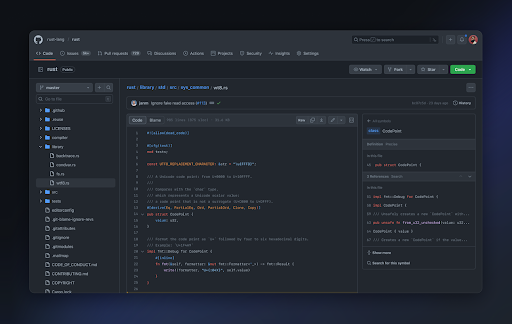
    GitHub today unveiled a new search engine it has developed to make it simpler and faster to browse and navigate the world’s largest code repository.

    A completely redesigned search interface now provides suggestions, completions and the ability to slice and dice results, while a redesigned code view tool has integrated search, browsing and code navigation.

    Mario Rodriguez, vice president of product for GitHub, said the popular code repository provider decided to create a new search engine to improve developer productivity. There are more than 200 million GitHub repositories that can now be more easily explored, he noted. The updated search engine also makes it much easier to search for specific vulnerabilities that might exist in a codebase, added Rodriguez.

    This latest addition to the GitHub portfolio is part of an ongoing effort to inject more intelligence into software development using tools such as GitHub Copilot that employ generative artificial intelligence (AI) to make developers more productive, he said.

    During uncertain economic times, there’s always going to be more focus on productivity. Organizations of all sizes are reluctant to hire additional full-time developers, so any effort to make existing developers more productive is welcome. The challenge is the DevOps teams that support those developers are now under increased pressure to reduce or eliminate as many bottlenecks as possible. In most instances, that will require increased investments in automation and AI to enable greater amounts of code moving through multiple pipelines to be managed at an unprecedented scale.

    In the meantime, instead of focusing on metrics such as recovery times, DevOps teams might want to focus more on how much they are improving developer productivity. After all, developers are an expensive asset, so in the age of digital business transformation, most business executives are squarely focused on increasing the rate at which applications are being built and deployed. In many cases, the amount of profit and revenue being generated by any business is now a direct reflection of the pace at which quality software is developed and deployed.

    One way or another, a new age of software development is dawning. Most of the innovations being brought forward are focused on issues that impact developers, but it’s only a matter of time before AI is also increasingly applied to DevOps workflows. As more organizations begin to realize how much of a bottleneck manual steps in DevOps processes have become, the willingness to invest in more advanced platforms should increase.

    The challenge, as always, is there are a lot more developers than software engineers, so the immediate focus is on developer productivity. That’s not necessarily a bad thing, but in the absence of any advances on the back end of the software development process, it is likely to aggravate an imbalance that most DevOps teams strive daily to correct.

  • How DevSecOps Addresses Supply Chain Security

    How DevSecOps Addresses Supply Chain Security

    “The absence of security in the initial stages of system engineering is the single most significant cybersecurity gap and risk in modern system development.” This quote from tech entrepreneur Linda Rawson is a good reminder for the current cybersecurity threat situation. With software supply chain attacks increasing in aggressiveness and sophistication, organizations need to understand that cybersecurity should no longer be an additional process, let alone an afterthought.

    Integrating security in the software development process provides a few other benefits, including better efficiency and customer satisfaction. However, its most notable benefit is addressing cybersecurity threats more effectively compared to the conventional ways of enabling software security.

    The Rise of DevSecOps

    DevSecOps is a fast-rising star in today’s search for effective cybersecurity solutions. The DevSecOps market is expected to be worth $23.63 billion in 2030, growing at a CAGR of 23.84% in the forecast period 2023-2030. Its value in 2022 was estimated at around $4.27 billion.

    This double-digit growth is actually a bit conservative. Other forecasts showed higher CAGRs in the 30% range. This growth hints at the strong demand for DevSecOps solutions. Many organizations have started to acknowledge the benefits of implementing security validation methods early in the software development life cycle (SDLC) instead of doing them in bulk as a separate phase at the end of the development process.

    Many organizations are now convinced that they can benefit from shifting left or bringing security into the SDLC earlier. Tools and solutions like static code analysis (SCA), automated dynamic analysis, interactive application security testing (IAST) and source composition analysis address security weaknesses before an application is released to the market. This allows organizations to release apps faster and, because of the elimination of most bugs and vulnerabilities, provide considerably better user experiences.

    Vulnerabilities will never be completely eliminated, but they can be significantly reduced and more properly resolved while software is being developed if security validation is integrated in the development process. Some software defects and weaknesses tend to be more difficult to address through a separate security testing process, since it would entail a broader code tracing or review as opposed to quickly spotting the affected code when security validation is done alongside the development process.

    Addressing Software Supply Chain Attacks

    So, how does DevSecOps help prevent supply chain attacks? The key is in the visibility and control DevSecOps affords.

    DevSecOps requires vigilance of security issues throughout the software development process. Security is not relegated to a different team that doesn’t understand the specifics of a development project. As such, the team has broad visibility over security concerns. Because the DevSecOps team also has mastery of the code being developed, it is easy to trace the origin of vulnerabilities and implement the necessary corrections.

    DevSecOps is aided by automated tools that scan code for security issues and detect threats even before they manifest themselves as problems. These tools are used across all phases of the development process, from the time code bears basic features and functions to deployment and post-production.

    Static testing: Even before an application’s code is ready to run, it can be subjected to static testing to find vulnerabilities. Tools such as static application security testing (SAST) can analyze code and detect possible security problems.

    How does this address software supply chain attacks? Static testing can be overlaid on automated CI/CD pipelines to stop code that has security weaknesses from getting committed to the codebase.

    Dynamic testing: An automated dynamic analysis can be used for code that is already executable. This is done through dynamic application security testing (DAST) tools, which are capable of detecting vulnerabilities usually invisible to SAST but which are detectable once the code is running.

    How does this address software supply chain attacks? Organizations can implement automated black-box testing for apps in the CI/CD pipeline(s) to detect security flaws for apps that are already executable. This addresses the vulnerabilities that have not been detected by static testing while reducing the costs associated with the corresponding remediation.

    Interactive app testing: This is a combination of static and dynamic testing. It employs IAST tools which run static testing on available code and come up with bespoke dynamic tests for a specific app to identify issues more thoroughly.

    How does this address software supply chain attacks? Pure static and dynamic testing usually apply to earlier stages of the development process, whereas interactive testing addresses vulnerabilities that emerge in the later parts. By bringing IAST to the CI/CD pipeline, organizations achieve better security issue detection outcomes, which means the prevention of malicious code deployment.

    Supply chain analysis: This entails the use of tools that specifically examine the security of third-party libraries and dependencies. To be clear, this is not the only method for addressing software supply chain vulnerabilities. In this case, supply chain merely refers to the external libraries, dependencies and other components that do not originate from the development team.

    How does this address software supply chain attacks? Integrating software chain analysis tools in the CI/CD pipeline significantly reduces the adverse effects of vulnerabilities in dependencies and other components on a project’s codebase as well as on the development process itself.

    Security-as-Code

    One of the best practices developed in line with the integration of security in the software development process is the idea of implementing security-as-code. This means that security policies and measures such as testing and validation are turned into code whenever possible. In other words, the code itself already bears security mechanisms. Security testing runs automatically whenever code is committed. This ensures robust, consistent, highly scalable security that does not rely on external rules and mechanisms to prevent the introduction of anomalous code or malicious inputs.

    Security-as-code also means that the DevSecOps team can see how modifications to code and the underlying infrastructure are created. The team can map out the impact of code changes and identify the areas where security tests and regulations can be implemented to optimize processes and avoid unnecessary delays.

    Security-as-code is essentially the automation of security practices. It is not applicable in all instances, though, so it is still important to be knowledgeable about security testing methods that can be used in different stages of the development process.

    Securing the Software Supply Chain

    The SUNBURST incident and other similar high-profile attacks should serve as a warning for all organizations to ascertain the security of their software supply chain. DevSecOps is one of the best solutions right now. It does not guarantee the complete elimination of all threats, but it ensures that if threat actors succeed in getting around security controls, a breach won’t go unnoticed.


  • GitKraken App Correlates Activity Across Jira Cloud and Git Repositories

    GitKraken App Correlates Activity Across Jira Cloud and Git Repositories

    GitKraken today made available a preview of a free application that aggregates activity across Atlassian’s Jira Cloud and any Git repository to provide a unified view across all the activities of a software development team.

    Adam Wride, general manager for planning solutions of GitKraken, said Team Insights for Jira (TIJ) will make it easier for DevOps teams, project managers and application stakeholders to collaborate.

    TIJ accomplishes that goal by providing an overlay using a familiar Gannt chart view of epics and issues found in project management applications to correlate, for example, user activity such as status changes and comments made in Jira Cloud with updates to commits and pull requests made in a Git repository, he noted.

    Team members can then filter those views by project, sprint, contributors, issue type and other criteria to drill down on the exact list of issues that need to be addressed, added Wride.

    Most application development efforts rarely follow the original DevOps workflow plan, so TIJ provides a means for organizations to track real-time activity data to visualize how their efforts are progressing against the plan. That makes it possible to make data-driven decisions about how to reallocate resources as needed, said Wride.

    At the core of TIJ is a Git Integration tool that GitKraken previously made available. TIJ is the second offering from the company based on that tool following the launch of an application that integrates Jira with continuous integration/continuous delivery (CI/CD) platforms. GitKraken claimed there are already more than 10,000 organizations employing its Git integration tool.

    As more organizations become dependent on software to drive a wide range of processes, the need for increased visibility into DevOps workflows has become more crucial. Revenue is now directly tied to the pace at which software is being deployed and updated. Any change to the pace at which an application is being developed needs to be communicated across all the stakeholders that might be impacted. The challenge is that given all the dependencies that exist within modern applications, it’s not always easy to discern how a delay in the development of one module or component might impact multiple application development projects.

    Of course, project managers have been using project management applications to bring some order to the chaos of software development for decades. The challenge has always been that manual updates to projects have not always been provided in a timely manner. Developers don’t always remember to update project managers, who must manually enter updates in a project management application. GitKraken is making a case for an approach that automatically updates Jira Cloud by collecting data from DevOps tools and platforms rather than waiting for software engineers to remember to share that information with a project manager.

    Arguably, there’s now no excuse for everyone in an organization—if they care to, they can find out the status of any application development initiative. The challenge is making sure the data that DevOps teams—and their tools and platforms—already generate seamlessly updates the project management software that everyone else relies on to keep track of those projects.

  • Synopsys Preps Extensions to Polaris SaaS Platform

    Synopsys Preps Extensions to Polaris SaaS Platform

    Synopsys plans to extend the capabilities of its Polaris Software Integrity Platform for securing application development environments by adding dynamic application security testing (DAST) tools along with the ability to scan code used to provision infrastructure.

    As a software-as-a-service (SaaS) platform, the Polaris Software Integrity Platform was created by combining the static application security testing (SAST) tool Synopsys gained with the acquisition of Coverity in 2014 and the software composition analysis (SCA) tool it added to its portfolio by acquiring Black Duck Software in 2017.

    In 2015, Synopsys acquired the Seeker tool for analyzing the code created using interactive application security testing (IAST) tools from Quotium. The company last year acquired WhiteHat Security from NTT to add a DAST tool.

    Patrick Carey, senior director for marketing strategy for Synopsys, said that the company would add the capabilities of those latter two platforms to create a comprehensive set of best-in-class security tools that are easily accessible via a SaaS platform.

    At a time when more organizations than ever are moving to secure software supply chains, Carey said it’s critical to provide developers with more visibility into vulnerabilities across the entire software development life cycle (SDLC). Some organizations are opting to achieve that goal by embedding tools within the SDLC themselves, but many organizations would likely prefer to invoke a SaaS platform that they don’t have to maintain, noted Carey.

    He noted that a SaaS platform makes it simpler to point a collection of integrated tools at a code repository to surface those vulnerabilities.

    As DevSecOps workflows continue to evolve and mature, more responsibility for application security is shifted left toward developers. The challenge is that many developers have limited cybersecurity expertise, so it’s critical that they have access to high-quality security tools.

    In addition, a SaaS platform helps reduce the total cost of achieving that goal by providing multiple capabilities within a single integrated platform, said Carey.

    Naturally, most of the focus today is on reducing the number of vulnerabilities that find their way into production environments as applications are being built. However, there are already large numbers of unaddressed vulnerabilities in applications that have already been deployed. Organizations will need to find ways to address that technical debt in addition to providing developers with tools that help prevent those code vulnerabilities in the first place.

    As such, there is no one central place through which application security can be managed, noted Carey. Instead, application security needs to be addressed across every phase of the SDLC, he added.

    It’s not clear how quickly organizations are adopting DevSecOps best practices, but as calls for increased liability for software development increase—as outlined, for example, in the U.S. National Cybersecurity Strategy— organizations should expect DevSecOps workflows to become a requirement. Otherwise, organizations will be severely penalized for vulnerabilities that find their way into code. In effect, there is now a race to embrace DevSecOps before any proposed liability legislation becomes the law of the land.

  • Survey Surfaces Application Modernization Challenges

    Survey Surfaces Application Modernization Challenges

    A survey of senior IT leaders suggested the level of confidence in application modernization projects that many organizations initially had is now starting to wane.

    The survey polled 200 senior IT leaders at organizations with more 1,000 employees and was conducted by Global Surveyz Research on behalf of EvolveWare, a provider of platform for automating application modernization processes. The survey found 70% of respondents reported they were confident or very confident in their understanding of their applications when they prepared for modernization. However, that level of confidence dropped to 41% at the planning stage and even lower (28%) at the point the project began, the survey found.

    More than half of respondents (51%) are already experiencing or anticipating critical issues that need to be addressed immediately, the survey found. The top areas of importance are understanding the parts of the code that contain business policies (47%), database access details (43%) and understanding the complexity (40%).

    EvolveWare CEO Miten Marfatia said the survey makes it clear organizations are encountering issues associated with capturing tribal knowledge that has been lost mainly because the teams that initially built an application are no longer with an organization. In fact, the survey found a full 81% of respondents reported they currently have or anticipate challenges hiring or retaining talent to support legacy applications. Nearly half (46%) currently don’t have enough talent available to manage legacy applications.

    The survey found the primary reason these initiatives are launched is to boost employee productivity (40%), followed by retiring mainframe infrastructure (37%), reducing the dependency on legacy code (36%), reducing maintenance costs (30%), improving customer experience (29%) and cloud migration (22%). Most of these projects are generally focused on critical applications (55%) as well as applications that have few or no dependencies (55%), the survey finds.

    The primary success metrics for assessing these projects, however, are improving customer experience (46%), the readiness to migrate to the cloud (46%) and meeting the performance requirements of the modernized application (45%).

    Less than a third of respondents (31%), however, reported having access to modern tooling. More than half would like to automate code transformation and business rules extraction (BRE) while 40% would like to automate documentation.

    Nearly two-thirds (64%) said freezing code during the modernization process would have significant business and financial consequences, with 59% noting that finding a way to modernize applications without freezing code is at the top of their technology wish list.

    Application modernization efforts usually have multiple goals. IT teams are usually motivated by a desire to reduce the amount of time and effort required to support legacy applications that are generally less efficient than modern applications. In addition, many IT teams are also looking for ways to reduce the total cost of running those applications, especially during uncertain economic times. Business leaders, meanwhile, are funding digital business transformation initiatives that typically require some level of modernization of legacy applications.

    Regardless of motivation, it’s apparent many IT teams initially underestimate the amount of effort required to achieve those goals.

  • Dylibso Releases Tool for Tracking and Validating Wasm Modules

    Dylibso Releases Tool for Tracking and Validating Wasm Modules

    Dylibso today made generally available a system of record for tracking, investigating, searching and validating modules built using the WebAssembly (Wasm) binary instruction format.

    Fresh from raising $6.6 million in additional funding, Dylibso CEO Steve Manuel said Modsurfer exposes the internal contents to enable developers to debug Wasm modules and ensure compatibility with runtime environments.

    Modsurfer provides development teams with a console for accessing a fully auditable database of modules indexed for search and debugging. In addition, development teams have the ability to extract critical information from binary formats in a way that can be integrated with DevOps pipelines. In effect, Modsurfer provides application development teams with X-ray vision into previously opaque Wasm modules, said Manuel.

    Dylibso previously developed Extism, an open source universal plug-in system that supports multiple programming languages used to build Wasm modules. That reduces the level of effort required to integrate Wasm modules and provided the foundation upon which Modsurfer was created, noted Manuel.

    Wasm, at its core, is a portable binary instruction format for building software that describes a memory-safe, sandboxed execution environment. The World Wide Web Consortium (W3C) drove the development of Wasm as part of an effort to create a common format for browsers executing JavaScript code. Wasm is now being extended beyond browsers and JavaScript to enable developers to create a set of universal binaries that could work on any platform without modification.

    That approach replaces the current predominant method for building software that relies on the aggregation of software components that tend to lack distinct boundaries between them. One of the issues of that approach is that it becomes relatively simple for malware to infect all the components of an application.

    It may be some time before WASM becomes the preferred artifact for building applications, but it’s clear the walls that have separated one IT platform from another are finally starting to crumble. Once applications become much more portable, the longstanding goal of writing an application once and then deploying it anywhere may finally be achieved. That’s not only critical in terms of overall application developer productivity; it also has major implications in terms of streamlining the management of DevOps workflows as it becomes easier to both initially deploy applications and continuously update them.

    As organizations continue to review their application development practices to better secure software supply chains, it’s also become apparent that legacy approaches to building applications are fundamentally flawed. Rather than attempting to reengineer processes to encourage developers to better secure applications, it may be more effective to change the way applications are built. After all, considering all the processes required to secure legacy development approaches, it may be cheaper and easier to adopt a new method for building applications that lowers overall risk, said Manuel.

    Of course, the amount of Wasm expertise that exists in the developer community is still limited. However, DevOps teams should expect to see more Wasm modules moving through DevOps pipelines as Wasm tooling continues to improve.

  • Postman Releases Tool for Building Apps Using APIs

    Postman Releases Tool for Building Apps Using APIs

    Postman today made generally available a visual tool infused with artificial intelligence (AI) that makes it simpler to build software by invoking application programming interfaces (APIs) found on its network.

    Shamasis Bhattacharya, chief software architect for Postman API, said Postman Flows makes it possible to use a low-code tool to build software using tens of thousands of APIs that can be found on the Postman API network.

    The goal is to reduce the amount of toil required to build applications of moderate to medium complexity in a way that doesn’t require developers to have deep programming expertise, he added.

    Instead, developers are presented with “blocks” that they can drag and drop to create an application and deploy the associated workflows. Postman Flows leverages AI to manipulate data returned by APIs using a natural language interface that reduces the level of technical acumen required to create those workflows.

    That approach provides developers with a reactive experience that is embedded within a visual tool, noted Bhattacharya.

    Many developers still have a natural bias toward writing code, but as demand for applications continues to increase, Postman Flows provides a means to significantly increase developer productivity, said Bhattacharya. There may still be instances where writing code is required, but as developers save more time using Postman Flows, many of them will switch over to a visual tool to build software faster by essentially gluing blocks together, he added.

    There’s naturally a lot of focus these days on developer productivity during uncertain economic times. More organizations than ever are dependent on software, but their ability to hire armies of developers is limited. Low-code tools have emerged to provide a means for accelerating application development, but Postman is now looking to apply that concept directly to the network of curated APIs that it provides to application developers.

    The one thing that is certain is that as the pace at which applications are being built increases, the number of them running in production environments will steadily increase. DevOps teams will find themselves maintaining a wide range of applications that were constructed using both procedural code and low-code platforms.

    In the meantime, IT organizations may want to start evaluating which types of applications lend themselves to being built by development teams that may not require as much experience writing actual code. Much of the application development backlog organizations are struggling with today could be reduced using tools that automate a wide range of development tasks. That should free up developers with more advanced skills to work on more complex applications. That approach might also reduce developer turnover as much of the fatigue associated with building more routine applications is reduced.

    Regardless of how applications are built, there will be a need to manage them in production environments. DevOps teams may soon be able to focus more of their time and expertise on optimizing application performance in production environments versus continuing to shepherd massive amounts of code through continuous integration/continuous delivery (CI/CD) pipelines.

  • DevOps Adoption in Salesforce Environments is Advancing

    DevOps Adoption in Salesforce Environments is Advancing

    A global survey of DevOps professionals building apps in Salesforce environments found 44% of respondents reported their organization has a continuous integration/continuous delivery (CI/CD) platform in place, with another 39% planning to adopt one.

    The survey, conducted by Gearset, a provider of a DevOps platform for building custom applications in Salesforce environments, polled 1,254 DevOps professionals that are building and deploying custom applications on top of the Salesforce software-as-a-service (SaaS) platform. The survey also found nearly half (49%) implemented change monitoring, with another 33% planning to follow suit. More than half (52%) implemented source-drive workflows, with another 33% similarly planning to follow suit. A total of 41% of respondents noted that, over the last 12 months, they have more custom code to manage.

    Overall, the survey found 54% of respondents reported increased productivity, followed by improved quality and faster releases at 41% each. Nearly three-quarters (72%) reported they are able to deploy changes from one environment to another within four hours. Well over a third (39%) of this group are able to complete a deployment in less than an hour. Just under a quarter (23%) are also able to release code multiple times a week.

    However, only 18% can release a new feature to production in less than a day. Nearly half can complete the release within one day to a week. A total of 43% claimed that less than 10% of releases include a bug or error, with 46% reporting they can roll back a release in a day or less, if needed. Just over a third can restore a process in a day or less.

    The biggest obstacle to DevOps adoption is lack of experience (41%), followed by a third (29%) of respondents that reported difficulties with collaboration and another 29% that experienced limited buy-in from the rest of the application development team. Only 30% received DevOps training once a month, with 50% citing additional CI/CD and automation training as their biggest need.

    Despite these issues, a full 98% are generating a return on their DevOps investments, with 59% of teams reporting returns of over $10,000 per month and 40% reporting returns in excess of $50,000 per month. The top two priorities for the next 12 months are to consolidate systems and processes and improve flexibility, tied at 47% each, followed closely by 43% that noted that digital business transformation is a top priority.

    David Runciman, technical content manager for Gearset, said that while Salesforce applications are based on unique object architecture, it’s apparent that organizations are extending those applications using, for example, low-code tools more quickly. The issue that creates is, as organizations move to deploy these applications, they are encountering bottlenecks that conspire to slow the pace of innovation, he noted.

    The maturity level of DevOps teams building these applications will naturally vary. However, as the number of applications being built—especially by professional developers—increases, it’s only a matter of time before more organizations embrace DevOps best practices to bring order to the chaos, noted Runciman. While there may be some citizen developers building applications in Salesforce environments, the bulk of enterprise-class applications are built by professional developers that typically appreciate DevOps best practices, he added.

    The issue remaining is just how quickly those DevOps teams will be able to implement DevOps best practices as demand for additional applications grows.

  • Eclipse Foundation Touts Java SE Temurin Certification Momentum

    Eclipse Foundation Touts Java SE Temurin Certification Momentum

    The Eclipse Foundation revealed today the number of downloads for Java Standard Edition (SE)—dubbed Eclipse Temurin—certified using both a technology compatibility kit (TCK) and compatibility tests for evaluating associated runtimes reached 12.3 million in February.

    Tim Ellison, a project lead for creating compatibility tests for the Eclipse Foundation, said that level of activity suggests the governance framework for an Eclipse Adoptium project that enables developers to download compatible runtimes based OpenJDK source code from multiple providers is gaining traction. Members of the Adoptium working group include Alibaba Cloud, Bloomberg, Google Huawei, IBM, iJUG, Karakun AG, Microsoft, New Relic, Red Hat and Rivos. Eclipse Temurin has also become the default Java option for the GitHub Actions continuous integration/continuous delivery (CI/CD) platform.

    OpenJDK is a free and open source implementation of Java SE provided by Oracle. AdoptOpenJDK was created in 2017 to provide open source Java runtimes based on OpenJDK. Since then, AdoptOpenJDK has been downloaded more than 240 million times. The Eclipse Adoptium working group has negotiated with Oracle to create an OpenJDK Community TCK License Agreement (OCTLA) that allows it to run compatibility tests to ensure conformance to the Java specification.

    One of the reasons Eclipse Temurin is gaining traction is organizations are looking to reduce Java licensing costs during uncertain economic times by relying on an open source platform. At the same time, a consistent set of certified runtimes also reduces the level of DevOps friction that might otherwise be encountered when building and deploying Java applications, noted Ellison. There will, of course, always be multiple Java runtimes, but the level of incompatibility that would exist without testing them could be substantially higher, he noted.

    Despite the plethora of programming languages developers use, after more than 25 years, Java remains the dominant language for developers working in enterprise IT organizations. Developers may be building and deploying applications faster, but most of them will continue to rely on the programming language they already know rather than master another. In addition, many of the Java applications that have been deployed over the last two decades are now being modernized within the context of a cloud migration.

    Arguably, Java is experiencing a renaissance following efforts to make it simpler for multiple organizations to contribute code to open source projects and increase the pace of innovation. The rate at which organizations can absorb that innovation will naturally vary, but it’s clear that more organizations are now running later editions of Java that improve both performance and cybersecurity overall.

    In the meantime, DevOps teams should expect to see more Java projects moving through pipelines in the months and years ahead. While not every legacy Java application may need to be updated before being retired, it’s apparent that the bulk of Java applications are still relevant. As such, it’s probable the efforts to modernize those applications will keep DevOps teams occupied well through the end of the decade.