Tag: ServiceNow

  • DevOps Deeper Dive: ServiceNow and DevOps, One Year In

    DevOps Deeper Dive: ServiceNow and DevOps, One Year In

    It’s now been a year since ServiceNow launched its DevOps integration initiative. Since then, thanks to the arrival of the COVID-19 pandemic, the way organizations manage IT has utterly changed. With more employees now regularly working from home, more organizations have shifted toward relying on IT service management (ITSM) platforms that, like ServiceNow, run in the cloud.

    At the same time, the overall IT environment has become more complex as a greater number of applications based on microservices that span everything from containers to serverless computing frameworks are deployed in production environments. Most of those distributed applications are being built and deployed by DevOps teams who are finding it necessary to collaborate more with IT operations teams who still rely on ticket-based workflows to manage jobs and tasks.

    As organizations invest more in digital business transformation initiatives fueled by these applications, the pressure has intensified to bridge the cultural divide that has long existed between traditional IT operations teams and application development teams that have embraced best DevOps practices.

    At the core of that divide is a desire on the part of DevOps teams to automate IT process management. Tasks that once required IT personnel to implement manually increasingly now are being automated by developers employing tools and platforms that expose both APIs and command-line interfaces (CLIs). Not every IT task can be fully automated just yet, but with the rise of machine learning algorithms and other forms of artificial intelligence (AI), a great leap forward is clearly being made.

    In fact, the rise of AI coupled with a need to more aggressively reduce costs are motivating organizations to investigate how they can better unify the management of IT, said Judith Hurwitz, principal analyst for Hurwitz and Associates, an IT consulting firm.

    “It’s a major change,” said Hurwitz. “There’s a lot more focus on the issue of managing errors.”

    ServiceNow is investing in AI to address that issue, including partnering with providers of DevOps platforms to gain access to the data required to train AI models. That effort will simultaneously improve the developer’s experience at a time when organizations need to accelerate the rate at which applications are being developed, deployed and updated, said RJ Jainendra, vice president and general manager for IT business management and DevOps at ServiceNow.

    “The change management process is becoming automated,” he said.

    ServiceNow, which has more than 1,000 customers and contract values in excess of $1 million, is not the only provider of an ITSM with similar ambitions. Not only are providers of rival ITSM platforms moving down the same path, but new entrants have also emerged in the form of vendors that are extending DevOps platforms into the realm of ITSM. Atlassian, for example, has launched an ITSM initiative aimed specifically at DevOps teams looking to eschew a ticket-based approach to IT in favor of workflows that are managed directly by DevOps teams.

    As the responsibility for managing IT end-to-end continues to shift left toward DevOps teams, many won’t embrace ticket-based workflows. Eventually, DevOps platforms and legacy approaches to managing IT using tickets will converge. ITSM platforms are still the systems of record for recording IT events, so integration between DevOps and ITSM platforms is required.

    In the meantime, replacing IT processes that employ ticket-based workflows which adhere to frameworks such as ITIL will not be easy, said Mitchell Ashley, CEO and managing analyst at Accelerated Strategies Group.

    “Ticket-based workflows are incredibly sticky,” he said. “It’s not a question of undoing them as much as it is unraveling them.”

    In fact, Ashely said a ticket-based approach to managing IT may be too deeply ingrained in the psyche of IT teams to be replaced.

    “Ticket-based systems are a lot like email,” said Ashley. “They will be with us forever.”

    As long as ticket-based approaches to managing IT workflows remain in place, however, the potential for culture clash across teams that have divergent approaches to managing IT will remain high.
  • ServiceNow Delivers New Native Workflows in Microsoft Teams to Power the Future of Work

    ServiceNow Deepens Partnership with Microsoft to Deliver Transformative Employee Experiences

    Santa Clara, Calif. – September 22, 2020 – ServiceNow (NYSE: NOW), the company that makes work, work better for people, today announced the expansion of its partnership with Microsoft to deliver elevated digital experiences that meet employees where they are. At Microsoft Ignite 2020, ServiceNow introduced new workflows embedded in Microsoft Teams to improve employee productivity with seamless self‑service and faster case resolution. Powered by ServiceNow’s leading digital workflow platform, the Now Platform, the new capabilities also improve agent productivity by enabling them to more effectively collaborate and complete key tasks in Microsoft Teams.

    Teams is Microsoft’s fastest‑growing business app to date. This was true in 2018, long before lockdowns started driving up numbers for remote work and learning. As of April 29, Microsoft Teams had 75 million daily active users, up 70% from just six weeks prior. That month, Microsoft saw more than 200 million meeting participants in a single day, generating more than 4.1 billion meeting minutes.

    “We’re helping customers solve for once‑in‑a‑generation challenges as they capitalize on the promise of digital transformation,” said Chirantan “CJ” Desai, chief product officer at ServiceNow. “We are doubling down on Teams to find innovative ways for workflows to elevate engagement, culture, collaboration, and productivity – no matter where people are.”

    “Now more than ever, people need to stay connected and organized together from anywhere,” said Rajesh Jha, executive vice president, Experiences and Devices, Microsoft. “ServiceNow is delivering end‑to‑end Teams experiences for the new normal. For example, meeting extensibility lets service agents more easily interact with the ServiceNow platform, collaborate in group chats, channels, and conferences, and respond to incidents.”

    The new capabilities announced today include:

    • Employee experiences in Microsoft Teams: Companies want to provide employees with support for whatever tools and devices they choose to use. By embedding ServiceNow natively within Teams, employees can submit requests, receive updates on in‑progress requests, take action on notifications, chat with virtual agents for automated assistance, and connect with live agents when virtual agents cannot assist – all without ever leaving Microsoft Teams.
    • Agent capabilities in Microsoft Teams: Agents spend most of their time in ServiceNow IT Service Management but want to more easily leverage the collaboration functionality in Teams to communicate with employees and collaborate with other agents. Now, agents can use Notify to launch the Teams client to engage with peers directly, push major incident updates to business stakeholders, and open direct chats with employees from an incident or request.  When used with the new Teams Meeting Extensibility feature, ServiceNow workflows enable agents to be more productive by resolving major incidents directly from within a Microsoft Teams meeting.

    The new capabilities are available for select customers as part of the Beta program today.

    “Organizations are relying on collaboration platforms more than ever before. Companies like ServiceNow are creating tools that complement and enhance the Microsoft Teams experience. Accenture is eager to test and deploy this new offering,” said Thomas Bruss, director of Enterprise Services at Accenture.

    Today’s updates come on the heels of the ServiceNow Now Platform Paris release, which features several high‑demand Microsoft integrations to help enterprises accelerate their digital transformation journeys. Customers can use these integrations to:

    • Optimize hybrid cloud spending and usage with Microsoft Azure support for ServiceNow Cloud Insights, 
    • Streamline new hire onboarding with ServiceNow employee experiences and Microsoft Azure Active Directory, and
    • Gain greater control and visibility into organizational assets with ServiceNow Software Asset Management and Microsoft Azure Active Directory.

    Additionally, the ServiceNow Virtual Agent Lite plugin for Microsoft Teams, also released in Paris, offers a limited version of Virtual Agent for IT Service Management standard customers. It launched with three prebuilt conversations for common IT support requests. These keyword‑based conversations run in the web chat client and in a virtual agent messaging integration with Microsoft Teams.

    Today’s announcement furthers the companies’ partnership announcement from 2019 to accelerate digital transformation for joint customers. Customers are accessing the value of this partnership with more than 25 joint solutions available between Microsoft and ServiceNow today. The companies have committed to continued ServiceNow‑Teams innovation to enable richer employee experiences from anywhere, at scale.About ServiceNow

    ServiceNow (NYSE: NOW) is making the world of work, work better for people. Our cloud‑based platform and solutions deliver digital workflows that create great experiences and unlock productivity for employees and the enterprise. For more information, visit: www.servicenow.com.

    © 2020 ServiceNow, Inc. All rights reserved. ServiceNow, the ServiceNow logo, Now, and other ServiceNow marks are trademarks and/or registered trademarks of ServiceNow, Inc. in the United States and/or other countries. Other company names, product names, and logos may be trademarks of the respective companies with which they are associated.

  • Tricentis extends leadership in enterprise application delivery; launches fully automated testing for ServiceNow

    New Tricentis Test Automation Solution for ServiceNow enables 40x faster testing

    Mountain View, Calif. — Sept. 2, 2020 — Tricentis, the world’s #1 continuous testing platform, today announced a dramatic new way to automate ServiceNow testing with its new solution, Tricentis Test Automation for ServiceNow. This news follows Tricentis’ recently expanded partnership with SAP and broadens Tricentis’ enterprise applications testing capabilities to encompass all the major providers, including SAP, Oracle, Salesforce, and ServiceNow.

    ServiceNow is a leader in IT Service Management, CRM Customer Engagement and IT Operations Management. With over 6,200 enterprise customers and more than $4 billion subscription revenues annual run rate, the ServiceNow platform has become a business-critical platform for many enterprise IT organizations serving hundreds of thousands of employees and end users.

    Every ServiceNow implementation is different, requiring extensive customization, development and testing of business logic, workflows, data sources, and user interfaces. ServiceNow delivery teams must stay on top of an increasing backlog of business requirements, change requests, and maintenance of the underlying platform. Every year, ServiceNow delivers two major platform releases and numerous patch releases, resulting in time consuming manual testing work to validate thousands of workflows common with ServiceNow deployments. This market is ripe for disruption and Tricentis now offers a much-needed solution to this problem.

    Tricentis Test Automation for ServiceNow is natively built on the ServiceNow platform and enables 40 times faster testing of ServiceNow applications with the highest level of usability to increase test coverage and quality. It provides enterprise customers an easy to use, flexible, and targeted solution to fully automate the testing of ServiceNow applications, workflows, and customizations. This frees up developer time to focus on business requirements and enables testers and business analysts to collaborate in a more agile way. With features such as point and click recording, real-time playback of tests, and automatic case creation, Tricentis Test Automation for ServiceNow has extreme flexibility to provide a versatile solution to test applications and workflows, regardless of customizations.

    “Tricentis has been consistently expanding its portfolio to offer the most comprehensive continuous testing solutions for large enterprises,” said Sandeep Johri, Tricentis CEO. “Digital workflows that enterprise IT organizations are looking to deliver on the ServiceNow platform require custom development and testing. Our new Test Automation solution offers break-through capabilities to test every aspect of ServiceNow deployments, without limitations, enabling speed and agility for our customers. As the global leader in continuous testing, our vision it to enable enterprises to accelerate their digital transformation and software delivery by addressing enterprise-wide testing needs.”

    Tricentis Test Automation for ServiceNow benefits:

    • Continuous automation – Automation runs continuously and can execute tests up to 40x faster than developers or manual testers
    • Accelerate deployments – Enables faster time to value by generating hundreds of tests in seconds as opposed to hours or even days
    • Customizable and flexible – Provides versatility for customers to test their workflows and applications before going live, as no two workflows are the same
    • Decrease defects – Increased test coverage allows businesses to detect errors immediately throughout the development process
    • DevOps compatible – offers ability to integrate with the organization‘s CI/CD pipeline so users can continue to test and innovate rapidly

    About Tricentis

    Tricentis is the global leader in enterprise continuous testing, widely credited for reinventing software testing and delivery for DevOps and agile environments. The Tricentis AI-based, continuous testing platform provides automated testing and real-time business risk insight across your DevOps pipeline. This enables enterprises to accelerate their digital transformation by dramatically increasing software release speed, reducing costs, and improving software quality. Tricentis has been widely recognized as the leader by all major industry analysts, including being named the leader in Gartner’s Magic Quadrant five years in a row. Tricentis has more than 1,800 customers, including the largest brands in the world, such as Coca-Cola, Nationwide Insurance, Allianz, Telstra, Dolby, RBS, and Zappos. To learn more, visit www.tricentis.com or follow us on LinkedIn, Twitter, and Facebook.

  • DXC Introduces Corporate Incident Response Application to Help Businesses Proactively Reduce Risk

    Banco Santander streamlines crisis management systems and the Nordex Group improves worker safety through Corporate Incident Response application features

    TYSONS, Va., May 21, 2020 — DXC Technology (NYSE: DXC) today introduced its Corporate Incident Response (CIR) application for ServiceNow to enable organizations like Banco Santander, one of the largest retail and commercial banks in the world, and the Nordex Group, one of the world’s largest wind turbine manufacturers, to quickly and proactively identify, address and manage important non-IT corporate incidents, such as those related to facilities, physical security, and environment, health and safety. The application, built on the ServiceNow platform, allows businesses to reduce their risk profiles and overcome situations before they evolve into companywide crises.

    The CIR application provides an end-to-end workflow management solution to manage, track and respond to non-IT-related issues in an efficient, standardized manner.

    “In today’s world, business disruptions are inevitable. While operational resilience has been around for years, a change in mindset is required in order to prevent, respond to, recover from, and most importantly, learn from and adapt after crises occur,” said Dan Stoks, vice president, Global ServiceNow Practice, DXC Technology. “The Corporate Incident Response application can work with ServiceNow’s integrated risk management and other workflows to enable organizations to securely manage crisis response workflows and risks to the business.”

    Key features of the solution:

    • Situation rooms — provide a central point of collaboration for dispersed organizations to orchestrate response teams and plans and monitor and evaluate the overall picture.
    • App notifications — provide the ability to send companywide notifications, such as alerts, push notifications, email and SMS to predefined groups as well as external partners and customers.
    • 360-degree view — provides the management team with a 360-degree view of where the organization stands on corporate-related incidents, so they can make fact-based decisions that reduce their overall risk profile.

    Banco Santander Streamlines Crisis Management Systems with DXC CIR Application

    Banco Santander wanted a single platform to manage its global facility and security processes and replace its previous system with a new, digitized platform. Using the DXC CIR application with ServiceNow, Santander streamlined its processes with better-performing facility, security and crisis management systems and improved user experiences for its managers and end users. It also benefited from better insights and greater transparency in its global facility and security services.

    “The consolidation of existing and new facility management capabilities to a new platform was a crucial part of our business transformation journey,” said Galo Gilarranz Vicente, Real Estate, General Services and Security, Banco Santander. “DXC’s CIR application has allowed us to reduce costs by rationalizing the global application landscape, standardize our processes and increase employee efficiency with automation.”

    The Nordex Group Improves Worker Safety with DXC’s Health, Safety and Environmental Management Business Expertise

    The Nordex Group tapped the DXC Health, Safety and Environment Suite (HSE) for ServiceNow, which is part of DXC’s CIR portfolio, to create a safety-driven culture throughout its global operations. With the DXC suite, the Nordex Group experienced a more streamlined process to reduce worker hazards and prevent incidents before they occur.

    “Nordex is committed to worker safety, implementing proper processes to prevent and quickly respond to work-related incidents,” said Philipp Marten, program manager, Business Systems, Nordex Group. “With DXC’s HSE solution, we were able to reduce the complexity of our system, streamline reporting and create a safer work environment throughout our global operations.”

    DXC is offering this application for free for 120 days to complement and enhance the capabilities of ServiceNow Emergency Response Management applications.

    “Operational risk management is a crucial part of how ServiceNow enables resilience for our customers for both IT and non-IT operations,” said David Parsons, senior vice president, Global Alliances and Channel Ecosystem, ServiceNow. “Corporate Incident Response from DXC Technology exemplifies the innovative applications that extend the value of the Now Platform and our Risk and Business Continuity portfolio to serve critical and emerging use cases for joint customers enterprise-wide.”

    To learn more and download the CIR for ServiceNow application, click here.

    About DXC Technology

    DXC Technology (NYSE: DXC) helps global companies run their mission critical systems and operations while modernizing IT, optimizing data architectures, and ensuring security and scalability across public, private and hybrid clouds. With decades of driving innovation, the world’s largest companies trust DXC to deploy our enterprise technology stack to deliver new levels of performance, competitiveness and customer experiences. Learn more about the DXC story and our focus on people, customers and operational execution at www.dxc.technology.

  • ServiceNow Makes the DevOps Connection

    ServiceNow Makes the DevOps Connection

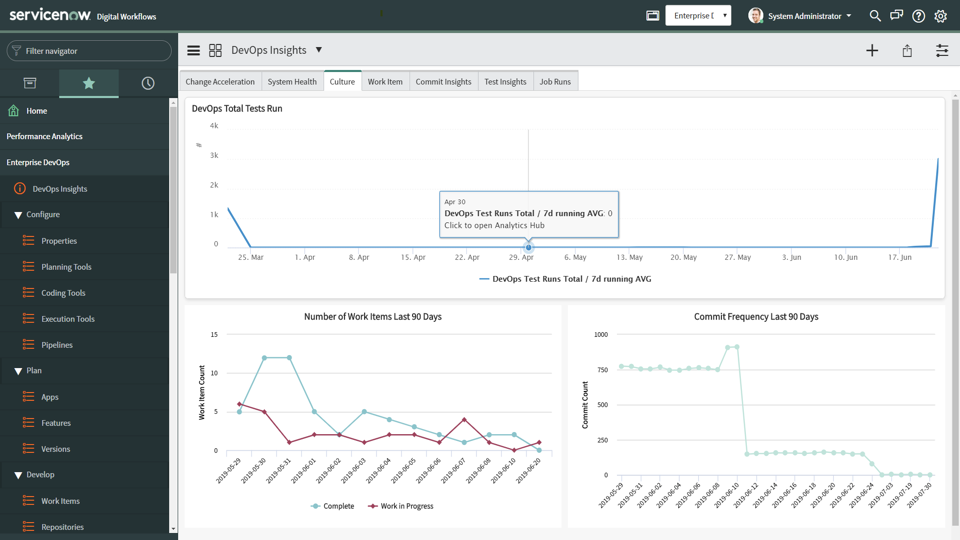
    ServiceNow today announced it is extending the reach of its IT operations management platform to integrate with a variety of DevOps platforms.

    Richard Hawes, director of product marketing for ServiceNow, said ServiceNow DevOps will provide IT operations teams relying on an ITIL-based framework accessed as a software-as-a-service (SaaS) application visibility into DevOps processes and events occurring in on-premises environments or public clouds.

    At present, ServiceNow DevOps is available for financial services organizations based in the Northeast region of the United States and the UK. The service gradually will be rolled out to additional ServiceNow customers over the course of 2020. ServiceNow DevOps initially integrates with Jira Software, GitHub, BitBucket and Jenkins, with more integrations expected to be rolled out periodically.

    Hawes said ServiceNow recognizes that IT organizations are building and deploying applications at rates that are faster than existing ITIL-based approaches can track. However, ITIL-based frameworks provide the highly structured set of processes around which the bulk of IT environments are managed. ServiceNow DevOps enables IT teams to automate change management tasks such as planning, development, testing, deployment and operations via a single dashboard surfacing a common set of metrics, he said. He added in many cases, those preset rules and policies will eliminate manual processes that often conspire to slow the rate at which applications can be deployed and updated within any IT environment, said Hawes.

    No developers need to be involved in those processes because IT operations teams can set rules and policies, and developers will see their code running in production environments in a matter of minutes regardless of what tools they employ, said Hawes. That approach also will make it easier to scale DevOps across an enterprise IT organization at a time when adoption of DevOps is still uneven at best, he noted.

    At the same time, that level of integration should also make it easier for IT teams to audit DevOps processes using a common framework to capture events such as when code is checked into a DevOps platform, he said. That capability is a critical requirement for any company trying to apply best DevOps processes with the context of a highly regulated industry such as financial services.

    Hawes said the majority of organizations that have adopted ServiceNow to manage IT have also adopted a DevOps platform. Overall, Forrester Research reports 56% of global infrastructure decision-makers now report that their organizations are implementing, have implemented or are actively expanding their DevOps initiatives. ServiceNow doesn’t expect DevOps processes to supplant ITIL-based frameworks as much as it anticipates both approaches co-existing as they continue to evolve, he said.

    With the release of the latest version of the ITIL framework, it’s apparent that the proponents of ITIL have come to recognize that IT needs to become more agile to meet the needs of digital business. The challenge they face is finding ways to enable IT teams to become more agile without sacrificing the gains in stability achieved over the course of the last two decades. With the launch of ServiceNow DevOps, the effort to find a middle ground between those two extremes can now begin in earnest.

    — Mike Vizard

  • Crossing the Ecosystem Boundaries: How ServiceNow, Salesforce and Atlassian Work Together

    Crossing the Ecosystem Boundaries: How ServiceNow, Salesforce and Atlassian Work Together

    Although these platforms were originally designed to serve different functional roles—Atlassian’s help desk, ServiceNow’s IT service management and Salesforces’ sales and CRM—from the outset, they all addressed the evolving mega-management and leadership issue: collaboration across teams and business units.

    Independent action, siloed organizations and disconnected thinking was increasingly giving way to more agile, interdependent, collaborative problem-solving practices and methodologies. Whether the differences were political, cultural, intellectual or institutional, survival became progressively dependent on living, working and communicating more effectively across all boarders. It was in our individual and collective, both internally and externally, best interest to do so.

    Effective companies and the platforms that served them needed to promote a culture that collaborated with less friction across five boundary types (“CCL’s” Center for Creative Leadership’s Boundary-Spanning Leadership)

    • Horizontal: Expertise, function, peers.
    • Vertical: Rank, class, seniority, authority, power.
    • Stakeholder: Partners, constituencies, value chain, communities.
    • Demographic: Gender, generation, nationality, culture, personality, ideology.
    • Geographic: Location, region, markets, distance.

    Collaboration initiatives generally begin by focusing on existing boundaries within a specific business unit or team. Then they expand to forge common ground on specific projects across teams, and finally, moved across all five boundary types with multiple teams and interdependent projects which some refer to as complex adaptive systems. These platforms were launched, quickly developed and continue to evolve to meet this collaboration challenge head on.

    Making Sense of the Blurring Boundaries Across Convergent Platform Roadmaps

    Boundaries are difficult to identify when they are continuously moving and being redefined. Instead of taking a more traditional route of seizing mind and market share by differentiating and establishing/defending clear boundaries, these platforms are doing the opposite, they are converging. The ecosystems that support each platform are also beginning to look increasingly similar—but more on this in a future post.

    The convergence of frameworks such as ITSM and Agile represents a tangential and interconnected set of moving boundaries intersecting somewhere along the spectrum at ITIL—ITIL4 if you’re counting. As all three platforms seek broader market penetration reflecting this full spectrum of frameworks, consider using the ITIL4 Edition’s 17 service management practices as a cheat-sheet for their boundary spanning enterprise roadmaps:

    • Business analysis.
    • Service catalog management.
    • Service design.
    • Service level management.
    • Availability management.
    • Capacity and performance management.
    • Service continuity management.
    • Monitoring and event management.
    • Service desk.
    • Incident management.
    • Service request management–includes both request fulfillment and access management of ITIL V3.
    • Problem management.
    • Release management–includes an explanation about releases in waterfall driven environments and DevOps driven organizations.
    • Change control–formerly known as change management.
    • Service validation and testing.
    • Service configuration management.
    • IT asset management.

    As organizations prioritize and re-prioritize the list reflecting their Agile/ITSM journey, the boundaries between platforms will move, and in many cases, simply disappear. As this journey plays out in your company, the platforms and ecosystems that support each will need be rationalized. Said differently, you may be asked or told to choose one, but as our experience suggests, you won’t need to do that today.

    Instead of diving into the technical features and benefits of each platform and ecosystem, take some time to reflect the benefits of expanding your boundaries to address the business challenges you are facing now and expect over the next 18 months.

    Where does this leave you and your team today?

    While everything else gets worked out….

    • Review the ITIL4 Edition’s 17 service management practices and rank prioritize for your team and company.
    • Do a self-assessment on your personal commitment to, and comfort with, the benefits of expanding your boundaries.
    • Meet with your team and have each of the individuals do the same.
    • Encourage conversations about where the platforms appear to be focusing (e.g., Atlassian focusing more on ITSM and ServiceNow paying more lip service to Agile).
    • When the time comes to make recommendations on app consolidation or choosing one platform over another, your team will be well prepared to do so with open, informed and agile minds.

    One last note on the benefits of expanding boundaries: Leaders who effectively reach beyond their present boundaries have the advantage when faced with solving problems, creating innovative solutions and evolving to thrive in today’s interdependent, complex world. The benefits of boundary spanning leadership include:

    • Increased organizational agility to respond to a dynamic marketplace.
    • Advanced cross-organizational innovation processes.
    • Achievement of mission-critical, bottom-line results:
      • An engaged and empowered workplace at all levels.
      • Flexible, cross-functional learning capabilities to solve problems and adapt to change.
      • Better-managed risks and rewards through enduring cross-sector partnerships.
      • Higher-performing virtual teams.
      • Global mindsets and cross-regional collaboration.

    Use these bullets to get your team spanning conversation started.

    — Joshua Platt

  • IBM Allies with ServiceNow to Bridge DevOps Divide with ITIL

    IBM Allies with ServiceNow to Bridge DevOps Divide with ITIL

    IBM and ServiceNow today announced an alliance under which IBM Global Technology Services (GTS) will collaborate with ServiceNow to make DevOps processes and events managed via the IBM Cloud Migration Factory visible to a cloud-based IT service management platform from ServiceNow based on the ITIL framework.

    Jim Comfort, general manager for cloud services at IBM GTS, said that from a governance and compliance perspective it has become clear IT organizations need more visibility in to DevOps processes. In general, enterprise IT organizations are increasingly adopting DevOps processes to accelerate application development and deployment, while still relying on ITIL to manage governance and compliance, he said.

    IBM GTS, via the alliance with ServiceNow, will be able to bridge that divide by integrating ServiceNow with a set of tools and services IBM provides across hybrid cloud computing environments that are based on DevOps process.

    The IBM Cloud Migration Factory is based on a methodology IBM developed to move applications to cloud. IBM Services claims it has completed more than 100,000 migrations. In addition to allying with ServiceNow, a new toolset is being added to IBM Cloud Migration Factory that employs algorithms based on the migrations IBM has completed that improve planning accuracy and uncover application dependencies. Included in that portfolio is cloud brokering software that IBM gained via the acquisition of Gravitant in 2015.

    Comfort said the alliance with ServiceNow will make it possible to have DevOps processes and events register automatically in the change management database (CMDB) provided by ServiceNow. That’s critical because it should allow IT organizations to maintain governance and compliance without having to impose an overhead that otherwise would slow down application development and deployment using DevOps processes, he said, adding there’s no need to impose an artificial construct on top of a DevOps process.

    As hybrid cloud computing continues to evolve, Comfort said IBM GTS expects IT organizations will be relying on a mix of ITIL and DevOps processes for the foreseeable future. In fact, he noted that while managing one to ten DevOps processes is relatively simple, keeping track of hundreds of DevOps processes requires a more static set of processes to maintain governance and compliance. The IBM approach is to create a unified approach to integrating DevOps and ITIL processes that doesn’t require organizations to integrate a variety of point products on their own.

    Proponents of DevOps processes have been making a case against ITIL processes that they tend to view as being too rigid to support agile application development. Comfort said the next iteration of the ITIL framework will incorporate many of the concepts advocated by DevOps proponents. But the two frameworks will remain distinct.

    The alliance between IBM and ServiceNow represents a clear signal that DevOps is going mainstream in enterprise IT environments. The challenge now is finding a way for organizations that have spent more than a decade adopting ITIL processes to embrace DevOps processes with a minimal amount of friction possible.

    — Mike Vizard

  • Chef Automate Incident Creation Receives Application Certification from ServiceNow®

    New integration gives customers streamlined access to handle incident management to greatly reduce resolution time and offer greater end-user visibility and productivity


    SEATTLE – September 11, 2018 – Chef, the leader in Continuous Automation, today announced it has received certification of its Chef Automate Incident Creation application with ServiceNow,  available now in the ServiceNow Store. Certification by ServiceNow is only granted to apps available in the Store and signifies that the Chef Automate Incident Creation app has successfully completed a set of defined tests focused on Now Platform™ security, compatibility, performance and integration interoperability.  The certification also ensures that best practices are utilized in the design and implementation of the Chef Automate app with ServiceNow.

    The Chef Automate Incident Creation application allows users to easily generate incidents in their ServiceNow Incident Management environment whenever they have failures in their Chef-managed platform due to either infrastructure automation updates failing or automated compliance check failures. This integration with ServiceNow gives Chef customers the ability to capture all failures across their estate for resolution and tracking purposes as a way to ensure any infrastructure automation problems are resolved rapidly and compliance failures are tracked and corrected based on internal best practices.

    Key components of this integration include:

    • Incident management for infrastructure and compliance automation – This capability gives users the ability to create ServiceNow incident tickets, alert/page operations or information security (for Chef failures or InSpec failures, respectively), so that automation and compliance failures are actioned as quickly as possible and in concordance with customer- or regulatory-mandated SLAs or OLAs.
    • Intelligent data management and event de-duplication — The integration intelligently uses Chef Automate as a central data aggregator and de-duplicates events, so that repeated failures do not open repeated incident tickets. Instead, they update relevant fields in ServiceNow, such as the time of last failure. This helps reduce overall alert noise, in contrast to non-Chef Automate approaches that send data directly from managed nodes to ServiceNow.
    • Compliance-related integration opportunities with other capabilities on the ServiceNow platform — The data stream of compliance events generated by this integration can now be leveraged by other applications on the ServiceNow platform. For example, governance and risk compliance (GRC) or security/incident management (SIEM) systems that have integrations with ServiceNow can now have access to this data. For those companies who have standardized on such systems, the data stream from InSpec through Chef Automate allows users to enhance their overall risk dashboard with real time, continuous compliance events that are already properly prioritized, rather than inundating these systems with meaningless, context-free data as was previously the case.

    “This integration has been one of the most desired features, with many of our customers requesting this integration with ServiceNow’s premier IT service management solution,” said James Casey, VP of Partner Integration at Chef.  “We look forward to working with ServiceNow to give our customers a single place to track all issues seen across their automated infrastructure that will improve the overall expediency of both ServiceNow and Chef Automate within the enterprise and help reduce the overall repercussions of any failure scenarios.”


    About Chef

    Chef is the leader in Continuous Automation software, an innovator in cloud native operations and one of the founders of the DevOps movement. Chef works with more than a thousand of the most innovative companies around the world to deliver their vision of digital transformation, providing the practices and platform to deliver software at speed. Chef Automate is Chef’s Continuous Automation Platform which is powered by an awesome community and open source software engines: Chef for infrastructure, Habitat for application, and InSpec for compliance. For more visit http://www.chef.io

    ServiceNow Store

    The ServiceNow Store is the exclusive source for Now® Certified apps from ISV Technology Partners that complement and extend ServiceNow and accelerate time to value for customers.


    #