Tag: ServiceNow

  • Latest ServiceNow Platform Release to Accelerate Productivity and Digital Transformation with Modern Design, Expanded Hyperautomation Tools

    Leading organizations like British Telecom, Becton Dickinson, City of Los Angeles, City of Santa Monica, Fujitsu, Rogers Communications, and University of California San Diego are leveraging the Now Platform to benefit from new levels of productivity, automation, and connectivity 

    Santa Clara, CA, March 23, 2021— ServiceNow (NYSE: NOW), the leading digital workflow company making the world work better for everyone, today announced its Now Platform® San Diego release. With an upgraded, more modern visual design and new Robotic Process Automation (RPA) capabilities that deliver on the promise of hyperautomation, the latest version of the Now Platform is designed to help organizations address the most pressing challenges facing every industry, in every region, and transform businesses for a new economy.   

    “From the great resignation, to supply chain disruption, to the new world of hybrid work, seismic shifts in our global workforce and economy underscore that the technology strategy has become the business strategy,” said Chirantan “CJ” Desai, chief operating officer at ServiceNow. “With our Now Platform San Diego release, we are empowering digital-first leaders to create smarter, faster, better ways of working, and unlock the true potential of hyperautomation across their organizations.”

    Organizations are grappling to find more agile and employee-led ways of working to keep their people productive and engaged. The Now Platform San Diego release helps customers across all industries drive productivity, accelerate the value of hyperautomation, and create better, smarter experiences for a new world of work, all on one platform for digital business.

    Revolutionizing work with smarter experiences 

    With the introduction of Next Experience in the Now Platform San Diego release, ServiceNow is streamlining the experience for the 70M+ annual active platform users, who use ServiceNow every day to get their work done. Platform users will see all their most important work at their fingertips, across all their applications, so they can quickly dive into what’s important. Next Experience delivers a modern, streamlined navigation that brings every application together under one consistent experience, and elevates Favorites and History so that people can jump back into their most important work.

    Next Experience delivers an upgraded, modern visual design, including a completely redesigned component library, new iconography, typography, and illustrations. The experience delivers enhanced personalization, such as accessibility preferences, information density and layout preferences, and a choice between light or dark mode. 

    With 25 purpose-built workspaces that feature a next-generation visual design, surface insights with dashboards, and use machine learning to assign tasks and recommend the next best action, Next Experience also helps platform users immediately get the information they need and move priority tasks forward more quickly. New workspaces include new CSM Configurable Workspace, Dispatcher Workspace, HR Agent Workspace, Cloud Operations Workspace, Service Operations Workspace, and Hardware Asset Manager Workspace, so teams across customer service, HR, field service, and IT can more intelligently and efficiently respond to requests or issues.

    Notable among the new workspace experiences is Service Operations Workspace. Initially available in San Diego for IT Service Management teams, and later expected to be available for IT Operations Management teams in Q2 2022, this new workspace will redefine how these two previously siloed organizations can work and collaborate within a single experience.  While these two groups were historically treated as separate functions within the IT organization, Service Operations Workspace brings them together to deliver more proactive, seamless employee experiences and empowers IT knowledge workers such as service desk agents and operations teams with AI-powered guidance to help resolve issues fast.

    Accelerating the value of hyperautomation on a single platform with new RPA capabilities

    Organizations must adopt new digital business models so they can respond quickly to changing market conditions and customer demands. However, disconnected, critical systems and dependence on specialty Centers of Excellence create islands of automation, resulting in expensive, repetitive, and manual work for employees that impedes digital transformation. 

    Hyperautomation presents the solution – combining technologies like low-code application development, artificial intelligence, integration, and robotic process automation (RPA) to connect modern, legacy, or unstructured data sources and accelerate digital transformation.  

    Within its Now Platform San Diego release, ServiceNow is adding the final ingredient to its existing technologies to deliver on hyperautomation with the introduction of Automation Engine. Automation Engine is a complete automation and integration solution that combines Integration Hub with all-new RPA capabilities, delivering an average of 3X faster time to value. Together with ServiceNow’s native low-code app development product, App Engine, Automation Engine brings turn-key solutions that are easily accessible with no learning curve for ServiceNow developers, allowing employees to automate manual, repetitive actions and connect to any system, modern or legacy.

    Automation Engine also features the brand-new RPA Hub, which provides a centralized command and control center to monitor, manage, and deploy digital robots, so organizations can automate any repetitive, manual tasks, streamline business processes, and help boost employee productivity, while reducing human errors. 

    RPA Hub features 1300+ pre-built components to accelerate time to value for automation initiatives, and an RPA Desktop Design Studio, allowing users to design, test and publish both attended and unattended bots as they scale automation quickly. No code access to RPA Hub is built into Flow Designer via the RPA Hub Spoke, enabling any ServiceNow developer to leverage RPA Hub alongside Integration Hub, all in a familiar interface.

    Introducing new out-of-the-box industry solutions 

    Different industries need dedicated solutions to advance their digital transformation efforts. The Now Platform San Diego release includes vertical solutions that address the distinct digital needs of banks, insurance companies, and telecommunications and technology providers.

    • Banking: ServiceNow is helping banks create more transparent, repeatable processes to improve the end-customer experience. New Deposit Operations for Banking automates common checking, savings, and certificate of deposit requests to help bank employees complete work fast, and Client Lifecycle Operations for Banking manages onboarding, account updates, KYC updates, and notice of death processes in a fast, more compliant manner.
    • Insurance: ServiceNow is modernizing insurance operations with its first ever solution suited specifically for the demands of carriers and their customers. This includes Personal and Commercial Lines Servicing capabilities to enable policy servicing across personal and commercial lines of business between carriers and their customers, policyholders, and distribution partners, informed by ACORD standards to improve consistency and collaboration.  
    • Technology Providers:  ServiceNow is launching its first targeted solutions for technology providers to streamline customer and ecosystem experiences, and launch new services quickly so they can keep up with the pace of change and increasing demand for cloud-based and managed services. New products include Technology Provider Service Management to combine care and operations together with AI-powered self-service and support for more proactive customer and ecosystem experiences. Order Management for Technology Providers helps grow revenue by launching and delivering products and services quickly and with greater control.

    ServiceNow continues to invest in industry solutions to help organizations drive value fast, including introducing new telecommunications solutions like Order Management, Service Management and Operations Management for telecom providers. 

    “Organizations today are increasingly competing on experience, both when it comes to their employees and customers, in order to retain talent, grow revenue and drive resilience,” said Dr. Lara Greden, Research Director for IDC’s Platform as a Service (PaaS) practice. “Streamlining how work happens across teams and functions, with intelligent, connected experiences and by bridging together disparate systems, siloes and processes on a single platform, will be a strategic advantage. We anticipate that ServiceNow’s new solutions will help organizations deliver more productive, collaborative employee experiences, better value for customers, and overall result in a faster return on their technology investments.”

    Availability

    The Now Platform San Diego release is generally available today.

    Additional information:

    • Watch a demo of Next Experience
    • Watch a demo of Automation Engine
    • Read thoughts from Chief Innovation Officer, Dave Wright on the Now Platform San Diego release
    • ServiceNow’s Chief Operations Officer, CJ Desai, shares additional insights and innovations in his blog

    What customers and partners are saying about the Now Platform San Diego release:

    British Telecom 

    “ServiceNow telecommunications solutions help BT accelerate and simplify our digital transformation by bringing a single platform to replace many complex tools and systems,” says Gary Wright, Head of ServiceNow Platform Engineering for British Telecom. “Using both ServiceNow Telecommunications Service Management and Order Management for Telecommunications, we provided a simple and powerful workspace agents love to use, and we accelerated time to market, launching order management workflows in just 5 weeks.”

    City of Santa Monica

    “ServiceNow has been an essential partner for the City of Santa Monica throughout our digital transformation journey, helping us innovate quickly for our citizens and employees,” said Joseph Cevetello, Chief Information Officer, City of Santa Monica. “We expect that the new capabilities within the San Diego release – such as Next Experience and Automation Engine – will help organizations like ours provide support and critical services to residents even more efficiently and seamlessly, so we can raise the bar for 21st century citizen experiences.”

    Becton Dickinson

    “ServiceNow has been a crucial digital transformation partner to us for more than a decade,” said Trisha Johnson, Sr. Manager, Service Technologies, Global Services at Becton Dickinson. “We started our journey together with ServiceNow’s ITSM solution back in the Berlin release and it’s amazing how far we’ve come to now San Diego! While digitizing IT processes was the first step to making work truly work better across our business, we’ve continued to expand our usage of the Now Platform to deliver more seamless and proactive experiences for both employees and customers and accelerate innovation across our entire organization, through one end-to-end platform for digital business. We’ve seen how ServiceNow can help organizations realize the untapped potential of digital transformation and look forward to taking advantage of the latest innovations within the Now Platform San Diego release to drive new levels of productivity, connectivity and automation at scale.”

    Fujitsu

    “At Fujitsu, we are focused on powering human-centric innovation for our customers to create a more sustainable world,” said Carey Blunt, Global Head of ServiceNow Offerings at Fujitsu. “The Now Platform makes it easy to launch new services and deliver them seamlessly both internally and for our customers, helping us stay ahead of the fast pace of change in today’s digital-first world. We are excited about the new Technology Industry-focused products in San Diego and how they will help us both improve the service experience for our customers and bring exciting new services to market.”

    Insight

    “As a design partner, we asked ServiceNow to make it easy for solutions integrators like Insight to deliver our products and services to clients leveraging the Now Platform,” said Mike Gaumond, senior vice president of strategy, Insight. “A new service request solution in San Diego enables seamless integration with our clients’ ServiceNow instances to deliver full digital engagement, and it has the potential to solve in minutes what traditionally has taken days or weeks.”

    About ServiceNow

    ServiceNow (NYSE: NOW) makes the world work better for everyone. Our cloud‑based platform and solutions help digitize and unify organizations so that they can find smarter, faster, better ways to make work flow. So employees and customers can be more connected, more innovative, and more agile. And we can all create the future we imagine. The world works with ServiceNowTM. For more information, visit: www.servicenow.com.  

    © 2022 ServiceNow, Inc. All rights reserved. ServiceNow, the ServiceNow logo, Now, and other ServiceNow marks are trademarks and/or registered trademarks of ServiceNow, Inc. in the United States and/or other countries. Other company names, product names, and logos may be trademarks of the respective companies with which they are associated.

  • Inclusivity & Diversity in the Workplace – Techstrong TV

    Inclusivity & Diversity in the Workplace – Techstrong TV

    Eamon will discuss ServiceNow’s new cross-functional organization – Center of Excellence for Accessibility – to make the Now Platform more inclusive for a wide range of diverse needs as well as why Eamon was chosen as the new VP & Global Head of Accessibility. The video and a transcript of the conversation are below.

    Moderator:                 This is Digital Anarchist.


    Alan Shimel:               Hey everyone. Welcome to another Techstrong TV segment. I have a first-time guest on here I want to introduce you to. His name is Eamon McErlean. I did it so good off camera, and I messed it up. Eamon, say it right for me.


    Eamon McErlean:      Eamon McErlean.


    Alan Shimel:               Eamon McErlean. Okay. Eamon, now that we’ve got your name, why don’t you give people a little bit of your background, your current position and a little bit of who you are?


    Eamon McErlean:      Absolutely. Thanks for having me, Alan. Appreciate it. Yep, Eamon McErlean. As you can probably tell from the name, born and raised in Northern Ireland, just outside Belfast. Been working in the IT industry now for about 25 years, overall, 26 years. Did seven years at Royal Caribbean Cruise Lines, based in Miami, after [crosstalk].


    Alan Shimel:               My neck of the woods.


    Eamon McErlean:      By your neck of the woods, exactly. Then ended up doing a startup with a couple of business partners, which lasted about four years. To supplement that startup, I did a lot of consulting work. And the last consulting gig I did was with Apple. And after six months, I ended up taking a full-time role at Apple. We moved over to the Bay Area.


    Did 7.5 years in Apple global retail under Ron Johnson and his team, which was phenomenal. And then up to about just over four years ago got an opportunity to move up here to Portland, Oregon to join Nike, to run Nike’s quality, automation, analytics. And then that transitioned into deployments and support with Nike’s phenomenal digital team.


    And ultimately, about the end of October, I decided to move on to where I’m at now, which is VP and global head of accessibility for ServiceNow. So currently, I’ve been in this role, like literally, this is my three-month anniversary.


    Alan Shimel:               Congratulations.


    Eamon McErlean:      That’s my history. Yep.


    Alan Shimel:               That’s fantastic. You’ve been blessed. You’ve worked with some great companies, some great brands. I live down here in South Florida. There’s a lot of cruise lines down here, but Royal Caribbean has, there’s a certain quality to the Royal Caribbean brands that may be. And I’m not bad mouthing any other cruise lines, please don’t yell at me, but there’s quality within the cruise industry.


    But then, obviously, going out to a place like Apple, you want to talk about quality, and Nike. Nike was doing digital transformations before it was cool. And they’ve led the way there too. Even I remember I was involved in the TechStars program. And there was a Nike TechStars, TechStars just for Nike at one point where it was helping to develop.


    They were looking for companies that were developing apps for the Nike technology. It was pretty cool stuff. But this role at ServiceNow is a little different, around accessibility. I make a habit of trying to talk to people who have these up-and-coming new roles, especially at an executive level.


    For instance, I have a friend I’ve spoken to a number of times, I think it’s at Twilio, where she’s chief of corporate responsibility. Doing good for the world, using the corporation’s assets and roles. Let’s talk about this accessibility, Eamon. In your mind talking to people, what’s really your job? What’s your aim here?


    Eamon McErlean:      I think my introduction to accessibility started at Nike working with the retail stores. I had the good fortune of working with many companies or many departments within Nike. But ultimately, we had an initiative going called a career experience. And that career experience enabled our retail store team members to come to WHQ help us test, help us validate new features, gets feedback of product owners.


    And we realized when we were doing that that we hadn’t brought in enough adapted users or people with disabilities to follow the path side of it. And when we went to the stores, honestly Alan, to see the challenges that some of our team members at Apple faced with our applications, we jumped on that and said, listen, we need to do better here, we need to improve accessibility.


    That was about six, seven years ago. I had limited knowledge of accessibility at that time. But it’s something that really appealed to me. I think when you see it firsthand, the impact that it can have to an end user, I think that empathy instantaneously is awoke. And from my perspective, I knew there was something that I wanted to go after.


    Two and a half, three years later, and my transition to Nike and Morgan with a few of the phenomenal team members that followed me came with me to go from Apple to Nike. We realized pretty quickly that we need to address accessibility of Nike. I got phenomenal support from the Nike leadership team, especially from a lady called Holly Newton.


    And it was then that we started to build the team around quality and accessibility and automation. But we have a dedicated team towards accessibility. And that grew. We were able to hire a director and build that team up. And literally, what happened about just over a year ago, I hit a certain age website, without going into too many details, and I realized this is something I want to do. This is something that I really want to dedicate myself to.


    Alan Shimel:               I know about those ages.


    Eamon McErlean:      And rather than doing something that not that I have to do, some work that we have to do, but this is something I truly wanted to do going forward. I was fortunate enough to go into the ServiceNow. The leadership team that I’ve met at ServiceNow and their passion for accessibility and how we want to drive it, which I can discuss, has been phenomenal. It has just progressed smoothly, thankfully, and fairy intuitive and lucky fashion for myself, I would say.


    Alan Shimel:               Absolutely. Let me dig in here a little bit. When you’re in a retail environment, an Apple store, or Nike store, accessibility is at a physical level. You’ve got to make sure your doors are wide enough. That there’s [inaudible] or special seating. That’s physical, but there’s also hearing issues, sometimes sight issues, communication issues.


    But in a retail environment, it’s had a very physical human to human interface level. Then there’s another accessibility and it is accessibility that I’ve been aware of, and I dealt with on a very periphery old matter. I was designing websites when Netscape was in beta. So going back to 94 maybe, 95 something like that. Shortly after that, was it the 508 accessibilities for screens?


    Eamon McErlean:      Right, yep.


    Alan Shimel:               Where you had to have, if people couldn’t see images, but it read the alt tag or certain navigational tools for hearing impaired, sight impaired, people who maybe couldn’t control a keyboard or mouse or what have you. And to me, that was machine to person accessibility. You had to have good user design so that a person can interact with that machine with that website. Different than physical in-person kind of stuff.


    We think of ServiceNow as a digital company. You don’t have ServiceNow stores in the mall. Not yet, anyway. So let’s talk about what’s the mission at ServiceNow. It’s a different mission than the Nike store or the Apple store.


    Eamon McErlean:      It is. Very much so. And it’s as important to make that distinguishment because ultimately, you’re right. When people think about accessibility, that’s the first thing they think of. Can the wheelchair go through the front door? Do we have enough space? Are the restrooms accessible?


    But when you go on and start working with a platform company, and as broad as we are, the platform of platforms, it’s a whole different world. And the way that we look at it, is we need to be able to create the optimal consumer journey for every single user independent on their disability. And we work through different companies, W3C, WCAG, the WCAG consortium and conformance that we like to adhere to.


    But ultimately, it’s all about working with the people with disabilities. They are the experts, they truly are. And when we start now going forward, we have a multi-tenant approach, meaning it’s not just going in there and fixing issues. Going in there and fixing issues isn’t going to get us to where we need to be. We have to be able to embed accessibility compliance as part of our software development lifecycle.


    Because if we don’t do that, we would never going to end up getting to where we want to be. There’s awareness factor, I’m sure you know about unconscious bias training as an example in the HR world. It’s mandatory for every employee. We’re pushing at ServiceNow to make accessibility training for everybody at ServiceNow, for every employee, so they understand the basic principles.


    How we communicate with our customers, we want to ensure that we’re going to create a customer hub, a customer awareness board so we really build that overall engagement. The wonderful thing about accessibility community as a whole, it’s the most sharing, giving community everywhere in the word. We’re not sharing it, we put all the work into this, we’re not giving it to you, it’s the opposite.


    It’s truly extremely collaborative community. But ultimately, everything that you mentioned, be it from visibility, and being able to use screen readers, cognitive and the way the pages are laid out. Even the color of the screens, it’s everything that we do going forward will have that accessibility mindset in mind.


    But one thing I will add sometimes, is when you create something to ensure accessibility compliance, sometimes it actually helps everybody, because it can actually be an ultimate goal for all users. So we never just like thinking, okay, we’re just taking it for regular users and taking it for working with people with disabilities, we want to look at it holistically.


    Alan Shimel:               Alright, I think that makes sense. That was the lesson I learned, Eamon, for a long time. I’ve been an Apple user for a while, and I think Windows has it too, they have certain accessibility features that are not turned on by default. And for a long time, I would not even open that folder to see what they were. Because I said thank God, I don’t have any disabilities, and I don’t need them.


    And then one day, probably by mistake, I found myself in there. And some of the things in those accessibility options, I found really helpful. I’m not ashamed to say it, and I’ve turned them on ever since, because I like them. Easier on the eyes, easier on the ears, sometimes as you said, you get a little older. I think there is a lesson there that a lot of accessibility options are actually mainstream as well.


    I want to talk about a different kind of disabilities, I’ll get your opinion on that. So we have a lot of folks with physical disabilities, whether it’s eye, vision, hearing, cognitive. Then we have a lot of folks who are on the spectrum, for instance, the autism spectrum, or have some other mental kind of, I guess that’s sort of cognitive.


    These principles we’re talking about get built into ServiceNow. But they also trickle and find their way into all the companies that are using ServiceNow at their organization. It’s not just confined to the however many 10s of 1000s of people ServiceNow has employed, it’s all the customers of ServiceNow.


    Eamon McErlean:      That’s exactly why I took this role, because as phenomenal a company as Nike is and the millions of users satisfied customers Nike has, but ServiceNow will be up to 17,000 employees in a short period of time, but all of their own customers and then their customers have that exponential growth impact that we will have overall.


    So basically, from the accessibility standpoint, you have visual, auditory, speech, cognitive breakdowns. And from a cognitive perspective, you were looking at more of a understanding of how things flow but making sure that we’re not making it too busy as well. You don’t want to have a list of 40 items for people to flip through. You want it to be as we talked about before, as intuitive as possible from a user flow.


    The platform itself is extremely comprehensive that guys can do. But you can make it as complex or you can make it as simple as you wish, depending on what you want to do and your persona, if you will. Moving forward, I’ve always thought this crazy thought about computers and software and UI, UX. And even as it relates to media and an ongoing pierce.


    Right now, we were looking at the screen. Everybody does between six, eight, ten, twelve hours a day. I’ve always thought in the crazy term, how can we make that screentime have a positive impact on people’s lives holistically. And you don’t want to make it in a gamified way, but we should be able to make it, and we’re smart enough to make it in a way that somehow it helps people and a little bit every day.


    Again, we know the negative impact that can have while having that much screen time. It could be as simple as like, man, you need to walk away right now, you need to take a break, or here’s, I’m going to play your favorite song while you meditate for three minutes, or it could be anything.


    But unless we do that soon, I think we are going on the bad road as it relates to constant screen time and not that personal time. That ties into the cognitive area as well, I really do. And certainly, I think we need to address some of them later.


    Alan Shimel:               I tell you my thoughts on that one, Eamon. Who does it affect the most? It’s the opposite ends of our population. It’s the young people. You got to pry their screens out of their cold dead stiff fingers. They don’t put those phones down. I had my boys home from college, we went out to dinner.


    And it’s like, hey, man, you are home for the weekend with your parents, we’re out to dinner, put your phone away and be present, be present, be here. There’s definitely a problem there. But I’m involved in another organization that’s looking at technology in seniors. You start getting a lot of people with dementia or memory issues or what have you.


    And they can get sucked into that screen. And it could just as easily be watching movies as it is reading things online or playing games. And the beauty of it is there’s actually good things you could do to help improve memory with computer programs and stuff. But doing that versus just mindlessness, it affects them. So it affects the older and the young more than those people in the middle. And those are too at-risk populations, if you will.


    Eamon McErlean:      Completely agree. And I think, unfortunately, social media hasn’t thought upon in the most positive light, let’s say. But I think we as a culture have an opportunity to address that. I think we need to address that; I really do. Because I’ve got college-aged kids myself.


    And I know what it’s like when it’s just that constant, I don’t want to say attraction, but pretty close to attraction to the screen time. We have to address that. But the more like COVID, is a perfect example, we’re not physically getting together anymore. We’re doing X amount of hours on Zoom on the screen a today, I think it becomes more and more relevant.


    Alan Shimel:               I’ll tell you something on that, Eamon, though. And this is my own sherry, I might be crazy. I think what’s going on with COVID and the amount of time we spent on Zooms and stuff like this has taught a lot of people a lesson. That this is not the equivalent of sitting down and having a beer with someone or drinking a coffee or just sitting and talking in person eye-to-eye.


    This is good if that’s all you got. But everyone I talk to is dying to get back out to conferences in-person, to interact with real people and see, do they have legs beneath that screen? Real interactions. At the beginning of COVID, everyone was like, oh thank God for Zoom. Look at Zoom stock, it was through the roof.


    Thank God For this whole virtual world and the metaverse and whatever else we were calling it. But I think people are fatigued from it. And they’ve learned that this is a poor substitute for real life, for real in-person.


    Eamon McErlean:      It’s just not the same, Alan. It’s not. It’s really not the same. And what concerns me is there is a certain age group, back to the age group, there’s a certain age group that when I hear our sons or other kids talking about my friends, I’m hanging out with my friends all the time. Well, they’re not actually physically hanging out with their friends.


    Alan Shimel:               No, they’re not.


    Eamon McErlean:      They’re not hanging out with their friends here.


    Alan Shimel:               That’s same goal with that, yeah.


    Eamon McErlean:      Unfortunately, a certain age group, the longer this goes on, it’s a skill set to being able to socialize when in an environment with physical people, if people do have concerns about that or anxious about that. The longer this goes on, the worse that gets overall as well, that anxiety.


    To me, I’ve always been a people person. I always love physically meeting people and standing and looking at them and being there. I think there’s health impacts across the board. And I think, to your point, there’s multiple ways we can address it. I just think we shouldn’t ignore it. That’s the biggest thing.


    Alan Shimel:               Agreed. Agreed, agreed, agreed. Anyway, hey Eamon, we’re probably way over time, I wasn’t paying attention. But for people who want to find out more about what ServiceNow is doing around accessibility and stuff like that, is there a place on their website that they can get information?


    Eamon McErlean:      Under servicenow.com, we should have an area for accessibility. If we don’t, please, through this communication here, I can forward all my contact information, @eamon [crosstalk]


    Alan Shimel:               We will try to put it in the notes. But that will always great man. And Eamon, look, this is really good work. As you said, you get to a certain point in life and just getting up to go to a job every day. If you have to, you have to but you die young. Doing something you’re passionate about that you think makes a difference in the world, it’s not working well, it’s following your passion. I’m happy to see you be able to follow your passion, man. It’s a great thing.


    Eamon McErlean:      I really, really appreciate that. The last thing about sharing my information, please do because the one thing I’ve learned a bit this role is you have to be humble. You have to understand we don’t have all the answers. The users with disabilities are the experts themselves, and we have to listen to them more than anybody else.


    So any advice, feedback, lessons learned, lesson sharing, we are always willing to take as much advice and feedback as possible. So I’ll throw that out there. And Alan, listen, thanks for visibility. We’re trying to do the right thing here.


    Alan Shimel:               We appreciate it.


    Eamon McErlean:      Cooperation like this help. We really do appreciate it.


    Alan Shimel:               Good, man. Eamon, best of luck. Come back and keep us posted.


    Eamon McErlean:      I will. Thanks guys.


    Alan Shimel:               Thank you my friend. We’re going to take a break here on Techstrong TV. We’re going to be right back with another guest shortly.


    [End of Audio]


  • ServiceNow Acquires DotWalk to Gain AI for App Testing

    ServiceNow Acquires DotWalk to Gain AI for App Testing

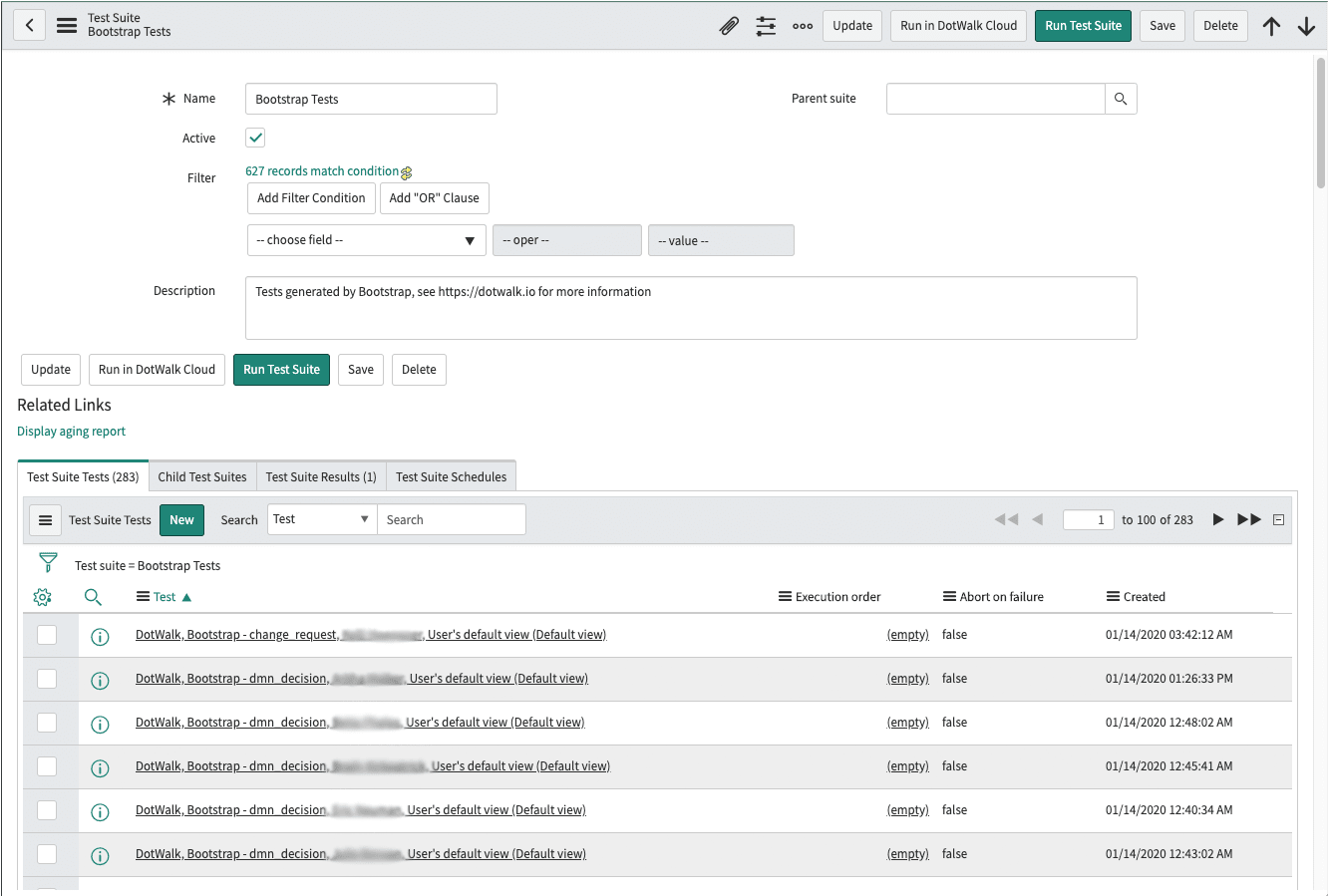
    ServiceNow today revealed it has acquired DotWalk to gain an artificial intelligence (AI)-infused application testing capability that runs natively on its software-as-a-service (SaaS) platform.

    Joe Davis, senior vice president for platform engineering at ServiceNow, said that testing capability will be made available free of charge to all organizations that build custom applications on the company’s platform.

    The number of custom applications being built on the ServiceNow platform has risen sharply since the start of the pandemic. Many organizations have taken advantage of the low-code tools provided by ServiceNow to build a range of applications that use the company’s SaaS applications as a foundation. That approach enables them to more quickly build applications that drive a wide range of digital business transformation initiatives.

    Davis said ServiceNow is committed to enabling organizations to improve the quality of those applications using a DotWalk testing capability that eliminates the need for developers to build and run tests themselves or for organizations to hire dedicated application testing teams.

    ServiceNow

    ServiceNow decided to acquire DotWalk because the company built a testing platform using machine learning algorithms specifically for the ServiceNow platform, noted Davis. The DotWalk tools also analyze logs in the background to identify and validate error sources that can arise during any application upgrade process.

    While there are a large number of professional developers that build applications on the ServiceNow platform, the company is also trying to encourage more so-called citizen developers to build applications. The challenge is many of the end users building applications lack an appreciation for design, security and what it takes to make sure an application scales as more users employ it. Testing tools infused with AI should make it easier for developers, regardless of experience, to build enterprise-class applications.

    Of course, professional developers will also benefit from AI-infused testing tools. Many developers have a tendency to cut short the application development process as they rush to meet application delivery deadlines. The end result, however, is that an application must be updated almost immediately after it has been deployed in a production environment. Testing tools that make use of AI will enable professional developers to more easily run tests they don’t have to build and then maintain, said Davis.

    One way or another, the number of custom applications built on SaaS platforms will increase as organizations digitize more processes. In the last year, more organizations have become adept at extending these platforms using a wide range of low-code tools that automate many aspects of application development. A significant percentage of those organizations are now also adopting DevOps best practices to better manage the pace at which those applications are developed and deployed.

    In the meantime, it’s too early to say precisely how AI will transform application testing. However, one thing that is certain is that even as the number of custom apps grows, applications will be more thoroughly tested before being deployed in a production environment.

  • ServiceNow Acquires Lightstep to Gain Observability Platform

    ServiceNow Acquires Lightstep to Gain Observability Platform

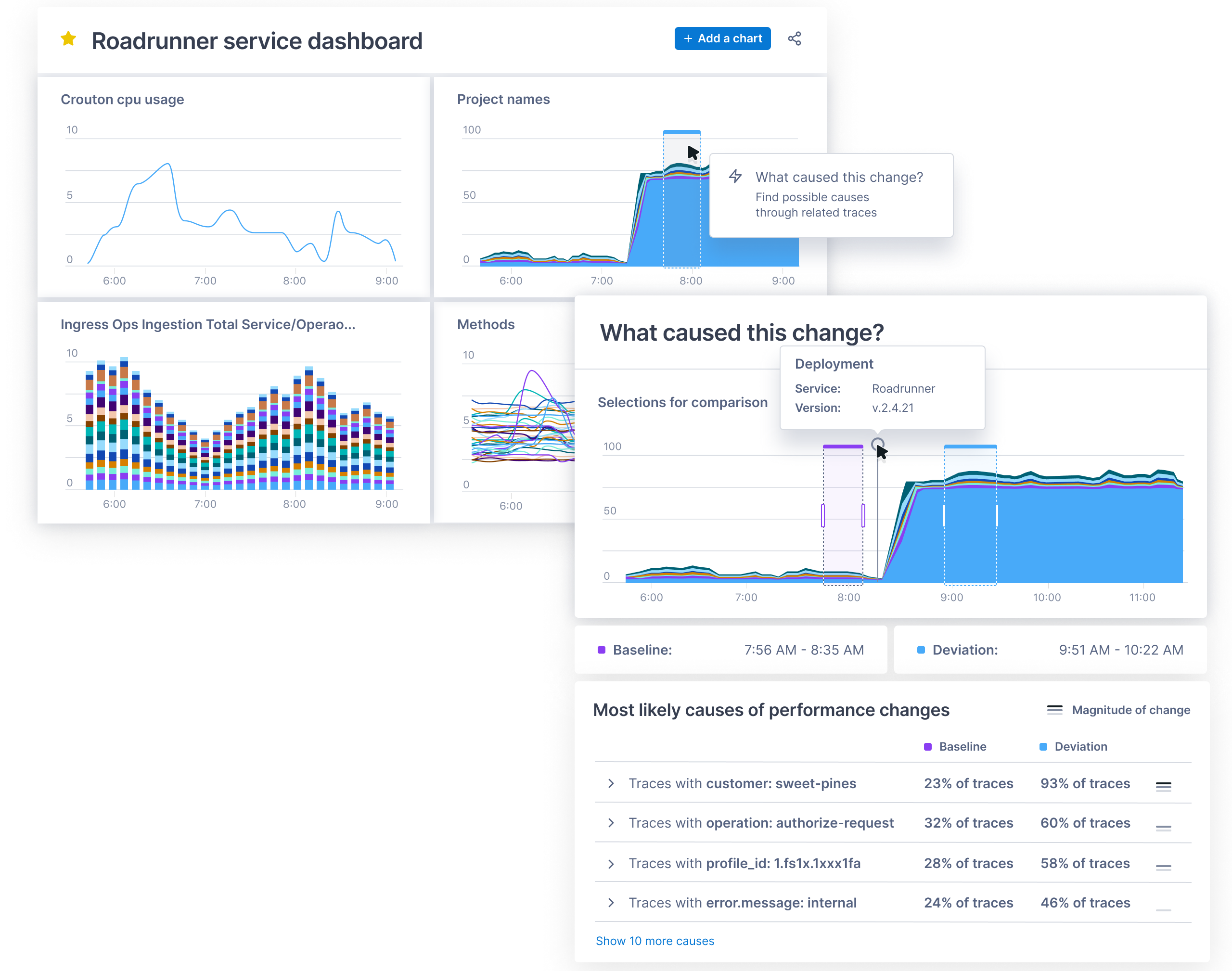
    ServiceNow today announced it has acquired Lightstep as part of an effort to add an observability platform to its IT operations portfolio. Terms of the deal, expected to close this quarter, were not disclosed.

    The Change Intelligence observability platform from Lightstep is based on a time-series database that is capable of processing a trillion events each day. It was built by the same team that created Monarch, the globally distributed in-memory time series database system that Google employs to monitor its applications and systems. Lightstep team members also co-created both the OpenTracing and OpenTelemetry open source projects for collecting traces, metrics and logs.

    Pablo Stern, senior vice president and general manager for IT workflow products at ServiceNow, said ServiceNow will employ Lightstep to enable IT organizations to observe both monolithic and microservices-based applications as IT operations and DevOps teams continue to collaborate more closely with one another. The goal is to provide a single pane of glass through which IT teams can observe their entire IT environment via the Now platform that ServiceNow makes available via a software-as-service (SaaS) delivery model.

    That approach will enable DevOps teams to programmatically manage IT environments alongside IT administrators employing graphical tools, noted Stern.

    Lightstep CEO Ben Sigelman added that, in time, the number of users of that observability will only increase as more application stakeholders start to track software development projects that are at the heart of various digital business transformation initiatives.

    ServiceNow

    Thanks mainly to the rise of microservices that are now being deployed across highly distributed computing environments, it’s become more difficult to discover the root cause of an IT issue. Microservices-based applications have lots of dependencies that, while serving to make the overall application more resilient, conspire to make it difficult to determine which specific microservices might be adversely impacting the performance of an application.

    The time-series database that lies underneath the Change Intelligence observability platform makes it feasible to go beyond logs and metrics to process distributed traces that provide more insight into application behavior. Ultimately, the goal is to enable organizations to innovate faster with a higher degree of confidence in the IT environment, said Sigelman.

    As far as the march to observability in the enterprise is concerned, it’s still early days. While observability may be a core tenet of any DevOps practice, most IT organizations rely on myriad tools that surface data the teams then attempt to correlate. Whenever there is a major issue, those IT teams typically convene in a “war room” to compare reports generated by the various IT monitoring tools employed. Observability platforms that collect and process distributed traces used to instrument an application using a consistent set of specifications, frameworks and libraries. The OpenTracing and OpenTelemetry tools are significant because they provide an open source approach to instrumenting applications that reduces the total cost of observability. In comparison, many legacy application performance management (APM) platforms employ proprietary agents to instrument applications.

    Naturally, each IT organizations will be moving down the path toward an observability platform that provides greater application context. At this point, however, it’s not clear to what degree observability platforms will need to be installed before making the transition to microservices versus being a capability that only gets appreciated once the trouble with microservices finally becomes apparent.

  • ServiceNow to Acquire Lightstep, Combining Next-Generation Observability with the World’s Leading Enterprise Digital Workflow Platform

    Acquisition will help ServiceNow customers accelerate digital transformation with insight‑driven, action‑oriented workflows

    SANTA CLARA, Calif. — May 10, 2021 – ServiceNow (NYSE: NOW), the leading digital workflow company that makes work, work better for people, today announced it has signed an agreement to acquire next‑generation observability leader Lightstep.

    By acquiring Lightstep, ServiceNow will solidify and accelerate its position as the world’s leading enterprise platform for digital businesses. ServiceNow is already a recognized market leader in IT service management, IT operations management and digital workflows. With Lightstep, an emerging pioneer in next generation application monitoring and observability, ServiceNow will help DevOps engineers build, deploy, run and monitor state‑of‑the‑art, cloud‑native applications. Together, ServiceNow and Lightstep will extend the benefits of observability across the enterprise through digital workflows that convert real‑time insights into action across all the technologies, people, and processes that enable digital business.

    In a cloud and DevOps based world, the software that powers today’s enterprises is increasingly complex.  Yet, companies are expected to increase innovation and velocity without sacrificing reliability and performance. The combination of ServiceNow and Lightstep will deliver deep operational insights so enterprises can more effectively use modern technology stacks. Lightstep’s solution analyzes system‑wide metrics and tracing data in real time to understand the cause and effects of changes to application performance, reliability, and development velocity. The Now Platform coordinates the technical and team response, connecting insights with actions needed to drive digital transformation.  Customers will be able to more easily monitor and respond to critical signals and indicators of software health using Lightstep’s capabilities with ServiceNow’s IT workflow solutions’ ability to weave disparate elements into a seamless digital fabric. This gives business the confidence and clarity to drive faster innovation and better outcomes across the entire digital experience.

    “Companies are betting on going digital in order to thrive in the 21st century, but the transition is often challenging to navigate,” said Pablo Stern, SVP & GM, IT Workflow Products, ServiceNow. “With Lightstep, ServiceNow will transform how software solutions are delivered to customers. This will ultimately make it easier for customers to innovate quickly. Now they’ll be able to build and operate their software faster than ever before and take the new era of work head on with confidence.”

    Lightstep is the trusted observability solution for both born‑in‑the‑cloud companies like GitHub, Spotify and Twilio and fast‑growing enterprises whose businesses are increasingly reliant on software applications.  The Lightstep platform provides a unified approach to observability with system‑wide visibility and insights integrated across metrics, distributed traces, and logs. This helps organizations speed software development velocity without compromising quality and to drive faster innovation across the entire digital customer experience.

    “Today, observability primarily benefits the DevOps teams that build and operate mission‑critical apps,” said Ben Sigelman, CEO and co‑founder at Lightstep. “We’ve always believed that the value of observability should extend across the entire enterprise, providing greater clarity and confidence to every team involved in these modern, digital businesses. By joining ServiceNow, together we will realize that vision for our customers and help transform the world of work in the process – and we couldn’t be more excited about it.”

    San Francisco‑based Lightstep was co‑founded in 2015 by CEO Ben Sigelman, COO Ben Cronin, and Chief Architect Daniel Spoonhower. Key Lightstep team members helped define modern observability with their prior work on tracing and metrics monitoring at Google. Lightstep team members also co‑created both the OpenTracing and OpenTelemetry open‑source projects, leading the industry’s overall migration away from proprietary agents towards the portable, always‑on, and open standards‑based acquisition of traces, metrics, and logs.

    ServiceNow expects to complete the acquisition in Q2 2021. Financial terms of the deal were not disclosed.

    Use of Forward‑Looking Statements

    This press release contains “forward–looking statements” about the expectations, beliefs, plans, intentions and strategies relating to ServiceNow’s acquisition of Lightstep. Such forward–looking statements include statements regarding future product capabilities and offerings and expected benefits to ServiceNow. Forward‑looking statements are subject to known and unknown risks and uncertainties and are based on potentially inaccurate assumptions that could cause actual results to differ materially from those expected or implied by the forward‑looking statements. If any such risks or uncertainties materialize or if any of the assumptions prove incorrect, our results could differ materially from the results expressed or implied by the forward‑looking statements we make. We undertake no obligation, and do not intend, to update the forward‑looking statements. Factors that may cause actual results to differ materially from those in any forward‑looking statements include, without limitation, assimilating or integrating Lightstep’s technology into our platform; the inability to retain key employees of Lightstep after the transaction closes; unanticipated expenses related to Lightstep’s acquired technology; potential adverse tax consequences; disruption to our business and diversion of management attention and other resources; and potential unknown liabilities associated with Lightstep’s business. Further information on factors that could affect our financial and other results is included in the filings we make with the Securities and Exchange Commission from time to time.

    About ServiceNow

    ServiceNow (NYSE: NOW) is making the world of work, work better for people. Our cloud‑based platform and solutions deliver digital workflows that create great experiences and unlock productivity for employees and the enterprise. For more information, visit: www.servicenow.com.

    © 2021 ServiceNow, Inc. All rights reserved. ServiceNow, the ServiceNow logo, Now, and other ServiceNow marks are trademarks and/or registered trademarks of ServiceNow, Inc. in the United States and/or other countries. Other company names, product names, and logos may be trademarks of the respective companies with which they are associated.
     

  • ServiceNow Shifts to Single Unified Agent

    ServiceNow Shifts to Single Unified Agent

    ServiceNow today unveiled an Agent Client Collector (ACC) that makes it possible for IT teams to capture data from software, hardware and cloud infrastructure.

    Jeff Hausman, vice president and general manager for IT operations management at ServiceNow, said this unified agent will enable IT teams to reduce the number of agents they would otherwise have to deploy to collect the data required to monitor IT environments.

    IT teams will also be able to employ incident management tools that can view that data in a way that eliminates the need to install any remote desktop software, Hausman noted. At a time when many employees will be splitting their time between working from home and the office, that approach reduces the level of IT service management (ITSM) friction that many IT teams today regularly encounter, added Hausman.

    ACC surfaces both configuration and performance data in real-time to provide IT teams with greater visibility. That data can then be used to drive a variety of workflows and playbooks that trigger automated incident responses.

    ServiceNow will employ ACC both within its ITSM platforms and IT operations management (ITOM), hardware asset management (HAM), software asset management (SAM), and security operations (SecOps) tools.

    Hausman said ServiceNow will employ ACC alongside agentless tools for managing IT environments as part of an effort to strike a balance between the amount of software that needs to be deployed and the capabilities that agent software enables. Ultimately, ServiceNow will also open up ACC to third-party tools that offer complementary capabilities, he added.

    More than a few IT organizations are suffering today from a phenomenon known as agent fatigue. Each new tool added to the IT arsenal often requires agent software to be installed within a device, application, server or cloud service. The need to reduce the amount of agent software has given rise to agentless approaches to managing IT resources, but the tradeoff is that, in the absence of an agent, the types of data and capabilities that can be enabled tend to be more limited.

    The market research firm International Data Corp. (IDC) is predicting that 75% of Global 2000 IT organizations will adopt automated operations practices by 2023. A major driver of that increased reliance on automation has been, of course, the COVID-19 pandemic. Not only are organizations making greater use of cloud infrastructure, but application users are not often conveniently located behind a firewall in a corporate office. For the last year, IT teams have been tasked with supporting a largely remote workforce. As more of those employees are vaccinated in the weeks ahead, a lot more of them will be returning to the office. However, it’s unlikely most employees will be working in an office full-time even after the COVID-19 pandemic subsides.

    Regardless of how IT is managed, the overall IT environment will continue to become more complex. As such, it’s now more a question of when rather than if organizations will need to revisit how IT gets managed across what has become a highly distributed environment.

  • ServiceNow Acquires Intellibot to Gain RPA Capabilities

    ServiceNow Acquires Intellibot to Gain RPA Capabilities

    ServiceNow’s acquisition of Intellibot, a provider of a robotic process automation (RPA) platform, this week is part of a larger effort to automate the development of applications that are driving digital business transformation within enterprise IT environments.

    Earlier this month, ServiceNow unfurled a set of revamped low-code tools that both professional and so-called citizen developers could employ to build applications to modernize various business processes. However, many existing business processes are either manual or paper-based. An RPA platform enables organizations to create bots that mimic, within an application environment, the way those processes are currently managed.

    Josh Kahn, senior vice president for Creator Workflow Products at ServiceNow, said ServiceNow envisions the Intelligent RPA platform as a mechanism to automate rote processes that, for one reason or another, don’t manifest themselves via a set of application programming interfaces (APIs) that application developers can easily invoke.

    Each IT team, of course, will need to decide when it makes more sense to employ bots to digitize an existing workflow versus reengineering it using a set of custom applications infused with machine learning algorithms and natural language processing (NLP) capabilities. As digital business transformation initiatives become more urgent, the application development backlog within many enterprise IT organizations that require those capabilities is steadily increasing.

    However, in some cases, an RPA platform can reduce that backlog by surfacing a set of visual tools to automate a process that doesn’t require a lot of developer expertise to effectively digitize.

    In general, Kahn said ServiceNow is making a case for building a wide range of applications on top of the same software-as-a-service (SaaS) platform many internal IT teams already employ for IT service management (ITSM). That approach enables IT teams to streamline processes as the number of custom applications that need to be both developed and, ultimately, managed, steadily increases over time, Kahn said.

    The developers of those applications might be professionals using a low-code tool instead of writing additional code to quickly build an application, or it might be a “power user” that has enough understanding of software development best practices to build an application. Regardless of who builds the application, the rate at which applications are built using low-code tools is clearly about to accelerate.

    Kahn said the next step for ServiceNow will be to embed the Intellibot RPA capabilities in the ServiceNow platform sometime after the deal closes in the second quarter. In fact, one of the reasons ServiceNow opted to acquire Intellibot is because, as a smaller startup vendor, it is easier to incorporate their RPA platform than it would be to reengineer a much larger RPA platform. However, ServiceNow remains committed to integrating with other third-party RPA platforms that are already being employed by its customers, Kahn noted.

    Regardless of how or at what rate applications are developed, the number of core technologies required to build them continues to expand. The issue IT organizations will need to come to terms with is the degree to which they want to stitch all those tools together themselves, or rely on a platform to do it for them.

  • ServiceNow to Acquire Intellibot to Help Businesses Automate Any Workflow

    Intellibot brings rich talent and IP to extend automation and RPA capabilities within the Now Platform

    SANTA CLARA, Calif. — March 23, 2021 – ServiceNow (NYSE: NOW), the leading digital workflow company making work, work better for people, today announced it has signed an agreement to acquire Intellibot, a robotic process automation (RPA) company based in Hyderabad, India. Intellibot extends ServiceNow’s core workflow capabilities by helping customers automate repetitive tasks for intelligent, end-to-end automation. ServiceNow intends to build Intellibot’s capabilities natively into the Now Platform to enable customers to more easily integrate with both modern and legacy systems to drive productivity and strengthen existing artificial intelligence (AI) and machine learning (ML) efforts.

    “ServiceNow is the platform of platforms for the workflow revolution, offering powerful end-to-end automation capabilities that allow customers to streamline business decisions and unlock new levels of productivity,” said Josh Kahn, SVP of Creator Workflow Products at ServiceNow. “Our customers represent nearly 80 percent of the Fortune 500, and the vast majority are trying to drive automation across a mix of legacy and modern applications. With Intellibot, we will extend ServiceNow’s ability to help customers connect systems so they can easily automate workflows and drive productivity.”

    ServiceNow recently delivered the Now Platform Quebec Release to help enterprises accelerate their digital transformation by innovating quickly, being more agile, and operating more productively within a new world of work hastened by COVID. Intellibot will complement these capabilities, extending ServiceNow’s existing AI and ML, integrations, low-code development, process mining, process automation, NLX, chatbot, and virtual agent capabilities.

    “We are proud to join forces with ServiceNow as it continues to invest in powerful end-to-end automation capabilities to make the world of work, work better for people,” said Srikanth Vemulapalli, CTO and co-founder of Intellibot. “Our RPA combined with ServiceNow workflows will help businesses better connect disparate systems to accelerate innovation and thrive in a new world of work.”

    Expanded footprint in India

    This acquisition supports ServiceNow’s broader commitment to the Indian market, which represents one of the company’s fastest growing markets. The company plans to develop two new data center facilities in India by the first quarter of 2022. These new data centers will meet local data residency requirements, form part of ServiceNow’s advanced high-availability architecture, and will continue to support the scalability of the company’s cloud services. India hosts ServiceNow’s second largest research and development center and is a growing talent hub for the organization. ServiceNow plans to double its staff in the country within the next three years.

    Intellibot was founded in 2015 by CEO Raghu “Alekh” Barli, CTO Srikanth Vemulapalli, and COO Kushang Moorthy. ServiceNow expects to complete the acquisition of Intellibot in Q2 2021. Financial terms of the deal were not disclosed.

    To learn more about ServiceNow’s automation capabilities, visit the ServiceNow blog.

    Use of Forward-Looking Statements

    This press release contains “forward–looking statements” about the expectations, beliefs, plans, intentions and strategies relating to ServiceNow’s acquisition of Intellibot, general business direction and plans for expansion in India, and growth markets. Such forward–looking statements include statements regarding future data centers, growth, expansion, product capabilities and offerings and expected benefits to ServiceNow. Forward looking statements are subject to known and unknown risks and uncertainties and are based on potentially inaccurate assumptions that could cause actual results to differ materially from those expected or implied by the forward-looking statements. If any such risks or uncertainties materialize or if any of the assumptions prove incorrect, our results could differ materially from the results expressed or implied by the forward-looking statements we make. We undertake no obligation, and do not intend, to update the forward-looking statements. Factors that may cause actual results to differ materially from those in any forward-looking statements include, without limitation, the inability to assimilate or integrate Intellibot’s technology into our platform; unanticipated expenses related to Intellibot’s acquired technology; potential adverse tax consequences; disruption to our business and diversion of management attention and other resources; potential unknown liabilities associated with Intellibot’s business; unexpected delays and difficulties in opening and maintaining the data centers; changes in the competitive or regulatory landscape in India; and uncertainty whether sales will justify these investments. Further information on factors that could affect our financial and other results is included in the filings we make with the Securities and Exchange Commission from time to time.

    About ServiceNow

    ServiceNow (NYSE: NOW) is making the world of work, work better for people. Our cloud-based platform and solutions deliver digital workflows that create great experiences and unlock productivity for employees and the enterprise. For more information, visit: www.servicenow.com.

    © 2021 ServiceNow, Inc. All rights reserved. ServiceNow, the ServiceNow logo, Now, and other ServiceNow marks are trademarks and/or registered trademarks of ServiceNow, Inc. in the United States and/or other countries. Other company names, product names, and logos may be trademarks of the respective companies with which they are associated.


  • ServiceNow Adds Low-Code Tool to Platform

    ServiceNow Adds Low-Code Tool to Platform

    ServiceNow today made available an update, dubbed Quebec, to its Now platform that adds a set of low-code application development tools.

    Marcus Torres, general manager for IntegrationHub and vice president of platform product management at ServiceNow, said the Creator Workflows tool leverages existing App Engine and IntegrationHub capabilities in the platform to make it possible for both end users and professional developers to build custom applications faster using a visual development tool dubbed App Engine Studio. A set of templates that provide a set of pre-built workflows is also included.

    The goal is to make it easier to develop applications that would otherwise not be built because professional developers, using existing tools, would simply not have the time, Torres said.

    The Quebec release of the software-as-a-service (SaaS) platform is also used for IT operations management (ITOM), adding artificial intelligence (AI) capabilities in the form of ITOM Predictive AIOps that surfaces potential issues before they become a major issue. It is now also easier to set up the virtual agents that ServiceNow makes available to enable conversational AI, and there is now an AI search capability built into the ServiceNow portal. ServiceNow gained these capabilities via its recent acquisitions of Loom Systems and Attivio.

    Finally, ServiceNow has added process optimization and workforce optimization modules, along with an engagement messenger module that extends the self-service capabilities it provides to third-party portals, and a universal request tool that enables agents to collaborate and transfer tickets across departments while keeping employees informed of the status of their ticket.

    Thanks to the general enthusiasm for digital business transformation initiatives being accelerated in the wake of the COVID-19 pandemic, reliance on low-code tools to build applications has significantly increased. The challenge organizations encounter, however, is that a low-code tool can build a relatively simple application. However, development means may need to drop down to a lower level of abstraction to address more complex issues as an application continues to evolve. The Creator Workflows tool from ServiceNow is designed to provide development teams with that option.

    In general, ServiceNow is making a case for building applications on the same platform that many IT organizations already employ to manage IT. Many organizations already take advantage of workflows that ServiceNow has built to extend its core platform to address a wide range of uses cases involving, for example, human resources applications. The addition of the low-code tool will make it easier for IT teams to create applications that address use cases unique to their organization.

    Of course, there is no shortage of options when it comes to low-code and no-code tools these days. IT teams will need to decide to what degree platform-specific low-code tools make sense versus adopting low-code tools that enable them to build applications that can be deployed anywhere. Regardless of the path forward, however, it’s clear the number of applications that need to be deployed is dramatically increasing with each passing day.

  • SurveyMonkey Announces Integration with ServiceNow to Prepare Organizations for the Future of Work

    SurveyMonkey and ServiceNow bring enterprise organizations a smarter way to work by enhancing the overall feedback experience for employees, customers, and IT across digital workflows


    SAN MATEO, Calif. –  January 13, 2021— SurveyMonkey (Nasdaq: SVMK), a leader in agile software solutions for customer experience, market research, and survey feedback, today announced a new integration with cloud services and workflow management provider ServiceNow to enable enterprises to seamlessly pair mission-critical feedback data with digital workflows. The integration provides customers with the data-driven stakeholder insights they need to improve employee engagement, build customer relationships, and accelerate business growth as the future of work continues to evolve.


    In 2021, businesses will need to accelerate their digital strategies as they solve for new ways of interacting with customers and improving the experiences for their distributed workforces. To realize the full potential and accelerate time-to-value from these digital transformation tools, organizations will require agile, user-friendly technology instead of outdated, service-heavy offerings that fall short of today’s expectations. For example, in a recent study conducted in partnership with ServiceNow and UNLEASH, SurveyMonkey polled over 700 HR leaders that were involved in significant technology projects over the past four years and found that only 16% reported their projects were highly successful and only 11% believed they improved the employee experience, suggesting there is significant room for improvement in how teams work together and how the tools they use contribute to success.


    “The technology landscape is frenzied and many companies are dealing with a fragmented ecosystem as they adopt more and more technologies. Enterprises are increasingly using our agile solutions to solve today’s digital complexities,” said Tom Hale, president of SurveyMonkey. “Together with ServiceNow’s vast workflow capabilities, organizations will be better equipped to collect timely feedback in critical areas like employee onboarding, IT service requests, and online customer service, so they can take action at a moment’s notice to improve operations and the bottom line.”


    “As companies become more interconnected than ever before, they’re recognizing the importance of keeping a constant pulse of vitals across the business at all times,” said Marcus Torres, vice president of product management, platform business and foundation at ServiceNow. “With IntegrationHub, organizations can now connect ServiceNow’s Customer, Employee and IT workflows to SurveyMonkey in minutes with no code.  This provides organizations the power to easily and quickly collect insights to help retain, engage, and satisfy customers and employees throughout their user journeys.”


    The integration will help enterprises bridge the gap between automating feedback and creating meaningful improvements for customers, employees, and organizations overall. With AI-powered analysis, advanced segmentation capabilities, contextual targeting, and omni-channel feedback collection, workflows can streamline how people work and promote greater efficiency. Organizations with various needs can benefit from this integration’s robust capabilities:


    • Improve the customer experience: Enable customers to share feedback through multiple channels in all stages of their journey to track and improve customer satisfaction.

    • Increase employee retention: Collect critical feedback from employees in one place, enabling workforces to take action to boost employee engagement, happiness, and retention.

    • Boost team productivity: Automatically track, manage, and resolve inefficiencies by channeling direct stakeholder feedback into your system of record.


    SurveyMonkey will join more than 125 IntegrationHub spokes with no code required and ready-to-run connectors for the most critical business systems including Oracle, Workday, SAP, Google Cloud, Salesforce, Box, Twitter, Zoom, Microsoft Azure, Jira, and Adobe on the ServiceNow Store.


    This latest integration adds to the growing number of partners building into the SurveyMonkey platform. In 2020, SurveyMonkey announced it expanded its partner platform with the launch of the SurveyMonkey Technology Ecosystem Program (STEP). The program addresses enterprises’ growing and evolving needs to generate stakeholder feedback and channel it into direct action.


    For companies looking for additional resources to help navigate the ever-changing future of work shift, SurveyMonkey recently launched professional support and feedback templates that can be accessed here.


    About SurveyMonkey

    SurveyMonkey is a leader in agile software solutions for customer experience, market research, and survey feedback. The company’s platform empowers over 17 million active users to analyze and act on feedback from employees, customers, website and app users, and market research respondents. SurveyMonkey’s products, enterprise solutions, and integrations enable more than 335,000 organizations to deliver better customer experiences, increase employee retention, and unlock growth and innovation. Ultimately, SurveyMonkey’s vision is to raise the bar for human experiences by amplifying individual voices.