Tag: serverless

  • Serverless Computing: Taking DevOps to the Next Level

    Serverless Computing: Taking DevOps to the Next Level

    Serverless computing enables you to outsource information, thus freeing teams to focus on front-end work. Organizations choose serverless when they look for faster and easier ways to release updates and patches. DevOps teams often use serverless when they are looking to automate infrastructure tasks. However, each provider offers different capabilities, and each service does require a level of training pre-adoption.

    What Is Serverless Computing?

    Serverless computing is a method that outsources infrastructure and infrastructure tasks to external providers. Organizations choose serverless computing because it enables development and operations teams to focus on the front-end of products and services.

    There are a few traits that distinguish serverless infrastructures from traditional cloud automation models:

    • Serverless computing services eliminate user responsibility for the management or operation of infrastructure.
    • Serverless computing services enable users to run code on-demand according to requests or event triggers. Infrastructure use scales transparently based on how many requests or events occur.
    • Serverless computing is pay-for-use and can be used to ensure that users pay only for actively used resources.

    The benefits of serverless in enterprise environments include:

    • Better control over production deployments.
    • Faster and easier updates or patches.
    • Increased productivity and easier release rollouts.

    Popular Serverless Computing Services

    All three major cloud providers offer serverless computing services. Below you can learn about these services and how each operates.

    AWS Lambda

    AWS Lambda is a service for serverless computing with other AWS services or via API. It can be connected to applications or run as standalone code. When using Lambda, users pay for active compute time although instances can be reserved to ensure their code runs with menial latency.

    Lambda can be triggered by a variety of AWS services, including Kinesis and DynamoDB. It can be monitored through Amazon Cloud Watch. Common use cases for Lambda include data processing, stream processing, machine learning and application backends.

    Azure Functions

    Azure Functions is Microsoft’s serverless service. You can use it for end-to-end development, including building, testing and deploying code. Functions can be used with a variety of Azure services and integrate with Visual Studio and Visual Studio Code for easy use.

    In addition to Functions, Azure offers Logic Apps, a service for creating visual design workflows and orchestrating Functions activities, and Event Grid, a message routing service to integrate Functions with other Azure services.

    Google Cloud Functions

    Cloud Functions is Google Cloud Platform’s functions as a service (FaaS) (i.e. serverless) offering. It can be used in the cloud or with hybrid deployments and it includes built-in monitoring, logging and debugging features.

    Cloud Functions supports a variety of environments including Cloud Run, Kubernetes and other Knative-based environments. Use cases for Cloud Functions include integration with third-party services, application backends, real-time processing, virtual assistants and machine learning.

    Why Serverless for DevOps

    If you are already using a DevOps approach or are considering adopting one, serverless can be a good option. Many DevOps teams, especially those operating in the cloud, are already working with modular components managed via a pipeline. Moving these modular services to serverless can enable teams to eliminate some of the tasks related to pipeline management and focus on development and deployment.

    This capability is especially valuable for teams that are just getting started or are looking to switch to DevOps practices. Serverless systems can enable teams to get started with development and testing right away on a comfortable scale. Then, as productivity increases, the serverless infrastructure can smoothly scale with minimal to no effort on the part of operations.

    Another benefit of serverless infrastructures is the ability to easily enable DevOps automation. With serverless, you can deploy your pipeline without hosted solutions. You are only responsible for “glue code.” This infrastructure is flexible and you can easily modify it as needed using infrastructure as code (IaC) solutions and automated events.

    Despite these benefits, there is a potential downside to serverless. Your DevOps team does not have the same visibility into or control of the functioning of the infrastructure. While you can integrate monitoring, teams are limited in how much of the infrastructure can be customized or manually affected.

    How Serverless Can Take DevOps to the Next Level

    There are several ways serverless deployments can be leveraged to improve DevOps productivity. Below are a few examples to consider.

    Infrastructure as Code

    Provisioning infrastructure is often a significant portion of deployment processes. Many applications use a variety of serverless services as building blocks through all stages of development and release. Making sure that these services are correctly connected and configured is key to a successful deployment.

    IaC can help users accomplish these tasks smoothly by leveraging declarative languages and tools such as Terraform. With these solutions, users can version your infrastructure along with their code, keeping tasks in sync and deployments consistent.

    Flexible Deployments

    With serverless services, infrastructure is immutable. Any changes result in new instances being spun up and activated. This means both old and new versions can run simultaneously.

    This immutability can be used to perform flexible deployments that are not possible or are much more difficult with traditional infrastructures; for example, canary or blue-green deployments. With serverless infrastructure, users can switch from one version to another with minimal fear of service interruptions and the ability to easily rollback updates.

    Distributed DevOps

    Serverless services can enable DevOps teams to work across a variety of environments and locations with minimal impact on others. These services allow the distribution of workloads at scale and can ensure that infrastructure is always available.

    The catch is that greater distribution and the ephemeral nature of serverless can make infrastructure much more difficult to monitor effectively. To account for this, teams need to ensure centralized monitoring with real-time alerts. Teams should also periodically audit infrastructure availability and performance to ensure that resources are functioning as expected.

    Conclusion

    Serverless computing enables DevOps teams to eliminate time and cost on the back end. Each serverless provider offers different services that can help achieve different capabilities. The main capabilities are provided via the use of functions, which enable the automation of infrastructure. However, in most cases, teams do need to learn how to use functions to properly configure customized IaC workflows. Once teams understand how to use the software, they can create flexible deployments and a distributed DevOps pipeline.

  • Revisiting 2020 Cloud Predictions in Light of COVID-19

    Revisiting 2020 Cloud Predictions in Light of COVID-19

    Back when the technology industry made its cloud predictions for 2020, no one forecasted the impending impact of COVID-19. Across the board, the pandemic has changed the way consumers have digital experiences, and made businesses realize their legacy IT infrastructure may not be up to keeping pace with new demands.

    So how does that change some of the cloud predictions put forward at the end of 2019?

    Increased Importance of Hybrid Cloud

    Hybrid cloud is a critical focus area as IT organizations prepare to work and operate with clouds but many applications continue to run on-premises. While I predicted that hybrid would be a crucial area, I did not expect the actual pace, which has become much higher.

    With cloud technologies becoming part of every IT environment from operations to orchestration and beyond, its adoption, including the move to hybrid, will accelerate due to this new normal. More organizations will adopt a hybrid cloud approach sooner than expected, as they’ll have no other choice to keep up with technology’s aggressive evolution. They must run legacy workloads or local cloud on-premises while also deploying on public clouds and manage workloads there; this is from both a VM and Kubernetes perspective. Red Hat and VMware are going head-to-head here.

    As COVID-19 severely impacts IT teams’ time and budget, those that provide solutions that are easier to run and integrate will win this space. Simplicity, known skill sets and familiar products with shorter time to integrate will be critical.

    Containers Will Still Become the De Facto Software Packaging Model

    Container platforms have become an essential factor in the hybrid cloud landscape, accelerating multi-cloud adoption in enterprises. Gartner predicts that by 2023, 70% of organizations will be using at least three containerized applications in production. Even with the prioritization of other tasks due to COVID-19 disruption, container adoption is continuing at full speed, along with the wider implementation of Kubernetes.

    COVID-19 should not impact the adoption of containers for those already on a Kubernetes platform. Anyone who has started with Kubernetes uses containers already, and organizations understand the value of Docker-based DevOps, local PC development and CI/CD pipelines based on containers.

    2020 No Longer the Year of Serverless Computing

    I expected a move toward maturing best practices, security solutions and tooling around serverless computing as more IT organizations looked to implement the technology. I saw AWS Outposts as the likely chief disruptor here, as it blurs the lines between on-cloud and on-premises workloads and services, with Google Anthos and Microsoft Azure as its main competitors.

    However, we can now assume that COVID-19 will have impacted the adoption of new technologies. This is because many organizations are unable to deal with new technology due to the other tasks that have taken precedence for now. I also expect organizations that were experimenting with the likes of AWS Lambda or kNative may take a step back for at least three to six months.

    Service Mesh Not Yet Standard for Cloud-Native Apps, Microservices

    I expected the industry to start uniting behind a single strategy to service mesh in 2020. But as of now, the list of open source service mesh options continues to grow. This makes it one of the most interesting domains today, full of emotions, fights and changes, unaffected by COVID-19.

    As a standard continues to elude the industry, things can become highly problematic. This is because once you adopt service mesh, it becomes a critical path in your deployment and application dependency.

    A few weeks ago, I spoke with Dell’s CTO, John Roese, who said he firmly believes the industry will eventually converge. Although IBM, VMware, Red Hat, Pivotal and Google commit to Istio as their service mesh, the industry is still waiting patiently for this convergence to happen.

    While all of this infighting is happening, a new body, the Service Mesh Initiative, was set up to ensure none of the hyper-scalers could impose a lock-in on service mesh. This could begin to change things, as IT organizations can define applications that use service mesh without tightly binding to any specific implementation. Watch this space.

    While COVID-19’s impact may have thrown a few things off base at the start of 2020, it’s likely a temporary slowdown. As new demands require a more flexible IT environment to keep pace, there is no question that things will speed back up. And when it does, IT organizations must be ready to implement the latest innovations or risk being left behind.

  • Why Organizations Are Adopting or Avoiding Serverless

    Why Organizations Are Adopting or Avoiding Serverless

    For the inaugural O’Reilly survey on serverless architecture adoption, we were pleasantly surprised at the high level of response: More than 1,500 respondents from a wide range of locations, companies and industries participated. The high response rate tells us that serverless is garnering significant mindshare in the community.

    Below we examine three of the most notable findings from the survey.

    Why Organizations Adopt Serverless

    When we asked if respondents’ organizations had adopted serverless—defining “adopted” as entering into a contract with a vendor to provide serverless resources—we expected a low take rate for this relatively new and developing technology. Interestingly, a higher-than-expected 40% of respondents said they had adopted serverless (Figure 1). Of those respondents whose organizations have adopted serverless, more than 50% made the jump one to three years ago and 15% adopted serverless more than three years ago.

    Figure 1: Serverless adoption among survey respondents’ organizations.

    When asked about the benefits of adopting serverless (Figure 2), there were some stand-out issues. Reduction of operational costs was the number one reported benefit. Rather than buying racks and racks of servers that need to handle the maximum potential traffic and be idle most of the time, it seems that serverless’ method of paying by compute is proving to be beneficial to the bottom lines of organizations.

    This likely goes hand-in-hand with the second most popular reason for adoption: scales with demand automatically. Instead of planning for average or maximum usage, you can deploy serverless and it will scale to current usage. You only pay for what is used. This scaling takes away the worry from random and unexpected traffic spikes or big seasonal traffic.

    Figure 2: Serverless benefits among survey respondents.

    Serverless Concerns

    Educating current staff was the number one serverless concern among respondents whose organizations have adopted serverless (Figure 3). That makes sense—with serverless being relatively young, formal training is difficult to find, specific documentation must be generated and case studies to learn from (while growing) are harder to come by. In addition, organizations sometimes discover that success requires custom features. These features evolve quickly as vendors vigorously compete to attract and retain customers—making up-to-date formal training difficult to maintain.

    The second biggest challenge was vendor lock-in. Writing code for one vendor platform does not make it portable or simple to move elsewhere. Because serverless is a nascent space, it seems the market is waiting to see how the issue of portability among vendors plays out.

    Figure 3: Serverless challenges faced by survey respondents’ organizations (respondents whose companies have adopted serverless).

    Turning to the 60% of respondents whose organizations have not adopted serverless (Figure 4), they cited security concerns as the chief reason they have avoided serverless. Because we’re in an environment where security is a paramount concern, the adoption of any new technology carries a lot of weight. Moreover, serverless introduces a different paradigm for data management where sensitive data is much more dynamic. With valuable business data not being managed or controlled by your company, there will always be concerns around who has access, how safe is it, whether or not the vendor looks at the data or metadata, and whether or not the software is patched or vulnerable to attacks.

    Adjacent to security is also the challenge of meeting regulatory requirements such as GDPR. In the cloud on third-party servers, can you guarantee the same levels of security and quality as your own on your own infrastructure?

    Figure 4: Reasons why survey respondents’ organizations have not adopted serverless.

    Serverless Vendors and Tools

    The results in Figure 5 reflect what we know of the cloud market and mirror what we found in our cloud native survey in 2019. Amazon’s early-to-market serverless offering and dominant market position has given them a functional leg up on their primary rivals in the cloud market. However, both Microsoft and Google have ramped up their own serverless offerings and likely retain whatever market differentiation they’ve already developed in the wider cloud market—i.e., customers who already like and use Azure or Google Cloud Platform are likely to find the same advantages hold with Azure Functions and Google Cloud Functions.

    Figure 5: Serverless vendors used by survey respondents’ organizations.

    Custom tooling ranked number one in serverless tools used by respondents’ organizations (Figure 6). This could mean there’s a market for standardizing or improving existing tools, getting companies to either migrate away from their in-house tools or to convince new customers to avoid spending the time to build something custom. It could also mean that current tools are not addressing everything needed to properly manage and deploy to serverless infrastructure.

    Figure 6: Serverless tools used by survey respondents’ organizations.

    Conclusion

    Based on the survey, we expect the demand for serverless to grow in the near term as another worthwhile infrastructure option for many organizations. With no ties to specific technologies or programming languages, serverless can work with a wide range of tasks, and getting started has gotten easier over time.

    You can see additional findings and analysis from the O’Reilly serverless survey here.

    To learn more about containerized infrastructure and cloud native technologies, consider coming to KubeCon + CloudNativeCon EU, in Amsterdam. The CNCF has made the decision to postpone the event (originally set for March 30 to April 2, 2020) to instead be held in July or August 2020.


    This article was co-authored by Chris Guzikowski. Chris is the senior content director at O’Reilly, where he manages the acquisition and development of content in software architecture and software development. He’s also the co-chair of the O’Reilly Software Architecture Conference. Chris has been working on technical content and technology marketing for more than 30 years.

    — Roger Magoulas

  • Datadog Sees Spike in AWS Lambda Serverless Adoption

    Datadog Sees Spike in AWS Lambda Serverless Adoption

    Datadog published a report that shows nearly half of organizations using the company’s IT monitoring platform have embraced the AWS Lambda serverless computing framework.

    Stephen Pinkerton, a product manager for Datadog, said that number shows serverless computing frameworks are being employed by mainstream IT organizations far more widely than initially might be thought, given the relative age of serverless computing frameworks.

    The report finds the median Lambda function invoked by Datadog customers runs for about 800 milliseconds. Nearly one-fifth of functions execute within 100 milliseconds, while about one-third execute within 400 milliseconds. One-quarter of Lambda functions have an average execution time of more than three seconds, while 12% require 10 seconds or more. The duration of Lambda functions is notable because serverless latency impacts not just application performance but also costs. Lambda pricing is based on “GB-seconds” of compute time, which is the memory allocated to your function multiplied by the duration of its invocations.

    Not surprisingly, the report notes 47% of functions are configured to run with the minimum memory setting of 128MB. By contrast, only 14% of functions have a memory allocation greater than 512MB, even though AWS will allow up to 3,008MB per function.

    As part of an effort to further limit costs, most organizations are not employing a function to call another function and then waiting for a response, which would incur billable invocation time. Rather, serverless functions are making asynchronous calls via a message queue. Functions that are stateless most often read from or write to a separate persistent data store.

    Amazon DynamoDB, a document database based on a key-value store architecture, is the most widely used persistent form of storage accessed, followed by an instance of the SQL databases provided by AWS as a service, and then the Amazon S3 cloud storage service.

    The Amazon Simple Queue Service (SQS) is the top choice for a message queue for Lambda requests, followed by Amazon Kinesis and Amazon Simple Notification Service (SNS).

    The report also notes each Lambda function has a configurable timeout setting, ranging from 1 second to 15 minutes. Two-thirds of configured timeouts are 60 seconds or less. By default, Lambda customers are also limited to 1,000 concurrent executions of all functions in any given region. Only 4.2% of all functions have a configured concurrency limit. A total of 88.6% of companies running Lambda make use of concurrency limits for at least one function in their environment.

    In terms of programming languages employed, Python and JavaScript in the form of Node.js are the most widely used on Lambda, the report finds. Nearly half of Datadog customers running Lambda (47%) employ Python, while 39% run Node.js. Python 3 outweighs Python 2, which has reached end of life, by a factor of two to one.

    Finally, the report notes there is a high correlation between organizations that have adopted containers and those employing serverless computing frameworks. Nearly 80% of organizations in AWS that are running containers have adopted Lambda. However, Pinkerton says that correlation at this point has more to do with the willingness of organizations to employ leading-edge technologies than it does any effort to weave together containers and serverless computing frameworks.

    Pinkerton also surmises the primary reason organizations are employing Lambda is to accelerate application performance. However, it’s also worth noting serverless computing frameworks also tend to reduce to the size of an application by relying on external functions to run code that is not frequently invoked outside the core application.

    Datadog plans to evaluate usage of serverless computing frameworks on other cloud platforms once they achieve enough critical mass. In the meantime, it’s clear serverless computing frameworks are rapidly becoming an extension of any DevOps pipeline.

    — Mike Vizard

  • Trends and Benefits of Serverless Computing

    Trends and Benefits of Serverless Computing

    Gartner estimated that by 2020, 20% of the world’s organizations will have gone serverless. Serverless computing initiates a mind shift in the way businesses are run and improves the accuracy and impact of technology services. Leading to higher functionality, reduced AWS bills, increased delivery speed and multi-cloud support, serverless computing paves the way into the future. 

    The scope of serverless is yet unexplored. With new and high-potential developments (such as FaaS and GitOps) still in their nascent stages, organizations can expect massive benefits leveraging the power of serverless computing going forward. 

    Servers have been a very important part of the computing architecture for decades. But, with the introduction of cloud, we’ve moved to predominantly web-based server infrastructure, and the migration to serverless architecture has begun.

    Serverless computing–abstract and virtual server support–has made the computing landscape more dynamic, robust, intuitive and powerful. But advancement in serverless technology is still in its nascent stage. The next few years are expected to bring in numerous developments and transformations.

    First, let’s take a look at some serverless trends you should keep an eye out for.

    Kubernetes Will Become the Go-to Serverless System

    Kubernetes has become synonymous with open-source containerization. But in the next few years, we will see Kubernetes become the base for serverless infrastructure. Features such as networking, service discovery, agile scaling and multi-cloud environment support make Kubernetes the perfect choice for serverless. 

    Additionally, with Knative already released, the process of standardization and interoperability of serverless platforms may soon become a reality. 

    Stateful Applications Will Also See the Usage of Serverless

    Restriction of serverless for stateless apps is a thing of the past. The next few years will see stateful apps benefiting from the immense power of serverless. Developers will be able to use database connections, BaaS and event payloads to run their applications.

    FaaS Industry Size Will Grow 

    The FaaS market is expected to grow to $7.72 billion by 2021. Large-scale adoption of serverless will be seen across the world, and there will be a 32.7% CGAR. 

    GitOps Will Be the Next Big Thing 

    The version-controlled system of DevOps, GitOps, will see more takers in the future, especially in FaaS. GitOps is expected to improve operational workflows, especially in fast-moving projects, and enable implementation of technologies such as Kubernetes and other cloud solutions. 

    Additionally, this will enable cloud vendors to provide greater ecosystem support and tooling capabilities to users.

    Containers Versus Serverless

    Containers by nature are segmented, isolated and contained spaces of application-specific servers. While they offer high degrees of specialized (and often customized) tools, resources and support, they suffer from numerous challenges:

    • They are very resource-inefficient compared to serverless. 
    • Their ecosystem is fractured as opposed to the wholesome environment offered by serverless. 
    • Data storage and retention are complicated, necessitating frequent data migration across containers. 
    • Graphics support is limited, resulting in poor-quality deployments. 

    The challenges that come with containers prompt organizations to choose serverless. Already, many companies have implemented serverless.

    Here is how the move to serverless will benefit you, too.

    Serverless Computing Eliminates the Need for the Set-Up of Complex Application Stacks

    Developing even the most basic server-bound application is a challenging task. It requires the set-up of high-powered and complex application stacks that can be both difficult to build and difficult to manage. By going serverless, organizations can eliminate all these heartaches. 

    Serverless stacks, such as Lambda and Azure, create a robust and intuitive environment for the development of agile applications, by providing organizations with a large set of capabilities and allowing them to run at scale, at the lowest costs.

    It Reduces the Organization’s Capital Expenditure

    Unfortunately, IT infrastructure is considered a capital expenditure by many organizations. So, building your own servers can lead to a high CapEx.

    Consider this. Physical servers are vulnerable to breakdown and depreciation, which add to CapEx. If you report this value as expenses in your income statement, it may ultimately negatively affect your P&L and your company valuation. Going serverless allows organizations to avoid such a challenge and maintain their profitability and high valuation.

    Plus, serverless infrastructure reduces the need for human resource deployment as focus on batch processing decreases. Additionally, serverless allows organizations to convert workflows into step functions, which reduces the number of EC2 and SWF issues. Together, these reduce company expenses tremendously. 

    It Shortens the Standard Release Cycle Significantly Due to Microservices and Nano-Services

    Serverless computing allows organizations to benefit from the magnificent power and scope of microservices. From making minute application-specific developments to isolating and rectifying issues, to managing and deploying individual applications, organizations can do a lot of things using serverless computing. 

    In fact, a survey shows that utilizing serverless microservices can bring down the standard release cycle from 65 days to a mere 16 days.

    It Allows Easy Completion of ELT Tasks and Cron-Type Jobs 

    Again, serverless computing microservices gives organizations the flexibility, technical support and clarity needed to process data. ELT tasks become more consistent and allow the creation of structured data warehouses.

    Similarly, since isolated components and applications can be created, deployed and fixed in serverless, it’s easier to implement cron-type jobs as well. 

    It Allows Organizations to Escape Traditional Workflows Through Event-Based Computing 

    Adoption of serverless computing allows organizations to shift from the restrictive, time-consuming and draining traditional workflows and engage in event-based computing. Now, coders can just write the algorithms and allow the serverless provider to take care of the data storage and computing needs. Not only will this reduce the time of transaction processing and the cost of DevOps, but it will also free up the time and space for coders to take on other business logic tasks. 

    It Enables Green Computing 

    With climate change becoming such an imminent threat to the world, it’s important for organizations to become mindful about the way they operate. One way to become sustainable is to go serverless.

    For one, serverless computing ensures organizations don’t over-utilize electricity. Additionally, with no physical servers and data centers that emit toxic radiation as they cool down, there will be lesser concerns about health and climate change. 

    Another aspect is scalability. Serverless is highly-scalable, meaning you don’t need to set-up more servers at your office. Given that 30% of the world’s servers are unused at any point in time and most servers only utilize 5%-15% of their total capacity, serverless may be the best way to go green.

    It Promotes Deployer Autonomy and Encourages the Adoption of New Mindsets

    Serverless computing gives organizations the freedom to focus on their core business offerings and deal with only low-level OS issues. This time, money and opportunity can be used by deployers, coders and top management to develop competitive offerings, which can help the organization overtake competitors. 

    With physical servers, it’s more likely than not for organizations to focus on technical server issues than the business process.

    Conclusion

    Serverless computing could be one of the most exciting developments of the 21st century. It is breaking down old barriers and allowing organizations to expand and explore new frontiers. Its high deliverability, coupled with the immense opportunities it promises, makes it a must-adopt in any organization.

    — Subramonian

  • A Developer’s Task: Minimizing Challenges Created by Fragmentation

    A Developer’s Task: Minimizing Challenges Created by Fragmentation

    Over the past decade, there has been a wellspring of apps, services and platforms to help developers build custom solutions for businesses. Some are great, some not so much. Regardless of quality, the quantity of options and each one’s varying level of sophistication has made it difficult for developers to separate the wheat from the chaff.

    A recent survey from IDC supports this notion. It contends that the current landscape of software development languages and frameworks is highly fragmented. Having too many options—as opposed to a single, unified environment—leads to holes and disconnects in the development process, not to mention the potential for significant complications in the long-term support of today’s apps.

    Here are some ways developers can navigate the challenges created by this high level of fragmentation. 

    Don’t Be Afraid of Low-Code (or No-Code) Solutions

    The IDC survey found that less than half of developers—44%—have used low-code development tools professionally at one point or another. As one would surmise, low-code programming brings with it a host of advantages, such as easy-to-use and intuitive interfaces, and the ability to deliver applications faster. 

    Some low-code platforms also enable developers to build applications that can be used on any device while also reducing dependency on outsourced IT. A built-in script builder can allow even relatively inexperienced developers to turn complex business logic into functional workflows—such as automating a repetitive task—within a matter of minutes. Even after apps are launched, workflows can be updated and customized to fit specific business needs nearly instantly.

    Achieve Scale with Serverless Applications

    When building on a serverless platform, developers prevent infrastructure maintenance from inhibiting applications from scaling globally. This also allows developers to build mobile apps without managing the backend infrastructure. Cloud computing using public clouds typically involves renting virtualized servers across the technology stack. But when looking to scale, the onus is on developers to deal with the operating system and database while also managing necessary updates. This can lead to a work-intensive process on the app infrastructure level.

    A serverless infrastructure, on the other hand, abstracts databases and file servers, shifting focus to the app logic level. This allows developers to build and manage microservice-based apps that integrate with other services, making it easy to scale applications.

    Make Things Easy on Your Team

    According to the IDC survey, just 20% of developers claim they are “extremely familiar” with containers and microservices. With such expertise hard to find, using flexible tools that allow teams to quickly deploy code in scalable, compartmentalized components is vital.

    Organizations should aim to help their developers focus more on designing top-class user experiences of serverless applications, rather than spending (or wasting) time and resources on setting up and maintaining components on the server side. This gives developers the ability to focus on doing what they love—developing—as opposed to other tedious and mundane activities such as manually managing servers and storage solutions, or tweaking the underlying infrastructure of their microservices.

    Of course, making things easier for developers means deploying a powerful tool built on a stable foundation that can offer SDKs and APIs for both mobile and web apps, the ability to test early and often in a sandbox environment and analytics that monitor and report performance in real-time.

    Developers know just how challenging their jobs can be, and the fragmentation that can occur due to the vast number of options on the market can make it even worse. There is nothing wrong with using multiple solutions, of course, but having a sturdy and unified underlying infrastructure goes a long way toward avoiding unnecessary headaches.

    Finally, organizations should look to those who know best when deciding which company-wide tools to implement: the developers themselves. As the IDC study states, developers should be viewed as key stakeholders in IT purchasing within any organization moving to the cloud accompanied by an internal digital transformation.

    — Raju Vegesna

  • Predictions 2020: Infrastructure and Ops Trends to Watch in 2020

    Predictions 2020: Infrastructure and Ops Trends to Watch in 2020

    Today, modernizing systems is more than simply moving technology to a new location. It requires an IT stack of a new generation of technologies and tools to work.

    As we head into the new year, let’s take a look at the top eight trends that will shape how we will develop and deliver software. 

    Kubernetes

    Yes, it’s big and getting bigger. The pace of enterprise adoption of this leading container orchestration solution will only gain momentum in 2020. Look no further than the 2,300% attendance increase from KubeCon 2015 (500) to KubeCon 2019 (12,000). As more companies begin to see the direct financial and operational benefits to the flexibility, scalability, automation, high availability and portability of Kubernetes, the demand for developers and engineering experts in this complex software will grow accordingly. Case in point: A 2019 national job search on LinkedIn turned up 16,744 open positions for Kubernetes-related roles. Given the already large and still developing Kubernetes community, we should also see an increase in the speed and volume of feature releases. 

    Microservices

    It’s predicted that by 2022, 90% of all apps will feature microservices architectures. The growing business imperative for software engineering teams to produce and release software in ever shorter cycles—continuous delivery—has paved the way for a huge surge in microservices, the ideal architecture for CD. As enterprises continue their accelerated move to the cloud in 2020 and beyond, they increasingly prize the flexibility to try out the new technology stacks that microservices provide. All businesses want to optimize resources, minimize downtime, reduce infrastructure costs and avoid technology or vendor lock-in. In 2020, microservices architectures will continue to offer up more and better of all these benefits as the migration from monoliths picks up speed. 

    Service meshes

    The rise of microservices has led to a parallel boom in service meshes. This will only accelerate, given how integral the current class of service meshes—Istio, Linkerd, Consul, Envoy—is to the successful functioning of microservices. As a software designed to enable the thousands of microservices that make up an application to talk to each other, it’s quickly become an essential component with a vendor ecosystem poised for substantial growth. Feature-rich Istio, backed by IBM, Google and Lyft, is the leading Kubernetes service mesh, and that shows no signs of changing in 2020, especially given the relative ease of setting up and running it. If your enterprise has embarked on the journey from monolith to microservices, it will soon be crossing paths with service meshes. 

    Observability

    In the recent past, the sheer complexity of modern distributed systems has outstripped the tools designed to allow teams to see into them. Enter observability—which isn’t monitoring. Like good helicopter parents, software engineers, application developers, SREs and DevOps teams want to know and understand what their systems are doing at all times. LightStep, Datadog and Honeycomb, to name a few, are vendors poised to offer logging, tracing and metrics solutions to the rapidly growing number of enterprise teams building cloud native systems. Keep a close eye out for OpenTelemetry, an open source observability framework currently a member of the CNCF Sandbox. 

    SRE

    One of the great challenges ahead for this still-emerging field is for enterprises of varying sizes and work cultures to find a form of SRE that works. What succeeds at Google may not be the recipe for SRE implementation at smaller tech enterprises or startups. The role of SRE and the expectations that go with it remain fluid. The SRE’s constant imperative to automate will only add to the profile of critical SRE and DevOps tools such as Terraform, Ansible and Jenkins. Ponder Amazon’s Prime Day 2018 losses of up to $99 million for a clear understanding of the business-critical importance of SREs in the years to come. The job market reflects this new reality. 

    Security

    The shift-left movement in the software development lifecycle is on. The days of bolted-on post-production security are rapidly fading. DevSecOps, though still a buzz term, is here to stay, with more practice and use cases added to the theory. There are huge opportunities here for automated application security tools that support the software development workflow. 

    Then there’s privacy. The GDPR took effect last May and the California Consumer Privacy Act takes effect January 1, 2020. On top of these, there’s HIPAA and the regulatory compliance pressures on businesses in the area of security, which are already enormous—plus the immense challenges of cloud security. A 2019 Symantec survey on cloud security threats reports that 65% of businesses in the cloud still aren’t using multi-factor authentication. The same survey also notes that an astounding 85% of Symantec’s cloud customers aren’t employing security best practices. Look for businesses to tend to security earlier in the process. 

    Serverless

    It’s a boom time in serverless, with Google’s Functions, Microsoft’s Azure Functions and IBM’s OpenWhisk all offering their serverless solutions following the 2014 rollout of AWS Lambda. Look for more businesses to adopt a serverless-first approach as they upgrade legacy systems and see the substantial cost saving and application development benefits. Startups, too, will see the cost-cutting upside and the agility that serverless brings. The changes in application development and architecture in the cloud as a result of serverless are hard to overstate. With the vendor solutions now on offer, developers are freed up to do what they most like to do: run code and add functionality to their application, faster, without worrying about scaling and availability. Like microservices, serverless will see a huge upsurge in usage as the age of the monolith fades. 

    DevOps

    With the demands of cloud computing and far greater enterprise investment in dedicated teams, DevOps in 2020 is poised to make the transition from policies and principles to actual practice. The addition of baked-in security to the DevOps realm—DevSecOps—adds urgency to the automation of building, provisioning and deploying secure software. ML- and AI-driven apps have arrived, and DevOps practices will play a large role in the development workflow. The goal of zero-touch automation looms large, and this adds urgency to the need for clean data, organizational buy-in and more integrated systems. AIOps, though getting plenty of attention, is still young and its benefits to IT operations are still more theoretical than actual–but stay tuned.

    As we head into 2020, it will be exciting to watch these trends unfold. DevOps teams can expect the way we develop and deploy applications–in any architecture–to continue to evolve. By keeping a pulse on new developments in Kubernetes, microservices and other new technologies, they’ll be well prepared to bring their businesses into the new decade.

    Want to learn more about what to expect in 2020? Join us Jan. 23 for our Predict 2020 Virtual Summit  featuring discussions from some of the industry’s best and brightest offering up their visions for the future. Sign up today for this free daylong virtual event.

    — Kelsie Pallanck

  • Predictions 2020: 7 DevOps Predictions Shaping 2020

    Predictions 2020: 7 DevOps Predictions Shaping 2020

    2019 was an exciting year for DevOps practitioners, with DevOps adoption continuing to grow at a fast pace. Most organizations were either executing or evaluating their DevOps strategies. So, what is 2020 going to bring in DevOps, infrastructure and application automation? Here are seven DevOps predictions for emerging trends in the new year.

    Customer Experience

    CX will become the guiding light of the DevOps journey, and not necessarily just technology. This is a big mindset shift from the early days of pure-technologist enthusiasm. As DevOps matures, we have to remind ourselves that it’s all about making business faster, not just the cool tech.

    Take advantage now:

    • Tie DevOps achievements to business needs and results to get executive buy-in and budgets.
    • Successful QA teams will start looking at their role as guardians of customer experience and not just testers.

    Trust

    Everyone will be talking about trust—not only in the context of zero trust networks but also in the context of making it possible for Dev and Ops to trust one another as the foundation for DevOps.

    Take advantage now:

    • Proactively invest in creating a culture of trust. Identify causes for lack of trust in your value stream and make trust a 2020 goal.
    • Encourage product-level conversation and define methodology and ownership when it comes to value stream management, application and infrastructure automation. It is the foundation that everyone is working on.
    • Invest in staging environments—Staging environments are needed to ensure things work before you put them in production. For many of us, jumping directly to automatically deploying to production is a big step. The risk can be mitigated by investing in staging environment automation, which will be the first step toward deployment to production.

    Value Stream

    The DevOps toolchain is going away. In 2020 we will think value stream. The industry is maturing beyond the notion of chaining together dozens of open source tools and trying to make it work together. In previous years many felt comfortable saying that if they have a CI system in place it means they “do DevOps.” This is no longer the case. DevOps is not just CI, and DevOps cannot be established in silos. Mature DevOps needs to take into consideration the entire value stream—from planning a new capability and the business requirement, all the way to the customer getting more value and a wonderful experience.

    In 2019, Gartner announced it’s the last year of the ARO MQ, as it’s not the right perspective. In 2020 we finally gain a system-level view on the value stream. More players are announcing end-to-end value stream management including Atlassian’s new Forge platform, GitLab and CloudBees. Companies are maturing and adopting system-level solutions. 

    Take advantage now: 

    • Plan for platform operations. System-level value stream perspective requires roles that take ownership of orchestration and automation throughout the value stream and not just in silos.

    The SRE Role Will Continue to Mature

    The SRE role that started with Google bringing software development practices into Operations will continue to evolve. Increasing volume, velocity and variety of data will make AIOps solutions thrive. Also, increasing levels of automation will require smart ways to handle dynamic infrastructure and applications without losing control, and being able to track changes all the way back to the coder. 

    Take advantage now:

    • If you haven’t implemented the SRE role yet, consider how SREs can be part of your teams in 2020. Define SRE areas of responsibility and KPIs, and how the SREs communicate with the teams. Is it a centralized position or are the SREs part of the team?
    • Make sure you provide SREs with the tools they need to succeed including:
      • What are the observability solutions you use? Who uses them today? How do you analyze it and how is it communicated?
      • What are the production environment orchestration, deployment and configuration tools that you use today?  How do you connect them to application and infrastructure automation that happens before production?

    Seamless Infrastructure

    We will have to make infrastructure seamless for our teams. Internal customers are also customers, and their experiences will be just as important. Self-service and empowering teams will be the main themes in the bridges that need to be built between Dev and ITOps. Public cloud, Kubernetes and serverless technologies will grow. And while it makes automation more feasible than ever, the emphasis will shift to self-service and to the end users. With more companies adopting similar approaches, the need to develop internal expertise will decrease, and we will see more off-the-shelf solutions.

    Take advantage now:

    • Map how infrastructure is used throughout your value stream, and work on unifying the approach in product-level.
    • Make sure you build self-service solutions with strong focus on the end-user in order to enable and balance both speed and control. Make sure developers and ITOps are equally represented when determining an approach to infrastructure automation.

    Infrastructure Automation

    Infrastructure automation is going to get smarter, with a lot of AI and ML. Making sure automation is properly governed will also increasingly be important. Take into consideration security and compliance, as well as cost.

    Take advantage now:

    • Assess infrastructure automation practices throughout your value stream. Who builds the automation? What teams and systems consume it? How do you enforce security best practices (e.g. no passwords in public repositories, using proper data sets for testing, compliance of automation blueprints)? How do you enforce cost control (e.g. tagging, reviewing cloud spend reports)?
    • Invest in control mechanisms before you lose control, especially in public cloud automation. If you don’t have governance in place, look at baking governance into automation, rather than adopting traditional cloud management approaches. Invest in automatic de-commissioning of infrastructure, automatic tagging, analysis of infrastructure consumption data and connecting it back to the business requirement, secrets and key management and access control.

    SaaS

    Open source is nice. SaaS is great. While big open source projects set the pace (K8S, Github) and are strongly backed up and funded by the industry’s giants, smaller projects are increasingly difficult to scale and glue together, especially when trying to assure enterprise readiness. The need to “do it yourself” is gradually fading, as more vendors offer products and services for supporting DevOps with clear business and support models and, as important, with OOB integrations with the ecosystem. Just Rest API is no longer enough.

    Take advantage now:

    • If your enterprise-readiness requirements make it difficult for you to scale DevOps initiatives, consider evaluating new SaaS offerings that eliminate much of the heavy-lifting and gluing that were typical to the skills-heavy early-days implementations. If you were concerned with security, cost and skill requirement, today you can find tools that are purpose-built to support DevOps for enterprise at scale. The good news is that most of the vendors are well-aware of the criticality of integrating to your ecosystem, making it easier to achieve your end-to-end value stream vision.

    Want to learn more about what to expect in 2020? Join us Jan. 23 for our Predict 2020 Virtual Summit featuring discussions from some of the industry’s best and brightest offering up their visions for the future. Sign up today for this free daylong virtual event.

    — Maya Ber Lerner

  • Serverless and GraphQL: Build and Launch at the Speed of Thought

    Serverless and GraphQL: Build and Launch at the Speed of Thought

    Websites and apps are now, often, one and the same. Traditional development methods for an online or downloadable app can take months, given the backend development aspects that need to be managed—infrastructure provisioning and management, security, scalability, consistency and more, particularly for companies that have users around the globe and potentially very high usage demands.

    In addition, once the app is built, it can take several days to launch and ensure global availability. Once launched, the app can require ongoing maintenance and supervision to ensure availability and performance, as well as constant fine-tuning of the balance between over- and under-provisioning to manage costs.

    Serverless computing, when combined with GraphQL APIs, is the Holy Grail of application development. These technologies make it possible for developers to build and launch apps lightning fast by removing server provisioning and management concerns. Developers need only worry about building a compelling app with usability features that optimize engagement. Additionally, with serverless and GraphQL, an app can essentially be launched to a global user base within hours or even minutes, rather than days, while avoiding the need to manage servers. Let’s take a look.

    What is GraphQL?

    GraphQL is an API standard for building modern, data-driven applications based on the widely known HTTP Protocol. First created by Facebook in 2012, GraphQL was key to the social media giant shifting its mobile app from HTML5 to a native mobile app. Based on its success, Facebook made GraphQL available to the public as an open-source project in 2015.

    With GraphQL, you define an agnostic Domain Specific Language (DSL) around your data structure in terms of:

    • The programming language you use. As an API standard, GraphQL is open for implementations in many languages, such as JavaScript, Java and C#. You can essentially use the standard with your language of choice.
    • The database engine you use. GraphQL is only concerned with having the data ready, rather than the source of the data and where it is coming from, so you have the freedom to implement a GraphQL API with almost all database engines.

    What’s All the Fuss About Serverless?

    Serverless represents a major paradigm shift in the way we create and run web services and apps. Serverless computing operates in the cloud, freeing developers from the burden of thinking about back-end tasks, such as managing infrastructure, scaling servers and provisioning capacity and resources.

    Below, I’ve listed some specific benefits that serverless provides, looking specifically at serverless databases—many of these advantages are part of other serverless offerings as well. The overall impact is that with serverless technologies, developers only pay for what they use, or what the app uses depending on user demand. Developers can scale up to virtually infinite disk space and compute loads in seconds when traffic spikes hit, and scale back down when users go offline. The NoOps aspect of serverless means maintenance costs and burdens are removed. Additionally, global availability zones allow for replication between different locations and allow you to keep data where it’s needed—close to the user to minimize latency. Built-in encryption means developers can secure their apps with only basic security know-how.

    • Consumption-based billing.
    • Auto-scaling.
    • No operations overhead.
    • Global low latency.
    • Secure by default.

    When these benefits are combined with the advantages of GraphQL, one will notice a perfect synergy between the two technologies. Not only does the process become more automatic, the standard facilitates communication between internal teams and makes it easier for clients to integrate with your software, through:

    • API discoverability and automatic documentation.
    • Consolidation of data.
    • Language and data source-agnostic.
    • Type safety.

    Serverless Plus GraphQL Equals Developer Nirvana

    There are numerous examples of companies that have managed to build faster and cut costs with serverless. One of the most impressive demonstrations is when students in Australia managed to rebuild the census application and handle loads that the official $9 million system could not handle, at a fraction of the cost using serverless technology. GraphQL takes these advantages a step further.

    Airbnb, a company already known for its serverless adoption, claims to be moving 10x faster thanks to GraphQL, while Coursera noticed that their frontend developers found it easier to discover and query new data as their API evolves. These benefits are not just limited to a developer’s own company. For example, GitHub clients can now fetch data more efficiently and more easily thanks to the GraphQL-based public-facing API. GraphQL is even competing with SQL—when databases such as FaunaDB offer a native GraphQL API, users move to GraphQL at a rapid rate.

    Given the advantages of serverless in removing server provisioning and maintenance, and the freedom GraphQL gives developers when it comes to using programming languages and database engines, developers are essentially able to build and launch apps on a global scale as quickly as they think of them. And in the end, don’t we all want our customers to have a better experience?

    — Brecht De Rooms

  • New Relic Bolsters Serverless Monitoring Strategy

    New Relic Bolsters Serverless Monitoring Strategy

    New Relic has strengthened its ability to monitor serverless computing frameworks by acquiring IOpipe, a provider of a monitoring tool for the serverless computing framework service provided by Amazon Web Services (AWS).

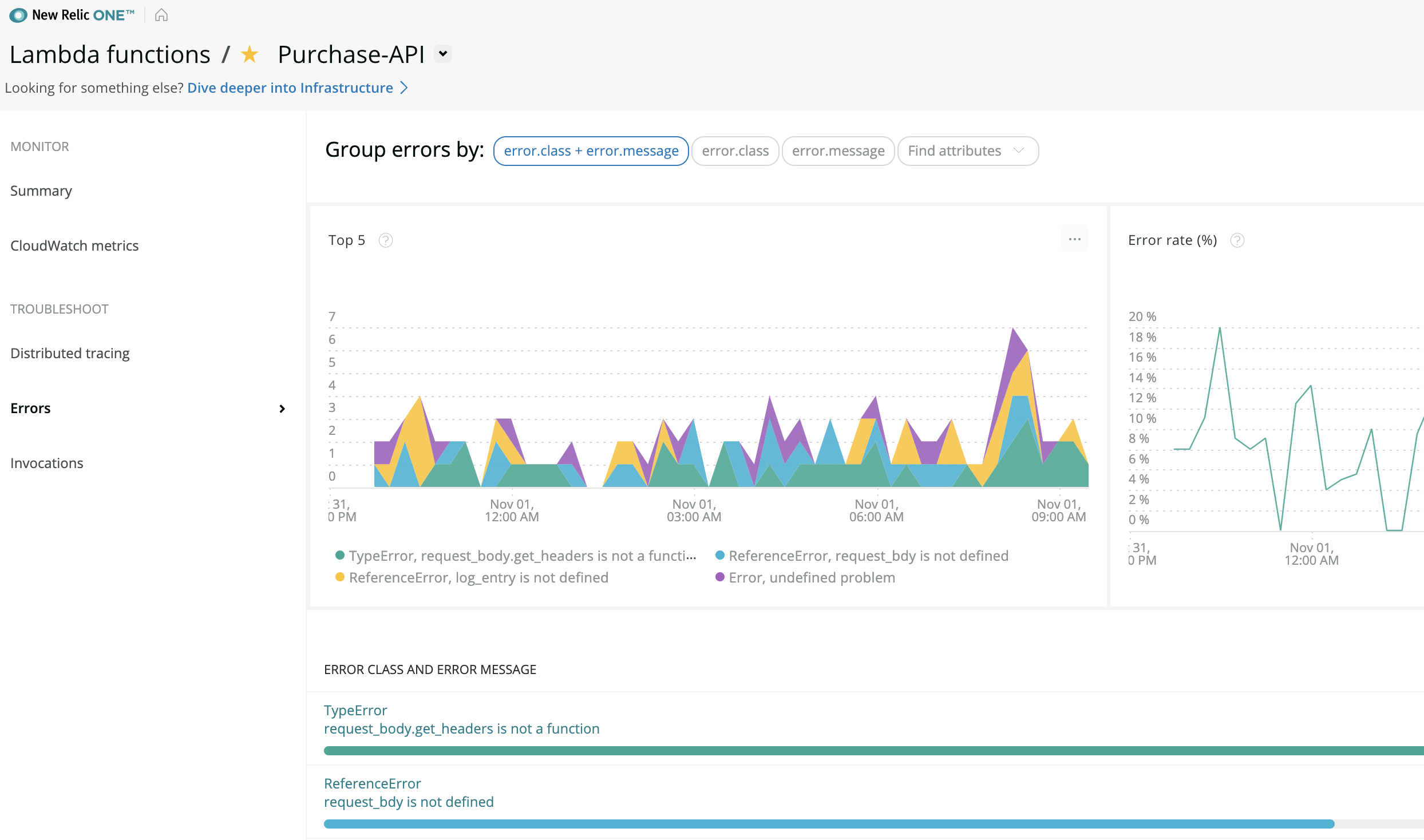
    Andrew Tunall, general manager for serverless and emerging cloud services at New Relic, said IOpipe’s monitoring technology will be used to augment the monitoring tool for AWS Lambda included in the New Relic One platform, which was launched earlier this year.

    New Relic also plans to expand its observability capabilities for serverless computing to other platforms based on customer demand, said Tunall.

    Serverless computing frameworks are gaining traction because they enable developers to write less code within their applications by allowing them to employ functions to call on a cloud service to process, for example, analytics externally rather than within the application itself. The challenge serverless computing frameworks create from a DevOps perspective is they don’t create any logs that can be analyzed. Instead, monitoring tools need to be able to employ distributed tracing tools to analyze the streams of metadata that serverless computing frameworks create based on event-driven architectures. That requirement has forced providers of monitoring tools to extend the capabilities of their core platform to enable the consumption of that metadata.

    Adoption of serverless computing frameworks is already outpacing the ability of many DevOps teams to observe. According to AWS, hundreds of thousands of customers are already doing trillions of invocations a month of AWS Lambda. Gartner has predicted that by 2023, 100% of enterprises using IaaS or public cloud will also use some form of serverless platform-as-a-service (PaaS) capability in production applications, up from 25% in 2019. In most cases, those serverless computing frameworks will be employed to process stateless workloads, while stateful workloads continue to run on a virtual machine or within a container.

    While most of the usage of serverless computing frameworks thus far is on public clouds, it’s only a matter of time before organizations increasingly make use of multiple serverless computing frameworks in on-premises IT environments. There are already more than a dozen different types of serverless computing frameworks, most of which are being made available as open source projects.

    Naturally, the rise of serverless computing frameworks complicates DevOps even further. DevOps teams will now need to build, deploy and update applications that are making frequent external application programming interface (API) calls to potentially multiple serverless computing frameworks. Rather than requiring organizations to acquire separate tools to monitor serverless computing frameworks, New Relic is making a case for extending a single platform to monitor all the various types of IT platforms being employed.

    There’s almost no doubt most organizations will wind up invoking serverless computing frameworks in one fashion or another, but it’s too early to say how pervasive serverless computing frameworks will be. However, DevOps teams will be required to monitor those serverless computing frameworks alongside every other platform already being employed across an increasingly diverse IT environment.

    — Mike Vizard