Tag: serverless

  • Authentication in Serverless Apps—What Are the Options?

    Authentication in Serverless Apps—What Are the Options?

    Serverless applications are growing in popularity among DevOps engineers. They provide a convenient, predictable way to run simple processes like CI/CD builds or automation scripts with no need to stand up infrastructure. They are also commonly used to deploy microservices. However, serverless applications present unique security challenges, one of them being authentication. 

    How can you ensure services communicate with other services or with the outside world only if authorized to do so? How can you ensure users can conveniently and securely access multiple instances of a serverless function?

    In serverless applications, there are many components interacting—not only end users and applications but also cloud vendors and applications. This is why common authentication methods, such as single factor, two-factor and multifactor authentication offer only a bare minimum foundation. Serverless authentication requires a zero-trust mentality—no connection should be trusted, even communication between internal components of an application should be authenticated and validated.

    To properly secure serverless authentication, you also need to use authentication and authorization protocols, configure secure intraservice permissions and monitor and control incoming and outgoing access. In this article, I’ll cover all these briefly and demonstrate a practical example—setting up authentication in the AWS serverless ecosystem.

    What Are the Most Common Authentication Methods?

    Here is an outline of the standard authentication methods used by most applications.

    Single-Factor Authentication

    Also called primary authentication, this is the most prevalent and straightforward type of authentication. Single-factor authentication asks for only one authentication method; for example, a security PIN, password or PIV card, to gain access to a service or system.

    These methods are solid in relation to familiarity and usability; however, they are generally linked to poor security and credentials can readily be stolen or guessed through phishing, data breaches or by using keyloggers.

    Two-Factor Authentication

    Two-factor authentication (2FA) adds another layer of intricacy, as it needs an additional factor to authenticate a user’s identity. Common verification methods include one-time passwords, tokens created by a registered device or PIN numbers. The presence of two verification methods significantly improves your level of security. 

    Multifactor Authentication

    This is the most complex process of authentication. It makes use of two or more independent factors to verify a user’s identity and authorize access to the system. In common scenarios, multifactor authentication (MFA) makes use of at least two of the following factors:

    • A PIN or password (something known)
    • Security token or mobile phone (something owned)
    • FaceID or fingerprint (something you are)
    • Location information, typing speed or the like (something you can do) 

    Authentication and Authorization Protocols

    An authentication protocol is a communication protocol that protects authentication data as it transfers between two entities. It enables a receiving entity to authenticate a connecting entity as well as authenticate itself to a connecting entity. This is achieved by declaring the type of information required for authentication and syntax.

    There are several types of authentication and authorization protocols, including:

    • Lightweight Directory Access Protocol (LDAP)—a software protocol that enables anyone to find data about individuals, organizations, and resources like files and devices within a network. LDAP allows this whether a user uses the public internet or a corporate intranet.
    • The Security Assertion Markup Language (SAML)—an open standard that allows sharing security information about authentication, authorization and identity across several different systems. 
    • Open Authorization (OAuth)—an open standard authorization framework designed for token-based authorization established over the internet. OAuth enables third-party services to use end-user account information without exposing user account credentials to the third party. This blog post can help you understand the differences between SAML and OAuth.
    • OpenID—enables authentication services and websites to exchange security information in a standardized manner. OpenID Connect—the newest version of the protocol—provides improved identity management, support for mobile application development, and interoperability. Learn more in the official OIDC FAQ.

    Secure Authentication on Serverless

    In serverless systems, there are four forms of access—four forms of communication that should be secured. An individual service won’t have to include all four, but the categories that it does feature should be well-protected. 

    Intraservice Access

    Creating a system by uniting serverless services has many advantages. However, you should consider the security of every additional service. 

    A service with excess permissions is a liability. Unnecessary permissions provide excessive access to data, actions or services, and a bug might let malicious users exploit that service and use its permissions to endanger your system. Hence, you should give careful consideration to the permissions required by each service.

    Effectively overseeing intraservice access permissions is often an overwhelming job. Luckily, all of the top-tier cloud providers have native access management services to make this task simpler. AWS has AWS IAM, Azure has Azure Active Directory and Google Cloud Platform (GCP) provides Cloud IAM. 

    Incoming Access

    A network is made accessible through a SaaS offering to external users. Access will be restricted, and every user will require the official credentials to achieve that access. 

    However, this brings up the same problems raised above—the secrets must be stored somewhere. You cannot manage how your users access and store the credentials that you provide them with; therefore, you should assume that their credentials are not being kept securely and that they may be compromised at any point.

    This would appear to be an unmanageable issue, but there is a solution—to provide temporary credentials. This means that even if the secrets were revealed, they would expire shortly afterwards. 

    The cloud providers have services for this. Google Cloud IAM offers short-lived credentials, AWS IAM lets you create temporary credentials and Azure Active Directory lets you configure expiration dates for its signatures that have shared access.

    Outgoing Access

    When your organization’s serverless function has access to an external third-party service, it typically needs some sort of access credentials. These credentials need to be kept somewhere, but this storage is sometimes not as secure as it should be. Today, certain web applications continue to store secrets in databases, text files or hardcoded within the function code. 

    Cloud providers have services for securely retaining credentials and secrets. AWS has AWS Secrets Manager, Azure offers Azure Key Vault and GCP offers Google Cloud Secret Manager.

    End User and Customer Access

    The issues with this access type are akin to those for incoming access, though the solution is different. Whether in B2B or (particularly) B2C environments, not many users would put up with a requirement to continuously regenerate or refresh their credentials. Thus, another approach is needed. 

    The top-tier cloud providers all have a user authentication service—Azure Active Directory B2C, AWS Cognito and Google Identity Platform. You should also consider using third-party end-user verification, as this will help you avoid vendor lock-in. Third-party offerings also tend to offer a better developer experience. The most common third-party authentication providers are Okta and Auth0.

    AWS Lambda Authentication Solution Example

    Amazon Cognito offers managed authentication and authorization that can help you build secure web services in a serverless architecture. It is typically used in combination with Amazon API Gateway when building complex serverless applications that require permission control.

    For example, a payroll system may have a manager and two additional employees. The three employees can use their unique usernames and passwords to log into the payroll system—this process is called authentication.

    To retrieve paystubs, the three employees undergo role-based authentication:

    REST API GET /api/employee/{employee_id}/paystubs

    However, the permissions they get through this process should be unique to their needs. This may involve setting up the following conditions:

    • The manager can access the paystubs of all employees.
    • Employees cannot access the paystubs of other employees, only their own. 

    You can use AWS managed services to fulfill the above requirements and also meet future scaling needs.

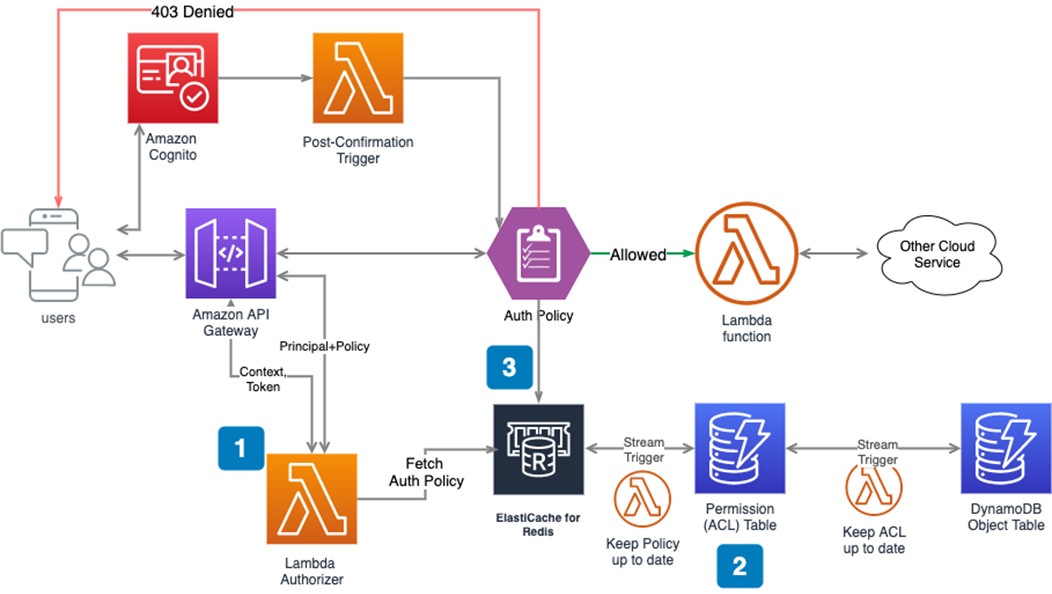
    Image Source: AWS

    Step One: Setting Up AWS Lambda Authorizer

    The Lambda authorizer is the brain that centrally determines whether the requester has the relevant permissions for the requested API resources.

    Here’s how you can set it up:

    • Navigate to the Amazon API Gateway and create an authorizer.
    • Select the API resources you want to secure and assign the AWS Lambda function to them.
    • Configure your new AWS Lambda authorizer.

    Step Two: Building User Access Control List (ACL)

    It is crucial to establish user permissions and keep them up-to-date. The approach might differ according to your identity provider. Here is an example of the process if you use Amazon Cognito as your IDP. 

    1. Initialize the ACL

    Every user has a unique ID, so you can describe each user’s permissions by inserting items in the permission table in Amazon DynamoDB when you register with Cognito. The DynamoDB permission table stores the access control list for all users, although the implementation may differ based on the use case. 

    For this example, let’s use a single integer ID for each employee (the UUID strings in real applications tend to be much longer). 

    Manager:

    uuid: xxxx-xxx-xxx-xxxx-xxxxxxxx

    employee: {“allow”: [“/5”,”/5/*”]}

    paystubs: {“allow”:[1,2]}

    Employee 1: 

    uuid: xxxx-xxx-xxx-xxxx-xxxxxxxx

    employee: {“allow”: [“/6”,”/6/*”]}

    paystubs: {“allow”:[3,4]}

    Employee 2: 

    uuid: xxxx-xxx-xxx-xxxx-xxxxxxxx

    employee: {“allow”: [“*”],”deny”:[“/7”,”/7/*”]} // employee_id=7 is the manager of employee 2

    paystubs: {“allow”:[1,2,3,4]}

    2. Manage the Access Control List (ACL)

    The user permissions in a complex project are constantly changing. Employees can be promoted, demoted or terminated, with different access requirements depending on their changing roles. A new manager, for example, needs access to all pay stubs, which means you have to create a new pay stub object for every employee. 

    You can manage user permissions using the Amazon DynamoDB stream:

    Lambda functions can easily be integrated when you insert or modify items in the permissions table. A Lambda function might include code that modifies permissions according to changes to the role of a user.

    3. Build an ACL policy

    Once you’ve established an ACL with user permissions for every object, you should create an authorization policy document. The Lambda function authorizer uses this policy to evaluate whether user API requests should be allowed or denied.

    Amazon API Gateway offers a mechanism for evaluating policies internally. internal policy evaluation mechanism. The Gateway will automatically evaluate any policy JSON returned by the authorizer. For details about Lambda authorizer’s output standard, see this document.

    In this article, I covered the basics of authentication in serverless applications:

    • Single-factor authentication
    • Two-factor authentication
    • Multifactor authentication
    • Intraservice access
    • Outgoing access
    • Incoming access
    • A real-life example with Amazon Cognito

    I hope this will be of help as you gain a better understanding of authentication and authorization techniques that help secure serverless applications.

  • Lightbend Launches Serverless Managed DevOps Service

    Lightbend Launches Serverless Managed DevOps Service

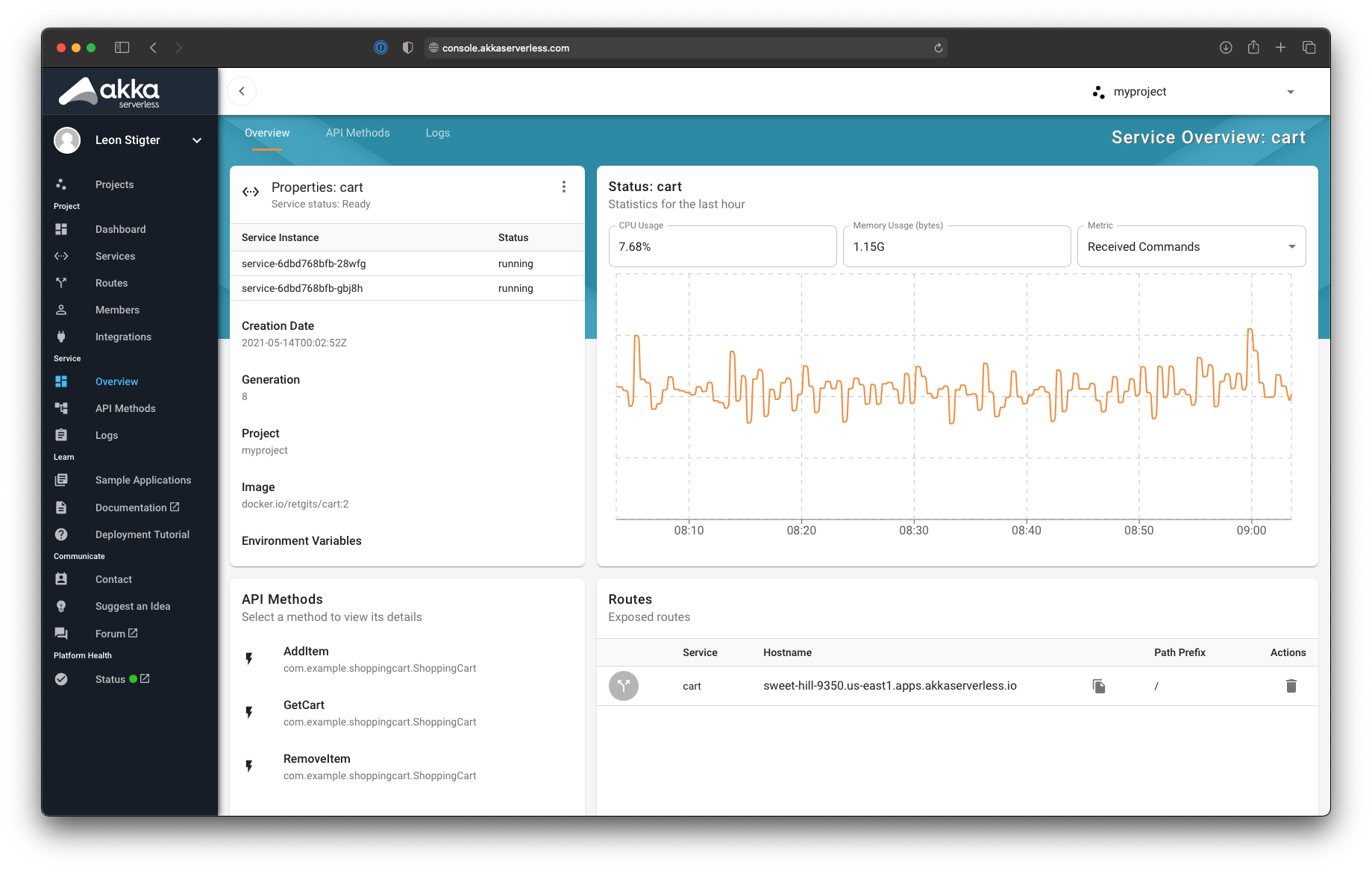
    Lightbend today unfurled a cloud service based on a serverless framework that provides developers with a managed DevOps platform to build applications that dynamically scale resources up and down as required.

    Brad Murdoch, executive vice president for strategy at Lightbend, said Akka Serverless provides access to its Java development platform environment that runs atop Kubernetes via a declarative application programming interface (API) based on the gRPC protocol. Support for additional open APIs, such as GraphQL, is planned, added Murdoch.

    At the same time, Lightbend revealed today that Jonas Bonér has assumed the role of CEO in place of Mark Brewer. Previously CTO and founder of the Akka Project, Bonér is a co-author of a reactive manifesto that defines the core principles required to build applications using a reactive programming model.

    Akka Serverless, available via an open beta program that provides access to limited amounts of storage, is scheduled to be generally available in the fourth quarter on the Google Cloud Platform (GCP), with support for additional cloud services planned.

    The service is made possible because Lightbend extended an existing open source Cloudstate serverless framework to create a platform-as-a-service (PaaS) environment to support large amounts of distributed stateful data that developers employ to build applications, noted Murdoch. That capability overcomes the performance limitations of existing function-as-a-service approaches, based on other serverless computing frameworks, that don’t support stateful application development, added Murdoch.

    In fact, one of the reasons that adoption of serverless frameworks has been limited thus far is the inability to be employed within the context of a stateful application that requires a lot of access to data, said Murdoch.

    Lightbend addressed that issue by enabling event sourced entities persist each change in state as an event that Akka Serverless writes to a journal. That journal can be used to replay events to reconstruct state at a particular time, debug or provide an audit. At runtime, a key distinguishes each entity instance from all others.

    Akka Serverless is the latest in a series of managed DevOps services that automatically scales as developers request new resources. There is no need for developers to configure and manage a database on which to build their application. Many organizations are migrating to these services because they would rather focus their time and effort on building applications versus managing a DevOps platform, said Murdoch.

    It’s not clear to what degree organizations will embrace managed DevOps services, which are starting to appear on various cloud platforms. However, the implication is that by choosing these types of services, organizations may not need to hire, for example, as many site reliability engineers (SREs). The challenge, however, going forward is that most of the managed DevOps platforms are currently tied to a specific cloud service at a time when most organizations are routinely using more than one cloud.

    Of course, developers will need to continue to manage continuous integration (CI) processes, but, in time, the continuous delivery side of the DevOps equation may be incorporated within a managed service. Regardless of the path forward, as DevOps processes continue to become more automated, the pace at which applications can be deployed is about to significantly accelerate.

  • Serverless Computing Brings New Security Risks

    Serverless Computing Brings New Security Risks

    Attracted by lower costs and less operational overhead, serverless computing is an unmistakable undercurrent in the world of DevOps. Developers are drawn to the innovation because it requires no architecture to manage while offering continuous scaling for anything from a few requests per day to hundreds of thousands of requests per second.

    More than 50% of the developers using serverless functions today started using the computing model in the last three years. By some estimates, serverless computing is the fastest-growing segment in the cloud services market.

    While businesses are drawn by the opportunity to extend and integrate cloud applications at greater scale, there’s a dark underbelly to this DevOps phenomenon: security. In fact, organizations cite security concerns as the leading reason why they haven’t yet adopted serverless computing. For good reason!

    Serverless functions are introducing a new breed of threats – misconfigurations, code-level risks, injections and weaknesses – many of which are the underlying risk factors for a software supply chain attack. With adoption of this technology accelerating, organizations need security that delivers more than just visibility into these dynamic environments. They also need the ability to detect and block code-level vulnerabilities and misconfigurations that occur during development and through to production. Most importantly, this needs to happen seamlessly and with little to no impact on DevOps.

    Dynamic Environments Create Complex Security Risks

    The nature of applications has evolved, creating a new paradigm of security risk. In serverless environments, code sprawl makes it harder to identify vulnerabilities and patch them before they become business-level risks.

    In a monolithic application environment, an identified vulnerability could be efficiently patched by the developer through upgrading a single package, pushing a deployment and then testing and deploying the app.

    In a serverless computing model, patching and resolving vulnerabilities becomes a lot more complicated, given that there may be several hundred (or more) environments across different providers and regions. So, instead of having to patch a single application, developers will need to patch, deploy and test hundreds of individual functions that rely on that library.

    With 39% of developers saying they’re now fully responsible for security, it means they’ll carry the burden of having to patch an identified vulnerability – often taking them away from development work.

    With Serverless, You Need to Rethink Your Approach to Security

    Given the distributed nature of serverless functions – essentially, the reason for its flexibility and scalability – many existing security tools will provide little to no visibility, nor the control capabilities, for these computing environments. Many of the security attacks that will occur in serverless functions will be a result of misconfigurations and mistakes that happen outside the purview of the security team and due to legacy solutions which don’t translate to serverless architectures. Further, because abstracted workloads create blind spots, attackers will have more room to maneuver undetected.

    Serverless functions will even render some traditional DevSecOps tools less useful. Scanning tools must monitor hundreds of individual repositories instead of a single monolithic repository, while application performance monitoring (APM) tools lack security proficiency and cannot protect from the OWASP Serverless Top 10 risks.

    The challenge for security teams will be implementing solutions in a way that does not modify workloads or require changing business logic — both of which slow development. When applying security to serverless functions, it’ll be critical that the solution can do the following:

    • Go beyond monitoring and actually detect and block vulnerabilities without elaborate or manual steps involved. The scale of serverless functions will make it nearly impossible for security analysts to manage and keep up with every alert they receive. Instead, they need a tool that delivers actual security and can help them block malicious activity without stopping development altogether.
    • Enable a positive security model that provides protection against malicious changes, like zero-day exploits, within the function. This approach gives security teams more control by automatically detecting and blocking anything that isn’t explicitly allowed in a given function.
    • Provide forensic detail from log-level information so security analysts can fully understand the context of every attack with virtually no impact on latency. Further, with the risk of supply chain attacks soaring, security teams need the ability to identify and map third-party dependencies used during runtime.

    For many organizations, serverless architecture is a very different and unique computing environment – unlike anything they’ve experienced or had to protect before now. That reality means that organizations need a fresh approach to securing these environments and will need to look beyond the traditional tools they have in their tech stack today.

    Above all, developers and security teams will need to work together to ensure security is built-in from the start. Otherwise, serverless functions will quickly become a playground for cybercriminals.

  • IBM Unifies Cloud Services to Simplify App Dev

    IBM Unifies Cloud Services to Simplify App Dev

    IBM announced today that an IBM Cloud Code Engine service that unifies the cloud platforms on which applications are built and deployed is now generally available.

    Built on top of a serverless computing platform, IBM Cloud Code Engine is a managed service that unifies access to a platform-as-a-service (PaaS) environment, a container-as-a-service (CaaS) environment and batch workloads, that run on traditional virtual machines, to a single platform.

    At the core of that managed service is an instance of Kubernetes running Knative middleware for invoking an open source serverless computing framework, the Istio service mesh and Tekton pipelines for building DevOps workflows.

    Jason McGee, CTO and vice president for IBM Cloud Platform, said the goal is to eliminate the artificial constructs that developers are forced to navigate in the cloud today that can each trace their lineage to a different era of software development. The IBM Cloud Code Engine unifies the developer experience in a way that makes it simpler to build and deploy applications on the type of cloud service that best makes sense for a specific application workload, McGee said. Developers no longer need to configure code for a specific type of infrastructure; they can simply describe how they want source code or a container image to behave, and IBM Cloud Code Engine automates deployments accordingly.

    The serverless computing framework that IBM Cloud Code Engine is built on also makes it possible for IBM to only charge organizations when code is actually running, versus requiring them to commit to a specific amount of infrastructure to run a set of virtual machines, McGee added. Charges are based on the memory and vCPU consumed and incoming HTTP calls. That approach will, over time, substantially reduce the total cost of cloud computing, said McGee.

    It should also accelerate the rate at which applications are migrating to the cloud, added McGee. Today roughly 20% of application workloads run in the cloud. Getting the next 40% of workloads shifted into the cloud will require providing a simplified application developer experience, noted McGee.

    The challenge organizations are wrestling with today is that they are deploying a mix of monolithic and microservices-based applications in the cloud that, to varying degrees, rely on batch-oriented and real-time platforms. IBM Cloud Code Engine represents an effort to provide a layer of abstraction over a wide range of cloud services that they can flexibly invoke via an event-driven platform, as required.

    The DevOps implications of IBM Cloud Code Engine are potentially profound. DevOps teams today spend an inordinate amount of time provisioning cloud infrastructure on behalf of developers. IBM is now making a case for a platform that automates that process in few seconds. In effect, control over cloud infrastructure will shift even further left to application developers. DevOps teams, in theory, will spend more of their time optimizing cloud environments after an application has been deployed.

    It’s not clear to what degree platforms such as IBM Cloud Code Engine might force cloud service providers to consolidate distinct cloud services they provide to developers today based on the type of application being built. However, it’s already apparent that the writing on the wall heralding that consolidation have now been indelibly inscribed.

  • Ambassador Insights: Cloud-Native

    Ambassador Insights: Cloud-Native

    Cloud-native is a methodology and a mindset that’s been gaining traction in the DevOps and application development space as more organizations look to leverage the benefits of cloud infrastructure, including scalability. As with many other topics in the DevOps space, however, cloud-native isn’t easily definable; rather, it is loosely described by the technologies it utilizes, including containers and Kubernetes.

    In our second episode of Ambassador Insights, featuring DevOps Institute ambassadors Leonardo Murillo, CTO of Qwinix Technologies; Tracy Bannon, senior principal and DevOps strategic advisor and software architect at MITRE; and Pawel Piwosz, lead system engineer at EPAM Systems, we delve into what it means to be cloud-native, look at some of the cloud-native technologies helping shape the landscape and address the security aspects of cloud-native applications and infrastructures.

    The video is below, followed by a transcript of our conversation. Enjoy!

    Transcript

    Charlene O’Hanlon: Welcome back to TechStrong TV. I’m Charlene O’Hanlon, and I am here with another episode of the DevOps Institute Ambassador Insights Panel Discussion. I’m so excited to have these on a monthly basis with some very, very smart people who also happen to be ambassadors with the DevOps Institute. And each month, we have a different topic of discussion to align with our monthly spotlight topics on devopsy.kinsta.cloud.

    This month, we are going to be talking about cloud-native and cloud-native technologies, and so, I have some experts in the field right now. First up, we have Leonardo Murillo, who is the CTO of Qwinix Technologies. Hey, Leonardo, thank you so much for joining me today.

    Leonardo Murillo: Thank you for having me, Charlene. I really appreciate it. This is great.

    O’Hanlon: Alright, alright. Next up, we have Tracy Bannon, who is the Senior Principal and DevOps Strategic Advisor and Software Architect at MITRE. Tracy, thanks so much for joining me, we really appreciate it.

    Tracy Bannon: Thanks for the invite.

    O’Hanlon: Great. And finally, last but not least, we have Pawel Piwosz, who is the Lead System Engineer at EPAM Systems. Pawel, thank you, also, for joining me today, we really appreciate it.

    Pawel Piwosz: It’s a pleasure to be here with you.

    O’Hanlon: Great, great, great. So, let’s dive right into the discussion. I know we’ve been talking on devopsy.kinsta.cloud and Container Journal a lot about cloud-native, but I’m not sure, actually, that a lot of people understand exactly what we mean when we say cloud-native, so maybe we should set the stage, if you will.

    Leonardo, maybe you can start us out since you are really focused heavily on cloud-native. Can you kinda tell us what we mean when we say cloud-native? What are we talking about?

    Murillo: Sure. So, I think when we talk about cloud-native, we’re talking about a specific mindset and patterns to apply when we’re building both systems as well as organizations, which is kinda one of the things that I wanted to discuss today, right? Because cloud-native is not just how you build technology, and you don’t really need the cloud to build cloud-natively, right? Usually, when you think in terms of cloud-nativeness, you’re thinking about loosely coupled architecture, you’re thinking about containerization, immutability, statelessness, right? All of these are components that are incorporated in a cloud-native solution, and I think the organization has also to become cloud-native, and that’s where DevOps becomes really important, right? To be able to leverage and really take advantage of all the different qualities, right, that the cloud has basically surfaced and made available, right? What do you think, Tracy?

    Bannon: To extend on that and sort of foot stomp for what you’ve said already and love that you want to talk about the organization, we can talk about, I call it a reverse Conway maneuver.

    Murillo: Right. [Laughter]

    Bannon: [Laughter] So, there’s a lot to be said—I’m actually finding that there’s not agreement on what cloud-native is. There’s an argument—it means containers. Well, yes, and let’s talk about serverless and the impact of serverless. So, it’s not a specific architecture pattern, but it does mean that we are building to take the best advantage of the infinite scalability, right, and the self-healing nature and other aspects of cloud. Love your point as well, Leonardo—while we say it needs to be on cloud proper, building for cloud, right, doesn’t mean that I’m necessarily hosting in an AWS GCP, et cetera and so on. It means that I have applied those principles, and I can do that within my data center, my private cloud, or whether I’m paying somebody else to be the host for me.

    Murillo: Yeah, great point.

    Piwosz: That’s true, and it’s not only about the application, it’s about everything what is around. For example, CI/CD, how we store our code, how we approach to the code, how we approach the security networking. Because this is something that we very often forget when we are going to the cloud, right?

    O’Hanlon: Mm-hmm.

    Piwosz: So, platform as a service, we have everything, we don’t need experts.

    Bannon: [Laughter] Don’t get me started at all!

    O’Hanlon: [Laughter]

    Bannon: But that’s an interesting point is that there are so many fantastic capabilities that are being provided as a service that I don’t think the folks actually know where to begin. I’ve had some awesome infrastructure folks who go out and they do some Googling and they do some research and they come up with a reference architecture. And heaven forbid, but God love them, they go out and spin it up and push the button, and—wow, this is a good solution for my firm or for my client or for my needs—and it isn’t, necessarily.

    So, there’s a lot of trade space that we’re unintentionally losing with the rapidity that we’re moving, trying to move towards cloud. Architecture should be more important, not less important. It shouldn’t be a stalling factor up front, but I jokingly say that, in order to push some value, provide value out into industry or to my clients, I have to be doing that from vision forward, right? I can’t take a steel girder and put it through a wood chipper, right? It’s not going to work because it wasn’t constructed and thought of that way.

    But Leonardo, to your point earlier, as much as the technology to me is the fun and sexy part, the human aspect really needs to be dealt with as well. We talk about it a lot in the DevOps piece of it, the DevOps portion or support effort on it, but you really bring up that cloud-native requires us to think about the organizational structure and building a separate culture than what we’ve had before. I’d be interested in what you think about some of the emerging software factories, or should I say continued proliferation of software factories as the way to move forward on software?

    Murillo: I think that actually talks about kind of a different subject, and I’d like to kinda step back a little and think—because you mentioned something that is very much aligned to this, and it is the whole strategy as to how you approach the cloud, right? It’s not just about click a button and going in, right?

    Bannon: Mm-hmm.

    Murillo: And, to me, that has a lot of resonance to what DevOps is all about, right? If you think into kinda the cada mindset, right, define your North Star first, right, assess your current state, think about it consciously and mindfully, right?

    I think if organizations that are looking to go into the cloud or mature into the cloud do take that step, do take time, they will be able to maneuver this gigantic ecosystem of tools that are out there and technologies that are out there. Because I think there’s also an interesting component that we should discuss. You mentioned, Tracy, how it’s not just about the technology, it’s also about the humans, right, the people that are implementing.

    Bannon: Mm-hmm.

    Murillo: But I think that also resonates with the fact that technology is not there just for the sake of picking the latest and greatest tool, right? I read this great post by somebody that I can’t recall, that basically talked about how boring is good. You know, how boring technology is good because people are used to it and they’re kinda like aware of how it works.

    And I think the closer you are in your evolution path to what is comfortable, the better. And I think that’s one of the problems that I sometimes see in cloud adoption—people try to bite too big of a chunk of change at a given time, right?

    Bannon: Yep. Mm-hmm.

    Murillo: And there’s so much to choose from to make that huge bite. An actually targeted approach that is mindfully defined that is well strategized will solve a lot of these problems, right? Because it will give you a signal amongst all this ecosystem noise that teams are gonna be exposed to, right? So, Pawel, you are kinda like engineering these solutions, right? How do you work around this ultra-diversity of available technologies, right, when you’re building something?

    Piwosz: Mm-hmm. This is … a very big problem. Because right now, together with cloud, we gained much, much more speed with everything, really. So, imagine 20 years ago you had a server room with racks and servers there, so you’d change only the server, but the logical side was still the same.

    Today, we are jumping. Let’s stay with AWS. We are jumping from instituting analysis to microservices, then to serverless microservices, then to serverless itself. Who knows what we will find next year, for example, right? You need to switch your mindset here. This is something that especially all kinds of CisOps—well, I am all kinds of CisOps—people have in mind, right? The same for networking, for security. There is a huge difference in speed here.

    So, you need to incorporate into your mind things like do fast, fail fast, learn fast—especially learn fast, because we are forgetting about this very often; too often, I would say. And also, we are forgetting very often in the trenches about the security of the cloud.

    Bannon: Oh, gosh, yes.

    Piwosz: Because—yes, because we’re saying, okay, we have a shared responsibility model, so they are responsible for everything. We’re just running our application and not caring about anything else, what is really, really wrong, I believe.

    Murillo: And I think that points to a fundamental misunderstanding, right, of what security in the context of cloud native architecture is all about, right? And I also think about, Tracy mentioned this infinite capacity, right? And you mentioned, Pawel, going fast.

    I’ve been thinking a lot recently as to how those two components need also to be very effectively managed.

    Bannon: Yes.

    Murillo: By leadership, by those that are sponsoring these initiatives, right? Because after all—and this is something that I’ve been talking about lately, right? We have optimized for speed alone already without having, really, awareness of the impact that that would have on the environment and many things, right? And I think we really need to establish a mindset where engineering teams are aware that infinite capacity doesn’t mean just free for all, grab whatever amount of resources you have, that shared response security is not infinite, overwhelming security, right?

    And I think this is also relevant in the context of the tooling that we were talking about, right? Everything now is available kinda point and click. You download a package, you have an appointment. You download another package, you have authentication and connectivity, right? And we don’t go into details necessary to understand kinda the supply chain of all these solutions.

    So, I think that’s where—the mindset of DevOps, right, reduce waste also becomes very relevant, right? Just because you have infinite capacity doesn’t mean you can’t be wasteful or you don’t have to be constantly evaluating the outcome of your ongoing efforts, right? Yeah, so, I think that’s very important.

    Bannon: There’s a treasure trove of topics that you just landed on, so it sounds like it could be a longer collaborative.

    O’Hanlon: Yeah, right. [Laughter]

    Bannon: So, in terms of reducing waste, one of the things that I’ll put out there is that I believe, in what I’ve observed with teams that I run or teams that I’m reviewing the content is that some of the cloud capabilities have made us, I think, lesser programmers, lesser developers, because we’re not concerned about the same things that we were before. We’ve delegated authority or we’ve delegated that concern.

    I’ve seen some pretty hideous, performance-wise, if I were to run it anywhere other than being able to up my compute, it used to be that we had to be concerned because it cost a lot to add additional resources, right? If it wasn’t as performant as we needed it to be, you just threw more hardware at it. That went away for a long time because it was cost-prohibitive.

    We’ve almost gone back and revisited that in some ways. From a security perspective, it’s always been my perspective that it needs to be baked in. It has to be part of the ecosystem. So, when folks started talking about DevSecOps, I was actually against that, because DevOps means that there’s a security part of it, but I do understand that it was, at times, not thought about. Our developers need to be educated, but they need to be held accountable because it becomes—there is a group effort. Now, when I say developers, I mean the athletes who are hands-on, they’re engineering with us, they’re moving the software forward.

    But there are two pieces that come to mind with this. There’s a limit to how much they can consume. Mentally, there’s a limit to how much they consume. I’m looking at Pawel’s background and I’m thinking to myself, “I love all the stickers” and yet, those are all the technologies that he’s considering that he’s looking at. So, as leaders in technology, one of the things that we need to do is to provide guidance to the folks who are on our teams to help them reduce the noise. It doesn’t mean to ignore the new things, but it does mean go ahead and get to finish, get to done on one thing, get it working, learn from it, and then improve it. And if improving it means that there’s a certain amount of acceptable refactoring or pulling in another tool—absolutely, right? That’s technology insertion, that’s a good, smart thing.

    But it does also mean that we don’t instantly glom onto everything that’s coming along. I have one organization in particular where every team is allowed to have the autonomy and latitude and I’m just there as an observer, and it’s a little bit of melee. There are lots of good pockets of interesting things, but because there’s such technical diversity even in a small space, they’re having a hard time, because they’re not able to get crisp and good and deliberate with the first set of tools. To your point earlier, Pawel, they’re not getting good enough with what they’re doing before they’re switching on to something else.

    So, cloud native mindset is pretty important, but helping to folks understand cloud native from a, what is it from a patterns perspective, what are the architectural tradeoffs for it, and then helping them to make selections and stick with it long enough to get a success, I think, are really keys to helping organizations.

    O’Hanlon: So, do you guys think that cloud-native is kind of an all-or-nothing proposition? Are organizations—have you seen organizations kind of going all-in on cloud-native and then maybe pull back?

    Murillo: I’ve seen them going all in and I’ve seen them crash and burn. [Laughter]

    Bannon: Yes! [Laughter] Alright, then!

    Murillo: Yeah, I think—I was talking the other day as to, everybody knows juggling is really good for the brain, but if you try to learn to juggle with your most precious items, you’ll never learn because you’re gonna be very afraid.

    I think it’s the same about cloud and DevOps, right? Everybody knows it’s great, everybody knows there’s gonna be a lot of value out of it, but if you try to learn it with your most precious things—for instance, your entire organization—you’re gonna have a lot of resistance to getting it right.

    So, I think the same applies for DevOps and cloud-native. I think you need to iterate. You need to start small with projects that you’re capable of experimenting with, right? Kinda like the whole concept of a culture of experimentation and iteration is important, right? But there’s gotta be awareness to the fact that you cannot just experiment with everything, right, or with everything at the same time.

    So, what I mentioned, right, bite small pieces at a time, iterate, do concepts, and use those concepts to build kinda your operating model, right? What does a cloud mean to you for your organization, right? And then expand up until you have a very solid framework that is well establish, well understood, and then you can kinda start juggling with fire, but not until then.

    Bannon: That also helps us think through greenfield versus brownfield. I deal a lot with governments and a lot with federal governments and different agencies in defense. And there’s a tremendous amount of brownfield. It doesn’t mean that there’s old brownfield, but it means that there’s something pre-existing, so there have to be decisions made about where do I add on the cloud-native? Do I do it around the edges, is it incremental, am I doing strangler fig tree patterns, et cetera and so on? That’s one piece of it. Net new sometimes is a good place to try cloud-native, right, because you do have perhaps less confines around it, so take something smaller that’s greenfield and make your first foray that way.

    I think it’s an interesting conversation about the starting and stopping points for cloud-native? I noticed—and I’d like to hear, Pawel, if you’ve seen the same thing—I saw everybody lift and shift as quickly as they could. “I wanna get rid of my data center, so I’m just gonna move my workloads, right? IAS, I’m gonna move my workloads.”

    So, they moved their workloads, and I naturally thought the progression would be to pass or would be to cloud-native and to the refactoring. What I actually observed was a pendulum swing to the analytics side. And so, there was a tremendous, I have all of this compute available to me, I have less expensive storage, I’ll move over to the analytics side, and we’re just starting to see, a real increase in the cloud-native application space. Unless you’re truly talking about upstarts and greenfielding, there has been much less of it with the brownfield and the incremental improvements.

    Piwosz: Yeah, I agree with you. So, first of all, if you just do lift and shift to cloud, whatever we call the cloud, you will cry very soon. So, this is the first thing.

    The second—yes, we have a lot of possibilities regarding analytics, we have beautiful words right now, buzzwords like observability, telemetry, et cetera, et cetera. So, we’re just expanding our monitoring, let’s say old-fashioned monitoring to the new areas and collect more and more and more, and more structured things.

    So, this is something what is very, very easily achievable, but also—and this is in relation to the previous topic here, if you start with cloud, well, you are already in the cloud. There should be still a logic behind everything. Because, today is so tempting, because you do not have to do the initial investment, right? You just click a button and start using serverless or just create a big, big cluster of something, right?

    And then, in my work, I observe this multiple times, then you create a crazy, really crazy solution for a very simple thing. Well, what can go wrong in this, right? So you are using like 10 or more technologies which are completely different, you are trying to wire them together and then you are saying—okay, I know 20 technologies, it looks perfectly well in my CV. But when you talk with people, you just realize that it doesn’t work as it should work, really. That’s why, very often, organizations which are going to cloud and do not take logic in this, how it is organized, how it is architected, how this even developed, they are paying much, much more, not just because they did lift and shift, but they started to create very, very crazy solutions, right? And this is the kind of waste that you mentioned as well.

    Bannon: I’m gonna throw out just a couple quick words that’ll make people cringe, but when I think about—so, agility 20 years ago, right, the agile manifesto, there’s a woman named Linda Northrop from the Software Engineering Institute at Carnegie Mellon who said it was one of the worst things that ever happened to software architecture, because unintentionally, there was this emergent architecture, my architectures will just emerge, I don’t have to worry about them in advance. I want to push forward that enterprise architecture needs to still exist, but in a different form, in a different format. There still needs to be, it’s okay for there to be somebody more senior, somebody who is helping to drive the architecture and helping to pick which cloud technologies and where cloud native is the most appropriate.

    Because there’s different trade space, right? Even if I talk containers, there’s different trade spaces between how I’m using the containers and how I’m moving forward with that. Does that resonate with you, Pawel and Leonardo?

    Piwosz: Yes, yes. I would even add here that if you want to be cloud-native, your developers need to be cloud-native. So, there is no more, “It works on my machine”—this is obvious, right? But also, I will be bold here, so even development should go into cloud. And this is another layer here, which we didn’t touch, but it is very important, I believe.

    O’Hanlon: Well, I feel like we could have this conversation for at least another hour, but unfortunately, we gotta wrap things up, guys. But I do appreciate Tracy and Pawel and Leonardo for your insights. You guys are great. I’m gonna have all three of you back on and we’ll talk about other things in the future. We have lots of topics to get through this year.

    The level of intelligence and insight you guys bring to these conversations is just so, so value added, so I do appreciate your time in joining me today for another one of our DevOps Institute Ambassadors Panel Discussions. So, thank you, guys, again. We really do appreciate it, and please do stay in touch with me. I’d really absolutely love to get your expertise back on the show, so.

    Bannon: Alright, fantastic. Be well. Stay safe, everybody.

    Murillo: Thank you very much.

    Piwosz: Thanks, everybody. Thank you.

  • Cloud Growth and Other 2020 Trends

    Cloud Growth and Other 2020 Trends

    Growth continued this year as even the COVID pandemic could not slow down the cloud

    The rise of COVID-19 defined 2020 for nearly every industry. Cloud computing is no exception, though growth in the sector continued this year. Gartner estimates that $257.9 billion will be spent on public cloud services in 2020, up 6.3% from 2019. IDC reports that almost half of IT spending is cloud-based, “reaching 60% of all IT infrastructure and 60% to 70% of all software, services and technology spending in 2020.” These projections came in mid-2020, which proves that cloud adoption and spending were not greatly impacted by the pandemic.

    You can make the argument that cloud computing itself is the trend of 2020. Blockchain, quantum computing, machine learning and AI all deservedly earn a lot of headlines in the tech press. But at a more basic level, cloud computing is changing the way we do business. Whether it is the way they store their data, improvements to agility and go-to-market for faster release of new products and services, or how they develop and operate services remotely in today’s “locked-down world,” cloud computing is benefitting all businesses in every sector.

    In short, cloud computing had a strong year in 2020 despite COVID-19 and appears to have a very bright future. Several key trends, perhaps overshadowed by the pandemic, helped define a dynamic year for the sector. These include the following:

    • Continued Dominance of ‘The Big Four’ – All of the big four cloud providers—AWS, Azure, Google Cloud and Alibaba Cloud—reported strong growth and collectively grew 40% in Q320. Together they still account for 63% of the entire cloud sector.
    • Rise of Managed Services – The global cloud managed services market, in particular, is growing rapidly and is expected to reach $116 billion by 2025, growing from $62.4 billion in 2020, according to a study conducted by Markets and Markets.
    • Serverless and Containers – There used to be some talk about serverless and containers replacing the use of traditional virtual machines (VM). But I mostly see customers realizing that VM infrastructure is not going to disappear anytime soon, though container use certainly rose over the last 12 months.
    • Automation – The push toward greater automation continued in 2020. I noticed users accepting greater automation in their infrastructure environments, and there was simply more demand for it across the board. This is great news as one of the major advantages of a DevOps approach is automating away the manual tasks that bog down critical projects.
    • Growth in home use – This may seem an obvious one, but with the COVID-19 pandemic leading companies across the globe to new “work from home” policies, virtual desk infrastructure (VDI) usage exploded.
    • Security – Especially with a remote workforce, cloud security faced new challenges this year. One example of this playing out is in Snowflake’s massive IPO.

    Other trends of note this year included the continued growth of hybrid and multi-cloud and desktop as a service (DaaS). So, while COVID-19 truly defined 2020 for most people, the cloud sector was busy with the trends discussed above. It will certainly be interesting to see how these trends play out in the year ahead. Whatever new trends arise, it seems likely that cloud computing will continue to transform the way we all do business.

  • JAMstack Boards the Enterprise

    JAMstack Boards the Enterprise

    Set course for development via JavaScript, APIs and Markup. Engage.

    In recent years, the JAMstack web development trend has garnered interest among front-end web designers. A 2020 study by Netlify found 1 in 3 sites serving a million users use JAMstack.

    JAMstack has been viewed as a development style for blogs and startups, but lately, some proponents believe it’s time for enterprise adoption. So, what benefits could JAMstack and serverless offer enterprise architecture? I recently talked with Ryan Coleman, vice president of engineering and product at Stackery, to find out.

    Defining JAMstack

    First off, what is JAMstack? JAM stands for JavaScript, APIs and Markup. It’s is a new(ish) style for building websites and applications based on modern tools and serverless web architectures. We’ve seen its adoption grow exponentially within the last five years or so.

    As defined at jamstack.org, JAMstack enables fast and secure sites that pre-render files directly from a CDN. This avoids tight-coupling between the client and the server, also known as headless. Applied in the right context, it can bring performance, security, scalability and developer experience benefits.

    Admittedly, there is some variation on implementation of this style—PayPal’s Jamund Ferguson simply calls them static apps—but, “the thing that they all have in common is that they don’t depend on a web server,” noted jamstack.org. Jekyll, Hugo, Nuxt, Next and Gatsby are among many JAMstack frameworks and static site generators, and many adopters are listed here.

    JAMstack Benefits

    No longer are IT teams operating a web farm. Rather, they are shifting the process of interacting with live web servers left. According to Coleman, JAMstack is more aligned with these modern practices across the board. Therefore, he sees many potential benefits for its use within enterprise environments.

    Serverless

    With JAMstack, web pages are built during the build process attached to a CDN pipeline. “Instead of running a server farm, you are externalizing it,” notes Coleman. “It’s the CDN’s problem.”

    JAMstack plays nicely with a serverless mentality. “JAMstack helps rethink what production footprint actually looks like,” Coleman said. By reducing your active server footprint, serverless implementations decrease infrastructure costs.

    Security

    With the proliferation of web vulnerabilities, companies are seeking new ways to limit their exposure and avoid catastrophic breaches. JAMstack can help enterprises keep pace, offering a “much tighter place to apply security controls,” he said.

    It allows teams to think of their security infrastructure in smaller pieces, which affords better control and scalability for things such as authorization. “Serverless architecture helps enable enterprise-grade SAML-based Auth tied into your stack,” Coleman noted.

    Democratization Effect

    Coleman also sees opportunities for small teams to disrupt the dominant players by utilizing it. “Companies need to move quickly, achieve enterprise-grade architecture and secure products with less investment on the onset,” he said. These abilities could, for example, enable a FinTech startup to compete on the same playing field as an established bank.

    “How do you create an architecture that is living, and how do you make sure it is as secure and clean as possible?” he asked. “How do you get a whole team together where actually doesn’t have to use 1,000 lines of YAML, and how do we continue to maintain?”

    Since JAMstack adopts APIs, companies could rapidly stitch together high-performing applications. Furthermore, by pairing low-code tooling and JAMstack, teams could drag-and-drop snippets of AWS-managed services to construct web applications very quickly.

    Bi-Directional Interactivity

    JAMstack has a reputation for creating compelling user-facing apps. Yet, Coleman acknowledged a common misconception: JAMstack is static and, therefore, not for enterprise.

    However, JAMstack can be more than a static app; the structure can support secure interactive capabilities. By taking CDNs and buckets and utilizing API connections to rich features such as AWS managed services, it can essentially reach the same enterprise-grade capabilities as other development styles, he said.

    JAMstack: No Longer Only for Blogs

    “Serverless + JAMstack is where web app architectures are going,” Coleman wrote in a recent blog post. Though many view it as a static app, there is growing potential for using this development approach to enable applications with dynamic interactivity. “With AWS in the backend, you can create an interactive enterprise-grade app.”

    Another benefit of JAMstack is the decoupled nature between client and server. This abstraction layer makes for building web applications across multi-cloud arrangements. And as web APIs become more accessible through low-code, the entry barrier to connecting to a MySQL or Postgres database—or handling identity management, for instance—is lowering.

    Once only viewed as good for blogs, JAMstack is gaining more credibility within enterprise architecture as APIs and serverless become more commonplace, offering the potential to increase performance, increase rapid web application delivery and solve other concerns within enterprise situations.

    Coleman described JAMstack as enabling developers to “build that web application the way you want.” How, then, do you want to build?

  • How Serverless Technologies Can Achieve Optimal DevOps Practices

    How Serverless Technologies Can Achieve Optimal DevOps Practices

    Growing competition and increased customer expectations drive the speed of development. Adopting DevOps, meanwhile, can be a challenge, as it includes adjusting practices and new infrastructure. However, although engineering resources may be slim, serverless offers new solutions to tackle the DevOps challenge. From improved IoT devices to cost-effective machine learning applications, the serverless ecosystem is helping promote DevOps adoption.

    Why Is Serverless Beneficial for DevOps?

    DevOps accelerates development while stabilizing downtime, giving enterprises a competitive edge, a quicker product maturity in terms of features and capabilities and an improved customer experience. Although the benefits are appealing, DevOps adoption is expensive and time-consuming. Serverless can combat the barriers and support the implementation of DevOps solutions, at lower cost and with greater returns.

    Serverless technologies provide a pay-as-you-go model, allowing enterprises to pay for the resources used. For instance, with AWS Lambda, users pay based on the number and duration of invocations, potentially lowering costs. Functions as a service (FaaS) could become more expensive than containers, depending on the traffic experience. The higher and more consistent the traffic, the higher the costs of serverless tools, and these costs can rise higher than container costs.

    Since serverless technology is auto-scalable and fully managed, it allows teams to focus on the business logic that the DevOps infrastructure was actually built for, instead of spending countless hours maintaining the DevOps architecture.

    Availability and Performance Monitoring

    FaaS services such as AWS Lambda or Azure Functions are comparatively easy to spin up, auto-scalable and cost-effective. The functions can make API calls to your service, and API calls can be made by the user via the front-end interface. These periodic checks ensure your services are available continuously and any failures incurred in the production environment can be captured by monitoring tools to inform you of any performance degradations. The alerts from the monitoring tools can be consolidated by incident management SaaS tools.

    FaaS functions can be used for automatic availability and performance checks. However, serverless event buses communicate alerts as invocations of the FaaS functions throughout the DevOps infrastructure, lowering the overall cost from the pay-as-you-go model and auto scalability of FaaS functions.

    ChatOps Improve the DevOps Process

    Developed at GitHub, ChatOps is a conversation-driven development that allows users to type commands in a chat tool to kick off the CI/CD process through custom scripts and plugins. The operation of the scripts requires backend support, which is where serverless technologies can support.

    FaaS functions give DevOps engineers the ability to simply write the script to perform the intended operations and upload it to the function while ensuring that the chat tool can invoke it. This removes arduous container orchestration and networking setup. Furthermore, costs are only incurred when the FaaS function is invoked via the chatbot, not on an hourly basis.

    Serverless Enhances the CI/CD Process for Continuous Deployment

    Similar to ChatOps, serverless can be used to enhance the CI/CD process, but unlike ChatOps serverless can automate the entire process by merging pull requests to deploy in production. This is also known as GitOps.

    Conceived by Weaveworks, GitOps is a methodology for Kubernetes cluster management and application delivery. By leveraging Kubernetes’ convergence properties, continuous delivery is triggered by git push. GitOps allows Kubernetes cluster management and application delivery by using Git as a single source of truth for declarative infrastructure and applications. With Git at the center of delivery pipelines, developers can accelerate pull requests and simplify application deployments and operations tasks to Kubernetes.

    GitOps provides a “source of truth” for the infrastructure and application code to further increase the velocity of development teams. The workflow that makes this possible starts with CI tools to push docker images to hosting tools. Then cloud functions copy the configs and helm charts from the master storage bucket to master git repo. Finally, GitOps operators update the cluster according to the config charts and pull helm charts by the Lambda function.

    By copying the helm charts, FaaS functions can be used to the master git repo. The FaaS functions are easy to set up and cost-effective, which means DevOps engineers can focus on other parts of the GitOps infrastructure and achieve low costs in the process.

    The Road to DevOps is Challenging, But Serverless Can Help

    Serverless can relieve the complexity of DevOps adoption through its pay-as-you-go, auto-scalability and fully managed services, enabling a more efficient and cost-effective implementation of DevOps infrastructures. Serverless technologies can be used across the DevOps stack from development and testing to CI/CD and incident management, it operates at optimal cost and is highly effective in development velocity and code reliability.

  • Evolving from FaaS to a Truly Serverless Paradigm

    Evolving from FaaS to a Truly Serverless Paradigm

    True serverless helps alleviate some of the administration and management issues related to FaaS

    Creating distributed applications demands a thorough understanding of cloud infrastructures and architectures. Engineers must address complex operational issues, including provisioning, configuration and how their code will behave over a distributed architecture.

    The current standard is to architect programs into microservices, before deploying to cloud hardware. Docker and similar technologies ensure that the microservices are strongly isolated in-terms of access, dependencies, and the potential overcommit of resources.

    However, containerization is an imperfect solution that masks rather than addresses the core problems of running cloud applications. As an application scales, scripting architectures and defining how different containers communicate with one another becomes exponentially complex. The solution—orchestration technologies such as Kuberenetes—adds yet another layer to an already bloated stack ill-designed for the needs of distributed computing.

    These problems were, in theory, to be alleviated by the concept of serverless—not the removal of servers, but rather the removal of their administration. However, since its emergence in the early part of the last decade, the term has become conflated with function as a service (FaaS).

    FaaS tools such as AWS Lambda break code into computational event-driven units, which only run when called. The event-driven logic scales quickly, efficiently and dynamically, driving down costs as the provider takes care of all server updates and administration, while developers only pay for what is used.

    However, functions run on their own custom framework and are limited in memory and execution time, rendering FaaS an inappropriate approach for scaling an entire application. Regularly scheduled database tasks, CPU-bound processes and long-running persistent connections to a server are examples of common patterns that map poorly onto FaaS.

    Serverless Is More Than Just FaaS

    A platform that looks after the infrastructure of an entire application (as opposed to specific functions) is the logical evolution of FaaS, and represents a truly serverless paradigm. Serverless, in this sense, takes the dynamic scaling properties of FaaS, but without fragmenting the application.

    Rather than simply linking together different components of a larger system, a serverless platform ensures long-running processes and fast discovery, enabling services to communicate and cooperate with one another quickly and reliably. Arbitrarily large memory capacity and unbounded execution time are underpinned by predictable execution and robustness guarantees well beyond the layered stack approach of FaaS. Developers can altogether ignore the management and configuration of servers, treating computation in purely algorithmic or data terms.

    Whereas containerization and FaaS solve pieces of the distributed computing puzzle, they also introduce new issues as the user must engineer their own infrastructure stack to carry out even basic tasks. By contrast, serverless could reduce an application engineered with Chef, Docker, Kubernetes, the JVM and Akka to a single abstraction. It allows for programs to be easily scaled up and down, harnessing almost limitless computing power, without compromising runtime.

  • Serverless: Helping the Enterprise Scale DevOps

    Serverless: Helping the Enterprise Scale DevOps

    Serverless is the paradigm shift that allows engineers to innovate and move faster

    DevOps has been around for more than 10 years and it’s still misunderstood by many companies. You can’t buy “a DevOps,” but DevOps is critical to your business. In some ways, serverless is similar: a name that markets well but creates confusion and misunderstanding in the industry.

    Like DevOps, serverless is a game-changer. Some say that DevOps is no longer required, this is not true. Serverless has enabled Fortune 100 global insurance company Liberty Mutual to scale the advanced DevOps practices required for a modern enterprise with a global reach. Serverless has been the paradigm shift that enables acceleration.

    Liberty Mutual started its cloud journey around 10 years ago, the same time the DevOps discussion started within the engineering teams. Two very important concepts came around over the next few years: For cloud, we should build a foundation on cloud-native, not just “someone else’s data center.” And for DevOps, we should think about CALMS (Culture, Automation, Lean, Measurement, Sharing) as opposed to writing scripts. Both of these concepts started a collision course that would eventually result in launching in a serverless-first strategy for our organization.

    One of the key concepts of the cloud strategy is infrastructure as code. Back in 2015, it was a pretty tall order to teach 1,000-plus software engineers how to provision secure and resilient infrastructure using YAML. Of course, some teams will excel, but it was a very steep learning curve for many. Then adding on more advanced requirements such as secure by design, chaos testing, resiliency, observability, performance optimization … phew! However, once teams evolved to creating serverless systems, something really interesting happened: Teams started to create self-healing workloads, blue-green deploys, hit high DORA metrics (throughput and stability) and deliver exceptional business value at low compute costs.

    Serverless Considerations

    For any business starting its serverless journey, the following principles should be considered. These key building blocks will help teams anchor by focusing on business outcomes and addressing customer needs. Enable teams to explore cloud technologies but help them avoid being lost in it—inertia can kill an organization.

    Team Outcomes Are Measured in Business Outcomes

    Product thinking, North Star metrics and impact mapping are extremely useful to help teams focus on clear outcomes. What is the most important feature we can deliver next? Yes, it is that simple.

    Code Is a Liability

    For 40 years, we have known that you cannot measure engineering success by lines of code written. Yet, we sometimes have a sense of pride at the high LOC (Lines of Code) counts. Encourage engineers to create systems with as little code as possible. Managed infrastructure that is event-driven and correctly decomposed will not need as much code. This is a fact. You can’t code your way out of complexity—be pragmatic.

    Serverless Is a Spectrum

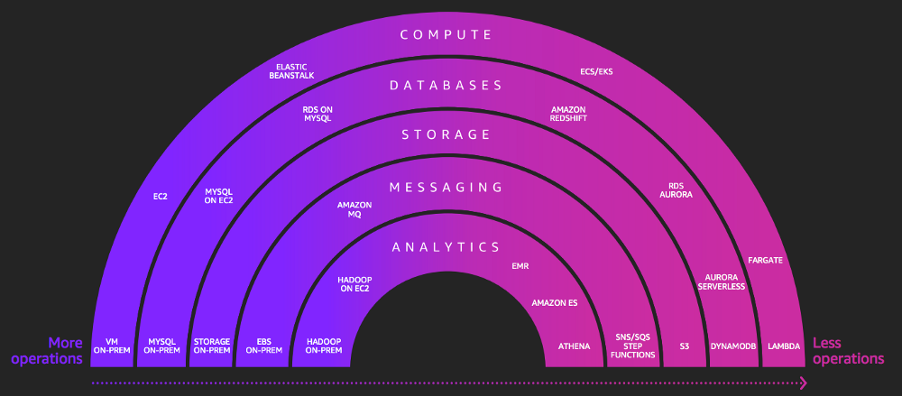
    Start with serverless first [Fig. 1] and then work your way back to IaaS (infrastructure as a service). Insist on high engineering standards. Measurement is difficult in modern software development—it should be based around trends, not absolutes. The “four key metrics” from DORA (deployment frequency, lead time, MTTR and change fail rate) are fantastic indicators. A serverless team with minimal hand-offs can perform very well.

    Fig. 1 Serverless is an Operational Construct – from AWS re:Invent 2018 presentation

    Clearly, such a strategy requires lots of building blocks in place. You have committed to DevOps; serverless can help scale the advanced practices, but let’s make it real! Here are some key building blocks that you may find useful:

    Public Cloud Strategy: Absolute clarity is required on the move to public cloud. This is a transformation and many traditional functions must (effectively) reinvent themselves—security, infrastructure, procurement, engineering, etc. Alignment at the initial stages is critical. What is your collective opinion on cloud-native? If you are a startup, then only serverless-first will give you the velocity you need.

    Pipelines: The “pipeline to production” becomes a business-critical capability. Many critical controls must be reimagined in this new world and a low-friction environment is required for teams to move fast safely and securely. Investment in this area is important; otherwise, you will frustrate your engineers.

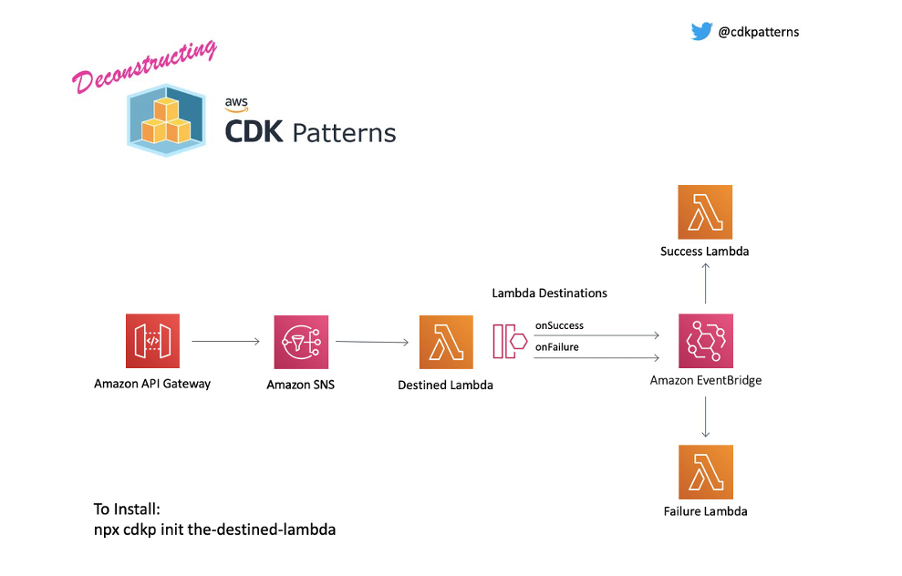
    Patterns: You are now moving toward a commodity platform that welcomes standardized. You will start to notice that many teams are creating the same boilerplate components. Do you have an effective reuse strategy? If it’s too heavy, you will slow everyone down, but if it’s too light, you will create mass duplication. Approaches such as AWS CDK (Cloud Development Kit) and some of the scaffolding approaches available today to enable the creation of “building block patterns” to create components quickly. This is well demonstrated in cdkpatterns.com, which is an open source library of cloud patterns. Liberty Mutual has deployed hundreds of applications using such patterns [Fig 2].

    Fig. 2 CDK pattern from cdkpatterns.com

    Well-Architected: Finally, in this environment, architecture must happen within the teams. But you still need architects. The AWS Well-Architected Framework provides a very clean approach with five pillars of non-functional requirements that prompt teams around concerns that must be addressed. It’s not a checklist; more like a set of challenges. You’ll find that teams can self-assess, but require an architect to coach through some of the more advanced areas.

    Finally, imagine well-architected constructs that are available in your code building blocks and comply with your pipeline controls. This is how DevOps can scale in a serverless environment: You bake the quality controls into the engineering environment.

    Fig. 3 – Lambda Power Tuner from Alex Casalboni

    After engineers go on this journey, they have power tools at their disposal. They can create world-class systems quickly that run at a low cost. But, be warned, once you set your teams off on this journey, there is no turning back. It is a relentless journey of optimization and improvement; that may be an overhead for companies that do not regard engineering as a differentiating capability.

    For the serverless journey, the most important piece of the puzzle is to ensure your engineering teams understand your core business. Create cross-functional teams that are chasing a business KPI. Engineers are engaged when they have a powerful environment that allows them to solve business problems quickly. There is no business-IT divide; you end up with technology teams innovating to meet the company vision. Liberty Mutual has not only observed many of the benefits mentioned here, but also improved engagement from our engineering community. Serverless is the paradigm shift that allows engineers to innovate and move at a pace that has never been possible before.