Tag: SaaS

  • Progress Expands Chef Automation Portfolio

    Progress Expands Chef Automation Portfolio

    In advance of its ChefCon 2021 conference, Progress today unveiled a series of enhancements to its Progress Chef automation platform that includes managed services and a software-as-a-service (SaaS) edition of its offerings as well as tighter integration with cloud services and other third-party tools.

    Sudhir Reddy, vice president of engineering for the Chef business at Progress, said the SaaS platform, now available in beta, combined with the managed services provided by Progress will make the automation platform much more accessible to a wider range of organizations.

    Progress is now also extending the reach of its Chef Compliance Automation for Cloud Resources offering across Amazon Web Services (AWS), Microsoft Azure and Google Cloud Platform (GCP) to include Chef premium content that aligns with best practices for each cloud environment in addition to providing integration with Azure Policy, a suite of tools from Microsoft that compares resources to a set of business rules that define how cloud infrastructure should be employed.

    Chef

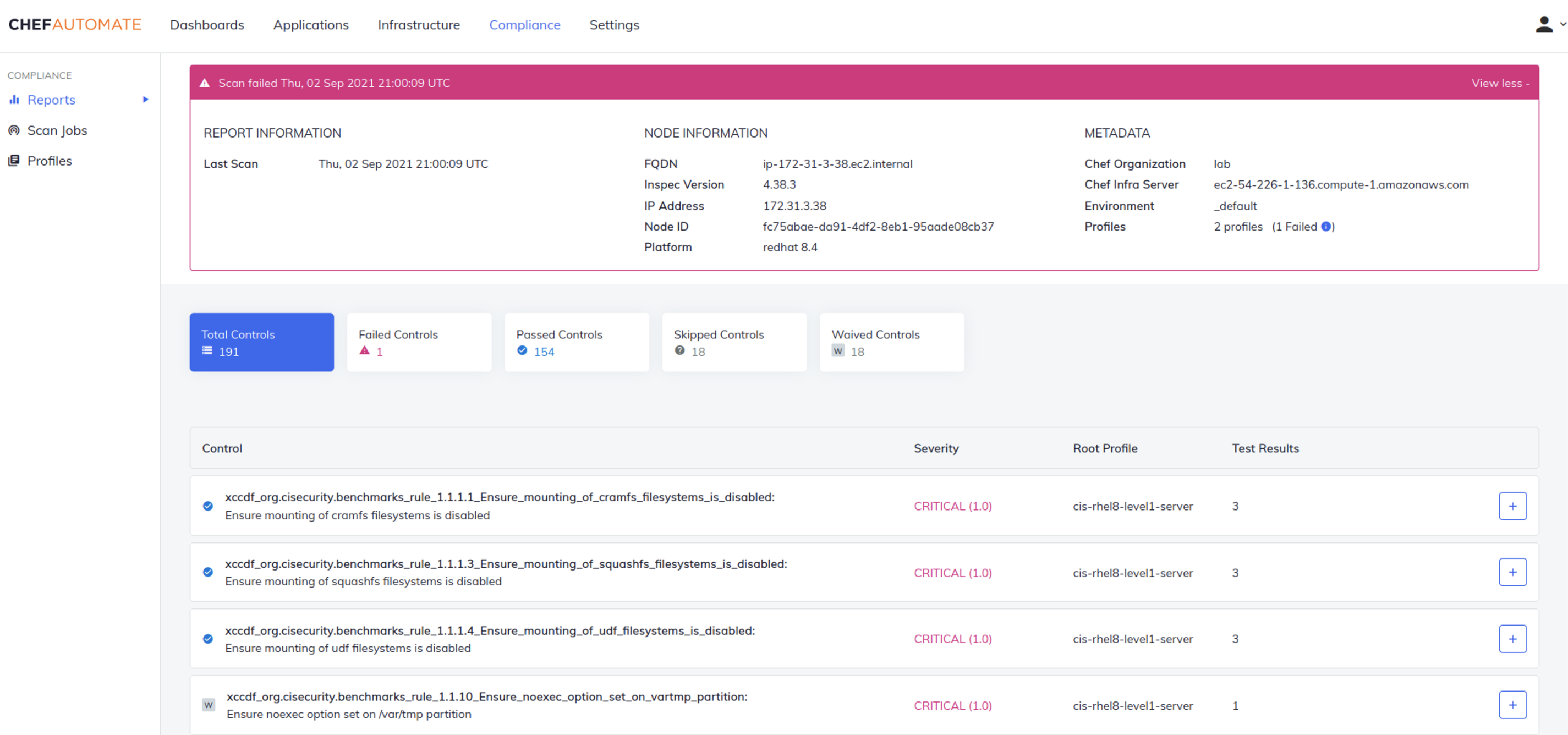
    Finally, Progress has enhanced Chef Enterprise Automation Stack to provide tighter integration between compliance and infrastructure automation along with adding infrastructure operations dashboard, support for Windows patch management, integration with third-party secrets management tools, and improvements to Chef Workstation and Chef Test Kitchen to simplify testing within application development processes.

    With the release of a SaaS platform and the availability of managed services, Chef is joining a long list of IT vendors that are removing responsibility for deploying and securing their platforms from internal IT operations teams. It’s clear more organizations now want to spend more time on building and deploying software than managing the platforms that automate those tasks on their behalf, said Reddy.

    It’s not clear how many IT teams that have already deployed a platform might shift over to a SaaS platform or rely on an IT vendor to manage that platform on their behalf. However, in the wake of the COVID-19 pandemic, many IT teams continue to work from home to help combat the spread of the virus. Many of those organizations have either shifted platforms to the cloud themselves, adopted SaaS platforms or outsourced the management of IT platforms altogether. There are also many small organizations that simply don’t have the internal expertise and resources required to stand up an IT automation platform on their own.

    That approach also makes it simpler to converge security, compliance and IT operations management within the context of a larger DevSecOps workflow, noted Reddy.

    The great paradox of IT automation has always been the level of expertise required to achieve it. Organizations that lack the expertise required to create automated playbooks, for example, don’t derive much value from an IT automation platform. It’s only been larger companies that have mostly derived the most benefit from investments in IT automation. However, as IT automation becomes more accessible via SaaS platforms and managed services, the level of expertise required to benefit from it naturally drops. In fact, with the advent of artificial intelligence (AI) for IT operations (AIOps), many manual IT tasks are increasingly being automated.

    It’s too early to say whether the IT industry as a whole is on the cusp of the next wave of automation, but the raw ingredients that make up the primordial soup needed to achieve that goal is, at this point, only awaiting a catalyst.

  • How to Respond to Rising Cloud Costs

    How to Respond to Rising Cloud Costs

    As organizations ascend to the cloud, their cloud expenses are floating to the same lofty heights. But are all cloud costs necessary? The answer is a resounding no — there’s a lot of waste.

    In 2020, organizations wasted $17.6 billion on idle cloud resources and cloud overspending, according to ParkMyCloud. Data egress, upgrades and subscriptions to SaaS tools also crowded the cloud invoice inbox. With digital innovation a pressing concern, cloud spend is forecasted to rise significantly in the coming years. Without the right fiscal discipline in place, companies face escalating fees.

    I recently met with Eugene Khvostov, VP of product management at Apptio, to discover how organizations can rein in cloud and SaaS spending. According to Khvostov, IT departments require increased visibility, optimization and responsibility if they are to curb the cloud checkbook. Below, we’ll see what he means and discover useful tips for reducing unnecessary expenditures. Following these general guidelines could help right-size your cloud offerings across AWS, GCP, Azure and other cloud-based tools.

    Where We Are With Cloud Costs

    The pandemic has ushered in significant growth in the cloud computing and SaaS space. We’re also seeing a multi-cloud fracturing effect, as cloud service providers like GCP and Azure reach parity with AWS offerings.

    Cloud tooling grants extraordinary flexibility, elasticity and scalability. Being able to spin up or wind down an instance on a whim has permanently altered how software architecture is built. Yet, with great cloud power, comes great responsibility. “How do I make sure I’m not wasting money in the cloud?” Khvostov asked.

    According to Khvostov, as more organizations move to hybrid and decentralized multi-cloud models, more and more questions arise: What is the total cost per service? Who is spending what? Is cloud spend actually driving growth, and, if so, how much? How are new tools being procured?

    Three Cloud Financial Management Strategies

    To address these concerns and plan for cloud spending increases, Khvostov recommended three general strategies. These three phases can be thought of as research, remediation and prevention.

    1. Access and Visibility

    “You’ve got to have access and visibility,” said Khvostov.

    First, companies require access to their spending data. In this case, large, general invoices are not granular enough. You need breakdowns by service, said Khvostov, to access more fine-grained spending habits.

    Second, you need to equate those spending habits to team usage. This requires improved visibility into your organizational structure and service usage tracking at a team-by-team level.

    2. Optimize

    Next comes optimization. Ensure cloud footprints are appropriately sized for each application, and ensure you don’t have any idle resources, Khvostov said.

    Where do you have the opportunity to optimize? Well, it could be as simple as shuttering an orphaned volume, such as an Amazon Elastic Block Store (EBS), which could persist even after an EC2 instance is terminated.

    “BS volumes tend to persist unless you select the Delete on Termination,” AWS explained. So, check your configurations. Amazon provides a way to detect this using OpsCenter.

    3. Responsibility

    Once things are optimized, you need to maintain standards. “You must ensure teams drive responsibility for spend management and optimization,” said Khvostov.

    But how do you instill an optimization mindset and empower engineers to take action? Khvostov said it’s all about demonstrating a measurable return on investment (ROI) and continuing discussions between stakeholders.

    A recent report from A Cloud Guru found that 90% of organizations plan to expand their cloud services over the next one to three years, but 44% lack a plan to upskill their workforce. Most groups have their work cut out for them if they are to assign accountability for cloud costs ownership.

    Specific Cloud Costs That Bite

    So, what are some other particular areas we should be watching? Well, arguably, the most common cost is hidden data transfer fees. Surprise ingress and egress fees can be costly — take the story of Chris Short, whose personal site was charged $2700 for an unexpected 30.6 TB data transfer.

    Watch out for other cloud costs around:

    • Services automatically launching or autoscaling.
    • Idle resources due to “orphan” instances or overprovisioning.
    • Price lock on granular commitments. You could be stuck in a savings plan on an Amazon EC2 R5 instance, which would be lost upon upgrade to R6. (Khvostov acknowledged that AWS has remedied this situation, to an extent).
    • Legacy, less-efficient code can rack up cloud costs, The Information reports.

    The Cloud Economist Role Is Trending

    To unearth these costs, some believe a brand new role is required. A cloud economist is a cloud financial manager that helps spot fees, directs further cloud optimizations and calculates overall ROI from cloud investments.

    The rise of cloud financial offers is an accelerating trend, Khvostov said, one that requires the right tools and practices within an organization to become a trusted ally. “It’s definitely a legitimate role in the sense that it’s critical to organizations,” said Khvostov. “It’s specialized enough that it requires technical and financial skills.”

    Hiring a cloud economist, or building a cloud financial center of excellence, could provide a lot of value. Yet, gauging the ROI of this role isn’t immediately obvious. Some optimizations could take time to visualize, Khvostov said. A certain change could instantly invoke 20% cost savings, but you may not register that impact for 30 days or more.

    “It’s not just about cloud infrastructure — it’s about your SaaS spend, as well,” Khvostov added. He believes companies desperately need a window into what infrastructure-as-a-service (IaaS) and automation, like Chef or Jenkins, cost, along with the time savings and dollar ROI their usage equates to — because, he said, “You can only right-size what you know.”

    Trimming Cloud Spend and Cloud Costs

    Some IT folks simply fail to understand the implications of their cloud resources. Surprisingly, a recent survey by SoftwareONE revealed that 30% don’t realize that everything in the cloud is metered. To rectify this knowledge gap, organizations could use better awareness into their cloud holdings.

    The cloud is the future, and we must prepare responsibly. Yet, having fiscal discipline in a world where every software function is commodified “as-a-service” is tricky — teams require financial visibility into their cloud holdings. To rein in costs, Khvostov recommended treating it as a continuous process: access and visualize spending data, optimize your existing cloud footprint and disseminate responsibility among teams.

    Once you have a better frame of reference, you can begin to right-size cloud, right-size SaaS and appropriately right-size the team. Eventually, with the right multi-cloud and SaaS financial management strategies, perhaps that cloud bill will start to feel a little lighter.

  • SolarWinds Unveils Revamped APM Platform

    SolarWinds Unveils Revamped APM Platform

    SolarWinds is unifying its various application performance management (APM) tools within a single suite accessed via a software-as-a-service (SaaS) platform.

    Denny LeCompte, senior vice president for products at SolarWinds, said the APM Integrated Experience offering combines the company’s AppOptics, Loggly and Pingdom tools to collect metrics, traces and logs along with real user monitoring capabilities and tools to simulate application traffic.

    APM Integrated Experience also provides access to a landing page that identifies what has changed in an IT environment over the previous week and highlights which of those changes might become an issue. As most IT professionals well understand, most IT issues can be traced directly back to a recent change made to an IT environment that was previously running as intended.

    Other capabilities include advanced search tools and the ability to inspect lists and maps for hosts, containers and plugins for web servers and databases. In addition, APM Integrated Experience is integrated with both Amazon Web Services (AWS) and the Microsoft Azure cloud.

    LeCompte said the goal is to make it less expensive for the average IT organization to broadly instrument applications using an agent developed by SolarWinds that can automatically be installed.

    Ultimately, the goal is to enable organizations to better manage their software supply chains, LeCompte added. Of course, SolarWinds is at the heart of the software supply chain breach that involved its Orion network management software. That software runs on-premises. In comparison, APM Integrated Experience is a SaaS platform that is more secure. In fact, LeCompte said, IT professionals that manage software supply chains are generally sympathetic to the challenge the company currently faces. Most of those organizations have dealt with similar software supply chain issues, albeit on a smaller scale, LeCompte added.

    In general, LeCompte said it’s apparent most organizations need access to an APM platform that costs substantially less than rival platforms and still delivers 90% of the capabilities they require. In many cases, IT organizations are paying for extra capabilities that only very high-end enterprises require, LeCompte noted. In fact, one of the primary reasons APM platforms are not as widely employed is most organizations have found rival APM platforms simply too expensive to deploy, said LeCompte.

    LeCompte declined to speculate whether there is a meaningful difference between what has been historically known as monitoring and so-called observability platforms that have emerged in recent months. Regardless of approach, however, it’s clear as distributed IT environments become more diverse and complex, the number of organizations that need more visibility into their application environment is steadily increasing, said LeCompte.

    Of course, with the rise of microservices-based applications, that level of IT complexity is only going to increase. As applications grow and expand, the number of dependencies between microservices starts to increase. Understanding how an issue with one microservice is impacting a distributed computing environment will undoubtedly require more instrumentation. The challenge, going forward, will be determining how best to achieve that goal at a reasonable cost.

  • Atlassian’s Shift to the Cloud Gets Underway

    Atlassian’s Shift to the Cloud Gets Underway

    Atlassian today announced the general availability of Cloud Enterprise, a cloud-based service through which organizations can mix and match the company’s various offerings under a single subscription.

    The company has signaled its intention to shift toward cloud services for months; now, the initial Cloud Enterprise subscription will cover the company’s Jira Software, Confluence and Jira Service Management offerings.

    Bala Venkatrao, head of product for Enterprise Cloud at Atlassian, said the goal is to make it more cost efficient for organizations to consume the company’s software versus merely acquiring a license to deploy software in an on-premises IT environment.

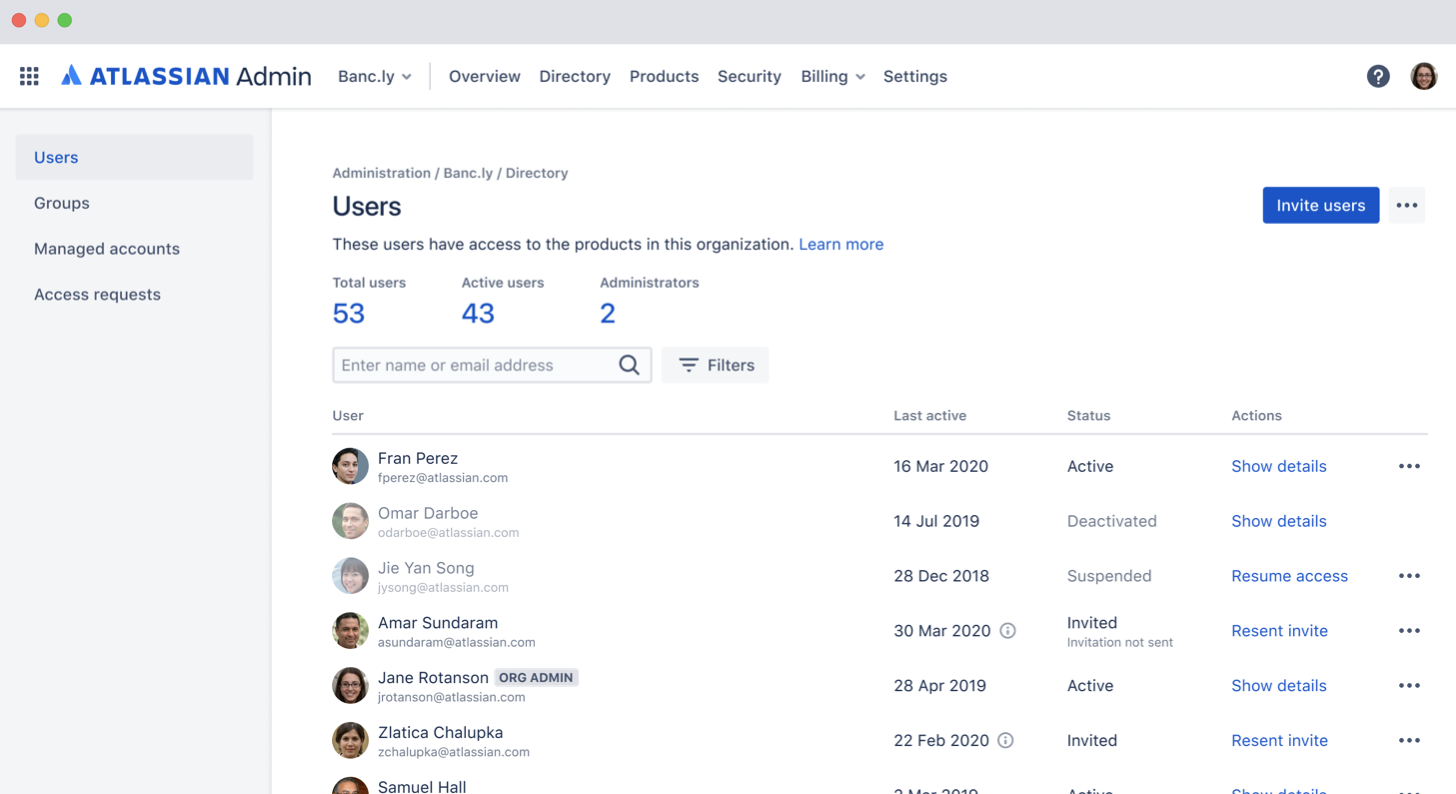
    The company is also making controls available that enable governance of user and change management via a centralized admin hub. Administrators can assign users to instances, configure security policies and monitor usage trends through the hub. There are also built-in integrations with third-party identity-as-a-service providers, to enable administrators to automate provisioning and de-provisioning.

    Administrators can also set up and customize multiple application instances; they can keep data pinned to different regions to customize those instances with specific marketplace applications or configurations for compliance purposes.

    Finally, a marketplace will allow IT organizations to expand the number of applications they consume from Atlassian and its partners. A smart links and app switcher capability for Jira and Confluence Cloud enable easy collaboration across different instances of Atlassian applications.

    Atlassian currently has more than 194,000 customers, so it may take some time to transition the existing installed base to this model. In the meantime, Atlassian is pushing as many new customers as possible toward a cloud platform that makes it easier for Atlassian to keep customers current on the latest release of its software. Atlassian plans to support up to 20,000 users per application instance by later this year.

    Venkatrao said while the Atlassian portfolio is frequently consumed by individual end users, the Cloud Enterprise offering is designed to appeal to CIOs, and other senior level executives, that want to centralize billing for application services now accessed via the cloud. That approach will make it easier for large organizations to take advantage of discounts they may qualify for as overall usage increases, Venkatrao said.

    While Atlassian may be a little late to the software-as-a-service (SaaS) application game, Venkatrao noted that the Cloud Enterprise platform will make it simpler for Atlassian to apply AI to the metadata it will collect. Atlassian has already leveraged AI to improve document search within Confluence and Jira, in addition to employing predictive analytics to surface recommendations for including personnel on a project.

    It may be a slow transition to the cloud for Atlassian, but that transition is clearly underway.

  • Low-Code Opens API Integration Potential for Citizen Developers

    Low-Code Opens API Integration Potential for Citizen Developers

    APIs have an accessibility problem. Could a low-code API approach make them more inclusive and accessible for citizen developers?

    Most software today integrates with third-party SaaS. TomTom for geolocation. Stripe for payment. Twilio for SMS. Kairos for facial recognition. AWS for NLP … the list goes on. Whatever function you’re looking for, there’s probably an API for that.

    These specialized utilities help software teams avoid reinventing the wheel for things outside of their core competency. They’re standardized, too — most services are programmable following REST or GraphQL guidelines. Serving integrations over HTTP aids in decoupling the business logic from the client interface. Furthermore, OpenAPI Specification, now part of the Linux Foundation, has risen as a standard description format, making APIs more defined and interoperable.

    However, for all this progress, there’s still friction in the integration process, even for seasoned developers. Each API is a bit unique. It takes time to read through the documentation to authenticate and discover methods, parameters and accepted fields. It requires effort to test requests within Postman, decipher error messages and set up calls within your unique environment. On top of all this, downtime and breaking changes are legitimate concerns for over-the-wire dependencies.

    APIs require effort and maintenance, and just integrating third-party APIs alone won’t build you a fully functional application. Yet, organizations find themselves scrambling to find and hire engineers, and increasingly the onus is on non-tech folks to create new digital workflows. Naturally, companies are currently searching for even more low-code solutions.

    So, what’s the glue holding together API products? How can we better connect APIs to the software applications we’re already building and allow citizen developers to reap the benefits?

    My theory: If low-code platforms decrease the API integration hurdle, more problem-solvers can stitch together business utilities to create more advanced internal applications. Making third-party APIs more inclusive for citizen developers could boost the API economy at large and enable creative solutions to flourish throughout enterprises.

    The Need for Low-Code API Integration

    Perhaps the best way to demonstrate the need for low-code is to scare you with some code. Let’s say you want your application to initiate a direct deposit into a bank account.

    You don’t want to build a financial service from scratch, so you turn to Stripe API. You set up an account, grab a key, and dig in to the ‘Getting Started’ materials. You peruse their comprehensive documentation, and find out how to create a payout.

    The docs demonstrate a sample HTTP curl request for creating a payout. Other parameters to pass include destination, methodor source_type.

    curl https://api.stripe.com/v1/payouts \
     -u sk_test_4eC39HqLyjWDarjtT1zdp7dc: \
     -d amount=1100 \
     -d currency=usd

    If there are no errors with the request, the response will be a payout object, formatted in structured JSON. It details the balance, data created, currency type and other fields. It looks something like this:

    {
     "id": "po_1HmNKQ2eZvKYlo2CuRNBRWUW",
     "object": "payout",
     "amount": 1100,
     "arrival_date": 1605116514,
     "automatic": true,
     "balance_transaction": "txn_1032HU2eZvKYlo2CEPtcnUvl",
     "created": 1605116514,
     "currency": "usd",
     "description": "STRIPE PAYOUT",
     "destination": "ba_1HmNKQ2eZvKYlo2CzlT6m5gk",
     "failure_balance_transaction": null,
     "failure_code": null,
     "failure_message": null,
     "livemode": false,
     "metadata": {},
     "method": "standard",
     "original_payout": null,
     "reversed_by": null,
     "source_type": "card",
     "statement_descriptor": null,
     "status": "in_transit",
     "type": "bank_account"
    }

    Now, you can parse the response into data your application can ingest. You can also send other requests to update, return and cancel this payout object.

    For specialists familiar with HTTP calls and JSON, this is pretty straightforward. Stripe docs typically generate sample requests for many languages, like PHP, Ruby, Python and others to help within your own environment.

    But what if your users are more comfortable with UIs? Integrations are pretty opaque to the non-technical. Even for seasoned developers, APIs can quickly become too dense, and not all have a great developer experience.

    Hurdles In API Integration

    There are many issues preventing non-tech-savvy users and novice programmers from inserting API-driven business logic into their applications:

    • Onboarding time: Setting up an account, acquiring authentication, reading docs and testing calls to familiarize yourself all takes time.
    • Data Types: Data passed in headers must conform to explicit data types, or else requests may fail.
    • Parsing: Responses are often too verbose; developers must parse the JSON object responses to retrieve the data they need.
    • Programming language: Each language handles network communication differently, meaning requests look different in every language.
    • Breaking Change: Third-party services change often, so if you’re not actively maintaining an integration, you may face breaking change.
    • Differing formats: There are various API standards. REST, SOAP, GraphQL all are designed a bit differently. Plus, webhooks, event-driven and publish-subscribe patterns have nuanced communication models.
    • Security and legal: If APIs aren’t appropriately secured, hackers could easily steal user data or cause outages.

    As you can see, a simple programming task like “make a bank deposit” becomes extremely complex the more closely we look at the logistics of actual implementation.

    Furthermore, just because you’ve made an integration work, that doesn’t mean you have a fully-functional application, securely deployed in the cloud, with a friendly UI  that’s universally accessible. A single application may have numerous integrations, meaning the integration process must be duplicated for every external service you connect.

    API Categories

    Overcoming these challenges is a lot to ask of non-professional developers, who may not be comfortable consuming business applications from the command line. This issue is further compounded as integration extends beyond public APIs, too.

    In a recent interview with Divyesh Kharade, co-founder/CEO at DronaHQ, he identified three main API categories:

    • Ready-made SaaS APIs: Microsoft Teams, Slack, Sendgrid, Twilio, Google Sheets, etc. These are the connections to third-party operational business utilities and applications.
    • Connecting to databases: Many companies require secure connections with custom internal databases or legacy internal MySQL databases.
    • Internal custom software: These are private or partner APIs. They may be new API-first microservices or custom-built legacy internal apps. Such middleware may expose many APIs.

    If a low-code application wants to become a holistic software development add-on, it must anticipate all potential environments. This includes integration realities for various scenarios.

    Citizen Developer vs. “Non-Tech”

    So who, exactly, benefits from more accessible integrations? The term citizen developer is often used to refer to any non-professional software developer with minimal programming training. “When most people speak of citizen developers, they mean functional guys that can build tech,” says Kharade.

    As I’ve said previously, fostering a culture of citizen developers is becoming a bigger priority amid dwindling developer talent and a combination of other forces impacting software development requirements.

    Yet, citizen developer tends to means something a bit different to everyone involved in the low-code space. Kharade seems to prefer the term “non-tech.” Non-tech users may include designers who may not have a software background but the relevant UX/UI knowledge to assemble workflows. “Design is a big part of any application,” said Kharade.

    Masking the Complexity of APIs

    If low-code tools mask complexity and make APIs more accessible for these non-engineers, it could inspire many creative solutions. With low-code, “creativity is limitless, and integrations really help with that,” said Kharade. “Once they see that power, they aren’t going back again.”

    For example, if an internal application requires chat functionality, Slack could be a great addition. Low-code layers could hide complexity in the backend, to the point that it “doesn’t feel like a request in background,” noted Kharade.

    The solution works both ways. Utilizing low-code platforms to manage data and expose APIs could enhance visibility and extensibility. Kharade described an industrial manufacturing use case, in which shift workers manually entered machine operations data on paper. That was before COVID; once lockdowns were mandated, the company started digitizing this record-keeping process.

    Access to real-time data, and the ability to filter and organize historical data, is already beneficial.  “Six months down the line, they may consider how to make this data accessible using APIs,” said Kharade. “The journey has just started — it will only get smarter and better.”

    Trigger-Based Workarounds Were A Start

    Of course, tools like IFTTT and Zapier have already been making APIs accessible to laymen for years. These platforms use friendly, UI-based front ends over the foundation of complex integrations, allowing users to set up trigger-based automation. If this particular service does this, this other service should do that.

    These are cool tools for stitching together service-service communications. However, these workflows are a bit isolated from the larger application development picture. For example, an application for hiring employees may require more than connecting a form API’s input to a Google Sheets field. This could require a custom database, a way to upload documents and the ability to deploy an application to the cloud.

    Since low-code already has standard components for drag-and-drop, adding a common method to insert third-party API integrations feels like a natural feature enhancement for these platforms.

    Making Integration More Accessible

    ProgrammableWeb records 23,000 APIs as of this moment. Clearly, many innovative, programmable SaaS offerings are ripe for the picking. Some paid, some open, all with slightly different integrations.

    “It’s difficult for a non-tech user to register and interact with an API,” said Kharade. Figuring out authentication, OAuth, headers, payloads and responses requires expertise. Though a professional developer may be required to “register them once,” says Kharade, once third party integrations are set up, they “should be drag-and-drop and click-to-use.”

    Solving integration problems is just one of the many arenas where low-code platforms could shine. If platforms can successfully establish (and maintain) connectivity, consumers could more easily access the core logic they are searching for. Democratizing robust solutions for traditionally non-tech companies is especially important amid the COVID-19 crisis.

    To be clear, I don’t believe it’s the API provider’s job to cater to end-users. Instead, they should focus on creating excellent developer experiences. Naturally, the type of business application you are trying to construct and your access to software engineering talent will, to an extent, determine a project’s technical stack. The JAMstack style, for example, may be a better fit for your team’s makeup and project objectives.

    That said, there seems to be room in the market for additional low-code layers to open up integration. In the same way APIs avoid reinventing the wheel for specialized utilities, low-code layers could standardize the pains of integration itself.

  • Best of 2020: SaaS : The Dirty Secret No Tech Company Talks About

    Best of 2020: SaaS : The Dirty Secret No Tech Company Talks About

    As we close out 2020, we at devopsy.kinsta.cloud wanted to highlight the five most popular articles of the year. Following is the third in our series of the Best of 2020.

    Software as a service (SaaS) in its purest form is amazing—like compound interest, it grows upon itself and just keeps growing. Given the current climate in tech, the growth-at-all-cost playbook has been replaced with a focus on efficiency of growth. This rings very loud in enterprise SaaS.

    SaaS products are supposed to be easy to deploy and adopt. That’s the dream. It’s the reason SaaS companies trade at astronomical multiples, why they can open and expand markets faster than ever, and why venture investors (and public market investors) give them seemingly crazy valuations.

    The dirty little secret I have found is that, in most cases, this promised state just isn’t the case. The more SaaS companies I’ve seen, the more I’ve witnessed great companies forced to become service businesses to scale. Having a services team isn’t bad; it can even produce a lot of benefits for customers. But many times it ends up being necessary in SaaS.

    As with all things that involve consultants, it’s going to take longer and cost more to get your product(s) live.

    Put frankly, this process sucks, and it’s not the SaaS dream. Especially today, when organizations need to do more with less, adding heads just to get your product live seems like another problem to deal with, not a solution. SaaS products were supposed to be delivered via the cloud almost instantly. The same SaaS product was going to work for every customer, and once we built a brand, it was gonna be glorious. WTF happened?!

    I grew just as frustrated as some of you likely are. As part of the founding team at Behance (think Linkedin for the creative world), I lived this myself. We built a beautiful portfolio-sharing platform employed by millions of people, which we eventually sold to Adobe. Our platform became the engine that powered portfolios for design institutions including the Rhode Island School of Design (RISD), Savannah College of Art and Design (SCAD), School of Visual Arts (SVA), and the American Institute of Graphic Arts (AIGA), among others. We would fight for these deals with design institutions where we could step-function our member base and establish credibility in the creative world quickly just by signing up a single design school. What we found, though, was that implementations stalled for avoidable reasons. These delays would cause our team to scramble and delay accordingly, impacting critical messaging to millions of our customers.  Customers and vendors were using a different language. It drove us nuts.

    When I started angel investing in SaaS, I began to see the same story of avoidable delays all over again. Companies would have a great quarter and book more revenue than ever, but two quarters later they still hadn’t realized any revenue! What was happening?!?

    As I studied it, the issue became more and more clear: Adding more heads to an org, coupled with tons of manual processes, actually decreased operating leverage in the businesses. The teams leading implementations would dig through Excel files to try and pinpoint where the hold-ups were occurring, but there never was a good reason and everyone was blaming each other.

    I was suspicious this was a market-wide problem, but I wanted to be sure, so I started asking some friends who had built, scaled and exited large startups if they, too, were experiencing this conundrum. Carsten Thoma, who founded Hybris and later sold it to SAP for $1.5 billion, told me numerous stories about the difficulties he had getting information from his team. “I distinctly remember one senior executive meeting about a customer crisis. I kept asking seemingly simple questions and kept getting conflicting information. We just kept opening Excel spreadsheets, and it took 48 hours to get an answer that I should have had in five minutes regarding what was stalling the project,” he said. “You can imagine how the problem is compounded by a company’s size, complexity of partner network, geographic distribution and newly integrated products.”

    Carsten clearly identified that, regardless of size, companies need a way to manage and view the process of how they, and their partners implement their products. The best companies he had seen and been a part of found ways to standardize and automate processes to improve areas of inefficiency. While many times the mantra is to do things that don’t scale early to be close to customers, Carsten preached that “a process that involved the whole company and worked to get your first five customers live can’t be relied on to bring your 100th customer live.”

    To get a view from the other side of the table, I talked with some investor friends. Peter McCoy, a partner at Activant Capital, told me that during diligence his team looks to understand if a company can acquire customers efficiently. To hone in on this, he highlighted the relationship between net-new product revenue and professional services spend. This spotlights the maturity of product operations and the product itself. If the product operations are still early in their maturity, you will see a 1:1 or greater ratio. Typically this results from the company signing clients and not getting them live, overhiring in professional services to add bandwidth to non-scalable processes, and the destruction of marketing capital.

    There’s a trend here: Companies that don’t implement their products well end up hurting themselves in the long run via lower profitability and margins and fewer growth opportunities. I wanted to know more about how companies could systematize and create better processes for this workflow, so I asked Kristine Vallila, a customer success expert, about organizations she’s seen conduct implementations successfully at all scales. Kristine worked for several unicorns including Endeca and Demandware and then led customer success at NewStore.

    “So many of the delays present during implementations are the result of the same scenarios being repeated over and over. There is a need for some central fit-to-purpose tool that can provide visibility that I can compellingly champion to my executive team,” said Kristine. “More importantly, this would allow me to spend my team’s time and talent on value-add programs rather than merely delivering the table stakes. Competition in software is fierce, and customer relationships are made or broken during implementation.”

    Kristine had seen it all, yet still had the same problems. I’ve always been a runner, so I started calling her issues “false starts.”  Kristine, like everyone else, had no way to know across multiple hundreds of projects which issue would hold up which project before it happened as there was no standardization across projects to compare them and no real-time visibility into the projects to surface insights. Further, due to manual compilation, she spent the majority of her week asking for updates from clients and internal teams.  More than once, canary-in-the-coal-mine signals from existing customers were ignored because they were brought in as anecdotal examples that could not be supported with massive data. The executive team was missing out on the most important customer feedback channel via the services team.

    Having heard these stories, I’ve identified four principles by which SaaS companies must operate to survive:

    1. Optimize for product-driven growth, but consider the services team your first and most important customer feedback channel—just keep it margin positive!
    2. Standardize from day one so that all members of the company speak the same language and all projects can be compared using the same yardstick.
    3. Report to stakeholders frequently—provide information to the executive team and the client regularly about implementation progress, not just on Monday morning status/standups.
    4. Quantify your process—Create an internal NPS for implementations with clients, know where things get held up and systematize those processes.

    It might seem unreasonable that some clients who live in a world where they know within a five-minute window when their pizza will arrive hold similar expectations for tracking the progress of their enterprise-wide software projects. But it is very reasonable for them to expect better management and far clearer visibility into the critical projects for which they’re responsible.

    Earlier I stated that SaaS was like compound interest. The most important factor in compounding is to understand which variable it is applied to. My team and I hope to usher in the age of “efficient” growth. “Efficient” means that companies generate 4x every dollar invested operationally by using process, systems and structure to enable their products to be deployed with customers instead of just people.

    The dirty secret is out. It’s time for a standard here.

  • Shifting Left and Static Code Analysis with Perforce

    Shifting Left and Static Code Analysis with Perforce

    Perforce Product Manager Stuart Foster, and Evangelist Steve Howard, join Mitch Ashley to discuss the importance of creating security software from the beginning of the development process. We discuss shift left, SAST, source code scanning and other pursuits towards this goal.

    The video is immediately below, followed by the transcript of the conversation. Enjoy!

    Transcript

    Mitch Ashley: I’m pleased to be joined by Stuart Foster, who’s product manager with Perforce, and also Steve Howard, who is static code analysis evangelist, both with Perforce. Welcome, gentlemen.

    Stuart Foster: Hey, Mitch, how are you doing?

    Ashley: Very good. How about if we—let’s start off with just a little bit of an overview of Perforce, and then, Steve, why don’t you do that and also tell us a little bit about yourself, and then we’ll toss it over to you, Stuart, to give you introduction.

    Steve Howard: Right, yeah. Well, here at Perforce, really, our role as we see it is to help developers write better code more efficiently and more quickly. So, these days, we tend to talk about DevOps and the whole idea of developer operations and how they put that code together, how it’s constructed, how it’s managed, how we control the processes around it as well, of course. There’s more and more regulation, it seems, these days in software development and we’re making that whole process from start to finish, of writing code to delivering it, that whole cycle. It’s hopefully being made easier, more comfortable for our developers that use the products.

    So, that’s really where Perforce sits, and we think of that is really enterprise DevOps, and doing it at scale in large scale organizations.

    So, my role, really, is specific on the Static Code side or Static Code security testing side, SaaS tools, if you will, trying to make sure that that piece of writing the code, actually developers writing the code itself is done to the highest possible standard from both the security and the quality perspective and also, at the same time, getting maximum productivity from our development teams.

    Ashley: Wonderful. Stuart, introduce yourself?

    Foster: Yeah, absolutely. I’m Stuart Foster. I’m the Product Manager or Perforce’s Static Analysis products, both Klocwork and Helix QAC. So, I work with Steve, he’s kinda my partner in crime, amongst a number of other sales engineers and developers and everything, and we’re just out to produce a really solid static application security testing tool.

    Ashley: Excellent. Well, one of the great things about talking with you both is, since you have products in market, you talk to a lot of customers, especially in an evangelist role, too, Steve. It really helps us kinda get an idea of where the state of security is in applications, what people are doing today. The whole idea of shift left, I think, has evolved a great deal. I think when I first heard it was “move left in the workflow.” And then it became, “Well, move the when the security people get involved.” And you’ve really taken it much farther than that to really thinking about how we start writing secure code.

    Maybe one of you could kinda give us an idea of where you think we are as a community on getting to that point of when the code’s written, it’s written securely.

    Foster: Yeah, so, I mean, from my perspective, you know, you kind of look historically at people using the term shift left and, you know, from our perspective, that would’ve been, you know, doing some sort of code analysis on a server and then moving that left in terms of the software development life cycle into the developer’s IDEs.

    What you see nowadays is that, you know, historically, a lot of those responsibilities would’ve been siloed. You’d have a security team, a QA team, various other teams that, in many ways, because they’re siloed and in different stages of the process, you’d run into kind of bottlenecks. What you’re seeing a lot more with the concept of DevOps, DevSecOps, a lot of development teams themselves are becoming owners completely of the code that they write. And what I mean by owners is that, you know, they are writing unit tests, they’re writing more functional tests, they are ensuring that it’s part of their responsibility that the code is secure. 

    So, that’s a shift left, but then you have to think how developers work—they’re working in IDEs, they have their own CI/CD pipelines, they may be using cloud services, various containers that are all getting spun up and broken down. So, it’s not just, to me, shift left any more, it’s analysis anywhere. It’s basically having something that can work anywhere in a workflow, right? And in this sense, you know, the Security teams still exist, the Quality Assurance teams still exist, but what it really is, is a culture of security collaboration that are coming together, right?

    Steve, I think you may have a little bit of a perspective on this, too.

    Ashley: Yeah, I’m interested in your from the field perspective, too.

    Howard: [Laughter] Yeah, no, it’s—well, it’s exactly that. I think it’s a really good point that no, we’re not just talking about moving to the desktops, we are talking shifting left throughout the whole cycle. I think that is a key point. And it is really an opportunity using tools like ours in Static Analysis security testing, it’s about being able to enforce the requirements and the needs from that expert security team where there were bottlenecks previously, trying to put that into rules and regulations that we can then push down to the development tasks and processes that are to the left of that kinda final sign-off.

    So, yeah, that—in that form, very much, I’d say it’s shift left, and it’s about that optimized process now where we can be doing that checking all of the time. So, it’s making sure we’re continuously compliant to those security requirements or quality requirements, as the case may be, yeah.

    Ashley: You know, it’s interesting, we talk about the workflow and we think about the whole tool chain and pipeline, but if you really break it down into much more granular pieces, developers are working on a linear piece of development, right? They’re in multiple places jumping back and forth, solving bugs, adding features, developing new capability—whatever it might be. So, the ability to concentrate on any one aspect of an application, sometimes, is not even possible, right?

    So, you need an environment where you’re aided in how you write and create secure code as well as think about writing secure code. You agree with that?

    Howard: Yeah, absolutely. I think that’s the point. We’re trying to make sure that all of those pieces that they’re working on at different times and, you know, our colleagues in the Version Control System team know this very well, but obviously, there are tens or hundreds of branches running in parallel, as you’re sort of saying, and developers are jumping between, you know, fixing problems on the current release, maybe, and then carrying back on with their feature work for the next release as well. 

    And all this time to try and manage what security requirements each one of those had or quality requirements as well would be a really nightmare without sort of tooling and regulation around that, around the whole process, which is a significant part of developer operations as a whole, the idea of automating a lot of that and building it into the system. So, I think it’s just enforcing that with making sure we’re adding all of the extra pieces that we can also include in those processes.

    Foster: And also, if you think about those developers, too, they’re experts in their fields or experts on some of the functionality that they’re developing, but they’re not also necessarily experts as a security team might be, right? So, part of the trick, too, is to offer kinda help, knowledge, learning via the tool set so that, you know, the developers can keep the velocity up and develop to those standards more easily. 

    And I think Steve mentioned a little bit of a buzzword that kinda we like to think about is, it’s continuous compliance, right? It’s having this throughout the process and enforcing it and continuously monitoring, remediating, fixing, and reporting that become important for these processes to run really cleanly.

    Ashley: You know, it’s interesting, there was—kinda stepping back in time, and again, I think about the myth of developers don’t wanna, don’t care about writing secure code. Well, of course, they do. They don’t wanna write insecure, vulnerable code. But I think there’s a period where we thought training was—you know, let’s teach them about how to avoid writing code with vulnerabilities in it.

    But when you talk about a continuous governance environment, you’re kinda talking about a whole layer of things, right? It’s from the person doing the work to the environment that it’s being checked in and integrated and being tested into the workflow, and then really, the data, the information about that, that’s happening on a continuous, ongoing basis. And that’s really your data set for producing the compliance information, right? We don’t have to go ask you or check your code, it’s already been done, it’s done every step of the way all the time, and here’s the evidence of it, and here’s what we learned from it and here’s where we’re doing well and here’s maybe where we can improve. 

    That’s how I think of continuous compliance. Yes, it shows up in a report down the road, but it’s continuous, because we have all that data.

    Howard: Yeah, I think that’s a really important point from the efficiency as well. I mean, the Security team or the Development Management that want to know when this product or project will shift obviously need to know where they are relative to that compliance requirement. And if we can keep it compliant from day one, we don’t ever have that risk of building up technical debt at the end of the process that we then have to solve, and I think that’s a really important evolution that we’ve seen over the last few years, that we have that knowledge to hand immediately at our fingertips, as you say. So, that’s a really important piece.

    And the other point you made there about the developer education, I think, again—yes, you can teach developers and I know myself, in the past, I’ve learned the right way to do things, wrong way to do things, but there’s nothing quite as good as actually showing the examples of when things are potentially risky within the code you are writing, because you really understand, at that point, what you’re writing and how this could then be a problem, and it is the classic on the job experience that you really want for a perfect education, almost.

    Ashley: Let’s take—I’d love to hear your kinda definition or how you describe Static Code Analysis SaaS to people about, if you’re embracing that, what does that mean to a development team, to a software project team?

    Howard: I think from my perspective, it’s the idea of having an automated code reviewer, almost, looking at the work you’re doing in a fairly pleasant and passive way. [Laughter] Not being critical in any way, shape, or form as well. So, from a cultural point of view, I think the developers perhaps accept it more when it’s from a machine rather than a colleague that perhaps is picking holes in the code they’re writing, which is another good point about having a computer do that initial check.

    But yes, it’s like having that guard at the end of the process, and then we often joked historically about the value of the tools and saying, “Well, you know, if you had two developers that were both going for the job, you know, you’re advertising for a new development role, and one of those developers is, you know, the cost of the license is more, but they never make a mistake in the code, they check in clean, compliant code with every commit, whereas the other developer, they both have the same experience, they’re both writing good code, but the other one could make mistakes and could check in, potentially, security vulnerabilities. Which one would you pick as a manager?” That’s quite an interesting way of looking at it, but of course, you would always want to have that assurance that, essentially, it’s clean code from day one.

    Foster: Yeah, and also, you know, in terms of the perspective, Steve talked a little bit about the developer perspective or the hiring perspective. From the business perspective, you have to think about the costs of reputation, lives, revenue, anything of a product being in the field and discovering an issue. You know, the costs to fix a bug exponentially gets more expensive as you go further down the software life cycle, right? So, it’s cheapest to fix it then and there, right at the start. And, you know, in terms of kind of pain points that the software is trying to fix is, you know, providing that knowledge, providing that quick remediation as developers are working, ensuring the velocity stays up, ensuring that the continuous compliance enforcement throughout the process means that there’s not a heavy lifting of work later in the process, because you know, you weren’t reaching compliance requirements. 

    You know, the ease of using the software however a developer wants to work, it’s all about velocity, you know? And in terms of the business having that oversight and understand, you know, what are our risks, and how soon are we gonna be able to ship this product? Because, you know, we know with many products, the faster to market you get, you know, you have that first mover advantage, and that’s what’s needed in this fast-paced software market.

    Ashley: Well, that’s very tough to recovery from reputation damage and quality issues or perceived quality issues around your products, too.

    You know, one of the ways that I explain it to folks outside of being a developer or within the security world is, it’s kinda like taking your spell check of a document and adding in the grammar checking—so, this is the higher order, more complex, specific things around grammar. In this case, it’s around security and helping you as you’re developing or creating code, right, make sure that you do it the best way, you know? Avoid introducing security issues.

    I know that’s a gross oversimplification, so don’t worry, I’m not saying Perforce is like a grammar checker. [Laughter] But that is sort of a non-technical way of describing what we’re doing. I mean, we want it to be that natural, as part of the process.

    Howard: Yeah, absolutely. And I think that’s very true. I think, you know, we’ve seen the evolution of Static Analysis tools very much in the same way we’ve seen the evolution of things like the Microsoft Word, you know, spell checker to grammar checker and so on, and it’s kind of evolved to be more and more all of the time, you know, of the systems similarly.

    But on top of that, there’s also the opportunity, then, to, what we find quite interesting is to write your own checkers and rules that are specific to your application. So, we can find in some places where there have been security problems in a certain application for some special reason—not necessarily related to the constructs of the code, as most of the coding standards check, but something that’s specific to the project because of the way the project has designed all the code, and that project interacts with outside external interfaces. 

    And it has been interesting to work with customers in some cases. I worked with very large telecom customer on one occasion and he said, “Well, you know, we have this translation module between sort of the application and the platform, and nothing should ever, you know, go direct between the two unless they’re going through this one piece in the middle.” And it’s kind of the golden rule we’ve taught to all the developers from day one and nobody will ever break this rule.

    So, you know, obviously, I was slightly challenged by this and said, “Well, it’d be nice to check the rule. Let’s put that enforcement in just to see if we can, you know, use a custom rule to see if there are any cases and, of course, as you say, it should be clean.” And obviously, you know, a couple of hours later, once the analysis is run, it’s a very big system, we found a couple of cases—only a couple, but there were a couple of cases where exactly what they said should never, ever, ever happen for the security of the entire system, it happened. 

    And so, we were able to then remediate those problems and keep that rule in for future development, and of course, it will always be enforced. So, that was a really interesting case where there was also that, where you have something specific, it’s not just generic grammar issues, if you will, or spelling issues, but something very specific to that document.

    Ashley: Mm-hmm.

    Foster: Yeah, you can imagine some of these things coming out of requirements or an internal coding standard or things that a Development team might be following and be able to enforce these. Especially when you start looking at legacy code, giant monoliths, you know, that have been around for 5, 10, 15, 20 years, decades, you know, and you don’t have those original people who are developing, right?

    So, you know, it’s—we sometimes think of our tool also as, you know, kind of like a quality assurance on a product or a code base that, you know, it’s legacy and all the new people have no idea how to use it, but you need to expand on it, you need to develop it, because it’s valuable IP, and how do you manage developing new functionality and moving forward when, you know, it could be as brittle as a glass house, right?

    So, you know, that’s the other benefit you get out of being able to enforce and write your own standards, I’ll call them, and rules, yeah.

    Howard: Another classic case there, Mitch, is—and you’re well aware of this as well from the field is, this system was never intended to be connected to the Internet, you know? This was something that—

    Ashley: [Laughter] You’re guaranteed it will be, then.

    Howard: Yeah. [Laughter] It was an embedded system that was entirely supposed to run in an embedded environment with no connection to an outside world at all, and all of a sudden, you know, it or something around it that’s connecting to it is now connecting to the outside world and there’s open attack interfaces, and now we have to make sure that they’re not gonna compromise the original legacy code base.

    Ashley: Mm-hmm. Yeah, there’s just sort of the rule of unintended uses always occur, right? The thing we don’t want to happen is usually what happens. [Laughter] So, yeah, the demo becomes the production system is another great example.

    I’m really interested in your perspective on where you think we are. If I made an analogy to the network security world, the best time to be a network equipment or network security salesperson is the day of or the day after a compromise, and automatically, you’ve got budget and we need to solve this problem. I mean, I think we’re well past that in most cases, but where are we in the software world? Do you see this as a, it’s just a natural thing, “Okay, what’s our SaaS strategy, how are we gonna be doing security within the application, what tools should we use for that?” Or is it something where you have to mature to a certain point or have experienced some issues before you’re really gonna take it seriously? 

    Where are development—and I’m asking for a generalization I know, but what’s your sense of where people are today?

    Foster: I’d say, you know, in general, it seems as though most people don’t take these kinds of things seriously until it bites them. I think, you know, there’s some kind of safety feelings of some types of products that you can use where, you know, you find out about a security vulnerability or intrusion and you’re using a piece of software that basically just tells you that, you know, the barn doors have been opened and all your horses are gone, right? But that’s too late in the process. I think we all need to understand that, right?

    So, the point of dealing with it sooner and using tools like security application and security testing tools like Klocwork or QAC is that, you know, you’re trying to build the risk reduction, the known unknowns that you can at least deal with sooner, right? So that, you find out later, in the worst case, that the doors were open, but, you know, nothing happened, you still have your horses, because the stables didn’t open at the same time or whatever, right? Just to make a kind of analogy to it, there.

    Howard: Yeah, I think in the—obviously, we do a lot of work in the embedded space, and in that area, having seen it over the last 10, 15 years, I think, you know, there was a time where we were educating people a lot more about what it was, you know, what it was that we could do with Static Analysis to actually find some of these problems. Whereas I think—and there’s a lot more awareness now of the risks in the security field and, obviously, what Static Analysis can do to help. So, most people are starting to think about it if they’ve not already got it built in.

    So, I’d say it is becoming more of an expected insurance policy against those kind of things within the tool environments. And obviously, the other kind of driving force there is the regulation. So, we’re starting to see standards themselves creeping into the market like the new ISO 21434 standard for automotive, for example, where they’re actually going to require some level of looking at the security of the system and making sure that we’ve done some of those things correctly and, you know, probably that will include what we expect it to include, some level of Static Analysis and coding standards and so on and so forth.

    So, that stuff is really becoming almost regulated into the process just like functional safety regulation has been in that process from the beginning.

    Ashley: Definitely.

    Foster: Yeah, you’d imagine—

    Ashley: Sorry, go ahead.

    Foster: I was gonna say, just on that topic there about cyber security for automotive, you think about it, the cars are effectively rolling entertainment systems, right? So, there’s a lot of new kind of vectors for attack, right? An insecure Bluetooth module inside a car and its infotainment system that is also connected to the bus controller that’s driving all the data from every sensor on the car that’s controlling your fly by wire driving and your fly by wire steering and all those things, right? It’s very important—very important.

    Ashley: And usually, you have, I believe, you know, both cars and trucks that have starters can start by Bluetooth as one of the mechanisms. So, yeah, you have potentially the same attack vector, you need to be able to isolate that, and now you’re into the function of the engine versus the entertainment system, and there’s a lot of work going in, I know, to the automotive systems. They’re very complex. I mean, just as complex as many, you know, many business applications—maybe even more so because they’re integrated from so many different suppliers, and they are, of course, largely based on, built on embedded systems.

    It seems like embedded systems, though, are much more accepting of an update process, of keeping the software current and requiring some way of being able to update software in an embedded system or maybe making it an automatic process so it’s kind of touchless. Is that your experience as well?

    Howard: Yeah, I think so. I think that is coming into many systems now. I mean, there are certain manufacturers driving that kind of process—automotive, for example, is a prime case. And it is interesting, because if you go back 10 years, that just was never even considered. You know, once you kind of flashed that system, it was staying as it was until you climbed up the mobile phone master or whatever it was that the embedded system was doing and flashed it again with the latest version. So, yeah, it is, the over the air updates is creeping in, and that will lead us to a more continuous delivery type architecture with the delivery of the software as well, that we’ll be able to go to that.

    So, yeah, it’s gonna be an interesting time. And as part of that, I guess now the focus has moved slightly from the cost of fixing an issue out in the wild to just, we don’t want to have the issue because of the potential impacts on having that issue even for a day, you know? [Laughter] The idea that a car might be possible to take control of from an external source, for example.

    Foster: Yeah, and I think you’re seeing a lot more emphasis on the security around a lot of these embedded systems because a lot of them are so, you know, requirements driven, compliance driven. They have ISO requirements that are needed to be validated by external bodies to make sure that these things are safe to use, because you know, a lot of our infrastructure is built on the backs of these things, that they’re, in some ways, leading the charge of seriousness for these reasons, right?

    Ashley: Mm-hmm. And it seems, also, that industries like, I mean, we were talking about the automotive industry, are putting together their own standards, I think in part of fear out of, “We don’t want government standards to dictate to us, we’d rather us solve the problem, you know, industry solve it” in a way that they’re more accepting and flexible to them. But do you see more regulation coming at a kinda geographical country, government level? Is more of that happening? You talk about ISO standards, of course, being more industry.

    Foster: Yeah, I’d say so [Cross talk]—

    Ashley: You see it happening? Like, our privacy standards, now we’re talking about software security standards?

    Howard: [Laughter] Well, yes, there is that as well. Perhaps in the European level, for example, of something we see on this side, but yeah, mostly, it’s industry standards, from what I can tell that we’re experiencing and seeing come downstream at the moment.

    Ashley: Mm-hmm. [Cross talk]

    Foster: Yeah, I think it depends on the level of kind of sensitivity of the data. So, you do see requirements as they relate to finance and, like, PCI, DSS, and things like that. You see security in terms of—I’m running a blank, here, but they typically come from when the data is so sensitive, you know, the U.S. government has their STIGs, DISA STIG rules.

    Ashley: Mm-hmm.

    Foster: So, it tends to come down from the level of sensitivity. I wouldn’t be surprised if we do start seeing more requirements, perhaps, for public data, but right now, we have things like the HIPAA compliance and things like that, as they relate to very, very sensitive data.

    Ashley: Yeah, the defense industry is also a good one to start to drive standards, too, and I know they’re doing a lot in security.

    So, just to change, shift focus here, we have a few minutes left. We were talking earlier about where people are in their maturity level of adopting SaaS and writing more secure software using those kinds of tools. If you were someone leading a project, maybe an architect or a lead developer or somewhere in the management chain that said, “You know what, we’re almost there, I just need to do a little bit more convincing, or I need something else to help my organization get there to see why we need to do this, and I’d like to do it before we have a major incident”—what’s your best suggestion for kinda doing that? I don’t know if it’s internally selling or if it’s demonstrating the value of it or how do you see people successfully getting the organization to begin to support adopting it?

    Howard: Hmm. I think that’s a tough question, just because there’s so many industries and so many different kind of topics of particular interest, it always helps to have experience of a well-publicized kind of issue [Laughter] that’s gone out into the—

    Ashley: “We don’t wanna be like those people.”

    Howard: Exactly, yeah. That always helps drive things a little bit when you’ve got something tangible to say, “We don’t want to end up there.” I think, again, the regulation piece is where I see a lot of that being driven. You know, the industry bodies are actually saying, “As a whole, the industry doesn’t want to end up there. That’s not somewhere we can afford to be, and so let’s try and make sure we get this right from day one” and that trickles down into individual projects and so on. [Dogs barking]

    Ashley: Well, speaking of dogs [Laughter]—okay, hold on.

    Howard: Okay. Yeah, so, that’s really where we’re—

    Ashley: Okay, just start your answer again.

    Howard: Yeah, so, that’s really where we’re seeing it, predominantly, from the—you know, first of all, we don’t want a case where there is an incident, because, you know, if we can  use that as a tangible case and say, “We don’t wanna be like those guys, because that didn’t end well for them.” So, that’s, obviously, always a good driving force. But then it’s regulation from the perspective of the industry bodies themselves getting together and saying, “We really can’t afford for this kind of thing to happen, and we want to make sure that, you know, across the industry, we start to follow a best practice that’s gonna do our very best to prevent that,” I guess, is a good way of describing it.

    Ashley: It seems this is also an area where security team CISOs can be a real colleague asset for making the case to the rest of the organization, because if you’re _____ on the software team, you have one set of justifications or definitions for why you need that. Another is, there are corporate—you know, the CISO is trying to accomplish these goals, these things with the organization. And it’s always easier to fit your objectives within a larger objective and get that supported and get funding—that kinda thing. So, that’s another suggestion I would throw out there, too, that also helps folks—and plus, it brings security and software teams closer together.

    Howard: Yeah. [Cross talk] Sorry.

    Foster: Yeah. I think we do see—we do see, we do have, you know, security evangelists that are, as you just said, who are championing it, right? And when we talk to those people and we go over Static Analysis with them and this is the security focus, right? It comes down to, you know, being able to help understand their size of team, what kind of current development practices they have, and what that means and how you can deploy, roll out the tools and, you know, not slow down that velocity, because that’s always the goal. Don’t slow down the velocity, but add more value. 

    So, that’s what we try to help them with, help them understand. And also, you know, help—sometimes, you know, Steve is sitting with these people and we almost help them mature in their software development process to, you know, move from a couple guys who are just doing nightlies and they have no version control, they’re not using quality gates, they have no type of automated pipelines to setting them up so that they can scale their development groups, they can speed up their testing, their development processes, and that all comes out of engaging with vendors like us.

    Ashley: Great. Well, gentlemen, this was a lot of fun. I really enjoy talking security and creating secure applications and, you know, it’s something that I think everybody wants to improve at to different levels and degrees, and hopefully, before those bad things happen. It’s always better to do it before, but if you have to do it after, you do. Maybe sometimes that’s what it takes.

    So, it’s been great talking with you. Again, this is Stuart Foster, who is Project Manager with Perforce—thank you, Stuart—and Steve Howard, Static Code Analysis Evangelist with Perforce as well. Take care, gentlemen.

    Foster: Great, thank you.

    Howard: Thanks, Mitch.

  • Mattermost Offers DevOps Command Center in the Cloud

    Mattermost Offers DevOps Command Center in the Cloud

    Mattermost today launched Mattermost Cloud, a software-as-a-service (SaaS) platform for managing DevOps workflows using pre-built playbooks that comes integrated with a wide variety of third-party developer tools.

    Chandar Venkataraman, executive vice president and chief product officer for Mattermost, said Mattermost Cloud enables IT teams to take advantage of a single-tenant DevOps platform that they don’t have to maintain in a way that forces developers to give up their preferred tools.

    In contrast, other DevOps platforms that are managed as a service require developers to make use of a narrow range of tools provided by the platform vendor, he said.

    Built on top of an instance of Kubernetes, the single-tenant capability also ensures that any data or artifacts stored on the platform remain private. The Mattermost Cloud Professional edition, available today, provides a full set of collaboration and DevOps features, while the Mattermost Cloud Enterprise edition, currently in beta, adds dedicated single-tenant cloud infrastructure, enterprise-grade secure network topology and strict data residency options.

    By building the platform on Kubernetes, he noted, it becomes much easier to scale the Mattermost Cloud platform up and down as required.

    Mattermost Cloud is essentially a DevOps command center that provides single pane-of-glass pre-built workflows that address most common DevOps processes. IT teams can add their own custom workflows as their DevOps processes mature, Venkataraman said, noting plugins for Jira, Opsgenie, PagerDuty, GitLab, GitHub and Jenkins are already available.

    The cloud platform also includes a pre-built best-practices incident management playbook to enable DevOps teams to address issues as they arise rather than trying to resolve them using a legacy ticket-based approach to IT service management (ITSM), he added.

    Venkataraman noted Mattermost doesn’t expect DevOps processes to supplant existing ITSM platforms based on ITIL-frameworks. However, many DevOps teams are looking for ways to resolve incidents within their existing workflows using, for example, a messaging platform versus a workflow designed for IT support staff.

    In general, Venkataraman said, many organizations that are relatively new to DevOps don’t want to manage the underlying platform. At the same time, he noted there are also many IT organizations that want to allocate more resources to writing code versus managing a DevOps platform.

    Each IT organization will need to decide when it makes sense to stand up their own platform for managing DevOps workflows and playbooks instead of building and maintaining their own control plane. Many of those IT teams are already making use of artifact repositories and continuous integration/continuous delivery (CI/CD) platforms that are accessed via the cloud, so a DevOps command center is only one more logical extension.

    Just as importantly, isolating the DevOps command center from the rest of the underlying DevOps platforms ultimately makes it easier for IT teams to switch out tools and platforms over time as they best see fit. The challenge now may be in finding a way to decouple workflows that are deeply intertwined with a specific platform.

  • Tricentis Extends Testing Reach to ServiceNow Applications

    Tricentis Extends Testing Reach to ServiceNow Applications

    Tricentis has extended the reach of its portfolio of testing tools to now include software-as-a-service (SaaS) applications from ServiceNow.

    Martin Klaus, vice president of product marketing for Tricentis, said testing has become a larger issue because in addition to patch updates ServiceNow is now on a cadence to deliver to two major updates to its platform a year.

    More IT organizations are now leveraging the ServiceNow platform to build and deploy custom applications. Rather than build an entire application from the ground up, many organizations are accelerating digital business application deployments by extending functionality already provided by a SaaS application provider. All the updates regularly made to those applications create a testing automation challenge that can be addressed using Tricentis Test Automation for ServiceNow, said Klaus.

    Deployed natively on the ServiceNow platform, Tricentis Test Automation for ServiceNow provides access to capabilities such as point-and-click recording, real-time playback of tests and automatic test case creation, he said. The goal is to speed up the testing process for ServiceNow applications by running hundreds of tests generated by machine learning algorithms in seconds versus what previously would have required days to complete, Klaus added.

    At present, there are more than 6,200 enterprise customers running ServiceNow applications, many of which are employing DevOps processes to build and extend ServiceNow applications. ServiceNow has also extended its DevOps focus via alliances with providers of DevOps platforms.

    The bulk of the use cases for ServiceNow involve IT service management (ITSM). However, ServiceNow as of late has been expanding its focus on digital business applications by, among other things, adding additional workflows applications, including a workplace contact tracing application aimed at human resources (HR) teams.

    The more ServiceNow applications an organization adds, the more complex the testing challenge becomes, especially as workflows start to extend across SaaS applications from different providers. For example, it’s not uncommon for organizations to build and deploy custom applications spanning ServiceNow and SAP platforms, said Klaus. Tricentis provides a set of testing tools that can be applied across both multiple SaaS application platforms as well as the custom applications a DevOps teams builds and deploys on their own, he noted.

    As organizations depend more on digital business applications, disruptions caused by updates to the underlying software components upon which a workflow depends becomes a bigger issue. In many cases, it’s not employee productivity that is affected. Organizations are now driving revenue through digital business applications that can’t be generated if the application isn’t available. As a result, there’s a growing focus on testing updates to digital business applications.

    It’s hard to say to what degree SaaS application platforms will become part of a larger DevOps pantheon. However, the number of applications being built and deployed using low-code/no-code tools that extend these platforms has increased. There might even come a day soon when the backlog for deploying these applications becomes a bigger issue than it is today. In the meantime, it’s clear many DevOps teams are going to have to expand their definition of what constitutes a deployment platform.

  • Volterra Service Mesh Service Automatically Discovers APIs

    Volterra Service Mesh Service Automatically Discovers APIs

    Volterra announced today it has updated a service mesh it makes available via a software-as-a-service (SaaS) platform to include the ability to automatically discover all the application programming interfaces (APIs) in an application using machine learning algorithms, then automatically apply all the whitelist policies that apply to those APIs.

    Service meshes add a programmable layer of abstraction above a proxy server that makes it easier for IT teams to provision networking and security services on demand. The challenge is service meshes tend to be complex to deploy and between the service mesh itself and the underlying proxy server software also consume a significant amount of resources.

    Company CEO Ankur Singla said Volterra addresses that issue by making VoltMesh available as a service that DevOps teams can invoke remotely to simplify the provisioning of network services without having to deploy and maintain a service mesh on their own. Volterra claims VoltMesh has already been embraced by more than 50 enterprise IT organizations and service providers. VoltMesh can also be globally extended to clusters across multiple cloud providers via an application delivery network (ADN) that the company also manages.

    Singla said VoltMesh is shifting control over networking and security services left toward DevOps teams by employing a network fabric delivered as a service that eliminates the need to deploy separate load balancers, API gateways and web application firewalls for each cluster. That network fabric also provides DevOps teams with a zero-trust architecture for networking services that better ensures application security because it is managed by Volterra, added Singla.

    In general, service meshes are emerging as a critical linchpin in the convergence of network operations and DevOps processes. Most DevOps teams can provision virtual machines in a matter of minutes. However, outside of a public cloud it can still take days or sometimes weeks to provision networking and security services. Service meshes provide a mechanism for programmatically exposing networking and security services to APIs without requiring networking staff to manually provision each individual appliance, router and switch using command-line interfaces (CLIs) that are unique to each device.

    It’s too early to say to what degree IT organizations may decide to rely more on external networking services. However, more organizations are showing a marked preference for devoting more of their limited resources to developing and deploying applications. Everything required to run those applications simply becomes yet another cloud service that can be programmatically invoked.

    Naturally, the implications of that transition for network operations teams could be profound. Many organizations have “sunk costs” in enterprise networks measured in multiple millions of dollars. However, at a time when DevOps teams are being challenged to deliver applications faster than ever, tolerance of rigid networking services is declining. Many DevOps teams will simply opt to rely on external networking services in much the same way they opt to employ virtual machines in the cloud versus waiting for internal IT teams to make resources available in a local data center. When it comes to traditional approaches to networking, time and patience are running out.