Tag: SaaS

  • DevOps Chat: Data Protection in the Cloud With Druva

    DevOps Chat: Data Protection in the Cloud With Druva

    As any CIO knows, a data management architecture is essential to caring for one of the organization’s most valuable assets: data. Data management sounds simple but it’s not. Backup and recovery, disaster recovery, data retention, governance and e-discovery are all parts of any effective data protection strategy.

    As businesses move and grow their presence in the cloud, the same capabilities apply in this very dynamic and elastic environment.

    Recently, Druva received another investment round of $130 million led by Viking Global. Mike Palmer, CPO at Druva, joins us on this episode of DevOps Chat where we talk about Druva’s planned use of those funds and Druva’s approach to providing a SaaS-based data protection platform.

    As usual, the streaming audio is immediately below, followed by the transcript of our conversation.

    Transcript

    Mitch Ashley: Hi, everyone. This is Mitch Ashley with devopsy.kinsta.cloud, and you’re listening to another DevOps Chat podcast. Today, I’m joined by Mike Palmer, chief product officer at Druva. Our topic today is how data protection is in your future as you move to the cloud. Mike, welcome to DevOps Chat.

    Mike Palmer: Thank you, Mitch. I have been looking forward to this conversation with you.

    Ashley: Me, too. Glad we’re together online and talking about data protection. Would you first start, though, just let’s introduce yourself, tell us a little bit about what you do as chief product officer and tell us a little bit about Druva.

    Palmer: Well, as you say, running product is my primary job as chief product officer, as you would imagine. I run engineering and pricing and strategy for the company. And Druva is an amazing organization, one that I came to around about a year ago, coming from various positions in the industry, watching the evolution of both storage as well as data protection software and how it’s been evolving in a world of public cloud adoption.

    Druva is the first and only SaaS player in the data protection space, which made it super intriguing for me because, as we look at enterprises and how they adopt SaaS, whether that’s been from CRM to ERP to collaboration platforms, what stood out as the next big wave of SaaS adoption was, in fact, data protection. So, we’re focused on that space and growing rapidly.

    Ashley: You guys are doing real well. As a matter of fact, I know a little bit of old news here, about 30 days, but you had a $130 million investment. I think Viking Global led that for you—congratulations, by the way. That’s awesome.

    Palmer: Thank you very much. I don’t think $130 million ever feels old.

    Ashley: [Laughter]

    Palmer: But it was a great validation of the strategy and Viking is a tremendous investor. Folks in the industry know kinda their origins dating back a couple of decades and we were glad to have them aboard. They were a great partner in talking through the evolution both of our business as well as the industry over the next, what we consider to be, kind of 5 to 10 years and they saw what we saw, you know, which was kind of a relentless pace of adoption in cloud and cloud storage, the desire for enterprises to find ways to simplify their current environments and move technical skills from some of the legacy areas like data protection into some of the more advanced ones or next generation ones like machine learning and analytics, and we stood at the intersection of these trends, and they got on board with us and have been a great partner.

    Ashley: Clearly see a good future for you. Let’s talk about—so, this 130 million and the other investments that you’ve had, they didn’t give that to you to put it in the bank, they want you to put it to work. So, what does the future of Druva look like as you start to invest those kinds of funds?

    Palmer: Yeah, it’s a great discussion, because we are competing, frankly, on a few different _______ looking forward. You know, number one and the basic one is, how do we drive the best possible TCO for enterprises who have increasing amounts of data to manage, increasing amounts of risk and liability related to the regulatory environment surrounding that data. How do we expand the applications and the workload coverage for them as they support current apps, but also the ones that they’re adopting in the native cloud?

    And then, as we look a little bit forward, as I was told by an investor, you know, this is either a good investment or a great investment and it’s gonna hinge around how we can expand the data protection definition into one in which customers get more value from that copied and stored data. If we can find ways to help them use that data and extend it into the ecosystem, get better visibility into it, it will effectively not only change the architecture, but we will have changed the entire value proposition, and that’s what we’re shooting for.

    Ashley: Now, you’re operating in AWS in an elastic environment, you know, storage is right there, you want some more, you just grab it, use it. I would imagine that’s very easy to get out of control proliferation. You need some data management capabilities around what you have as well as the whole process of backing up data, restoring, recovering, making sure you’re not losing information—all of that.

    What are some of the key things that are different about operating in a cloud environment versus maybe a traditional on premise data center?

    Palmer: Great question, and let me start by giving us some background statistics to frame up how big this challenge is and the opportunity is. You know, the thing that we keep most in mind is, if you look at Amazon’s five year Kager of cloud storage pricing, it’s negative 60%.

    Ashley: Hmm. Going down.

    Palmer: In a world like that—it’s going down and if you talk to Amazon, they will say that that is the path that they will continue on over the next five years, enough to challenge customers with, “Tell me, when you buy an appliance today, how much cheaper is it gonna be next year or the year after or the after?” It’s likely it’s gonna be the same, so they’ll lose out on the innovation in the industry, even just around the ability to create better price and performance. ESC did a very nice survey and asked CIOs in their premises data centers what were the top five opportunities for cost efficiency? And number one on that list was storage management.

    Ashley: Mm-hmm.

    Palmer: You know, enterprises are dealing with this long history, and you had talked earlier about your history as a CIO. All CIOs deal with generations of proliferation of storage vendors as well as the hardware itself, the incompatibility, and just even the ability to track it, tough challenges, and the third stat, which is the one that I find most interesting because it indicates the tipping point is, in 2021, so just about a year and a half from now, we’ll see the crossover point where there are more dollars spent in cloud storage than premises storage. So, this will be the point at which companies can effectively be viewed as cloud first from a storage point of view to the point where they’ll have to defend [Audio skip]. And in that world, your first question about what do we have to help them with—we have to help them realize the promise of those savings.

    You made a good point—it can easily get out of control, especially where you have very distributed teams who are building applications and taking advantage of that infrastructure in a more decentralized way. We have to help them manage the tiering, we have to help them manage the data classification, we have to help them manage not just the cost side, but give them advice on performance. Much of this can be automated through machine learning. So, we’re gonna give them a new model for what old terminology like ILM or information life cycle management or HSM or hierarchical storage management, we’re gonna turn that, really, into a background automation process and let them focus on what matters, which is, do I have the right policy, can I leverage this data for other uses, and can I do that without special skills?

    Ashley: Well, you know, you bring up some really good points and that is, it’s one thing for a startup or someone who’s building a Cloud Native application as a young company or maybe a one-off kind of application. Enterprises look for environments that are gonna de-risk or things that are gonna de-risk their move to the cloud. And I would imagine having a structure that it’s at least familiar so you have not only data protection and data management, but you’ve got governance and things like that. You’re able to do some forensics, predictive analysis things like that. The kind of functionality that they’re used to having on prem, but maybe in a cloud environment or possibly even a hybrid model.

    Palmer: I think—yeah, you nailed it. And one of the words that I used frequently is convergence. You know, one of the benefits of cloud is that because you’re provided with all of the substrate, you’re provided with compute, you’re provided with storage and networking and policy and all kinds of things surrounding you that the job of a company like Druva and even the job of enterprise developers is just to focus on the application logic.

    And what that means in our space is, as you mentioned, you have a lot of surround in your data center. Customers that, in my former world, they would buy a product for backup, they would buy a product for disaster recovery, they’d have an e-discovery product, they’d have an archived product, they’d buy a data classification product.

    Ashley: Been there, done that. [Laughter] Been there on all those.

    Palmer: Painful, right? You know, and all you see is your costs going up and complexity going up and different skill sets and your training and conferences to go to and it’s slowing you down, right? And when you look at Druva in a single platform, we simply consider those ancillary value propositions like e-discovery or data classification as on demand, callable apps.

    Ashley: Mm-hmm.

    Palmer: So, when you back up with us, you simply tack on the DR service, you simply tack on the data classification. You have a work flow for legal hold. And by the way, you pay for this on demand, you don’t have to pre-pay capacity licenses, you don’t have to pre-pay storage.

    Ashley: Mm-hmm.

    Palmer: So, you have a world in which not only do we replace your current apps, but we have a world in which, as customers come to us and we release new capabilities every other week, that they can put something on a roadmap and see a functional working application in weeks and months over their existing data set, paid for only when they use it. You know, and this is revolutionary for most CIOs.

    Ashley: Usually you have to buy the amount of storage you think is sort of your top capacity and use it as you go and then potentially upgrade where, of course, in the cloud, it’s elastic, it’s fungible. We can change, add more as we need it.

    Palmer: And of course, you have to do the same with your software licenses, you have to then integrate those products, you have to find space in your collocation facility. You know, when you really analyze how much cost and effort it is to adopt a new piece of software or a piece of hardware, it’s far beyond the obvious.

    And not to mention, by the way—and this is a stat that I quote to a lot of people. It has been in my experience that, when a software vendor releases a new version of a product, it can be 12 to 18 months before even half the install base adopt that version. So, if agility and speed matter to you as a business in adopting capabilities, you have to take risk and wait a long time before you get a capability, whereas in SaaS, you get it on demand with no effort—again, completely changes the model.

    Ashley: I mentioned hybrid earlier, something we haven’t talked about yet. Most enterprises can’t lift and shift everything into the cloud. As a matter of fact, they may not want to. They may want to keep some hybrid either multi-cloud or on premise. Is that an area that you can readily address with them?

    Palmer: Yes, and thanks for asking that, because one of the difficulties in being unique in your space is just explaining your model in the first place. And from a SaaS point of view, while our application architecture is Cloud Native, we service customers in their premises data centers and into the public cloud, including their SaaS providers as well.

    So, what that means is, as you said, you know, if you have a customer that has—and most are within this category—have a data center where they have workloads where their recovery times are perfectly fine to take advantage of all of those benefits I mentioned earlier in the cloud, we help move them to the cloud and manage and restore and so forth for them to their local premises facility. However, if there is an application that has an RPO or a recovery point or a recovery time objective that requires it to be within the data center, we also kind of provide them with a virtual appliance that solves that problems as well.

    And then, as they build native cloud applications and, for example, Amazon, AWS, or they adopt Office 365 or Salesforce, we also help data protection and classification, both natively in Amazon as well as with SaaS providers as well. So, we really are in them with their current architecture. We’re also with them in their future architecture.

    Ashley: Yeah, that’s the key to transition, I think. Again, I mentioned earlier about de-risking and part of that is familiarity as well as giving me a path to get where I want to go, and I may not fully go to the cloud, right? I may always have to have something, as you mentioned, because of RTO or RPO requirements to be on prem.

    Palmer: That’s right.

    Ashley: Tell us a little bit about some of your, some of the capabilities that are just kinda native with the product that, you know, what does it take to get started using Druva? Can I just plunk down the credit card and, like Amazon, I’ve got all of it available to me, or is there a set of planning processes that are helpful to go through to properly architect a data protection architecture like this?

    Palmer: Oh, and we love this question, because again, coming from the industry where the idea of even doing a POC is a very complicated process of governance rules and software installation and finding hardware and disk capacity. With Druva, you literally sign up on the online platform. We give you access to the agent type that you’re looking for, so let’s use VMware as an example. You can download a proxy, provide it your credentials, put a policy in, do all of this within about 10 to 15 minutes and you can initiate your first backup.

    And you can do this and we have tested this over and over without having specialist backup administrator skills, which means you can also start delegating privileges to application teams and such where you as an administrator have the ability to enforce and create overall policy. So, now you have a world where your most mundane, everyday tasks are made so simple that you can delegate them to your customers, your customers from an IT provider point of view—which increases their satisfaction, because they can do these things on demand, and they free up your time to do more important things.

    Ashley: That’s awesome. I was breaking out in a cold sweat as I was asking that question. Having done this at multiple companies, it is not a fun process to stitch it all together with different products and really have to architect it properly because you have to worry about things like how are you gonna monitor compliance. You mentioned e-discovery. Now, we have things like GDPR compliance as well as our own internal processes about data retention and making sure we’re protecting ourselves against ransomware, things like that.

    Palmer: And we deal with some of the largest companies in the world, and one particular use case we saw super well is on the end point side where customers are dealing with either legal situations or they’re concerned about end user behaviors and what they’re doing with data. So, we not only provide them the ability to protect devices, but we also provide them with ideas about what’s going on with the data, and then certainly with workflows as you mentioned to go and pull that data aside or do a hold where they need to—again, this is all just workflow in an interface. It’s not trying to get one product to work with another product or making sure that versions are upgraded or compatible or patched sufficiently. We take care of all of that.

    Ashley: Mm-hmm. As I’m kind of peeling the onion here remembering things that you have to address with a data management approach, you know, you have to deal with things—you mentioned tiered storage earlier. Does de-duping apply in a cloud environment? Does caching apply in a cloud environment? Are those things that you also address?

    Palmer: All of the above. So—and you asked a very good question earlier. If I’m a customer adopting the cloud, where are some of my risk areas or things that aren’t provided to me? And one of those examples is de-duplication. So, if I’m going to adopt S3 or I’m going to move data into Glacier, how am I gonna do that efficiently in a world where I’m potentially coming from a de-duplication position on premises, I’m gonna lose that in the cloud.

    With Druva, we de-duplicate that data for you, so we are minimizing your cloud storage footprint. And once we’ve done that, we’re also taking care of the tiering into whether it’s S3IA or Glacier or Glacier Deep Archive, we’re not only replacing your HSM strategy, we’re doing that, as I said earlier, in an automated way.

    Ashley: Mm-hmm. What’s nice, too, is—again, I’m kinda having the negative flashbacks here. The old process of which are tier one, how much in memory storage are you gonna have at your first tier of storage, how much are you gonna have at this speed, how much are you gonna have at your third tier of speed. With the different services that Amazon provides, that’s what you’re bringing together in one collection in a full data management architecture so you can, of course, dynamically allocate any of those as you need them, but that’s what you’re tying into is those services as well as what you provide.

    Palmer: Capacity planning is a non-issue in a cloud and SaaS world. Of course, we will work with you where, as you mentioned earlier, where you have RPOs and RTOs on site where you know that the use case doesn’t apply to a remote data center. We’ll work with you with a virtual appliance. We also have customers that will always want a land speed restore, but they’re increasingly collocating in places like Equinix, for example, where they can cross connect into the cloud provider.

    So, even where you have requirements that look like data center requirements, it’s almost as if your data center is moving into clouds in certain collocation facilities where you can take advantage of SaaS even without the virtual appliance.

    Ashley: What do you feel like is the biggest pain point that you address for customers? Obviously, they have needs, functionality, capabilities—all of that kinda thing. But when someone comes knocking on your website and says, “I think I need this,” what is most commonly the biggest problem that they’re trying to address?

    Palmer: There are two problems, but the compelling events are different. So, the two problems we’re solving for them are cost. They look into the future and they realize their costs are going up, not down, and cloud can help solve that problem.

    And the second one is complexity. They don’t want to have to hire more storage administrators or backup administrators, track different vendors. They don’t have to do hardware refreshes. They don’t want to have siloed systems. These are problems that are all solved with SaaS provides like Druva and the public cloud. So, those are the core problems.

    The compelling events, on the other hand, can be very different. We have Fortune 100 companies that have data centers all over the world, and their cloud journey can include moving the satellite facilities to the cloud today and increasingly looking at cloud and the core data centers tomorrow. So, they have a more data center migration consolidation use case.

    We have others that have remote offices or field facilities where supporting an appliance is expensive if not impossible because they don’t have the staff. So, it’s refreshes and getting equipment out of facilities is the second one.

    Ashley: Mm-hmm, mm-hmm.

    Palmer: We have customers that come to us because of ransomware, where we offer an air gap solution where the only alternative on premises was tape. So, we give them the same security via encryption and have an air gap solution to their primary network that no one else can. So, they’re adopting the cloud with the safety of tape.

    And then, of course, your basic use cases of backup and disaster recovery, where customers want not just to be able to restore data but move an application, have the full orchestration capability, and instantiate that without the additional costs of owning their own architecture or frankly even managing their own cloud integrations.

    So, we integrate a DR capability in our platform. So, customers come, they get native backup, they get native disaster recovery all in one interface without other products or other training. So, we have compelling events and we’re saving our customers 50% based on their existing legacy architecture and we have proven that a few different times via external experts as well as customers themselves and complexity and really taking all of the legacy mundane tasks and skills and making them obsolete.

    Ashley: Well, Mike, I’d like to thank you for joining us. We’ve run out of time, here. I think we could talk another hour about data management [Laughter]—

    Palmer: [Laughter] For sure.

    Ashley: —share some war stories along the way, too. So, I’d like to thank you, Mike—Mike Palmer, chief product officer at Druva, for joining us.

    Palmer: Mitch, thank you very much. It was a great time talking to you. Maybe we’ll do it again.

    Ashley: That would be great. We’d love to hear an update as things kinda move forward and you spend some of that money. [Laughter] And I’d, of course, like to thank you—you, our listeners—for joining us today. This is Mitch Ashley with devopsy.kinsta.cloud, and you’ve listened to another DevOps Chat podcast. Be careful out there.


    — Mitchell Ashley

  • Why ITOps Is Moving to the Cloud

    Why ITOps Is Moving to the Cloud

    There’s been a lot of movement in the IT operations management (ITOM) business lately, from the acquisition of SignalFx by Splunk to the PagerDuty IPO, and all signs point to a Datadog IPO in the future. What’s with all this consolidation? I believe we’re seeing the rise of a future-state of ITOM; that is to say, it’s the rise of SaaS-based ITOM. And it’s easy to see why.

    In my previous consulting career as lead enterprise systems architect, our team had an impeccable record in designing and implementing well-architected hybrid infrastructure solutions. We maintained an immaculate record and near-flawless customer satisfaction record. By project sign-off, our job was always done. And yet, returning to the same solutions six months later told a different story entirely.

    Well-architected solutions are similar to human bodies: They are perfect when they’re born but need constant care and feeding. These same solutions that satisfied SLAs, exceeded expectations and transformed organizational efficiency can easily degenerate, and just like our bodies have their nervous systems to monitor, brains to send alerts and tissue to self-heal, well-architected systems need operational maintenance to keep them humming.

    The traditional approach for solving this eternal need was and still is to design and implement well-architected IT operation management (ITOM) solutions, around a well-architected infrastructure. And yet, this is a self-fulfilling paradox because the ITOM solution itself needs the same care and feeding.

    There’s a Problem On-Premise

    ITOM is a broad term encompassing application and operating system (OS) performance, alerts, log management, notification, asset configuration, incident management and more. It typically involves the purchase of a suite of on-premise point tools addressing each need, and then to develop an internal framework to help those tools interoperate in a meaningful way. While that is possible conceptually, the facts on the ground reflect a very different reality:

    • Multi-vendor tools are often not designed to work together.
    • Creating an internal logical framework that orchestrates various teams and technologies can be very complex in large enterprises.
    • It’s near-impossible to create technical integrations flexible enough to adhere to inevitable organizational and technological changes that will affect this logical framework.
    • Predicting cost-of-ownership is nearly impossible since each tool is controlled by a different vendor, and the internal integration effort is often unknown.
    • Predicting the cost of the manpower required is also very difficult, as each tool requires its own set of specialists, in addition to integration specialists to make it all work together.
    • Upkeep is often overwhelming, as vendors offload software patches, upgrades and on-premises hardware costs to the customer.

    In the face of all these challenges, the end result is often unrealized value, overwhelmed operational teams, loss of service and inability to accommodate new technologies resulting business service disruptions.

    Why Cloud? Why Now?

    It’s historically been near-impossible to build a traditional ITOM platform on-premise. Vendors typically sell a collection of white-labeled tools cobbled together by acquisitions, and this is far from a platform. The complexity and the rate of technological change make it difficult to provide consistent quality and value across the various product lines. This puts the ITOps team squarely in the middle of a pickle: How can they ride the wave of a changing environment without relying on static tool suites?

    The Future is Flexible

    Enterprise ITOps has been stretched now more than ever. There is a serious skills gap, shortage in IT workforce and ever-increasing technical complexity. Time and resources are precious, and Enterprise ITOps need simplicity and predictability along with flexibility and control. Enter SaaS ITOM. By moving the ITOM function to a SaaS orientation, the responsibilities, workloads and daily tasks can transform according to the needs of the organization:

    Keeping Up with the Business

    SaaS ITOM can keep up with technological change, and keep pace with cloud, DevOps, artificial intelligence and more. In the world of SaaS, change is an accepted constant and not an inconvenience. What’s more, SaaS ITOM is infinitely more consumable than the tool suites of legacy past, and that reduces the learning curves associated with running ITOps.

    Keeping Up with Industry Needs

    A SaaS ITOM platform will be able to deliver a framework that’s both flexible and governed and can accommodate technical and organizational complexities. This agility is a feature of modern SaaS. SaaS ITOM can also integrate features running on a single code base supported completely by the SaaS vendor, who will absorb maintenance and upgrade cycles, freeing considerable and valuable time back to the operator. All of this results in a more predictable total cost of ownership, improved service quality and more value to the business user.

    It’s not news the world of IT is moving to the cloud. It is news, however, that cloud can offer such transformational benefits in ways we’ve never seen before.

    — Wael Altaqi

  • Splunk to Acquire SignalFx to Gain APM Platform

    Splunk to Acquire SignalFx to Gain APM Platform

    Splunk today announced it will acquire SignalFx as part of an effort to extend its reach beyond IT operational analytics and into the realm of application performance management (APM).

    Valued at approximately $1.05 billion, the deal to acquire an APM platform delivered as a software-as-a-service (SaaS) offering will expand and accelerate Splunk’s overall transition to a recurring revenue model based on cloud services, said Splunk CEO Doug Merritt during a call with industry analysts.

    Splunk is currently on pace to generate over $300 million per year from the cloud version of its IT operational analytics platform. Splunk revenues for the second quarter were $517 million, up 33% year over year, with software generating $350 million of that total. However, as Splunk transitions to more of a subscription-based pricing model, the company has some financial management challenges. GAAP operating loss for the company’s second quarter was $87 million. However, non-GAAP operating income was $47 million, even though operating cash flow was negative $129 million. That cash-flow issue is a direct result of the transition away from a perpetual software license model based on the volume of data consumed by the Splunk platform. Overall, Merritt said Splunk is firing on all cylinders and is still on track to have 20,000 customers by the end of its fiscal year.

    Merritt said once the deal is approved, sometime in the second half of fiscal 2020, SignalFx will provide a complementary set of services for monitoring legacy monolithic applications as well as cloud-native applications based on containers, Kubernetes and serverless computing frameworks. There are very few customers at this point who have not adopted cloud-native technologies, but for now they remain a small percentage of the overall number of application workloads being managed, he added.

    The goal is to provide a suite of services that will enable IT teams to investigate, analyze, monitor and act on data in real-time, said Merritt.

    Splunk is already widely employed by internal IT operations teams, many of whom already rely on a complementary APM platform. Splunk clearly expects organizations will prefer to acquire an IT operational analytics platform and an APM service from the same vendor. However, competition between APM platform providers is already fierce. That said, Splunk appears to be counting on increased demand for real-time application monitoring to differentiate SignalFx from rivals.

    It’s not clear to what degree Splunk might converge the various services now being provided separately by both companies. It’s also not clear how or whether this deal will accelerate acquisitions of the remaining independent APM platform providers.

    In the meantime, Merritt said SignalFx and Splunk’s earlier acquisition of VictorOps, provider of incident management platform based on best DevOps practices, will expand the amount of visibility Splunk has with application development teams.

    Ultimately, acquisitions of smaller, DevOps-oriented companies by vendors that today are still more closely identified with legacy ITIL-based IT processes, such as Splunk, are only like to increase. What will be interesting to watch is whether the tools and services being acquired by those companies wind up being the DevOps tail that wags the proverbial ITIL dog.

    — Mike Vizard

  • Virtual Instruments Acquires Metricly to Monitor Cloud Costs

    Virtual Instruments Acquires Metricly to Monitor Cloud Costs

    Virtual Instruments has acquired Metricly, a provider of a software-as-a-service (SaaS) application that help organizations to optimize the deployment of cloud application workloads.

    Tim Van Ash, senior vice president of products at Virtual Instruments, said Metricly employs machine learning algorithms to identify opportunities to improve performance and reduce costs. Those capabilities complement an existing VirtualWisdom platform from Virtual Instruments to apply machine learning algorithms to optimize IT operations, otherwise known as AIOps.

    Virtual Instruments focused exclusively on enhancing storage I/O performance before extending the reach of its portfolio to include server performance. With the acquisition of Metricly, the company is further extending the portfolio to span hybrid cloud computing environments, said Van Ash.

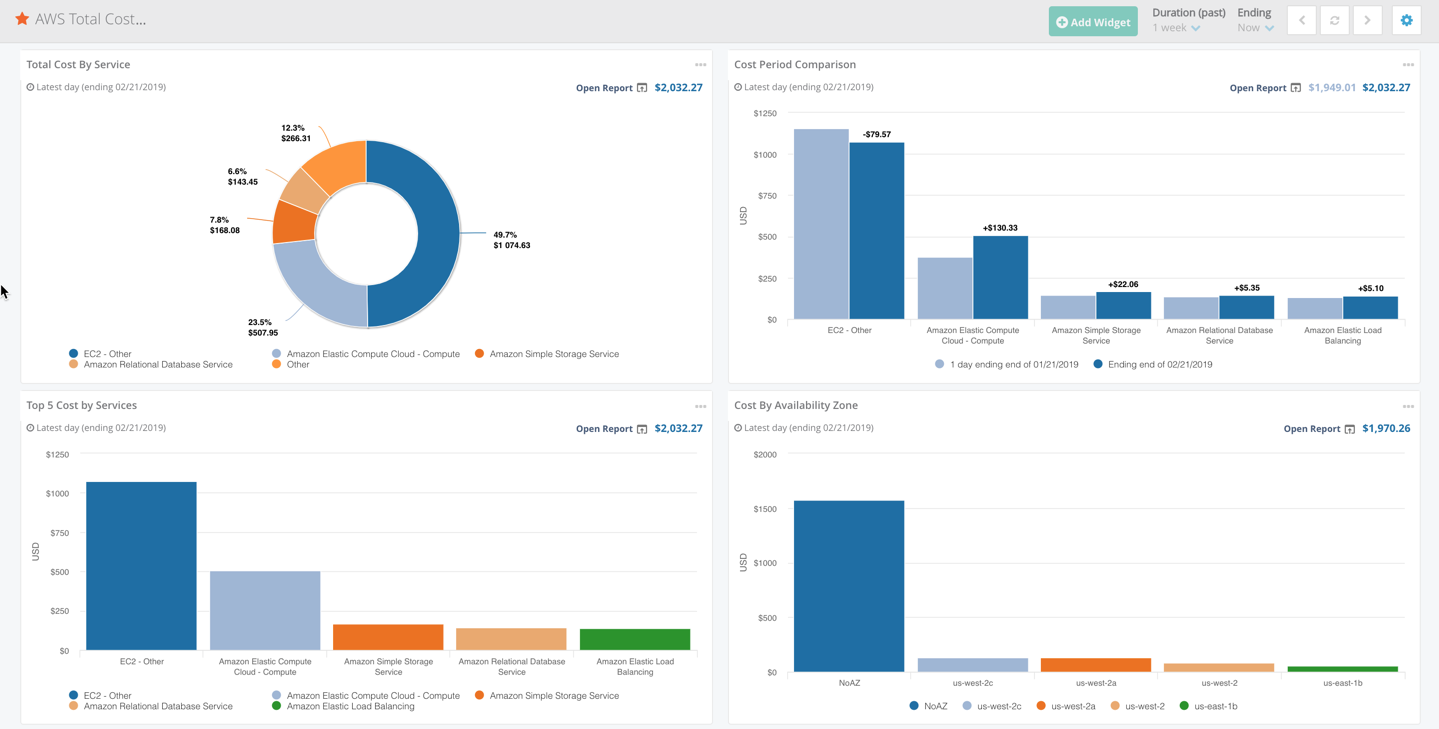
    Metricly, formerly known as Netuitive, provides analytics tools that are focused on helping organizations contain cloud costs.

    Metricly CEO Bob Farzami said the company’s tools increasingly are being incorporated via application programming interfaces (APIs) into DevOps processes to provide visibility into costs, as the number of applications deployed in the cloud expands and increases. The acquisition of Metricly adds more than 50 integrations to open source DevOps technologies to the Virtual Instruments monitoring portfolio, which spans databases, messaging platforms, containers and cloud infrastructure services such as AWS Lambda, EC2, ECS, ASG, EMR, Microsoft Azure VMs and Load Balancer.

    Those integrations are critical because as the number of services being made available on AWS increases, the visibility organizations have into their real cloud costs becomes more difficult to both discern and limit, said Farzami. There are already hundreds of cloud services on AWS. Cloud service providers often count on organizations to forget how many instances of, for example, virtual machines they have spun up, only to be presented with an unexpected bill at the end of the month. Those issues will be further exacerbated as organizations more aggressively employ multiple cloud platforms.

    Many organizations are also seeing cloud costs rise over time as the volume of data being dynamically accessed by stateful applications increases. Once those costs reach a certain level, those organizations are realizing it costs less to repatriate those applications back on into on-premises IT environments. Metricly provides a mechanism through which organizations gain more visibility into their cloud costs in real-time, but also identify when specific cost thresholds are about to be reached.

    It will be at least somewhere between five to 10 years before even the majority of application workloads are running in the cloud. Today, after more than 10 years, only about 20% of application workloads are running in public clouds. There are a whole host of reasons organizations still prefer on-premises IT environments, ranging from regulatory requirements and performance to cybersecurity and simple inertia. Wherever workloads wind up being deployed, however, the one thing DevOps teams can count on going forward is that someone in the finance organization soon will be asking more pointed questions about how much it costs to run that workload.

    — Mike Vizard

  • Networking: The DevOps Community Deserves Better

    Networking: The DevOps Community Deserves Better

    Developers of cloud-native applications are at the heart of a process of radical transformation shaking up the business world. Using DevOps and SRE methodologies, modern development teams are bringing a level of agility to the game that is all about freeing enterprises from the shackles of the old, pre-cloud days and letting them take advantage of new opportunities at light speed.

    But the developer community has a problem. The process of developing and delivering cloud-native applications in a DevOps paradigm demands the right connectivity to back it up, and traditional networks aren’t doing the job. Cloud-native developers need cloud-native networking—network solutions that work in the same frictionless and agile way they do—solutions that put the application first and replace traditional manual network configuration with connectivity-as-code.

    To play their part, developers need application-friendly connectivity that is designed for applications composed of microservices and APIs which span many edges, clouds and service meshes. A new software only, cloud-native approach to connectivity is required to address this and other challenges such as security, performance and operational support at scale.

    There are four things developers shouldn’t take for granted in a network solution: agility, security, simplicity and performance.

    Agility

    What application developers need is a cloud-native, agile, on-demand alternative to traditional networking—something that delivers the speed to market that they need, and safeguards their profitability. With a model such as application-specific networking in network-as-a-service models, application development teams can create on-demand connectivity across edge, cloud and service mesh environments to support their apps wherever their apps travel.

    Security

    App developers require zero-trust software defined perimeter security that meets and exceeds even the most stringent compliance standards, and can be controlled as code by their DevOps tools and applications.

    Simplicity

    New networking approaches that puts the application in contol can abstract the developer and DevOps teams from the complexity of differences between underlying networks, clouds or service meshes.

    Cost-Effective Performance

    Application-controlled network-as-a-service models can deliver operational cost reduction over traditional MPLS and VPN solutions, while boosting throughput and performance compared with legacy alternatives.

    Conclusion

    Developers deserve better networking. It’s time for them to say goodbye to the old way of doing things and move on from restrictive legacy solutions with their lack of scalability, absence of agility, poor security and unpredictable overheads.

    — Galeal Zino

  • Mirantis Adds Modeling Tool to Configure Private Cloud

    Mirantis Adds Modeling Tool to Configure Private Cloud

    At the Open Infrastructure Summit conference, Mirantis today unfurled a software-as-a-service (SaaS) application through which IT administrators can employ modeling tools to configure private clouds based on either OpenStack or Kubernetes.

    Boris Renski, chief marketing officer for Mirantis, said rather than having to manually configure a private cloud for an on-premises IT environment using YAML files, the Model Designer for Mirantis Private Cloud enables IT administrators to configure a private cloud using modeling tools they access via a graphical interface (GUI). The Model Designer is scheduled for general availabilility in May.

    That approach then makes it feasible for IT administrators with little to no programming expertise to quickly spin up private clouds within the context of a DevOps environment using a set of declarative tools, added Renksi.

    Those tools also enable IT administrators to specify the degree of configurability they require. A basic configurability level automatically populates most of the cluster settings to a default set of pretested values. The most advanced “ultraviolence” configurability setting enables IT administrators to adjust virtually every aspect of their on-premises cloud. The resulting configuration models are then fed into DriveTrain, which is the automation framework that Mirantis provides within Mirantis Private Cloud.

    Renski said requiring IT administrators to master all the nuances associated with managing YAML files to stand up a private cloud is one of things holding back adoption of both on-premises private clouds and the best DevOps practices that should be relied to mange them. Most organizations that want to make the transition to DevOps clearly want to be able to manage infrastructure as code in much the same way public cloud service providers do today. The challenge is, the learning curve associated with achieving that goal is simply too high for the average IT administrator, he said, adding a modeling tool made available as SaaS application will make it possible for even mere IT mortals to easily spin up a private cloud within an on-premises IT environment.

    Both OpenStack and Kubernetes suffer to varying degrees from often being too complex for the average IT organization to set up. Because of those complexity issues, adoption of both platforms often is limited to IT organizations that have advanced IT skills. But as the deployment processes surrounding both platforms become more automated, it’s probable the number of organizations adopting either platform will increase. At the same, IT organizations that do embrace either platform more likely will spin up more instances once they no longer have to rely on a cumbersome manual set of processes.

    Of course, setting up a private cloud based on either OpenStack or Kubernetes is only the beginning of the IT challenge. Once all those private clouds are deployed, IT organizations need to acquire the tools and expertise required to manage them on an ongoing basis. In fact, one of the things IT organizations should consider in the age of the private cloud is the level of integration of the tools from vendors they intend to rely on to set up and then manage a private cloud.

    — Mike Vizard

  • SolarWinds Adds Ability to Profile Live Code to APM Platform

    SolarWinds Adds Ability to Profile Live Code to APM Platform

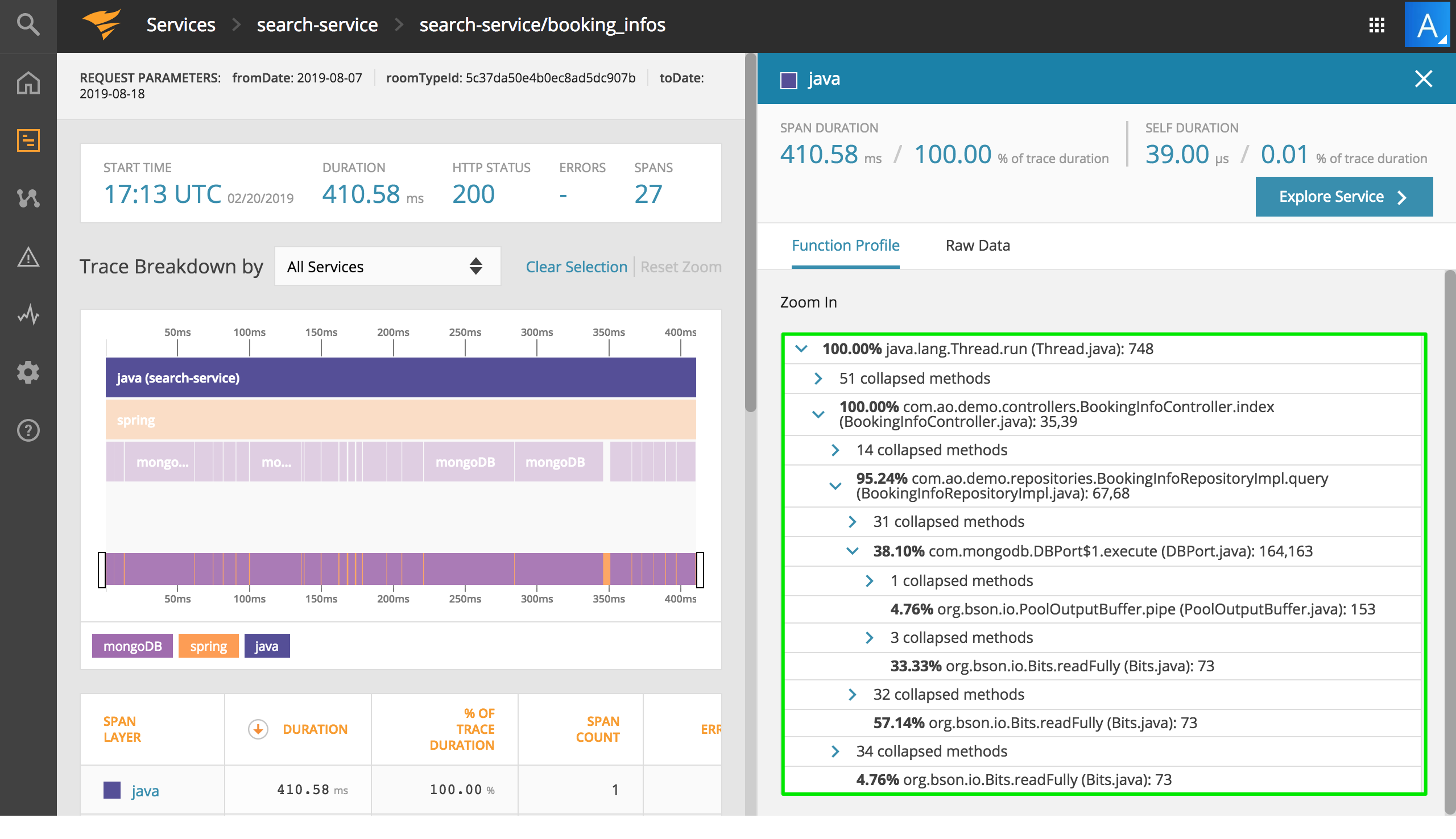
    SolarWinds is advancing its campaign to become a leading provider of DevOps tools by adding the ability to profile live code to SolarWinds AppOptics application performance monitoring (APM) platform.

    Keith Kuchler, vice president of engineering for SolarWinds, said live code profiling provides a breakdown of the most frequently called functions and methods in a transaction, including class, method, filename and line number. That capability makes it possible for DevOps teams to identify what line of code might be causing a performance issue without requiring any changes to the code itself, he said.

    According to Kuchler, the ability to profile live code extends a distributed tracing capability that SolarWinds previously incorporated into SolarWinds AppOptics. Collectively, the two offerings show how committed SolarWinds is to providing DevOps teams with access to advanced capabilities at a fraction of the cost of rival APM platforms delivered as a software-as-a-service (SaaS) application, said Kuchler. Pricing for SolarWinds AppOptics starts at $7.50 per month. SolarWinds AppOptics is part of what SolarWinds describes as a DevOps Toolkit that also includes Pingdom, a website performance monitoring tool, Papertrail, a log management service, and Loggly, a log analytics service.

    The ability to profile live code supports applications written in Java and PHP, with support for additional programming languages forthcoming, said Kuchler. The goal is to reduce the amount of time DevOps teams need to spend guessing where the source of any issue might be after an application is deployed or updated, he added.

    As the rate at which applications continue to be deployed and updated, DevOps teams need to be able to pinpoint issues at the code level to enable developers to address that issue as soon as possible. Sharing a bunch of generic alerts typically doesn’t provide a developer with enough actionable intelligence to solve the problem. Not surprisingly, a recent survey of over 300 developers conducted by SolarWinds finds that most of them spend a lot more time troubleshooting existing applications versus writing new code. All that time spent troubleshooting code winds up having an adverse impact on the ability to make the transition to DevOps.

    In general, SolarWinds is trying to expand the total APM market by making its tools available as a service that organizations of any size can invoke. Historically, reliance on APM tools has been limited to mission-critical applications mainly due to cost. But over time, the number of applications deemed to be mission-critical has increased. In addition, because of the all interdependencies between applications, the potential impact a single line of code can have across the enterprise IT environment can be substantial. As a result, the need for an affordable approach to APM has become more acute.

    Naturally, it will be interesting to see how much pressure there is on APM pricing over the course of the coming year. Competition between providers of APM platforms is already fierce. The challenge will be finding a provider of an APM platform that not only provides all the capabilities required, but also has deep enough pockets to be around for the long haul.

    — Mike Vizard

  • Mphasis Acquires Stelligent, the DevOps Automation Services Specialist in the Amazon Web Services (AWS) Ecosystem

    • Mphasis Stelligent boosts Mphasis’ end-to-end capabilities in public cloud with a focus on DevOps and Containerization; further augmenting its managed services capabilities
    • Mphasis Stelligent combines best-in-class DevOps and DevSecOps solutions on Amazon Web Services (AWS) and delivery at scale with customer-centric digital transformation and hyper-personalization to enterprise clients

     New York / Bangalore, November 8, 2018

    Mphasis (BSE: 526299; NSE: MPHASIS), an Information Technology (IT) solutions provider specializing in cloud and cognitive services announced today its acquisition of Stelligent Systems LLC, a technology services company specializing in DevOps automation on Amazon Web Services (AWS). Headquartered in Reston, VA, Stelligent provides DevOps and DevSecOps solutions on AWS. The company is a Premier Consulting Partner on AWS Partner Network (APN) and holds both AWS DevOps and Financial Services expertise in deploying their customers’ applications on AWS with greater speed, agility, and security. The acquisition is an all-cash deal valued at USD 25 million.

    Since inception in 2007, Stelligent’s driving mission is to ‘help their customers gain the ability to continuously deploy their software when they want to and with confidence’. The company has been providing leading enterprises, including Fortune 500 companies, with continuous integration and delivery solutions on AWS and has built its brand as a pioneer and visionary within the AWS ecosystem.

    “The advent of public cloud infrastructure and SaaS software has elevated the importance of rapid automation in product development and product engineering for enterprises moving to the cloud. Together with Stelligent and its community heroes in the AWS ecosystem, we believe we are uniquely positioned to take advantage of this market opportunity. This allows us to join forces with an equally technically-deep company, bringing innovative, in-depth cloud solutions to enterprises in all Mphasis client segments,” said Nitin Rakesh, CEO and Executive Director, Mphasis.

    “Stelligent is very excited to further its DevOps capability across a broader range of clients and become central to Mphasis’ AWS go-to-market strategy. Our engineers will greatly benefit from being part of a larger, complementary tech-centric community; as well as serve enterprises in end-to-end AWS DevOps, DevSecOps and additional AWS cloud services,” said Bill Santos, CEO, Stelligent. 

    Stelligent’s team of over 50 engineers hold over 100 certifications and significant experience and expertise in DevOps Automation as well as one of a select few consulting partners with two AWS Heroes – an AWS Community Hero and an AWS Hero for Containerization.

    Safe Harbor: 

    Certain statements in this release concerning our future growth prospects are forward-looking statements, which involve a number of risks, and uncertainties that could cause actual results to differ materially from those in such forward-looking statements. The risks and uncertainties relating to these statements include, but are not limited to, risks and uncertainties regarding fluctuations in our earnings, revenue and profits, our ability to generate and manage growth, intense competition in IT services, wage increases in India, our ability to attract and retain highly skilled professionals, our ability to manage our international operations, reduced demand for technology in our key focus areas, withdrawal of fiscal governmental incentives, political instability, war, legal restrictions on raising capital or acquiring companies, and general economic conditions affecting our business and industry. We may, from time to time, make additional written and oral forward-looking statements. We do not undertake to update any forward-looking statement that may be made from time to time by us or on our behalf.

    About Mphasis 

    Mphasis (BSE: 526299; NSE: MPHASIS) applies next-generation technology to help enterprises transform businesses globally. Customer centricity is foundational to Mphasis and is reflected in the Mphasis’ Front2Back™ Transformation approach. Front2Back™ uses the exponential power of cloud and cognitive to provide hyper-personalized digital experience to clients and their end customers. Mphasis’ Service Transformation approach helps ‘shrink the core’ through the application of digital technologies across legacy environments within an enterprise, enabling businesses to stay ahead in a changing world. Mphasis’ core reference architectures and tools, speed and innovation with domain expertise and specialization are key to building strong relationships with marquee clients. Click here to know more.

    About Stelligent 

    Stelligent provides DevOps automation professional services on AWS, enabling engineering teams to focus on creating software users love. Our goal is to work closely with customers to develop fundamentally secure infrastructure automation code, deployment pipelines, and feedback mechanisms for faster, more consistent software and infrastructure deployments. For more information, please visit: www.Stelligent.com.

  • DevOps Chat: Security in the Cloud with Dome9’s Zolar Alon

    DevOps Chat: Security in the Cloud with Dome9’s Zolar Alon

    Dome9 is in the business of cloud security, so it’s no wonder some of the world’s top companies rely in it to secure their sensitive data and applications in Amazon Web Services, Microsoft Azure and Google Cloud environments. And with last week’s announcement of Check Point’s aquisition of Dome9, an even greater number of users will be able to take advantage of its SaaS solution.

    In a recent DevOps Chat, Dome9 co-founder and CEO Zohar Alon spoke with me about what he sees in the cloud security space as many organizations embark on their second generation of public cloud expansion.

    As usual, the streaming audio is immediately below, followed by the transcript of our conversation.

    Transcript

    Alan Shimel: Hello, everyone. It’s Alan Shimel, devopsy.kinsta.cloud, Security Boulevard, and we’re here for another DevOps Chat. Today’s DevOps Chat features and old friend of mine from the security world, Zohar Alon, CEO and co-founder of Dome9. Zohar, welcome to DevOps Chat.

    Zohar Alon: Alan, great to be here.

    Shimel: My pleasure to have you here, my friend. Zohar, let’s get this out of the way first. Some of our listeners are not necessarily from the security world. They’re from the DevOps world. They may not be familiar with Dome9. So let’s first let them know a little bit. You know, you live and breathe it, but tell them who Dome9 is.

    Alon: Sure. So Dome9 is a SaaS solution that helps security organizations and some DevOps and development organizations secure their public cloud environments as they grow and prosper from the single cloud to the multi-cloud focusing on AWS, Azure, and Google Cloud platform. A multitude of solutions.

    We’ve been in the market from the very beginning covering elements like network security in the cloud which is a bit different, governance and compliance, continuance compliance, and how our customers can tie continuance compliance to their development processes and their build processes and things like identity and access management protection for public cloud that prevent attackers from targeting the developers as the weak link as a vector of attack for compromising the credentials in real time by hacking into their laptops and pigging-backing on their authenticated and trusted sessions to create mayhem and havoc in the public cloud environment of the customer. Just celebrated joining our hundred employee and going strong in both our headquarters in Tel Aviv and Mountain View, California.

    Shimel: Absolutely. Very good. So Zohar, and I should mention, look, I know you and Dome9 pretty much from the year you started if not the day you started, right? I think it was an RSA event?

    Alon: Yes, yes, 2012, very early on.

    Shimel: I was going to say, you know, in a previous – you have a long history in the InfoSec world. Look, the topic for today is really have we seen, you know, the classic, you know, crossing the chasm model of early adopters, early mainstream, late mainstream, laggards, where are we with this in cloud adoption as it relates to cloud security? And at this point are we confident in saying that, look, it’s basically just the laggards at this point who haven’t already at least started their cloud migrations?

    Alon: I can say this for certain, that the level – at Dome9 we focus on the top segment of the enterprise customers, let’s say the global 5000 organizations and their cloud deployments; and there’s not a single industry, there’s not a single geography that we are not seeing a race to the cloud, in many cases, multi-cloud deployments very early on. What I’m sensing is that we have a lot of organizations that already completed their kind of version one of public cloud experience that was comprised of some lift and shift and some building of new systems in the cloud. They are now busy architecting their next generation, their second generation of public cloud expansion where elements of making not just the default but actively working to decommission the old infrastructure.

    And remember the motivation is you always have a software or a hardware refresh cycle happening somewhere, whether it’s for your switching fabric or for your compute fabric, in your various data centers or you need to upgrade those Windows 2008 and it’s all involves some interesting costs with it. So the drivers are already there. Once you already get the momentum and the velocity and the confidence, it’s something that is inevitable and it actually happens faster and is encouraged by kind of the known technical people, whether it’s the procurement or the finance people that realize that their support to this activity could save the organization actually a lot of money.

    We saw that AWS revenue run rate, just AWS is around $40 billion now, and we just saw that the big Cisco revenue run rate is $48 billion. So the reality that we have crossed the chasm and even kind of gotten to the late point. The late majority is already feeling it quite seriously. I can say this for certain with a lot of certainty.

    From our perspective at Dome9, we are also seeing organizations already architecting their second generation of what is to deliver continuous security and compliance and governance to their new architectures in the cloud. This is kind of it goes hand in hand. This is where we also see this kind of the maturity in the level of the people that we talk to and their requirements and their understanding that there’s not just a single or few parameters you need to take care of, but if you count them there are about 10 different areas of attention that you need to be very well covered with in order to provide to continue that trend and complete the migrations and sell those data centers as Intuit just did. I think they announced about two months ago that they sold their last data center. I believe we’re going to see a lot more of those announcements. We don’t need to worry. This real estate is not going away. Amazon buys it through Equinox and its partners on the other hand. So it’s not as if we need less compute. We just need a better, more resilient, more focused compute environment.

    Shimel: Understood. Couple of things you mentioned in there that I want to bring to up or I’d like to kind of dive a little bit. First of all, yes, I do agree with you, even the late majority has moved to the cloud; but I think one of the things we’ve discovered about cloud migration is no one up and picks their entire – or very few people but some do – up and pick the entire infrastructure en masse over to the cloud, right? It’s a phased sort of migration, if you will. Some faster than others. And I’m talking now for large enterprises. I’m not talking startups. Larger enterprises. How long a migration do you think that usually is?

    Alon: Look, so the key is the data. You know, when Amazon announced their Snowball device to lift and shift a couple of petabytes, I think it was three, four years ago at Korean event, people were in shock and like about the thinking of getting the data to AWS is, you know, FedEx is faster than the largest wipe you can find. And then they surprise last year with the full-blown semitrailer that has essentially storage on it that can take essentially any amount of data from your premises to the public cloud. So this is one thing.

    Once you get the sense of trust with some data, then trusting the public cloud with your entire dataset is not something that is inconceivable, right? Trust is very binary. If you have it and if it’s good for the backend of my mobile application with the replication of a lot of my banking stuff, for example, then it’s good for everything. Then it’s just the technicalities on how we get there.

    Now, I think one example I want to give is that other than data that can there are no barriers, sometimes the database can be a barrier and that’s why you’d see solutions like AWS will sell you migration services to move from your own – they’ll practically give it to you to move from your Oracle to their cloud-based RDS system whether it’s Aurora or whether it’s any of the other SQL versions that they offer as a service. You can say that probably what’s left is the big old mainframes.

    I was fortunate enough to see that in real time about a year ago where Vanguard – so essentially after we figured out how to migrate data and databases, the only thing you might say may prohibit us from flying at speeds to the cloud may be an old system of record that sits tucked in in a mainframe computers in some data center at an unknown location. We have been able to see, to experience, and to help also several financial institutions in the process of securing a lot of replication process where they showed how they create using serverless computing and the AWS DynamoDB, a replica of their system of record of their big old mainframe, in the public cloud to provide essentially zero latency backend to their entire application framework. And I’m certain that one of the examples is Vanguard. There’s a very famous video of their heard of architecture describing how they used I think seven steps to create that replica of their mainframe.

    It’s an amazing—and this was announced, this was shown a year ago, so you’d probably think that they’ve been working on it for two years before, and this is the reality, that when it started making sense, you know, the technological barriers to live in tandem until you are forced to make a decision about those old systems or those legacy systems is something that any organization should strive for.

    And, you know, you don’t need to work hard, you know? Just, your public cloud rep, whether you go with Google Cloud or Azure or AWS, they will help you with providing the perfect architecture and how you’re baking security into it and how you optimize it for cost—they will pull in the partners that will help you on those things to kind of tie them across the board. And the reality is that—and that’s why I can say that, unless there is real slowness and some legislative or some other reason that could prevent an organization from starting its exploration, most of them are already picking it.

    And sometimes it’s not advertised. I’m surprised to see, you know, industrial companies that come to us and, you know, I ask them how much is their public cloud spend, and they say, “We just crossed the $10 million-a-year mark.” And that’s a serious business. That means that the current way that things are going, they’re gonna get to ($50 million) or to ($100 million) in the next two years. And this means that you’re not investing in your on-prem systems any more. That’s what I’m seeing in the market.

    Shimel: You know, I’m not gonna argue with what you’re seeing. You’re out there talking to people doing it. Zohar, unfortunately, we’re way past our time, but you know what, I’d love to have you back on. I know we had a little bit of a technical glitch; hopefully, it’ll be ironed out where people are listening to.

    But let’s continue this discussion. I think it’s fascinating stuff, and I think people are interested to know. And we didn’t even—I really wanted to touch on what does this mean for cloud security? What does it mean for DevSecOps? Let’s do that in part two, if it’s okay with you.

    Alon: Absolutely. Looking forward.

    Shimel: Okay. Zohar Alon, Founder and CEO of Dome9—thanks for being our guest on DevOps Chat. This is Alan Shimel. You’ve just listened to another DevOps Chat.

    — Alan Shimel

  • Electric Cloud Introduces ElectricFlow 8.5, Unveils Industry-First Support for Both SaaS and On-Premises Delivery

    Flexible Enterprise SaaS Delivery Model, Kanban-Style Pipeline View and Object Tagging with a Continuous Integration Dashboard Allow Teams of Any Size to Start Fast and Adapt Easily

    SAN JOSE, Calif., Oct. 18, 2018 – Electric Cloud (https://electric-cloud.com/), the leader in Adaptive Release Orchestration and Continuous Delivery, today announced a new SaaS consumption option for the industry’s first Enterprise SaaS and on-premises Application Release Orchestration (ARO) offering, ElectricFlow. ElectricFlow now includes a Kanban-style pipeline view, object tagging for custom reporting and enhanced searchability, and CI dashboarding capabilities to track and analyze build processes, failures and successes.

     For more information about ElectricFlow and to download the free Community Edition, please visit: (https://electric-cloud.com/products/electricflow). 

    ElectricFlow SaaS allows DevOps teams of all sizes to get up and running without incurring on-premise implementation costs, and gives teams developing cloud-native or serverless applications a way to keep all their development pipelines and tools in the cloud. Most enterprises also have on-premise assets that they need to manage. ElectricFlow SaaS seamlessly connects to on-premise servers and tools to enable deployment automation, pipeline and environment management, and release orchestration inside and outside of the firewall.

    “More and more, large enterprises are exploring ways to include cloud-native applications and tool chains in their on-premises digital transformation projects,” said Torsten Volk, managing director at Enterprise Management Associates. “It’s important for DevOps tools vendors to make their offerings available on a variety of platforms to support those efforts. I’m glad to see Electric Cloud getting ahead of the market with this new release of ElectricFlow.”

     DevOps Your Way

    The new Kanban view in ElectricFlow 8.5 provides a familiar, easy-to-use management and execution view of pipelines, stages and individual tasks on one screen. Connected directly to the automation and orchestration, users can approve and observe release progress with real-time pipeline and application deployment status. 

    “Moving to a DevOps culture and adjusting to a new pace, new processes, and new toolsets has been a challenge for many of our people,” said Gary McKay, Scrum Master at global toll-free registry service Somos. “ElectricFlow’s new Kanban view coupled with comprehensive pipeline-as-code means everyone on the team gets exactly the kind of working environment they need to help us accelerate our digital transformation.”

    New tagging functionality on all objects allows release managers and product owners to quickly and easily create more granular, real-world reports. Universal data segmentation is now possible across any object type (applications, pipeline stages, environments, etc.) and replaces code-based report creation.

    New CI Dashboarding creates data-driven visibility into CI processes and bottlenecks, so that architects and application teams have clear understanding of builds from within the release pipeline. ElectricFlow works with all CI tools, including Jenkins, Bamboo and Git to give teams unprecedented insight into the value, cost and risk associated with every release, eliminating the need for difficult, extensive custom coding with tools like Hygeia.

    “This release further solidifies our position as the de facto standard for ARO by doubling down on giving customers the flexibility to unleash the power of ElectricFlow for anyone – wherever and however they need it,” said Carmine Napolitano, CEO of Electric Cloud. “This allows us to meet our customers where they are, and simply ‘plug-in’ unified governance and orchestration across an ever-changing array of tools, stacks, and processes. Adapting to change more quickly than your competition is a competitive advantage, and ElectricFlow eliminates much of the anxiety associated with releasing software when adopting new processes or trying new technologies.”

    Share This: .@electriccloud’s Adaptive Release Orchestration Platform, ElectricFlow, Now Available as #SaaS with new #Kanban view, Tagging functionality and #CI Dashboard to let you Do #DevOps Your Way! https://electric-cloud.com/blog/2018/10/electricflow-8-5-devops-your-way/ 

    About Electric Cloud, Inc.
    Electric Cloud’s Adaptive Release Orchestration platform helps organizations like E*TRADE, HPE, Intel and Lockheed Martin confidently release new applications and adapt to change at any speed demanded by the business, with the analytics and insight to measure, track, and improve their results.