Tag: project management

  • Atlassian Extends Road Mapping in Jira

    Atlassian Extends Road Mapping in Jira

    Atlassian has updated its Jira project management software for managing software development initiatives to add more capabilities to road mapping tools that teams use to share plans and update progress.

    Matt Ryall, head of product for Jira Software at Atlassian, said the road mapping tools first provided in Jira a year ago are now being employed by 45% of customers, making it the most rapidly adopted feature in 18 years the project management application has been around. Thus far, Atlassian reports end users have created more than 2 million road map items within Jira.

    Additional capabilities added to the road mapping tools provided in the latest edition of Jira include a drag-and-drop dependency mapping feature, support for filters to track projects more easily, a progress bar that indicates macro-level progress of each road map item, an ability to set up hierarchy levels on the road map, and the ability to set up road maps inline with a single click.

    road mapping

    In addition, a live Jira road map can now be integrated with Confluence, a complementary tool from Atlassian for managing projects spanning multiple teams.

    Atlassian currently offers several road-mapping solutions, including a team-level option in Jira, a program-level road map known as Portfolio for Jira and an enterprise organization-level version dubbed Jira Align. Atlassian has committed to making all three of these offerings work better together in 2020.

    In addition, Atlassian is committing to bringing together the various road-mapping capabilities is provides across its portfolio. The company plans to enable organizations to aggregate multiple road maps into a single consumable artifact and is exploring ways to make road-mapping functionality accessible beyond Jira users. As more organizations in the age of digital business realize how much their future success depends on timely delivery of software, the number of end users who want to be able to monitor the pace of application development projects continues to expand.

    In general, Ryall said Atlassian is focused on modernizing the end user experience for a project management application that is employed by more than 65,000 customers to manage software development projects. Much of that effort is focused on adding a visualization layer that will make it easier to navigate software development projects that continue to become more complex as organizations embrace, for example, microservices-based architectures.

    Competition across the project management category is intensifying as startups look to drive alternative approaches that they claim are designed to support, for example, a mobile-first user experience that makes it easy to visualize data. It’s not clear to what degree any of those offerings are gaining traction, but a significant amount of venture capital is starting to pour into the sector.

    In the meantime, visualization tools that promise to make it easier to appreciate what project events will have the most impact on the business are always going to be welcome. The real challenge, of course, remains getting developers to share accurate assessments of their progress with project team leaders. The good news is, it’s becoming much easier to automatically gather that data from the various repositories developers now rely on to check code in and out of various systems without having to ask anyone for an actual update.

    — Mike Vizard

  • Common Pitfalls of Software Development and Tips to Avoid Them

    Common Pitfalls of Software Development and Tips to Avoid Them

    In business, no one wants to plan on failure. However, when it comes to software development, failure is more common than most managers want to admit. In particular, many managers and executives fear large software-based projects are especially likely to fail due to the complex nature of these projects and the nuanced reality of the deliverables.

    While there is no doubt a software development plan is complex, there is no reason to be so readily consigned to failure. In fact, it might be argued that software is so important to your operations that failure should be viewed as unacceptable. However, this aggressive approach in theory needs to be backed up with proper execution in practice. That is why you need to know the common pitfalls that befall most software projects. This is the only way to make sure your company avoids them.

    Vague Project Requirements

    One reason so many projects fall short of the mark is that these projects fail to define the mark adequately. Your software development project cannot succeed until you know what you really want it to do. This means your project specifications need to be clear from the very start. Your goals should be defined first, and then these goals should be consistently reiterated to team members throughout the process. This includes the scalability of the project. The development team needs to know what features should be included in order to produce a final software solution that actually meets your company’s needs.

    This is all part of developing a versatile software development plan. A good software development plan will anchor your project from start to finish. A poor one will inevitably leave you vulnerable to failure.

    Unrealistic Timeline

    The timeline matters to the company, which is why some companies set aggressive timelines as part of their software development plan. However, while these timelines sound good in planning sessions, they may not make much sense in the daily development process. It is pivotal to think carefully about a timeline in order to account for development, testing and more. All parties should be consulted in the development of the timeline. This includes high level executives, project management and developers. This varied input should allow the project to accommodate the needs of management alongside the needs of developers. This is a form of risk management because an insufficient timeline will lead developers to cut corners, leading to a lackluster result.

    Unbalanced Staffing Commitments

    As you define your software requirements, you will need to think about the team members who will bring your plan to fruition. If you do not assign enough people to the project, production will fall behind. However, if you put too many people on the project, things can start to get messy. Overstaffing a project can easily lead to miscommunication, and it is harder to keep a large team of people unified. This can also lead to redundancy and a lack of consistency if too many duties are spread out. For these reasons, it is important to assess your staffing situation correctly from the start. Be sure to include your project management team in the final staffing decision.

    Insufficient Testing Procedures

    In all your planning, it can be easy to neglect testing. The reality is testing should be a critical part of your plan, accounting for a significant amount of your timeline and resources. Testing is important because it allows the development team to iron out any problems with the software. All software will have bugs in its early versions, and these bugs can be caught and fixed with sufficient testing. Testing is the only way to make sure your software works the way it needs to work. If you implement deliverables that do not perform, then your workers will be flummoxed, your consumers will be disappointed and your security could be at risk. Therefore, allot plenty of time for testing throughout the entire development plan, allowing for each component to be tested prior to going live.

    Poor Hands-On Leadership

    If you really want to make sure your project goes well, then make sure you have good people in place to lead it. Your project management team is absolutely critical to successful software development. A good project manager will internalize all parts of your plan. This includes the budget, the timeline, the goals and the staff. Your project managers need to facilitate communication, manage schedules and oversee adjustments. This key leadership role is your software development plan in action. Make sure you hire the person with the right skills and the right experience. Then, make sure that person knows exactly what your goals are to achieve success.

    These pitfalls are common for a reason. However, with a little foresight, it is possible to keep your project and your company from disaster.

    — Shane Zilinskas

  • Clubhouse Aims to Simplify Software Project Management

    Clubhouse Aims to Simplify Software Project Management

    Clubhouse Software today announced it is adding a Clubhouse Iterations module to its project management application to make it easier to plan sprints involving product and software engineering teams.

    Mitch Wainer, chief marketing officer for Clubhouse Software, said Iterations will be included as part of its project management application service, which aims to bridge the divide that often exists between software development teams and the lines of business for which they are building applications.

    Wainer said the company’s namesake project management software makes it easier for non-technical professionals to participate in the same project management workflow as a development team, rather than requiring them to become conversant in a project management application designed for software engineers, such as Jira. Clubhouse’s approach eliminates silos that get created when two teams within the same organization rely on different project management applications, he said.

    Clubhouse Iterations goes a step further by surfacing what teams need to focus on as priorities and timetables change within a specific project, added Wainer.

    Clubhouse Iterations allows users to define sprints using start and end dates, and the tool then sends reminders so the team can reserve time to focus on specific projects, he added.

    Organizations that have successfully embraced DevOps almost invariably seek to extend those processes beyond the software development team. In theory, at least, the entire business should aspire to become more agile. However, the project management software many DevOps teams employ today is too complex and intimidating for the average business executive. Rather than forcing business users to learn how to master these applications, a case can be made for a more intuitive set of project management tools for both software development teams and the product managers they ultimately serve. Wainer said Clubhouse is already being used within 2,000 organizations to address that issue.

    Wainer also noted the Clubhouse Software also has no bias as far as continuous integration/continuous delivery (CI/CD) platforms are concerned. Clubhouse is designed to integrate with multiple CI/CD platforms via application programming interfaces (APIs) to enable the development of custom workflows that include, for example, integration with real-time conversations occurring via the Slack service.

    Next up, Wainer said Clubhouse intends to improve the search capabilities it provides on the platform and offer more sophisticated reporting tools.

    In the meantime, the rise of DevOps would not be possible without the capabilities enabled by project management applications. But the agile nature of DevOps processes is forcing providers of project management software to make their applications both more dynamic and accessible. Those advances, in turn, make it easier to bring new members on board to the DevOps team.

    Project management software may not always be viewed as the linchpin around which most software development processes are constructed. Without some form of project management application, however, most DevOps processes would have devolved into utter chaos a long time ago.

    — Mike Vizard

  • CircleCI Adds Integration With Atlassian Jira

    CircleCI Adds Integration With Atlassian Jira

    One of the trickier issues IT vendors in the age of DevOps are dealing with is that very few organizations have standardized on a platform from a single vendor. Not only do organizations mix and match tools as they see fit, but different departments within the same organization also embrace different tools to automate the same tasks. That DevOps reality requires collaboration between IT vendors that normally would prefer to not work together, whether they like it or not.

    Case in point is a move by CircleCI, a provider of a continuous integration/continuous delivery (CI/CD) platform, to provide integration with the Jira project management software developed by Atlassian. While Atlassian makes its own CI/CD platform, customers and business partners alike have made it clear they needed CircleCI to support Jira, says Tom Trahan, head of business development for CircleCI. In some cases, those organizations have adopted Jira without having Atlassian’s CI/CD platform in their environment, while in other cases, a department within one part of an organization has opted for CircleCI while others are employing a CI/CD platform from Atlassian.

    At the same time, Trahan notes that many DevOps projects now span multiple organizations that have standardized on different DevOps platforms. Jira provides a way for teams in differentorganizations to manage those projects collaboratively, he says.

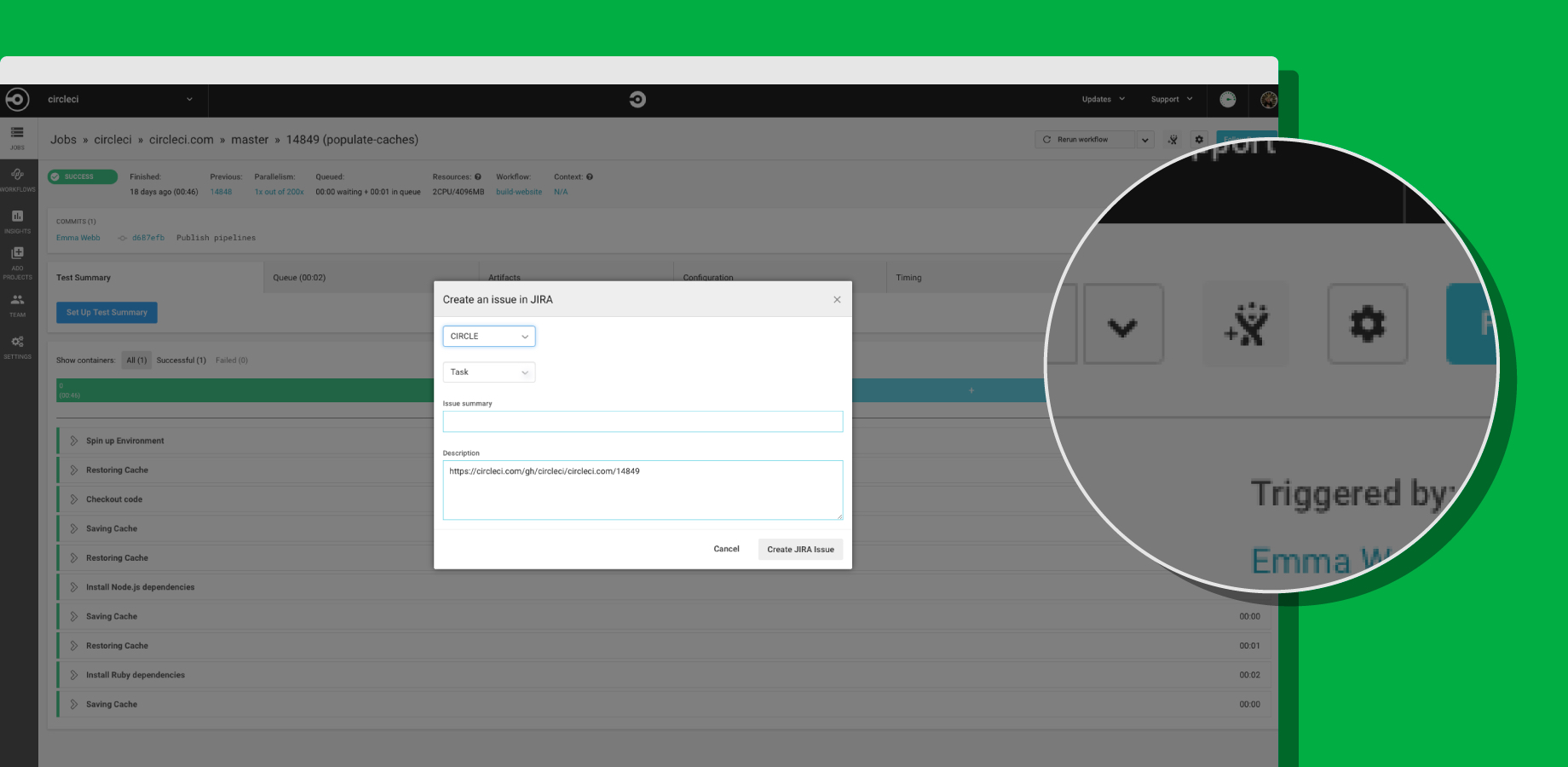
    To achieve integration with Jira, CircleCI now offers its CircleCI for Jira module, through which teams can assign new tasks and fixes based on job status with CircleCI orbs, a set of reusable configuration packages that allow CircleCI customers to integrate external tools into their workflow. That capability also makes it possible to launch new Jira issues directly from the job page within the CircleCI user interface.

    CircleCI Integrates with Jira

    Trahan says that in the polyglot world of DevOps, it is apparent vendors are being required to expose open application programming interfaces (APIs) that enable organizations to build and integrate various DevOps platforms anyway they want. Organizations won’t consider IT vendors that are too rigid in terms of what level of integration they enable, he says.

    As DevOps continues to evolve, it’s clear that a wave of merger and acquisition activity is makeing the IT vendor landscape somewhat volatile. Providers of DevOps tools that organizations have standardized on are being acquired at a rapid rate. IT organizations can’t be certain that any given tool or platform they are using won’t be scooped up by a vendor they might not want to engage. In that kind of environment, it’s critical for IT organizations to leverage open APIs that not only make it easier to collaborate, but also replace elements of their DevOps stack whenever they deem necessary.

    The challenge, of course, is that IT vendors are always trying to lock customers in as much as they can. Those efforts are not as heavy-handed as they once might have been. But almost inevitably, the extension being offered to access functionality will disappear if the underlying platform that enables it suddenly disappears. IT organizations, therefore, need to determine whether those extensions are worth any potential trouble they might cause somewhere down the DevOps road.

    — Mike Vizard

  • The 5 Core Principles of Lean Management

    The 5 Core Principles of Lean Management

    Lean project management is rooted in cost-saving manufacturing methodologies. The ultimate goal of lean methodology is to reduce waste. Companies in all industries have adopted lean principles into their own processes, but lean is most suited toward physical manufacturing, engineering and related industries.

    Regardless of your company’s size or the activities of your organization, lean project management principles can be extraordinarily helpful in optimizing your everyday operations.

    Below are the five core principles that guide lean thinking for project managers.

    Identify Value

    Defining the value of a given product is crucial. Before beginning any manufacturing project, or any project for that matter, the amount of value a finished product will generate must be assessed accurately. How much customers expect from a given product must also be ironed out.

    Value questions that lean teams will ask:

    • What do customers want?
    • How will they benefit from our product?
    • How much are they willing to pay for the benefits of our product?

    Lean teams can, for example, estimate how much customers are willing to pay based on related data points, then set costs low enough to reach an agreeable price. The goal is to eliminate all waste in every process. Any area where value is not added—or worse, cost is exceeding value—must be addressed early on using lean management principles.

    Map the Value Stream

    The value is the end goal of the project. Once you’ve established value as a definite endpoint, you can begin mapping the way to get there (or value stream). Every single process and every single step involved in getting to the end product is part of the value stream. From gathering the materials needed for production to coordinating efforts with PR, every related process is represented in the value stream.

    Kanban is one of the most popular ways to map value streams. Tasks are broken down and are posted in a “just-in-time” fashion. That way, each task is taken one at a time and only done when it is absolutely necessary to complete.

    Using Kanban flowcharts and other diagrams, managers can set up visual aids for value streams, mapping every single step onto a single page. By mapping the flow of activities, lean project managers can easily identify waste and inefficiencies with the process, allowing them to ameliorate these issues swiftly.

    Create Flow

    By mapping the value stream, project managers can spot waste. Any tasks that are done too early, too late or too often creates waste. By analyzing the map and removing waste, lean project managers can create the optimal flow of activities.

    Lean project managers check for possible bottlenecks and delays. If there are any inefficiencies present, tasks may have to be reordered. Sometimes, project managers may even decide to append value-adding tasks to improve processes.

    Ideally, every step should flow into the other, beginning at the factory (or organization) and arriving smoothly as an end product to the customer.

    Employ a Pull Approach

    Many organizations use a push approach, stockpiling supplies in anticipation of demand. Lean organizations, however, employ a pull approach, wherein production increases as demand increases. Customers can “pull” directly from the manufacturer, getting what they need in an on-demand fashion.

    The pull approach requires extremely accurate market research and exceptionally efficient dissemination of information within the organization. Also, all processes must be streamlined; otherwise, it will take too long to ramp up production to meet demand.

    Seek Perfection

    At its core, lean management is about continuous improvement. Lean management requires a thoughtful approach to every action. Optimization must be part of the corporate culture itself. Every member of the organization must be working toward removing waste, adding value and delivering quality. There is always room for improvement in lean organizations.

    Conclusion

    Lean organizations are removing waste. Lean project managers ensure that activities within the organization flow properly, without interruption, delays or bottlenecks.

    Identifying value means finding out what your product will do and how much customers will pay for it. Value streams are then mapped, following every step in production. Project managers ensure that tasks flow and processes run smoothly. Market data is collected during development and these data points drive production. The most important principle that guides lean thinking is to seek perfection. The lean management philosophy demands a dedication to continual improvement.

    — Ellie Martin

  • Anaxi Delivers Project Management App for DevOps

    Anaxi Delivers Project Management App for DevOps

    Anaxi, a provider of project management software designed specifically for DevOps teams, has made its web application generally available. The web application complements an existing iPhone application, while an Android version of the company’s project management application is still under development.

    Company CEO says Marc Verstaen said that as DevOps has evolved around multiple repositories, IT organizations are finding it challenging to keep track of code from projects they are using within what applications. Anaxi is designed to not only make it simpler to navigate repositories, but also apply analytics to track individual developer productivity and team performance. Project managers now can, for example, analyze efforts in terms of code added and removed, refactoring and code churn on a weekly basis.

    Armed with that intelligence, IT operations teams will be better able to prioritize development plans based on the dependencies that exist between the various components that make up an application, said Verstaen. The number of those dependencies is only expected to increase as organizations increasingly shift away from building monolithic applications in favor of more complex microservices architectures that promise to make the overall business more agile.

    The fundamental project management issue with repositories such as GitHub is that there is no way to categorize all the project labels that get entered as text. That makes it difficult to monitor and track all the tasks associated with a specific label or even simply browse from one task to the next, Verstaen said. Via Anaxi, project managers can edit their issues and pull requests, which are then synchronized back to their GitHub and Jira projects.

    It’s not clear to what degree the lack of sophisticated project management tools has hindered adoption of DevOps in the enterprise. Legacy approaches to application development provide project managers with a rich portfolio of applications that may serve to bias them toward one style of application development over another. But given the pressure organizations are now under to become more agile, project managers need to evolve alongside the rest of IT organization.

    Before too long many organizations may also find themselves trying to manage projects spanning multiple repositories. It’s not uncommon for development teams to favor one repository over another. Standardizing on one repository would be preferred, but not every project manager has the political capital inside their organization required to force such a decision. Many projects also now span multiple companies, each with their own repositories, that project managers may find themselves forced to navigate.

    At the same time, business leaders are making it clear they want more visibility into the pace at which applications are being developed whenever those applications are expected to generate revenue or improve the overall customer experience. In fact, project managers who can ensure projects are delivered consistently on time and within scope are invariably considered among the most valued of employees.

    — Mike Vizard

  • Why Hiring Top Web Developers is a Good Idea

    Why Hiring Top Web Developers is a Good Idea

    Web developers are a great addition to every organization. Having your own web developers to help you create web applications and websites can be invaluable to companies of every size. If you happen to be a software development team, they are indispensable members of your team.

    Because web developers are in such high demand, hiring the best of the best can be an extremely expensive endeavor. However, hiring them is more than worth the investment, as web development is one of the most valuable activities of any company, especially tech companies and web design agencies.

    With top web developer talent, you’ll surely make more than your initial investment. Investing in quality is always a sound decision, especially for software teams, where a lack of expertise can spell doom for the end product.

    Facilitating Communication

    It’s good to have a team of both frontend and backend web development specialists. The top web developers can help specialists with weak points or blind spots. They can help other, less-experienced members of the team implement a piece a source code, an algorithm or a create a better-optimized database.

    Premier web developers have extensive knowledge and experience with web development, which can help other members of the team better communicate their concerns with other specialists.

    With an in-depth understanding of web development, they know how to translate backend issues to frontend specialists, greatly facilitating communication and collaboration.

    Improving Team Morale

    The best web developers aren’t only technically adept, they are also great communicators, collaborators and leaders. They know how to speak empathetically, compassionately and honestly and openly. They are active team members who voice concerns, questions and comments in a way that everyone can understand.

    When communication and collaboration are facilitated and when constructive criticism is encouraged, team morale is impacted postively. When team morale is boosted, productivity increases, miscommunication decreases and passion for the project can be revitalized. Talented, team-oriented web developers can provide your team with extra motivation and much-needed mentorship.

    Bringing Perspective

    The top web developers have the experience necessary to bring in a fresh perspective to organizations of all sizes. The best web developers likely have worked on extensive projects for important clients, encountered a great deal of strife and come up with unique solutions to intimidating problems.

    While attracting top talent isn’t an easy thing to accomplish, it is worth the time and effort it requires. Young companies, especially tech startups, can benefit from bringing experienced web developers onto their teams.

    Exceptional web developers can act as managers, mentors and liaisons for young, sparsely populated companies. The most experienced web developers can inject knowledge, quality and direction to small companies.

    Keeping a Consistent Pace

    The best web developers maintain a consistent pace, leveraging lean and agile project management principles to do their job to the best of their ability.

    One big mistake young companies commit is biting off more they can chew. It’s a good idea to keep a steady, consistent pace. If your team is using Scrum to help maintain pace with sprints and project retrospectives, experienced developers can be of great use.

    Their experience can help the team establish a successful sprint schedule, helping other team members get acclimated to turning in project deliverables in a consistent and sustainable way.

    Conclusion

    The best web developers on the market are difficult to attract. Hiring dedicated web developers requires organizations spend the time and money carefully to find, vet and hire the best in the business.

    Why are the best web developers worth the investment? They can enrich your organization with their expertise, their talent and their communication skills. It’s important to remember that the top developers are not only technically but also socially gifted. They exhibit leadership skills, easily communicating ideas and encouraging collaboration.

    If your organization is looking to hire a web developer, seek out top-caliber candidates, especially if your company is young or understaffed. While you may not believe you can afford the best web developers at this junction, it’s well worth the risk to invest in them.

    — Anthony Coggine

  • Demystifying Crucial Phases of Project Management

    Demystifying Crucial Phases of Project Management

    With competition becoming more intense for development companies, project management is becoming a more integral part of every project. It’s no longer limited to the actual creation of a new project. Now, it’s about planning, communicating, collaborating and analyzing. With so many moving parts, it’s difficult to understand all of the important phases of project management.

    This guide will cover all the phases of project management so you can understand how they apply to your projects in DevOps. Even if you don’t have a background in project management, you’ll be a pro in no time.

    Defining Project Management

    First, we need to articulate exactly what project management is. It’s the discipline of initiating, planning and executing the work of a team to achieve specific goals within a time frame. It involves a lot of interteam collaboration, and it isn’t any single activity.

    Project management experts draw knowledge from areas including human resources, communications, risk management and even accounting. That being said, there are a lot of moving parts that can make project management tricky, particularly with large projects or growing teams. Knowing all of the phases of a project process makes it possible to navigate these areas effectively.

    A project process is any unique action that represents the entire project internal process within DevOps. This is usually decided by the project manager. It might include instructions, procedures, plans or organizational software.

    Understanding the Phases of Project Management

    When you’re talking about the project life cycle, you need to understand the project management phases. Throughout the project life cycle, you should be able to define clear goals. These will include a combination of the following:

    • What will be accomplished?
    • How will you measure what has been accomplished?
    • Who will work on the project?
    • How will you monitor progress?

    Having these questions above in mind will direct the project along its life cycle. Without any clear initiative or direction, you can’t expect team members to know where to go with their tasks. That’s why clear goals are key in the world of DevOps, where every task matters.

    Now that you know the importance of clear goal setting, it’s time to finally define the phases of project management. There are five in total, and they are:

    1. Initiation
    2. Planning
    3. Execution
    4. Performance monitoring
    5. Closure

    Phase 1: Initiation

    This is the beginning of the project. In this phase, you’ll want to define your goals, what the project is exactly, and how it fits into your company goals. One of the biggest pitfalls in the world of development is choosing to start a new project for technology’s sake. While there’s always something to be gained in innovation, avoid falling for shiny-object syndrome. Just because you have new technology doesn’t mean it makes sense as part of your bigger business strategy.

    To make sure you’re choosing the right project for your team, ask the following questions in this phase:

    • Why are you choosing this project now?
    • Is this project realistic?
    • What does the end result look like?

    From there, you’ll need to get approval for the project from higher-ups. This might take some time, so be sure to articulate your goals clearly at this stage so you don’t waste energy. Finally, you or your project manager will create a project initiation document (PID), which is a formal outline of the purpose and requirements of a new project.

    It’s smart to include developers across teams in these initial meetings to ensure they can give guidance about the technical challenges of a new project. Remember, collaboration is key at every stage.

    Phase 2: Planning

    Now that you’ve gotten the green light, it’s time to create a plan of action. This will involve goal setting and job responsibilities for all team members of all levels. Don’t forget about the S.M.A.R.T. goal-setting process to make sure you’re creating goals that are realistic. Remember, smart goals are specific, measurable, attainable, realistic and time-bound by a deadline.

    This is the most vital stage of project management. It’s when you’ll put pen to paper and work out any kinks. Poor planning will reflect itself in every stage after, so take the time to work with teams to decide the best plan of action. Limit your deadlines for every task to 10 days or les to ensure you don’t let obstacles take away from your final product.

    Phase 3: Execution

    The time for planning is over and now it’s time to get down to business. This is exciting because you’ll see your project start to shape itself. Your programmers are busy coding, designers are building graphics and managers are creating progress reports.

    Don’t forget to update your higher-ups during this process, even with small changes. Regular updates are necessary to make sure everything is progressing according to schedule. Conduct weekly meetings to make sure everyone knows how the entire team is progressing as well as their own next steps. A project management software is valuable at this stage.

    Phase 4: Project Performance

    Now that the project is completed, it’s time to reflect on your success. Did everything align with your original goals? Did you meet your deadlines? Think about your objectives, your deliverables, your cost,and the performance of the project. How did all of these things measure up?

    You’ll base your future project plans on the success of your analysis at this stage. Even though the project is officially done, that doesn’t mean there isn’t still more to learn. Also, don’t forget about preparing maintenance for your software going forward. You might need a program like Amazon CloudWatch – monitoring and logging service to continue to learn about the success of your project into the future.

    Phase 5: Closure

    Your project is completed and your analysis is coming to a close. It’s time to follow-up on any final pieces and close the door on your project for good. This is also known as the post-mortem phase because it’s when you’ll decide your key takeaways and stop progressing.


    Project managers will meet together to decide key players, project performance, and deadline analysis. How can you learn from the events of the past few days or weeks to grow during your next project? Don’t overlook this stage. It’s important to reflect on what worked and what didn’t. If something didn’t work out the way it was planning, talk about it.


    Finally, host a team meeting to talk about how the project went as a group. You might have a different perspective than those under you, and it’s important that everyone feels heard. Take team member feedback seriously so you can learn from it for next time.

    Manage Projects Successfully

    In the world of DevOps, project management plays a lead role. Don’t overlook any stage in the process as not being necessary. It’s important to have a well-rounded, thoughtful approach to leadership. There is no perfect way to lead a group in big projects, but you can use every phrase to carefully tackle new challenges and grow your team strengths.


    When you practice these stages above, they’ll come naturally. You’ll notice each stage leading gently into the next, and that’s how you make a business that’s ready for anything. Every project manager will experience some level of failure, but learn how to roll with the punches and keep moving forward.

    — Wendy Dessler

  • Anaxi Enhances Development Intelligence Tool, Helps Maintain Delivery Schedules with Added Support for Atlassian Jira

    App provides greater reporting and analysis capabilities

    SAN FRANCISCO, November 15, 2018 — Anaxi, maker of software that helps engineering organizations gain control over the development process, announced today its iPhone app has added support for Atlassian Jira Server and Cloud versions to its current support for Github,  giving engineers and managers increased visibility and intelligence on their software development projects and processes.

    “By aggregating data from different tools, we’re able to provide metrics that provide a holistic view of the development process — not piece parts,” said Marc Verstaen, co-founder and CEO of Anaxi. “Now, for the first time, there is a system of record for software engineering to better control the process and keep development schedules on track.”

    Anaxi’s app now integrates data from both GitHub and Jira, the leaders in code versioning and issue tracking, respectively. The company intends to expand the number of tools it supports in the coming months.

    The Anaxi software development intelligence app analytics include productivity reports on individual, as well as team performance, providing more transparency and delivering actionable insights.

    Currently, Anaxi offers a free version of its app for the iPhone that is available on iTunes. The company is planning to make available in the coming weeks a beta version of its web app followed by an Android version. The company’s plans include a paid version for users who want premium reporting and communication features.

    The newly added capabilities for the Anaxi free app on the iPhone include the following.

    • Issue and Pull Request Metrics

    Users can look into their pull request and issue data to better understand how their projects are evolving. Users can use any filtering and sorting options to surface the items of interest to them and save them as new reports for quick access. Also, Anaxi created an evaluation of complexity for pull requests, as an additional consideration for users in terms of assessing which pull requests to review first.

    • Productivity Metrics

    Analysis of project commits provides metrics on individual and team productivity, including a breakdown of the effort in terms of code added and removed, refactoring, code churn, and more on a weekly basis.

    • Project Management

    From their iPhone, users can edit their issues and pull requests. All edits are synchronized back to their GitHub and Jira projects.

    • Data Confidentiality

    To protect the need for confidentiality and access to users’ GitHub and Jira accounts,  the Anaxi app is designed to connect directly to the users’ Github repositories and/or Jira projects. Then, the app builds the reports using the data, which remains secure and inaccessible, even from Anaxi itself.

    For more information go to www.anaxi.com/features.

    About Anaxi

    Co-founded by Marc Verstaen (previously executive vice president of product development at Docker) and John Lafleur (previously CEO at CodinGame) in December 2017, Anaxi is the system of record for software engineering organizations that need to facilitate decision processes. Anaxi will open a new data-driven era to engineering organizations, empowering them to better allocate their development time and resources.

  • Common Hidden Dependencies and How to Uncover Them

    Common Hidden Dependencies and How to Uncover Them

    It’s no secret that a truly Agile approach minimizes the risk organizations assume with waterfall or other traditional project management methods, by letting teams iterate and inspect and adapt as they go. But many companies lack clear visibility into real-time dependencies at the team level—even with daily standups, iteration and release planning, and a regular cadence of cross-team check-ins. This lack of visibility impacts organizational agility and can erase the value of an investment in agile.

    As Dwight D. Eisenhower said, “In preparing for battle I have always found that plans are useless, but planning is indispensable.” When it comes to planning within an enterprise, being aware of the biggest risks of hidden dependencies will help you keep a proactive approach and drive value from strategic objectives to tactical execution. Here are some of the risks of the most common dependencies and how to uncover them:

    1. Teams that are distributed (or use multiple Agile platforms) do not have the flexibility to work across teams as easily as their co-located counterparts. This slows down response time, which in turn slows down releases. Teams must make dependencies transparent at the highest level to stress their importance. Make sure your team has an advocate, such as a Scrum Master, to raise red flags when dependencies or risks emerge.
    2. Medium- and large-scale organizations may run multiple release planning sessions for one product. Running them at the same time, or in a sequence but in different locations, increases the risk that teams will overlap work and not plan for dependencies.
    3. Many organizations and teams try to plan for dependencies by adding more time to their estimates as a buffer. While this seems like a good idea, it hides a problem by burying wait time and masking the real blocker. Organizations and teams should ensure that estimates are only based on complexity and effort and do not reflect “waste” such as wait time. Doing so helps reveal impediments for what they are.
    4. In larger organizational structures, infrastructures are complex and teams tend to be highly dependent on one another delivering work, with a chain effect of one team’s work beginning only after another finishes. As they look to adopt and scale Agile, organizations should closely examine their structure to ensure it is optimized. This will reduce risks and dependencies, rather than exaggerate them.
    5. Team members often allow “blockers” and “dependencies” to get in the way of completing work while still committing to a sprint or release goal. If team members foresee a dependency or blocker with key features, user stories, etc., they should not commit to the work. It is the responsibility of each individual to refrain from committing to work that they know they cannot complete.

    Visualization is Key

    Organizations can adequately manage dependencies and risks if they can plan for them. One helpful technique is to create a road map for releases. When consistently updated throughout at the end of each sprint, a road map helps teams identify risks and evaluate dependencies continuously. Selecting a platform that allows real-time visualization into dependencies is another way to prevent time-wasting while giving insight into the right details at the right time.

    — Andrey Mihailenko