Tag: project management

  • Atlassian Extends Open DevOps Ambitions

    Atlassian Extends Open DevOps Ambitions

    At an online Atlassian Team 2021 event this week, Atlassian launched a two-pronged effort to provide organizations with more insights into software development workflows constructed using tools from multiple vendors.

    Suzie Prince, head of product for Atlassian, said an Open DevOps initiative will tighten integration between the Jira project tracking and management tools provided with Atlassian and a wide range of tools commonly employed by DevOps teams. The goal is to not only make it easier to correlate issues that are listed in Jira with artifacts found in various software platforms, but also to collect data from DevOps tools to automatically update Jira.

    That data will then be employed to inform the key performance indicators (KPIs), based on graphs that Atlassian provides within Jira, to keep track of value streams. Rather than having to acquire a separate value stream management (VSM) platform to track software development progress, the insights needed to understand the impact of, for example, a delay to one project becomes a dividend of using Jira.

    At the same time, Atlassian is moving to making it easier for other stakeholders in an organization to track software development projects. A Jira Work Management application is specifically designed for business users that require a higher-level tool to track projects. At the same time, Atlassian revealed this week it has acquired ThinkTilt, a provider of low-code application development tools optimized for Jira.

    Atlassian for the first time this week revealed that half of Jira users are not software developers. As organizations increasingly appreciate the degree to which they are now dependent on software to drive digital business transformation initiatives, Atlassian is adding a set of project tracking applications designed specifically for users that need to consume Jira data in a more intuitive fashion.

    Prince said Atlassian is committed to making it simple to replace one DevOps tool integration for another with a single click. Rather than requiring organizations to standardize on a single DevOps platform, Prince added that developers will be able to continue to rip and replace tools and platforms as they see fit without compromising visibility into application development workflows.

    In addition, the integrations being provided by Atlassian will reduce the time and effort required to configure all the tools that make up a DevOps workflow, from roughly 60 steps today to about six.
    As DevOps workflows become more pervasive, the way organizations operate is fundamentally changing. Formal product launches are giving way to a steady stream of software updates that add new capabilities to any platform with little to no fanfare. End users ranging from sales teams to custom support personnel now need to track updates to platforms more closely as new capabilities are continuously added.

    Of course, not every organization has the same level of maturity. However, as competitors start to add new features to rival offerings, it is now only a matter of time before most business processes – that increasingly revolve around software updates – begin to evolve and change. As the pace of software development continues to accelerate, the pressure on legacy business processes will only continue.

  • JFrog Tightens Integration with Cloud Edition of Jira

    JFrog Tightens Integration with Cloud Edition of Jira

    JFrog this week announced that its DevOps platform, delivered as a software-as-a-service (SaaS), can now be integrated with the Jira project tracking and management application, delivered as a cloud service, from Atlassian.

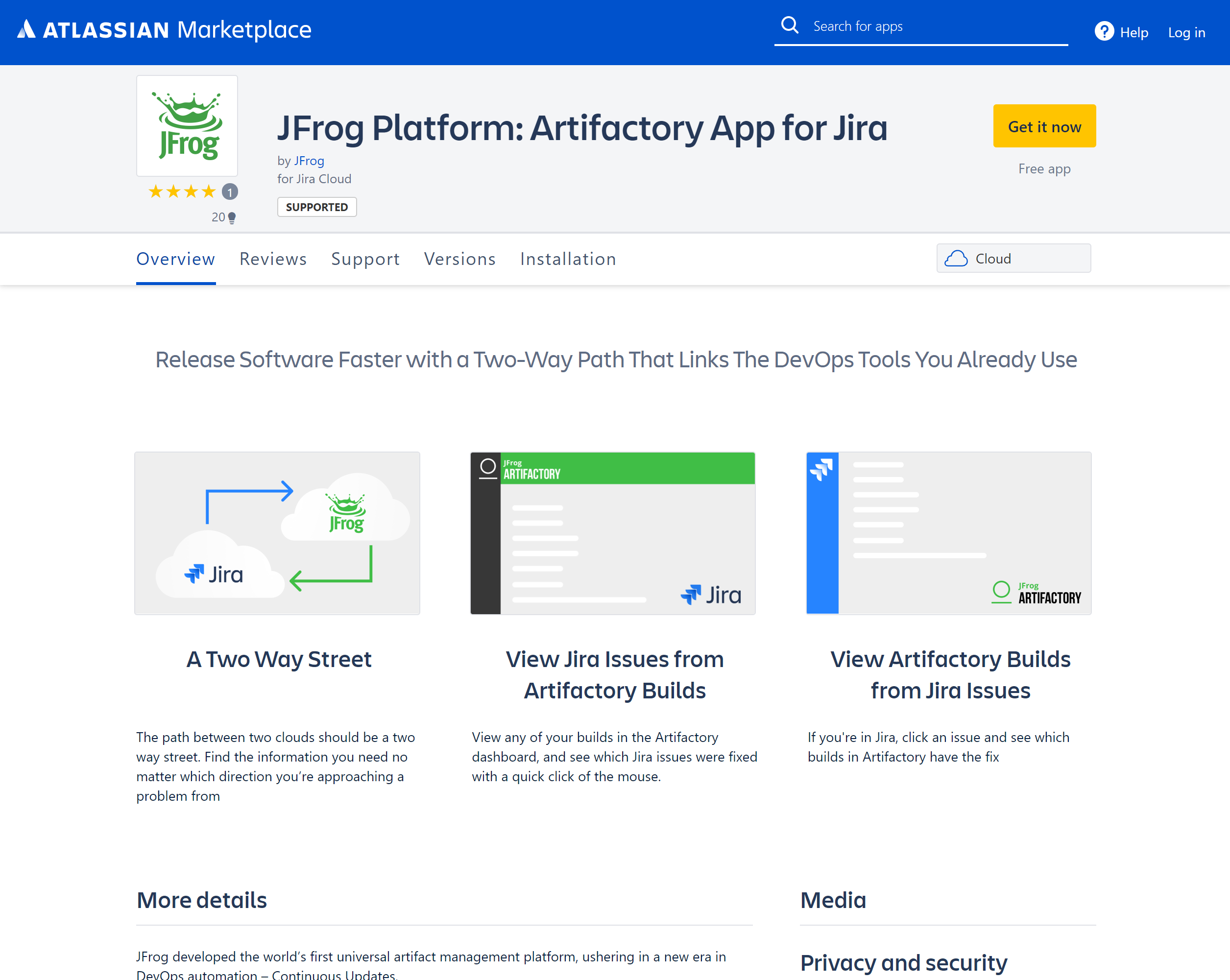
    Casey O’Mara, vice president of worldwide business development for JFrog, said this bidirectional integration makes it possible to link a Jira issue, such as a bug fix, to the binary or build residing in the JFrog Artifactory repository that is part of the JFrog DevOps Platform.

    Available via an application that can be downloaded from the Atlassian Marketplace, this integration extends an existing alliance between the two companies, said O’Mara. There is, for example, already an integration between Atlassian Bitbucket Cloud for continuous integration and JFrog Artifactory repository.

    Creating a link with a Jira issue will make it easier to collaborate by, for example, making it easier to understand why a specific version of an artifact, such as a container image, was created, added O’Mara.

    Artifactory is already able to collect issue key messages from Git that logged alongside builds. The Artifactory dashboard for build information displays a link to each of the referenced Jira issues in the Issues tab. Now, users of Jira can link to the builds in Artifactory.

    Jira remains the dominant project tracking and management application for software development. As more organizations appreciate the degree to which they now depend on software, O’Mara noted the number of stakeholders in an organization using Jira is starting to increase, as application development schedules are tracked more closely. Atlassian is now making Jira more accessible as a cloud service to help foster that increased adoption, noted O’Mara.

    Atlassian is now making a case for transitioning its customer base to the cloud. In the third quarter of this year, it plans to discontinue new server license sales in addition to increasing prices for on-premises products. Ironically, the company reported preliminary results for its most recent third quarter that indicate revenues of between $566 million to $572 million. That’s $85 million more than originally forecasted, because demand for on-premises products has increased in anticipation of their unavailability later this year.

    In general, both Atlassian and JFrog are strong proponents of a best-of-breed approach to DevOps. JFrog, in its most recent quarter, reported $42.7 million in revenue, representing a 39% gain. Cloud revenue in that quarter grew 69% to $9.8 million, representing 23% of total revenue.

    It’s unclear at what rate organizations are shifting to the cloud. The number of workloads moving into the cloud has certainly accelerated in the wake of the economic downturn brought on by the COVID-19 pandemic. However, the bulk of data continues to reside in on-premises environments, and many organizations, because of performance, security and compliance concerns, don’t have any immediate plans to migrate all their applications to the cloud.

    Regardless of where DevOps platforms reside, there will always be a need to integrate them. It just may be easier to achieve that goal when all the tools that make up that workflow are running in the cloud.

  • LinearB Aligns with Clubhouse to Advance Project Management

    LinearB Aligns with Clubhouse to Advance Project Management

    LinearB, a provider of an analytics application for software delivery projects, announced today it has allied with Clubhouse, a provider of a project management application that includes built in collaboration tools.

    LinearB’s analytics application uses code, Git logs and releases to automatically construct and visualize detailed timelines without requiring any manual input. That data can now also be automatically fed into the Clubhouse project management application.

    Dan Lines, COO, LinearB, said the goal is to make it possible for any project participant to keep track of updates without spending hours manually compiling and entering data into a project management application.

    In addition, DevOps teams can use both applications to gain visibility into every feature, bug and chore via a live feed of activity generated by branches, pull requests and releases for Clubhouse stories. Along with tools for tracking individual activity and collecting metrics, blockers, delays, high-risk code and branches merged without review for Clubhouse stories are also highlighted. There is also a shadow work detector that detects activity in a Git repository that is not attached to a Clubhouse story.

    Lines said one of the project management challenges organizations face today is the tools they employ only allow them to see segments of a DevOps pipeline. The LinearB analytics application unifies the data and metrics required to make an informed decision, without having to first collect and then normalize data residing in different tools. Instead, all the metrics required to make an informed decision about how best to allocate limited software development resources is automatically collected from the tools the DevOps team employs, Lines said.

    There is no need, then, for project managers to pester members of a DevOps team to enter data in a separate analytics or project management application, Lines added. Given the rate at which application development projects are now updated, much of the data manually entered into a project management application is usually outdated, anyway.

    LinearB employs the application programming interfaces (APIs) exposed by DevOps tools to gather the existing metadata about the status of any given project. LinearB then employs machine learning algorithms to construct and correlate that data to give DevOps leaders more accurate insights into the status of a project, instead of requiring that data to be entered manually.

    In fact, Lines said meetings should be shorter, too, because rather than the need to provide a status update, it will become apparent to everyone what the real status of a project is before a meeting even starts. That means more time can be allocated to determining how best to optimize limited application development resources, Lines said.

    In the wake of the COVID-19 pandemic, organizations have more application development initiatives underway than ever. Many of these projects are core to digital business transformation initiatives which a core group of developers are working on simultaneously. Being able to dynamically reallocate resources to a faster-moving project from one that is stalled is increasingly critical. The challenge has been that the more projects there are, the harder it becomes to collect data that accurately reflects their true status at any given time. The goal should be to eliminate the need to reenter data that, in one form or another, already exists in another tool.

  • LinearB Looks to Automate DevOps Project Management

    LinearB Looks to Automate DevOps Project Management

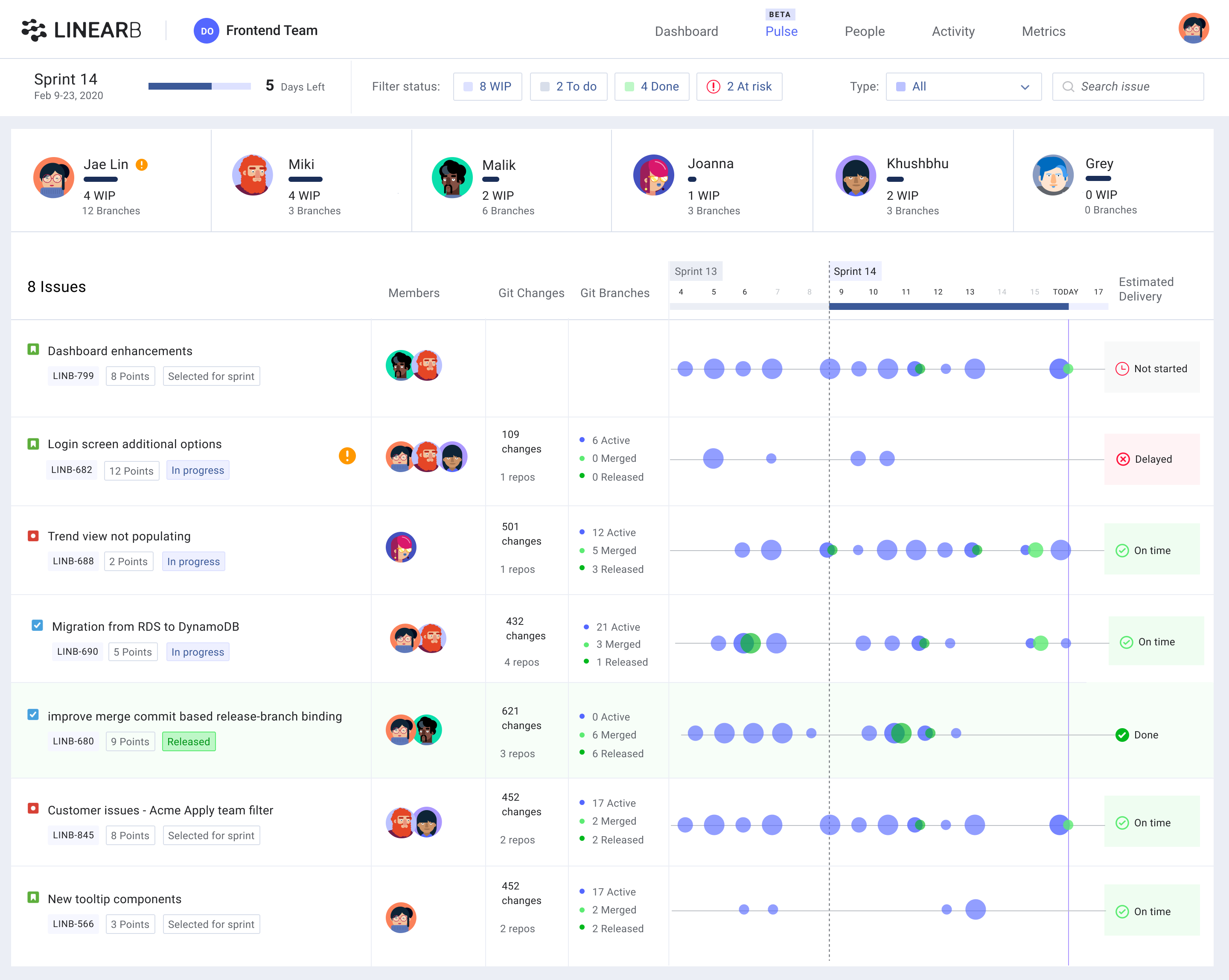
    LinearB today unveiled a namesake tool that automatically constructs and visualizes detailed progress timelines without requiring DevOps teams to rekey data into a separate project management application.

    Company CEO Ori Keren said the issue DevOps teams find most frustrating when it comes to managing software development projects is collecting the data that’s required to track the progress of any given project when much of that data already resides in the DevOps tools being employed. LinearB automates the collection and display of that data that DevOps teams previously spent hours collecting, he said.

    That approach makes it easier to then identify which teams and projects need additional help in near real-time using metrics surfaced in dashboards provided by LinearB, Keren noted, adding metrics such as the tracking of cycle times also make it easier for DevOps leaders to justify those investments to business executives.

    Keren said DevOps leaders also gain better insights in how DevOps teams are actually functioning in a way that makes it easier to predict and eliminate project delays, remediate high-risk code before it is included in a production environment, eliminate bottlenecks and make certain the focus of the DevOps team remains on tasks of the highest priority.

    LinearB is making use of the application programming interfaces (APIs) that DevOps tools expose to gather the metadata that exists about the status of any given project. LinearB then employs machine learning algorithms to construct and correlate that data to give DevOps leaders more accurate insights into the status a project when compared to a project management application that requires data to be entered manually. Given the rate at which application development projects are now updated, much of the data in a project management application is outdated shortly after its entered.

    Project managers also often spend a significant amount of time trying to encourage various members of a DevOps teams to update the data that resides in those project management applications.

    At a time when many members of those DevOps teams are now working from home to combat the spread of the COVID-19 pandemic, Keren noted that manually collecting that data has never been more problematic.

    While many DevOps teams are embracing value stream management tools to optimize DevOps workflow, Keren added most of those tools do not collect data at a granular enough level to provide DevOps leaders with enough software deliver intelligence to meaningfully impact DevOps workflows in near real-time.

    In general, Keren said most DevOps teams are too focused on metrics such as the number of lines of code or the number of commits being made. Metrics such as cycle times are more indicative of the productivity of a DevOps team.

    It’s not clear how the ability to automatically pull metrics from DevOps tools might impact the role of project managers. In theory at least, they should be able to spend more time helping DevOps leaders identify issues proactively versus badgering DevOps teams to fill out reports.

    Regardless of how the role of the project manager evolves, the one thing that is for certain is most members of a DevOps team would happily prefer to see as much of that process become automated as possible.

  • Atlassian Embeds Metrics for Measuring DevOps in Jira

    Atlassian Embeds Metrics for Measuring DevOps in Jira

    Atlassian today announced it has added four features to Jira Software Cloud that allow developers to visualize and measure progress across DevOps workflows.

    Suzie Prince, head of product for DevOps at Atlassian, said rather than organizations having to acquire and deploy separate tools to track DevOps metrics, Atlassian is moving to incorporate those capabilities in a platform that is already widely employed to manage application development projects.

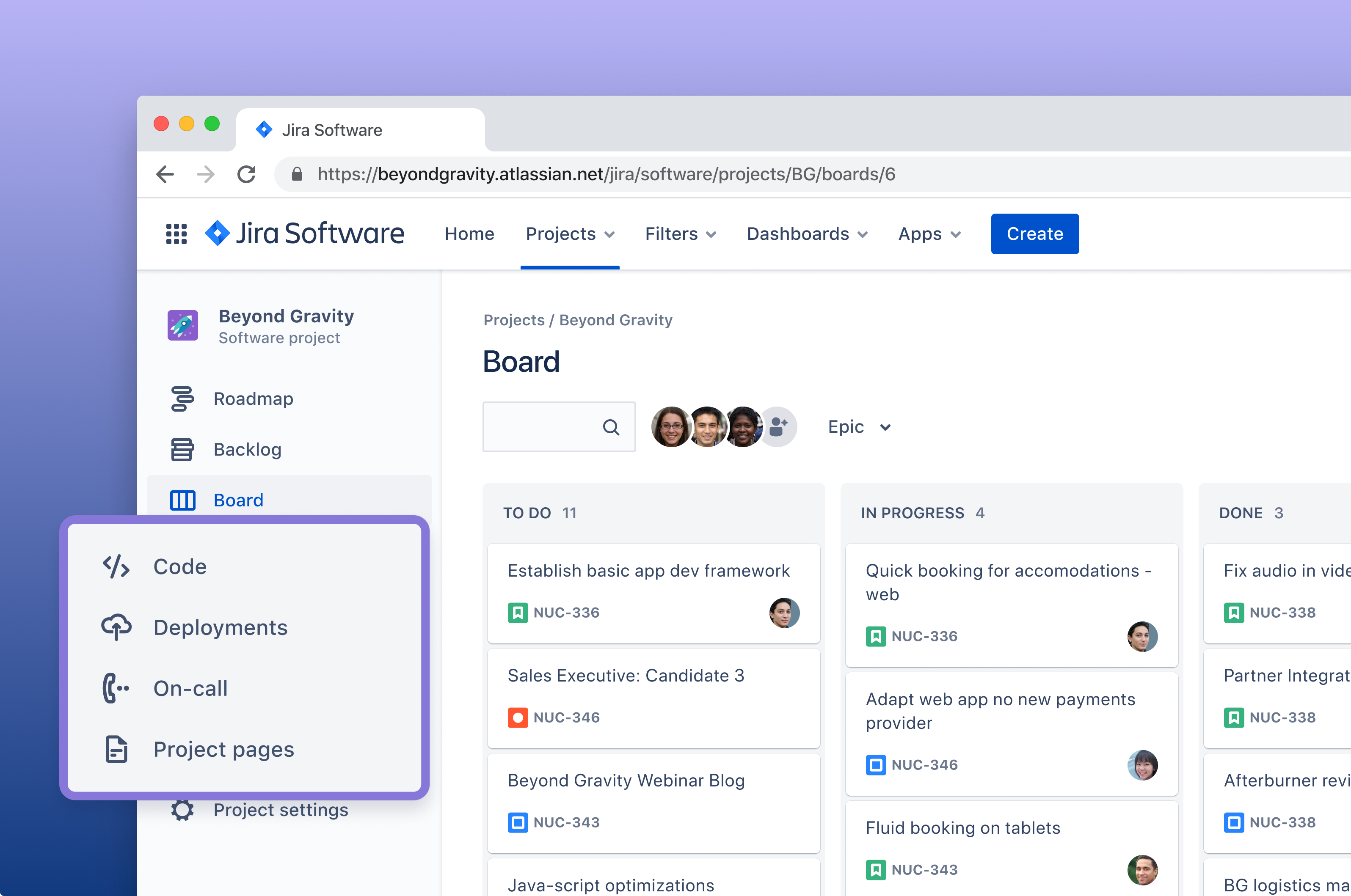
    Two capabilities being added to the standard edition of Jira Software Cloud are Code in Jira, which makes it possible to view the most recently active repositories in Bitbucket, GitHub, GitLab or Git Integration for Jira from within Jira Software Cloud, and Deployments in Jira, which makes it possible to similarly view in real-time at what stage any deployment is on any continuous integration/continuous delivery (CI/CD) platform.

    The Premium Edition of Jira Software Cloud is gaining tools to track both deployment frequency and cycle times to provide more insight into how application development teams are maturing in terms of their overall DevOps proficiency.

    These tools eliminate the need for analytics tools that otherwise would be required for each DevOps platform an organization employs, noted Prince. Jira Software Cloud also exposes a REST application programming interface (API) through which DevOps teams can integrate the Atlassian platform with other DevOps tools.

    It will be up to each organization to determine how they may want to employ the insights surfaced within Jira Software Cloud. However, Prince said most IT teams should identify areas of weakness where there is an opportunity to coach DevOps teams on how to improve.

    There is, of course, a lot more focus on improvement as application development projects have accelerated in recent months, thanks mainly to the increased focus on digital business transformation. Organizations of all sizes are trying to maximize investments in application development at a time when the economic downturn brought on by the COVID-19 pandemic is forcing IT teams to make difficult tradeoffs. Metrics, of course, are critical when it comes time to prioritize one project over another.

    At the same time, Prince noted that many teams are trying to keep the number of tools and platforms incorporated into a DevOps toolchain to an absolute minimum to limit costs and minimize complexity. Many DevOps teams have been employing Jira software to manage application development projects for years now, so Prince said these new capabilities are a logical extension of the company’s project management software.

    Of course, the best metrics are the ones that manifest themselves automatically. No project manager relishes having to badger developers to enter data into a project management application. The more the data residing in a DevOps platform can automatically populate a project management application, the happier all involved will be. After all, the goal is to head off as many issues as possible today before they become major problems tomorrow.

  • Product vs. Project: Balancing Management Roles for Success

    Product vs. Project: Balancing Management Roles for Success

    Many businesses today rely on project management to ensure that all the activities that are required to help the business function are able to do so efficiently. The importance of project management is ingrained into many businesses, and doesn’t need to be justified—or does it? For software development companies, product management also needs to be considered just as much, if not more. To determine whether both or one is needed, and to what extent, business leaders need to first recognize the similarities and differences between the roles of the project manager versus the product manager, and what each can bring to the business.

    The key to understanding the differences starts with the descriptive writing mantra that everyone learned back in school: the 5 Ws (and 1 H), otherwise known as who, what, when, where, why and how. Though the who and where are generally self-explanatory, you can easily understand the difference between product management and project management by understanding which of the other four questions each job answers. Both positions fulfill critical roles in effective product delivery.

    Product Management: Getting Concrete Answers

    Product management answers the questions of “what” and “why.” These are important because, for every product you build, you need concrete answers to these questions.

    What

    The fundamental question that we’re asking here is, “What are we building?” Many enterprises have a product range that spans across dozens of different markets. Though this is great for the business and investors, it’s not an effective way for a team to work. When you ask a team to build or support a product, they need a clear vision of what that product will actually do. This is especially true for software products because it’s easy for them to lose their identity if they attempt to do too much.

    In a big enterprise, a “do everything” mentality can cost more over time. It’s likely that you have many software teams, and each one is building software that’s designed to suit a specific part of the market. When those teams implement software that duplicates some functionality already provided by your business, you’re wasting time and effort.

    This is where a good product manager is valuable. They help keep software teams focused on what they’re building and rein in the desire (by developers and executives alike) to grow the software outside the job it needs to do.

    Why

    The other major question that product managers answer is, “Why are we building this?” For developers, why is often more important than what. Work is almost always interconnected with the work of other teammates. When teams understand why they’re building something, it’s much easier to understand how those connections should work. It also gives developers information about which trade-offs they should make when implementing a feature, such as simplicity and usability versus speed.

    It’s the job of the product manager to understand and convey the why of the product. They do that by conversing with executives and project stakeholders to understand how this product fits into the overall business need.

    Project Management: The Thoughtful Side

    Project management, on the other hand, answers a different set of questions. A project manager’s job is focused on the how and when.

    How

    Large software projects are complex, with many interdependent and interlocking pieces. Efficient software project managers understand those interdependent requirements and plan for them. They organize the project’s tasks so that by the time someone is ready to work on one piece, its dependencies have already finished. Developer downtime is minimized and it enables those developers to focus only on the problems they need to solve for each task.

    Managing these kinds of interdependent requirements is the most valuable thing that project managers do for their software developers, though it can often be missed by executives, who are much more focused on the second project management question: when?

    When

    This is the visible project management question, “When is that project going to be done?” External stakeholders don’t care about how or why. They usually only care about what when the final product isn’t what they expected. But when is a question that’s top of mind for every single team leader who waits for a software project to be finished.

    This is also the most difficult question to answer. It’s almost impossible to reliably predict how long it will take to deliver a feature—not even a whole project, just one part of it. Something that seems simple at the outset turns out to be much more complicated. Alternatively, sometimes something you think might take two weeks instead takes only a day or two.

    The Balancing Act

    In most traditional cases, both product and project management are crucial for software delivery pipelines to run smoothly. However, many enterprises are now moving their deployment infrastructure toward a continuous delivery model, which adopts DevOps principles. For teams that practice continuous delivery, the question of when something is coming out can sometimes feel less important. Additionally, many software teams transition toward agile software principles, which makes the collective software team responsible for the question of how. Third-party planning tools can also make it easier for software teams to answer the how and when questions for themselves.

    For this reason, many teams are transitioning away from using dedicated project managers. Instead, they move much of that responsibility to the teams and focus their planning efforts on the product itself. However, the most successful projects answer all four questions effectively. When you don’t have a good answer to one or more of these questions, the project can end up stressful and frustrating.

    The people answering these questions might change over time, as it has changed already. The crucial point is to just ensure that you do have people who are dedicated to solving these questions and relaying this information to their teams. This is the smartest way to ensure projects stay on track and deliver the product that is expected and needed.

  • Coronavirus Response: Atlassian Expands Free Software

    Coronavirus Response: Atlassian Expands Free Software

    Atlassian announced today it will make cloud-based versions of Jira Software, Confluence, Jira Service Desk and Jira Core available for free as part of an effort to assist organizations whose employees are working remotely to help combat the COVID-19 coronavirus pandemic.

    Robert Chatwani, chief marketing officer for Atlassian, said given the current unprecedented situation the company has decided to increase the number of free versions of its software, including Jira project management software, which is widely employed by software development teams.

    The company already makes available free versions of its Trello, Bitbucket and Opsgenie software. Atlassian is hoping that once the current COVID-19 coronavirus crisis subsides, a much broader base of end users including ones from business units will have gained some firsthand experience employing its project management applications and collaboration tools, said Chatwani. Previously, Atlassian revealed it has a goal of having 100 million active users of its software.

    Chatwani said many organizations are finding that having employees working from home is the new normal for the foreseeable future. While regions in Asia appear to be recovering from the initial COVID-19 coronavirus outbreak, that does not appear to be the case in other regions anytime soon. Once organizations re-engineer their workflows, they may discover some knowledge workers are more productive working remotely, he noted.

    Less clear right now is whether having most or all employees working remotely is a temporary measure in the furtherance of a business continuity strategy or simply an inevitable future of work that, because of the current crisis, is arriving much earlier than expected.

    Of course, not every employee is psychologically tempered to work from home. Software developers, for example, may be more accustomed to working in isolation than project managers. Chatwani said it will be important for organizations to establish new routines to maintain organizational cohesion, including determining when development teams should launch sprints to build elements of an application. Managers also may want to designate “office hours” during which anyone can contact them online to make sure employees feel they are accessible, he added.

    Organizations should also get used to the idea that children may be both seen and heard while online meetings are occurring, given the fact that millions of children are now being schooled at home, Chatwani noted.

    Many organizations to one degree or another have been relying more on remote workers. There are even some companies that don’t have physical headquarters—all the employees already work remotely. Some of those organizations have even gone so far as to define a time zone around which the organization will standardize on regardless of where employees are physically located.

    Whatever the strategy employed, organizations that hope to succeed in this new climate need to go well beyond ensuring remote network connections are available and secure—they need to find a way to either maintain their existing processes and culture to make sure that whatever product or service they provide continues to be built or delivered in a way that allows the organization to survive and hopefully continue to thrive.

    — Mike Vizard

  • Tasktop Delivers Viz Value Stream Management App

    Tasktop Delivers Viz Value Stream Management App

    Tasktop this week announced the general availability of an application to manage projects based on a flow framework that captures events as they occur across the software development toolchain.

    Company CEO Mik Kersten said Tasktop Viz is the first substantiation of the flow framework in software that provides a value stream management application to enable organizations to more effectively manage software development projects. Tasktop Viz doesn’t necessarily replace project management software as a system of record for billing purposes, for example, said Kersten; however, it does provide a way to visually model the software development environment in a way that makes it easier to identify bottlenecks and potential opportunities to reallocate resources.

    Kersten said from a management perspective, existing approaches to managing software development projects are broken. They depend too much on software developers to manually enter data to update a project management application, which they don’t do as often as they should because it takes time away from developing software, he said. Tasktop Viz takes advantage of application programming interfaces (APIs) to automatically capture metadata from across the software development toolchain, providing instant visibility into software development projects without requiring DevOps teams to engage in an additional coding, Kersten noted.

    Tasktop Viz

    Kersten has been making a case for the adoption of an approach to managing software development projects based on the flow framework for several years. Tasktop Viz now provides IT teams with an application that is designed from the ground up using that model.

    Of course, the concept of value stream management applications has been around for some time. The debate now is not so much over the value of these applications as much as it is which architectural approach to building these applications best reflects modern software development. As the number of dependencies between projects continues to expand, it’s becoming next to impossible for organizations to manage multiple software development projects relying solely on spreadsheets and existing project management applications.

    That issue is further exacerbated by the fact that businesses are now more dependent on software than ever, so any delay to a project could have a dramatic impact on future revenues.

    Kersten said that despite the obvious business benefits, the biggest obstacle to adoption is more psychological than technical. Many software development teams are reluctant to adopt tools that might illustrate how chaotic the software development process within their organization really is. It’s critical that organizations that adopt value stream management applications do so with an eye toward wanting organizations to improve rather than just deploying another tool to measure metrics that are used to increase the amount of code being written.

    Of course, there’s no correlation between the amount of code being written and the quality of the applications being developed. The real challenge is to not just accelerate the rate at which applications are being developed, but also to ensure that once those applications are deployed in a production environment the number of fixes required are kept to the absolute minimum possible.

    — Mike Vizard

  • Atlassian Adds No-Code Automation Tool to Jira Cloud

    Atlassian Adds No-Code Automation Tool to Jira Cloud

    Atlassian announced today it has added a no-code tool to enable DevOps teams to make it easier to customize Jira project management software without having to learn how to code.

    Sean Regan, head of growth for software teams at Atlassian, said Automation for Jira will now become a core part of Jira Cloud that will be made available to all 65,000 customers using Jira software. Originally developed by Code Barrell, the tool was acquired by Atlassian last year. Previously, it had been available as an add-on adopted by about 6,500 customers, he said.

    The goal is to enable administrators that track projects to reduce the amount of time they spend on manually entering data. On average, organizations are spending 51 hours a month on administrative tasks involving the management of projects, Regan noted. Organizations should take inventory of those tasks and use Automation for Jira to start automating the tasks that are the most repetitive, he said.

    Automation for Jira, Regan said, is part of a larger ambitious effort to make Jira software accessible to more than 100 million active end users. By employing a visual tool to automate tasks it should become easier for a broader number of organizations to customize processes by defining rules that trigger events. Organizations will not be forced to depend on developers to write code to create those workflows, he noted.

    Automation for Jira

    Automation for Jira is also part of a concerted effort to modernize a venerable Jira project management application that has been widely employed by software development teams for decades. The ultimate goal is to enable software development teams to spend more time building applications versus trying to ascertain the status of any given development project, said Regan.

    The no-code Automation for Jira tool is also designed to integrate with collaboration tools Slack and Microsoft Teams within the context of a set of best DevOps practices. In fact, Regan noted any time there is an issue on a software development project it almost always comes down to a lack of collaboration between all the stakeholders involved.

    There is, of course, a lot more appreciation for project management software among DevOps teams that typically are trying to organize around multiple projects at the same time. A delay on one project might present an opportunity to reallocate resources to accelerate another. That can’t happen, however, if no one is aware of what bottlenecks exist in the first place.

    Not everyone appreciates all the nuances of project management. The less obtrusive project management becomes the more effective it tends to be. Developers are especially notorious for not always updating project management applications, which usually results in project managers having to nag them to share information that other teams are counting on before they can move forward. Hopefully, there may come a day when all project management applications are updated automatically. In the meantime, the less time spent on manual tasks the happier all the members of the software development team are likely to be.

    — Mike Vizard

  • Zoho Offers Free SaaS Apps to Combat Coronavirus Spread

    Zoho Offers Free SaaS Apps to Combat Coronavirus Spread

    Zoho today announced it is making available for free a bundle of software-as-a-service (SaaS) applications dubbed Remotely through July 1.

    Raju Vegesna, chief evangelist for Zoho, said Remotely is a humanitarian gesture to help mitigate the impact of a global coronavirus epidemic. Remotely comprises a set of productivity and collaboration applications that users can access in as little as five minutes.

    Included in Remotely are productivity, collaboration and project management applications as well as tools that automate the migration of data into the Zoho cloud platform.

    Vergesna said Remotely also addresses cybersecurity concerns by enabling IT teams to apply security controls to the data that employees are allowed to access. Of course, IT organizations in many cases would still need to make sure the network connections being employed to access SaaS applications are secure.

    Now that many local governments are recommending that organizations allow employees to work from home to help limit the spread of the coronavirus outbreak, many IT administrators are scrambling to provide remote access to applications at scale. It’s one thing to provide access to a small number of employees who might travel intermittently, but it’s quite another to support an entire remote workforce for some unknown period of time.

    Vergesna, however, said that at this point the challenges associated with making that transition have a lot more to do with overcoming cultural issues than they do the technology. Much of the transition to Zoho SaaS applications has been automated, he said.

    It remains to be seen to what degree the coronavirus outbreak might accelerate the transition to cloud applications. Many IT administrators are still managing local instances of Windows servers to deliver applications because the time and effort to migrate to SaaS applications have been substantial. Making those on-premises applications available remotely at scale is not only challenging from a technical perspective, but it’s also expensive.

    Of course, Zoho is far from being the only provider of SaaS productivity and collaboration applications. However, it remains to be seen whether other providers will follow Zoho’s lead. The hope each of these vendors has is that once the coronavirus crisis passes many of the organizations that take advantage of their software to enable employees to work from home will start paying to use that software.

    In the meantime, the economic impact of the coronavirus is likely to be staggering. Conferences are being canceled and face-to-face business meetings are being shifted online. It’s hard to say how many of those meetings are likely to stay there for good. At the very least, many more end users are about out to discover just how rich SaaS application environments have become. In many cases, IT teams will stitch together workflows across a range of SaaS applications using application programming interfaces (APIs). The challenge they will face is acquiring the programming skills required to construct those workflows.

    — Mike Vizard