Tag: linux

  • Red Hat to Acquire IT Automation and DevOps Leader Ansible

    Red Hat to Acquire IT Automation and DevOps Leader Ansible

     Red Hat advances frictionless IT with simplified management for hybrid clouds, OpenStack environments and container-based services

    RALEIGH, N.C., Oct 16, 2015 (BUSINESS WIRE) — Red Hat, Inc. RHT, +3.43% the world’s leading provider of open source solutions, today announced that it has signed a definitive agreement to acquire Ansible, Inc., a provider of powerful IT automation solutions designed to help enterprises move toward frictionless IT. Ansible’s automation capabilities, together with Red Hat’s existing management portfolio, will help users drive down the cost and complexity of deploying and managing both cloud-native and traditional applications across hybrid cloud environments. With today’s announcement, Red Hat expands its leadership in hybrid cloud management, OpenStack and containers.

    Ansible’s simple and agentless approach, unlike competing solutions, does not require any special coding skills, removing some of the most significant barriers to automation across IT. From deployment and configuration to rolling upgrades, by adding Ansible to its hybrid management portfolio, Red Hat will help customers to:

    Deploy and manage applications across private and public clouds.
    Speed service delivery through DevOps initiatives.
    Streamline OpenStack installations and upgrades.
    Accelerate container adoption by simplifying orchestration and configuration.
    The upstream Ansible project is one of the most popular open source automation projects on GitHub with an active and highly engaged community, encompassing nearly 1,200 contributors. Ansible automation is being used by a growing number of Fortune 100 companies, powering large and complex private cloud environments, and the company has received several notable accolades, including a 2015 InfoWorld Bossie Award, recognizing the best open source datacenter and cloud software.
    With the addition of Ansible, Red Hat’s open hybrid cloud and IT management solutions will include:

    Red Hat CloudForms, an open management platform that provides orchestration, governance and policy-based control across hybrid clouds enabling self-service provisioning, and resource management as well as quota enforcement, metering and chargeback.
    Red Hat Satellite, a comprehensive lifecycle management solution with integrated infrastructure provisioning, software distribution, patch management and auditing capabilities.
    Ansible and Ansible Tower, an IT automation and DevOps platform that provides significantly simplified multi-tier application deployment and IT automation across hybrid clouds.
    The acquisition is expected to have no material impact to Red Hat’s revenue for the third and fourth quarters of its fiscal year ending Feb. 29, 2016 (“fiscal 2016”). Management expects that non-GAAP operating expenses for fiscal 2016 will increase by approximately $2.0 million, or ($0.01) per share, in the third quarter and approximately $4.0 million, or ($0.02) per share, in the fourth quarter as a result of the transaction. Red Hat calculates non-GAAP operating expense by subtracting from GAAP operating expense the estimated impact of non-cash share-based compensation expense, which for fiscal 2016 is expected to increase by approximately $1 million for each of the third and fourth quarters, and amortization of intangible assets, which for fiscal 2016 is expected to increase by approximately $1 million for each of the third and fourth quarters, in addition to transaction costs related to business combinations, which are expected to increase by approximately $1 million in the third quarter. Management expects GAAP operating expense to increase for fiscal 2016 by approximately $5 million, or ($0.02) per share, in the third quarter and approximately $6 million, or ($0.02) per share, in the fourth quarter as a result of the transaction. Excluding the operating expense impact as noted above to GAAP and non-GAAP operating margin and GAAP and non-GAAP earnings per share, Red Hat is otherwise re-affirming its fiscal 2016 third quarter and full year guidance provided in its Sept. 21, 2015, earnings press release.

    The transaction is expected to close in October 2015, subject to customary closing conditions.

    Webcast

    Executives from both companies will host a webcast to discuss this announcement on Thursday, Oct. 22, 2015, at 11 a.m. EDT. Following executive remarks, press and analysts are invited to participate in a live question and answer session.

    To join the webcast or view the replay after the event, visit https://vts.inxpo.com/Launch/QReg.htm?ShowKey=27948.

    Read more about the acquisition on Red Hat’s website including in the Red Hat blog.

    Supporting Quotes

    Saïd Ziouani, co-founder and CEO, Ansible

    “We’re thrilled that Red Hat, a global leader in open source, has chosen Ansible to tackle the future of IT automation and systems management. This is a strong validation that Ansible’s simplicity, enterprise customer base and robust community is winning in enterprise IT automation, from compute to networking to cloud to containers.”

    Joe Fitzgerald, vice president, Management, Red Hat

    “Ansible is a clear leader in IT automation and DevOps, and helps Red Hat take a significant step forward in our goal of creating frictionless IT. Red Hat is transforming IT management, driving innovation that is 100% open source, built on an open management platform, and relentlessly focused on reducing cost and complexity through ease of use and automation. I am thrilled to welcome Ansible to Red Hat to help us expand that commitment.”

    Doug Carlisle, managing director, Menlo Ventures

    “I commend the entire Ansible team for their execution over the past two years and congratulate Red Hat for their leadership in cloud and recognition of the growing importance of DevOps via this acquisition. I believe the addition of Ansible to its cloud management portfolio will help to place Red Hat at the forefront of cloud and DevOps.”

    Worldwide Cloud Systems Management Software Forecast Update, 2015–2019 – July 2015, IDC #257928

    “According to IDC’s worldwide analysis as of July 2015, the worldwide cloud systems management software market achieved total revenue of $2.3 billion in 2014, representing growth of 29.9% from 2013. The market is currently forecast to grow to $8.3 billion in 2019 at a compound annual growth rate (CAGR) of 28.9% for the 2014–2019 period.”

    About Red Hat, Inc.

    Red Hat is the world’s leading provider of open source software solutions, using a community-powered approach to reliable and high-performing cloud, Linux, middleware, storage and virtualization technologies. Red Hat also offers award-winning support, training, and consulting services. As a connective hub in a global network of enterprises, partners, and open source communities, Red Hat helps create relevant, innovative technologies that liberate resources for growth and prepare customers for the future of IT. Learn more at http://www.redhat.com.

    Forward-Looking Statements

    Certain statements contained in this press release may constitute “forward-looking statements” within the meaning of the Private Securities Litigation Reform Act of 1995. Forward-looking statements provide current expectations of future events based on certain assumptions and include any statement that does not directly relate to any historical or current fact. Actual results may differ materially from those indicated by such forward-looking statements as a result of various important factors, including: risks related to the integration of acquisitions and the ability to market successfully acquired technologies and products; the ability of the Company to compete effectively; the ability to deliver and stimulate demand for new products and technological innovations on a timely basis; the effects of industry consolidation; delays or reductions in information technology spending; uncertainty and adverse results in litigation and related settlements; the inability to adequately protect Company intellectual property and the potential for infringement or breach of license claims of or relating to third party intellectual property; risks related to data and information security vulnerabilities; ineffective management of, and control over, the Company’s growth and international operations; fluctuations in exchange rates; and changes in and a dependence on key personnel, as well as other factors contained in our most recent Quarterly Report on Form 10-Q (copies of which may be accessed through the Securities and Exchange Commission’s website at http://www.sec.gov), including those found therein under the captions “Risk Factors” and “Management’s Discussion and Analysis of Financial Condition and Results of Operations.” In addition to these factors, actual future performance, outcomes, and results may differ materially because of more general factors including (without limitation) general industry and market conditions and growth rates, economic and political conditions, governmental and public policy changes and the impact of natural disasters such as earthquakes and floods. The forward-looking statements included in this press release represent the Company’s views as of the date of this press release and these views could change. However, while the Company may elect to update these forward-looking statements at some point in the future, the Company specifically disclaims any obligation to do so. These forward-looking statements should not be relied upon as representing the Company’s views as of any date subsequent to the date of this press release.

    Red Hat and the Shadowman logo are trademarks of Red Hat, Inc., registered in the U.S. and other countries. Linux® is the registered trademark of Linus Torvalds in the U.S. and other countries. The OpenStack mark is either a registered trademark/service mark or trademark/service mark of the OpenStack Foundation, in the United States and other countries, and is used with the OpenStack Foundation’s permission. We are not affiliated with, endorsed or sponsored by the OpenStack Foundation, or the OpenStack community.

    View source version on businesswire.com: http://www.businesswire.com/news/home/20151016005177/en/

    SOURCE: Red Hat, Inc.

    Red Hat, Inc.
    Media Contact:
    Stephanie Wonderlick, +1-571-421-8169
    swonderl@redhat.com
    or
    Investor Relations:
    Tom McCallum, +1-919-754-4630
    tmccallum@redhat.com

    Copyright Business Wire 2015

    For Red Hats take on Why Ansible?

  • Announcing Orca v2.0: Application Configuration Automation for Linux and Windows

    Austin, TX September 17, 2015 – www.orcaconfig.com

    Announcing Orca v 2.0: 
    Application Configuration Automation with New Linux Support and New Job Summary Views for Reporting and Compliance

    Orca now supports Linux.

    With its version 2.0, Orca introduces Linux support for Apache, MySQL and System Services with even more coverage to be announced. Now organizations with mixed Windows and Linux environments can centrally and securely automate their application and middleware configuration management and workflows.

    Orca meets a previously unmet need.

    Customers who need continuous delivery and increased software velocity have many well-known application release automation options available to them. Similarly customers who require server and OS-layer configuration management have several reliable, purpose-built commercial alternatives.

    But the ongoing configuration management at the middleware and application layers has been a DevOps area that has stubbornly resisted drag and drop workflow automation, until now…until Orca.

    No compromises

    Now, Orca users 1) automatically detect drift, 2) automatically correct drift and 3) bulk-deploy app and middleware configuration changes across hundreds or even thousands of servers in both Windows and Linux environments.


    Orca delivers
    continuous configuration of apps and middleware at enterprise scale.

    New Job Summary Views for simplified reporting and compliance. New levels of transparency.

    Orca 2.0 users can now see manager level summaries which provide a single pane of glass view for audits and compliance reporting, a powerful new level of transparency and time-savings.

    While Orca has always reported the full detailed history of a job including the outcome, configurations affected on each node, timing, approvals and workflows, version 2.0 also logs whether a job had been validated prior to execution. These new management views and enhanced job logs reflect Orca’s commitment to taking the pain out of audits, compliance and reporting.

    __________________________________________________________________

    Team Orca has created powerful DevOps tools before

    Team Orca founders are veterans at improving and automating once-painful IT processes. They started Build Forge (now part of IBM) to accelerate software delivery through build process automation. Later they started VaraLogix (now part of BMC) to take the risk and uncertainty out of web application deployment. Now Team Orca is excited to improve life for IT teams by streamlining time consuming, money wasting, overly complex configuration processes that many have just taken for granted for too long.


    For more information on Orca or to request a product demo, contact us at teamorca@orcaconfig.com or visit www.orcaconfig.com.  Follow @orcaconfig on Twitter.

  • Webinar: How One of the 15 Safest Banks in the World Outcompetes the Tech Disruptors

    Webinar: How One of the 15 Safest Banks in the World Outcompetes the Tech Disruptors

    The financial services industry has changed more in the last 15 years than in the previous thousand. Customers expect constant access through secure mobile interactions with providers; interactions that no longer take place within the four walls of a bank. At the same time, financial services companies are dealing with ever-growing regulation.

    Join Sander Ettema, Manager, Linux Infrastructure Services at Rabobank and Andrew Phillips, VP, Products for XebiaLabs as they examine how Rabobank has transformed its software delivery by implementing Agile development, Continuous Integration and Continuous Delivery. Learn tips on how to stay ahead of the curve in an age where the competitive landscape is shifting at light speed and rapidly moving beyond other financial services companies to include tech giants like Google and Apple.

    Attend and learn how to:

    • Create a culture of innovation and adapt your IT organization for rapid change.
    • Deliver on customer expectations by modernizing your IT software delivery landscape with an open platform for Continuous Delivery.
    • Get started quickly and leverage your existing IT infrastructure for rapid results and understand the key metrics to watch along the way.
    • Lead an IT transformation in the highly regulated environment of financial services.


    Recorded:  Wednesday, July 22, 2015

    Recording

    Slides

    [seoslides embed_id=”4d4ddd2a9c8e” script_src=”https://devopsy.kinsta.cloud/embed-script/8598/8629/” overview_src=”https://devopsy.kinsta.cloud/slides/8598/” site_src=”https://devopsy.kinsta.cloud” site_title=”devopsy.kinsta.cloud” title=” ” /]


    Your Host

    alan_new_head_shotAlan Shimel, Editor-in-Chief devopsy.kinsta.cloud, An often-cited personality in the security and technology community and a sought-after speaker at industry and government events, Alan has helped build several successful technology companies by combining a strong business background with a deep knowledge of technology.

    About the Panelists

    AndrewPhillipsAndrew Phillips

    VP, Products, XebiaLabs

    Andrew Phillips heads up product management at XebiaLabs where he drives product direction, positioning and planning. He is an evangelist and thought leader in the DevOps, Cloud and Delivery Automation space.


    Sander Ettema

    Manager, Infrastructure Linux Services, Rabobank

    Sander Ettema manages Linux/Unix Infrastructure Services for Rabobank, a global leader in food and agri financing and sustainability-oriented banking.  In addition to being a member of the DevOps workgroup, Sander oversees Linux/Unix/Appliances Hosting, Continuous Delivery services for Java as well as log management services.

  • RedHat Culture Keeping the DevOps Faith

    RedHat Culture Keeping the DevOps Faith

    Red Hat is readily recognized for its accomplishments with Linux and software design. The Red Hat DevOps culture itself started by design as a program built on training developers in operations skills and increasing operations’ faith in these developers. Red Hat’s IT Platform Operations Manager, Anderson Silva tells devopsy.kinsta.cloud how internal teams initiated the cultural change inside this Linux development icon.

    Get Back In Line!

    The Platform Operations team in IT manages and executes a lot of the deployments of IT-managed applications into these environments, says Silva. On the road to establishing Red Hat’s internal DevOps dynasty and prior to running the Platform Operations team, Silva captained a small band of operations folk in a department known as Production Control. There Silva and crew established controls to ensure that any new deployments would not and could not break the production environment.

    “Sometimes this meant we had to halt the whole of a deployment because a developer forgot to add one link to our release documentation, putting them back in line with everyone else who was requesting permission to deploy,” says Silva. Feeling that Production Control as such was more the bottleneck than a deployment solution, Silva saw this as a challenge to Red Hat that would be increasingly important and increasingly difficult to meet.
    In those days before DevOps was cool, a Red Hat development manager came to the rescue with a program to turn that bottleneck into a solution that could speed up the deployment process. According to Silva, this first initiative was the root of what became known at Red Hat as the Lieutenant program, which supports developers willing to gain the Red Hat Certified Engineer certification so they could enjoy production and pre-production access and manage each their own deployments as frequently as they liked. Red Hat eventually added a “corporals” component as an additional and similar program. These developers in “corporals” gained QA access and did not have to earn the RHCE certification to get it.

    Riveting Results

    “These two programs added significant value over the years. By building trust between developers and operations, we addressed many technical issues that we had historically viewed as ‘another person’s problem’,” says Silva, who also holds the RHCE and RHCA certifications and actively maintains a Fedora Package. Red Hat continues to foster a flexible DevOps culture and to nurture the flexibility that sprouts from added trust between engineers and developers.

    That flexibility is paying dividends. Where as it once took Red Hat a week to develop and deploy software for about 20 servers to its staging environment, today the Linux titan can complete such a release a few times a day, says Silva. “I wouldn’t be surprised if in the near future we are able to do it a few times an hour when necessary,” Silva says.

    And by keeping the faith between operations and development, Red Hat can limit the risk that might otherwise come with its migration to its hybrid cloud. This DevOps-relationship-based culture will also benefit Red Hat’s new image-based deployments, which count on tools that are common among members of this culture such as the Red Hat Enterprise Linux OpenStack Platform, OpenShift, Kubernetes (a data center tool), and Docker.

    “As an open source company, we use open source solutions where possible and we have written our own tools to help us automate deployments,” says Silva. As Red Hat’s Platform Operations team is about to retire some of these tools in favor of others, it is also reaching out to other internal IT departments to spread the use of image-based deployments, which also leverage Jenkins, AWS, Puppet, Ansible, and Git.

    The DevOps culture that a few managers seeded within departments has borne fruit in the form of a top-down leadership example that rewards and encourages developers who innovate. Red Hat draws temporary ad hoc teams including sys admins and developers together to address nagging development issues. The key to success, says Silva, is in working on these challenges together instead of finding someone to blame.

    Free Advice

    Silva advises that enterprise leaders who want to wade into fostering a DevOps culture focus on their people before whatever looks new and shiny among the many choices for tackling DevOps approaches. “Trust your people and let them do their jobs. When mistakes happen, don’t look to blame; look for a solution. Then take a look at what’s new and shiny,” Silva says.

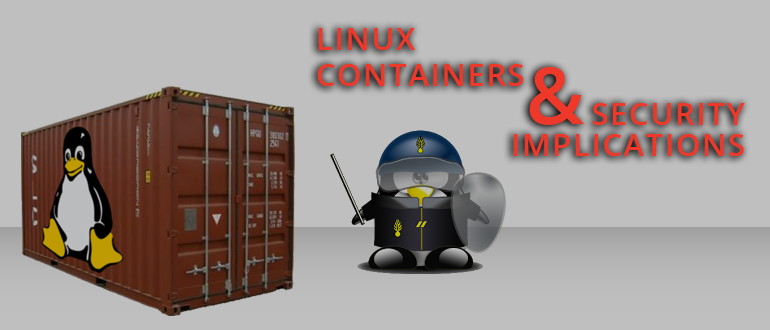
  • Linux Containers & Security Implications

    Linux Containers & Security Implications

    Does the word “container” intimate containment, suggesting that containers are inherently secure? If it does, any such assumption of security may be the broadest Docker vulnerability to date.

    aaron cois“One of the biggest threats I see with Docker is its positioning and the implied security in the language. The reality is that these containers don’t contain anything,” says Aaron Cois, Researcher, CERT Division, Software Engineering Institute, Carnegie Mellon University. Yet, that is the implication.

    Just as those who thought Linux or VMs were secure enough on their own were mistaken, so those who believe that containers put a lid on security will be sorely disappointed. Today, Linux environments require network, OS / host security, Internet security, and web application security measures similar to those used with other platforms. Tools like security auditing / PEN testing, firewalls / WAFs, anvi-virus and anti-malware tools, DLP, IDS/IPS, remediation tools, and really the gamut of security measures similar to what Microsoft environments require are increasingly needed to defend data in Linux environments. “Likewise, operations can give developers tools to log into the VSphere console to create and change VMs while limiting their privileges,” says Cois.

    And so, containers also require appropriate security measures. “Developers and non-admin operations staff don’t need to log into the host command line to work, and no one in security wants them to,” says Cois. But today’s Docker workflow not only permits but requires it.

    The Root of the Problem…


    –THIS STORY HAS BEEN MOVED TO CONTAINER JOURNAL–


  • Docker is red hot at Red Hat

    The news from the Red Hat Summit this weeks almost appears to be all Docker all the time.  A series of announcements has made Docker clearly the container of choice for Red Hat users. But don’t stop at just Red Hat. Docker has pretty much locked down all of the major Linux distros including Amazon’s AWS Linux version with more on the way. More on this on Network World here.

    Here is a recap of the news:

    http://blog.docker.io/2014/04/docker-red-hat-even-more-goodness/

    • Expansion of RHEL 7.0 Beta to include Docker container technologies.  Red Hat Enterprise Linux 7 is currently in beta and is targeted to be a Red Hat certified container host, with Docker as a primary supported container format;

    • Docker Integration with OpenShift PaaS.  Application containers in OpenShift will be integrated with Docker and support Red Hat certified ISV applications packaged in the Docker container format. These same containerized applications will also be supported on other Red Hat products;

    • Red Hat Certification.  As revealed last month, Red Hat is launching certification of applications delivered in the Docker container format – Dockerize All The Things!

    • One More Thing.  Finally, in addition to the above, for enterprise IT orgs conducting projects with Docker and Red Hat, Docker, Inc. has developed additional service offerings, including developer support and a JumpStart program.

  • DOCKERCON 2014

    dockercon14

    Registration and call for papers are now open for DockerCon 2014!

    DockerCon is a two-day Docker-centric conference organized by the team at Docker Inc. We’ll have speakers talking about Docker, DevOps, operations and development. Our talks will include topics that will interest Developers, SysAdmins as well as C-level executives.

    The conference will start with general session with keynotes in the mornings, untill 11:00am, followed by three different tracks:

    • Docker University
    • Docker for Developers
    • Docker for Ops & Sysadmins

    Docker University will be the place to learn about using Docker, building Docker images as well as learning about the Docker API.

    In the Docker for Developers track, you will learn about Docker best practices, CI/CD, orchestration, Registry, Docker-core, real-life use cases and more.

    The Docker for Ops & Sysadmins track will introduce you to Docker performance, metrics, security, scaling and orchestration.

    DockerCon is also the occasion to meet with the Docker eco-system: contributors, developers, devops, ops, hackers, partners, and also the Docker team including Solomon Hykes (Founder) andBen Golub (CEO).

    We are also organizing a Docker Hackathon during the week-end prior to DockerCon. Winners will be able to present their project during the conference. Register here if you would like to participate.

    We invite you to follow the official twitter account: @DockerCon, in order to get the latest updates.

    Happy Hacking!

  • Red Hat Announces Certification for Containerized Applications, Extends Customer Confidence and Trust to the Cloud

    Red Hat Container Certification delivers secure, consistent and simplified platform for ISVs to take advantage of containers in Docker format

    RALEIGH, N.C., Mar 11, 2014 (BUSINESS WIRE) — Red Hat, Inc. RHT -0.84% , the world’s leading provider of open source solutions, today announced the extension of its application certification program to include containerized applications. The Red Hat Container Certification ensures that application containers built using Red Hat Enterprise Linux will operate seamlessly across certified container hosts. Designed with the needs of independent software vendors (ISVs), service providers and their enterprise customers in mind, the certification extends the confidence customers have with Red Hat Enterprise Linux, which currently supports thousands of certified applications, to certified containers running on certified container hosts. The pending release of Red Hat Enterprise Linux 7 and Red Hat’s OpenShift Platform-as-a-Service (PaaS) offering will both be certified container hosts, with Docker as a primary supported container format.

    Linux Containers

    Linux Containers have emerged as a key open source application packaging and delivery technology, combining lightweight application isolation with the flexibility of image-based deployment methods. Developers have rapidly embraced Linux Containers because they simplify and accelerate application deployment, while many PaaS platforms are built around Linux container technology, including OpenShift by Red Hat. Red Hat Enterprise Linux implements Linux Containers using core technologies such as Control Groups (cGroups), Resource Management, SELinux, and network namespaces, enabling secure multi-tenancy and reducing the potential for security exploits.

    Building on the capabilities of Red Hat Enterprise Linux, application containers are deployed as software packages that include the application and all of its required runtime components. Benefits include:

    • Instant portability , deploy the certified application container across any certified container host
    • Minimal footprint , avoid the overhead of virtual machine images which include a complete operating system
    • Simplified maintenance , reduce the effort and risk by patching applications along with all of their dependencies
    • Lowered development costs , develop, test and certify applications against a single runtime environment

    Red Hat Container Certification

    The Red Hat Container Certification is the latest addition to Red Hat’s industry-leading certification portfolio that includes Red Hat Enterprise Linux and Red Hat Enterprise Linux OpenStack Platform. The certification is also part of a larger set of Red Hat technology initiatives which in turn support thousands of third party technology partners within Red Hat’s global ecosystem

    To support this newly announced container certification, Red Hat is also announcing the container certification Partner Early Access Program (PEAP). The PEAP will run through late spring and provide the ability for ecosystem partners to participate in early testing, integration and feedback of the tools and resources required for containerization prior to the official launch of the certification and partner program, currently planned for mid-2014. Beginning today, companies interested in being part of the PEAP can learn more by visiting https://engage.redhat.com/content/enterprise-early-access-se-201402101640.

    Supporting Quotes

    Paul Cormier, president, Products and Technologies, Red Hat

    “Twelve years ago, Red Hat shook up the enterprise status quo with the introduction of Red Hat Enterprise Linux, a safe, consistent Linux platform for the ISV ecosystem. Today, the trust that ISVs place in Red Hat Enterprise Linux can extend to containerized applications with the Red Hat Container Certification, ensuring that containers built on Red Hat Enterprise Linux will work as intended across certified hosts, delivering expanded application flexibility, lowered costs and simplified maintenance, all backed by the support and expertise expected from Red Hat.”

    Ben Golub, CEO, Docker

    “As the de facto standard in open source container technology, we are pleased to see Red Hat embracing the container movement as a means of application efficiency and consistency across computing footprints. By offering a container certification on Red Hat Enterprise Linux and Docker, Red Hat is providing the industry’s only standardized, stable platform for commercial container workloads, providing a safe, reliable way to deliver the enterprise applications of the future.”

    Matt Asay, Vice President of Marketing and Business Development, MongoDB

    “Consistent with its mission of high value and affordability, Red Hat continues this trend through a supported platform that enables consistent enterprise-grade application deployment. We’re excited to work with Red Hat to provide customers a seamless database environment that is consistent from development to deployment, regardless of where it resides within the open hybrid cloud.”

    Connect with Red Hat

    About Red Hat, Inc.

    Red Hat is the world’s leading provider of open source software solutions, using a community-powered approach to reliable and high-performing cloud, Linux, middleware, storage and virtualization technologies. Red Hat also offers award-winning support, training, and consulting services. As the connective hub in a global network of enterprises, partners, and open source communities, Red Hat helps create relevant, innovative technologies that liberate resources for growth and prepare customers for the future of IT. Learn more at http://www.redhat.com .

    Forward-Looking Statements

    Certain statements contained in this press release may constitute “forward-looking statements” within the meaning of the Private Securities Litigation Reform Act of 1995. Forward-looking statements provide current expectations of future events based on certain assumptions and include any statement that does not directly relate to any historical or current fact. Actual results may differ materially from those indicated by such forward-looking statements as a result of various important factors, including: risks related to delays or reductions in information technology spending; the effects of industry consolidation; the ability of the Company to compete effectively; the integration of acquisitions and the ability to market successfully acquired technologies and products; uncertainty and adverse results in litigation and related settlements; the inability to adequately protect Company intellectual property and the potential for infringement or breach of license claims of or relating to third party intellectual property; the ability to deliver and stimulate demand for new products and technological innovations on a timely basis; risks related to data and information security vulnerabilities; ineffective management of, and control over, the Company’s growth and international operations; fluctuations in exchange rates; and changes in and a dependence on key personnel, as well as other factors contained in our most recent Quarterly Report on Form 10-Q (copies of which may be accessed through the Securities and Exchange Commission’s website at http://www.sec.gov ), including those found therein under the captions “Risk Factors” and “Management’s Discussion and Analysis of Financial Condition and Results of Operations.” In addition to these factors, actual future performance, outcomes, and results may differ materially because of more general factors including (without limitation) general industry and market conditions and growth rates, economic and political conditions, governmental and public policy changes and the impact of natural disasters such as earthquakes and floods. The forward-looking statements included in this press release represent the Company’s views as of the date of this press release and these views could change. However, while the Company may elect to update these forward-looking statements at some point in the future, the Company specifically disclaims any obligation to do so. These forward-looking statements should not be relied upon as representing the Company’s views as of any date subsequent to the date of this press release.

    Red Hat, Red Hat Enterprise Linux and the Shadowman logo are trademarks of Red Hat, Inc., registered in the U.S. and other countries.Linux® is the registered trademark of Linus Torvalds in the U.S. and other countries.

    SOURCE: Red Hat, Inc.

    Red Hat, Inc.John Terrill, 571-421-8132 jterrill@redhat.com

    Copyright Business Wire 2014

  • DOCKER 0.9: INTRODUCING EXECUTION DRIVERS AND LIBCONTAINER

    From the Docker Blog:

    Fellow Dockers,

    Today we are happy to introduce Docker 0.9. With this release we are continuing our focus on quality over features, shrinking and stabilizing the core, and providing first-class support for all major operating systems.

    In addition to dozen of bugfixes, Docker 0.9 includes 2 major improvements: execution drivers andlibcontainer.

    As usual, for a complete list of improvements, you can check out the Changelog.

    Execution drivers

    First, we are introducing an execution driver API which can be used to customize the execution environment surrounding each container. This allows Docker to take advantage of the numerous isolation tools available, each with their particular tradeoffs and install base: OpenVZ, systemd-nspawn, libvirt-lxc, libvirt-sandbox, qemu/kvm, BSD Jails, Solaris Zones, and even good old chroot. This is in addition to LXC, which will continue to be available as a driver of its own.

    There are already several projects underway to develop more drivers. Want to join the fun? Come say hi on #docker-dev on Freenode, and we’ll help you get started.

     New default driver: libcontainer

    docker-execdriver-diagram

    Second, we are introducing a new built-in execution driver which is shipping alongside the LXC driver. This driver is based on libcontainer, a pure Go library which we developed to access the kernel’s container APIs directly, without any other dependencies.

    Thanks to libcontainer, Docker out of the box can now manipulate namespaces, control groups, capabilities, apparmor profiles, network interfaces and firewalling rules – all in a consistent and predictable way, and without depending on LXC or any other userland package. This drastically reduces the number of moving parts, and insulates Docker from the side-effects introduced across versions and distributions of LXC. In fact, libcontainer delivered such a boost to stability that we decided to make it the default. In other words, as of Docker 0.9, LXC is now optional. To switch back to the LXC driver, simply restart the Docker daemon with docker -d -e lxc. Of course we will continue to support the LXC driver going forward.

    Using libcontainer for your Go projects

    We have developed libcontainer in the hope that other projects will reuse it. If you’re interested in playing with the native container features of Linux – namespaces, cgroups, capabilities etc – then we encourage you to start hacking! To get started go get the Go package and check out the API docs:


    1
    2
    go get github.com/dotcloud/docker/pkg/libcontainer
    godoc github.com/dotcloud/docker/pkg/libcontainer

     Objective 1.0

    This release is a major step towards a stable, production-ready 1.0 release. We plan on making our next release, 0.10, the first release candidate for 1.0.

     As discussed previously, the goals for Docker 1.0 are:

    • production quality

    • first class support of all major operating systems

    • a shrunken core and a stable plug in architecture

    • well documented

    • able to be commercially supported by Docker and our partners

    • Docker able to offer long term support

    We are already hard at work preparing 0.10, with several exciting improvements that we think you will like. If you would like a sneak peek, or if you feel like contributing – come say hi! We are on #docker on Freenode. We welcome enthusiasts of all levels and can help you get started with your first contribution. As always, thanks go out to our community of contributors, now 352 strong!

    Thanks and happy hacking!


    The Docker team