Tag: gitlab

  • GitLab Updates CI/CD Platform to Improve Dev Productivity

    GitLab Updates CI/CD Platform to Improve Dev Productivity

    GitLab has made available a 14.9 update to its namesake continuous integration/continuous delivery (CI/CD) platform that adds epic-linking, integrated security training, rule mode for scanning result policies and a revamped design, among other capabilities. The updated environment makes it easier to discover the state of the application development projects, GitLab said.

    Cindy Blake, director of product marketing at GitLab, said these updates are part of an ongoing effort to embed technologies within the CI/CD platform that will make applications both more secure and compliant with various mandates before they are deployed in a production environment.

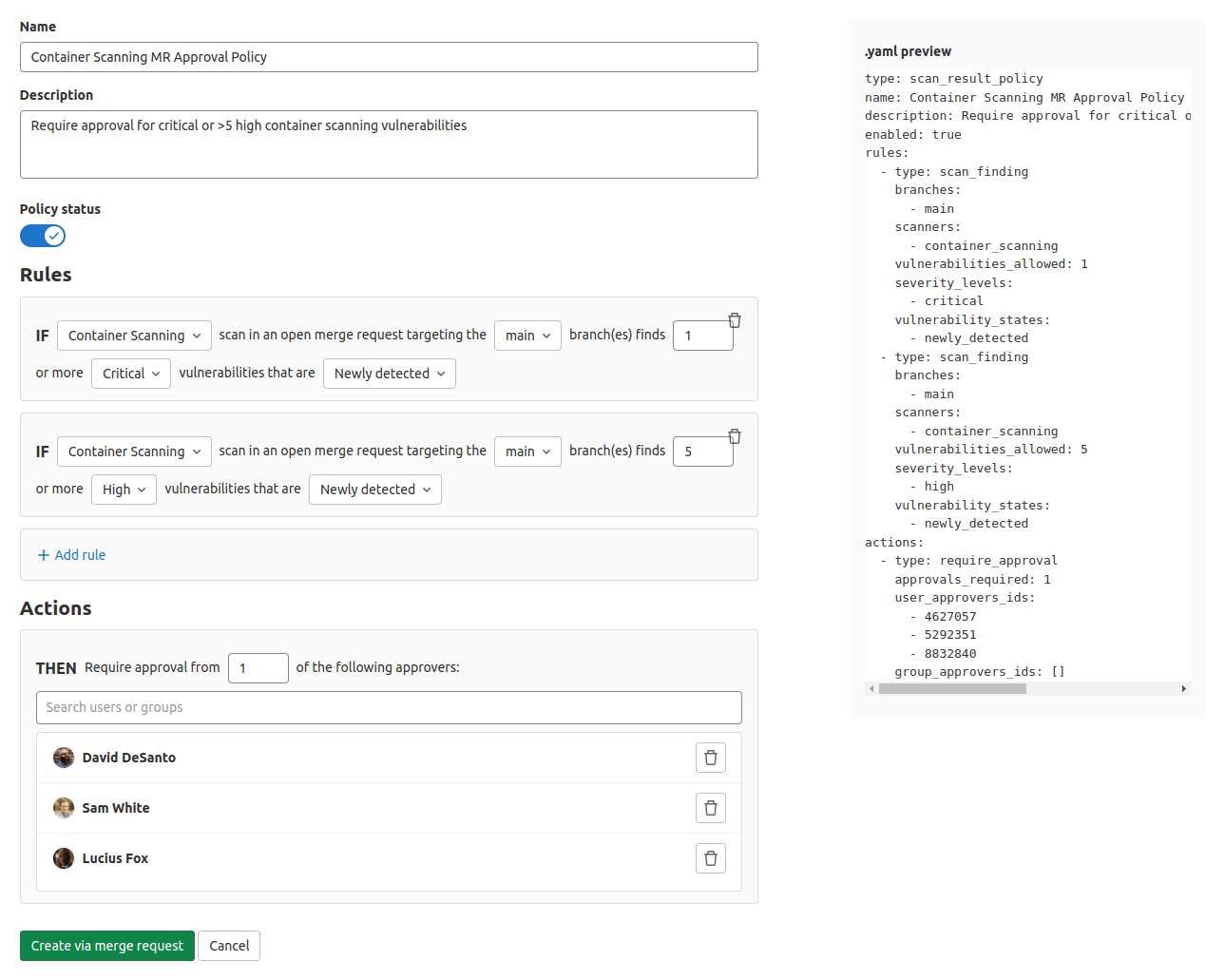
    For example, DevOps teams can now take advantage of a user interface through which they can use a rule mode to design and edit policies without the need to access YAML files directly.
    GitLab has also partnered with Kontra and Secure Code Warrior to provide content that will drive security training functionality. This content can be accessed via the GitLab platform whenever a vulnerability is discovered.

    The overall goal is to make it simpler for organizations to shift left because expecting every developer to become a security expert is not especially realistic, noted Blake. The ability to automate many of the security tasks that developers face is a way of showing empathy for the daunting challenges they face.

    In general, as application development becomes more complex, GitLab is moving toward making its CI/CD platform more accessible to a wider range of organizations, including those that might only be starting to embrace DevOps best practices. The epic-linking capability, for example, makes it easier to identify “related”, “blocking,” or “blocked” relationships to better track and manage epic dependencies across GitLab groups.

    The two biggest challenges organizations face today are securing their software supply chains and improving the overall productivity of the developers. In most cases, those two goals are tightly coupled; every minute a developer spends on security is one less minute they spend writing code. In fact, many organizations are finding that, in addition to salary and benefits, many developers are using the level of friction they will encounter when building and deploying applications as a guide to decide which organizations they want to work for. As a result, many organizations are now looking to modernize their application development and deployment environments with an eye toward attracting the best developer talent.

    At the same time, of course, organizations are looking to improve the productivity of the developers they do have. In the age of digital business transformation, there are many more application development initiatives being launched. The challenge organizations face is that hiring and retaining developers remains a major challenge.

    It’s not clear how eager organizations are to replace their existing CI/CD platforms. However, the pressure to improve the overall developer experience is mounting at a time when organizations are increasingly dependent on software. Arguably, going forward, the ability of any organization to compete will be dependent on the productivity of application development teams. Platforms and tools that get in the way of enabling organizations to build and deploy more secure software faster will be discarded.

  • GitLab Allies With Rezilion to Add Workload Analysis Tool

    GitLab Allies With Rezilion to Add Workload Analysis Tool

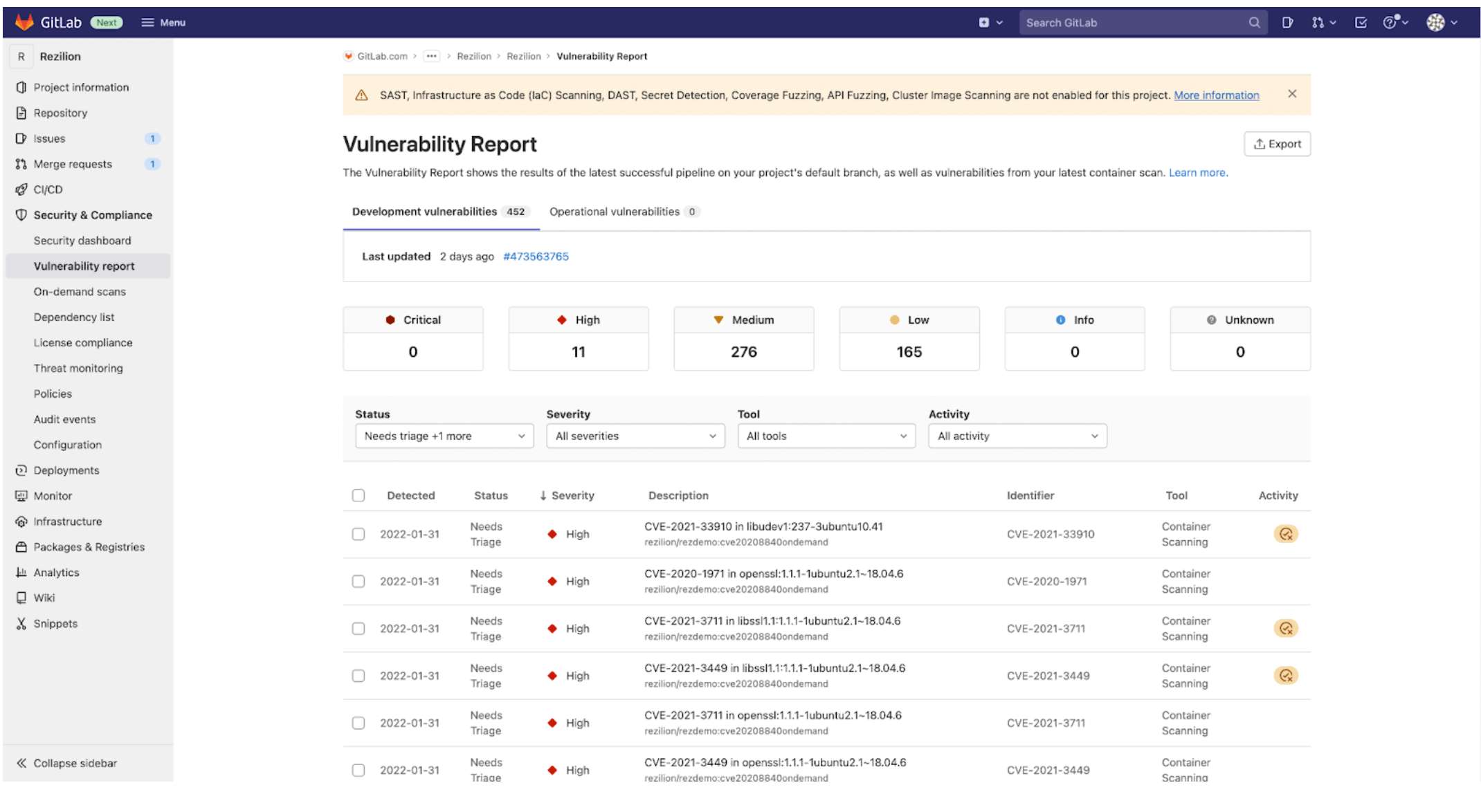
    Rezilion has integrated its workload analysis tool with the continuous integration (CI) framework provided by GitLab. The move is part of an effort to make it simpler for developers to discover issues such as vulnerabilities before they upload code into a repository.

    Sam White, a senior product manager for GitLab, said this integration will provide developers with an instant feedback loop that will enable them to address a wide range of issues before their code is ever reviewed. Rather than experiencing the shame of, for example, missing a vulnerability, the Rezilion platform enables developers to quickly write code while relying on a code analytics tool to surface common mistakes that they can remediate as they see fit, he added.

    Rezilion CEO Liran Tancman added that the proprietary workload composition analysis engine, dubbed Unison, on which the Rezilion platform is based makes it feasible to shift more responsibility for application security further left without requiring developers to become cybersecurity experts.

    Unison automatically creates a model of all the applications that include the underlying infrastructure and runtime environments. It reverse-engineers and maps that environment in memory to dynamically track the inventory, provenance, runtime execution, exposure and interdependencies between each piece of code and can generate a software bill of materials (SBOM).

    The code that is most in need of immediate attention is also surfaced directly with the GitLab user interface, said Tancman. That capability can reduce remediation time of the vulnerability backlog an organization might be working through by as much as 70% over time, he added. Rezilion enables organizations to achieve that goal because non-exploitable vulnerabilities are marked as “false positives” that shouldn’t hold back a release.

    Tancman said that without this level of automation it would be extremely challenging for an organization to implement a set of DevSecOps best practices. It might take developers years to attain the level of cybersecurity training that would be required in the absence of the automation enabled by the Unison engine, he noted.

    Historically, the relationship between application developers and cybersecurity teams has been tense. Cybersecurity teams tend to put off code review until it’s about to be deployed in a production environment. It’s not uncommon for an application to be pulled at the last minute because of a vulnerability discovered by a cybersecurity team. In some instances, that vulnerability is a legitimate concern but in others, it turns out to be a false positive because the flagged piece of code isn’t actually included in the application.

    By providing developers with a workload composition analysis tool within the context of a CI framework, GitLab is trying to reduce the level of friction that the process tends to create between developers and cybersecurity teams.

    It may be some time before most organizations fully master DevSecOps, but it’s clear that merely telling developers they will be held accountable for application security without providing the appropriate tools isn’t going to make applications any more secure.

  • Tabnine, GitLab Build Custom Apps Faster With AI

    Tabnine, GitLab Build Custom Apps Faster With AI

    Tabnine today revealed it has integrated its code completion tool with the GitLab continuous integration/continuous delivery (CI/CD) platform. Tabnine’s platform employs artificial intelligence (AI) to accelerate application development.

    Brandon Jung, vice president of ecosystems and business development at Tabnine, said the goal is to make it easier for developers to automatically write code based on custom models created using AI. Those models would reside in the CI/CD platform provided by GitLab. Developers can now create custom models of their private source code, he noted.

    The Tabnine AI assistant can then be trained on a customer’s private code, style and security best practices that have been defined by an internal DevOps team, added Jung. That assistant, accessible from within a developer’s integrated development environment (IDE), is conversant in 35 programming languages.

    The code completion tool doesn’t eliminate the need for developers to write code; instead, it completes code once developers start writing it based on the model stored in the CI/CD platform.

    Nima Badiey, vice president of global alliances for GitLab, said the overall goal is to increase developer productivity at a time when organizations are launching more application development initiatives than ever. Many of those applications are being constructed using multiple programming languages that each individual developer may not have equally mastered.

    In addition, an AI model will, over time, improve the quality of the code being created, noted Badiey. That should make it easier to review code that is more accurate because it was created with the aid of a machine, he added.

    In general, GitLab has been moving to incorporate AI within DevOps workflows. The company last year acquired UnReview, a provider of a tool that uses machine learning algorithms to identify which code reviewers to assign to a project based on both the quality of their previous efforts and their current workloads.

    It’s not clear to what degree AI will be pervasively embedded within DevOps workflows. However, it’s now just a matter of time before algorithms are more widely employed. Organizations that employ DevOps today devote significant resources to maintaining platforms that could be simpler to manage if more tasks and processes were automated. In theory, more resources could be then devoted to building applications versus maintaining DevOps platforms.

    One way or another, more organizations are moving to increase developer productivity. Developers are both hard to find and retain, so organizations have a vested interest in finding ways to increase the rate at which an existing pool of developers can build applications capable of driving a wider range of digital business transformation initiatives. Of course, an increase in the rate at which applications are developed also has significant implications for the rate at which they might need to be deployed.

    Not everyone in IT is, of course, entirely comfortable with AI. Nevertheless, most DevOps organizations are highly committed to automating as many processes as possible. The only thing that will be different going forward is determining to what degree those processes will be automated by humans versus a machine.

  • IBM Automation Insights: Improving Observability and App Performance

    IBM Automation Insights: Improving Observability and App Performance

    Observability offers deep visibility into the internal state of complex systems in order to quickly identify and troubleshoot performance issues to keep up with customer expectations and business requirements. Observability enables better application performance monitoring (APM). So, how can DevOps teams gain full observability into modern applications? 

    On Feb. 23, experts from IBM and GitLab will come together at the IBM Automation Insights virtual event to discuss how to effectively observe, manage and maintain applications across platforms and how to improve application performance.

    The virtual event has been curated to create interactive sessions, led by DevOps experts who will deep dive on the latest innovations, conduct demos and share approaches that tackle challenges.

    IBM Automation Insights features a speaker lineup of distinguished engineers, IT leaders and executives, including:

    • Cosmo Schillaci, DevOps business leader at IBM
    • Jennifer Velasquez, Americas DevOps leader at IBM
    • Laurel Dickson-Bull, product manager at IBM
    • Kurt Dusek, senior solutions architect at GitLab
    • Jamie Coleman, software engineer at IBM

    Attendees will learn how Instana and GitLab can enable DevOps teams to accelerate CI/CD pipelines and how to build applications easily using cloud-native Java applications and microservices locally, with containers, and for OpenShift/Kubernetes.

    There will be a cross-platform panel discussion in which attendees will get a chance to interact with the speakers, ask questions on any of the strategies presented and discuss several topics, including cybersecurity, optimization for observability, vulnerability tool proliferation and more.

    For more information and to register, please visit the IBM Automation Insights website.

  • GitLab Revamps Observability Strategy After Acquiring Opstrace

    GitLab Revamps Observability Strategy After Acquiring Opstrace

    GitLab plans to make observability a more integrated element of its continuous integration/continuous delivery (CI/CD) platform after acquiring Opstrace.

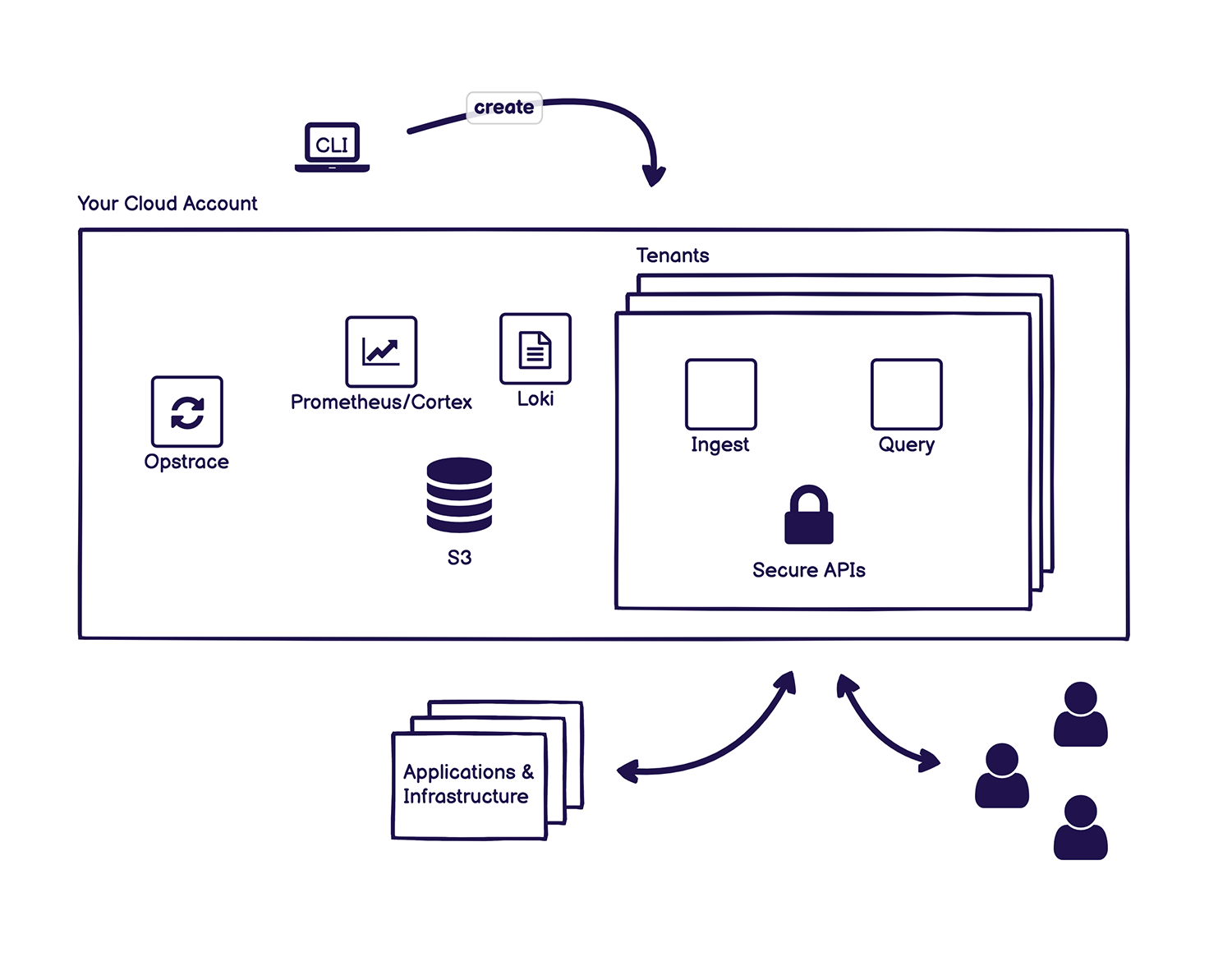
    Opstrace’s open source project exposes a horizontally scalable application programming interface (API) created by Cortex for Prometheus, an open source monitoring platform being advanced under the auspices of the Cloud Native Computing Foundation (CNCF). It then makes use of a Loki API to collect log data.

    DevOps teams can also point an existing instance of Prometheus to Opstrace or any instance of Fluentd or Promtail software they are using to collect log data, with support for a wide variety of other APIs, such as the Datadog agent, planned. A command line interface (CLI) is provided to set an instance of Opstrace that creates a controller through which the collecting of log data is managed.

    Kenny Johnston, senior director for product management for GitLab, said as part of an ongoing effort to make observability more accessible, GitLab plans to integrate Opstrace by default with GitLab Monitor for organizations that use either the self-managed version of GitLab or the software-as-a-service (SaaS) platform.

    Opstrace currently collects logs and metrics and support for distributed traces is planned. The goal is to extend the overall scope of observability capabilities that GitLab already provides within its CI/CD platform, noted Johnston. The goal is to make it simpler for DevOps teams to employ observability capabilities and interrogate data to optimize workflows without acquiring a separate observability platform, he added.

    GitLab is betting that, as Prometheus continues to gain traction, more DevOps teams will prefer to extend its reach into the realm of observability rather than having to manage a separate platform.

    Although observability has always been a core tenet of DevOps best practices, achieving it has proven to be a challenge. At best, most organizations can continuously monitor IT environments based on predefined metrics that identify when a specific platform or application is performing within expectations. Observability combines metrics, logs and traces—a specialized form of logging—to instrument applications in a way that makes it simpler to troubleshot issues without having to rely solely on a limited set of pre-defined metrics that have been created to monitor a specific process or function.

    The rate at which DevOps teams will embrace observability will naturally vary. In 2022, the biggest obstacle might not be the technology as much as it is simply understanding what queries can help DevOps teams better understand the root cause of an IT issue before there is a major disruption. In the long term, it’s expected that machine learning algorithms will leverage the data collected by observability platforms to automatically identify issues that might lead to a disruption long before it actually occurs.

    One way or another, the ability to discern events even within the most complex IT environment is steadily improving. Whether that’s accomplished as an extension of monitoring or by embracing true observability may not be all that relevant—as long as the ultimate goal is achieved.

  • GitLab Updates Approach to Integrating DevOps Workflows

    GitLab Updates Approach to Integrating DevOps Workflows

    GitLab today took the wraps off a major update to its continuous integration/continuous delivery (CI/CD) platform that embeds analytics tools in workflows to identify the root cause of inefficiencies, among other additional capabilities.

    David DeSanto, senior director for product management at GitLab, said that capability is part of an ongoing effort to include value stream analytics within the core GitLab 14 platform as an alternative to acquiring and deploying a separate platform. There are also additional charts and dashboards that enable DevOps teams to uncover bottlenecks over time.

    In addition, GitLab announced it is extending the security capabilities of the platform by adding integrations with open source Semgrep and Trivy vulnerability scanning tools as part of an effort to enable organizations to embrace DevSecOps best practices within workflows. GitLab has also added support for the fuzz testing tool it gained via the acquisitions of Fuzzit and Peach Tech to enable DevOps teams to test application security more thoroughly along with making available additional dashboards to track security metrics.

    As part of an effort to enable organizations to better secure their software supply chains, GitLab has also added support for immutable pipeline definitions that can’t be altered without specific levels of permissions being granted. That capability also enables DevOps teams to more easily achieve compliance with any number of regulatory frameworks, noted DeSanto.

    The company is also adding a pipeline editor that provides access to a visual tool for creating, managing and visualizing pipelines. That tool is designed to both make DevOps more accessible to novices and provide experienced DevOps teams with an alternative tool for managing pipelines in a way that doesn’t require them to write additional code.

    Finally, as part of its comprehensive approach to DevOps, GitLab is also making available agent software for Kubernetes clusters to eliminate the need for organizations to acquire a separate DevOps platform to build and deploy cloud-native applications based on microservices constructed using containers. The company now provides IT organizations with the option of crafting a GitOps workflow for Kubernetes using either an agentless or agent-based approach.

    Gitlab is betting that, as DevOps continues to evolve and mature, more organizations will prefer to replace the various tools they need to integrate themselves with a platform that lowers the total cost of DevOps. Gartner is forecasting that, by 2023, 40% of organizations will have switched from multiple point solutions to a DevOps value stream delivery platform to streamline application delivery, versus less than 10% using such a platform in 2020. Today, only 10% of organizations are employing such a platform, according to Gartner.

    There should also be many more organizations employing DevOps workflows to build applications. Organizations of all sizes now realize how dependent they are on software to drive a wide range of digital business transformation initiatives. The rate at which that software can now be securely developed and updated, in many cases, goes to the heart of their ability to compete. The issue is finding a way to achieve that goal without constructing a platform that ultimately takes time and resources away from building secure software.

  • Accurics Aligns DevSecOps Platform With GitLab

    Accurics Aligns DevSecOps Platform With GitLab

    Accurics today announced it has integrated its tool for discovering violations of security policies that occur when developers provision infrastructure as code with both the continuous integration and continuous delivery (CI/CD) platform and the static application security assessment testing (SAST) tools from GitLab.

    Om Moolchandani, chief information and security officer (CISO) and CTO for Accurics, said both integrations make it easier for developers to discover security issues earlier as part of a DevSecOps workflow using the company’s Terrascan tools.

    Many of the issues organizations are having with cloud security these days can be traced back to misconfigurations created by developers when configuring infrastructure using tools such as Terraform. Accurics created Terrascan to identify those misconfigurations.

    The integration with GitLab makes it easier to incorporate Terrascan into a DevOps workflow in a way that also aggregates data collected from both SAST and dynamic application security testing (DAST) tools, said Moolchandani. That approach effectively unifies what today are two separate cloud infrastructure and application development pipelines by enabling DevOps teams to employ threat scores to enforce security policies as code that are deemed too risky to deploy with block builds, he added.

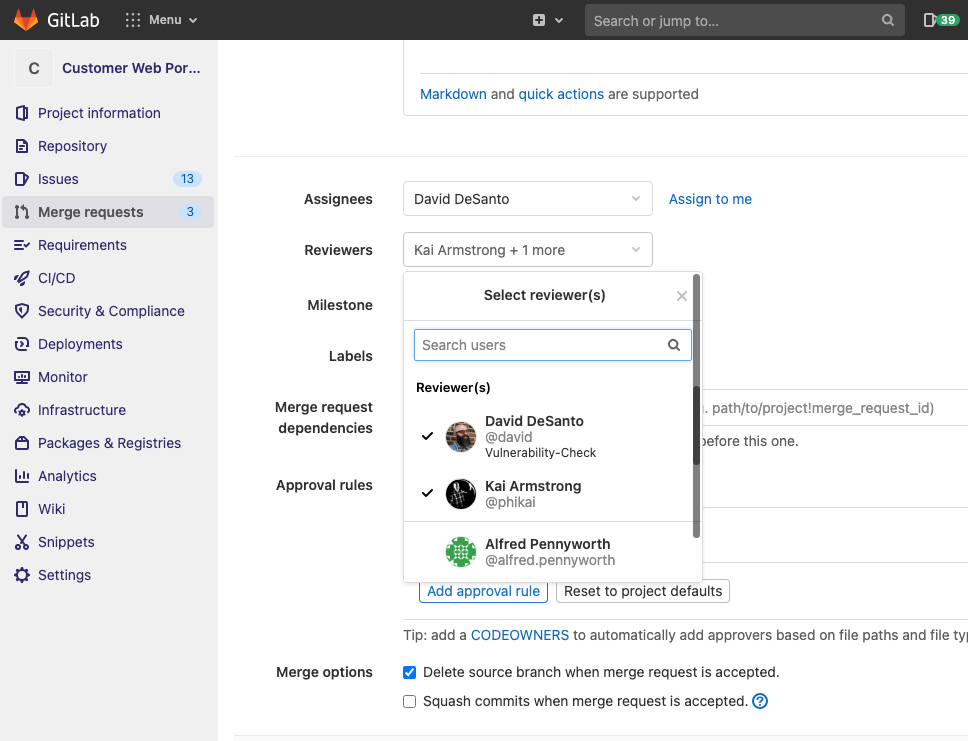
    At the same time, the integration with SAST and DAST tools provides the context developers need to prioritize remediation efforts before applications are deployed in a production environment, noted Moolchandani.

    Organizations of all sizes are now trying to strike a balance between two conflicting agendas. On the one hand, infrastructure-as-code (IaC) tools such as Terraform have played a critical role in enabling developers to build and deploy applications faster. The issue is that developers lack the security expertise required to ensure infrastructure is secured properly at a time when cybercriminals are more aggressively seeking to compromise software supply chains. Organizations most likely won’t slow down the rate at which applications are being deployed to make sure software supply chains are not compromised. However, in the absence of best DevSecOps practices—which still are not widely implemented—there may be a backlash against shifting application responsibility left toward developers.

    The challenge that creates is most organizations don’t have enough security expertise available to review applications in a timely manner before they are deployed, which results in them hoping security issues will be discovered and remediated during the application update cycle before cybercriminals find a way to exploit a vulnerability.

    Of course, hope does not make for an application security strategy. Organizations will need to find ways to enable developers to better secure applications while simultaneously making it easier for cybersecurity teams to maintain a zero-trust IT environment that reduces the chances organizations will be breached via, for example, a phishing attack to steal developer credentials.

    Regardless of how DevSecOps workflows and zero-trust IT architectures are implemented, it’s clear organizations have run out of time to resolve longstanding security issues that are now making the kinds of headlines no one wants to see.

  • Cortex Joins the GitLab Technology Partner Program to Accelerate SRE Control of Microservices

    Strategic partnership enables users to integrate GitLab into Cortex to view service information alongside other integrations and set standards for development maturity using repository details

    San Francisco, CA, June 9, 2021 —Reliability as Code pioneer Cortex , today announced it has joined the GitLab technology partner program. This strategic relationship allows users to import GitLab services into Cortex to view service information alongside other integrations and set standards for development maturity using repository details.

    The Cortex platform features an automatic onboarding workflow that scans all potential microservices sources, discovers the microservices, maps metadata to them and infers critical information such as ownership and on-call rotations. The platform then generates a dashboard illustrating relevant metrics for each of more than 30 third-party tools, including GitLab, Datadog, Sonarqube, Snyk and PagerDuty. These integrations let engineers quickly access on-call rotations, latency dashboards, open vulnerabilities and more in one searchable dashboard. Each integration includes individual rules that enable users to drill down into specific metrics to grade the quality of their services via customizable “scorecards.” This enables development of production readiness checklists, security audits and evaluations of operation and development maturity.

    “GitLab is excited to build a strategic relationship with Cortex,” said Nima Badiey, vice president of Alliances at GitLab. “Cortex’s expertise across managing service architectures makes them a great fit for the GitLab Partner Program and enables us to jointly provide our customers with the right people, processes and platforms to enable them on their digital transformations.”

    Key capabilities of the platform include:

    • Microservices Quality Scorecards keep teams accountable for following best SRE/security/infra best practices by ‘gamifying’ service quality. Scorecards stack-rank services based on detailed performance metrics which motivates service owners to improve either performance, or decommission unused or unmanaged services.
    • Cortex Query Language (CQL), a domain-specific language, lets users write granular rules about health of deploys, SLOs, on-call rotations, security vulnerabilities, package versions and more, such as, “if the service is a production service, then there must be an on-call rotation and greater than 85% test coverage.” This enables engineering and SRE leaders to track and enforce service quality across the entire engineering organization. Engineers can set reliability standards across teams and types of services through direct integrations with a variety of tools.
    • Initiatives help drive progress towards meeting service metrics over a specified time period, letting users set goals and deadlines in a scorecard, making service quality a moving target for the team. Cortex messages service owners over Slack or email with their action items, which engineers can also see when they login to the Cortex dashboard. Initiatives align the team towards a common goal within a scorecard and help accelerate progress as a result.

    “We’re excited to Integrate with GitLab and help reduce service complexity for their users,” Anish Dhar, CEO, Cortex. “Cortex enables GitLab users to start tracking quality across their microservices and build a single pane of glass for their architecture.”

    About Cortex
    Cortex is the leading Reliability as Code platform, designed to give engineers and SREs comprehensive microservices visibility and control. Cortex provides a single-pane-of-glass for visualization of service ownership, documentation and performance history, replacing “tribal knowledge” and spreadsheets. This gives engineering and SRE teams the visibility and control they need over their services, even as teams shift, people move, platforms change and microservices continue to grow. Cortex is a YCombinator Company backed by Sequoia Capital. For more information, visit www.getcortexapp.com or see us on Twitter at @GetCortexApp.

  • GitLab Acquires UnReview to Further AI Ambitions

    GitLab Acquires UnReview to Further AI Ambitions

    GitLab announced this week it has acquired UnReview, a provider of a tool that employs machine learning algorithms to identify which expert code reviewers to assign to a project based on both the quality of their previous efforts and current workloads.

    David DeSanto, senior director for product management at GitLab, said the acquisition of UnReview is the latest step in an AI strategy that, in addition to optimizing DevOps processes, will eventually unify machine learning operations (MLOps) and DevOps workflows.

    Accessed via the Dev section of the GitLab platform, UnReview will also be employed to manage the overall code review process.

    GitLab

    DeSanto said GitLab is committed to employing AI technologies to automate workflows and compressing cycle times across all stages of the DevSecOps life cycle. The goal is to not eliminate the need for DevOps teams, but rather eliminate low-level tasks that conspire to hamper productivity while at the same time improving application security, noted DeSanto.

    Providers of DevOps platforms are now locked into an AI arms race on two separate fronts. Each of them clearly sees the opportunity to leverage machine learning algorithms and other forms of AI to automate a wide range of processes. At the same time, it’s apparent providers of MLOps platforms are borrowing heavily from DevOps best practices to manage the development of AI models. However, from the perspective of a DevOps team, an AI model is just another type of software artifact. Rather than deploying two distinct platforms, the goal should be to bring the data scientists that build AI models into the larger DevOps community, said DeSanto.

    The current challenge, of course, is the pace at which DevOps and data science teams work. It may take six months or more for a data science team to construct and validate an AI model that needs to be embedded within an application. Aligning the timetable for an AI model with the application development life cycle is difficult to accomplish if neither team has any meaningful visibility into each other’s workflows. As the rate at which AI models can be developed steadily improves, that alignment issue will only become all the more pressing.

    Going forward, it’s hard to envision any application that won’t have some sort of AI model embedded within it. The issue is that, just like any other software artifact, an AI model needs to be updated. As new data sources become available, an AI model is likely to drift beyond the parameters intended. A rapid change in business conditions may also require the replacement of an entire AI model. The same processes that DevOps teams apply to update any software artifact can also be applied to an AI model.

    It’s unclear how long it will take before some type of convergence of DevOps and MLOps inevitably occurs, as organizations look for more efficient ways to manage what will become thousands of AI models. The one certain thing is the longer it takes to make the effort, the more difficult it will become to overcome the organizational inertia that has been allowed to set in.

  • GitLab Survey Surfaces Advances in DevOps Education

    GitLab Survey Surfaces Advances in DevOps Education

    As more organizations clamor for employees with some type of DevOps education, higher education is responding in kind, according to survey findings.

    A survey of 843 students and teachers at various academic institutions who have had some exposure to the GitLab continuous integration/continuous delivery (CI/CD) platform suggests the number of individuals with DevOps skills graduating from these programs soon might increase significantly.

    The survey, which was conducted by GitLab, identifies the top four use cases for the platform as learning (28%), teaching (22%), research (20%) and information technology/professional use (19%). Nearly a quarter (22%) also indicated they had a secondary use case on campus.

    Certification (57%) was ranked highest in terms of interest, followed by e-learning (49%) and virtual instructor led-training (35%). Students and graduate students are more interested in certification at 58% and 67%, respectively, while administration, faculty and staff were more interested in e-learning.

    The primary benefit of teaching and learning GitLab was identified as the ability to teach operations competencies (57%) and the ability to teach with an end-to-end tool for learning DevOps competencies (51%). For students specifically, the top benefit cited was the ability to teach operational competencies (49%), followed by the ability to build a portfolio and record of contributions (45%). Workforce readiness was cited at 40% and 46% of students and faculty, respectively.

    Dr. Christina Hupy, senior education program manager at GitLab, said the teaching of best DevOps practices within an academic environment is critical because it takes on average six years for IT professionals to master DevOps in the workplace. To help increase the overall pool for DevOps talent, GitLab has been making its software available for free via individual licenses to students and teachers. That program is now being extended to include a GitLab for Campuses offer, which makes the GitLab platform available to multiple users at a reduced price.

    In general, higher education programs have not been meeting the needs of organizations that are looking to hire IT professionals with proven DevOps skills, noted Hupy. Since launching the GitLab for Education Program in 2018, GitLab is trying to help fill that void, issuing more than $2 billion worth of GitLab software licenses in more than 75 countries. In 2020, the organization added 340,000 seats across 250 institutions to the program.

    More than a third of survey respondents (37%) reported they had access to a GitLab subscription at their institution and used it. The most common use case for GitLab cited was source control management (55%); followed by verification, also known as continuous integration, at 36%; planning, at 30%; and management and release, also known as continuous delivery, at 27% each.

    There is also significant use of GitHub among survey respondents, with 85% reporting using it. A distant second was Jenkins (21%), followed by BitBucket (17%), Travis CI (11%) and GitHub Actions (15%).

    IT organizations, of course, have a vested interest in helping educational institutions develop DevOps programs as the number of application development projects being launched simultaneously continues to increase. Otherwise, they will find themselves paying top dollar for DevOps talent that is difficult to find and retain. The challenge, of course, is identifying the institutions that have access to the DevOps tools and platforms that are going to be a pre-requisite for a successful DevOps career those students might eventually enjoy.