Tag: generative AI

  • PagerDuty Previews Generative AI Copilot for ITSM

    PagerDuty Previews Generative AI Copilot for ITSM

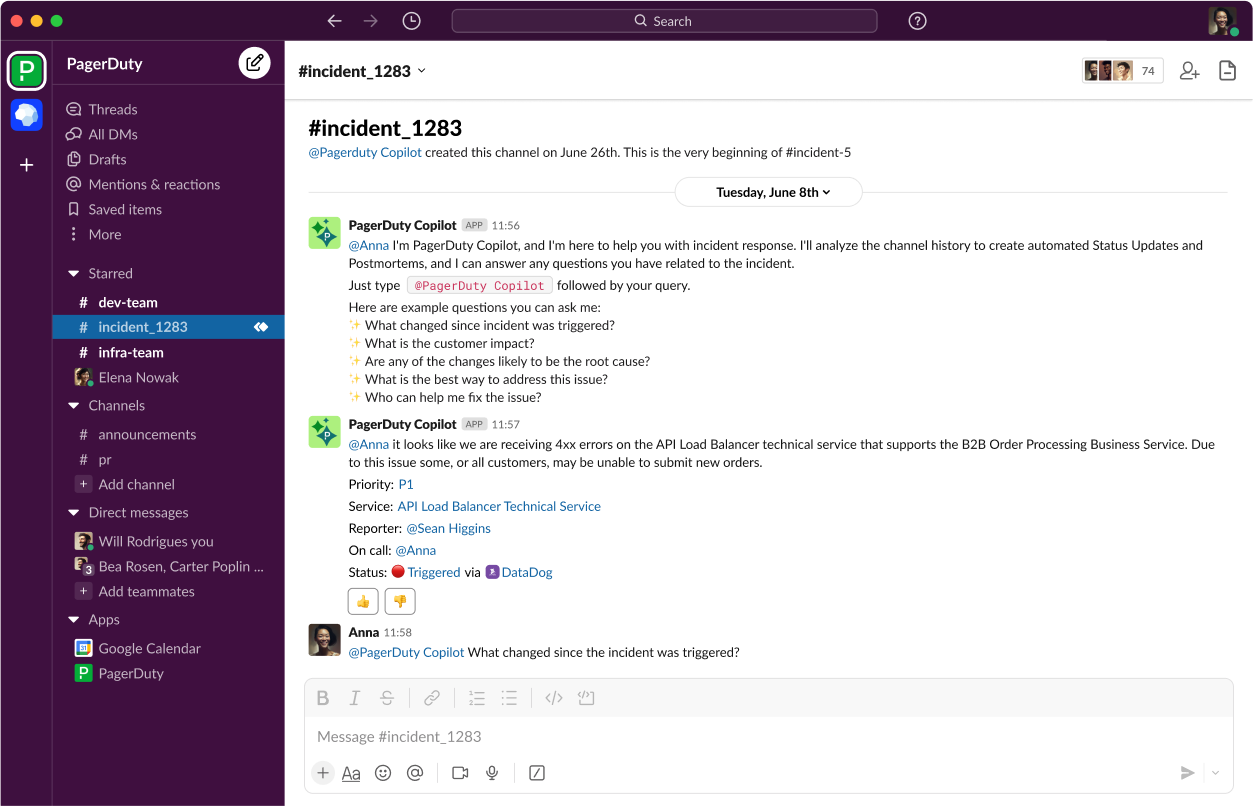
    Under an early access program, PagerDuty, Inc. is making available a tool that brings generative artificial intelligence (AI) capabilities to its IT service management (ITSM) platform.

    Jonathan Rende, senior vice president of products for PagerDuty, said PagerDuty Copilot for the PagerDuty Operations Cloud extends previous investments in machine learning algorithms the company has made as part of an ongoing effort to apply AI to ITSM.

    Designed to be invoked via Slack, PagerDuty Copilot makes use of multiple large language models (LLMs) to automate tasks ranging from providing summarization of IT incidents to creating code to automate workflows. PagerDuty plans to transparently swap LLMs in and out of its platforms as AI advances continue to be rapidly made, noted Rende.

    PagerDuty Copilot provides a level of abstraction for invoking AI models along with appropriate guardrails that make it simpler to manage IT operations without IT teams needing to have AI expertise, said Rende.

    The overall goal is to boost the productivity of IT operations teams by eliminating much of the drudgery and toil that conspires to make working in IT tedious, noted Rende. AI technologies are not likely to replace the need for IT personnel as much as they will enable IT teams to focus on tasks that add more value to the business, he added.

    It’s now only a matter of time before generative AI capabilities are pervasively applied across both ITSM and DevOps workflows. Less clear is the impact those capabilities will have on the best practices currently relied on to manage those workflows as more tasks are automated. Ultimately, however, AI should make it easier for more organizations to embrace those best practices as the level of skill and expertise required to manage IT at scale is reduced.

    In addition, the whole concept of issuing tickets to manage tasks tracked by a central system of record may need to evolve simply because AI has automated requests for service. There will naturally need to be some system of record for tracking requests. Still, ultimately that process will be managed via copilots rather than by a ticket created by an end user that is then tracked via an ITSM platform.

    Savvy IT teams, in the meantime, are already moving to determine which tasks and workflows will be automated in anticipation of AI becoming more widely embedded in ITSM and DevOps platforms. Roles and responsibilities within IT teams will inevitably evolve as AI increasingly automates mainly mundane tasks, such as creating reports that many IT professionals would rather not spend time writing.

    The biggest IT management platform challenge in the future might not necessarily be adjusting to AI as much as it will be orchestrating requests that are likely to be generated by multiple types of copilots that have been embedded into almost every application.

    One way or another, AI is about to transform how IT operations are managed. As disruptive as those advances will be, AI, more importantly, will also enable organizations to manage IT at levels of scale that were previously unimaginable.

  • Coexisting With AI: The Future of Software Testing

    Coexisting With AI: The Future of Software Testing

    If 2023 was the year of artificial intelligence (AI), then 2024 is going to be the year of human coexistence with the technology. Since the release of Open AI’s ChatGPT in November 2022, there has been a steady stream of competing large language models (LLMs) and integrated applications for specific tasks, including content, image processing and code production. It’s no longer a question of if AI will be adopted; we have moved on to the question of how best to bring this technology into our daily lives. These are my predictions for the software quality assurance testing industry for 2024.

    Automated testing will become a necessity, not a choice.

    Developers will lean heavily on AI-powered copilot tools, producing more code faster. That means huge increases in the risk profile of every software release. In 2024, testers will respond by embracing AI-powered testing tools to keep up with developers using AI-powered tools and not become the bottleneck in the software development life cycle (SDLC).

    The role of the tester will increase and evolve.

    While AI is helping software engineers and test automation engineers produce more code faster, it still requires the highly skilled eye of an experienced engineer to determine how good and usable the code or test is. In 2024, there will be a high demand for skilled workers with specific domain knowledge who can parse through the AI-generated output and determine if it’s coherent and useful within the specific business application. Although this is necessary for developers and testers to start trusting what the AI generates, they should be wary of spending inefficient amounts of time constructing AI prompts, as this can ultimately lead to decreased levels of performance. For instance, a developer could easily spend most of their time validating the AI-generated output instead of testing the release that will be deployed to users.

    Being able to distinguish between when to rely on AI and when to forego AI’s help will be key to streamlining the workflow. Eventually, we’re going to start seeing AI-powered testing tools for non-coders that focus on achieving repeatability, dependability and scalability so that testers can truly use AI as their primary testing tool and ultimately boost their productivity.

    The rise of protected, offline LLMs and the manual tester.

    As enterprise companies show signs they don’t trust public LLMs (e.g., ChatGPT, Bard, etc.) with their data and intellectual property (IP), they’re starting to build and deploy their own private LLMs behind secured firewalls. Fine-tuning those LLMs with domain-specific data (e.g., banking, health care, etc.) will require a great volume of testing. This promises a resurgence in the role of the manual tester as they will have an increasingly important role to play in that process since they possess deep domain knowledge that is increasingly scarce across enterprises.

    As we stand on the brink of 2024, it is evident that the synergy between artificial intelligence and human expertise will be the cornerstone of software quality engineering. Human testers must learn to harness the power of AI while contributing the irreplaceable nuance of human judgment. The year ahead promises to be one where human ingenuity collaborates with AI’s efficiency to ensure that the software we rely on is not only functional but also reliable and secure. There will likely be a concerted effort to refine these collaborations, ensuring that AI serves as a reliable support rather than an overpromised solution.

  • 8 Essential Generative AI Tools for Building Stand-Out Applications

    8 Essential Generative AI Tools for Building Stand-Out Applications

    Building advanced AI apps demands the right tools. Generative AI is a game-changer with the potential to transform how we craft AI-powered solutions. Whether you’re a pro or new to AI, the right generative AI tools can elevate your projects significantly. In this article, we’ll explore the essential generative AI tools that can help you build remarkable AI applications.

    These tools cover a wide range of functions, from content creation to design and data analysis. By the end of this blog, you’ll have a better understanding of how generative AI tools can elevate your AI projects to new heights.

    GPT-3 by OpenAI

    GPT-3, or Generative Pre-trained Transformer 3, is a remarkable language model designed to create text that closely resembles human writing. Its applications span content generation, language translation and chatbot development.
    ● Pros: GPT-3 is highly adaptable and capable of tackling a wide array of tasks. Its primary strengths lie in its ability to handle complex language-related challenges, making it a versatile tool for developers.
    ● Cons: While GPT-3’s capabilities are impressive, its availability may be limited and using it extensively could entail significant costs. These factors are worth considering for projects with high resource demands.

    Runway ML

    Runway ML is tailored to cater to the creative aspects of AI, offering a suite of tools tailored for artists, designers and developers. It encompasses a wide array of generative models that empower users to generate art, design prototypes and craft interactive experiences.
    ● Pros: Runway ML stands out for its user-friendly interface and real-time creative capabilities. This makes it an excellent choice for individuals venturing into the realm of creative AI projects, providing a smooth learning curve.
    ● Cons: It’s important to note that certain advanced features within Runway ML may be accessible only through a subscription, limiting full access in the free version. This subscription-based model should be considered when assessing its cost-effectiveness for your specific project needs.

    Hugging Face Transformers

    Hugging Face Transformers serves as a repository of pre-trained models specifically designed for natural language processing (NLP) tasks. Its applications are extensive, encompassing tasks such as sentiment analysis, text classification and more.
    ● Pros: Hugging Face Transformers stands out as an open-source platform with a vibrant and engaged community. This ecosystem offers a diverse array of models and tools, making it a valuable resource for developers seeking to harness the power of NLP.
    ● Cons: It’s important to acknowledge that newcomers to Hugging Face Transformers may face challenges when customizing models and engaging in model training. While this platform offers an array of resources, it may require a certain level of familiarity with NLP and machine learning concepts for optimal utilization.

    Midjourney

    Midjourney is a versatile tool designed to tackle creative tasks spanning text, music and image generation.
    ● Pros: Midjourney presents a robust offering of pre-trained datasets and generative models, catering particularly well to creative projects. Its user-friendly interface ensures accessibility for individuals, even those who are new to AI, making it an excellent starting point.
    ● Cons: However, it’s crucial to recognize that while Midjourney excels in the realm of creativity, it may not be the top choice for AI applications that require a strong focus on data-driven tasks. Depending on your project’s needs, this limitation might affect its suitability.

    Synthesia

    Synthesia is a specialized AI tool designed for video generation and customization. Its core function revolves around the conversion of text into AI-generated videos.
    ● Pros: Synthesia streamlines the video production process, delivering substantial advantages for content creators and marketers. Its user-friendly interface simplifies the video creation journey, ensuring that a wide audience, regardless of technical expertise, can harness its potential.
    ● Cons: However, it’s essential to recognize that Synthesia’s primary expertise centers on video generation. This specialization can occasionally limit its adaptability when dealing with a broader spectrum of creative tasks that extend beyond the realm of video production. Depending on your project requirements, this specialization may influence its suitability.

    DeepCode

    DeepCode is a specialized tool dedicated to code analysis and improvement. Its primary mission is to assist developers in identifying and rectifying issues within their codebase.
    ● Pros: DeepCode serves as a highly valuable resource for developers, offering concrete benefits such as the enhancement of code quality and the reduction of errors. It’s thoughtfully designed to streamline the coding process, making it more efficient and effective.
    ● Cons: It’s imperative to recognize that DeepCode’s focus is specifically centered around code analysis. This level of specialization may limit its applicability when addressing AI projects or tasks that fall outside the realm of software development. Depending on your project’s nature, this focus may impact its relevance to non-developer AI initiatives.

    Soundraw

    Soundraw is an AI-powered music generator designed to empower users to craft unique, royalty-free music, perfectly suited to enhance a wide range of projects and content.
    ● Pros: Soundraw’s most significant advantage lies in its ability to generate original compositions, thereby mitigating the risk of copyright issues. It also offers secure and enduring licenses for all creative uses, ensuring that your content remains free from copyright concerns.
    ● Cons: While Soundraw’s AI capabilities are impressive, it may occasionally lack the nuanced depth of creativity found in music created by human composers. The variety of available themes and moods may be somewhat limited, which could affect its suitability for highly specific or unique creative projects.

    VQ-VAE-2

    VQ-VAE-2 is a specialized tool known for its exceptional performance in image compression and generation tasks. It’s the preferred choice when the goal is to create high-quality images while simultaneously reducing data size.
    ● Pros: VQ-VAE-2 stands out as a robust solution for image-related AI applications, delivering substantial benefits in terms of enhanced compression and improved image quality.
    ● Cons: It’s essential to acknowledge that leveraging VQ-VAE-2 effectively may necessitate a solid understanding of image processing and AI concepts. This tool is best suited for users with advanced knowledge in these domains.

    Wrapping Up

    By using generative AI tools in your AI projects, you can open up exciting opportunities and make your work more efficient. But, it’s crucial to think about your project’s unique requirements, check if the tools are accessible, and understand their costs.

    Explore what each tool can and can’t do to decide which one suits your AI project best. With the right generative AI tools, you can bring your projects to life and shine in the world of artificial intelligence-powered applications.

  • CircleCI Extends CI/CD Reach to AI Models

    CircleCI this week revealed it is extending the reach of its continuous integration/continuous delivery (CI/CD) platform to make it simpler to incorporate artificial intelligence (AI) models into DevOps workflows.

    In addition to providing access to the latest generation of graphical processor units (GPUs) from NVIDIA via the Amazon Web Services (AWS) cloud, Circle CI has added inbound webhooks to access AI model curation services from providers such as Hugging Face and integrations with LangSmith, a debugging tool for generative AI applications and the Amazon SageMaker service for building AI applications.

    CircleCI CEO Jim Rose said while there is clearly a lot of enthusiasm for incorporating AI models into applications, the processes being used are still immature, especially in terms of automating workflows that include testing of probabilistic AI models.

    Most AI models are built by small teams of data scientists that create a software artifact that needs to be integrated within a DevOps workflow just like any other artifact, noted Rose. The challenge is that most data science teams have not yet defined a set of workflows for automating the delivery of those artifacts as part of a larger DevOps workflow, he added.

    DevOps teams will also need to make adjustments to a version control-centric approach to managing applications to trigger pipelines to pull AI software artifacts that exist outside of traditional software repositories. For example, the inbound webhooks provided by CircleCI now make it possible to automatically create a pipeline whenever an AI model residing on Hugging Face changes.

    It’s still early days as far as the deployment of AI models in production environments is concerned, but there is no doubt generative AI will have a major impact on how software is developed. AI models are a different class of software artifacts that are retrained instead of being updated, a process that occurs intermittently. As such, DevOps teams need to keep track of each time an AI model is being retrained to ensure applications are updated.

    At the same time, generative AI will also increase the pace at which other software artifacts are being created and deployed. Many of the manual tasks that today slow down the rate at which applications are built and deployed will be eliminated. That doesn’t mean there will be no need for software engineers, but it does mean the role they play in developing and deploying software is about to rapidly evolve. DevOps teams need to evaluate both how generative AI will impact the tasks they manage as well as the way the overall software development life cycle (SDLC) process needs to evolve.

    Each organization, as always, will need to decide for itself how best to achieve those goals depending on the use cases for AI,  but the changes that generative AI will bring about are now all but inevitable. The longer it takes to adjust, the harder it will become to overcome the cultural and technical challenges that will be encountered along the way.

  • LaunchDarkly Previews Generative AI Testing Tool for Feature Management

    LaunchDarkly Previews Generative AI Testing Tool for Feature Management

    At the AWS re:Invent 2023 conference, LaunchDarkly today previewed an ability to leverage generative artificial intelligence (AI) capabilities to create experiments for its feature management platform.

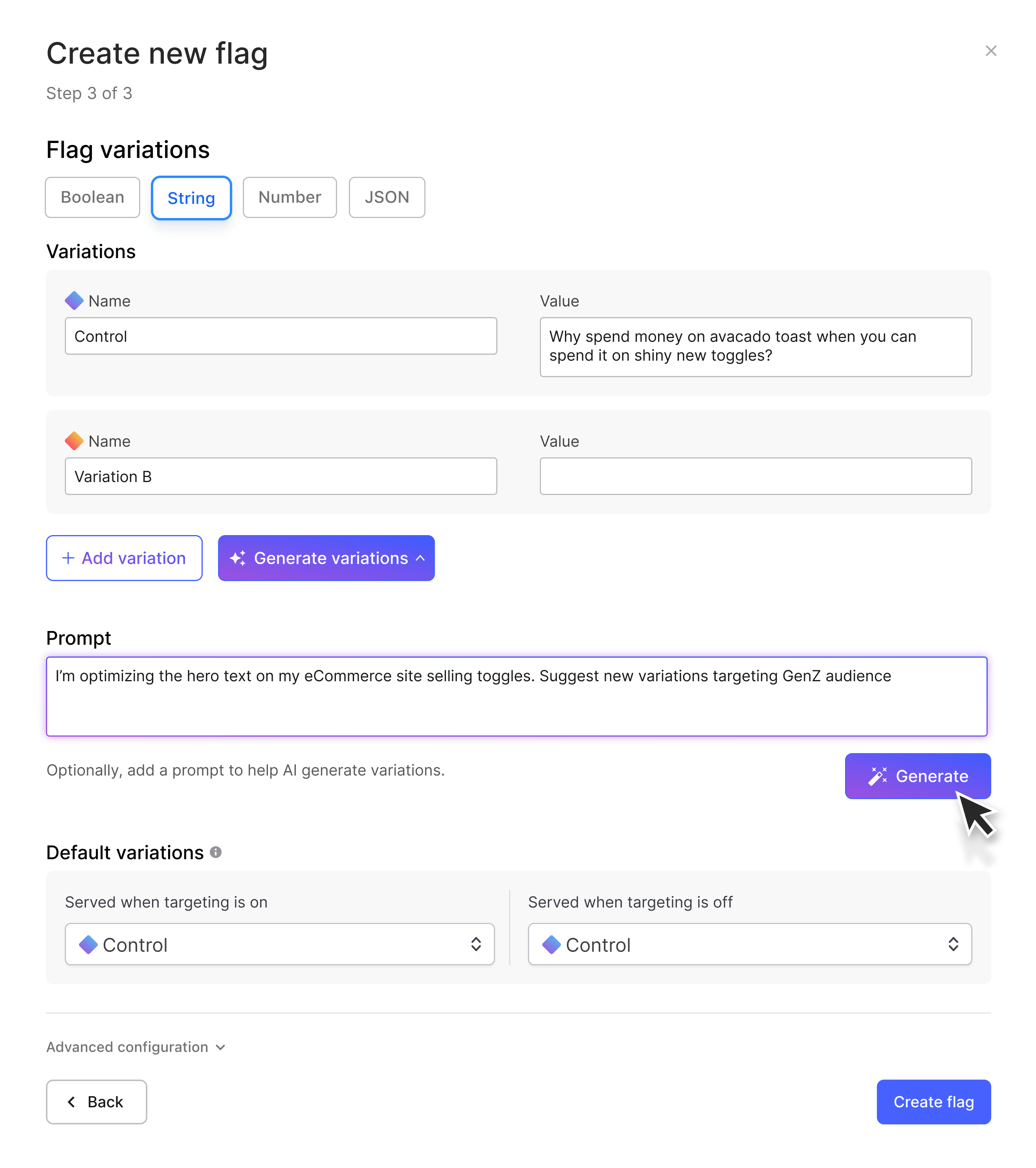
    Based on the Bedrock foundational large language models (LLMs) made available via AWS, this extension to the company’s Product Experimentation platform promises to make it simpler to use historical data to create a wider range of offerings that might be made available within an application.

    LaunchDarkly is making a case for a SaaS platform that can be used to centrally manage features across multiple workflows and platforms.

    Robert Neal, director of engineering for LaunchDarkly, said the company is now extending its testing capabilities using a managed Bedrock service provided by AWS that will enable leveraging generative AI to define a testing hypothesis more easily. That should also make it possible to involve more stakeholders in an iterative testing process within the context of a set of well-defined guardrails, he added.

    As more organizations start to deliver different tiers of digital services at varying price points, there is a clear need to be able to restrict access to those digital services. Application development teams have been employing feature management since the 1970s to isolate the development of various components into a branch that can be worked on and tested without impacting the primary build the application is based on.

    Feature management enables development teams to experiment with adding new capabilities in a way that doesn’t disrupt the application. When a project is completed, that branch is then usually merged into the primary build or can be deployed as a microservice that might be invoked via an application programming interface (API) by other modules with the application or another external application.

    At the core of that capability are what are known as feature flags, also known as feature toggles or feature switches, that make it possible to dynamically turn services on or off based on who is accessing them. Rather than being limited to the application development process, those feature flags are now being employed in production environments to enable the continuous delivery of multiple types of digital services to various classes of users of an application. A feature flag management platform enables an organization to keep track of all the flags being employed to keep the overall application environment consistent.

    It’s still early days in terms of understanding the extent to which generative AI can be applied to DevOps workflows, but it’s clear many of the manual processes that conspire to slow down the pace at which applications are built and deployed are going to be either reduced or outright eliminated. Each DevOps team will naturally need to determine for itself to what degree DevOps workflows can be automated using AI, but the overall pace at which applications can be built and deployed is going to clearly accelerate. The challenge now will be finding ways to keep pace with a rate of application development that is about to exponentially increase.

  • Microsoft Previews Additional Copilot Tools for Azure

    Microsoft Previews Additional Copilot Tools for Azure

    At its Ignite 2023 conference, Microsoft this week previewed Copilot tools to simplify the management of the Azure cloud service along with a tool that streamlines the building and deploying of artificial intelligence (AI) applications on the Azure platform.

    In addition, Microsoft launched Microsoft Copilot Studio, a low-code tool that automates the process of creating data integration plugins and adding custom copilots within the Microsoft Copilot for Microsoft 365 tool that Microsoft previously launched.

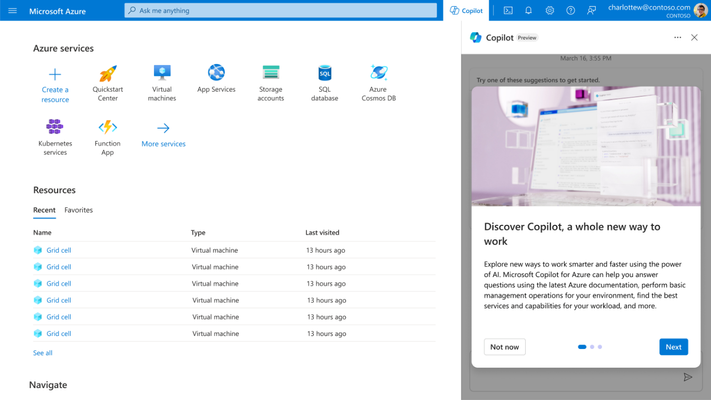
    Microsoft Copilot for Azure leverages large language models (LLMs) to enable IT teams to use natural language to create, configure, discover and troubleshoot Azure services. It also enables IT teams to create complex commands, ask questions and optimize costs.

    Erin Chapple, corporate vice president for Azure Core at Microsoft, told Ignite attendees that Microsoft, along with a handful of customers, is already using Microsoft Copilot Azure to manage Azure infrastructure.

    In the long term, it’s clear that Microsoft is moving toward streamlining the building and deployment of AI applications using Azure AI Studio, a framework for invoking the AI models that Microsoft makes available on the Azure platform. The goal is to make it possible for organizations to create their own copilots based on AI models they have trained.

    It’s still early days in terms of organizations leveraging AI models to build applications, but it’s already apparent that DevOps and machine learning operations (MLOps), along with data engineering and cybersecurity best practices, will need to converge. Microsoft is making a case for Azure AI Studio as the framework that will enable IT organizations to achieve that goal.

    Of course, Microsoft is not the only provider of IT infrastructure resources with similar ambitions, but thanks to its investments in OpenAI and the acquisition of GitHub, it is furthest along in terms of defining a framework for building AI applications at scale. Last week, GitHub previewed an extension of the Copilot tools it already provides to help developers write code that leverages generative AI to automatically propose an editable plan for building an application based on natural language descriptions typed into the GitHub Issues project management software. Copilot Workspace will generate editable documents via a single click that can be used to create code that developers can then visually inspect. Any errors discovered by application developers or the Copilot Workspace platform can also be automatically fixed.

    At the same time, GitHub has extended the scope and reach of Copilot Chat to make it simpler for developers to use natural language to discover issues in their code base.

    Generative AI is already having a massive impact on the rate at which applications are developed, but that code still needs to be reviewed. Chat GPT is based on a general-purpose large language model (LLM) that is trained by pulling in code of varying quality from all across the web. As a result, code generated by the platform might contain vulnerabilities or be inefficient. In many cases, professional developers still prefer to write their own code.

    Of course, not every programming task requires the same level of coding expertise. In many instances, ChatGPT will generate, for example, a script that can be reused with confidence across a DevOps workflow. There is no shortage of mediocre developers who are now writing better code thanks to tools such as GitHub Copilot, and soon, domain-specific LLMs will make it possible to consistently write better code based on validated examples of code.

    The next challenge is going to be finding a way to manage increased volumes of code. There is no doubt that AI will be applied to the management of DevOps pipelines, but for the moment, at least, the pace at which AI is being applied to writing code is already exceeding the ability of DevOps teams to manage it.