In anticipation of the DevOps Enterprise Summit (DOES) London 2017, we are interviewing a series of the announced speakers who will be appearing there. The first in our DOES London 2017 speaker interviews is with Jose Quaresma of Accenture. Jose is a leader at Accenture and has a lot of knowledge on real DevOps transformations. I think you will find this conversation very enlightening.
As usual immediately below is the streaming audio of our chat, followed by the transcript of our discussion below. DOES London 2017 is shaping up to be another great conference. Also as usual, we will be live on-scene with coverage.
Alan Shimel: Hey, everyone, this is Alan Shimel, Editor in Chief of devopsy.kinsta.cloud, and we’re here for another DevOps Chat. Today’s DevOps Chat guest is Jose Quaresma—and I probably messed that up, but Jose is with Accenture, and he’s based over in Denmark. Welcome, Jose—how are you?
Jose Quaresma: Thank you, Alan. I’m pretty good. First of all, thanks a lot for having me. I would say it’s quite an honor to participate in this chat with you.
Shimel: Oh!
Quaresma: Oh, and yes—and by the way, you got the—
Shimel: Well, flattery will get you everywhere.
Quaresma: [Laughter]
Shimel: But we’re talking a little bit today, and it’s regarding, you know, the second annual DevOps Enterprise Summit London is coming up June 5th and 6th at the QE2 in London, and you will be presenting there, correct?
Quaresma: Yes, that’s correct—yeah.
Shimel: And I wanted to—well, before we get into your presentation at DevOps Enterprise Summit, why don’t we give people a little bit of your background?
Quaresma: Sure. I can give it a quick try. So, as you said, I’m Jose, and Quaresma is the last name, so you actually did pretty well, Alan. And I’m originally from Portugal, but I’ve been living in Denmark for almost eight years now. I kinda moved in here to study, and kinda after university, then I started Accenture here in Denmark as well, which I’ve been for around three and a half years now.
I am an Application Development Associate Manager in Advanced Technology in a subgroup called Advanced Technology and Architecture, and I am the DevOps lead for Accenture Denmark.
Shimel: Excellent. And Jose, as part of that, why don’t—any particular engagements of interest that you can talk about right now?
Quaresma: Yeah. So I had, I can say, so, there were two main engagements that I’ve been involved with, and the first one was actually not so much involved in DevOps. I kinda started more as a middleware developer and kind of then walked towards the kind of web service design and team lead on that middleware area, and there was some DevOps work related there kind of with deploying the web services. But that wasn’t really something that I was driving.
But then around two, two and a half years, I kind of, it was actually, my manager—and I guess I have to thank him for that; thanks, Jarom—he kind of, he was the one kind of guiding me towards, “Okay, we have this kind of DevOps domain getting a bit more traction, and we would like to, how would you like,” it was actually asking, “How would you like to lead that domain and try to raise a bit more awareness of DevOps here in Denmark?”
So that was an interesting opportunity that I saw and yeah, from then, I was also then transitioned to a new project, which is actually the project that I’m going to co-present at DevOps Enterprise Summit now in London in June, and I’m co-presenting that with Amin Budali from Nordea, and that is the client that I’m currently working with, and this is a huge project. So Nordea, for the ones who don’t know, it’s a huge Nordic bank, being active in Denmark and Sweden and Norway and Finland. And this is, the project is about replacing their core banking application across the four countries. So it’s a huge project, a five-year project where we are working on replacing the core application with a new T24 application provided by Temenos. And that—
Shimel: Go ahead. Go ahead, Jose.
Quaresma: —and then that’s where kind of the more, it was, the DevOps, it has been very relevant now in this project, and the main thing is that, what we are, the part that we are presenting at DOES now, it’s, as I was saying, it’s not really a finished story, I would say it’s a story that has started around one year ago and we already have some interesting successes that I’m happy to talk about, but it’s hopefully a story that will have one, two, three more years until we have this very successful destination that I’m hoping I can come back to, to the DevOps Enterprise Summit and talk about that in one or two years. That would be great.
Shimel: That would be great.
Quaresma: Yeah, and that’s something I hope for, and I work for as well.
Shimel: So I’d like to ask you, Jose, for our listeners out there who maybe are listening and saying to themselves, “Man, I sure would like to present one day at a DOES, you know, a DevOps Enterprise Summit or a similar thing.” Can you give our audience maybe a little bit of background on how it came to be?
Quaresma: Yeah. I can try. So, it was actually, we have, this all kind of started with, we have a DevOps Week internally in Accenture as well, and in that internal DevOps Week, which was maybe one or two months ago, around there, maybe one month ago, we were actually, I was—I got to present this kind of, a little bit this story as well together with the client at our kind of internal DevOps Week.
And then the idea came, from that point on, it’s like, “Oh, we actually have, there’s this really amazing conference in London. Why don’t we just try, maybe?” And we did have—I confess, we did have some doubts whether we would get in, and I think the main part is thinking that, okay, we don’t actually have this beautiful, happy ending story yet. We’re still struggling, we’re still halfway through our journey. But then, also, reading through the description, we saw that these kind of ongoing journeys are also welcome at the conference, so we thought, “Well, let’s write down the things that we have learned and what we would like to present, and then let’s see if they think that will be interesting.”
Shimel: Got it. And sort of, you know, I think that’s a great description of the process and everything. Have you spoken at other events, Jose?
Quaresma: No, not really. Not at this magnitude. I’ve given kind of more internal presentations and also outside Denmark, but not really, not an event of this magnitude. So yes, I’ll be pretty nervous. [Laughter]
Shimel: What? There’s nothing to be nervous about. I’ve always found that as long as you are fluent in what you’re going to speak about, as long as you’re comfortable with that, you know, whether it be a big audience, a small audience or have you, it’s all the same, really.
Quaresma: Yeah. That’s a good point. I’ll take that with me. And not only being fluent, but also that, I think it will help that I will be talking about something that I’m really excited about and that I’ve been working hard for, so I think that will make it a little bit easier.
Shimel: Got it. You know, one of the things I wanted to talk to you about is, you know, working for Accenture, you—a little different than working for just a single company in that you work with multiple clients, right, and so that gives you a chance to see sort of transformational issues, you know, across multiple organizations.
Quaresma: Yeah.
Shimel: Where a lot of people, you know, they work at Disney or they work at NBC Universal or they work at a company and sort of very much—and even at jeans events like the DevOps Enterprise Summit, it’s very much, “Here is my company’s transformation story.”
Jose, having looked at multiple companies’ transformations, what do you think you can share with our audience that sort of transcends any one organization, right, and go into multiple ones?
Quaresma: Yeah, there’s—so, one thing is, I won’t lie to you or the audience. I mean, this is the first big DevOps transformation that I’m involved with, so I can’t really kind of pull out of my hat kind of the 10 transformations that I’ve been involved with and share some kind of overall wisdom on that.
So this is definitely an advantage that I see and that I hope to use more in the future once I kind of, as you say, keep getting the experience of several different transformations in different clients with different scenarios, when you kind of—once you’ve started getting more experience with all those different transformations, there will always be things that are different, then I hope I can kind of learn from that and be able to extract some knowledge from those differences as well.
Shimel: Sure, sure. Jose, we’re almost out of time. As I promised you, it goes really quick. But let’s talk for a moment about, and this is something—so you did it, when you started your career and, you know, you said you’ve been in Denmark now eight years. Certainly it wasn’t to do DevOps transformations and so forth, but where did you come from to get to here, kind of, if you know what I mean?
Quaresma: Yeah, and that’s a pretty tough question. So, it’s kind of, my background is mostly on security and also related with—so my Master’s was actually called Security in Mobile Computing, and then I also had a, after that I had a Ph.D. in network security, mostly related with formal methods and how to kind of analyze the security of a communication protocol.
But I think the, kind of my career evolution, if—[Laughter] I never thought about it like that, but if you can say that, it has been pretty, I would say pretty organic. I mean, I have—it’s not like I’ve been forcing myself or have this five-year plan that I think, “Okay, in five years, I wanna be there.” It has been mostly about doing the things that I kind of enjoy doing and that I can see that I’m providing some good value, and also following the interesting thing.
So, for DevOps, it was actually that, before it was my work, it was already kind of a hobby in that I was at home outside working hours playing around with some Docker setup and trying out some different technologies there, and then I think that also made it easier to bring that to work, because if it’s something that I’m excited about also outside work, then it was even easier to just bring that excitement and motivation for something that I do in my everyday life.
Shimel: Excellent. Well, Jose, I’m sure you’re gonna have a great presentation with the bank at DevOps London, DevOps Enterprise Summit London, and we’re looking forward to seeing you there.
Quaresma: Yeah.
Shimel: And thanks for being our guest on this episode of DevOps Chat as well.
Quaresma: Yeah, thanks so much, Alan.
Shimel: Thank you, and continued success, Jose Quaresma of Accenture, who is a speaker for DevOps Enterprise London 2017 on June 5th and 6th, our guest today on DevOps Chat. This is Alan Shimel for devopsy.kinsta.cloud. Thanks, everyone, and have a great day.
As adult learners and leaders, we tend to glean less from theory and seem to derive more from people actually describing the real-world problems they are trying to solve. Ever since the DevOps Enterprise Summit began in 2014, we’ve been adamant about providing a unique venue for the technology leaders of large, complex organizations to come together and share their DevOps transformation experiences—from how they started and what they did, to what the outcomes were and what they learned.
On the second video chat gearing up for DevOps Enterprise Summit London 2017, programming committee members Cornelia Davis (Pivotal), Jonathan Fletcher (Hiscox) and Jonathan Smart (Barclays) joined Gene Kim and spent an hour taking a “deep dive into DevOps,” to reflect on the first DevOps Enterprise Summit London last year. Panelists also shared some of their lessons learned and wisdom about their own DevOps transformation stories today and shared some of their favorite resources for leveraging best practices and principles while discussing the value of lifelong learning.
Just a reminder that Early Bird ticket pricing for DevOps Enterprise Summit London 2017 was extended to 22 March and the price is only £650+VAT. Register here >>>
All in all, it was an excellent conversation with Jonathan Smart, Cornelia Davis, Jonathan Fletcher, and Gene Kim as we all inch closer to the DevOps Enterprise Summit London this June. The goal (according to each of these people who are now on the programming committee for London) is to hopefully make the show even better than it was last year. We look forward to seeing all of you June 5-6 at the QEII Conference Centre.
Here is the video and a full transcript of the conversation below that. More links to DOES videos and interviews are down at the bottom. See you London June 5-6!
Gene: Summit 2017 in London. This conference is taking place on June 5th and June 6th. For more information on this, just go to events.itrevolution.com. I think what excites me so much about the DevOps Enterprise Summits is that there is just, no doubt in my mind, that the people who are presenting are the leaders and practitioners, who are pioneering how we’re managing and using technology in large, complex organizations. So on this Live Chat, we have Jon Smart from Barclays. We have Jonathan Fletcher from Hiscox, Cornelia Davis from Pivotal who’s also…In fact everybody is on the programming committee.
So my goal next hour is to have each one of you share what you’ve been working on, share some of your lessons learned and wisdom which is just, obviously, a fraction of what you’ll be presenting at the DevOps Enterprise Summit. So just one last reminder is that there’s an early bird ticket pricing that ends on the 8th of March, which is one week from today. So the next step is really to share what wonderful speakers that we have on the panel today. So let’s go around the table, and if each one of you could present your name, your role, company and, specifically what you presented on last year. Cornelia, why don’t we start with you?
Cornelia: Sure. Good morning, good afternoon, everyone, and, hi, Gene, and my fellow panelists. My name is Cornelia Davis. I am the Senior Director of Technology at Pivotal, and so Pivotal is a company that maybe is most well known for incubating the Open Source Cloud Foundry Project, and my role is that I work in the product organization. I work with clients and customers to take our products and use them effectively. Well, it turns out that our products are really disruptive.
It’s very different architecture and so they have to change everything. So that’s where DevOps and digital transformation comes in, is they actually have to in order to use our products effectively, they have to change organizational structures and you have to change processes. And I have this tremendous opportunity to work with very large enterprises across the globe, in then figuring out how that works for them.
Gene: It often can be very disruptive to the way we’ve done the thing for decades, absolutely.
Cornelia: Oh, yes.
Gene: Jonathan Fletcher, why don’t we start with you? I wanna go to you next and, by the way, congratulations. I hope you’re gonna tell us about your promotion, as well.
Jonathan: Yeah, so I’m Jon Fletcher. I am the interim CTO for Hiscox Insurance. Based out of offices around the world. I’ve been the CTO for a month, five minutes, it seems. So, it’s fairly new.
[Crosstalk]
Gene: Can we stand by a second? We’re having some audio issues. Let’s go to Jon Smart while we resolve that. Jon?
Jon: Hi, Jonathan Smart. So I work at Barclays. My role is Head of Development Services and I’m leading on better products faster, so better ways of working, adoption of agile dev ops, lean principles, and practices across Barclays.
Gene: Brilliant, and what did you present on last year?
Jon: Last year, I presented an Experience Report. So I gave an update of the Barclays journey across the whole organization. We started two years and two months ago, beginning in 2015, so last year, I gave an Experience Report, shared some of the lessons we’ve learned in terms of transforming a large organization. We are 130,000 people in 40 countries. We have 48 million customers.
We’ve got some main business lines such as the investment bank, retail bank, wealth, corporate. So we’re a very large organization, as I said. We’re 327-years-old, founded in 1690. Four years before the Bank of England existed so that’s a lot of legacy to change and it’s a large organization. So I shared our journey so far, and I’m looking forward to sharing an update this year, as well.
Gene: Brilliant. And I think one of the things that just left such an impression on me was just the scope of what you’ve been overseeing in terms of how many engineers and how many applications?
Jon: It’s 26,000 staff in technology and over 3000 applications.
Gene: That’s awesome, fantastic. Thank you, Jon. All right, Jonathan Fletcher, let’s go to you. Name, company role and what you presented last year, and you’re gonna to tell us about your promotion. And then we’ve gotta unmute.
Jonathan: I am the interim CTO of Hiscox Insurance. I’ve been in that position for about a month. So I’m not exactly seasoned, but I’m doing it so far. I’m really excited to be part of this and speaking in DOES in June. So I’m looking forward to that.
Gene: Awesome. And then you presented last year?
Jonathan: I did, yes. Sometimes it’s on our move to DevOps and a bit of my personal journey starting as a solution architect four or five years ago, and how I got involved, and how the whole thing started to happen, and I hope this year to carry on talking about that journey and where we are now.
Gene: Very good. Thank you. So why don’t we go to a little bit about the conference and your impressions on it? You know one of the things that many people have told me over the years is that DevOps Enterprise Summit is structured differently than most typical technology conferences that we go to. And I think many of us are, actually almost professional conference attendees. Would you mind sharing your impressions of your two days at the DevOps Enterprise Summit, London, last year? Jon, why don’t we start with you?
Jon: So what I really like about it is that it’s peer-based, so it’s people who are doing the job of transforming organizations and that’s what I like about it. It’s people sharing case studies, sharing their real experience so, you’re learning firsthand. It isn’t a series of sales pitches. It’s about people who are doing the job. Specifically in the horse is not the unicorns. I’m shy of horses, rather than the unicorns. People who are not born Agile, but are born Waterfall. So that’s what I like about it.
It has great networking opportunities, as well, with people who are going through the same journey. And also it’s interesting when you sit through a number of the case studies, you start to see the common themes emerging, and pretty much every single time, the main theme that emerges is it’s all about people. And often with DevOps people jump straight to the tooling and they don’t think about people and culture, often, but it’s all about people. So it’s great when you see these themes coming across from many different companies.
Gene: That’s awesome, and I’ll maybe just comment on that. I mean I think that’s one of the reasons that we choose very deliberately to have people share Experience Reports. Just because as adult learners, as leaders, we tend to learn less from theory. Instead, we learn from people actually describing the problem they’re trying to solve, what they did, where they started, what were the outcomes, and what did they learn. Jonathan, how about you?
Jonathan: I’d echo much of what Jon said, actually. So I like the fact that the very little of it is technical. So very people, focus, culture, process-based and I love being the least smartest person in the room. So it’s watching to learn from lots of other people. I think lots of DevOps conferences are very technical, although, they’re very at the beginning of the journey.
So being surrounded by other people that are at least where we are, if not further ahead. For me, it was a great learning opportunity and I can remember coming away reinvigorated about what we’re doing, and I guess hiring because you were pushing against people that, necessarily aren’t aligned to your way of thinking. So it’s just to get that we are doing the right thing, and we are going the right direction. That was really fantastic. So I really enjoyed those couple days.
Gene: Awesome. Cornelia.
Cornelia: Yeah, it’s all of those themes, but there’s some interesting…As you know, Gene, I work with you on the Programming Committee, have been in the U.S., and now this year in London, as well. I wasn’t at London last year, but we did something in the U.S. last year that we’re going to bring to London this year, and it’s really just an exemplar of what we’re talking about here. It’s a programmatic way of really fostering that peer-to-peer collaboration.
And so last year in the U.S., we did these lean coffees where we had this structured format where we got people together at round tables and had kind of a facilitated way of sharing ideas, and it was fantastic that the tables that I sat at, it was literally an hour-long period. And I think everybody at the table got three concrete takeaways of, “Oh, that’s a technique that I wanna try.” And so as you know, Gene, we’re talking about bringing that type of a format.
It’s not just conference sessions. It’s that type of a format to really foster that collaboration and that’s really very different from a lot of conferences these days.
Gene: Yeah, and I think both Jonathan and Jon will be joining the Program Committee starting this Friday. And I think one of our goals is, you know how do you create the conditions where those serendipitous interactions, how do you maximize the opportunities for the interactions that lead to learning, right? And part of that from a program perspective is we do both the talks, but also creating session formats like that. So one of the things that I’m just delighted about is that the conference will be featuring both Jonathan and Jon, again, sharing the continuation of the journey both at Hiscox and at Barclays.
What I love about this is it’s something that most conferences actually don’t…it’s actually quite unusual, right. But, for me, it seems like this incredible opportunity where we’re almost documentary filmmakers following these leaders, as they go through their own journey and we get to learn as they learn. So you’ll both be presenting for the second time. What can you tell us about what’s happened in your own respective journeys since you presented in 2016? Jonathan, why don’t we start with you about the Hiscox journey?
Jonathan: So last year, I talked about our starts with DevOps, and I guess the point of my talk was that I don’t think we’re really doing DevOps. We’re doing bits of Agile, and continuous delivery, but I think that’s really what DevOps is trying to solve. So there’s lots of stuff with testing in automation and application teams, but really I think the real nirvana is when we bring the Ops side into the equation. So in the last year, we’ve been doing a lot of stuff with cloud.
We’ve been doing a lot of stuff with talking around how we move to a more Agile operations team, rather than a sort of ticket-based system and doing projects in a Waterfall way. So trying to get some of those concepts that we’ve learned in an application mode into the operations teams, and the challenges of doing that, and how we get those two linked together so we can minimize and help the flow of feedback that goes through development into operations systems. This is the final bit of that journey, I guess.
Gene: And you could you talk a little bit about how the change in your role, maybe even going back, I mean how do you think the work that you did in terms of pioneering some of those practices at Hiscox, how did that lead to your change in responsibilities, and how does your change in responsibilities allow you to do more or less going forward?
Jonathan: So I started as a Solution Architect. So actually nothing to do with DevOps at all, and it was kind of just was born out of frustration. I was like, “We’ve gotta change the way we do stuff because this is daft.” So it’s coming in with a great new focus which, again, most DevOps translation started quite small which we got an application, and we did some automation around it, in terms of scale and CD and some automated testing. And then we saw these successes of that and went towards something else, and then it’s just kind of ballooned over the years. And, I guess, we’re really starting to see some of the business payback for that and that’s helped me.
I get more visibility to be seen as someone that’s trying to be more strategic, in terms of how as an insurance company we maintain a competitive advantage. And I think that this step to CTO is sort of the logical conclusion is to help to see that journey through. It’s helped me because now I’ve got a lot of guys rather than influencing up the chain over time, but other peers of mine are direct reports so that that’s gonna help…not that it’s a dictatorship. But it’s going to help my influence and ability to do that, as well as having own budgets and ability to spend some money on that.
Gene: By the way, conclusion sounds so terminal, Jonathan. Let’s not hope that’s the conclusion…haha!
[Crosstalk]
Gene: A continuation perhaps.
Jonathan: A continuation, yes!
Cornelia: I love what you said about Agile operations team instead of tickets. So instead of tickets, it’s so huge. It’s such an important part of DevOps, and it’s all about empowerment, right, but empowerment still in a safe environment.
Jonathan: Yeah, absolutely. I love that. And I think there’s a technology problem there as well. I think it’s very difficult to align the types of tooling that develop as you’re using along with the ops guys that also want to have things like, ITIL based processes and a change management database, and trying to get that transparency across the whole value stream is quite difficult. So that’s one thing I’m kind of wrestling with at the moment.
Gene: That’s great. Jon, how about you? Yeah, what has changed in your journey since you presented back in June?
Jon: So knowing why you’re doing this is important. So why is any company doing DevOps, adopting DevOps and why are active products faster with delighted customers and colleagues, better, faster, happier, safer? And so taking a broader definition of DevOps, in terms of better product, faster, safer, happier we’ve increased our adoption across the organization. As I said, we’ve been doing this across the whole firm for two years and two months.
If you go back two years and two months, it was a relatively small percentage of our change work was done with these practices and principles, and now we’ve got a fairly significant percentage of our change work now being done with Agile and DevOps and Lean principles. So in 2016, we’ve carried on that at-scale adoption, and we have done it apace. We have something like, rough order of magnitude, something like 15,000 people who are now working with Agile and Lean principles, and practices who weren’t two years ago and important to get the ball rolling.
It’s important that we do it with control in a highly regulated environment where as we know the impact of attitude is significant. And so we’ve also been focusing on control because we want both speed and control. Sometimes people might think that you can’t have both speed and control and people might think that speed is at the cost of control, but actually, it’s quite the opposite. You can do anything badly. You can do fragile or you can do Agile, and actually an Agile approach and a lean approach increases control. So we’ve been putting quite a lot of effort in 2016 into control, as to both we are balancing by speed and control.
Gene: Cornelia, you had a question for Jon.
Cornelia: Yeah, I do. So, I thought it was very interesting that you said it’s been two years and two months. So that’s a pretty specific date/time period. What was the catalyst? What was the starting point? What defines as two years, two months as opposed to roughly two years ago? Was there a specific event?
Jon: Well, maybe I’m speaking from my personal perspective. It’s roughly two years. It’s roughly two and a half years and, specifically, what any organization needs to do this successfully, it needs both top down and bottom up. So the specific event, this was a catalyst, in our case is with new leadership and new leadership saying, “Agile and lean is the way to go,” and then the natural champions in the organization, like myself, we put our hands up, “We volunteer to help move the needle.”
Gene: Okay. I mean so in other words, this signal of support from upper management is kinda what you mark as the real start of the journey, right, where it was now a sanctioned, important activity.
Jon: And it was articulated, formally as part of our strategy, yes.
Cornelia: And that is something that I see across, again because I get to see across a lot of different enterprises that are all on a similar journey and that’s not at all unusual. When we have new leadership that comes in, sometimes new leadership that’s brought in, specifically to shake things up, that is often kind of the defining moment where things start to change.
Jon: Yeah, and like I said, absolutely, mandatory criteria to be successful across and organization, you’ve got to have that top down support, as well as the bottom up community. You’re gotta have those two things.
Gene: By the way, I love the number that you put out, in terms of 15,000 engineers working with Agile principles, just to calibrate. That’s actually the size of the Google engineering organization in 2013. So it’s just amazing to see what happens when you can elevate the productivity of engineers that it’d impact that many people. Jonathan, you had a thought.
Jonathan: Yeah, Jon, I was really interested, you were talking about control. Barclays is a fairly massive beast. I was thinking with your move to Agile. How did you have that control at the scale that you’re operating in? I mean lots of Agile teams work very much, almost as a silo, themselves. They’re in back of their work how to orchestrate such a large transformation in such a large company.
Jon: The main principle has been to start with what we have now. So we clearly are operating in a highly regulated environment. We’re not starting from a clean sheet and working towards what we have. We’re starting with what we have and we’re iterating to improve control effectiveness. A starting point was a Waterfall lifecycle, and I’ve spoken about this at the last DevOps Enterprise Summit. We had NT8 mandatory artifacts, many hundreds of questions, and it was a very un-lean process, and it was evolved over time, multiple input, probably from multiple audits and multiple control findings, and so on.
But it became really catered to the lowest common denominator, but applied to everybody. So what we’ve been working on is improving the control effectiveness and leaning the process. So it’s more as a greater risk sensitivity now. So if you’re doing something which is, say, for example, an internal system, nothing to do with payments, no client data, it’s purely…I dunno…a seating map, for example, then it’s risk sensitive. So the controls that will apply to that are in line with our control framework.
Something that is to do with payments, some has client data, the control implications are much higher. The main thing is it isn’t a lowest common denominator for everybody. The thing is applying Agile principles, we’ve moved it to be more of an early and often conversation with our control professionals. So, previously in a traditional manner, you deliver something and we had a control engagement at the end, just before you’re about to put it into production.
And then that leads to another three months to six months of unplanned work, in a reactive manner is what we observed in some cases. So instead we’ve got long-lived controlled tribes, multi-disciplinary long-lived association with the customer value stream, and then you have a conversation at the beginning, and you have regular small conversations as you go, so there’s no surprise at the end. And there isn’t an end because it’s a long-lived product with regular deliverables.
Gene: That coincides with the regular audits that happened, right, the compliance reports. That makes a lot of sense.
Jon: Exactly, exactly. Exactly, the control effectiveness is stronger because you’ve got that regular interaction and the regular looking at an actual product that you’ve actually got something tangible to look at.
Gene: Just as a little side note that we have a group and, hopefully, you’ll be joining us, Jon, from MarkSoft, Capital One, and others, just really trying to help bridge that gap with compliance professionals using their terminology, using the design control effectiveness language, really to show that you know DevOps people aren’t crazy. In fact, you end up with better control effectiveness working all the time. So that’ll be a very fun interaction. I’m very excited about that deliverable.
Jonathan, one of the themes that have come up here is that wonderful things happen when you’re surrounded by fellow travelers who are facing the similar types of challenges and kind of the learning that can ensue. I actually had the privilege of observing one of those sessions that you and I were talking in, and you had a conversation with Scott Prugh who’s the VP of Development and Product Operations at CSG. They’re one of the largest bill printing companies in the United States, and the topic was how do you overcome some of the traditional challenges, how you get more traditional IT operations organizations on board. Can you share some of the challenges that you’re grappling with and some of the insights that came out of that conversation because it was absolutely amazing to observe?
Jonathan: Yeah. So in terms of our org structure, Hiscox a fairly federated business. So we have a number of British units aligned to countries around the world. Application testing teams tend to be aligned to their business units, but operations infrastructure is a group resource that delivers against all of those operations, all those departments. So what we’ve been wrestling with really is how do we or do we maintain that? Do we align infrastructure operation teams to a particular country or do we continue to measure out of a group resource? And if we do that, then how on earth do we have a backlog where we’ve got so many different stakeholders with different requirements, different projects?
And how do we prioritize amongst all those different business units and how do we still get projects done? How do we still get BAU done? I guess the questions that any Agile team has, it’s just on a much grander scale. So each business unit is operating independently. I don’t really care what some of the other business units are doing as much as it’s about their P&L. They want to first bust at the cherry. So does that mean then that BAU goes off to the side and we stop patching because there’s continued focus on projects? So there’s some of the sorta challenges we usually went over with Scott.
Gene: Yeah, mute button. And what was just some of the insights that you had or at least, maybe even validations of the problem? Specifically, how do they inform your thinking?
Jonathan: So I think what was quite interesting is listening to Scott’s talking about visibility of work in progress. And some of the frustrations there are between development operations is because both of them are almost black boxes. So a developer might say, “Look, I need an environment and it might go into a ticket system” and it goes from the server guy towards the SAN guy, and the storage guy, and it goes around in little circles.
How can we let the developers know what the ops guys are up to, and conversely, how do we let the ops guys know what developers are doing? So how do we get that work-in-progress highly visible and that, as a starting place, would be a good way of beginning to address some of the prioritization issues because they’re working off completely different backlogs. The left-hand does not know what the right hand’s doing. How do we start to make that happen? So that was a good sorta first head’s up from him, just to go and look at that problem.
Gene: All right, in fact, I think he’s spoken a lot about trying to get more and more of the ops work into the same work systems as development. So in their case, it would JIRA, and so forth, and less the remedy and so forth, right, just to have a single prioritized work unit.
Jonathan: Yes, but that’s pretty hard. And who’s gonna be a natural tendency for projects to trump everything else because that’s what a business is asking you to do and we’ve gotta change out the door? But you still need to make sure things are patched, and security’s done, and I really like that sort of conversation where you start to allocate points in a sprint, so that’s BAU and that’s projects. If you don’t do that it becomes a very difficult way to triage and prioritize stuff that’s coming because like BAU is gonna be on a loser.
Gene: Cornelia, as coming from a development background, I think you’ve observed something very similar in your journey.
Cornelia: Absolutely. And one of the things that’s really interesting that we found very effective is to take the same product-oriented mindset that the application teams have when they’re building and delivering their products, and actually have that same mindset at the operations and at the platform level. So that, instead of it being treated as just unplanned work, work that comes along, now it comes in, we have to prioritize it, they start to treat their offerings as products themselves. So that they do things like measure…they have a backlog of additional features that they wanna create.
They have release notes that say, “Hey. We’re patching the system on this day” or “You have the opportunity to apply your patches because the patches are queued up and ready to go.” And so really shifting that product mindset, all the way deep down into what’s kind of traditionally an infrastructure kind of role that tends to be a little bit more order cook-ish, and really transforming that into a menu-driven, “Here are the offerings that we have.” Of course, you can’t get rid of all of it, but that’s really, really powerful, is a product oriented mindset, even at that deep infrastructure level.
Jonathan: I think you’re entirely right. I think the mindset, yes, I think the practical application is more difficult. So if you build an environment, for example, you need a server person and a SAN person, and a storage person, and there are lots of techology-silos. So what isn’t very practical is go and take all of those resources, and go and stick them in a dev team because your Agile team’s gonna be 400-people strong all of a sudden which is not ideal. So I think I get the mindset implication or, I think, the technical implementation of that, I think is a bit harder.
Cornelia: Yep.
Gene: Jon, I can’t imagine that somehow Barclays is exempt from some of these issues, as well. I’m guessing that this has relevance, at least in some areas of the organization for you.
Jon: Yeah, absolutely. This really resonates. I think if you go back and my own personal experience, you go back about 20 years ago and, specifically, that’s when banking, we used to do all the roles. I was a developer. I did the analysis. I did the development. I did the support, and I sat next to the customer or the partner and we did everything, and over time, we’ve gone from a role specialization and the split between kinda ops, run, and build, dev. And so, yes, this absolutely resonates.
Generally, for Barclays, coming from a generally Waterfall approach prior to two years ago with islands of Agile, I’m looking at this topic, we’re looking at how we get closer to you build it, you run it. But still maintaining regulatory compliance around segregation of duties, Sarbanes-Oxley Compliance. But as we’ve discussed, the run specialists, the operational specialists, utter the feedback with the build and the dev specialists need to all be lined up behind the customer. And, obviously, what happens when you’ve got operations, you’ve got run who are working in their own world.
The feedback loop never gets back to the dev team, so developers need to feel the pain. I like the SRE Site Reliability engineering philosophy of hiring engineers into ops roles because when you put engineers into op roles, things tend to get fixed kind of at the root cause, rather than a band-aid, rather than a short-term fix. So we are absolutely this is a high priority for us, especially in 2017 to try to increase the feedback, and get more to being one team. But to Jonathan’s point here, we can’t do that with everybody in every role. So yeah, there’s going to be the product teams and there’s going to be secondary teams, and that’s absolutely something we’re trying to move the needle on.
Gene: Jonathan.
Jonathan: Yeah, I think when you start, I think, cloud for us changes that. When the infrastructure guys start to use the same processes, and tooling, and approaches that the developers do, then I think that becomes a lot easier. So I’m trying re-push infrastructure as code at the moment, and I think that is the way of really breaking it down. If infrastructure is just another software project, that becomes really easy to put into that Agile team with the application team. If you’ve got a mix of traditional, “I’ve gotta go and plug a server into a wall. Then I’ve gotta go and configure this” that doesn’t really fit in with a normal Agile team.
And you’ve got a guy was talking to me earlier, he wants to order new servers, six to eight weeks, and then we’ve gotta go and get finance approval for it and. “I think I’ll do this.” That’s not gonna fit in that tight feedback loop that Agile’s trying to work with. So, for me, it’s about transitioning some of the infrastructure skills into more software-led skills, and that’s where you’re gonna get that much closer alignment. That’s where you’re gonna get the DevOps cultural start. That’s where it is. I think trying to do in on-prem, in a manual way is kinda of a bit of a recipe for disaster.
Gene: I think the best people that really embody this is Jason Cox from Disney. His title is Senior Director of Systems Engineering at Disney and he’s talked tirelessly about how he’s tried to create, embed those ops, talent and engineers into the lines of business, into the dev teams, really helping them do things on-demand, and it’s been amazing to see his own journey over the last four years. Just a little joke here.
You talk about infrastructure is code, Jonathan, I love how Scott Prugh from CSG, he said, “The ops of that is infrastructure’s tickets” which is actually what we don’t want, right. We want those on demand. Let’s go to Jon, and one of the just tantalizing pieces that you had talked with us there at Prep Call, just before this panel was the Lean Portfolio Management work that you’ve been doing and how that’s become your newer areas of focus, and I think all our ears perked up about that.
Because of I think this realization that all of us have had over the years, is that you can have fast iteration loops within the dev test operations stream, but if you have an annual budgeting cycle and annual planning process, that really sets some very hard limits on how Agile you can be. Tell us about what you’ve been working on.
Jon: Yeah. So, as you say, we can have as much agility as we like. We can be practicing DevOps. We can have great continuance delivery, but it’s a local optimization when you look at the system, think a system’s thinking and a theory of constraints to deliver better products faster and with delighted customers and colleagues, it’s gotta be end-to-end agility. And so I think this is a natural evolutionary thing, having made some pretty progress, I think in the last couple of years, in terms of how we do what we do.
As we start to expand out in the theory of constraints, look at what the next constraint is. As a large, complex organization, we’re starting from the position of annual planning and annual budgeting, and that doesn’t give us enterprise flexibility as much as we would like. So this is a focus for 2017 for us, is to move to more of a courtly rolling wave type approach, more of a hypothesis-driven investment approach, more of a focus around outcomes, not a predictive plan. So once a quarter you said, “This investment should have achieved these outcomes. Has it?” And being able to build more agility into the system of work holistically.
Gene: Yeah, Jon, I’m dying to ask you. So I think the way I was trained there’s kind of two planning processes, right? You have the project budgets, right, which are owned by the business which tend to be…they can go up and down quite quickly. Whereas then you have the annual shared services budgets, right, where you tax every person, right, 2% of revenue or whatever, and then you a create work queue that’s prioritized, and maybe it’s not a good year now, maybe you’ll get it next year or the year after. So has your focus been primarily on the project on the business side? To what extent can you translate that to shared services?
Jon: So, that’s a good question and I think a caveat to what I said, as a public-listed company, we will still have an annual process. What we’re trying to do is we’re trying to push the courtly rolling wave, portfolio-management process as far…We’ll start at a certain point in the organization and then we’ll try to push it as far up the organization as we can. So that, basically, within our budgetary constraint whether it’s a business investment, you used the word project, whether it’s a business investment or whether it’s a shared service, irrespective of that, you treat it, your budgetary constraint, it is a constraint, and you wanna maximize the value on it.
So you would do it, you know my view is that we do it in both because, as well as about financial flexibility and being about to move money around, it’s also about de-risking delivery and getting away from the sum cost fallacy for a shared service. You know, “You said you’re gonna achieve this and, of course, this year, here’s this big chunk of money.” Naturally, “Have you achieved it? Are you going to slowly?” You know, “Can you cut the value chain? Have you delivered your value? Can you stop early? Can you pivot?” So it kinda serves multiple purposes.
Gene: Just a joke. I mean I was actually having a startling conversation with a friend of mine who was saying that they’re a publicly traded company and there was this sorta zombie operations project that they had depreciated over five years, and they couldn’t kill it because that would actually create a material change in the financial statements. But everybody knew that such a $7 million in a right world, we should just admit that it didn’t work. Kill it, so we don’t have to prop up this fallacy of a services actually running when it is not running at all. Does that resonate at all with you?
Jon: Yeah, it does. You know what we’re trying to avoid happening is exactly that kind of that sum cost fallacy and looking at a traditional approach, I’m sure we’ve all seen large initiatives which have that got multi-year sum cost fallacy that hasn’t delivered, but we’ve already spent so much money on it, we’re gonna carry on spending money on it.
Gene: Just to add color to that story. So they actually had this annual ritual where they’d have to run one transaction through it, just to prove to the compliance people that it is still operating, and so therefore, still eligible to be depreciated which is a shame. Jonathan Fletcher.
Jonathan: Jon, I love what you’re trying to do with that. It sounds fantastic. My question to you is are you forever stuck in writing businesses cases for return on investment? Does that slow the process down?
Jon: Hopefully not. You know we’re taking a lean canvas approach. So it’s not in the past in a traditional approach, you might have had to fill in a PID project initiation document which might be multiple pages long. We’re trying to keep it lean, so we’ve got a one-pager, lean canvas. You’ve got all of the information you need on that one-pager. Again, it’s conversation over contracts. That should be sufficient to have the conversation in terms of, “Do we feel this is the right way to go?” You know we might need to see more evidence. We might need to see more feedback from a proof of concept or experimentation or a customer focus group. We’re trying to keep it lean with this one-page lean canvas.
Jonathan: And is there a maximum budget that you would go with that project? Would you spend a $100 million on a one-pager?
Jon: We have a tiered approach and the tiering is the seniority of the people making the decision.
Gene: Conversations over contracts. I love it. So I’d love to know from each one of you, what are the favorite resources that you go to for finding your inspirations, practices, principles? I imagine this could be in the form of books, events, articles, research. Jonathan, would you mind sharing kinda what books are you reading these days that you’re finding most useful in your own daily work?
Jonathan: You looking for a plug, aren’t you Gene?
Gene: No.
Jonathan: All this here is homework. I think conversations of this kind of thing helps me immeasurably. So there’s this stuff you can get in theory, but it’s real world, practical, “I did this and it failed, and I could have approached it differently.” That’s where I get a load of value and I think just talking to people and getting out into the community. The DevOps community’s great at sharing information. Unlike like any other part of the [inaudible]. So I think people are always really generous with their time. So, for me, it’s not about reading papers. It’s about talking to like-minded individuals and the ones that are honest and go, “You know what? We tried that and it was a terrible mistake. Don’t go down that route.” That’s of much more benefit to me.
Gene: Great. Cornelia?
Cornelia: Yeah. I think a reason that Jonathan makes that point, and I can’t argue against that, is that we are still as an industry pretty early on in this journey. And somebody brought ITIL earlier and sometimes ITIL kinda gets a bad rap. But the reality is that ITIL is something that emerged over years, decades as kind of the codification of the best practices that we knew at the time. And when I was in college I learned about the Waterfall Methodology. That was the best practice at the time so, I’m dating myself, right?
Thirty years ago, in Computer Science Education, they taught us about the Waterfall Methodology and that was the state of the art. We created all sorts of practices around that. We created the books, the standards, and so on, and so we had a bunch of resources to go to. So when somebody was setting up an IT organization or evolving it, they had the manuals to go to and say, “Ah, here’s the codification of the best practices of the day.” Well, I think we’re still so early in the DevOps journey, not super early days because we’re seeing these fantastic success stories, but we don’t have the ITIL of the next generation yet.
So it’s hard to say that this is the go-to manual, this is the Bible. It is really about events like this, and it’s about, I, personally, I’m somebody who, when I’m on the treadmill in the morning, I watch videos, and I’m a propeller head, so I watch a lot of the tech videos, you know purely tech videos, but I watch the videos from previous events. Those things are incredibly insightful and really useful.
The DevOps Enterprise Summit, obviously, is just a fantastic event, but then there’s also what I consider more the grassroots events, like the DevOps Days which are not quite as focused on strategy, but definitely are focused on sometimes very pragmatic, very specific techniques and tools that are being leveraged. You need to bring that together with the high-level strategies. So it’s really still the community, but the good thing is that there’s lots of places to engage in that community.
Gene: Awesome. Jon, how about you?
Jon: So I think what Cornelia said that really resonates in terms of being early days, it’s not early days for Agile and Lean principles, at least in the 1980s, if not earlier, however, what we are learning is doing it to scale, and it’s been at the team level. It’s known at the team level. It’s not known at the enterprise level and so this is where a lot of the learning is. It’s, “How do you do this at scale?” And I’m not referring to scaling frameworks, necessarily. It’s more messy than that. It’s culture change. It’s behavior change. It’s involving everybody in the value stream. It’s not just technology.
Just technology is a local optimization. It’s everybody in the value stream, and we are learning, and this is a new way of working. This is a fundamentally new way of working for organizations with tech or without tech. I don’t know if this right term, but it’s like the fourth Industrial Revolution. We’re going from a tailor-ist way of working from the Industrial Revolution to not just a handful of firms working with multidisciplinary teams with long-lived products, and long-lived value chains, and fast feedback and fast learning, but entire organizations, and entire organizations trying to change how they do HR, how they audit, how they control, how they do portfolio management is a part of that, but it is a part of it.
So we’re absolutely early days. It’s a new way of working. It’s a more engaging way of working. It’s a happier way of working, and at things like the DevOps Enterprise Summit is where we come together to share on this learning. You know the question was, your question Gene was, “Favorite resources for learning…” so another really good forum which is quite similar which is around peers sharing is the SD Learning Consortium, sdlearningconsortium.org and it’s a community. It’s not commercial and we have a number of large companies sharing this journey and that’s where I get most of my learning from, as well as Twitter, as always lots of great content being tweeted.
Gene: It’s so true. I think six years ago I would have laughed at you, but just as a little side note, many people might not realize that one of my reasons for tweeting is actually too, is my mechanism recording things because, ultimately, of course, you’d actually write things down. Awesome. Jonathan Fletcher, you had a thought.
Jonathan: Just to add to exactly what you guys were saying. There’s next to where I work there’s a brand new building being put up, and I find it fascinating watching that process go on. So they’re damming in the foundations and from our floor, we can see right down to the foundations and see the guys that are working. And I often think of a parallel between a building and what we’re doing. You know IT is 20-30 years old. These guys who are building buildings since the pyramids, and they know what all the things are gonna happen, and they know the tolerances of the steel.
They know how much bricks they’ll need. They know the amount of concrete they need, and they know what order it has to go up. They know they need Planning Commission 1, 2, and 3. They don’t need to get halfway up the building, commonly knock it down and start again. And I think we should strive to get there in the future. We’re actually this is a common and understood journey and there are artifacts, and processes, and cultural norms that we can call upon, and I think this is the revolution that Jon was just talking about we’re going through now.
We’re trying to work out what these things are, and I guess I have one part which becomes routine. This is the university course of the future. I’m exactly the same as Cornelia. I can remember my sophomore engineering course and they’re talking about the silo model and Waterfall and this and that. That’s how you did it. So I think we go through that process now and I’m looking forward to that becoming more formalized and recognized, I think.
Gene: Fantastic. And love this, you know as you were reflecting on this, I was thinking about this quote that I think about all the time. As someone once said, “You’re only as smart as the average of the top five people you hang out with,” right, and so that is learning only happens when you’re hanging around people that you actually learn from, right? So that’s something I think about a lot. So we are all lifelong learners, now more than ever, at least for me.
I can’t tell you how many times, it’s difficult for me to overstate how much I’ve learned. I mean it’s just I’ve learned so much, even since the Phoenix Project came out 2013. I’d love it we’d just maybe go around the panel and just share one lesson that you’d like to share with everyone that you think it has significance and importance to everybody. Cornelia, let’s start with you.
Cornelia: Yeah, so one of the phrases that has really resonated with me as of late is this notion of radical curiosity and really just being continuously reminding myself that everything that I’ve seen so far is just what I’ve seen so far. And so I find my best days are the days where I get to talk with folks, where I get to ask the questions. I like to ask questions a whole lot more than I like to talk about things because it’s there where you get those insights. Even just this conversation for the last hour has just been the best part of my day and it’s only 8:00 o’clock in the morning for me.
So it’s really about asking questions and not falling into the trap of, “This is the way we’ve always done things.” I remember somebody asking somebody about how they do their firewall rules, how they determine what those are or how they secure something. And they said, “Well, we set the firewall rules.” And I was like, “No, no, no. I asked you how you secure things.” And it was all about the firewall rules. So it’s reminding ourselves and that we all fall into those traps of we have the solution, and we forget what the question is. I think that’s my answer.
[Crosstalk]
Gene: Yeah, that’s awesome. Jonathan Fletcher.
Jonathan: This is kind of a heavy thought for 4:00 o’clock in the afternoon. I think just that I’m really not the cleverest person in the room, and to keep an open mind about what others are telling you. Because as Cornelia says, this is a changing and evolving thing. People are reshaping IT and you know you don’t have to be the smartest person to pick up on some of this stuff. This is a movement and a cult of change that is happening, being able to set out some of these ideas and the Jez Humbles…All we’re doing is sort of following behind and listening, and picking the good bits and implement ourselves. So we’ll copy other people’s ideas, I guess, but that helps me get to where I want to get to. So just recognize that you’re not the smartest in the room, and just take the lessons that others have set out for you, and learn from them and move forward.
Gene: Perfect, love it. Yeah, one of the people I admire is Martin Fowler and I think he wrote kinda somewhere about his role, and he calls himself the best dumpster diver of other people’s ideas. I thought that was actually lovely beyond words. Jon Smart.
Jon: So in terms of a learning for me, I think in terms of culture change, an org change at scale, it’s going from, “I believe it when I see it” to “I’ll see it when I believe it.” So, you know I only really see it when I believe it and you to actuate new behaviors. So what I mean by this in terms of culture change, it isn’t about just going in there and saying, “Think this way” and trying to change the thinking. People need experience. People need to experience it, and actually you need to change the behaviors to change the thinking, to change the culture. I’ll see it when I believe it. That’s a learning for me.
Cornelia: Brilliant. That is brilliant. I love it.
Gene: I love it as kinda I’ll force it into being by sheer force of will. I love it, from Jonathan Smart. Fantastic. Well, to Jon Smart, Jonathan Fletcher, and Cornelia Davis, I’m so grateful that I spent an hour with us, and I know that your time is exceedingly valuable. You’re working on incredibly important things. I can’t tell you how much it means to me that you spent an hour with us, and for this hour, I hope that everybody else got as much value and delight as I did. So thank you, again. Now you’ll see more from us about the DevOps Enterprise Summit program as it shapes up.
Again, all three people here are part of the Programming Committee, and our goal is really to make that even better than it was last year. So I look forward to, hopefully, seeing all of you, on June 5th and 6th in London at the QEII Conference Centre. And, of course, an amazing venue in the center of Westminster and the center of London. You’ll see all the updates online at events.itrevolution.com, and again, early bird tickets end the 8th of March, so be sure to register as soon as possible. So with that, thank you so much and I look forward to seeing all of you on the Programming Committee calls or rather on the panel, and stay tuned for more updates. Thank you, again.
Many of you may already know that Gene Kim, Jez Humble and Dr. Nicole Forsgren launched a new company called DORA. DORA stands for DevOps Research and Assessment.
Some of you probably also know that DORA and the individuals behind it have been providing a lot of the science and analysis behind the State of DevOps survey and report for a number of years now. But beyond the 3 rock star founders, what is DORA really about? What is the business model to generate revenue? I had a chance to sit down with DORA CEO Dr. Nicole Forsgren and find out for myself.
I actually caught up with Nicole when she made a pilgrimage to the DevOps Mecca of Miami. Well OK, Miami may not be a DevOps Mecca, but we do have good Cuban food. It was the Cuban food that got her. Over a delicious lunch on Calle Ocho in Little Havana, Nicole explained to me what DORA is all about.
Dr. Forsgren is CEO of the company and currently wearing multiple hats (you have to love the smell of startup in the morning). Jez Humble is now also full-time with DORA and is working away building out the backend here. Gene is also very involved, but as you can imagine, his time is pretty tight these days.
DevOps Assessments
While developing the annual State of DevOps Survey and then analyzing the data is a job in and of itself, that is really just the jumping off point for DORA. By taking the data from something like 25,000 responses over the past years, DORA has been able to create baselines and models from which they can compare how your organization compares to others who have taken the survey. They can pinpoint where you are lacking or not performing up to par, as well as where you are over performing. The entire process is built on rock solid statistical modeling and has already proven itself with several large enterprises.
DORA’s business is in providing assessments and surveys of organizations to see if you are a high performing IT organization or where you might need help and attention to become even better. When should you consider a DORA assessment?
Consider a DORA Assessment if you have problems:
• Improving technology and organizational performance
• Prioritizing improvement efforts
• Attracting and retaining talent
• Establishing your brand as a high-performing organization
How it works:
Running a DORA Assessment follows four stages:
Decompose an Organization
Identify the Lines of Business and teams to be assessed
Prepare for Assessment
Socialize the survey and prepare email distribution lists
Take the Assessment
Everyone takes a 15- to 20-min survey
Generate and Deliver Reports
Team capabilities and outcomes benchmarked against the organization
Team capabilities and outcomes benchmarked against the industry
Prioritization analysis, with capabilities arranged by impact to Technology Performance
As I mentioned earlier, the results have been pretty impressive to date. For good reason too. DORA is sitting on a treasure trove of data and Dr. Forsgren has the chops to perform the analysis that makes it invaluable. With Gene Kim and Jez Humble, this analysis can be and will be turned to helping others improve their business performance by utilizing the insights gleaned from all of that data.
It is only a matter of time until their benchmarks and modeling become the industry standard.
But wait. there’s more. Dr. Nicole also told me about some white paper and book projects on the boards at DORA. Again, analyzing the data of all of the State of DevOps reports they are going to shine a light on the ROI of DevOps (I can’t wait for that one), as well as a book by all three DORA co-founders due out this summer further explaining the science and findings behind their research.
Best of all, because Dr. Forsgren is a PHD professor, most of their work has been collaborated and peer reviewed by some of the leading people in our DevOps community.
Right now DORA maybe the best kept secret in DevOps, but I suspect before long it will be a household name for those who are striving to be part of high performing IT teams.
We are just about 2 weeks out from IBM InterConnect, which is shaping up to once again be heavy on DevOps and related technologies. Of course there are other things on the agenda besides DevOps (really?), like cognitive and Watson for instance. There will be plenty of cloud, IoT and more cutting edge technology subjects. But you could read about that on other sites. Lets stick to DevOps here.
First things first is I want to invite you to participate in a CrowdChat we are holding on March 10th at 1pm EST. CrowdChats are one of my favorite social media activities. For the duration of the event it is controlled chaos, as multi-threaded discussions break out across Twitter, Facebook and Linkedin. You just have to use the hashtag #ibminterconnect to join in the discussion.
I will be one of the hosts of this event, but I will be joined by Gene Kim, IBM’s Angel Diaz and Erick Minick and some surprise hosts that I can’t mention right now. So join in the discussion and fun on the 10th.
At InterConnect itself, there are some great keynotes lined up and many outstanding speakers from diverse backgrounds. I want to call your attention though to one session in particular.
Enterprise DevOps: It Takes a Village
Wednesday, 9:00 AM – 9:45 AM | Mandalay Bay Ballroom A | Session ID: 1346A
When talking about enterprise DevOps transformation, many people look for a silver bullet—a magic wand that will convert an old, inefficient organization into a high-performing, DevOps-enabled IT team. But in truth there is no single silver bullet. DevOps takes a village. This DevOps village, like a real village, consists of physical infrastructure, as well as members. DevOps often needs a cultural transformation that builds a true community with the same aims and goals. No one vendor has all the tools and no one tool does it all. DevOps tools must work in unison. Finally, a methodology that recognizes the communal nature of DevOps is essential to bringing it all together.
I hear the moderator for this panel session is pretty good. Some guy named Shimel ;-). Seriously, we have a strong panel and it should be a great discussion.
Other speakers to catch are Gene Kim, Sanjeev Sharma (on his new book), IBM CEO Ginni Rometty, Wayne Brady and Reshma Saujani, founder and CEO of Girls Who Code. Check out the InterConnect site for full details.
We will be posting some more DevOps Chats and interviews of some of the scheduled speakers between now and March 20th as well. So stay tuned for those.
Tomorrow, we have a webinar with Carmen DeArdo of Nationwide, Donovan Stevens, South African Revenue Service and Rachel Reinitz, IBM Distinguished Engineer, CTO IBM Bluemix Garage. The webinar is on “Lesson Learned in Scaling Enterprise DevOps”, you can register here.
In this DevOps Chat episode our guest is DORA co-founder, Dr. Nicole Forsgren. Dr. Nicole talks to us about her upcoming appearance at the DevOps Virtual Summit on Tuesday, March 7th at 12:30PM EST.
Additionally, Dr. Forsgren gives us some news on upcoming activities and releases coming from the DORA team. It is always a pleasure speaking with Nicole and I am sure you will find this conversation useful and a good reason to hear her and Gene Kim at the DevOps Virtual Summit, along with several other former DevOps Chat guests!
In the meantime here is the streaming audio of our conversation. The written transcript will be available shortly.
Alan Shimel: Hey, everyone, this is Alan Shimel, devopsy.kinsta.cloud, here for another DevOps Chat. Today’s guest is a special guest for our DevOps Chat, it’s Dr. Nicole Forsgren of DORA. Dr. Nicole, welcome to DevOps Chat.
Nicole Forsgren: Thank you, and thanks so much for having me.
Alan Shimel: Thank you. Nicole, we’re gonna talk a little bit about a Virtual Summit that you’re a part of, but before we do, I wanted to give our audience a little background on DORA. No, we’re not talking about the explorer, but it is—
Nicole Forsgren:[Laughter] We do some exploring, though.
Alan Shimel: – yes, you do, you do. But seriously, for people in our—and you know, we have kind of a worldwide audience, only 38 percent of our listeners are in the U.S., and there may be people out here who aren’t familiar with DORA. So why don’t you give them a quick background?
Nicole Forsgren: Okay, sounds good. So, D ORA is a company that is myself, Nicole Forsgren, and Gene Kim, author of the famed Phoenix Project, and co-author of The Visible Ops Handbook and The DevOps Handbook, along with Jez Humble, co-author of The DevOps Handbook and Continuous Delivery and Lean Enterprise. And together, we are also the lead investigators and primary authors of the State of DevOps Reports going back a few years now—several years now.
So we have spent several years researching and understanding the key factors that drive excellence in software development and delivery across the industry, whether that’s, you know, the famed unicorns, but also enterprises. And so what DORA does is, we take everything that we’ve learned and everything that we know across our—you know, a decade each, really, so decades of understanding, and we help companies measure and assess and understand and drive improvement in their own technology transformations.
Alan Shimel: Great. And, you know, so when I always hear the DORA story, Nicole, I am—I’m a child of the ’80s and the ‘70s before that, and I think of sort of a rock super band like Asia or something.
Nicole Forsgren:[Laughter]
Alan Shimel: You know? Where we’ve got all of these great kind of musicians coming together to make great music, and that is somewhat what DORA is, where we have three great—you know, three leaders of the DevOps community kinda joining heads. But it wasn’t just as you mentioned, it’s not just with the formation of DORA that you guys are doing this. I mean, there’s—I think it’s six years of the DevOps Survey kind of, or maybe this is the sixth year now, in the [Cross talk].
Nicole Forsgren: Oh, so it’s—yeah, well, it’s four years since I’ve been involved, and then I think, like, rubbing science on things, right?
Alan Shimel: Mm-hmm.
Nicole Forsgren: And it’s been academically rigorous since that time. You know, it’s, the years of study have appeared in peer review, right? So we’ve got some fantastic data behind us. Gene and Jez have been involved, I think, five years, and then it goes back another year or two before that, right?
Alan Shimel: Yeah.
Nicole Forsgren: And then Gene and Jez have been studying the space, I think, going back a decade, right? And then I’ve been doing academic research in this space since ’07, so yeah, we’re going on at least a decade, each.
Alan Shimel: Wow. That’s a lot of time kind of studying the subject matter and a lot of expertise in there. And I think that’s why, you know, personally, why I get excited to see what comes out of this, right, and what insights come out of the survey, of course. But DORA is more than just about conducting the survey, making sure it’s academically rigorous, making sure the numbers are, you know, bear witness to what they are, that they are, in fact, reliable and show things.
Nicole Forsgren: Right.
Alan Shimel: You’re actually taking that data and helping organizations as a result of the analysis of the data. So it’s not just analysis for analysis’ sake, it’s, how do you make your organization better by taking what we’ve learned?
Nicole Forsgren: Right. Exactly. So we do have, you know, The State of DevOps Report that comes out every year, and we make that publicly available, we make that free. We partner up with the team at Puppet, right, and we do have a report that comes out free every year, and we’ve got an ROI white paper that’s gonna be coming out in the next few weeks. So we do everything we can to discover new information and make that free every year. But what DORA also does is, we have a product now that helps organizations measure where they are, benchmark where they are against the industry, understand what they should do, what levers they should turn to drive performance improvements and then prioritize those improvements and those capabilities so that they can really drive improvement most efficiently, and then track those improvements, so they can really see the value come out of that improvement.
I love it. It’s super exciting, it’s super fascinating, because like I said, we do this because we love it, and because we wanna make things better. You know, we wanna have an impact on the industry. We wanna see our peers, you know, get better. Who was it, I always forget who said this, but you know, survival isn’t mandatory. [Laughter]
Alan Shimel: Yeah.
Nicole Forsgren: You know what I mean? Companies—like, you don’t have to do this. You can die, right? You can fail. Companies can fail, but that’s not what we wanna see. It’s so enthralling and it’s so exciting to go to conferences like Velocity and DevOps Enterprise Summit and hear these amazing transformation stories and see what is possible. And to be able to help provide these insights—and really, that’s the genesis behind DORA. You know, we were sitting down—Jez and I, and Gene—we were sitting down and saying, “Every year, someone comes up to us, and dozens of people come up and they say, ‘Help me understand. The report’s come out, and we want to understand how to measure and how to benchmark, but what should I do? Help me understand what I should do next.’”
And it’s just, it’s so difficult to be able to say, “Well, the measures are out there,” but providing companies and organizations and teams with tooling that’s just going to be simple and easy and straightforward to use so that they can measure, they can benchmark, and then so they can prioritize and understand which levers they should be using to really optimize and maximize their investments and their improvements is really exciting, and really kind of fulfilling, honestly.
Alan Shimel: Got it. Absolutely. So, Nicole, let us kind of pivot into talking about this Virtual Summit you guys have coming up. I think it’s next week.
Nicole Forsgren: Yes! I’m so excited. It’s so fun
Alan Shimel: So, go ahead. Tell our audience—I love it when you’re excited. Tell our audience about it.
Nicole Forsgren:[Gasps] I nerd out so hard. I’ve got the best job.
Alan Shimel: Uh huh.
Nicole Forsgren:[Laughter]
Alan Shimel: So this is, I wanna say it’s UVM, or maybe it’s not, I forget which—I know CA is a sponsor of it, but tell our audience about this Virtual Summit.
Nicole Forsgren: So, you know what? I’m super excited about this. I think the Virtual Summit is fun because I know so many people that are like, “Ugh, I wanna go to these conferences, and I just, either I don’t have the budget” or most of the time, now, people just don’t have time, right? Going to conferences is tough because the travel is hard, taking a day off of work is hard. This Virtual Summit is fantastic, because you can log in, you can listen in, and you can hear from so many amazing, fantastic people, and you don’t have to leave, right? Even if you have budget, getting on a plane and leaving—like, it’s hard.
And the Virtual Summit is great, because CA has been able to line up so many fantastic people. Aruna did such a great job. I’m super excited. I’m excited, because I get to meet so many more people and hear all these fantastic transformation journeys.
Alan Shimel: Yeah. I mean—
Nicole Forsgren: I’m so excited.
Alan Shimel: – that’s kinda what makes a lot of what we do, you know, the world go around, when we hear more and more companies—
Nicole Forsgren: Yeah! This is why my job is the best! [Laughter]
Alan Shimel: Yeah, I hear ya. I’m gonna bring up another thing, though, to you, Dr. Nicole, and that is this whole idea of kind of virtual summits, right? We saw it with the All Day DevOps event that a bunch of people put on last year.
Nicole Forsgren: Uh huh.
Alan Shimel: We’re seeing it now in this virtual thing. You know, for a long time—I don’t wanna be negative, but these virtual conferences just didn’t do it for me. But I think the technology’s gotten a lot better. I think the, you know, bandwidth and mobility and cloud and all of the things that help drive DevOps as well have led us to have better experiences in things like a virtual summit where you really can meet people, right? Even though you may not be in the room with them, it’s virtual.
Nicole Forsgren: Right.
Alan Shimel: But it’s really a great experience.
Nicole Forsgren: Well, do you know what? I think it’s a combination of things. I think some of it’s the technology. Do you know what else I think it is? I think it’s also, like, the special magic sauce behind the DevOps community. It didn’t always work for me before, because the other communities just have a different underlying culture. DevOps is just a little bit different, right? I’ve been around tech forever, right? Before my Ph.D. I worked in hardware performance, where I, like, I’ve got a hardware patent, I—I worked in hardcore tech for a really long time. And those communities are, they just have a little bit different DNA.
DevOps is very, very different. And so for anyone who’s gonna tune into this summit—participate, pay attention, reach out. Add me on LinkedIn, right? Everybody say hi, wave—love you all. Add me on LinkedIn, add me on Twitter, follow me, send me a message. The thing I love about the DevOps community is that everyone is in it for the community. Everyone will reach out. So many people legitimately, honestly want to help everyone else get better. And it’s something that I just haven’t seen in very many other communities. It’s just so different.
Alan Shimel: You know, I was—
Nicole Forsgren: And I think that’s what makes so many of these virtual summits work so well.
Alan Shimel: I agree with you. Nicole, I just saw you, I guess it was two weeks ago now or last week—no, it was two weeks ago at the RSA event—
Nicole Forsgren: Oh, yeah, uh huh.
Alan Shimel: – where we did our, you know, we did our Dev SecOps show there. And what was funny is, I got an e-mail from RSA—do you know there were 43,000 people at RSA this week?
Alan Shimel: We—yeah.
Nicole Forsgren: My word.
Alan Shimel: We—that’s crazy.
Nicole Forsgren: And I didn’t get sick—it’s amazing. [Laughter]
Alan Shimel: Yeah! Well, I did, but—you know, we had about 900 people at the Dev SecOps event throughout the day on Monday, and then the cocktail party and all that. But what you said about the DevOps community so rang true for me. Even in this see of 43,000 lives out there, right, the DevOps people kinda gel. They were very into being together and sharing and talking. And it’s contagious to my security community friends, who, you know, they—I can’t tell you how, and I’ve been in security for 15 years—how many came over and they loved the vibe that we have in the DevOps team.
Nicole Forsgren: Oh, yeah!
Alan Shimel: And they wanna be part of it, and that’s very different, Nicole, than three to four years ago when I first started doing that at RSA conference, and it was very much a butting of heads, right?
So yeah, it is a testament. It’s a testament to, you know, we talk about culture all the time and a lot of people think we’re crazy, but it is a testament to that whole culture and vibe around the DevOps community.
So I’ve said my piece. I’ll step back off my soap box.
Nicole Forsgren:[Laughter]
Alan Shimel: So, Nicole, for people listening in on the Virtual Summit next week, I mean, Gene’s talking, obviously, I’m sure it’ll be interesting and he’ll give us some insight into some, maybe, new transformations he’s been studying and analysis. What do you—any previews of what you’re gonna talk about for our audience?
Nicole Forsgren: So I’m gonna be talking about some of the trends that we see, some of the promising things that are coming up. Some of the big—the levers that you can turn that I think are exciting, I’ll be speaking to some of the things that Ops teams, you know, can really contribute that are important.
Alan Shimel: Mm-hmm. Very cool.
Nicole Forsgren: And honestly, I’m also—you know, I’m super excited to hear from some of the other speakers. I’m really excited to hear from Sylvia at United, Kelly at Jewelers Mutual, John at CNN—super excited for that.
Alan Shimel: Yeah.
Nicole Forsgren: Right? They’ve got such a great slate.
Alan Shimel: They do, they have a nice slate and, you know, like you mentioned, Aruna from CA—I mean, CA has a great customer bench there.
Nicole Forsgren: Oh, God. I tell you what, man, Aruna has so many fantastic insights. Anything she comes up with, I just love—super excited to hear what she has to say.
Alan Shimel: She’s actually been a guest on our DevOps Chat regarding her book. So here’s—
Nicole Forsgren: Yeah! So great.
Alan Shimel: – between you and me, I always have a crush on Aruna, because I just, I really—I mean, she’s got it goin’ on, you know? She’s written her book, she’s an engineer, she’s done the business side, she’s full of energy, and I—you know, I just, I tell her all the time, man, if I had a daughter, I’d want her to grow up and be like her. Because she—
Nicole Forsgren: I know. I have a serious intellectual crush on her. She is a mover and a shaker, man. She is doin’ some good stuff.
Alan Shimel: Yeah, that’s good stuff. I’m really, really proud to call her a friend. Anyway—I’m really proud to call you a friend, though, too, because you’ve met my son, and I say, “You need to go talk to her. You wanna do statistics? There’s someone to grow up like.” But anyway.
Nicole Forsgren: That’s right.
Alan Shimel: Dr. Nicole, I’ll be listening, obviously. I hope our audience will be. We are all watching what DORA is doing, and I guess the new report—well, the survey’s closed now, right, so the new report is [Cross talk]?
Nicole Forsgren: Yep. So stay tuned, the report will be coming out early June.
Alan Shimel: Very cool. We’ll be looking forward to that. That’ll probably be around when DevOps Enterprise Summit is in London.
Nicole Forsgren: Close. DOSE—oh yeah, DOSE London is June 5th and 6th. Also, DORA’s coming out with an ROI white paper and then summer, fall, me and the guys, Gene and Jez, are coming out with a book, summarizing all of the research that we’ve done.
Alan Shimel: Ooh! You heard it here first.
Nicole Forsgren: Including—yes—including things that did not fit in the book, surprises, and more on the science [Cross talk].
Alan Shimel: Very cool. I’m looking forward to it. It’ll be an exciting summer.
Nicole Forsgren: Thank you.
Alan Shimel: I think we might be doing some book giveaways here. [Laughter] But until then—hey, check out Gene, Nicole, Aruna Ravichandran from CA and a bunch of other great practitioners at the DevOps Virtual Summit coming up. In the article on this, we’ll probably have links to the registration and so forth.
Dr. Nicole, it was so great speaking with you, and continued success with DORA and all of your endeavors. We wish you lots of success, and we’ll be watching it closely, and maybe we’ll have you back on.
Nicole Forsgren: Thank you so much.
Alan Shimel: Thank you. We’ll have you on to discuss some of this stuff again shortly.
Nicole Forsgren: Sounds good.
Alan Shimel: Alright. Dr. Nicole Forsgren, co-founder of DORA and guest on the DevOps Virtual Summit coming up just next week. Thank you for appearing.
This is Alan Shimel for devopsy.kinsta.cloud, and we’ll see you soon on another DevOps Chat.
Now that the year-end prediction season is over, it’s time to focus squarely on the actual here and now—where the DevOps movement actually stands at the start of 2017.
As we’ll need to wait another six months or so for the annual State of DevOps Report to emerge from the good folks over at DORA and IT Revolution, which forces us to take stock of the situation using other resources. In this case, I’ll point to the recently released book, “DevOps for Digital Leaders,” authored by my colleague Aruna Ravichandran along with co-authors Kieran Taylor and Peter Waterhouse.
Register today for the upcoming webcast, “Chart a Winning Course: DevOps for Digital Leaders,” and enter the chance to win a free signed copy of the book [U.S. only].
Why should you value this book over any of the other DevOps-related titles inundating the technology literature scene, in particular those issued by (gasp!) technology vendors? I’d cite two very specific reasons: real-world metrics and use cases.
I often preview any comments I make in cross-functional meetings with the phrase “shameless marketing.” That is because I work in marketing. For 12-plus years prior and sometimes in between marketing gigs I’ve served as a journalist, wherein my job was to attempt to be as objective as possible. Today, I work for a vendor that would really like to sell you stuff.
That said, this current career path does not preclude me from being able to see beyond my own not-so-secret agenda. While many onlookers understandably groan and roll their eyes at the manner in which DevOps has been co-opted by marketers as a means to advance products, this doesn’t mean we’re all full of it.
Like myself, working at CA—in particular, leading marketing efforts that span a huge array of strategic technologies actively being leveraged by global enterprises to attack various elements of DevOps—has given Aruna and her partners tremendous insight into where many people stand in terms of maturity.
To that end, this book is written around some fantastic stories about how some of these organizations are refining best practices and measuring real success in domains including continuous testing, release automation and shift-left monitoring. IMHO, these are some of the hottest areas of DevOps being advanced as we speak.
In addition to these use cases and related practices, the book takes an up-close look at critical aspects of the DevOps build, test, deploy and manage stages, along with key processes related to tuning and continuous improvement. And it even goes so far as to talk about essential DevOps tooling. I hope people are ready to acknowledge that beyond culture and leadership, automation absolutely plays a significant role in all of this.
Specific to metrics, one of the areas where the State of DevOps peeps attempted to break new ground in the 2016 report, there’s a lot to appreciate. The book takes a close look at how these same organizations are attempting to tie DevOps-driven change directly to ROI, including the all-important customer experience.
Worth noting, in the coming days we’ll also see the release of a new report from Coleman Parkes that charts numerous KPIs being used to this same end, so stay tuned.
So there you have it, the marketer has officially hijacked this blog space to do little more than market a book about DevOps written by marketers. But, the truth is that’s not all.
If you really want to hear the best parts of this story, sign up for the upcoming devopsy.kinsta.cloud webcast, “Chart a Winning Course: DevOps for Digital Leaders,” in which Aruna and Alan Shimel will discuss the high points, with an emphasis on fielding questions from the audience live Q&A style.
If you don’t have time to read the book—or, better yet, you want a preview to ensure that what I’ve written here is true—post up and ask your own questions. We’ll also be conducting live polls about DevOps maturity, audience use cases and the leading types of DevOps metrics.
It’s worth noting that all proceeds from the print edition will go to Foundation for Excellence, which provides STEM scholarships to children in India. Order your own copy today (or download it for free).
I had a great few days out in San Francisco at the 3rd annual DevOps Enterprise Summit produced by IT Revolution and Gene Kim. Once again Electric Cloud was back as the founding sponsor. Beyond that there were a host of other sponsors. But the real stars of the show are the many speakers from organizations the world over who relay their own DevOps Transformation stories.
I had a chance to sit down the Gene Kim and Derek Langone, CEO of Xebia Labs to talk a little bit about what makes DOES so special:
Another great thing about DOES is that at this point many of the speakers have been coming back year after year. So while we hear about new companies on their DevOps transformation, we also check in and see where others have progressed since last year. I told someone it is like a new season on a Netflix series and after waiting a year, we can binge and catch up on what we missed.
Another thing I spoke to Derek and Gene about is that not all DevOps transformations are successful. In fact some fail. From a learning perspective we can learn more from the failures than we do from the successes. You can hear what Gene and Derek have to say on this as well.
This video is one of the 25 that are up on our YouTube channel, DevOpsTV from DOES San Francisco 2016. There are another 25 or so videos that will be posted in the next few days as well. This should give you a good idea of what happened at DOES this year.
Also while on DevOpsTV, you should check out DOES videos from San Francisco 2015, London 2016 and almost 300 videos on DevOps in total!
Today was a red letter day in the DevOps world. Besides DevOps Connect: CD Summit’s being held in Atlanta and Berlin today. It was also the day of the highly anticipated release of the DevOps Handbook. The book was over five years in the making. It contains over forty case studies of real organizations and their DevOps journeys. I had a chance to chat with Gene Kim about the DevOps Handbook today. The audio of which is below.
The authors of the book are some of the leading lights in the DevOps world: Gene Kim, acclaimed author of the Phoenix Project, Jez Humble, author of Continuous Delivery and Lean Enterprise, Patrick Debois, who coined the term DevOps and the one and only John Willis, @batchagalupe. All four put a lot of time in reviewing each case study and picking from the many different examples the best ones for the book.
The case studies are organized into examples of each of the three ways that were espoused in the Phoenix Project. So while the DevOps Handbook is a very different style book than the Phoenix Project, which was a novel, it continues common themes. According to Gene, the DevOps Handbook is a prescriptive guide showing patterns that repeat themselves across multiple examples.
The book itself is available on Amazon (link above), as well as other book sellers and from the IT Revolution site itself.
Gene also talks a bit about the upcoming DevOps Enterprise Summit in San Fransisco this November. He gives us his top three reasons why he is really excited about this years event.
Below is the streaming audio of our conversation. We wanted to publish this ASAP, so are putting it up before the written transcript of our conversation is complete. We will append it to this article when it is complete. In the meantime enjoy the conversation and let us know what you think of the book!
If you read up to here, you deserve a special bonus. Here is a link for a download of 100+ pages from the DevOps Handbook to get you started. Enjoy!
Alan Shimel: Hi, everyone. Alan Shimel – devopsy.kinsta.cloud here for another DevOps Chat. This is a special edition DevOps Chat with none other than Gene Kim. Gene, welcome.
Gene Kim: Hey, Alan. Always great to hang out with you. Thanks so much for having me on.
Alan Shimel: Thank you. Gene, you know a big day for Gene Kim, IT Revolution – John Willis, Jez Humble, Patrick Debois. The official release of the long and anticipated [laughter] or much anticipated book – The DevOps Handbook.
Gene Kim: Yeah. Five and a half years in the making and hopefully people will stop making George R. R. Martin jokes to me. [Laughs]
Alan Shimel: Gotcha. Well, you know it’s funny. I’m here in Atlanta recording this at an event we were putting on and John Willis was the keynote and he said the same thing. He said, “Please, if you’re doing DevOps it shouldn’t take you five years to do the book, but it took us – but you’ll do your DevOps faster.” But you know what? Anything worthwhile is worth waiting for, Gene and certainly high, high expectations with this book
Gene Kim: You know, John and I have talked a lot in the last couple of weeks and one of the things we keep talking about is just how much we learned in the writing process. I mean it’s just a – even looking back I guess when I first met John six years ago and how much – we’re definitely kindred spirits and I’m also including Patrick Debois and Jez in this as well, but this conversation that John and I were having was as much as we thought we knew six years ago just even looking at how much we learned last three years is just amazing and I think we’re both kind of shaking our head at how much – almost the assumptions we had in our head to think that we could have been done by 2013, so I’m just so thrilled that so much that I’m learning made it into the book and I’m just so thrilled with the way the book turned out and I especially love the fact that it has 48 case studies and a lot of it came out of the DevOps Enterprise Summit in terms of how people are putting these principles and practices to work in large, complex organizations like Target, Nordstrom, Raytheon, Nationwide Insurance, Capital One and so forth, so I’m just thrilled to death.
Alan Shimel: Absolutely. And Gene, I don’t want to minimize 48 case studies and all that we’ve heard. It’s a tremendous body of work here, right? But what –
Gene Kim: Yeah, yeah. Sorry.
Alan Shimel: No, no. I was going to say. It’s a tremendous body of work.
Gene Kim: Yeah. So, [laughs] one of the things that we made as a bonus for people who pre-ordered the book was actually a lot of the dropped case studies – so in order to keep the book below 450 pages, we had to take out 20,000 words.
Alan Shimel: Uh-huh.
Gene Kim: And so there was a lot of stuff that I actually was fighting tooth and nail to try to keep in the book, but eventually senior has prevailed and you know I definitely saw that you have to actually be able to carry the book
[Laughter
Alan Shimel: We might –
[Crosstalk]
We might see on late night TV sometime outtakes, bloopers and outtakes of The DevOps Handbook.
Gene Kim: Yeah. Exactly. So we’ve actually made that available to some folks and – but then I think it really does represent what we thought were the most important parts and there’s a lot of stuff that we had to cut that I thought was also very useful and valuable. So it’s been an incredible journey putting this book together with my fellow colleagues.
Alan Shimel: Absolutely. So Gene, we may have some listeners out here who (a) haven’t read the book obviously. It’s just coming out today. But (b) maybe you’re not familiar in how this book really is a very different book than The Phoenix Project, right? I mean they’re totally different genres, right?
Gene Kim: Yeah, yeah, yeah. That’s a good point. So, The Phoenix Project is of course a novel that was I think really intended win the hearts and minds of the technology community at large and really describe in vivid detail what does the DevOps problem look like? Which DevOps is really the solution for and one of the biggest comments that we got was, “Wow. I see this problem that I didn’t even know I had whether I’m dev, test, or operations or information security, but – and I totally want to replicate the outcomes that that amazing unicorn team did at the end of the book. How did they do that?
And that’s what really The DevOps Handbook is designed to do is to be that non-fiction prescriptive guide to really inform those people going on the journey with hopefully – with what they need to know – certainly everything that we’ve learned in terms of what are the principles behind DevOps that allow organizations to have this fast flow of work from dev through tests through ops and the infosec, so we’re creating value to the customer while providing world class reliability security and stability whether we’re – regardless of where the value stream we’re in and so the book certainly expands upon the three ways that was first introduced in The Phoenix Project.
The three ways being the principles of flow, feedback and continuous experimentation of learning, but we also talk more in the beginning about the principles from which you can derive all these patterns from and we have a big section around how to get started, how to organize those teams, what are the various adoption patterns whether – when dev is driven by ops, by chief architects or by developers.
Alan Shimel: Uh-huh. It’s very interesting. I actually just had this conversation yesterday with a bunch of folks who are kind of – you know, there’s always doubters, Gene, right? So I had one guy telling me that DevOps will not truly succeed because it cannot succeed if led by developers. And I said, “Well, who said DevOps can’t be led by ops?” Right? Or –
[Laughter]
I mean we’re –
Gene Kim: Exactly right. And those were the questions that we set out to answer by doing the DevOps Enterprise Summit, right? Is to really through experience reports really capture what those journeys look like – who it was led by, where they fit in the org charts.
Alan Shimel: Yep
Gene Kim: What the outcomes were and in some of the book we talk about the – where that source of energy can come from, what the outcomes and the transitions look like from those perspectives and what the implications are to how we design our organizations and I just love the fact that we’ve been actually now to document that in writing as opposed to buried in 50 videos.
Alan Shimel: Yes. Well, we – I don’t knock the videos. I do a lot of them. [Laughs]
Gene Kim: No, I love the videos.
Alan Shimel: [Laughs] I’m only kidding. But Gene –
Gene Kim: No, really. I love this book from The Danish Project. It actually came from Paul Muller, VP at HP.
Alan Shimel: Uh-huh.
Gene Kim: And he said, “Messiah’s are great, but scripture is better.”
Alan Shimel: Uh-huh.
Gene Kim: There’s still no better, more viral mechanism to spread knowledge than written word, so I love videos as much as you. And I depend upon them a lot in my own work, but in terms of the way that – ideas for the fastest – still through books.
Alan Shimel: Agreed. But you know what, Gene? An interesting – and I want to talk about the book, but just a quick aside – when we talk about the body of knowledge when we talk about the lessons that you’ve been able to glean from research, we would be bereft if we didn’t talk about the Puppet – the state of DevOps survey that you’ve done with Puppet Lab or Puppets – no longer Puppet Lab – with Puppet all these years.
Gene Kim: Sure.
Alan Shimel: All of the DevOps Enterprise Summit transformation stories now going on into what? Our third year of that, right? The 48 case studies here in the book and frankly – I mean I know you. You’re out talking to people all year around, listening and anytime – your ears perk up when you hear someone talk about their story, so though these are 48 that make it and as you said some wound up on the cutting room floor, the body of knowledge of research that’s gone into where we are today is phenomenal. I mean it’s really some piece of work when you look back at it, no?
Gene Kim: Oh, yeah. Absolutely, man. I loved the way you framed it. I mean I think kind of the book that we wanted to write was one, we wanted to make sure it was grounded in sound principles, right? And so there we looked to – did the body of knowledge around lean and theory of constraints and plan operations and that goes back 50 years of knowledge – you know, go back 100 years and so that’s I would say the principles and then the primary research around the state of DevOps report. This is the work that I’ve done with Jez Humble, Dr. Nicole Forsgren and Puppet that spans 26,000 respondents over 4 years, so this I think helps us establish validity or confirm validity of these practices
And then the third part is the experiential part of observation, right? The experience reports often told at conferences, including the DevOps Enterprise new Summit and I think maybe just to show a little bit of the method behind the madness. I mean so many of the talks at DevOps Enterprise are specifically – they were invited just because they were those experienced reports that we were looking for to help fill out The DevOps Handbook and that also attracted other likeminded thinkers, which has just been so great.
Alan Shimel: Yeah
Gene Kim: So, I think it really take all those approaches really to I think kind of the best – especially business books out there are those that kind of have that kind of quality to them.
Alan Shimel: Yeah. Gene, one other thing just on the book and then I want to turn over to devs for a moment and that is a lot of people thought we were going – it would be the DevOps Cookbook if you will where there would be a recipe of step-by-step, but that’s not really what the handbook is about, is it
Gene Kim: Yeah. In fact it will be – yeah. In The Phoenix Project there’s still – in the editions that are out there right now, they still have DevOps Cookbook in them and we renamed it to DevOps Handbook and I think the – I would say this book is definitely a prescriptive guide, but not necessarily saying that you have to do these things in sequential order, but it is still prescriptive in the fact that you have patterns, right? That we have each one of the three ways.
There’s at least 100 plus pages on each principle on patterns that help fulfill flow, feedback and continuous experimentation learning, so by no means do you have to do them in order. You don’t have to do all of them, but I think what’s so great about patterns, it really does – anyone who has seen the transmission stories, whether they’re told that velocity, whether it’s Google, Amazon, Twitter or Facebook or at DevOps Enterprises, Target, Nordstrom, Nationwide Insurance, Capital One and Disney, right? You can’t help but observe the patterns, right? There is an emergent set of paths that these organizations take and so the goal is really to help to write a prescriptive path so that other organizations can achieve those same outcomes with hopefully less trial and error.
Alan Shimel: Sure. Sure. Gene, before we turn to devs, the book is generally available today. People can order it on Amazon. Can they order it directly from IT Revolution?
Gene Kim: They can. In fact there’s a whole great – a bunch of great retailers that you can order the book from including Barnes and Noble, 800-CEO-Read, and you can buy it directly through IT Revolution and I think the reason why people would do that is right now it’s probably the cheapest way they can get the book internationally, but also there’s great retailers like Amazon UK, Book Seller. There’s a fabulous shop in the UK that actually sends books for free internationally and so that’s also a wonderful service
Alan Shimel: Very cool. Very cool. All right Gene. We’re probably going to go over time. I’m sorry. I apologize, but let’s quickly talk – turn over and talk about the upcoming DevOps Enterprise Summit in San Francisco. It’s the third San Francisco summit – fourth DevOps Enterprise Summit if we count London, right? I’m excited. Of course I’ll be there. We’re going to do videos again and looking forward to hearing some perhaps new transformation stories and hearing – catch up some of the people we’ve heard from before, but give our audience a little – what are you looking forward to? What’s getting you jazzed about this event?
Gene Kim: Oh, yeah. Yeah. I mean having coming off two years of DevOps Enterprise in the U.S. and we just did London a couple of months ago with DevOps Enterprise in London. I can still say this is going to be the best DevOps Enterprise yet. What excites me? I love all the conferences, [laughs] but I’m super excited for this one. Let me give you my top three
One is we get to see a bunch of speakers that we’ve come to know and love and they’re coming back again and telling about their third year and so one of the neatest things that I just feel so honored and privileged is that we can chronicle the journey at Target, Nationwide Insurance, Capital One, Raytheon and their – CSG – all these organizations – we get to hear kind of – they’re going to summarize – here’s what your one and your two were like, which we’ve heard from before and then here’s the challenges that remain. Here’s changes and their responsibilities and here’s what they’re doing about it. And I just love that because yeah, I think most conferences you – I remember going to many conferences and you see the same person and sometimes they’re even giving the same talk and you’re like, “Why am I seeing the same person?” But in this case, right? It’s almost like a documentary, right?
Alan Shimel: Yeah.
Gene Kim: Where you got to see – follow them on their journey. So I think that’s pretty unusual in conferences and I hope everyone appreciates that as much as I do and I’m hoping that people will look forward to that. The second thing I’m really excited about is that we have more companies telling their journey that are – of which are very different than we’ve heard from before. Three come to mind for me. One is the adoption of DevOps inside of the Forge.mil program, so this is supporting the DoD across all of the armed services. And this involves classified systems.
Alan Shimel: Right.
Gene Kim: And since this is a really neat story of like – a heroic story of how they were able to get DevOps outcome even though they never actually got to see the classified production systems.
Alan Shimel: [Laughs] It seems –
Gene Kim: Astonishing
Alan Shimel: Yeah. It’s kind of working in the dark.
Gene Kim: Yeah. I know. And still it doesn’t matter how much harder it is when you’re in the dark
Alan Shimel: Yep
Gene Kim: The other one is we have Susanna Brown and Benjamin Chan from American Airlines, so we’ve never had anyone from the aviation industry before, so this is – their area of responsibility include most of the non-ecommerce properties of flight operations, flight safety. All that stuff. I love that stuff. And we have the CTO from Hyatt speaking and so we’ve never had someone from the hospitality industry present before and so those are both keynote talks.
Alan Shimel: Fantastic.
Gene Kim: I think that’s – yeah. The third think I’m looking forward to is we actually have two luminaries that I think almost anyone in the DevOps community holds in incredibly high esteem. One is John Allspaw from the famous Allspaw/Hammond presentation in 2009. He’s CTO at Etsy and John Willis, DevOps Handbook co-author. He’s going to be interviewing him about his journey now as a CTO of a publically traded company and one of the talks I’m also looking forward to is from Mark Imbriaco, so he is famous because he was the head of operations at 37 Signals
Alan Shimel: Right.
Gene Kim: So EMG’s Basecamp or Campfire, right? That’s him. Heroku, DigitalOcean, LivingSocial. Oh, he was the head of ops at GitHub for many years.
Alan Shimel: Yeah.
Gene Kim: So in my mind these are some of the most storied, famous properties in our –
Alan Shimel: Well, no. He’s a great – he’s left a trail of success wherever he’s went with that stuff. It’s pretty interesting. One of the things you – you mentioned American Airlines – we had Dan Glass talk at our regular DevOps at RSA last year actually and they are – they’re doing the whole DevSecOps thing and I’m looking forward to that AA one. That ought to be good and AA I mean American Airlines. Yeah.
Gene Kim: Absolutely.
[Crosstalk]
Alan Shimel: Yeah. Good stuff there. And Gene, just – I think early bird pricing may have just ended maybe today or tomorrow. I don’t remember. I get your emails all the time on it, but people can still sign up, right?
Gene Kim: Yes. Registration is still open and anyone who is interested in hearing about how large compass organizations are transforming and the amazing, heroic journey that they’re on. We would love to see you there.
Alan Shimel: Fantastic. And dates, Gene? Just maybe in case someone is wondering.
Gene Kim: Yep. November 7th to 9th at the Union Square Hilton in San Francisco.
Alan Shimel: Absolutely. I will be there, so I encourage our listeners if possible to come by.
Gene Kim: And get in line to be interviewed by the famous Alan Shimel, right?
Alan Shimel: Exactly. [Laughs] I will be doing video interviews there. So Gene, what are you doing with your free time?
Gene Kim: [Laughs] Well, boy. You know, right now my planning horizon is about 15 minutes ahead of me. Everything – right now I’m spending a lot of time around the DevOps Enterprise Summit just getting ready. We have – I’m working with all the speakers in terms of making sure that those talks are as successful as they can be for both the prior community objectives as well as the attendees and we’re doing something new, which is – I think as adult learners we tend to learn less from theory and we learn more from experimental learning and that’s why we do – we share experience reports, but we’re actually – for that reason we’re kind of – we’re having facilitated discussion sessions.
We’re calling them DevOps workshops around the top problem areas that have identified by the community, so that’s organizational design needing change, information security and compliance, minimal competency – essential competencies for our leadership and so those are small group sessions. Each one of them will have an assigned facilitator to really help maximize the learning within that group, so I’m super excited about that.
So yeah, I guess the long and short, I’m working on helping make sure that DevOps Handbook, the people that are looking for it, that they know about it and that DevOps Enterprise is going to be successful and even more successful than prior years.
Alan Shimel: Fantastic. Well, Gene Kim. We’re way over time. I apologize, but it’s always a pleasure just catching up and just listening to everything you work on energizes me, so continued success with all of this, looking forward to the book. I think we’ll probably be doing something on devopsy.kinsta.cloud with maybe a free chapter or something you know, that –
Gene Kim: Oh, yeah. Oh, I want to say – you’re right. Thank you so much. Yeah. So, we will make available the first 140 pages of The DevOps Handbook. So if that’s of interest, we’ll have instructions on how to get it, so if you are so –
[Crosstalk]
Alan Shimel: I’m putting it together. Yep. I’ll try to include it in with this article and audio file for people who want it. I have the background already, Gene. I’ve been working with your team and we’re on it. I’ll do my best.
Gene Kim: Yeah. Great. So that is almost a third of the book if you take out the index and the footnotes and the endnotes, so if you think you’re interested, I think the best way to find out for sure is actually to download the excerpt and see it for yourself and hopefully it will be of value to you.
Alan Shimel: Okay. Gene Kim, principle author of The DevOps Handbook.
Gene Kim: No, no. Just one of the co-authors.
Alan Shimel: Just one of many? Okay. One of the co-authors of – we might as well mention them all – Gene Kim, Jez Humble, Patrick Debois and the one and only John Willis. So great job, Gene. I’m looking forward to the DevOps Enterprise Summit in November in San Francisco and to everything else, I want to thank you for – well, number one for getting me into DevOps as you know, but number two, just for all the work you do and the research and the leg work and running around and cheerleading and you know what? You’re a good man, Gene Kim.
[Laughter]
Gene Kim: And Alan, it’s always so fun to be on the spinner with you as well.
Alan Shimel: All right, then. I will be in touch. Congratulations again on the book.
Gene Kim: Thank you so much and see you in a couple of weeks in San Francisco.
Alan Shimel: Absolutely. Gene Kim, author of DevOps – one of the authors of DevOps Handbook, The Phoenix Project, the man behind DevOps Enterprise Summit. Thanks for being our guest today on DevOps Chat. This is Alan Shimel for devopsy.kinsta.cloud.
Digital transformation may seem like the enterprise tech buzzword of the moment, but it completely came to life for attendees at the inaugural PagerDuty Summit. C-level executives, industry leaders, developers and IT operators all came together to discuss why and how companies are navigating our digital world with operational maturity and excellence.
PagerDuty Summit was described as one jam-packed day filled with an impressive lineup of speakers, panelists and industry leaders including Gene Kim, author, researcher and founder of IT Revolution; Maynard Webb, chairman of the board at Yahoo!; and execs and ITOps folks from Google, IBM, Airbnb, Netflix, Splunk and more.
Digital Dependencies
Jennifer Tejada, PagerDuty’s CEO, kicked off the conference with an opening keynote noting digital is no longer just a convenience, but a dependency. Based on the flurry of tweets from the audience, her message about the importance of delivering digital experiences to consumers and how DevOps fits into the greater picture resonated with the audience of C-level execs, VCs, IT managers and engineers alike. Tejada pointed out how the importance of micro-moments matter in a world where the stakes are higher than ever before and just how much the end-user experience suffers if applications or services go down.
Getting the Crucial DevOps Piece Right
Soon after, Gene Kim took the stage to share his top five DevOps surprises and learnings for digital transformation, delivering key insights from his 17-year journey of studying high-performing technology organizations. He was preaching to the choir when he noted that the business value of DevOps is even higher than thought, and all agreed that he made a compelling case for the importance of measuring code deployment lead time. Surprise No. 5 on Kim’s list was that DevOps isn’t just for the unicorns; it’s for the horses, too. DevOps enables dynamic, learning organizations—and, equally as important, digital transformation itself, for companies in all walks of life, whether they are legacy enterprises or agile startups.
Twitter activity made it clear that attendees were particularly pleased to receive advance copies of Kim’s latest book, “The DevOps Handbook,” which has been five years in the making.
Highlighting New Features
No event would be complete without the announcement of new features. There were positive reports when PagerDuty took the stage to demo and share details around new platform features to make incident management and response better than ever, including:
Workflow Extensions: Building on PagerDuty’s ecosystem of more than 175 native integrations, organizations now can configure operational workflows between PagerDuty and other third-party services. This bi-directional flow of information helps provide consistent information across teams and services for faster incident resolution.
Live Call Routing: This feature allows anyone inside the organization to directly reach the operations team to report a problem by simply calling a number. Calls get routed via the same on-call schedules and escalation policies in place, and the ability to report incidents in real-time helps restore services faster.
Response Notes: This capability ensures that all relevant contextual and human generated data around incidents are captured and time-stamped, creating a clear timeline of the actions taken and the people involved. Response Notes delivers clear visibility on the current status of incidents and a historical record for postmortems, resulting in a reduction of future resolution times.
Wrapping up PagerDuty Summit 2016
From the fireside chat with Maynard Webb discussing cloud wars, containers and where he sees the industry going over the next five years, and the inspiring breakout sessions on all things ITOps, the first-ever PagerDuty Summit was, from all accounts, both informative and poignant. Attendees said it spoke to how DevOps and operational excellence form the backbone of successful digital initiatives and transformation, and all walked away with strategies, best practices and use cases for adapting to the evolving digital landscape.
Joe Franscella is a regular devopsy.kinsta.cloud contributor and full time Bhava Communications employee. PagerDuty is a Bhava Communications client, but Joe Franscella does not work on the company’s account.


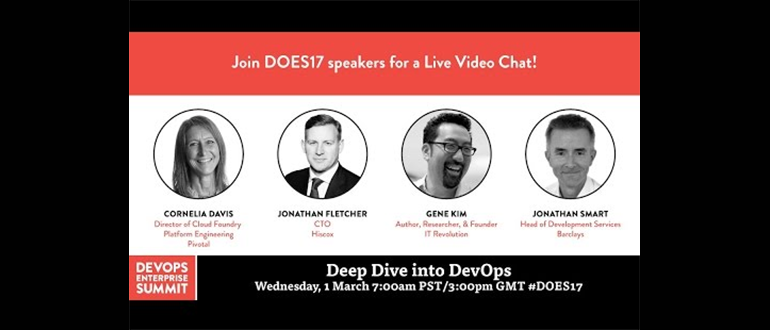

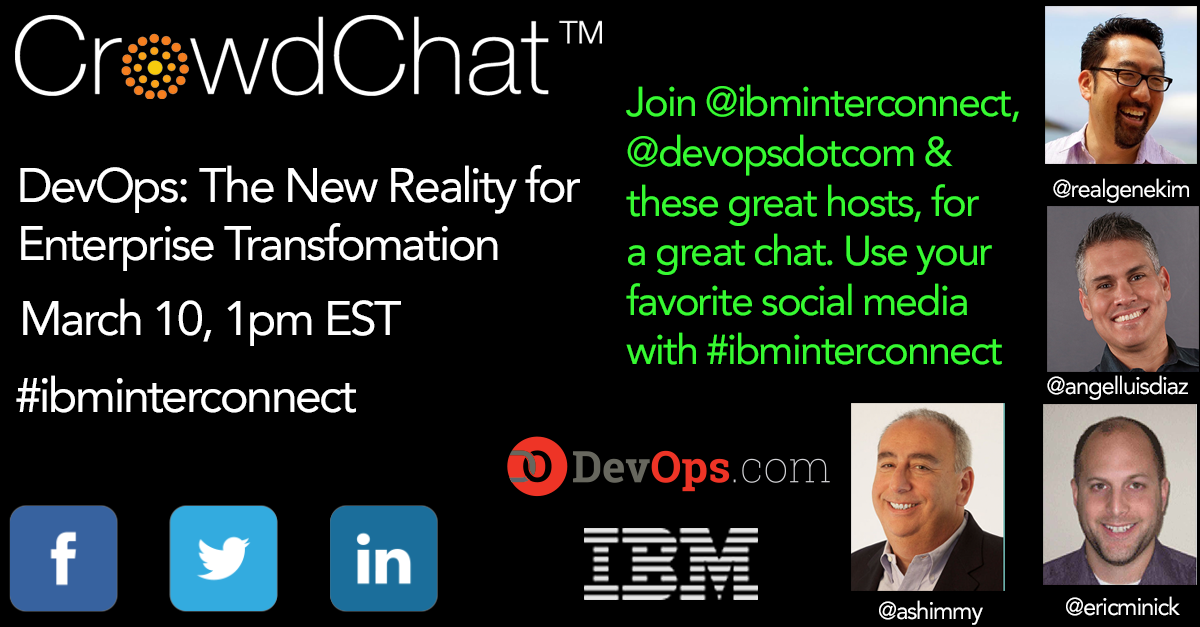




 PagerDuty Summit was described as one jam-packed day filled with an impressive lineup of speakers, panelists and industry leaders including Gene Kim, author, researcher and founder of IT Revolution; Maynard Webb, chairman of the board at Yahoo!; and execs and ITOps folks from Google, IBM, Airbnb, Netflix, Splunk and more.
 Twitter activity made it clear that attendees were particularly pleased to receive advance copies of Kim’s latest book, “
 From the fireside chat with Maynard Webb discussing cloud wars, containers and where he sees the industry going over the next five years, and the inspiring breakout sessions on all things ITOps, the first-ever PagerDuty Summit was, from all accounts, both informative and poignant. Attendees said it spoke to how DevOps and operational excellence form the backbone of successful digital initiatives and transformation, and all walked away with strategies, best practices and use cases for adapting to the evolving digital landscape.