Tag: feature flags

  • Feature Management’s Role in DevOps with Trevor Stuart

    Feature Management’s Role in DevOps with Trevor Stuart

    Trevor Stuart, general manager and senior vice president of Harness, explains how feature management is becoming a critical extension of DevOps workflows a year after the acquisition of Split Software. 

    Feature management is fast becoming a critical pillar in modern DevOps workflows, especially as organizations seek to keep up with the rising volume and velocity of software development. Stuart discusses how the evolution of feature flags has reshaped deployment practices and the expectations of software delivery teams.

    The core value of feature flags lies in their ability to enable safer, faster releases. They give teams the flexibility to toggle functionality without redeploying code, making it possible to mitigate risk during production rollouts. Initially used sparingly and often managed via manual config files, feature flags are now a mainstream method for progressive delivery. They help organizations validate features with specific user segments, reduce blast radius when issues arise, and support experimentation in real-world conditions.

    Stuart highlights that the growing use of AI-generated code, modular microservices, and increasing product personalization have only amplified the need for robust feature flag systems. These tools now serve not just as toggles, but as real-time control layers for dynamic configuration, adaptive experimentation, and telemetry-based feedback. Companies are increasingly using them to fine-tune AI models, personalize customer experiences, and refine software quality using real-time performance data.

    Despite broad awareness, many teams still rely on homegrown or brittle solutions, leading to maintenance issues and outages. The challenge is often organizational: determining whether to build, buy, or integrate these capabilities into broader CI/CD pipelines. Stuart argues that deeply integrating feature flagging into delivery workflows—particularly as part of a unified platform—is essential for scale and consistency.

    As software complexity grows, so does the need for intelligent automation. Stuart envisions pipelines that not only deploy features but also observe impact, run experiments, adapt based on results, and even feed signals back into models. It’s a shift from manual gates to data-driven automation, marking a pivotal transition in how DevOps teams manage risk, velocity, and innovation.

  • Harnessing Generative AI for Feature Management Testing

    Harnessing Generative AI for Feature Management Testing

    When it comes to DevOps, the emerging integration of generative AI into feature management testing marks a significant evolution. We’re going to take a no-nonsense look at how this technology is revolutionizing the way we create testing environments. 

    Using artificial intelligence to generate tests allows us to mimic a vast array of user scenarios and environments, which means we can develop and deploy features that aren’t just good but great—robust, efficient and ready for whatever the real world throws at them. 

    Embracing Generative AI in DevOps Testing

    Artificial intelligence is dramatically transforming the world around us, impacting a wide variety of industries at breakneck speeds. A stunning 83% of companies assert that AI is a critical component of their business strategies, particularly when it comes to software development.

    Generative AI has quickly become a transformative tool when it comes to DevOps, particularly when it comes to feature management testing, by leveraging machine learning algorithms to generate data and test scenarios that closely mimic real-world conditions.

    Traditionally, DevOps teams have relied mostly on manual and a couple of automated testing methods to validate their features. However, these methods often fail to accurately simulate the wide variety of complex and unpredictable user interactions and environmental variables. 

    By creating nuanced and diverse test cases, generative AI can fill this gap, enabling a more thorough evaluation of features under various conditions. Even now, on a smaller scale, WordPress site owners are using predictive analysis and even simple comparisons to properly orchestrate the rollout of new features–with over 60,000 plugins to choose from, generative AI has the potential to prevent lag, which can often be the result of a single shoddy plugin. 

    Simply put, AI is actively improving how features are implemented and tested across various platforms by intelligently crafting diverse test scenarios. 

    Enhancing Test Coverage and Efficiency

    The significant expansion in test coverage is one of the key benefits of integrating generative AI into DevOps testing. Traditional testing methods are typically limited by the scenarios that testers can foresee and manually script.

    In contrast, AI-driven testing tools can generate a multitude of unique, unexpected test scenarios, capturing edge cases that might otherwise go unnoticed, which is crucial in identifying potential bugs and vulnerabilities early in the development cycle, saving time and resources in the long run. 

    Additionally, AI can automate both the creation and implementation of these tests. This simplifies the testing workflow, allowing human testers to dedicate their full attention to more intricate and challenging tasks.

    Simulating Real-World Scenarios

    Another key advantage of generative AI in DevOps is its ability to simulate real-world user behavior and environments. 

    AI models can create realistic and diverse user scenarios by analyzing historical data, user patterns, and environmental variables. This type of functionality is a huge asset in feature management, where understanding how new features will perform in the real world is paramount. 

    To use a couple of examples, an AI model can generate test cases that mimic peak usage times, varying network conditions, or different user demographics. Furthermore, companies like Netflix, Google and IBM are already actively using generative AI to simulate real-world scenarios for various applications, such as content delivery optimization, predictive maintenance, and software testing. 

    Accelerating Feature Development in DevOps

    The integration of generative AI into feature testing also accelerates the feature development and deployment process. 

    A well-constructed prompt chain can set up an environment where DevOps teams can effectively compare different products/services, especially when it comes to more sensitive software, such as cloud management platforms and even find the best ways to escape vendor lock-in without actually wasting time manually comparing and testing everything. 

    Applying generative AI can also drastically cut down on the time it takes to validate a new feature by generating and running through thousands of test scenarios in quick succession. In DevOps environments, where rapid iteration and continuous deployment are key, this is essential. 

    AI-driven testing can also provide developers with immediate feedback, allowing for quick adjustments and improvements. This ensures that features are developed faster while meeting the highest quality standards before proper deployment.

    Potential Challenges and Considerations

    While the potential of generative AI in DevOps testing is immense, there are challenges and considerations that teams must navigate and work to overcome to successfully apply this powerful new tool. 

    One key issue is the quality and relevance of the data used to train AI models; since inaccurate or biased training data can lead to suboptimal or even harmful outputs, carefully selecting and curating data is a crucial step​​​​.

    Incorporating generative AI into established DevOps processes can also present challenges in terms of complexity and resource demands. Organizations may face significant challenges in modifying their existing pipelines and processes to accommodate AI technologies, which often require substantial investments in hardware, software and skilled personnel.

    Lastly, the need to continuously improve and update AI models cannot be overstated. As new technologies and security threats emerge, these models must be regularly refined and adapted to remain effective and relevant, which will require ongoing investment in AI systems and a commitment to staying abreast of evolving technologies and methodologies in what is a rapidly evolving and advancing field.

    Future Directions of Generative AI

    Looking forward, the role of generative AI in DevOps is poised to grow even more prominent, and as AI models become more sophisticated and data-rich, their ability to generate realistic and complex test scenarios will only improve. 

    But let’s look beyond just creating testing environments and isolated testing environments: A well-executed, AI-aided process can reduce costs during SAP staff augmentation and can also streamline processes in other high-level enterprise systems such as Oracle ERP and Salesforce CRM. Overall, ERP software is a perfect candidate for DevOps feature management, as it allows devs to use generative AI for everything from writing code to custom tests. 

    We can also expect to see further integration of AI in other aspects of DevOps, such as monitoring and performance optimization. The ultimate goal is to create a seamless, AI-enhanced pipeline that tests and deploys features efficiently and continuously learns and improves from real-world feedback.

    To better illustrate this transformative impact, some key examples of how generative AI will further impact DevOps in the future include the following: 

    • AI-Augmented Development: Generative will assist developers with code suggestions, bug fixes, and even making architectural decisions, thereby streamlining the development workflow​.
    • Improved Infrastructure Management and Automation: The use of predictive analytics, driven by generative AI, will play a crucial role in anticipating infrastructure requirements, facilitating preemptive scaling, and efficient distribution of resources.
    • Adaptive Problem Resolution and Incident Handling: Generative AI is set to revolutionize the way operational problems are identified, diagnosed, and resolved swiftly, greatly boosting the dependability and steadiness of DevOps practices. This is evident in platforms such as Google Cloud’s operations suite, where such AI capabilities are already making a significant impact. 
    • Generative AI in Proactive DevOps: This emerging trend focuses on leveraging generative AI to anticipate potential issues before they manifest, which enables preemptive maintenance strategies and is aimed at reducing system downtime.
    • AI-Driven Testing and QA: AI-powered testing will become more sophisticated, with capabilities such as automated test case generation, test data creation, and advanced anomaly detection​.

    Harnessing Generative AI in DevOps

    Integrating generative AI into DevOps is a groundbreaking development poised to revolutionize how we approach software development, testing, and infrastructure management. 

    This innovative technology offers immense potential to automate complex tasks, enhance efficiency and improve the quality and reliability of software products. However, as with any emerging technology, its adoption comes with its own set of challenges and considerations.

    Enterprises aiming to leverage generative AI within their DevOps practices must address challenges associated with data integrity, intricate integration processes, adherence to privacy laws and the necessity for ongoing enhancement of their AI models.

    Despite these challenges, the benefits of adopting generative AI in DevOps are quite substantial, ranging from increased efficiency and cost savings to enhanced scalability and improved overall software quality.

  • LaunchDarkly Previews Generative AI Testing Tool for Feature Management

    LaunchDarkly Previews Generative AI Testing Tool for Feature Management

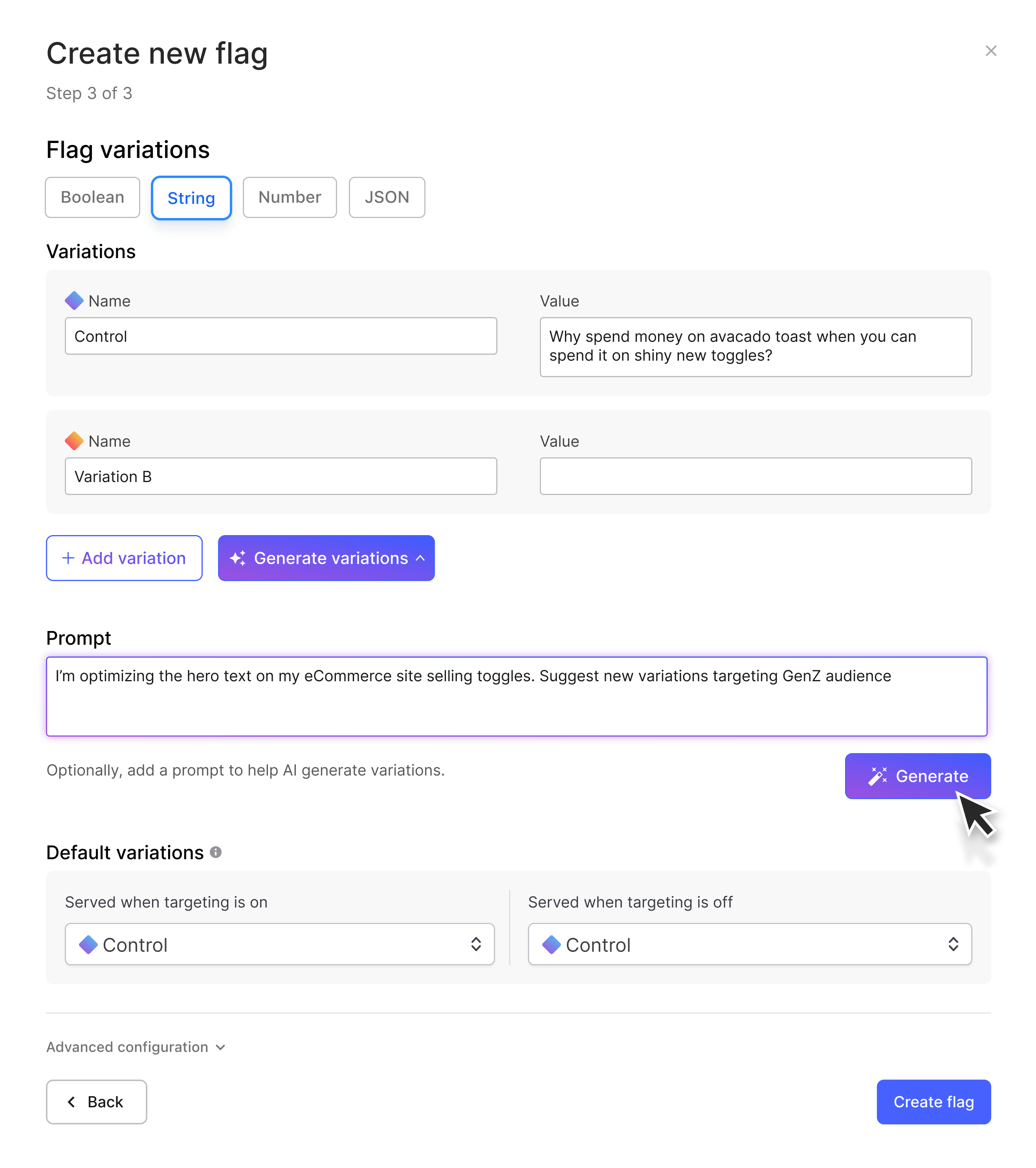
    At the AWS re:Invent 2023 conference, LaunchDarkly today previewed an ability to leverage generative artificial intelligence (AI) capabilities to create experiments for its feature management platform.

    Based on the Bedrock foundational large language models (LLMs) made available via AWS, this extension to the company’s Product Experimentation platform promises to make it simpler to use historical data to create a wider range of offerings that might be made available within an application.

    LaunchDarkly is making a case for a SaaS platform that can be used to centrally manage features across multiple workflows and platforms.

    Robert Neal, director of engineering for LaunchDarkly, said the company is now extending its testing capabilities using a managed Bedrock service provided by AWS that will enable leveraging generative AI to define a testing hypothesis more easily. That should also make it possible to involve more stakeholders in an iterative testing process within the context of a set of well-defined guardrails, he added.

    As more organizations start to deliver different tiers of digital services at varying price points, there is a clear need to be able to restrict access to those digital services. Application development teams have been employing feature management since the 1970s to isolate the development of various components into a branch that can be worked on and tested without impacting the primary build the application is based on.

    Feature management enables development teams to experiment with adding new capabilities in a way that doesn’t disrupt the application. When a project is completed, that branch is then usually merged into the primary build or can be deployed as a microservice that might be invoked via an application programming interface (API) by other modules with the application or another external application.

    At the core of that capability are what are known as feature flags, also known as feature toggles or feature switches, that make it possible to dynamically turn services on or off based on who is accessing them. Rather than being limited to the application development process, those feature flags are now being employed in production environments to enable the continuous delivery of multiple types of digital services to various classes of users of an application. A feature flag management platform enables an organization to keep track of all the flags being employed to keep the overall application environment consistent.

    It’s still early days in terms of understanding the extent to which generative AI can be applied to DevOps workflows, but it’s clear many of the manual processes that conspire to slow down the pace at which applications are built and deployed are going to be either reduced or outright eliminated. Each DevOps team will naturally need to determine for itself to what degree DevOps workflows can be automated using AI, but the overall pace at which applications can be built and deployed is going to clearly accelerate. The challenge now will be finding ways to keep pace with a rate of application development that is about to exponentially increase.

  • Unused Code: Proving a Negative

    Unused Code: Proving a Negative

    We have a ton of code that is no longer being exercised. We really don’t talk about it much, but it’s out there. From feature flags shutting off code to API versioning making an interface obsolete, it’s just hanging around out there. Like an albatross. Waiting for someone to misuse it. Or, to address the more pedestrian concerns, confusing people new to the codebase. But that code is not contributing a thing.

    Easy example. You are on version 3.2 of your API. Version 2.1 is not called by anything, but the code is still hanging out there. It is not that 2.1 cannot be called, but that it is not currently called. The problem with that is that new devs have to work through what’s current, and since 2.1 and 3.2 probably share 95% of their code bases, what portion of that code base is unused? And the API is sitting there, waiting for someone to penetrate your network and find malicious uses for it.

    Proving a Negative

    But here is the problem: Identifying that a bit of code–be it an API, a method, just a few lines in an if statement, whatever–is never exercised is terribly difficult and, in highly complex environments, borders on the impossible (it is never impossible, assuming IT owns all of the code that could exercise that bit). The old adage about proving a negative absolutely applies. We can–and testing tools in both the functional and security spaces do–generate a list of code that is exercised, or identify code that isn’t being exercised. But not a list of code that is never exercised. That functionality in test tools is super useful, because it helps prioritize issues that are being used a lot and leaves the ones not seeing a ton of traffic for later resolution.

    But I’ll say that in most organizations, that’s no longer far enough. The cruft in your code causes problems, and you need to clean it up. If you’ve worked in IT for any length of time, you’ve been through the “Oh, that bug is because the developer called something no longer used” scenario at least once. And it is a straight-up waste of time.

    So here is my proposal. Test tools generate a list of what isn’t called from systems under test. Pick one–security testing or functional testing–and require it for any bit of code, no matter how small, to go into production. That means that the system knows about all source code and thus knows definitively if a bit of code has been exercised.

    Clean Up as You Go

    Is that a tall order? Yes. Testing isn’t free. But given a scenario where you reduce technical debt by eliminating excess code, I think it will pay for itself. And that is not counting the security posture improvement that reducing the code base implies.

    You’re running the systems that present your organization to the world, so you may as well do some due diligence on yourselves. Keep making cool new stuff and upgrading the old, but clean up as you go with some form of monitoring, this or a more procedural one, so the quality is high and the excess is low.

  • Raise Those (Feature) Flags

    Raise Those (Feature) Flags

    I’ve written about feature flags before, but I think it’s time for a solid bit of advice: “If you are not yet using feature flags for DevOps, it is past time to reconsider.”

    I say this because feature flags have been a slow-growth item, with a few spikes here and there in usage, but mostly on the development side. While many of you are using feature flags to do dynamic toggling of features–definitely an advanced use case, but still very development heavy–few organizations are using them for deployment options–blue/green without separate code, environment changes for different targets (deploy this to the cloud provider, but do this for local installation type stuff), etc.

    Feature flags are starting to be supported by DevOps tooling for this precise use case, and it is glorious. While the ability to say, “run this code,” and if the new code fails, change something like an environment variable to say, “stop running that bit,” is huge. We have enough time with this process that the industry is well aware of the need to clean up as soon as the correct code options are known, and that is the biggest weakness; it makes spaghetti code that must be cleaned up. But the benefits are well worth a bit of cleanup at the end of a project, even if far too many of you don’t bother.

    Now we can use them in deployment, and in full life cycle toolsets, we have them available for both–so a set of source code can be gated behind a feature flag and deployment can use the same feature flag. This enables the ability to say, “If our FF environment variable is ‘TestDeployment,’ connect to ‘Test Database’ … then use the same variable to say, “If our FF environment variable is ‘TestDeployment,’ spin up the container with test data instead of real data.” This simple example is something that could be (and has been) done manually, but doing it this way makes it part of the process. Automated testing can then follow without the need for human intervention, and from “commit” to “test results,” IT can focus on other things instead of spinning up the right containers and making sure the right DB is accessible.

    After all, we are in a time of massive automation, which should not worry us. There are globally too many IT positions and too few people to fill them; automation should be exercised as much as possible to address that simple fact. And there is a good chance that you are already using tools in the DevOps toolchain that support feature flags–a growing number do support them. If not, it is easy to research and find a good tool to do so and while it doesn’t offer as much functionality, a stand-alone feature flag product will still offer more options than not having any.

    And keep rocking it. The applications you wrote years ago are still powering the enterprise, even if you are at a different organization today. We leave a legacy of applications behind us that is a testament to quality. Keep leaving quality, and use all of the tools you reasonably can.