Tag: digital transformation

  • Linux Foundation Embraces Lightweight API Gateway

    Linux Foundation Embraces Lightweight API Gateway

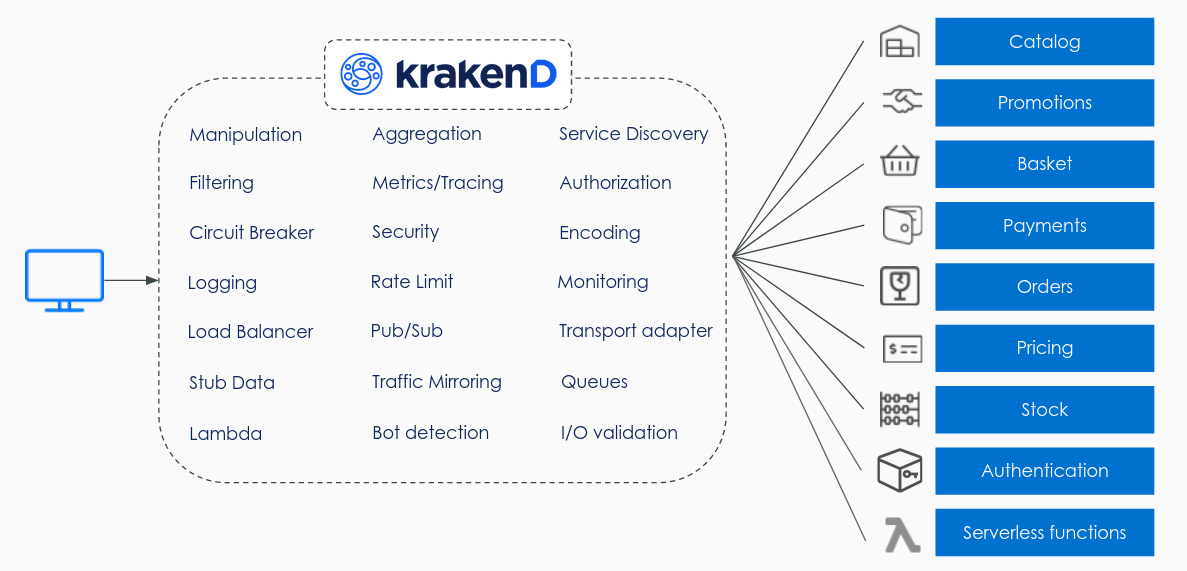
    The Linux Foundation announced today that an open source application programming interface (API) gateway known as KrakenD has become the latest project it will oversee.

    Rechristened the Lura Project, the lightweight stateless API gateway was originally developed by KrakenD, which plans to continue to offer an enterprise edition of the platform.

    KrakenD CEO Albert Lombarte said the API gateway it developed provides a more streamlined approach to managing APIs that doesn’t require an organization to install a separate proxy or database. All the reverse proxy capabilities most organizations require is already embedded within the API gateway. That approach also makes it easier for IT teams to decouple back-end server applications from client applications because now an API can be more easily updated without impacting client applications, Lombarte added.

    KrakenD Linux Foundation

    Organizations that already contribute to the ongoing development of the API gateway include 99P, Hepsiburada, Openroom, Postman and Stayforlong. The API gateway also is embedded in a variety of other platforms, said Lombarte; he noted that the number of servers running the gateway now exceeds more than one million per month.

    API gateways have been available in various forms for years, but with the rise of microservices the number of APIs organizations need to deploy and manage continues to rise steadily. Each microservice added to an environment adds yet another API. At a time when microservices-based applications are at the core of many digital business transformation initiatives, IT teams must employ a more flexible approach to managing the interactions between APIs.

    Thanks in part to the role they play in enabling digital business transformations, APIs are also being targeted more frequently by cybercriminals that have come to view them as an efficient way to exfiltrate data or inject malware into an application environment.

    It’s not clear what impact the Linux Foundation’s support might have on organizations’ selection of one API gateway versus another. In fact, many organizations are still trying to navigate when to employ an API gateway versus relying on proxy software to manage a handful of APIs versus a service mesh to manage thousands. The issue comes down to not just how many APIs there are, but also the overall weight of the platform being employed, said Lombarte. A service mesh typically requires more time and effort to deploy and manage, he noted.

    As the number of APIs in an IT environment continues to increase, there may come a day when organizations will have to revisit how APIs are created and maintained. All too often, APIs are still created as an afterthought once an application is created. They tend to be brittle and, as a consequence, still break often. A more holistic approach to managing APIs based on a set of DevOps best practices is required. The challenge is getting DevOps teams to prioritize APIs when there are so many other issues that require their attention. Nevertheless, it’s become apparent APIs are, in many cases, becoming too strategic to the business for their management to be left in the hands of a single development team.

  • How IT Ops Can Exceed Service Level Objectives in Digital Transformations

    How IT Ops Can Exceed Service Level Objectives in Digital Transformations

    The pace of change can be managed successfully by defining service level objectives and more in dev environments

    Mobile applications, data lakes, microservices, data visualizations, SaaS integrations, automations, IoT data streams, machine learning models—in proof of concepts, pilots and scaling production environments, for customer-facing capabilities and employee workflows—all of these technical capabilities are developed, deployed and enhanced faster today more than ever before.

    I spoke to Jason Walker, field CTO at AIOps platform BigPanda, about how the speed of deployment, the breadth of technology services transforming businesses are developing, the greater security threats, and the increase in reliability and performance requirements impact IT Ops.

    Walker believes that of all the things we’re trying to do in IT—more, faster, smarter, safer, innovative, secure, reliable—it’s the speed that’s the driving force. “The most significant impact is velocity; the dev-test-deploy cycle time is drastically reduced,” he said. “Without the right guardrails, that breeds unnecessary complexity and a gradual loss of operational awareness.”

    He explained that much of the barriers that once slowed down development teams are addressable today when developing service-based architectures on the cloud. “Developers realize that the traditional constraints, either technical dependencies or organizational capability, are much reduced,” Walker noted. “Developing in the cloud for a cloud-based service, leveraging an ecosystem of microservices for inputs, an agile team can move very quickly.”

    Why IT Ops Can’t Slow Down Transformations

    IT Ops can’t easily say “no” or “slow down” to business stakeholders investing in digital transformation to improve customer experiences and gain competitive advantages with data, analytics and machine learning. Some IT leaders attempted that command-and-control approach during the early days of public clouds, but today, DevOps practices, SRE responsibilities and AIOps capabilities are integral to mainstream IT Ops teams in keeping up with transformational velocities.

    So instead of saying “no,” progressive IT Ops teams say “yes, but” by defining service level objectives, (SLOs), capturing service level indicators (SLIs) and managing to error budgets.

    Walker agreed. “SLIs, SLOs and error budgets are a very useful way to manage the critical inputs and outputs at the interfaces between microservices and at a high level across the business service, allowing developers to keep changing the ‘interior’ pieces.“

    These tools change the operating model and mindset across the entire IT organization by exposing trade-offs to business stakeholders. For example, if a web application has a 99.9% SLO, the whole IT team has a 0.1% error budget. If the SLO is missed, a service level policy identifies areas of investment to improve performance, reliability, security and automation or to address technical debt.

    What IT Teams Should Do to Implement Service Level Objectives

    Defining service level objectives helps bring business stakeholders, development teams, SREs and IT Ops together and align on reliability objectives and trade-offs. It’s an important step, but not sufficient for teams that want to exceed service levels during digital transformation.

    Walker offered several technical recommendations for IT Ops groups transitioning to service level objectives:

    1. Where there are dependencies between microservices and interfaces, frequent check-ins between adjacent teams are required.
    2. APIs, inputs and outputs, need to remain consistent over time and changes communicated and receipt confirmed.
    3. Knowledge management processes delivering accurate, up-to-date documentation have to be baked into the SDLC to prevent the generally small, modular teams from sprawling away from each other and developing incompatibilities.
    4. Consolidated change awareness for operations is also a must-have. Whether changes are human or automated, they have to be tracked and relatable to service events and alerts.
    5. The later phases of the SDLC, when cloud-native, containerized microservices are running and supporting customers, have to be monitored. A monitoring strategy is necessary to ensure effectiveness and minimize the work and noise involved.
    6. Synthetics and client telemetry can be very useful macro-indicators of overall service performance. As with all monitoring efforts, actionability is key. Signal-to-noise in monitoring has to be measured.

    These are balanced recommendations, with the first two focused on how development teams engineer microservices and the last two on how IT Ops teams use monitoring and AIOps to implement actionable SLIs. The middle two recommendations on knowledge and change management processes help the entire organization stay in sync through a fast-paced operating environment.

    “The velocity, flexibility and variability of this type of development means leaders at all levels need to understand and align the strategic and tactical goals, and to prevent their teams from drifting away from business goals,” Walker said.

    Why AIOps is a Force Multiplier for IT Transformation

    So, the business leaders align on service level objectives, development teams engineer observable containerized microservices, IT Ops executes a monitoring strategy and the CIO ensures communication, collaboration and knowledge sharing. Is that all that’s required?

    The issue is that most IT Ops teams are understaffed and get overwhelmed supporting the new cloud-native microservices, legacy systems and everything in between. To address the gap, IT leaders are investing in AIOps, and even hundred-year-old enterprises are successful at adopting machine learning and automation to accelerate IT Ops.

    Automation and machine learning event correlation applied to monitors, alerts and observable artifacts are the force multipliers. Open-box machine learning enables IT Ops to triage incidents and improve their mean time to resolution, while automation reduces manual efforts and keeps teams in sync. Organizations that are modernizing applications and supporting hybrid clouds require these capabilities to manage the complexities, run at business speed and manage databases, microservices and applications to higher service level objectives.

    As Walker noted, increasing velocity is important for responding to customer opportunities and changing conditions. Driving faster digital transformations is more achievable today when IT Ops leverages automation and AIOps to stabilize speed with reliability and performance.

  • Successful Digital Transformation: It’s About Strategy

    Successful Digital Transformation: It’s About Strategy

    While having a mature digital enterprise helped organizations to better survive – and even thrive, in some cases – the pandemic, that’s not the primary reason why organizations will continue to invest in their digital transformation efforts. According to new research from consultancy Deloitte, businesses will continue to invest in their digital transformation capabilities to innovate rapidly and to survive competitive battles in the marketplace.

    Deloitte’s survey found that enterprises believe such ongoing investments in digital transformation will continue to deliver benefits, such as enabling them to innovate more quickly, modernize their business-technology systems and become more resilient. The pandemic proved an unfortunate test of such business resilience, with more than 75% of respondents saying that their digital capabilities helped them better meet the business challenges posed by the pandemic.

    The survey also found that enterprises plan to increase their digital investments and to do so considerably. Respondents indicate, on average, planned investment of nearly $13 million on digital transformation in the next year — a 15% increase from the prior year’s spend.

    These findings mirror those of another survey released this week from software provider Rimini Street, which found digital transformation is one of the top five priorities among CFOs, and that 71% of CFOs believe that such investments are essential to the success of their businesses. Further, 77% of CFOs said they would work with their CIOs to help find funding for digital transformation efforts — if there was a strong ROI demonstrated.

    Perhaps most noteworthy from the Deloitte survey is that, while digital platforms and digital transformation efforts are essential, they are not a competitive advantage by themselves. It’s what businesses do with those platforms that matter.

    Additionally, most Deloitte respondents see plenty of competitive upheavals ahead: most respondents feel it is most likely that their main competitors will be a startup or current digital native competitor in as little as five years. Less than one-third of respondents believe that their current competitors will remain competitors five years from now.

    To win funding for digital transformation and innovation initiatives, the Rimini Street survey suggests CIOs will most likely succeed by not pushing innovation for its own sake, but by seeking out initiatives that will generate a strong return. In that survey, CFOs made it clear that optimizing existing technology, revenue-generating endeavors and improving processes and staff efficiencies were their top three priorities.

    In that race to continuously optimize business technology systems, many CIOs in Deloitte’s survey also see a downside. More than half of those questioned said that the rapid pace of change is harmful to both their organization and their customers, and 75% said the rapid change had created significant upheaval in business leadership or their board during the past 24 months.

    Whether enterprise business and technology leaders want a world with such rapid change doesn’t matter: it is the world in which they must compete. And those enterprises that succeed in the next few years will be those that not only make the right investments in digital transformation, but those that figure out the best ways to innovate and connect with customers by leveraging those investments.

  • Solving Cloud-Native Challenges in the Rush to the Cloud

    Solving Cloud-Native Challenges in the Rush to the Cloud

    The shift to cloud-native environments away from traditional data center infrastructures continues unabated, but security and complexity challenges remain a struggle for DevOps teams.

    These were two of the main takeaways in a survey and analyst report published by the IT consultancy firm Flexera. 

    The survey, based on the responses of 750 IT professionals, revealed that 92% of the organizations represented in the survey have a multi-cloud strategy, 80% have a hybrid cloud strategy and only a minority (45%) have integrated data between cloud environments.

    The top challenges, according to the survey results, are:

    • security (81%)
    • managing cloud spending (79%)
    • governance, lack of resources/expertise and compliance (75%)
    • comprehending cost implications of software licenses (55%).

    The solution for these challenges largely involves — in addition to implementing the right DevOps culture and practices — adoption of the right tools and platforms, especially for security. However, first-generation cloud-cost management tools “simply are not cutting it” for modern architectures, said Asim Razzaq, CEO of Yotascale, which offers a cloud resource optimization platform.

    “Today’s modern architectures are dynamic, and ownership is transient and not always well-defined. The greatest strength of containers and Kubernetes is the ability to scale on-demand and share cloud resources among multiple applications,” said Razzaq. “Tracking cloud costs in modern architecture requires a strong ability to automate cost attribution — or tag management — for those dynamic resources, and the ability to understand usage at the application level, even for containers that are sharing resource instances.”

    First-generation cloud management tools are, in this way, unable to provide the information DevOps teams require to understand how to automate cost attribution for modern architectures, said Razzaq.

    “[DevOps teams] can’t break down costs into any level of meaningful detail for engineering and finance teams to digest and act upon,” said Razzaq. “Conversely, newer approaches that are focused on Kubernetes cost management lack the ability to understand and break down the costs of non-cloud-native workloads.”

    Indeed, tools are often frustrating to engineering teams because of their static custom reporting, broad and generalized recommendations and no effective workflow for effective collaboration between finance and engineering, Razzaq said.

    “The biggest source of frustration is the inability to drill down and manage costs in a way that matches the way that these teams do business. There may be 10 teams, each with five production applications running in the cloud, for a particular account,” Razzaq said. “Engineers need to see, at the application level, what their resource utilization, costs and cost anomalies are in order to make the best cost/performance decisions for their applications. Without that, they’re flying blind; having to defend their cloud usage without any supporting data.”

    As an example, a misconfigured Kubernetes cluster can “cause a massive spike in costs,” Razzaq explained. “Without detailed cost and utilization reporting at the team and application level, an engineer can spend weeks digging through spreadsheets and logs trying to track down the source of the anomaly. That’s weeks of their time that they aren’t [using to] be productive on new features.”

    cloud-native

    Razzaq said there are a number of solutions DevOps teams can adopt to address these issues, including automated cost attribution and tag management, actionable recommendations and comprehensive observability capabilities.

    Automated cost attribution and tag management “is the foundation of accurate and detailed cloud cost management,” said Razzaq. “Engineers need tools to help them set tag management policies, identify untagged instances and update tags quickly and easily in their cloud environment,” he said. “With this in place, cloud-native workloads can be automatically tagged as they are dynamically created, ensuring that cloud costs are always clearly attributed to the right teams and applications.”

    Actionable recommendations at the cloud-instance level with closed-loop feedback also are an important process “so that engineers can see exactly why the recommendation is being made, and what the cost impact will be of taking that action,” Razzaq said. “The ability to provide feedback on the recommendation and dismiss recommendations that don’t align with business needs ensures that new recommendations are relevant,” Razzaq added.

    Finally, tools that provide a unified view of both cloud-native and traditional workloads that have been shifted to the cloud help to ensure “that engineering and finance have a single source of truth for their cloud costs that enables them to make smarter decisions for their business,” Razzaq said. 


  • Survey Finds Digital Transformation Outcomes in Doubt

    Survey Finds Digital Transformation Outcomes in Doubt

    The COVID-19 pandemic forced organizations, both large and small, to either launch or accelerate digital business transformation initiatives that, to varying degrees, depend on their level of DevOps acumen to succeed. Value stream management platform provider Digital.ai today published the results of a survey of 200 IT decision makers, 200 security decision makers and 200 business executives in organizations with at least 500 employees which suggests that, while there’s a lot of confidence in those initiatives, the business outcomes those efforts are intended to enable are still very much in doubt.

    The survey finds 95% of respondents believe their digital transformation initiatives are going well, with 22% reporting they have been completed. Just under a third (32%), however, said they still have a lot to accomplish. Just under half (49%) said they have yet to see the results they expected. In fact, more than half of respondents (56%) also noted they are concerned about the return on investment (ROI) of those initiatives.

    Overall, the survey suggest optimism continues to prevail. A full 92% of respondents said they are creating new value for the business, with 93% claiming the business as a whole remains competitive. However, more than half (57%) are concerned that business, IT and security goals might be misaligned. More than half (54%) are concerned about meeting customer needs. Nearly two-thirds are concerned about software vulnerabilities.

    More challenging still, 94% of respondents need software development and delivery to be better aligned to business objectives. Only 54% claim to be strategically aligned. Almost every respondent (99%) needs more visibility into business planning processes, with just over a third (34%) noting they are not especially good at attaining that visibility.

    Not surprisingly, a full 91% said they still need more time to work on their digital business transformation initiatives.

    Derek Langone, head of strategic transformation for Digital.ai., said the survey makes it apparent there is a much greater need for a set of key performance indicators (KPIs) for IT teams that are tied to specific business objectives. As organization of all sizes realize how dependent they have become on software, any delay can have a major impact on revenue and profitability projections, noted Langone.

    Of course, not every digital business transformation project is going to succeed, no matter how optimistic business and IT leaders may be. Many initiatives were hastily conceived during the early days of the pandemic. Others were simply accelerated without enough due diligence. Digital.ai is making a case for a value stream management (VSM) platform that enables organizations to first understand the true status of these projects by synthesizing all the data residing in various DevOps platforms, and then assessing the impact any delays might have on the business.

    It’s not quite clear how many organizations have managed to get as far as they have without at least some VSM platform equivalent. However, as software development continues to become more complex, it’s also apparent that without a VSM capability, the odds various digital business transformation initiatives currently underway will eventually be derailed are substantially higher than many IT and business professionals would like to admit.

  • Agile Divide Between IT and Business Is Narrowing

    Agile Divide Between IT and Business Is Narrowing

    A global survey of 1,350 business and IT executives conducted by Jigsaw Research on behalf of NTT Ltd., a provider of IT services, suggests organizations are a lot more agile in the wake of the COVID-19 pandemic, but there’s still a significant gap in terms of prioritizing agility.

    A full 89% of business and IT leaders agree COVID-19 has caused significant changes to their operating processes, with 87% also agreeing it has accelerated their digital transformation strategy. A third of respondents (33%) also noted they pivoted their technology focus to take advantage of a market opportunity or scale their operations.

    However, well over a third of operational executives identified speed and agility as a core component of technology strategy, while only just over half of IT executives agreed (53%).

    Overall, the survey found there is a consensus IT remains a key enabler of business efficiency. A total of 91.4% respondents agreed that enabling business efficiency is a key driver for their technology strategy, with 92% of IT respondents saying their overall technology strategy is aligned either fully or partially with the organization’s business strategy needs.

    However, there’s a significant divide in terms of the importance of IT’s role in driving business efficiency. A technology strategy that drives business efficiency opportunities is seen as being most crucial by 70% of operations teams, yet only 48% of IT teams said the same.

    Sanjay Lakhani, a principal consultant for NTT and head of the IT service management (ITSM) practice for the Americas region said that while the alignment between business operations and IT is not as close as it could be, a lot of improvement has been made. Prior to the COVID-19 pandemic, the divide between IT and the rest of the business was generally wider, noted Lakhani.

    Now that more organizations are realizing how dependent they are on software, there’s a lot more focus on application development with business units, he added. There’s also more pressure on IT operations teams, which are being asked to keep pace with the rate at which digital business transformation initiatives have accelerated, added Lakhani.

    Unfortunately, the survey also highlighted an emerging technology gap. The survey found 92% of business and IT leaders agreed emerging technology is crucial for their technology strategy, but only two-fifths (41%) believed they have the technology to meet their organization’s immediate objectives. Those result suggest a significant transition is underway, both in terms of how software is constructed and the type of IT infrastructure required.

    In the meantime, it remains to be seen to what degree the COVID-19 pandemic has fundamentally altered the DNA of IT operations teams, but it’s apparent enterprise IT will never be the same. Most IT teams have embraced, to varying degrees, agile application development methodologies along with DevOps best practices. The challenge now is aligning the operational cadence IT teams follow with that of the rest of the business in the wake of the pandemic.

  • How lulu Became a Lemon: A Digital Transformation Fail

    How lulu Became a Lemon: A Digital Transformation Fail

    Many people sometimes have a tough time figuring out what exactly digital transformation is and why it’s so important. I want to tell you a real-life story of how a once-respected brand, lululemon, has failed the digital transformation journey and, as a result, may fail in a new retail landscape.

    The story starts innocently enough with my desire to get my wife a lululemon gift card for her birthday. She has gotten her vaccines and is returning to the gym, so I figured it was a great time to get new workout clothes. I purchased a gift card on March 15 to be delivered via email a few weeks later on her birthday. It was a simple digital transaction that for any company that has its digital transformation act together would be a no-brainer. Well, this is where lulu turns off the tracks and turns into a digital lemon.

    On the day of my wife’s birthday, I had planned that she would wake up and see how thoughtful I was in getting her the gift card. She didn’t say anything about the card, though, so I finally asked if she received the gift card. She didn’t know what I was talking about. I had her check her spam folder, nothing. Nope, no gift card.

    Thus began a day that would see me reach out and communicate with the lulu team no fewer than six times. It seems that lulu uses a third party for digital gift cards. Each time I reached out to a lululemon “educator” (that is what they call them, and did I get an education), I was told a different story:

    1.  A simple apology and card being emailed, give it an hour.
    2. Sorry, it must be that email address, do you have another email address? Give it an hour.
    3. Hmm, seems our third-party gift card provider is having problems today.
    4. We located your card, it was sent to: tlaynguyen@gmail.com  could I check that email? (I would love to, but that isn’t an email address I have.)
    5. Well, we have no control over when the third party sends emails.
    6. Digital gift cards are non-refundable, even if you didn’t receive it. Sorry, can’t help you.
    7. You have blocked our emails from your computer.

    At this point I realized that lululemon, while maybe making great workout gear, is analog to the core. A simple digital transaction like this had them tied in knots, wasted hours of my time and so turned off my wife that she is looking elsewhere for her new workout gear.

    This past year has taught us that retailers that can’t hop on the digital transformation train are heading for the precipice. It seems as though lululemon may have already gone over the deep end. The company better hope the malls fill up quickly because in a digital world, lulu is truly a lemon.

  • The Evolution of Technology Driven Banking

    The Evolution of Technology Driven Banking

    History repeats itself with every technological revolution, sparking the same old fears about job loss and human redundancy. Much of this is unfounded because each time, when routine and repetitive jobs got mechanized, those who were displaced often were elevated into bigger, better roles. The pattern was consistent across industries; whether it was manufacturing, retail, entertainment or banking, the technology of the day – from the steam engine to the mainframe – augmented and amplified, rather than eliminated, the work of human beings.

    This time around, the debate is about cloud-driven banking shaking up employment in the financial sector. But the reality is the same, as always.

    A Look at Banking Functions

    To understand what is happening, let us segregate various banking functions from an inside-out perspective. Strategy definition occurs at the top, at the level of the board and senior management. Lower down the order, the strategy is converted into plans, which are then executed by various teams. All these activities involve data operations such as collection, comparison, tracking, monitoring and course correction. There is no interaction with the end customer just yet.

    The second set of functions is aimed at achieving strategic and financial goals. These functions relate to business execution – expanding the corporate, retail or investment banking business, adding branches, acquiring customers and so on. The desired outcomes are defined as KPIs for individual managers, expressed as growth targets and budgets.

    The moment of truth is when these internal functions flow out of the bank to the last mile – in other words, when a frontline employee, such as a branch manager or relationship officer, comes in contact with the end customer. Not much has changed in the way banking has been transacted since 14th century Greece. The counter has been replaced by the teller window, but the interactions are still about facilitating lending, borrowing and payments. What has changed, however, is the number and type of participants. In addition to the money lenders and joint stock companies of old, today there are banks, of course, but also fintech firms and big tech companies. The mode of service delivery also has changed (perhaps beyond recognition) to include branches, mobile phones, websites, wearable devices and even social media applications.

    The Role of Machines

    Let us examine the role of machines (which includes software and digital technology, including cloud) in each set of functions. Strategy visioning and implementation clearly need human intelligence; however, machines can provide rich, accurate and timely data so the people in charge can make better decisions. Similarly, while planning activities – involving interpretation, visualization and application of past experience – too cannot be handed over to machines, they can certainly leverage machine learning to do what-if analyses and simulate various scenarios in real-time.

    Business execution functions offer more potential for humans and machines to actually work together, by farming out repetitive and routine work, such as data collection, comparison and analysis, to the latter. Following that, the human workers will apply their wisdom to machine-generated insights to take course-corrective actions to, say, improve revenue, lower cost, enter new markets, etc. In each case, far from taking over the role of human workers as feared, the machines are actually elevating them.

    Several operational goals are set up as part of business functions, with managers at the head office, zonal or branch level assigned responsibility for achieving them. While the managers make the decisions – for example, which channels to employ – implementing those decisions at scale is only possible with the help of machines – think origination, onboarding, document verification, KYC checks, credit rating analyses etc. This is how Paytm onboarded 200 million customers when India announced demonetization, and RBL acquired massive digital deposits during the pandemic lockdown. Without support from machines, their human employees would only have been able to handle a fraction of the business volume.

    That being said, there are some jobs that can, and should, be given to machines. A good use case is technical resolution – attending to issues in databases, networks, servers or applications – that can be performed proactively, preemptively and efficiently by AI-driven systems at a scale that is out of reach of human workers. What’s more, the systems will continue to learn and improve over time, so humans need only step in to resolve complex or exceptional issues. When a customer calls a contact center, call tracking, tracing and auditing, as well as caller identification, are best left to the machines, which will also route the call to the best available agent; the system can also suggest the best solution based on past history. Note that while the machines take over these jobs, no roles are actually lost. The agent remains in charge of making the final decision and communicating it to the customer.

    Cloud-Driven Banking

    Now let’s look specifically at the impact of cloud-driven banking on human workers. When it comes to lowering cost while improving agility, the cloud is unbeatable. Today, when banks are under immense pressure to reduce cost from both a low-interest environment and new competitors operating at half their cost-to-income ratios, it is unviable for them to maintain expensive physical infrastructure, such as data centers. Cloud service providers and hyperscalers are the answer for managing everything from servers and systems to databases and data centers. Outsourcing these functions relieves the banks’ operators but does not make them redundant, because they can be redeployed in higher roles, such as planning for growth. This means that instead of providing services to the business organization, they will demand services from the cloud providers; in other words they will become “service seekers” instead of “servicers.” In this role, they will require higher-level skills like negotiation, critical thinking and decision making.

    To sum up, whether it is artificial intelligence or machine learning, when technology takes over a routine banking function, it always opens the doors for human workers to elevate themselves into a more rewarding role. Cloud-driven banking is no different.

  • The Digital Transformation of Decision-Making

    The Digital Transformation of Decision-Making

    The ability to make effective business decisions has historically relied on factors such as experience, qualifications, talent and, in many cases, luck. Strategic and tactical choices are also informed by ‘borrowing’ the insight and knowledge of others. In many situations, ‘follow the leader’ can be an effective approach, and one need only study any sector of industry or commerce to see organizations everywhere mimicking each other, with competitive advantage based on relatively small acts of incremental innovation.

    Today’s ambitious businesses have many more options at their disposal to inform decision-making than previous generations. The extent, for instance, to which businesses can now collect, store and analyze data has been transformed by improvements in technology. The result is many businesses are now sitting on enough data for advanced analytics to inform smarter, more efficient decisions.

    The Role of Advanced Analytics

    Stepping back for a moment, advanced analytics is a set of tools and techniques that use existing data to develop insights to inform business decision-making – in particular, improving the accuracy of predicting future events based on certain actions. In practical terms, it is particularly useful when organizations are planning to implement a new business activity, where it is employed ahead of legacy processes that simply can’t deliver the same levels of insight.

    Online shopping is a prime example. When a consumer clicks on various items on a website, they will often be given other suggestions – sites often will present this information with the words ‘Frequently bought together,’ for example. This is based on what has already been viewed and uses advanced analytics to predict what else the shopper might be interested in. It’s just one of many ways retailers now rely on advanced analytics to intelligently cross-sell, and as many people will know, it’s very effective.

    In a wider sense, advanced analytics can be used in a huge variety of scenarios, irrespective of industry, market or type of customer. In doing so, businesses stand to reap a number of potential benefits, including:

    • Smarter decision making. By generating data based on strong logic and reliable information, advanced analytics can draw on both past and present data to make more reliable, more confident choices about what to do in the future.
    • Focused knowledge. By understanding the factors that improve business outcomes alongside those that are negligible, leaders can focus their attention and investment on what is more likely to deliver the desired impact.
    • Risk management. In an era of heightened risk, and the need for greater risk management, advanced analytics can identify risk based on available data, helping to inform business models that minimize risk, or help businesses make decisions based on insight rather than hope. This can also help improve governance and mitigate regulatory and compliance risk.
    • Strategy automation. Because advanced analytics takes care of analyzing data, teams have greater flexibility and time to focus on wider strategic considerations, which can help make the business better.

    Advanced Analytics in Action

    Advanced analytics employs various techniques across an ever-increasing range of use cases. For example, data mining is applied to ensure organizations make use of the most relevant data, extracting what is useful from the raw data. This data can then be subjected to further analysis for a multitude of objectives, such as understanding customers better or building more effective strategies.

    In addition, ‘big data’ analytics can be applied to both structured and unstructured data, and can be particularly helpful when the data generated isn’t in a proper format, or for organizations with massive data volumes to process.

    Then there’s predictive analysis, where machine learning algorithms are applied to current and past data to identify relationships and patterns. The algorithms then build a prediction model that can inform decision making. In general, the more data that is available, the more accurate predictions will be. It can’t, however, deliver 100% accuracy, and random, unpredictable factors such as a mass healthcare crisis illustrate the obvious limitations on predictive analysis.

    Taking this a step further, prescriptive analysis helps determine the best way to implement a business decision. Even when a decision is close to being made, there can be more than one possible implementation path to follow. Prescriptive analysis uses current and past data to suggest possible outcomes before actions are set in stone, recommending the best implementation options.

    Advanced analytics is a rapidly growing niche of the technology industry, regularly described by industry experts and commentators as among the most important, transformational IT trends. Given the pivotal role of decision-making across every organization, this perhaps shouldn’t come as a surprise, and for businesses everywhere, it’s now only a question of when they apply it to improve their fortunes, not if.

  • Dual-Track and Low-Code’s Excellent Adventure

    Dual-Track and Low-Code’s Excellent Adventure

    Digital transformation can be a bogus journey. Here’s how low-code and dual-track transformation efforts can help.

    Large-scale enterprise digital transformation can take a while. Transformation initiatives like cloud migration, mainframe upgrades or refactoring monolithic systems could easily take five to seven years. Yet, this slow pace is at direct odds with today’s digital innovation standards and the pressure to release software rapidly.

    COVID–19 has amplified this drive to innovate, especially complicating matters for non-cloud-native companies, which struggle to attract and retain talent amid a developer shortage. Not to mention, developers are experiencing surmounting pressure to perform, which could result in burnout if not supplemented by new strategies.

    To maintain agility while diligently advancing multi-year digital transformation projects, some proponents argue for a dual-track approach. This approach uses low-code platforms to increase operational agility (the fast track) while digital transformation initiatives (the slow track) progress methodically on the side.

    I recently sat down with Jay Jamison, chief product and technology officer at Quickbase, to discuss today’s digital transformation concerns. According to Jamison, implementing a dual-track approach affords great rewards, but it requires an organizational cultural shift. He recommends establishing centers of excellence (COE) to evangelize low-code practices and encourage citizen development, enabling subject matter experts of lower technical acuity to automate operational workflows and operations.

    Dual-Track Transformation

    “Digital transformation is an important element for businesses of all sizes,” said Jamison. However, mainstream digital transformation projects, like rationalizing an ERP, moving to the cloud, or upgrading a network, can take an exorbitant amount of time and money. It’s hard for IT to meet business requirements. “We really need a second track of digital transformation — one that is more agile.”

    Jamison likens dual-track transformation to chipping out “small rock” projects from the larger digital transformation cliff. This strategy focuses on streamlining realizable goals in shorter timespans, empowering teams of people — with subject matter expertise — with tools to transform and digitize their workflows.

    Low-Code’s Role in Dual-Track

    A recent study conducted by Harvard Business Review found that 80% of executives “strongly agree” that a dual-track approach is essential for digital transformation. Yet, only 31% of companies have adopted said approach.

    To realize a dual-track process, Jamison recommends low-code for its “low-risk, high-throughput capability.” According to Jamison, low-code enables the edge of business to quickly adapt new solutions and run them in parallel with big rock digital transformation. For example, non-engineer government employees in a Texas county recently used a low-code platform to help distribute coronavirus vaccines.

    For a citizen developer culture to flourish, “you really need to have all hands in the pile,” Jamison said. IT stakeholders and business members must collaborate and work together to bring low-code to fruition. This process combines setting goals, outlining guardrails, and forming learning groups with progressive leadership at the helm.

    Introducing Centers of Excellence

    Naturally, many factors can affect IT innovation (leadership commitment, collaboration, organizational expectations, etc.). But arguably, the most common roadblock to digital innovation is culture. In fact, 45% of executives report that organizational structure is a major transformation challenge.

    That’s where centers of excellence (COE) come in. No, centers of excellence is not an archive of Bill & Ted’s adventures. COEs aim to fix the cultural barrier by encouraging progressive leadership, collaboration, and innovation. The Playbook for Centers of Excellence defines COE as “a concentration of expertise and resources in a specific capacity, designed to maximize the focus on a specific project.”

    A COE aims to foster shared understanding between IT leadership and business leadership. In Jamison’s words, “a center of excellence provides the ability to utilize low-code to sustainably build and empower applications in a safe, sustainable way.”

    Building a Most Triumphant Center of Excellence

    The COE goal is to empower business users to innovate. Yet, COE is a governance framework, which seems a bit contradictory. So, how does an organization go about implementing it? Well, there is a range of how companies adopt COE, but Jamison shared some common steps:

    Step one is establishing your goals. This could be increasing productivity, enhancing customer satisfaction or improving service reliability. Step two involves inviting the right people and perspectives — the key personnel to own the COE program.

    Next, develop transparent policies around security. This helps preempt concerns around data security and compliance. Finally, now that goals and rules are established, communicate the initiative across an organization.

    Throughout this process, investing in training is paramount. There are many project management philosophies for encouraging low-code adoption, but Quickbase recommends a training and education team to “roll out information and goals in a structured, targeted way”. They also encourage a community focus — user groups, internal events and knowledge-sharing initiatives can build excitement within the employee base.

    Benefits of Low-Code Enabled COE

    A COE aims to bring disparate parties to the same table. For example, companies could hold what Jamison described as an “appathon,” in which business executives present their goals, like rolling out new installations or driving 5G deployments. Then, priorities are assigned to individual groups, who apply domain knowledge to construct applications.

    Setting up a COE by accelerating ground swell innovation “catalyzes the dual-track innovation that we think is really key,” said Jamison, reducing the mean cycle-time to introducing new features. Low-code could also lower the integration barrier, enabling connectivity with CRM systems, or connecting with big, heavy systems like SAP or Oracle.

    Jamison also described low-code platforms as encompassing “the spirit of microservices,” as they introduce a relatively lightweight application process and easy deployment model. Furthermore, if teams are tapped into the same PaaS, they receive data reusability benefits, he said. “Everyone can utilize the same data in a way that’s relevant for what they need.”

    Citizen Developers: Bogus or Non-Bogus?

    Personally, I think it would be great if the future of application development ushered in a democratizing effect, allowing more people to participate in software creation. Yet, the skepticism around a fully working citizen developer model is hard to shake.

    The “citizen developer” seems to have a negative connotation among coder elites, too. As one reader commented:

    “So top talents are overpaid extravagance and bored secretaries working from home will be driving innovation by writing no-code workflows, am I right with understanding what is written here?”

    I pressed Jamison on the reality of the citizen developer concept in practice and how he responds to naysayers. He jokingly equates it to a witch hunt.

    “Saying that only people that get to participate in software development is professional software developers is ridiculous,” he said, noting the importance of subject matter expertise.

    According to Jamison, companies often fail when they attempt to transmit subject matter expertise to developers. Organizations would rather teach subject matter experts low-code than teach the subject matter to programmers, he noted. It’s not hard to imagine why allowing subject matter experts to build their own workflows for specialized fields, such as accounting, natural science, or mathematics, makes sense.

    Regardless, Jamison adds there’s nothing really to worry about — “The full stack developer isn’t going anywhere.”

    Dual-Track Digital Transformation? Excellent!

    A dual-track approach combines large-scale transformation and rapid-cycle development. By separating “small rock digital transformation” out from the larger puzzle, organizations can increase operational agility to meet business needs a bit quicker.

    Establishing a center of excellence seems to boil down to bringing people together to share ideas, collaborate, and drive better productivity. If anything, this way of thinking will help operationally-intensive industries consider how they can automate parts of their business.

    Ultimately, the goal here is to enable organizations to collaborate better and drive better productivity. By empowering more creators, you can start seeing creativity at the edge of business emerge too, said Jamison. If that involves citizen developers creating event-driven workflow automation, so be it. “We invite people to take on the challenge,” said Jamison.

    Hopefully, then, business and IT can be excellent to each other.