Tag: digital transformation

  • Going Through a Cloud Migration? AIOps Can Help

    Going Through a Cloud Migration? AIOps Can Help

    AIOps can help ease many of the challenges associated with cloud migration

    As businesses seek to compete in the digital economy and better engage with customers through new digital experiences, they have become increasingly reliant on cloud as a critical component of their digital transformation strategies. This has never been more true than during the COVID-19 pandemic, when businesses across all industries are aiming to provide the best digital experiences possible in our new, heavily remote world.

    Gartner validates this reliance on cloud in a recently published report, which states that although IT spending is set to decline in 2020 due to the impact of COVID-19, the pandemic’s increase in remote work has set public cloud services to grow 19% this year.

    There’s no doubt that cloud migration can be challenging, but properly preparing and utilizing tools such as AIOps can help initiate this process and can provide ongoing visibility.

    The Ingredient for a Successful Cloud Migration

    AIOps helps identify and resolve issues before they disrupt the end user during a cloud migration, arming technologists with insights and providing visibility within multi-cloud and containerized environments as companies manage their complex platforms.

    A surge of data can be managed in the cloud but can be difficult to manage without having visibility across the platform. AIOps offers an overview and provides updates and optimization suggestions, which helps businesses be competitive and have control.

    The AIOps and Cloud Migration Process

    AIOps exists to help with big IT challenges and there is a suggested path businesses can use pre-, during and post-migration.

    Pre-Migration

    Before the migration begins, you should measure the existing performance of your applications as a baseline. You can then define performance goals and find bottlenecks you should avoid during your cloud migration. You must evaluate the potential impact of your cloud migration on your IT environment, which AIOps can help with. With robust visibility, you can see results on applications that power your business.

    During Migration

    Once you have migrated your workloads to the cloud, you can utilize machine learning and AI to check which resources might be underused. AIOps on the cloud will provide insight on overused resources, so you can identify instances that are best for your company’s needs.

    Post-Migration

    Being able to monitor your services on the cloud and end user performance gives full visibility into what you are getting from your cloud provider. Needs can change over time, so a cloud migration strategy that incorporates AIOps can identify what can be altered. This functionality helps make it clear which applications could benefit from being moved.

    The reliance on cloud support is only increasing, so the sooner you incorporate AIOps into your IT environment, the faster you can have confidence your services will deliver improved performance for the end user. Why not get the most out of your investment in the cloud by using AIOps to support your business for the long term?

    AppDynamics is sponsoring KubeCon + CloudNativeCon 2020 North America, taking place Nov. 17-20. To learn more about how AppDynamics is supporting businesses in their cloud migration journeys, register for our webinar during the show here.

  • Bringing Agility to Mainframes in COVID-19 and Beyond

    Bringing Agility to Mainframes in COVID-19 and Beyond

    Of the many ways this pandemic has shifted resources online, financial transactions are among the most critical. With the use of cash and checks grinding to a halt, transactions generated with our devices are increasing, and most of them are being completed on a mainframe. It’s not hyperbole to state that mainframes—the systems of record for major banks, investment houses and insurers—are helping to keep the world economy resilient, all without a single glitch.

    Will the increases in online transactions be temporary while sheltering and social distancing are in place or does this mark a critical inflection point in the market? There are already signs that the online uptick is here to stay. J.D. Power research says approximately one-third of retail banking customers plan to increase their use of online and mobile banking services post COVID-19, with this percentage expected to increase with the duration of the crisis. It’s likely similar increases in online transactions will take permanent hold with commerce beyond finances and retailing.

    Bringing the Mainframe and Digital Transformation Together

    The main beneficiaries of this trend will be those organizations that have committed to better serving their customers through digital means and include their mainframe assets in their necessary digital transformation. While the mainframe is the most securable, reliable, performant and scalable platform, mainframe software development and delivery have traditionally followed slow waterfall processes, further hampered by archaic tooling. New and growing workload demands will require organizations to apply Agile and DevOps methodologies to their mainframe code and data to increase their overall agility. What are the keys to doing this?

    Articulate Your Vision and Identify Impediments: Articulating your vision starts with outlining your goals. Maybe you want to improve velocity (compressing the time between business need identification and code in production), agility (the ability to make more frequent changes to application code), efficiency (automating time wasted on manual execution of common repetitive tasks) and integration (better coordination of code changes across platforms). Or perhaps an important strategic focus for your organization is empowering technical staff with mainstream skill sets to assume responsibility for mainframe DevOps.

    The key to achieving these goals is to identify your organization’s unique constraints – these could be tools that lock you into slow, waterfall processes; entrenched habits that fail to place sufficient emphasis on speed and collaboration; or lack of funding. Once an organization knows where it wants to go and what it needs to do to get there, it can start crafting a rational, credible transformation road map without compromising the reliability and stability of core applications.

    Modernize Your Mainframe Development Environment: The “green screen” ISPF environments of most mainframe shops require highly specialized knowledge and problematically limit new staff productivity. Modernizing the mainframe begins with modernizing the developer experience, which should feature a user-friendly interface that allows staff to toggle easily as they work on both mainframe and non-mainframe applications. The modernized mainframe user interface should also support integration with best-of-breed DevOps solutions to help improve the quality, velocity and efficiency of mainframe software development.

    Automate Testing: According to a Vanson Bourne survey, 90% of application development managers say that automating more test cases could be the single most important factor in their success as the pressure to accelerate innovation increases. Yet currently only 7% of organizations automate the execution of test cases on mainframe code.

    Technical obstacles have historically prevented the kind of “shift-left” automated testing that is commonplace in Java from being applied to mainframe development. Luckily, these obstacles have been removed and reliable automated unit testing can become a mainframe reality. Once unit testing is automated, organizations can extend automation to functional testing (to validate the implementation works as specified) as well as integration testing (evaluating if the collaboration between two or more programs works as expected) and ultimately improve an organization’s ability to accelerate innovation.

    Empower Developers: As mainframe applications have been expanded and enhanced over many years, they have typically become large and complex. They may also not be very well-documented. This combination of complexity and poor documentation is a major block to core transformation goals—including agility, confidence and efficiency. The undocumented idiosyncrasies of some mainframe applications and data structures tend to make enterprise IT highly dependent on the personal/tribal knowledge of senior mainframe staff. Worse yet, if a seasoned mainframe developer is no longer available, IT may be fearful of making any changes at all.

    Empowering developers means more than modernizing the mainframe development environment, as discussed above; it means making it much easier for any new participant/contributor to quickly “read” existing application logic, program interdependencies, data structures and data relationships. This enables them to work on even the most unfamiliar and complex systems with clarity and confidence—in essence, to be less reliant and more independent. It also means empowering developers to take on jobs that may have traditionally been done by a testing team, e.g. unit testing, or a DBA, e.g. test data setup to remove bottlenecks and speed delivery.

    Training: Once an organization has the right development environment in place, it can start shifting its process from a traditional waterfall model with large sets of requirements and long project timelines to a more incremental model. The move from large-scale waterfall projects to Agile represents a significant change in work culture for most mainframe teams. Training in Agile processes and work culture is really a must.

    Technical leadership roles and product owners, in particular, need in-depth training and coaching. All team members should have at least some formal introduction to basic Agile concepts. To ensure that mainframe development is not left behind, organizations should consider pairing mainframe developers with agile-experienced developers from other platforms.

    Include Mainframe Code in All Aspects of the DevOps Toolchain: If an organization fails to include mainframe code in all aspects of the DevOps toolchain, there will always be one code component (mainframe) that slows down the rest of the DevOps process. To truly enable DevOps and Agile on the mainframe, mainframe code must integrate easily and seamlessly with other tools in the end-to-end toolchain, including Jenkins, Digital.ai, Slack, CloudBees and others.

    Among the processes that must be integrated and automated include source code management (SCM). The shift from waterfall-based SCM to Agile-enabling SCM is a pivotal moment in mainframe transformation—an absolutely essential shift if an organization’s goal is to increase the speed and frequency of new mainframe code drops, optimize developer productivity and simplify end-to-end management of the software development life cycle.

    Organizations also need to be able to pinpoint mainframe code deployment issues as soon as they occur, so immediate corrective action can be taken. If such corrective action does not produce its expected effect, there must be the ability to quickly and automatically fall back to the previous working version of the application. This automated fallback is, in fact, a key enabler of rapid deployment and particularly important for mainframe code, since it is the primary means of mitigating the business risk associated with the promotion of mission-critical code.

    Enable Coordinated Cross-Platform Continuous Delivery: Mainframe applications and data increasingly serve as a back-end resource for multi-platform customer- and employee-facing applications that include mobile, web and/or cloud components. DevOps teams therefore must be able to fully synchronize the delivery of new, approved code across all platforms.

     This is the desired state of enterprise DevOps: a de-siloed environment where the mainframe is “just another platform” that can be quickly and appropriately modified to meet the needs of the business.

    Conclusion

    From the changes in the daily commute to the way we buy food, the COVID-19 pandemic is likely to exert long-lasting, sweeping changes in the ways we live and our preferences. As more people become accustomed to conducting more of their day-to-day activities online—including banking but so much more—mainframe development will be required to exhibit higher levels of agility than ever before. The tips described here can help organizations transform their venerable mainframes into platforms for innovation and become an autonomous digital enterprise that can thrive during seismic changes. After all, those who do this the best are likely not to be hampered by COVID-19’s enduring imprint on society.

  • Developers Are Running With Scissors. Here’s How to Do It Safely

    Developers Are Running With Scissors. Here’s How to Do It Safely

    We’ve all heard the stories. It takes too long to make changes to applications, right?

    Well, until COVID-19, that was true.

    Many enterprises have found that the global pandemic brought on by the novel coronavirus has given them the will to find the way to move faster. As one customer recently relayed: “Before COVID it would take us six months to a year to roll out a new app, but with COVID it took just six weeks. An existential crisis will do that for you.”

    Enterprises have always felt compelled to go faster, improve online experiences and bring new applications to market. But COVID ratcheted up the urgency, to put it mildly. All the processes and politics were pushed out of the way and companies just told their developers to run. Developers planned, prototyped and pushed code into production in a fraction of the time.

    The problem? These enterprise developers are running with scissors. We all recall our favorite kindergarten teacher telling us not to do so. But if you’re facing an existential crisis, do you really have a choice? The fact of the matter is that a developer’s new code (the scissors) could break something, potentially taking down mission-critical applications, affecting the company’s reputation or its revenue, or even compromising customer data. However, if we yell at the developers to slow down and walk, then we risk revenues falling too precipitously.

    Moving at that speed works fine for cloud-native companies built entirely on modern architectures. They have no legacy. They were architected from the get-to to roll out several changes per day. But in normal times a large bank or insurance company might make the same number of changes per month, not per day. Like your favorite teacher, these enterprises prohibit their developers from running with scissors.

    This leads to almost-diametric friction between the developers and the infrastructure teams, whose job is to improve reliability and uptime and make sure the business doesn’t get breached.

    Now that we’ve had COVID as a forcing function in the world, the time-to-market and time-to-change pressures are forever going to be too fast for manual governance processes. So companies need to resolve this tension. They need to allow developers to run safely with scissors.

    Luckily, all the team, tools and technology know-how exists. We know that DevOps teams help automate the release process. We know that continuous integration and continuous delivery (CI/CD) and orchestration tools are mature. And we know that technology shifts in containers, Kubernetes and cloud-native architectures are production-ready. It’s really just a matter of pulling it all together.

    At the epicenter of this is the concept of microservices: breaking an application down into small, discrete functions. Each is reusable and optimized for the teams, tools and technologies described above. With microservices, if the developer breaks something, they’re breaking one small piece. The vast majority of any given app—and therefore the business runs it—is not going to go down. Enterprises deploy these microservices environments alongside their legacy apps, creating a hybrid architecture.

    Decoupling from the architecture allows developers to self-service the capabilities they need to test and deploy new app features that require changes to traffic rules. They can conduct canary testing, blue-green testing and A/B testing without ever having to contact their infrastructure counterparts or opening up an IT ticket and waiting for a change window.

    Presto, right? But no. It’s a good solution, but it only takes you halfway. There is still the challenge of visibility and stitching the workflows together so everyone is on the same page. For many companies with complex workflows, it almost doesn’t matter how quickly developers can move on a change—it still winds up in purgatory, waiting for a security person to audit the code or change a firewall rule. It’s not uncommon that 50 separate app teams, each working on their own microservice, need to coordinate changes with security acting as a shared services team and, unfortunately, the new bottleneck. At least it’s not the network team’s fault anymore.

    Investing in the abstracted layer that sits above the application delivery infrastructure solves the software-versus-network integration issue, but if those layers aren’t talking, then you’ve really just introduced another silo. You’ve moved the same problem out of the hardware and into the software. Half the equation can go fast, but the other half can’t.

    If latency is how long it takes to complete a round trip, then think of this as human latency. As technologists, we love to measure application latency. We can take an app down from 100 milliseconds to 10 milliseconds and congratulate ourselves on a job well done. But if your security team is still taking 60 days to approve code and implement new policies, then you still have more than 5 billion milliseconds of human latency. Your 90% reduction in application latency only compressed a tiny portion of the problem.

    To solve for the ultimate problem of human latency, there needs to be a way to provide visibility, orchestration and automation that removes the handoff points and the resulting friction across the different teams of Dev, DevOps, Infrastructure and Operations and Security—just like cloud-native companies have done.

    Previously, one way to solve this would be to get a vertically integrated platform that does it all for you. This is the approach that platform-as-a-service (PaaS) and infrastructure-as-a-service (IaaS) providers take. The downside is you’ve coupled your application services to your underlying infrastructure. The simplicity of the all-in-one approach allows you to go fast in the beginning, but you may find later that you have hampered your ability to adapt. If there’s a major change like an acquisition, for example, you can’t quickly merge systems, port to a new cloud or repatriate an app back on-premises.

    Think of this as vertical integration, in which the app, the app services and the infrastructure are all tightly coupled. Now consider a different approach where you horizontally integrate across your silos. There is more value in integrating left to right across people rather than top to bottom across the technology stack. The solution is to invest in new technologies, but in a way that provides visibility, workflows and APIs across all the stages of the application life cycle. Now you have a relay race where each team runs with scissors, enabling security to ensure it’s done safely.

    Fortunately, the technologies to enable this model in an open, loosely coupled way are here today. For enterprises with legacy and hybrid infrastructures, your capability to go fast and compete with cloud-native companies has arrived, and you don’t have to hire a thousand Silicon Valley software developers to compete with cloud-native organizations.

    By investing in the abstraction layer that automates and maintains application delivery and application security left to right across your organization, you can encourage your developers to run faster. Take that, Mrs. McGonagle. Kindergarten will never be the same.

  • Netlify Extends JAMstack Reach to Edge Computing

    Netlify Extends JAMstack Reach to Edge Computing

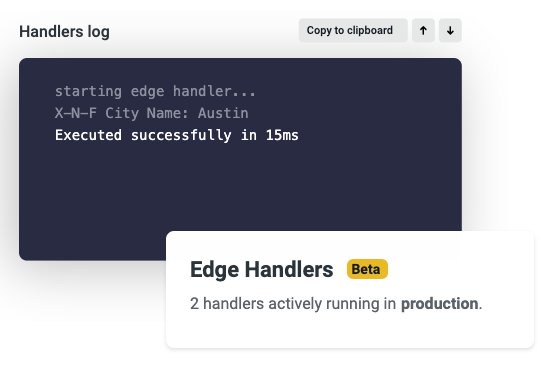
    Netlify, at its JAMSTACK CONF VIRTUAL event today, announced Netlify Edge Handlers, which make it possible to extend a Git-based workflow to edge computing applications.

    Company CEO Matt Biilmann said Netlify Edge Handlers, available in beta, puts the primitives in place for deploying serverless web applications based on a JAMstack software architecture that employs JavaScript, application programming interfaces (APIs) and markup languages, otherwise known as JAM, to isolate front- and back-end components of an application.

    A Git-based approach will also enable DevOps teams to extend workflows to edge computing applications that can be deployed on any number of platforms, he said. As an extension of a Netlify platform written in a modern Rust programming language, Netlify Edge Handlers makes it possible to build and launch web applications and websites based on a JAMstack architecture from within a continuous integration/continuous delivery (CI/CD) environment.

    Prior to the availability of Netlify Edge Handlers, building and deploying web applications on edge computing platforms required extensive coordination across teams, the creation of detailed edge logic with many dependencies and deviation from standard web development best practices, Biilmann said. Now, developers can write simple JavaScript that builds and deploys to the network edge in a way that enables simplified A/B testing, custom authentication and API aggregation, he noted.

    Developers also can build and manage edge logic from preview to production, including deploying those applications via the existing Netlify multi-cloud network.

    More application code is being pushed out to the edge because many organizations are now processing and analyzing data closer to where it is created and consumed, as part of their digital business transformation initiatives. Web applications that execute closest on a node to the user eliminate or reduce roundtrip request and response flows with the client.

    Biilmann also noted that because those applications are employing a platform developed using Rust, they are also inherently more secure.

    There may come a day when there are more application workloads collectively running at the edge than there are on cloud computing platforms. However, if that goal is ever to be achieved, it needs to become easier for developers to build those applications. Given the fact those applications are also likely to be targeted by cybercriminals, it’s critical to ensure those applications are as secure as possible.

    In the wake of the economic downturn brought on by the COVID-19 pandemic, many organizations have accelerated digital business transformation initiatives, many of which depend on edge computing platforms. The only way to achieve that goal, however, is to make it possible to build these applications using JavaScript tools that most developers of web applications have already mastered. Otherwise, organizations will need to invest in training developers to master another framework for deploying edge computing applications. That would require time they might not have.

    Regardless of the path forward, a massive wave of edge computing applications soon will stretch the boundaries and limitations of whatever DevOps processes organizations have in place today.

  • Preparing for Digital Life After COVID-19 

    Preparing for Digital Life After COVID-19 

    The shift to a digitally dependent remote workforce across numerous industries was instantaneous for organizations after the COVID-19 pandemic spread, and after months of adapting, this way of life has become “a new normal.” IT professionals are facing unprecedented pressure to meet the increased demands they are experiencing now and preparing for the changes that will continue after the pandemic, such as enabling remote employees and driving the business. This presents an immense opportunity for these professionals to make a change.

    In recent months, limits to digital transformation and what organizations are capable of have been tested and surpassed. IT professionals have searched for tools, visibility and insights to help them manage the new challenges so the technology being used by organizations continues to perform well. This means expectations moving forward have been set even higher for the level of performance these professionals provide. If limits can be exceeded and issues solved as they arise, what does this mean post-COVID-19?

    Agents of Transformation

    We call the professionals who are navigating these digital changes and inspiring innovation Agents of Transformation. As the leaders of the IT industry, these technologists are identifying what tools are needed not only for their efforts, but also for the organizations they support to provide a tighter interlock between IT and business leaders. Our recent special COVID-19 research report showed how the pandemic has changed the industry long-term.

    According to the report, 79% of the 1,000 IT professionals we surveyed believe the pandemic will separate the strong from the weak in tech teams worldwide. Even if organizations find themselves surviving the digital transformation changes they’re making during the pandemic, it is crucial they also plan for the future so they do not fall behind with any additional new curveballs. As documented in the chart below, the key areas these Agents of Transformation think will change in business practices are risk and disaster planning, the continued use of remote working tools and flexible resourcing.

    Planning for Changes in Business Practices

    COVID-19 brought a lot of unexpected challenges that forced organization leaders to adapt. It is crucial organizations determine what their plans are moving forward and how they will be implemented. Once organizations know what their ideal digital journey looks like, they can begin to fill in the missing pieces such as how it could be impacted by outside forces like COVID-19 and how they can navigate these changes. Digital transformation will continue to play a key role in a post-COVID world with potential challenges including:

    •       Delivering positive experiences at an increased capacity.
    •       Lack of visibility into the performance of technologies.
    •       Managing mean time to repair (MTTR).

    Continued Use of Remote Working Tools and Technologies

    Even as health risks decrease and more employees are allowed to return to work, survey respondents expect tools and technologies for remote working are here to stay. To be successful moving forward in a world now dependent on digital transformation, organizations should figure out what their digital needs are, whether to efficiently manage increased traffic on their applications or support space for storing the influx of data. It is also important that an organization’s plans for a digital journey focus on things such as collaboration, clear goals and objectives and autonomy.

    Keeping the above in mind, one way to prepare for shifting digital goals is by embracing risk and experimentation. Applying scalable cloud instances alongside microservices allows IT teams to quickly test agile new features with a small group of users, then scale out as needed. The future is uncertain, but with digital transformation continuing to grow, organizations should use this time to push new features for their applications that can address current and potential future bottlenecks. For example, if an organization noticed COVID-19 led to larger issues in their applications, they could use this time to research and try new tools that can address the smaller challenges, allowing for more time to focus on tackling the prominent challenges.

    Jump-starting Your Digital Today

    Organizations can jumpstart their digital transformation by adopting tools such as cloud monitoring, microservices and application performance management (APM). By identifying and preventing issues before the end user experience is diminished, organizations can reduce customer support issues and ensure continued brand loyalty.

    Tools such as APM can accurately monitor and manage application technology stacks, from the user experience to network performance. These tools can help address surges in demand or shifts in resource allocations, especially as user behaviors change throughout the pandemic. While IT professionals often struggle to manage and scale services, it is possible to do this without sacrificing the user experience.

    Cloud monitoring can help organizations prepare for traffic surges during and after the pandemic, through scalable cloud instances that offer additional capacity for IT resources. Many on-premises resources that are bound to offices or other physical locations are currently underutilized due to remote work. As a result, 74% of technologists surveyed said that digital transformation projects which would normally take more than a year to be approved are now moving forward within a matter of weeks. To keep up with this growing adoption, cloud monitoring provides IT professionals with real-time visibility and insights. Implementing microservices can also support organizations to develop, test and deploy new features at an extraordinary rate, resulting in improvements in security, speed and productivity.

    Now that these changes are more familiar to end users, expectations will remain high moving forward. The organizations that successfully tackle challenges during the pandemic will be far more resilient. Internal processes have been a longtime barrier for companies to transform. Our current situation has broken down some old barriers and allowed for rapid changes in styles of work, which is likely to continue in some fashion post-pandemic. Businesses will see the value and become less risk-averse, empowering their IT teams to push the envelope for their ongoing transformations.

    Whether it is through utilizing tools such as APM, cloud monitoring and microservices, disaster planning or managing the complexity of cloud and on-premises assets, technologists have never had a bigger opportunity to lead their businesses through change or bring closer alignment of IT to the business.

  • Survey Surfaces High Reliance on DevOps to Build and Deploy APIs

    A survey of 13,586 IT professionals who work with application programming interfaces (APIs) published today by Postman, provider of an API development platform, finds best DevOps practices are now widely employed to both produce and consume APIs.

    The primary method through which teams working on APIs collaborate is by sharing URLs (42%). However, publishing API artifacts to GitLab, GitHub, Bitbucket or other repositories came in a close second at 40%, followed by publishing API documentation to an API portal (39%) and instant messaging (28%).

    When queried about change management practices specifically, Git repositories topped the list at 63%, followed by versioning APIs (59%), versioning server code (34.6%), versioning client code (27.8%) and semantic versioning (21%).

    Respondents said when it comes to deploying APIs, the most widely used option was continuous integration/continuous delivery (CI/CD) pipelines (53%).

    A total of 77% of respondents listed their functional area as engineering/development, followed by DevOps/API Ops at 34% and developer relations/evangelism (13%).

    Among DevOps practitioners that participated in the survey, Jenkins is the most widely employed platform (41%), followed by AWS DevOps (30.7%) and Azure DevOps (26.1%).

    Overall, the survey finds REST is still the dominant architectural style for APIs (93%), followed by webhooks (34%), SOAP (33%) and GraphQL (23%). JSON Schema is the dominant API specification (76%), followed by Swagger 2.0 (44%), OpenAPI 3.0 (28%) and GraphQL (23 %).

    When asked to rate the percentage of their organization’s development effort spent working with APIs, 41% said more than half of the effort is spent on APIs.

    Kin Lane, chief evangelist for Postman, said the survey also makes it clear that more organizations have adopted an API-first philosophy to application development. Over 60% of respondents rated themselves as 5 or better out of 10 in terms of embracing an API-first philosophy.

    Nearly half of respondents said investment of time and resources into APIs will increase over the next 12 months, while another third stated that investments into APIs will stay the same. Eighty-five percent said APIs are playing a significant role in their digital business transformation initiatives, while nearly a third (31%) also noted APIs played a role in their organization’s ability to respond to COVID-19 by, for example, enabling customer communications or remote work options.

    APIs appear to have become a lot more stable in recent years, with more than half of respondents reporting APIs do not break, stop working or materially change specification often enough to matter.

    When it comes to producing APIs, the No. 1 obstacle by a wide margin is lack of time, while the No. 1 obstacle cited for consuming API is lack of documentation.

    The four most important factors individuals consider before integration with an API are reliability (72%), security (71%), performance (71%) and documentation (70%).

    Looking to future technologies, respondents appear to be most interested in microservices (49%), Kubernetes (44%) and containers (42%). Given the cloud-native attributes of those technologies, it appears all but certain the number of APIs strewn across the extended enterprise is about to increase exponentially.

  • Surveys Show COVID-19 Changes to Enterprises Likely Long-Term

    Surveys Show COVID-19 Changes to Enterprises Likely Long-Term

    The global response by organizations to the novel coronavirus pandemic has been transformational. A recent survey of more than 500 senior decision-makers in the UK revealed just how much the virus forced enterprises to innovate.

    The independent survey, funded by London-based tech developer Studio Graphene, questioned about more than 500 decision-makers within UK enterprises. Since March, 50% of those surveyed said they adopted technologies that they were previously hesitant to deploy.

    Further, 64% said the pandemic proved to be a catalyst for the digitization of their business much more quickly than they would otherwise have. While 47% report to have migrated their offering from face-to-face to online and 39% have invested in a new area of technology that they had never used before. Finally, 22% have launched a new app.

    The pandemic proved to be an eye-opener, too. The survey found that 48% of decision-makers attribute COVID-19 to their enterprise organization’s greater awareness of how technologically outdated their business is. Forty-five percent believe that it was risk-aversion that made it previously difficult to innovate. Not surprisingly, half of those surveyed said that the pandemic incentivized their company to improve their digital infrastructure.

    While 45% of enterprises said that the pandemic was a catalyst for their enterprise organization’s most radical digital transformation and 47% said that the migrated their offering online, only 39% have invested in a new technological area and 22% launched a new app.

    These findings echo the conclusions from another recent report released from Lux Research. According to Lux’s report, “The Impact of COVID-19 on Tech Innovation,” the changes brought on by the pandemic will be felt for years to come.

    Lux identified five key areas that will continue to shape technology investments beyond the pandemic. These include human “infection prevention,” remote commerce, improved resiliency, increased agility and ongoing macroeconomic impacts.

    Lux says the transformation underway will be felt differently across vertical markets. For instance, increased agility and resilience will bring long-term positive change for materials innovation. “Materials informatics will also see a medium-term positive impact thanks to increased efficiency and agility in R&D. We expect a positive effect on plastic waste recycling and synthetic biology, as more people are gravitating to single-use plastics to stay safe, and synbio can allow more agile and flexible production,” said Michael Holman, vice president of research at Lux Research.

    While the energy industry will undergo essential changes, Lux predicts that increased resilience and agility will drive further investments in clean energy that will further spur on the energy transition. “Digital transformation will [also] rapidly accelerate adoption of emerging technologies like telemedicine, thanks to a dramatic increase in remote commerce and the need for infection prevention,” said Dr. Kevin See, vice president of research at Lux Research.

    Expect increased adoption of wearables, robotics, agrifood and health systems, and long-term adoption of autonomous vehicles, the researchers conclude.

  • 5 Myths About Software Development

    5 Myths About Software Development

    2020 has broken many rules about software development. Some perceived trends, however, remain myths

    Some trends come and go, some trends stick. I remember when Docker launched and it was barely mature enough to run unit tests, and now containers are a common way for modern orgs to deploy applications. We’ve seen the rise of microservices but also the return to the monolith. We’ve seen “observability” take off in popularity, while serverless remains a buzzword with limited (but fast-growing!) adoption. Machine learning and artificial intelligence are still click-worthy headlines, but how much actual ML is being used within our applications?

    The True State of Software Development

    Let’s look at five common myths about the current state of software development and evaluate why they’re not completely true:

    Digital Transformation Initiatives Will Be Hindered by the Pandemic

    We live in an online world where every business is already a software business (or rapidly becoming one). The impact of the pandemic further highlighted ISG’s research which stated that “2020 will still see the rapid scaling of digital initiatives across industries.” While some industries have been hit so hard that digital projects had no choice but to stop (e.g. the airline industry), in many circumstances this will be the catalyst to fully embrace digital transformation.

    The Waterfall Method Still Works

    Organizations that haven’t adopted more agile and iterative approaches to building software are operating at a significant disadvantage. I know there are many big companies that still believe in doing all of the strategic planning upfront (I know this because I talk to these companies), but the truth is that it leaves very little room for flexibility and improvement in real-time. In today’s world, the customers and the users are kings—it is no longer possible to build great products without their input. If you take anything away from this article, it’s that the waterfall methodology needs to be abandoned once and for all.

    Everyone Loves Kubernetes

    K8s is not a one-size-fits-all solution. The fact of the matter is that a large chunk of the enterprise still hasn’t fully embraced the cloud, let alone started containerizing their applications. So while we have to give credit where it’s due and acknowledge that K8s is the clear leader for orchestrating containers, we also have to acknowledge that the hype doesn’t quite match the adoption. It’s still a relatively young technology.

    According to a report from Datadog last year, 45% of their customers that run containers use Kubernetes. That number is growing and is certainly impressive, but when you realize that only a chunk of their customers run containers in the first place and they are a modern monitoring solution where we’d expect to see a higher percentage than a random sampling, it’s clear that K8s is far from mainstream.

    Everyone Is Doing Tracing

    The rise of the digital age has put monitoring and observability in the forefront. As we rely more and more on online services for internal and external interactions, we better make sure they are working properly. But at the same time, regardless of industry headlines and conference talks focusing on tracing, the truth is that the industry at large has yet to adopt it.

    For most organizations, there’s so much room for improvement in getting logging and metrics right, that there’s no need to opt for tracing (yet). After all, Google built most of its global platform relying on metrics. Unlike SREs, developers often find tracing alien and very cumbersome to deploy and wield. Instead, more and more companies are opting to empower their engineers to see what’s going on in remote environments through software understandability.

    AI Will Solve Our IT Problems

    We’ve been hearing about the promises of AI in IT for a long time now. One of the terms still actively promoted that I am very skeptical of is “AIOps.” What does that even mean, really? According to a recent report from OverOps, only a very small percentage of companies are even considering AIOps in their plans for the future.

    That said, I do believe in making better, data-driven decisions. So the more data we can collect, contextualize and understand, the better. We see how this helps companies identify anomalies, alert on issues and even project out into the future. But none of this, really, is artificial intelligence.

    Conclusion

    There’s often a gap between hype and actual adoption. That’s the role of good marketing. And ultimately, hype helps drive adoption. But as technical practitioners, we need to stay rooted in reality in software development and beyond. So while I am convinced agile has proven to be the best way to build and deploy software, and that most organizations would benefit from letting go of old-fashioned waterfall processes; on the other end, I haven’t been fully convinced of the benefits of tracing and AIOps for most companies.

  • Kong Extends Ambitious Effort to Unify Enterprise IT

    Kong Extends Ambitious Effort to Unify Enterprise IT

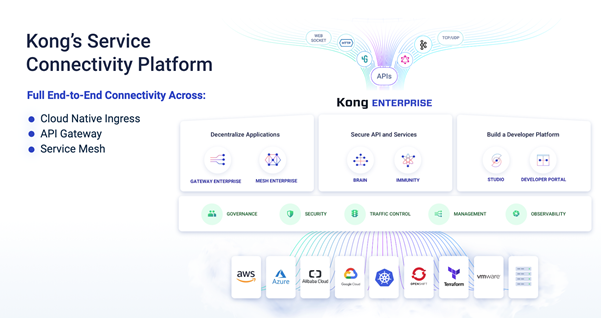
    Kong Inc. today released an update to the enterprise edition of its platform that provides a foundation for connecting all the classes of applications that make up a modern IT environment.

    Company CTO Marco Palladino said version 2.1 of Kong Enterprise makes it possible to deploy the data plane that integrates hybrid instances of the platform without requiring a separate instance of an open source Cassandra database in each location.

    The latest update also adds support for Kong Mesh, a service mesh for integrating services that is built on top of Kuma, an open source project that Kong donated to the Cloud Native Computing Foundation (CNCF) earlier this year, which supports both containers and legacy virtual machine platforms.

    Kong has also made it possible to build plugins using the Go programming language and added support for plugins to manage application programming interface (API) life cycles.

    Finally, Kong has added support for the new Kong Vitals user interface for dashboards and an application registration tool within its developer portal.

    Based on an API management platform that serves as the foundation for Kong Enterprise, Kong Enterprise takes connectivity within enterprise IT environments to a higher level of abstraction, Palladino said, by integrating all Layer 4 through 7 services for both monolithic and microservices-based applications. Rather than having to manage an array of networking services and associated services in isolated silos, Kong Enterprise provides a layer of abstraction for unifying the management of highly distributed IT environments running loosely coupled applications.

    Thus far, more than 250 IT organizations have embraced Kong Enterprise to simplify the management of distributed IT environments, Palladino said. Those efforts will only accelerate as enterprise IT organizations move to reduce the total cost of IT by streamlining the management of IT. Most enterprise IT organizations today are managing multiple platforms using separate tools that have to be mastered by different administrators. Kong is making a case for unifying the management of more than 20 different platforms. At the core of that effort is Kong Gateway, an instance of Kubernetes through which Kong extends the reach of its framework into those environments.

    Thanks mainly to the economic downturn brought on by the COVID-19 pandemic the rate at which enterprise IT organizations have been moving toward hybrid cloud computing is expected to accelerate. Most organizations will not be able to economically justify hiring and retaining separate administrators for each platform they deploy.

    At the same time, digital business transformation initiatives require a more agile approach to enterprise IT enable by managing API-based services at a higher level of abstraction.

    Naturally, it may take for organizations to exercise the political will need to bring all the fiefdoms that make up an enterprise IT environment together. However, as organizations continue to move down the path toward DevOps the need to ruthlessly automate distributed IT processes across an extended enterprise has never been more apparent.

  • The Role of AI, ML-Powered DevOps in Digital Transformation

    The Role of AI, ML-Powered DevOps in Digital Transformation

    Global businesses are in the midst of an enormous digital transformation wave. As we step into the realm of industry 4.0, exponential technologies are becoming a fundamental segment of traditional business settings.

    Despite having access to transformative technologies, however, many organizations fail to embrace disruption and harness their potential to stay ahead of the curve. Much of this stems from their inability to foster a collaborative environment wherein myriad teams and operating IT systems work in unison to achieve their goals. Without a strong foundation of infrastructure automation and well-chosen team collaborations, embarking on the digital transformation journey is difficult. And to do that, adopting a DevOps mindset is necessary. In essence, organizations need to incorporate DevOps practices to transform, compete and protect their new value pools without sacrificing quality, stability and productivity.

    Digital Transformation and DevOps

    DevOps helps enterprises succeed with digital transformation by triggering a paradigm shift in the cultural mindset of the business, breaking down silos and driving continuous change and rapid experimentation.

    There are multiple benefits of merging DevOps with a digital transformation strategy. First, this methodology breaks down the silos between IT and business operations, thereby ensuring consistent levels of productivity, efficiency and service delivery. This has a direct impact on companies’ time-to-market. Second, bug fixes are much easier due to the automation of toolchains. Third, the automation that DevOps introduces improves developer/IT productivity as they can focus more on innovation rather than being caught in a cycle of bug-fixing and firefighting.

    Despite DevOps’ contribution to digital transformation, its adoption in many industries is still slow due mainly to scarcity of skills and the right toolset. Complete automation remains elusive. Additionally, patchy adoption has given rise to a two-paced overall technology environment—one part is fully integrated with DevOps and the other part is users still mulling over the “how” of tightly integrating it in the overall process.

    Advanced technologies such as artificial intelligence and machine learning could resolve these issues. They can alleviate operational complexities in DevOps to help organizations transform at a faster pace. The following are some of the benefits offered by these technologies.

    Better Automation

    The need to rely on manual processes can be reduced with AI- and ML-based technologies, which has an enormous impact on data analysis. Organizations can use powerful AI data mapping techniques to automate data transformation processes with ease and speed. They can make use of the predictive ability to accelerate the process, increasing accuracy by leaps and bounds. This transformed data can be easily integrated using another solution AI integration, and so it becomes easier for users to work on data for extracting business intelligence and streamlining decision-making. This entire process takes only a few minutes to complete. Plus, since the need for manual intervention is curtailed, developers who previously were mired in handling transformation operations can move on to more strategic tasks such as governance, control and resource planning.

    Better Security Through Intelligent Anomaly Detection

    AI and ML-powered technologies, with their highly precise features, augment system security to deliver better performance. With a centralized logging architecture, users can record and root out suspicious activity on the network. These technologies togehter with DevOps can help mitigate the impact of threats and hacker attacks to help companies drive their digital transformation initiatives with precision.

    Better Team Collaboration

    In any organization, two teams function in parallel: the developer team, which has the responsibility to code fast, and the operations team, which ensures minimal disruption. While maintaining this balance can be difficult, transformative technologies such as AI and ML can help these two teams work in unison, improving collaboration by helping them have a single, unified view into system issues across the business ecosystem.

    Better Customer Experience

    AI-based technologies can have a direct impact on organizational productivity and performance. They can develop and launch their products faster (keeping customer expectations in mind) with lower TCO. Plus, DevOps-inspired service teams are able to provide a higher level of service, resulting in more satisfied customers

    AI-powered technologies are critical to kickstart DevOps performance and ultimately drive digital transformation initiatives. Infusion of AI not only improves enabling faster development and deployment cycles through automation, but also enables better collaboration and uncovers and remediates key issues, helping businesses unlock digital transformation value.