Tag: devops tools

  • 3 Ways to Support DevOps Teams in Remote Work

    3 Ways to Support DevOps Teams in Remote Work

    As we settle into remote work for the long haul, it’s crucial to consider how best to support DevOps teams. While DevOps employees face similar challenges working remotely as any other department, they also face increased pressure to deliver as IT professionals, supporting the entire organization through an ever-changing work environment.

    By nature, remote work makes it more difficult for your DevOps team to do their jobs. Team members are working in various environments, but also distributed across geographies. And in this new frontier, DevOps must provide service as usual, continuing their development projects and ensuring communication and alignment among departments when it comes to the organization’s technology and IT needs.

    Even more, in a distributed, remote workforce, disruptions to application performance and security issues are more likely to occur and DevOps professionals must be equipped to identify and correct them quickly. For these reasons, it’s critical that these teams have the right tools and support to remain operational, communicate effectively across departments and neutralize threats—keeping applications and the organization running.

    How to Support Remote DevOps Teams

    Remote success looks different for every DevOps team based on organization size, industry and business need. However, the following strategies can be applied universally and may even serve as building blocks on technological foundations you already have in place:

    • Continue migrating operations to the cloud. Your cloud infrastructure is the backbone of any remote support plans for DevOps teams. Migrating operations to the cloud is the biggest enabler in making sure your team is not tied to any physical location and can do their jobs without relying on a single data center or headquarters. For example, deploying your open source data infrastructure in public clouds not only makes it easier for team members to access the data but also increases developer and operational velocity, which accelerates application innovation. While most organizations are well into their migration to the cloud, it’s critical to accelerate the process to expand across more operational areas. Traditional work environments likely won’t return to fully in-office experiences. Rather, many organizations will implement a hybrid working model. Refining and expanding your cloud infrastructure will help you make that transition and continue supporting an in-office, remote or hybrid team in the future.
    • Automate security and performance monitoring. DevOps teams are under pressure to scale solutions for remote work, such as company VPNs for network access and secure application logins. They must also be alerted to and able to track any security issues that arose during the hasty transition to remote work. Automated monitoring of software performance and trends keeps teams ahead of threats and minimizes deployment issues. The software sends alerts and allows teams to view data in real-time. Even more, machine learning technology can analyze the data and identify trends about application performance, the cloud environment and data usage. This level of monitoring and analysis is only possible with automation and makes it much easier for DevOps teams to meet IT service requirements as the remote technology landscape rapidly changes.
    • Increase communication and collaboration efforts. It’s crucial that DevOps teams are in constant communication with key departments across the organization, including security and executive leadership, as well as with other employees to discuss what’s working and what needs to become a priority for change. To help support knowledge sharing across a remote team, first ensure you communicate all application metrics clearly so every member of the team understands and is aligned on projects and next steps. Dashboards can help in this arena, collecting and converting key data points into visuals. And while you can easily create and host meetings with conference calls and video conferencing software, informal face-to-face conversations are harder to re-create—and that’s where ideas are born. To combat this loss, arrange for non-structured discussions without strict agendas or topics to encourage idea sharing, creativity and inspiration among employees.

    Remote work has broken down the traditional DevOps team structure, but this new way of work provides an opportunity to build something better—more time for independent, focused work, a superior work-life balance and modern cloud-based solutions for daily tasks. Supporting DevOps teams as they grapple with the new pressures of remote work is the key to ensuring your organization runs smoothly during the transition—cloud infrastructure, automation and communication are just a few of the strategies to do so. 

  • AWS Expands Breadth, Depth of DevOps Services Portfolio

    AWS Expands Breadth, Depth of DevOps Services Portfolio

    Amazon Web Services (AWS) today launched a bevy of cloud services, including a preview of Amazon DevOps Guru, that collectively promise to make it much easier to deploy and manage cloud applications.

    Announced during the online AWS re:Invent conference, Amazon DevOps Guru is a fully managed service that employs machine learning algorithms to automatically detecting operational issues and recommend specific responses that will be delivered via a notification. Through a single console, IT teams will also be able to visualize their operational data by summarizing relevant data from multiple AWS and third-party data sources, including PagerDuty and Atlassian.

    AWS also unfurled AWS Proton, a service to automate the development and deployment of microservices-based applications built using containers and the AWS Lambda serverless computing framework. Available also in preview, AWS Proton is an application management service that enables IT teams to define reusable application components as “stacks” that can be combined with a set of curated application stacks for security, architecture and tools defined by AWS. This service then automates the provisioning of infrastructure as code, the setting up of continuous integration/continuous delivery pipelines and the setting of monitoring tools.

    AWS CEO Andy Jassy told conference attendees that in effect, AWS will be managing DevOps processes on behalf of developers.

    At the same time, AWS is launching Amazon Elastic Container Service (Amazon ECS) Anywhere, which allows IT teams to use Amazon ECS to orchestrate containers in their own data centers, and Amazon Elastic Kubernetes Service (Amazon EKS) Anywhere, which provides the ability to run EKS on the distribution of Kubernetes that AWS employs in local data centers. There is also now an Amazon Elastic Container Registry (Amazon ECR) Public service for sharing container images.

    At the same time, AWS previewed Amazon Aurora Serverless v2, which will make it possible to scale instances of MySQL databases instantly using the AWS serverless computing framework. Support for PostgreSQL databases is planned for next year.

    AWS also announced it has added a Microsoft SQL Server-compatibility layer to its PostgreSQL database to make it easier to migrate Windows applications to an open source database. The company will also open-source that capability, dubbed Babblefish, as part of an effort to encourage the development of compatibility layers for other databases. PostgreSQL already provides compatibility with Oracle RDBMS applications.

    Jassy chided providers of these proprietary database platforms for changing licensing terms when organizations deploy these databases on public clouds other than their own. Those moves have only created additional demand to migrate faster to open source databases, noted Jassy.

    Finally, AWS is adding a slew of infrastructure options, including Mac instances (EC2 Mac instances) for Amazon Elastic Compute Cloud (Amazon EC2). Built on Mac mini computers, the service will make it possible for developers to more cost-effectively build MacOS applications.

    In addition, AWS is adding 1U and 2U servers to its AWS Outposts portfolio for deploying infrastructure in on-premises IT environments. Those offerings expand AWS Outposts beyond rack-based systems.

    The company is adding AWS Graviton2-powered C6gn instances to deliver 100Gbps networking performance for Arm processors it designed. Those instances offer 40% better price performance over comparable current-generation x86-based instances, according to the company. There is also now M5zn instances of Intel Xeon Scalable processors that offer 45% better compute performance per core than current M5 instances, according to the company.

    AWS is also adding G4ad Graphics Processing Unit (GPU) instances based on processors from AMD and revealed its intention to build its own GPUs next year. The company also plans to add an Amazon EC2 instance based on up to eight Habana GAUDI accelerators from Intel to deliver up to 40% better price performance than current GPU-based EC2 instances, according to the company.

    Overall, Jassy said AWS grew 26% year over year to achieve a $46 billion run rate. As the number of services provided by the company continues to expand, maintaining that growth rate at a time when applications are moving into the cloud faster than ever looks easily achievable.

  • The Future of Application Development

    The Future of Application Development

    What lies ahead for application development? Can we look forward to a less hierarchical system?

    The current state of application development has an often overlooked problem: It’s inaccessible.

    Top tier companies such as Google, Microsoft, Apple and Facebook are at a major advantage. With their large capital, they can invest in innovative development tools and round up extensive workforces of leading talent to use them—which matters, especially amid an ongoing developer drought. Meanwhile, companies lacking these privileges must make do with a leaner toolset and smaller, less cherry-picked workforce—which is not to say that they don’t make smart, creative use of what’s available to them, but that they deserve to play ball on a more equal playing field.

    Unfortunately, the pandemic compounded this issue, at times bringing even greater advantages to the tech giants. To overcome what some consider a trend of software elitism, efforts have been made to accelerate the pace of application architecture for all. Employing no-code and low-code tools, for example, could help the smaller guys compete. However, as Robson Grieve, CMO of enterprise software company OutSystems sees it, “these latest approaches are mostly point solutions solving a limited set of problems.”

    I recently invited Grieve to share more of his take on this issue and how he envisions a future of application development that works inclusively for a wider set of companies.

    Application Development: The Other 99%

    “It’s frustrating that the best, most advanced development tools have traditionally only been accessible to the largest, richest companies,” said Grieve. “Everyone else suffers with ballooning backlogs and struggles to take advantage of the latest, greatest technologies.”

    While it may sound like a platform out of a Bernie Sanders speech, recognizing the advantages of the top 1% in the application development world brings up a valid line of questioning as to whether maintaining this status quo is really how we want to go forward. After all, wouldn’t it be better if more companies had access to the best technologies? Wouldn’t we all benefit from that?

    Creating a More Equal Playing Field in Application Development

    Luckily, we are already feeling the winds change in this department, as top tier companies are beginning to lose their stronghold on the crème de la crème of development tools. What’s beginning to change, Grieve believes, is “access to the most sophisticated tools and advanced technologies are being democratized … sophisticated, feature-rich, beautiful, and mission-critical applications are no longer the sole domain of the elites.”

    How is this being realized? In many ways, it’s coming from the makers of the development tools themselves, who are bringing careful thought and creativity to tool design. Some of the strongest approaches in Grieve’s eyes include the following:

    • Holistic approaches that streamline the most critical innovations into single, integrated platforms.
    • Low-code approaches that help accelerate development while retaining the power and expressiveness of traditional code.
    • Platform approaches that offer design, development, deployment, monitoring and management capabilities in one place.
    • Multi-functional approaches that serve a diverse team, support the full DevOps life cycle and, in effect, improve productivity and collaboration. For example, platforms crafted to serve the unique needs of UI/UX experts, business analysts, professional developers and architects.
    • Automated approaches that allow applications to be continuously updated and seamlessly modified once they’ve been deployed, using an AI-powered automation layer that underpins the tool, managing application dependencies and providing self-healing capabilities to ensure that regardless of what changes are made, the tool never breaks.

    One thing that stands out here, according to Grieve, is the idea that broad, multi-functional development platforms reign supreme. As Grieve noted, “the most valuable tools are the ones that solve the broadest set of problems.” In general, approaches that keep in mind security, scalability, reliability and availability will be robust solutions for diverse teams, both large and small. A bonus is if the tool is visually appealing and model-driven for the best ease of usability and user experience.

    All for One, and One for All

    The issue of software elitism is one problem that can be seen as a clear opportunity, and that opportunity is not being missed among the smartest makers of development tools. As Grieve said, “Modern application platforms have the potential to help the vast majority of the economy succeed by offering a better approach—one that takes state-of-the-art technology and makes it more approachable, accessible and adaptable.”

    Again, we see a version of AI democracy at play. This is an exciting shift for many companies and teams that exist outside the elite tier. As an example, Grieve said that instead of “procedural code or minimalistic point solutions,” modern applications platforms “harness the power of advanced technologies and AI to create efficiencies for companies outside of the tech bubble.”

    This could be one way to level the playing field and allow companies of all sizes to complete the work needed, shrink backlogs, overcome developer drought with tools that are friendlier to citizen developers, support team collaboration, accelerate efficiency, and—for the underdogs—compete with the big dogs.

    Looking to the Horizon

    So, what does Grieve see for the future of application development? To him, it is bright if we continue on the current trajectory. “More and more,” he said, “successful development projects will require business and IT to work together and collaborate closely.”

    This means investing in sophisticated technologies, with powerful built-in AI, that can help companies ensure that even though applications are built quickly and efficiently, they are built securely and reliably—and in ways that can be easily scaled and evolved.

    If this is all to be realized, Grieve forecasts that we can look forward to “a bright future that is welcoming of a much more diverse and representative community of people who build applications together to solve all the most pressing problems.” It’s an optimistic view, but one that many will welcome as a fresh breath of air in what have been some particularly trying times.

  • Progress Reorganizes Chef Portfolio

    Progress Reorganizes Chef Portfolio

    Progress today announced updates to the portfolio of DevOps offerings it gained with the acquisition of Chef earlier this month.

    A Chef Infrastructure Management offering now combines Chef Infra and Chef Automate into a single offering, while Chef App Delivery combines Chef Habitat, Chef Infra and Chef Automate into a single offering that creates an artifact that can run anywhere.

    Sundar Subramanian, senior vice president and general manager for core products at Progress, said the goal is to organize the Chef portfolio around a set of distinct offerings for automating the management of infrastructure and continuous delivery (CD). Instead of simply offering a set of tools for power uses, Subramanian said Progress is moving toward creating a set of platforms.

    At the same time, Progress announced a dedicated content delivery service that provides access to a library of curated Chef Premium Content for compliance scanning and remediation that complies with the best practices defined by the Center for Internet Security (CIS).

    Finally, Chef has added a Learn Chef Skills Validation Program based on the online Learn Chef platform and the OpenBadges Standard, a specification designed to promote certifications that teach skills in a way that are both verifiable and portable.

    CD and infrastructure management are typically handled by different members of the same DevOps team. By segmenting its offering around federated responsibilities, the Chef software portfolio will become easier for DevOps teams to consume based on specific tasks, Subramanian said.

    Progress expects its offerings in the months ahead to have greater appeal among midmarket IT organizations that are accelerating multiple digital business transformation initiatives in the wake of the COVID-19 pandemic, he noted. The company has been focused on providing application development tools to these organizations for decades, and as their IT operations mature, many are beginning to embrace best DevOps practices as they seek to reduce the total cost of IT operations.

    The challenge those organizations face today is they depend heavily on ITIL-based frameworks for managing IT. Beyond acquiring DevOps tools and platforms, most of those organizations are at the beginning a what has been shown to be a transformation to DevOps processes that requires major changes to the culture of an IT organization. The cultural transition often involves years of effort as organizations try to balance different approaches to managing IT based on ITIL and DevOps processes.

    It’s too early to say what path to automation of IT those organizations will take. The Chef tools still require a level of programming expertise to employ that is often lacking among traditional IT operations staff. Not to mention the fact that Progress is not the only DevOps platform provider looking to expand its reach into the midmarket.

    Regardless of the path chosen, the number of organizations that embrace DevOps principles is about to expand significantly.

  • 3 Ways Atlassian Usage is Evolving in the New Normal

    3 Ways Atlassian Usage is Evolving in the New Normal

    Over the last half-year, the use of Atlassian’s tools is evolving and expanding

    COVID-19 has rapidly accelerated the digital transformation of businesses by several years. However, as companies shift to digital-only workflows, DevOps teams and the increasing number of departments they interact with face numerous challenges. Effective digital communication and collaboration are often vital to overcoming these challenges, and executives now pay a lot more attention to the tools enabling both.

    Millions of users globally rely on the Atlassian ecosystem every day. In particular, Atlassian tools such as Jira being used to improve software development, project management, team collaboration and code quality. As the world has shifted to more collaborative digital work over the last half-year, the use of Atlassian’s tools is evolving and expanding.

    We recently conducted research to understand more about how users globally are using their Atlassian tools. The “2020 State of the Atlassian Ecosystem Report” surveyed 700 professionals using these tools for their organization to find out how, where, when and with what other technology they are deploying Atlassian solutions. Many interesting findings emerged from the research, and here are three major takeaways.

    Atlassian Tool Usage Seeps Into the Enterprise

    A large proportion of Atlassian users are adopting its tools to achieve business goals from improving productivity and efficiency to change management as part of their digital transformation. This is driving the introduction of Atlassian tools beyond DevOps and into the hands of non-technical teams.

    For example, 80% of users said at least one business team in their organization uses Atlassian tools. These teams include customer support, design, sales and marketing and operations. Furthering this trend, Atlassian and Slack announced last month that they would be conducting joint app and integration development, allowing users to connect platform services. Our research found 46% of Atlassian users utilize both Atlassian and Slack solutions. These kinds of announcements will only increase the collaborative use of these tools between DevOps and the teams they collaborate with.

    Adopting Agile Development Methodologies & DevOps Strategies

    A key part of a company’s digital transformation is adopting agile methodologies and clear DevOps strategies. According to our research, 77% of Atlassian users believe their organization has implemented agile principles in some way. And 48% have a DevOps strategy in place, with an additional 29% planning to implement a clear DevOps strategy in the next three years. As workers are forced remote and developers are distributed virtually, iterative development between these teams is increasingly important. This can only happen when a clear DevOps strategy has been put in place and digital feedback can be gathered and implemented in a well-defined way.

    Taking a Hybrid Approach to Deployment

    There are several different deployment options available depending on the business needs of users of Atlassian tools. How companies choose to use, deploy and configure the tools that they use. In addition, parts of the same organization often have different business drivers for using Atlassian tools. For example, one function may need a public-facing help desk with access from anywhere in the world, while another may need a highly secure and internal-only solution.

    There isn’t a one-size-fits-all approach to address personalized organization needs. For instance, 9% of users are leveraging a hybrid model of Atlassian Cloud (SaaS) and a self-hosted solution (Server/data center), which means combining the advantages of cloud and self-hosting through multiple deployment models.

    These findings demonstrate how the Atlassian ecosystem is evolving and expanding in our new normal. As digital transformation takes hold across different organizations of every size, industry and level of technical sophistication, the need for flexibility is only going to increase to accommodate more digital-only workflows.

  • Tricentis Extends Testing Reach to ServiceNow Applications

    Tricentis Extends Testing Reach to ServiceNow Applications

    Tricentis has extended the reach of its portfolio of testing tools to now include software-as-a-service (SaaS) applications from ServiceNow.

    Martin Klaus, vice president of product marketing for Tricentis, said testing has become a larger issue because in addition to patch updates ServiceNow is now on a cadence to deliver to two major updates to its platform a year.

    More IT organizations are now leveraging the ServiceNow platform to build and deploy custom applications. Rather than build an entire application from the ground up, many organizations are accelerating digital business application deployments by extending functionality already provided by a SaaS application provider. All the updates regularly made to those applications create a testing automation challenge that can be addressed using Tricentis Test Automation for ServiceNow, said Klaus.

    Deployed natively on the ServiceNow platform, Tricentis Test Automation for ServiceNow provides access to capabilities such as point-and-click recording, real-time playback of tests and automatic test case creation, he said. The goal is to speed up the testing process for ServiceNow applications by running hundreds of tests generated by machine learning algorithms in seconds versus what previously would have required days to complete, Klaus added.

    At present, there are more than 6,200 enterprise customers running ServiceNow applications, many of which are employing DevOps processes to build and extend ServiceNow applications. ServiceNow has also extended its DevOps focus via alliances with providers of DevOps platforms.

    The bulk of the use cases for ServiceNow involve IT service management (ITSM). However, ServiceNow as of late has been expanding its focus on digital business applications by, among other things, adding additional workflows applications, including a workplace contact tracing application aimed at human resources (HR) teams.

    The more ServiceNow applications an organization adds, the more complex the testing challenge becomes, especially as workflows start to extend across SaaS applications from different providers. For example, it’s not uncommon for organizations to build and deploy custom applications spanning ServiceNow and SAP platforms, said Klaus. Tricentis provides a set of testing tools that can be applied across both multiple SaaS application platforms as well as the custom applications a DevOps teams builds and deploys on their own, he noted.

    As organizations depend more on digital business applications, disruptions caused by updates to the underlying software components upon which a workflow depends becomes a bigger issue. In many cases, it’s not employee productivity that is affected. Organizations are now driving revenue through digital business applications that can’t be generated if the application isn’t available. As a result, there’s a growing focus on testing updates to digital business applications.

    It’s hard to say to what degree SaaS application platforms will become part of a larger DevOps pantheon. However, the number of applications being built and deployed using low-code/no-code tools that extend these platforms has increased. There might even come a day soon when the backlog for deploying these applications becomes a bigger issue than it is today. In the meantime, it’s clear many DevOps teams are going to have to expand their definition of what constitutes a deployment platform.

  • GitLab Makes Economic Case for DevOps Platform

    GitLab Makes Economic Case for DevOps Platform

    GitLab is advancing its case for integrating as many DevOps processes as possible on a single platform by making available an economic analysis that claims organizations can improve application development and delivery by 87%, resulting in a savings of more than $23 million.

    Based on an analysis conducted by Forrester Consulting on behalf of GitLab, the report concludes organizations can save as much as $3.7 million by reducing the number of DevOps tools they need to acquire by a factor of four.

    The report also claims organizations can also see a 12x increase in the number of revenue-generating application releases in a year, resulting in $12.3 million in additional revenue, while at the same time reducing code defects to generate more than $16.8 million in savings.

    Overall, the report says there is a 407% return on investment (ROI) in the GitLab platform.

    GitLab has made available an online DevOps cost estimator based on the Forrester Consulting report.

    Colin Fletcher, manager for market research and customer insights for GitLab, said the core GitLab platform is designed from the ground up to make every integrated tool a natural extension of the existing DevOps workflow.

    IT organizations are also focusing on productivity and workflow now that it’s apparent most DevOps teams will be working from home to help combat the spread of the COVID-19 pandemic well into 2021. That shift is requiring some organizations to reorganize DevOps teams around specific development projects, he noted.

    In the wake of the economic downturn brought on by the pandemic, there is also naturally a lot more focus on costs. At the same time, many organizations are trying to accelerate the rate at which applications are developed and deployed as part of a larger digital business transformation initiative. The more business processes become digitized, the more dependent organizations become on software.

    The issue many IT leaders are trying to navigate is finding a way to reduce costs without forcing every member of the DevOps team to standardize on the same set of tools. While it’s arguable there are too many tools employed in a DevOps process today, it’s also clear that most members of those teams prefer to select their own tool whenever possible.

    It’s too early to say to what degree IT organizations may be willing to re-engineer their DevOps processes. Most have spent a significant amount of time and effort tailoring existing platforms to fit their needs. The level of inertia surrounding existing DevOps workflows inside an IT organization is considerable, so IT leaders would have to exercise a considerable amount of political will to switch DevOps platforms. There are, however, often multiple DevOps platforms in use within the same organization. The pressure to rationalize those platforms increases in a downturn.

    In the meantime, there are plenty of IT teams that have still not embraced DevOps. As the size of the DevOps market continues to expand, competition among providers of DevOps platforms is intensifying. For the average IT organization, that’s usually a good thing until a key vendor is acquired by a rival that is not as committed to a platform on which the DevOps team depends.

  • Harness Acquires Drone CI Project

    Harness Acquires Drone CI Project

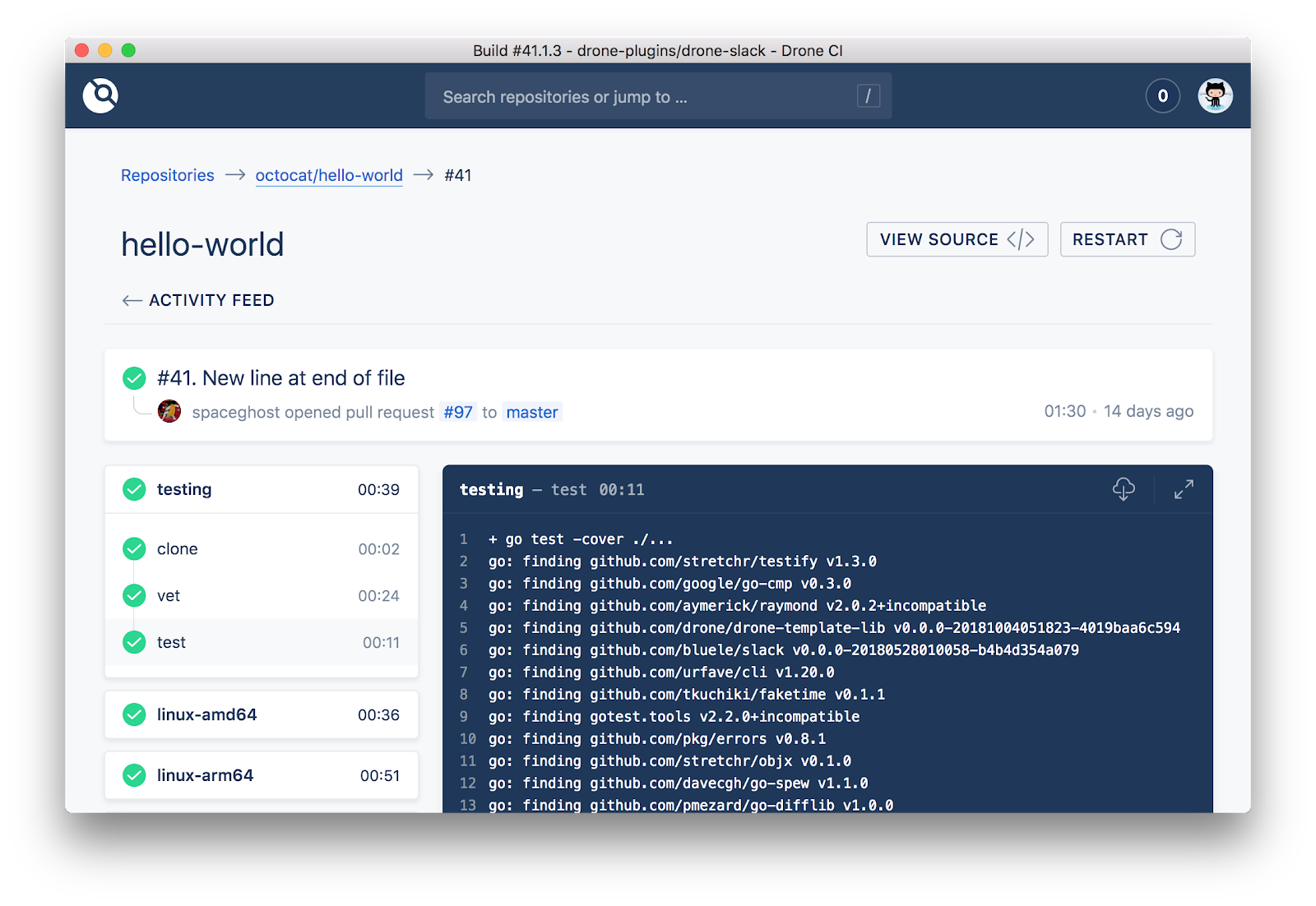
    Harness announced it has acquired Drone.io, creator of the open source Drone continuous integration (CI) project.

    Company CEO Jyoti Bansal said Harness, which provides a continuous delivery (CD) platform delivered as a service, will offer Drone to organizations that want a CI platform alongside a CD service from a single vendor. However, Harness will also continue to facilitate the integration of its namesake CD platform with other CI platforms.

    Drone will continue to be freely available as open source software and will be re-christened Harness CI Community Edition. Drone Enterprise will be sold as Harness CI Essentials Edition. Later this year, Harness plans to introduce Harness CI Enterprise Edition, which will extend the core platform.

    The two companies claim there are currently more than 50,000 active Drone community users for a project that is supported by 250 contributors. Organizations that have adopted Drone include eBay, CapitalOne, Cisco Systems and VMware. Instead of requiring scripts, continuous integration pipelines created in Drone can be declared and managed as code in Git. That approach creates a standard syntax for pipelines that are easier to create, use, maintain and troubleshoot. The two companies claim that reduces the time and cost of continuous integration by a factor of five to 10 over rival platforms.

    Analyst firms are projecting the DevOps software market will generate $15 billion in revenue by 2023, signaling an opportunity to provide a more modern CI platform that is easier for organizations to employ, Bansal said. Jenkins, the most widely used CI/CD platform today, traces its lineage back to 2004.

    While the overall market continues to grow, however, there’s been a wave of consolidation among vendors attempting to construct end-to-end DevOps platforms. Many enterprise IT organizations tend to prefer to rely on as few vendors as possible to reduce integration costs, which is an issue Harness in part is trying to address by acquiring Drone.io.

    Harness is a member of both the Continuous Delivery Foundation (CDF) and the Cloud Native Computing Foundation (CNCF). Drone is already available on a wide variety of platforms, including Kubernetes, and it’s not clear if either arm of the Linux Foundation will play a major role in advancing the development of Drone. The CNCF has thus far accepted Argo, an open source CD platform for Kubernetes, as an incubation-level project.

    In the meantime, competition among providers of CI/CD platforms is intensifying. Jenkins, originally developed by CloudBees, is now being advanced under the auspices of the CDF along with Jenkins X, a CI/CD for Kubernetes environments, and Spinnaker, a CD platform originally developed by Netflix. GitLab, Microsoft and its GitHub subsidiary, JFrog and CircleCI all have established major rival CI/CD ecosystems of their own.

    Ultimately, it will be up to each IT organization to decide which CI/CD platform makes the most sense for them. It’s even possible many departments within the same organization will make use of multiple CI/CD platforms. Over time, however, most enterprise IT organizations are expected to adopt a CI/CD standard to better facilitate collaboration across multiple DevOps teams.

  • Top Pressing Concerns for CI/CD in 2020

    Top Pressing Concerns for CI/CD in 2020

    The tech landscape is changing rapidly. With the need for increased development velocity, CI/CD has become ubiquitous among most organizations. Yet, with the growing number of microservices, CI/CD may be tough to wrangle without the right strategy.

    At the same time, it’s difficult to keep pace with the constant evolution around CI/CD. So, what is the state of the CI/CD space in 2020, especially in these turbulent times? What do stakeholders see as top pressing concerns companies should consider to advance their release fluidity?

    For this article, I interviewed two stakeholders on the latest trends and industry cooperation around CI/CD. Read on to discover what two CI/CD thinkers, Tracy Miranda, board chair, Continuous Delivery Foundation (CDF), and Lachlan Donald, CEO, Buildkite, see are pressing concerns for CI/CD in 2020.

    More Microservices, More Problems

    With the number of microservices rising to the hundreds (or thousands) for some enterprises, maintaining consistent release strategies across the board could easily become a nightmare. If the goal is to replicate a unique CI/CD pipeline per microservice, pipeline automation and configuration management become top concerns.

    “Automation will be key,” said Miranda. “We can no longer afford to be writing each CI/CD pipeline by hand; we will need new approaches.” She added that recent industry discussion shows “configuration management is a top concern for CI/CD practitioners.”

    Tools like Jenkin X could enable this sort of automation, she noted. Companies should consider evolving their CI/CD pipelines with better configuration management.

    Platforms Must Evolve

    The recent “State of the Cloud Report” from Flexera found 39% of IT leaders saw implementing CI/CD in the cloud as a top priority. According to Miranda, the global crisis seems only to accelerate the need for cloud and CI/CD automation.

    But, traditional CI/CD platforms aren’t always suited for modern development workflows with numerous pipelines. For Donald, an evolution in new tooling is absolutely necessary to help companies keep pace.

    “We’re at a point where organizations need to completely rethink their approach to CI/CD,” Donald said. “Traditional CI/CD platforms are not suited for modern development workflows.” He cites slow speed, unreliability, scalability limitations and security risks as common hangups among many CI/CD tools.

    Lack of Clarity in CI/CD Market

    The market has expanded significantly to address the gap in CI/CD tooling effectiveness. According to Miranda, this has led to a continuous deployment tooling ecosystem wrought with interoperability and competing styles.

    “My biggest concern is the proliferation of tools and platforms with a lack of interoperability and lack of clarity of how to best use them or whether they are fit for purpose,” Miranda said.

    These differences make it difficult for developers to find the right integrations that work for their environments, leading to wasted time and effort. “Developers will experience growing pains with their CI/CD platforms as they work to keep up with the constant demand for quality software,” acknowledged Donald.

    Lack of Standards

    Part of the lack of clarity resides in the fact that there are little to no standards emerging in the CI/CD space. Aside from Accelerate rising as the “bible” for software delivery, Miranda sees a lack of standards in the CI/CD space.

    “Not having standards or de facto standards is a problem,” she said. “For example, why is there no de facto standard for reporting pipeline test results?”

    Advancing Open Source CI/CD Tools

    To improve Interoperability throughout the CI/CD industry, bodies such as CDF are working on setting general guidelines. Miranda described how CDF is accomplishing this, by supporting a CDF Interoperability working group, sharing CI/CD practices and maintaining open source CI/CD projects. Two CDF projects she finds quite compelling are Tekton, a pipeline execution engine, and Jenkins X, a new CI/CD platform for pipeline automation.

    Cloud vs. On-Premises: A False Dichotomy?

    In analyzing the CI/CD tooling ecosystem, Donald recognizes a recurring dichotomy; that companies must choose between the security of on-premises and the speed of cloud-native. In reality, this dichotomy may be false.

    “It is possible to have the best of both worlds,” he said. “A hybrid strategy [is] the solution for testing and deploying software at scale without compromising security or performance.’

    As opposed to cloud tooling, self-hosted CI/CD control planes could grant developers more code control and help meet security standards. “I believe self-hosted agents are always a good idea,” Donald said.

    As we recently covered, a hybrid cloud approach is picking up steam. Similarly, Jenkins X is designed to run on any Kubernetes cluster, regardless of on-premises or cloud, demonstrating industry movement toward tooling neutrality and hybrid motivations.

    Moving Beyond PASS or FAIL

    There is a reductive tendency in CI/CD to simply check whether a build passed or not. But, this mindset misses an enormous amount of useful information and undervalues the test and release suites themselves.

    “Teams should get granular about what worked and what didn’t,” Donald said. DevOps teams must evolve beyond a “PASS or FAIL” mindset to analyze more minute aspects of the build process itself.

    For Donald, this also means shifting to treat test code performance “as a first-class citizen, applying modern development and scaling practices to it and allocating the necessary resources to it.”

    Future Evolution: Progressive Delivery and Hybrid Approach

    In closing, I asked Miranda and Donald their thoughts on the future CI/CD evolution. They shared their perspectives on where CI/CD needs to evolve.

    Miranda views progressive delivery as the next milestone. With progressive delivery, teams deploy services in a staged manner, she said. “Tools, technologies and processes that fall under the ‘progressive delivery’ umbrella will be the next milestones for improving deployment speed and efficiency.”  Building blocks such as services meshes could help advance this process, she noted.

    Donald stressed the need for a hybrid approach to CI/CD. A neutral control plane could grant better control and future-proof continual release strategies.

    Assessing the CI/CD Landscape

    In summary, our panel shared thoughts on the top concerns for CI/CD in 2020:

    • Platforms must evolve: Teams should rethink their approach and emphasize automation in pipelines.
    • Lack of clarity: There are few standards and a lack of clarity among tools. This confuses developer adoption.
    • Interoperability: A focus on interoperability is critical toward advancing the industry.
    • Unhelpful dichotomies: The cloud-native versus on-premises divide may not be helpful for a hybrid strategy; thus, it’s recommended to seek out platform-neutral tools.
    • Move beyond PASS or FAIL: Switch the mindset to “Test code = application code.”

    High performant organizations must scale their technology tremendously. With this desire comes a mounting strain on how companies adopt a continuous deployment strategy. Without a proper CI/CD plan, business agility is sacrificed.

    As an ending note, I absolutely love Donald’s statement: “A good litmus test for how well a company is run is their approach to CI/CD.” Perhaps what all can agree on is that companies must prioritize CI/CD, as it is now business-critical. Otherwise, deployments may be numbered for those organizations that don’t adapt.

  • Solving the DevOps Dilemma in the COVID Era 

    Solving the DevOps Dilemma in the COVID Era 

    The coronavirus pandemic is forcing businesses to double down on DevOps transformation initiatives across the enterprise, pushing companies to be more agile and implement software changes throughout their organization at a much faster rate. However, too many IT departments rely on older, complex processes to approve software changes coming from DevOps teams and simply cannot keep pace with this accelerated rate. This is because many parts of the delivery process remain heavily manual, time-consuming and siloed. In other words, rather than realizing enterprise-wide transformations, the value from DevOps initiatives is remaining localized and doesn’t come close to delivering on the promise DevOps held in the first place.

    But because of the profound and sudden changes to the way we work, the industry is reaching an inflection point. Increased demand and competitiveness for modern digital experiences and ways of working are forcing businesses (even those within highly regulated industries) to rethink how they build software and get it approved faster. The need is clear among developers to reduce time-to-approval for new features, yet organizations must remain steadfast in protecting the business against rushed features that may not contain the proper safeguards and could negatively impact business operations.

    To help strike a balance during this critical time, a new trend to expedite software development and deployment is emerging: a platform-based approach to DevOps.

    Driving Visibility With Platforms

    The potential for platforms to streamline aspects of DevOps is profound. Platforms are able to model data and workflows to connect developers and IT continuously all along the development and delivery process. For example, the platform can leverage information from the flow to automate the manual and time-consuming change approval process, enabling them to release features rapidly and safely.

    But the benefits of platforms transcend beyond workflows. The vast number of tools used by developers and IT makes it difficult for leaders to get a holistic view of how each team is performing. This lack of visibility slows the behavioral and cultural change needed to succeed with DevOps. However, with the system of record and engagement that the right platforms provide, stakeholders on both sides of a project can easily view and audit the release process, which means shorter development cycles, increased deployment frequency and more dependable, high-quality releases.

    Companies, and even teams within the same company, are at many different stages of DevOps maturity. Some are fully adopting distributed teams based around products and simple development pipelines that make rapid, incremental changes, potentially multiple times per day. However, most organizations still have more complex releases that are still on a longer cadence such as weekly or monthly. Those releases may involve multiple teams and a wide range of development tools so again, the platform approach provides visibility and the ability to automate across the entire release.

     DevOps at Scale

    While many businesses are leveraging DevOps in various capacities, they have yet to be able to scale adoption across their entire organizations. This is the Achilles Heel for DevOps as a whole—after all, the goal with any transformative initiative is to scale, and traditionally DevOps has been difficult to scale past initial early successes.

    The challenge in scaling DevOps is that while there are many tools at developers’ fingertips, the actual processes around audit, compliance, security and change management are still often performed manually, and many of the tools are disconnected, meaning fragmented data and, yet again, limited visibility across numerous teams within an organization. At a time when controls should be becoming more decentralized, with more operational parameters ‘moving left’ to the control of development teams, we are instead seeing delays during deployment, difficulty driving best practices and DevOps adoption across the enterprise, and a lack of trust across teams.

    However, with a platform approach, the ability to scale is built into the technology since software approvals can be automated, enabling IT teams to allow more decision-making in development with appropriate guardrails. The IT teams can ensure the release of features rapidly and safely—and more importantly—focus on strategic, business-critical work.

    Resolving Data Configuration Challenges With Platforms

    In addition to unlocking visibility and scale with DevOps platforms, there’s a growing practice of leveraging platforms to improve configuration data. As companies shift to working in the COVID-19 era, they’re using more applications that require frequent updates. To ensure the applications don’t break in production, developers are automating application testing and deployment with platforms, allowing this process to occur earlier in the software delivery life cycle.

    However, ensuring configuration data accuracy during this process can be challenging. By using a platform for developers to add and consolidate configuration data, users can better control the application environment, prevent issues in production and quickly correct post-deployment problems. All this is possible by integrating machine learning into the platforms to prevent incorrect configuration data settings from reaching production environments. The machine learning identifies potential misconfigurations earlier, before apps are moved into production, ultimately helping users avoid app and infrastructure deployment inconsistencies.

    With platforms, developers can both improve the quality of configuration data and identify incorrect configurations using machine learning ultimately to prevent software changes from causing outages and incidents during a highly critical time.

    The Bottom Line

    The coronavirus pandemic has magnified the importance of agility and quickly adapting technology to meet changing customer and employee needs. As a result, enterprises are trying to figure out how to navigate and embrace new technologies that help ensure business resiliency. When done right, DevOps should help accelerate and scale this innovation, while still maintaining compliance and security. Adopting a platform-based approach to DevOps helps organizations reduce time-to-approval of new features so they can effectively drive digital transformation across the business—the North Star of all IT initiatives in this new work environment.