Tag: Cybersecurity

  • The Software Extinction Event That Wasn’t

    The Software Extinction Event That Wasn’t

    The world may have just avoided a cybersecurity disaster, with potential impact of CrowdStrike x1000. 

    Imagine if the world’s most pervasive programming language, used in the majority of organizations, services, websites and infrastructure today, was itself made to be malicious?

    Cybersecurity researchers from JFrog recently discovered a GitHub Personal Access Token in a public Docker container… due to the popularity of Python, inserting malicious code that would eventually end up in Python’s distributables could mean spreading your backdoor to tens of millions of machines worldwide!

    – Bruce Schneier, Cybersecurity Guru, NY Times best-selling author

    Picture this: You wake up in the morning, and notice your mobile device has no connectivity. You check your wifi. It’s also out. You turn on the TV to see if there’s any big news – only a couple stations are even functioning and only over the air via antenna. Before you can get oriented, the power goes out.

    You feel like this is the beginning of every disaster movie, but dramatically it’s happening in real life. What’s to blame? An EMP? Terrorism? Nuclear war?

    No, but something potentially just as devastating. A widespread cyberattack that derails nearly every aspect of billions of lives – even digital services based in space are vulnerable.

    What Enabled this Unimaginable Disaster? 

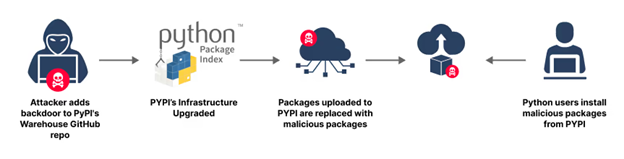
    For the slightly more technical: One wayward Docker container hosted on a public hub, which contained an access token to provide administrator access to Python, PyPI and Python Foundation’s GitHub repos. In the wrong hands, this leaked token would have provided access to the entire Python infrastructure, allowing a nefarious actor to potentially – very sneakily and quietly – take control of systems running Python. 

    In even more simplistic terms: An engineer accidentally posted login/access information online that would allow someone to get a “back door” into many of the world’s computer systems.

    It’s not science fiction. It almost happened. 

    And it could have taken down some of the most critical systems in the developed world. At JFrog we are not prone to hyperbole, but this wasn’t an exaggerated risk. It was a very scary reality. In fact, if not for the dedicated work and investment from security researchers at JFrog, you may have tragically experienced it.

    What is Python?

    Python is a multi-purpose programming language that is designed to be flexible and easy to use. As such, it is a default language and framework for a wide variety of computing systems from website development to software applications to workflow automation to data analysis – even as the default language that enables many of the AI technologies used today. Due to its flexibility and simplicity, it is often one of the first languages used by developers as they learn to code. Software libraries and other packages written in Python are some of the most prevalent open source components used by modern developers.

    Who Relies on Python?

    To understand the potential scope of this attack, it’s important to point out the prevalence of Python in digital systems. It is not a niche use case. The vast majority of critical computing systems utilize Python in some form and could be targets for such an attack. This is where the potential for CrowdStrike’s update impact x1000 becomes a reality.

    • YouTube, Instagram, Facebook, Reddit, Pinterest and other popular sites and services are written in majority or whole in Python (NIT Academy, Probytes). Say goodbye to the majority of services that run and display social media as they black out in an attack.
    • Nearly all machine learning models and AI-enabling software utilize Python to execute. (NIT Academy) Imagine if suddenly everything that runs on AI is taken over by a nefarious actor and trained or retrained with any data they wish.
    • Amazon, Google, Microsoft – All the cloud services and infrastructure from the major cloud players could be blacked out, including all applications and services that run on them. This alone would bring global commerce and interactivity to a halt. (Learnenough, Manpreet Singh)
    • P2P financial services like Venmo, and traditional firms with TRILLIONS of dollars under management (such as JPMorganChase and Goldman Sachs) utilize Python heavily. This attack would have crashed global financial markets, as well as crippling most of the world’s major stock exchanges. (Planeks)
    • Governmental organizations and election systems rely on Python, creating a very real possibility of complete government shutdowns and democratic disruptions. (NIT Academy)
    • Space exploration, satellite-based networks and critical research missions (including NASA, space telescopes, SpaceX and more) all depend on Python, making it very likely all advances in these areas would be orphaned for an extended period (perhaps permanently), leaving a very lonely Mars Rover on the red planet, even dangerously trapping astronauts in space. (Builescu Daniel)

    In this disastrous case, the “end of the world” would come about not with a whimper, but a cyber-bang that crashed most global systems. Identities and information all stolen or missing. Companies destroyed, fortunes wiped out, records deleted, medical care unobtainable, workers unpaid or without access to funds. It could take decades to recover fully.

    Thankfully it didn’t happen. But it was a close call.

    How was the Potential Attack Prevented?

    JFrog is investing heavily not just in products and product development, but also takes our responsibilities to the community very seriously as part of our security research team’s efforts. Part of that ongoing reinvestment effort is to proactively download and examine some of the world’s most popular packages for potential vulnerabilities. Some discoveries – while important – may have a limited blast radius. Some may affect specific operating systems, such as the CrowdStrike issue or maybe certain solution sets such as with SolarWinds. In rare cases, issues are more prevalent, such as the Log4Shell instance. This Python takeover could have made them all look like child’s play.

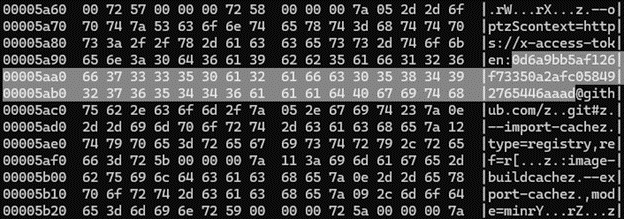
    From our technical blog on the discovery, we find that JFrog’s secret scanning engines detected a “classic” GitHub token in a binary Docker container hosted in the public Docker Hub repository. The risk with “classic” GitHub tokens is that, unlike newer, more fine-grained tokens, they grant permissions across all repositories the user has access to. 

    PyPI Supply Chain Attack Vector

    The discovered token had permissions to change any piece of code related to Python, from the simple Python executable to any Python package that’s hosted on the official PyPI repository.

    The leaked Python admin token, inside a compiled binary file

    This showcases the “daisy chain” of consequences that could have come about, as an infection moves from one system to the next.

    Why Only Scanning Source Code Guarantees Blind Spots

    In the case of this secret leak, the token was found ONLY in the compiled binary file. It was not discovered to be in the source code for this Docker container, indicating the developer may have temporarily utilized the credentials to build the binary, then cleaned up the code before making it available alongside the binary in the Docker container, forgetting to scrub the artifact. 

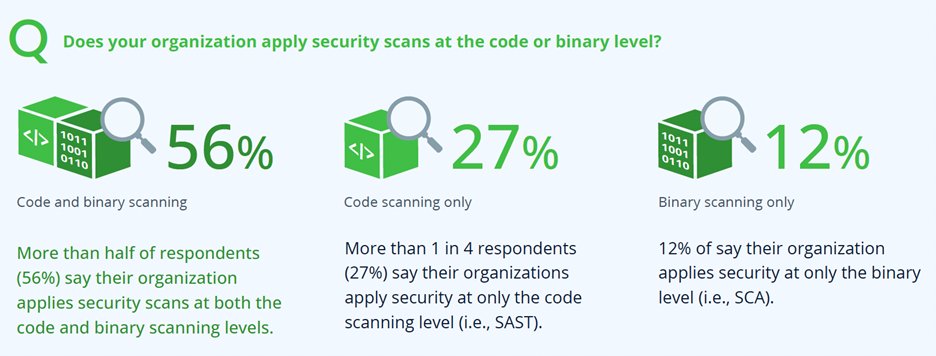
    Why does this matter? According to JFrog’s recently published Software Supply Chain State of the Union report, a staggering 27% of companies are utilizing ONLY code scanning to provide software supply chain security, and only 56% of companies are using both code and binary scanning together to secure their supply chain. This means more than half of companies have a glaring blind spot that may not have detected this vulnerability.

    Software Supply Chain State of the Union Report

    What is the Community Saying?

    Thankfully, the gravitas of this scenario has not been lost on the community, spurring all of us to not only provide even-better tools, but also to be more diligent in our approaches.

    What is most interesting, however, is how JFrog found the token. They discovered it in a compiled Python binary file! 🐸📂 It turns out that searching for secrets in the code itself may not be sufficient. Artifacts in the binaries themselves can also pose a serious threat to supply chains!

    Interestingly, this secret wasn’t exposed directly in the code base. That’s something developers, especially those mindful about security, are well aware of. But you might not have known that when .pyc files are generated, they can inadvertently store sensitive information, including secrets. Jfrog (sic) notes that many secrets they uncover are found within binary artifacts. FWIW, I’m not calling out the admin for this. It’s an honest mistake; they wrote an excellent summary and investigated what they could, identifying no indicators of malicious usage.

    The full blog post by the Python engineer who inadvertently made the error may be found here. As you see in his (very transparent and authentic) blog recapping the issue, it is very easy to make an honest mistake that has potentially devastating consequences. And with 20+ million developers globally, mistakes will inevitably happen and secrets will be leaked if proper guardrails are not applied.

    Key Takeaways

    The majority of industries and most digital infrastructure rely on Python in some way, making threats to this core framework highly consequential and possibly more devastating than recent software supply chain attacks.

    The digital world may have just avoided a landmark Python event thanks to researchers’ diligence. Many thanks to them for saving us from consequences we will hopefully never realize.

    Scanning both source AND binaries is essential to ensure your company doesn’t accidentally reveal secrets or introduce vulnerabilities. If you are not currently doing this practice, there is far too much risk to waste time (if you need a place to start, JFrog powers all of our security products with this approach, led by the same research team that found this secret).

    Supporting the community is key. There are earth-shaking discoveries that need to be shared with the community and fixed quietly before nefarious actors can take advantage. We should learn from the close calls to ensure none of us is next in the headlines, and build better tools and automation to safeguard our companies and posture.

    Huge thank you to the JFrog team for finding this before it could have been much much worse, and as always thank you to the volunteer team running Python’s infrastructure for handling this so well. These things can and do happen to anyone, and their response was world-class.

    Let’s find, fix and fortify together.

  • Techstrong Group Announces Rebranding of Security Bloggers Network to Security Creators Network

    Techstrong Group Announces Rebranding of Security Bloggers Network to Security Creators Network

    BOCA RATON, FL, April 9, 2024 — Techstrong Group, the power source for people and technology, is excited to announce the rebranding of the renowned Security Bloggers Network to the Security Creators Network. With over 350 security-focused content creators, the network has been a staple in the cybersecurity community for the past two decades. 

    The decision to rename the network reflects the evolving nature of content creation within the cybersecurity space. In today’s digital age, security professionals utilize various platforms beyond traditional blogs to share their insights and expertise. The Security Creators Network aims to embrace this diversity by providing a platform for all security content creators, including podcasters, YouTubers, social media influencers and more. 

    As part of the rebranding, the annual Security Bloggers Meetup will now be known as the Security Creators Meetup. This year’s meetup will take place during the RSA Conference and will be held at the iconic Tonga Room. More details about the meetup will be announced soon. 

    The Security Creators Meetup is being co-produced in partnership with the Cyber Marketing Professionals Society and Techstrong Group. Together, these organizations are committed to fostering collaboration and networking opportunities within the cybersecurity community. 

    “We are thrilled to unveil the new name for the network,” said Alan Shimel at Techstrong Group. “The Security Creators Network reflects our commitment to celebrating the diverse range of content creators who contribute to the cybersecurity discourse. We look forward to hosting another successful meetup during the RSA Conference and providing a platform for creators to connect and collaborate.” 

    For more information about the Security Creators Network and upcoming events, please visit https://securityboulevard.com. To sign up for the Security Creators Meetup, visit the event page.

    About Techstrong Group
    Techstrong Group is the power source for people and technology. Techstrong Group accelerates understanding of technologies that drive business. With a broad set of IT-related communities and offerings, Techstrong Group is the only media company serving the needs of IT leaders and practitioners with news, research, analysis, events, education, certifications and professional development. Our focus is DevOps, cybersecurity, AI, digital transformation, cloud and cloud native. Techstrong Group business units include: Techstrong Media (devopsy.kinsta.cloud, Security Boulevard, Cloud Native Now, Techstrong.ai, DigitalCxO, Techstrong ITSM, Techstrong TV and Techstrong Group Podcasts), Techstrong Research and Techstrong Learning. For technology providers, Techstrong business units offer many ways to share their stories, expand their audience and grow their business.

    Techstrong Group is based in Boca Raton, Florida. For more information, visit us on the web and follow us on LinkedIn.

    CONTACT
    Veronica Haggar
    Techstrong Group
    veronica@techstronggroup.com

  • DevSecOps: 5 Tips for Developing Better, Safer Apps

    DevSecOps: 5 Tips for Developing Better, Safer Apps

    The cloud is rapidly becoming a major battleground for cyberattacks — and the cost of a breach has never been higher. According to IBM, the average cost of a breach was $4.5 million, and according to the CrowdStrike 2023 Global Threat Report, there was a 95% increase in cloud exploits in 2022, with a three-fold increase in cases involving cloud-conscious threat actors. The acceleration of cloud-focused threat activity and its effects has made security a key priority across organizations – especially DevOps teams.

    Security in the Cloud is a Shared Responsibility

    Security teams are accountable for protecting against risks but cannot be the only ones. Each team must try to communicate why their part of the development lifecycle is important to the other teams in the pipeline. With the growth of cloud-native applications and the demand for faster application delivery or continuous integration/continuous delivery (CI/CD), the use of containers is increasing widely. Complex security issues arise as businesses adopt containerized and serverless technologies and cloud-based services.

    Application developers have a tricky balance to maintain between speed and security. In DevOps, security used to be an issue addressed after development — but that’s changing. Now, developers who previously had to code right up to the last minute — leaving almost no time to find and fix vulnerabilities — are using shift-left capabilities to ensure that code with security vulnerabilities is not moved into production.

    When security is considered at every step in the pipeline, it ensures developers find and address issues early on and reduces the cost of downstream fixes. DevSecOps helps developers find and remediate vulnerabilities earlier in the app development process. Vulnerabilities discovered and addressed during development are less expensive and faster to fix. Automation of testing, remediation and delivery ensures stronger software security without slowing development cycles. The goal is to make security a part of the software development workflow, instead of having to address more issues during runtime.

    Below are five key tips for developing apps with security and efficiency.

    1. Automate Security Reviews and Testing.

    Every DevSecOps pipeline should utilize a combination or variation of tools and features like those listed below. A good automated and unified solution will provide broad visibility and address those issues as they arise, while alerting, enforcing compliance and providing customized reports with relevant insights for the DevOps and security teams.

    SAST: Static application security testing to detect insecure code before it’s used

    SCA: Software composition analysis to detect library vulnerabilities before building

    CSA: Container scanning analysis to detect operating system library vulnerabilities and mitigate risk

    IaC scanning: Infrastructure-as-code scanning to detect vulnerabilities in infrastructure

    ASPM: Application security posture management to detect application vulnerabilities and risks once deployed

    2. Integrate With Developer Toolchains.

    Streamline and consolidate your toolchain so developers and security teams can focus attention on a single interface and source of truth. The tighter the integration between security and app development, the earlier threats can be identified, and the faster delivery can be accelerated. Seamlessly integrate with Jenkins, Jira, Bamboo, GitLab and other cloud security solutions to allow DevOps teams to respond to and remediate incidents faster within the toolsets they already use.

    3. Share Security Knowledge Among Teams.

    DevSecOps is a journey enabled by technology but a process that starts with people. Your DevSecOps team should share lessons learned and mitigation steps after resolving the compromise. Some organizations even assign a security champion who helps introduce this sense of responsibility for security within the team. Be prepared to get your teams on board before changing the process, and ensure everyone understands the benefits of DevSecOps. Make security testing part of your project kickoffs and charters, and empower your teams with training, education and tools to make their jobs easier.

    4. Measure Your Security Posture.

    Identify the software development pain points and security risks, create a plan that works well for your organization and your team, and drive execution. Ensure you track and measure results such as the time lost in dealing with vulnerabilities after code is merged. Then, look for patterns in the type or cause of those vulnerabilities, and make adjustments to detect and address them earlier. This introduces a shared plan with integration into the build and production phases.

    5. “Shift Right” as well as “Shift Left.”

    Detection doesn’t always guarantee security. Shifting right and knowing how secure your applications and APIs are in production is just as important. By leveraging ASPM to uncover potential vulnerabilities in the application code once they are up and deployed, teams can find potential exposure in their application code that could allow backdoor access to other critical data and systems.

    The bottom line is that while security and development used to be separate, the lines are now blurring to a point where security is becoming more integrated with the day-to-day job of developers. The benefit is that the modern practice brings together teams across the company to a common understanding, which drives business growth. DevSecOps requires teams to collaborate and enable the organization to deliver safer applications to customers without compromising security.

    Security is not meant to be a red light on the road to your business goals or slow down your software development. It is to enable you to reach those goals safely with minimal risk.

  • Avoiding Mistakes in Multi-Cloud Configurations

    Avoiding Mistakes in Multi-Cloud Configurations

    The digital sky is bursting with clouds of every kind, and organizations are reaching out to grasp several at once. They seize the opportunities offered by diverse cloud providers, breaking free from the confines of a single vendor. Their approach is a powerful strategic move. Its promise—slashed costs, bolstered resilience and unmatched data back-ups; its bottleneck—configuration issues. And the tightrope between reaping multi-cloud benefits and stumbling into cybersecurity risks is thin.

    “The foremost area where IT leaders have to adapt is cybersecurity,” said Aleksandr Morozov, a cloud security researcher and CTO at Oasis Defender. “As digital interactions multiply, so does our vulnerability to cybersecurity threats. We have to defend against attacks, safeguard data privacy and adhere to international regulations. The adequacy of cybersecurity measures we take directly impacts business integrity and consumer trust.”

    Given these stakes, multi-cloud configuration seems to be an even more tricky aspect to stay on top of. Any slip-ups can spiral into escalating costs, performance hitches and glaring security vulnerabilities. Knowing how to configure multiple clouds mistake-free is essential to keep the promise of multi-cloud alive.

    Multi-Cloud Adoption is Escalating

    On the brink of adopting multiple clouds, a question arises: Why pay more when you can pay less and get more? Organizations steer towards the most cost-effective cloud services, making sure each application finds its optimal cloud match to optimize performance and costs.

    The global march toward digital transformation results in a whopping 92% of organizations already using a multi-cloud approach or in the process of adopting one. Statistics suggest an average usage of 2.6 public clouds and 2.7 private clouds among organizations.

    The multi-cloud setup beckons organizations to distribute their workload across a spectrum of cloud services, each boasting unique benefits. This distribution not only fuels innovation but also provides organizations with robust data recovery mechanisms to use in the event of breaches.

    Multi-cloud also flings open the gates to escape vendor lock-in. No longer shackled to the offerings of a single cloud provider, organizations go for cherry-picking cloud features, explore diverse pricing options and choose geographical locations for sensitive data storage.

    In many regions worldwide, stringent local data regulations dictate the storage of sensitive data within that region’s borders and within specified cloud environments. By leveraging multiple clouds, global organizations can stay compliant with relevant regulations and data governance policies.

    With digital transformation beckoning, organizations are just beginning to harness the benefits of multi-cloud. However, with multiple clouds come multiple risks. Configuring and orchestrating several clouds typically pose challenges, and businesses across industries require robust multi-cloud tools and strategies in place.

    These Industries Need Multiple Clouds More Than Others

    The shift towards a multi-cloud paradigm among businesses isn’t merely a trend chase. It’s a strategic move to elevate operational processes.

    Although the use of a multi-cloud approach is bound with configuration and data breach risks, employing multiple cloud services from different providers brings game-changing benefits. This approach allows businesses to enhance flexibility and improve service monitoring and cost-efficiency—all while helping them better adapt to market changes and technological advances.

    On top of that, a multi-cloud strategy lays a solid groundwork for implementing advanced analytics and AI solutions. Businesses handling vast data, requiring high computational power, or having strict regulatory compliance needs stand to benefit most from this approach.

    “IT leaders must prioritize the infrastructure for remote work. It’s essential that this infrastructure supports seamless collaboration, regardless of geographical boundaries,” Morozov says.

    The global insurance sector is clearly betting big on multi-cloud, with statistics indicating an average use of 11.4 clouds in 2023. Insurance businesses handling massive amounts of sensitive customer data employ multiple clouds as the key to operational efficiency and compliance with data regulations.

    Banking and finance organizations stick to strict industry regulations and use multi-cloud environments to save costs, improve data security, and recover data easily. They seek to use the best features offered by multiple cloud providers to meet data storage rules and avoid reliance on a single provider.

    Besides, financial service organizations often experience rising costs and growing operational issues. That urged them to shift to a multi-cloud approach — their great strategic move. With this transition, they can see a 40% drop in spending by having a clear view of cloud activities across various regions.

    Similarly, health care businesses embrace multi-cloud to distribute workloads across different cloud services and keep their critical and sensitive data secure. They need a reliable backup in case of system failures to improve and maintain high standards of patient care and operations.

    The telecommunication sector is no less in need of a multi-cloud approach. In this field, escaping vendor lock-in and optimizing costs by combining a variety of vendors serve as the propelling forces.

    Retailers typically use around eight clouds from multiple vendors. Their multi-cloud strategies are cost-efficient, help improve scalability, and enhance customer experience by tailoring different cloud services to specific workloads and geographical locations.

    Configuration Mistakes: Why They Occur While Managing Multiple Clouds

    Managing many clouds means juggling a set of rules and systems from various cloud providers. Different settings in each cloud platform can lead to errors, especially when getting clouds to work together. Even a minor mistake can cause issues affecting performance, security, and costs.

    Besides, handling multiple clouds requires special talent. To err is human; common errors involve setting up access controls incorrectly, mismanaging user permissions or incorrectly configuring workloads. Small oversights lead to huge security and operational problems, and without the right training or experience, the chances of making errors increase.

    Configuration mistakes often come from the complex nature of multi-cloud setups. Moving into many clouds means dealing with different infrastructures, APIs, databases, networks, and security systems daily.

    The complexity of multi-cloud makes getting a full view of the whole setup tricky. This lack of clarity can hide configuration mistakes, letting them linger undetected or delaying fixing processes.

    Last but not least, different policies across cloud environments also complicate things. Each cloud setup might have its specific policies and configurations. Without reliable tools, clear rules and ongoing learning, configuration mistakes are imminent.

    How to Avoid Multi-Cloud Configuration Mistakes With AI

    Navigating through multiple clouds can feel like sailing in stormy seas, and organizations need robust tools and reliable solutions to mitigate performance issues and stay safe.

    AI-driven software allows for unified visualization and configuration of multi-cloud security. Let’s see how it aids in the journey.

    Unified Dashboard

    Multi-cloud management solutions bring together data from different cloud providers onto a single dashboard. This makes it easier to see and manage security across an organization’s cloud setup, making the process less complicated.

    Smooth Integration

    A unified interface helps different cloud systems work together smoothly. That means fewer errors and better cooperation between cloud environments.

    Better Visibility

    Having data put together, organizations get a better view of security setup across different clouds. They can see and fix issues faster while keeping multiple clouds secure.

    AI and Machine Learning

    Solutions hinge on using intelligent technology to spot potential threats quickly. Fast actions help reduce the negative impact of any security issues and keep multi-cloud setups shielded from breaches.

    Compliance Monitoring

    The cloud setup has to align with industry rules and standards, which becomes more complicated while using multiple clouds. Using a unified system, organizations can stay compliant and avoid legal issues.

    AI-driven solutions offer an intelligent way to untangle the complex knots of multi-cloud configurations while assuring a safer and more efficient multi-cloud experience.

    Final Thoughts

    The multi-cloud trend is on the rise, offering both opportunities and challenges for organizations. It allows businesses to pick cloud features from multiple providers, easily comply with regional data rules and avoid being tied to just one vendor.

    Different sectors like finance, health care and retail are adjusting their cloud strategies to adopt multi-cloud. Yet, configuring multiple clouds is a tough nut to crack. Diverse policies, different settings across cloud platforms and possible human error complicate multi-cloud configuration.

    However, AI-driven tools can offer a unified dashboard for a better view and management of security across cloud platforms, simplifying multi-cloud setups. Using AI and machine learning for managing clouds leads to quicker threat detection and resolution and helps organizations keep their strategies within legal limits.

    In the multi-cloud discourse, careful configuration supported by AI is a key to receiving multi-cloud benefits while managing the risks efficiently.