Tag: CI/CD

  • Seeing the Bigger Picture With BizDevSecOps

    Seeing the Bigger Picture With BizDevSecOps

    Not long ago, if you can believe it, software was shipped on physical floppy disks and CDs. These physical relics contained dense paper instruction books that humans read diligently for hours on end (I guess they had more time to spare back then?). Complexity was a given for computer-based tasks.

    Fast forward past the consumerization of IT to 2021, and you’ll find extremely high standards for technology. End users now expect intuitive apps with instant end value and 100% uptime. If they don’t receive gratification within minutes, they’re likely to trash it.

    In the race to meet digital innovation demands, software companies are increasingly tapping new strategies to deliver iteratively. Thus, disciplines like DevOps, DevSecOps, low-code and SRE have flourished. But are we adequately considering the end value of that work? Some feel business leadership needs a larger seat at the table and more input: enter the newest iteration of these disciplines, BizDevSecOps.

    I recently met with Gregg Ostrowski, CTO at AppDynamics, to discuss how to introduce BizDevSecOps in an organization. For Ostrowski, it boils down to having full-stack observability to connect application performance, security threats and revenue generation. Only by democratizing access to important metrics and identifying runtime weaknesses can business outcomes truly drive production.

    Full-Stack Observability

    Within our new pandemic-first reality, all organizations are amplifying their use of digital services to interact with customers. However, software teams are struggling to keep pace in this new environment — 89% of technologists report feeling under tremendous pressure at work, the Agents of Transformation 2021 report found. This strain has only increased as IT complexity soars amid the pandemic — 83% felt their job became more complex over the past year.

    IT staff is under mounting pressure to perform, and they may not have the correct elements in place to support elegant and profitable applications, said Ostrowski. When it comes to monitoring, in particular, alert fatigue could especially hamper innovation attempts and make it difficult to know what to prioritize.

    Instead, Ostrowski advocates for letting tangible business outcomes, such as conversion rates and performance, drive development. To correlate the impact on revenue more directly, he encourages “giving business leaders a seat at table during the entire CI/CD pipeline.” One aspect to roping in business, security, development and operations is unified observability across the entire stack.

    The Pendulum Swings

    But wouldn’t it be challenging to give business leaders a seat within a technical software delivery process? Well, this wouldn’t be the first time business has directed technological change.

    Ostrowski recalls the mid–2000s and the dawn of the mobile market. During this period, IT became consumerized for laypeople, with glossy apps and impressively intuitive experiences. He recalls a general loss of faith in IT staff, as workers often had “better tech at home than they did in the office.” This drove business leaders to invest heavily in modernizing their companies.

    In the following years, cloud solutions quickly re-empowered IT with new computing models, emboldening them to compete using the same tools as tech companies. However, simple deployments using a single server quickly morphed into arranging multiple workloads on various cloud service providers (CSPs). Virtualization, serverless and microservices architectures also brought novel complexities into the stack.

    “The IT staff is being asked to do jobs they’ve never done before,” Ostrowski said. He explained that SREs, for example, must understand networking, infrastructure and security — a vast portfolio for a single person and role. Supporting many disparate paradigms is simply beyond the scope and scale of what a single person can do, meaning new automation must be constructed — because “if you’re too busy debugging, you can’t innovate,” says Ostrowski.

    Amid mounting complexity and the burden of rising cloud costs, it appears business leaders again have a role in directing and prioritizing technological efforts.

    Getting Busy With BizDevSecOps

    According to Ostrowski, connecting IT and business with BizDevSecOps all hinges on collaboration. “If you don’t get to a point where you can collaborate with all these pillars, you’ll degrade your business,” said Ostrowski.

    BizDevSecOps also could help connect the dots to comprehend anomalies. For example, suppose a commerce application is experiencing a 15% conversion rate, but it drops to 7% after an upgrade. In this scenario, collaboration is crucial to identify usability bottlenecks in production and adjust accordingly.

    Tracking business outcomes can align development around improving the user experience. If broken features are hurting conversion rates, all stakeholders need to know to adjust accordingly. “User experience is the golden gem,” said Ostrowski.

    Other benefits of a BizDevSecOps approach may include:

    • Correlating activity and revenue: Ensuring spikes of activity are associated with revenue generation and not attacks or faulty instances.
    • Workload optimization: Monitoring business outcomes can help adjust the scope and size of machines as needed.
    • Before and after: Comparing financial results before and after migrations, new versions or new feature additions.
    • Postmortems: Pinpoint and correlate data when conducting postmortems.
    • Progressive delivery: A more rapid release frequency helps a business retain agility and pivot when needed.

    Visibility Enables BizDevSecOps

    DevSecOps is now a common philosophy — it promotes development with security baked into the application. Now, BizDevSecOps could be the next iteration; a collaborative approach that considers additional perspectives. BizDevSecOps is a vital method to “continue to build trust and collaboration so everyone has a seat at the table,” said Ostrowski.

    Ninety-six percent of technologists agreed that monitoring the entire IT stack to connect technical performance to business outcomes will be important in 2021, the Agents of Transformation Report found. To enable this, business, security and development must inevitably de-silo. According to Ostrowski, adopting BizDevSecOps depends on a window into performance management and business intelligence, because “when changes happen and no one knows about it, it’s a serious problem,” he added.

  • Survey Sees Application Testing Shifting Further Left

    Survey Sees Application Testing Shifting Further Left

    PractiTest, a test management platform provider, published a report today that suggests professional application testers have become more adept at working within DevOps workflows.

    The annual survey of more than 1,000 application testing professionals finds that 80% of all application testing within organizations is being done by test engineers, test leads, testers and automation testers. A full 92% of survey respondents also noted they are working within the context of an agile methodology, while 42% cited DevOps specifically. Half of respondents said they work within the framework of a continuous integration/continuous delivery (CI/CD) platform.

    Significantly, more than half of respondents (59%) said testing is shifting left within their organization, but only a third (33%) said programmers participate in the testing process.

    PractiTest CEO Yaniv Iny said that level of DevOps inclusion suggests that, rather than shifting testing completely left on to the shoulders of application developers, a more nuanced approach to application testing is taking hold as professional testers learn to work within the sprints that make up a DevOps workflow. A full 90% of respondents said testing has become more automated within their quality assurance (QA) processes.

    By now, most application testers have come to terms with automation and, increasingly, AI, said Iny. The assumption now is that large swaths of the testing process will be automated, Iny added. A full 97% of respondents said that functional testing automation was either important or very important for them to succeed, while 96% said test automation patterns, principles and practices are also critical.

    Usage of behavior-driven development (BDD) as a testing model has also increased, with 27% of organizations now employing it to go beyond simply testing functions.

    However, the survey also found that, instead of automation decreasing the size of testing teams, those teams are getting larger. The number of organizations with 16 or more testers increased by 10% to 34% compared to a year ago. That suggests organizations are launching either more complex application development projects or launching multiple projects at the same time as they embrace digital business transformation initiatives, Iny said.

    The survey found nearly 70% of respondents have at least five years of experience. Nearly three-quarters (71%) of respondents reported that their income was not affected by the economic downturn brought on by the COVID-19 pandemic. However, nearly half of respondents (54%) reported that they were concerned about job stability, an increase of more than 30% from a year ago.

    The pandemic did change the way testers acquire new skills. The number of testers reporting that they attended online conferences, meetups and seminars increased to just under half (49.5%), up from 40.5% in 2019. Participation in online communities and forums grew to 44%, while only a third of respondents receiving any kind of formal training.

    Testing professionals with five to 10 years of experience earned an average salary of $89,000 in North America, which compares to $76,000 in Australia/New Zealand, the survey also found.

    Application testing as a distinct discipline doesn’t appear to be fading away anytime soon. Rather, organizations appear to be investing even more in testing to deliver higher-quality applications.

  • DevOps Skills Increasing Among Salesforce Developers

    DevOps Skills Increasing Among Salesforce Developers

    A survey of 521 attendees at a recent online Future of Salesforce DevOps Summit event hosted by Gearset, a provider of a continuous integration/continuous delivery (CI/CD) platform for Salesforce developers, found just under half (47%) of respondents now release software at least multiple times a week, with another 29% releasing software weekly or biweekly.

    More than half of respondents (52%) also noted they now can deploy software in less than an hour.

    Gearset CEO Kevin Boyle said the survey suggested the level of DevOps maturity among developers building applications on top of the Salesforce software-as-a-service (SaaS) platform is increasing rapidly. In the wake of the COVID-19 pandemic, many organizations embraced SaaS platforms to accelerate their digital business transformation initiatives rather than building entire applications from scratch.

    However, the biggest benefit cited by survey respondents was not the ability to release applications faster, but rather the improvements to application quality (77%), followed by increased productivity (69%) and enhanced collaboration (46%). Other benefits cited included reduced complexity thanks to automation; increased agility; more reliable releases and time and cost savings.

    Overall, the survey identifies source code control, CI/CD, unit testing, change monitoring and backups of metadata and data as being the most widely implemented DevOps capabilities that have been adopted. Over the next 12 months, capabilities that will see the most increased adoption among survey respondents include CI/CD, static code analysis and sandbox seeding with data.

    Survey respondents said their top obstacles to adoption of DevOps are ramp-up time, followed by difficulties adopting source control and a perceived steep learning curve. For many organizations that have adopted Salesforce, the intimidation factor when it comes to adopting DevOps best practices is still fairly high, Boyle noted.

    Most recently, Gearset added a free training platform, dubbed DevOps Launchpad, that employs gamification techniques to make DevOps more accessible to developers. Topics covered include version control fundamentals, Git branching strategies and Salesforce backups.

    Gearset counts McKesson, Zillow, Traction on Demand, Intercom, Accenture, IBM and Johnson & Johnson among its customers. It’s not clear to what degree appreciation for DevOps has risen among smaller companies. However, as the number of custom applications deployed as extensions to the Salesforce platform increases, it is apparent that manual processes for building and deploying applications will not scale. The Salesforce platform itself is uniquely constructed using a set of objects and tables that generally lead organizations to adopt a DevOps platform built for that environment. However, it is possible to build and deploy applications using a DevOps platform designed for building and deploying applications that might need to span multiple platforms. Those applications would be integrated with the Salesforce platform at an application programming interface (API) level.

    Regardless of how custom applications are built and deployed, it’s clear Salesforce platforms are becoming more widely used in enterprise IT environments. Each DevOps team will need to determine how best to integrate those platforms within the context of their overall DevOps strategy.

  • GitLab Survey Surfaces Advances in DevOps Education

    GitLab Survey Surfaces Advances in DevOps Education

    As more organizations clamor for employees with some type of DevOps education, higher education is responding in kind, according to survey findings.

    A survey of 843 students and teachers at various academic institutions who have had some exposure to the GitLab continuous integration/continuous delivery (CI/CD) platform suggests the number of individuals with DevOps skills graduating from these programs soon might increase significantly.

    The survey, which was conducted by GitLab, identifies the top four use cases for the platform as learning (28%), teaching (22%), research (20%) and information technology/professional use (19%). Nearly a quarter (22%) also indicated they had a secondary use case on campus.

    Certification (57%) was ranked highest in terms of interest, followed by e-learning (49%) and virtual instructor led-training (35%). Students and graduate students are more interested in certification at 58% and 67%, respectively, while administration, faculty and staff were more interested in e-learning.

    The primary benefit of teaching and learning GitLab was identified as the ability to teach operations competencies (57%) and the ability to teach with an end-to-end tool for learning DevOps competencies (51%). For students specifically, the top benefit cited was the ability to teach operational competencies (49%), followed by the ability to build a portfolio and record of contributions (45%). Workforce readiness was cited at 40% and 46% of students and faculty, respectively.

    Dr. Christina Hupy, senior education program manager at GitLab, said the teaching of best DevOps practices within an academic environment is critical because it takes on average six years for IT professionals to master DevOps in the workplace. To help increase the overall pool for DevOps talent, GitLab has been making its software available for free via individual licenses to students and teachers. That program is now being extended to include a GitLab for Campuses offer, which makes the GitLab platform available to multiple users at a reduced price.

    In general, higher education programs have not been meeting the needs of organizations that are looking to hire IT professionals with proven DevOps skills, noted Hupy. Since launching the GitLab for Education Program in 2018, GitLab is trying to help fill that void, issuing more than $2 billion worth of GitLab software licenses in more than 75 countries. In 2020, the organization added 340,000 seats across 250 institutions to the program.

    More than a third of survey respondents (37%) reported they had access to a GitLab subscription at their institution and used it. The most common use case for GitLab cited was source control management (55%); followed by verification, also known as continuous integration, at 36%; planning, at 30%; and management and release, also known as continuous delivery, at 27% each.

    There is also significant use of GitHub among survey respondents, with 85% reporting using it. A distant second was Jenkins (21%), followed by BitBucket (17%), Travis CI (11%) and GitHub Actions (15%).

    IT organizations, of course, have a vested interest in helping educational institutions develop DevOps programs as the number of application development projects being launched simultaneously continues to increase. Otherwise, they will find themselves paying top dollar for DevOps talent that is difficult to find and retain. The challenge, of course, is identifying the institutions that have access to the DevOps tools and platforms that are going to be a pre-requisite for a successful DevOps career those students might eventually enjoy.

  • CircleCI Previews Support for Arm Platforms

    CircleCI Previews Support for Arm Platforms

    CircleCI today previewed the ability to deploy applications on platforms based on Arm processors in a forthcoming release of its namesake continuous integration/continuous delivery (CI/CD) platform.

    Tom Trahan, vice president of business development for CircleCI, said that Arm processors are rapidly being embraced by DevOps teams seeking to take advantage of the price/performance advantages they currently have over conventional x86 processors. Amazon Web Services (AWS), for example, makes available an AWS Graviton2 service based on 64-bit Arm Neoverse processors that it claims provides a 40% advantage in overall price/performance.

    The Arm community, meanwhile, has adopted many of the libraries employed on x86 platforms, Trahan noted, which is making it simpler to automate the deployment of applications on Arm-based platforms using a CI/CD platform.

    It’s not clear how quickly developers are building applications for Arm processors. Historically, Arm processors can be found in a wide range of embedded systems typically deployed at the network edge. However, cloud services based on Arm processors are also becoming more widely available, and it’s only a matter of time before more Arm-based platforms are deployed in on-premises IT environments.

    Arm itself is also in the process of being acquired by Nvidia, which envisions running machine learning algorithms, and other classed of advanced workloads, on both Arm processors and graphics processing units (GPUs). Many of the early efforts to build processors optimized for running AI workloads at the network edge are based on Arm processors.

    The addition of Arm platforms to any IT environment will naturally create some management challenges for DevOps teams. In some cases, developers may even decide to build applications using, for example, the latest generation of machines from Apple, that are based on Arm processors, to streamline the application development and deployment process. In other cases, however, applications that are intended to be deployed on Arm processors might still be built on x86 systems.

    Regardless of approach, the arrival of more Arm-based platforms in the enterprise doesn’t mean other classes of processors are going to fade away. Rather, from a processor perspective, IT environments are about to become a lot more diverse as more workloads are deployed on a wider range of processors. It may be quite a while before Arm-based platforms usurp x86-based systems that still dominate the IT landscape. However, during any turbulent economic time, the number of organizations inclined to reduce the total cost of IT by embracing new platforms always increases.

    Fortunately, as more IT infrastructure is managed as code, the easier it becomes to switch platforms. There may even come a day when the decisions about which platform to employ and when is completely automated by machine learning algorithms trained to maximize IT infrastructure efficiency to the fullest extent possible.

    In the meantime, DevOps teams should expect, to one degree or another, to revisit their workflows processes in the months ahead. Not only are more workloads being pushed out to edge computing platforms where Arm processors are commonly found, those Arm processors will soon find their way into the rest of the extended enterprise.

  • Harness Revamps User Interface for CI Platform

    Harness Revamps User Interface for CI Platform

    Harness today announced it has updated the community edition of its continuous integration (CI) platform with, among other updates, a revamped user interface.

    Formerly known as Drone.io, the latest release also adds pipeline execution visualizations, governance and security controls and live CI pipeline debugging capabilities. Harness last year acquired Drone.io, an open source CI project, to extend its existing continuous delivery (CD) platform into the realm of CI. Harness claims there are now more than 50,000 active monthly users of the community edition of Harness CI.

    Brad Rydzewski, co-founder of Drone.io, said the user interface for Harness CI will soon be applied across the entire portfolio.

    The update to the community edition of Harness CI comes at a time when the debate over how tightly integrated CI and CD platforms need to be is heating up. Harness launched a namesake CD platform before it acquired Drone.io to add a CI capability. While most DevOps teams are proficient with CI, the CD side of the DevOps equation has proven more elusive. There are now GitOps advocates that contend the rise of Kubernetes makes it more advantageous to enable a separate CD platform to pull updates from a Git repository, rather than having them pushed out by a CI/CD platform. The challenge with CD has always been that each platform on which code is deployed is unique. Kubernetes, however, now provides a de facto standard layer of abstraction that runs atop multiple platforms.

    Rydzewski said the integrated CI/CD approach will ultimately prevail, because it enables DevOps teams to more easily integrate a range of processes, including testing, that are required to consistently build and deploy applications at scale. Harness is, essentially, making a case for solving the CD challenge using a platform that encourages – but doesn’t require – a DevOps team to replace their existing CI platform.

    Regardless of how DevOps evolves, the CD issue needs to be addressed. As the enterprise becomes more extended with the rise of both cloud and edge computing, the number of platforms a DevOps team needs to support continuously expands.

    Despite the fact that DevOps teams employ CI/CD platforms, it is clear most of those organizations are not overly committed to the way they currently manage CD. It may be years before most organizations finally implement a consistent set of processes for automating application deployment.

    In the meantime, the number of organizations just starting out on their DevOps journey continues to increase. There are still plenty of instances where organizations have yet to deploy any type of CI/CD platform. It’s also worth noting that, in many cases, different DevOps teams within the same enterprise have decided to deploy different CI/CD platforms.

    Regardless of how DevOps evolves the pressure to automate is rising. The challenge many DevOps teams face today is the current platform they are relying on to automate the building and deployment of applications requires a small army of specialists relying on all too often manual processes to maintain.

  • DevOps Myths Debunked

    DevOps Myths Debunked

    Leaders need not be DevOps experts, but they need to distinguish DevOps myths and realities to lead their digital transformation projects.

    As I indicated in a recent article, Engineering Practices Can Overcome DevOps Challenges, leaders need to set an inspiring DevOps directional vision for the organization, and proactively stimulate and sponsor team activities toward goals. To be credible, communication from leaders need to distinguish between myth and reality. It is easy for leaders to get confused, because there are many popular myths surrounding DevOps. It’s important to remember that, in DevOps, definitions and engineering best practices for DevOps have not entirely been nailed down.

    As Doug Miller, senior director strategic partnerships, Perforce Software, said “Working in an industry that has yet to settle on an accepted ‘definition’ for DevOps makes each day a challenge. The ever-morphing landscape makes it difficult for technology vendors and consumers alike to ensure we’re all talking about the same thing in the same way.”

    Here are some of the most important myths that leaders need to be aware of.

    Debunking DevOps Myths

    Myth: “DevOps is a cultural movement.”

    The truth is that implementing DevOps requires a careful and balanced engineering approach that considers a wide array of people, process and technology aspects. In my article, The Time Has Come for an Engineering Approach to DevOps, I explained that while culture is a critical success factor, DevOps is much more than just culture. Furthermore, DevOps is not just a movement. In the larger context of software engineering history, the word “DevOps” is new, and perhaps it will be replaced by another word someday, but the underlying engineering principles and practices that constitute DevOps could apply to almost any engineering project throughout the ages.

    Myth: “DevOps requires continuous deployments.”

    The truth is that DevOps enables continuous delivery of release artifacts to a staging environment to be ready to deploy safely, but frequent deployments to production is not always a goal. There are valid customer use cases that do not desire frequent deployments to production. For example, customers may not want to receive a new version of a software platform product frequently, because each new version may be disruptive and risky for reasons beyond the scope of the product itself. The engineering benefits of delivering complete releases to staging without deployment to production are still considerable. Each release is produced and validated in a pre-production environment, and made ready for deployment on demand without disrupting customers that do not want to take a new release.

    Myth: “DevOps applies to any software product, service or application.”

    The truth is that DevOps engineering yields high ROI in many circumstances, but some cases do not warrant investment in the people, process, and technology changes needed for DevOps. For example, applications that rarely change do not warrant the cost of DevOps changes. Organizations that are heavily siloed will find it too frustrating and counterproductive to implement DevOps. The application of DevOps to some commercial off-the-shelf (COTS) products may not yield sufficient ROI, because business-to-business barriers may behave as impenetrable organizational silos. Applications that have few tools in their toolchains suitable for DevOps may find the transition to DevOps too expensive.

    Myth: “DevOps requires Agile.”

    The truth is that DevOps and Agile can be either complementary or competitive. The notions of working with small, incremental changes is common to both Agile and DevOps. However, organizations that embrace Agile are focused on optimization of the development end of the pipeline, and may struggle with DevOps, which emphasizes engineering of end-to-end process optimizations.

    Myth: “The scope of DevOps is the same as CI/CD.”

    The truth is that a well-engineered DevOps implementation encompasses continuous integration/continuous delivery (CI/CD), but also extend beyond integration and delivery into other practice areas such as planning, operations, governance, disaster recovery and other practices that must work together with CI/CD to accomplish business goals.

    Myth: “DevOps does not apply to platform products such as software code embedded in manufactured products.”

    The truth is that DevOps does apply to embedded code products, as well as web services, business applications and other types of products. It even applies to development of software and services for DevOps itself! In the case of platform products, typically, deployments are planned. They are not continuous, but, instead, continuous deliveries of candidate releases are delivered to a staging environment to make sure the changes implemented for the platform are fully developed and verified as the platform is built, instead of waiting for a big-bang release.

    Myth: “DevOps is an elimination of IT operations.”

    Jeremy Bosch, in his article, Top 9 Debunked DevOps Myths, “As per the NoOps concept, the IT sector will become so automated that it will not require any in-house team to manage the software. However, no matter how automated the services may become, there will always be a need for operations. Although there may be changes in operations, they will still hold significance in DevOps.”

    There are many persistent myths about DevOps, such as the examples in this article, that can confuse and misdirect uninformed leaders. Leaders that learn to distinguish between DevOps myths and realities are better able to communicate realistic goals to lead their digital transformation projects.

  • GitLab Releases Updates to CI/CD Platform

    GitLab Releases Updates to CI/CD Platform

    GitLab this week made available a 13.9 update that adds more than 60 new features and updated capabilities to its namesake open source continuous integration/continuous delivery (CI/CD) platform.

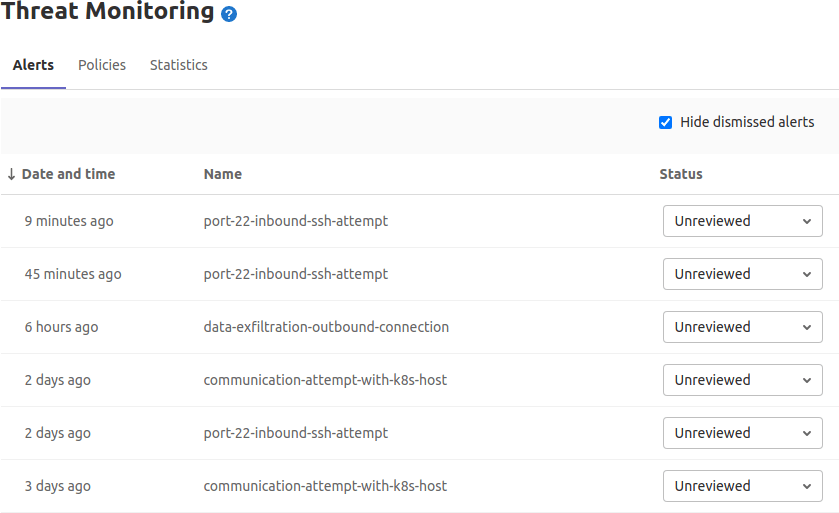
    Brian Glanz, a product marketing manager for GitLab, said chief among those capabilities is a Security Alert Dashboard that enables DevOps teams to triage high-priority alerts more easily. As more organizations embrace DevSecOps best processes, application development teams need to be able to prioritize which security issues are more pressing than others, Glanz said.

    Other new capabilities include the ability to reuse a pipeline of a CI/CD configuration, and a maintenance mode option that keeps instance available while administrative tasks are being performed.

    Additionally, it’s now possible to view group-level analysis of release metrics, in addition to the ability to view a version of a pipeline configuration with all of the include and extends configurations merged together.

    Glanz said GitLab continues to gain traction, because all the capabilities it provides are based on the same integrated code base. The effort a DevOps team needs to exert to take advantage of new capabilities is substantially less than rival platforms, Glanz said.

    At the same time, Glanz noted that the number of contributors to GitLab coming from outside the company also continues to increase. The latest version has 299 merged contributions from the wider GitLab community.

    It’s not clear how much of an appetite organizations have, these days, to replace an existing CI/CD platform. However, it’s not uncommon for organizations to have multiple CI/CD platforms employed by different DevOps teams. In the meantime, the number of teams within enterprise IT organizations that are embracing DevSecOps processes to advance digital business transformation initiatives continues to rise. As more organizations realize how dependent they are on custom software to differentiate themselves from rivals, more enterprise IT organizations will opt to standardize on a single CI/CD platform to both reduce costs and increase overall efficiency.

    A report published last year by GitLab noted organizations can improve application development and delivery by 87%, resulting in a savings of more than $23 million. Overall, the report claims organizations can see a 407% return on investment (ROI) on the GitLab platform.

    Naturally, competition among CI/CD platform providers remains fierce. With most developers working from home to help combat the spread of the COVID-19 pandemic, these platform providers have been touting their ability to support remote work. It’s not clear if developers will be returning to the office en masse now that COVID-19 vaccines are being distributed. However, it’s clear that even once the pandemic subsides, the way application code is created and maintained will be a lot more fluid. Many organizations are now more comfortable hiring developers wherever they can find them.

    Of course, many of those developers are going to be wary of joining organizations that have disjointed workflows, especially when it comes to shifting responsibility for application security further left toward developers. In fact, the ability of any organization to effectively recruit developers is now directly tied to the overall sophistication of their DevOps workflows.

  • Why Every DevOps Team Needs a Spot Instance Strategy

    Why Every DevOps Team Needs a Spot Instance Strategy

    Most DevOps teams use the public cloud extensively and focus a lot of energy on reducing cloud costs. According to one estimate, U.S. businesses spent $14.1 billion in 2019 just on wasted, unused cloud resources. Spot instances are one of the most important ways to reduce the cost of public cloud services.

    Spot instances are not a new development. Amazon was the first to announce this pricing option in 2009, turning cloud computing into a market influenced by the dynamics of supply and demand. Microsoft Azure took more than a decade to follow suit, announcing its spot virtual machines offering in May 2020.

    The spot pricing model is simple on the surface but can be complex to implement. Spot instances are how cloud providers sell their unused capacity. When compute instances are not ordered by anyone via the regular, on-demand pricing model, the cloud provider puts them up for auction at very favorable prices, usually around 10% to 20% less than the on-demand cost.

    However, it’s not so simple to get this 80% to 90% discount. When another cloud customer requests the spot instance, the cloud provider sends a notification, and you need to immediately move your workloads before the instance is terminated. This makes it difficult to use spot instances for stateful, database-driven applications, or those that require high availability.

    This is not the only challenge. The market price fluctuates and is much more volatile than on-demand pricing. This means the level of discount that can be achieved over time is relatively unpredictable.

    However, there are at least three ways savvy DevOps teams can make great use of spot instances:

    1. Automation—DevOps teams are proficient with a range of automation tools, including configuration management, infrastructure as code (IaC) and cloud provider auto-scaling tools. These can be used to manage workloads in clusters and automatically fail over when a spot instance terminates.
    2. Dev/test environments—DevOps teams are responsible for setting up development and testing environments, which are extremely suitable for spot instances because they can usually tolerate brief interruptions, and, in many cases, are not stateful.
    3. CI/CD jobs—running jobs on Jenkins, GitLab and similar tools can be easy to scale on spot instances. These jobs are stateless, and if an instance drops, it’s easy to rerun the job on another.

    AWS Spot Instances

    AWS Spot Instances let you buy unused Amazon EC2 computing power at a significantly discounted price. You can specify a price, and when a spot instance is offered at that price, it is launched with the Amazon Machine Image (AMI) of your choice.

    How Spot Instances Work on AWS

    Spot instances are priced at a variable spot price, which is adjusted according to supply and demand conditions. To see current rates, use the AWS Spot Instance Advisor.

    You create a spot instance request, specifying what instance types you are interested in, and the availability zones (AZ) in which they should run. If capacity is available, and their current price is less than your maximum bid, instances are launched.

    Spot instances continue running until:

    • Capacity is no longer available (because the instances were requested by on-demand customers).
    • The price has risen over your maximum bid.
    • You request to terminate the instance, or it is automatically terminated by auto-scaling.

    You can also order spot instances with a predefined duration—you then pay a static hourly rate for that entire duration (even if market price changes in the interim).

    Automation Options

    You can automatically scale instances on Amazon EC2, including both on-demand instances and spot instances in a single auto-scaling group. If spot instances are not available when scaling up, the group can use regular on-demand instances.

    Amazon also supports mixing in reserved instances and savings plans (additional ways to save on on-demand instances by committing to a certain period of time or total capacity). So you can combine multiple saving methods in the same auto-scaling group.

    You can improve availability by deploying applications across multiple instance types running in multiple AZs. By allowing multiple instance types, you tap into multiple pools and increase the chances of obtaining a spot instance when you need it.

    Azure Spot Instances (Spot VMs)

    Azure offers Spot VMs that give you access to unused compute capacity. You can request a single spot VM, or launch multiple spot VMs using an Azure VM Scale Set (VMSS). Spot VMs replaced the previous Low Priority VMs feature, which let you purchase VMs that were in low demand on Azure for a reduced price.

    The spot price of VMs on Azure depends on the total capacity available for that specific instance size and SKU (instance type) in the Azure region. Azure commits to changing pricing slowly—avoiding sudden spikes—to maintain pricing stability and make it easier to manage budgets.

    Like on Amazon, discounts fluctuate significantly, and spot VMs can be up to 90% cheaper than the base price of the same VM.

    How Spot VMs Work on Azure

    The Azure Portal provides access to Azure spot VMs. When you create a spot VM, you can see the current price for the selected region, image and VM size. For consistency, prices are always in U.S. dollars, even if you use a different base currency for billing.

    There are two options for eviction of spot VMs—you can choose the condition on which spot VMs will be evicted:

    • Maximum price eviction—You set a maximum bidding price, and when the spot VM rises over that price, it is evicted.
    • Capacity eviction—You always pay the current price of the VM (without setting a maximum price), and when Azure does not have sufficient capacity of the requested VM type, your VM is evicted.

    When a VM is evicted, Azure applies an eviction policy called Stop / Deallocate. This means the instance is paused, but attached disks remain, and you are still charged for them. When the price goes down or capacity becomes available, the instance is restarted and continues working on the same disk data.

    Automation Options

    Azure provides virtual machine scale sets (VMSS), which can automatically increase or decrease the number of VMs running your application. You can create a scale set that includes spot VMs, and as your application scales, more spot VMs will be added as they become available. Spot scale sets operate in a single fault domain and do not guarantee high availability. Unlike AWS, Azure currently does not allow you to mix on-demand VMs and spot VMs.

    Both Amazon and Azure provide robust capabilities for cost savings using spot instances. Azure’s offering is newer and provides less-advanced bidding and auto-scaling capabilities, but these are expected to be added as the service matures.

    Whether DevOps teams choose to run in AWS, Azure, or both, they literally cannot afford to ignore spot instances, especially for low-criticality workloads like dev/test and CI/CD job execution.

  • Sauce Labs Acquires AutonomIQ to Advance App Testing

    Sauce Labs Acquires AutonomIQ to Advance App Testing

    Sauce Labs is acquiring AutonomIQ, a provider of a scriptless test automation platform based on machine learning (ML) algorithms.

    Matt Wyman, chief product officer for Sauce Labs, said the acquisition of AutonomIQ will play a critical role in enabling Sauce Labs to push testing further left toward developers and, ultimately, “citizen testers” that are becoming part of the DevOps testing tool chain.

    The acquisition of AutonomIQ comes on the heels of the company announcing its intent to acquire API Fortress, an application programming interface (API) testing platform provider. Terms of neither acquisition were disclosed.

    Wyman said the rise of DevOps coupled with an increase in the volume of applications being developed using low-code tools are the primary drivers of a need to shift testing further left. As more citizen developers are building applications, they require access to a testing platform that doesn’t require them to know how to write scripts to test applications, said Wyman.

    The AutonomIQ platform employs machine learning to understand, for example, natural language descriptions of test cases or captured mouse clicks. It then generates synthetic data and test cases that can self-heal when an application changes, said Wyman.

    That approach to testing is more feasible in software-as-a-service (SaaS) environments, where a custom application based on a platform such as Salesforce, ServiceNow, Workday, Oracle or SAP doesn’t tend to change as radically as an application being built from the ground up, Wyman said. Those classes of applications will still require either developers or a dedicated team of testers to build tests using scripts, said Wyman.

    In fact, Wyman said testing those applications is becoming more challenging in the age of microservices. The API Fortress acquisition addresses that issue, because microservices are dependent on APIs to communicate with other microservices, said Wyman. In general, Wyman said Sauce Labs is now moving beyond being focusing only on functional testing of user interfaces.

    It remains to be seen how quickly testing will move to the left. Developers are being held more accountable for the quality of their applications, so testing integration within the application development process has increased. This has led to application testing becoming more tightly integrated with continuous integration/continuous delivery (CI/CD) platforms. Less clear is to what degree those efforts might have reduced the burdens of a dedicated application testing team that typically evaluates applications after they have been constructed.

    Exactly where and how citizen testers are being incorporated into those processes is also unclear. In theory, citizen testers can bring more business process expertise to the testing process. Getting individuals with that level of expertise to make time to participate in application testing while an application is being built can be a challenge.

    Regardless of approach, however, it is already apparent that machine learning algorithms, along with other forms of artificial intelligence (AI), will play a much larger role in application testing in the coming months and years.