Tag: Chef

  • Progress Expands Scope of Compliance-as-Code Capabilities

    Progress Expands Scope of Compliance-as-Code Capabilities

    Progress this week extended its DevSecOps portfolio—built atop the Chef automation framework it acquired in 2020—to now include the ability to programmatically address compliance mandates.

    At the same time, Progress has updated the Progress Chef InSpec framework for automating the discovery of compliance issues to add support for SAP ASE, IBM DB2, Mongo, Cassandra, Oracle, MS SQL platforms along with RHEL, CentOS, Ubuntu and macOS Monterey.

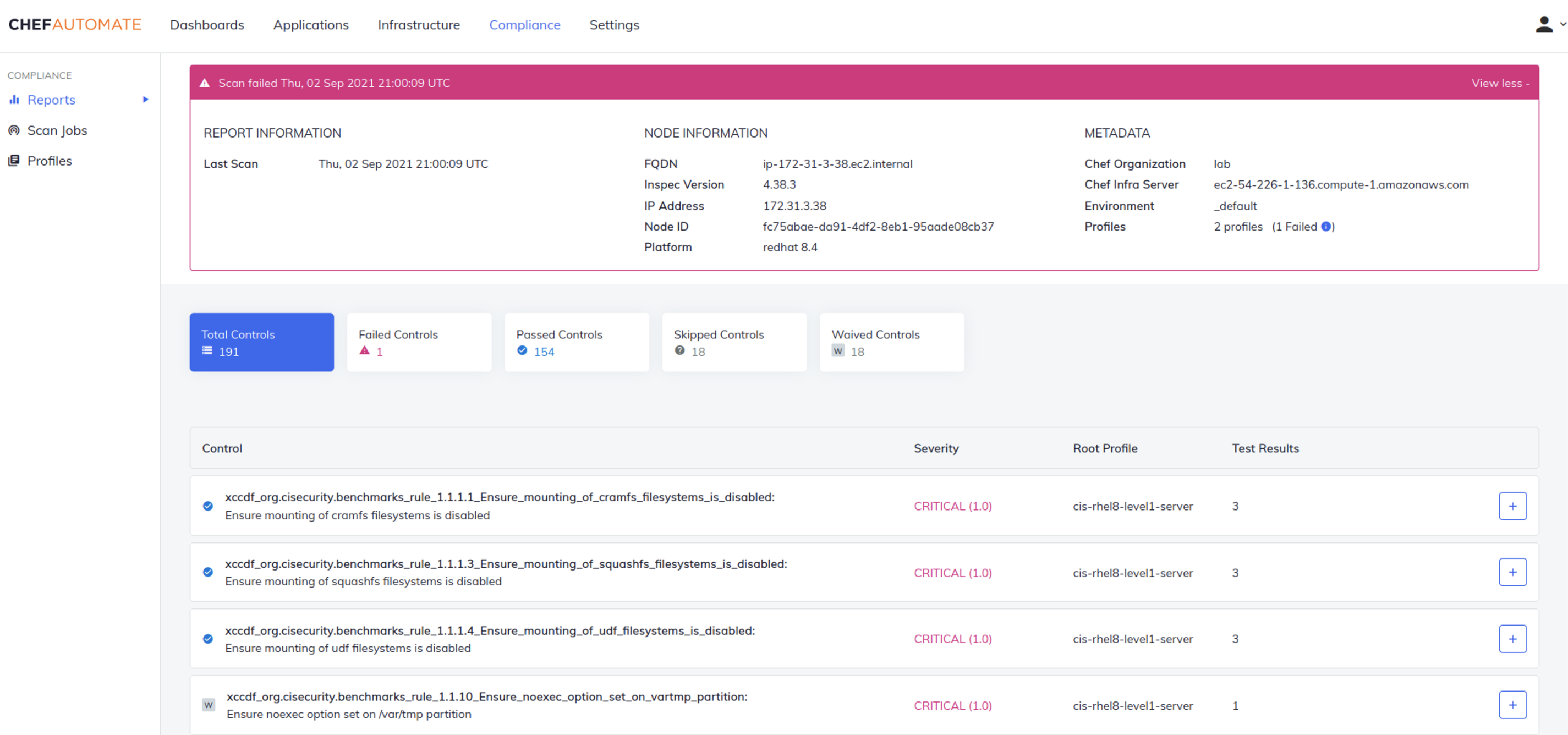
    Progress has also updated the Progress Chef Enterprise Automation Stack (EAS) to add the ability to combine infrastructure configuration processing with compliance audits within a single consolidated policy definition along with a high availability capability that makes certain the platform is always accessible.

    Prashanth Nanjundappa, vice president of product management for Progress, said Progress Chef Cloud Security enables DevOps teams to take advantage of a single policy-as-code platform to consistently implement compliance policies alongside security controls across both multiple public clouds and on-premises IT environments.

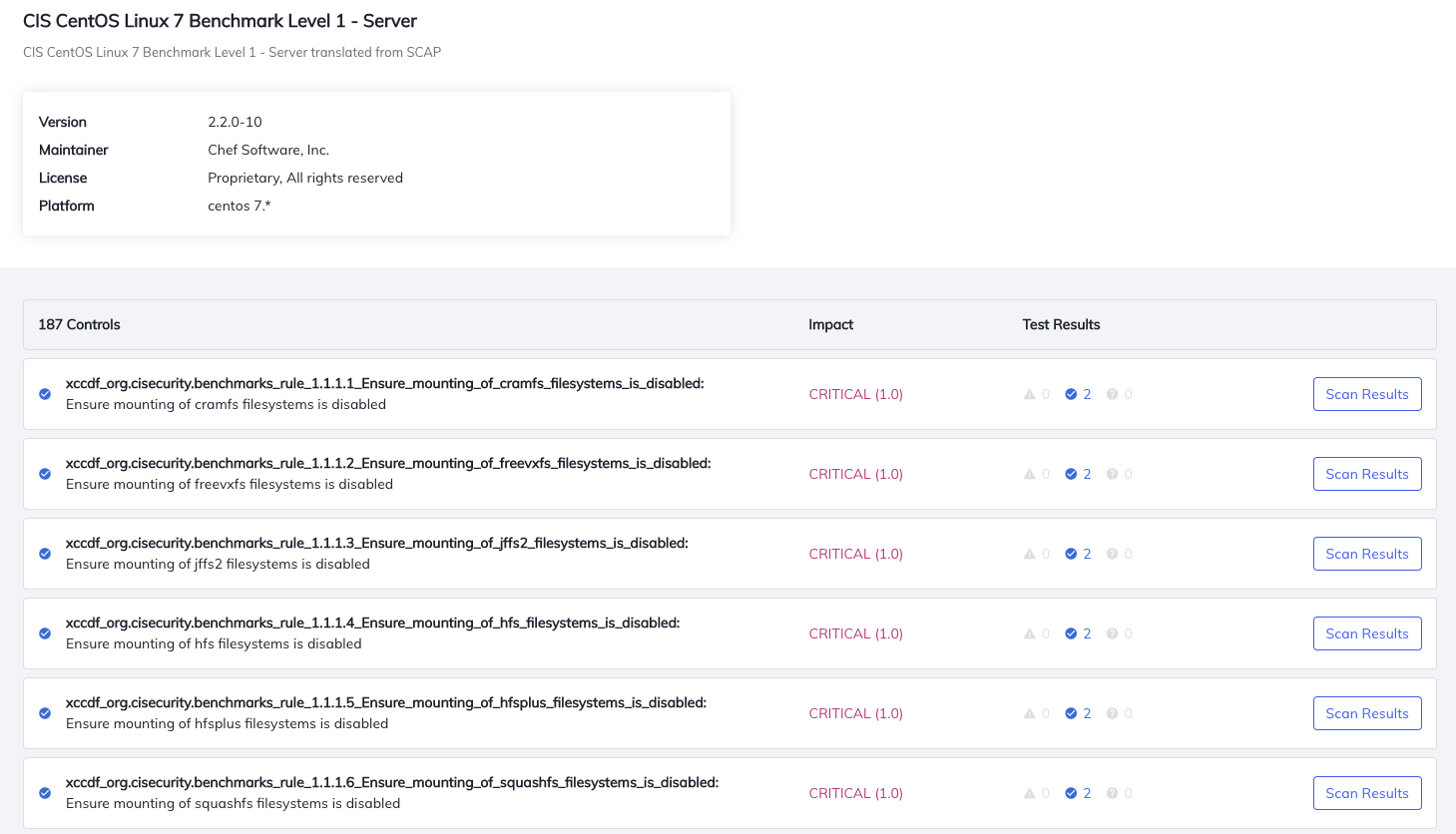
    Progress Chef Cloud Security leverages certified industry benchmarks, such as the Center for Internet Security (CIS) benchmark, to continually scan and automatically detect security configuration issues at multiple stages within a DevOps pipeline. Progress has now expanded CIS benchmark profile coverage for Amazon Web Services (AWS), Microsoft Azure and Google Cloud Platform (GCP) to include more than 100 customizable pre-built service and resource templates. DevOps teams can take advantage of automated creation of code, test and documentation artifacts for those resources. Finally, visibility into the status and expected completion time for compliance scans has been added along with advanced Shell command support for control and testing without file output.

    In general, the ability to address compliance requirements within a DevSecOps workflow has become crucial because the number of misconfigurations that occur in the cloud has exploded. Developers that often have little to no security or compliance expertise are programmatically provisioning cloud infrastructure in a way that, for example, leaves ports wide open. As IT organizations embrace more cloud computing platforms, that security issue only compounds, noted Nanjundappa.

    More challenging still, cloud computing environments are becoming more complex with the rise of cloud-native applications based on platforms such as Kubernetes. The odds a developer is going to make a mistake only increase with each microservice deployed.

    Progress is betting that, as cloud computing evolves, responsibility for security and compliance will increasingly shift left toward DevOps teams; they’ll be responsible for implementing polices defined by cybersecurity and compliance specialists. The goal is to provide a set of guardrails that make configuration mistakes less likely because policies are being tested within the context of a DevSecOps workflow, said Nanjundappa.

    It’s only a matter of time before software supply chain security reviews that are occurring in the wake of a series of high-profile breaches force the DevSecOps issue within more organizations. The goal, of course, should be to eliminate the need to identify DevSecOps as separate from a DevOps workflow. Regardless of the approach, however, the one good thing about all this attention is that application environments will inevitably become a lot more secure.

  • Progress Expands Chef Automation Portfolio

    Progress Expands Chef Automation Portfolio

    In advance of its ChefCon 2021 conference, Progress today unveiled a series of enhancements to its Progress Chef automation platform that includes managed services and a software-as-a-service (SaaS) edition of its offerings as well as tighter integration with cloud services and other third-party tools.

    Sudhir Reddy, vice president of engineering for the Chef business at Progress, said the SaaS platform, now available in beta, combined with the managed services provided by Progress will make the automation platform much more accessible to a wider range of organizations.

    Progress is now also extending the reach of its Chef Compliance Automation for Cloud Resources offering across Amazon Web Services (AWS), Microsoft Azure and Google Cloud Platform (GCP) to include Chef premium content that aligns with best practices for each cloud environment in addition to providing integration with Azure Policy, a suite of tools from Microsoft that compares resources to a set of business rules that define how cloud infrastructure should be employed.

    Chef

    Finally, Progress has enhanced Chef Enterprise Automation Stack to provide tighter integration between compliance and infrastructure automation along with adding infrastructure operations dashboard, support for Windows patch management, integration with third-party secrets management tools, and improvements to Chef Workstation and Chef Test Kitchen to simplify testing within application development processes.

    With the release of a SaaS platform and the availability of managed services, Chef is joining a long list of IT vendors that are removing responsibility for deploying and securing their platforms from internal IT operations teams. It’s clear more organizations now want to spend more time on building and deploying software than managing the platforms that automate those tasks on their behalf, said Reddy.

    It’s not clear how many IT teams that have already deployed a platform might shift over to a SaaS platform or rely on an IT vendor to manage that platform on their behalf. However, in the wake of the COVID-19 pandemic, many IT teams continue to work from home to help combat the spread of the virus. Many of those organizations have either shifted platforms to the cloud themselves, adopted SaaS platforms or outsourced the management of IT platforms altogether. There are also many small organizations that simply don’t have the internal expertise and resources required to stand up an IT automation platform on their own.

    That approach also makes it simpler to converge security, compliance and IT operations management within the context of a larger DevSecOps workflow, noted Reddy.

    The great paradox of IT automation has always been the level of expertise required to achieve it. Organizations that lack the expertise required to create automated playbooks, for example, don’t derive much value from an IT automation platform. It’s only been larger companies that have mostly derived the most benefit from investments in IT automation. However, as IT automation becomes more accessible via SaaS platforms and managed services, the level of expertise required to benefit from it naturally drops. In fact, with the advent of artificial intelligence (AI) for IT operations (AIOps), many manual IT tasks are increasingly being automated.

    It’s too early to say whether the IT industry as a whole is on the cusp of the next wave of automation, but the raw ingredients that make up the primordial soup needed to achieve that goal is, at this point, only awaiting a catalyst.

  • Progress Unveils First Update to Chef Automation Portfolio

    Progress Unveils First Update to Chef Automation Portfolio

    Progress today announced it has enhanced its Chef Enterprise Automation Stack (EAS) and released a new version of Chef Infra Client that promises to make the programming language on which EAS relies more accessible.

    Sudhir Reddy, vice president of engineering for Progress, said the latest versions of both offerings are the first updates to the Chef portfolio since Progress acquired the company last fall.

    Chef EAS combines elements of the Chef portfolio in a way that makes it easier to develop and integrate DevOps workflows that span everything from provisioning infrastructure to deploying applications. The latest update to EAS adds the ability to automatically execute compliance audits as part of any Chef Infra Client run using Chef InSpec tools. At the same time, the latest update also simplifies the implementation of the patch management processes.

    DevOps teams can also view and manage Chef Infra Server details via the Chef Automate framework. Those views, when combined with Chef Infra Client Run Reports, provide insights into the various policies and Chef objects in use on a system.


    Finally, the Chef Workstation module includes the Chef Habitat command line interface (CLI) to further simplify workflows.

    Ultimately, Progress is moving toward creating a common user experience across all elements of the Chef EAS suite of tools, Reddy said. In effect, EAS is emerging as the control plane through which the entire Chef portfolio will be managed, Reddy added.

    Meanwhile, Infra Client 17 promises to make the Chef Language underpinning that suite more accessible. It provides a streamlined developer experience as well as pre-built integrations with various cloud services. In addition, Progress is adding support for various ARM processors used in cloud services, macOS Big Sur, the Apple M1 architecture, Windows 8 and PowerShell Core.

    Progress also enhanced its ability to securely capture metadata from the Amazon Web Services (AWS) public cloud as well as capturing data from Microsoft Azure clouds.

    An early pioneer of a framework for automating IT infrastructure-as-code management, Chef is still widely employed. However, rival open source frameworks have since emerged, which Chef eventually responded to by making its core platform also available as open source software as it changed its business model. Progress today also announced it will recognize external contributors to the platform with recognition awards. Progress reports that, in 2020, there were more than 6,000 contributions from over 350 contributors in the Chef community in support of Chef Infra, Chef InSpec and Chef Habitat.

    It’s still unclear how the battle for infrastructure-as-code framework management supremacy will ultimately play out. While many developers have clearly shown a preference for rival open source tools, Progress is positioning the Chef portfolio as a framework for IT organizations that need to automate processes at scale, including how application are deployed on infrastructure that is provisioned as code.

    Of course, many rival framework providers have similar ambitions. The challenge, of course, will eventually be convincing organizations that tend to employ a wide range of tools across different departments to finally standardize on one framework versus another.

  • Progress Reorganizes Chef Portfolio

    Progress Reorganizes Chef Portfolio

    Progress today announced updates to the portfolio of DevOps offerings it gained with the acquisition of Chef earlier this month.

    A Chef Infrastructure Management offering now combines Chef Infra and Chef Automate into a single offering, while Chef App Delivery combines Chef Habitat, Chef Infra and Chef Automate into a single offering that creates an artifact that can run anywhere.

    Sundar Subramanian, senior vice president and general manager for core products at Progress, said the goal is to organize the Chef portfolio around a set of distinct offerings for automating the management of infrastructure and continuous delivery (CD). Instead of simply offering a set of tools for power uses, Subramanian said Progress is moving toward creating a set of platforms.

    At the same time, Progress announced a dedicated content delivery service that provides access to a library of curated Chef Premium Content for compliance scanning and remediation that complies with the best practices defined by the Center for Internet Security (CIS).

    Finally, Chef has added a Learn Chef Skills Validation Program based on the online Learn Chef platform and the OpenBadges Standard, a specification designed to promote certifications that teach skills in a way that are both verifiable and portable.

    CD and infrastructure management are typically handled by different members of the same DevOps team. By segmenting its offering around federated responsibilities, the Chef software portfolio will become easier for DevOps teams to consume based on specific tasks, Subramanian said.

    Progress expects its offerings in the months ahead to have greater appeal among midmarket IT organizations that are accelerating multiple digital business transformation initiatives in the wake of the COVID-19 pandemic, he noted. The company has been focused on providing application development tools to these organizations for decades, and as their IT operations mature, many are beginning to embrace best DevOps practices as they seek to reduce the total cost of IT operations.

    The challenge those organizations face today is they depend heavily on ITIL-based frameworks for managing IT. Beyond acquiring DevOps tools and platforms, most of those organizations are at the beginning a what has been shown to be a transformation to DevOps processes that requires major changes to the culture of an IT organization. The cultural transition often involves years of effort as organizations try to balance different approaches to managing IT based on ITIL and DevOps processes.

    It’s too early to say what path to automation of IT those organizations will take. The Chef tools still require a level of programming expertise to employ that is often lacking among traditional IT operations staff. Not to mention the fact that Progress is not the only DevOps platform provider looking to expand its reach into the midmarket.

    Regardless of the path chosen, the number of organizations that embrace DevOps principles is about to expand significantly.

  • Progress Announces Acquisition of Chef

    Acquisition aligns with strategy for accretive acquisition and extends product offerings in DevOps and DevSecOps with market-leading infrastructure automation

    BEDFORD, Mass., Sept. 08, 2020 (GLOBE NEWSWIRE) — Progress (NASDAQ: PRGS), the leading provider of application development and digital experience technologies, today announced that it has entered into a definitive agreement to acquire Chef, a global leader in DevOps and DevSecOps, providing complete infrastructure automation to build, deploy, manage and secure applications in modern multi-cloud and hybrid environments, as well as on-premises.

    “Chef is a market leader with best-in-class products, a vibrant developer community, an impressive blue-chip customer base and highly skilled and engaged employees,” said Yogesh Gupta, CEO, Progress. “Chef has built a successful business, product portfolio and go-to-market strategy and we will expand and accelerate that by bringing our resources to bear, building on the momentum Chef has established to date.”

    Founded in 2008, and with over $70 million in annual recurring revenue, Chef is a leader in continuous automation, an innovator in application automation and a pioneer of the DevSecOps movement. Its mission is to help the most enduring and transformative companies use technology to become fast, efficient and innovative software-driven organizations. Chef products include: Chef Enterprise Automation Stack, Chef Infra, Chef InSpec, Chef Habitat, Chef Compliance and Chef Desktop.

    Progress is a trusted provider of some of the best products to develop, deploy and manage high-impact business applications and Chef will enhance that position by providing industry-leading compliance and application automation products for multi-cloud and on-prem infrastructure. The acquisition will bolster Progress’ core offerings, enabling customers to respond faster to business demands and improve efficiency. The acquisition also aligns with Progress’ growth strategy through accretive acquisitions and will add both scale and cash flow.

    Progress will acquire Chef for $220 million in cash, subject to customary adjustments. Progress will fund the transaction with existing cash on hand and funds secured under its existing credit facility. The transaction is expected to be accretive beginning in Q1 FY2021 to both non-GAAP earnings per share and cash flow.

    “This acquisition perfectly aligns with our growth strategy and meets the requirements that we’ve previously laid out: a strong recurring revenue model, technology that complements our business, a loyal customer base and the ability to leverage our operating model and infrastructure to run the business more efficiently,” continued Gupta. “We’re thrilled to add Chef to our product portfolio and are confident that this acquisition will provide benefit to both organizations, as well as our customers, partners, investors and the Chef community.”

    “Chef and Progress share a vision for the future of DevSecOps and Progress will provide the scale to further drive Chef’s platform forward and deliver additional value to our customers,” said Barry Crist, CEO, Chef. “At the same time, Chef fills a need in the Progress portfolio in DevSecOps, infrastructure, application, and compliance automation that is highly complementary to its existing products. For Chef, this acquisition is our next chapter, and Progress will help enhance our growth potential, support our Open Source vision, and provide broader opportunities for our customers, partners, employees and community.”

    The acquisition is expected to close in October 2020, subject to obtaining regulatory consents and satisfaction of other customary closing conditions.

    More information can be found in our presentation at www.progress.com.

    Guggenheim Securities, LLC acted as the exclusive financial advisor to Chef in connection with the transaction. Wilmer Cutler Pickering Hale and Dorr LLP served as Progress’ legal counsel and Wilson Sonsini Goodrich & Rosati LLP served as Chef’s legal counsel with respect to the transaction.

    More information on Chef can be found at https://chef.io.

    Note Regarding Forward-Looking Statements
    This press release contains statements that are “forward-looking statements” within the meaning of Section 27A of the Securities Act of 1933, as amended, and Section 21E of the Securities Exchange Act of 1934, as amended. Progress has identified some of these forward-looking statements with words like “believe,” “may,” “could,” “would,” “might,” “should,” “expect,” “intend,” “plan,” “target,” “anticipate” and “continue,” the negative of these words, other terms of similar meaning or the use of future dates.

    Risks, uncertainties and other important factors that could cause actual results to differ from those expressed or implied in the forward looking statements include: uncertainties as to the timing of the closing of Progress’ acquisition of Chef; the possibility that various closing conditions for the transaction may not be satisfied or waived, including that a governmental entity may prohibit, delay or refuse to grant approval for the consummation of the transaction; the effects of disruption from the transaction making it more difficult to maintain relationships with employees, licensees, other business partners or governmental entities; other business effects, including the effects of industry, economic or political conditions outside of Progress’ or Chef’s control; transaction costs; actual or contingent liabilities; uncertainties as to whether anticipated synergies will be realized; and uncertainties as to whether Chef’s business will be successfully integrated with Progress’ business. For further information regarding risks and uncertainties associated with Progress’ business, please refer to Progress’ filings with the Securities and Exchange Commission, including its Annual Report on Form 10-K for the fiscal year ended November 30, 2019. Progress undertakes no obligation to update any forward-looking statements, which speak only as of the date of this press release.

    About Progress
    Progress (NASDAQ: PRGS) offers the leading platform for developing and deploying strategic business applications. We enable customers and partners to deliver modern, high-impact digital experiences with a fraction of the effort, time and cost. Progress offers powerful tools for easily building adaptive user experiences across any type of device or touchpoint, the flexibility of a cloud-native app dev platform to deliver modern apps, leading data connectivity technology, web content management, business rules, secure file transfer, network monitoring, plus award-winning machine learning that enables cognitive capabilities to be a part of any application. Over 1,700 independent software vendors, 100,000 enterprise customers and two million developers rely on Progress to power their applications. Learn about Progress at www.progress.com or +1-800-477-6473.

    About Chef
    Chef is the global leader in DevSecOps and the developer of Chef Enterprise Automation Stack™ automating infrastructure, compliance and application delivery for many of the Fortune 500. For more than 10 years, Chef has led the industry in DevOps innovation, uniting teams at organizations of all sizes and optimizing processes and outcomes to accelerate its customers’ business growth. Chef software is developed as 100 percent open source under the Apache 2.0 license. For more information, visit https://chef.io and follow @chef.

    Progress is a trademark or registered trademark of Progress Software Corporation and/or its subsidiaries or affiliates in the U.S. and other countries. Any other names contained herein may be trademarks of their respective owners.

  • Chef Extends IT Automation Reach

    Chef Extends IT Automation Reach

    Chef, at its online ChefConf 2020 event today, launched Chef Compliance and Chef Desktop as well as additional enhancements to the tools it provides for application deployment automation.

    John Wyss, vice president of product for Chef, said Chef Desktop enables IT teams to write their own configuration and compliance requirements as human-readable code using YAML files to manage and secure entire fleets of endpoints via a centralized console. It includes pre-written configuration code and curated content that can be employed to both audit and harden desktop operating systems.

    IT teams will now avail themselves of a zero-touch process for enrolling and provisioning endpoints while at the same time automating software deployment and management, Wyss said. That includes being able to enforce security policies using configuration profiles, data encryption and system updates.
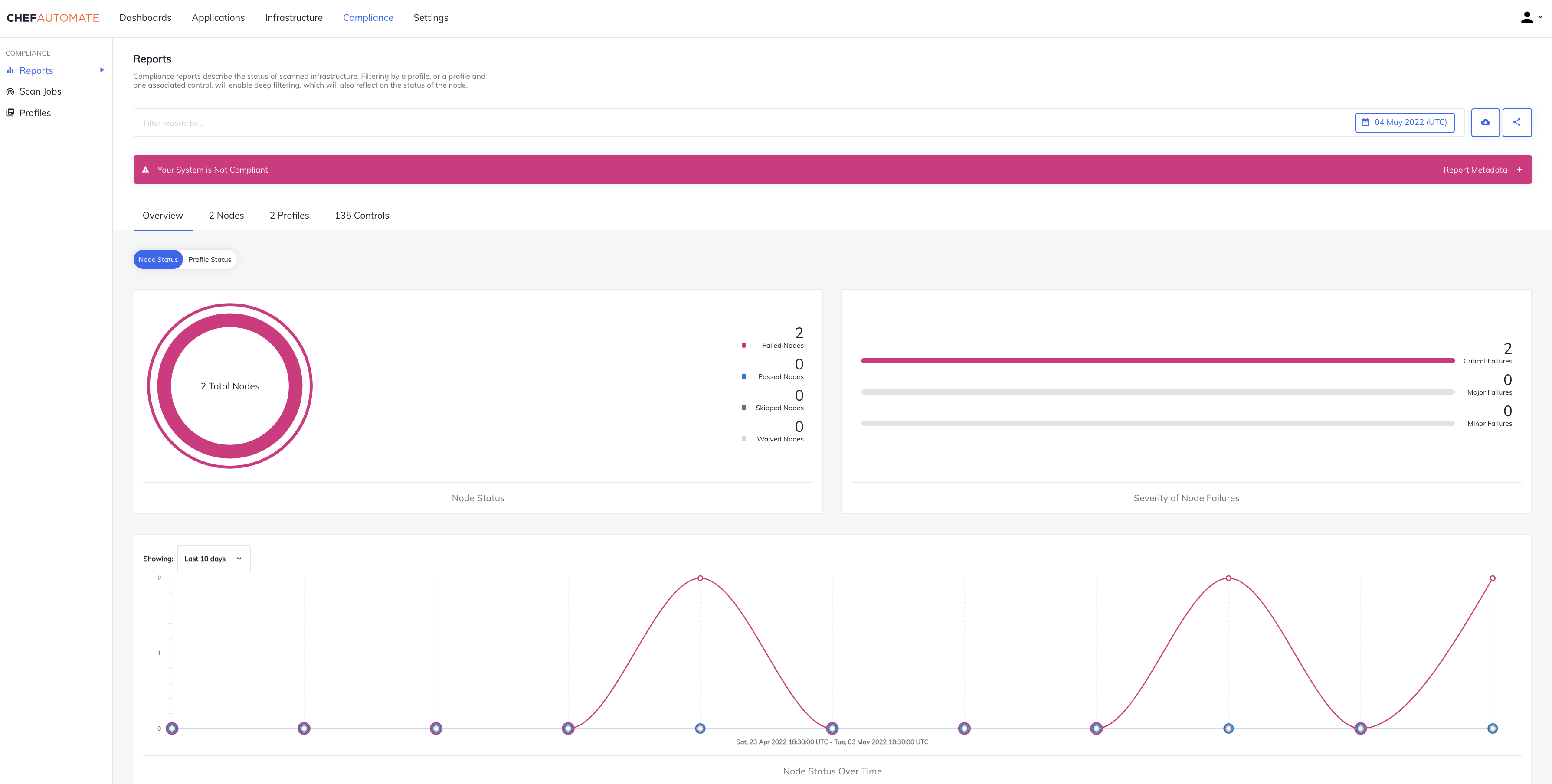
    Chef Compliance, meanwhile, is built on top of Chef InSpec, an open source framework for testing and auditing applications and infrastructure. Chef Compliance takes Chef InSpec further by including tools to automatically audit IT environments based on the specifications defined by the Center for Internet Security (CIS) and Security Technology Implementation Guide (STIG).

    Those audits can then be applied to automate the remediation process without having to write code if IT teams so choose, said Wyss. The goal is to provide DevSecOps teams with a unified language for managing security and compliance, he added.

    Finally, Chef has updated Chef Enterprise Automation Stack to include analytics to filter and update views for disconnected services and receive real-time health-check messages and status alerts. Chef has also added rapid rollback, package cleanup and layered container support, and has made it easier to manage package settings and deploy packages across multiple platforms.

    Collectively, these capabilities should make it easier for DevOps teams to reduce process friction across the entire DevOps life cycle.

    In the wake of the economic downturn brought on by the COVID-19 pandemic, interest in IT automation is on the rise. Many organizations are either freezing IT headcount or, worse, yet, reducing the size of their IT staff. At the same time, IT environment is becoming more complex, especially if most employees continue to work from home. IT teams now need a common set of tools for managing not only application deployments on servers or in the cloud but also endpoints. Ultimately, that approach should also go a long way toward reducing the total cost of IT.

    In fact, in the wake of the downturn more organizations than ever are receptive to automating IT processes. What was once viewed as potentially an existential threat to the existence of the IT staff has become the only way to manage IT at scale, at a time when cutbacks are broad-based. Organizations that don’t find a way to automate the management of IT are likely to incur significantly higher costs than those that do. Arguably, the issue is no longer what to automate and when, but rather how much and how soon, as both applications and the end users accessing them become ever more distributed.

  • Chef Adds Support for Arm Graviton 2 Processors on AWS Cloud

    Chef Adds Support for Arm Graviton 2 Processors on AWS Cloud

    Chef announced this week that its offerings for managing and testing infrastructure as code now support Graviton 2 processors from Arm on the Amazon Web Services (AWS) cloud.

    AWS this week announced the availability of an M6g instance of processors on its public cloud. Based on a 64-bit Arm Neoverse N1 architecture, the M6g processors were jointly designed by Arm and Annapurna Labs, a unit of Amazon.

    According to AWS, during a preview program platforms such as Honeycomb consumed 30% fewer instances on M6g than the widely employed AWS C5 instances. Treasure Data, a provider of data analytics software, reported a 30% performance increase while seeing a 20% cost reduction compared to similarly sized M5 instances. The Amazon ElastiCache service team found that M6g instances deliver up to 50% throughput improvement over M5 instances on Redis.

    In addition, AWS this week revealed it also plans to add compute-optimized C6g instances and memory-optimized R6g instances based on 64-bit Arm processors.

    The Arm processors in the cloud are expected to provide a foundation for building hybrid internet of things (IoT) applications spanning AWS cloud services and instances of Arm processors that are widely employed in embedded systems. Previously, AWS launched an AWS Greengrass initiative through which it encourages developers to build and deploy cloud-enabled IoT applications on edge computing platforms.

    Vikram Ghosh, vice president of business development for Chef, said DevOps teams can now automate the provisioning of Arm processors using the same Chef tools they employ to provision instances on other types of processors running on the AWS cloud.

    It won’t be long before 64-bit instances of Arm processors start showing up on other cloud computing platforms, noted Ghosh. In fact, between the rise of Arm processors alongside graphical processor units (GPUs) the types of processors readily available in the cloud have never been more diverse, which Ghosh said is driving increased demand for tools to manage infrastructure as code.

    It’s still early days as far as adoption of best DevOps practices to build and deploy IoT applications is concerned. However, the highly distributed nature of IoT applications—which in many cases will need to be updated frequently—lend themselves to being managed more efficiently using DevOps processes. In most cases, these IoT applications represent “greenfield” applications where there is no legacy process in place that potentially would create a culture clash.

    Forecasting demand for edge computing applications in the wake of the COVID-19 pandemic is difficult. However, the general expectation remains that more application code will be moving closer to the point where it is being consumed, especially when 5G wireless networking services become more available. In fact, many of those applications are being built now in anticipation of those networking services being able to connect edge computing applications with backend cloud resources.

    Once those applications are built, the next big challenge will be finding a way to secure and continuously update them. In the meantime, however, the number of edge computing applications being built today in the cloud for edge computing platforms based on Arm processors is about to increase substantially.

  • Chef Updates Tool for Managing IT Infrastructure as Code

    Chef Updates Tool for Managing IT Infrastructure as Code

    Chef today updated its tool for automating the management of IT infrastructure as part of an effort to further eliminate the need to rely on manual processes that generally fail to scale.

    John Wyss, vice president of product for Chef, said Chef Infra 16 adds a Unified Mode that provides a more streamlined means of executing policies and adds support for YAML, which means IT teams can now employ Chef to automate the management of infrastructure without having to write code.


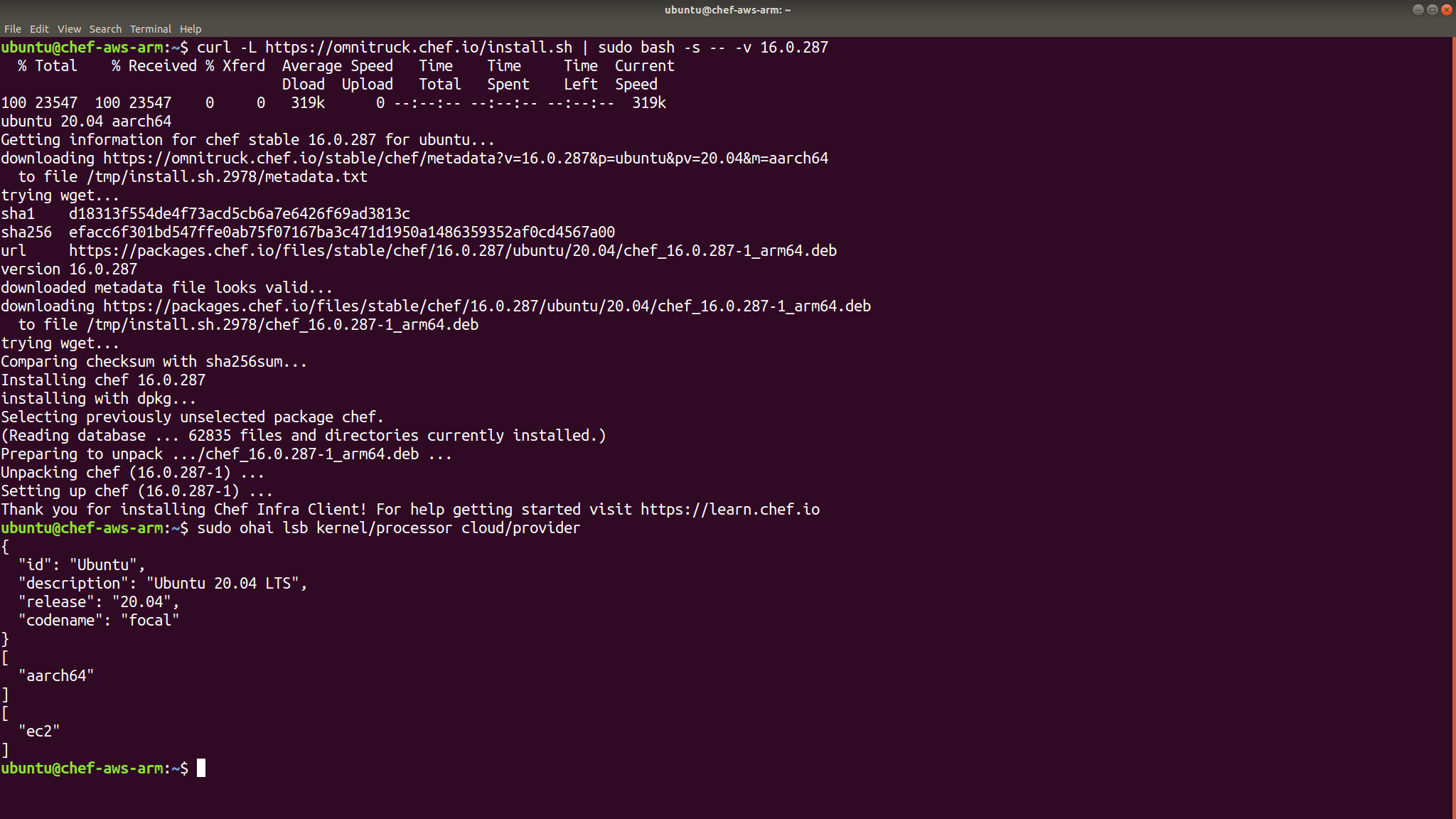
    In addition, Chef has made it easier to update legacy instances of cookbooks built using Chef and added support for Arm processors.

    Interest in automating the management of IT infrastructure is expected to accelerate considerably in the wake of the economic downturn brought on by the COVID-19 pandemic. Many IT teams are likely to be considerably reduced in size. The remaining IT staff will need to automate the management of IT at much greater degrees than ever before. Much of that infrastructure soon may also be residing in a public cloud rather than in an on-premises IT environment.

    Of course, Chef is not the only way to automate the management of IT infrastructure. However, IT professionals who master Chef typically are able to create workflows that automate a wider range of tasks.

    As an early pioneer of using code to manage infrastructure, Chef has been making a case for employing the Ruby programming language to make it easier to manage IT infrastructure at scale. While adoption of Chef largely has been limited to IT professionals who could master Ruby, Wyss noted those individuals who have mastered Chef will be in much higher demand as organizations look for IT professionals who have the skills required to manage tasks that otherwise would have required a much larger staff.

    It remains to be seen to what degree IT professionals might embrace IT automation frameworks further. Many have developed their own scripts to automate a task. The challenge IT organizations have encountered is that those scripts are usually poorly documented and generally fail to scale. Automation frameworks provide a means to consistently manage IT infrastructure at scale in a way that is easily repeatable.

    In the meantime, the debate of who inside the IT organization will automate the management of infrastructure continues to rage. Some IT organizations want developers to be responsible for the entire stack as part of an effort to reduce headcount, while other organizations prefer to have developers for a variety of reasons focus all their energies on writing application code. Regardless of who automates the management of infrastructure, the one thing that just about everyone agrees on is that legacy processes for managing IT infrastructure that typically involve many rote mundane tasks are no longer the way to work.

    In fact, increased reliance on IT automation might accelerate the adoption of best DevOps practices because the frameworks required to automate the management of the underlying infrastructure might have been put in place already by the IT operations team, noted Wyss. Otherwise, the DevOps team itself has to put those IT automation frameworks in place with or without the help of the rest of the IT operations staff, which is a current state of affairs that many DevOps teams would just assume live without.

  • Latest Chef Habitat Release Embraces On-Premises IT

    Latest Chef Habitat Release Embraces On-Premises IT

    Chef today announced that the Chef Habitat automation framework for building and deploying applications can now be used in on-premises IT environments.

    Mike Krasnow, a senior product manager for Chef, said version 1.5 of Habitat makes it possible to now store applications packages and their dependencies locally in addition to the cloud. In addition, pre-built application packages and dependencies from the Builder service can be deployed across multiple on-premises instances.

    An Applications tab in Chef Automate now shows the service groups and instances that are deployed to make it easier to understand what’s deployed where and the health of each service. Both the Habitat Builder installer and the application dashboard are integrated with Chef Automate, which uses the same installer as Chef Habitat.

    Finally, the Habitat Supervisor module is now more stable, easier to configure and manage, and provides improved support for Windows applications.

    Krasnow said Chef has seen a 300% increase in the use of the software-as-a-service (SaaS) instance of Chef Habitat in the last year. Organizations that have embraced Chef Habitat include Alaska Airlines, Rakuten, and Walmart. That rate of adoption should increase now that an on-premises edition is available, he said, including among IT organizations in highly regulated industries that are not allowed to employ cloud services. In fact, at least 70% of all application workloads are still deployed in on-premises IT environments.

    Chef Habitat appeals most to organizations that have embraced best DevOps practices to programmatically deploy applications, said Krasnow. There are rival automation platforms that make use of declarative approaches to automation that appeal more to IT generalists. However, he noted, organizations that want to empower DevOps teams tend to prefer a more programmatic approach.

    For more than a decade now Chef has been driving adoption of IT automation. However, it’s only relatively recently that organizations have been employing IT automation at scale as part of their efforts to embrace best DevOps practices. As interest in IT automation frameworks has risen, so too has the number of options. Some organizations are even employing multiple IT automation frameworks within different business units. They may one day standardize on a single IT automation framework, but many DevOps teams will simply opt to employ the IT automation framework the members of their team already know. If the members of that team in charge of IT operations don’t have a lot of programming expertise, chances are high they will opt for a more declarative approach. DevOps teams that have developers who deploy applications on their own are likely to prefer a more programmatic approach.

    Regardless of the platform chosen, it’s clear the days of manually deploying applications using custom scripts are coming to an end. IT organizations now require an industrial approach to managing IT as a factory. The biggest challenge achieving that goal is no longer the technology but rather the culture of the IT organization.

    — Mike Vizard

  • ICE Controversy May Lead to IT Contract Chaos

    ICE Controversy May Lead to IT Contract Chaos

    For as long as most IT professionals remember, the only political issues any IT organization considered were largely internal. However, that appears to have changed in 2019 as more IT professionals begin to question whether they want to do business with IT vendors that support an organization they staunchly oppose on moral grounds.

    This week that very drama is playing out in the form of a reversal after Chef CEO Barry Christ announced the provider of IT automation software would no longer provide support for its software to the Immigration and Customs Enforcement (ICE) agency, which is enforcing immigration policies enacted by the Trump administration.

    The issue came to a head when Seth Vargo, a contributor to the open source Chef repository, decided to remove what many consider to be a critical module of code he contributed to the community to protest a support contract Chef had in place with ICE. Late last week, Christ said Chef would continue to support ICE; however, bowing to what he described as internal employee pressure, he reversed that decision earlier this week.

    It’s not clear what impact this move will have on ICE. After all, there are many service providers that ICE could turn to for support. The decision, however, may open a Pandora’s Box, given all the stances IT professionals might take across the political spectrum, said Judith Hurwitz, principal analyst for the IT consulting firm Hurwitz & Associates.

    Whether it’s gun control or conflicts in the Middle East, the potential for IT chaos is high if organizations have to consider a range of potential blowback if they have to consider how employees and potential customers might react, Hurwitz noted.

    In many cases, software companies make their software available online, which makes it exceedingly difficult for them to know who is using it when it was paid for using a credit card, she said. In other cases, no one can prevent anyone from downloading software that has been made available via an open source repository.

    “I’m not sure you can sell software based on who is going to use it,” Hurwitz said. “It’s going to get complicated.”

    The controversy surrounding ICE is likely to escalate further. Last August, protesters disrupted an Amazon Web Services (AWS) to vocally express their displeasure with the company’s decision to provide cloud services to ICE. Last year, Salesforce had to contend with an internal employee revolt over a contract the company has signed with U.S. Customs and Border Control Protection. Salesforce wound up donating $1 million to help families affected by U.S. immigration policies. Chef CEO Christ, in his memo, appears to be following a similar course in involving an ICE contract valued at $95,000 that has been in place since 2015.

    It’s not clear to what degree political passions will influence future IT contracts, but it is clear that organizations need to proceed with care. There are likely to be just as many individuals within an organization on one side of an issue as another. Most organizations these days can’t afford to lose key members of the IT staff over moral and political arguments. The trouble is, fewer IT people seem inclined to agree or disagree in the name of maintaining corporate neutrality.

    — Mike Vizard