Tag: acquisition

  • CloudBolt Acquires SovLabs to Advance Hybrid Cloud Strategy

    CloudBolt Acquires SovLabs to Advance Hybrid Cloud Strategy

    CloudBolt Software this week announced it has acquired SovLabs, a provider of a framework that extends the reach of automation frameworks from VMware.

    Company CEO Jeff Kukowski said that as a provider of a cloud management platform, the SovLabs framework will extend CloudBolt’s reach deeper into VMware environments that have already invested in automation tools from VMware.

    As IT environments become more widely distributed across a range of platforms, demand for a platform that enables IT teams to centralize the management of multiple cloud computing environments has increased, Kukowski said. The addition of SovLabs to the CloudBolt portfolio will make it easier to bridge the divide between cloud computing platforms and enterprise on-premises IT environments that have standardized on VMware.

    CloudBolt has been making a consistent effort to enable IT teams to invoke its cloud management framework via whichever IT automation framework they have adopted, including tools such as Terraform. The goal is to reduce the need for IT organizations to rely on their own custom-built code to achieve that goal, said Kukowski.

    In general, many IT organizations are now investing more heavily in centralizing the management of multiple IT environments as part of an effort to reduce the total cost of IT in the wake of the economic downturn brought on by the COVID-19 pandemic. That shift is accelerating a transition to hybrid cloud computing models that require increased reliance on IT automation.

    The challenge many organizations face is enterprise IT environments tend to have many islands of IT automation in place. CloudBolt is pursuing a strategy that enables IT teams to extend those islands of automation or access CloudBolt directly to manage hybrid cloud computing environments.

    The CloudBolt approach offers IT teams an alternative to relying on a single platform vendor to achieve hybrid cloud computing. VMware, for example, has been making a case for deploying VMware vSphere on multiple clouds versus relying on the virtual machines provided by a cloud service provider. Most of the large cloud service providers are simultaneously pushing to deploy instances of their platforms in on-premises IT environments that can be managed as an extension of a public cloud.

    It’s too early to say how this titanic battle for control over hybrid cloud computing will play out. CloudBolt, however, is betting that rather than getting locked into a single platform, many IT organizations will prefer to run toward some neutral ground to deploy a control plane capable of managing multiple clouds and on-premises IT environments.

    Of course, CloudBolt is not the only provider of a cloud management platform making this case. Competition between providers of hybrid cloud management platforms is heating up as interest in hybrid cloud computing starts to move beyond the theoretical. Regardless of the path forward chosen, history would suggest that most IT organizations in the months ahead will be seeking more control over their IT environments.

  • Cisco Acquires ThousandEyes to Advance Network Visibility

    Cisco Acquires ThousandEyes to Advance Network Visibility

    Cisco Systems this week announced its intent to acquire ThousandEyes, provider of an internet monitoring platform that Cisco plans to leverage to embed ThousandEyes agent software into a range of devices including network routers and switches, security tools and application performance management (APM) software from AppDynamics.

    As part of that effort, ThousandEyes will become the foundation of a newly formed Networking Services business unit in Cisco led by ThousandEyes CEO Mohit Lad. The terms of the acquisition were not disclosed.

    Todd Nightingale, senior vice president and general manager for enterprise, networking and cloud at Cisco, said the goal is to employ the data collected by ThousandEyes agent software to drive intent-based automation across the entire IT environment.

    ThousandEyes provides a networking intelligence service by deploying its software on points of presence across the internet. The data collected is then fed back to data centers operated by ThousandEyes to help organizations understand why, for example, a particular software-as-a-service (SaaS) application is performing suboptimally in one geographic region versus another.

    Nightingale said with multi-cloud computing now becoming a reality in the enterprise, the need for that level of insight into what are becoming highly distributed computing environments has dramatically increased.

    Once the deal closes, it may take Cisco a while before it can embed agent software from ThousandEyes across its portfolio. However, DevOps teams that deploy applications in IT environments with Cisco networking equipment should be able to troubleshoot applications more easily once the agent software from ThousandEyes is embedded in Cisco networking hardware and software.

    At the same time, Cisco will be feeding that data into AppDynamics, the application performance management (APM) platform it acquired in 2017. The AppDymanics platform is employed mainly by cloud operations teams to optimize the performance of applications deployed on various cloud computing platforms, noted Nightingale.

    Lad said by becoming part of Cisco, ThousandEyes will become the central nervous system through which organizations will be driving user experiences.

    Less clear at the moment is to what degree open source networking software initiatives may have on Cisco’s long-term ambitions. Open source agent software is now being widely deployed to instrument applications that in turn feed metrics back to a wide variety of platforms, including AppDynamics. It’s not only a matter of time before various open source initiatives extend agent software to the networking level.

    Regardless of that approach, DevOps teams should be able to count on attaining deeper insights into how network congestion is impacting application performance. As that analytics data becomes more accessible, it should become more feasible to dynamically reroute application traffic to maintain service levels.

    In the meantime, network operations and DevOps teams will continue to move closer together. The NetOps team may not necessarily be completed folded into DevOps. However, as networking becomes more programmable, it’s apparent DevOps teams will be exercising more programmatic control over networking services. The challenge and the opportunity now are to find a way to bring those disparate cultures together to minimize the inevitable friction that will ensue.

  • Atlassian Acquires Halp to Gain Help Desk Based on Slack

    Atlassian Acquires Halp to Gain Help Desk Based on Slack

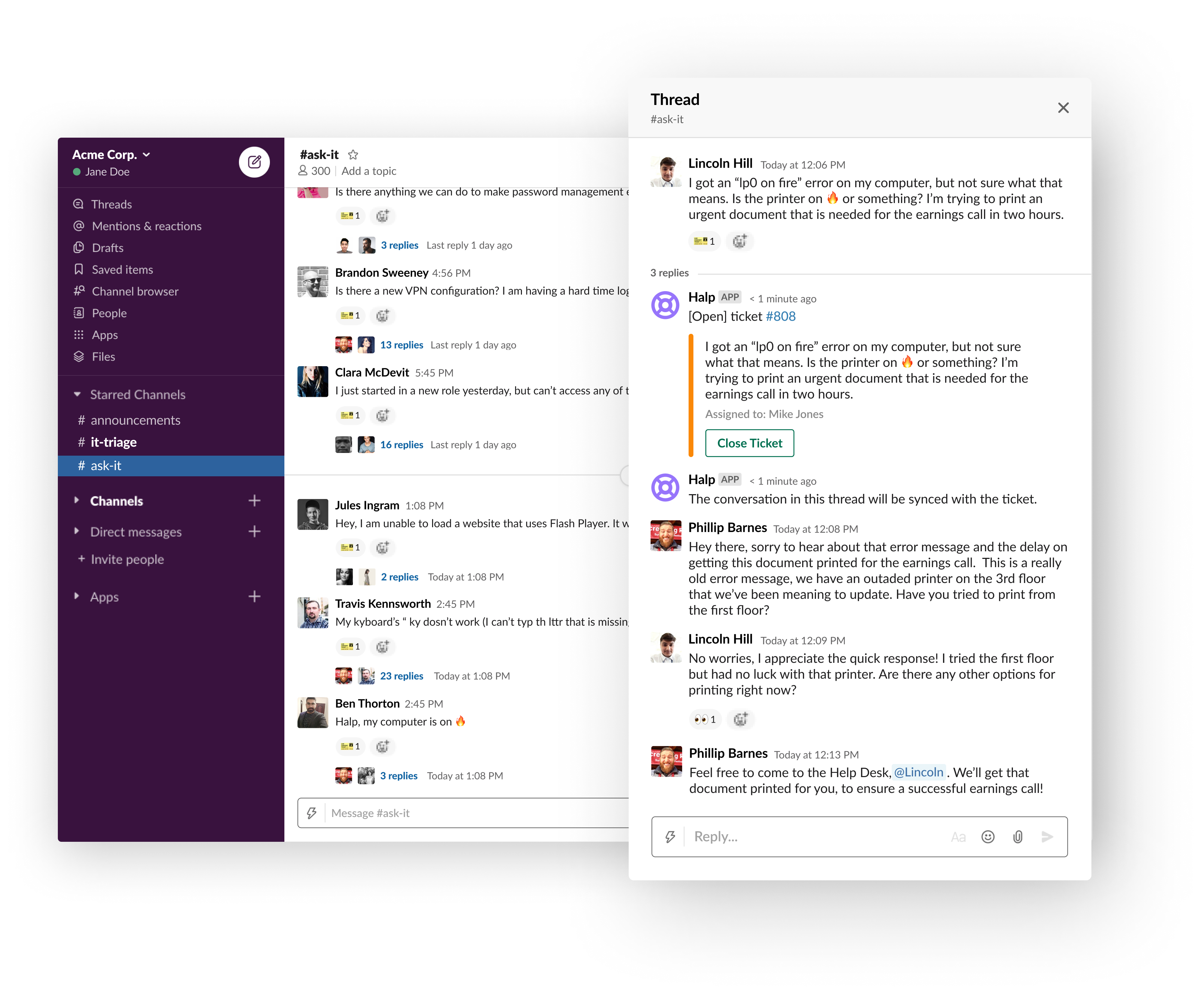
    Atlassian this week announced it has acquired Halp, a provider of a help desk platform that employs Slack as its user interface.

    Steve Goldsmith, head of product integrations at Atlassian, said Halp will provide organizations with a way to manage lightweight processes via an interface that is already commonly used within many organizations. The goal is to provide a level of integration between Halp and the JIRA Service Desk platform from Atlassian to handle more complex requests, he said.

    The Halp platform has already been integrated with Confluence, a knowledge base platform from Atlassian that enables help desk staff to share best practices for resolving known issues. Deeper integrations with JIRA and Confluence will be forthcoming, added Goldsmith.

    At the same time, Atlassian is working on tighter integration between its service desk platform and Microsoft Teams, which has emerged as a popular alternative to Slack, he noted.

    Halp CEO Fletcher Richman said that approach has gained traction because the biggest challenge when it comes to help desks is making it as easy as possible for an employee to generate a help ticket. Halp addresses that issue by enabling end users to simply drag and drop on an emoji to generate a help desk ticket.

    The help desk staff is then provided a web interface through which they can remotely manage tickets and respond to requests via Slack. That approach eliminates the need for the help desk staff to be physically located in an office or employ a virtual private network (VPN) to access a help desk platform running on a local area network, he said.

    Richman noted too often employees wind up supporting each other because the process of generating a ticket is too complex. At a time when many employees are working from home to help combat the COVID-19 pandemic, it’s not really possible for employees to currently provide that mutual support.

    It’s not really clear to how many employees might ever be heading back into an office at this point, so Halp also provides a way for remote employees to more easily remain productive, he added.

    Slack and JIRA, of course, are already de facto standards among many DevOps teams. Halp should provide developers with a means to instantly resolve a wide range of low-level issues in near real-time by generating a help desk ticket via Slack.

    Richman noted that for any IT service management (ITSM) platform to be successful, it needs to meet users where they are. If the platform is too complex or intimidating, users will look to their fellow employees for help first. Before long, however, all the mutual support saps productivity. By making help just a simple Slack message away, many more issues will be resolved by help desk personnel who already know the right answer, he said.

    It’s too early to say how many more help desk tickets might be generated because of Slack. However, in the wake of the rush to remotely enable the entire enterprise, the need for an easier way to provide support is now more apparent than ever.

  • NVIDIA Aims to Drive Disaggregation Following Cumulus Networks Buy

    NVIDIA Aims to Drive Disaggregation Following Cumulus Networks Buy

    Adoption of open source networking may be about to get a boost following the forthcoming acquisition of Cumulus Network by NVIDIA.

    The acquisition of the provider of a network operating system (NOS) based on Linux follows an earlier move by NVIDIA to acquire Mellanox, a provider of networking and storage systems.

    Kevin Deierling, senior vice president of marketing for the NVIDIA networking business unit, said Cumulus Networks adds a programmable NOS to the provider of graphical processor units (GPUs) that should find greater adoption as more organizations disaggregate the acquisition of network software and hardware. That trend toward disaggregation is especially strong in data centers and cloud computing environments that are building artificial intelligence (AI) applications based on NVIDIA GPUs, he said.

    As the worlds of DevOps and network operations (NetOps) continue to converge, NVIDIA is betting interest in a programmable NOS that is designed to scale will increase as well, added Deierling.

    Cumulus Networks has been trying to drive the adoption of Cumulus Linux since 2010 with mixed success. Cumulus Linux runs on more than 100 hardware platforms, including switches from Mellanox. While cloud service providers and some high-performance computing (HPC) environments have disaggregated networking software and hardware, most enterprise IT organizations continue to buy switches from Cisco Systems and Juniper Networks that come integrated with a NOS.

    Cumulus Networks CEO Josh Leslie said in time it’s apparent more enterprise IT organizations will be moving toward disaggregation of network software and hardware, especially as more application workloads move into the cloud. A NOS that is not tied to proprietary ASIC technologies embedded in a switch from Cisco or Juniper Networks makes it feasible for IT organizations to benefit from Moore’s Law as each new x86 processor generation is added, he noted.

    At the same time, he added, the tools for programming a NOS based on Linux are a lot more familiar and accessible to developers than tools designed for proprietary NOS platforms.

    It’s too early to say to what degree DevOps teams are going to need programmable access to shared networking resources. Ideally, developers will want more programmatic control over network resources as applications become more distributed than ever. That approach would enable them to also provision network resources to applications via application programming interfaces (APIs) without having to wait for network administrators to provision them manually.

    However, network bandwidth is a shared resource inside many organizations, and the concern is that one application will consume all the available network bandwidth at the expense of every other application on the network. As such, network administrators have been embracing automation and self-service portals to make network resources more readily accessible to developers without ceding total control of the network.

    Regardless of the approach, networking is becoming more agile. NetOps and DevOps teams may not necessarily converge; however, as networking becomes another class of infrastructure that can be treated as code, it’s clear the days when networking services are largely managed in isolation from the rest of the IT environment are coming to a close.

  • Digital.ai: The Companies Formerly Known As XebiaLabs and CollabNet Plus

    Digital.ai: The Companies Formerly Known As XebiaLabs and CollabNet Plus

    Another shoe has dropped in the continuing story of TPG Capital‘s foray into DevOps. The company formed by the merger of XebiaLabs and CollabNet VersionOne is now Digital.ai. Additionally, the company has acquired Arxan, a leader in application protection.

    Digital.ai logo

    I had a chance to catch up with Digital.ai’s CEO Ashok Reddy and Arxan COO Mark Lorion, who will be Digital.ai’s COO of Platform going forward. The video of our discussion which is also available on TechStrong.TV, appears below.

    What They Said

    Reddy made it very clear that Digital.ai is not content with simply adding this AppSec company to the mix. It is actively involved in due diligence operations on several other acquisitions. Reddy and the TPG team feel that the current COVID-19 situation affords those with cash to pick up some bargains. That may have been the case with Arxan, which was owned by private equity firm TA Associates, which acquired Arxan in 2013 for $132 million. TA may have decided it was time to get off the merry-go-round, given the unsettled state of things right now.

    In any event, TA’s loss is Digital.ai’s gain. Arxan adds some much-needed security muscle and a blue-chip bank customer list. But, of course, the real play here is building out the end-to-end DevOps company that will compete with GitLab, GitHub, CloudBees, JFrog and others. We detailed this market in an article when the original merger was announced.

    My take is that indeed Digital.ai is not a complete company just yet. It may not even be done in the DevSecOps space, as Arxan is not your typical DevSecOps technology. It may have been more of an opportunistic acquisition.

    Also, in terms of executive team, Reddy has been quietly assembling a team made up of some of the best people he worked with at previous stints at IBM, CA/Broadcom and the executives from the acquired companies.

    Stay tuned for more on Digital.ai’s continued evolution in the months to come.

    — Alan Shimel

  • DevOps Deeper Dive: Mainframe Fallout from BMC’s Compuware Buy

    DevOps Deeper Dive: Mainframe Fallout from BMC’s Compuware Buy

    The acquisition of Compuware this week by rival BMC Software signals that the rate at which mainframe environments are being modernized might not be occurring fast enough to support a vibrant third-party tools provider ecosystem.

    Both BMC and Compuware were sold to private equity firms in 2018 and 2014, respectively. Thoma Bravo, which acquired Compuware, is now selling the company to KKR. BMC was acquired by KKR in 2018 from Bain Capital and Golden Gate Capital for $8.5 billion. BMC was originally taken private by investors in 2013.

    Other rivals in the mainframe category include CA Technologies, which was acquired for $18.9 billion by Broadcom last year, and Micro Focus, which includes software assets originally developed by Hewlett Packard Enterprise.

    BMC executives declined to comment on the merger and terms of the deal for Compuware were not disclosed.

    All these machinations by private equity investors doesn’t do much to inspire confidence among end customers, said Judith Hurwitz, president and CEO of Judith Hurwitz & Associates, a market research and IT consulting firm.

    “Private equity firms always have to eventually look for an exit,” she said. “In this case, one investor wanted out.”

    That leaves IT leaders in the unenviable position of not knowing whether the application development platform on which they have standardized might be around for the long haul, said Hurwitz.

    The challenge faced by third-party providers of application development tools in the mainframe space is largely two-fold. While the number of workloads running on mainframes continues to increase thanks mainly to availability of Linux on the platform, the number of organizations that have a mainframe has declined. The low end of the mainframe market has been eroded by high-end distributed systems. In addition, many applications that previously ran on a mainframe have been shifted into a public cloud.

    The second challenge these providers face is IBM, which is now a much more formidable competitor in the mainframe tooling sector. IBM has launched a series of initiatives to provide tools to modernize mainframe platforms using best DevOps practices as part of a larger digital business transformation initiative. However, regardless of the relative strengths of IBM’s DevOps portfolio, there will always be a significant base of mainframe shops that will prefer tools from IBM over those provided by a third-party rival.

    In a prepared statement shared via email, Barry Baker, vice president of IBM Z Software, said:

    Over the last 18 months, we’ve come a long way to expand the ecosystem for mainframe skills by bringing new tools to IBM Z and LinuxONE. Our goal remains unchanged – to make development on Z a common experience for all developers across the tech stack – not just mainframe developers. We’ve made significant progress toward this goal with the adoption of DevOps and industry-standard tools like Git and Jenkins on the platform, along with our own offerings including IBM Z Open Development and IBM Z Unit Testing. We took another step with Red Hat OpenShift on IBM Z, further enabling cloud developers to deploy z/OS applications using OpenShift without any special Z skills required.

    We continue to invest and over the next few months we’ll be unveiling even more tools across three focus areas: developer experience, automation and operations to truly deliver on our promise for a cloud native experience – and encourage our clients to watch this space.”

    Of course, all of IBM’s tooling rivals in the mainframe space have launched similar DevOps initiatives. The challenge they all face is the rate at which mainframe organizations are embracing DevOps may not be fast enough to sustain a vibrant third-party ecosystem. Not surprisingly, BMC has also been extending its reach to encompass distributed computing platforms. Competition among tooling vendors on those platforms is already fierce.

    There can be no doubt mainframes will continue to play a crucial role in IT. Most large enterprises are still dependent on mainframes to run some of their most mission-critical transaction processing applications. Less clear is to what degree those organizations intend to modernize those applications beyond simply making application programming interfaces (APIs) available for legacy applications. IBM, along with every provider of development tools for the mainframe, has been making a case of deploying new applications running on Linux on a mainframe because the total cost is lower than trying to connect those applications running on a distributed system to a legacy mainframe application.

    A recent global survey conducted by Vanson Bourne on behalf of Micro Focus suggests that argument is starting to resonate. Nearly two-thirds (63%) said some form of modernization was favored over the replacing and retiring of older COBOL-based systems in 2020.

    Regardless of how much economic sense that argument makes, however, the rate at which mainframe applications are being modernized will, at best, continue to be an extended process.

    — Mike Vizard

  • The Battle for End-to-End DevOps Champion Is On

    The Battle for End-to-End DevOps Champion Is On

    This past week’s CollabNet/Xebia Labs merger brings another challenger to the “end-to-end” DevOps market. There is a huge prize waiting for the winner. But which of the challengers has the right stuff to win this battle? Will any of the current pack even be around at the end of the day? Who will be the winners and losers? What will it take to win?

    The eventual dominant player in the end-t0-end DevOps provider market will be rewarded with what should be a great pot of gold. It is this promise of hegemony over DevOps and the rewards it commands that have so many chasing the prize.  CloudBees, JFrog and GitLab are some of the DevOps darlings in this market. Chef has a similar game plan, and now the new entity stemming from the CollabNet/Xebia Labs deal will also be a player. I believe GitHub/Microsoft will make a play in this market, too.

    At this point in time, who knows which company will be triumphant and which will be regulated to the trash heap of also-rans? One thing I learned from my friend Brad Feld is that if you are not in the top three in your category, get out. In the end-to-end DevOps or complete DevOps market, there will be some winners and there will be some losers.

    Sanjeev Sharma, principal analyst for ASG, had this to say about the market:
    As engineers strive to streamline their application delivery pipelines to be able to achieve true continuous delivery, a massive stumbling block becomes an end-to-end delivery pipeline with tools that are seamlessly integrated. At one end of this spectrum we have organizations that acquire best-of-breed tools and glue them together themselves, owning the resulting plumbing. At the other end there are organizations that want tools from a single vendor that ‘just work,’ integrated out of the box. The pendulum today has swung toward the single vendor, integrated out-of-the-box side. The growth of platform vendors like GitLab and the consolidation of CI/CD tool vendors with larger ones is the result of this swing.

    Right now, while several contenders have a great vision, none of them really have a bonafide end-to-end platform or suite with functionality all the way across. There are also other contenders that I have not mentioned, but here is my take on what is out there that I see:

                1. GitLab – The company recently won our DevOps Dozen DevOps solution provider of the year and it was well-deserved. Sid Sijbrandij and team have done a great job laying out a bold, ambitious vision of GitLab’s eventual full functionality. On top of this, they add almost 200 new features a month, every month. The company is growing by leaps and bounds, with almost 1,200 employees, and has raised hundreds of millions of dollars with a valuation of $2.75 billion. GitLab has the resources to go deep in this market and has built some tremendous momentum. On the other hand, the fact is today GitLab customers primarily use the Git repo functionality and the CI module. The other modules are still being built out to be market-competitive, including some good work in security. I suspect it may take a few acquisitions to give the company market-competitive solutions in some of the other areas it is building out. At the end of the day, you have to make GitLab a clear favorite to be one of the survivors/winners, especially with such a high valuation.
                2. CloudBees – The Jenkins train has pulled CloudBees to the top of the mountain, but to succeed in this race, the company is going to need more than that to stay there. Jenkins is a bit long in the tooth and Kubernetes has been a game-changer. Jenkins itself has been turned over to the Continuous Delivery Foundation (Linux Foundation) as has JenkinsX, which works very well in K8s environments. But CloudBees has shown it is more than Jenkins and made some key acquisitions including Electric Cloud, which have given the company great enterprise customers and added to its talent pool. Other, smaller acquisitions have given CloudBees some fresh new functionality such as feature flags, for instance, which are upgrading and refreshing the mix. At the end of the day, though, CloudBees’ potential in this market is based on its ability to execute on its vision of a dual-product lineup that features both software delivery management (SDM), which they have already announced, and upgrading their existing software, which helps people with their CI/CD pipelines. Having both working together could give CloudBees an unbeatable place in the market. This vision may not be as ambitious or broad as GitLab’s but could be more attainable, more quickly.
                3. JFrog – Shlomi Ben Haim and his “Frogs” have built a DevOps powerhouse by understanding developers’ needs and wants and using open source as a market-penetration weapon as well as or better than anyone else. The company’s community/customers are fanatical in their support and the “change the world with liquid software” culture it has built is contagious.
                  When you consider JFrog started with a repository for artifacts and what it built on top of it is pretty amazing. The company continues to add new repositories for many of the popular languages in use as well. The downside for JFrog is that it just added its JFrog pipelines via acquisition and is still working to make it a best-in-class solution. XRay is JFrog’s security product for testing artifacts and code prior to deployment, and I think it will probably make another acquisition to bolster its security chops. The Frogs have the energy and will to win this thing, but they have a lot of work ahead of them to compete with an end-to-end or complete DevOps vision. Rumor is a new version of the platform is on the way; we will have to see what this brings. The company may wind up being bought for billions by a larger player (GCP, Microsoft), which could make JFrog a winner in any event.
                4. GitHub – GitHub is just a repository, you say? Nonsense. Make no mistake about it, GitHub is going to be a player in this race. With the deep pockets and ambition to continue being a developer powerhouse at Microsoft, the company is determined to make sure GitHub is a complete DevOps solution. GitHub is adding functionality every day and has an amazing array of tools that plug into and extend GitHub. As the de facto standard—with something like 30 million developer accounts already and Microsoft’s Azure and war chest—don’t bet against GitHub being the last man or company standing here.
                5. CollabNet VersionOne/Xebia Labs entity. So, this is the new kid on the block—so new that we don’t even know its name yet. This merger was orchestrated by the private equity group TPG, which bought CollabNet last year and pledged $500 million to use to acquire and grow the CollabNet business into a complete DevOps platform. That $500 million probably represented a lot more than the firm paid for CollabNet, which was a 15 years-or-so-old company that had some good tools in the agile market. Since its merger with VersionOne, it has released a value stream management solution (it may not have been called that, but that’s what it is) and tried to market the whole thing as a suite. Obviously there was not a smooth path between the companies and some parts were missing; the street had the TPG transaction at less than $100 million. Some of its holes are getting filled with the Xebia Labs merger/acquisition. Rumor on the street was that TPG paid something like $226 million for Xebia—not a petty amount, but remember, Xebia raised about $100 million a while back. Again, the rumor is that a good chunk of that money was used to “buy” Xebia out of its ownership by the Dutch Xebia group. After paying that off, the current Xebia ownership used the remaining funds to try and keep Xebia competitive. You can do the math from there. In recent times we haven’t heard a lot from Xebia. It was assumed the company would either raise more money or look for a merger to gain enough girth to compete in this newly energized complete DevOps market. This deal seems to fit the bill.A real plus for this new entity is the addition of Ashok Reddy as CEO. Reddy is a seasoned player with large public company executive experience in the DevOps space, as well as GM of enterprise divisions. However, it is going to take more money and more functionality to create a market competitive entity in this space. There has to be a security module, for instance. The issue is with the inflated prices that companies in this space are garnering—what can be bought with the dollars left or what can be built holistically? Will TPG perhaps put more money on the table?  It’s too early to count this new player out, but as the new kid on the block, it has to play catchup against some of the other players.

    These are just five of the players. As I mentioned, Chef, one of the original DevOps darlings, also wants to play in the complete DevOps space. There are others lined up behind Chef, but we have to end this article somewhere. It is going to be an interesting few months as we see the winners in this space emerge.

    In the meantime, if you like this kind of analysis—no-holds-barred, tell it like it is, open and free—check out Accelerated Strategies Group at https://accelst.com. ASG is the new analyst firm MediaOps is working with, and it is doing to analysis what open source is doing to software. Knowledge wants to be free.

    — Alan Shimel

  • LogicMonitor Acquires Unomaly to Advance AIOps

    LogicMonitor Acquires Unomaly to Advance AIOps

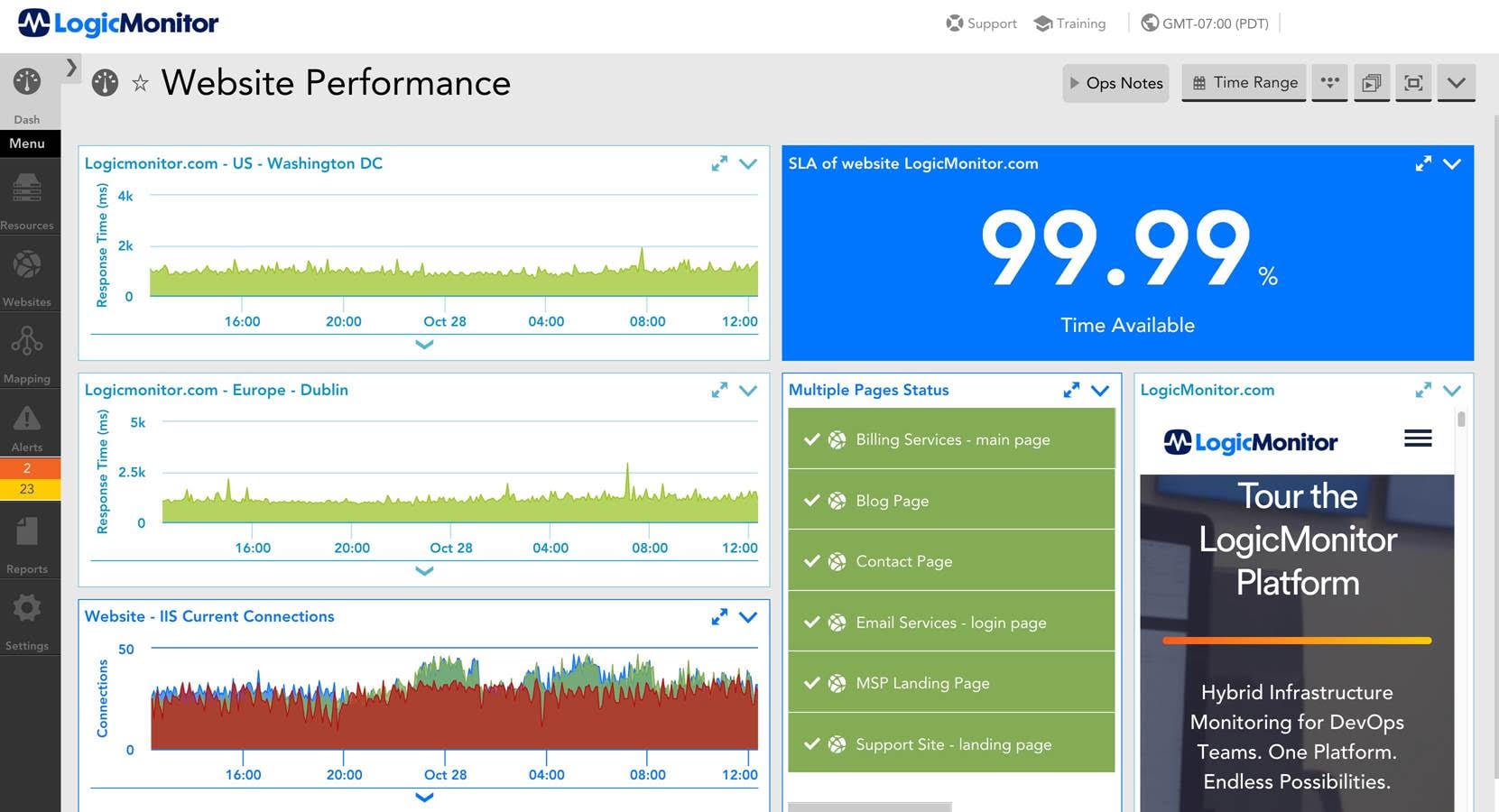
    LogicMonitor this week revealed it has acquired Unomaly, a provider of tools infused with machine learning algorithms that make it easier to analyze large volumes of log data.

    Tej Redkar, chief product officer for LogicMonitor, said the acquisition of Unomaly will advance a previously announced AIOps initiative through which LogicMonitor will embed advanced analytics and automation capabilities into its core IT monitoring platform. Rather than requiring DevOps teams to acquire a separate platform to take advantage of AIOps, LogicMonitor contends AIOps is simply an element of the next logical iteration of an IT monitoring platform.

    Unomaly will help LogicMonitor achieve that goal by identifying patterns in streaming log data that are indicative of anomalies that warrant further investigation, said Redkar. Unomaly works by first establishing a baseline for the IT environment. It then records a profile for each log event that includes the event’s structure, sources, frequency patterns and intervals. Similar profiles are then merged into one aggregated profile, with dynamic parameters to reduce the amount of data that needs to be analyzed by several orders of magnitude. If an anomalous event occurs within a rolling 60-second window on a single log source, Unomaly will bring those events together to identify and score a situation based on the type and number of anomalies.
    Redkar noted this approach not only provides more context about the events but it also greatly reduces the amount of log data that needs to be stored. Unomaly is also designed to accept data in any format.

    As IT becomes increasingly more complex, organizations of all sizes need more observability. However, because all the dependencies within the IT environment are becoming too complex to track manually, IT organizations will need to rely more on machine and deep learning algorithms to observe the IT environment.

    Naturally, that increased reliance on algorithms will alter the role of IT operations teams. Most IT operations teams will find themselves supervising algorithms that are surfacing issues and making recommendations, said Redkar. Rather than eliminating the need for IT operations expertise, AIOps will be employed mainly to manage IT environments operating at a significantly higher scale, he noted.

    It will take some time for this transition to play out as issues such as the explainability of AI models are worked out. Some of the lower-level functions within an IT operations environment undoubtedly will be eliminated, so job roles will change. However, many of those functions will be rote tasks that many IT professionals don’t especially like to perform.

    IT vendors are, of course, involved in something akin to an algorithms arms race to infuse AI into their management platforms. In some cases, they will develop these capabilities themselves. In other cases, they will acquire startups to gain access to AIOps platforms. Most IT vendors will be mixing and matching a variety of AI technologies they developed themselves and acquired. Regardless of the path pursued, it’s no longer a question of whether AIOps will be applied to managing IT, but rather when.

    — Mike Vizard

  • Instana Rolls Up 3 Acquisitions to Extend APM Reach

    Instana Rolls Up 3 Acquisitions to Extend APM Reach

    Instana revealed today it has acquired three technologies that will extend the capabilities of an application performance management (APM) platform optimized for microservices-based applications.

    Capabilities being added to the Instana platform include StackImpact, a polyglot production application profiler developed by StackImpact GmbH that can be applied to applications built in multiple languages; a high-frequency metrics analysis tool developed by BeeInstant; and a tool for analyzing complex system signals developed by JINSPIRED B.V.

    Instana has acquired StackImpact and BeeInstant outright and acquired only the software JINSPIRED B.V developed.

    Instana APM

    Instana CEO Mirko Novakovic said that as organizations embrace microservices typically built using containers that get deployed on Kubernetes clusters, IT organizations are discovering their existing APM platforms are not able to monitor and observe microservices-based applications to the level of depth required.

    The Instana APM platform achieves that goal by automatically deploying monitoring sensors for each part of the application technology stack. Those sensors trace all application requests without requiring any configuration or application restarts. Instana also detects changes in the application environment that allow it to adjust models and visualizations in real-time.

    As IT organizations embrace the Instana APM platform to manage microservices-based applications, Novakovic said they discover they can employ Instana also to monitor legacy monolithic applications, enabling them to standardize on one APM platform. Instana currently claims more than 300 customers, most of which are using its APM to monitor multiple types of application workloads, he said.

    In general, Novakovic said it’s becoming easier for organizations to swap out APM platforms because the proprietary agents that many legacy APM platforms rely on are being replaced by open source initiatives that make it possible to gather metrics from multiple platforms. In fact, as APM platforms continue to evolve, Novakovic said it’s apparent that tools for tracing, tracking metrics and log analytics are all starting to converge.

    Of course, the biggest challenge Instana and other providers of APM platforms face today is that many developers are relying on open source Prometheus software developed under the auspices of the Cloud Native Computing Foundation (CNCF). Instana and other APM platform providers are making a case instead for commercial platforms that provide richer visualizations and are easier to employ than Prometheus.

    It’s still too early to say how the APM platform wars might play out. However, all the dependencies between microservices make APM platforms a requirement today. Historically, many IT organizations have opted to make use of APM platforms only for their most mission-critical monolithic applications because of the costs involved. Many organizations going forward are likely to try to strike a balance between APM costs and the need to monitor application services more broadly.

    Naturally, different DevOps teams within an organization may wind up preferring to employ different APM platforms. However, the pressure to standardize on a single APM platform to contain costs will only increase over time.

    — Mike Vizard

  • SolarWinds Acquires VividCortex for Database Monitoring

    SolarWinds Acquires VividCortex for Database Monitoring

    SolarWinds announced this week it is extending its portfolio of DevOps tools with the acquisition of VividCortex, a provider of tools for monitoring a wide range of databases that is delivered as a set of software-as-a-service (SaaS) applications.

    Company president and CEO Kevin Thompson said the acquisition of VividCortex adds a database monitoring platform capable of monitoring so-called cloud-native databases such as MySQL, PostgreSQL, Amazon Aurora, MongoDB and Redis, complementing the company’s existing tools for monitoring databases to support legacy applications.

    In addition, Thompson noted the VividCortex tools are highly extensible; support for a new database can be added within 90 days.

    VividCortex claims to have nearly 300 customers today, including Etsy, GitHub, SendGrid, DraftKings and Yelp. SolarWinds, meanwhile, boasts more than 300,000 customers.

    Thompson said the number of databases organizations need to monitor is increasing as open source alternatives gain ground on proprietary databases. The result is a hybrid computing environment that requires tools to manage centrally since it’s not practical to try and master each set of monitoring tools provided for each database platform, added Thompson.

    SolarWinds VividCortex

    IT organizations also want to be able to compare and contrast the cost of deploying workloads on databases running in different environments, he added. Many IT organizations have already discovered that the cost of deploying certain types of workloads on public clouds is more expensive than anticipated.

    Thompson said it’s not really feasible to observe an application without being able to monitor the underlying database on which that application depends. In this respect, VividCortex adds a critical capability for DevOps teams, he said. SolarWinds intends to integrate VividCortex with a growing portfolio of DevOps tools that already includes a range of application performance management (APM) and infrastructure management tools. As is always the case, Thompson said IT organizations should also expect SolarWinds to drive the cost of employing database monitoring tools lower.

    As IT continues to evolve Thompson said SolarWinds believes many more organizations will embrace best DevOps practices. Much of that effort will involve retraining existing staff, because there are not enough college graduates to fill a rapidly expanding skills gap within IT organizations.

    It’s not clear to what degree lowering the cost of tools will accelerate the transition DevOps. Many organizations already rely on open source tools. However, the total cost of setting up and maintaining those tools often winds up being higher than a SaaS platform. In addition, all the upgrades to the SaaS platform are handled by the provider of the service.

    In many cases, developers wind up embracing open source tools to lower the cost of building an application, which the IT operations team then manages using commercial tools once that application is deployed in a production environment. In some cases, however, open source tools embraced by developers also end up being employed in the production environment. In either case, IT organizations now have more tools to choose from than ever.

    — Mike Vizard