Tag: acquisition

  • Broadcom Acquires VMware to Expand Software Portfolio

    Broadcom Acquires VMware to Expand Software Portfolio

    Broadcom today pulled the trigger on an acquisition of VMware for $61 billion in cash and stock that could dramatically expand its software portfolio.

    Tom Krause, president of the Broadcom Software Group, told investors that the Broadcom infrastructure software group will become part of VMware once the deal closes. The deal, however, includes a 40-day “go shop” option for VMware to court another suitor who might be willing to acquire VMware at a higher price.

    Should the deal close, Broadcom is committed to melding its portfolio of DevOps, AIOps and security offerings with the VMware portfolio, said Krause. Broadcom acquired CA Technologies in 2018 and the enterprise division of Symantec in 2019.

    Krause said Broadcom plans to invest in the core VMware vSphere, vSAN and vRealize management software platforms that drive the most revenue for VMware today. Broadcom is also committed to increasing VMware earnings from $4.7 billion to $8.5 billion within the next three years. The primary driver of that growth will be savings generated by eliminating duplicate functions in the combined company and a forecasted increase in the volume of workload running on VMware platforms, said Krause. There are currently 300,000 vSphere customers that are increasing the number of workloads they are deploying both in the cloud and in on-premises IT environments, he noted.

    Broadcom is also committed to shifting as many customers as possible away from perpetual software licenses to subscriptions that generate more consistent recurring revenues, added Krause. VMware today reported revenue for the first quarter of fiscal 2023 was $3.09 billion, an increase of 3% from the first quarter of fiscal 2022. Subscription and software-as-a-service applications accounted for 29% of total revenue for the quarter. Subscription and SaaS revenue for the first quarter was $899 million, an increase of 21% year-over-year.

    Dan Kirsch, principal analyst and managing director for Techstrong Research, an arm of the parent company of devopsy.kinsta.cloud, said given the size of the deal, many existing VMware customers are naturally going to be nervous. The primary concern will be the degree to which Broadcom might attempt to increase licensing fees to meet its financial goals, he noted.

    The acquisition of VMware comes at a time when the number of workloads being deployed in the cloud is far outpacing the rate at which workloads are being deployed in on-premises IT environments. The bulk of those workloads run on non-VMware-based hypervisors. However, many of the workloads that run on VMware today in a data center are being shifted to the cloud. VMware has also invested in building a Tanzu platform for building and deploying cloud-native applications on Kubernetes clusters.

    Broadcom is committed to investing in research and development across the combined software portfolio, said Krause.

    It remains to be seen how much of the VMware employee base will remain with the combined company. It’s not uncommon for there to be a ‘brain drain’ in the wake of a major merger, noted Kirsch.

    Whether or not the deal closes, a lot of IT teams will, at the very least, be reviewing their VMware software portfolio in the weeks ahead as the new Broadcom-VMware entity evolves. In fact, it’s likely that the acquisition of VMware will set off a wave of mergers and acquisitions during what appears to be an economic downturn. That means regular reviews of vendor relationships will soon be the order of the day for a wide range of IT organizations.

  • Could Buying VMware Bring Broadcom Hybrid Cloud Bona Fides?

    Could Buying VMware Bring Broadcom Hybrid Cloud Bona Fides?

    Rumors are swirling that Broadcom wants to buy its way into the growing hybrid cloud market by acquiring VMware. The deal won’t come cheap—after news of the potential deal surfaced, VMware’s market cap soared to around $50 billion. Yes, billion with a ‘B’.

    As interest rates increase and investors reevaluate many of the lofty software company valuations, I expect to hear many more acquisition rumors. During this time of uncertainty, cash-flush vendors are going to be on the hunt for software vendors that can provide a technology platform, have large partner ecosystems and that also produce reliable revenue.

    Why the Acquisition Makes Sense for Broadcom

    Broadcom has a nice, solid business producing semiconductors for smartphone makers as well as storage and networking devices used in large data centers. However, like many hardware companies, the business has been desperately trying to break into the software industry. Why? There’s a semiconductor shortage and the company is in the right market at the right time. However, the company’s leadership knows that market conditions change. Software margins are significantly higher than hardware deals, and R&D and manufacturing costs for semiconductors are notoriously high.

    VMware has grown to become a large cloud technology platform, not just a virtualization offering. If Broadcom is able to successfully close on this deal, it will instantly own one of the largest cloud software platforms in the industry. In addition to acquiring large enterprise customers, the VMware partner ecosystem is important. For example, I believe that the NVIDIA partnership will be a profitable one for VMware. The two companies have been working together to create a platform to support AI-based applications for the data center, cloud and at the edge.

    In a time when some cloud businesses are experiencing wild fluctuations because of their lack of profitability, the VMware business model is solid. However, these fundamentals are also why the company is ripe for acquisition. In its fiscal year 2022, the company reported $12.85 billion in revenue and $6.33 billion in subscription and SaaS licensing revenue. Free cash flow for fiscal year 2022 was nearly $4 billion.

    Let’s quickly contrast VMware to the cloud data warehouse Snowflake (NYSE: SNOW). Snowflake’s market capitalization is around $40 billion and within the last year was well over $120 billion. Meanwhile, the company’s revenue is around $1.2 billion and it is struggling to find a path to profitability. If you were hunting to acquire a software business during a time when financial indicators are flashing red, which business model would you prefer?

    Broadcom’s Strategy: Become a Software Company

    I mentioned that Broadcom is desperate to gain relevance in the software industry. Why do I say this? The company’s recent acquisitions showed a clear pattern emerging—Broadcom has been trying to acquire its way into software.

    In 2018 the company acquired CA Technologies for nearly $19 billion. The following year, Broadcom acquired Symantec’s enterprise cybersecurity business for $10.7 billion. In addition, there were rumors that Broadcom was planning to acquire SAS Institute, the privately held analytics vendor, for somewhere around $15 billion to $20 billion. Those talks fell through when the SAS Institute’s aging co-founders and majority stakeholders announced a plan to go public in 2024.

    This M&A strategy might seem strange to many, but Broadcom originally tried growing through the acquisition of companies similar to itself. In 2018, the company made an offer of $117 billion to acquire chip producer Qualcomm. Broadcom later withdrew the bid when it became clear that the Trump administration pushed hard to prevent the deal, citing national security concerns.

    Although this latest deal would face governmental review and the Biden administration previously voiced concerns over tech mega-mergers and monopolies, we have not seen the administration prevent similar deals.

    The Path Won’t be Easy: Three Strategies for Success

    The market is full of cautionary tales of software vendors that were acquired only to be slowly destroyed. A successful acquisition would require Broadcom to tread lightly and maintain the elements that have made VMware the company that it is today. Below are three priorities that Broadcom should focus on if the deal is completed.

    Keep VMware independent: It is critical that VMware does not show favoritism toward one chip maker. VMware’s largest customers use chips from Intel as well as other manufacturers. If Broadcom tries to steer VMware toward its own chips exclusively, the backlash could quickly undercut the value of the acquisition. In addition, it’s my belief that the hybrid and multi-cloud models are here to stay (rather than a single cloud approach). Customers expect vendors to work with each other and are reluctant to accept single stack proprietary approaches. 

    Find innovative DNA and facilitate business unit collaboration opportunities: Hock Tan, Broadcom’s CEO, is very well respected in the industry; however, the company is not known for software innovation. Although I expect VMware to remain a standalone business unit (similar to CA’s current position within Broadcom’s ecosystem), it will be important to foster innovation. Broadcom should accelerate VMware investments, like Project Monterey and the NVIDIA partnership, while looking for new investment opportunities. Perhaps Broadcom could provide VMware with custom chips to help accelerate Project Monterey, but this sort of line-of-business collaborative innovation hasn’t been the model for Broadcom’s other software acquisitions. It should be.

    Nurture the partnership network: The next phase for the VMware partner ecosystem will require partners to understand the company’s vision for the future. What will the acquisition mean for partners? Will they have access to more solution selling that combines VMware and Broadcom technologies? How can existing Broadcom partners join the VMware partnership ecosystem? That will be another big question.

    It will be extremely interesting to see how this plays out. We’ll definitely be keeping an eye on this potential merger of two heavyweights!

  • Synopsys Sets Course After Agreeing to Acquire WhiteHat Security

    Synopsys Sets Course After Agreeing to Acquire WhiteHat Security

    Synopsys, Inc. plans to add dynamic application security testing (DAST) tools to its software-as-a-service (SaaS) platform in the wake of agreeing to acquire WhiteHat Security from NTT Security Corp. for approximately $330 million in cash.

    Jason Schmitt, general manager of the Software Integrity Group at Synopsys, said the DAST tools developed by WhiteHat will complement the existing static, interactive and software composition analysis tools that Synopsys currently provides.

    The goal is to provide an end-to-end application security platform, including consulting, to help organizations better secure software supply chains, he added. NTT Security Corporation previously acquired WhiteHat Security in 2019 to extend the reach of the services it provides. Since then, SaaS platforms for testing application security have become more widely available.

    The acquisition comes at a time when many organizations are trying to determine how far left to shift responsibility for application security toward developers. While developers have a role to play, Schmitt said that shifting responsibility for applications completely left is a fallacy. DevOps teams will need to rely more on platforms that provide guardrails that enable developers to build secure applications in a way that doesn’t create a lot of additional friction, he said.

    Unfortunately, cyberattacks against applications are increasing in complexity and volume. That makes it a challenge for both application developers, DevOps teams and security professionals to keep track of how threats to applications are evolving, said Schmitt. As more companies rely on software to drive digital business initiatives, Schmitt said the business risks those organizations will face are only going to increase. In an era where developers far outnumber security professionals, he added that the only way to rise to that challenge is to rely more on SaaS platforms that enable organizations to implement DevSecOps best practices within their existing application development workflows, he noted.

    Today, the challenge is that much of an organization’s security budget is allocated to networks and endpoints rather than applications, added Schmitt. It’s not clear to what degree that spending needs to shift toward application security or if a larger portion of the application development budget needs to be allocated to security. One way or another, however, it’s apparent that overall spending on application security needs to increase to combat the increasingly frequent attacks.

    In the meantime, the historical divide that has existed between developers and cybersecurity teams should narrow as more security tools are made accessible to developers and DevOps teams alike. Otherwise, security professionals will continue to point out security issues that might affect an application running in a production environment and developers will continue to ignore issues they don’t see as relevant or that they don’t have time to patch. Not surprisingly, most vulnerabilities in applications running in production environments remain unpatched; the only way forward is to rely on automation to eliminate them before the application is ever deployed.

  • Google Focuses on Enterprise Cloud With Mandiant Acquisition

    Google Focuses on Enterprise Cloud With Mandiant Acquisition

    Thomas Kurian became the CEO of Google Cloud Platform (GCP) with a modest mandate: Turn Google Cloud into an enterprise cloud platform behemoth. Easy, right? By 2019 “Google” was already a verb because of its search engine dominance and the company’s revenue was north of $136.8 billion. So, why have I been closely tracking Google Cloud’s progress on winning enterprise cloud business? Let’s back up.

    When Kurian left Oracle and joined Google, the company was an extremely successful advertising company. At the time, over 85% of Google’s revenue came from advertising. The search engine, email service and lightweight office productivity apps all served the ultimate goal of keeping eyeballs on Google sites so that users could be served more advertisements and increasingly more personalized ads based on a user’s Google interactions.

    If You Build it, Will They Come?

    Enterprises Require More Than Just Technology From Their Cloud Providers

    Google clearly has the scale, tools and technical expertise to provide businesses with what they need from a cloud vendor. When Kurian left Oracle, he was one of the highest-paid technology executives in the world (according to Oracle, his 2017 compensation package was around $36 million). So why would Google hire Thomas Kurian? Because enterprises require their technology and services partners to have more than just great tech. When advising enterprise clients, the following are the top three topics that come up when discussing the selection of a cloud vendor:

    • Industry Expertise: For the enterprise, understanding industry nuances is critical. I recently talked to an executive at a large airline company that fired their large, publicly-traded technology services company because the partners and the services company didn’t truly understand the airline industry. They weren’t using the right terminology and didn’t understand the business pain points.
    • Predictability: Why have large enterprises been hesitant to go all-in on the cloud? They need predictable technology. That doesn’t just mean “stable;” it means that costs, security, usability and service levels must all be predictable. Why, for example, is the mainframe still critically important for many enterprises? Because it is predictable and secure.
    • Ecosystem: Clouds can’t live in isolation. Cloud vendors must have an ecosystem to support enterprise client needs. My number two cloud prediction for 2022 is that we will see an increase in industry-specific ecosystems. Amazon Web Services (AWS), Microsoft Azure and IBM Cloud all have cloud ecosystem strategies focused on financial services.

    Thomas Kurian is well aware of the need to play well with other cloud providers and enterprise cloud providers. In fact, the widely held belief is that Kurian left Oracle because he and Oracle CEO, Larry Ellison disagreed on Oracle’s multi-cloud strategy—Kurian wanted Oracle’s packaged applications to be available on other vendors’ cloud platforms.

    What Does the Mandiant Acquisition Mean for Google?

    It’s clear that Google Cloud is focused on the enterprise. Google has no shortage of DevOps, data, machine learning and artificial intelligence tools to satisfy developers and data scientists. However, what Google needs are more features that enterprises expect from a cloud partner.

    Google Cloud isn’t new to cybersecurity—the company has been securing its own cloud since its foundation. In addition, the company has been gaining enterprise traction with Google Workspace and Gmail and the security around these SaaS offerings is paramount.

    By acquiring Mandiant, Google Cloud can more closely partner with cloud customers throughout the entire life cycle: From code creation (through a combination of Google’s existing Google Chronicle tools) through testing, threat detection and advisory work around incident response.

    My Analyst View

    The debate around security and the cloud isn’t even close to being resolved. Many will tell you that cloud vendors invest millions upon millions of dollars more than any other company in the cloud. It’s imperative that cloud vendors don’t experience infrastructure or SaaS security breaches. However, security continues to be a roadblock for cloud adoption—and, most importantly, enterprise cloud adoption. While every enterprise is doing some work in the cloud, many are still reluctant to move critical workloads (especially their sensitive data) to the cloud.

    Google Cloud should use Mandiant as the bedrock on which its enterprise cloud security business is built. Rather than having piecemeal parts and partners, businesses want their cloud providers to have opinionated frameworks and best practices. Mandiant has some of the best security minds in the industry and can help Google Cloud customers create secure instances. I expect Google Cloud to provide ready-to-provision cloud environments tailored for specific regulated industries by leveraging Mandiant’s expertise. Of course, customers aren’t going to want to necessarily adopt everything that Google Cloud suggests, and customers should be able to swap out components. However, many businesses are already overwhelmed with the number of cloud partners they have to engage with to create a secure cloud environment.

    What Will Microsoft and AWS Do?

    I expect AWS and Microsoft Azure will focus their attention on building out enterprise-focused security offerings. I recently wrote about why it made sense for Microsoft to purchase Mandiant. My general feeling was that Microsoft had many security offerings—ranging from simple consumer-grade virus scanning to enterprise offerings—but that the company lacked a cohesive enterprise security strategy. I still believe Microsoft needs to clearly define its enterprise security assets (and more coherently group them together) either through a reorganization and/or an acquisition. Like Microsoft, AWS has hundreds if not thousands of security offerings and partners. Although AWS is the cloud leader, the company is well behind Microsoft and Google in defining its cloud security strategy. The company needs to outline its enterprise cloud strategy, and cybersecurity needs to be one of the linchpins of that enterprise strategy.

  • Snyk Acquires Fugue to Secure Cloud Infrastructure

    Snyk Acquires Fugue to Secure Cloud Infrastructure

    Snyk today announced it has acquired Fugue as part of an effort to embed security within an infrastructure-as-code (IaC) provisioning tool.

    The Fugue platform combines a unified policy engine with an implementation of the open source Open Policy Agent (OPA) software, dubbed Regula, to ensure security and compliance policies are consistently enforced. OPA provides IT teams with a tool for declaratively applying policies and is being advanced under the auspices of the Cloud Native Computing Foundation (CNCF).

    The Fugue IaC tool also provides pre-deployment security checks for Terraform, AWS CloudFormation, Kubernetes manifests and Dockerfiles. It enables IT teams to create and test custom policies using Rego, the programming language created for OPA. In addition, there are interactive visual maps of IaC templates and the ability to export IaC diagrams that IT teams can use for planning and approval processes.

    Josh Stella, the former CEO of Fugue who is now a chief architect for Snyk, said Regula is designed to make it possible to apply those policies to both cloud-native and legacy monolithic applications. Tighter integration with the cloud security posture management (CSPM) tools that Snyk provides will make it possible to provide developers with an instant feedback loop as they provision infrastructure, he added. Armed with that intelligence, it becomes less likely that mistakes will be made and that cybercriminals can take advantage of those, noted Stella.

    DevOps teams should also expect to see Fugue integrated with the artificial intelligence capabilities Snyk gained with the acquisition of DeepCode, a provider of an interpretable machine learning semantic code analysis tool that scans code anywhere from 10 to 50 times faster than existing approaches. In total, Snyk has acquired five companies in the last 18 months, including CloudSkiff, FossID, Manifold and DeepCode.

    Misconfigurations of IT infrastructure have emerged as a major issue in the cloud era. Developers often have little to no cybersecurity expertise, and using application programming interfaces (APIs) to provision IT infrastructure themselves increases the chance that mistakes will be made. The acquisition of Fugue creates an opportunity to address that issue at a time when the management of infrastructure and applications is converging, said Stella.

    The amount of focus on cloud security also is increasing as part of a larger discussion involving software supply chains that increasingly becoming targets of attack. Cybercriminals are becoming more adept at scanning for vulnerabilities created when developers, for example, inadvertently leave open a port on a cloud service through which data can be exfiltrated.

    It’s not clear just how far responsibility for cybersecurity will shift left toward developers in the months and years ahead. However, as more intelligence is incorporated into the tools that developers use, the easier it will become to automate DevSecOps best practices. In fact, the goal should be to make it easier to build more secure applications faster rather than forcing organizations to slow down to deal with security issues that should never happened in the first place.

  • Will Splunk be Gobbled up by Cisco?

    Will Splunk be Gobbled up by Cisco?

    Word on the street is that Cisco and Splunk are in discussions about a possible acquisition. Splunk, the technology monitoring, search and analytics company could be acquired by Cisco—originally a networking company but now a complex hardware and software conglomerate.

    Splunk has generated quite a reputation as a ‘dealer’ over the years. The company, much like a drug dealer, gets you hooked and then, when you can’t live without what they’re selling, makes you pay. The difference is that what they’re selling is insight and visibility into your own data.

    For many years, Splunk’s pricing model was simple—customers paid for the amount of data that was ingested. Splunk didn’t invent this type of pay-for-what-you-use-and-consume model. For mainframe workloads, IBM has long charged clients based on millions of instructions per second, or MIPS. Likewise, the entire cloud computing business model is based on a pay-for-what-you-use model. If, for example, you leave an AWS experimental instance running over the weekend or while you’re a vacation, you’re going to pay for it (many of us have learned that the hard way).

    So why am I picking on Splunk for being a dealer? The whole value proposition of Splunk is that the more data it ingests, the more useful the software platform can be. Splunk can help operations and security teams connect disparate data points to uncover potential emerging problems or greatly reduce the time it takes to resolve an incident. However, to unlock the power, you need to push more and more (and more and more) data into Splunk.

    But here is where Splunk gets down and dirty: Like any dealer, Splunk will give teams free trials and the ability to ingest data from new areas of your business for free. Once a team starts to see the value and is hooked on the software, the Splunk sales team is right there to take your money.

    Splunk now offers other pricing models, but the stigma sticks.

    Splunk Customers are the Company’s Best Salespeople

    Splunk has done an excellent job at creating evangelists out of their existing client base. I’ve attended a lot of vendor conferences, and my experience is that Splunk’s customers are some of the most enthusiastic I’ve ever encountered. What does user enthusiasm tell me about a vendor’s product? It is either that the product is making that employee a superstar within their company or making that employee highly desirable across the broader technology market.

    At Splunk events when I have candid conversations with customers, the adoption pattern follows a fairly standardized script. The IT operations team adopted Splunk. IT operations had a ton of success and shared that with the rest of IT. Security saw ops’ success and wanted to try Splunk out for themselves. In many cases, the cybersecurity use case within the company became the bigger Splunk deployment once the platform’s capabilities were understood.

    So Why Would Splunk Sell?

    Customers like Splunk and they’re obviously seeing value. So, why would a company like that ever sell? Well, first of all, the SIEM 2.0 market vanished; security log data analysis is table stakes. What do I mean by that?

    So Long, SIEM

    The idea of security information and event management (SIEM) hasn’t gone anywhere, but now security vendors need to do more than just SIEM.

    It wasn’t long ago that those of use following the security industry tracked RSA Netwitness, Logrhythm, IBM Qradar, HPE ArcSight, RSA Archer, Carbon Black and other SIEM vendors. The reality is that all of these companies have gone through massive transformations. Those of you reading this article might be surprised by the companies that now own many of these SIEM vendors!

    Splunk is no longer unique in its approach to applying machine learning and artificial intelligence to security log data.

    AIOps—The Company Lost its Focus

    Splunk cut its teeth with operations teams. The company helped ops teams quickly find the root cause of disruptions and spot problems before the pain was felt by customers. However, operations isn’t sexy. Rather than doubling and tripling down on operations, the company expanded to security. It made sense; security organizations deal with huge amounts of complex data.

    However, as DevOps rose to prominence, Splunk has been widely left out of the conversation. DevOps teams need software tools that can normalize data across job function-specific software platforms. This would have been a perfect opportunity for Splunk—however, new competition stepped in to fill this gap.

    The World Evolved—Businesses Need Observability

    SIEM 2.0 was hot—“was” being the operative word. Today, DevOps and DevSecOps teams are looking for observability offerings. Observability tools provide teams with the ability to understand and see what is going on within systems and software from a variety of perspectives. Observability platforms can view system and cloud health and resiliency, but can also give operations teams container-level data.

    Enter the Observability Vendors

    By no means is this a comprehensive list, but my colleagues at Techstrong Research and I have come up with a list of observability vendors you should be paying attention to. Some of these vendors are pure-play observability companies while others, like Splunk, have a variety of offerings.

    •   Splunk
    •   Sumo Logic
    •   Logz.io
    •   StackState
    •   Lightstep (acquired by ServiceNow)
    •   Dynatrace
    •   App Dynamics
    •   VMware – Tanzu
    •   AWS CloudWatch
    •   Azure 
    •   Honeycomb.io
    •   Grafana Labs

    Acquisitions

    •   IBM acquired Instana for observability and Turbonomics for AIOps
    •   Cisco acquired Epsagon
    •   Cisco acquired AppDynamic for $3.7B for application performance management/monitoring
    •   VMware acquired Mesh7
    •   GitLab acquired observability distribution Opstrace 
    •   NewRelic acquired CodeStream
    •   Splunk acquired SignalFX, FlowMill and Omnition
    •   ServiceNow acquired Lightstep

    Within the observability space, there is also a tremendous amount of open source. Many vendors are coalescing around the OpenTelemetry project, for instance, that focuses on collecting data. This type of open source use makes sense—vendors should focus on areas of differentiation and customer value rather than just data collection.

    Open Source related projects

    • Prometheus
    • OpenTracing and OpenCensus from Google (folded into OpenTelemetry)
    • Zipkin (Twitter) one of the first open source tracing projects

    Why Would Cisco Want Splunk?

    Splunk’s stock has been in decline since its CEO left in Q4 of 2021. Like other technology companies, inflation and a general technology sell-off is further impacting its stock price. In addition, the company is transitioning clients to cloud-based offerings, which is often a painful process for public companies (many companies have gone private to eschew Wall Street’s prying eyes).

    Cisco has, historically, occupied the network layer. Splunk understands network data and can offer many benefits to Cisco clients.

     Splunk is an enterprise software vendor that can scale in a non-linear way if Cisco can add stability to Splunk’s leadership and vision.

    Now, will the deal for Splunk get done at $20 billion? No. But a possible acquisition is very possible, especially given the fact that Splunk’s runway is short and getting shorter.

  • Progress Reorganizes Chef Portfolio

    Progress Reorganizes Chef Portfolio

    Progress today announced updates to the portfolio of DevOps offerings it gained with the acquisition of Chef earlier this month.

    A Chef Infrastructure Management offering now combines Chef Infra and Chef Automate into a single offering, while Chef App Delivery combines Chef Habitat, Chef Infra and Chef Automate into a single offering that creates an artifact that can run anywhere.

    Sundar Subramanian, senior vice president and general manager for core products at Progress, said the goal is to organize the Chef portfolio around a set of distinct offerings for automating the management of infrastructure and continuous delivery (CD). Instead of simply offering a set of tools for power uses, Subramanian said Progress is moving toward creating a set of platforms.

    At the same time, Progress announced a dedicated content delivery service that provides access to a library of curated Chef Premium Content for compliance scanning and remediation that complies with the best practices defined by the Center for Internet Security (CIS).

    Finally, Chef has added a Learn Chef Skills Validation Program based on the online Learn Chef platform and the OpenBadges Standard, a specification designed to promote certifications that teach skills in a way that are both verifiable and portable.

    CD and infrastructure management are typically handled by different members of the same DevOps team. By segmenting its offering around federated responsibilities, the Chef software portfolio will become easier for DevOps teams to consume based on specific tasks, Subramanian said.

    Progress expects its offerings in the months ahead to have greater appeal among midmarket IT organizations that are accelerating multiple digital business transformation initiatives in the wake of the COVID-19 pandemic, he noted. The company has been focused on providing application development tools to these organizations for decades, and as their IT operations mature, many are beginning to embrace best DevOps practices as they seek to reduce the total cost of IT operations.

    The challenge those organizations face today is they depend heavily on ITIL-based frameworks for managing IT. Beyond acquiring DevOps tools and platforms, most of those organizations are at the beginning a what has been shown to be a transformation to DevOps processes that requires major changes to the culture of an IT organization. The cultural transition often involves years of effort as organizations try to balance different approaches to managing IT based on ITIL and DevOps processes.

    It’s too early to say what path to automation of IT those organizations will take. The Chef tools still require a level of programming expertise to employ that is often lacking among traditional IT operations staff. Not to mention the fact that Progress is not the only DevOps platform provider looking to expand its reach into the midmarket.

    Regardless of the path chosen, the number of organizations that embrace DevOps principles is about to expand significantly.

  • Splunk Adds Plumbr and Rigor to Observability Portfolio

    Splunk Adds Plumbr and Rigor to Observability Portfolio

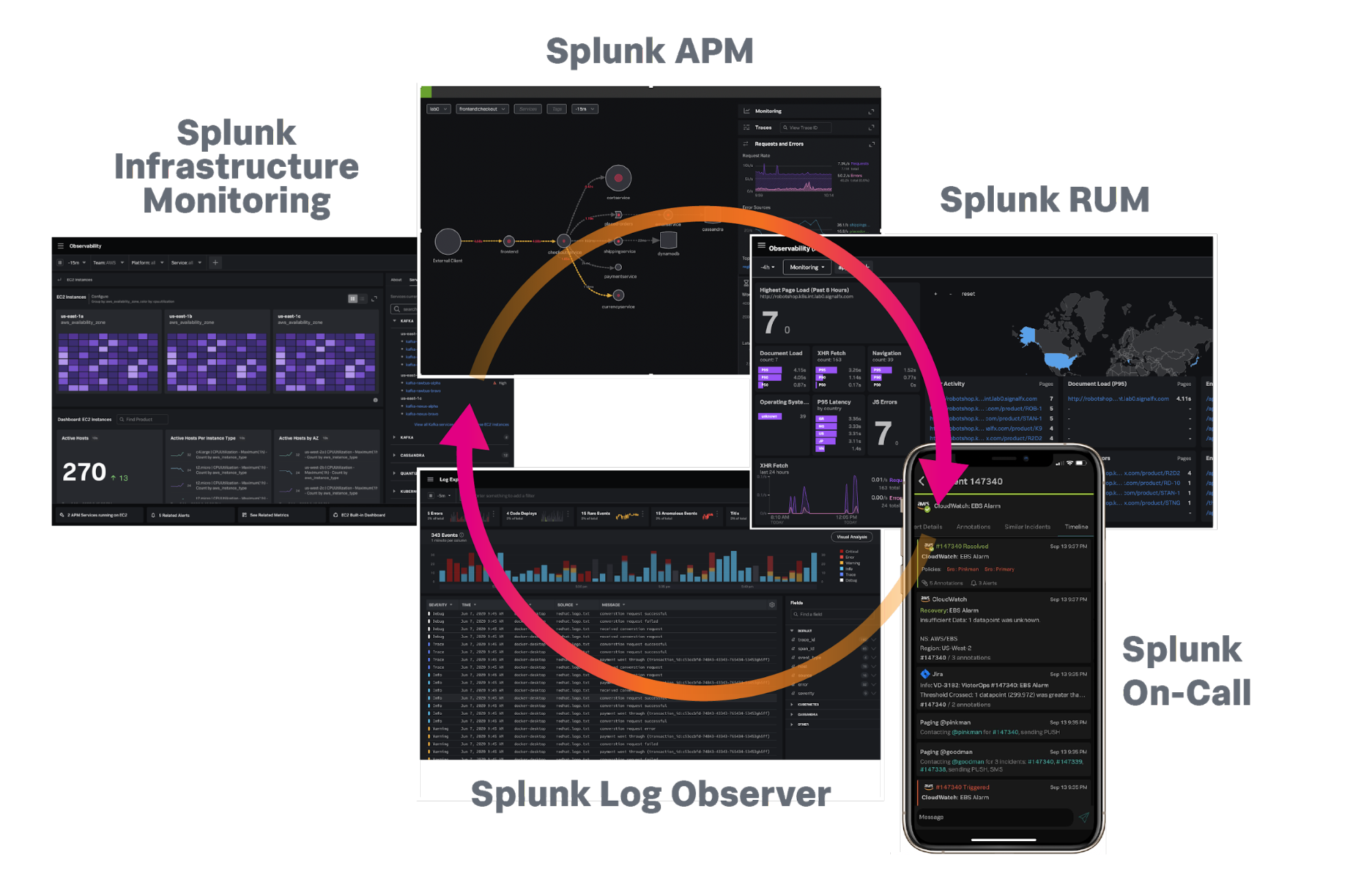
    Splunk this week at its online.conf20 conference revealed it has acquired Plumbr, a provider of an application performance management (APM) platform, and signed a definitive agreement to acquire Rigor, a provider of synthetic monitoring and application optimization tools.

    Both platforms are destined to be integrated with the Splunk Observability Suite, a suite of IT management tools the company launched this week as well.

    Splunk CTO Tim Tully said the goal is to provide a full-fidelity platform that leverages machine learning algorithms to observe IT environments in real-time.

    Plumbr, which includes real user monitoring capabilities as part of its platform, will extend real user monitoring (RUM) capabilities, currently in beta, that Splunk has developed on its own.

    Tully said Splunk is also committed to making its platforms available across hybrid cloud computing environments by leveraging cloud-native technologies such as Kubernetes, Docker containers, Envoy, Istio and Terraform.

    Splunk has embraced observability, a core tenet of best DevOps practices, as part of an effort to provide a range of digital experience management capabilities at a time when many organizations are accelerating their investments in digital business transformation initiatives. Splunk last year acquired SignalFX for more than $1 billion to gain access to another APM platform that would expand its reach beyond its core IT operations analytics platform.

    It’s not quite clear how many platforms and services will ultimately make up the Splunk Observability Suite. The company is clearly moving toward a model for consuming its services based on value rather than the amount of data collected. Determining that value will naturally be different for each customer, but in the wake of the economic downturn brought on by the COVID-19 pandemic, the pressure to reduce IT costs has intensified. In many cases, the cost of acquiring an observability platform can easily be justified by eliminating the licensing fees organizations pay to employ a dozen or more tools from different vendors that typically are not integrated.

    Competition across providers of observability tools has also intensified. In addition to every provider of an APM platform recasting itself as a provider of observability tools, there is a range of startups that address all or some aspect of observability. A wave of consolidation among providers of observability tools and platforms is all but inevitable.

    Much of the focus on observability is being driven by the rise of microservices-based applications that have levels of dependencies requiring a level of context to successfully manage what isn’t possible to achieve by relying on legacy tools that monitor applications and infrastructure in isolation. The lack of integration is also one of the primary reasons why IT teams waste so much time in “war rooms” trying to deduce the root cause of an issue, which, once discovered, only takes a few minutes to fix.

    Splunk, of course, enjoys a considerable advantage in the observability wars. Its core IT operation platform is widely employed by internal IT operations and security teams. However, much of the transition to observability is being driven by DevOps teams who take the lead when it comes to instrumenting applications. Many of those teams are far less committed to any specific platform no longer how established it may be.

  • VMware Looks to Meld IT and Security Operations

    VMware Looks to Meld IT and Security Operations

    VMware has acquired SaltStack as part of an effort to unify IT and security operations management. The announcement was made during the online VMworld 2020 conference this week.

    SaltStack has developed an open source IT automation platform to automate IT operations. In recent months it has been extended to also address security and compliance management.

    At the same time, VMware released a bevy of updates to its security portfolio, including VMware Carbon Black Cloud Workload. That offering combines vulnerability reporting with workload hardening software for both legacy platform and microservices-based applications deployed on Kubernetes clusters. It also includes elements of AppDefense, which VMware developed to harden workloads running on VMware vSphere platforms.

    VMware also announced VMware NSX Advanced Threat Prevention, which combines NSX Distributed IDS/IPS with malware detection software and network traffic analysis (NTA) technologies acquired from Lastline Inc.

    Finally, VMware announced it has committed to reselling a secure web gateway from Menlo Security as part of the VMware SD-WAN portfolio and formed an alliance with Zscaler to manage security as a service.

    SaltStack provides VMware with an IT automation framework that can be applied across multiple clouds running virtual machines and containers. The current vRealize IT automation framework is optimized for instances of VMware vSphere.

    Tom Corn, senior vice president for the Security Business Unit for VMware, said VMware’s entire approach to security is predicated on making it easier for IT operations teams rather than cybersecurity professionals to implement security controls. There are simply not enough cybersecurity professionals available to implement cybersecurity controls when DevOps teams are rolling out and updating application workloads multiple times a week, he said.

    Cybersecurity teams will continue to define what controls will need to be put in place, but it will be left to the IT operations teams to implement those controls in much the same way responsibility for application security is now also being shifted left as part of best DevSecOps practices.

    Corn said it’s clear IT security is a team sport that requires greater collaboration among IT operations teams, developers and cybersecurity professionals. VMware has been investing in security technologies with an eye toward making it easier for IT operations teams to automate security operations in much the same way any other IT task is being automated, he noted.

    That convergence isn’t going to occur overnight. There are many challenges including culture. Many cybersecurity professionals view IT operations and developers as being equally responsible for many of the root causes of a cybersecurity breach. It may be a while before cybersecurity teams have enough confidence in the ability of IT administrators and developers to proactively address cybersecurity issues before and after applications are deployed in production environments.

    Of course, there’s no alternative. The days of waiting two months or more for a security review as part of a waterfall development process are over. Security, like it or not, needs to become as agile as the rest of IT.

  • Snyk Acquires DeepCode to Apply AI to DevSecOps

    Snyk Acquires DeepCode to Apply AI to DevSecOps

    Snyk today announced it has agreed to acquire DeepCode as part of an effort to apply artificial intelligence (AI) to DevSecOps.

    DeepCode has developed an interpretable machine learning semantic code analysis tool that scans code anywhere from 10 to 50 times faster than existing approaches. DeepCode currently supports Java, JavaScript, Python, TypeScript and C/C++ programming languages. Developers get started by connecting the DeepCode bot to their GitHub, BitBucket or GitLab accounts or directly within their integrated development environment (IDE). DeepCode then immediately starts reviewing each commit with no additional coding required. The bot is currently free for teams of up to 30 developers.

    Snyk CEO Peter McKay said those machine learning algorithms dramatically reduce both false negatives and false positives as they learn the application environment. That code scanning occurs in real-time, thanks to a Datalog solver developed by DeepCode, which McKay said means code scanning can now keep pace with the rate at which applications are being developed.

    While there’s widespread agreement that more responsibility for application security needs to shift left toward developers as part of any effort to embrace best DevSecOps processes, getting the right security tools into the hands of developers has been a challenge. Developers tend to resent having to wait for security scans to be completed, especially at a time when the rate at which applications are being developed and deployed has been accelerated as organizations embrace digital business transformation more aggressively.

    In effect, code scanning as implemented today is often viewed as a bottleneck. That issue goes away, however, if scanning can occurs in real-time. Armed with that data, it then becomes possible to also prioritize which vulnerabilities to address in code first in addition to in, some cases, automating bug fixes.

    In an ideal world, security will become a natural extension of any quality assurance process implemented by a DevOps team. The challenge right now is bridging a cultural divide between DevOps and cybersecurity teams that have workflows that operate at dramatically different cadences. The more automated the code scanning process becomes at the front end, the fewer security issues will need to be addressed by theses teams as applications are either being deployed or, worse yet, after they are already running in a production environment.

    Fresh off raising an additional $200 million in funding that was used in part to acquire DeepCode, Snyk claims there are already 1.5 million developers using its tools worldwide and that its revenue grew 275% in the last year. Privately held, Snyk claims to have a valuation of $2.6 billion. The next challenge is to expand adoption of Snyk tools across the roughly 24 million developers that are writing code today, said McKay. As part of that effort, Snyk recently formed technology alliances with both Red Hat and Docker Inc.

    Naturally, it may take some time for that goal to be realized. However, with more developers now being held accountable for security, the chances are good that many of them will soon be looking to ruthless automate security in much the same way they are moving to automate every other aspect of IT.