Tag: acquisition

  • Catchpoint Acquires Webpagetest.org Service

    Catchpoint Acquires Webpagetest.org Service

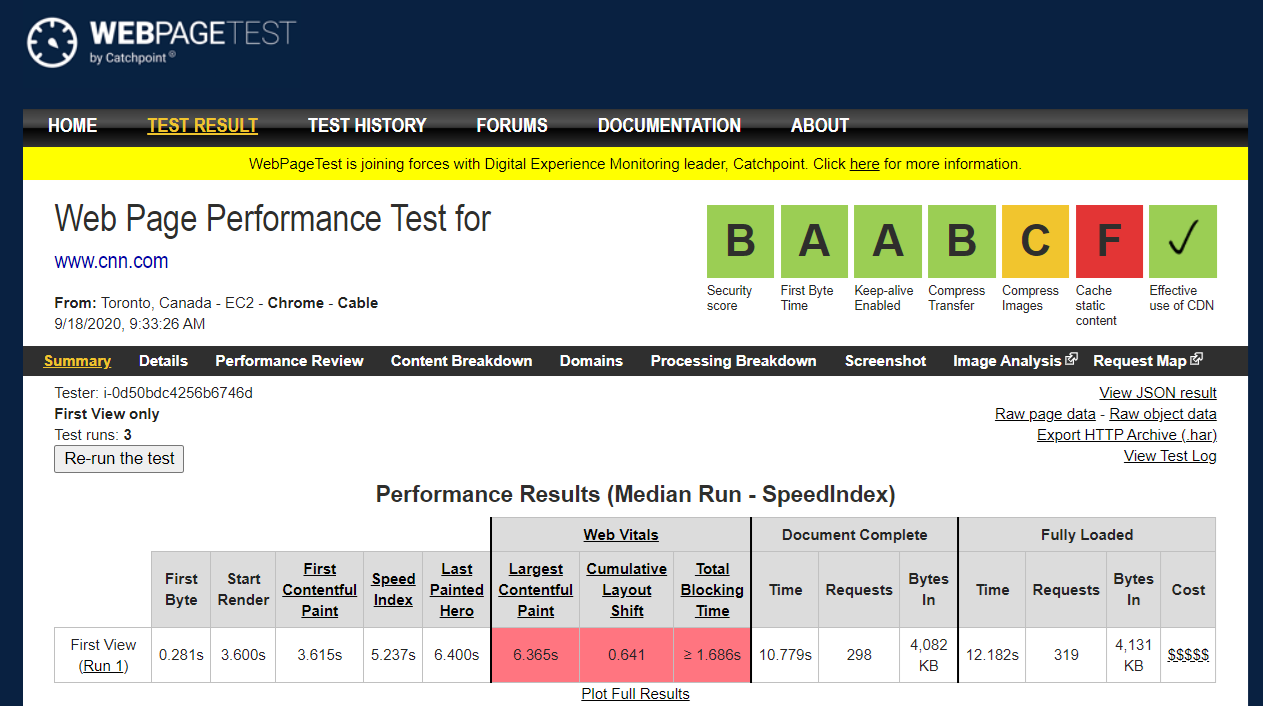
    Catchpoint this week announced it has acquired Webpagetest.org as part of an effort to expand use of the open source web performance testing service.

    Led by Patrick Meenan, the Webpagetest service is already relied on by more than 1 million users per month to instantly run tests of websites and applications from various locations, which are surfaced via a detailed audit that can be shared with developers.
    Meenan has been personally supporting Webpagetest as a side project while working for a series of IT organizations and vendors starting with America Online (AOL). Now, with Catchpoint’s acquisition of Webpagetest.org, he will have a staff of contributors as a full-time employee.

    Catchpoint CEO Mehdi Daoudi said the company will also incorporate Webpagetest into the tools it provides for monitoring digital experiences. The most appealing aspect of the Webpagetest service is that, rather than focusing on individual backend platforms, it tracks the actual performance that users experience across multiple types of browsers.

    Daoudi said that as organizations accelerate the rate at which they are building and deploying digital business applications in the wake of the COVID-19 pandemic, there’s now more focus on web application performance than ever. The experience any user has when accessing these applications now impacts everything from their willingness to complete a transaction to their perception of the corporate brand, he noted.

    In fact, a recent survey of 200 CIOs and 200 work-from-home managers conducted in July by ReRez Research on behalf of Catchpoint finds application performance is at the top of the list of concerns (66%), followed by network reliability, work-from-home technologies and security, at 63% each. Application performance is at the top of that list because both online revenue and employee productivity are now increasingly directly impacted by the overall application experience, said Daoudi.

    There’s never been a shortage of tools for testing application performance. The issue is how those tools are often employed, he noted. Too many IT organizations are monitoring individual application components rather than the actual user experience.

    Organizations that focus on end user experience in the age of digital business will, in time, separate themselves from rivals that merely make applications available online. A zealous appreciation for application performance needs to be ingrained in the culture of the organization for it to ultimately succeed, Daoudi said, noting that every employee, not just the DevOps teams, needs to be aware of the impact application performance has on the business.

    That challenge is as IT environments become more complex and distributed, ensuring application performance becomes more challenging than ever. Cloud-native applications based on microservices may be easier to deploy and manage, but the dependencies between all those microservices can conspire in ways that degrade application performance over time. Determining the root cause of intermittent application performance issues can take weeks. The maddening thing is, many of the fixes required to address that issue once it’s discovered can be deployed in minutes.

    Performance tools that surface those issues sooner than later are invaluable in a digital age, where time now quite literally is money.

  • NVIDIA to Create AI Powerhouse by Acquiring Arm for $40B

    NVIDIA to Create AI Powerhouse by Acquiring Arm for $40B

    NVIDIA has announced its intention to acquire Arm from SoftBank for $40 billion as part of an effort to create a juggernaut that will build processors optimized for artificial intelligence (AI) applications that span edge computing deployment to the cloud.

    Under the terms of the proposed deal, Arm will operate as a subsidiary of NVIDIA and will continue to headquartered in Cambridge, UK. NVIDIA will pay to SoftBank a total of $21.5 billion in NVIDIA common stock and $12 billion in cash, which includes $2 billion payable at signing. SoftBank will retain a 10% stake in NVIDIA.

    NVIDIA CEO Jensen Huang during a conference call also committed to licensing the software NVIDIA uses to make graphical processor units (GPUs) using the same licensing model Arm has employed to encourage manufacturing partners to create processors based on its designs. In theory, that approach could substantially lower the cost of GPUs once the deal closes.

    However, because of all the regulatory approvals required, Huang said NVIDIA could not commit to a timeframe for the close of the deal. Previously, Huang noted it took NVIDIA a year to close the acquisition of Mellanox, a provider of storage and networking infrastructure.

    In addition to providing processors that drive gaming and CAD/CAM applications, GPUs from NVIDIA are widely employed to train AI models more efficiently than x86 processors from Intel or AMD. Processors from Intel are used more often to run the inference engines for an AI model once it is deployed. With the acquisition of ARM, NVIDIA gains access to processor technology that is emerging as a rival architecture for deploying AI models on a wide range of server and mobile computing platforms. Currently, Arm is best known for providing processors for mobile computing devices such as smartphones, which eventually will also be infused with a wide variety of machine and deep learning algorithms.

    In the meantime, many organizations continue to struggle with implementing AI. It typically takes a team of data scientists six months or more to build an AI model. Once that model is built, it then needs to be incorporated into an application as part of a DevOps workflow. In the meantime, business assumptions may change, rendering the AI model irrelevant. That requires the data science team to build a new AI model. In addition, as new data sources become available, AI models need to be updated. Most organizations are just now defining the processes for building and deploying those models, otherwise known as machine learning operations (MLOps), using many of the principles that were first defined by DevOps teams.

    Once those MLOps processes are defined, of course, IT teams then need to meld MLOps and DevOps workflows to keep applications that are updated more frequently synchronized with the AI model on which those applications increasingly depend.

    At this point, it’s clear every application will incorporate some level of AI. However, the speed at which AI might become pervasive is not likely to be all that fast anytime soon.

  • Progress Acquires Chef to Expand DevOps Portfolio

    Progress Acquires Chef to Expand DevOps Portfolio

    Progress today announced it has acquired Chef for $220 million in cash as part of an effort to advance adoption of best DevOps and DevSecOps practices in the midmarket.

    Once the deal is completed next month, Chef will operate as an independent business unit led by Sundar Subramanian, who currently is a senior vice president and general manager at Progress.

    Progress CEO Yogesh Gupta said IT automation technologies developed by Chef will be incorporated into monitoring and debugging platforms and tools that Progress currently provides. By moving into areas such as compliance and security, Chef has already embarked on an effort to make its offerings more accessible to IT personnel, who often lack programming skills, especially in midmarket IT organizations that make up the bulk of the Progress customer base.

    As a private company owned by venture capitalists who monetized open source software mainly via commercial support agreements and enterprise editions of its software, Chef has been able to generate roughly $70 million in revenue. As an arm of Progress, Chef joins a public company with more than $500 million in revenue that has a market capital in excess of $2 billion.

    Chef should be in a better financial position to compete against rivals such as Puppet and Red Hat. Following its acquisition by IBM, Red Hat has been plowing consider resources into a declarative Ansible automation framework that tends to appeal to traditional IT teams. In comparison, Chef has been a pioneer in automating IT using programming tools that especially appeal to DevOps teams managing infrastructure as code.

    In general, most midmarket IT organizations don’t have a lot of DevOps expertise. As an independent arm of Progress, Chef will continue to focus on IT operations, compliance and security, while Progress focuses more of its efforts on the application development and deployment requirements of midmarket organizations, said Gupta. As midmarket IT environments become more complex, the number of touchpoints between Progress and Chef involving cookbooks and recipes created by Chef will increase over time, he added.

    The acquisition of Chef is the latest in a wave of consolidation across the DevOps category. While adoption of DevOps tools and platform continues to grow, traditional enterprise IT organizations are now moving to acquire many of the larger vendors in the DevOps category. That trend is only likely to accelerate during an economic downturn brought on by the COVID-19 pandemic. At the same time, the number of startup companies being launched continues to expand the overall size of the DevOps/DevSecOps ecosystem.

    It’s too early to say at what rate best DevOps practices will gain further traction among traditional midmarket IT organizations. However, at a time when many of those organizations are being asked to do a lot more with even less, it’s only a matter of time before existing rigid IT processes begin to incorporate more agile approaches to managing IT as a matter of survival.

  • Fastly Sets DevSecOps Strategy After Signal Sciences Buy

    Fastly Sets DevSecOps Strategy After Signal Sciences Buy

    In the wake of acquiring Signal Sciences for $770 million, Fastly is gearing up to expand the range of security services it offers as part of an effort to advance adoption of best DevSecOps practices.

    Artur Bergman, chief architect for Fastly, said a forthcoming wave of edge computing applications will require web applications firewalls (WAF) that can be deployed and managed remotely to protect them. As a provider of a content delivery network (CDN), Fastly will leverage the WAF platform developed by Signal Sciences to secure edge computing platforms within a forthcoming Secure@Edge service that promises to unified web application and application programming interface (API) security.

    Fastly has been gaining ground as a provider of CDN services that are programmatically designed from the ground up to shift control over networking and security services further left toward DevOps teams, said Bergman. In many cases, the only way to secure workloads running on an edge computing platform is for DevOps teams to be able to programmatically deploy a WAF to protect the workloads on that platform, he noted.

    Edge computing platforms are especially vulnerable to distributed denial of service (DDoS) attacks that are increasing in both size and sophistication as cybercriminals become more adept at targeting specific servers and platform, added Bergman. No one can prevent a DDoS attack from being launched, but a CDN can play a critical role in mitigating its impact.

    The acquisition of Signal Sciences comes on the heels of Fastly’s move to expand its the ability to collect metrics from edge computing platforms that will be employed to extend the reach of monitoring tools employed by DevOps teams to edge computing platforms.

    Zane Lackey, chief security officer for Signal Sciences, said the two companies share a similar history and commitment to best DevOps practices. The WAF from Signal Sciences is based on a runtime application self-protection (RASP) architecture that only runs when an application fires up, which Lackey said makes it a natural extension of any DevOps toolchain.

    The Signal Sciences WAF is unique in that it can support multiple classes of monolithic and microservices-based applications and that 95% of organizations that employ it do so in full blocking mode because the number of false positives the WAF generates is limited, added Lackey.

    Naturally, Fastly is not the only provider of a CDN services looking to woo DevOps teams. Organizations have been deploying web-based applications on CDNs for years. However, CDNs that simplify the deployment of applications within the context of a DevOps workflow are gaining traction.

    It’s too early to say how this battle will play out. In addition to providers who have built their own global networks, cloud services providers also now offer CDNs that promise to optimize cloud application performance while enhancing security and simplifying deployment. Regardless of the path forward, it’s clear that as more latency-sensitive applications are deployed across distributed computing environments, the more inclined DevOps teams will be to rely on external network services that can adapt quickly to changing application requirements.

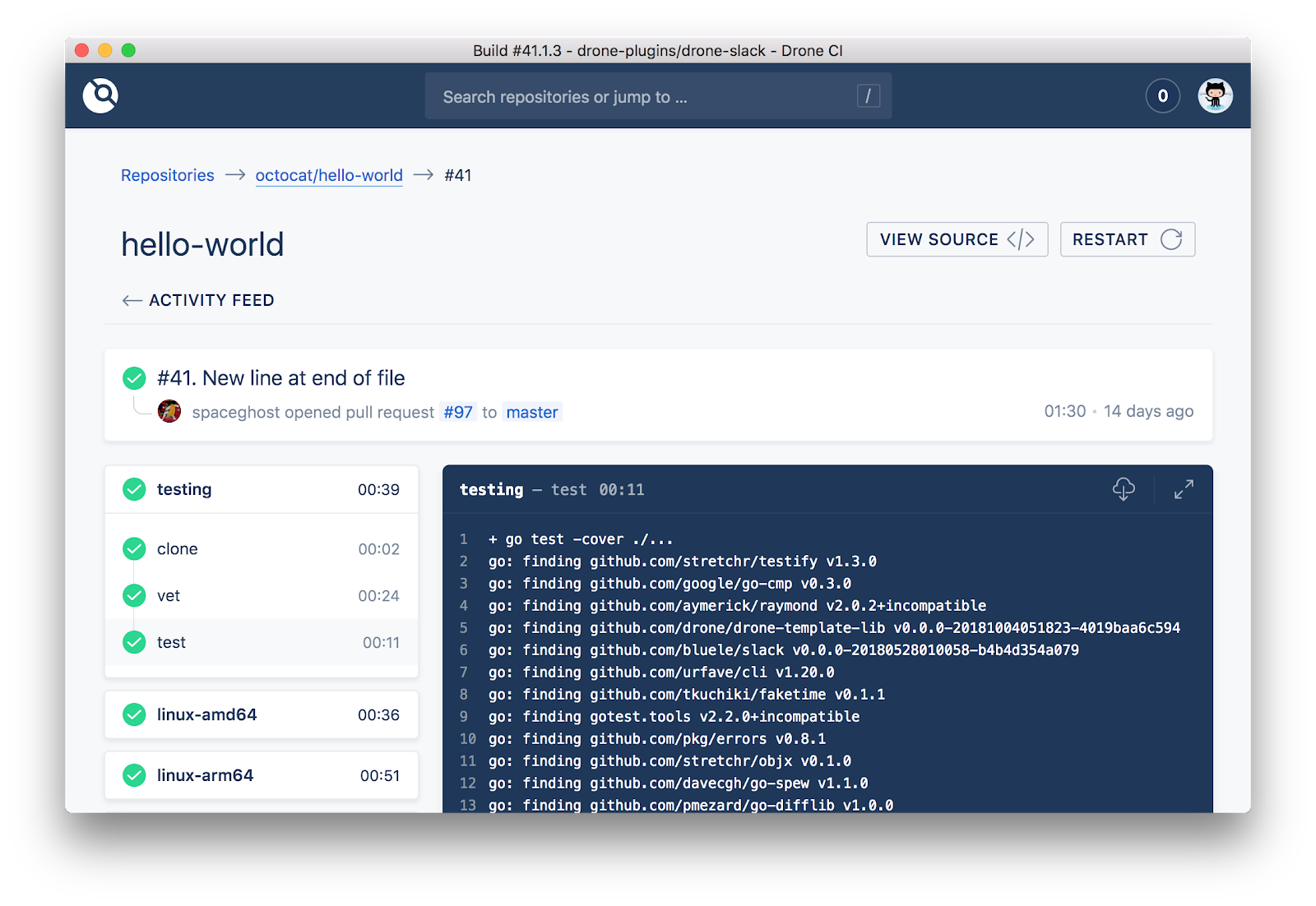
  • Harness Acquires Drone CI Project

    Harness Acquires Drone CI Project

    Harness announced it has acquired Drone.io, creator of the open source Drone continuous integration (CI) project.

    Company CEO Jyoti Bansal said Harness, which provides a continuous delivery (CD) platform delivered as a service, will offer Drone to organizations that want a CI platform alongside a CD service from a single vendor. However, Harness will also continue to facilitate the integration of its namesake CD platform with other CI platforms.

    Drone will continue to be freely available as open source software and will be re-christened Harness CI Community Edition. Drone Enterprise will be sold as Harness CI Essentials Edition. Later this year, Harness plans to introduce Harness CI Enterprise Edition, which will extend the core platform.

    The two companies claim there are currently more than 50,000 active Drone community users for a project that is supported by 250 contributors. Organizations that have adopted Drone include eBay, CapitalOne, Cisco Systems and VMware. Instead of requiring scripts, continuous integration pipelines created in Drone can be declared and managed as code in Git. That approach creates a standard syntax for pipelines that are easier to create, use, maintain and troubleshoot. The two companies claim that reduces the time and cost of continuous integration by a factor of five to 10 over rival platforms.

    Analyst firms are projecting the DevOps software market will generate $15 billion in revenue by 2023, signaling an opportunity to provide a more modern CI platform that is easier for organizations to employ, Bansal said. Jenkins, the most widely used CI/CD platform today, traces its lineage back to 2004.

    While the overall market continues to grow, however, there’s been a wave of consolidation among vendors attempting to construct end-to-end DevOps platforms. Many enterprise IT organizations tend to prefer to rely on as few vendors as possible to reduce integration costs, which is an issue Harness in part is trying to address by acquiring Drone.io.

    Harness is a member of both the Continuous Delivery Foundation (CDF) and the Cloud Native Computing Foundation (CNCF). Drone is already available on a wide variety of platforms, including Kubernetes, and it’s not clear if either arm of the Linux Foundation will play a major role in advancing the development of Drone. The CNCF has thus far accepted Argo, an open source CD platform for Kubernetes, as an incubation-level project.

    In the meantime, competition among providers of CI/CD platforms is intensifying. Jenkins, originally developed by CloudBees, is now being advanced under the auspices of the CDF along with Jenkins X, a CI/CD for Kubernetes environments, and Spinnaker, a CD platform originally developed by Netflix. GitLab, Microsoft and its GitHub subsidiary, JFrog and CircleCI all have established major rival CI/CD ecosystems of their own.

    Ultimately, it will be up to each IT organization to decide which CI/CD platform makes the most sense for them. It’s even possible many departments within the same organization will make use of multiple CI/CD platforms. Over time, however, most enterprise IT organizations are expected to adopt a CI/CD standard to better facilitate collaboration across multiple DevOps teams.

  • Atlassian Adds Asset Management to ITSM Portfolio

    Atlassian Adds Asset Management to ITSM Portfolio

    Atlassian this week announced it has acquired Mindville, a provider of IT asset management software that the company plans to integrate with its Jira ServiceDesk platform.

    Edwin Wong, head of product for IT at Atlassian, said Mindville will extend the reach of its IT service management (ITSM) portfolio, which includes Opsgenie for incident management, Jira for project management and the recently acquired Halp software for conversational ticketing.

    Mindville, which already makes its software available on the Atlassian marketplace, has more than 1,000 customers including NASA, Spotify and Samsung. The acquisition of Mindville presents an opportunity for those IT teams to manage IT assets within the Jira ServiceDesk platform, which is widely employed as a help desk to manage interactions with end users, said Wong.

    Atlassian has been steadily bolstering its ITSM portfolio at a time when competition across the sector is fierce. In the wake of the COVID-19 pandemic, many IT organizations are re-evaluating their IT help desk platforms now that it has become apparent many employees will be working from home much more regularly.

    At the same time, IT organizations are looking to reduce the total cost of IT, which becomes easier to achieve if they acquire all their ITSM tools from a single vendor. Going forward, Wong said IT teams should expect Atlassian to continue to tighten integration across both its ITSM and DevOps tools portfolio. The goal is not so much to converge every offering into a single platform as much as it is to seamlessly share data between all the tools that make up that portfolio, he said.

    Atlassian this week disclosed it generated $1.6 billion in revenue for the fiscal year, a 33% increase over the prior year. Total revenue was $430.5 million for the fourth quarter of fiscal 2020, up 29% from $334.6 million for the fourth quarter of fiscal 2019. Atlassian ended the fourth quarter of fiscal 2020 with a total of 174,097 customers based on an active subscription or maintenance agreements. The company said it added 3,046 net new customers during the quarter. However, it recorded a net loss of $385.2 million for the fourth quarter of fiscal 2020, which included a non-cash charge of $382.7 million.

    Atlassian tools can be deployed on-premises or in the cloud and the company has been offering discounts to IT organizations as an incentive to entice customers to shift to the cloud. In the wake of the economic downturn, it’s not clear to what degree organizations will prioritize spending on ITSM tools. However, with more employees and IT administrators now working from home, the need for cloud-based tools to manage a highly distributed IT environment has never been more apparent. One of the things that will differentiate Atlassian is the teams-centric approach the company takes toward ITSM and DevOps, said Wong.

    In the meantime, as the Atlassian ITSM and DevOps portfolio expand, IT teams should expect the divide these two distinct approaches to managing IT to continue to narrow.

  • Keysight Technologies Jumps into App Testing by Acquiring Eggplant

    Keysight Technologies Jumps into App Testing by Acquiring Eggplant

    Keysight Technologies, a provider of tools to test and measure embedded systems and mobile computing devices, has acquired Eggplant, a provider of a platform that automates application testing, for $330 million.

    Dr. John Bates, CEO of Eggplant, said the acquisition enables Keysight to expand the scope of its testing portfolio beyond hardware. Keysight traces its lineage back to Agilent Technologies, which it spun out of in 2014. Agilent was spun out of Hewlett-Packard in 1999. Keysight retains the test and measurement portfolio that began with HP back in 1939.

    Bates said Eggplant, which has annual revenues of $38 million, will operate for now as an independent arm of Keysight. Over time, however, there should be increased opportunities to converge testing of applications software running on embedded systems that increasingly are being deployed at the network edge, he noted.

    Eggplant’s Digital Automation Intelligence (DAI) platform is designed to automate the entire testing lifecycle process as part of a larger best DevOps practice. The rate at which application tests can be built and run winds up being a bottleneck as applications are being built. The DAI platform is designed to automate the creation of UI tests and then launch them against application code to eliminate as much testing friction as possible. IT teams can also track user behavior to create user journeys based on their interactions with applications and store tests created using modeling tools provided by Eggplant in its cloud service.

    Eggplant has been investing in deep learning algorithms that, for example, automatically identify and classify user interface (UI) elements such as buttons and text fields across any platform and then generate all the automation assets needed to instantly run an automated test.

    With the rise of DevOps, there’s now more application code to be tested than ever. As such, testing backlogs within many IT organizations are growing. The challenge is finding a way to thoroughly test applications without resulting in missed deployment deadlines. When those deadlines are in danger of being blown, testing typically is the first thing to be scaled back. Of course, when an application has to be rolled back, the primary reason often is because a key component was not tested properly.

    Bates noted testing becomes even more complicated as organizations embrace microservices. The level of dependency between microservices spanning multiple platforms makes testing even more challenging, he said, adding IT organizations will need to rely on automated testing platforms to test applications at levels of unprecedented scale.

    It’s not clear to what degree the COVID-19 pandemic may have accelerated demand for applications based on emerging 5G wireless services. Some organizations are forging ahead while others may be delaying initiatives as they cope with the economic impact of the pandemic. One way or another, a raft of applications running on a wide variety of edge computing platforms will need to be tested. Chances are good a much larger percentage of those applications soon will be tested by machines rather than humans that can’t scale to meet the challenge.

  • VMware’s Blue Medora Buy Advances AIOps

    VMware’s Blue Medora Buy Advances AIOps

    VMware has announced it will acquire Blue Medora, a provider of a service for integrating data collected by IT monitoring tools, to expand its efforts to advance the adoption of artificial intelligence to automate IT operations (AIOps).

    Roy Ritthaler, vice president of cloud management for VMware, said Blue Medora provides VMware with a software-as-a-service (SaaS) platform that is employed to inform VMware vRealize, an IT automation suite that is now being used by more than 400 customers.

    The data Blue Medora collects will also be employed within Project Magna, a research and development initiative that applies machine learning algorithms and other forms of artificial intelligence (AI) to automate IT operations, he said. Project Magna is based on a reinforcement learning engine that automates the tuning of multiple sub-components of the overall IT environment, resulting in what VMware calls “self-driving data centers.”

    Ritthaler said the goal is not to replace IT professionals as much as it is to eliminate rote tasks while making it easier to manage increasingly complex IT environments at scale. It then will become feasible for a smaller number of IT professionals to manage hybrid cloud computing environments, he noted.

    Blue Medora’s True Visibility Suite provides VMware with visibility not just into IT infrastructure but also all the way up the application stack.

    Ritthaler said it’s only a matter of time before most management frameworks are accessed as service, given all the data that needs to be collected and then analyzed to surface meaningful insights. It’s not clear how roles with IT organizations will evolve once those insights are surfaced regularly. Most enterprise IT organizations today rely on multiple specialists to optimize all the components that make up the IT environment. In theory, AIOps will make it possible for IT generalists to manage an IT environment without having to rely on so many specialists.

    AIOps undoubtedly will also have a profound impact on DevOps processes. As more IT operations become automated, the amount of time and effort spent managing IT infrastructure should decline.

    Interest in IT automation is on the rise in the wake of the COVID-19 pandemic. With many IT professionals working from home as much as possible, organizations are looking to automate rote IT processes to make them easier to manage remotely. In many cases, achieving that goal will require IT teams to rely more on tools that are accessed as a cloud service.

    Regardless of the path forward, it’s apparent the management of IT is about to be utterly transformed.

    It’s not that IT organizations will suddenly have a greater appreciation of IT automation. However, the pandemic has added more urgency to an IT transition that was already underway prior to the pandemic. The issue now is not so much whether to embrace IT automation as it is determining what can be automated for a consistent outcome across IT environments that frequently are made up of a diverse yet not especially well-integrated range of platforms.

  • DevOps Deeper Dive: Apple Adds Fuel to ITSM Fire

    DevOps Deeper Dive: Apple Adds Fuel to ITSM Fire

    Apple’s acquisition this week of Fleetsmith, a provider of IT service management (ITSM) tools for Apple devices, is reigniting a fierce debate over how best to manage endpoints in heterogeneous IT environments.

    Fleetsmith, along with rivals including Jamf Software and IBM, provides ITSM tools that only manage Apple devices. The company argues that the IT teams managing Apple devices prefer to use tools that feel like MacOs or iOS applications. However, both enterprise environments typically have both Apple and Windows devices. As such, many IT teams have adopted ITSM tools that allow them to centrally manage both platforms.

    Until now, Apple has been relatively neutral in terms of how best to manage its devices. The acquisition of Fleetsmith signals the company is about to focus more on ITSM at a time when many organizations need to revamp their approach to managing endpoints in the wake of the COVID-19 pandemic.

    With more individuals likely to be spending more time working from home, the management of highly distributed endpoints becomes even more challenging. Apple has yet to outline its plans for Fleetsmith or say whether it will continue to support Fleetsmith customers. The assumption is the company will incorporate the Fleetsmith ITSM tools into its portfolio.

    Mac and Windows: Can’t We All Get Along?

    In the meantime, providers of platforms capable of managing heterogeneous endpoints are pressing their cases for increased centralization. Many IT organizations have adopted separate tools for managing Windows and Apple devices; centralizing the management of endpoints presents those organizations with an opportunity to reduce costs.

    “IT teams don’t want to hop around infrastructure, said Greg Keller, CTO for JumpCloud, a provider of ITSM tools. “Centralization creates this single-pane-of-glass efficiency.”

    The need to centralize endpoint management will become even more pronounced as desktop computing moves into the cloud, added Pradyut Roy, a product manager for ManageEngine, a provider of ITSM tools that also span multiple types of endpoints.

    “There is going to be a huge drive to centralize the control plane,” said Roy.

    A survey of 519 IT professionals published this week by ManageEngine finds 47% of organizations are planning to provide more mobile-capable assets to employees. As those endpoints are rolled out, IT teams will need ITSM platforms accessible from anywhere that enable them to manage devices regardless of what network they are connected to at any given time.

    Apple doesn’t have the greatest reputation when it comes to appreciating ITSM requirements in the enterprise. For example, it often changes application programming interfaces (APIs) in ways that are not backward-compatible, so providers of ITSM tools often must make significant updates to their tools. That API issue is likely to become even more significant as organizations that have adopted best DevOps practices look to extend them to applications running on Apple devices.

    ITSM is clearly in a state of flux. Most IT organizations rely on legacy ITIL-based processes to manage IT infrastructure consistently. As businesses begin to require more flexibility, many of those ITIL-based processes will need to be revisited. The opportunity—and the challenge—now is finding a way to converge ITIL and DevOps practices across as many different types of endpoints as possible.

  • NetApp Acquires Spot to Rein in Cloud Costs

    NetApp Acquires Spot to Rein in Cloud Costs

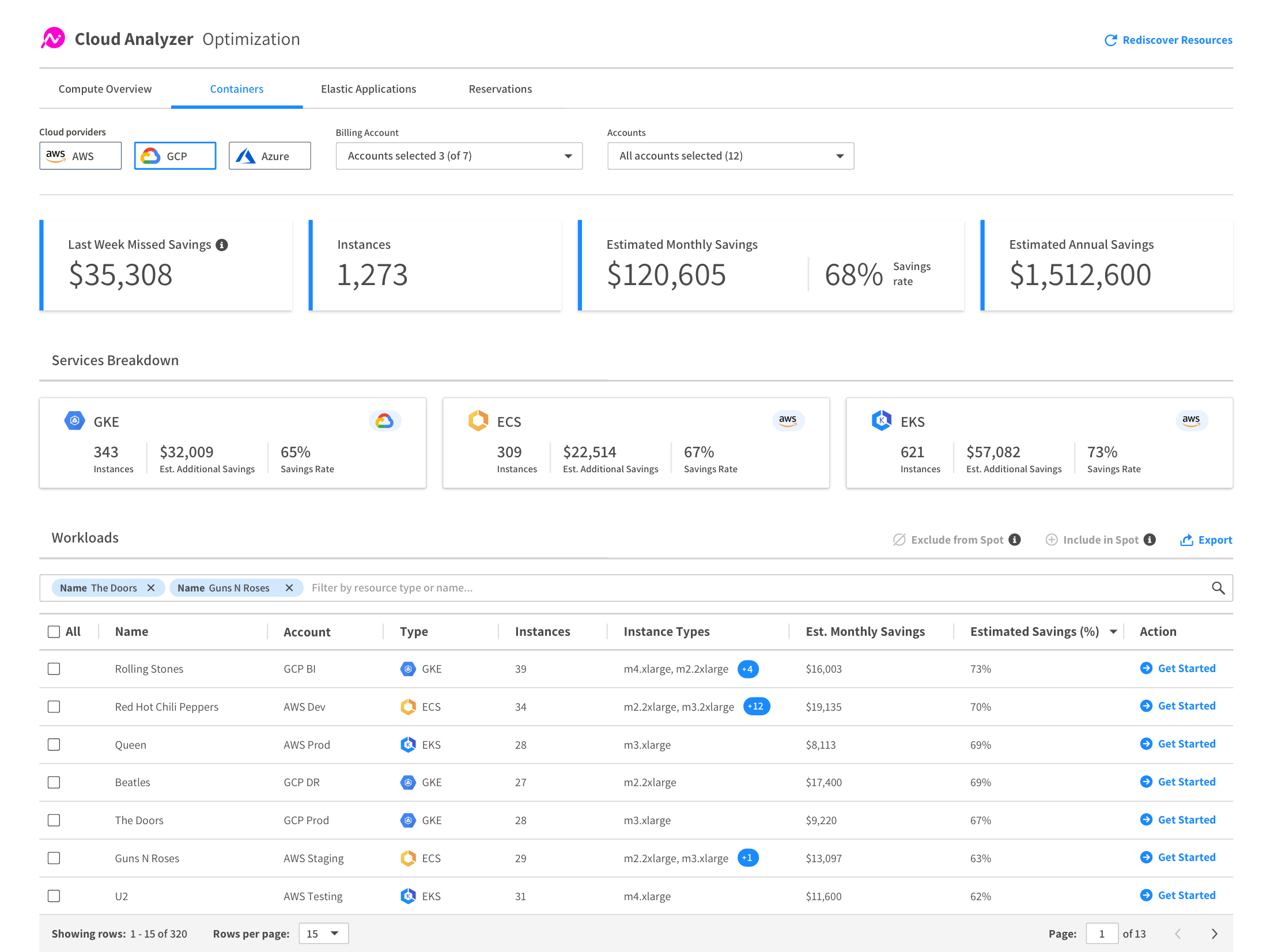
    NetApp this week announced it has acquired Spot, a provider of a service that enables IT teams to continuously optimize costs for cloud workloads.

    Anthony Lye, senior vice president and general manager for public cloud services at NetApp, said the Spot service is based on an application programming interface (API) that IT teams add to each application workload. That API then makes regular calls to Spot, which leverages algorithms that determine when and on what types of instances a workload should run to reduce cloud costs.

    The Spot service will then move workloads automatically between on-demand, reserve and spot instances on Amazon Web Services (AWS), Microsoft Azure or Google Cloud Platform (GCP). It is not designed to enable arbitrage across different cloud services; rather, it optimizes the allocation of compute resources on whatever cloud platform an IT team decides to deploy a workload on.

    Lye said cloud computing often winds up being more expensive than on-premises IT environments because IT teams don’t have the tools required to cost-optimize cloud platforms in real-time. Developers often programmatically deploy workloads in the cloud without understanding many of the implications of using one tier of service versus another. Even when they do appreciate the cost, most IT teams don’t provide them with the tools needed to do anything about it. In fact, it’s usually assumed the IT operations team will find some way to optimize costs as they monitor the cloud environment.

    Then, at the end of the month, the IT operations and finance teams receive a bill from a cloud service provider that is all but indecipherable in determining what workloads consumed what level of compute resources and when. In the absence of the Spot service, Lye said the best IT teams could hope for was an analytics report that offered suggestions about how to optimize cloud instances after the fact.

    NetApp views Spot as a complement to its approach to optimizing the consumption of cloud storage resources by deploying its software on a public cloud to manage those resources, said Lye. Collectively, those offerings enable IT teams to address what has now become the single largest cost in the enterprise.

    In addition, Lye noted that Spot can play a key role in enforcing service level agreements (SLAs) because, among other things, it automatically detects whenever a spot instance of a virtual machine is going away. It then automatically spins up additional instances to ensure a workload remains available.

    The debate over the real cost of cloud computing has been going on for years. Initially, most cloud service providers claimed cloud platforms were less expensive than on-premises IT environments because compute resources were paid for on a consumption basis. While that proved to be true for workloads that ran for a finite amount of time, longer-running workloads have proven to be in most cases more expensive to run in the cloud.

    As organizations look to the cloud to deploy cloud-native applications that are more flexible and resilient in the wake of the COVID-19 pandemic, which has made many on-premises IT environments less accessible, the debate over costs is flaring up again. While organizations need a more flexible approach to IT, they are simultaneously trying to reduce the total cost of IT in the wake of the economic downturn brought on by the pandemic.

    It’s too early to say to what degree IT organizations will embrace continuous optimization alongside continuous integration (CI) and continuous delivery (CD). However, given the current economic climate, it’s more now a question of when, not if, cloud cost optimization will become a major area of focus for IT teams large and small.