Category: News

  • State of Software Delivery Management Report 2020

    State of Software Delivery Management Report 2020

    Accelerated Strategies Group conducted the State of Software Delivery Management 2020, surveying software delivery practitioners and key industry leaders to assess the current state of software delivery management (SDM) and examine the impact of SDM adoption as a capability. The primary research, commissioned by CloudBees, was published on Tuesday, July 21.

    The State of Software Delivery Management Report 2020 defined SDM as “a core competency for any organization or team responsible for delivering business value via software applications and systems.” The report studies the impact of SDM and how it helps organizations accelerate their digital transformation by providing the necessary tools to effectively and efficiently deliver software.

    The report identified three key SDM capabilities to help organizations increase their software delivery efficiency and effectiveness:

    • Organizations must quantify the impact of their investment in software delivery.
    • Organizations must enhance the ability of software delivery teams to communicate and collaborate.
    • SDM can provide end-to-end visibility into the value flow of their software delivery streams.

    Based on the results of the research, adopting SDM strategies can help mitigate major challenges faced by software delivery practitioners, IT management, product stakeholders and executive leadership, and improve an organization’s ability to deliver software in a lean and agile manner. SDM capabilities provide businesses the ability to effectively make decisions on where in the value stream to invest, and to quantify the impact of their investments.

    Download the State of Software Delivery Management 2020 to learn more about SDM and to get insights and access to all the data Accelerated Strategies Group gathered from one-on-one interviews with key industry experts.

  • Digital Anarchist – Watch What’s Next in Tech

    Digital Anarchist – Watch What’s Next in Tech

    Today, we announce the launch of the next version of Digital Anarchist, our next-generation video platform, at digitalanarchist.com. The content is also available on the DevOps.com mobile app and OTT channels on Apple TV, Roku and Amazon Fire TV.

    Boasting more than 1,400 videos and featuring 1,000-plus guests, the Digital Anarchist library may be the single largest collection of videos covering topics related to DevOps, cyber, cloud-native and digital transformation. It includes webinars from across the MediaOps properties, virtual event sessions, interviews from conferences around the world, DevOps Chats and more.

    The new interface, video recommendations and searchable guest and video index are more closely aligned with the original vision of Digital Anarchist that John Willis and I had when we came up with the concept. Providing a consistent user experience across different platforms and applications has proven to be a challenge. We continue to work at it.

    The No. 1 Source for IT News and Entertainment

    Digital Anarchist is a hub with thousands of hours of information, serving as a catalyst for digital transformation that disrupts the outdated and inefficient, providing the information organizations need for a faster, higher-quality and more secure future.

    Visitors and subscribers will have access to exclusive live and on-demand content from a variety of channels:

    • Virtual Events – Catch up on sessions and one-on-one interviews with industry leaders from more than a dozen conferences and virtual events hosted in the last 12 months. 
    • Analyst Corner – View weekly segments hosted by Accelerated Strategies Group’s analysts and seasoned industry veterans, covering the latest trends and opportunities for businesses during these unprecedented times.
    • TechStrong TV – Live-stream TechStrong TV on Digital Anarchist three days a week or access previous episodes to hear honest and open dialogues with tech leaders and executives covering the latest news. 
    • DevOps Chats – Hear the latest episodes of “fireside” podcasts featuring DevOps.com and Security Boulevard Editor in Chief Alan Shimel and Accelerated Strategies Group CEO Mitch Ashley, as they chat with luminaries and thought leaders in DevOps and security.
    • On-Demand Webinars – Replay webinars from DevOps.com, Security Boulevard and Container Journal 30 days after the live event.
    • CISO Talks – Join MediaOps CEO Alan Shimel and Unisys CISO Mathew Newfield in a bi-weekly series to explore the latest in cyberspace, featuring other experts and newsmakers in the field.
    • DevOps Unbound – This bi-weekly/monthly roundtable, sponsored by Tricentis, provides a deep-dive into DevOps, with an emphasis on continuous testing and automation. Roundtables will be open to audience interaction as well.

    State-of-the-Art Studio and Video Production

    Digital Anarchist features both original and third-party content. The streaming service also provides video production, distribution and sponsorship, offering opportunities for both branding and lead generation campaigns.

    Using state-of-the-art digital HD equipment and dynamic post-production video editing, the Digital Anarchist team is highly qualified to create custom videos to tell your story and reach a global audience. Some of Digital Anarchist’s services include:

    • Educational series.
    • Case studies.
    • Brand marketing videos.
    • Storytelling testimonials.
    • Sponsored ads.

    If you would like to have your video content featured on Digital Anarchist, reach out to us at sales@mediaops.com.

    In the meantime, please check out the new site and subscribe if you’d like to be the first to see the 15 to 20 new videos we add on a weekly basis. And, as always, your feedback is welcome.

  • Businesses Modernizing Apps in Wake of Pandemic

    Businesses Modernizing Apps in Wake of Pandemic

    A survey of 5,000 business decision-makers, IT decision-makers and app developers published suggests organizations are taking advantage of the crisis created by the global COVID-19 pandemic to accelerate the modernizing of apps using DevOps practices.

    Conducted by the market research firm Vanson Bourne, the survey finds 80% of respondents said organizations must modernize the technologies they use to develop and deploy software to be more successful. Nearly as many (79%) said their organization will not be able to deliver a best-in-class end user experience without successfully modernizing software development processes.

    In addition, 80% of respondents said embracing developer processes such as test and learn would enable organizations to work more effectively and efficiently.

    The survey also finds some organizations are not letting a proverbial good crisis go to waste. A total of 70% said they have good or excellent alignment between application development and IT teams, up from 64% prior to the pandemic. Alignment between business teams and application development (67%) and IT teams (67%) increased by 10% and 12% respectively since the start of the pandemic, according to the survey results.

    Sumit Dhawan, senior vice president and chief customer experience officer for VMware, said the need to make applications more accessible and reliable is accelerating a transition to the cloud. The survey finds the primary benefits of modernizing apps are enabling remote workforces (54%); pushing quick updates in response to changing landscape (42%); and maintaining reliable uptime (41%).

    The scope of application modernization initiatives varies widely. Some organizations are simply lifting and shifting existing application workloads along with the virtual machines they run on into the cloud. Others are refactoring applications to run natively on a different virtual machine platform provider by a cloud service provider. Others are wrapping existing applications in containers so they don’t have to be refactored when deployed on another virtual machine. Still others are employing containers and Kubernetes to develop entirely new microservices-based applications that tend to be more flexible and reliable than existing monolithic applications.

    Regardless of the path forward, the inability to physically access local data centers during the pandemic has accelerated a shift to the cloud that was occurring even before the pandemic hit. There still will be many applications that for performance, security and compliance reasons may need to remain in on-premises IT environments. However, it might not be long before IT organizations also modernize those applications to make them both more accessible, flexible and resilient.

    Most IT teams will find themselves managing microservices-based applications alongside modernized monolithic applications for years to come. Over time, however, many of those monolithic applications will be deconstructed into a core set of microservices.

    At the core of all those initiatives will be a set of best DevOps processes that each IT team defines for itself based on the nature of the application portfolio that needs to be developed, deployed, secured and maintained. The challenge now is determining which applications should be modernized versus simply replaced by either a software-as-a-service (SaaS) application or a custom cloud-native application that is a better fit for the purpose.

  • Atlassian Unfurls Bevy of DevOps Updates

    Atlassian Unfurls Bevy of DevOps Updates

    Atlassian today made a dozen updates to its DevOps portfolio as part of an effort to better unify workflows spanning disparate tools.

    Suzie Prince, head of product for Bitbucket at Atlassian, said the latest updates are intended to enable DevOps teams to streamline workflows without requiring everyone in the organization to standardize on the same set of tools.

    Updates to the Atlassian DevOps portfolio include DevOps Automation Triggers, which makes it possible to create automation to keep development activities synchronized, such as reassigning issues surfaced in the Jira project management application from Atlassian to code review or sending a message to a Slack channel.

    Atlassian DevOps

    The Bitbucket repository from Atlassian has also been updated to make it easier and faster to review code changes after a pull request. New features such as a consolidated list of tasks, integrated Jira issue creation and activity feed filters make it possible for developers to complete their code reviews faster and juggle multiple pull requests at once, said Prince. A Your Work dashboard in Bitbucket Cloud has also been expanded to include assigned Jira issues.

    The Atlassian VS Code integration is also being made available to make it easier for developers who use the Microsoft integrated development environment to more easily track and visualize Bitbucket Pipelines.

    A Code Insights in Bitbucket Cloud has also been added to bring scanning, testing and analysis tools into the code review process, including Mabl for test automation and Sentry for automated monitoring. Bitbucket is also now providing integration with Snyk scanning tools to make it easier to discover vulnerabilities.

    Available in a preview mode is an automated change management capability across Jira Service Desk Cloud and Bitbucket Pipelines that can be used to pause CI/CD processes, create a change request in Jira Service Desk and trigger deployment once it is approved.

    A Risk Assessment Engine in Jira Service Desk Cloud also allows IT teams to score the risk of a change and automatically approve and deploy low-risk changes. A Change Management View has also been added to Jira Service Desk Cloud to streamline approvals for high-risk changes by pulling all of the relevant information together in traceable change requests.

    Atlassian has also tightened integration between its Opsgenie incident management software and Bitbucket Cloud to centralize alerts and filters. Via an Incident Investigation Dashboard, members of a DevOps team can look at the deployment that happened right before the incident, add it as a potential cause, and contact the developer who made the change if it needs to be rolled back.

    The company has also extended integrations with Slack and Statuspage to facilitate both members of DevOps teams and external stakeholders.

    Finally, Atlassian is making available a resources hub to make it easier to share DevOps best practices, templates and guides.

    Prince said it’s not ever going to be feasible for most organizations to standardize on one set of DevOps tools. The goal should be to enable organizations to construct DevOps processes in ways that allow developers to employ whatever tool is their favorite at the moment. Only then will organizations get developers to buy into a DevOps process that doesn’t necessarily change the way they are most comfortable working, she noted.

    The challenge, of course, is often getting IT leaders to be as equally comfortable with what, from their perspective, might be an experiment in controlled chaos.

  • PagerDuty Looks to Streamline IT Incident Management

    PagerDuty Looks to Streamline IT Incident Management

    PagerDuty has added more automation and analytics capabilities into its portfolio of incident management tools, at a time when organizations are looking to significantly reduce the total cost of IT.

    Jonathan Rende, senior vice president of product at PagerDuty, said the general release of Intelligent Triage advances the level of AIOps that can be applied to incident management by eliminating a raft of manual tasks.

    Intelligent Triage aggregates signals from more than 375 monitoring, observability and ticketing tools, which are then grouped based on relationship and elevated depending on the impact on the business. That level of contextual data makes it possible for IT teams to increase productivity while dramatically reducing alert fatigue, said Rende.

    At the same time, PagerDuty is adding support for integration with Microsoft Teams alongside existing support for Slack. IT teams are increasingly relying on these collaboration tools to process requests for help from end users, he noted.

    In some cases, IT teams are communicating with one another via these media or employing built-in tools embedded in the PagerDuty incident management platform. In either case, workflows across IT teams are now occurring in near real-time, said Rende.

    Finally, PagerDuty is adding a Dynamic Service Directory to give DevOps teams a central knowledge base that identifies owners and experts for each service and their associated run books, in addition to making available a mobile status dashboard to allow remote teams to collaborate more effectively when incidents arise. That capability is especially critical at a time when many IT staffs continue to work from home as part of the effort to combat the COVID-19 pandemic, said Rende.

    In general, IT organizations are looking to automate incident response whenever possible to both minimize costs and potential disruptions. Businesses are more dependent on IT services than ever. However, as more applications are deployed the nosier the IT environment becomes. Discerning which alerts are stemming from the same root cause issue becomes more relevant as organizations either limit headcount or even look to reduce it during a time of widespread economic uncertainty.

    Of course, regardless of the state of the economy, most IT professionals would rather not have to waste time on manual tasks that don’t add a lot of value to the business. Most IT professionals need to free up more time to achieve more pressing goals. Every minute spent on chasing down an alert that winds up being yet another wild goose chase just piles on more stress.

    Advances in automation and AIOps have been coming at a steady pace for the last several years. The adoption of these new capabilities to manage incidents has been uneven at best. In the wake of the economic downturn brought on by the pandemic, it’s now more a question of how soon IT organizations will be tapping into these capabilities to streamline the management of IT. After all, many IT managers are going to conclude there’s no sense in letting a good crisis go to waste.

  • Report: Debugging Efforts Cost Companies $61B Annually

    Report: Debugging Efforts Cost Companies $61B Annually

    Undo, a provider of a software failure replay platform, this week published a report in collaboration with a Cambridge Judge Business School MBA project that estimates 620 million developer hours a year are wasted on debugging software failures, at a cost of roughly $61 billion.

    The report also notes software engineers spend on average of 13 hours to fix a single software failure.

    According to the report, 41% said identified reproducing a bug as the biggest barrier to finding and fixing bugs faster, followed by wiring tests (23%) and actually fixing the bug (23%). Well over half (56%) said they could release software one to two days faster if reproducing failures were not an issue. Just over a quarter of developer time (26%) is spent reproducing and fixing failing tests.

    On the plus side, 88% of respondents said their organizations have adopted continuous integration (CI) practices, with more than 50% of businesses reporting they can deploy new code changes and updates at least daily. Over a third (35%) said they can make hourly deployments.

    Undo CEO Barry Morris said the report makes it clear organizations need to be able to record software to reduce the amount of time it takes to find bugs. Unfortunately, even then finding a bug is still a labor-intensive process that can involve analyzing millions of lines of code. In the future, software replay systems will be infused with machine learning algorithms to accelerate the bug discovery process, he noted. As software becomes more instrumented, the observability data and metrics that machine learning algorithms require to detect patterns is becoming more accessible.

    In the meantime, while CI has been embraced, the continuous delivery (CD) side of the DevOps equation remains a challenge. Each platform software is deployed on is unique, so most organizations find automating software delivery problematic.

    Regardless of DevOps approach, it’s clear there’s still lots of room for improvement when it comes to developing software. Even the most advanced practitioners of DevOps are limited by the rate at which software bugs, including security flaws, can be discovered and remediated. Of course, there may come a day when machine learning algorithms automate much of that process, including determining which types of tests to run. For now, however, many organizations could streamline the software debugging process by recording instances of applications when they are built and when they are deployed. After all, each platform that software is deployed on has attributes that inevitably impact how software on the platform runs.

    As software continues to become more complex in the years ahead, challenges associated with debugging applications will only continue to grow. In the age of microservices, the issue that software engineers are trying to troubleshoot might not have anything to do with the code they wrote; rather, the issue emanates from a service they invoked via an application programming interface (API). Whatever the source of the problem, it’s apparent to all a lot of time and money is being wasted on debugging software that could be put to far better use.

  • Datical Embraces Liquibase Identity

    Datical Embraces Liquibase Identity

    Datical today announced that it will now operate under the moniker Liquibase to better reflect the open source tool it provides for automating database releases.

    At the same time, the company is promising to make it easier to upgrade from the Liquibase Pro edition of its software to Liquibase Business, a new edition that provides enhanced visibility into code changes across the pipeline to improve workflows across teams.

    Dion Cornett, formerly president of Datical, has been appointed CEO of Liquibase. Current Datical CEO Derek Hutson will remain an advisor to Liquibase.

    Company CTO Robert Reeves said since Datical took control of Liquibase in 2012, the open source project has steadily gained traction to the point where it now makes sense to rebrand the company. Since 2012, there have been more than 15 million downloads of Liquibase, he said.

    The company now offers four editions of Liquibase ranging from Liquibase Enterprise, formerly known as Datical DB, and Liquibase Business to Liquibase Pro and Liquibase Community, a free offering. Liquibase Pro and Liquibase Community are aimed at developers, while Liquibase Enterprise and Liquibase Business are aimed at IT operations teams, said Reeves.

    Previously, developers were able to upgrade from Liquibase Community to Liquibase Pro via a single click. The company is now committing to providing the same level of frictionless upgrade path between Liquibase Pro and Liquibase Business, he added.

    In general, Reeves said there is a much greater appreciation for database schema change management and version control among organizations that have adopted best DevOps practices. Many database providers sometimes promote their databases as being platforms that developers can simply download and manage on their own, he noted; however, from a practical perspective, DevOps teams need a tool to consistently manage both database schema updates spanning multiple types of databases.

    Historically, databases were managed by database administrators. However, in recent years developers have been downloading a variety of open source databases to build applications that in most cases are simple to set up and don’t require someone to approve a purchase order. As those databases proliferate, however, DevOps teams need a tool to manage databases that have proliferated across the environment. Liquibase provides a tool for managing databases that is designed from the ground up for DevOps workflows, Reeves said.

    Most organizations are still working through the respective roles DevOps teams and DBAs will have as DevOps processes are adopted more widely. As IT environments become more complex, there is a clear need for more automated approaches to managing fleets of databases. In the wake of the economic downturn brought on by the COVID-19 pandemic, many organizations may not have the IT staff that would allow them to manage databases in any other way.

    The paradox, of course, is that the time and effort to automate database management often requires the expertise of members of the IT team who are many times too busy keeping the IT lights on to really think through how to automate the update process once and for all.

  • GitLab Survey Sees DevOps Gains as Developers Exercise More Control

    GitLab Survey Sees DevOps Gains as Developers Exercise More Control

    A global survey of 3,650 software professionals published by GitLab respondents indicates developers are exercising more direct control over IT environments.

    More than a third of respondents (35%) said developers define and/or create the infrastructure their applications run on, with 14% actually monitoring and responding to infrastructure events. Additionally, 18% of developers instrument code for production monitoring, while 12% serve as an escalation point when there are incidents.

    More than 25% of developers reported feeling solely responsible for security, while 33% of security team members say they own security. A total of 29% said they believe everyone should be responsible for security.

    A quarter of respondents said their organizations have been practicing DevOps for three to five years, while 37% said they have been practicing for one to three years. Nearly 60% of respondents said their organizations deploy code either multiple times a day, once a day or once every few days, a 15% increase over the previous year.

    Brendan O’Leary, senior developer evangelist for GitLab, said that massive jump in the number of organizations capable of deploying code at faster rates indicates many more organizations are starting to move further along the DevOps maturity curve. For example, the survey finds 70% of developers can now provision their own IT environments.

    Well over a third of respondents (38%) said their DevOps implementations include a continuous integration/continuous delivery (CI/CD) platform. Almost 59% of those surveyed use GitLab, while 23% use GitHub and 11% use BitBucket. For builds, 60% use GitLab and 38% use Jenkins. A total of 29% said their DevOps implementations include test automation, while 16% said they have embraced DevSecOps.

    Almost 40% of survey takers said they “partially” use microservices, while a quarter (26%) said they fully use them. Well over a third (38%) have also adopted Kubernetes.

    Despite that progress, however, the survey makes it clear there is still much work to be done. More than 42% said testing still happens too late in the life cycle. In fact, 47% identified testing as the top DevOps bottleneck for the second year in a row. Only 12% said they have completely automated testing.

    When it comes to security, well over a third (36%) find it hard to understand, process and fix any discovered vulnerabilities. About a third (31%) said prioritizing vulnerability remediation is still an uphill battle.

    O’Leary said when it comes to security the most challenging issue remains determining what vulnerabilities to prioritize alongside a long list of other bugs and issues that often need to be addressed. Cybersecurity teams all too often continue to send developers a list of vulnerabilities they have discovered with no context, he noted. Many developers are only made aware of an issue after their code has been merged, which O’Leary said makes it more difficult for them to address a specific security issue.

    It’s not clear any organization will ever achieve complete DevOps nirvana. However, as organizations become more proficient it’s clear the return on investment in DevOps is starting to be achieved as more organizations deliver code faster. The challenge now, of course, is making sure the right secure code is delivered at the right time.

  • Atlassian Acquires Halp to Gain Help Desk Based on Slack

    Atlassian Acquires Halp to Gain Help Desk Based on Slack

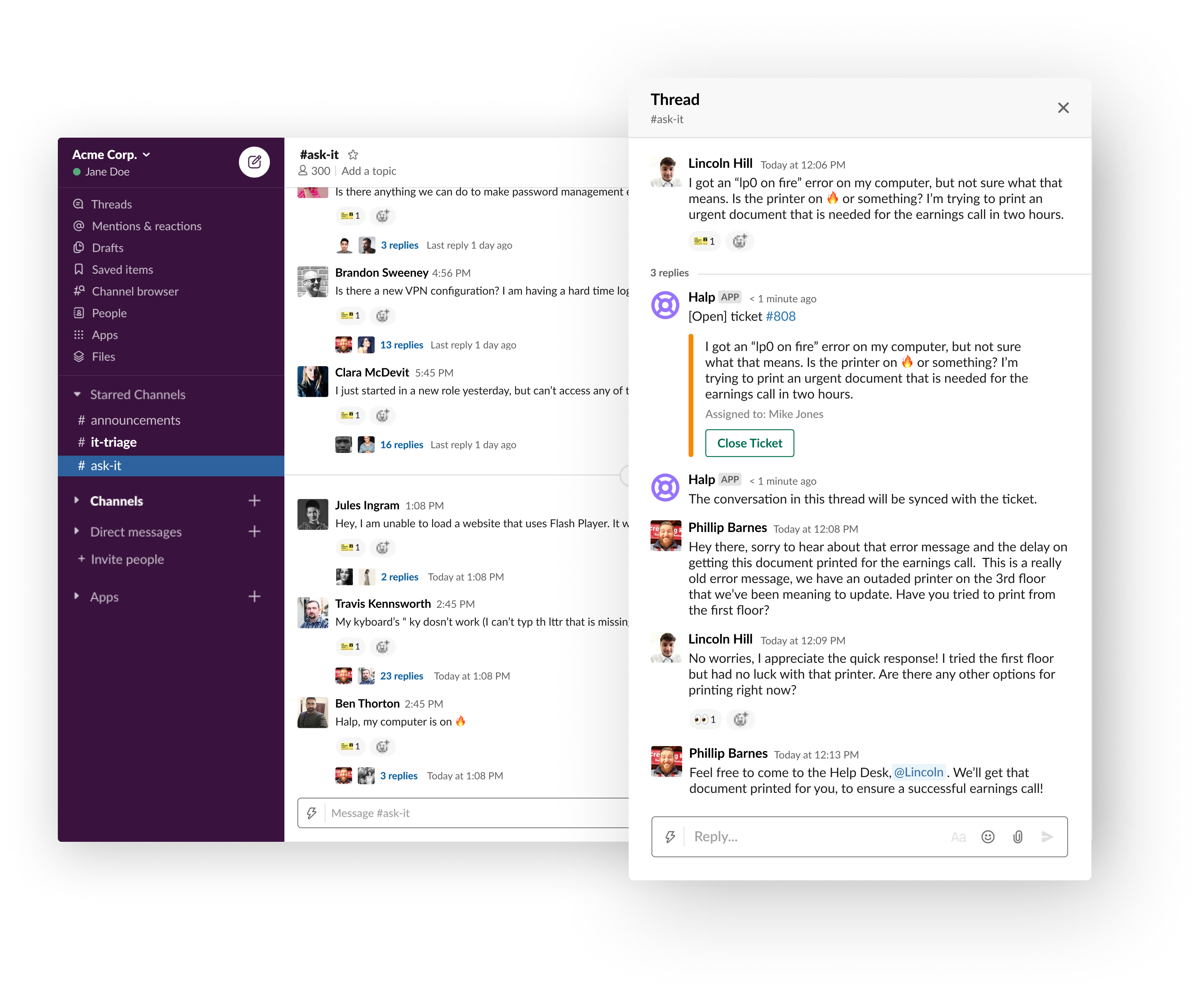
    Atlassian this week announced it has acquired Halp, a provider of a help desk platform that employs Slack as its user interface.

    Steve Goldsmith, head of product integrations at Atlassian, said Halp will provide organizations with a way to manage lightweight processes via an interface that is already commonly used within many organizations. The goal is to provide a level of integration between Halp and the JIRA Service Desk platform from Atlassian to handle more complex requests, he said.

    The Halp platform has already been integrated with Confluence, a knowledge base platform from Atlassian that enables help desk staff to share best practices for resolving known issues. Deeper integrations with JIRA and Confluence will be forthcoming, added Goldsmith.

    At the same time, Atlassian is working on tighter integration between its service desk platform and Microsoft Teams, which has emerged as a popular alternative to Slack, he noted.

    Halp CEO Fletcher Richman said that approach has gained traction because the biggest challenge when it comes to help desks is making it as easy as possible for an employee to generate a help ticket. Halp addresses that issue by enabling end users to simply drag and drop on an emoji to generate a help desk ticket.

    The help desk staff is then provided a web interface through which they can remotely manage tickets and respond to requests via Slack. That approach eliminates the need for the help desk staff to be physically located in an office or employ a virtual private network (VPN) to access a help desk platform running on a local area network, he said.

    Richman noted too often employees wind up supporting each other because the process of generating a ticket is too complex. At a time when many employees are working from home to help combat the COVID-19 pandemic, it’s not really possible for employees to currently provide that mutual support.

    It’s not really clear to how many employees might ever be heading back into an office at this point, so Halp also provides a way for remote employees to more easily remain productive, he added.

    Slack and JIRA, of course, are already de facto standards among many DevOps teams. Halp should provide developers with a means to instantly resolve a wide range of low-level issues in near real-time by generating a help desk ticket via Slack.

    Richman noted that for any IT service management (ITSM) platform to be successful, it needs to meet users where they are. If the platform is too complex or intimidating, users will look to their fellow employees for help first. Before long, however, all the mutual support saps productivity. By making help just a simple Slack message away, many more issues will be resolved by help desk personnel who already know the right answer, he said.

    It’s too early to say how many more help desk tickets might be generated because of Slack. However, in the wake of the rush to remotely enable the entire enterprise, the need for an easier way to provide support is now more apparent than ever.

  • LaunchNotes Adds Communications Tool for App Release

    LaunchNotes Adds Communications Tool for App Release

    LaunchNotes today launched a namesake software-as-a-service (SaaS) platform for managing the communications surrounding the release of an application.

    Company co-founder Jake Brereton said LaunchNotes streamlines internal and external communications for DevOps teams, eliminating the need to employ a collaboration tool such as Slack or a project management application.

    Each message can be designated as either a private communication for the internal DevOps team or shared publicly with business shareholders. Instead of having to subscribe to yet another Slack channel, business stakeholders now have a dedicated and easier means to track the progress of application releases, said Brereton.

    Communications surrounding application releases have always been problematic. Most applications are developed using multiple platforms, so standardizing the communications tools provided by those platforms isn’t usually practical. LaunchNotes is designed to provide an easy way to manage communications regardless of the platform employed to build and deploy an application, Brereton said.

    DevOps teams can also post things such as articles that might, for example, explain the history of any given application development project, he added.

    Interest in application release timetables has never been higher. In the age of digital business, more organizations than ever have come to equate with revenue the rate at which applications are deployed and updated. However, it’s not always been easy for business leaders to decipher the release notes that DevOps team members routinely share with one another. LaunchNotes is meant to provide a means for DevOps teams to communicate privately with one another while creating a separate channel within the same platform to share frequent updates in plain language in real-time with other members of the organization.

    The issue with Slack and other communications platforms is they have become too noisy, noted Brereton. In the stream of updates being provided about things going on inside the organization and beyond, it can be easy to miss a critical update about an application release.

    LaunchNotes has been available through a private beta involving 60 organizations. The company views its platform as a complement to project management applications rather than a replacement. The sole focus is on streamlining DevOps communications, said Brereton.

    To one degree or another most DevOps teams suffer from a failure to communicate. Most of the time that failure is not because a message wasn’t shared; rather, the medium employed to deliver that message made it easy to miss or be misconstrued. If the medium is the proverbial message, then DevOps teams might be better off employing a medium designed specifically for optimizing application release cycles.

    Of course, many organizations will continue to employ the communications tools that are most readily available. However, those general-purpose communications platforms also make it easy for users to be distracted by everything from messages from human resources about the latest form to be filled out to who won the football pool this week.