Category: News

  • Microsoft Expands Azure DevOps Portfolio

    Microsoft Expands Azure DevOps Portfolio

    Microsoft has made available a bevy of updates to its DevOps portfolio that, collectively, are intended to increase its share of a wave of applications that will be rolled out across the extended enterprise.

    Additions to the Microsoft DevOps portfolio were announced at the Microsoft Ignite 2021 conference and include DevOps Workflow Generator, a free tool designed to help DevOps teams visualize their toolchain, and updates to Azure Automanage, a framework for automating the management of virtual machines on Windows Server and, in preview, on Linux.

    At the same time, Microsoft has added support for open source OpenTelemetry agent software to Azure Monitor and made available a preview of Azure Chaos Studio, a service for testing application resiliency.

    Microsoft is also making available a preview of Windows Server 2022 that adds secure-code capabilities for workloads deployed on the platform. Microsoft also previewed updates to backed databases such as SQL Server 2022, Cosmos and its implementation of the Redis database created by Redis Labs.

    Finally, Microsoft has also made available a preview of integration between GitHub Actions for automating software development tasks and Azure Active Directory (Azure AD) using Open ID Connect, an authentication protocol advanced by the OpenID Consortium.

    Microsoft CEO Satya Nadella told conference attendees the next 10 years will witness more digitization than the previous four decades as IT shifts from an era defined by mobile and cloud computing to one defined by ubiquitous computing and ambient intelligence.

    Applications built in everything from procedural code to the Microsoft Power Fx, a low-code tool that Microsoft created using the programming language it originally built for users of the Microsoft Excel spreadsheet. Microsoft envisions those applications will primarily be built on its cloud and distributed everywhere. On the backend, a range of database and artificial intelligence (AI) services will be invoked primarily via application programming interfaces (APIs).

    Of course, every major cloud service provider has similar ambitions. Most organizations today are not standardizing on a single cloud. Rather, they are determining which class of workloads run best on which cloud computing platform regardless of whether that approach increases the total cost of IT. Each additional platform adopted typically requires IT teams to master separate tools. However, Microsoft is now also making a case for a cloud-native framework that can be deployed anywhere to build, deploy and manage applications.

    In the meantime, the number of workloads deployed on cloud services continues to grow. The market research firm Canalys reported worldwide spending on cloud infrastructure services reached $49.4 billion in the third quarter of 2021, a 35% increase. Microsoft currently trails Amazon Web Services (AWS) in overall market share but continues to steadily make gains. Microsoft and AWS collectively account for roughly half of all cloud infrastructure service consumption.

    DevOps best practices will need to evolve to meet the challenges of multi-cloud computing. In addition to cloud platforms and on-premises IT environments, applications are now starting to be deployed at the edge in greater numbers. DevOps teams need to be able to continuously deploy applications and their associated updates across a wide range of platforms. The challenge, of course, is that all those platforms have unique attributes that make truly automating the entire process on an end-to-end basis an elusive goal.


  • NextArch Foundation Launched to Focus on Microservices

    NextArch Foundation Launched to Focus on Microservices

    The Linux Foundation this week launched the NextArch Foundation to define frameworks and specifications that promote interoperability between microservices that span multiple cloud computing environments.

    More than 40 organizations, including Tencent, Arm, Kong and Ampere, have committed to contributing to 10 technology projects in 2022 in addition to frameworks for three vertical industries.

    Mark Shan, chairman of Tencent Open Source Alliance, said within the next five years the NextArch Foundation expects to have defined a set of standards and best practices that will have been widely adopted.

    The NextArch Foundation’s mission is to provide a home for a set of emerging technologies that would otherwise not get the attention they deserve within the confines of an existing consortium, said Shan.

    NextArch Foundation’s areas of focus will include how continuous integration/continuous delivery (CI/CD) platforms are employed to build microservices and reducing latency between microservices residing in highly distributed computing environments, added Shan.

    It’s not clear where the efforts of NextArch will begin and end as compared to the Cloud Native Computing Foundation (CNCF), another arm of the Linux Foundation that focuses on platforms such as Kubernetes that are widely used to build and deploy microservices-based applications based on containers.

    In general, however, it’s already apparent that microservices are at the core of most digital business transformation initiatives that span everything from artificial intelligence (AI) projects to edge computing environments. The global digital transformation market size was valued at $336.14 billion in 2020 and is expected to grow at a compound annual growth rate (CAGR) of 23.6% from 2021 to 2028, according to market research firm Grand View Research.

    As organizations embrace microservices to build and deploy software, the need to establish a set of DevOps best practices to manage them given the level of dependency that exists between multiple microservices within any application.

    Challenges associated with managing microservices are not likely to deter organizations from adopting them, but they do slow down the transition. Most new applications are intended to run on mobile devices that access cloud services, and typically run more efficiently when constructed as a set of microservices that scale up and down based on usage. The levels of agility and resilience that microservices have are crucial to any digital business transformation initiative, so the general expectation is that the percentage of microservices-based applications that will be running in production environments will increase sharply.

    The challenge, of course, is that, over time, microservices-based applications are more challenging for developers to build and maintain than a traditional monolithic application, though they are easier to update. It’s not likely microservices-based applications will replace existing monolithic applications overnight, but many existing monolithic applications are being converted into a set of microservices that makes it easier for developers to reuse the core functionality of that application.

    Of course, it’s still early days as far as microservices in the enterprise are concerned, but as developers shift toward a new way to build software, the need for a wider range of de facto standards should become more apparent.

  • Apollo GraphQL to Provide More Control Over APIs

    Apollo GraphQL to Provide More Control Over APIs

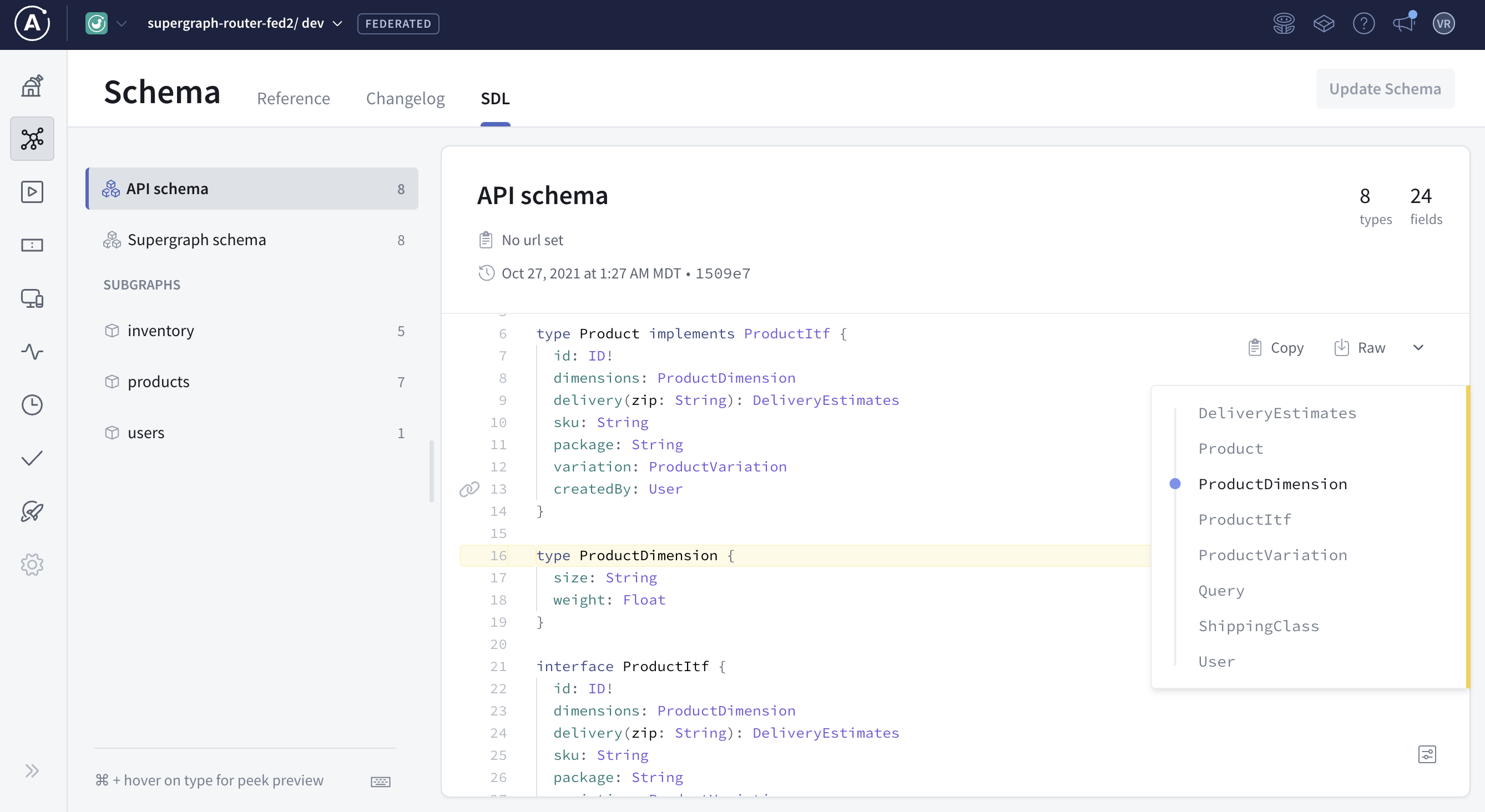
    Apollo GraphQL today previewed an update to its Federation platform for tracking and managing application programming interfaces (APIs) based on the GraphQL query language to give organizations more control over how APIs are reviewed and ultimately approved.

    Matt DeBergalis, founder and CTO, Apollo, said the alpha edition of the Federation 2 platform provides a unified view of distributed APIs based on GraphQL so they can be more easily governed.

    Federation is based on a unified graph created by Apollo GraphQL to initially provide more visibility into how APIs based on GraphQL are employed within an organization. That capability makes it simpler to increase collaboration among development teams that typically build APIs in isolation from one another, noted DeBergalis.

    The latest version of Federation also adds a shared ownership model that empowers teams to evolve unified graphs across smaller teams, he noted.

    In general, DeBergalis noted that Federation reduces the chances developers are going to create redundant APIs because they can more easily discover existing ones. They can then either employ those APIs as-is or modify them to suit their requirements as they increasingly compose an application using tools such as Apollo GraphQL Studio versus building every capability from the ground up themselves.

    GraphQL

    Overall, Apollo GraphQL claims that Federation is currently being downloaded more than one million times a week, with more than 30% of Fortune 500 companies such as Netflix, PayPal, Zillow, Walmart, Peloton and Priceline already using its tools.

    The company is also now making Federation and the rest of its tool portfolio available under the Elastic License 2.0 which provides the right to use, copy, distribute, make available and prepare derivative works of the software, but prevents organizations from offering a managed service, circumventing license key functionality or removing/obscuring features protected by license keys or remove or obscure any licensing, copyright or other notices.

    GraphQL, originally created by Facebook, is gaining traction as an alternative to REST APIs because it gives developers more control over how data is accessed via an API using a set of query capabilities. That capability is especially appealing when constructing digital business processes that require access by specific classes to large volumes of data. In fact, DeBergalis notes that, in many cases, it’s the existence of a rich set of APIs that enables organizations to construct digital processes that bridge the various isolated processes organizations previously had in place.

    Most IT teams will not be replacing REST APIs with GraphQL-based APIs overnight. However, there will soon be enough APIs based on GraphQL to have a significant impact on how applications are built and deployed. Many applications may wind up invoking external services via both REST and GraphQL-based APIs for many years to come.

    In the meantime, the rate at which applications are being built should substantially increase as tools such as Federation make development teams more productive. The challenge many DevOps teams will soon face is managing a large volume of deployments and associated application updates as more applications are deployed in production environments.

  • Oracle Adds AI Services to Cloud Portfolio

    Oracle Adds AI Services to Cloud Portfolio

    Oracle today unfurled Oracle Cloud Infrastructure (OCI) AI services, a collection of services that make it easier for developers to use application programming interfaces (APIs) to invoke a wide range of services based on algorithms trained by Oracle on their behalf.

    Elad Ziklik, vice president of product management for AI services and data science at Oracle, said the primary goal is to offload the data engineering tasks associated with machine learning operations (MLOps) from organizations that simply want their developers to include AI capabilities within their applications without having to necessarily hire and then retain a dedicated data science team.

    However, organizations also have the option of uploading their own data into OCI AI services to retrain the models provided by Oracle, he noted.

    Ultimate, the goal is to make OCI AI services a simple extension of DevOps workflows by making it simpler to employ AI models; these models become just another software artifact that can be stored and updated in a Git repository alongside all the other artifacts managed by a DevOps team, said Ziklik. In effect, Oracle wants to make AI ‘boring’ in the sense that these capabilities can now be readily invoked by any development team, he added.

    The OCA AI services include OCI Language, a text analysis capability that enables developers to add sentiment analysis, key-phrase extraction, text classification, named entity recognition and other similar capabilities to their applications, and OCI Speech, which converts file-based audio data containing human speech into text transcriptions.

    Oracle has also included OCI Vision for image recognition and document analysis tasks, OCI Anomaly Detection to create models that flag irregularities in processes, OCI Forecasting for tracking business metrics over time and OCI Data Labeling for creating datasets to train AI models.

    These services are designed to address the most critical AI requirements of the average enterprise rather than attempting to outperform on a set of AI benchmarks that don’t reflect the requirements of business development teams, said Ziklik.

    In addition, Ziklik noted Oracle has also made it easier to address AI compliance requirements that will eventually require organizations to document precisely how their AI models work.

    At some point soon, just about every application will be invoking AI capabilities to one degree or another. That shift creates a major workflow challenge for DevOps teams. AI models are typically created by data science teams that typically don’t successfully deploy an AI model in a production environment more than a handful of times a year. Those AI models, however, need to be integrated with applications that, in many cases, are being continuously updated via DevOps workflows.

    Oracle said that goal becomes easier to achieve using models it creates versus allowing data science teams to build out a set of custom MLOps workflows on platforms that then need to be maintained by IT professionals. Instead of having to set up, for example, a feature store to track and manage AI models, the models created using OCI AI can be stored in an existing Git repository.

    Naturally, each organization will need to determine the degree to which they will converge MLOps and DevOps best practices. Oracle, however, is betting that the simplest way to achieve that goal is via AI models surfaced via a cloud service that developers can readily invoke whenever required.

  • Newly Independent VMware to Focus on Multi-Cloud

    Newly Independent VMware to Focus on Multi-Cloud

    As an independent company once again, VMware will focus its efforts on providing management planes that span multiple cloud computing environments after officially spinning out of Dell Technologies.

    Ray O’Farrell, executive vice president for the cloud-native apps business unit at VMware, said the company now has a unique opportunity to work closely with providers of cloud services, builders of on-premises IT infrastructure and providers of telecommunications services.

    The terms of the spin-off included an $11.5 billion special cash dividend that resulted in a $27.40 per share dividend payment to all VMware stockholders. VMware claims the simplified financial structure that arises from the deal will provide it with additional operational and financial flexibility.

    Going forward, much of the development work will focus on providing management planes that not only span multiple clouds but also address specific cross-platform requirements such as security. It’s not likely there will ever be one single uber control plane for all of IT, noted O’Farrell. Rather, IT teams should expect VMware to deliver a series of well-integrated control planes to automate specific tasks in a way that breaks down IT silos, he said.

    VMware, however, under terms of its existing alliance, will also continue to work closely with Dell to create server environments that are optimized for VMware hypervisor platforms, O’Farrell said.

    Key to the strategy is a portfolio of observability tools that VMware plans to continue to expand, noted O’Farrell. VMware will also address the requirements of both traditional monolithic applications running on virtual machines as well as cloud-native applications running on distributions of Kubernetes, such as VMware Tanzu, that may be deployed on top of a hypervisor or on a bare-metal server, he added.

    Given the complex state of IT environments today, it’s all but inevitable something will go wrong, said O’Farrell. The challenge and the opportunity for VMware is to provide IT teams with the observability tools required to discover as many issues as possible before they adversely impact the business, he added. Once those issues are discovered, IT teams should be able to automate the remediation process using the rest of the portfolio of VMware management frameworks, he noted.

    Those management frameworks will also provide the foundation for unifying traditional approaches to IT service management (ITSM) with DevOps best practices that are now being used more widely, especially to manage cloud-native applications, said O’Farrell.

    When it comes to on-premises IT environments, VMware continues to dominate. Its hypervisor is, by far, the most widely used on servers in local data centers. VMware has spent much of the last two years expanding its reach into multiple clouds to enable IT organizations to standardize on a series of management frameworks. The goal is to reduce the total cost of IT by reducing reliance on what would otherwise be a hodgepodge of isolated management frameworks. The challenge VMware regularly encounters is the IT teams that manage cloud computing environments are not always the same ones that are managing on-premises IT environments. As such, many IT teams that have deployed cloud applications tend to embrace the management frameworks provided by their cloud services provider.

    VMware, however, is betting that as more organizations look to reduce the total cost of IT, the economic pressure to converge IT management using its frameworks will be simply too great to ignore.

  • Sustainability No Longer Just a Buzzword for Cloud IT

    Sustainability No Longer Just a Buzzword for Cloud IT

    A recent CloudBolt survey on IT sustainability finds that sustainability is no longer just a buzzword — the market is demanding real change, and it appears that environmental concerns finally are influencing large IT investments. For example, 67% say that a cloud provider’s sustainability initiatives are important in deciding whether to do business with them. A significant portion of organizations are even willing to pay a premium to support green initiatives!

    Below, I’ll review the report to find its major takeaways. We’ll see how sustainability is directing real action in cloud IT and briefly compare how the market perceives current green initiatives among three top cloud providers: AWS, GCP and Azure.

    Sustainability Gains Real-World Traction

    In June and July 2021, CloudBolt polled 256 global CxOs and tech leaders on its Pulse platform, and found that 76% of respondents now consider climate change an existential threat. Not only are IT purchasers factoring compute and cost, but a sustainability conscience is now influencing executives to direct sweeping change. In fact, 79% of respondents indicate their IT departments are expected to help their companies achieve specific sustainability initiatives driven by the board of directors of the C-suite.

    Interestingly, other studies found that a sustainability commitment results in tangible business outcomes. For instance, 88% of the research conducted by Oxford University and Arabesque showed that solid environmental, social and governance (ESG) practices result in better operational performance of firms and higher profits. This study also noted that 80% of the time, a company’s stock price is positively influenced by sustainability practices.

    Climate Conscience Guides Cloud Choices

    Most organizations now consider a cloud vendor’s sustainability initiatives when choosing whether to do business with that provider. A full 78% of respondents agree that the public/private cloud choices they make can materially affect the environment for better or worse. New environmental cloud commitments not only attempt to minimize carbon emissions from their data centers but factor in ecological ramifications and aim to erase companies’ historical carbon footprints, as well.

    Cloud consumers also want to contribute to addressing these green initiatives. An impressive 79% of respondents indicate that they will pay a premium to work with vendors who incorporate sustainability into their business. And 41% of companies are willing to pay a premium of 11 % to 15% of their current bills. This shows that sustainability is now a vital factor within the marketplace, and companies are willing to pay the price to increase their own environmental standing.

    Though this commitment is undoubtedly growing, the report did find that operational requirements such as security, cost and agility, still rank significantly higher than sustainability when comparing cloud providers. Though IT professionals recognize climate change as an existential threat, they still have day jobs and must keep operations moving.

    AWS: King of Green Clouds

    Slightly more than half (51%) of respondents agree that the industry-wide green energy commitment is real and growing among all cloud providers. However, when comparing the top three—Amazon Web Services (AWS), Azure and Google, AWS appears to be emerging as an IT sustainability leader; 41% of respondents perceived AWS as doing the most to address green initiatives.

    AWS is on track to power its entire operations with 100% renewable energy by 2025. With their solar plant investment in April 2021, Amazon became the largest corporate buyer of renewable energy in Europe. Around the globe, AWS has invested in a combination of on-site solar, solar farms and wind farms to power their data centers and Whole Foods divisions.

    To their credit, both Microsoft and Google also committed to climate pledges that affect their cloud footprint. Azure supports a similar initiative to reach 100% renewable energy by 2025, in addition to further investments to improve water, waste disposal and surrounding local ecosystems. Google Cloud’s commitment is to operate on carbon-free energy 24 hours a day by 2030, and the company has already achieved 100% renewable every year since 2017.

    Not only does AWS appear to be doing the most to address its environmental impact, it also retains the most market traction as a cloud leader. The majority of respondents (62%) said that AWS is winning the cloud wars while only 31% said Azure and just 7% said GCP.

    Final Thoughts

    It is heartening to see that ESG standards are having a measurable impact on a company’s cloud allegiances. The market now demands real change and is willing to pay the price for more ethical and sustainable cloud hosting.

    But choosing a cloud provider is only one aspect of reducing IT’s impact. As I’ve covered before, there are many ways IT can curb its climate impact. Such actions include optimizing overall infrastructure, shuttering zombie VMs, avoiding over-provisioning resources, increasing performance visibility, refactoring code and other measures. What’s great is that most of these initiatives have the added benefit of reducing cost to the business.

    The CloudBolt Industry Insights Report, The Truth About IT Sustainability: Paying More Green to Get More Green, surveyed 256 IT leaders on their perception of cloud sustainability. For additional insights, you can pick up a copy here.

  • Dynatrace Survey Sees Continuous Delivery Challenges Ahead

    Dynatrace Survey Sees Continuous Delivery Challenges Ahead

    A global survey of 1,300 application development and DevOps leaders conducted by the research firm Coleman Parkes on behalf of Dynatrace finds, on average, organizations expect to increase the frequency of their software releases by 58% over the next two years.

    Andreas Grabner, director of strategic partnerships at Dynatrace, an observability platform provider, said that while it’s clear organizations are embracing DevOps best practices to achieve that goal, the survey also found that more than a quarter (27%) of DevOps teams’ time is spent on manual continuous integration/continuous delivery (CI/CD) tasks. Nearly a quarter (22%) admit they’re often under so much pressure to meet the demand for application deployments that they must sacrifice code quality.

    In response, nearly two-thirds of respondents (62%) are investing in automation to eliminate manual tasks, while a similar percentage are looking to automate incident response processes. Another 45% are investing in observability tools, with nearly three-quarters (74%) noting that end-to-end observability will be essential to DevOps in the future.

    A full 98% also noted that extending DevOps to more applications will play a crucial role in driving digital transformation and optimizing customer experience. A total of 71% said a unified platform that seamlessly integrates their toolchains will be critical to scaling DevOps, while 79% said extending artificial intelligence to IT operations (AIOps) into the realm of DevOps is critical for their future success.

    Survey respondents, however, also identified siloed team cultures (75%) and application complexity (70%) as the primary barriers to achieving DevOps success. Organizations, as a result, are investing in the automation of manual CI/CD tasks (62%), eliminating manual incident response (62%) and end-to-end observability (45%).

    Grabner noted that, as more organizations build and deploy next-generation applications based on microservices constructed using containers and application programming interfaces (APIs), it will only become more challenging to automate DevOps processes. As part of an effort to reduce the cost of delivering those applications, Dynatrace donated Keptn, an open source enterprise-grade control plane for automating the continuous delivery of cloud-native applications, to the Cloud Native Computing Foundation (CNCF), added Grabner. The overall goal is to reduce the total cost of implementing DevOps as part of an effort to instrument more applications, he noted.

    While most organizations that have embraced DevOps have a good handle on how to implement continuous integration, achieving the continuous delivery side of the DevOps equation has proven to be more challenging. In the absence of standardization among the platforms, each application deployed on individual IT systems is a “snowflake,” in that it is unique to that platform. That issue, in part, is why so many IT teams still rely on manual processes to deploy applications.

    It’s only a matter of time before organizations begin to more aggressively automate the deployment of applications. That may become even easier to achieve if they standardize on a Kubernetes application programming interface (API) that can be implemented across any platform.

    In the meantime, however, it’s clear that, as the pace of digital business transformation increases, one of the most limiting factors organizations will encounter is the pace at which applications can be deployed and updated.

  • Postman Survey Shows Focus on Building and Deploying APIs

    Postman Survey Shows Focus on Building and Deploying APIs

    A survey of more than 28,000 developers and application programming interface (API) professionals published today by Postman found nearly half of respondents (49%) are now spending the majority of their time developing APIs. More than a quarter (28%) now spend 20 or more hours per week working with APIs.

    Kin Lane, chief evangelist for Postman, a provider of a platform for building APIs, said that shift reflects an increase in software development and integration activity that began at the start of the COVID-19 pandemic. Almost two-thirds of respondents (63%) said the pandemic somewhat or significantly affected their work, with almost half of those respondents noting that changes made with their organization were enabled and supported by APIs.

    Additionally, a full 94% of respondents said the investment of time and resources into APIs will increase or stay the same for the next 12 months. The biggest obstacle to creating APIs is lack of time (45%) while the biggest obstacle to consuming an API is lack of documentation (55%). In terms of API goals, the survey found that quality (80%), agility (66%) and reliability (65%) are the top three goals among survey respondents.

    However, the survey also noted only a third of respondents said they could build and deploy an API in anywhere from a single day to a week, with most requiring one week to a month. About one-third also said they deploy APIs to production between once per week and once per month. More than 80% of respondents noted that less than 25% of their changes fail while a similar percentage said they can recover in less than a day with a third reporting they fully recover in less than an hour.

    The Postman survey also found that more than three-quarters of respondents (76%) have less than five years of experience with API development. Only half of respondents indicated that they agree or strongly agree that the leadership of their API team has a clear sense of where their API practice should be in five years. However, microservices (58%) and Kubernetes (50%), containers (46%), serverless architecture (44%) and GraphQL (35%) were ranked among the technologies that respondents were most excited about heading into 2022.

    On the plus side, more than 60% of respondents felt their API leadership and governance teams demonstrated a “willingness to change” as well as duly considering “the interests and opinions of employees.” When it comes to regularly providing feedback and process, more than half of leadership and governance teams (53%) scored well.

    The top two ways API teams collaborate is via a dedicated collaboration platform (50%) or by publishing API artifacts to repositories such as GitLab, GitHub and Bitbucket (45%), according to the Postman survey. The most widely used DevOps tools are Jenkins (37%), Azure DevOps (26%), GitHub Actions (25%), AWS DevOps (23%) and GitLab Pipelines (22%).

    In terms of deploying APIs, continuous integration/continuous delivery (CI/CD) platforms are the most widely employed (57%), followed by deploying APIs in the cloud (38%), frameworks (34%) and custom-built deployment methods (27%).

    Just over 70% of respondents ranked security and performance as the top factors considered when integrating with an API. When producing an API, however, the top factors are integration with internal systems, integration with external systems, adding functionality to an internal system and enhancing functionality for an end customer. Similarly, when consuming an API the top factors are integration with external systems, adding functionality for end customers, adding functionality to internal systems and integration between internal systems.

    In general, Lane noted that, as more APIs are developed and deployed to drive various digital business transformation initiatives, organizations will need to pay more attention to API discovery and management. There’s a tendency for different teams within organizations to not only create redundant APIs but also forget about so-called zombie APIs that are no longer supported but can still be exploited by cybercriminals.

    Overall, Lane said the survey makes it clear more organizations are pursuing an API-first approach to digital transformation. The challenge now is managing all the APIs that can quickly become too much of a good thing.

  • Intel Woos DevOps Teams with API and Processor Advances

    Intel Woos DevOps Teams with API and Processor Advances

    During the online Intel Innovation 2021 event, Intel announced today a unified Developer Zone for accessing application programming interfaces (APIs) that it makes available via a oneAPI toolkit to IT teams that want to more easily invoke a wide range of processor types and classes.

    At the same time, the company also revealed it is creating a set of oneAPI centers of excellence that will make it easier for DevOps teams to consume those APIs. Partners participating in that initiative include Oak Ridge National Laboratory, University of California Berkeley, University of Durham and University of Tennessee. Intel will also make the Intel Graphics Visualization Institutes of Xellence part of this program.

    Next year, Intel is also promising to deliver oneAPI 2022 toolkits that will add 900 additional capabilities including an ability to develop applications for CPUs and graphical processor units using what Intel described as the first unified C++/SYCL/Fortran compiler.

    The company is also planning on making available Data Parallel Python tools in addition to expanding its Advisor accelerator performance modeling tools to include support for VTune Flame Graph to visualize performance hot spots.

    There will also be additional oneAPI integrations to add support for Microsoft Visual Studio Code and the Microsoft Windows Subsystem for Linux 2 platform. Intel also created an Intel oneAPI AI Analytics toolkit to enable out-of-the-box AI development that is supported by workstations running Linux from Dell Technologies, HP and Lenovo. Additionally, Microsoft and Intel have agreed to create a complete data science toolchain to Windows 11 that will become part of the Surface Laptop Studio framework for building applications.

    Greg Lavender, chief technology officer, senior vice president and general manager of the software and advanced technology group at Intel, said it’s critical to make sure that DevOps teams add support for the acceleration engine and extensions that Intel makes available within its processors to the runtime environments they deploy. Otherwise, developers will never be able to routinely invoke those capabilities to build next-generation applications.

    The company also revealed that next-generation Intel Xeon Scalable Processors, code-named Sapphire Rapids, will have additional acceleration engines to both simplify deployments at scale and optimize processors’ core utilization in a way that reduces power consumption. Overall, Intel is promising up to a 30x total performance gain for artificial intelligence (AI) applications running on these processors.

    Other hardware advances announced today include a 12th generation Intel Core family based on 7-nanometer processors and a Mount Evans project through which Intel is collaborating with Google Cloud to build processors based on application-specific integrated circuit (ASIC) chips.

    The company also unveiled an Intel ArcTM Alchemist family of graphics systems on chips (SoCs) that take advantage of machine learning algorithms to optimize performance and touted an Intel Tofino fabric processor (IFP) that adds intelligence to network switching via support for P4 programming tools.

    Finally, the company noted that an Aurora supercomputer, due out in 2022, will exceed two exaflops of peak double-precision compute performance.

    As Intel seeks to regain the processor high ground from rivals such as NVIDIA, ARM and AMD, it’s clear that the future of IT will be defined by a broad range of processor classes that all have unique capabilities. The challenge now is deciding which of those capabilities to actually make available to developers that are largely dependent on the runtime environment that DevOps teams decide to make available.

  • GitHub Expands Developer Productivity Tools Portfolio

    GitHub Expands Developer Productivity Tools Portfolio

    During the online GitHub Universe 2021 conference, GitHub today unveiled a bevy of updates intended to boost developer productivity by making it easier for developers to write code faster and collaborate more easily.

    The GitHub Copilot tool that GitHub developed in collaboration with OpenAI, a research and development lab, to help developers write better code faster is being extended via a technical preview to add support for Java and the integrated development environment (IDE) JetBrains.

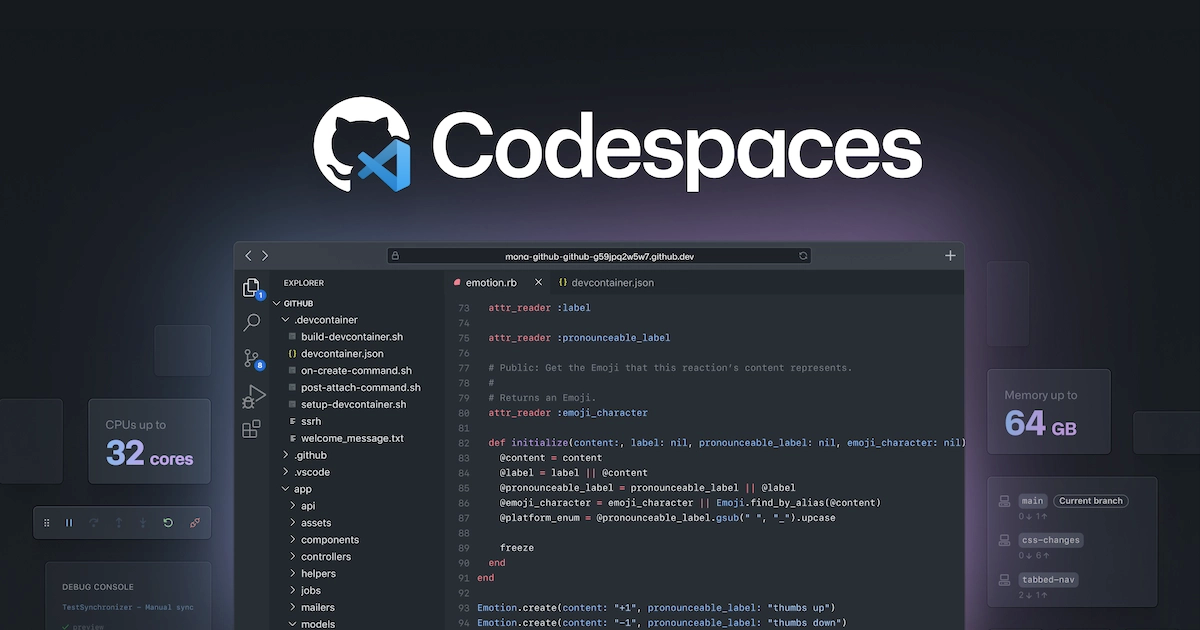
    In addition, the Codespaces tools that GitHib makes available to pre-configure development environments is being extended to include support for devcontainer feature composition, the GitHub command line interface (CLI) and REST application programming interfaces (APIs) along with additional access controls.

    GitHub Actions has also been updated to add support for deployments using the OpenID Connect standard in addition to providing access to deployment environments to simplify approvals, improvements to reusable workflows and auto-scaling functionality for self-hosted runners.

    There is also now a Command palette tool in beta to help developers navigate GitHub along with a public beta of a GitHub Issues tool that makes it simpler for developers to filter, sort and group issues and pull requests. Additional features that have been added since GitHub Issues was first previewed include iteration support, reporting and data visualization tools and the ability to employ it across public projects.

    Finally, GitHub is adding, in beta, support for Ruby as a programming language that CodeQL analysis engine can now scan for vulnerabilities along with the ability to customize permissions for accessing GitHub Enterprise Cloud.

    Ryan Salva, vice president of product management for GitHub, said collectively GitHub is committed to making developers more productive by, for example, autocompleting code as developers write. Support for additional programming languages will also be forthcoming in the months ahead. The goal is not to leverage AI to replace developers but, rather, eliminate the drudgery that gets in the way of developers becoming more creative, noted Salva.

    There won’t come a day any time soon when developers won’t have to type to write code, but it is possible to leverage AI to provide a type-ahead capability that reduces coding errors, added Salva.

    The goal should be to enable developers to create more application experiences at a time when more organizations than ever are consuming applications that drive a wide range of digital business process transformation initiatives, said Salva.

    As part of that effort, Salva noted it’s also critical to reduce the amount of friction developers encounter writing code starting with setting up the development environment itself.

    It’s not clear yet what impact all the focus on developer productivity and collaboration will have on the rate at which applications are being built and deployed. However, as developers become more productive, the number of application development projects that can be launched simultaneously should increase. In fact, there may come a day when applications are being built faster than organizations can deploy them without adopting continuous delivery best practices that rely on higher levels of automation to install software.

    Regardless of that application delivery challenge, however, it’s a problem most organizations right now would consider themselves fortunate to have.