Category: News

  • Rails 7 FTW | WFH is SOP | 586M Passwords Dumped

    Rails 7 FTW | WFH is SOP | 586M Passwords Dumped

    Welcome to The Long View—where we peruse the news of the week and strip it to the essentials. Let’s work out what really matters.

    This week: Ruby on Rails 7.0 is go, working from home is still de rigueur, and HIBP gets far, far bigger.

    DHH is Excited

    First up this week: Ruby on Rails version 7.0 is now in production. It promises less bloat, better security and even more developer efficiency.

    Analysis: Last chance for greatness

    Talk to devs about Ruby on Rails and you’ll hear a wide range of opinion—all the way from “obsolete memory hog” to “productivity secret weapon.” But its important promise seems to be to encourage devs to use better design patterns.

    Paul Krill: Ruby on Rails 7 rejiggers JavaScript support

    Ruby on Rails 7, the latest version of the web application framework, is now available as a production release. … It gives developers a “no-Node” approach to front-end development while still providing access to NPM packages and modern JavaScript.
    …
    Most Rails applications will not require Node.js, given the new defaults. … Other improvements:
    …
    Encrypted attributes have been added to Active Record, enabling applications to offer at-work encryption in addition to traditional at-rest and in-transit. … With asynchronous query loading, two unrelated queries can be run concurrently. … The Spring application preloader is no longer on by default, as faster computers have made it unnecessary.


    Let’s hear from Rails creator David Heinemeier Hansson—AKA DHH:

    Seven is … the culmination of years of progress on five different fronts at once. … The part that really excites me … is how much closer it brings us to the ideal of The One Person Framework. A toolkit so powerful that it allows a single individual to create modern applications upon which [to] build a competitive business.
    …
    It’s been well over twenty years for me now, and a big release like this still makes me giddy. … What a glorious time to be working in web development.


    What a whatnow? Here’s bb_matt:

    I don’t pretend … it’s a “glorious time to be working in web development,” except for one important aspect: … Experienced programmers coming over from software development and starting to make amends [with] strong typing, robust CI/CD, a focus on TDD, a focus on domain modeling.
    …
    99% is still total **** though—but then again, so is most software.


    Home Working Ain’t Gone Away

    A month ago, my long-suffering editor permitted me to write, “WTH? We Wanna WFH.” And survey after survey says tech workers work better at home. After the last 21 months, there’s simply no denying it.

    Analysis: Genie out of bottle—no going back

    If you’re under the misapprehension that DevOps is somehow “special” and your workers will be glad to return—think again. Find a way to make it work, or work will stop—and your business will die.

    Steven J. Vaughan-Nichols: How to lure employees back to the office? You can’t. Not now. Not ever.

    Months have gone by, and the great resignation keeps rolling along. … People don’t want to catch COVID-19 [but] bosses still think they can force skilled workers to return to offices. … That’s not going to happen.
    …
    The problem? Many executives and owners haven’t gotten the clue yet. [But] any doubts you may have about people not doing a good job unless you’re looking over their shoulders should have vanished by now. … The monthly academic WFH research.com survey has found almost six out of 10 workers reported being more productive working from home. … In the Dice State of Remote Work report … 53% of technologists listed greater productivity as one of the main benefits.
    …
    It’s simple: It works better for them and for your company. … Anyone who’s been paying attention … must agree. You can either go along with the flow, or you can fight it and first lose your staffers and then your company


    So what do DevOps managers think? One of them is kozikow:

    100% remote is not great either. … When there was a long period of 100% remote during Covid, there were some issues. … We developed a policy that Mondays are required, Wednesday are encouraged, rest is work from home. … It was shared decision of the team.
    …
    I think that most people who are strongly against hybrid work just have to live in a miserable place like SF. … It’s unfortunate that so many software companies are in the Bay Area.


    But you couldn’t pay some people enough to go back—people such as this Anonymous Coward:

    No way in hell they’d ever be willing to pay me … to come back into an office. … No having to go out in ****ed up weather, no fighting traffic and … dangerous drivers, plus I get all that commuting time back.
    …
    And I don’t have to put up with Linda cooking fish in the microwave.


    Have I Been Pwned? There’s a 38% Higher Chance

    This week saw a huge bump in the size of Troy Hunt’s already-massive database of stolen credentials. In case you’ve not seen it, HaveIBeenPwned.com is an amazing free service that lets apps securely check a user’s password isn’t already used elsewhere on a compromised site.

    Analysis: Build the API into your auth flow ASAP

    The UK’s equivalent to the FBI has donated a huge trove of credentials—after deduping, it’s added more than 225 million new passwords to the database. Frankly, if you still allow your users to rely on any of the 847 million passwords in HIBP, it would be negligent.

    Simon Sharwood: National Crime Agency finds 225 million previously unexposed passwords

    Troy Hunt, of Have I Been Pwned (HIBP) fame, yesterday announced … the NCA shared 585,570,857 [creds] with HIBP, and Hunt said 225,665,425 … he hasn’t seen before in the 613 million credentials HIBP already stored. [HIBP] lets anyone conduct a secure search of stolen passwords to check if their credentials have been exposed.
    …
    The NCA’s statement to Hunt did not reveal the source of the password trove [but said they] “were able to identify a huge amount of … passwords in a compromised cloud storage facility. … It became clear that these credentials were an accumulation of breached datasets known and unknown.”
    …
    [The] release brings the total Pwned Passwords count to 847,223,402, a 38 percent increase.


    How’s this relevant to DevOps? Troy Hunt explains:

    In the last month, there were 1,260,000,000 occasions where a service somewhere checked a password against … HIBP’s Pwned Password API. … There are all sorts of amazing Pwned Passwords use cases out there. For example … checking their customers’ passwords on every registration, login or password change to see if it’s previously been breached.
    …
    The UK’s National Crime Agency has done some wonderful work over the years to combat cybercrime. … Today’s release is about turning on the firehose of new passwords and making them immediately available to everyone for free. Having this open to the community, owned by the community and supported by the FBI and NCA is an enormously pleasing result.


    Time for a metaphorical thought experiment. LenKagetsu obliges:

    You were told by a reliable source that an unknown person … posted a high-res image of … your house key … on the internet. Would you change the locks?


    The Moral of the Story: Never switch horses in midstream


    You have been reading The Long View by Richi Jennings. You can contact him at @RiCHi or tlv@richi.uk.

    Image: David Emrich (via Unsplash)

  • Quali Adds Free Tier to DevOps Automation Platform

    Quali Adds Free Tier to DevOps Automation Platform

    Quali has added a free tier of service to its Torque platform for automating infrastructure provisioning and application workload deployments.

    In addition, the company has updated the software-as-a-service (SaaS) platform to provide blueprints through which it provides tighter integration with Terraform, an open source infrastructure-as-code (IaC) tool, along with support for custom tags to make it easier to generate reports and dashboards that provide greater visibility into infrastructure costs.

    Quali CEO Lior Koriat said the free tier is intended to make the Torque platform more accessible to both small teams of DevOps professionals and individual users. It includes the ability to build environments on Amazon Web Services (AWS) or the Microsoft Azure cloud in addition to providing integration with a variety of DevOps tools and platforms and access to a sample blueprint library. Support for the free tier is provided via an existing community edition of the platform.

    Koriat said Torque takes IaC a step further by also making it possible to automatically deploy complete application environments on top of infrastructure provisioned as code using blueprints rather than low-level Terraform scripts. The goal is to increase developer productivity by extending Terraform so that developers can spin up environments across multiple cloud computing platforms via self-service, he added.

    That approach also sharply reduces the chances a cloud platform will be misconfigured, which Koriat noted is the bane of cloud security professionals’ existence. Most developers lack the cybersecurity expertise required to ensure cloud computing environments are configured properly. Simplifying the provisioning of infrastructure is especially critical when developers employ complex platforms such as Kubernetes, added Koriat.

    At the same time, Quali’s Koriat said IT leaders want more visibility into how cloud resources are being consumed as the number of workloads deployed in these environments steadily increases. Developers tend not to remember to de-provision cloud resources when no longer needed, which Koriat noted conspires to increase cloud costs unnecessarily.

    It’s not clear just yet how quickly DevOps teams might be moving away from relying on lower-level tools toward automation frameworks accessed via a SaaS platform. However, as application environments become more complex, it becomes even more challenging to provision and manage IT environments—especially since many DevOps teams are still working from home to help limit the spread of the COVID-19 pandemic.

    One way or another, the amount of time and effort spent managing IT infrastructure needs to be reduced. After all, while application environments are increasing in both size and complexity the number of individuals that make up a DevOps team remains largely the same. The need to rely more on automation frameworks has reached a tipping point that is becoming increasingly obvious to all concerned.

    As more organizations start to operate as software companies in the age of digital business transformation, it’s clear the way IT has been managed in the past is about to fundamentally change. The issue now is determining which automation framework lends itself best to enabling DevOps teams to achieve that goal.

  • Red Hat Adds Service to Customize RHEL Images

    Red Hat Adds Service to Customize RHEL Images

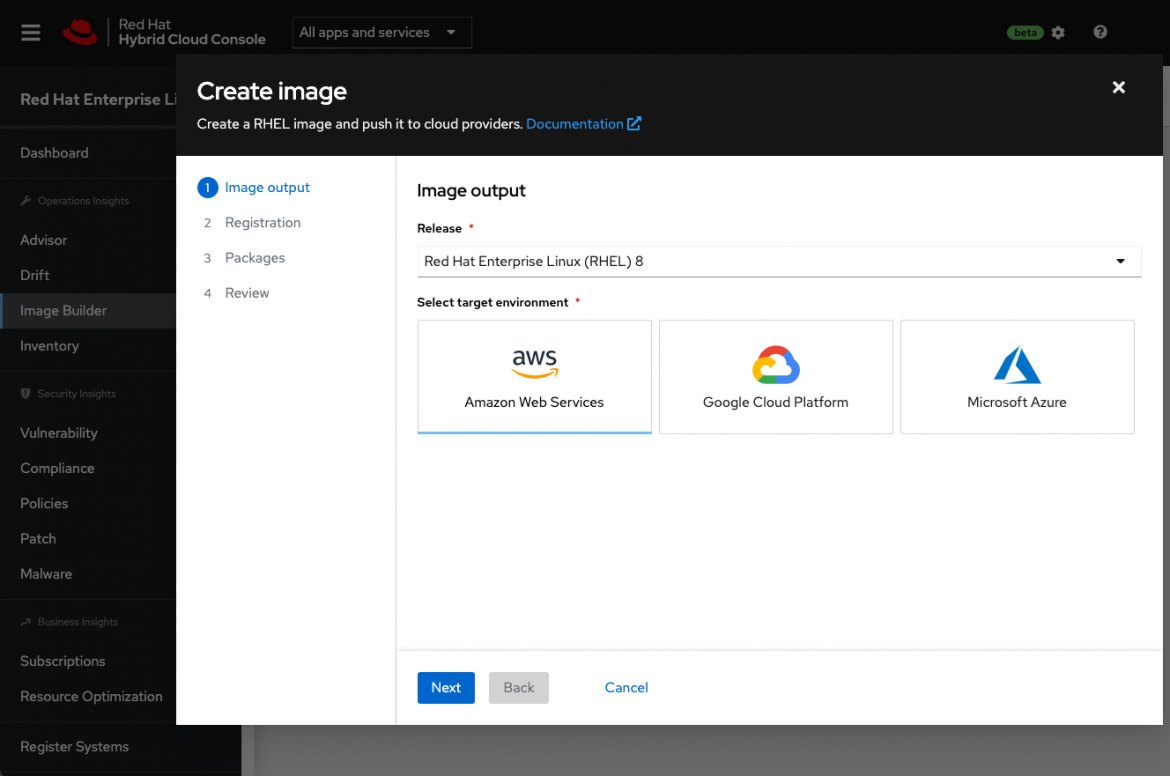
    Red Hat this week announced a public beta of an Image Builder service that streamlines the process of building customized instances of the Red Hat Enterprise Linux (RHEL) operating system.

    Scott Herold, director of product management for RHEL at Red Hat, said the Image Builder service enables an IT team to define a “gold” template for each target deployment environment that only contains the RHEL code required. Initially, Image Builder is configured to default to build a minimal, recommended RHEL server image for Amazon EC2, Microsoft Azure and Google Cloud Platform (GCP) cloud services.

    Future updates to the service will add support for VMware vSphere platforms as well as downloadable images and installation media for physical servers, customized filesystem layouts and versions 9.0, 8.5, 8.4 and 7.9 of RHEL. The service itself is accessed via the Red Hat Hybrid Cloud Console that is currently being made available in beta.

    Herold said building or installing operating systems is often a slow, tedious and error-prone process that needs to be manually performed in a slightly different way for each platform. Each physical server or edge computing platform requires different configurations and workflows. As a result, the chances mistakes will be made is high; Image Builder can greatly reduce the possibility of mistakes because there is no guesswork required, noted Herold.

    IT teams can also opt to include additional content from Red Hat in those builds to further streamline deployment processes, noted Herold. Those images can then be automatically registered with Red Hat to ensure future updates are received.

    The ability to customize those images also serves to reduce the overall size of the codebase that needs to be secured, added Herold. At a time when there is increased focus on software supply chains in the wake of a series of high-profile security breaches, many IT teams are revisiting their software deployment processes, he noted.

    Ultimately, Herold said Red Hat is moving toward providing IT teams with a more cloud-like experience regardless of where they deploy Red Hat’s curated open source software. The goal is to reduce as much friction as possible so that IT teams can more easily manage infrastructure at scale, he added.

    One way or another, the entiree software deployment process is becoming more automated. Much of the drudgery that has historically made it challenging to deploy and manage IT platforms at scale can be traced back to manual processes created when organizations ran a much smaller number of applications in on-premises IT environments. As IT teams increasingly deploy more applications in the cloud and at the network edge, it’s become more apparent that manual legacy processes won’t scale—especially when it’s already challenging to hire and retain IT personnel.

    It’s not clear how quickly IT teams will modernize software deployment processes using automated DevOps processes. Simple inertia is often a powerful force to overcome; however, most IT professionals can easily find something more compelling to do with their time that doesn’t involve using manually customizing operating system images.

  • Hasura Adds Engine to Transform REST APIs to GraphQL

    Hasura Adds Engine to Transform REST APIs to GraphQL

    Hasura today unveiled a Data Hub repository for integrating application programming interfaces (APIs). The repository includes a connector that makes it easier for IT organizations to convert REST APIs into ones based on the GraphQL specification.

    Tanmai Gopal, Hasura CEO, said the connector eliminates the need to write custom code to connect existing REST endpoints to a GraphQL API using an update to the transformation engine developed by Hasura. Instead, the model for the GraphQL API is automatically overlayed on top of the REST API endpoint, explained Gopal.

    Originally developed by Facebook, GraphQL has emerged as a popular alternative to REST APIs because it enables developers to retrieve data at a more granular level, which results in improved performance. Hasura provides an instance of a GraphQL engine the company has developed around a project that is now hosted by the GraphQL Foundation, an arm of the Linux Foundation. GraphQL provides a complete description of the data made available via an API and is organized in terms of types and fields rather than traditional endpoints. In addition to clarifying what data is available via that API, developers can employ types to avoid writing manual parsing code.

    Hasura claims its engine has been downloaded more than 400 million times since its introduction in 2018. It automates the repetitive work involved in mapping models to APIs by providing common access patterns for pagination, filtering, joining, setting up authorization rules and optimizing performance. Hasura also provides APIs that are able to connect to multiple services and data sources, embed domain-specific authorization logic and provide additional layers of security.

    Hasura is now also adding a way to create identity-specific authorization policies for any GraphQL service or data source, enforcing security by limiting the models and fields of the GraphQL APIs in a way that eliminates the need for IT teams to cobble together disparate libraries and frameworks, said Gopal.

    In addition, Hasura is adding support for Google Cloud to Hasura Cloud in beta, a managed API integration service the company already provides via the Amazon Web Services (AWS) cloud. Support for the Microsoft Azure cloud will be forthcoming in 2022, added Gopal.

    It’s not clear the degree to which organizations are looking to replace existing REST APIs with ones based on GraphQL. However, Gopal noted there are plenty of instances where organizations need to overlay a GraphQL API on top of a REST API that they may not own. For example, a software-as-a-service (SaaS) platform that currently exposes a REST API may not have any plans to support GraphQL, he said.

    There’s no doubt the number of GraphQL APIs being employed in the enterprise is about to dramatically increase. The challenge now is finding a way to manage them alongside the previous generations of APIs that remain. The trouble is that many of those APIs were created by developers that may not have documented the APIs they created or, in some cases, never informed DevOps teams that they existed in the first place.

  • Speedscale Makes Free API Observability Tool Available

    Speedscale Makes Free API Observability Tool Available

    Speedscale today announced it is making a free edition of its observability tool for application programming interfaces (APIs) available to developers.

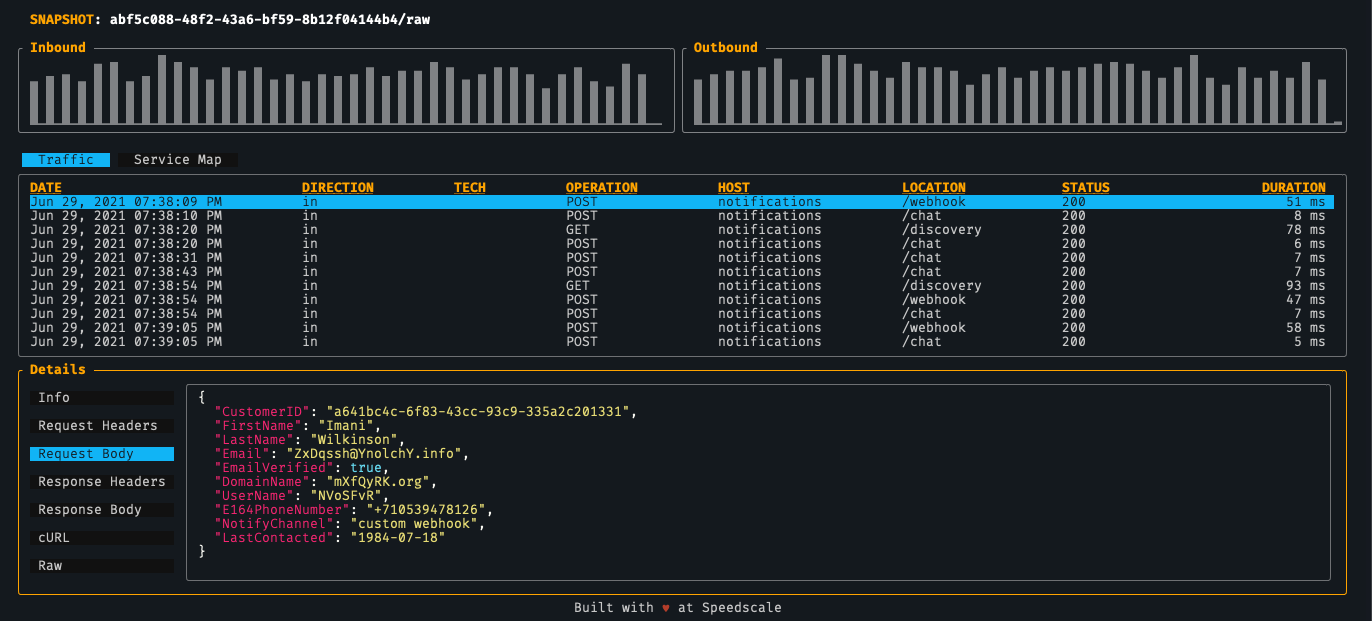
    Ken Ahrens, Speedscale CEO, said the goal is to expose more developers to the company’s API testing tool that can be accessed on their local machine via a command line interface (CLI). Dubbed Speedscale CLI, it is designed to enable individual developers to inspect, detect and map API calls on local applications or containers rather than having to subscribe to the company’s current API testing platform via a software-as-a-service (SaaS) model.

    That approach should reduce the number of disruptions DevOps teams are likely to encounter after an application is deployed in a production environment, noted Ahrens.

    Speedscale CLI features include service mapping, which enables developers to auto-detect and map external dependencies that could break, a traffic viewer for logging and tracing API calls and latency detection tools that show how code changes are impacting performance. In a forthcoming update, Speedscale also plans to include load generation capability to enable developers to run tests locally. The overall goal is to enable IT organizations to shift more responsibility for the management of APIs further left toward the developers that create them, said Ahrens.

    Naturally, Speedscale is also hoping that, as more developers are exposed to its observability platform for APIs, there will be increased demand for its SaaS platform among DevOps teams that need to manage and maintain APIs in production environments within their existing workflows. Speedscale exposes a set of APIs of its own to enable that integration, noted Ahrens.

    At its core, the Speedscale SaaS platform is designed to enable DevOps teams to replay how calls are made between APIs and external mock services to make it easier to diagnose issues.

    In general, there’s a lot more focus these days on APIs, thanks to digital business transformation initiatives that are dependent on APIs to integrate processes. The challenge organizations face is many of those APIs are built by separate development teams. In some instances, organizations can find themselves deploying redundant APIs. Other organizations will create APIs that, over time, are simply forgotten about or that go dormant when the developers that created them leave the organization. These “zombie APIs” often represent a security risk because cybercriminals now routinely scan IT environments for unattended APIs through which they can exfiltrate data without anyone noticing.

    One way or another, the management of APIs is becoming a distinct discipline within many organizations as they come to appreciate the level of IT flexibility they enable. Replacing backend services is a lot simpler when the APIs calls that invoke them both internally and externally remain relatively simple. The challenge is that building and maintaining microservices-based applications based on APIs is a more complex endeavor than building a monolithic application. The first step toward reducing that complexity is, of course, to provide more visibility into the application environment for all concerned.

  • The Graph Donates $48M to Advance GraphQL Platforms

    The Graph Donates $48M to Advance GraphQL Platforms

    The Graph, a provider of indexing and query tools based on the GraphQL language designed for blockchain platforms, today announced it has given $48 million to The Guild, a group of developers advancing an open source application programming interface (API) platform to further development of GraphQL-based technologies.

    Administered via The Graph Foundation, a nonprofit consortium that oversees the development of an open source graph database dubbed ONgDB, the agreement also calls for members of The Guild to contribute to the development of indexing and query tools being advanced by The Graph over the next four years.

    Eva Beylin, director of The Graph Foundation, said the goal is to fund the development of projects that leverage GraphQL, an open source data query and manipulation language for application programming interfaces (APIs) originally developed by Facebook, to create subgraphs used on blockchain platforms like Ethereum to index data in a way that is more accessible to developers.

    The open source community that is starting to evolve around blockchain platforms, also known as Web3, is now a major contributor to a range of GraphQL projects, noted Beylin. Those blockchain platforms are now being used to drive decentralized finance (DeFi) applications that do not rely on any single platform to process transactions. Those platforms are being employed by both startup and incumbent providers for financial services around the globe.

    It remains to be seen, however, how the GraphQL community will address security concerns. GraphQL APIs can easily suffer from broken object-level authentication issues just like any other API. The issue is a single GraphQL query could exfiltrate much more information than a typical API request. If the GraphQL provider does not have granular authorization checks for each particular method and resource, a GraphQL endpoint could become a major vulnerability.

    Cybercriminals also tend to launch brute-force attacks against APIs. With REST APIs, that malicious behavior is easier to catch with standard web application firewalls (WAFs) because it’s easier to notice hundreds of peculiar malformed requests. However, with GraphQL, a brute-force attack is harder to detect. It’s easier to limit this type of nefarious traffic with REST APIs by assigning access parameters to each resource and handling authorization checks one at a time.

    It’s not likely GraphQL APIs will replace REST APIs overnight. However, as the backend platforms for managing GraphQL APIs become more robust, the number of these APIs being used in a production environment by DevOps teams will dramatically increase—assuming there are no objections from cybersecurity teams.

    In the meantime, the open source community is clearly starting to rally around GraphQL, which should result in innovations applicable across a wide range of use cases. The challenge now is not only determining which type of API to employ and when, but also deciding whether any existing legacy APIs need to be replaced. One way or the other, however, the managing and securing of APIs—like it or not—is only going to become that much more challenging in 2022.

  • Log4j Puts Effective IT Operations at Center Stage

    Log4j Puts Effective IT Operations at Center Stage

    News of the Apache Log4j vulnerability exploit is striking fear into the hearts of both software makers and users. Log4j is the most popular Java logging service used today, with over 400,000 GitHub downloads and has been embedded in most internet services and products from companies all over the world, including Apple, Amazon, Cloudflare, Steam, Tesla, Twitter and Baidu, just to name a few.

    Exploiting this vulnerability is simple and allows threat actors to control Java-based web servers and launch remote code execution (RCE) attacks. New variations of the original exploit are being introduced rapidly—over 60 in less than 24 hours. The attack surface grows by the minute. Good credential management and advanced authentication will not help as this exploit is pre-authentication, which means an attacker doesn’t need to authenticate to your web applications to attack. Your web server is vulnerable.

    The good news is your organization likely has a team of seasoned IT operations pros that can help protect against the worst of Log4j’s devastation.

    How IT Operations Can Protect Against Log4j Vulnerabilities

    Step One: Find Log4j Wherever it Exists

    You need to investigate every internet-facing application, website and system that you own or use. This includes self-hosted installations of vendor products and cloud-based services. Focus on systems that are internet-facing that contain sensitive data. Once you’ve completed assessing your hosted apps and vendor systems, move on to endpoint applications. Java-based apps like WebEx, Minecraft, Citrix and many more.

    Step Two: Patch, Patch, Patch

    Patch in the same order as above: Internet-facing applications, websites and systems. If no patch is yet available for your apps and systems, uninstall.

    The pandemic has forced many endpoints into workers’ home environments, which creates extra challenges for patching those endpoints and keeping them compliant. Operations teams can’t rely on work-from-home folks to patch their own systems, even if they’re given clear instructions. Many of them will just ignore those directions, so you need to adopt systems that enforce continuous compliance.

    Step Three: IT Operations is Essential

    Communicate with your senior leaders. They should be in the know about this one! Senior leadership needs to position their IT operations teams among their most vital employees. Don’t think this is going to go away any time soon—we’re just starting to get a glimpse of what is being tried out there in the wild. Buckle up. 


  • U.S. Govt. CX EO | Mozilla Revenue | Log4j Latest

    U.S. Govt. CX EO | Mozilla Revenue | Log4j Latest

    Welcome to The Long View—where we peruse the news of the week and strip it to the essentials. Let’s work out what really matters.

    This week: Improving U.S. government CX, how much money Mozilla makes, and the latest on the Log4j/Log4Shell débâcle.

    EO: “Transforming Federal Customer Experience”

    First up this week: The Biden–Harris administration makes an executive order directing its Federal agencies to make 36 specific customer experience (CX) improvement commitments. Much of this involves using technology to improve what DevOps teams would call UX—but government doesn’t like the language of “users.”

    Analysis: Customer-centricity FTW

    Remarkably, a lot of interaction with government still involves paper forms. But this EO shouldn’t merely be about putting existing processes online. Work also needs to be done to solve the underlying complexity and fragmentation of services: Focusing on CX is a helpful frame.

    Brett Samuels: Biden to sign order to streamline government services

    [The] executive order [is] intended to cut back on the bureaucracy around government services for the public such as renewing passports, applying for loans or changing names. [It] affects 36 “customer experience improvement commitments” across 17 federal agencies, [targeting] travel, retirement, business, health and updating personal information.
    …
    For example … to renew their passports online rather than dealing with print forms. [It] will create a single portal for … student loan debt, and small-business owners will have a more streamlined process for … loans, grants and certifications.
    …
    Survivors of natural disasters will also no longer be required to complete forms with several agencies when applying for assistance … and they will be able to file smartphone photos and use virtual inspections when filing claims. [That] could be critical as natural disasters become increasingly devastating, as evidenced by the tornadoes that ravaged Kentucky over the weekend, killing dozens of people and destroying communities.


    Is this a technology problem? Yes, in part—but it’s also a government problem, argues Jennifer Pahlka:

    Surely laws like the 21st Century IDEA Act … which required agencies to … “eliminate or consolidate websites or web pages that are duplicative or overlapping … and ensure that each website or digital service is designed around user needs,” made life easier for the customers of those agencies? What’s that you say? You’re not sure you’ve noticed that? Turns out you’re not alone.
    …
    An EO is one of the many mechanisms our government has at its disposal for what I like to call “magic words.” [But there’s a] gap between magic words and the changes they are supposed to compel. [Failures] happen at such a staggering scale they have become entirely expected.
    …
    We tend to assign the blame … to government technology [but] at some point, you can only improve the customer experience by addressing [underlying] complexity. … Most of the Kafka-esque nightmares people get stuck in happen because each service sees only the burden they impose, and not [what] the customer experiences.


    If, like me, you’re inherently cynical about government efficiency, you’d expect this effort to be a huge failure. But let’s not be too cynical: Warning of “the hazards of selection bias,” here’s ShanghaiBill:

    In the olden days, I took half a day off work to go to DMV and renew my DL. Now I can do it online in 5 minutes. … I pay my property tax online. I renew my business licenses online. I incorporated online.


    $500 Million per Year—But for How Long?

    The Mozilla Foundation has unveiled its revenue forecasts for this year. As in previous years, Mozilla makes the lion’s share of its cash from Google—by making it the default search engine. But there are new revenue sources.

    Analysis: And not a moment too soon

    The future of the browser market should be a strategic focus for DevOps teams. Mozilla’s Googley cash cow might not last. It’s often assumed the maker of Chrome keeps Mozilla alive so it can point to Firefox as “competition.” But with Microsoft’s browser Edging up the usage charts, that might no longer be true.

    Frederic Lardinois: Mozilla expects to generate more than $500M in revenue

    For 2021, the organization forecasts revenue of more than $500 million. What’s maybe most important, though, is that Mozilla’s new products like its Mozilla VPN service, Firefox Relay Premium, Pocket and other commercial initiatives are slowly but surely starting to pay off.
    …
    But for all intents and purposes, Mozilla remains fully dependent on Google for the time being. Diversifying its revenue sources is really the only way for Mozilla to decrease its reliance on a search deal with a company that is both a competitor, thanks to its dominant Chrome browser, and is increasingly out of alignment with Mozilla’s overall philosophy.
    …
    There is a window here for a non-Chrome browser, with users increasingly skeptical about Google’s motivations and Microsoft’s Edge team making a few missteps in recent months. Yet at the same time, Mozilla’s efforts to bring sponsored suggestions and ads to Firefox haven’t necessarily endeared the organization to its own users either.


    Why is Google funding its competitor? u/SerAaron:

    Google is Mozilla’s biggest donor. … It’s basically to avoid any monopoly allegations—so they can point to Firefox and say “look, we have competition”.

    Mozilla takes their money, sure, but … they don’t sell data, and they aren’t beholden to Google.


    But don’t count on that cash continuing to flow, says Maelwryth:

    That money is probably under threat now with Edge going for the market. Why give Mozilla hundreds of millions to show competition when you have actual competition from Microsoft?


    Log4j/Log4Shell Seems Worse Every Time We Look

    The list of popular DevOps tools vulnerable to Log4Shell grows by the hour. Merely finding your exploitable services can be an impossible task—let alone patching them.

    Analysis: Defense in depth is key

    Searching for and patching your vulnerable code is not enough. You’re also going to need to shore up your network defenses, by auditing internet-visible services and by tightening your application firewall rules. And—ironically—keep a close eye on your logs for signs of attempted exploits and IoCs.

    Steven J. Vaughan-Nichols: We Are in So Much Trouble

    Log4j is used a lot. And, when I say a lot, I mean it’s used in hundreds of applications [including] Druid, Dubbo, Flink, Flume, Hadoop, Kafka, Solr, Spark, Struts, Apple iCloud, … LogStash, GrayLog2, … Steam, Twitter, and … VMware.
    …
    Log4Shell is both easy to exploit and can be used to grab complete control of vulnerable servers. … Even as you’re reading this, odds are decent you’re being attacked. [But] even if you patch it in your systems, it’s all too likely to be hiding in other applications.
    …
    Log4Shell may be the worst security problem in a generation. … This is going to be a long, hard ride.


    Hyperbole? Even December 25 isn’t close enough for government work. Catalin Cimpanu:

    The US Cybersecurity and Infrastructure Security Agency has told federal civilian agencies to patch systems affected by the Log4Shell vulnerability by Christmas Eve. … Federal agencies have ten days … to test which of their internal apps and servers utilize the Log4j Java library, check if systems are vulnerable to the Log4Shell exploit, and patch affected servers.
    …
    Despite being a recent vulnerability, it is already considered one of the worst security flaws ever discovered, primarily due to its near-ubiquitous use among enterprise software makers, its simple and easy-to-use exploit, and the ability to hijack systems remotely. … Days after being disclosed, the vulnerability has been massively abused. … The first attacks were seen on December 1.


    There’s always another shoe. Here’s Teri Robinson:

    Maybe Log4j vulnerabilities are like rats—for every one that’s visible, multiple others scurry beneath the surface. … Apache said the fix addressing “CVE-2021-44228 in Apache Log4j 2.15.0 was incomplete in certain non-default configurations,” according to … CVE 2021-45046.


    The Moral of the Story: In the end, the love you take is equal to the love you make.


    You have been reading The Long View by Richi Jennings. You can contact him at @RiCHi or tlv@richi.uk.

    Image: Bernd Dittrich (via Unsplash)

  • AWS Outage and App Resiliency: Did a Roomba Replace the Canary?

    AWS Outage and App Resiliency: Did a Roomba Replace the Canary?

    Canaries were once sent into coal mines as an early warning sign against danger—for me, it was my Roomba failing to automatically search out dog hair and clean the floor under my sons’ dining room chairs. Cloud-enabled apps also were acting “weird”. Some were down, while others were just slow—although, in my view, slow may as well be down; who has the tolerance to wait for an application to load?

    What caused this headache felt across the internet? An AWS disruption.

    In the days since the December 7 outage, I’ve had a number of conversations with CIOs, colleagues and other industry analysts and many of our shared concerns remain unanswered. Here are a few quick thoughts on the latest us-east-1 outage.

    Understanding AWS SLAs

    It’s important to remember that AWS requires instances/apps be deployed across two or more regions for redundancy and resiliency. And an SLA is not only a way for service consumers to gauge the value they’re getting for their money, it’s also the contractual agreement between a cloud service provider (CSP) and a customer. It outlines the uptime, availability and performance standards to which a cloud service will adhere. It may also specify that the service provider’s helpdesk will respond to an outage within a set amount of time. Amazon has very clear SLAs. If a customer receives less than 99.99% uptime in a given month, the company will provide credits to their account.

    However, there are three things to keep in mind:

    A 99.99% uptime agreement still means you are willing to tolerate services being down for almost four and a half minutes per month (53 minutes per year), and you must architect your AWS instances and applications in a way that meets the AWS SLAs. The third point is that, in AWS’s view, the outage wasn’t their fault.

    Outages Don’t Just Impact Startups and Organizations With Poor Planning Practices

    The cloud allows organizations to regularly make budget versus resiliency decisions. However, the recent AWS outage didn’t just impact born-on-the-web startups. Mature businesses like Disney, McDonald’s and Amazon itself were impacted by the outage. These technology-first companies aren’t sacrificing budget over resiliency. They understand that they are technology companies—they have large IT budgets that represent this priority and were still blindsided.

    The recurring question is why all these organizations were crippled by a single Amazon region going down? Was it poor architecture? Did these AWS customers not fully understand AWS’ SLAs? Did they choose budget over resiliency? 

    Amazon as an Enterprise Platform

    Adam Selipsky’s keynote and industry analyst Q&A at re:Invent 2021 made it clear that AWS is completely focused on the enterprise. Amazon understands the needs of the DevOps community, but they are still working on developing their approach to the enterprise. Google Cloud recognized the same shortcomings in its own organization and brought Thomas Kurian from Oracle to build up the company’s enterprise and IT industry persona.

    Everyone in the technology industry understands that outages and slow performance happen, but they expect service providers to provide best practices and avoid downtime. In response to Selipsky’s re:Invent keynote, Linda Jojo, executive vice president of technology and chief digital officer for United Airlines, said that the airline settled on a “one cloud” approach. Surely United Airlines can’t tolerate regular downtime.

    My View

    December 7, 2021 won’t live in infamy for AWS; we have seen plenty of other outages.

    Application resiliency is still an emerging area of focus. In the past, the focus was on platform and data center uptime; however, in many cases, developers have no control over the infrastructure. Therefore, teams need to focus on the resiliency of an application and assume that the underlying IaaS (cloud infrastructure) will fail for one reason or another.

    In addition, Amazon needs to offer more opinionated offerings. Disaster recovery and failover should be built into every level of AWS. Software companies shouldn’t be forced to sign up for multi-region deployments, but AWS should at least be prescriptive with best practices that advise such a practice.

  • NetApp Survey Shows Hybrid Cloud is Maturing

    NetApp Survey Shows Hybrid Cloud is Maturing

    A small survey of 79 midsized to large enterprises conducted by NetApp suggests enterprise IT organizations might finally be embracing hybrid cloud computing beyond use cases involving backup and recovery.

    The survey finds 20% of respondents are currently employing both on-premises and cloud resources to support the same workload in a production environment, with another 17% planning to do so within 24 months.

    Darnell Fatigati, senior product marketing manager for hybrid cloud at NetApp, noted that a hybrid approach to cloud computing will dominate with more than three-quarters of respondents reporting their organization plans to operate a hybrid cloud environment for the foreseeable future. Only 17% expect their organization to eventually migrate all their IT environments to the cloud.

    A major factor in the decision to not migrate all workloads to the cloud is the amount of data gravity that legacy applications running in on-premises IT environments exert, noted Fatigati. The amount of effort required to successfully migrate terabytes and even petabytes of data into the cloud is simply too great, he added.

    The primary benefits of hybrid cloud computing cited by survey respondents are faster innovation (26%), increased responsiveness (25%) and increased collaboration (22%). Survey respondents also noted they are looking to improve infrastructure flexibility and scale (27%), optimize costs (21%) and improve data accessibility (13%). Data protection involving disaster recovery, backup and archiving remains the most widely employed use case for hybrid cloud, with 29% either employing it today or planning to do so in the next 24 months.

    Most hybrid cloud computing environments today consist of multiple clouds and on-premises IT environments that are managed in isolation from one another. The fact that more organizations are now starting to deploy the same workload across both a cloud service and an on-premises IT environment has significant implications for DevOps teams that will be required to manage those workloads. Most DevOps workflows today do not span multiple platforms. However, as more organizations become impacted by the occasional cloud outage, the level of resiliency enabled by hybrid cloud computing is becoming a higher priority.

    In many cases, the shift to hybrid cloud computing was accelerated by the COVID-19 pandemic that drove many organizations to increase the number of workloads deployed in the cloud. Now, heading into 2022, those same organizations are looking to reduce IT costs by centralizing IT management as much as possible, noted Fatigati. Each time an IT organization adds a new platform, the tooling and personnel required to manage that platform increase the total cost of IT for any organization. Much of the shift to hybrid cloud is being driven by C-level executives looking to reduce those costs.

    It may be a while before most enterprise IT organizations are able to deploy workloads across multiple platforms. However, as both cloud and on-premises IT environments continue to evolve and as more platforms deployed in local data centers are increasingly managed using a cloud operating model, the way those platforms are accessed on demand will continue to converge. In fact, there may come a day when the term cloud computing itself disappears from the IT lexicon as every IT platform, by default, leverages one type of cloud or another.