Category: Microservices Journal

  • Microservices: The Advantages of SOA Without Its Drawbacks

    Microservices: The Advantages of SOA Without Its Drawbacks

    Service Oriented Architecture (SOA) was the great hope of organizations decades ago when they sought to advance legacy system integration, reduce and bypass layers, and rapidly access the system of record. At the time, the existing solution was point-to-point integration, creating a brittle “spaghetti” middle layer that was hard to manage. This was replaced by SOA, which was later augmented with ESB. This fixed the spaghetti mess by creating an intermediate set of layers, which added complexity to the integration process.

    Unfortunately, most IT departments with legacy systems and SOA still struggle to be as agile as needed in this ever-increasing global and digitized world. 

    SOA Solved Many Problems, But Not All

    Today, upward of 90% of the world’s enterprise applications are monolithic. When they were created, monolithic design was the best approach available. However, as business needs evolved and the demand for greater agility intensified, developers and IT teams are considering breaking free of these monolithic architectures.

    SOAs have become a hindrance, not the solution they once were.

    The SOA Integration Challenge

    The promise of SOA initiatives was extending the reach of core business functions while reducing the internal expenses and complexity that grew alongside monoliths. SOAs achieved these goals by breaking the core functions of a monolith into web services using protocols such as simple object access protocol (SOAP) and eXtensible markup language (XML).

    SOAP was built for universal application communications. Because it’s based on XML, SOAs designed with SOAP could, in theory, be used to create an agnostic integration layer. Rather than struggling to piece together various proprietary systems, these protocols would open monoliths on different operating systems so they could work together.

    This agnostic integration layer would let system administrators connect pieces of a monolith to an enterprise service bus (ESB) to achieve an agile, plug-and-play SOA. In some cases, this approach succeeded.

    A great deal of “legacy SOA” still provides value. In these cases, the value the SOA provides is the behind-the-scenes server-to-server communication that mostly aids developers. When it comes to serving internal and external customers–and their rapidly changing demands–SOA isn’t always up to the task.

    To achieve service integration, the ESB must oversee the messages from start to destination. This communication isn’t as simple as the SOA vendors may have promised. Consider an SOA integration within a core banking application. The message must go from the core application on the mainframe to a branch office server. If the business logic states a message is only relevant for one business day, administrators must decide whether to move it to a queue, log or disregard when the day passes. This is a common scenario for core banking applications in an SOA, but how well does it work?

    In this example–and others like it–the ESB must know whether a business day has passed to make the right decision about where to send the message. Therefore, the integration requires an algorithm–meaning that ESB cannot simply rely on a universal rule for sending messages between the monolith and external integration.

    When administrators introduce new business logic into the monolith integration, it turns what was supposed to be an agnostic service layer into a new application layer, increasing complexity. Instead of simply integrating the monolith into a new digital service, the enterprise ends up with a larger monolith–one that includes the mainframe and all the new integration stacks.

    Despite the promises of SOA, the integration problems result in increased maintenance time, greater complexity of code and software and the continued growth (not elimination) of monolithic applications.

    The first rule of effective integration is “smart end-points and dumb pipes.” Building logic and layers into the service layer breaks that rule, increases the overall complexity and adds another legacy application to your portfolio.

    Bottom line: Trying to optimize the SOA approach will only result in larger monoliths.

    Improving SOAs with Microservices

    Using microservice architectures helps realize the original promise of SOAs, delivering the benefits of SOAs while removing many disadvantages.

    For decades, CIOs have tried to transition away from monoliths by taking traditional approaches to integration, only to find they’ve doubled down on legacy investments. All these integration stacks end up coupled to legacy systems and only result in more work for the IT team–and a less agile organization.

    The integration step of SOA was never intended to include business logic. Trying to force business logic into this approach leads to workarounds and extra effort just to achieve a less-than-ideal result.

    The key factor is how to incorporate microservices without adverse effects. Luckily, microservices architecture can be forged from SOAs by introducing these new principles:

    •   Context Mapping: When replacing an existing SOA, teams must consider the size and scope of the new microservice and apply proper contextual boundaries. For example, SOAs that typically sought broad integration with digital services should be broken down into smaller domains to simplify operation.
    •   Shared-Nothing Architecture: Too many SOA integrations create sprawling dependencies that create complexity in the tech stack. Microservices avoid these cross-service dependencies. For those looking to move to microservices from an existing SOA, it’s important to look at the list of dependencies and work toward standalone functionality.

    Ultimately, the goal should be to refactor monoliths in a way that shifts the IT stack toward microservices. By taking the right approach, you can make the most of both microservices and APIs within your SOA. You enhance your digital journey, leading you to IT efficiency, faster cycles, greater scalability and competitive differentiation.

    — Zeev Avidan

  • HashiCorp Advances Open Source Consul Service Mesh

    HashiCorp Advances Open Source Consul Service Mesh

    HashiCorp this week updated its Consul service mesh to make it easier to manage namespaces across multiple services.

    Previously, DevOps teams would have to manually ensure each namespace assigned to a group of services did not conflict with each other. The release of 1.7 of Consul enables teams to restrict access to services residing in isolated environments on a shared cluster, eliminating the issue.

    In addition, DevOps teams can now delegate administrative privileges for a given namespace to individual teams, which enables them to manage their own services in keeping with best DevOps practices, rather than having to rely on a cybersecurity team to manage that process for them.

    With the rise of microservices based on containers, interest in service meshes to provide a means to discover and manage services is on the rise. However, services span both emerging microservices-based applications and legacy monolithic applications. Rather than adopting a service mesh that only runs on one platform, HashiCorp is opting for an open source service mesh that spans multiple platforms and is easier to deploy and manage than rival offerings such as Istio.

    Amith Nair, vice president of product marketing at HashiCorp, said that approach also makes it easier to deploy a service mesh at scale across multiple clouds and on-premises IT environments. Because Consul is designed to deployed on top of proxy servers such as Envoy or NGNIX, it can be deployed almost anywhere to manage services sprawl across the extended enterprise, noted Nair.

    As far as the adoption of service meshes are concerned, it is still early days. Many organizations are in the process of shifting away from managing applications to focusing on services that span multiple applications. Given all the dependencies that exist between various services, that shift represents a major challenge. A service mesh alleviates some of that challenge by providing a mechanism for both discovering and governing services that are increasingly interdependent.

    That approach also provides the added benefit of allowing teams tasked with governing and auditing IT environments to focus more on higher levels of abstractions versus updates to every line of code on which those services are constructed.

    For now, there are no standards, de facto or otherwise, in terms of service meshes. Many organizations may find themselves adopting multiple frameworks, which may lead to further advances in interoperability specifications such as the Service Mesh Interface between rival platforms.

    Less clear for now is who inside an IT organization will be responsible for acquiring and managing a service mesh. In some organizations it might be a network operations or cybersecurity team. In other organizations, those roles may have already been incorporated within a larger DevOps team.

    Regardless of the approach, the need for some type of service mesh is becoming more apparent. The good news is there is now no shortage of options. However, DevOps teams should note that in terms of overall complexity and amount of compute resources consumed, not all services meshes are the same.

    — Mike Vizard

  • WSO2 Advances Microservices Gateway

    WSO2 Advances Microservices Gateway

    At the Open Source and Software Development Conference (OSCON), WSO2 this week announced it has updated an open source microservices gateway to make it possible to expose multiple microservices through a single application programming interface (API).

    Additionally, version 3.0 of the WSO2 API Microgateway now includes the ability to automatically discover microservices and transform legacy API requests into a more modern format. WSO2 also added support for the OpenAPI Specification (OAS), formerly known as Swagger, to make it easier for developers to collaborate on creating APIs, and has separated the WSO2 API Microgateway toolkit from the runtime to enable greater scalability and smoother upgrades.

    Ken Oestreich, vice president of product marketing for WSO2, said the WSO2 API Microgateway is designed to accelerate the convergence of application development and integration into a single team. As part of that effort, WSO2 has been advocating the adoption of Ballerina, a general-purpose programming language designed from the ground up to make it easier for developers to integrate distributed applications on their own. For example, Ballerina makes it possible for developers to create and embed their own micro-enterprise service bus (ESB) within a distributed application, he said.

    Those integration engines then could be deployed and updated within any DevOps processes layered on top of a continuous integration/continuous deployment (CI/CD), Oestreich added.

    A WSO2 API Microgateway is designed to boot up in less than a second and provides authentication, authorization, rate limiting, service composition, discovery, transformation and analytics capabilities. It is designed to be integrated with the WSO2 API Manager, an open source API management platform that can run on-premises or in the cloud.

    As the number of microservices being created within organizations increases thanks to the rise of containers, Oestreich noted there is now a critical need for organizations to find a lightweight approach to building and managing all the APIs required to connect thousands of microservices. WSO2 provides a flow diagram through which organizations can visually manage that process, said Oestreich. As part of its support for containers, the WS02 API Gateway provides built-in support for container orchestration tools such as Kubernetes, which makes it possible to generate artifacts that can be applied directly to Kubernetes clusters.

    Organizations of all sizes are clearly struggling these days with API management. In theory, APIs should remain stable as the software components they connect to are updated. The trouble is, each new microservice generates its own set of APIs, and before too long, organizations find themselves trying to manage thousands of APIs that are all dependent on each other. The removal of any one API might not crash an application, but it could adversely impact performance as API calls are re-routed around the application.

    It’s not all clear these days who inside most organizations is responsible for managing APIs. Developers certainly create the APIs. However, once they are deployed in a production environment, their care and feeding often pass over to an IT operations team. Regardless of whom, however, once any of those APIs break it’s not long before the entire DevOps team knows about it. The challenge now is figuring out how to make the management of all those APIs as natural an extension of a DevOps process as possible.

    — Mike Vizard

  • The Changing Role of APM in a Microservices World

    The Changing Role of APM in a Microservices World

    Microservices usage has skyrocketed. Fully 91 percent of organizations are using or have plans to use microservices and 92 percent expect to grow their use of microservices in the coming year. It is no longer if but when: 86 percent of organizations expect microservices to be the default within five years.

    With the growing use of microservices and containers, applications have become orders of magnitude more dynamic. It’s not unusual for containers or building blocks of the application to have a shelf-life of less than a week. However, what is great for application development can create challenges when it comes to monitoring ­and diagnosing performance issues in ever-changing applications. How does application performance monitoring (APM)  change to support microservices and dynamic cloud-native apps?

    More Moving Parts

    Small, specialized microservices may facilitate shorter development cycles, continuous releases and greater agility, but when deployed across dynamic cloud infrastructure, the sheer number of moving parts also makes it much more difficult to troubleshoot application performance. Highly distributed and transient containerized components need to be tracked and measured continuously, demanding a big data approach for APM tools. To be effective, monitoring containers and microservices requires high-definition visibility across all transactions, machine learning to pinpoint problems and a shift in focus to users from servers.

    High-Definition Data

    Because the dynamic, containerized environment is constantly changing, measurement data must be collected at high frequencies—think seconds rather than minutes. Collecting infrastructure performance metrics at one-minute intervals, or longer, can distort the real situation and sometimes miss entire events altogether. For example, at low definition, a pattern of recurring but brief spikes in CPU usage will either be averaged out or not register at all—but if detected would be a tell-tale sign of a systemic configuration issue. High-definition infrastructure metrics, collected at one-second intervals, are crucial for a comprehensive view of resource utilization and shared resource dependency issues.

    However, infrastructure metrics alone are not enough. Building a complete view of the operating environment calls for data from multiple sources, including application traces, system metrics, application logs and network behavior. The resulting data set is very large, necessitating big data collection methods and processes. In-line data compression, NoSQL back-ends, non-intrusive client agents and cloud scaling are foundational technologies for modern APM tools.

    Correlating Data End to End

    Big data analytics and visualizations are necessary to process APM data into human-scale patterns and events. Identifying root cause of a performance problem often involves following a transaction from end to end, through multiple containers, shared resources and downstream infrastructure dependencies. Next-generation APM tools dynamically map the flow of every single transaction, through all intermediate relationships. Machine learning and artificial intelligence, while still in their early stages, are proving essential to finding patterns and anomalies in the data, suggesting probable causes and flagging them for human investigation. Combining the best of machine and human skills results in faster problem identification, diagnosis and resolution. IT operations teams benefit with improved application performance, reduced repair times and higher uptime even in dynamic application environments.

    Putting the Focus on the End User

    Legacy APM tools tend to focus on infrastructure components and resources, monitoring the health and utilization of servers, storage and networks. Organizations today, driven by digital competition and customer satisfaction, need to concentrate on the user’s perspective. This means monitoring multiple types of user devices for health indicators and mapping each transaction to the backend system. Automatic instrumentation delivers real-time end user metrics that trigger alerts much earlier than server-side monitoring, and enables more effective prioritization. End user insights also help DevOps and product owners track feature and application adoption rates, compare performance before and after upgrades and directly relate technical issues and investments to business priorities.

    Monitoring Apps for Today and Tomorrow

    Clouds, containers and microservices require a different approach to performance monitoring that takes into account the speed, size and life cycle of application modules. Effectively watching these distributed and transitory processes demands a big data approach that can handle the scale of end-to-end transaction data in modern enterprise environments.

    Legacy APM tools that only take snapshots result in an incomplete view of application reality and lengthen problem resolution times. Instead, modern APM systems collect a complete data set, enabling DevOps to quickly resolve intermittent and complex issues that impact business productivity and user satisfaction. They augment their skills with machine learning to quickly identify anomalies and guide them to probable causes. The results are better application performance, enhanced competitiveness and perhaps most important, increased user satisfaction.

    — Gayle Levin

  • Hooked on Service Metrics

    Hooked on Service Metrics

    We live in an increasingly “as-a-service” world. From software as a service (SaaS) and platform as a service (PaaS) to functions as a service (FaaS) and SaaS-delivered applications, service delivery has become paramount to business goals and practices.

    In today’s DevOps landscape, microservices—the cloud-native approach to designing scalable, independently delivered services—allow teams to prioritize each individual service rather than many services simultaneously, enabling agility and continuous delivery. However, even with all their benefits, microservices come with their fair share of challenges, specifically with observability, monitoring and security. Service metrics are therefore more important now than ever before, as mitigating the challenges and seizing the opportunities introduced by microservices helps DevOps teams create a high-quality end user experience.

    With service delivery so integrated into the overall business and customer experience, it’s crucial to ensure that service performance always remains at its peak. How can tech pros ensure that service-level agreements are met, services run smoothly and end user expectations are met and exceeded? The answer is simple: become hooked on service metrics.

    Getting Hooked

    In this piece, we’ll explore service metrics in respect to microservices. Due to the observability, monitoring and security challenges that microservices can introduce, managing and controlling microservices and their traffic requires an additional layer of tooling: a service mesh. Implementing a service mesh architecture helps facilitate traffic management, service identity and security, policy enforcement and more, which ultimately brings reliability, security and manageability to container and microservice management. Important metrics such as request volume, request duration, latency and request size can be gathered automatically across a service mesh, which helps facilitate successful microservice deployment.

    However, despite service mesh tooling helping to mitigate risks, failures such as RPC timeouts and exception propagation can occur. Failures in the microservices space often occur during the interactions between services, so a clear view into those transactions enables DevOps teams to better manage architectures and avoid said failures. A service mesh provides observability, which enables DevOps teams to easily see what is happening when services interact with each other, making it easier to build a more resilient, secure and efficient microservice system. Additionally, service meshes provide a developer-driven, services-first network—a network that runs without application developers having to build network concerns into their application codes. Service meshes create a network that empowers operators with the ability to define network behavior, node identity and traffic flow through policy.

    Tips for Success: What You Need to Know

    So, how does a DevOps team implement a service mesh architecture for service metrics? Following a few best practices can help ensure success:

    • Know When to Implement: If a DevOps team does not plan to run an excess of microservices, a service mesh may not be necessary; fewer than 10 microservices likely could be managed with existing tools and security tools. But once a team starts running more than 10, a service mesh becomes essential.
    • Understand Your Use Case: After confirming the necessity of a service mesh architecture, you must understand how it will interact with the other types of infrastructure you’re running, as this will help determine what service mesh to leverage. For example, some work well with Kubernetes or Docker Swarm, but if you’re not running services inside containers, you would only benefit from the security or observability pieces of a service mesh. Depending on your use case, you might want to implement a highly capable service mesh such as Istio or a simpler tooling such as Linkerd 2.0.
    • Focus on the Network: With a service mesh architecture, you have several microservices that are communicating over a new network. As such, it’s important to understand the network’s criticality: What would you want out of a network that connects your microservices? You want your network to be as intelligent and resilient as possible; to route traffic away from failures to increase the aggregate reliability of your cluster; and to avoid unwanted overhead such as high-latency routes or servers with cold caches. You want your network to ensure that the traffic flowing between services is secure against trivial attack. And you want your network to provide insight by highlighting unexpected dependencies and root causes of service communication failure.

    Conclusion

    Becoming hooked on service metrics is key to ensuring successful delivery of services and meeting end user experiences. With the value service delivers to a business, it’s crucial to ensure that services are always running at their prime. For microservices, implementing a service mesh architecture and following corresponding best practices help ensure successful service delivery.

    — Adam Hert

  • Don’t Let Your DevOps Transformation Be a Parade of Tools

    Don’t Let Your DevOps Transformation Be a Parade of Tools

    Choosing the right DevOps tools should be a careful, thoughtful process.

    On May 12, 1848, a store owner named Sam Brannan held a “one-man parade” to announce the start of the San Francisco Gold Rush. “Gold! Gold from the American River!” Brannan shouted up and down the market street in San Francisco. He held his hat in one hand and waved a bottle of gold dust in the other. San Franciscans had received false news of gold before. But by all accounts, Brannan’s performance sent residents running in search of riches. 

    Brannan had a good reason for spreading the news rather than panning for gold himself. The canny entrepreneur owned a general store that served the workers, and in the week between learning about the discovery and yelling about it in San Francisco, he’d bought all the picks and shovels in the city. Brannan’s announcement helped spur a seminal event in California’s history. As Brannan raked in money selling mining supplies, his actions also, years later, led to the coining of a famous maxim. (source)

    During a Gold Rush, Sell Shovels

    In the current age of DevOps and Agile rush of enterprises, there is a lesson to be learned from the gold rush: Don’t let your DevOps transformation become a parade of tools. While automation is critical for the success of modern ways of technology delivery and operations, the wide range of tooling choices can often lead to wrong decisions—especially well-intentioned, top down purchase of tools, duplication in toolsets and, most importantly, ignoring the voice of the teams on the ground.

    With such variety of tools available in the market today, we all have opinions regarding the tools that we would like to use. Our preferences are based on either our history of using certain tools, because we have invested time and effort to learn a tool, or partnerships your service vendors might have with tooling vendors.

    This leads to two general attitudes toward tooling adoption, with each having their own advantages and disadvantages:

    Autonomy for teams: Let teams decide the tools they feel are suitable for their context.

    The advantage is that teams can experiment and pick a tool that suits their context better. The disadvantages can, potentially, include security risks due to lack of patching and maintenance, and limited cross-team collaboration and sharing of tooling skills and know-how.

    Standardized tool suite: A centralized way of dictating tooling choices.

    The advantage is that it allows for capacity planning, integration between tools, larger pool of community for collaboration and create platforms-based solutions.The disadvantage is that this method at times prevents teams from using tools that best suit their unique needs and creation of avoidable dependencies on centralized tooling teams in the organization.

    These contrasting views lead to debates at every level for the choice of tools and, in some cases, slowing down decision-making—or even leading to the purchase of tooling licenses without input from technical teams on the ground. The decision-making process must be improved, and the need for autonomy must be balanced with standardization and optimization. Also, the two approaches of “autonomy for teams” and “standardized tool suite” do not always have to be binary and will change depending on the context of the team needs and area.

    By considering desirability, viability and feasibility of the DevOps tools, we can help achieve the balance between autonomy and alignment.

    Here are some tips to help ask the right questions:

    Desirability

    • Do teams want this? or is this a solution chasing a problem?
    • Do you anticipate that teams will need this in the near future?
    • Does this help improve team productivity and effectiveness?

     Viability

    • Does this make commercial sense?
    • Have we considered maintenance costs and total cost of ownership?
    • Do we have existing license arrangements with the tooling vendors?
    • Do we have comparable tools already in use and that can do the job?
    • Do we need to purchase licenses throughout the enterprise?
    • Are there any open source alternatives?

    Feasibility

    • Can we implement this in the enterprise IT landscape?
    • Have we considered the ease of setup and configuration of the tool?
    • Does it scale across the enterprise? Does it have to scale across the enterprise?

    — Aditya Vadaganadam

  • NGINX Unveils Hybrid Application Delivery Controller Platform

    NGINX Unveils Hybrid Application Delivery Controller Platform

    NGINX this week announced it has developed a common framework for managing application delivery that can be applied across both monolithic and microservices-based applications.

    Announced at the NGINX Conf 2018 conference, the NGINX Application Platform has been rearchitected to provide traditional load balancing capabilities and a web application firewall (WAF), as well as a built-in service mesh for managing microservices and an integrated application programming interface (API) management platform.

    Sidney Rabsatt, vice president of product management at NGINX, said an update to NGINX Controller is at the heart of a much more comprehensive to approach to integrating load balancing, service mesh technologies and API management. Due out later this year, NGINX Controller 2.0 is based on a modular architecture that enables additional functions to be added via plug-in modules. The module for API management is slated for release in the fourth quarter, while the service mesh module is scheduled to become available in the first half of 2019.

    Rabsatt said it’s become clear IT organizations don’t want to replicate existing application delivery controllers just to manage microservices. There will never be such a thing as an enterprise IT environment this is made up entirely of microservices. The latest release of the NGINX Controller makes it possible to manage application delivery across the broad spectrum of applications that need to be addressed within modern IT environments, he said, noting that in effect, it’s a one-size-fits-all approach to managing application delivery via a single fabric.

    As part of that effort, NGINX this week also revealed that NGINX Plus R16, an enterprise-grade version of the core NGINX load balancing software, has been updated to apply load balancing algorithms to microservices running on Kubernetes clusters, in addition to support for Amazon Web Services (AWS) PrivateLink integration.

    Finally, NGINX announced version 1.4 of Unit, an open source web and application server that support TLS encryption, dynamic reconfiguration via an API and experimental support for JavaScript with Node.js to extend existing support for Go, Perl, PHP, Python and Ruby languages support. Full support for JavaScript and Java is planned for 2019.

    In general, Rabsatt said it’s clear organizations that have embraced DevOps are the most advanced when it comes to the need to unify management of application delivery. In fact, much of the recent success NGINX has enjoyed as of late starts with developers downloading an open source instance of NGINX to embed within their applications. As those instances of NGINX start to proliferate across the enterprise, more IT operations teams become exposed to the rest of the NGINX platform.

    It may take a while for microservices-based applications to achieve enough critical mass to force organizations to rethink their approach to application delivery. But it’s now a matter of time before organizations need to decide the degree to which they want to deploy standalone application delivery controllers and service meshes for microservices applications instead of pursuing a more hybrid approach. NGINX is clearly betting on the latter, given the number of legacy monolithic applications that will be running for years.

    — Mike Vizard

  • Kong Inc. Defines Services-Centric Approach to Integration

    Kong Inc. Defines Services-Centric Approach to Integration

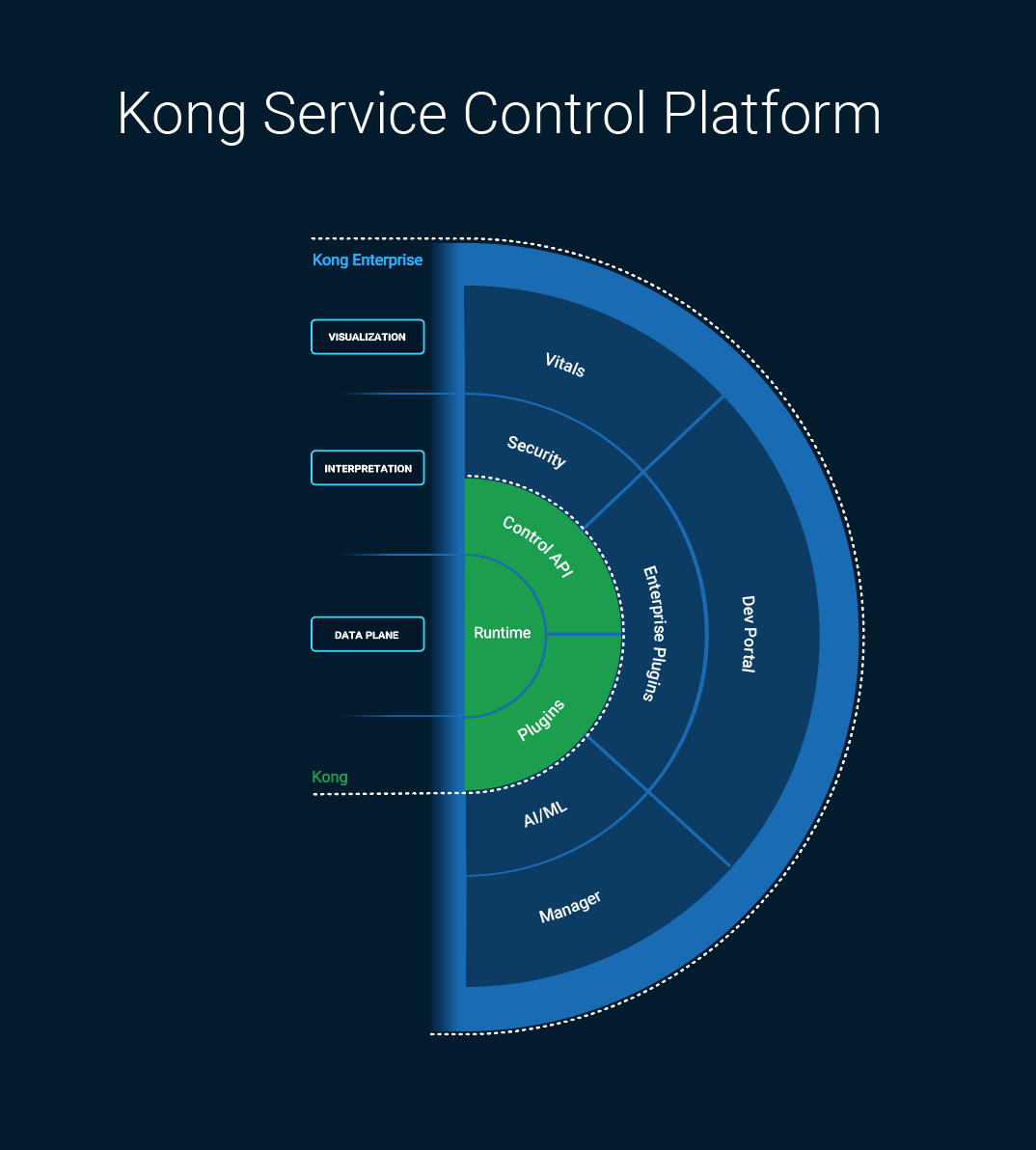
    Kong Inc. has released a feature-complete version of its namesake services broker for legacy and microservices-based applications that promises to eliminate the need for legacy application programming interface (API) management platforms.

    Company CTO Marco Palladino said traditional API management platforms, for all intents and purposes, are now dead. Formerly known as Mashape, the core technology developed by Kong Inc. has been widely employed to manage APIs. But the time has come to focus on managing services at a much higher level, he said.

    Despite Kong having been downloaded more than 45 million times, the latest version is being labeled a 1.0 release because the open source service broker has now been deemed to be feature-complete, which includes support for service mesh patterns, Kubernetes Ingress controller and backward application programming interface (API) compatibility to future releases, Palladino said.

    Kong is being positioned as a microservices API gateway capable of supporting sub-millisecond response times in a way that would not be possible to achieve using legacy API management platforms that reside in the cloud or in a local data center. Kong can be deployed on-premises or in public clouds based on virtual machines, Kubernetes or bare-metal servers. That approach makes it possible to employ Kong to manage services regardless of where they run. Kong has also developed a “Kong Brain” function that employs machine learning algorithms to optimize the flow of data traffic between services that has increased dramatically in the last few years, Palladino said.

    Palladino noted that while service meshes exist specifically for Kubernetes clusters, most enterprise IT organizations will require an approach to managing services across legacy monolithic applications and emerging microservices-based applications that are based on multiple types of runtime environments and serverless computing frameworks. Over time, Kong will integrate with various platform-specific service meshes as they emerge to further enable a more comprehensive approach to services lifecycle management, he said, adding that Kong automatically configures itself to serve traffic to new applications as they are deployed and new services are created.

    In addition, organizations can migrate from one service to another based on a different databases schema without incurring any downtime.

    When it comes to managing services, Palladino said there’s still too much focus on tribes that have emerged around specific platforms that wind up polarizing the IT industry. IT organizations clearly need a means to broker services regardless of where they run or might have originated, he said, noting API management could be viewed as a stepping stone toward achieving that goal.

    It’s not clear yet whether legacy approaches to API management are truly dead or simply in the process of transforming into a means for managing services at higher levels of abstraction. Regardless of the outcome, it’s clear that a less brittle approach to managing integration in the age of microservices will be required. Many forget, however, that in most cases a monolithic application is now just another type of service.

    — Mike Vizard

  • Netifi Rises to Microservices Integration Challenge

    Netifi Rises to Microservices Integration Challenge

    Netifi this week launched an integration platform based on the open source RSocket communications protocol to replace HTTP ad REST application programming interfaces (APIs) as the mechanism for connecting microservices. RSocket was originally created by Netflix and is now being strengthened via contributions from Netifi, Facebook and Pivotal Software for use within enterprise IT organizations.

    Fresh off raising $2 million in seed funding, Netifi is also committing to support a community edition of RSocket later this year.

    Company CEO Robert Roeser said the Netifi platform is designed to make it easier to build microservices and interconnect them. Most of those microservices are being built using Docker containers, but Roeser said that, as part of a polyglot approach to integration, Netifi is leveraging RSocket to connect microservices built using a variety of runtimes as well as provide access to legacy monolithic applications. The Netifi platform can be deployed on-premises, in a public cloud or in a hybrid fashion.

    Roeser said RSocket was born of necessity at Netflix because the number of microservices that needed to be interconnected at scale was simply too complex a task using HTTP and REST APIs. Soon after, Facebook also started employing RSocket and now Netifi and Pivotal are making contributions designed to make Rocket more accessible for traditional enterprise developers. In the case of Netifi, that means providing mechanisms to both discover and advertise microservices and provide a layer of abstraction that shields developers from the underlying complexity of the network underlay, he said.

    As applications based on microservices become more widely distributed, enterprise organizations tend to become more intimidated by the challenges associated with managing them at scale. Traditional enterprise IT organizations don’t have access to a small army of software engineers to solve the problem. As a result, many of them retreat to building monolithic applications in which all the services that need to be accessed are baked into the application itself. They typically sacrifice scale and flexibility in favor of a construct that is both familiar and easier for them to navigate, Roeser said.

    The challenge Netifi and other supporters of RSocket will face is the considerable amount of inertia surrounding REST APIs and HTTP. Several generations of developers now consider REST APIs to be the default mechanism for connecting various applications together. The issue many of them will need to wrestle with is the extent to which the rise of microservices breaks that integration construct. A shift away from REST APIs also could have significant implications regarding how services are exposed externally, how pipelines are constructed within DevOps environments and other factors.

    It remains to be seen whether integration platforms based on RSocket or some other approach ultimately makes microservices more accessible to enterprise IT organizations. But significant resources now are being poured in to solve the problem, many of which leverage contributions of companies, such as Netflix and Facebook, that already rely on thousands of microservices to deliver a broad range of cloud-native applications.

    — Mike Vizard

  • Enabling the Financial Services Shift to Microservices

    Enabling the Financial Services Shift to Microservices

    The financial services industry historically has been riddled with barriers to entry. Challengers found it difficult to break through low margins and tightening regulations. However, large enterprises that once dominated the market are now facing disruption from smaller, leaner fintech companies that are eating away at the value chain. These disruptors are marked by technological agility, specialization and customer-centric UX.

    To remain competitive, financial services firms are reconsidering their cumbersome technical architectures and transforming them into something more adaptable. A recent survey of financial institutions found that about 85 percent consider their core technology to be too rigid and slow. Consequently, about 80 percent are expected to replace their core banking systems within the next five years.

    Emerging regulations meant to address the new digital payment economy, such as PSD2 regulations in Europe, will require banks to adopt a new way to operate and deliver. Changes such as PSD2 are aimed at bringing banking into the open API economy, driving interoperability and integration through open standards. To become a first-class player in this new world of APIs, integration and open data, financial services firms will need the advantages provided by microservices.

    Microservices’ 3 Key Advantages for Financial Services

    Enhanced Security

    Modern fintech requirements create challenges to the established security infrastructure. Features such as digital wallet, robo-advising and blockchain mandate the need for a new security mechanisms. Microservices follow a best practice of creating a separate identity service to address these new requirements.

    Faster Delivery

    Rapidly bringing new features to market is a cornerstone of successful fintech companies. Microservices make it easier for different application teams to deliver new functionality independently to meet emerging customer demands. Microservices also scale well to accommodate greater numbers of users and transactions.

    Seamless Integration

    The integration layer in a modern fintech solution needs a powerful set of APIs to communicate with other services, both internally and externally. This API layer is notoriously challenging to manage in a large monolithic application. Microservices make the API layer much easier to manage and secure through isolation, scalability and resilience.

    Service Mesh: Simplyfing Management of Complex Microservice Architectures

    In the face of rapidly changing customer, business and regulatory requirements, microservices help financial services companies quickly respond to these changes. But this doesn’t come for free; companies take on increased operational overhead during the shift to microservices. Technologies such as a service mesh can help manage that.

    Service mesh provides a bundle of features around observability, security and control that are crucial to managing microservices at scale. Previously, existing solutions such as DNS and configuration management provided some capabilities such as service discovery, but didn’t provide fast retries, load balancing, tracing and health monitoring. The old approach to managing microservices requires that cobbling together several different solutions each time a problem arises, but a service mesh bundles it all together in a reusable package. While it’s possible to accomplish some of what a service mesh manages with individual tools and processes, it’s manual and time-consuming.

    Competition from innovative fintech startups, along with ever-increasing customer expectations means established financial services players must change the way they deliver offerings and do business with their customers. Delivering on these new requirements is difficult with legacy systems. Financial services firms need a software architecture that’s fit for purpose—agile, adaptable, highly scalable, reliable and robust. Microservices make this possible, and a service mesh makes microservices manageable at scale.

    — Zach Jory