Category: Features

  • What It Will Take To Bring Cloud Gaming to Fruition?

    What It Will Take To Bring Cloud Gaming to Fruition?

    The gaming industry is booming. There are 211 million people gaming in the U.S., and it’s one of the fastest-growing forms of entertainment on the planet. In the age of Twitch streaming, gaming has even upstaged traditional sports viewership. On average, young gamers between the ages of 18 and 25 spend a full hour more watching online gaming than watching traditional sports.

    Gaming has also become a way of connecting with others—65% of players say they play with others online or in person. Some software development teams even encourage gaming in the workplace to increase productivity. For this reason, there has been a massive shift toward online cooperative games, RPGs and sandboxes like Minecraft. Also, games are becoming more cloud-based, with purchases, downloads and game saves occurring in the cloud. Still, many people lack the hardware necessary to run complex games locally. All these factors are harbingers of a coming shift away from PC and console-based processing.

    I recently met with Noam Salinger, product manager, Granulate, to learn about the future of gaming and how software teams in the gaming industry can prepare. To Salinger, “cloud gaming is the next step.” The move away from consoles and toward cloud-based, remote processing will have huge ripple effects. Lowering the barrier to gaming could introduce millions of more players into the ecosystem and further balloon the industry. However, cloud gaming presents significant hurdles. The transition will require a substantial reduction in latency, 5G networking and highly efficient computing optimizations.

    Roadblocks to Cloud Gaming

    “Cloud is an integral part of any gaming company,” says Salinger. More and more functionality associated with gaming is being pushed online. There are already online game marketplaces, cloud-based account management and remote game saves. This is especially prevalent with mobile gaming. But, what about the actual processing for computationally-intensive games—could these workloads also move to the cloud soon?

    This kind of cloud-based gaming could soon come to fruition. Yet, Salinger foresees some major roadblocks to cloud gaming:

    1. The Software Components

    A complete jump to cloud gaming will require having the proper software infrastructure in place and getting vendors on board to support it. This is perhaps the biggest obstacle to cloud gaming in the software industry, said Salinger, “It’s still not mature enough.”

    2. The Business Components

    Furthermore, gaming platform companies might refrain from cloud gaming due to fears of it cannibalizing their existing hardware sales channels. On the other hand, cloud gaming presents a big opportunity to take on more of a subscription-based model, such as allowing a user to play any game they want from an extensive suite of games. Akin to streaming services like Netflix, Hulu or Peacock, we could see similar platform styles emerging in gaming. “They will have no choice but to participate at some point,” said Salinger.

    3. The Network Components

    As most gamers can attest, online games can easily suffer from network issues that negatively affect gameplay. Salinger predicts that the ubiquity of 5G networks will be necessary to propel the cloud gaming market forward. 5G could be a universal method to enable real-time connections for a broader base of end-user gamers.

    Even if software developers optimize game processing speeds, a poor network could add enough latency to data throughput to cancel out those gains. 5G could expedite this process, but it’s taking a lot longer than expected. Some estimates place 5G finally arriving at full throttle sometime in 2023, after more antennas are constructed and pre-existing physical infrastructure is upgraded.

    4. The Latency Components

    Another significant roadblock to cloud gaming is figuring out real-time remote computing on the game vendor side. “This is where the latency aspect of things really comes into play,” said Salinger. Since game clients will be making many remote calls, optimizing cloud CPU utilization will be vital to reducing the response time to requests.

    Cloud gaming will require parallel running processes that anticipate user action. Similar to the way modern web applications simultaneously trigger multiple backend requests for authentication, geolocation, user databases and so on, real-time cloud games will require many different processes running in parallel. Servers could allocate resources before requests come in, using predictive analysis of usage patterns to trigger components in advance of user behaviors.

    To enable intelligent resource allocation, Salinger describes how an OS-agnostic kernel module could be in charge of resource allocation, continuously adapting to changes in the application workload. Low-level resource allocation at the CPU level, the allocation memory, I/O, and the sequence of execution must be optimal for each specific application, he described.

    This sort of process is already being applied in production by some ad tech companies to enable real-time ad bidding. For example, by optimizing cloud CPU utilization, Perion is able to perform faster, process more responses and use fewer machines to perform the same task—thereby reducing the roundtrip time for each request. Similar principles could be used to advance cloud gaming.

    Rendering sophisticated virtual environments is highly resource-intensive, and high-performance graphics cards are expensive. Video games are set to only increase in complexity with new AR/VR modes. Cloud gaming could help respond to rising computational needs and replace the need for local computing hardware. In the process, this move could bring in more gamers, disrupt the console wars, and nullify age-old PC-versus-Mac compatibility issues.

    Moving to a cloud-based approach is also arguably more aligned with today’s fast-paced software release cadences. Pushing more frequent patches can help resolve bugs faster. But it also could aid in retaining engagement by introducing new levels and objectives continually.

    The rise of the gaming ecosystem can’t be ignored. But as it stands now, there are still significant challenges to wider penetration of cloud gaming. Cloud computing optimizations to reduce latency, mainstream adoption of 5G and significant re-platforming of software infrastructure are just some of the many issues that will need to be tackled before truly cloud-based gaming experiences advance to the next level.

  • Harness Updates Cloud Cost Control Tool for DevOps Teams

    Harness Updates Cloud Cost Control Tool for DevOps Teams

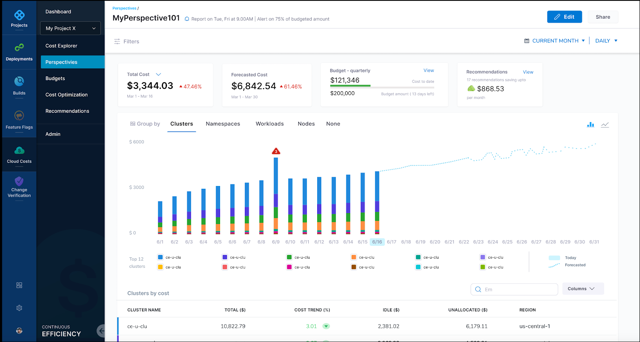
    Harness today announced that it has updated its cloud cost management (CCM) module for its namesake continuous integration/continuous delivery (CI/CD) platform to add support for Kubernetes at the node level in addition to providing business intelligence tools to analyze overall cloud costs.

    Harish Doddala, senior director of product management for Harness, said the update surfaces more granular insights into cloud costs that DevOps teams are incurring because cloud resources are being wasted. The latest version of CCM enables DevOps teams to create their own customized views of those resources.

    As the overall economy continues to recover from the COVID-19 pandemic, more organizations are looking to exercise greater control over IT costs. In the immediate aftermath of the pandemic, many DevOps teams consumed cloud resources without much regard to cost to enable organizations to advance various digital business transformation initiatives. Now, finance teams are requiring DevOps teams to account for those cloud costs.

    The goal is not only to reduce costs whenever possible—by, for example, quickly identifying a sudden spike in cloud resources consumption—but to accurately forecast budget costs on a monthly basis so that both IT and finance teams can collaboratively track spending. The typical finance team is just as concerned about accurately predicting costs as they are the total amount spent.

    Harness Cloud Cost

    Ultimately, Doddala says Harness’ CCM enables organizations to better assess which software development projects to prioritize based on the cloud resources allocated. It’s not uncommon for organizations to suddenly have to shift software development priorities as business conditions change and evolve. A project that may be a top priority today can easily be downgraded because, for example, a rival has been able to launch some new capability that an organization now needs to quickly match.

    DevOps teams, unfortunately, don’t always pay as much attention to infrastructure costs. Harness’ CCM helps reduce those costs by automatically stopping idle resources running on Amazon Web Services (AWS), Microsoft Azure, Google Cloud Platform (GCP) or any Kubernetes cluster, said Doddala.

    There are, of course, any number of existing tools that cloud service providers make available to enable IT teams to reduce costs. CCM, however, provides that capability within the context of a DevOps platform that can span multiple cloud computing environments, noted Doddala. DevOps teams, for example, can create and enforce cost policies for cloud infrastructure into a CI/CD pipeline and prevent an organization from being surprised by a bill from their cloud service provider at the end of the month.

    It’s not clear the degree to which cost control modules will influence the selection of one CI/CD platform over another. However, it’s apparent the days when organizations consumed cloud resources with little regard to cost are ending. In fact, there may soon be more cost controls imposed on software development projects than there were prior to the pandemic. The challenge, of course, is finding a way to automate the implementation of those controls and minimize the impact on software development velocity.

  • EP 14: What Have We Learned?

    EP 14: What Have We Learned?

    The past year-plus has brought disruption and opportunity to businesses and software teams all over the world. Change is inevitable, but 2020 was a year of massive change: businesses pivoted, supply chains were disrupted, customer expectations shifted to contactless services, digital transformation projects accelerated, new digital experiences were created, the move to the cloud jumped into high gear and our ability to create and deliver software was elevated to an essential capability for business.

    It’s time to pause and ask ourselves, what did we learn from all of this disruption and change? What lessons can we carry forward? How do those experiences inform how we prepare for 2021 and beyond?

    Cornelia Davis from Weaveworks, Kurt Chase from Tricentis and Sanjeev Sharma from Truist join hosts Alan Shimel and Mitch Ashley in this episode of DevOps Unbound to discuss lessons learned, how to overcome the obstacles we’ve faced over the past year and how to improve business processes and make better decisions. The video is below, followed by a transcript of the conversation.

    DevOps Unbound is sponsored by Tricentis, the world wide leader in automated testing. DevOps Unbound airs biweekly on TechStrong TV, with all episodes available on Digital Anarchist. There is also a live monthly roundtable open to audience participation.

    Alan Shimel: Hey, everyone, this is Alan Shimel, and you’re watching DevOps Unbound. For those of you watching for the first time, DevOps Unbound is a biweekly video series where we tackle interesting topics related to DevOps. Once every four to six weeks, we do a live roundtable with a live audience questions and live audience participation, and we invite you to our next one. You can find that scheduling at DevOpsUnbound.com.

    Today, though, is a session just with our panel, and what a panel it is. Let me introduce you to them. First off, let me introduce our friend, Sanjeev Sharma of Truist. Sanjeev, maybe you wanna introduce yourself to the audience.

    Sanjeev Sharma: Sure. Thanks, Alan. First of all, thanks. Great to see you all. Hopefully, we will be able to meet in person soon, but thanks for having me on. I am the Head of Automation and Platform Engineering at Truist Bank. Truist, for those of you who might not know, is the new bank that was created last year by the merger of BB&T and SunTrust. I have various hats I wear at Truist, but my background is mostly in the DevOps and cloudware adoption space.

    Shimel: Excellent. Thank you, Sanjeev, and welcome. Sanjeev, I should mention, is also the author of The DevOps Adoption Playbook.

    Next, we’re really, really pleased and honored to have Cornelia Davis with us. Cornelia is, of course, a pretty well-known thought leader and leader at the DevOps space, but is also at Weaveworks. Cornelia, welcome. If you wanna give a little background?

    Cornelia Davis: Sure, yeah. Thank you so much, Alan. It’s so great to be on again. Yeah, I am the CTO at Weaveworks, and you might know Weaveworks as the company that coined the term GitOps, that has been kind of driving that movement. And GitOps is just an element of a broader category, which is really developer platforms, which is what we’re talking about many, many times when we talk about DevOps.

    And so, prior to Weaveworks, I’ve been here for about a year and a half, I was at Pivotal, where I worked on Cloud Foundry and Kubernetes based developer platforms, you know, platform teams for enterprises for quite some time. And I’m also the author of a book called Cloud Native Patterns, which is a book aimed at architects and software developers, helping them learn how to build software for this highly changing, highly distributed—constantly changing, highly distributed environment that is the cloud.

    Shimel: Absolutely, thank you. It’s a pleasure to have you here. Last but not least on our panel today is our friend Kurt Chase with Tricentis. I should mention Tricentis is a sponsor of DevOps Unbound, and thank you, Tricentis, for sponsoring. But Kurt, why don’t you give them your background?

    Chase: Yeah, thanks, Alan. Great to be here today with Cornelia and Sanjeev. Nice to meet both of you. I’m currently running Release Management and Engineering Services at Tricentis, which, Engineering Services is a group that provides cross cutting services primarily for internal engineering, but effectively for the whole corporation as well.

    Prior to Tricentis, I spent years at Splunk, again, supporting the engineering function, all the CI/CD builds and releases and things like that. And then prior to that, I spent almost two decades at Autodesk, producing the AutoCAD, multiple releases of the AutoCAD software product.

    So, again, it’s great to be here today with all of you. Excited to talk about some of the things we’ve learned over the last year, year and a half—and what a year it’s been, holy cow. [Laughter]

    Shimel: Yes, it has. Then let me finally introduce my co-host here at DevOps Unbound, my good friend and partner, Mitchel Ashley. Mitch, why don’t you give a little background?

    Mitch Ashley: Thanks, Alan, and of course, I’m excited to have our panel—thank you for joining us, all of you, today.

    I’m Mitch Ashley, CEO of Accelerated Strategies, an analyst firm that focuses on DevOps and cloud native, cyber security, digital transformation. I also work with Alan as part of MediaOps, the folks that put on this event, with the CTO of that organization. So, it’s a lot of DevOps practicing and observing what others are doing, so I’m excited to hear what Sanjeev and Cornelia and Kurt have to say, too.

    Shimel: Alright. Thank you, Mitchell. And as I mentioned, DevOps Unbound is sponsored by Tricentis, so—many thanks to them.

    Today’s episode, folks, as I mentioned off camera, I don’t wanna jinx anyone or anything, but at least here in the U.S., we seem to, at least we hope that we’re seeing this whole COVID life sort of starting to recede in our rearview mirror. We are returning to normal or a new normal, some may say recklessly too quickly, or some may say not quickly enough, but certainly, the return to normal is on, and accelerating.

    But, you know, there have been many, many lessons, many, many experiences, some painful—extremely painful—from a business and a humanity point of view over this last 14, 15 months or whatever it’s been. There’s also been a tremendous amount of success, a tremendous amount of acceleration, a tremendous amount of, “Jeez, this really—this worked. We didn’t know if it would work, but it worked,” probably the Internet being the first thing, right? Where would we be with this without an Internet?

    But can we—let’s take a moment, and let’s, as I say, hope and pray that this is in our rearview mirror or starting to move to the rearview mirror. What are the lessons? What can we learn, what will we take forward from this? And, you know, I don’t wanna boil the ocean, because I think there’s a lot, but if I asked each of you to give me three things that you really, you think—not just you personally or your organization, but the tech industry has learned, the business world has learned, perhaps society in general, humanity has learned, what would you say some of those things are?

    I don’t wanna put anyone on the spot, but Kurt, you always have something to say. I introduced you last, we’ll start with you.

    Chase: Sure. I’ll jump right in, and one thing that’s amazing to me, not so much from the technology or engineering or R&D side, let’s talk about business, here—the other aspects of the business that were able to adapt to remote work, that, to me, was pretty incredible.

    When COVID really took hold, I wasn’t too worried about software engineers and folks producing software working from home, doing their coding, testing, and all that. The other functions—finance, legal, things that are required to ship your products—seeing those go remote at the pace they did, that was pretty incredible. I think they definitely took advantage of some of the learnings from their individual engineering teams. But to me, that’s one thing that sticks out right away is the speed at which businesses adapted to working remotely and the success they achieved across the functions in the business. That was incredible to me.

    Shimel: Agreed. I mean, the speed of adoption was something. Cornelia, did you wanna say something?

    Davis: Yeah, sorry, I was muted there. I did wanna chime in, because I agree, and one of the ones that really knocked my socks off was how quickly call centers went remote.

    Chase: Yeah. [Laughter]

    Davis: Because that isn’t something I would’ve expected. I would’ve expected them to still be kind of really tied into their telephony services and, you know, the phones that are on their desks.

    But I spoke with many, many people, you know, various customer service people from the banks and from, you know, the Amazon.com—well, there’s not that much of a call in center there, but from all of these different organizations where, when you chatted with these folks, they were like, “Yep.” Within a week, they were able to move everything, move everybody remote in these traditionally really physical call center based systems. Which means that there had to be some preparation. I don’t know if it was intentional, but there had to be something that allowed them to flip that switch so quickly. Is it just forwarding phones? Is it just VPNs? I don’t know.

    Shimel: No, no, it was—so, I have some info on that, if I can. I interviewed a fellow down here in Florida, I think he was out of Tampa, and he operated multiple call centers, like in Costa Rica, which is actually a call center capital, believe it or not, that’s a big business down there. It turned out that the software they used, right, people in call centers, they don’t just—Kurt just doesn’t call someone randomly. Everyone gets assigned their calls or their inbound when a call comes in and gets assigned.

    The software they used within the call center itself worked just as well, the person didn’t have to be in the desk next to you, he could’ve been anywhere, it turns out, or she could’ve been anywhere. And so, it worked just as well in a remote thing. So, they still used the software they were using that tracked how many calls they did, who they spoke to, the notes, putting it into the central database. Yes, they had to be cloud-based, right, because there was no one in the call center to kinda run that infrastructure. But the software, it turned out, worked remotely as well as it worked on everyone’s desk in the call center. It was an amazing thing.

    And so, what they found—again, and this is gonna be, I think, something that’s gonna be a recurring theme—who needs the physical call center? They don’t need that infrastructure anymore. They could have people working at home just as well.

    And so, the more advanced ones—and you’ve probably seen this yourselves—you call someone, they may be very well at home, but they’re giving you the same mediocre service that you get when you call the call center itself, right? [Laughter] But yeah, no—

    Chase: And that’s the point. I think with a business, it’s applicable across functions there, it’s amazing. And business learned that they can still be extremely successful, even if everyone’s remote. And having that pool of remote talent—that changes everything. [Cross talk]

    Sharma: I think a couple of things to be noted there, right? First of all—sorry, Cornelia, I think I spoke over you. You know, one is, the pendulum also needs to swing back from that extreme.

    Chase: That’s the challenge, yeah. [Laughter]

    Sharma: Right? Because, while we have people who are able to work from home because the technology is there, from an equity perspective, one has to look at people who cannot work from home who are being forced to.

    Chase: Yeah.

    Sharma: And we experienced that when we opened up our offices. We are just beginning to open up our offices. June 1st was the first day folks would come back. And I was surprised to see some people had jumped at the opportunity and said, “I want to go back.”

    Chase: Yeah.

    Sharma: Then when you look under the hood and you talk to them, you realize, you know, they’ve been struggling. They’ve been operating out of a tiny closet, right, because they don’t have the space or because they have toddlers or they’ve been struggling with Internet issues, and it is worse overseas than it is here in the U.S.

    So, I think the pendulum needs to swing back to a more normal position, but hopefully, it won’t swing all the way back to where they say everybody has to be on site, on premises, right? So, I think that is definitely, some balance has to happen to recognize—some people do need a workplace, where they can work comfortably.

    Chase: You’re absolutely right.

    Davis: Yeah.

    Chase: I know a story of one individual who was in a one bedroom apartment in San Francisco and after three weeks, he couldn’t handle it. It’s like—I don’t have no space.

    Davis: Yeah.

    Shimel: It happens. Cornelia?

    Davis: And, you know, honestly, I have space, and I have a wonderful office and I’m super comfortable, and I’m also desperate to get back into the office.

    Chase: Yeah.

    Davis: Because—and I love, Sanjeev, that you called out the equity thing, because that’s something that is so painfully obvious in the whole pandemic is that this has only broadened the inequities that we have across society, and we need to absolutely focus on that.

    But then the other lesson, you know, with me, I’m extremely privileged, I live this super comfortable, I never really had to worry about catching COVID, I could just choose to stay home. But humans need humans and, you know, we’re all coming to you on your two-dimensional screen. I am super fortunate that last week, I had the opportunity to have my first face to face with a couple of colleagues in over a year, and it was rejuvenating. I’ve been saying, it’s a 3D work world again instead of a 2D work world.

    Shimel: Yeah.

    Davis: And so, I mean, humans need humans. But you’re right, Sanjeev, I think that the even bigger thing is that we really, really need to look at the inequities. And in the beginning, in the early parts of the pandemic, without getting too political here, we had all of this narrative around these people who we considered essential workers who were kind of the forgotten, like, taken for granted folks, and they were put on a pedestal, and that, unfortunately, didn’t last that long.

    Chase: Yep.

    Sharma: Yeah.

    Davis: And so, we need to bring that back.

    Shimel: And they weren’t paid like they were that essential, either, but that’s [Cross talk]—yeah, it was a pretty low pedestal. But let me, you know what, you bring two things—I’m sorry, Mitch, I just wanna make two quick points.

    Number one, when we talk about the inequality, let’s be really clear. This has affected women and mothers especially, more than men, right?

    Ashley: Mm-hmm.

    Davis: Absolutely.

    Shimel: Mothers have had—because not only have they had to work from home, but they’ve had to take care of the kids who are not in school. And it’s very hard being a teacher, a home care provider, and doing your work at work. And so, how many women have had to work out of the workforce because they had to take care of their kids and their kids are home and they didn’t have an option, there was no child care for them. So, I think—

    Ashley: And the challenges of re-entering the workforce.

    Shimel: Right, and now they’ve gotta re-enter after, you know, months off, and that’s never easy. People wanna know, “Well, why the gap in your résumé?” Well, there’s a gap in my résumé because I have this beautiful child that I’m raising, you know, and how dare you? That’s number one.

    Number two, it is a case of the rich get richer, right? Companies that, not only individuals as you say, Cornelia, but companies that were able to leverage this. Man, they accelerated, but they accelerated at the expense of their competitors who couldn’t, right? Think about all the open retail shops in the malls near you and the strips, right?

    Davis: And this is a place where I’d love to pull DevOps into the conversation, because we are, of course, as a part of DevOps Unbound. One of the things that I thought was impressive—and I’ve worked with some of these companies. In, you know, my previous life at Pivotal, I worked with The Home Depot, for example. When you had The Home Depot and you had these other organizations that, in a matter of weeks, updated their software so that you could do things like curbside pickup? That right there is DevOps in action.

    Shimel: Yep.

    Davis: It is the ability to release software, get feedback, release software, and there was no six-week testing cycle that we used to do, or eight-week testing cycle.

    Shimel: Mm-hmm.

    Davis: It was like, “You know what? We are gonna be testing in production, because we didn’t have time to test this for six weeks.” So, it brings in all of these tools that Kurt, I’m sure, you have day to day experience with, which is these things that allow us to put safety nets in place to be able to release all the time. I mean, that is something where the people who were along their DevOps journey already had a leg up on those that didn’t.

    Ashley: You know, Cornelia, I had that exact experience where I couldn’t get a computer, you couldn’t get one shipped to you, they just weren’t there, so I had to build a computer for some video work, and did it solely from parts from Best Buy, by curbside pickup, two Best Buys in town.

    Davis: Yeah.

    Ashley: So, it literally was, like, a week later, all of a sudden, I could do this, and I was pretty shocked by it.

    One of the things I wanna say, though, about what we’re discussing is, the people dimension of it is extremely important. I think there’s a whole other set of lessons for the business. I think we’ve pressed reset on a lot of assumptions about how businesses have to operate, that you have to be in an office. And essentially, we’ve kinda globalized the business by just taking the location out of it now. And yes, there are privileged and underserved and people who aren’t privileged. And those inequities probably are gonna get bigger, not smaller, because I don’t think we’re gonna all slap back into the office immediately.

    But what the businesses learned is that lesson you just talked about with Home Depot and you with Best Buy is—you know what? We can decide we’re gonna pick Team or Slack in two days instead of two years. We can get a software release out in a few days if we have to. Talk about constraint based management—you know, we now have this constraint and everything else comes off.

    So, I think what it’s done overall, though, is for DevOps and for all of us is, it’s moved software from maybe second or third to number one. Our ability to get software out the door that’s effective, meets what we need it to do, but that is a strategic advantage, maybe even a survival advantage of what we’ve seen happen in this past year.

    Chase: Yeah. I think some of it is, you know, businesses like that were forced to do it or die, basically, you know? And I 100 percent agree with Cornelia that I think they look to DevOps and some of the practices that they’re all used to. You know, the collaboration we need across functions to move forward and all those things are key, some of the foundations of automation, you know? That has been key in the DevOps space, and I think they learned, they need to take advantage of automation to do these things as well.

    So, yeah, it’s been fascinating to see that. And that was a point I brought up to see how businesses transformed and our world changed. And I think it’s opened up endless opportunities for us moving forward. And to Sanjeev’s point, I hope when that pendulum swings back, corporations take a look, that this is no longer a corporate decision where people work, it has to be more joint. It has to be more personal, because every situation’s different, and if you wanna maximize all your programs in HR, diversity and all those things, you have to take that into account. I don’t think you can do a one size fits all any longer.

    I still wonder if all those big office buildings, I worked in downtown San Francisco for many, many years—are we gonna fill those up again, ever? I really wonder now if that’ll ever happen. I could see it not happening, quite honestly.

    Ashley: I’m curious, Sanjeev, you’ve been in the middle of this bringing two companies together with this new bank in the middle of all of this. What in God’s name was that like? [Laughter] What are the additional challenges you’ve had for that, or maybe what opportunities has it created?

    Sharma: Yeah, so, I think it—you know, I joined in the middle of the merger, right, so we were in the middle of it when I joined. So, what I can tell you in the 10 months I’ve been there, we have shifted a lot of the priorities because of the pandemic, right? A lot of things which we would have done later on, we did first. We were able to do things.

    But the flexibility has definitely opened up. I can tell you, between the time I joined and between now, the ability to hire people who are not local to one of our offices has gone through the roof. It used to be an exception, now it’s the norm, right? The last three people I hired, two are in the West Coast and one is in Minneapolis, right, so Midwest. It doesn’t matter anymore, right? The same way there are—the operation has opened up a lot.

    And when I look at it broadly, outside of who I’m working with, when I’m talking to other companies where I have friends or colleagues, they are seeing more offshoring happen, right? Because they’re going, “Why do I need to hire somebody in L.A. if they’re never going to see the person ever anyway, does it matter whether he’s in Bangor or Bangalore, right? Let’s put the person, let’s hire the right person at the right place.” So, I think a lot of that has opened up. It has, of course, shifted some of the salaries, also.

    So, you know, a lot of things are going on, interesting dynamics are happening, and we’ll see how that all pans out. But from a perspective of, you know, doing the transformation, it is hard when you can’t have people in the same room on a white board and things which could have just drawn on a white board and knocked out in a 1 hour or 90 minute working session, now it’s like 15, you know, Zoom views, WebEx or Teams calls, which could have been, and it’s like, “Where is that white board we made up? Was it on Miro or was it on Mural or was it on this or was it on that? You know, and who can edit it, who can’t edit it?” All those—you know, dang it, if we just had a white board and all of us in the same room, we could have knocked this out in half a day.

    So, it is difficult to do certain things remotely. I think there has to be a balance, which needs to happen. And yeah, during a merger just made it more complex, because we are going through change every day, right? People’s networks are changing, people’s—how we are doing things are changing, we are updating stuff. It’s been a very interesting few months and we’re not done yet. You know, the merger isn’t over. We’ve still got a long way to go. So, it’ll be more fun going forward, I think.

    Shimel: I think it brings up the issue, though, of how much of this sticks, right? Because, I mean, look what Sanjeev just described. We’ve all had similar experiences, I’m sure, hiring people from all over the world—what difference does it make? They don’t have to come in the office.

    Does that stick? Because if it sticks, there are profound implications for society in general. Why live in San Francisco unless you love the view of the Bay. It’s a beautiful bay, right, the bridge is nice, but pay $4,000.00 for a closet-sized one bedroom apartment? Maybe not. I mean, on the other hand, I live in South Florida. Housing market is insane because of people moving here from New York and California and spending a fortune—Colorado, right?

    So, does this—that’s one example. Does the ability to work from anywhere, it makes no difference, is that something that sticks around, or do we, as Sanjeev said in the beginning, see a pendulum start to swing back? What do you think?

    Chase: Well, for me, like I said, I think elements of it have to exist and remain. I think there needs to be a balance, as Sanjeev said. I no longer think it’ll entirely be a corporate decision where employees are located. I think for some roles and groups in organizations, there needs to be a deeper conversation on where is the best talent, what’s the best way to use them? You know, having people sit—just the commute. The one thing I don’t miss is the commute. Oh, my God, you know, those three hours a day commuting, you know, that, to me, we have to somehow retain that benefit, you know, from working remotely somehow. I’m not sure how.

    But that’s a very good question, Alan, I don’t know. It’s like, will those office buildings ever be full again? I don’t know. I’m not sure.

    Sharma: On that point, I’ve been remote since 2013. In 2013, I was at IBM. I moved to a global role, and since then, I haven’t had an office. I’ve worked out of this room since then. But I used to travel 150 to 175,000 miles a year.

    Chase: Got it, yeah.

    Sharma: Right? So, for me, the office was a place to go collaborate, whether it was my office or my company, IBM—

    Shimel: And for all of us.

    Sharma: – right, or a client’s office, it was not a place to go and have a desk, right? My desk is here, right, my books are here—you know what I mean, right?

    Chase: Yeah.

    Sharma: I think we should, I would like to see us go to that model where offices become more of a collaboration space rather than a place you have to show up and work alone in a cubicle. What’s the point of that?

    Ashley: I agree.

    Sharma: Unless somebody needs it, right? That’s different if they don’t have space at home and the need a cubicle to work in—fine, put them in a WeWork next to where they live, right, close to where they live rather than have them commute to the other, you know, 45 minutes one way.

    I think that’s the model we should head towards.

    Chase: I agree.

    Sharma: And, you know, the tools to enable that are there, we’ve proved it. We’ve proved, during the lock down, during the pandemic that the tools are there, but I hope it goes that way. I hope it doesn’t go back to, “You have to show up in this cubicle” even if you are, you know, like the guy from Office Space protecting the stapler and never talking to anybody.

    Ashley: The butts in seats model, right? [Laughter]

    Chase: We’ve seen some large organizations [Cross talk] make those calls already and say you can be remote forever now, you know, things like that. So, I think that’ll become a bit more selective, but I still hope, when that pendulum does swing back, that the employee has a say, you know, and his voice is a little bit taken more seriously.

    Shimel: Or her voice.

    Davis: Or hers.

    Chase: Or hers—or hers, [Cross talk].

    Davis: Exactly, that’s where I’d like to chime—I’d like to chime in there, because Alan teed this up earlier and then, because you had two things, Alan, we followed thread number two.

    I wanna come back to thread number one, which is that this has affected women in the workforce, and it’s not just us technologists, but it’s a broad spectrum, and it’s probably even more so in other working arrangements. And so, I love what you’re saying there, Kurt, about it being a partnership between the corporation and the employee and determining what’s best for them. And then Sanjeev, you, I think, just teed up—is that the survival answer for WeWork is that part of that negotiation between the corporation and the employee, she or he, includes having the ability to move into a workplace that is close to your office but allows you that space that you need, for example, not to be on call for child care.

    Of course, the other thing I can’t help but say—and I’m very fortunate, I have one son, he’s 26, I’m not tying shoes or going to PTSA meetings anymore—

    Shimel: I hope not. [Laughter]

    Davis: – so, I wasn’t affected in that way. Yeah, [Laughter] I wasn’t affected in that way in the last year, but I was a working mother and I worked from home that whole time. And I just wanna remind everyone, men and women, that you’re right, women take on that burden, but it doesn’t have to be that way, fathers.

    Shimel: Amen.

    Chase: Mm-hmm.

    Cornelia Davis: So, please pitch in even more than you think, just because it’s been kind of the standard operating procedure. If nothing else, I hope the last year has maybe, in some cases, resulted in a, hey, a need-based way of rebalancing responsibilities. That is something that every single individual, male or female, can participate in kind of these societal expectations and challenging those.

    Ashley: I think something happens—

    Shimel: You know what? Oh, go ahead, Mitch, I’m sorry.

    Mitch Ashley: When things open up, when opportunity happens and things make that shift, it’s different when there’s opportunity there, but when things have shifted and made a shift, they don’t snap back to the old way automatically. It transforms sort of the landscape going forward, and there’s so many things about this—and you mentioned women in the workplace, we also have people of color—and we think about the emphasis of diversity that’s happened over the last year and a half, which is fantastic. And we see so much more bringing to the forefront of women in leadership positions, people of color being involved in security more, whatever it might be. You know, I don’t think that that changes.

    So, hopefully, those people who now are getting to participate in a bigger, broader way or have more opportunity to do that, (a) I don’t think this is gonna go away, (b) that’s gonna change things for us, right? You know, maybe, Cornelia—[Laughter] here, I’m speaking about what I don’t know about—but maybe more women in leadership positions make some of those, it’s assumed that the woman at home does the child care or whatever is part of our societal transformation, that it isn’t necessarily an assumption. Hopefully we can get past that and remove that barrier for people so there is more opportunity.

    Shimel: So, Mitch, on that front, though, here’s the deal. Number one, I think the move to diversity is not necessarily COVID related, I think it’s just an idea that its time had come, it has been a long time coming, number one.

    Ashley: I totally agree.

    Shimel: Number two, I think one of the positive things that happened is, it wasn’t just the woman stuck at home taking care of the kid. She was stuck at home taking care of the kid while the husband was trying to carve out a desk space in his bedroom somewhere to try to do a meeting or something, right?

    But what often happened, at least among my friends—look, my kids, also, Cornelia, they went away to college even though their college was online, just to get out of the house from their mother and father who wouldn’t let them breathe. But most—like, people I know whose kids were younger, the mother and father were home. They had to split up, delegate duties. You did the wash, I cook the meals, you clean the table, I took the kids here, you took the kids there or entertained them now because you had work to do, I had work to do.

    In a best case scenario, it became very much a shared responsibility. Of course, not every scenario or every instance has that best case outcome. There’s a lot of people [Cross talk], you know?

    Ashley: I think it’s been a journey to share. It may not be quite as, like, “Okay,” [Cross talk].

    Davis: Yeah, yeah.

    Shimel: Well, that goes, this is—

    Davis: I mean, you’ve painted a fairly ideal picture.

    Shimel: That is an ideal picture, you’re right.

    Davis: Yeah. You know, this conversation is making me wonder, and I don’t have these stats, but I wonder if anybody else has heard the stats—you’re right, absolutely, that this shift towards more underrepresented folks in leadership positions, women, people of color, and so on, that absolutely started before COVID.

    I wonder how COVID has affected that. Have the numbers accelerated, have they decelerated? I think—I suspect the latter, and I’m pretty much an optimist, but I’m also a bit of a realist, and I wonder whether the last year has slowed down progress when it comes to diversity at the leadership level. I don’t know. It’s just a gut feeling. I’d love to see some metrics on that.

    Sharma: I can tell you, Cornelia, in IT roles, it has always been very difficult to hire people from minorities, right, underrepresented minorities.

    Davis: Yeah, of course.

    Sharma: It always has been. I personally believe it has gotten worse, because if you look at especially leadership roles, senior roles—we’re not talking fresh college grads—most of those roles, no matter what anybody says, happen through referrals and connections, through your network.

    Davis: That’s right.

    Sharma: And that network stalled. That network stalled during the pandemic, right?

    Shimel: Yeah, networking, yeah.

    Sharma: Right? It is as big as it was then or grew slightly, right, that networking opportunities were gone.

    Davis: Yep.

    Sharma: No Meetups, no conferences, no lunches, no power breakfasts, no women in technology meet ups—nothing. The network stalled—you only knew the people you knew, right?

    Davis: Yep.

    Sharma: And I think that hurt, bad. I find when I’m trying to hire, when my peers are trying to hire, we are struggling more to have—see, you can’t hire when you don’t receive the résumés. When there are no résumés coming in, how do you hire, right? And I’m struggling, and if anybody has, if either one of you could—any one of you has any suggestions on how to fix that, I’m all in. Please, I’m all ears.

    Davis: I think—

    Chase: Yeah, I was gonna say, you pointed out an anti-pattern to what I was gonna say, Sanjeev. I was gonna say, at least with COVID and all the remote work, our talent pool has opened up worldwide, but you’re saying that hasn’t helped in that regard.

    It has for me with some of the roles I’m hiring. Now granted, they’re not Director, Senior Director, VP level roles yet. But for the other roles, having the world as my talent, you know, the talent pool versus the United States, that makes it [Cross talk].

    Sharma: Well, I look at it a bit differently. I look at it a bit differently, Kurt. You know, hiring—how do I, I wanna make sure I say this properly. Hiring an Indian in India is not hiring a minority.

    Chase: Yeah, true. Yeah, true.

    Sharma: Hiring an Egyptian in Egypt is not hiring a minority. Hiring a Turkish person in Turkey is not a minority, right?

    Shimel: Right.

    Sharma: They have to be a minority in where you’re hiring them, that’s the only way it works.

    Shimel: Agreed.

    Davis: Yeah, I think, [Cross talk] I wanted to comment on your remarks, Sanjeev. I think that you’re spot on. Because there were opportunities, and some of the techniques that we have used in corporations to source diversity candidates or underrepresented candidates, those things went away. So, being able to go to a historically black university or go have your recruiter show up at Women Who Code meet ups, those went away, and those aren’t the same.

    Sure, Women Who Code still had meet ups line, but it’s not the same as walking around during the social hour and saying—or, I’ve been at many meet ups where, before they start the program, they say, “Okay, who’s hiring?” And everybody stands up and then, “Who’s looking?” Everybody stands up. “Alright, you folks, talk.” That was a very organic thing that was not just so easy to say, “How do you do that in an online setting?”

    You’re right, it’s—I hadn’t even thought of that, but that whole network is the same now as it was a year ago is remarkable, especially when it comes to leadership.

    Sharma: Exactly. That’s why hiring from a historically black university, we can still do that today, because the recruiters still know the counselors there, they still know the placement office or whoever does—you know, those networks are still there. It’s just that the network hasn’t grown. The higher you go, right, the air gets, you know, rarer, right, and those jobs are fewer and you are not screening 100 résumés to do that. You’re relying on the network more than often, no matter what anybody else says, right?

    And that network stalled. I mean, who have we met at a conference who we didn’t know before? Now, when I go to a meet up and I see somebody I know—

    Davis: Yeah, but I think what you’re pointing out—

    Sanjeev Sharma: – I am IM-ing that person, not some stranger who I’ve never met, right? Unless there’s something really, some reason to do that. Then—no, no, it is the opposite, it has really hurt. I think we need to fix this.

    Davis: Yeah.

    Sharma: We need to put this [Cross talk] the moment we come back.

    Davis: Yeah, but I wanna suggest that—yeah, but I wanna challenge that assumption, which is that I hire leadership from within my network. Maybe that right there is the thing that we need to work on.

    Sharma: Well, I’m with you. We need to work on it. What I’m saying is—that’s what I was saying. I was saying that what we tend to go, tend to—we tend to grow our network to find leadership role people, right? People in leadership.

    Davis: Yeah.

    Sharma: When you can’t grow your network, you’re reliant on what’s already in your network, right? I mean, otherwise, you’re scouring LinkedIn or some other website or pinging people in your network asking for referrals.

    Davis: Yeah.

    Sharma: But that network stalled. That network didn’t grow. I can’t point to 50 people I met in the last year who were cool and interesting who I did not know before who were underrepresented minorities have I would have met, had I gone to Reinvent or IBM Think or, you know, DevOps World or KubeCon or whatever. All the people I would have met, I didn’t meet them.

    Shimel: So, that’s a whole other thing. Virtual events, right?

    Ashley: Mm-hmm.

    Shimel: We’ve all spent significant portions of our lives at conferences. Cornelia, that’s where I usually see you is at conferences—Sanjeev, as well. Virtual events are cool. We put on one a month here at MediaOps. Gene Kim does his DevOps Enterprise Summit virtually, people even paid money to attend it.

    And all of the virtual events, they try to do a social thing to it. It’s just not very good, frankly. It just—it’s just not the same as being in the hallway or grabbing a drink at the bar or a soda or whatever, you don’t have to be drinking. But, you know, just not—it’s not that, someone said it before, face to face, person to person. I think it was Cornelia, you recently had an in person. It’s not the same, it’s not the same.

    I mean, so, different than the three of you, Mitchell and I have had a chance to meet hundreds of new people this year. I do three to four to five of these interviews a day. My day starts with talking to people in Asia or Israel and goes to Europe and through the Americas, all the way to the West Coast. And what I’ve found is that I’ve become a resource for people like you, Sanjeev, who say, “Hey, I’m looking for someone to head up cloud or DevOps or testing” or what have you. And I go through, who have I interviewed recently?

    But that’s not the way it’s supposed to be. And the question is—and we’re getting near on time—I wanna bring it back to DevOps and software, right? And, you know, what—

    Chase: I think you touched upon it from the beginning, Alan, it’s the Internet. You know, the fact that our technology infrastructure was able to shoulder the burden, that was pretty incredible to me, too. You know, I expected Zoom to go out for weeks, if you will. But I think it demonstrated that the technology infrastructure we have is pretty solid. You know, it allowed us to scale up pretty quickly, pretty massively and, you know, there were outages here and there, but I would’ve expected a lot more.

    Shimel: Minimal—minimal. Even counting all the DDoS attacks and the ransomware and all of that nonsense, it was still minimal.

    So, we had that infrastructure, but we also had this incredible capability to accelerate, to automate that DevOps kind of has been teaching us for seven, eight, nine years or more now, right? And that really helped. Curbside pickup and the—it’s not just curbside pickup, it’s the back end, obviously, right, that allows you to pull into that parking space and hit the button and say, “I’m here, and this is the car I’m in,” right? That kinda stuff, how many companies and jobs were saved by that kind of capability.

    Chase: The other thing for me internally is, I think it also opened up the ability to question everything, just because—at all levels, you know? Whether you’re designing a new feature, adding something to a product, designing a new process—is that the right thing, just because we’ve done it like that? I mean, really question it, because I think it, I mentioned this before. I think the opportunities ________ are endless now, really.

    We haven’t even started to take advantage of the things we’ve learned. I believe we’re starting to now, as Sanjeev mentioned, the pendulum coming back. Part of that is some massive learnings that we’ve also had forced upon us, if you will. But I think we’re gonna come through it even stronger and better, for sure.

    Davis: Yeah.

    Sharma: I think the—

    Davis: You know, I wanna, I’d love to chime in on—

    Shimel: Go ahead, Cornelia.

    Davis: – yeah, I’d love to chime in on that scale. You used the word scale and these systems were able to scale and handle just a tremendous surge in traffic.

    Shimel: Oh, yeah.

    Davis: And when you said that, it took me immediately back to a DevOps Enterprise Summit where Nicole Forsgren and Jez Humble—and those of you who don’t know them, you should know them.

    Chase: Yeah, we know them.

    Davis: State of the DevOps Report, State of the DevOps Report, the book Accelerate. I remember this moment where they were on stage, and Jez Humble, in his very humble way, hand in his pockets, says, “Turns out, architecture matters.”

    Shimel: Yeah. Right.

    Davis: And so, it’s having these systems that are designed to scale, and we find so many enterprises that have said, “Oh, well, you know what? Google scale, Amazon scale, that’s not a problem that I need to face.” Well, surprise—

    Chase: Yeah, it is.

    Shimel: It is.

    Davis: – maybe it is. And so, architecture matters, and so I can’t help, as a software architect, coming back to that and saying, “Yep, there ya go.” [Laughter]

    Shimel: Yep, [Cross talk].

    Sharma: And I think we’ve seen companies who were—there’s two ways to look at it. One way is to look at it from a scale perspective. The other way is to look at it from a resilience and reliability perspective.

    Davis: Right, yeah.

    Sharma: Right? Which are two aspects of the same thing. It’s all architecture. And I think companies realize very early that reliability and resilience are critical—resilience to be able to make changes rapidly, right? Today, I have, I don’t have curbside pickup, tomorrow I have. Today, I had 10 people doing this, tomorrow I’m gonna have 200 people doing this.

    Ashley: Right.

    Sharma: Today, I had a teller sitting in front of her terminal, so the user interface didn’t need to be that cool. You know, the things could hang and the teller could, you know, make sense, make small talk while the system is catching up. Well, nobody’s accepting that on the mobile app when they’re directly dealing with the website or the mobile.

    So, I think that whole shift on resilience and reliability are real, are important, and all that goes back to your point, Cornelia, to architecture. That was front and center to people, and I think [Cross talk]—

    Chase: Yeah. And I think along with that, Sanjeev, is security. I think security, this really exposed—we have to do more in security. We have to do more, you know?

    Ashley: We have to rethink security.

    Chase: I think that’s one of the chief learnings.

    Shimel: No doubt about that. Guys, I hate to do this to you, but I need to pull the plug on this. We already have people in my waiting room for our next interview.

    What a great panel this is. We’re gonna have to rerun this again and go to a part two, because there’s things I wanna talk to about this as well. I spoke to a guy today who started a new, he calls it the mobile cloud for gaming, it’s called Now.gg. Because their research is that our kids, you know, these digital natives, if they don’t get a response in half a second, they’re gone, they’re onto the next thing. And so, what does that mean for your banking apps? What does it mean for we’re doing?

    But we need to end this. Sanjeev, Cornelia, Kurt—man, thank you, guys, so much. Thank you, all, so much for making this an amazing panel. Thank all of our viewers out here for watching this; we hope you enjoyed it. Mitchell, I’m gonna let you take it home.

    Ashley: Well, I think—what a fascinating group and wonderful things to say. I think the biggest learning for me—and I really appreciate Cornelia and Sanjeev talking about the lost opportunity we had through networking to help people come together and expand their networks. So, let’s invest in that going forward. We need to rebuild those and make that happen. So, I appreciate—I really wanna thank you for helping me understand that better.

    Shimel: Absolutely. Many thanks to Tricentis for sponsoring this episode of DevOps Unbound. We’ll be back in two weeks with a fresh episode, a new panel, a new topic, but hopefully it’s just as interesting a conversation.

    This is Alan Shimel for MediaOps. Until next time, be safe and be well.

    [End of Audio]

  • Making Blockchain-Based App Dev More Accessible

    Making Blockchain-Based App Dev More Accessible

    Blockchain has many potential uses cases outside of cryptocurrency. Established sectors such as financial, automotive, supply chain, and mobility could soon move to adopt decentralized applications and distributed ledgers. The technology has even been hailed as the ideal foundation to maintain a connected economy once humans go interplanetary.

    Recently, spectators note a swelling interest in decentralized, peer-to-peer, autonomous development approaches. Eyeing the excitement around cryptocurrency and blockchain, many developers are eager to start experimenting with their own blockchain-based applications. This incoming disruption could remove the middle man and give power back to people, says blockchain and cryptocurrency entrepreneur Max Kordek.

    However, building your own blockchain from scratch is incredibly difficult. So, I recently met with Max Kordek, co-founder, Lisk, to understand how to make blockchain-based app development more accessible. According to Kordek, there are many benefits to creating your own blockchain, but simplifying the creation process will be necessary to empower new startups and enable this new paradigm to flourish.

    Potential Use Cases

    The decentralized, tamper-proof nature of blockchain has disruptive potential to remove central authority and give more data control to the collective hive. “For me, it’s all about removing the middle man,” said Kordek. “It gives power back to the people.” Cryptocurrency is obviously the most widespread use case; Bitcoin is proof that a blockchain-based system can see mass adoption. But there are many other use cases outside of cryptocurrency where similar record-keeping is important.

    For example, the automotive industry could link data across manufacturers or share data between vehicles. NFTs are using blockchain to represent one-of-a-kind digital art objects. The airline industry is looking to blockchain to synchronize partner ecosystems. Blockchain is also transforming online gaming by substantiating in-game value systems.

    From insurance to supply chains to transportation, most industries hold a potential blockchain use case. But blockchain isn’t constrained to only terrestrial scenarios. Information systems engineers foresee blockchain powering future in-space economies. With significant funding going toward asteroid mining and Mars missions, an interplanetary humanity seems inevitable. Compared to Bitcoin, “Ethereum is a better choice for the interplanetary economy,” said David Vandervort. Gathering transactions in blocks and pinging satellites could enable monetary transactions from planet to planet. “An interplanetary financial system would have to be built on blockchain technology,” Kordek said.

    There is ripe potential in countless areas. But who will be leading this shift? According to Kordek, we may see corporations augmenting existing structures with blockchain. However, established enterprises will find it challenging to unshackle themselves from legacy systems. Instead, new startups are more likely to have a bigger say in the blockchain revolution. “It’s much more realistic that an entirely new startup adopts blockchain and structures their entire business around blockchain,” said Kordek.

    The State of Blockchain Development

    After Bitcoin was established, other developers forked the project and changed parameters to introduce new cryptocurrencies, such as Litecoin and Dogecoin. Eventually, Ethereum came along, which was unique as it enabled developers to build apps with smart contracts. However, “the developer ecosystem was horrible at the beginning,” explained Kordek. “It was the wild west of development.” To this day, it’s still very complicated to develop on Ethereum, he added. Plus, since it is open source and immutable, it’s vulnerable to security threats. “It’s like the biggest bounty program in the world—if there’s one bug, contracts are drained.” Ethereum also has scalability issues — it can only run 30 transactions per second, equating to 1 million transactions per day.

    For these reasons, it may be better to build your own blockchain. However, doing so is a difficult task. From a research perspective, this requires a lot of theoretical knowledge, Kordek explained. Blockchain also introduces new maintenance concerns—since the infrastructure is always on, it is unstoppable, making patching a bug or pushing an update tenuous at best. If hundreds of millions of dollars are dependent upon a stable network, one mistake could have drastic repercussions. The high development and QA roadblocks make prototyping blockchain-based systems from scratch challenging. “Experimentation is essential to bring an industry forward,” said Kordek. “It’s important we simplify blockchain development so more experimentation can happen.”

    Open-Source SDKs Make Blockchain More Usable

    So, how do we make blockchain more accessible so that experimentation can occur? Well, a lot of progress has already been made via ready-made open source language-specific SDKs. For example, there’s Polkadot (Rust), Cosmos (Go) and Lisk (JavaScript). Kordek is an advocate for language-specific libraries that fit a team’s programming preferences. Out of these, he favors JavaScript, as it’s generally easier to learn and already supports many web-based interfaces.

    These projects are not about the smart contracts themselves; they’re about improving your own blockchain creation process. According to Kordek, going down this route grants more control in the early days. If something is broken, you can fix and push and update. If tokens are hacked, you could roll back and adjust things, he said.

    As companies get bigger and bigger, the technology could have a centralizing effect. “How can we somehow bring power back to people?” asks Kordek. Blockchain is one profound answer, empowering new entrants to alleviate problems across industries — it could even help us boldly go where no one has gone before.

  • Report: Lots of Room for Continuous Delivery Improvement

    Report: Lots of Room for Continuous Delivery Improvement

    A report published by the Continuous Delivery (CD) Foundation suggests that, in terms of achieving that goal, most organizations still have a long way to go. Based on analysis of the Developer Nation survey data collected by SlashData, nearly two-thirds of developers said it takes at least one week to go from code committed to code successfully running in production. Only one in 10 developers are deploying code in a production environment multiple times per day.

    On the plus side, half of developers reported that they restore service from an unplanned outage in less than a day.

    The survey identified the top programming languages being employed as shell scripting languages, Go/Golang, JavaScript, PHP, Scala, Dart, C#, Ruby, Python and Java.

    Surprisingly, the vertical industry furthest along in terms of achieving continuous delivery is the retail sector that has embraced digital business transformation, while the furthest behind is the telecommunications sector.

    Tracy Miranda, executive director for the CD Foundation, noted that even after more than 10 years of advocacy, DevOps adoption of CD best practices remains nascent. Many organizations have adopted so-called continuous integration/continuous delivery (CI/CD) platforms, but they are mainly used to drive a set of CI best processes. CD, in comparison, has proven to be a more elusive goal to achieve mainly because each platform on which an application is deployed tends to have unique attributes. Automating the delivery of applications across multiple platforms has, as a result, been difficult to achieve and maintain, she noted.

    Nevertheless, with the arrival of cloud-native container-based applications destined to be deployed on Kubernetes clusters that expose a consistent set of application programming interfaces (APIs), the prospects for more widely achieving CD are improving. Each platform that has a Kubernetes cluster running will expose the same API to a CD platform.

    In the short term, however, Miranda noted that many IT professionals are still somewhat intimated by both Kubernetes and CD best practices. Too many organizations still tend to think of CD as a platform to acquire rather than a set of processes and skills to be defined and nurtured, she added.

    One way or another, however, the CD challenge will need to be addressed as more organizations realize how dependent they are on software to deliver a differentiated customer experience. The rate at which that customer experience improves will determine the level of customer affinity that organizations will be able to attain and retain. That’s doesn’t mean every organization has to be as proficient as, for example, Netflix when it comes to implementing DevOps best practices, Miranda added. However, she said, it’s already apparent most organizations will need to improve how they deliver software to drive multiple digital business transformation initiatives. The opportunity lies in reviewing those processes now with an eye toward creating a culture squarely focused on continually improving the customer experience, she said.

    It may still be a while before most organizations truly master CD, but, as is the case with most journeys, the most important thing is to simply take that first big step.

  • How to Build an Options-Based Observability Strategy

    How to Build an Options-Based Observability Strategy

    The global pandemic forced companies to accelerate their digital transformations, pushing them toward new technologies and architectures as they struggled to adapt to a changing world. Companies wanted fast development and deployment and were happy to trade off efficiency, reliability and sometimes, security, to pursue their goals. Now that the pandemic is receding in many parts of the world, the priorities are rebalancing as companies grapple with choices they made under fire.

    Observability has emerged as a way for enterprises to better understand sprawling infrastructure and application environments. According to Gartner, “Observability enables organizations to reduce the time it takes to identify the root cause of performance-impacting problems. In particular, and in contrast to traditional monitoring, operators can freely interrogate data post-hoc without the need to pre-program dashboards.”

    This sounds promising and the market responded quickly, but predictably. Large and monolithic monitoring platforms embraced the term and added new features, making them even larger and more monolithic. These monolithic platforms represent a failed choice-based strategy. They assume that all observability data is collected, centralized, integrated and only analyzed by a single tool. Enterprises following a choice-based observability strategy find themselves locked-in to multi-year investments without the flexibility to react to evolving technologies.

    While this has been good for vendors in the incumbent monitoring space, end users haven’t benefited from these enormous platform deployments because the choice-based strategy is built on the faulty assumption that a single pane of glass serves all of your monitoring and observability audiences, from SREs to DevOps and SecOps.

    A choice-based strategy also forces customers into limited options in the future as technology continues to evolve and requirements change. Defaulting to choice-based strategies also leaves little leverage for contract negotiations, data integrations and data access.

    Infrastructure and operations teams need to take a different approach to their observability strategy. Instead of focusing on buying products and making choices, teams need to shift their thinking to creating options. The choices you make today limit your options tomorrow. Tomorrow is unpredictable and uncertain. Taking an options-based approach allows you to be flexible and adaptable today and into the future.

    An options-based observability strategy is built on three pillars:

    • Establishing your observability strategy principles
    • Building composable environments
    • Staging your commitments

    Let’s look at each of these.

    Establish the Principles of Your Observability Strategy

    When asked about their observability strategy, many often leap into detailed plans covering every imaginable use case. They talk about the current state of their infrastructure and how things will be at the end of three or five years, including the skills and functions they’ll need in that time. If you’ve read the above, you’ll recognize this as a choice-based strategy: All the choices they need to make over the next several years are already laid out. This leaves little room for adaptation and options as the world evolves around you.

    Instead, think of your observability strategy as a single principle, or a collection of principles, guiding your observability strategy. Let’s say your core principle is that observability is a key enabler of operational efficiency across SREs and DevOps. We can build on that operational efficiency principle to define what key elements of our strategy has to include:

    • Data sources have utility-like accessibility; always on and available across tools.
    • Metrics are primarily driven by total cost of ownership and optimization.
    • Governance is centralized to the team distributing data to downstream systems.

    These elements are different if your core principle is something like customer intimacy or risk management.

    With principles and strategy in hand, we can focus on the next phase: Composing the observability environment.

    Compose your observability environment

    In an options-based strategy, the key success factor is avoiding large ecosystems that limit flexibility. Many vendors take a “give us everything” approach to observability. These approaches appear to start and end at the destination platform, but they begin even earlier, at data origination. It’s common to see agents only sending data to one destination, limiting the usefulness of the data by locking it into a silo.

    Staying modular means selecting tooling that abstracts the data sources from destinations and puts the power back into your hands. By using an abstraction like an observability pipeline, you can send data from one source to multiple destinations, while managing that data in any way you see fit. For example, this is where your centralized governance can occur.

    When new tools are introduced, upgraded or deprecated, an observability pipeline insulates the rest of your environment and users from those changes. A modular approach also gives you more power in contract negotiations with your other vendors because you’re less reliant on one vendor for all of your observability needs.

    Stage Your Commitments

    A choice-based observability strategy is a large commitment, often taking years. Once you start, stopping becomes impossible. That’s simply unacceptable in today’s environment of uncertainty. Choice-based strategies limit your ability to test, experiment, and learn. At the same time, our infrastructure is critical and it must be reliable.

    An options-preserving approach may involve experimenting with freemium products; only paying once the product’s value has been proven. Cloud-based options are another consideration since they are commonly subscription-based and offer easy try-before-you-buy purchasing styles. Even better, cloud-based options don’t require using your own infrastructure to test new options.

    Every IT team feels the need to react and respond to demands from the business. That urgency to make choices, to solve the immediate problem, can have long-term implications for future flexibility and agility. By structuring your observability strategy around a long-term vision based on preserving options, your team can remain adaptable as technologies and business requirements evolve.

  • Multi-Cloud Is Not About Lift and Shift

    Multi-Cloud Is Not About Lift and Shift

    Multi-cloud is often framed from the perspective of “lift and shift.” In other words, an organization takes a computing environment previously running on one cloud and transfers it over to a different service provider. Cloud migration may make sense for cost savings or performance benefits and such a shift may be necessary when migrating on-premises data centers to a public cloud.

    In theory, lift and shift sounds like it would empower cloud consumers with more choice in the marketplace. However, according to John Gentry, CTO of Virtana, lift and shift is quite rare in practice; it may not be the true driver behind multi-cloud strategies. Moving resources between clouds can result in costly egress fees. Plus, culturally-ingrained cloud preferences become challenging to shake. Unique configurations and add-on software-as-a-service (SaaS) make each cloud more nuanced, requiring new skills and procedures with every migration.

    Instead, Gentry advocates for a “fit-for-purpose cloud” strategy. This attitude is less about moving similar workloads between clouds but, instead, pairing particular types of workloads with the appropriate cloud types. According to Gentry, using multiple clouds simultaneously could still help organizations strategically align their digital resources and reduce dependency on a single cloud service provider (CSP). But, the real value of a hybrid multi-cloud setup lies in matching computing environments to different business layers.

    Fit-For-Purpose Cloud

    At first glance, the ability to move between clouds appears to be driving a new multi-cloud economy where cloud strategists can swiftly migrate resources and optimize intercloud utilization. However, when organizations attempt to shift, they usually experience many hidden costs, Gentry warned. These often pop up around data egress. Or, new data storage costs may take a surprising toll, Gentry added. “A lot of companies look at it from a computing perspective and they don’t account for the storage footprint.”

    DevOps in the cloud also introduces new responsibilities and processes that may differ between clouds, continued Gentry. From unique storage operations to managing the life cycle of a virtual machine, each cloud carries unique configuration methods. This makes it more difficult to abandon established procedures in favor of a different computing arrangement.

    Nevertheless, Gentry recognizes that we’re starting to see a maturing effect of the multi-cloud concept, especially among large enterprises. “Companies have a multi-cloud strategy—it’s less about moving between clouds than about picking a cloud that has specific advantages for a given workload,” he said. In a fit-for-purpose cloud approach, different workloads correspond to different layers of the business. For example, an organization may require a local data center or private cloud for high-security data. Certain applications may benefit from a distributed global public cloud, whereas other workloads could reap performance benefits and cost savings from a cloud-adjacent edge model. “These specific areas may not have anything to do with one another other than supporting the overall business,” explained Gentry.

    Matching Cloud Types to Business Units

    So how do we match the workload at hand to the ideal computing arrangement? Gentry identified three emerging cloud types:

    • Private cloud: A private core for particular functions that can’t be replatformed or rearchitected. Business areas such as financial records or patient care hold sensitive data that must be stored properly to meet regulations and SLAs.
    • Public cloud: End customer-facing, where sensitive data is not an issue. Public distributed cloud is ideal for delivering a highly available front end for customer-facing digital experiences.
    • Cloud adjacent/edge: When an environment is kept in a cloud adjacent facility with relatively local geographies. This may sit alongside the public cloud or connect to a front end in a cloud.

    For example, Gentry described how a large health care company uses a hybrid multi-cloud setup to support various business divisions. The organization is keeping traditional patient care workloads exclusively on-premises; due to regulatory reasons, it will never see the inside of a cloud. Yet, they are simultaneously building the next generation of applications in a public cloud, using Google Cloud to scale a clinical trial division. Simultaneously they began using Microsoft Azure for their back office. This scenario highlights one peculiar advantage of late-stage cloud adoption, noted Gentry: “They had the advantage of being able to take a more thoughtful approach.”

    Gentry described another case of an organization performing genomic sequencing. For data-heavy applications like this, where there is a high dependency on input and output, syncing with a public cloud could be extremely costly and introduce latency. For them, the most cost-effective method was to use a cloud-adjacent or edge model alongside a public cloud.

    How to Leverage Fit-For-Purpose Cloud

    One situation that may warrant cloud migration is a complete replatforming, noted Gentry. He described one early cloud adopter that rushed into AWS, only to find it wasn’t cost-effective for their needs. Architects then had to make tough decisions to determine what would be repatriated back to local data centers and what should remain in the cloud. “Their only motive going from cloud to cloud was, ‘We made a bad choice and we want to move.’”

    Clearly, to match cloud use with business requirements, you must choose the appropriate cloud. AWS is widely adopted for elastic computing and offers a wide product catalog. GCP is offering feature innovation and cost reduction to compete and is going after un- and under-penetrated regions. Azure, on the other hand, will offer licensing advantages if you are a Microsoft shop.

    Secondly, to unite IT around a hybrid multi-cloud strategy, you must remove the adversarial state between traditional ops and cloud ops. Classic ops is typically very safety-oriented, using a slow approach with endless tests in pre-production. Traditional ops may produce yearly updates. This is directly opposed to the new cloud ops approach, which emphasizes agility, speed and constant deployment. “They sit in different silos,” Gentry explained.

    To solve this dilemma, companies must share technical skillsets between the three main cloud types. “DevOps must become a continuum for all types,” Gentry said. In addition to cultural change, DevOps tools must evolve to monitor workloads across a hybrid multi-cloud estate. This will require integration to tie together tools and deeper observability.

  • Cycloid Tool Can Reverse Engineer Provisioned IaC

    Cycloid Tool Can Reverse Engineer Provisioned IaC

    Cycloid this week unveiled a tool that makes it possible to reverse engineer code used to manually provision cloud infrastructure. The Infra Import tool is part of an effort to create a more consistent and reliable version of that code using open source Terraform software.

    Benjamin Brial, Cycloid CEO, said Infra Import is based on Cycloid’s open source TerraCognita software, which enables IT teams to reverse engineer infrastructure-as-code (IaC) created using open source Terraform tools.

    Infra Import extends that capability to cloud platforms such as Amazon Web Services (AWS), Microsoft Azure, Google Cloud Platform or an IT environment employing the open source OpenStack cloud platform that may have been manually provisioned. IT teams can then create a configuration based on that Terraform code that could be employed across multiple clouds.

    Infra Import is designed to connect to a cloud provider and then automatically reverse engineer Terraform files and IaC stacks based on the existing deployment. It also ensures that the latest edition of Terraform is being used to create that configuration code, noted Brial. That capability eliminates the need for DevOps teams to keep track of what version of Terraform might need to be updated as new versions of the IaC tool become available.

    Just as significantly, Infra Import also makes it a lot easier to onboard new members to a DevOps teams because the tools uses valid secure configurations they know can be relied on. Misconfiguration of cloud services is one of the biggest security issues that IT teams today are wrestling with, simply because most developers lack the security expertise required to configure cloud services properly.

    Cycloid is in the process of rolling out a comprehensive suite of management tools that complement a lightweight framework it created to make DevOps best practices more accessible. The challenge is many IT organizations have already manually provisioned cloud infrastructure in a way that is, at the very least, often suboptimal if not downright insecure.

    Misconfigurations are rife across cloud computing environments, but most organizations are not prepared to manually address the issue. Automating the reverse engineering of those configurations is the first step toward enabling IT teams to address the problem at scale.

    It’s not clear to what degree configuration concerns have impacted the number of applications that would otherwise have been deployed in the cloud. Security is always listed as the top concern IT leaders have when employing cloud platforms. The issue, however, is not the security of the platforms themselves but rather the processes employed to deploy applications on the platforms. Cloud service providers have promoted a shared responsibility model for security under which developers are accountable for both securely configuring services and ensuring the overall security of the software environment. The trouble is, not every developer understands the implications of that shared responsibility model much less how to actually secure an application workload.

    It’s not likely security concerns will slow down the rate at which applications are deployed in the cloud. However, as more cloud security issues are encountered, more scrutiny will be applied.

  • Logz.io Allies with Microsoft on Open Source Observability

    Logz.io Allies with Microsoft on Open Source Observability

    Logz.io this week announced an alliance with Microsoft that enables DevOps teams to deploy its observability platform—based on open source platforms such as ElasticSearch, Logstash, Kibana (ELK), Prometheus and Jaeger—on the Azure public cloud.

    Jonah Kowall, Logz.io’s CTO, said the multi-year effort enables those teams to deploy the Logz.io platform via the Azure Console with the click of a button. The Azure platform has a data collection capability that aggregates operating system events in a way that makes it simpler for the Prometheus monitoring solution to consume, he added.

    DevOps teams, however, will still have to collect data from the applications they instrument on the Azure platform, he added.

    Logz.io integrates multiple open source monitoring tools based on metrics, logs and traces within a single observability platform that otherwise would require considerable time and effort from internal IT teams on their own.

    Interest in observability is rising as organizations attempt to provide internal IT teams with more context when troubleshooting issues. Whenever there is an IT issue, most teams convene a “war room” where they attempt to discover the root cause of an issue by comparing analytics generated by a wide range of monitoring tools. Observability platforms promise to enable a DevOps team to replace many of those tools in a way that provides more context by integrating log data, metrics and distributed traces within a single platform.

    In many instances, existing application performance management (APM) platforms are being transformed into observability platforms by adding tools to monitor IT infrastructure. Conversely, platforms for managing IT infrastructure are adding support for tools to monitor applications. Elsewhere, a range of startups have emerged to offer observability platforms they have developed from the ground up.

    Regardless of the platform employed, the rise of microservices-based applications within many organizations is forcing the observability issue. The dependencies that exist within microservices-based applications are too complex to manage without a platform that provides some level of increased observability. Of course, most existing monolithic applications are not being retired any time soon, so the need for an observability framework for both legacy and modern cloud-native applications has only become more pressing.

    The Logz.io platform can, of course, be deployed on other cloud platforms as well as within on-premises IT environments. As hybrid cloud computing continues to evolve, it is apparent that observability platforms will need to extend their reach from the cloud to the network edge. Over time, artificial intelligence (AI) capabilities will be added to make it easier to, for example, streamline the number of alerts that are generated across complex IT environments.

    In the meantime, the most important thing with regard to observability may be simply getting started. Most IT teams start to analyze logs before moving on to metrics and then traces using the open source Jaeger agent software. After all, the only thing more difficult to instrument than an application before it is deployed is, arguably, one that is already running in a production environment.

  • Learning from Loris Degioanni: Cloud-Native Days with Kubernetes Virtual Summit

    Learning from Loris Degioanni: Cloud-Native Days with Kubernetes Virtual Summit

    Keeping up with information can be challenging. With all these changes, you’re probably left wondering, “who can guide me through all this information?” Fortunately, Cloud-Native Days with Kubernetes is focused on giving attendees the tools they need to become proficient in cloud-native technologies. At the virtual summit, attendees can tune into our expert-led featured sessions and learn how to leverage cloud native technologies to move faster and more securely.

    Cloud-native technologies are quickly becoming an integral part of IT environments as organizations continuously accelerate their development efforts to meet business demands. Because of this, it’s incredibly valuable to learn from industry specialists changing the IT world as we know it. And who better to learn from than the industry thought leaders and doers in the cloud-native space? Through sessions touching on topics like security and observability, our featured tech titans will give you a better understanding of cloud native and its impact on the IT landscape.

    Today, the CI/CD pipeline is mainly built on open source tools – Kubernetes, Jenkins, GitLab, etc. Security has traditionally been closed, but it’s now clear the pace of innovation cannot be constrained by proprietary development models. Keynote speaker Loris Degioanni, CTO and founder of Sysdig, will discuss key practices needed for a secure cloud and container environment, including: what is required to increase security, visibility and simplicity in the cloud, lessons learned from major attacks like Kaseya and SolarWinds, ways to leverage Secure DevOps to not only ‘shift left,’ but also ‘roll right’ for detection and response, and how open source is the key ingredient to see all your signals in a constantly changing landscape.

    In his article, “Open Source is Taking Over Security,” published last year on The New Stack, Loris Degioanni elaborates on this idea that open source is essential to maintaining high security, stating, “I argue that, despite having lower penetration of open source, security is the industry that benefits the most from an open source approach. I also argue that open source will gradually take over and become the standard way to do security.” To understand this further, Loris breaks it up into a few key questions: Why is open source the best way to do security? and, Will open source become the standard way to do security?

    Let’s start with the most important question: Why is open source the best way to do security? Loris is adamant that open source is the key ingredient to security because of one thing – speed of innovation. Loris points out that the rise of widely adopted and open computing platforms like Kubernetes have had a big impact on how distributed, coordinated ecosystems can beat out a ‘behind closed doors’ single vendor 100% of the time. Loris writes, “On one hand, Kubernetes and cloud native have such a fast innovation pace that it’s hard for a vendor to keep up by itself. On the other hand, thanks to Kubernetes, for the first time we have a completely open platform to run our applications, where security can be natively integrated rather than being bolted on top.” 

    Open source also increases the speed of innovation because it empowers end users to work with vendors. Any user, regardless of size and level of sophistication, Loris says, can provide feedback in a tight loop and they can also contribute. So why is this relevant to security? As Loris explains, “The intrinsically fragmented nature of vulnerabilities and threats makes this bazaar-oriented approach to contributing very effective.”

    This brings us to Loris’s second question: will open source become the standard way to do security? Not only does Loris say yes, open source will become the standard way to do security, but in fact there is no escaping this. Using a metaphor of bad guys vs. good guys to describe cybersecurity battles, Loris says, “the army of the bad guys is big, smart, and aggressive. And the deck is stacked in their favor.” 

    So how do the good guys win in this scenario? Loris says the best chance at this is, “working together, as a team, leveraging each other’s strength, making sure that no energy is wasted.” Rather than having competing standards upheld by a variety of vendors, Loris is adamant that “a much better approach consists of leveraging a common set of standards that are deeply integrated in the platform, owned by the community, driven by consensus, on top of which all of the players can confidently innovate.”

    Much like Loris’s approach to open source, innovation and security are also valuable key practices at Cloud-Native Days with Kubernetes. Life moves fast. Innovation cannot afford to be slowed down, especially now. So begin your cloud-native information journey by tuning into our expert-led sessions, gathering your questions and learning from our talented speakers August 4 and 5 at 9 a.m. ET.