Category: Features

  • CNCF Advances OpenTelemetry Initiative

    CNCF Advances OpenTelemetry Initiative

    The Technical Oversight Committee (TOC) of the Cloud Native Computing Foundation (CNCF) has voted to accept OpenTelemetry as an incubating project as part of an ongoing effort to simplify instrumentation of software using open source agent software.

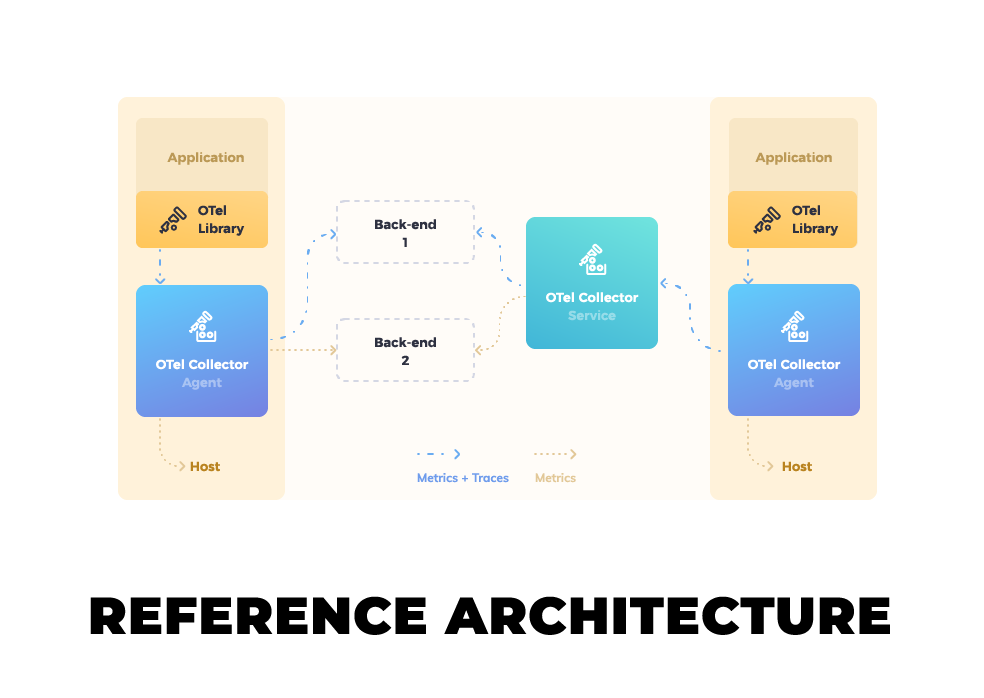
    OpenTelemetry is a collection of tools, application programming interfaces (APIs) and software development kits (SDKs) that can be employed to collect metrics, logs and traces that make it simpler to determine the root cause of an application issue.

    At its core, OpenTelemetry is based on an OpenTelemetry Protocol (OTLP) specification that describes the encoding, transport and delivery mechanism of telemetry data gathered from sources, intermediate nodes and backend platforms. An OpenTelemetry Collector provides a vendor-agnostic implementation for receiving, processing and exporting telemetry data. APIs and SDKs that make it possible to instrument applications are available for 11 different programming languages.

    Previously a sandbox-level project within the CNCF, the next step would be for OpenTelemetry to become a graduated level project alongside other open source offerings such as Kubernetes and Prometheus, a platform used to monitor IT environments.

    The OpenTelemetry project was created via the merger of the OpenCensus and OpenTracing projects in May 2019. Since then more than 500 developers from 220 companies, including Amazon, Dynatrace, Google, Honeycomb, Lightstep, Microsoft, Splunk and Uber have contributed to the project.

    Most providers of observability platforms have at least signaled their intent to support OpenTelemetry as an alternative to proprietary agent software they had previously created to collect metrics, logs and traces.

    Ben Sigelman, one of the co-creators of both OpenTracing and OpenTelemetry and CEO of Lightstep, said different elements of the OpenTelemetry project are at varying stages of maturity. As such, support for the elements of the project are being added to platforms depending on the degree to which a vendor has confidence in, for example, the ability of OpenTelemetry agent software to collect logs.

    Liz Fong-Jones, principal developer advocate for Honeycomb.io, a provider of an observability platform, said that, in time, most observability platforms will support all the elements of the OpenTelemetry initiative to reduce their own engineering and support costs. In time, those savings will be passed on to organizations that will be able to instrument applications more affordably, she noted.

    It may take a while longer for OpenTelemetry to be widely employed, but the faster organizations transition to microservices-based applications the more pressing the need for open source telemetry software becomes. The dependencies that exist between all the microservices that make up multiple applications will be unmanageable without some form of telemetry. The challenge organizations face is finding an affordable way to instrument all those microservices.

    Of course, organizations have been instrumenting applications for decades. However, the time, effort and cost associated with instrumentation have tended to limit its use to only an organization’s most mission-critical applications. The issue now is that not only do microservices-based applications require instrumentation to manage them but in the age of digital transformation the percentage of applications deemed mission-critical is also steadily rising.

  • Majority of Organizations Now Adopt Multi-Cloud

    Majority of Organizations Now Adopt Multi-Cloud

    As IT’s digital footprint grows, its cloud footprint is rising both in size and complexity. As a result, most organizations have matured into multi-cloud operators. A multi-cloud approach empowers different divisions with the autonomy to select the right computing environment for their needs. It also enables a lift-and-shift ability to port workloads across cloud service providers (CSPs) when needed. Adopting a multi-cloud model could bring performance benefits, cost savings or better scalability, all while encouraging a more vendor-neutral stance.

    We’re in a multi-cloud world. A recent HashiCorp study found three out of every four organizations are already multi-cloud. This is a staggering increase from just a few years ago when mono-cloud was more accepted, and operators had zombie-like allegiance to AWS. The uptick in multi-cloud signals the maturity of offerings at other CSPs, like Azure and GCP. It also signals differentiation among clouds as each hones in their unique value propositions.

    HashiCorp’s inaugural State of Cloud Strategy Survey offers some very clear results about the state of multi-cloud adoption. Below, I’ll review major takeaways from the report to better understand the state of multi-cloud adoption. To sum it up, large organizations tend to benefit most from multi-cloud adoption, as there are still significant roadblocks to truly reaping a sizable return from a multi-cloud status. Yet, more infrastructure automation may help companies of all sizes respond to multi-cloud complexities.

    The Multi-Cloud Era

    DevOps truly operates in a multi-cloud era. The report revealed 76% of organizations are already multi-cloud; that leaves only one in four companies leveraging a single cloud. And, that trend won’t stop—within two years, 86% predict they will be multi-cloud operators. The study also confirms that the larger a company is, the more likely it will adopt multi-cloud—94% of large enterprises with 5,000 or more employees are multi-cloud.

    So, what’s driving this cloud fragmentation? Well, 34% of respondents cite digital transformation as a top driver for multi-cloud adoption. In the race to meet new digital innovation demands, multi-cloud has emerged as a strategic force. To enact this rapid change, many organizations are investing in a cloud center of excellence (CCoE) to guide cloud transformation efforts. A CCoE is most common within large companies with a cloud budget of $5 million or more.

    Speaking of budgets, cloud spending is going through the roof. In 2020, only half of companies met their projected cloud spend, and 39% of companies overspent their allotted cloud budgets. As I’ve covered before, cloud-native costs are notoriously difficult to identify and trim. Without the proper guardrails to manage spending, surprise data egress fees or hidden server costs can strain the cloud checkbook. As it stands now, 40% of companies lie in the $100,000 to $2 million per year range, and 6% of enterprises are investing $50 million a year or more into multi-cloud. This spending will likely increase in the coming years as cloud reliance expands.

    Enterprises Benefit Most

    So, which clouds are companies using? If we compare cloud adoption, AWS is a clear market leader; 88% of companies use AWS, 74% use Azure and 61% use GCP. AWS’s hegemony is not expected to fade in the next two years. Yet, while AWS usage will remain the same, competing CSPs will experience modest increases. This is likely due to Azure and GCP making gains in geographical zones outside North America, such as Asia-Pacific and Africa.

    In terms of technology used in cloud environments, open source software (OSS) is a popular choice. Cloud-native open source projects, such as Kubernetes, OpenStack and Terraform, have taken on a life of their own, with vibrant community support. However, not all shops build upon OSS and run it themselves. Somewhat ironically, we’re seeing more managed OSS emerge. One stand-out area is provisioning, where 42% of organizations build with open source and run it themselves.

    On the whole, multi-cloud is working at most enterprises, with 53% of survey respondents saying multi-cloud has helped achieve their business goals. The top benefit of multi-cloud is digital transformation, at 34%. This is followed by avoiding lock-in (30%), reducing cost (28%) and scalability (25%). But multi-cloud does not treat all companies as equals; the likelihood of multi-cloud success increases as the company size increases. Less than half (42%) of small companies say they have multi-cloud success, which jumps to 64% for large enterprises. With fewer resources for support, multi-cloud may be less beneficial for startups and small to medium businesses. In fact, 41% of professionals say a lack of in-house skills inhibits their cloud success.

    Challenges in a Hybrid Multi-Cloud World

    An ongoing talent gap is just one potential challenge to cloud success. Just over half (51%) say cost concerns are a top inhibitor to their cloud program success. Hybrid cloud complexity is another prominent challenge, with 35% of organizations citing it as a major cloud obstacle. Many enterprises are still grappling with the remnants of legacy on-premises estates. But technical debt is not the only reason for hybrid modalities. Surprisingly, large platforms even have constructed their own data centers or used colocation as an intentional strategy.

    Security is a top cloud inhibitor, according to 47% of IT professionals. The leading cloud security concerns include data protection (40%), data theft (33%) and regulatory compliance (31%). The myriad cybersecurity threats evolve each day, and cloud technologies are not immune; for example, web APIs are now a significant threat vector. A separate report found a 300% increase in malicious API traffic in the past six months. Other issues, such as exposed keys, insecure defaults and misconfigurations are known to hamper cloud-native infrastructure.

    Contrary to popular belief, nearly half (46%) of companies reported that COVID-19 has not quickened their cloud adoption. This reality could indicate that cloud migration has been planned for years, and recent adoption is only part of an ongoing trend. The study found that the pandemic did, however, accelerate things like infrastructure-as-code (IaC), container orchestration, compliance and governance and other operational factors.

    Infrastructure Automation Supports Multi-Cloud

    Multi-cloud feels like an inevitable result of accelerating cloud adoption in a more diversified market. Rising multi-cloud use is also arguably in line with Conway’s Law. As organizations develop more and more digital experiences across new verticals, the platforms and backend processes to support these initiatives will inevitably grow more and more complex.

    To mitigate some of the issues posed by multi-cloud, many organizations are turning toward increased infrastructure automation. In fact, 70% of those surveyed said infrastructure automation tools are extremely important to their organization. Of these tools, provisioning automation (75%) is the most popular kind in use. Automation for other areas, like networking (58%), security (50%) and app development (69%) follow.

    Hashicorp’s State of Cloud Strategy Survey boldly announces, “Welcome to the Multi-Cloud Era,” and its findings back up that sentiment. For further insights, you can view the results freely on this website.

  • Popular iOS Apps Request Excessive User Data Permissions

    Popular iOS Apps Request Excessive User Data Permissions

    Most apps require some sort of user data to function properly. Google Maps needs location data to offer routing services. Twitter needs photo library access to upload a photo, and so on. Many users are quick to allow access to personal information without hesitation. However, in recent years, it’s become apparent that many apps are collecting (and leaking) an excessive amount of personal data, resulting in serious privacy issues. This has led Apple to give user privacy a heightened focus in recent iOS updates and marketing campaigns.

    Often, user data is being collected in the background for legitimate use cases, such as tailoring personalized user experiences and refining app performance. But, many apps are also monetizing user data by reselling it to third-party advertising data brokers without explicit user consent. More seriously, recent studies show that commercially available “anonymous” data can be de-anonymized. If location data is exposed, it could put at-risk people in actual danger. These are nuanced privacy violations that U.S. regulators have yet to respond to and address.

    To shed light on the data that apps are collecting, a recent study conducted by Jamf analyzed the iOS permissions requested by nearly 100,000 popular apps on the App Store. The study found the four most-requested mobile app permissions to be photo roll, camera, location data and microphone. The findings also revealed that popular apps are consistently requesting access to data that does not serve the application’s core purpose.

    Users should consciously be aware of the data they allow apps to access. Yet, the onus is also on business leaders and app developers to limit unnecessary data collection and reduce the potential for data overexposure. In the wrong hands, access to device hardware, such as a microphone or camera, could be used to steal sensitive material. And, if leaked, personally identifiable information (PII) exploits could be disastrous to the business.

    Below, I’ll review the key takeaways from the Jamf study and consider if the constant barrage of permissions requests is exacerbating privacy issues during the application development process.

    Four Most-Requested App Permissions

    The Jamf research found the top four types of app permissions were photo library access, camera access, location data and microphone access. In addition, other popular areas included calendar information, contacts and Bluetooth. Less-requested app permissions included voice processing, health data and local network access. The study arranged apps by their App Store categories, such as business, education, entertainment, news, shopping, travel and other areas.

    user data permissions

    1. Photos

    By far, the most requested data access type is photos. At least half of apps across all categories request access to user photo libraries. Naturally, this request is most common among photo and video apps such as YouTube, FaceApp or Splice; 96% of such apps request access to photos. This is followed by 87% of shopping apps (Amazon, Shop, eBay, etc.), and 84% of social networking apps (Facebook, Instagram, Twitter, etc.).

    At issue here is that the level of intended photo library access can be highly variable. For example, granting access to an entire camera roll along with decades of old personal photos just to upload one picture grants a rather invasive privilege. This has led Apple to enhance privacy controls—users can now choose to allow access to select images only or their entire roll.

    With these new constraints in mind, app developers should take steps to respect user privacy. Be aware of potential photo limitations and design apps to only collect necessary photos for the task at hand.

    2. Camera

    The next-most requested permission is for camera access. This is most common among photo and video apps, among which 90% request camera access. This is also common among shopping and social networking apps (83% each) and business apps (75%) like Zoom, Slack or WebEx. Similar to findings about photo library access, enabling camera access is ubiquitous. However, it is also one of the most dangerous permissions to grant indefinitely. If a bad actor obtained account access, this vulnerability could enable them to spy on users.

    Again, developers should consider introducing camera functions only when it’s essential for the task at hand. Obviously, it’s unethical to invoke camera access when users are unaware. Even camera-related bugs can have extreme repercussions. For example, a 2020 lawsuit against Instagram argued the app was spying on users. Due to its threat potential, high-security facilities have disabled camera hardware entirely.

    3. Location

    Location tracking is another permission that can be very useful but is, at times, overprescribed in modern app development. Location data includes cellular, Wi-Fi, GPS and Bluetooth data used to determine a user’s approximate location. The categories that collect location data most often include shopping and food and drink, both at 81%. Social networking and photo and video app categories follow at 72% and 68%, respectively.

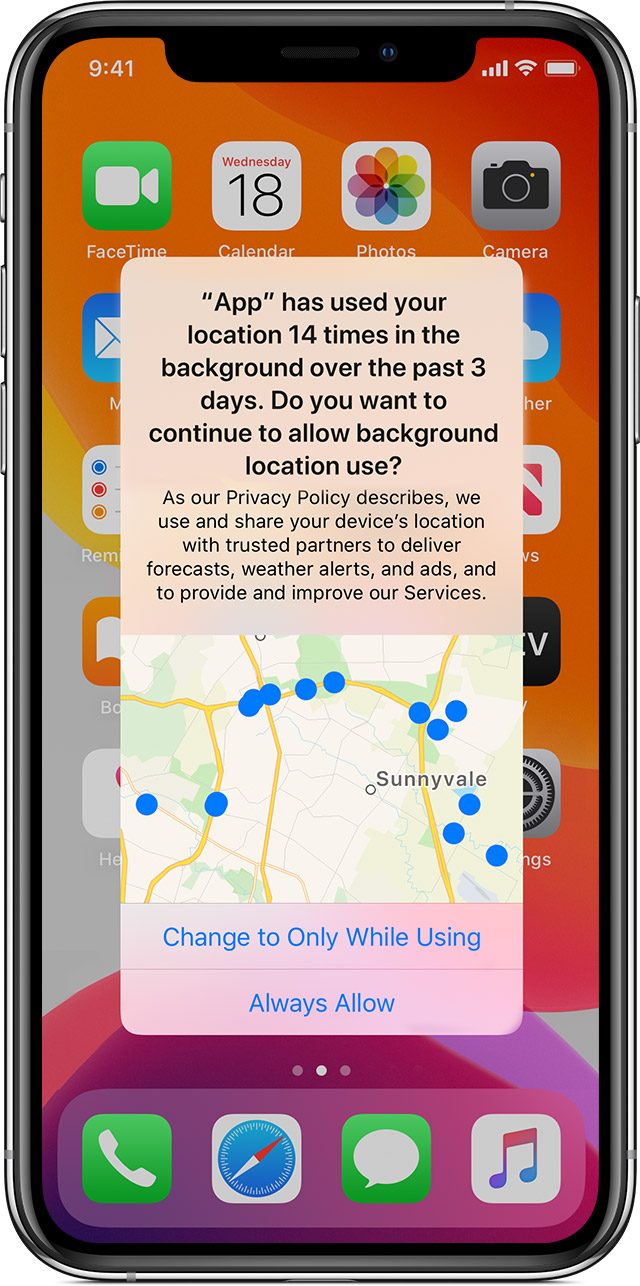
    Nowadays, iOS privacy settings offer a check against tracking location data in the background. iOS users can now choose between: ‘Allow While Using App’, ‘Allow Once’ or ‘Don’t Allow’.

    user data

    When an app tracks data in the background, a blue indicator now displays in the status bar to increase user awareness. iOS also reminds users when apps use significant amounts of location data and offers ways to turn location services completely off. Android has followed suit with an ‘Allow only when the app is in use’ function, too.
    user data

    Location tracking feels a bit creepy. In the wrong hands, it could easily be leveraged for nefarious purposes. Out of all the permission-granting options, location data presents much more of a physical safety concern for the end user. From the user’s standpoint, they should only enable access to location tracking while using an app. From a developer’s standpoint, they should be extremely careful when collecting and storing such PII to ensure regulations aren’t broken.

    4. Microphone

    Lastly, access to the user’s microphone is the fourth most commonly requested permission. The survey found 69% of social networking apps, 64% of photo and video apps and 41% of both business and productivity apps (Asana, Google Calendar, TimeTree, etc.) all want to be handed the mic.

    Here, potential privacy concerns are similar to those involving camera access. Bad actors could potentially activate the mic to listen to private conversations, record ambient noise and sell findings to advertising brokers. To increase user awareness, iOS 14 now requires an orange dot to display, indicating when the mic is in use.

    Other User Privacy Concerns

    User behavior tracking and app-to-app information exchange is another ongoing area of privacy concern. Companies often resell such information to data brokers, which is then used to refine highly targeted ad campaigns on third-party sites. This is how your search on Google results in product advertisements popping up in your Instagram feed. Apple is just starting to counter this practice with their App Tracking Transparency feature. In iOS 14.5, app devs must ask whether they can track your activity.

    Recent analysis has confirmed that commercially available consumer data, though labeled as “anonymized,” can successfully be used to piece together an accurate picture of a user by corroborating behavior on other apps. For example, users were able to track and pinpoint behavior that resulted in the outing of a catholic priest on Grindr. Smartphone app data could similarly be used by predators to spy on celebrities or politicians, posing a tangible security threat.

    Another cause for concern is metadata associated with photos. People often enable GPS-embedding into images to help organize their photo memories. If this is inexorably linked to photos, it essentially permits location data sharing to parties with photo library access who might not otherwise have location tracking permissions.

    From Big Data to Big Problem

    Perhaps the most curious finding of this report is that all apps are requesting permissions that seem irrelevant to their core value proposition. For example, why do 87% of shopping apps need access to a user’s entire photo library? Do 46% of food and drink apps really need access to a user’s personal contacts to place a food delivery order? Do navigation apps really need your personal calendar information to calculate a route downtown?

    The answer is not a pretty one. There has been a business imperative, for years, to track and collect large amounts of user data. There is undoubtedly an argument to be made for enhancing the user experience with innovative features and the role of big data in AI. However, this ongoing practice continues to creep into ethical gray areas. The fact is, the more personal data an app collects, the more potential privacy issues and security threat vectors are created in the process.

    Requesting permissions to on-device hardware and data collection is not always necessary. Thus, to stay safe and limit data overexposure, don’t overprescribe data collection. If it’s not fundamental to your app’s core function, don’t collect it, and don’t store it. Think twice before requiring many device permissions, and regularly audit app permissions requests to keep them to a minimum. As iOS and Android introduce new platform guidelines to elevate user privacy, developers should be prepared for users to grant fewer and fewer data collecting permissions. This is their right.

    It would be great if tech companies invested in honest, ethical business models that didn’t rely on harvesting and reselling user data to shady advertisers. And for those that mine user data but say it’s anonymous, I would point to reports that show anonymous data is nothing but pure myth.

  • GitHub Updates CLI to Make Creating Extensions Easier

    GitHub Updates CLI to Make Creating Extensions Easier

    GitHub this week made available an update to its command-line interface (CLI) that enables DevOps teams to add extensions to workflows.

    Billy Griffin, director of engineering for GitHub, said the company’s initial focus was providing DevOps teams with a set of workflows that could be invoked easily via a CLI. Now GitHub is encouraging developers to extend those workflows using version 2.0 of its CLI that hopefully will be shared with the larger community, he added.

    For example, extensions have already been created that order branches by how recently they were created and then display all associated pull requests.

    At the other end of the spectrum, developers are creating simple screensaver extensions for their own amusement.

    The level of interest in extensions varies widely across DevOps teams. Many of them simply want to employ an opinionated workflow that has been created on their behalf. Other DevOps teams want to be able to make modest modifications. Others prefer to customize workflows as much as possible to fit their specific purposes. Version 2.0 of the CLI provided by GitHub enables each DevOps team to decide how much to modify their workflows. However, as a DevOps team gains more experience, increasingly they tend to want to customize workflows.

    The number of workflows being created around the GitHub repository continues to increase steadily as more organizations embrace best GitOps practices. GitHub is the most widely employed repository for managing software artifacts, and the level of sophistication of workflows built using either scripts or GitHub actions is increasing steadily. Much of that effort is focused on streamlining processes that otherwise would get in the way of enabling developers to spend more time writing code.

    Of course, the pressure on developers to write more code faster has never been greater. As organizations embrace digital business transformation, they are discovering how dependent they are on software to create customer experiences that drive revenue. The challenge comes at a time when many developers are working from home to help combat the spread of the COVID-19 pandemic and many existing workflows need to be re-engineered. At the same time, development teams are becoming more distributed as organizations become more comfortable with hiring developers anywhere in the world.

    It’s not clear to what degree the changing application development landscape might drive organizations to re-evaluate what platforms they are employing to drive DevOps processes. Many on-premises development platforms have been replaced by cloud-based alternatives in the past year. However, because necessity is the mother of invention, the workflows relied on prior to the pandemic are not only now forever changed, but they will also likely be altered again as development teams work more intermittently in-office and from home once the pandemic subsides.

    Regardless of how those workflows evolve, the single-valued DevOps attribute is going to be flexibility. The challenge now is determining which platform does the most to enable that flexibility at a time when uncertainty continues to prevail.

  • Site Reliability Engineers to the DevOps Fore

    Site Reliability Engineers to the DevOps Fore

    [pdf-embedder url=”https://devopsy.kinsta.cloud/wp-content/uploads/2022/02/site-reliability-engineers-to-the-devops-fore.pdf”]

  • CloudBolt Survey Shows DevOps Frustration in the Enterprise

    CloudBolt Survey Shows DevOps Frustration in the Enterprise

    A survey of more than 200 senior IT leaders at organizations with more than 1,000 employees published today finds only 4% consider their organizations to be experts when it comes to continuous integration/continuous delivery (CI/CD).

    Conducted by CloudBolt Software, a provider of a platform for many IT environments, the survey also found only 11% consider their CI/CD infrastructure to be reliable. Another 69% said their CI/CD infrastructure was somewhat reliable, while 21% said their platforms were somewhat unreliable or not reliable at all. A full 85% also report they regularly test the infrastructure they rely on to drive DevOps processes.

    Overall, the CloudBolt survey finds only 5% of respondents report their organization is deploying code multiple times a day. Most respondents (85%) said their organization only deploys code on a weekly or monthly basis.

    A full 70% said that, on average, it also takes multiple days or even weeks to set up a pipeline. Nearly two-thirds (63%) said there are too many manual processes involved when setting up pipeline infrastructure. More than half (56%) also noted they have no automated processes for post-deployment tasks.

    More than half (53%) said it is also challenging to proactively detect infrastructure issues, while 55% said it is difficult to create a consistent CI/CD pipeline environment across multiple development teams. Improving those pipeline environments requires speeding up the process of provisioning infrastructure through automated processes (70%); continuously detecting infrastructure issues to reduce testing challenges and failures (62%) and simplifying remediation of infrastructure issues proactively (56%), according to survey respondents.

    The CloudBolt Software survey specifically identifies issues organizations encounter when employing Terraform to manage infrastructure-as-code (IaC). Only 5% of respondents said they were “very satisfied” with using Terraform and another 75% reported they are somewhat satisfied. Top challenges include difficulty using it in on-premises infrastructure deployments (62%), lack of Day 2 management for deployed resources (53%) and governance (42%). Only 2% of respondents said they were employing Terraform to deploy 75% or more of their infrastructure. A full 90% noted that Terraform requires more custom-coded integrations with other critical tools and systems to work properly.

    Finally, 29% said their organization lacks specific Terraform expertise. The most sought-after Terraform capabilities are enabling non-Terraform experts to easily deploy infrastructure using Terraform; ensuring that only Terraform plans with IT “guardrails” are executed and the ability to visualize and cost-optimize infrastructure deployed by Terraform. More than a third (35%) want to simplify deployment of on-premises infrastructure when using Terraform.

    Jeff Kulkowski, CloudBolt CEO, said the survey makes it clear there simply isn’t enough expertise available to implement DevOps  best practices at scale without enabling IT administrators—that often lack programming expertise—to manage infrastructure and DevOps platforms. That requirement creates the need for an IT management platform based on a set of visual tools that enables DevOps professionals and traditional IT managers to work more collaboratively, he added. DevOps teams can manage IaC whenever they desire, but it’s also crucial to enable IT operations staff to manage IT infrastructure alongside those teams.

    Obviously, DevOps as an IT discipline still has a long way to go before it is pervasively adopted across enterprise IT organizations. The challenge now is to remove many of the low-level barriers that conspire to block IT modernization initiatives.

  • Cosmonic Contributes WebAssembly Runtime to CNCF

    Cosmonic Contributes WebAssembly Runtime to CNCF

    Cosmonic today revealed it has donated its universal application runtime for building cloud-native applications using the WebAssembly (Wasm) development framework to the Cloud Native Computing Foundation (CNCF).

    The Cosmonic wasmCloud runtime makes it possible to run applications built using WebAssembly on any platform. In comparison, applications built using containers are not as portable because IT teams can’t take a container application developed for Linux and run it on Windows. The container technologies for each operating system are implemented differently.

    The CNCF will make wasmCloud available as a sandbox project and will invite other organizations to start making contributions as part of an effort to eventually put wasmCloud on par with other projects such as Kubernetes. There are already nearly 80 contributors to a wasmCloud runtime that was launched last November.

    Cosmonic

    The CNCF is trying to advance other WebAssembly technologies including Krustlet, a tool for Kubernetes environments that listens for event streams from new pods so that the scheduler can then assign workloads.

    However, the CNCF is now not the only organization looking to promote adoption of WebAssembly technologies. The Bytecode Alliance has launched WebAssembly (Wasm) and WebAssembly System Interface (WASI) initiatives as part of an effort to promote standards that would make it easier to run Wasm applications anywhere. Originally founded by Fastly, Intel, Mozilla and Microsoft, the Bytecode Alliance now also includes Arm, DFINITY Foundation, Embark Studios, Google, Shopify and University of California at San Diego.

    At its core, Wasm is a portable binary instruction format for building software that describes a memory-safe, sandboxed execution environment. That approach might one day replace the current predominant method for building software that relies on the aggregation of software components that tend to lack distinct security boundaries between them. As a result, it becomes relatively simple for malware to infect all the components of an application.

    Liam Randall, CEO of Cosmonic, said even though Wasm, in effect, provides another type of virtualization for applications, IT teams should not view it as a set of technologies that will one day obviate the need for containers. Applications developed using Wasm will be layered on top of various container platforms, he said.

    There is, for example, already a Wasm project that creates a server-side Wasm runtime that enables applications to be deployed on a secure container architecture that is more efficient than Docker containers.

    The World Wide Web Consortium (W3C) drove the development of Wasm as part of an effort to create a common format for browsers executing JavaScript code. Wasm is now being extended beyond browsers and JavaScript to enable developers to ultimately create a set of universal binaries that could work on any platform without modification.

    It may be a while before the fruits of those labors are realized. However, it’s apparent the walls that have separated one IT platform from another are starting to crumble. Once applications become much more portable, the reasons why one organization may choose one platform over another will have a lot less to do with what developers prefer.

  • So Many Options, So Little Time

    So Many Options, So Little Time

    So many language/framework options, so little testing time, that is.

    Recently, two projects I was working on drove me to check out a breadth of languages and/or frameworks to handle cross-platform development. While Unity and Unreal have traditionally been my game platforms of choice and I typically use Xamarin for cross-platform (though native development is more common for us on both Apple and Android), I decided I needed to do the occasional sweep to find out what is new out there.

    The two projects are a game on which I’m helping a new game developer learn and a graphics-heavy application that is unsuited to web development. Both would work best in a cross-platform environment; both would benefit from a game engine’s graphics manipulations. But both could be done in any language that supports graphics, as there isn’t a heavy physics requirement to the game.

    So I went looking at what’s available now and how it fits. From React Native to Godot to Flutter and even Kivy, I kicked the tires on each, got them running, ran and traced samples, wrote some code of my own, even talked with friends that were using them to get their opinion.

    Alternate frameworks languages

    The one thing that came through loud and clear? There is no way that security and testing are keeping up with this language/framework proliferation. Kivy has a language (more of a specification than an actual language, but still—source code) that can run on top of Python (it’s not required to use the framework, but it’s kind of assumed you will if the app gets beyond a certain size); Godot has a language that is integral to the framework and that you use pretty much everywhere. React has a ton of add-on code and both Flutter and Dart are new languages.

    I like stuff from each of them. I don’t like that we’re going to use them in ever-increasing amounts and we’re going to expect testing to stay on top of those implementations. Each of these platforms/languages/environments has a large following that is doing some of the testing, but since they’re all relatively new, “How much testing?” is a valid question. And tests have to be done in those languages, implying that those writing need to know them and so do testing teams.

    Where did we end up? We haven’t made a final decision yet, but taking input from the person I’m mentoring, coworkers and those who are using each of the above, we’ll probably end up using Godot. For 2D apps, it is the bomb. Our team is small, so I can offer my knowledge of Godot to shore up testing and everyone agrees that its Python-like language is acceptable, while the graphic design element is nicer than the competition. Both applications will benefit from Godot’s graphics processing capabilities and the game will benefit from game elements built into the Godot Engine.

    Here is an interesting side note: All of the products we looked at are open source. Both of the default products that we (and just about everyone else) would choose for the game are commercial. That’s interesting, but we don’t need the weight of those commercial solutions for a simple 2D interactive game/app.

    For you all, the questions might be harder to answer. With larger projects come larger requirements for source size, test, you name it. Choose carefully, with an eye on the future. Personally, I think React Native, Godot and Flutter would all be good choices for cross-platform applications, with Godot the best solution for cross-platform 2D games. And all three are likely to be around with a good size following for a long time, making them safer choices. That is less clear with Kivy, though the popularity of Python appears to be driving growth in Kivy use.

    Whatever you choose, plan for all phases of development, not just writing code. That’s true of everything, but new cross-platform tools are complex beasts, so it is worth reminding you all.

    And hey, if you have a cool app you developed with one of these tools, point me to it. Always good to see what you all are doing, and nice to see the breadth of solutions these languages can create.

  • Majority of Software Engineers Want Remote Work Options

    Majority of Software Engineers Want Remote Work Options

    The pandemic brought unprecedented change to the digital ecosystem, impacting users, companies and software engineers alike. COVID-19 accelerated ongoing digital transformation and forced many organizations to innovate rapidly. Newfound reliance on digital experiences increased demand for software programmers, exacerbating demand in a market already short on talent. In this era, work-from-home (WFH) became commonplace and most engineers moved toward full-time remote work positions.

    Having had a taste of freedom from corporate settings, most developers now want remote work options in a post-pandemic future. A significant amount also desires to work 100% remotely. As a result, many companies have instituted permanent work-from-home policies. Yet, they are still grappling with the repercussions of a fully remote workforce. For example, there are differences of opinion about whether to adopt location-based salary adjustments and whether or not those remote workers should be granted unique employee benefits.

    The 2021 State of Remote Engineering Report, conducted by Terminal, surveyed 1,100 software engineers in North America and explores how the pandemic has affected the remote developer workforce; showcasing both the positive and negative effects of remote work on engineers. Interestingly, the report exposes international talent’s declining interest in physically moving to the U.S. as domestic conditions worsen and remote work becomes more globally accessible. Below, we’ll explore the key takeaways from the study to posit how this new normal is influencing the productivity, morale and recruitment of software engineers in North America.

    The New Normal: Remote Work

    The new normal has dramatically shifted the status quo. Impressively, findings show that 86% of engineers are currently working 100% remotely. This is in stark contrast to the pre-pandemic numbers, which showed 19% working remotely 100% of the time. Many of these employees prefer to keep these new working arrangements and standards in place going forward. The study found that 80% of engineers surveyed want options for working from both home and the office, and one out of three want to work remotely 100% of the time.

    There are many reasons why engineers prefer the flexibility of remote work to the traditional workplace. For one, there is no need to commute, thus saving time and energy. Engineers also cite an improved work-life balance and appreciate the increased autonomy. It also appears that many organizations handled the shift to remote work effectively—74% of engineers say their companies adapted well to remote work. Due to these positive results, 76% of engineers would be happy working fully remote 60% of the time or more.

    Remote work not only benefits software engineers but could also bring productivity enhancements to help achieve business goals. Without workplace distractions, 70% of engineers surveyed reported they are more productive when working from home. Yet, this new normal isn’t without its drawbacks. As the traditional corporate firewall diminishes, CISOs struggle with a dilemma: striking an ideal balance between granting new IT freedom and locking down systems and restricting access to adopt a zero-trust mindset.

    Issues With the Pandemic and Remote Work

    Of course, there are some other drawbacks associated with full-time remote work. A lack of day-to-day interaction with coworkers is a challenge cited by 58% of participants in this study. For 39% of engineers, it’s harder to collaborate or feel part of a team in this new dynamic. Burnout or lack of motivation and home-based distractions can also be barriers for remote-working engineers. The loneliness of at-home work can take its toll; 38% say their mental health has gotten worse amid the pandemic.

    Companies also face challenges recruiting within this new paradigm. The talent shortage remains a big issue for many companies trying to rapidly deliver new software; 64% of engineers say there is a software engineer shortage and 65% say this gap holds back technical development. Though there is a clear skills gap, most companies are not offering adequate benefits coverage to entice full-time workers. Of these benefits, 23% of engineers would like a home office stipend for utilities, internet and other expenses; 22% also want more flexible work hours and 11% desire new technology and productivity tools. And 26% of engineers also ranked support for mental health as one of their top three sought-after benefits.

    The report also addresses some inefficiencies associated with hiring engineers for remote positions. For 59% of engineers surveyed, recruitment involves far too many interviews. Many of us working in IT can likely attest to being approached by LinkedIn scouts with irrelevant offers. As such, 40% of engineers say they are often interviewed by people who don’t understand the technology. Other recruitment issues include generic interviews and long delays, both of which could frustrate candidates. It appears companies must fix their hiring practices or risk losing potential talent.

    The Era of Employee Choice

    If anything, the State of Remote Engineering report drives home the imperative to consider full-time remote work as a viable option for prospective hirees. To fill engineering labor shortages, some U.S.-based companies have historically flown in international talent. Yet, the desire to move to work in the U.S. is declining. In fact, 39% of engineers have no interest in moving to the U.S. for a job. Engineers cite crazy politics (56%), gun violence and safety concerns (55%), racism (47%) and mishandling of the coronavirus (51%) as reasons not to move to the U.S. The idea that employees must remain in physical proximity with a company’s headquarters is changing; thus, companies will have to go where the existing talent already lives.

    In addition, today, engineers have more bargaining rights than they did in the past. “The era of employee choice is here,” said Clay Kellogg, CEO, Terminal. If we’re in a seller’s market, engineers are the ones to profit. Increased bargaining rights could mean remote engineers may demand equal pay, no matter their location. The study found that, on the whole, engineers are not in favor of location-based salaries; 49% say they would only accept a location-based salary if their cost of living dropped by 20%.

    In addition to offering competitive wages, teams are finding creative ways to maintain culture and avoid burnout. For example, 55% of engineers think virtual get-togethers like happy hours and social activities help stave off burnout. With all these findings in mind, companies should consider instituting a work-from-anywhere policy wherever possible and provide additional benefits and support for remote workers to attract more engineering talent.

    The State of Remote Engineering surveyed over one thousand software engineers across the U.S., Canada and Latin America. For more granular details, consider viewing the full report here.

  • F5 Networks Planning Open Source Projects Beyond NGINX

    F5 Networks Planning Open Source Projects Beyond NGINX

    F5 Networks today revealed plans to launch multiple projects in the months ahead that will extend its commitment to open source beyond the NGINX proxy software the company acquired in 2019.

    The announcement was made during an online NGINX Sprint event; two of the projects are extensions of NGINX that will address networking requirements between microservices-based applications in addition to the management of fleets of NGINX instances. The third project is a platform-agnostic open source developer tool for building modern applications that does not necessarily require NGINX proxy software.

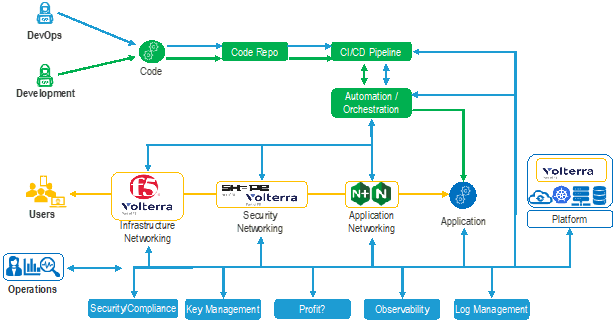
    At the same time, F5 Networks also unveiled an open source NGINX Modern Apps Reference Architecture that gives IT teams access to a complete, fully operational microservices-based application that can be deployed in minutes on a Kubernetes cluster. Based on a modular approach made up of open source components that come pre-wired and pre-integrated, F5 Networks is committing to extending this framework in collaboration with multiple third-party vendors and organizations.

    F5

    Rob Whiteley, general manager for the NGINX product group at F5 Networks, said the company is also committing to modernizing its NGINX proxy software to leapfrog rival open source Envoy proxy software being advanced under the auspices of the Cloud Native Computing Foundation (CNCF). NGINX is still more widely employed than Envoy largely because it is lighter-weight and easier to deploy, but Whiteley conceded that Envoy has more advanced capabilities.

    Envoy, of course, is at the core of the Istio service mesh. F5 Networks supports both Istio as well as a service mesh it has developed on top of NGINX. Depending on the number of application programming interfaces (APIs) that an organization needs to support, an IT team might make use of proxy software, ingress controller or an API gateway for a service mesh to manage them.

    Finally, F5 Networks said it will participate in the Kubernetes ingress project and that it is joining the gateway API community as its implements its own NGINX-based gateway controller to ensure its proxy software and Kubernetes remain tightly aligned in the future.

    In general, Whiteley said F5 Networks also is making a commitment to be clearer about where the line between the open source and commercial editions of its offerings is drawn. As a rule, the open source editions are designed for developers and small teams while the commercial version is designed to scale within enterprise IT environments. The overall goal is to promote innovation without enabling cloud service providers to reap all the revenue benefits of F5’s research and development by creating a service based on that open source software, said Whiteley.

    As part of that effort, F5 Networks is expanding the number of open source projects it supports to make it easier for developers to contribute code beyond the core NGNIX proxy software, said Whiteley.

    It’s not clear to what degree F5 Networks will be able to rally the open source community to advance additional projects beyond NGINX. The company is promising to provide additional details at an unspecified future date. However, Whiteley said there is still plenty of room for innovations not only in emerging technologies such as service meshes but also proxy software that is already widely employed within many enterprise IT organizations. Especially since most of them are embracing microservices-based applications that will ultimately change every aspect of IT.