Category: Features

  • Infrastructure-as-Code Security will Improve Your Cloud Security

    Infrastructure-as-Code Security will Improve Your Cloud Security

    Moving to the cloud creates a tremendous opportunity to get security right and reduce the risk of a data breach. Most organizations start their cloud security efforts by ‘shifting security left’ thereby addressing issues in the CI/CD pipeline. Fixing known vulnerabilities and risky configurations before pushing images to production makes sense. But there is an opportunity to shift security even further left—as you set up your cloud infrastructure—to reduce risk. Infrastructure-as-code (IaC) security allows you to define security controls as you configure your cloud infrastructure.

    Getting Started on Your Cloud Journey

    Before we dive into IaC security, let’s talk about why platform teams want to deploy infrastructure-as-code as they move through their cloud journey. Most organizations have not yet tackled IaC. They start their journey by experimenting with cloud configurations until they have defined a stack that works for their teams. In this early stage, application teams may be defining their own cloud stacks. They are manually configuring infrastructure or using scripts. Configurations may not be standardized across teams.

    Standardization of Infrastructure Saves Time

    Although experimentation is reasonable early on in the journey, standardization of infrastructure saves time. Cloud services are no different than applications that run on premises. When your teams are using different versions of tools in their stack, getting an application up and running can be a nightmare. Interoperability between services is challenging, and it can feel like you are fixing a different flavor of the same problem over and over.

    Mature cloud platform teams typically prefer to create a ‘golden image’ with a baseline set of services for development teams. They may create a menu of a few standard options to meet different teams’ needs. Because they are standardized, the platform team can take time to validate that they interoperate and are secure. For example, these golden images will be regularly scanned for vulnerabilities and updated to ensure they meet internal security standards and any relevant regulatory requirements.

    IaC security cloud

    Automating Infrastructure Deployment Reduces Errors

    Manually configuring the environment in the cloud for each team is tedious. Once these configurations have been standardized, the cloud infrastructure can be provisioned as code using templates. A declarative approach defines the desired end state, whereas an imperative approach defines the detailed steps to achieve the end state. The templates are normally stored in a Git repository and version controlled. Automating the configuration of infrastructure not only saves time but also reduces errors that can disrupt operations.

    IaC Security Shifts Security Further Left

    Once you have templates that define your infrastructure, standardizing permissions and access rights for services-as-code is a logical next step. The security team typically defines the guardrails or policies for accessing cloud services. These policies can then be defined as code along with the infrastructure configurations. This IaC security is a further ‘shift left’, allowing security to be embedded into infrastructure, even before an application can be deployed. Implementing policy-as-code minimizes the opportunity for human error in configuring security services. By defining these policies and enforcement guidelines together, the DevOps and security teams can establish a trusted partnership.

    Although some organizations may start their journey by implementing IaC security, for most organizations it happens later in the cloud journey. The order is less important than ensuring you take a DevSecOps approach and embed security at each stage to manage risk. Be sure to address the following areas as part of your cloud and container security program:

    Continuously Check Cloud Permissions and Configurations

    Even if you have IaC templates, you need a program to regularly take inventory of all cloud assets and confirm permissions and configurations. The Center for Internet Security (CIS) benchmarks are commonly used to check passwords and access rights. Beyond enforcing these best practices for security on cloud services, continuously checking for changes to permissions and suspicious activity is critical. The cloud vendors capture logs across all of their services, and your security tool should continually monitor and alert using those logs.

    Scan Images for Vulnerabilities and Risky Configurations

    Scanning for vulnerabilities and ensuring configurations use best practices allows you to shift security left into the development pipeline. Scan everywhere you have images—including within registries, pipelines and also check for new vulnerabilities identified for images running in production. Be sure to scan hosts as well as containers. Defining scanning policies and enforcing through the development process creates guardrails for the development team and clarifies expectations. Most regulatory compliance standards have image scanning requirements as well.

    Detect Threats and Respond to Alerts

    Prevention is fundamental but must be supplemented with threat detection and response. Alerting on unexpected behavior can identify the presence of a threat. Initially, teams may use out-of-the-box detection rules as a way to get started and then customize rules over time. Checking configs against dockerfile best practices is a good way to get started. Overly permissive access rights for containers is common in Kubernetes environments and should be allowed only when required.

    As your team develops more expertise with containers and Kubernetes, you can also implement zero-trust network security policies to block unexpected communication between pods, services and applications.

    Some DevOps teams handle triage of alerts, as they can quickly determine if the issue is a configuration issue or an indicator of compromise. Teams often map detection rules to the MITRE ATT&CK framework, allowing their security teams to manage alerts consistently across their environment. For any team to effectively respond to a security alert, it is important to capture a detailed record of exactly what happened before, during and after that event. This visibility can be particularly challenging with containers but it is critical because containers have short lives. The 2021 Sysdig Container Security and Usage Report revealed that about half of containers live less than five minutes.

    Complying with Regulatory Standards

    Complying with regulatory standards can be painful. Some standards were written with cloud computing in mind, like NIST 800-53 and SOC2, and others were not. With those broader standards, it is important to understand the controls that are relevant to containers and the cloud.

    As you consider your compliance program, be proactive—don’t wait until you are ready to roll into production. Start early by engaging your compliance team and helping them get up to speed. Your role is to provide evidence of compliance to pass an audit at any time using the documentation from your security platform.

    Getting Cloud and Container Security Right

    The move to the cloud creates a tremendous opportunity to get security right and reduce risk. The fact that physical security and a chunk of operations are delegated to cloud vendors frees up security and development teams to focus on their more narrow scope within the shared security model. By taking a secure DevOps approach and inserting security into every stage of the application life cycle, your team can confidently and securely run cloud and containers.

  • Kentik Open Sources Five Projects to Advance Network Observability

    Kentik Open Sources Five Projects to Advance Network Observability

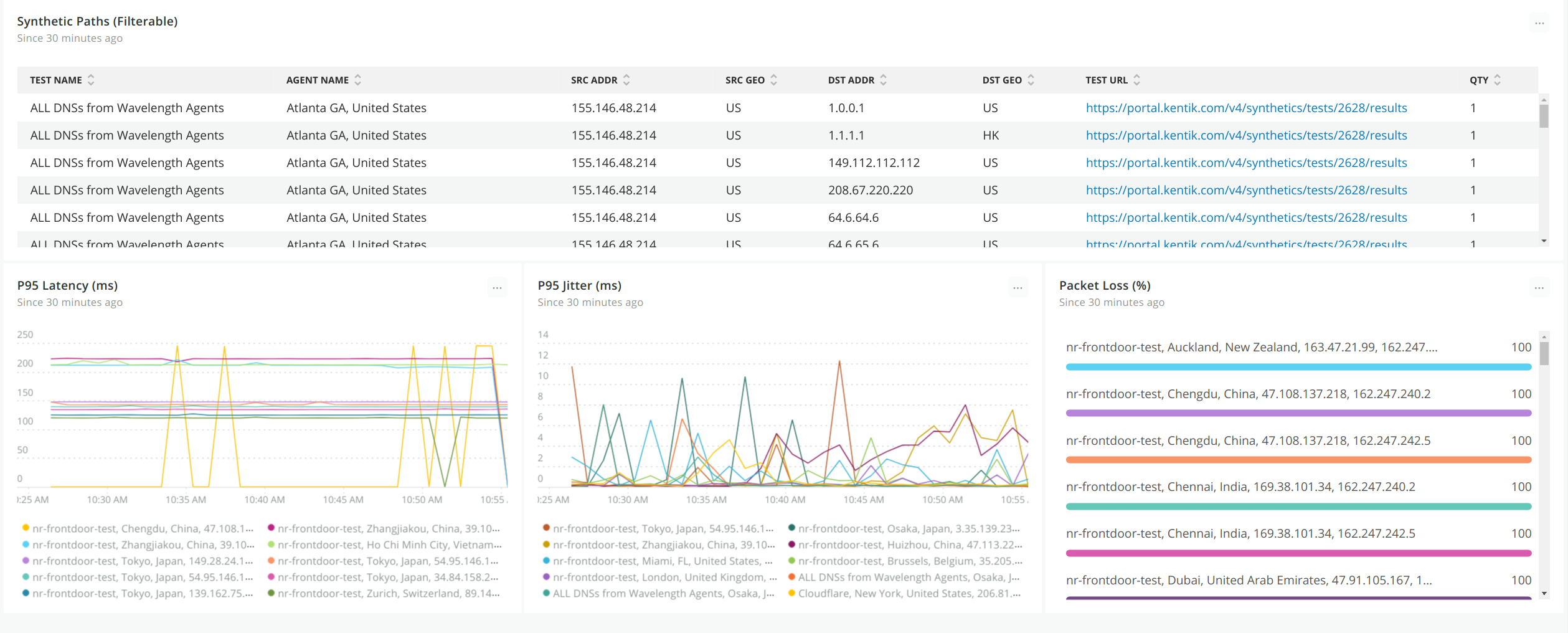
    Kentik today unfurled a developer hub, dubbed Kentik Labs, through which it is making five open source projects available as part of an effort to advance observability across network operations (NetOps).

    The five projects are:

    kTranslate: A system for pulling and pushing network data that is the basis of the Kentik Firehose integration the company created for the New Relic observability platform

    NetDiag: Scalable, asynchronous implementations of low-level network diagnostics

    Convis: Example code showing how to attribute process and container information to network traffic via the Linux kernel using eBPF

    kProbe: A high-performance host and sensor network probe (PCAP)

    Grafana App: A real-time tool for ingesting and querying network data

    Nick Stinemates, vice president of business development at Kentik and co-chair of Kentik Labs, said the goal is to enable DevOps teams to incorporate NetOps within the workflows already being employed to programmatically manage the rest of IT.

    Stinemates noted that, as IT environments become more distributed, managing NetOps has become more challenging. If there is a failure, it can be difficult for DevOps teams to determine if the issue is due to application code, the underlying infrastructure or some other root cause. Kentik Labs is committed to providing tools that will help DevOps teams reduce their mean time to recovery (MTTR), he added.

    Most NetOps teams increasingly rely on software to manage distributed networks either in the form of graphical tools provided by router and switch vendors or by using the Python programming language and the open source Ansible automation framework that enables IT teams to declaratively manage IT infrastructure.

    As the teams that manage network operations gain more proficiency with those tools, it becomes simpler to incorporate them within the construct of a larger DevOps team. While DevOps teams have been programmatically managing IT infrastructure-as-code (IaC) for years, network management has largely remained in a separate silo. However, as more applications are deployed in the cloud, it’s clear NetOps needs to become more integrated with the rest of the workflows employed to deploy and manage a highly distributed IT environment, said Stinemates.

    Less clear is to what degree the networks that make up a hybrid cloud computing environment will continue to be managed by network administrators versus site reliability engineers (SREs) that are starting to assume responsibility for managing compute and storage.

    Regardless of who manages the network, the next generation of microservices-based applications that are dependent on application programming interfaces (APIs) to call various services are much more latency-sensitive than previous generations of applications. Many of those applications will regularly experience performance issues due to networking issues that are often not readily apparent to DevOps teams. The goal should be to, at the very least, arm those DevOps teams with the tools required to confirm the source of those issues before a “war room” is convened to determine how to address the issue.

  • Micronaut Taps Moderne to Automate Java Framework Updates

    Micronaut Taps Moderne to Automate Java Framework Updates

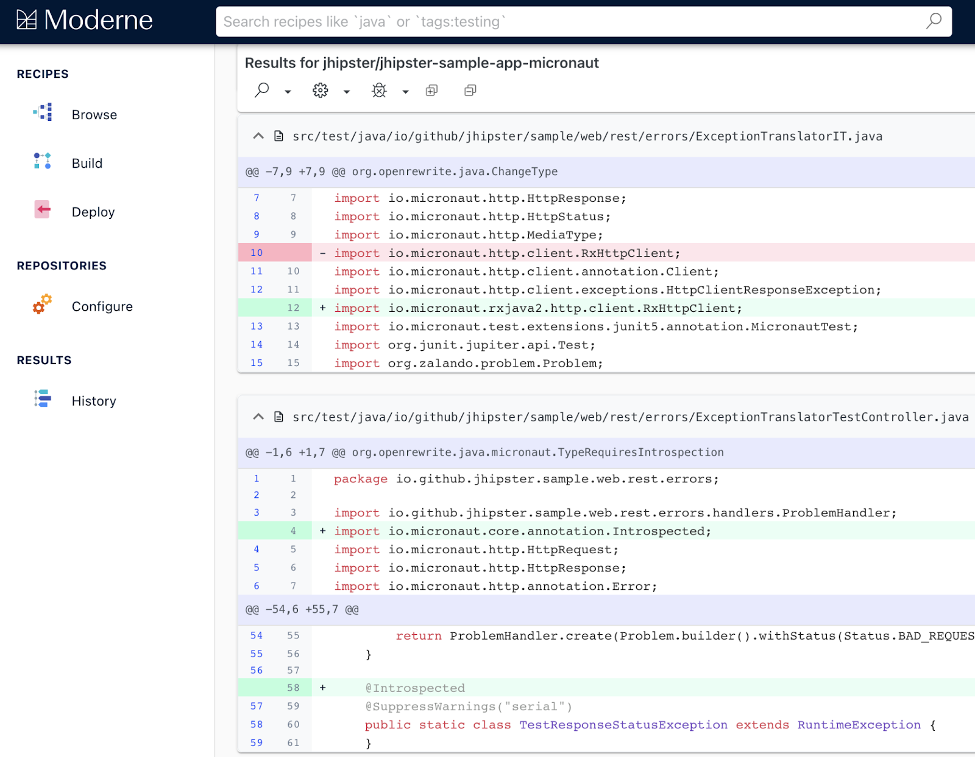
    Micronaut, a provider of a framework for building applications based on microservices and serverless computing platforms, today revealed it is allying with Moderne, a provider of a tool for refactoring code, to create a “recipe” that will automatically update the Micronaut framework.

    Moderne CEO Jonathan Schneider said the open source OpenRewrite refactoring tool for code, originally developed at Netflix, makes it possible to automate updates to codebases, remediate vulnerabilities and provide a foundation for high-level building blocks that will make authoring custom transformations simpler. That approach will eventually be embraced by other providers of application development frameworks.

    Fresh from raising $4.7 million in initial funding, Moderne makes OpenRewrite available via a software-as-a-service (SaaS) platform to enable IT teams to search and transform millions of lines of code in minutes. OpenRewrite currently supports Java, but the company is working toward adding support for additional languages, including infrastructure-as-code (IaC) tools such as Kubernetes, YAML and XML.

    Moderne has also developed “recipes” for common search and refactoring operations that can be assembled into more complex recipes for framework migrations involving, for example, an upgrade from Java 8 to Java 11. Micronaut is the first provider of a development framework to create a recipe for its own framework using OpenRewrite.

    At a time when applications are more distributed than ever, updating codebases is a major challenge. In fact, the manual effort involved in making those migrations is one of the primary reasons many organizations continue to employ older versions of frameworks such as Java 8. OpenRewrite is designed to automate that process at scale in a way that leaves it up to the individual developer to determine how involved they want or be or if they simply prefer to have a DevOps team manage the upgrade process on their behalf, said Schneider.

    In the longer term, Schneider said he expects recipes will be created to address everything from mass migrations to remediating specific types of vulnerabilities across an entire codebase.

    Too much reliance on legacy development frameworks generally stymies innovation. The latest versions of Java, for example, are designed to make it simpler for developers to build microservices-based applications.

    It remains to be seen to what degree DevOps teams will embrace automation to upgrade code. Many developers are hesitant to rely on automated tools of any kind. However, given the need for most developers to spend more time writing new code, it’s only a matter of time before most of them come to terms with automated approaches to updating existing code.

    In the meantime, the cost of supporting legacy frameworks should decline as organizations begin to migrate their codebases faster. One of the reasons there is so much technical debt in the enterprise is because different development teams tend to adopt different framework versions at different times. DevOps teams can find themselves being asked to simultaneously support multiple versions of the same framework. There may always be multiple versions of those frameworks, but, over time, DevOps teams should eventually see the bulk of deployed applications all using the same framework as the upgrade cycle becomes more automated.

  • MediaOps and DevOps Institute Earn Inc. 5000 Honors

    MediaOps and DevOps Institute Earn Inc. 5000 Honors

    I am really proud to announce today that both MediaOps and DevOps Institute have been honored by Inc. and earned inclusion in the Inc. 5000 list of the fastest-growing companies in America.

    For MediaOps, this is the second year in a row we have earned this honor. For DevOps Institute, it is the first year they have been honored. First of all, congratulations to all of the great people who work at and make both MediaOps and DevOps Institute the great companies they are. None of the success of these companies would be possible without their talent, skills, hard work and dedication. Thanks to all of you.

    Secondly, as the founder/co-founder of both of these organizations, I can’t tell you how proud I am that both of these companies have not only had the success they have (as evidenced by this honor) but that they have done so in the middle of a global pandemic. It really makes all of the hard work and the long days and nights worthwhile.

    For anyone who has ever started a business, you know that you put a certain amount of your blood, sweat and tears into any venture you are involved in. It is no different here! Since 2014 I have put everything I could into growing MediaOps into the company it is today. For DevOps Institute, I was lucky to have my partner Jayne Groll, DevOps Institute CEO, take the lead in making DevOps Institute the leading member organization/certification authority in the DevOps space today.

    Yes, you hope the monetary rewards of founding a company make it all worthwhile. But this kind of recognition is also very gratifying. It gives you the extra spring in your step and makes the load lighter.

    These awards also highlight something else. The ascendancy of technology. It is no coincidence that both of these companies play in the digital transformation space and have seen such success. Digital transformation is driving the world right now. Software is driving digital transformation, and DevOps, cybersecurity and cloud are driving software.

    At the end of the day, it is a great honor to have not one but two companies you started win this award at the same time. I think it speaks volumes about the future of both of these organizations. More news on that front is coming, so stay tuned for more great things coming from MediaOps and DevOps Institute!

  • Measuring Value Streams by Analyzing Flow Metrics

    Measuring Value Streams by Analyzing Flow Metrics

    There is increasing pressure and demand for IT administrators to bring software to market quickly and cost-effectively. To achieve that goal, IT departments frequently compile various metrics that measure specific development processes.

    Data and metrics are important tools, but administrators sometimes don’t think to look at projects through a wider lens—by measuring total production workflows. This can curb production and adversely affect business outcomes as inefficiencies go undetected across the value stream.

    In other words, total visibility across the entire value chain is needed to accomplish lean project management and optimize DevOps workflows.

    Let’s talk about the different kinds of flow metrics, why they matter and how to begin measuring them.

    Flow Metrics: What do They Mean?

    Flow metrics indicate the rate of value delivery with regard to desired business outcomes. This allows organizations visibility into production at a macro level so that they can make more effective decisions. Flow metrics can also produce an analysis of historical performance over time, which can be valuable for businesses that focus on continued growth.

    IT leaders now widely use flow metric analysis to bridge the gap between business teams and technology, because it can uncover a variety of problems that affect critical objectives. For instance, teams can identify prioritization challenges, why projects take longer than expected, pinpoint technical debt and more.

    When evaluating flow metrics, IT departments measure individual work units—also known as flow items—that clients or product teams hand over to their colleagues. This may be a request for a new software feature, a security flaw or something that needs a fix.

    What Are the Different Kinds of Flow Metrics?

    With a better understanding of flow metrics, we can now delve deeper into the five flow metrics that organizations should assess throughout the development process.

    1. Throughput

    Throughput measures the rate at which total number of flow items are completed. By measuring this, throughput can determine the total amount of value attained and distributed during a specific project.

    Throughput is generally measured week-over-week. Measuring and evaluating throughput on a historical basis also helps work out how clashes in priorities affect value overall.

    Optimizing throughput results in greater end user experiences and customer satisfaction, which naturally drives revenue and growth.

    2. Cycle Time

    Cycle time is the speed at which an IT team can deliver value. This means timing how long it takes for flow items to progress from work start to work complete, taking into account active and wait times.

    Cycle time is just as important as throughput when it comes to driving revenue and growth. Measuring cycle time can streamline the process of determining project estimates and allocating resources, resulting in stronger workflows and enhanced efficiency.

    3. Flow Efficiency

    Flow efficiency is the proportion of active time to wait time. Measuring flow efficiency uncovers where roadblocks are happening and whether process waste is rising or falling. The desired flow efficiency rate should be higher than 15%.

    Most flow time comes from waiting, resulting in roadblocks and increased production costs. Measuring flow efficiency can enable teams to pinpoint when workflows are taking too much time, and they can then take active measures to accelerate individual processes.

    4. Work in Progress

    Work in progress involves measuring demand. Teams achieve this by measuring the amount of flow items either pending or in active development within a value stream. Measuring work in progress generally enables IT leaders to identify whether value streams are overused or underused.

    Nobody’s perfect. That’s why leaders have to be conscious of how each employee’s time is being used. By doing so, they can systematically assign workloads and enhance quality where required. This, in turn, lowers burnout and turnover while also cutting down on mistakes that need to be reworked.

    5. Work Profile

    Measuring work profile is important when determining priority alignment. It’s analyzed as a ratio of the four other flow items completed in a specific time period.

    Assessing work profile allows for optimal quality and productivity. This raises customer experience (CX), which results in better retention and reviews.

    Why Should I Track Flow Metrics?

    In the past, DevOps professionals largely went without the necessary tools for tracking and enhancing flow metrics, but recent improvements in tracking these metrics have made the process much more efficient and easy.

    There are three key reasons for flow tracking:

    1. Boost Communication

    A lack of communication can be a common issue between business and software teams. Flow tracking enables IT administrators to delve into flow metrics and gain insight into the value stream. This helps teams provide accurate project estimates along with real-time updates, which makes communication with stakeholders much easier.

    2. Determine Desired Business Outcomes

    Having total visibility across a value stream helps IT and business leaders cooperate on identifying and prioritizing key projects and establishing goals.

    Improving software quality could be a goal, for example. Teams can examine various flow metrics to determine what is causing issues in software quality, how to fix those issues and how prioritizing adjustments to software quality could affect other workflows.

    3. Act on Intelligence

    Software organizations spend a lot of time and money attempting to expedite software development. They hold meeting after meeting, hire consultants or even bring on new team members, but the solutions they need to streamline workflows can be simple. They just need to be discovered.

    Organizations can gain total and real-time visibility into the value stream with flow tracking. This makes it quick and simple to act on intelligence and enhance development, leading to accurate, data-driven decisions that don’t require guessing.

    Elevate Your Value Stream With Flow Metrics

    Achieving optimal efficiency in workflows requires end-to-end visibility, which is made easy by analyzing flow metrics.

    Using flow metrics to maximize the value stream improves visibility, accelerates development and cuts software production costs.

  • Foundation Proposes Advancing eBPF Adoption Across Multiple OSes

    Foundation Proposes Advancing eBPF Adoption Across Multiple OSes

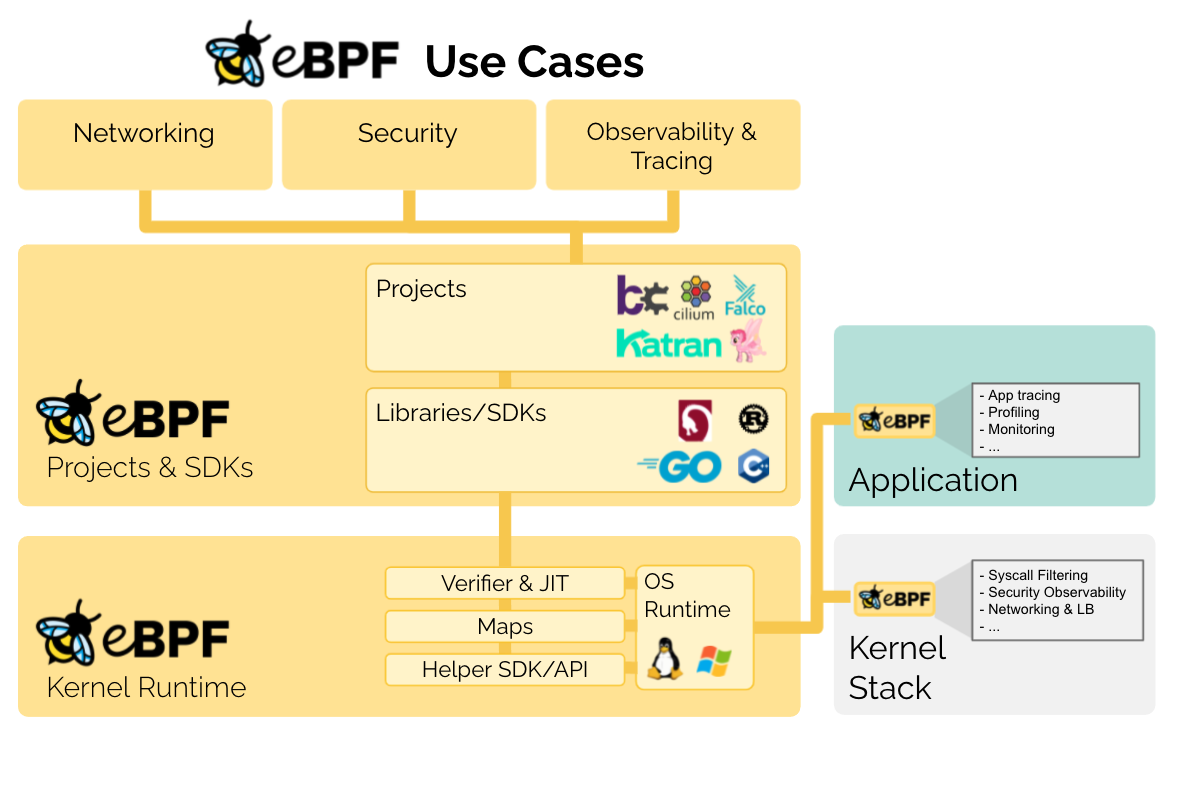
    The eBPF Foundation, which proposes to advance adoption of an approach that enables sandbox programs to run faster at the kernel level, is being launched today as an arm of the Linux Foundation.

    The technology known as eBPF was originally developed for Linux. The eBPF Foundation is now committed to expanding use of eBPF across all operating systems. Members of the eBPF Foundation include Facebook, Google, Isovalent, Microsoft and Netflix.

    Thomas Graf, CTO and co-founder of Isovalent, a provider of networking and security tools that leverage eBPF, said IT organizations should expect to see the technology become part of Windows, along with other operating systems, as the core technology is tested and validated across a much wider range of platforms.

    In effect, eBPF changes the way operating systems are designed. It bridges the boundary between kernel and user space by enabling developers to combine and apply logic across multiple subsystems that, historically, were completely independent of one another. That approach enables, for example, a security tool to scale to the point where it can identify threats at much higher levels of throughput to improve overall scale at a time when the volume of cybersecurity attacks being simultaneously launched continues to increase.

    Currently, eBPF is widely employed by web-scale companies such as cloud service providers. Facebook is using it as the primary software-defined load balancer in its data centers while Google is using open source Cilium networking software within its managed Kubernetes offerings.

    However, adoption within on-premises IT environments that have deployed Linux has been more limited simply because the number of vendors that have optimized networking, security and storage offerings to take advantage of eBPF is still fairly limited.

    Sysdig, for example, recently launched made available an instance of the open source Falco container security platform available that employs eBPF. Tigera has also made available an instance of its container networking platform that leverages eBPF at the kernel level of Linux.

    Ultimately, Graf notes the biggest benefit of eBPF is efficiency. The total cost of processing for security, networking and storage platforms should decline as more vendors take advantage of a capability that will one day be widely employed across multiple operating systems.

    In the meantime, IT organizations would be well-advised to ask their vendors when they plan to support eBPF. Cloud service providers generally require it to deliver their own managed services more efficiently, so any vendor that hopes to sell a platform to those providers will need to support eBPF to drive performance at scale. The issue then becomes determining which platforms that have embraced the technology are also available in on-premises IT environments looking for similar benefits.

    Regardless of approach, it’s clear there will soon be a reason to upgrade not just networking, storage and security platforms but also instances of operating systems that don’t yet support eBPF. DevOps teams would be well-advised to plan accordingly because the number of platforms that will ultimately benefit from eBPF spans the entire enterprise.

  • Google Unveils Tool to Better Secure GitHub Repos

    Google Unveils Tool to Better Secure GitHub Repos

    Google today launched a GitHub app that provides automated continuous enforcement of security best practices for GitHub projects.

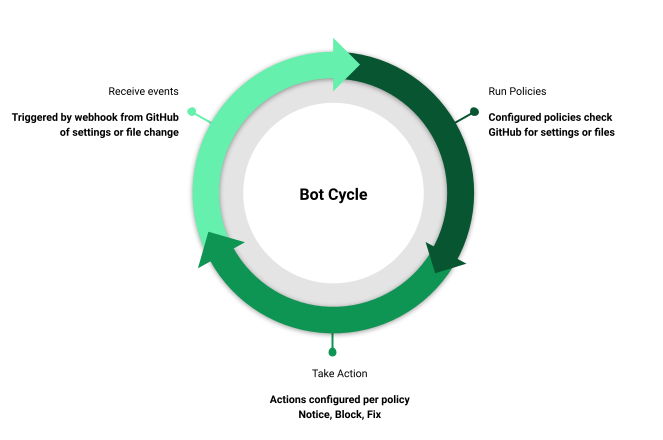
    Kim Lewandowski, a product manager for open source software security at Google, said the Allstar application enables IT teams to assess any project on GitHub to check for security policy adherence. In addition, Allstar sets desired enforcement actions and automatically applies those rules when triggered by a setting or file change in a repository.

    The goal is to provide the open source community with a tool that makes it possible for organizations to have more confidence in the open source software that is being employed within a software supply chain, said Lewandowski.

    Allstar is intended as a companion application for Security Scorecards, a tool that Google made available last year to assess whether, for example, an open source project employs branch protection to ensure that malware isn’t inadvertently committed to a project. Allstar continuously checks expected GitHub API states and repository file contents against security policies and the enforcement actions defined by an IT organization. After it detects a policy violation, the tool can be configured to simply send an alert or to automatically enforce a specific policy to remediate the issue, said Lewandoski. Specifically, she said the options available are to log the security policy violation without taking any additional action, open a GitHub issue or modify the GitHub setting to match the original Allstar configuration.

    At present, Allstar provides a limited number of security policy checks, but more will be made available over the coming months, said Lewandowski. Current security policy checks include branch protection, vulnerability disclosures, access controls and detection of binary artifacts that can’t be scanned. Additional checks that will be added include automatic dependency updates and frozen dependencies.

    Lewandowksi said Allstar and Security Scorecards are part of an ongoing Google effort to give back to the open source community that is being targeted by cybercriminals attempting to compromise software supply chains. Just about every application is now dependent on open source components, to some degree. The maintainers of those projects, however, don’t always have the tools or expertise required to check for malware that has been injected into a codebase, she noted.

    In general, Lewandoski noted that achieving DevSecOps best practices will require a lot more automation of application security. It’s not possible for each developer to become a world-class cybersecurity expert. The challenge is finding a way to introduce that automation into the application development process as early as possible, which, she noted, in many cases starts with open source components that are incorporated in applications.

    It may take a while for every maintainer of an open source project to revamp the processes through which code is added to their project. However, the easier it becomes to continuously review that software, the more confidence organizations that use it will have in its security. In fact, the maintainers of those projects should expect the downstream users of that software to be asking some pointed questions about how security is being managed in the wake of a series of recent high-profile breaches of software supply chains.

  • Datadog Cloud Security Platform Advances DevSecOps

    Datadog Cloud Security Platform Advances DevSecOps

    Datadog has launched a Datadog Cloud Security Platform that promises to advance DevSecOps by identifying potential threats using the same agent software many DevOps teams already rely on to instrument applications.

    Renaud Boutet, senior vice president of product for Datadog, said organizations that rely on the Datadog software-as-a-service (SaaS) platform can now more easily invoke security services based on the same data model used to observe applications.

    The security services provided by Datadog include a cloud security posture management (CSPM) offering that identifies misconfigurations and applications that are not compliant with industry standards such as the Payment Card Industry Data Security Standard (PCI DSS).

    A cloud workload security (CWS) offering, meanwhile, detects threats to production workloads by monitoring file and process activity, while a monitoring tool identifies threats to cloud environments by analyzing operational and security logs. It also provides integrations and threat detection rules that are easy to extend and customize.

    Finally, there is an application security tool, currently in beta, that identifies and blocks attacks that target code-level vulnerabilities, such as SQL injections and cross-site scripting (XSS) exploits.

    Boutet noted that many DevOps teams are reluctant to roll out security platforms that require them to deploy, manage and update an additional set of agents across their application environment. Datadog is now effectively unifying application observability and security in a way that makes it simpler for those DevOps teams to embrace DevSecOps best practices, added Boutet.

    In some cases, the dashboards surfaced by Datadog will be employed by DevOps teams that have assumed responsibility for cybersecurity as part of an effort to shift more responsibility for application security further left, noted Boutet. In other instances, cybersecurity teams will be able to view the same alerts shared with their DevOps colleagues, he added.

    Pressure to address DevSecOps is mounting in the wake of a spate of high-profile software supply chain breaches. While the majority of organizations have not been breached, questions are now being asked at the boardroom level as concerns over application security increase. Many organizations are wondering if they should slow down the pace of application development to ensure better security and to what degree.

    Regardless of the path forward, awareness of application security has never been higher. An executive order issued by President Biden calling for improvements to security will likely have a cascading effect across not just government agencies but also on organizations that do business with those agencies. One way or another, DevOps teams and cybersecurity professionals will be required to work more closely together. The challenge is striking the right balance between security and productivity. Most developers are never going to become world-class security experts. Conversely, most security professionals know next to nothing about coding. That doesn’t mean, however, that efforts shouldn’t be made to educate both camps as much as possible. After all, even a small amount of education can have a profound impact when most of the attacks being made against applications are not especially sophisticated.

  • A New DevOps Test Environment Platform is Needed

    A New DevOps Test Environment Platform is Needed

    Test environment management is bottlenecking DevOps transformations and is driving the need for a new test environment management platform solution. On-demand test environments in which developers and testers do not have to wait for a shared environment are sorely needed.

    The evidence is clear. In my book Engineering DevOps I indicated that finding and setting up test environments is a primary source of bottlenecks in DevOps value streams.

    In my February 2021 webinar with Plutora, I presented Best Practices for Developing Test Management Environments. I indicated that orchestrating and managing test environments is often a primary source of delays and waste within value streams.

    The State of Testing Report 2020 by PractiTest indicates that DevOps practices increased 57%; from 26% in 2017 to 41% in 2020. The report revealed that 46% of testing has shifted to using CI/CD processes, 55% are actively involved in shifting testing left and 36% are testing in production. This is clear evidence that DevOps testing is on the rise.

    Wolfgang Platz’s December 2019 article Why Software Testing Remains a Bottleneck indicates that testing is responsible for more delays than any other part of the development process – accounting for 52% of the bottlenecks in the development process. And  53% of respondents to the World Quality Report 2020-21 indicated that test environments are not available when needed, 67% lack the capability to book and manage test environments and 71% lack visibility of available test environments.

    An article by Velocity echoes the problems with pre-production environments. “With the rise of microservices and cloud-native applications, environments are becoming more complex. Often you need to wait or compete to get access to develop on a specific microservice, or can spend time waiting to deploy to a shared staging environment only to realize something already changed, and you’re back to square one.”

    The Continuous Testing Report – 2020 by Capgemini defines test environment management (TEM) as managing infrastructures, test data and applications to support testing on demand. These environments are one of the greatest impediments to continuous testing. In this report, 36% of respondents said they are spending more than half their time building and managing test environments; 44% of respondents indicate they spend weeks of their time searching, managing and generating test data.

    Test environments should be regarded as functions to be spun up or destroyed at will, with virtualization, infrastructure-as-code (IaC)  practices, service virtualization, containerization and improved test data management.

    Given all the above evidence, it is clear that a new approach to DevOps test environment management is needed.

    The following are examples of benefits that DevOps test environment management platforms need to offer:

    • Compatible with current tools:
      • Automatically map and configure application infrastructure to develop and test multiple services in an environment that runs just like it would in production. This needs to be fully agnostic to cloud and tech stacks, such as Kubernetes and other environments.
      • The platform needs to work on applications in parallel without disrupting others, with full access to data and third-party dependencies.
    • Automatic configuration and maintenance:
      • The platform needs to automatically configure and update any changes within the production infrastructure’s mapping in real-time so ephemeral environments will always be synced with what is in production. Instead of having to spend time making sure any changes are configured, the platform will ensure the right environment that replicates production, without having to wait.
    • Data and third-party dependencies:
      • The platform needs to load the relevant data and third-party resources that are vital parts of the environment to test, work and debug against, so test environments will, as closely as possible, mimic working in production.
    • Team collaboration:
      • The platform needs the capability to share ephemeral test environments with other stakeholders so they get visibility and can collaborate for faster feedback cycles. This is also important for collaborating for debugging.

    What This Means

    DevOps testing is on the rise, and test environments are a major bottleneck for DevOps testing. A new DevOps test environment management platform is needed to reduce the bottlenecks. On-demand test environments in which developers and testers do not have to wait for a shared test environment are needed. Such a solution would improve agility and reduce wasteful orchestration bottlenecks in test, improve quality and risk management through comprehensive and automated testing and enable continuous improvement by providing more intelligent insights and feedback.

  • Sophos Acquires Refactr to Advance DevSecOps

    Sophos Acquires Refactr to Advance DevSecOps

    Sophos this week revealed it has acquired Refactr, a provider of an automation platform that makes it simpler to add static and dynamic security scanning and application testing to a DevOps pipeline. Terms of the deal were not disclosed.

    Joe Levy, Sophos CTO, said Sophos will extend the Refactr DevSecOps automation platform to add security orchestration automation and response (SOAR) capabilities. This will provide DevOps teams with access to its managed threat response (MTR) and extended detection and response (XDR) platforms. The goal is to make it simpler for DevOps and cybersecurity teams to collaborate once those integrations are achieved in early 2022, added Levy. Sophos will also continue to develop the Refactr platform as a standalone offering in addition to maintaining the current community edition of the platform, noted Levy.

    Refactr Sophos

    Sophos has acquired a range of cybersecurity companies since it rearchitected its core platform to create an extensible security framework known as the Adaptive Cybersecurity Ecosystem. That platform is built on a modern microservices-based architecture that simplifies integration of acquisitions. Collectively, those acquisitions enable Sophos to collect a wider range of data that can be used to train artificial intelligence (AI) models and continuously better automate DevSecOps processes, noted Levy.

    Recent Sophos acquisitions include Capsule8, a provider of a platform for securing containers and BrainTrace, a provider of managed security services. Sophos also acquired Rook Security, another managed security services provider, in 2019.

    In general, Sophos is making the case for a security platform that both DevOps and cybersecurity teams can navigate. In addition to integrating with continuous delivery and continuous deployment (CI/CD) workflows via application programming interfaces (APIs), the Refactr platform can also be accessed via visual tools that can be employed to create launch tests using a drag-and-drop tool.

    In the wake of a spate of high-profile software supply chain breaches, there’s now more focus on implementing DevSecOps best practices. The challenge organizations face is finding a way to achieve that goal without unduly slowing down the rate at which applications are built and deployed. Achieving that goal requires finding more ways to automate, for example, scans of code during the build process.

    In the meantime, however, a recent Sophos Active Adversary Playbook 2021 illustrates how organizations find themselves outgunned by their cybercriminal adversaries. The report details how 37 different attack groups used more than 400 different tools between them to launch cyberattacks. The attackers’ median dwell time before the attacks were detected was 11 days.

    It’s clear that without advances in automation and AI, the odds of securing software supply chains are slim to none. The challenge organizations face is finding a way to affordably tap into AI and automation technology and expertise. Individual organizations are not really in a position to build, for example, AI models capable of automating a cybersecurity process. Most organizations will wind up using APIs to invoke advanced security services delivered via the cloud within the context of a DevSecOps workflow. The issue is determining which service provider offers the most integrated and robust capabilities at the lowest cost.