Category: Features

  • Allstacks Adds Free Dashboard to Track Software Dev Benchmarks

    Allstacks Adds Free Dashboard to Track Software Dev Benchmarks

    Value stream intelligence platform provider Allstacks today added a free live dashboard populated with anonymized data that DevOps teams can use to benchmark their own progress.

    Hersh Tapadia, Allstacks co-founder and CEO, said the company is making this data available to make it easier for DevOps teams to uncover bottlenecks in their software development processes.

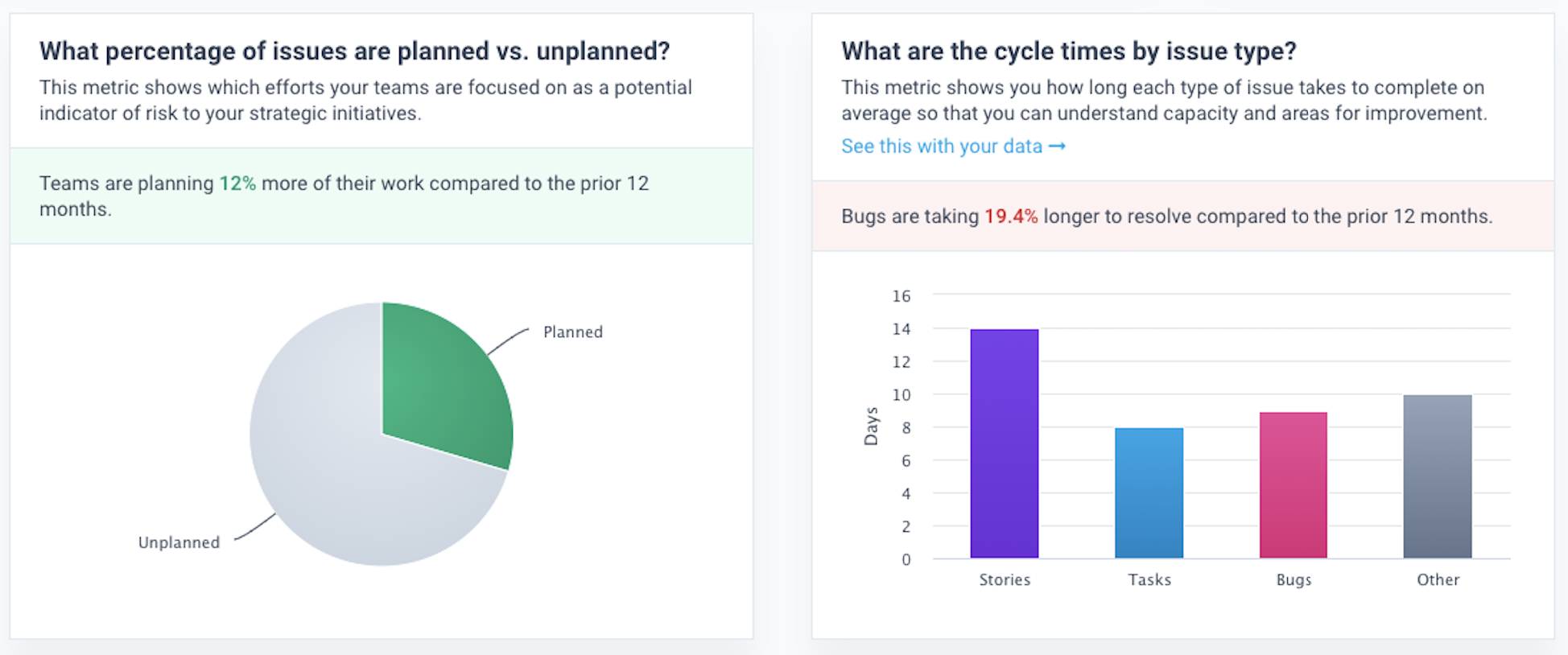
    As part of that effort, the dashboard includes pre-configured benchmarks for the following:

    How many days per week do benchmark teams write code?
    What percentage of issues are planned versus unplanned for benchmark teams?
    What are the cycle times per issue type for benchmark teams?
    What types of code do benchmark companies produce?
    What is the average commit size for benchmark customers?
    Allstacks

    Allstacks has committed to making 12 months of data publicly available on the dashboard and said it will update that data on an ongoing basis. Allstacks customers, however, can also access five years of data to compare historical trends.

    Tapadia said Allstacks plans to add additional benchmarks to a dashboard that can collect data via the various application programming interfaces (APIs) that most DevOps tools now routinely provide. The overall goal is to increase transparency into software development processes, he said.

    Allstacks’ value stream intelligence platform uses machine learning algorithms and artificial intelligence (AI) models to identify projects that are at risk of not meeting delivery goals. That data is then used to analyze the impact those missed deadlines are likely to have on various business objectives.

    Value stream management platforms automatically take technical metrics, gathered via a DevOps process, and match them to a set of key performance indicators (KPIs) defined by business leaders. The challenge many organizations still face is making sure they have the tools in place to collect the appropriate technical metrics and then define the KPIs that truly matter to the business. Once those metrics are gathered and KPIs established, organizations are then able to apply advanced analytics to the massive amounts of DevOps data they collect.

    The concept of value stream management traces its lineage back to lean manufacturing methods, which called for each step of a manufacturing process to be continuously measured. As software development has evolved from being a craft to a process that is highly automated using DevOps best practices, an appreciation for the value of monitoring the impact of missed software development deadlines on the business has grown as organizations realize how dependent they are on software.

    As a result, more organizations realize there is a clear disconnect between their business goals and development processes, noted Tapadia. Business leaders are especially anxious to understand how a software development project delay might impact future revenue projections. Rather than being a set of tools employed mainly by IT leaders to track software development projects, value stream management platforms make it possible for other stakeholders to track KPIs spanning multiple software development projects. It then becomes easier to make informed decisions about how to reassign resources across various projects as different bottlenecks are encountered.

    It may be a while before organizations achieve that level of transparency into their software development processes, but as software continues to ‘eat the world,’ it’s only a matter of time before value stream management becomes a required set of DevOps tools for every organization.

  • Grafana Labs Expands into Incident Management Realm

    Grafana Labs Expands into Incident Management Realm

    During its online ObservabilityCON 2021 conference, Grafana Labs this week previewed an incident management platform in addition to making available an on-premises edition of its distributed tracing tool.

    Tom Wilkie, vice president of product for Grafana Labs, said the Grafana OnCall incident management platform is a natural extension of the observability tools the company already provides using the widely employed open source Grafana dashboard. The platform, which is expected to be generally available in 2022, is based on software Grafana Labs gained by acquiring Amixr earlier this year.

    Grafana OnCall unifies all the alerts created by Grafana, Prometheus and the Alertmanager tool the Prometheus community created to streamline the number of alerts generated by the platform. The goal is to reduce the alert fatigue a DevOps team might experience when dealing with an IT issue that can be traced back to a single root cause, noted Wilkie.

    Grafana

    At the same time, Grafana Labs made Grafana Enterprise Traces available for on-premises IT environments. It is based on Grafana Tempo, a cloud service that makes it possible to store and then analyze distributed traces using inexpensive object storage resources. The latest version of the core open source Tempo project has also been updated to add service graphs and the ability to search recent traces.

    Grafana Labs this week also updated Loki, an open source log management platform, to add support for out-of-order log lines, custom log retention policies per log stream and per tenant and a deletion API that makes it easy to scrub log data. Version 2.4 of Loki also adds additional high-availability capabilities.

    Other updates to the Grafana Labs platform include support for recorded queries, a set of pre-built dashboards that enable users to quickly drill into their Prometheus metrics data, the ability to consume metrics from the AWS CloudWatch service provided by Amazon Web Services (AWS), improvements to its ability to monitor Kubernetes clusters and updates to the open source load testing tool the company gained by acquiring k6 last year.

    Grafana Labs is also committing to expanding its integration with Microsoft Azure cloud service alongside its integrations with AWS, noted Wilkie.

    While competition among providers of observability platforms is already fierce, Wilkie said an observability platform based on an open source dashboard that can already collect data from more than 100 sources provides a unique advantage. At the core of the Grafana Labs platform is a centralized framework for collecting data generated primarily by the open source Prometheus monitoring platform being developed under the auspices of the Cloud Native Computing Foundation (CNCF).

    While Prometheus is used most often in Kubernetes environments, it is starting to gain traction in monolithic application environments as well; it provides an open source approach to defining a de facto standard for collecting metrics and other data that can be consumed by an observability platform.

    It’s not clear yet to what degree IT teams are distinguishing between monitoring and observability. Monitoring focuses on predefined metrics to identify when a specific platform or application is performing within expectations. Observability combines metrics, logs and traces to instrument applications in a way that makes it simpler to troubleshoot issues without relying solely on a limited set of metrics that are pre-defined and monitor a specific process or function.

    Regardless of whether IT teams view observability as being distinct from monitoring, it’s clear that the ability to manage IT environments is improving at a rapid rate. The challenge, of course, is the IT environment itself is becoming more complex with each passing day.

  • How Dispersed Can We Be?

    How Dispersed Can We Be?

    It is interesting to consider DevOps from the storage perspective. DevOps in general—and specifically newer development and deployment models—tried to pretend that long-term storage was not a necessary component of software delivery. In short, it appears that because there wasn’t a good answer to long-term state in stateless development models, the storage and databases that used state were hand-waved away. Which, of course, failed. Container deployment models did the same thing and failed just as miserably. Oh, containers didn’t fail, but the attempt to ignore persistent storage did; from the very beginning, it was clear that was going to happen. We were doing early container implementations and working through how to ensure that containers ABC had access to the same shared storage. That need never went away and was never going to. Apps can run without persistence, but business doesn’t run without persistent data.

    Checking out the wave of cool new products like, for example, Ionir (disclosure—I know more about them simply because I’m friends with their CMO. Other vendors likely have good solutions, too) makes me realize the answers that we needed were right in front of us. And not just the answer to persistent storage, but to storage portability, which has been a problem from the beginning of the cloud. Data gravity is the idea that data holds apps in place. Tools like Ionir reduce the gravity of data. A lot. They can’t get rid of data gravity, because some platforms charge for data storage, data ingress and egress, etc. but that becomes a TCO operations problem rather than a near-insurmountable tech problem.

    But just as interesting is this: What if the slow but steady increase in core Internet speeds will allow us to access data from anywhere? We could do that now, but performant applications struggle if you force them to leave cloud A and go to your data center or to cloud B to get a dataset. Yet we use APIs that do just that on a regular basis. What are Google Maps and Google Places if not simply big old honking databases? And yet we call out to them from just about every platform.

    So, it’s worth trying out and seeing if the idea of data gravity is maybe an obsolete idea for you. For some applications that really do need super-fast response times, the concept is still relevant. But for many applications? Where your app sits in relation to data may not be as important as you think. Write or grab an API wrapper for a critical dataset and throw a simple test app up on a different platform. See what you get. If it performs well, consider putting apps where it makes sense and using a wrapper API with secrets to grant access to data from any validated app.

    Some of you are doing this already. Not many, but it’s out there. Excellent job; keep rolling!

    Everyone else is kicking rear and taking names, with the world still online every day because of your collective work. So keep rocking it, but consider if you really need the application close to the data these days and, if you do, how data mobility tools might facilitate moving data to the app—something most of us would not have considered for large datasets before the last year or so.

  • Digital CxOs Have a Home, as Digital CxO Joins the Techstrong Group Family

    Digital CxOs Have a Home, as Digital CxO Joins the Techstrong Group Family

    Hello, and welcome to the launch of Digital CxO, the premier destination site and community dedicated to fostering collaboration among business and IT leaders driving digital transformation initiatives.

    As part of Techstrong Group, which also includes DevOps.com, Container Journal, DevOps Institute, Security Boulevard, Techstrong TV and the newly formed TechStrong Research Group, Digital CxO creates an environment in which members of the CxO community can engage with one another and industry experts to better understand how to get the most out of IT investments that today drive the business.

    We’d like to encourage you to visit Digital CxO even if you haven’t taken a seat at the table but aspire to be a C-level executive. We are as invested in advancing your career as you are. Many IT professionals today aspire to one day become a senior leader of an organization—hopefully sooner than later. Digital CxO can help you fulfill that ambition by providing content in many formats including:

    I’d also like to ask you to encourage you to make the business and IT leaders within your organization aware of Digital CxO. The more they come to appreciate how much of the business resolves around IT these days, the better off everyone in your organization will be.

    Digital transformation isn’t just a buzzword. It’s a way of thinking about IT as an integral part of the business. There has been a divide between IT and the rest of the business that, thank goodness, is finally coming to an end. In the wake of the COVID-19 pandemic, more business and IT leaders realize how dependent they are on IT to drive digital processes. Every organization is now a technology company.

    At the Techstrong Group, we’ve been working toward enabling that transition since the founding of DevOps.com in 2013. Digital CxO takes that mission to the next level. The digital transformation currently underway didn’t start with the COVID-19 pandemic, but it does illuminate the fact that if your business wasn’t transforming digitally, it would be difficult—if not impossible—to thrive, much less survive.

    None of this would be possible without you. We strive to serve the people who are making our digital world possible. A raft of IT platforms that make digital transformation possible are reshaping the world before our eyes. We know you—we believe we know what you want and how we can help. It is more critical than ever for technology professionals at all levels to understand how technology can improve business processes, revenue, profitability and customer satisfaction.

    Our goal is to create a place where business and technology leaders and practitioners gather to exchange ideas and continually learn, grow and succeed. Digital CxO is our latest humble contribution to realizing that vision.

  • Microsoft Expands Azure DevOps Portfolio

    Microsoft Expands Azure DevOps Portfolio

    Microsoft has made available a bevy of updates to its DevOps portfolio that, collectively, are intended to increase its share of a wave of applications that will be rolled out across the extended enterprise.

    Additions to the Microsoft DevOps portfolio were announced at the Microsoft Ignite 2021 conference and include DevOps Workflow Generator, a free tool designed to help DevOps teams visualize their toolchain, and updates to Azure Automanage, a framework for automating the management of virtual machines on Windows Server and, in preview, on Linux.

    At the same time, Microsoft has added support for open source OpenTelemetry agent software to Azure Monitor and made available a preview of Azure Chaos Studio, a service for testing application resiliency.

    Microsoft is also making available a preview of Windows Server 2022 that adds secure-code capabilities for workloads deployed on the platform. Microsoft also previewed updates to backed databases such as SQL Server 2022, Cosmos and its implementation of the Redis database created by Redis Labs.

    Finally, Microsoft has also made available a preview of integration between GitHub Actions for automating software development tasks and Azure Active Directory (Azure AD) using Open ID Connect, an authentication protocol advanced by the OpenID Consortium.

    Microsoft CEO Satya Nadella told conference attendees the next 10 years will witness more digitization than the previous four decades as IT shifts from an era defined by mobile and cloud computing to one defined by ubiquitous computing and ambient intelligence.

    Applications built in everything from procedural code to the Microsoft Power Fx, a low-code tool that Microsoft created using the programming language it originally built for users of the Microsoft Excel spreadsheet. Microsoft envisions those applications will primarily be built on its cloud and distributed everywhere. On the backend, a range of database and artificial intelligence (AI) services will be invoked primarily via application programming interfaces (APIs).

    Of course, every major cloud service provider has similar ambitions. Most organizations today are not standardizing on a single cloud. Rather, they are determining which class of workloads run best on which cloud computing platform regardless of whether that approach increases the total cost of IT. Each additional platform adopted typically requires IT teams to master separate tools. However, Microsoft is now also making a case for a cloud-native framework that can be deployed anywhere to build, deploy and manage applications.

    In the meantime, the number of workloads deployed on cloud services continues to grow. The market research firm Canalys reported worldwide spending on cloud infrastructure services reached $49.4 billion in the third quarter of 2021, a 35% increase. Microsoft currently trails Amazon Web Services (AWS) in overall market share but continues to steadily make gains. Microsoft and AWS collectively account for roughly half of all cloud infrastructure service consumption.

    DevOps best practices will need to evolve to meet the challenges of multi-cloud computing. In addition to cloud platforms and on-premises IT environments, applications are now starting to be deployed at the edge in greater numbers. DevOps teams need to be able to continuously deploy applications and their associated updates across a wide range of platforms. The challenge, of course, is that all those platforms have unique attributes that make truly automating the entire process on an end-to-end basis an elusive goal.

  • Oxeye Platform Helps Fix Code Vulnerabilities

    Oxeye Platform Helps Fix Code Vulnerabilities

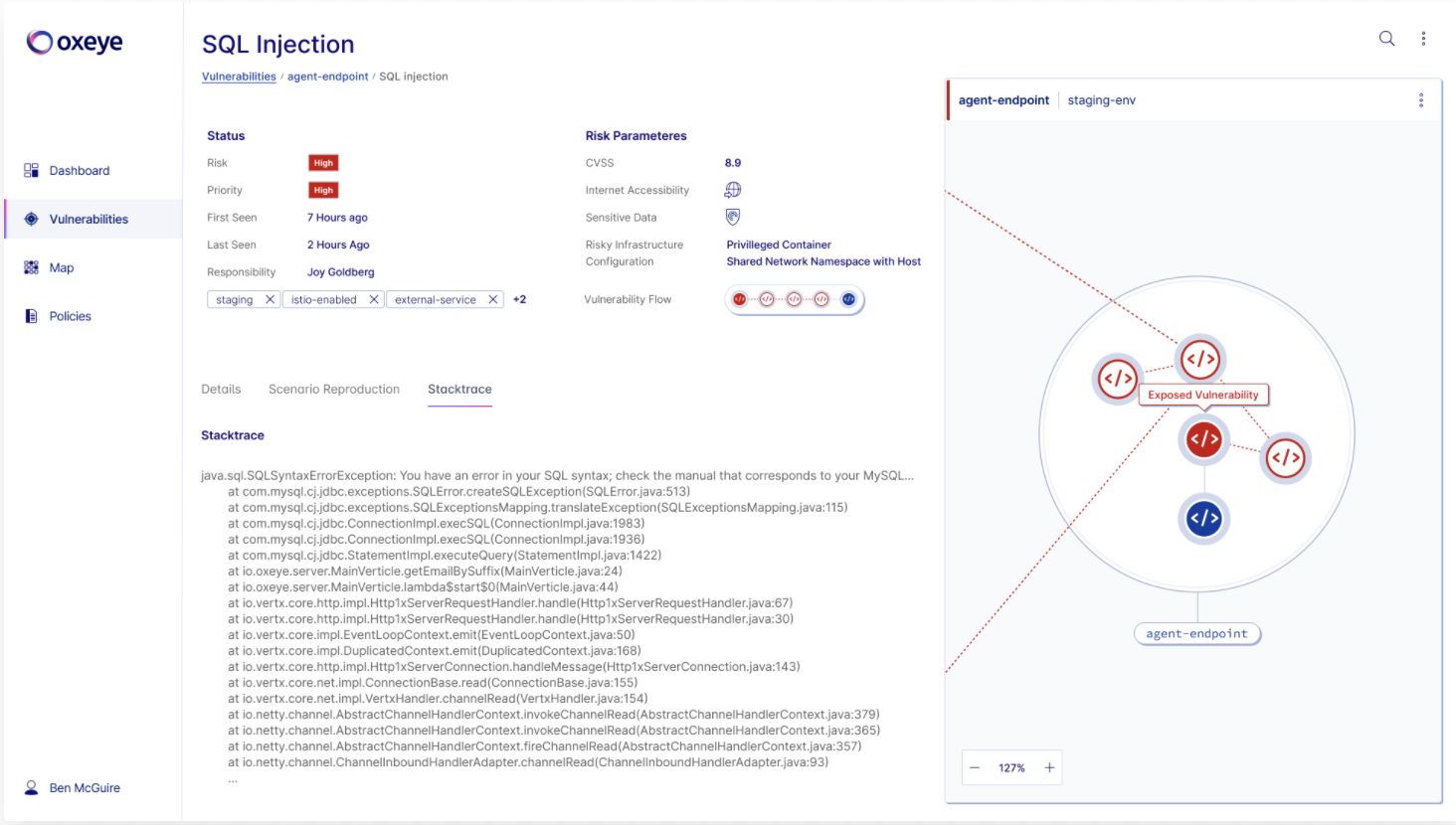
    Fresh from raising $5.3 million in seed funding, Oxeye emerged this week from stealth to launch a namesake application security testing platform that, in addition to pinpointing issues in code, also provides advice to best remediate the issues it found.

    The Oxeye platform requires developers to download an observer tool that scans code for vulnerabilities. Once pinpointed, the Oxeye platform guides developers through the remediation process without requiring them to inject agent software into every application.

    Oxeye CEO Dean Agron noted developers don’t typically have a lot of cybersecurity expertise. As application environments become more complex—thanks to the rise of microservices-based applications—it only becomes more likely that mistakes will be made. The only way to resolve security issues before applications are deployed in a production environment is to augment developers using a platform that finds vulnerabilities all the way down to specific lines of code, he said.

    In theory, responsibility for application security is being pushed further left toward developers as organizations embrace DevSecOps best practices. However, making developers more accountable for security without providing them the tools required to achieve that goal is not going to improve the overall state of application security.

    The challenge organizations face today is finding a way to empower developers to address security issues without slowing down the rate at which applications are built and deployed. The best way to achieve that goal is to give developers access to a security tool designed to both analyze code for vulnerabilities and explain how to avoid encountering that issue again, said Agron.

    Left unaddressed, the current software supply chain crises will only deepen, added Agron. According to International Data Corp. (IDC), more than 500 million digital applications and services will be developed and deployed using cloud-native platforms by 2023. That’s roughly equal to the total number of applications and services deployed over the last 40 years, according to IDC.

    It’s not clear to what degree the rise of digital applications might force the DevSecOps issue within more organizations. It’s is clear that a new generation of more complex applications based on microservices is being rolled out to drive a wide range of mission-critical applications. The more business value an application has the more attention it inevitably attracts from cybercriminals.

    Regardless of the type of application, it’s apparent that there is a pressing need for a way to better secure applications. The further left that process starts the less costly it becomes to achieve and maintain security. Cybersecurity teams have a vested interest in helping developers do the right security thing as early as possible if no other reason than to reduce the number of vulnerabilities they will inevitably discover later.

    Making developers more aware of security issues is, of course, only the first step. However, in the absence of any tools that can be easily incorporated within an application development workflow, the concerns being raised will amount to little more than yet another sermon that will be ignored as developers once again rush to meet yet another application delivery deadline.

  • DevSecOps Progress: Slow and Steady

    DevSecOps Progress: Slow and Steady

    [pdf-embedder url=”https://devopsy.kinsta.cloud/wp-content/uploads/2022/02/devsecops-progress-slow-and-steady.pdf”]

  • NextArch Foundation Launched to Focus on Microservices

    NextArch Foundation Launched to Focus on Microservices

    The Linux Foundation this week launched the NextArch Foundation to define frameworks and specifications that promote interoperability between microservices that span multiple cloud computing environments.

    More than 40 organizations, including Tencent, Arm, Kong and Ampere, have committed to contributing to 10 technology projects in 2022 in addition to frameworks for three vertical industries.

    Mark Shan, chairman of Tencent Open Source Alliance, said within the next five years the NextArch Foundation expects to have defined a set of standards and best practices that will have been widely adopted.

    The NextArch Foundation’s mission is to provide a home for a set of emerging technologies that would otherwise not get the attention they deserve within the confines of an existing consortium, said Shan.

    NextArch Foundation’s areas of focus will include how continuous integration/continuous delivery (CI/CD) platforms are employed to build microservices and reducing latency between microservices residing in highly distributed computing environments, added Shan.

    It’s not clear where the efforts of NextArch will begin and end as compared to the Cloud Native Computing Foundation (CNCF), another arm of the Linux Foundation that focuses on platforms such as Kubernetes that are widely used to build and deploy microservices-based applications based on containers.

    In general, however, it’s already apparent that microservices are at the core of most digital business transformation initiatives that span everything from artificial intelligence (AI) projects to edge computing environments. The global digital transformation market size was valued at $336.14 billion in 2020 and is expected to grow at a compound annual growth rate (CAGR) of 23.6% from 2021 to 2028, according to market research firm Grand View Research.

    As organizations embrace microservices to build and deploy software, the need to establish a set of DevOps best practices to manage them given the level of dependency that exists between multiple microservices within any application.

    Challenges associated with managing microservices are not likely to deter organizations from adopting them, but they do slow down the transition. Most new applications are intended to run on mobile devices that access cloud services, and typically run more efficiently when constructed as a set of microservices that scale up and down based on usage. The levels of agility and resilience that microservices have are crucial to any digital business transformation initiative, so the general expectation is that the percentage of microservices-based applications that will be running in production environments will increase sharply.

    The challenge, of course, is that, over time, microservices-based applications are more challenging for developers to build and maintain than a traditional monolithic application, though they are easier to update. It’s not likely microservices-based applications will replace existing monolithic applications overnight, but many existing monolithic applications are being converted into a set of microservices that makes it easier for developers to reuse the core functionality of that application.

    Of course, it’s still early days as far as microservices in the enterprise are concerned, but as developers shift toward a new way to build software, the need for a wider range of de facto standards should become more apparent.

  • DevSecOps Tech Radar Highlights Diverse Tooling Adoption

    DevSecOps Tech Radar Highlights Diverse Tooling Adoption

    The DevSecOps Technology Radar showcases the opinions cloud-native groups have about DevSecOps tools. To review, The Technology Radar is a periodic report from the Cloud Native Computing Foundation (CNCF), a burgeoning host for new open source projects that are becoming pivotal underpinnings to cloud-native architecture at large.

    Just like previous radars, the DevSecOps Technology Radar was assembled using feedback from the CNCF end-user community, which is a group of over 155 organizations that use cloud-native technologies to build and distribute their services, spanning startups and enterprises. The Radar report organizes popular tools into adopt, trial and/or assess status, based on a technology’s active use and its maturity.

    ‘Adopt’ means these tools are stable and come highly recommended for use in production systems.

    ‘Trial’ means users have had some success with these tools, and it is recommended that others consider them.

    ‘Assess’ means these are promising tools that are good for solving specific needs.

    So, why was DevSecOps selected as this Radar’s theme? According to the Radar team, DevSecOps was chosen because it is highly relevant to current development focuses. “We realized that more than half of the tools we were using in CI/CD were actually security-oriented,” said Sergiu Petean, head of DevOps at Allianz Direct. This goes beyond DevOps—”this is definitely an uppercase ‘Sec’,” he said.

    “More than half of our time is spent discussing designs around security,” said Keith Nielsen, director, cloud architecture at Discover Financial Services. Financial services especially must find innovative methods to balance speed-to-market with security. Nielsen also cited the rapid rate of change in this space, which requires companies to continually reevaluate their security posture.

    DevSecOps Radar Results

    So, where did the CNCF end-user community place popular DevSecOps tools? The Radar ended up rating 16 tools across the three different levels:

    • Adopt: Istio, Sonarqube, Artifactory, Hashicorp Vault, Calico/Tigera, Terraform, ArgoCD and OPA.
    • Trial: XRay.
    • Assess: Cilium, Harness, SonaType Nexus, Hashicorp Sentinel, GitHub Actions, Linkerd and Trivy.

    The above results were based on 252 votes from end users across 35 tools, with most respondents coming from large companies across multiple sectors.

    Out of these tools, Terraform collected the highest number of ‘Adopt’ votes. This technology aids the move toward infrastructure-as-code (IaC) with declarative configuration files, which is important for DevSecOps automation. Tied for second place were Hashicorp Vault and Artifactory, indicating that secrets management, access control and continuous updates for security are pressing requirements.

    Other open source tools on the Radar are providing impressive ways to unify security controls. For example, OPA is a universal layer for applying policies that could help unite fragmented authorization across applications. Or, service mesh options like Linkerd and Istio place a sidecar proxy around applications to centrally manage access control, observability and networking across a large microservices ecosystem. Such projects are programmable to fit into the DevSecOps pipeline.

    Analysis

    In general, the radar team was somewhat surprised to see such a high number of security tools in use today. Some tools compete in the same arena, making hunting for the right tool challenging. “The sheer number of products is a bit staggering … what we’re seeing is a highly fractured strategy from different companies,” explained Nielsen, who said he expected more consolidation on capabilities.

    After evaluating the DevSecOps tooling landscape, The Radar team organized their core findings into three main takeaways:

    Usability is compromised at the expense of security. Security features are necessary, but they often come at the cost of usability. The DevSecOps Radar team found that the developer experience for most tools is poor. Many disparate tools must be stitched together to have a truly automated pipeline which is cumbersome to implement. “The tools are getting better, but still there’s not a cohesive, prescriptive way to develop for the cloud,” said Nielsen.

    The pace of change in the security space is rapid. Major cloud providers continue to rapidly release new services, which has led to an explosion in new tools. Simultaneously, the speed of innovation is accelerating within companies, opening up unique security needs. Combined, this means the security landscape is constantly shifting. “Security tools are trying to keep up with the services and how you host them and run them,” Nielsen said. “We definitely weren’t expecting to see so many newcomers in the security space,” Petean agreed. Though DevSecOps is spoiled for choice these days, “it’s always better to have options,” he added.

    Microsegmentation is important but presents a significant challenge. Many great tools enable companies to improve how they segment traffic, such as service mesh tools like Linkerd and Istio. However, implementing cloud-native microsegmentation is bumping against legacy implementations for established companies. Between API gateways, service mesh, edge firewalls and Kubernetes federated firewall functions, DevSecOps has much complexity to deal with, Nielsen said.

    The DevSecOps Technology Radar: In Review

    In recent years, cloud-native technology has placed increasing emphasis on solving the security puzzle. Companies continue to reevaluate their security approach in light of cloud-native strategies, novel vulnerabilities and new compliance requirements. DevSecOps is proving to be a useful, if not necessary, practice to maintain both security and rapid software delivery.

    With new security tools and unique approaches coming out so frequently, it’s easy to have “analysis paralysis.” However, DevSecOps must start somewhere. And, for those who trust the opinions of the CNCF Technology Radar, you now have some helpful insights on where to begin.

  • Apollo GraphQL to Provide More Control Over APIs

    Apollo GraphQL to Provide More Control Over APIs

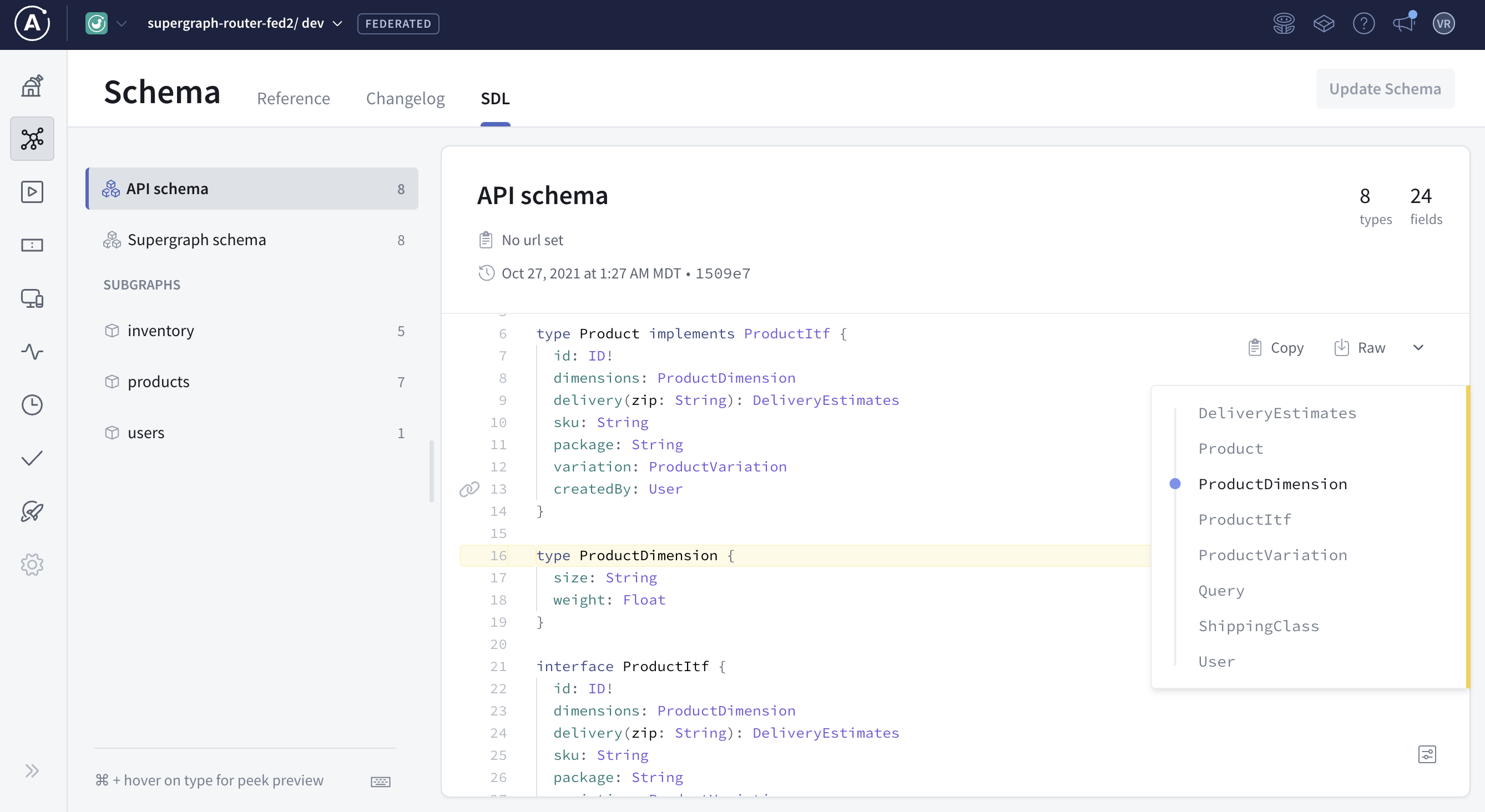
    Apollo GraphQL today previewed an update to its Federation platform for tracking and managing application programming interfaces (APIs) based on the GraphQL query language to give organizations more control over how APIs are reviewed and ultimately approved.

    Matt DeBergalis, founder and CTO, Apollo, said the alpha edition of the Federation 2 platform provides a unified view of distributed APIs based on GraphQL so they can be more easily governed.

    Federation is based on a unified graph created by Apollo GraphQL to initially provide more visibility into how APIs based on GraphQL are employed within an organization. That capability makes it simpler to increase collaboration among development teams that typically build APIs in isolation from one another, noted DeBergalis.

    The latest version of Federation also adds a shared ownership model that empowers teams to evolve unified graphs across smaller teams, he noted.

    In general, DeBergalis noted that Federation reduces the chances developers are going to create redundant APIs because they can more easily discover existing ones. They can then either employ those APIs as-is or modify them to suit their requirements as they increasingly compose an application using tools such as Apollo GraphQL Studio versus building every capability from the ground up themselves.

    GraphQL

    Overall, Apollo GraphQL claims that Federation is currently being downloaded more than one million times a week, with more than 30% of Fortune 500 companies such as Netflix, PayPal, Zillow, Walmart, Peloton and Priceline already using its tools.

    The company is also now making Federation and the rest of its tool portfolio available under the Elastic License 2.0 which provides the right to use, copy, distribute, make available and prepare derivative works of the software, but prevents organizations from offering a managed service, circumventing license key functionality or removing/obscuring features protected by license keys or remove or obscure any licensing, copyright or other notices.

    GraphQL, originally created by Facebook, is gaining traction as an alternative to REST APIs because it gives developers more control over how data is accessed via an API using a set of query capabilities. That capability is especially appealing when constructing digital business processes that require access by specific classes to large volumes of data. In fact, DeBergalis notes that, in many cases, it’s the existence of a rich set of APIs that enables organizations to construct digital processes that bridge the various isolated processes organizations previously had in place.

    Most IT teams will not be replacing REST APIs with GraphQL-based APIs overnight. However, there will soon be enough APIs based on GraphQL to have a significant impact on how applications are built and deployed. Many applications may wind up invoking external services via both REST and GraphQL-based APIs for many years to come.

    In the meantime, the rate at which applications are being built should substantially increase as tools such as Federation make development teams more productive. The challenge many DevOps teams will soon face is managing a large volume of deployments and associated application updates as more applications are deployed in production environments.