Category: Events

  • Google Hangout:  What will DevOps look like in three to five years?

    Google Hangout: What will DevOps look like in three to five years?

    DevOps seems to be everywhere today. But what does the future hold for today’s tech darling? Will the principles and patterns of DevOps still be recognizable in three to five years? Or will the next new wave come along wipe out what seems to be a major change to the way software is developed and operated? This panel will try to peer into the crystal ball and foretell what the future of DevOps holds, and what it may look like in the near and farther future.

    Date: Wednesday, January 27th, 2016

    Time: 1pm eastern standard time

    HANGOUT LINK:(NO REGISTRATION REQUIRED*) 

    *Google Hangouts are FREE.  To participate in a Google Hangouts LIVE,
    a Gmail or Google  Profile is required.
     

    Your Hostalan_new_head_shot

    Alan Shimel | Editor-in-Chief  | devopsy.kinsta.cloud,, An often-cited personality in the security and technology community and a sought-after speaker at industry and government events, Alan has helped build several successful technology companies by combining a strong business background with a deep knowledge of technology.

    Our Guests

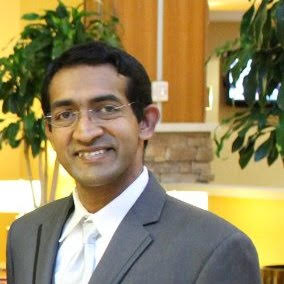
    Raghunath-RamanRaghunath Raman | Director – Digital APIs and Integration Delivery | Kaiser Permanente
    22+ years of experience in developing and executing enterprise product strategy and global initiatives. -Strong technical background, verifiable record of product development, service deployments, operations and program management of multi-million dollar portfolios. – Demonstrated prowess to formulate & deliver highly complex programs throughout an organization. – Seasoned in managing and building complex, interdependent systems and enterprise frameworks. Speaker @ IBM interconnect 2015, Speechtek 2009 , Speechtek 2010, etc.


    chrisChris Lazzaro | STSM, IBM Cloud Development, Collaborative DevOps |IBM
    Chris is a lead architect, building tools that enable developer productivity and operational excellence in IBM Cloud. He strives to enable customers to make the digital transformation to the cloud with DevOps tools, standards, practices, and the ecosystem needed to innovate faster than their competition. Chris began his career with IBM Tivoli in 1998, building systems management tools, and he has helped transition those capabilities into SaaS and cloud-native operations tools. With a focus on innovative, leading-edge solutions, he has obtained recognition as an IBM master inventor.


    KlenkPeter Klenk | Offering Manager, Bluemix Garage Method & Cloud DevOps Solution | IBM
    Peter is the product manager for IBM’s cloud DevOps solutions. He has more than 20 years of business and technical leadership experience in the software development lifecycle and tools area. Peter led the product management team and was CTO for IBM Rational’s automated software quality portfolio, which included service virtualization, functional test automation, and performance testing. Previously he held several development management, architecture, and developer roles for Rational’s change and configuration management solutions. He has a degree in Computer Science and Engineering from the Massachusetts Institute of Technology.
  • Webinar: Continuous Delivery with Jenkins Workflow and Docker Explained

    Webinar: Continuous Delivery with Jenkins Workflow and Docker Explained

    Are you looking for tools to help you move to continuous delivery? Do you want to take advantage of Docker containers in your application development and delivery?  Would you like to automate your software delivery process and define that delivery process in code that you can version control?
    Join devopsy.kinsta.cloud and CloudBees for the January 20th webinar, Continuous Delivery with Jenkins Workflow and Docker Explained, to learn how to use Jenkins with Docker to:
    • Scale the Jenkins platform to multiple teams and projects
    • Build, test and publish Docker images with your application code
    • Have an audit trail to trace your container images
    • Build a pipeline with Jenkins Workflow to pull the above together
    In this webinar, we will showcase how to use the new Jenkins Docker plugins and provide you with configurations you can use in your own environment.


    Recording


    Slides

    [seoslides embed_id=”ed7368335021″ script_src=”https://devopsy.kinsta.cloud/embed-script/12671/12746/” overview_src=”https://devopsy.kinsta.cloud/slides/12671/” site_src=”https://devopsy.kinsta.cloud” site_title=”devopsy.kinsta.cloud” title=” ” /]


    Your Hostalan_new_head_shot

    Alan Shimel, Editor-in-Chief devopsy.kinsta.cloud,, An often-cited personality in the security and technology community and a sought-after speaker at industry and government events, Alan has helped build several successful technology companies by combining a strong business background with a deep knowledge of technology.

    About the Panelists


    Neil Hudson, Principal Solutions Architect at CloudBees, is a dedicated technical expert with strong business acumen who helps organizations architect scaled DevOps solutions based upon Jenkins and its extensive network of connected capabilities. He has deep knowledge of enterprise solutions involving virtualization infrastructure, big data, storage, clustering, and high availability. He has extensive commercial experience with programming, design, architecture, and application servers. Prior to CloudBees, Neil worked at Red Hat architecting solutions with 100s of customers.  In a previous life Neil had gigs developing trading strategies for high frequency trading markets.
  • Webinar: DevOps at GE Transportation

    Webinar: DevOps at GE Transportation

    Reinventing Legacy Application to Respond to a Fast Pace World

    Many corporations have been doing software development for decades. The re-emergence of IT and Software Development in the last several years has revolutionized the way that new software is being developed & deployed while leaving many legacy applications behind. Join us for this informative session to learn how GE Transportation is using DevOps to reinvent their portfolio of time-tested software applications to respond to a fast pace world.

    Recording

    Slides

    [seoslides embed_id=”43980d9a7139″ script_src=”https://devopsy.kinsta.cloud/embed-script/devops-ge-transportation-webinar/12983/” overview_src=”https://devopsy.kinsta.cloud/slides/devops-ge-transportation-webinar/” site_src=”https://devopsy.kinsta.cloud” site_title=”devopsy.kinsta.cloud” title=”DevOps at GE Transportation” /]


    Your Hostalan_new_head_shot

    Alan Shimel, Editor-in-Chief devopsy.kinsta.cloud, An often-cited personality in the security and technology community and a sought-after speaker at industry and government events, Alan has helped build several successful technology companies by combining a strong business background with a deep knowledge of technology.

    About the Panelist

    Lawther_photo1Chris Lawther, Data Architect at GE Transportation, assumes multiple responsibilities including managing and defining database development processes, executing projects and improving database DevOps capabilities. During his 9 years at GE, Chris has been part of the transformation of IT into a fast moving, customer responsive organization. In his current role he has overseen the transformation of the database development and release process. Chris holds a bachelors degree in management information systems and supply chain management from Penn State University.

  • Webinar: Lessons Learned Scaling DevOps and Continuous Delivery for the Enterprise

    Webinar: Lessons Learned Scaling DevOps and Continuous Delivery for the Enterprise

    More than ever, enterprise organizations must balance risk with the ability to respond rapidly to continually changing market conditions. However, many factors seem to create obstacles for adopting DevOps, including a legacy systems, bureaucracies, command and control culture and so forth.

    In this webinar we heard from three highly regarded voices in the enterprise DevOps movement — renowned author, researcher, speaker and DevOps evangelist, Gene Kim, Capital One Product Manager, Tapabrata (Topo) Pal and VP of DevOps Strategy at XebiaLabs, Andrew Phillips, convene to discuss the processes, people, and technology you need to implement DevOps with Continuous Integration, Continuous Testing and Continuous Delivery.

    The session will also included key findings from nearly 100 experience reports from large, complex organization who presented their DevOps transformations gathered at the recent DevOps Enterprise Summit including Macy’s, Capital One, Disney, Target, GE Capital, Western Union, Nordstrom and many more.

    Attendees also learned:
    – Top successful patterns in successful transformations
    – Top learnings from DevOps Enterprise Summit 2015
    – Top obstacles for DevOps transformations in large, complex organizations


    Recording

    Slides

    [seoslides embed_id=”8cccb875939e” script_src=”https://devopsy.kinsta.cloud/embed-script/lessons-learned-scaling-devops-cd-enterprise/12561/” overview_src=”https://devopsy.kinsta.cloud/slides/lessons-learned-scaling-devops-cd-enterprise/” site_src=”https://devopsy.kinsta.cloud” site_title=”devopsy.kinsta.cloud” title=”Lessons Learned: Scaling DevOps & CD for the Enterprise” /]


    Your Hostalan_new_head_shot

    Alan Shimel, Editor-in-Chief devopsy.kinsta.cloud,, An often-cited personality in the security and technology community and a sought-after speaker at industry and government events, Alan has helped build several successful technology companies by combining a strong business background with a deep knowledge of technology.

    About the Panelists


    team_member.jpg

    Gene Kim

    Author, Researcher, Speaker, Director, DevOps Enthusiast

    Gene is a multiple-award-winning CTO, researcher and author. He was founder and CTO of Tripwire for 13 years. Gene is a huge fan of IT operations and how it can enable developers to maximize throughput of features from “code complete” to “in production,” without causing chaos and disruption to the IT environment. He is passionate about IT operations, security and compliance, and how IT organizations successfully transform from “good to great.”

    TapabrataPal1.jpg

    Tapabrata (Topo) Pal

    Product Manager

    Tapabrata has 20 years of IT experience in various technology roles (Developer, Operations Engineer and Architect) in the retail, healthcare and finance industries. Over the last three years, Tapabrata has served as Director of Capital One’s Enterprise Architecture group and led the company’s DevOpsSec initiatives. He is currently Director and Platform Engineering Fellow and is focused on next-generation infrastructure. Previously, Tapabrata spent some time in academics doing doctoral and post-doctoral research in the field of solid state physics.

    team_member.jpg

    Andrew Phillips

    VP of DevOps Strategy

    Andrew Phillips heads up strategy at XebiaLabs, developing software for visibility, automation and control of Continuous Delivery and DevOps in the enterprise. He is an evangelist and thought leader in the DevOps and Continuous Delivery space. When not “developing in PowerPoint”, Andrew contributes to a number of open source projects, including the multi-cloud toolkit Apache jclouds. University.


  • Webinar: Jenkins Workflow Explained

    Webinar: Jenkins Workflow Explained

    Teams everywhere are looking for tools to define the process they go through to get code to production and represent that as code.

    Learn how to use Jenkins with Docker to:

    Scale the platform to multiple teams and projects
    – Build docker images
    – Test and publish docker images
    – Trace images through to container usage
    – Trigger builds from changes published to a Docker registry
    – Build a pipeline with Jenkins workflow to pull the above together

    In this talk we will showcase how to use the new Jenkins Docker plugins and provide you with configurations you can further explore in your own environment.


    Date: Wednesday, January 20th, 2015

    Time: 1:00 pm eastern standard time

    REGISTRATION LINK: (CLICK HERE)


    Your Hostalan_new_head_shot

    Alan Shimel, Editor-in-Chief, devopsy.kinsta.cloud, An often-cited personality in the security and technology community and a sought-after speaker at industry and government events, Alan has helped build several successful technology companies by combining a strong business background with a deep knowledge of technology.

    About the Panelists
    Neil Hudson

    Neil Hudson, Principal Solutions Architect, CloudBees

    Neil Hudson, Principal Solutions Architect at CloudBees, is a dedicated technical expert with strong business acumen who helps organizations architect scaled DevOps solutions based upon Jenkins and its extensive network of connected capabilities. He has deep knowledge of enterprise solutions involving virtualization infrastructure, big data, storage, clustering, and high availability. He has extensive commercial experience with programming, design, architecture, and application servers. Prior to CloudBees, Neil worked at Red Hat architecting solutions with 100s of customers.  In a previous life Neil had gigs developing trading strategies for high frequency trading markets.

  • Webinar: The 2016 IT Guide to Onboarding and Offboarding Employees

    Webinar: The 2016 IT Guide to Onboarding and Offboarding Employees

    A step-by-step guide to help streamline your processes while keeping your company secure.

    You sit down to order lunch and your phone lights up, with numerous calls and texts flying in. An engineer was let go and it didn’t go so well. He/she has access to all of the source code, some production machines, and knows critical passwords. Do you have the right systems in place to cut off access quickly and securely?

    In this webinar, JumpCloud CEO Rajat Bhargava walks you step by step through the on-boarding and off-boarding process to ensure that you are both setting your employees up for success, and keeping your company secure.

    What you will learn:

    • How to onboard employees in a way that is accurate, efficient, and secure

    • The four step process to off-boarding an employee

    • The risks associated with improper off-boarding

     Date: Tuesday, January 5th, 2015

    Time: 2:00 pm eastern standard time

    REGISTRATION LINK: (CLICK HERE)


    Your Hostalan_new_head_shot

    Alan Shimel, Editor-in-Chief devopsy.kinsta.cloud, An often-cited personality in the security and technology community and a sought-after speaker at industry and government events, Alan has helped build several successful technology companies by combining a strong business background with a deep knowledge of technology.

    About the Panelists


    greg-shot-250x250Greg Keller, JumpCloud, Chief Product Officer

    Greg is JumpCloud’s Chief Product Officer, overseeing the product management team, product vision and go-to-market execution for the company’s Directory-as-a-Service offering.


  • Webinar: The State of On-call 2015: It’s Getting Better

    Webinar: The State of On-call 2015: It’s Getting Better

    Join us as we talk about what we learned from the over 600 results we gathered during our second annual State of On-call survey.

    In terms of changes from last year, we thought that…

    – we would see an increase in the adoption of ChatOps.
    – even more organizations would report having moved large parts of their infrastructure to the cloud.
    – there would be a decrease in the number of people saying on-call is getting worse.
    – an increase in DevOps practices would be obvious.

    How right were our predictions? What tools are teams using with success during the firefight? How many people does it take to resolve an issue? We asked questions covering all aspects of being on-call and all phases of the Incident Lifecycle.

    Hear what people have to say about being on-call!


    Date: Tuesday, December 15th, 2015

    Time: 2:00 pm eastern standard time

    REGISTRATION LINK: (CLICK HERE)


    alan-cartoonYour Host

    Alan Shimel, Editor-in-Chief devopsy.kinsta.cloud, An often-cited personality in the security and technology community and a sought-after speaker at industry and government events, Alan has helped build several successful technology companies by combining a strong business background with a deep knowledge of technology.

    About the Panelist


    Todd Vernon, CEO & co-founder, VictorOps

    Todd started his engineering career at NASA before he realized he liked software more than hardware. Since then, Todd’s been the co-founder / CTO of Raindance Communications, helping take the company public and lead its eventual acquisition by West Corporation in 2006. After that, he was co-founder / CEO of Lijit Networks (now sovrn), which has grown into one of the largest real-time ad exchange platforms on the internet. In addition to VictorOps, Todd spends time mentoring TechStars companies and writes a startup column for Inc.
    You can follow Todd on twitter @toddvernon.

  • Webinar: The State of On-call 2015: It’s Getting Better – Second Annual State of On-call Survey

    Webinar: The State of On-call 2015: It’s Getting Better – Second Annual State of On-call Survey

    Join us as we talk about what we learned from the over 600 results we gathered during our second annual State of On-call survey.

    In terms of changes from last year, we thought that…

    – we would see an increase in the adoption of ChatOps.
    – even more organizations would report having moved large parts of their infrastructure to the cloud.
    – there would be a decrease in the number of people saying on-call is getting worse.
    – an increase in DevOps practices would be obvious.

    How right were our predictions? What tools are teams using with success during the firefight? How many people does it take to resolve an issue? We asked questions covering all aspects of being on-call and all phases of the Incident Lifecycle.

    Hear what people have to say about being on-call!


    Recording

    Slides

    [seoslides embed_id=”9a2a2aa145a3″ script_src=”https://devopsy.kinsta.cloud/embed-script/12047/12068/” overview_src=”https://devopsy.kinsta.cloud/slides/12047/” site_src=”https://devopsy.kinsta.cloud” site_title=”devopsy.kinsta.cloud” title=”The State of On-call 2015: It’s Getting Better” /]


    alan-cartoonYour Host

    Alan Shimel, Editor-in-Chief devopsy.kinsta.cloud, An often-cited personality in the security and technology community and a sought-after speaker at industry and government events, Alan has helped build several successful technology companies by combining a strong business background with a deep knowledge of technology.

    About the Panelist


    Todd Vernon, CEO & co-founder, VictorOps

    Todd started his engineering career at NASA before he realized he liked software more than hardware. Since then, Todd’s been the co-founder / CTO of Raindance Communications, helping take the company public and lead its eventual acquisition by West Corporation in 2006. After that, he was co-founder / CEO of Lijit Networks (now sovrn), which has grown into one of the largest real-time ad exchange platforms on the internet. In addition to VictorOps, Todd spends time mentoring TechStars companies and writes a startup column for Inc.
    You can follow Todd on twitter @toddvernon.

  • Webinar: The Benefits of Anomaly Detection in Monitoring for DevOps

    Webinar: The Benefits of Anomaly Detection in Monitoring for DevOps

    This presentation is about applying anomaly detection models and algorithms to monitoring DevOps environments. We survey a collection of techniques that we have applied successfully in DevOps configurations that range from very small to huge. Each of the techniques has strengths and weaknesses that are illustrated via real-world (anonymized) customer data.

    Techniques discussed include deterministic and statistical models as well as uni-variate and multi-variate analytics. Examples are given that show concrete evidence where each can succeed and each can fail. This presentation is about concepts and how to think about alternative anomaly detection techniques. This presentation is not an academic discourse in math, statistics or probability theory.


    RECORDING AVAILABLE: (CLICK HERE)

    SLIDES

    [seoslides embed_id=”3778c60221c4″ script_src=”https://devopsy.kinsta.cloud/embed-script/netuitive-devops-com-webinar/11827/” overview_src=”https://devopsy.kinsta.cloud/slides/netuitive-devops-com-webinar/” site_src=”https://devopsy.kinsta.cloud” site_title=”devopsy.kinsta.cloud” title=”Netuitive devopsy.kinsta.cloud Webinar” /]

    QUESTIONS

    Q. What is in the black box as you described in the section on statistical machine learning?

    A. The short answer is a collection of algorithms that perform uni-variate and multi-variate generalized linear regression models with exponential smoothing applied to the stream of incoming metric observations. The uni-variate models are executed for each metric, as a default. The multi-variate models are applied to various collections of metrics that are defined based upon any one of several possible criteria and specifically tagged for adaptive learning. There are several patents that provide a lot more detail on our algorithms and they are publicly available for you to read if you like. A list of our patents is available on our web-site at www.netutive.com.

    Q. What have you encountered in model and matrix sizes?

    A. Matrix sizes are limited via a settable collection of parameters. Our current settings specify either 1024 or 2048 metrics per multi-variate model. Some of our “secret sauce” is in the implementation of the algorithms that execute the models.

    The good news is that our implementation is amenable to subdivision into individual collections of metrics, so we can scale linearly by adding microservics to meet demand. I will say that the big matrices that we need to deal with are symmetric and positive semi-definite which are characteristics that make the matrices amenable to task-specific optimization strategies.

    Also, you mentioned SVMs and neural networks. We like SVMS, but, after multiple attempts, have not had much success with neural networks.

    Not surprisingly, we have discovered that 1) having a broad array of models/algorithms and 2) providing a mechanism to add context are critical to increasing precision and SNR.


    Your Hostalan_new_head_shot

    Alan Shimel, Editor-in-Chief devopsy.kinsta.cloud, An often-cited personality in the security and technology community and a sought-after speaker at industry and government events, Alan has helped build several successful technology companies by combining a strong business background with a deep knowledge of technology.

    About the Panelist

    Elizabeth A. Nichols, Ph.D. (Betsy), Chief Data Scientist at Netuitive

    In this role Dr. Nichols is responsible for leading the company’s vision and technologies for analytics, modeling, and algorithms.  Betsy has applied mathematics and computer technologies to create systems for war gaming, space craft mission optimization, industrial process control, supply chain logistics, electronic trading, advertising networks, IT security and risk models, and network and systems management. She has co-founded three companies, all of which delivered analytics to commercial and government enterprises. Betsy graduated with an A.B. from Vassar College and a Ph.D. in Mathematics from Duke University. Check her out on LinkedIn for more information.


  • DOES 15 – Jason Josephy and Courtney Kissler, Nordstrom

    DOES 15 – Jason Josephy and Courtney Kissler, Nordstrom

    Few verticals have seemed to embrace DevOps as quickly as the retail sector. Macys, Target, Nordstrom, WalMart and more have all demonstrated success adopting DevOps patterns and culture.  We spoke to many of the folks from these retailers at the recent DevOps Enterprise Summit 2015 (DOES 15).  Here is my interview with Jason Josephy and Courtney Kissler of Nordstrom.

    I spoke to them right after they came off the stage where they showed a 20% improvement in cycle times year over year. This translated into significant savings to the company.  Courtney has presented at DOES 14 so like many other presenters at this years event, this was an update on what happened since they last presented.  It is a great interview, have a listen:

    Here is a link to their actual presentation:
    DOES15 – Courtney Kissler & Jason Josephy – Mindsets and Metrics and Mainframes… Oh My!

    Stay tuned over the coming weeks as we will post more of our devopsy.kinsta.cloud exclusive interviews with many of the speakers and attendees of DOES ’15