
Let’s take a stroll down memory lane to remember the beginning of web application era: when a client had a problem, it called the support team to complain about the service failure or bug, and a customer support team would have written an incident report and forward it to the operations team, and then the operations team would examine it, mainly by looking at the logs with whatever helpful information they had from the customer.
Category: Blogs
-

DevOps Anonymous Salary Survey
DevOps certainly is a hyped word right now. There are no shortage of DevOps jobs either. But,
-
What are the highest paying DevOps job titles?
-
Which industries pay top dollars for DevOps skills?
-
How is your salary compared to people with similar job titles in other companies?
-
Does higher education mean higher pay?
-
Do DevOps men earn more money than DevOps women?
We all need to know these answers. Take a few moments and complete the anonymous DevOps salary survey.
While email or contact info is not required, everyone who does fill in their email will get a copy of the results and 1 in 50 respondents will win a $50 Amazon gift card.
[custom_buttons_shortcode] -
-

DevOps: What It is and How to Cook It
What is DevOps?
DevOps is a funny concept.I have spent the last few months trying to find an accurate explanation of what it is, reading books, articles and participating in discussions which led me to the following personal definition: DevOps is a set of processes which aims to enhance the Application Lifecycle Management (ALM) of an Agile project by creating tighter links between the different actors (Developers, Operations and testers) through the use of automation and communication. Wow!
Why DevOps?
The traditional development cycle of an Agile project usually leads to two to four major releases a year which means the delivery of a lot of new functionalities, tons of bugs fixes and therefore a lot of testing pre and post production. Such releases can prevent the good visibility of specific problems in the application itself; create a huge stress on the people involved as it is not conceivable to miss a deadline with two releases a year, and create an ever-extending list of requirements for the next release.
While many important projects succeed in this approach, many major companies such as Facebook, Amazon or Flickr have chosen to perform shorter cycles of over ten deployments to production a day. That process enables them to have a very specific scope per release and with the help of automation almost everywhere, especially in testing, creates higher quality deliveries.
How to DevOps?
One important thing to remember here is that you cannot call Merlin and ask him to send you a “DevOps person” to solve all your problems, including your personal ones.
In order to achieve a successful transition from a two-releases-a-year cycle to a ten-releases-a-day one, it’s going to take time, a lot and skill, a lot. The team in charge of the changes will have to study the way you work, analyze the current process, identify potential problems and then make a list of recommendations
Those recommendations usually include breaking the different walls between people. One big goal of DevOps is to make people realize that whatever their role, their objective is common with the rest of the project: to deliver quality and to do so efficiently. Imagine for one second that a bug is found in pre-production (it happens). Usually the sysadmin will perform an analysis within its domain and if he cannot find the cause or identifies it as a “not my fault”, will forward the bug to the development team who as usual will answer “it worked in dev., must be environment related”. The pointing fingers game will take some hours maybe days before someone finally jumps in and finds the problem.
Now imagine the same bug handled by people on a project where DevOps is used correctly. When the bug is identified by testers, developers and operations are contacted together and retrace all the steps. Is it due to an error in the specifications? Can we reproduce it in other environments? What changes in the code triggered that bug and so on and so on. By having people working together instead of one after another, you create ownership of the product and a strong team feeling. If everyone is concerned when a problem arises and if everyone understands the application from the conception to its application, problem solving becomes a breeze and an actual good way to create natural collaboration between people of different groups.
The other main changes that come with DevOps are related to automation. Maybe easier to implement than mentality changes, setting up automated releases, testing, deployments requires expertise and a lot of testing on the way but can lead to great time sparing.
DevOps in Real Life.
One my favorite thing in life is food. Eating it, making, talking about it… Let’s use food as a simple example of how to use DevOps.
Imagine yourself in a starred restaurant kitchen; there is the executive chef, a sous-chef, a saucier and a vegetable chef.
The chef has envisioned a dish and asked his new staff to do their parts based on what he explained to them. Ideally this would go well but: the sauce is too acidic for the vegetables and the plating is terrible with the shapes and colors making the dish look sad. Everyone blames each other and the utensils for not being adapted.
Add a zest of DevOps to the recipe and try again.
Now the vegetable and saucier chefs work together and make sure that what they produce respects the wishes of the chef while working perfectly with the protein produced by the sous. It doesn’t happen instantly but they all try the overall dish together and after many iterations, manage to produce an experience that is visually astonishing on a plate and which flavors combine divinely in a way that is neither too heavy nor too light. To be able to cook and plate correctly, they had to buy more adapted utensils that everyone in the staff could use if needed.
One month goes by and the head chef asks them once again to repeat the operation on a new dish.
This time the whole staff knows how to work together and while everyone is working on his own specialty, they all work together from the beginning, sharing their experience with the utensils and understand which way to go, tasting their creation as they progress, leading to another perfect dish done in a much shorter time.
DevOps is not magic.
Many things can go wrong in a project and DevOps might be one possible solution to solve some specific problems but it is important to remember that implementing new processes, changing mentalities and using new tools can take a very long time and be really expensive.
You have another definition? You don’t agree With me? Feel like adding something? The comments are here for that, please let me know what you think, sharing is caring!
-

3 Tips to Shape Human Behaviors and Achieve Your DevOps Goals
DevOps raises many questions around processes and technologies, but it is important to remember that people are the essential piece that makes DevOps work. Since my post on Generalists vs. Specialists here on devopsy.kinsta.cloud, I have had many questions about shaping human behaviors, like this one:
Q. How can I help my team build up the attitudes and behaviors we need for our DevOps team?
In an industry often dominated by technical advancements, flashy applications and an ever-changing “next big thing,” it’s probably not surprising that the human aspects behind them usually fly under the radar. That is changing with DevOps, but there is a need for prescriptive advice on how to encourage a ‘DevOps attitude.’
This question then is typical of many looking for specific steps to help shape the human element of DevOps. So here are three approaches to help you encourage DevOps behaviors to be successful.
1. Connect Individual Job Duties to Higher-level Business Processes and Goals
In traditional environments, staff are often only concerned with their silo, not the overall process. They may fulfil their duties within their silos – writing code, testing release, maintaining stability – without ensuring the whole process contributes to the ultimate business goal, which is really the whole point.
By contrast, DevOps treats the SDLC as a value chain in which discrete activities (designing, coding, testing, etc.) occur in a complementary fashion to add value to the final deliverable – a production application. Traditional value chains have taught us that optimizing at the individual activity level can only get you so far – true evolution happens when you optimize at a higher, end-to-end process level.
I have posted before about encouraging a ‘big picture’ view of enterprise DevOps, but sometimes this is not enough. To take this a step further, you should directly connect the job duties of each team and each individual to the business goals, and hold them accountable to hit these goals.
2. Update Compensation Plans so They Align with Your DevOps Strategy
Speaking of accountability, one of the best ways to shape staff behaviors is to align rewards with desired end-to-end goals. Tying compensation to the entire team’s ability to accelerate delivery of high quality services, each individual will bear responsibility for all aspects of the SDLC. Not only does this provide ample incentive to embrace change, but it also gives staff a clear direction and specific goals.
This contrasts with a silo-based approach with, for example, a developer rewarded only for release speed, so they pump out code as fast as they can, regardless of defects; or an operations silo rewarded solely for stability, which encourages them to delay release in case new code breaks something.
Of course, pay is not the only compensation that motivates great dev and ops teams. So don’t forget other rewards, like training, conference tickets, new projects, team activities, or new responsibilities.
3. Technologies and Tools Will Help DevOps Staff Excel
When trying to model behaviors, it is important to remember that technology can help. For example, if your goal in adopting DevOps is to compress software delivery to meet a shorter timeline, you can’t just expect people to work harder, faster, and/or longer; you’ll need to help them with shared technologies that let your people work together better and smarter, not just harder.
For example, service virtualization relieves the need to build up physical test environments for every new code release, so dev and QA can build better code, test more, and improve quality. Release automation relieves of the need to manually release new code into production, so development and operations can focus on improving code quality and architecting for scale. Plus, both teams end up going faster, with fewer errors cause by human intervention.
Beyond specific tool selection, make sure your entire DevOps team is trained on their use, so they can all contribute by working smarter and better to achieve the company’s goals across their silos. This cross-skilling and shared responsibility helps to ensure the collaboration, communication, and integration of people that is an essential part of a DevOps approach.
-

DevOps: As critical for the Systems of Record as for the Systems of Engagement
There is a lot of talk about DevOps, and how it improves the process of delivering business value. Much of the discussion of DevOps has been focused on web based companies such as Facebook, or the mobile and distributed development teams. But DevOps principles apply just as well to the traditional Systems of Record, z/OS applications. Many of these applications have been around for a long time and have very mature development and deployment processes. These processes include the requirements for separation of duties and audit tracking. Over the years these processes have developed into lengthy procedures, to be comprehensive, the net effect of this has been to reduce the number and frequency of the deployments to reduce risk. However, there is a better way.
In the recent blog posting by Ashok Reddy he talked about the 8 critical DevOps Practices: innovate, deliver, repeat. All of these are as applicable to z/OS applications as any other, for this blog I want to focus on just a few of the practices, Loosely Coupled Architecture, Automate Testing using APIs, Transparency and Minimize hand-offs, Maximize flow.
DevOps is about bringing the entire organization together, including Development and Operations, to more efficiently deliver the business value. The practices of “Transparency” and “Minimize hand-off, Maximize flow” go to the core concepts of the people aspects of DevOps i.e., integrating the organization. By breaking down the barriers between the organizations, people can work together to accomplish the business goals more quickly. This does not necessarily mean actually changing the organizational structure, but it does mean having the organizational structures work together as cross functional teams.
One example would be the monitoring and optimization practices. These are generally done by Operations after the applications are deployed into production. However, if instead Operations and Development worked together in the early part of development cycle to monitor and optimize the application using the same capabilities that will be used in production any issues can be addressed much earlier in the cycle. This also helps both teams learn what is required to monitor and manage the application long before it is ever deployed to production. In many z/OS environments today, the same infrastructure is already available in the test environments, but it is seldom used.
A second example is to have Operations define the deployment automation such that it can be done by Development in early stages and turned over in later stages. This ensures continued testing of the deployment capability and a validation that by the time the deployment is done in production; the deployment process itself will be well tested. Through this integration of Development and Operations you remove the hand off that currently happens only at the final stage just before production deployment.
The practice of loosely coupled architecture is key when building multi-platform applications. Having clear interface definitions between the different parts of the application is essential of a loosely coupled architecture. It is easier to allow the capability to build independently, tested at the interface level and then brought together when the parts are ready. By defining clear interfaces between application components and properly handling forward and backward compatibility, there is less of a requirement for coordinated simultaneous deployments. This allows teams to be less dependent on other parts of the application during the development process, and allows for easier automated testing.
The practice of Automate testing is critical to any DevOps transformation. It provides the capability to improve the speed of delivery while reducing risk. Moving to agile development practices while still requiring people to perform manual tests, will not allow the quick iteration on the capability. Even for existing applications you can generate interface tests to begin to build up automated regression test cases. Automated tests can be generated based on interface definitions such as a JSON schema or a COBOL copybook for new development. The increased focus on testing the interfaces early helps reduce the integration problems generally found late in the development cycle.
These are just a few of the key practices of DevOps but hopefully they have started to demonstrate how DevOps is as applicable to the Systems of Record on z/OS as it is to Systems of Engagement. To learn more read the best practices for a DevOps approach with IBM System z whitepaper or watch the replay of the November 20, IBM DevOps Symposium webcast.
About the Author:
 Rosalind Radcliffe is a Distinguished Engineer within the IBM Rational organization. She is Chief Architect for CLM and DevOps. She is responsible for driving the DevOps for multi-platform architecture. This includes System z and Power system. In addition she is responsible for the architecture for the Collaborative Management capability for Enterprise solutions. This includes UrbanCode Deploy and Rational Team Concert’s support for standard Mainframe development activities.
She is a member of the IBM Academy of Technology and a Master Inventor. Prior to Rational, she was in Tivoli responsible for the SOA Management Strategy for IBM.
-

SQL vs. NoSQL – Unsettled Debate & DevOps Pitfalls
Big Data, a relatively new phenomenon driving the industry hype-cycle is a mainstay in the database business. IT companies are convinced over the endless value proposition of the operational insight that comes with leveraging Big Data ( or Big Small Data ), so much so that it’s easy to overlook its impact on traditional database technologies and practices.
-

CI and CD Across the Enterprise with Jenkins November 19th
We recently held another webinar in our continuing series at devopsy.kinsta.cloud. We partnered with the good people at CloudBees on CI and CD across the enterprise with Jenkins. The webinar featured:
 Cyrille Le Clerc is Director of Product Management at CloudBees with more than 15 years experience in Java. Prior to CloudBees, Cyrille was Chief Technology Officer at Xebia. As an early adopter of the “you build it you run it” model, he put it in place for a number of high volume web sites. He naturally embraced DevOps culture. He is also very active in the Java community, creator of the open source project “embedded jmxtrans” and a speaker at various conferences.
It proved to be the most popular webinar we have held yet with almost 1500 people registered! Many were not able to log in live for the event. We are making a recording available for those who could not attend and anyone else who would like to listen:
Hope you enjoy it and stay tuned for more webinars.
-
AWS Lambda – Useful for DevOps Automation?
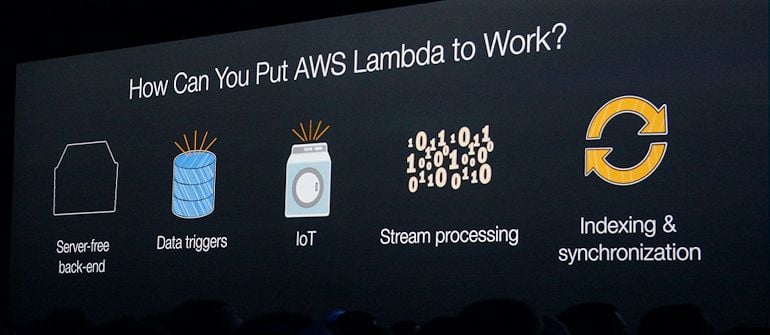
One of the highlights of AWS re:Invent, judging by the twitter stream and the points emphasized in Amazon CTO Werner Vogel’s Day 2 keynote and blog post, was the launch of Lambda.
In his blog announcing Lambda, Vogel calls the solution “the easiest way to compute in the cloud.” He goes on to describe it as both a way to run arbitrary code on AWS with complete abstraction away from the underlying infrastructure including EC2 instances, AND as a fundamentally better way to compose applications through the use of Lambda as an event-driven approach to intra-application behavior.
What struck me as interesting was Vogel calling Lambda “an event-driven computing service for dynamic applications.”
In his twitter feed, he has this to say about it:
Most heard comment at #reinvent “dude, lambda is the coolest shit, ever” http://t.co/b1DBbV8NMZ
— Werner Vogels (@Werner) November 15, 2014
So Lambda is cool, and is getting a massive amount of interest. And it has a lot to do with being event-driven.
A natural question that has arisen is could AWS Lambda be used for the automation of operations? And how does Lambda compare to the home-built scripts that are used by many operators to tie events to actions or to broader automation projects like StackStorm?
So, what is similar and what is different?
Deployment model:
The easy and obvious comparison is that scripts and projects like StackStorm or Chef for example or others are open source software used on premise or by users on their public clouds, whereas Lambda is of course an AWS service.
What events:
AWS Lambda comes already able to listen to a few different publishers of events from within AWS – “either a particular Amazon S3 bucket, Amazon DynamoDB table, or Amazon Kinesis stream.” By comparison, your own scripts or other automation software are of course completely agnostic: you can integrate with anything you want, you just need to write that software.
Scheduling:
AWS Lambda does not currently enable you to run events on a particular schedule, whereas some solutions like StackStorm come with such an ability built-in. Or you can leverage chron itself or, if you are Mesos aficionado, you might select chronos as did AirBnB for example.
What code:
Lambda today needs JavaScript / node.js; this is a real restriction however AWS says they will likely expand the range of supported software.
By comparison, Python is extremely common in home-made automation systems. Also many solutions including Ansible and StackStorm support the use of YAML to define workflows and other automation.
Method of execution: Workflow included or abstract?
Speaking of workflow, some automation solutions include workflow to tie together underlying atomic events. Like the use of YAML, workflow can simplify the process of authoring and then maintaining automation.
You could do the same with Lambda; however, it would require you to write your own workflow within JavaScript. Corner cases in workflows are unfortunately often exciting resulting in a lot of important code to write and maintain so the lack of workflow would seem to be an important difference; presumably AWS will eventually address this by integrating their own simple workflow into Lambda.
Abstraction of underlying resources:
Lambda enables you to auto scale and to not worry about what the underlying resources are when you run it: “AWS Lambda seamlessly deploys your code, does all the administration, maintenance, and security patches, and provides built-in logging and monitoring through Amazon CloudWatch.”
By comparison, scripts and other automation projects are just code. You can run them in an autoscaling group, but then you have to manage that. Lambda is also free up to a certain volume as AWS is betting on it further increasing the stickiness of your usage of AWS.
Community:
It is pretty easy to argue that open source projects have larger communities than AWS. And also easy to argue that by being dependent on AWS and Lambda you are locking yourself in ever tighter. On the other hand, Amazon continues to cut prices and their development pace is incredibly fast. I tend to believe in the power of open innovation however especially as Amazon regularly strip mines open source projects – exploiting those advances and adding their own – it could well be that Amazon is going to be able to progress at least at the pace of open source projects.
Summary:
On the whole, AWS Lambda is pretty clearly intended to be the internal wiring for AWS based software by tying together many loosely coupled services into an overall application. By comparison, automation software including your own scripts are used in operations to improve efficiency and frankly to eliminate some of the annoying manual work that otherwise would need to be done; also, home-built automations and automation projects are increasingly built to be easy to author and maintain whereas you have to be a java script coder to use Lambda; last but not least, enterprises are extremely heterogeneous so they must have a broad range of integrations available or easy to add including multiple public cloud providers and on premise technologies as well.
That’s not to say that AWS Lambda and open source automation projects will not converge. It seems likely that there is enough demand on the part of users to support multiple approaches to automation as automation is increasingly seen as one of the fundamental pillars of DevOps, along with all important cultural and skills improvements.
-
AWS Best Practices – Enterprise Perspective
Amazon AWS has changed the IaaS game for startups and growth companies. There are several practices we must acknowledge the importance of during the adoption and implementation of AWS services. Readers are more than welcome to comment, suggest modifications and even add their own little practices they follow during roll outs and implementations. As clients start piloting cloud initiatives it is best to avoid common pitfalls. The below best practices are a good first step in that effort. Below we have compiled a top ten list to be expanded in the future of best practices we have learned during our aws deployments. We look forward to expanding this list in the future.
1. Choose your VPC infrastructure carefully
a. As you move into the AWS environment often the first thing firms want to do is create a VPC, the question is what type of architecture is appropriate for you? The answer to this question is driven by the intended use case. Often internet based organizations will opt to go with a VPC containing Public and Private Subnets. Opting for this type of VPC ensures the services that don’t require direct access to the internet are in a segregated subnet while locating public services access to the public subnet.
b. Existing enterprise firms intending to burst into the cloud often don’t intend to utilize public facing services and may opt instead for private only subnet and create a secure tunnel between their enterprise and the public cloud.
c. The architecture with the greatest flexibility tends to be a public/private subnet ensuring the public subnet is available if necessary and can remain unpopulated if not needed.
2. CIDR Block Selection is driven by two realities: VPC address space is fixed and can’t be changed after it is created.
a.Ensure your VPC address space doesn’t overlap with your corporate space, for internet based firms this is less of an issue, however for enterprise firms this can prevent the need to rebuild the environment after a significant investment in time and resources
b. While AWS allows CIDR blocks to be as large as /16 don’t waste space, having several very large subnets reduces one flexibility as needs arise to support multi-AZ services, or other eventual requirements. On the other hand don’t overly constrain your environment.
3. Environment Isolation is an important consideration, the same isolation that’s present in the physical environment should be present in the cloud environment. The cloud give firms more flexibility in implementation of this isolation, in an effort to control cost, development, integration/test and production environments can be registered under separate accounts ensuring accurate billing and cost controls.
4. Security: Use security groups to isolate services and management rules
a. Separate public traffic from private using subnets
b. Create a SSH gateway as an entry point for SSH communication
c. Create a VPN tunnel for management access
5. VPC/Enterprise Integration
When integrating AWS into an existing enterprise environment planning will ensure minimal rework. Often the key consideration is assigning IP ranges to AWS that do not overlap with the corporate space. In this way routing between the corporate LAN and AWS will be seamless.
6. IAM: The primary AWS account should be treated like the traditional root user in Linux systems.
a. Create a separate account specifically for administration, with the minimum permissions necessary to perform the task at hand.
b. Create separate accounts for each user, or service to ensure audit traceablity
c. Permissions should be assigned to groups and users to the group, this will minimize duplication of effort
d. All users should utilize strong passwords, in this case refer to your corporate password policy. Cloud passwords should be as secure as the corporate infrastructure.
e. Don’t share credentials this will wreck audit traceability, and corporate policy, use roles to assign permissions.
f. Rotate credentials on a regular basis, the same way corporate credentials are rotated.
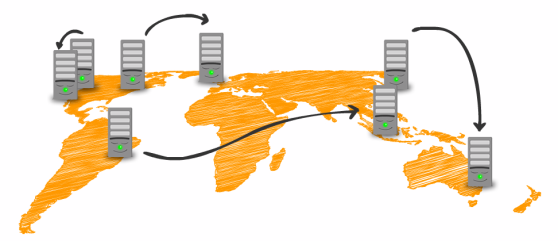
7. Disaster Recovery :Remember Disaster Recovery is designed to get backup after a failure. Traditional enterprise environments are often limited by the question do we need to building a duplicate system for recovery or can we through vendor SLAs perform a data recovery. In terms of the cloud enterprise customers are able to (at a lower cost) duplicate their environments across availability zones, regions and vendors to create an exceptionally resilient service offering.
a. Do create multiple availability zones.
b. Do use an automated CM tool to maintain your configurations
c. Do create snapshot of your volumes.
d. Do run drills to ensure everything operates as it was architected.
e. Do run drill more than once.
f. Do ensure everyone relevant is aware of the procedure
g. Do architect you environment with sufficient redundancy, to minimize the need recovery efforts.
8. Security Groups: Security Groups like traditional firewalls should be set with the least permission necessary to accomplish the mission.
a. Decide on a security group methodology; by creating groups to manage access to services ie allow access to ports 80 and 443 for nodes that will be a web server.
b. Create a ssh gateway/ Bastion node and group:
i. Only allow external SSH access to the SSH Gateway
ii.Only allow local SSH access from within a security group, or from the gateway node, this minimized an attackers ability to traverse the networks between zones.
c. Define an enterprise naming convention and stick to it.
d.Utilize the ability to assign multiple security groups to a single asset (up to 5 groups per asset).
9. Naming Conventions: AWS assets should be named in such a way they can be readily identified, a suggested standardization around the purpose of the Instance, its environment, its region, and its sequence number. An example of this might be haddop_dn_prod_usw1_001, this represents a production Hadoop data node, in the US-West 1 region.
a. When naming an AMI its a good practice to include the creation date as part of its name, and a complete description. This will minimize confusion when selecting ami for new instances.
b. When naming security groups and key pairs, continue to use the convention purpose, environment, region, function. For example db_prod_usw1_key or ws_prod_usw1_sg
10. Elastic Load Balancing: Use multiple availability zones to balance traffic in the event of an environment failure (this can still happen within the cloud)
a. Use Route53 to balance traffic between regions, this is not supported by ELB
b. Use ELBs for more than just web traffic, most any protocol can be supported by the ELB, ensure your service can support it
c. ELB timeout after 40 seconds, ensure your application touches the socket before then to prevent the session from timing out.
These are my top 10. Let me know what you think I missed.
-
Docker vs VMs
All applications have their own dependencies, which include both software and hardware resources. Docker containers bring numerous unknown tags to the chart as compared to existing technologies in use. In terms of technology, it’s quite interesting in scenarios where it helps in promoting cloud portability by running the same applications in different virtual environments. Docker is an open platform for developers, it’s a mechanism that helps in isolating the dependencies per each application by packing them into containers. Containers are scalable and safer to use and deploy as compared to previous approaches.
Virtual machines are used extensively in cloud computing. Isolation and resource control have continually been achieved through the use of virtual machines. Virtual machine loads a full OS with its own memory management and enable applications to be more efficient and secure while ensuring their high availability.
How are Docker Containers different from a Virtual Machine?
Virtual machines have a full OS with its own memory management installed with the associated overhead of virtual device drivers. In a virtual machine, valuable resources are emulated for the guest OS and hypervisor, which makes it possible to run many instances of one or more operating systems in parallel on a single machine (or host). Every guest OS runs as an individual entity from the host system.
On the other hand Docker containers are executed with the Docker engine rather than the hypervisor. Containers are therefore smaller than Virtual Machines and enable faster start up with better performance, less isolation and greater compatibility possible due to sharing of the host’s kernel.
Docker Containers versus Virtual Machines:
When it comes to comparing the two, it could be said that Docker Containers have much more potential than Virtual Machines. It’s evident as Docker Containers are able to share a single kernel and share application libraries. Containers present a lower system overhead than Virtual Machines and performance of the application inside a container is generally same or better as compared to the same application running within a Virtual Machine.
There is one key metric where Docker Containers are weaker than Virtual Machines, and that’s “Isolation”. Intel’s VT-d and VT- x technologies have provided Virtual Machines with ring-1 hardware isolation of which, it takes full advantage. It helps Virtual Machines from breaking down and interfering with each other. Docker Containers yet don’t have any hardware isolation, thus making them receptive to exploits.
As compared to virtual machines, containers can be faster and less resource heavy as long as the user is willing to stick to a single platform to provide the shared OS. A virtual machine could take up several minutes to create and launch whereas a container can be created and launched just in a few seconds. Applications contained in containers offer superior performance, compared to running the application within a virtual machine.
There is an estimation being done by Docker that application running in a container can go twice as fast as one in a virtual machine. Also, a single server can pack more than one containers as OS is not duplicated for each application.
Virtual Machines and Containers: better together
You can sometimes use a hybrid approach which uses both VM and Docker. There are also workloads which are best suited for physical hardware. If both are placed in a hybrid approach, it might lead to a better and efficient scenario. With this Hybrid setup, users can benefit from the advantages if they have workloads that fit the model.
Following are a few of them, that explain how they work together as a Hybrid:
1). Docker Containers and Virtual Machines by themselves are not sufficient to operate an application in production. So one should be considering how are the Docker Containers going to run in an enterprise data center.
2). Application probability and enabling the accordant provisioning of the application across infrastructure is provided by containers. But other operational requirements such as security, performance and capacity management and various management tool integrations are still a challenge in front of Docker Containers, thus leaving everyone in a big puzzle.
3). Security isolation can be equally achieved by both Docker Containers and Virtual Machines.
4). Docker Containers can run inside Virtual Machines though they are positioned as two separate technologies and provide them with pros like proven isolation, security properties, mobility, dynamic virtual networking, software-defined storage and massive ecosystem.
Apples to apples comparison: On a physical host with a certain configuration and Virtual Machines with the same configuration running an identical running same number of docker Containers with the same performance on both?
Who wins amongst the two?
Answer to this question so far cannot be ascertained but depending upon their configurations and constraints one could say that containers are overcoming virtual machines. Application design is the one standpoint suggesting which one of the two should be chosen. If application is designed to provide scalability and high availability then containers are the best choice else application can be placed in a virtual machine, though Docker containers have surely challenged virtualization market with containers. Well, keeping the debate aside, it is easy to say that containers in Virtual Machines are twice as robust as one without the other.
Conclusion:-
Docker Containers are transforming the DevOps (developer operations) landscape as an important tool in DevOps arsenal. The use cases for Docker Containers within the realm of DevOps are plenty. Running apps over Docker Containers and then deploying anywhere (Cloud or on-premise or any flavor of linux) is a reality now.
Working in heterogeneous environment, Virtual Machines provide high flexibility whereas Docker containers’ prime focus is on applications and their dependencies. The prime goal of the article is to compare the both on the basis of performance. Docker Containers promise to port application stacks across cloud easily by using each cloud’s Virtual Machine environment to deal with the cloud. This represents a useful capability that has to be implemented in a more complex and tedious way today without Docker Containers. Its not about abandoning Virtual Machines but to advocate in favor and design for the use of Docker Containers in addition to Virtual Machines when necessary. We don’t think Docker Containers could completely wipe out Virtual Machines.
