Category: Blogs

  • 42Crunch API Security Platform Now Available On-Premises

    42Crunch API Security Platform Now Available On-Premises

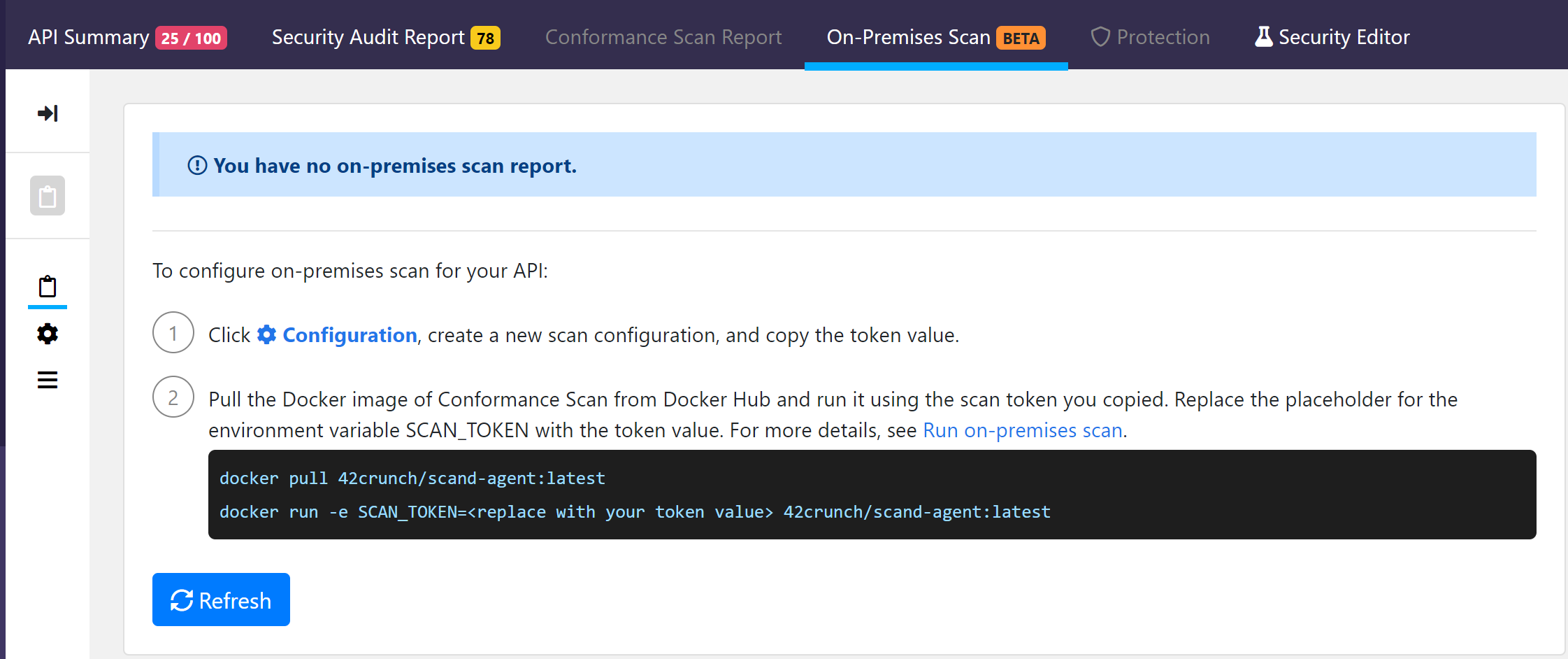
    42Crunch has announced that the scanning tools it provides to enable DevOps teams to secure application programming interfaces (APIs) can now be deployed in on-premises IT deployments.

    Previously only available as a cloud service, the 42Crunch API Security Platform has also been updated to provide expanded support for the OpenAPI specification for REST interfaces defined by the OASIS standards body.

    Finally, the 42Crunch API Security platform now allows IT teams to share collections of APIs among specific teams and users with different levels of access in addition to providing integration with third-party identity management platforms.

    Dmitry Sotnikov, chief product officer for 42Crunch, said the on-premises edition of the API scanning platform will make it possible for IT organizations, including those that require all the platforms they run to be deployed in an IT environment, to exercise more control over and extend their DevSecOps workflows to include scans of APIs.

    Cybercriminals are increasingly targeting insecure APIs because they potentially provide access to a trove of data, Sotnikov noted. Those same APIs also enable cybercriminals to compromise an entire software supply chain, Sotnikov added.

    At a time when more organizations are deploying APIs, thanks to the rise of microservices, it’s apparent there is a greater need for a tool that dynamically scans APIs for vulnerabilities before they are deployed, said Sotnikov.

    In general, Sotnikov said IT organizations are becoming more sophisticated in their approach to securing software. Ford Motor Co., for example, is using the 42Crunch API Security Platform to secure both internal and external APIs, Sotnikov said. 42Crunch claims its revenues increased 900% in 2020, with more than 150,000 users of the platform.

    As organizations of all sizes become more dependent on software, cybersecurity teams are now reviewing how that software is constructed. Of course, responsibility of security is still shifting left as part of the overall transition to DevSecOps best processes, but Sotnikov said cybersecurity teams still want to verify for themselves that whatever software is deployed is secure. IT organizations are moving away from a “whack-a-mole” approach to security as they embrace DevSecOps, Sotnikov added.

    Unfortunately, APIs don’t always receive the level of attention they deserve. Many developers still tend to view them as an afterthought, and once deployed, it’s not uncommon for APIs to languish for years without being reviewed or updated. Making sure APIs are secure requires dynamic scanning processes to be baked into DevOps workflows if organizations want to ensure the integrity of their software, said Sotnikov.

    APIs are, of course, everywhere now. The days when a handful of APIs were exposed to share data with a limited number of customers and partners are long over. There are almost no applications built and deployed today that doesn’t expose myriad APIs. Cybersecurity teams obviously can’t keep pace with the rate of change being made to those APIs, as new ones are added and others updated or replaced. The onus for securing all those APIs is, now more than ever, clearly on the DevOps team.

  • Citizen Development Program: Establishing Guardrails

    Citizen Development Program: Establishing Guardrails

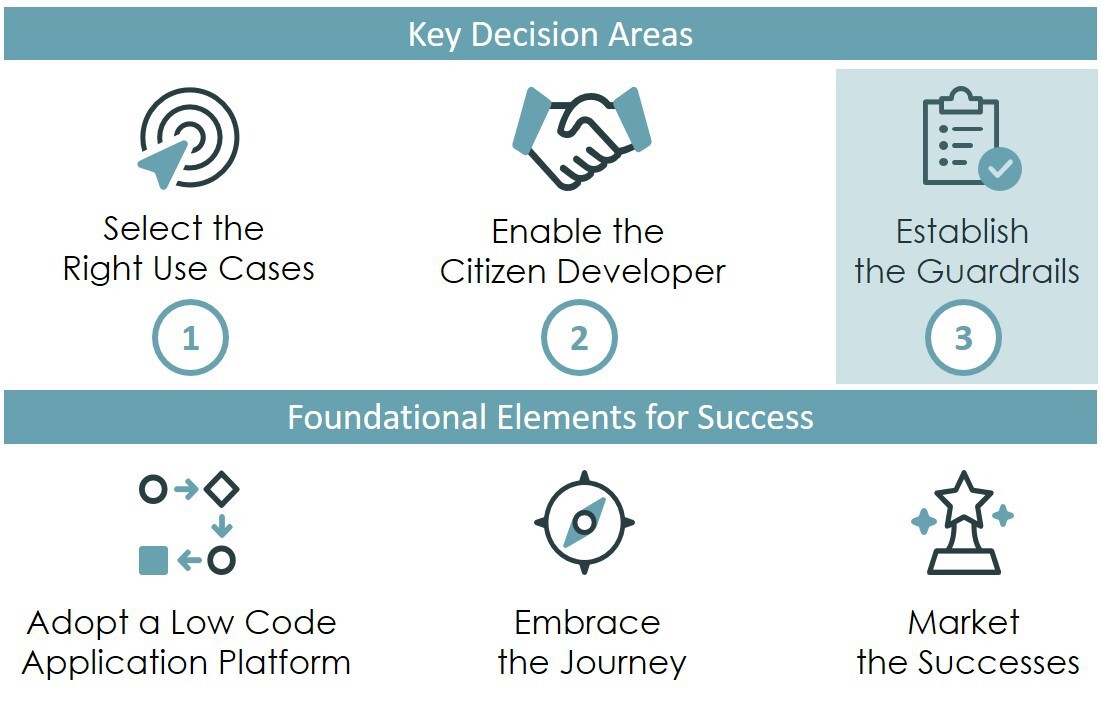
    Citizen development is as easy as one, two, three.

    1. Select the right use cases
    2. Enable the citizen developer(s)
    3. And establish the guardrails, which I will cover here.

    Of course, there is a little more to it than this. Success requires focus, planning and patience. We previously discussed, in parts one and two of the series, the discipline required around use cases and citizen developers (CDs). This third and final post covers how to establish the appropriate technical and process guardrails to ensure the wider enterprise, platform and developers are protected.

    Establishing the Guardrails

    Guardrails exist for two primary purposes: alignment and independence. Clear and concise guardrails ensure alignment across organizational objectives, company policies and disparate teams. Those same guardrails provide CDs with a degree of independence – a safe operating space where they will not be micromanaged or unnecessarily burdened by processes.
    Effective guardrails define and enforce a range of acceptable behaviors, as well as reduce risk and speed application delivery.

    While low-code application platforms (LCAPs) each have their unique capabilities and technical implementations, relevant features can be viewed in three broad categories: platform foundation security, app dev access control and development tools & processes.

    Within the context of your specific LCAP and development methodology, you need to consider and answer the following questions:

    Platform Foundation Security

    • How will you provide your CDs a “safe” environment to build and test their applications? Does your platform support separate and secure development, test and production environments? Will you put your citizen developers in their own discrete development environment?
    • Will your developers be working with data that requires encryption and/or localization? If so, does your platform support data encryption and compliance with relevant data residency laws?
    • Does your LCAP support anti-virus scanning and/or HTML sanitization, and if not, how will you prevent a CD from inadvertently putting your organization at risk?
    • What logging and auditing is required for your CD activities? Who reviews logs? How long is the information kept?
    • Does your platform support enhanced security mechanisms like two-factor authentication (2FA) or virtual private networks (VPNs)? Will citizen developers be working in areas or with applications that require enhanced security?
    • Are there other risk, compliance and security standards that your organization mandates? If so, how will you incorporate them?

    App Dev Access Control

    • How will you provision or deprovision developer and tester accounts? How will you handle developer login and authentication into the development environment?
    • Will CDs have development access to downstream environments across testing, staging and production?
    • Will you use groups to control access to applications in development, and if so, who will manage these groups?
    • Will you use roles to grant access to distinct development capabilities like tables, workflows, UIs, mobile, reporting, analytics, etc.? What determines which role(s) a citizen developer is granted?
    • Will you provide a library of pre-built application components (e.g., workflows, dashboards, virtual agents, etc.)? How will you control access to and usage of the pre-built components?
    • Will you allow citizen developers to access pre-built integrations? How will you control access to and monitor usage of those pre-built integrations?
    • Does the developer identity and access management process need to be driven by an enterprise identity provider, such as Azure Active Directory?
    • Will citizen developed applications be able to access other citizen developed applications? How will app-to-app access be controlled?

    Development Tools and Processes

    • How will you manage your demand intake process? How will you ensure that new applications do not duplicate existing application functionality? What criteria will you use to determine if an application is a good fit for a citizen developer?
    • Will you require your CDs to adhere to all, some or none of your existing development methodology? Can you explain the methodology in terms the citizen developer will understand and accept?
    • Will you require CDs to create requirements or agile stories before building an application?
    • Will you require tests be developed for CDs’ applications, and if so, can these be automated? Who will develop those tests?
    • Will you require code or application reviews of citizen developed applications? What best practices and standards will be used during those reviews? Can those reviews be automated?
    • What level of documentation, if any, will you require developers to produce?
    • How will you promote applications through the development pipeline (i.e., dev to test to prod)? Can the app promotion process be automated?
    • How will you track and manage CDs’ applications through the development pipeline and their life cycle?

    Reflections on Citizen Development Programs

    The exercise of writing this series and your feedback has encouraged me to reflect on parts one (selecting the right use cases) and two (enabling citizen developers). Here are a few final thoughts to consider:

    • Do you care that a CD builds just one app or do you want them to build more?
      Ideally, a CD continues to deliver app after app. But attrition can be high in a CD program. Therefore, if your CD built a single application that delivers business value and then returned to their “day job,” you should still celebrate that success.
    • Is citizen development better suited for creating new apps or maintaining existing apps?
      In my view, the answer is both. LCAPs provide great opportunity for CDs to prototype or even produce an MVP of an application. At the same time, LCAPs allow professional developers to build more complex applications and turn the maintenance of those applications over to CDs.
    • How many LCAPs can you reasonably expect a citizen developer to understand?
      Realistically, perhaps one, or maybe two. Keep in mind that app development is important, but having CDs focus their technology choices on a single LCAP vastly improves their chances of success.
    • Do citizen developers make good professional developers?
      Consider this – some of the best developers I have worked with do not have computer science or software engineering degrees. It’s more important that a developer has a passion for technology and, more importantly, for understanding how technology solves business problems.
    • Finally, explore and embrace citizen development before your competitors do, as the value proposition is real in this new world of work we have found ourselves in. After 30 years in enterprise IT, I can confidently say we’ve reached an inflection point in technology and business, truly democratizing application development.

    This post is the third of a three-part series from Mark Tognetti that provides real-world insights on delivering business value from citizen development initiatives.

  • Languages and DevOps: Can’t be Contained

    Languages and DevOps: Can’t be Contained

    The evolution of platform is an interesting study. From physical to virtual to cloud to containers, the progression has been steady, and each successive platform has benefits for both Dev and Ops that make them appealing. In the case of containers, portability is the word.

    As easy to fold into your DevOps toolchain as cloud, yet able to be deployed wherever you need, containers have absolutely taken the industry by storm. While all cloud vendors offer container options these days, their “value add” capabilities are thinly veiled attempts at vendor lock-in, so most organizations have avoided them.

    Development languages are as diverse as they are for physical or cloud; you can pretty much find containers hosting every language imaginable. That makes perfect sense, since one use of containers is to keep an otherwise-obsolete environment alive. That’s certainly not the primary use of containers, but it is an important one. The catch with containers is that the primary languages depend greatly on usage. A container that is persistent and intended to last months or even years will tend toward a different set of languages than one that is ephemeral and intended to last only minutes.

    The big weaknesses of containers – security, persistent storage, and management – have been addressed more and more as container usage has grown. Complexity of environments is now the big issue, but that is not inherent to containers; merely enabled by the ease with which new machines can be spun up.

    For longer-term containers, Java and C# are still the languages of choice, though others are certainly making headway. A combination of how new container technology is, and the extra layer between applications and hardware in the current popular container solutions make C/C++ less popular than on physical machines. They are still used because like other targets, containers still have operating systems that are linked to more easily in these languages.

    Shorter-lived containers tend to use languages that grew up in the Agile environment – from Python to JavaScript to Go. The ability to quickly crank out the code and get to test is useful for Agile and DevOps environments.

    Hooking into DevOps toolchains is at least as easy as it is in a cloud environment. There are even a fairly large number of companies that have moved to spinning up a container to build, then destroying it, only to do it all again on the next build. This is not mainstream yet, but the ability to completely configure the container and its loaded toolset makes it an appealing option.

    The kicker – one that cannot be overstated – is that it is simple and easy to get developers running with a copy of a complex system that once would have required several physical boxes. I, personally, have worked on a seven-plus server client system that I had a complete copy of on my (admittedly beefy) development laptop. It wasn’t the most performant, but it was enough to do unit testing.

    The security weaknesses of cloud come along with containers too – there is a lot more than just configuring an IP to directing traffic, for example – but mitigating tools and processes are available.

    This pundit truly believes that containers are the future of DevOps. They have the best of previous iterations, while offering mobility that just didn’t exist in other solutions. The ability to move an entire infrastructure from one deployment target to another (data center to cloud, for example), or from one cloud vendor to another makes this option the king for organizations that require (for business objectives, compliance or finance reasons) the ability to move their applications quickly.

    Meanwhile, rock on.

    Containers are the cutting edge of wherever it is we are headed. They are more agile than any other solution, they do not limit programming or networking options, can be run wherever the organization needs them and can be modified or redeployed easily. There is more complexity, but most of it has been obfuscated; only when things go terribly wrong is the complexity really an issue. Development for containers, with a few exceptions, is development for the target OS. That makes it easy to keep the organization’s systems preferences while enabling developers. All good. And many (I daresay most) of you are already taking advantage of them. Keep rocking it. Use what the org needs, and don’t forget to check every once in a while to make certain what is in use is what needs to be in use.

  • Red Hat Survey Reveals More Confidence in Open Source

    Red Hat Survey Reveals More Confidence in Open Source

    A recent Red Hat survey revealed how DevOps teams increasingly depend on open source to support their shift to cloud-native environments and digital transformations, and to maintain security in these highly distributed environments.

    Based on a survey of 1,250 IT professionals, Red Hat maintains that the survey respondents — from organizations that were Red Hat customers — were unaware that Red Hat sponsored the study to help avoid “biased or influenced responses,” Red Hat said in a statement. 

    During the past two years, the number of organizations that deemed open source necessary for their digital transformations increased 11% to 53%, representing the majority of the respondents’ organizations. 

    The vast majority (87%) of the respondents considered open source to be “more secure” than or “as secure” as proprietary software, while 84% indicated that enterprise open source “is a key part of my organization’s security strategy.”

    While the survey reflects open source’s importance for security for IT professionals in DevOps, its support of the overall business mission is key, as well, says Momodou Jaiteh, application security consultant at nVisium, an application security provider.

     “Information security is about reducing and mitigating risk to enterprises, from technology, people and process perspectives. It helps enable the business to operate securely in the best interest of its shareholders and customers,” Jaiteh said. “Thus, security typically plays a supporting, [but] nonetheless critical role in the success of the business, especially in a digitally connected world.” 

    Open source software often helps businesses reduce overhead cost in delivering services to their customers through reduced time to market, Jaiteh said. One major additional advantage is “visibility and input from a lot of different people,” Jaiteh added. 

    “Greater visibility often translates to more observing eyes on all aspects of the open source software, which often translates to better security. This is even better for mission-critical software that deals with sensitive information, such as cryptographic algorithms, etc.,” Jaiteh said. “It is not a surprise to see open source used more in infrastructure modernization, because as we move to DevSecOps models of software delivery, infrastructure often is the bottleneck. Therefore, solving for infrastructure helps developers focus on aspects that are unique to their business.”

    While survey respondents ranked improving collaboration between IT and business stakeholders to achieve a digital transformation as their highest priority, implementing cloud technologies or infrastructure ranked second. Infrastructure modernization is thus seen as a prerequisite for a full digital transformation, said Dirk Schrader, global vice president, security research at New Net Technologies (NNT), a cybersecurity and compliance software provider.

     “Open source plays a vital, pivotal role in almost all digital trends driving any industry sector today,” Schrader said. “Cloud computing or containerization is rooted in open source technology, many development libraries are open source, and the market for open source solutions has been a model for servitization; the changes in one’s business model away from selling a product to selling a service, or an integration of service, and product that focus on additional value-add for the customer.”

     For security, the main advantages consist of being able to review, inspect and audit “each and every piece of code,” Schrader said. 

    “The ability of open source to be a base for services makes it the natural companion for any digital initiative,” Schrader said.

  • Key NoOps Insights From DevOps Leaders

    Key NoOps Insights From DevOps Leaders

    NoOps is coming, in some form or another. Whether you have homegrown DevOps or outsourced DevOps, it’s time to realize that a simpler way is coming: NoOps automation. We spoke with a group of IT pros to get their perspective and insights, including James Rutt, CIO, The Dana Foundation; Rahul Subramaniam, CEO, DevFactory; and Mark Hahn, director of DevOps and cloud strategies, Ciber Global.

    Forrester Research defines NoOps as the goal of completely automating the deployment, monitoring and management of applications and the infrastructure on which they run.

    The next generation of PaaS platforms is evolving to meet this goal. If development teams prefer not to deal with operations or lack the necessary skill sets, they can opt into platforms that provide standardized best-in-class operations with minimal hassle. This also accelerates the evolution of their infrastructure to emerging technologies such as Kubernetes and containers. Not only that, but it can be accomplished at a fraction of the cost. However, the NoOps concept is not without its own bit of controversy.

    Insight #1: The End Goal is to Empower Development Teams

    Mark Hahn: “The differences [between DevOps and NoOps] have a lot to do with shifting left more on all of the processes. With DevOps, teams have to rely on various operations and infrastructure support services. With NoOps, the goal is to make those teams fully self-sufficient.”

    Automation is the key to this self-sufficiency. Continuous integration and deployment automation can be created and configured by the DevOps team or provided by the platform (NoOps). In either case, the end goal is to empower the team such that they can focus more on the business problem at hand than deployment.

    In a DevOps model, a few developers on the team typically manage the continuous integration pipelines and their associated deployments. This includes the creation of the application stack and subsequent updates, as well as observability and scalability mechanisms. The widespread availability of infrastructure-as-code and associated APIs has made this possible.

    NoOps platforms provide these capabilities without much additional work by developers, thus enabling application teams to accelerate their delivery velocity. This does come at the cost of some flexibility. Teams with special requirements, such as GPU-centric environments or extremely high-scale use cases, may opt to build their own infrastructure to meet their individual needs.
    Most teams don’t need the additional complexity, though, and are better served to avoid it. Applications with a user base in the low thousands will likely not need much beyond the standard configuration provided with frameworks such as Spring Boot or .Net Core. You start with just the infrastructure you need, avoid solving problems you don’t have and leverage only select offerings from cloud providers.

    Insight #2: Consistently Making the Right Infrastructure Choices is Hard

    Rahul Subramaniam: “We have far too many choices; making the right choices is extraordinarily hard. When you build a Spring Boot application, the number of deployment choices you make is ten times what it was even five years ago.”

    “I’ve seen teams that put together really large CI/CD pipelines that run thousands of builds a day. The problem is, it works for 50% of the teams really well, and the other half are struggling. For developers building Java-based systems, it works great, but those that are doing Android development, it doesn’t support mobile applications well,” added Hahn.

    The NoOps approach has a key dimension that extends beyond automation. The infrastructure landscape is continually evolving, and developers are faced with a growing array of choices as they deploy and manage applications. How can teams know which are the right tools to pick? There are too many out there to be an expert on all of them.

    Consider the area of observability, where choices range from open-source solutions such as Prometheus and Grafana to commercial offerings such as Dynatrace and DataDog. Is the extra value added by the commercial offerings worth it? Is it a requirement for your application?

    It can be difficult to say, upfront. Oftentimes, the best way to learn how to operate your service is to operate your service. Starting with an opinionated, bundled solution gets you started quickly and puts you in a position where you can learn those lessons. With NoOps, the infrastructure arrives ready-to-go, right out of the box. You can focus on your core business function and not worry about the deployment mechanism. This shrinks the surface area where errors may occur, and improves the efficiency of development teams. From a management perspective, the reduced cost is also quite appealing.

    Mark Hahn offered a different perspective on this topic. He noted that if there is one opinionated CI/CD framework, it may suit some teams well but not the others. Teams that develop various components may have different requirements; thus, they may need the option to build their own pipelines. This is a consideration to keep in mind as organizations seek to adopt the NoOps philosophy.

    Insight #3: Evolve from NoOps to DevOps, Instead of the Reverse

    James Rutt: “There is a broad assumption that DevOps is mature, whereas in most shops, they feel mature in some areas of the value stream but not necessarily in the synchronization of all the tools. Now, we are talking about another quantum leap into NoOps. Do you think we are jumping ahead too quickly?”

    DevOps and NoOps represent a spectrum, rather than a conflict where one wins over the other. Many applications don’t need a highly engineered infrastructure, as opposed to companies like Amazon and Netflix who require it. Thus, don’t over-architect solutions until the time where you need to. Grow into DevOps when it becomes a business priority for you. For Amazon, it is a business priority to manage that infrastructure. For you, it may not be.

    Subramaniam made the point that teams should actually begin with the NoOps approach as the default. Look for NoOps solutions out there to quickly get started, and at some point, you may need to manage that infrastructure yourself as your business grows or requires it.

    Another consideration is that not all organizations are at the point where developers can make choices independently. You always want the business and technology groups to be in alignment. This is where more traditional processes fall into place. Further, DevOps teams typically place numerous checks and balances in their systems. For example, custom pipelines enable reconciliations and cross-checks to make sure the data being operated on is correct and accurate.

    Insight #4: NoOps Platforms vary by Cloud Provider

    For developers running on Google’s cloud, App Engine “lets app developers build scalable web and mobile back ends in any programming language on a fully managed serverless platform.” Teams running on AWS can use Engine Yard Kontainers from DevGraph to “deploy apps in one click directly from your Git repo.” There is also AWS Elastic Beanstalk, which bills itself as “an easy-to-use service for deploying and scaling web applications and services” on one of their supported technology stacks.

    Regardless of DevOps versus NoOps, our interviewees agreed that development teams need to be empowered. Gone are the days where you can afford to spend time on undifferentiated activities or wait on dependent service teams. Focus on the business value from day one, make it observable and use the platform that best enables you to accomplish that goal.

  • The Surprising Secret to DevOps ROI

    The Surprising Secret to DevOps ROI

    As a result of my many years of DevOps consulting, I have discovered a simple, but not well-understood, secret ingredient that drives ROI for all the Three Ways of DevOps.

    Measuring and optimizing return on investment (ROI) for DevOps is not well-understood. It is a proven fact that DevOps, when engineered well, delivers tremendous value to organizations by way of continuous delivery practices. Reduced lead time, more frequent releases, lower failure rates and faster time to restore services are well-accepted indicators of DevOps value. It is not a secret that the combination of engineering DevOps practices for people, processes, and technologies around the Three Ways of DevOps – continuous flow, continuous feedback and continuous improvement – gets results. As valuable as these things are, they are not a measure of ROI, and do not tell you what to do to improve the return on your DevOps investments.

    How Do You Calculate and Optimize DevOps ROI?

    First, it is important to understand that ROI for DevOps is best measured using a simple ratio of return (R) divided by investment (I). (OK – for the accounting purists out there; I know the real ROI formula is actually (((R-I)/I)*100%) but that is a technicality that we don’t need for this argument.)

    The “return” of DevOps value is the important factor in the numerator of the ROI ratio. While there are many values that can be attributed to DevOps, the most direct value that can be measured and justified for legitimate comparison purposes is the cost savings associated with accelerating software delivery value streams. Application developers, and others, can get more applications released faster because of DevOps, which has a dramatic effect on valuable cost reductions. The “investment” in DevOps projects is the denominator of the ROI ratio. To optimize ROI, simply increase return by getting more application releases out faster, while reducing the investment required for a DevOps project. Sounds easy enough. But wait! How do you do that?

    The primary factor in the return is derived from reducing bottlenecks. I have found, in more than half of the thousands of DevOps value streams I’ve studied, that the biggest bottleneck is testing! It is a myth that continuous testing is just the execution of automated tests. I am talking about the whole range of ‘testing things,’ including test strategy, test planning, test resource scheduling, test design, test implementation, test environment management, test execution, test results reporting, test result analysis, troubleshooting, fix, retest and test management. That is a lot! In fact, testing things are a source of bottlenecks for every stage of a DevOps pipeline, for all three ways of DevOps. The point is that ROI can be greatly improved by improving testing.

    As it turns out, the primary factor in reducing investment costs also has to do with testing! Putting ‘testing things’ in place is expensive in terms of labor and capital costs for both people and systems. The primary factor to reduce total investment cost is to standardize, share and use ‘testing things’ with as many application pipelines and stages as possible.

    What is the secret ingredient that I have discovered? After all, the importance of testing itself is not much of a secret. I have isolated the key ingredient that is the heart of all ‘testing things.’ The purpose of a test is to determine a verdict. A test verdict is the codified representation of a pass, fail or inconclusive result state of a test, assessed relative to the purpose of the test. Test verdicts are essential, no matter what kind of test it is; no matter the stage in the pipeline a test is used. Without a verdict, all the ‘testing things’ in the world are not valuable.

    So – the secret ingredient for optimizing DevOps ROI is to optimize test verdicts. Those that know how to optimize test verdicts hold the key to optimizing DevOps ROI.

    As I indicated in this eBook I authored for the DevOps Institute, verdicts from properly engineered testing at each stage in the pipeline are essential for assessing the artifacts produced in each stage.

    How Can You Optimize Test Verdicts?

    As I have pointed out in prior articles, well-engineered DevOps requires balancing the nine pillars of DevOps.
    Surprisingly, test verdicts play a crucial role in optimizing all nine pillars of DevOps, and are vital to accomplishing the best return for the least cost investment in DevOps. Here are some examples of how this works for each pillar:

    Leadership – Leaders tend to underestimate the importance that ‘testing things’ have on DevOps ROI, and that the central ingredient of test effectiveness is the optimization of test verdicts. By sponsoring DevOps projects and training programs that drive improved test verdicts, leaders will have a direct and lasting impact on ROI.

    Collaborative Culture – How often have you seen people wasting time arguing over the meaning and importance of a test? Collaboration between application developers and QA and Ops teams is more effective when test verdicts are clear and based on a common understanding of the purpose and importance of each test.

    Design – The creation of excellent tests, designed to efficiently resolve to clear verdicts during the design phase, makes for reusable test assets in all subsequent stages and releases, and can be reused with other applications.

    Continuous Integration – The validation of builds is faster when all integration tests are arranged to get clear verdicts quickly during the build process.

    Continuous Testing – Test verdicts associated with each test are the key information ingredient that test management systems can key off to optimize test selection and test execution for each stage in the continuous delivery pipeline.

    Elastic Infrastructure – Test environment management (TEM) systems can optimize the orchestration of test resources better when test verdicts are clearly understood. Knowing a history of verdicts for a group of tests indicate which resources and how much of each resource are needed to run each test. This knowledge is essential to drive test environment management systems that have scaling algorithms for optimizing the use of ephemeral test environments, and to ensure test resources are used optimally.

    Continuous Monitoring – Reporting and analysis of test results can be a major bottleneck in the pipeline, but can be dramatically accelerated when the test verdicts are clearly defined.

    Continuous Security – Security tests are not much use without a clear verdict. While there is no such thing as 100% security assurance, the aggregate set of security test verdicts helps to profile security for applications and releases.

    Continuous Delivery – Algorithms that govern the ‘doneness’ of an application release candidate, and decisions to promote a release to production, depend on analysis of service level objectives (SLOs) derived from service level indicators (SLIs), including test verdicts. The fidelity and quality of those verdicts is essential for operations and site reliability engineering (SRE) teams to be confident enough to not bottleneck an application release.

    What This Means

    Measuring and optimizing DevOps ROI requires strategies that deliver value by improving returns through reducing bottlenecks and reducing investment costs. ‘Testing things’ are a dominant factor contributing dramatically to both the return and investment components of the ROI equation. A comprehensive strategy for optimizing test verdicts is the secret ingredient for optimizing and leveraging investment in ‘testing things,’ which, in turn, has a dramatic effect on improving DevOps ROI.

  • Linux Foundation Takes Control Of AsyncAPI Specification

    Linux Foundation Takes Control Of AsyncAPI Specification

    The Linux Foundation announced today that it now plays host to an AsyncAPI Initiative that has developed a specification and a suite of open source tools for asynchronous application programming interfaces (APIs) and event-driven architectures.

    Founding sponsors of the AsyncAPI Initiative include Ably Realtime, Apideck, Bump, IQVIA Technologies, Slack, Solace and TIBCO. Most recently, Postman, a provider of API management tools, committed to providing engineering resources to the project as well.

    AsyncAPI provides a language for describing the interface of event-driven systems, regardless of the underlying technology, and supports the full development cycle of event-driven architecture. That approach helps unify documentation automation and code generation, as well as managing, testing and monitoring asynchronous APIs.

    Chris Aniszczyk, CTO and vice president for developer relations at the Linux Foundation, said the Linux Foundation will work with the member organizations to facilitate a governing framework similar to the frameworks other open source projects have adopted under its auspices.

    In general, reliance on event-driven architectures is on the rise thanks, in part, to the rise of digital business process initiatives that require the processing and sharing of data across multiple platforms in near-real-time. The AsyncAPI Initiative makes it simpler for disparate event-driven platforms to be integrated. It’s unlikely multiple organizations involved in a digital business initiative are ever going to standardize on the same event-driven platform, so an AsyncAPI specification provides a critical linchpin.

    Usage of the AsyncAPI Initiative is already fairly widespread, with Adidas, PayPal, Salesforce, SAP and Slack all employing it in production environments. In fact, the Linux Foundation cited research that identified AsyncAPI as the fastest-growing specification being implemented by developers, after seeing adoption rates in production environments triple from 2019 to 2020.

    Event-driven IT architectures have, of course, been around for decades. However, as they have gained traction in the modern era of software development, the need for the equivalent of a REST API for asynchronous communications between platforms, based on different event-driven architectures, became apparent. The AsyncAPI doesn’t replace the need for other types of API specifications, but Aniszczyk noted that, over time, it will soon player a larger role, especially as cloud-native application environments become more distributed and the number of use cases that can’t be addressed using traditional batch-oriented techniques continues to rise.

    In the meantime, the number of providers of event-driven platforms based on proprietary architectures spans vendors ranging from Oracle and IBM to cloud service providers such as Amazon Web Services (AWS). At the same time, open source messaging platforms such as Apache Kafka are starting to have a significant impact on how IT teams build their own event-driven platforms.

    The level of enthusiasm for an API specification that makes all those platforms more interoperable than they would otherwise be is unclear. However, as modern IT platforms continue to evolve, more IT teams are becoming aware of the crucial role API specifications play in preventing them from becoming locked into one platform.

  • CircleCI Previews Support for Arm Platforms

    CircleCI Previews Support for Arm Platforms

    CircleCI today previewed the ability to deploy applications on platforms based on Arm processors in a forthcoming release of its namesake continuous integration/continuous delivery (CI/CD) platform.

    Tom Trahan, vice president of business development for CircleCI, said that Arm processors are rapidly being embraced by DevOps teams seeking to take advantage of the price/performance advantages they currently have over conventional x86 processors. Amazon Web Services (AWS), for example, makes available an AWS Graviton2 service based on 64-bit Arm Neoverse processors that it claims provides a 40% advantage in overall price/performance.

    The Arm community, meanwhile, has adopted many of the libraries employed on x86 platforms, Trahan noted, which is making it simpler to automate the deployment of applications on Arm-based platforms using a CI/CD platform.

    It’s not clear how quickly developers are building applications for Arm processors. Historically, Arm processors can be found in a wide range of embedded systems typically deployed at the network edge. However, cloud services based on Arm processors are also becoming more widely available, and it’s only a matter of time before more Arm-based platforms are deployed in on-premises IT environments.

    Arm itself is also in the process of being acquired by Nvidia, which envisions running machine learning algorithms, and other classed of advanced workloads, on both Arm processors and graphics processing units (GPUs). Many of the early efforts to build processors optimized for running AI workloads at the network edge are based on Arm processors.

    The addition of Arm platforms to any IT environment will naturally create some management challenges for DevOps teams. In some cases, developers may even decide to build applications using, for example, the latest generation of machines from Apple, that are based on Arm processors, to streamline the application development and deployment process. In other cases, however, applications that are intended to be deployed on Arm processors might still be built on x86 systems.

    Regardless of approach, the arrival of more Arm-based platforms in the enterprise doesn’t mean other classes of processors are going to fade away. Rather, from a processor perspective, IT environments are about to become a lot more diverse as more workloads are deployed on a wider range of processors. It may be quite a while before Arm-based platforms usurp x86-based systems that still dominate the IT landscape. However, during any turbulent economic time, the number of organizations inclined to reduce the total cost of IT by embracing new platforms always increases.

    Fortunately, as more IT infrastructure is managed as code, the easier it becomes to switch platforms. There may even come a day when the decisions about which platform to employ and when is completely automated by machine learning algorithms trained to maximize IT infrastructure efficiency to the fullest extent possible.

    In the meantime, DevOps teams should expect, to one degree or another, to revisit their workflows processes in the months ahead. Not only are more workloads being pushed out to edge computing platforms where Arm processors are commonly found, those Arm processors will soon find their way into the rest of the extended enterprise.

  • EP 8: Testing Is Not a Monolith

    EP 8: Testing Is Not a Monolith

    With DevOps comes implementation of CI/CD, automation and testing. Is this sufficient to achieve “shift left testing”? Or does testing need to shift further left? Do we need new or additional tests for acceptance (ATDD) or behavioral testing (BDD)?

    In this episode of DevOps Unbound, we are joined by Christine Fisher of NAIC, Leandro Melendez (aka Señor Performo) of Qualitest, Ken Pugh of Ken Pugh Inc., and Mitch Ashley of Accelerated Strategies Group to explore the state of testing in DevOps and CI/CD pipelines, and where testing can evolve to keep pace with software development and delivery.

    The video is immediately below, followed by the transcript of the conversation. Enjoy!

    Transcript

    Alan Shimel: Hey, everyone. Thanks for joining us on another edition of DevOps Unbound. We have a really great DevOps Unbound topic to explore today, and that is that testing is not a monolith. A lot of people, especially people who aren’t familiar with testing, just say testing—QA, testing—and we think of, oh, it’s a test. And we know there’s different kinds of tests, but do we really know all the different kinds of tests that need to be done, as we’re developing and deploying and managing and monitoring software applications and so forth? I don’t think so. 

    I think, really, we could cater this show to those of you out there who do know, but I think today, we want to talk a little bit to those who don’t know as well and let’s try to get you educated on what some of the various aspects of testing are that you may not be familiar with. They’re important, nevertheless, and how they influence what you see and the apps you use and what we may see going forward.

    I’ve got a great panel to introduce you to today. I’m gonna allow them each to introduce themselves. Let me first start off with Leandro Melendez, I can’t say it with that Spanish roll of the tongue that you can, Leandro, I apologize. And Leandro is known in the industry as well as a name—I’m gonna let, I don’t wanna steal your thunder. Leandro, introduce yourself.

    Leandro Melendez: Thank you very much, and don’t worry, you made a great pronunciation of my name, way better than what I’m used to, so that was pretty good.

    Shimel: Okay.

    Melendez: Yeah, repeating, I’m Leandro Melendez, a performance test manager from Qualitest Group, and as well, I’m known on the internets as Señor Performo, as you all said, Performo with strong R’s.

    And well, we provide several services to—my specialty is performance testing, integrating it right now with full continuous integration DevOps and agile methodologies. But as well—and you mentioned it very well earlier—it starts to permeate in other areas of testing when you start to do it holistically and at a large scale, and thinking on all of the steps on the SDLC. So, we will talk a little bit more about it.

    The last thing about me, as I said, Señor Performo, on the internets, I have a YouTube channel, I try to help educate people on especially performance testing, but anything that concerns testing and methodologies, agile, DevOps, and all that, I’m very happy to help provide information as well as hear whoever gives me a chance to speak and share the knowledge, I’m very happy to.

    Shimel: We’re honored to have you here, Leandro, thank you. Next, we’re gonna introduce Ken Pugh. Ken is—well, Ken, you introduce yourself. Go ahead, I’m sorry.

    Ken Pugh: That’s okay. Hi, I’m Ken Pugh. I’ve been in the programming software development field for about two-fifths of a century, and in agile for about a fifth of a century, and doing everything from gathering requirements to final testing.

    I’ve got a book out called “Lean-Agile Acceptance Test-Driven Development: Better Software Through Collaboration,” and I’ve been teaching, training, and emphasizing acceptance test-driven development-slash-behavior driven development for the past 15 years.

    Shimel: Fantastic. And for our fraction challenged friends in the audience, a fifth of a century is about 20 years, so that’ll give you a little idea.

    Next up, we have Christine Fisher. Christine, welcome, introduce yourself, please.

    Christine Fisher: Thank you. My name is Christine Fisher, I manage a team of BAs, QAs, and UX at the National Association of Insurance Commissioners. My team and I have been on a journey with behavior-driven development over the last two and a half years, and as we get ready to talk about testing here, my big secret is, I’ve actually never been a tester, I just have managed some. But with our jump into DevOps, I felt very strongly about advocating for what our role should be and how the work should change to keep up with the other changes that were happening with DevOps, which helped lead us to BDD.

    Shimel: Fantastic. Pre-COVID times, we’d say, “But I did stay in a Holiday Inn Express last night,” but we can’t even say that any more.

    Last but not least is my co-host and anchor on our show, Mitchell Ashley. Mitchell, why don’t you—quick introduction?

    Mitch Ashley: I don’t know what fractions I’ve worked, but I do know that I used that joke last night and my family had never heard it, so—so much for the Holiday Inn Express joke. [Laughter] 

    But, no, I’m an old software person, started in software, and have done lots of things around both cloud as well as, I’ve also been on the vendor side, so network security and SaaS services. So, testing people are some of the most unique and, in my world, beloved people, because those are the folks I really look to to say, “How are we doing? Where are we?” And I think even more so in the DevOps time, so I’m excited to explore this with you all. So, thanks for joining us.

    Shimel: Fantastic. So, first of all, let’s assume that our whole audience aren’t test experts, they’re more DevOps generalists, there’s a good smattering of cybersecurity folks, cloud native, infrastructure, ops, and we’re throwing out some ADD—behavior-driven, BDD—you know that they may not be familiar with.

    So, why don’t we do a quick kinda definition? And we’re gonna ask the non-tester, if you will, Christine, if you wouldn’t mind leading off with what are these references we’ve made to these types of testing?

    Fisher: Sure. So, when we’re talking about behavior-driven development, we’re talking about understanding the behavior of the end user and understanding what the workflows are, why they are trying to accomplish that task, and working on testing, understanding the requirements, testing those requirements in that way, not just writing a requirement, developing a requirement, testing a requirement without any true understanding of what the person who’s going to use the software on the end does.

    And when I talk about not being a tester, more on the functional side with requirements as a BA, things like that, that was always the interesting part to me. And then sometimes, we would test something and it would be tested correctly, but we still missed the mark. And so, having the whole team understand what the end user wants to do, putting it in the common language, that’s really important for behavior-driven development.

    Shimel: Agreed, agreed. Ken, do you want to add anything?

    Pugh: Yeah. So, one of the big things in behavior-driven development or acceptance test driven development is having the triad, and Christine sort of made a reference to it. The customer, developer, and tester get together prior to implementation, create the scenarios, the scenarios become the tests, and the developers are given those tests to run against their code, and those tests are the agreed upon, shared understanding of how the system should work.

    Shimel: Got it. Señor Performo—is that correct, yeah? Sí?

    Melendez: Very well said, yeah. [Laughter]

    Shimel: Señor Performo, how does acceptance-driven, behavior-driven development figure into your performance testing kind of regimen, if you will?

    Melendez: Well, as I mentioned earlier, these type of concepts permeate in all the testing practices, if I could say, and very well as it was said here, I like to call it the three amigos, that you put them together and even before you start rolling anything, drafting anything, you get the requirements well together with what you are going to be testing and what has to be marked as passed before you even—or a developer—can mark a task as completed. And I might have said it wrong, a developer, because in general, you’re supposed to be a team, and everyone is responsible for each element.

    And this comes together with performance metrics, where, in general, most of the people, when they think about performance, their mind goes right away to load tests, when I have to put hundreds of users to slam a system, where, if you see it from the beginning as well as some of these requirements when you generate them that, I don’t know, I’ll give an example, that the text field has to just allow a certain given of characters or be this color, rounded—little definitions like that, it should have included performance metrics as well inside of it. So that, when you are generating any piece of software or functionality, it’s measured there and then. 

    I have to say it’s an issue that I found often in the old waterfall days. I would arrive to do a load test after six months of development and start to automate some things that I’m like—this, hey, everybody, this is visibly slow. Just, I’m a single guy. I don’t need to load test it, why no one caught this before? 

    And those are the most general problems, in terms—I think, as well, in functionality, some things that come from even unit tests, low level tiers where you could catch many of those bugs and performance SLIs that are not met and that’s how it integrates a lot with performance. I always preach that you need to start to think about it as early as possible. And as Christine mentioned, getting the people together, what are the goals, what is the user gonna require, and what are the tasks? Because not everything should respond super fast and not everything should or can have a good response. I mean, we all wish that a—I don’t know, monthly billing period can be closed in three seconds, but that’s just for that response time from a click.

    So, we need to filter that out depending on what is the user needing, willing to endure, to call it in a way, and put it together, and this permeates as well. It’s some sort of functionality like—yeah, I need this to respond in this period of time for me to be comfortable using it, for it to be useful, functional.

    Shimel: Comments, thoughts from the team?

    Pugh: So, as you were mentioning that, I don’t know if you’re familiar with healthcare.gov.

    Melendez: [Laughter] Oh, yeah.

    Pugh: I think they should’ve had a few performance tests done well before they released it. It seems like—I don’t know, that it was like, maybe the day before, they went, “I guess we’re gonna have a lot of people on this.” [Laughter] 

    Melendez: Yeah, and I think, and to paint and explain what I was saying, with a single element that doesn’t perform well, that doesn’t work well, even from the initial tier, they should have created these requirements, saying, I don’t know, “When I log in and enroll, healthcare starts the process when I click this. It should respond this fast, it should not do, I don’t know, this many full table scans, connections to the database,” things that you can go way, way low level in the IT tier, and others and it’s just like, “Yeah, the user should not wait more than five seconds on that click”—a single user, one person.

    I am almost sure that most of the problems that they had was that they didn’t start to tune that, and they allowed the developers to check in all that awesome code, to call it euphemistically. And that’s when you start to scale up problematic things is when everything derails. And yeah, healthcare.gov, aside from not doing good load testing, they had multiple issues at the single piece level, and that’s where it is, push it left. Start to think at a unit level, single item requirements, when you have the three amigos together talking about these things, take everything into account and don’t let your little Post-its to be marked as done and move to the next area of your board without covering some of those basic requirements, which most people doesn’t think about or include them. Or whenever, and this is a little biddity or tiddity, when the developer is working on it, should have in mind all those requirements—functional, performance, security. 

    And that’s where I say, all this permeates to all the testing areas and other metrics when other areas of testing are doing their tests—manual, functional, automated, even security—my goal is to start to gather performance metrics so that everything happens together and we don’t have to wait until the end for big load tests to figure out that healthcare.gov will have what happened, sadly. [Laughter] 

    Pugh: So actually [Cross talk]—no, so, actually, you were talking about something that I’ve, in fact, I’ve done a few blogs on this, but it’s been around for a while is the testing matrix. I.e., that shows, since we’re talking about testing and it’s not just about functionality, it describes all the different sorts of tests, from the functionality tests which are on one side of the matrix, to the quality tests which are on the other side, including performance, security, usability and so forth. And that you’re testing—I mean, ATDD and BDD tend to concentrate on the functionality, because we’re gonna be talking with the customers, that’s what you want.

    But you ought to have all those other tests, the performance tests as you were mentioning, already established ahead of time—100,000 users, how fast should it be, and so forth. Oh, and in fact, just the usability you were talking about—how long should it be after I click that I get to the next page? And those things could be established ahead of time, and if a developer goes up and it’s not meeting it, he knows to fix it. That’s, we don’t have to—

    Melendez: And I would say here, not only established, but worked on from day one. Because as you mentioned, even some usability, security—those are to be checked when everything is assembled, and there are many techniques that we can start to embrace, starting out with automations at different tiers.

    As I said, I’m a big proponent or supporter of—yes, have unit testing, automated everywhere, have the coverage according to the pyramid. Don’t focus so much on manual, front end, or after the fact, leaving everything for the second Friday of the sprint when everyone wants to leave and here, tester, there you go—start our meeting. That’s where everyone has to start to work together and pushing it left.

    Since day one, start thinking about performance, security, functionals. And even some have told me, “Yeah, but there are things that, as you said, usability, that cannot be done until the end.” Well, you can start creating mocks, you can start figuring how things should work and start to work them. And, again, I think the mindset of keeping testing phased, waterfall ways—we need to start to work everything on par and get it rolling, yeah, I totally agree.

    Fisher: I’d like to speak to that point a little bit with DevOps and with the testing. We’ve been talking about a team and we’ve been talking about getting people involved, and what I was seeing in my organization when we first started talking about DevOps is, everybody is an engineer. We can all do these jobs, things like that, right? And jobs might change, there’s room for everybody, but what you’re doing might change a little bit. But that can be really scary to hear, and especially if you are a manual tester who really doesn’t have an inclination or desire to learn automation—and that’s okay. Like, that’s a different conversation, but I am always a proponent of manual testers.

    So, one of the reasons that really pushed me toward that is hearing that conversation, seeing people on my team being told that their job might change, but we don’t know how, you’re an engineer, you can do what everybody else on this team does, but that’s not true. Not everybody has those skills.

    And so, making sure that the team is involved, and when you can have these conversations, BDD, all of these things that we’re talking about now, right, are getting the testers involved in the conversation earlier, and that makes them part of the team. And we have taken our BAs, we’ve taken manual QA, we’ve taken our automation QA—we get them all involved in that conversation. We make sure the developers know where they are in the process, we make sure the developers are adding to the conversation and part of that process.

    And it was really important to me in that DevOps environment to get out in front of that and help define that role when somebody is saying, “We don’t”—you know, again, your role might change, but we’re not quite sure how—I wanted to help my team define that and put us in a good position so we weren’t just sitting there to have, God forbid, a developer come down a few years later and tell us, “No, you do it like this.” We wanted to put ourselves into that position and having those conversations, I think, is such an important part of that and changes some of that dialogue a little bit about we can all do the job. We can’t, but we all have important jobs to do to make it work.

    Ashley: You know, Christine, I think about just an analogy—robotics for surgery. I still want that doctor in there guiding what’s happening, right? We don’t need any bad things happening. [Laughter] Well, same with software. You know, some of the worst folks at testing software are developers, right? You’re just too close to it, even if you’re writing the automated tests.

    To your point, and I think several of you have made this, is, it’s an opportunity for us to (a) collaborate much more closely together rather than testing to be the thing right before documentation at the very, very, very end of the release, right, which is what it used to be. But also, what do we automate? It doesn’t help to automate the wrong tests—let’s get the right things in there. And where is the user in, the customer in performance, in functionality, in speed?

    By the way, one of the things that kind of baffled some development teams is when I would say, “Speed is quality.” They’re like, “What do you mean, speed is quality?” I’m like—well, if Netflix takes three seconds to start your video, okay, that’s good. If it’s pausing for three seconds every five minutes, that’s bad, right?

    So, speed makes a difference in terms of the perception of the experience. So, it is really kind of a harmonious effort where we have to bring all of that together.

    Melendez: And now that you mention it, I’m gonna play a little bit devil’s advocate towards and against at the same time manual. Some forums that I participate in here in Mexico talk about that a lot, like—hey, too much automation. Are we manual testers gonna be out of a job and the machines will replace us, and all those paranoid ways of speaking.

    And I generally explain to them with analogies—I like, a lot, to use analogies. In New York City, before there were any automobiles, cars, there were lots of horses, and horses produce a lot of stuff that was dropped on the streets, and there was a job needed for that, to pick up some of the horse. And I’m sorry if this is an analogy of manual to what the horse produces, but the point that I’m trying to do is that once cars became available, that job decreased considerably. But we still have places where there’s people that work with the horses, maintain them, brush them, and do all those tasks which, as many cars as we may have, we won’t ever have a horse polishing machine or anything like that. There are things that, truly, a human being is the only person that can do it really well—manual testers are very good for those tasks.

    I think, on the other hand, there are too many things that are tried to be done with manual testing. I have seen in many organizations that there are tasks and tests that could be pushed left, that could be started to be done before automated programmatically and leave whatever is truly necessary and where the manual testers are going to be the rock stars and the only ways to do it allow them to.

    So, I think—yes, I would suggest most manual testers to start to pick up a little bit on technical and developing, yadda yadda. I think in the modern days and the upcoming times, everyone should know some sort of development, that should be in schools. And we’re moving into a technological world at a pace that whoever doesn’t pick it up might be a bit handicapped. But, on the other hand, the skills of a good manual testers, when you have that clinical eye to say, “Hey, I see the error” or you don’t even have to touch the application; let’s say, most probably, it accepts fields that it shouldn’t in that field. And most of the times they are right, and you need that input.

    So, on both sides, they won’t be replaced, but they should get used to using the tools as they are. Technology is not here to replace them but to empower them, and they should be able to use it, I think.

    Fisher: Skills can be—excuse me. Skills can be enhanced, absolutely, and I agree with what you say. Nobody wants another meeting on their schedule, but on my team, we have added what we call a test strategy meeting and we get  the BA and the manual and the automation QAs in the room and we talk about each of our stories, and should we automate it, what are we looking for manually? And they took that further than when we first started, and they came up with a scoring guide to say, you know, what is our level of effort with this, what’s the repeatability for the user?

    Those types of things, and they’ve realized that those conversations are so important and you’re exactly right—the manual testers aren’t doing the same job, but now that we’re able to really give them the time to pull those skills out, the critical thinking and what you were mentioning, you know, looking at this field, we are getting so much more quality from our tests, from both sides, and it’s really been a fantastic change.

    Melendez: Yeah, that’s great, and optimizing and, in a way, calling it where you get the best bang for your buck, where to use those efforts, how to use them, prioritizing. And even some things that—hey, this is not a big impact if we get a defect here, we won’t even pay attention to it manually, whoever made it, or some others that this is critical if we get a problem that has to be done manually with two pairs of human eyes, capable eyes, to identify it, or we can let the machine do it.

    I mean, there are balancing on testing, and I think falling into the cognition mental fallacy of, it’s called man with a hammer—someone learns how to use a hammer well and will see nails everywhere and try to hammer them. There are multiple other tools that we can use when it’s needed, when it’s more optimal, and I think it’s, as you say, prioritize, distribute, and make the best effort with each one of them.

    Pugh: So, just getting into that, one of the things in the matrix and one thing I always suggest is that exploratory testing. You take your manual testers and turn them into exploratory testers—finding those things that the functionality tests are not gonna cover.

    I always give an example, for those who don’t know exploratory testing, of—you’re on the web, you’re ordering an item. You press the submit button and the screen comes up and says, “Do not hit the back button. Do not refresh this page.” And the exploratory tester goes, “Yeah, back, forward, back, forward, refresh, refresh—maybe I’ll get it for free. I don’t know!”

    Ashley: [Laughter]

    Pugh: There’s no way of telling. [Laughter]

    Shimel: We live for those moments—we get it.

    Pugh: [Laughter] 

    Ashley: Yeah, don’t make any buttons red, they’ll be pressed, for sure.

    Shimel: Right, yeah. But let me kinda take our conversation a little bit of a way, here. You know, we’re 25, 30 minutes in. We haven’t spoken a lot about DevOps, which is interesting, right? Especially in light of our original conversation off camera.

    You know, when we talk about behavioral-driven testing and ADD testing and performance testing, these testing disciplines all existed before DevOps, right? Ken, you’re doing them for a fifth of a century or more, right?

    Pugh: [Laughter] 

    Shimel: That certainly predates what we call DevOps. And I was here when I started DevOps.com back in 2013-’14. There were a lot of testers who were running around like, you know, Henny Penny, “The sky is falling,” that they were gonna be out of a job, they were gonna be obsolete overnight. And, of course, that hasn’t happened.

    Christine, you said that DevOps was kind of a driving factor in why you took the baton, here, why you took this position, why you feel it’s important. I’d like to bring it back, our conversation, a little bit to DevOps. How has DevOps changed BDD, ADD, right? Automation? Absolutely, right, but automation is not necessarily DevOps, right? We automated. We’ve mentioned a little shift left, you know, pushing it further, not pushing it further on the developers’ shoulders, because as, Ken, you said, we don’t meet the new boss same as the old boss, right? We don’t need that. 

    But how can we be more efficient, better at testing? Is it just a matter of automation, or is there something else there? Christine, I’m gonna ask you first, because it’s something that I think is near and dear to your mission.

    Fisher: Sure. And I think for me, really, it is the conversations, how long has QA sat outside of the development organization, right? I mean, we can bring them in if we talk about agile and scrum and things like that—even, again, before DevOps, we can have a tester embedded in that team, but we still have lots of organizations that don’t do that.

    Realizing that quality, not testing, that quality is the responsibility of the entire team, and that everybody needs to contribute to that conversation, we talk about breaking down the silos and everything with DevOps and we’re all in this together, and that includes testing. And for me, that’s been the biggest part. We can talk about BDD or whatever we want to talk about, however we want to test something. The most important part to me is that the testers are at the table and that they’re part of that conversation.

    Shimel: And I think that’s inherently part of the DevOps cultural kinda mantra is that everyone should have a seat at the table. Ken?

    Pugh: So, one of the things, getting back to the DevOps, is the fact that every time you have a test failure after something has been actually developed and put into the pipeline, it means you’ve gotta loop back. It means that you are slowing down the flow of business value through that pipeline.

    So, the reason we want to create all these tests first is so that we pass them, and when it goes into deployment or staging, wherever you put it, that you don’t get a test failure. You don’t have to triage everything. And so, that’s why creating all of the tests first that the developers can be running while they’re developing their code or in their development environment is so important.

    Now, I’d just like to add one more little phrase that I always use or talk about is—requirements should have a test for it, right? Pretty straightforward. How do you know whether the requirement is actually being met? But every test is a requirement. If you cannot ship a system with a failing test, then that test is a requirement the system must meet.

    One of the things that developers always complain about is not having enough requirements, unclear requirements. The test that you create prior to implementation—BDD, ATDD or however you get ‘em—are the requirements. And now the developers have the test that they can go against those requirements, make it past, and then the flow through the pipeline doesn’t stop. It doesn’t, you don’t have a blockage because of failure later on.

    Shimel: Fair. Comments on that?

    Melendez: I think catching those errors, defining them, and being a bit more synergistic, to call it, in a way, it’s crucial. You very well mentioned all the testing practices, areas, and disciplines that exist come from waterfall and even before.

    But I think a shift that was forced by DevOps and the agile methodology, continuous releases forced us to think in a different way. And I don’t know if it was the chicken or the egg where we started to see that we needed to throw down these silos and as well that the communication channels and capabilities to observe what was happening. Because as a tester, 15 years ago, I remember, you would just receive something finished, you had no idea, and somehow, you had some peculiarly written requirements that you had to write tests for and try to figure out, but everything was already packed up, backed up, ready to ship. And you were just trying to stop, like, a meteorite that was about to hit, and you were like—I don’t even have control. I detect something, I send it before a production release, and I have this box that I detected. I’m sending them somewhere, probably the developers were even gone. 

    All those situations that we experienced before on any testing area that now that everything is happening continuously, fast, we have feedback, we have—we don’t own only the development side, the testing side, the operations side, but we own all the loop, we’re involved, and hopefully, we have communication with each one of those areas. And I would say not communication that the lines that divided us are blurry now. We are just multi-capped T-shaped people that can jump into, “Hey, now, this is a deal with development on Ops, I understand that this is happening, we have logs. We have different release methodologies.”

    I think DevOps and the openness that is happening as well as, from my perspective performance that I have some tools now that allow me to see into the code, to monitor it, telemetry—all these fun things that we can work with have allowed us to evolve and to integrate as, it was very well said, from clear requirements, clearly knowing what is needed. If we detect something wherever, not only before releasing to production, but now it’s in Ops, there’s a bug that was not caught and we catch it right away, we roll back or we release, quickly, a fix—those things were forced, given those things. Or I don’t know if forced—again, I don’t know if it’s a chicken and an egg situation, what came first. If now we have more visibility and capabilities, we start to release more often and communicate development and operations.

    But all this synergy has to happen and is needed for us to truly embrace DevOps, have quality in it, and keep releasing often with quality.

    Ashley: Alan, I have a question I’d like to pose to the team about DevOps. We don’t do DevOps just for DevOps’ sake, right, there’s usually some drivers behind it. And when you think about the conditions we’re in today, economic conditions, changing markets, rebuilding our supply chains, contactless services—there’s a great example—in days and a few weeks, businesses had to respond. Point being, one of the things businesses are looking for from their technology, from their software, is agility—the ability respond quickly, experiment, go after opportunity, defensive, whatever it might be.

    From a testing standpoint, how do you think that’s changed how you respond and how you do the work that you do, knowing that there are situations you have to react fast, and how has that changed how you work? Any thoughts on that?

    Melendez: Well—sorry, go on. I have played too much today. [Laughter]

    Pugh: Well, let me just give an example of a current situation. There is one place that I was consulting with—their manual testing effort took 5,000 hours to release a product. You’re not gonna be very agile if it takes you 5,000 hours, that’s 50 testers working over a month, and I don’t even know what they did, if they found a defect, whether they restarted again.

    So, the whole concept in being agile is, you need, as we talked about all the automation around everything, because if I’m gonna make a little change to something, I wanna make sure I haven’t broken anything else. So, I need the automation that matches exactly what the requirements are so that, then, I can run it through the pipeline. If I don’t have the automation, I have to pause for three days for manual testing, I’m not gonna get things out pretty quickly.

    Fisher: And to build onto that point with BDD, you can see so clearly where you have a failure in your test. When I joined my current organization, they had just really started with automation, and there wasn’t a lot of direction there—which is fine, that is not any kind of a criticism. But those tests got so complicated and only the people who were writing the tests knew what was happening in them and where those failures were and troubleshooting a failure could take just as long as troubleshooting the code.

    So, taking something like BDD, we’re gonna build on the agility, we wanna make it open to the team, the manual tester can find out where that failure was, a developer can find out where that failure was, and then we can very easily test to see—test the test to find out if it was a problem with the test or if it’s a problem in the code and then send it to the appropriate place to get it addressed. I think that that piece has just been a huge improvement for what’s been happening.

    Melendez: And I want to add, as well, from what you mentioned, what’s changed from the old waterfall days to how we are working now with the new trends and everything—I think the first problem that I personally experienced, and I fought against this agile B stuff that started to happen. “Why don’t you allow me to still do automated, big-ass load tests every, before every release? How am I going to be able to keep up with this if I have constant releases every two weeks?”

    And here, I think the biggest thing is a change of mindset, because many of us—and again, I said this myself, I was indoctrinated into how the waterfall days and silo-based release cycles happened. And I cannot even call it cycles, it was just like the big bang release and that was it and you’re out. And you used to think that way. You had to do big cycles of automation that you could execute that took hundreds and hundreds of hours, people involved. And now you need to think about, how can I tackle this now that it’s supposed to happen so often? 

    But a big change is that it’s not so massive any more. We are not doing a whole full release that we need to do multiple regressions here and there and everywhere to make sure. Now we can just say, “Hey, this sprint, I’m just gonna release this tiny, little, little feature that we can just quickly test. Something breaks, something happens, we are sure that our team, ourselves included, can switch direction, detect where is the issue, and implement the fix. And probably tomorrow, if we are super efficient, super quick, and doing things differently, we can recover from it.

    As you mentioned earlier, when there’s tons of tests that you need to execute and there’s an error that you detect, it’s there. There’s a bug, but we want to release every week, every two sprints—sometimes even modern mindsets can be, “Well, let it go to production. It’s gonna pester us for a day or two, but we know that we can quickly apply a fix, release it. Let it pass. It will cause a tiny bit of problems, and even change the course, change the direction if you need it, like, hey, that’s a feature we don’t need, we can take it off.”

    So, all that mindset changing on how you approach testing with this has to change. It’s very different, and I work with lots of customers where I jump in and I’m like, “Yeah, why are you still doing these things that are a decade, two decades old where all this DevOps, continuous, agile is already happening and you’re not even trying to do agile, but you have this big bang release, huge pieces of functionality that you want to push, that’s not gonna help you. And you need to be paying attention constantly and enable that you can recover. Your testing needs to be aimed at enabling that tiny functionality tests everywhere and just relevant to what you are doing.” It’s a complete switch of mind of what was testing before and what it is today.

    Ashley: Fascinating.

    Shimel: Nice. Go ahead, Mitchell, I’m sorry.

    Ashley: Just that idea of being able to release software quickly, right, instead of 6 months or 12 months—that’s a mind boggling shift, right there. Sorry, Alan, you were taking—

    Shimel: No, no, I’m actually saying I think we’re about out of time. I was gonna ask us to wrap up—I was gonna wrap up, but you know what, Mitchell, I gave you the last word, that’s great.

    Hey, guys, as I said earlier on, the time does go really quick. We’re out of time for this episode. I’d love to have you all back, though, and maybe we can continue this conversation. You know, I find it fascinating as someone who doesn’t come from the testing world, right, that testing in its infinite variety has been so profoundly impacted by DevOps and agile and these technologies. But rather than being left behind, it’s been accelerated, right? Through automation and speed and, quite frankly, more focus, in many ways, DevOps has been one of the best things that’s ever happened to testing, right?

    And that’s the thought I want to leave you with out there or DevOps Unbound. This is Alan Shimel, we’ll see you on our next show. We have a great roundtable coming up, by the way. Check DevOpsUnbound.com for all the latest. Thanks, everyone. Thank you to our panel. Mitchell, as always, thank you. Have a great day.

    Pugh: Bye.

    Fisher: Thank you.

    Melendez: Gracias.