Category: Blogs

  • Perforce Adds Synchronization Tool for Cross-Functional Teams

    Perforce Adds Synchronization Tool for Cross-Functional Teams

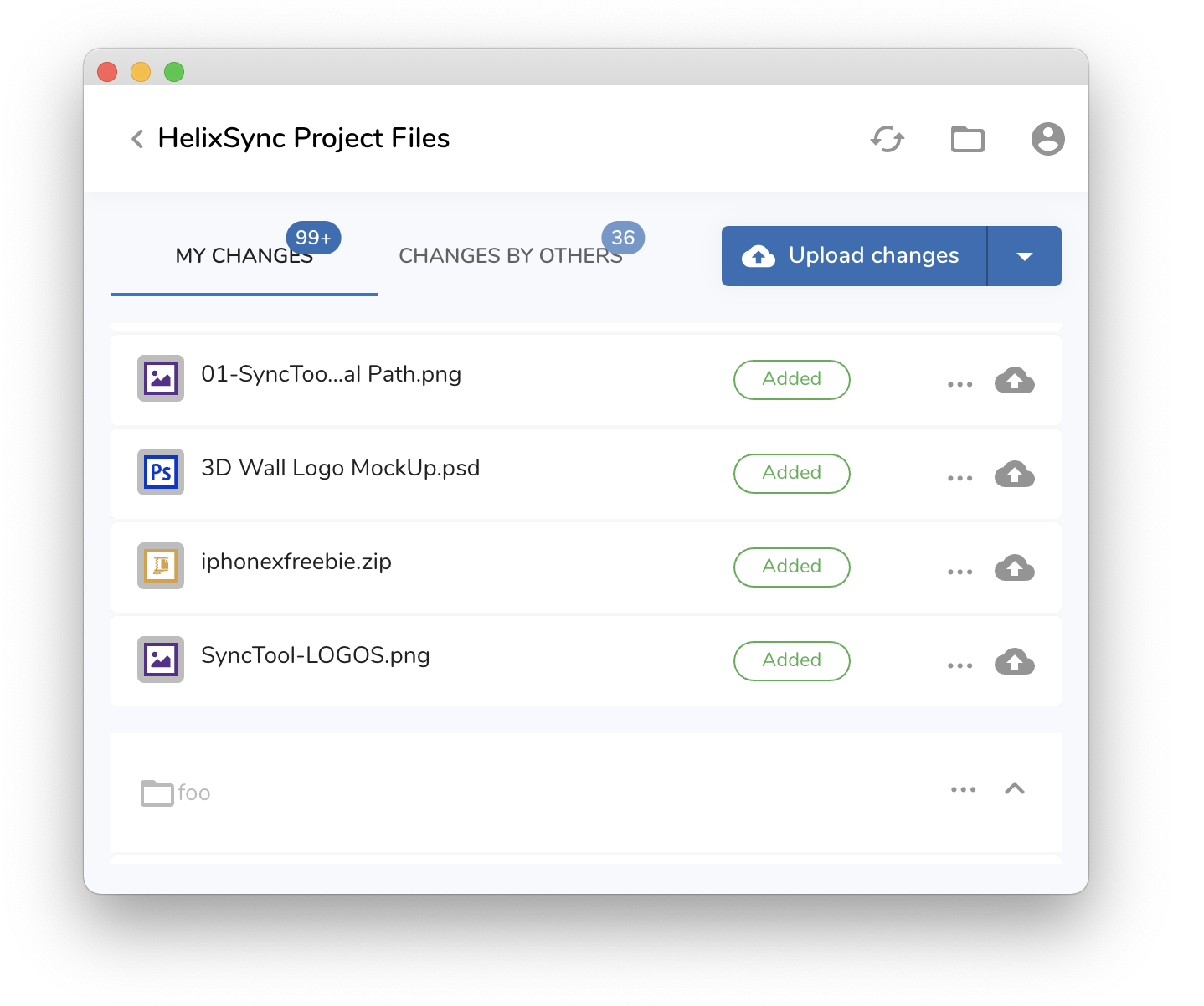
    Perforce Software has added a graphical tool, dubbed Helix Sync, that enables individuals, such as artists, to take advantage of the version control capabilities provided by its software development life cycle (SDLC) platform.

    Gerhard Krüger, cloud architect and product manager at Perforce, said that as DevOps workflows continue to evolve in the gaming and automotive industries, the need to manage artifacts such as drawings, for example, alongside software artifacts is becoming more pronounced among cross-functional teams.

    Helix Sync gives those end users access to a desktop client that enables any individual to upload artifacts into a system by dragging and dropping them into the Perforce Helix Core SDLC platform.

    Previously, end users that lacked coding skills would need to share files with developers via cloud services such as Dropbox. The Perforce approach removes the inherent friction development teams would otherwise encounter, while at the same time making sure the artifacts being shared are more secure, said Krüger. In addition, end users don’t have to be concerned about file size limitations imposed by file sharing services accessed via the cloud, noted Krüger.

    It’s not clear how many organizations are looking to centralize digital asset management within the context of an application development process, but the fewer places that artifacts reside, the more productive IT teams tend to be. At a time when the number of application development projects within many organizations has accelerated, there’s a lot more interest in reducing the number of steps any developer has to monitor and track.

    Diagrams and other types of artwork are not the only kinds of artifacts that are finding their way into software development processes. Data scientists are building massive artificial intelligence (AI) models that need to be incorporated into application development and deployment processes. The challenge organizations face is the individuals that create many of these types of artifacts lack the programming skills required to share them via version control platforms typically employed by developers.

    With the launch of Helix Sync, IT teams should assume that, going forward, Perforce will be expanding its overall content management capabilities, Krüger added.

    It’s not clear to what degree workflows will converge as application development continues to evolve. Organizations are starting to appreciate just how dependent they are on software. As that awareness increases, it’s only a matter of time before workflows start to converge around the software development process that are employed to drive multiple digital business transformation initiatives.

    With more of the creators of those artifacts working remotely, the security of those software supply chains has also become more critical. Cybercriminals are becoming more adept at compromising the credentials end users create to access a cloud file service. Software development teams are more likely to employ more rigorous forms of authentication.

    Arguably, there’s never been more artifacts to track during the history of application development than there are today. The thing that makes managing all those artifacts even more challenging is, just like every other piece of software, they are also being continuously updated in ways that aren’t easy to discern.

  • Low-Code Automated Software Testing Drives DevOps

    Low-Code Automated Software Testing Drives DevOps

    The DevOps world has quietly turned its focus to solving an essential challenge: enabling software teams to innovate quickly while meeting high customer expectations for quality. In other words, to build useful things faster with fewer mistakes. This tension has been growing for years, but 2020 added the challenges of remote work and accelerated digital transformation to the continued disruption brought about by cloud, SaaS and DevOps. In 2021, we need a road map for taking test automation to the next level with quality engineering, a discipline that incorporates best practices and data-driven testing into the end-to-end customer experience and drives organizational growth.

    Rethinking the Quality Process for the DevOps Era

    Quality engineering (QE) has traditionally lacked the tools needed to keep pace with digital transformation. Many QE teams struggle with complex, brittle automation frameworks and slow manual testing which create serious bottlenecks to DevOps adoption. While development accelerates, QE is left with disparate or outdated workflows and toolsets.

    Rising to the challenges and opportunities presented by DevOps and digital transformation will require innovation in our approach to quality. More than ever, we need to shift our focus away from quality assurance as a task that you perform late in the software development life cycle (SDLC) in favor of quality engineering practices throughout the entire life cycle. It starts with broad, effective test coverage – beginning when your developer is working on a local branch and continuing until a high-quality customer experience is confirmed in production across the entire surface area of the application – web, API, mobile, email, PDF or otherwise. It also goes deep; you evaluate all aspects of quality, ensuring that you satisfy requirements related to functional correctness, accessibility, performance, user experience and more.

    Low-Code Test Automation Unlocks a Culture of Quality

    With low-code, genuinely effective testing is at the fingertips of every role, from manual testers to developers, automation engineers, product owners and customer support. Requiring all of these roles to develop specialized programming skills is impractical, so low-code tools serve to democratize quality engineering by enabling everyone to participate in authoring tests, updating tests, and gaining insight from test results.

    Low-code testing brings several advantages to quality engineering, particularly in the transition from manual testing to automated testing. While traditionally this process would create major disruptions, low-code platforms are smoothing the way. In their IT Automation predictions for 2021, Gartner expects that by 2024, improvements in automation capabilities will refocus 30% of IT operations efforts from support to continuous engineering. For manual testing teams, that shift would likely trigger talent changes and a long process of pilot projects, retraining, and gradual rollouts. Low-code is key to managing this shift, upskilling workers and ensuring quality throughout.

    Modern Automation Solutions Embrace Rapid Change

    A key challenge with traditional test automation tools is that they were designed for applications that didn’t change frequently and were intended only to validate code. They relied on static selectors to identify page elements. If the selector (say, an ID) changed or objects (the XPath) moved on your webpage, then your tests failed. As more enterprises accelerated development via DevOps, Agile and CI/CD, the burden of test maintenance resulted in the same bottlenecks as manual testing.

    2020 was a breakout year for low-code test automation. New, easy-to-use solutions surpassed the capabilities of legacy frameworks that have dominated the sector. These solutions incorporate machine learning, data analytics and other advanced technologies to greatly reduce the burden of test maintenance and overcome the test rigidity challenges of legacy frameworks.

    With AI and machine learning, test automation solutions are trained by a tester simply navigating their product. As the tester moves through common customer journeys, the solution builds an understanding of each element and its context so that if an element moves or a property changes, tests containing that element are updated without human intervention. This drastically reduces the amount of maintenance required to ensure your tests are current. When tests do need to be updated, low-code models make it easy for anyone to jump in and make the updates. Looking ahead, auto-healing and low-code editing are crucial to supporting quality engineering in high-velocity teams.

    Testing the Entire Customer Experience

    Traditional pass/fail validation stops short of offering real insight into the user journey, a critical step effective quality engineering. The next generation of test automation platforms expands focus from validating code to validating the entire user experience. This starts with broadening testing to cover non-functional requirements, such as application performance, accessibility, and user experience. For example, identifying trends in load time for key pages and monitoring visual changes are done autonomously and essential to managing the customer experience. From there, you can prioritize quality efforts toward the components of your application that are most heavily used or highest risk. This enables you to make data-driven decisions about test coverage — focusing your testing efforts on high-priority pages like the checkout page for an e-commerce site, or high-risk pages such as those with multiple interactive elements that are linked from other pages, such as signup forms.

    But even a fully data-driven testing strategy that only focuses on the app or website UI is unlikely to cover the full end-to-end user journey, resulting in test coverage gaps and potential pain points for customers. For example, a common user journey may include opening an email, clicking on a link, checking a web site, and downloading a PDF. Whereas the limitations of legacy tools relegates testing to the web portion of that journey, modern solutions allow you to validate the entire user or customer experience (CX): receiving and opening an email, clicking on the link, logging into the web site, downloading the PDF and verifying its content. It’s even possible to confirm values in the backend via API – all without writing a line of code. Developing the tools to seamlessly monitor, repair, and manage the expanded CX is central to our innovation and to our customers’ success.

    Quality Engineering as User-Centric as You

    Quality is no longer an afterthought or just a box to check before deployment; it’s an essential part of the user experience, and therefore an essential part of maintaining a competitive advantage in every industry that uses software to serve customers. Test automation is critical for high-velocity teams racing to innovate faster, shift to DevOps, and build quality products while working remotely. Thankfully, a growing number of quality assurance teams are getting a seat at the table as DevOps is implemented, elevating the profile of quality as a strategy and growing demand for test automation solutions that can keep pace with the demands of DevOps.

    In response to this demand, a new generation of intelligent test automation solutions is enabling teams to rise to the challenge by embracing low-code and machine learning to maintain quality. To build a culture of quality engineering in this environment, your team needs test automation solutions that are as user-centric as you are: solutions that provide coverage across the entire user journey. Solutions that not only verify functional correctness, but provide rich insight into all aspects of quality and enable continuous improvement. Perhaps most importantly, you need solutions that enable everyone on the team to participate in quality. This ensures that the entire SDLC actively participates in building user-friendly products that continue to set the standard for quality at the speed of DevOps.

  • Solving Cloud-Native Challenges in the Rush to the Cloud

    Solving Cloud-Native Challenges in the Rush to the Cloud

    The shift to cloud-native environments away from traditional data center infrastructures continues unabated, but security and complexity challenges remain a struggle for DevOps teams.

    These were two of the main takeaways in a survey and analyst report published by the IT consultancy firm Flexera. 

    The survey, based on the responses of 750 IT professionals, revealed that 92% of the organizations represented in the survey have a multi-cloud strategy, 80% have a hybrid cloud strategy and only a minority (45%) have integrated data between cloud environments.

    The top challenges, according to the survey results, are:

    • security (81%)
    • managing cloud spending (79%)
    • governance, lack of resources/expertise and compliance (75%)
    • comprehending cost implications of software licenses (55%).

    The solution for these challenges largely involves — in addition to implementing the right DevOps culture and practices — adoption of the right tools and platforms, especially for security. However, first-generation cloud-cost management tools “simply are not cutting it” for modern architectures, said Asim Razzaq, CEO of Yotascale, which offers a cloud resource optimization platform.

    “Today’s modern architectures are dynamic, and ownership is transient and not always well-defined. The greatest strength of containers and Kubernetes is the ability to scale on-demand and share cloud resources among multiple applications,” said Razzaq. “Tracking cloud costs in modern architecture requires a strong ability to automate cost attribution — or tag management — for those dynamic resources, and the ability to understand usage at the application level, even for containers that are sharing resource instances.”

    First-generation cloud management tools are, in this way, unable to provide the information DevOps teams require to understand how to automate cost attribution for modern architectures, said Razzaq.

    “[DevOps teams] can’t break down costs into any level of meaningful detail for engineering and finance teams to digest and act upon,” said Razzaq. “Conversely, newer approaches that are focused on Kubernetes cost management lack the ability to understand and break down the costs of non-cloud-native workloads.”

    Indeed, tools are often frustrating to engineering teams because of their static custom reporting, broad and generalized recommendations and no effective workflow for effective collaboration between finance and engineering, Razzaq said.

    “The biggest source of frustration is the inability to drill down and manage costs in a way that matches the way that these teams do business. There may be 10 teams, each with five production applications running in the cloud, for a particular account,” Razzaq said. “Engineers need to see, at the application level, what their resource utilization, costs and cost anomalies are in order to make the best cost/performance decisions for their applications. Without that, they’re flying blind; having to defend their cloud usage without any supporting data.”

    As an example, a misconfigured Kubernetes cluster can “cause a massive spike in costs,” Razzaq explained. “Without detailed cost and utilization reporting at the team and application level, an engineer can spend weeks digging through spreadsheets and logs trying to track down the source of the anomaly. That’s weeks of their time that they aren’t [using to] be productive on new features.”

    cloud-native

    Razzaq said there are a number of solutions DevOps teams can adopt to address these issues, including automated cost attribution and tag management, actionable recommendations and comprehensive observability capabilities.

    Automated cost attribution and tag management “is the foundation of accurate and detailed cloud cost management,” said Razzaq. “Engineers need tools to help them set tag management policies, identify untagged instances and update tags quickly and easily in their cloud environment,” he said. “With this in place, cloud-native workloads can be automatically tagged as they are dynamically created, ensuring that cloud costs are always clearly attributed to the right teams and applications.”

    Actionable recommendations at the cloud-instance level with closed-loop feedback also are an important process “so that engineers can see exactly why the recommendation is being made, and what the cost impact will be of taking that action,” Razzaq said. “The ability to provide feedback on the recommendation and dismiss recommendations that don’t align with business needs ensures that new recommendations are relevant,” Razzaq added.

    Finally, tools that provide a unified view of both cloud-native and traditional workloads that have been shifted to the cloud help to ensure “that engineering and finance have a single source of truth for their cloud costs that enables them to make smarter decisions for their business,” Razzaq said. 


  • Web Isolation and Secure Web Gateways with Menlo Security

    Web Isolation and Secure Web Gateways with Menlo Security

    Since the COVID-19 outbreak, many enterprises have implemented remote work policies to monitor network traffic and protect sensitive data. Organizations have been adjusting and adopting new practices and technologies to improve data security across cloud-based environments.

    In this episode of TechStrong TV, Nick Edwards, vice president of product management at Menlo Security, joins Mitch Ashley to discuss the move from network and application firewalls to creating web isolation, using secure web gateways for updated, contemporary cloud security.

    The video is immediately below, followed by the transcript of the conversation. Enjoy!

    Transcript

    Mitch Ashley: I have the distinct pleasure of being joined by Nick Edwards. Nick is VP of product management at Menlo Security. Welcome, Nick—good to be talking to you.

    Nick Edwards: Hey, Mitch, thank you. Glad to be here.

    Ashley: Excellent. Well, tell us a little bit about yourself, and tell us a little bit about Menlo Security for folks who may not know much about Menlo.

    Edwards: Sure, yeah. So, I am VP of product management at Menlo Security. So, my team is responsible for kind of product direction and definition of our company and where we’re taking our product line. 

    I came from somewhat of a circuitous background. I spent time in the Navy, I was a Submarine Officer, so I kinda feel like I’ve been, you know, in the good guys versus bad guys world for a while. And, you know, cyber security has always been something that’s kind of near and dear to my hart, just because, as a society, I think technology can bring on so many positive changes, but it’s unfortunate that we have to deal with this overall drag of embracing it because people are capitalizing on it.

    Ashley: Mm-hmm.

    Edwards: And Menlo was started with the fundamental notion that how we’ve been going around fighting security is just not keeping pace with kind of where the bad guys are and where the threats are. You know, in the traditional world, it’s around letting traffic in and then inspecting it. You know, you basically put the traffic stream underneath the magnifying glass, you have the Petri dish, “Is this a virus, is this malware, is this phishing?” or whatever it may be. And the industry has gotten a lot better at detection, but the bad guys only have to be right once.

    And so, our fundamental approach is different, which is—you know what? We’re gonna not let anything in, and instead, we’re gonna give you a clean stream that is reconstructed via our technology called isolation. And so, you’ve probably heard this term of web isolation—that’s what the company was founded on, and that’s what we do. And it’s been primarily made more simple to adopt and execute on by the advent of cloud computing and the capabilities that are continuing to expand kind of on that front. So, we’re excited to be here, excited to talk to you more about it, and let me know what you think about, what you wanna talk about.

    Ashley: Cool. Well, you know, as more and more of the network stack has been virtualized and turned into software, it makes sense that you’d see innovations like what Menlo Security is doing, right? Because you can do things very quickly and innovate very quickly in that space. And it’s kind of interesting to me that—you know, we hear about network isolation in WiFi and other technologies, because the pipes are just getting bigger, of course.

    Edwards: Mm-hmm.

    Ashley: And just, that much more of trying to inspect as it’s coming in in real time, it makes sense that—I can see how reconstructing that web stream, as you’re talking about.

    I’d love to get your perspective of what’s the thing that somebody goes, “You know what, we need a secure web gateway instead of what we have”—what is the impetus, or impetuses, if that’s a word, to say, “I need to get to the next thing, because this ain’t workin’ for me”?

    Edwards: So, I think a couple of factors. I think one, and we saw COVID and the work-from-home dynamic of the past year expedite this, is just that when you and I were growing up in the office of 20 or 30 years ago, everyone got in their car, they drove to the parking lot, they walked in, their computer was waiting for them, and everything was in one location. And that made it easy to apply security and controls. 

    I remember my first spam message that I got, you know, in 2001 and I thought that was really weird. And I remember not being able to go to certain websites, and it was very easy to do that because everyone was in one location or, okay, maybe a big multi-national had three different locations, but it was all connected to the same network and it was easy to provide policy, and kind of what proxies merged from that environment.

    Now, you fast forward even to 2019, you know, roughly 20% of the workforce worked remotely. Then, during COVID, it quickly became 75% or greater. And so, with that, it meant that everyone is everywhere. You know, you might be at home, at a coffee shop, in the old days at a WeWork or something. And in that environment, it was very difficult to apply security based off of different devices they were accessing the Internet with, what they were doing, where they were coming from, and COVID just made that worse.

    So, I think what we’re seeing in our customer base, the people we’re talking to is, they realize that they’ve been kind of using Band-Aids to hold the old notion together, but they realize that the cloud offers a new way to think about things. And it isn’t just taking the old widgets and just dumping it in a VM, it’s about—hey, is there a way to fundamentally rethink how we can leverage this technology to advance our business needs?

    And I think all that combination of factors, you know, different users coming from different places, different devices, what they’re trying to do, applying policy based off the context of the user—all those factors have combined to really, I think, kind of introduce this tipping point of new ways of thinking about leveraging technology. I think web gateways delivered via cloud form factor is one of the primary kind of locomotives for people to rethink about their architecture.

    Ashley: It’s interesting you say that. I’ve had several discussions in the last month or so about, as people are thinking about a hybrid office or something about returning to the office, it’s really easy to kinda fall back into, “Well, let’s do what we’ve been doing, right, and make some adjustments.” And I had to go through this transition, actually, a few years before this of thinking about it as just a work anywhere strategy, whether they’re sitting in Starbuck’s or sitting in the United Club, they’re in London or Denver or South Florida—wherever they are, or in an office, or at home, or on the beach or whatever, you just have to think about it.

    And I think that was one of the choke points we ran into with COVID was, the natural tendency was, “Well, okay, swing all the traffic onto the corporate VPN, push it all through our existing pipes” and sometimes, that can fall apart on you, right?

    Edwards: Yeah.

    Ashley: It’s just so much of a big swing. How do people need to rethink this, you know, thinking in a secure gateway, web gateway mode?

    Edwards: Yeah, so, I think that whole trend that we described of, “Put everyone on the VPN” and then—uh oh, VPNs can’t keep up, call up our VPN vendor, give us 50 more boxes. 

    I think what we’re seeing customers re-evaluate is, instead of giving everyone access to everything, let’s flip it on the head and say, “Let’s give them access to only what they need.” And this notion of zero trust is what is kind of capturing this movement, you know? “Okay, we know this is who you are, this is your role. You may be a salesperson—you don’t need to have access to Jira or Jenkins or these development tools, but maybe you need to have access to our CRM system, our customer application for managing pricing and quotes and all this kinda stuff.”

    So, zero trust [Video freezes].

    Ashley: Oh, we lost Nick, there. Let’s see if he comes back—oh, there, you’re back.

    Edwards: Okay.

    Ashley: Okay, so, just, why don’t you re-start with, you were talking about Salesforce and getting access to the applications, you don’t need Jenkins and Jira and stuff. So, you can just pick up on—so, zero trust in a secure gateway, web gateway means this.

    Edwards: Yeah. So, zero trust in a secure gateway mans that, instead of giving users the ability to go wherever they want just because they’ve authenticated, you give them the ability to access the content that they need associated with who they are and their job. You know, a sales rep might need access to certain applications that an engineer might not need access to.

    The VPN model allows anyone who gets connected to have access to whatever, and cyber criminals realize that and they can move around laterally and they can exploit that. And a similar type of construct applies when you’re facing the Internet side of the network. Get people access to what they need and secured gateways via the cloud have much more granular capabilities to do that with tools like CASB, DLP inspection. 

    I think cloud gives the ability to do things at scale that on premise proxies can’t. So, for example, something as seemingly mature and pedestrian as SSL inspection, you know, that’s been around a while, but I remember in the old days, having to scale X number of proxies to be able to address the traffic. Now, almost any website that is being used in a professional manner has SSL and cloud allows you to inspect that very easily and very seamlessly. 

    And on a Menlo perspective, zero trust says, “Hey, look, for Internet related applications, deploy the same type of mentality,” except you flip it on its head and say—don’t trust any of this content from these websites. Okay, maybe you wanna trust O365 for Microsoft, dedicated IP space, domains, you may wanna do that. Or Zoom, for example. But other than that, you might wanna say, “Let’s just allow a clean stream to come in.” And that’s what Menlo does with our isolation by kinda stripping away all the active content, rewriting the web traffic, and giving this native experience to users in a way that doesn’t disrupt their flow or doesn’t require another agent to be deployed on their endpoint.

    Ashley: Plus you have the scalability of the cloud, right? So, you’re not looking to add another box, right, to do this.

    Edwards: Yeah.

    Ashley: It’s, “Okay, great, traffic doubles, we’ve got the resources right there to handle it.”

    Edwards: Yeah. Yeah, that’s right. And, you know, there are some vendors out there, I think, in the cloud web gateway world who have done a lot to mature the industry’s understanding of it. But there’s, again, I mentioned this earlier that properly capitalizing on the benefits of the cloud doesn’t mean taking what you were doing on premise and then just dumping it in a cloud data center. 

    It gives the opportunity to think about things anew and potentially consider new architectures, and leverage the autoscaling of public cloud infrastructure where it makes sense, leverage the near infinite compute and all these things where it makes sense, but still be able to deliver the same type of capabilities. And that was kind of the approach that Menlo took, being kind of more of a cloud native security company delivering these capabilities to our customers.

    Ashley: Mm-hmm. I wonder, too, if—you know, we have different software architectures that can tend to be more porous, you know, with microservices, service mesh, et cetera. We have hybrid, multi-cloud—so, we’ve got a much more, in some ways, complex environment than we had in our on premise data center if that, I don’t know if you wouldn’t say it was complex, it was. But it’s a different world, and the pace at which it can change is so much faster. I mean, you can have an application pop up in a week or a day or an hour that wasn’t there, and now you have to be able to respond to, “Oh, sorry, we didn’t enter a ticket for security to configure us,” right?

    Edwards: Yeah.

    Ashley: You need to be able to react quickly. What do you think are some kinda new applications that are pushing the boundaries of security that make it easier to do it in the cloud?

    Edwards: So, I mean, I think in general, there’s a proliferation of engineering teams inside organizations that are adopting the same type of model of just rapid iteration and agile development for their own products that they’re releasing to their customers. And so, the companies that we’ve seen are some that, they may actually use a combination of AWS or Azure or Google, but they’ll also probably use some of their own data center infrastructure that they’ve already leveraged in a model that is very similar to AWS.

    So, I think this notion of customers going through this migration path, of going from all on prem, maybe with a target of landing with nearly all SaaS, there will be this period of kind of hybrid modes where multi-clouds exist, their own or a public cloud. And I think what we see is customers kind of chipping away at this over time, and an application that was on prem, they say, “Okay, let’s run it in our own kind of cloud data center type of thing” and then slowly migrate that over to AWS or whatever.

    So, we see a lot of this kind of sequenced staging of applications and assets, and with that, it means that the data ends up living in these different places as the application evolves. So, from our perspective, this requires of our customers a rethinking not only of the technology assets, but also the team structure and the profile of the teams. All these teams have to have some level of application understanding, scripting, automation capabilities, whether you’re the application developers or the networking teams, or the SOC teams. 

    And I think the vendors who will end up winning in this world from a security perspective will build security tools that play well in that environment. So, we’re talking about having APIs that will work with their SOC teams, have APIs that will work with, come to their networking teams, so if they need to make network changes quickly, then the cloud applications will be able to respond accordingly.

    And so, in that world, it helps kind of being API friendly and kind of cloud native, because hopefully, that will easily extend to the environments that we’re deploying in from a customer point of view.

    Ashley: There we go. I keep hitting my mute button. You’d think I’d be used to this by now. [Laughter] You mentioned several things I thought were really interesting, and one of them is that, we’re using many, many more SaaS applications, as you referred to, Office 365 as well as SaaS applications, but think how much more Slack and Team and other online non-premise applications that are being used in the cloud. And a lot of times, those things don’t go through IT, and maybe the Finance Department does their own conversion from what they’re using to some cloud financial system or adding other apps to what they’re doing.

    It seems like that ability to be able to isolate some of those environments, make sure that SSL is being used across all of that, and making sure that it’s not a bigger pipe into a bigger world that’s opening up the rest of the network through somebody else’s service is a huge value, and having that visibility is super important.

    Edwards: Yeah, I completely agree. And I think one of the things, when we talk about isolation as a technology construct, not only do we essentially kind of rewrite the web stream that lands on your browser, we also have a similar capability of doing that for documents.

    So, for example, a good application is exactly what you mentioned with SaaS services, and let’s say you’re posting something on Dropbox or maybe you’re accessing something from webmail. Well, what we see customers wanting to do with our CASB solution is say, “Hey, look, we know there’s all these SaaS apps. There’s a world that we know are sanctioned by our company based off policy. So, we’re gonna let people do what they need to do there, maybe insert security for file scanning and all that kinda stuff. But if it’s an unsanctioned application, maybe we want our employees to still be able to go to webmail, but we don’t want them to necessarily download documents and potentially infect our environment.”

    So, what they can use Menlo’s approach for is to basically use isolation of the document. In this case, the document gets kind of rendered as a safe .pdf, so someone can actually still access it. You know, because IT Departments don’t want to be Dr. No and just say you can’t do anything, because in today’s environment, you know, younger employees, Millennials, that doesn’t work for them. But I think people realize that there is a balance between security and still being able to do your job and maintain your own kind of life.

    So, with unsanctioned applications, we’ll give people the ability to actually still go to these applications, but then use isolation to render documents in a secure fashion, or render the content in a secure fashion to give kinda the IT teams maximum flexibility based off policy and the use cases of the users. And I think that’s something that kinda gives the users the ability to strike the right balance based off their employee base and their business needs.

    Ashley: Mm-hmm. I think that’s a really good point. Where do people typically make this transition to a secure web gateway? Is it, “I’m in the process of moving to cloud, I’m setting up my infrastructure, getting ready to move my apps and interconnect with third party apps that I’m using, let me set it up then” or is it oftentimes, “No, I’m in the cloud, I’ve gotta figure out a better way to do security. Let me add a secure web gateway to it”?

    Edwards: Yeah, so, I would say there are kinda two types of customers, as you alluded to. There’s next gen companies who were born in the cloud and they’ve only ever known the cloud, you know? Like, consider any of your contemporary startups that are now successful public companies. They were predominantly born in the cloud, they might have added some on prem stuff for a variety of use cases, but predominantly, they’re cloud first, and they’re a different type of sell and they get it, and they understand it. And, as they have their workforce more broadly deployed, it just makes sense for them to have a way to instrument policy and security across their workforce.

    The customers who are coming from an on-prem environment, maybe traditional large financial institutions, health care, maybe military and defense environments—for them, I think, we’ve seen an acceleration of their adoption over the past several years, and really culminating with COVID as they realized, “Hey, look, this is just very problematic and costly and the TCO associated with maintaining this is problematic.” Main drivers that are the tipping point—remote us, SSL inspection and just having to deploy another box to do CPU intensive scanning. And I think just this overall notion that they realize that the SaaS adoption of all these applications, it’s here to stay, you’re not getting that genie back in the bottle. Oh, and by the way, it is making the company more effective, efficient, and in a more cost friendly manner—so, how can we find a way to embrace that trend and make our business more successful during this march toward digital transformation, but do it in a way that aligns with our own cadence of adoption?

    And I think those trends kinda culminate, and we’ll see a lot of customers start with the kind of CASB use case of securing these applications and doing it in a way that makes sense for their policy, DLP, and security related reasons, and that’s one of the main drivers we’ll see for a lot of our customer engagements when they’re coming from on prem.

    Ashley: Interesting, too. I can totally see that evolution that people have to go through.

    Edwards: Yeah.

    Ashley: Are there any operational considerations that folks need to make in thinking about security differently? Is it different from an operational world making it easier, less false alarms, those kinda things? Because we’re adding more stuff, right? I had a CISO tell me once, “Every product, I evaluate whether it adds any work. If it adds any extra work, I don’t look at it, because I just, we don’t have resources to do it. I can’t add more stuff to my team.”

    Edwards: Yeah, yeah. I think that’s a very valid concern from buyers, and we hear that a lot. They don’t want more loads for the SOC team, they pretty much don’t want another pane of glass to manage, configure and look at reporting.

    So, I think that all of these products need to think about it through the lens of, you know, not only who’s gonna be typing away setting policy, but also, the CIO, CISO, the people who are gonna be consuming the reporting and where they can get access to the information they need to evaluate their purchase decisions and that sort of thing.

    So, I think, on that level, having an API friendly platform that can integrate seamlessly with security orchestration tools, that might be a place in the Security Operations Center that can integrate with other networking devices. All that stuff helps alleviate that friction and that pain. And I think, you know, one of the things that we’ve seen for customers who deploy Menlo is that, with isolation, we actually reduce the number of spurious alerts. Because, you know, you’re not getting all this gray area vendors who rely on detection saying, “Hey, we don’t know enough to say this is bad, but we don’t know enough to say it’s good, so we’re gonna just flag this as an orange” or, you know, whatever. [Cross talk] But hey, you’ll have a human being who can look at it and they’ll decide.

    All that stuff goes away with Menlo, you know? So, what we’re able to do is just deliver this clean stream and we’ve seen multiple customers who, you know, their alerts dropped 80, 90% because of the fact that the data that they’re seeing of their users is no longer being triggered by their endpoint detection tools, these other tools that were kinda living in this gray area. And that means a lot to our customers and kinda their SOC teams.

    Ashley: Cool. What does it take to set up something like this? What’s the implementation process?

    Edwards: Yeah, so, there are a couple different ways. It depends on where the customers are coming from. I mean, I think the most fundamental, simple approach since it is SaaS is that they don’t need to deploy any hardware. There’s the PAC file that lives on all their endpoints, which basically will point traffic from their computers, laptops, et cetera to our cloud form factor, and that’s easily disseminated. Or in some cases, they might want to route traffic from their firewalls or other upstream network devices to us.

    All those things typically take less than one business day, you know, to get up and running. And we’ve had customers, one of our biggest accounts is the Defense Information Security Agency, and they’ve entered into a long-term business relationship with Menlo, and they have all these different teams who are deploying our technology. You know, different military groups, different defense agencies. And it’s basically, “Hey, Menlo, we need to get up and running on this particular agency” and it usually can happen within a matter of several days at a maximum. We’ve had customers scale to tens of thousands of users in a matter of hours. 

    And that’s, again, leveraging the benefits of cloud computing. You know, in the old days, it would be, “Okay, let’s have a pilot for a couple users, and let’s get one or two boxes—okay, great. Let’s do the math. Okay, we have 10,000 users, we need 5 more boxes.” And then if they need to scale quickly, then they’ve gotta make a phone call, I’ll have the box get shipped and all that kinda stuff—cloud takes all that headache, all that thrash away, and you can just leverage the autoscaling that’s inherent in cloud computing. And I think that’s something that really will help expedite the adoption of this as customers become more and more comfortable with security and the compliance associated with it.

    Ashley: I’m glad to hear that. You gave me a few flashbacks to the, “Where is it? It’s in shipping? Okay. Who’s gonna rack and stack it? Okay. Who’s configuring it? Okay. Who’s putting testing and putting in for”—you know? Whoa.

    Edwards: Yeah, yeah, the weekend change requests, you know, [Cross talk] by the IT guy coming in on Saturday night, you know? All that stuff, a lot of that pain has gone away by the new form factors.

    Ashley: Mm-hmm. Cool. How do folks get ahold of this, get access, try it out? Where do they go?

    Edwards: Yeah so, come to MenloSecurity.com, we have a Contact Us, you can try now. We have ways where you can kind of go down the self-service path to play around with it and see that, you know, try menlo.com. Or just feel free to shoot me an e-mail directly, you know, Nick.Edwards@menlosecurity, happy to help point you in the right direction and to cut through all the red tape. You know, we have customers who call up on a Monday with a security issue, we can be out and deployed within that week to get them the security they need, and we’re happy to help customers meet them where they are.

    Ashley: Excellent. Cool. Well, it was really fun talking to you, Nick. Thanks for joining me today and haring more about secure web gateway technology and services that you guys offer from Menlo Security.

    Edwards: Alright. Thanks a lot, Mitch. I appreciate you having me. I appreciate it. See ya.

    Ashley:  You bet. Look forward to talking with you again. Join me in thanking Nick Edwards for joining us today, VP of product management with Menlo Security.

    Edwards: Thanks.

  • How to Use the Assessment of DevOps Capabilities (ADOC)

    How to Use the Assessment of DevOps Capabilities (ADOC)

    The Assessment of DevOps Capabilities (ADOC) is crowdsourced, vendor-neutral and designed for individuals, teams and organizations who want to baseline their current DevOps state, identify the next target state, gain insights into how to improve their organization and team capabilities and measure and accelerate continuous improvement during their DevOps journey.

    The assessment models five DevOps dimensions – the human aspects, process and frameworks, functional composition, intelligent automation and technology ecosystems – to help you gauge your DevOps maturity and identify areas for improvement. In this TechStrongTV interview, Accelerated Strategies Group CEO Mitch Ashley talks with Ulises Gonzalez and Leonardo Murillo, two DevOps Institute Ambassadors, about how to apply the ADOC to get the most out of any DevOps journey. The video is below, followed by a complete transcript.

    Announcer: This is Digital Anarchist.

    Mitch Ashley: Well, I have the pleasure today of being joined by two very interesting gentlemen, we have a great topic to talk about. The first gentleman is Ulises Gonzalez, and also Leonardo Murillo. Very nice to meet you both. Congrats—good to be getting together with you. Congratulations on getting together, [Laughter] to have a TechStrong TV talk.

    Leonardo Murillo: [Laughter] Thank you. Thank you, Mitch.

    Ashley: Ulises, would you introduce yourself? Tell us a little about you and who you represent.

    Ulises Gonzalez: Oh, absolutely. I’m Ulises Gonzalez, I’m a DevOps Ambassador for Panama. I’m a Product Owner on Agile611. We are a company of way of working located in Spain and Panama. I’m glad to be here.

    Ashley: Great to have you. And Leonardo?

    Murillo: Alright, thanks for having us here, Mitch. So, my name is Leonardo Murillo, and I’m CTO at Qwinix, we’re a product engineering company in Denver, Colorado, and I’m also Founder of Cloud Native Architects, which is a consulting firm specialized in continuous delivery, security, and reliability, doing consulting for enterprises, and I’m based out of Costa Rica.

    Ashley: Excellent, excellent. Well, good to be with you both, we have a fun topic. I know you both are DevOps Institute Ambassadors. For people that don’t know what DevOps Institute is or maybe what the Ambassador program is—does one of you wanna take a shot at kinda giving a quick overview?

    Murillo: Absolutely, I can give it a shot. So, there’s a huge component to DevOps that is human centered, right? It’s about culture, it’s about practices and kinda mindset. So, the DevOps Institute is an organization that looks to provide a means for DevOps practitioners to skill up, to gain knowledge, to network. It’s at DevOpsInstitute.com, so I really encourage everybody to go and find out some more. It’s a great, great organization.

    Ashley: A lot of sharing, a lot of collaboration. A lot of folks who are going through the same journey, maybe at different speeds or different places with their career or with their organizations, so what better place to work with each other, learn from each other, and help each other? So, that’s a great thing. Very cool organization, the DevOps Institute.

    Well, we’re here to talk about this new assessment program, the short name of it is ADOC, but it’s the DevOps Institute Assessment of DevOps Capabilities—thus, ADOC.

    So, does one of you wanna tell us a little bit about what the assessment is for? Why would someone want to use this as an assessment tool?

    Murillo: Why don’t you go first, Ulises? [Cross talk]

    Gonzalez: We need to remember that adopting DevOps is not a one-day process. Adopting DevOps requires a lot of effort, a lot of co-working, a lot of understanding on where we are. So, understanding your DevOps capabilities is vital to assess your current practices. And then, it helps to know how to devise or develop an improvement plan, it’s very important.

    In my experience, when we don’t know how to do DevOps implementation in a proper way, we can do more damage, do more harm that receive the benefits. That’s why DevOps capability assessment is a very wise decision to make to start or to understand where we are. Where we are to make good decisions, to get that deep understanding about our practices, and of course, to make a plan, to make a—how to define the next steps to be close to our goal or our vision to accomplish. That’s why DevOps Capability Assessment is a more than a tool, it’s a very wise way of starting of gaining understanding on what we are doing in our company.

    Ashley: Mm-hmm. Good overview. I know you both are with partner organizations that would actually help people go through this assessment, correct?

    Murillo: Correct.

    Gonzalez: Yeah.

    Ashley: Great. Leonardo, why don’t you say a little bit about what you think that process would look like? And by the way, it’s not an unusual thing to hire someone to come in and do an assessment and get an external perspective, and then you kind of evaluate where you are and decide where you wanna go or what things would help you get to the next place.

    This really gives you a standardized way, something that you’re at least kind of—not quite a benchmark, but something kinda like that so that you have a consistent assessment of how you’re looking at organizations so you can benefit from what others have learned about going from where you are to whatever the next step is. Does that make sense?

    Murillo: That makes sense, and I think you basically are talking about some really relevant points in terms of kinda like the standardization of the tool to assess, right? Because as Ulises pointed out, it is a long time effort. It doesn’t happen overnight. And it requires the involvement and ownership of many people across the organization. It’s not just technology alone, right, that will enable this transformation. And I think the assessment is a tool that needs to be leveraged and revisited often, right?

    Because, as you perform initiatives or as you deliver initiatives towards elevating a certain capability, the target is gonna continuously move, right? And you wanna make sure that, as you progress, you have a common framework that allows you to really gauge progress, right? Because you wanna be able to compare your previous state to your current state as you work towards that desired state, right? And in the context of capabilities, for instance, there is something relevant as to thinking of capabilities in terms of dimensions as kinda like the DevOps capability assessment approaches it, and not as maturity.

    Because capabilities are subject to continuous improvement. There is a certain sense of kinda like a ceiling to maturity, right? You’re mature now, there’s nothing else to do. But there is an ongoing process of continuous improvement which, I think—well, I think we’re all into DevOps, right? We know continuous improvement is one of the core fundamentals, right, of DevOps adoption. And that’s a little bit—and also talking about how, I think, this should be approached and how, at least my organization, approaches it. It’s not a one-time assessment, and a one-time picture that tells you how to get to the end, it’s an ongoing process, and this is just a way for you to quantify the current state. And you will need to continue doing that as you progress, and deliver initiatives in the dimensions where more value can be extracted. Does that make sense?

    Ashley: Yeah, very much so, and I’m glad you brought up the maturity. I mean, there are methodologies, methods of using, a maturity matrix. Those tend to be, you know, do you have a process, do you follow it, do you improve it, or whatever that might look like as your adoption. DevOps is so customized to organizations, where they are, how they create software, their own sort of life cycle of how they work, which is one of the great things about it, but there’s no one way to do it to assess that, “Are you mature?”

    But I think that point in time look at it makes a lot more sense of how to think about where we are now on our journey. You may want to course correct, right? You may wanna say, “We’ve learned a lot, and we’ve actually just learned that this actually is really something that’s even a more beneficial part of DevOps, let’s focus on there, next.”

    Am I on the right path, here, Ulises?

    Gonzalez: Oh, absolutely. To me, the process of continuous improvement is literally endless. Organizations and companies are immersed right now in a competitive environment that is constant and required a lot of frequent changes—in every sector, in every area, in every country. That’s why quality process improvement becomes literally an imperative. For that reason, the purpose of offering products demands and services demands us low cost and meet customer expectation.

    To me, as I said, I’m very aligned with Leonardo. It’s very important to get insights about our current transformation state. Identify what our strengths are, and understand and accept our weaknesses to make decisions. Because the decision latency is critical to reduce, because we need to inspect and adapt about our outcomes. DevOps, it’s not only about tools, even though that kind of tool, like the assessment, helps us a lot to, as I said, gain insights from different points of view. In my case, a Product Owner, a Product Development leader, we need to inspect constantly about the results that we get. Because it’s not about what I want as a business, it’s what a market needs. That’s why this kind of assessment helps us a lot through this kind of process, to realize how steps we need to make to get close to our goal or our business objectives for this month or this quarter.

    Murillo: And let me riff off of that a little bit of what you just said.

    Ashley: Yeah—please do.

    Leonardo Murillo: I think you raise a very valid point in terms of prioritizing, right? And I think that’s very valuable of this type of assessment. When organizations approach the adoption of DevOps, attempting to follow a pre-defined path, a pre-defined immutable process, they’re really not evaluating what is most meaningful for the organization at that particular point in time. Like you were just saying, right, when you’re building a product, you wanna deliver those features that are most meaningful, that are gonna provide the most value to the users of that product.

    And I think a capabilities assessment gives us a little bit of that in the context of an organization. There are many, many different dimensions and sub-dimensions of what an organization can improve towards DevOps maturity. But what is more relevant to your organization at this point in time is not gonna b the same for other organizations.

    Ashley: Mm-hmm.

    Murillo: And this type of assessment gives you the ability to identify where to focus your efforts. Because you don’t wanna try and boil the ocean; you don’t wanna try and fix everything at the same time. Because then, you likely will struggle, right?

    So, this concept of identifying, granularly, which areas allow for improvement and providing a quantifiable means to assess which ones are more relevant or your organization at this point in time is a very effective mechanism to direct, after all, scarce resources. There isn’t endless money, there isn’t endless time, and there isn’t an endless capacity of people to change. So, you need to very effectively apply initiatives to those areas that make the most sense for your current state.

    Ashley: Mm-hmm. Spot on—very important point. [Cross talk] How is this administered? How does someone go through the assessment? Is it a series of interviews, do they fill out an online survey? Lots of ways of doing these things—how do we do this with ADOC?

    Murillo: You wanna talk about that Ulises?

    Gonzalez: Yeah, a little bit, it’s ________, it’s a mix between online surveys and, of course, interviews with several leaders or persons of importance of the company, because we need to understand or get that 360 degree understanding about what is really happening. That’s why the instrument or that kind of assessment, it was common understanding of what we need to know about we need to understand what we are.

    That’s why we can use it in several ways. As you said, we can use it from an online survey, so everyone can participate independently of the part of the value stream where you are, because this is a very important topic. And then, when you get inside, you can interview the people who are already responsible, already part of the time to start to make decisions. That kind of point is very important to me as well, because this instrument allows us, we can gain a capability to make decisions as well. We need to wait a long period of time. We don’t need to wait a lot to make decisions quickly in a smart way, data-driven. We can make a data-driven hypothesis, we can put in our roadmap a lot of, as Leonardo said, prioritizing steps to get what the company wants. That’s why this is an easy way to get a lot of understanding on what’s happening right now in our company.

    Ashley: Mm-hmm.

    Murillo: And let me share some ________ as to how I think this also needs to be applied. Because as Ulises mentions, right, the tool itself is an online delivered Likert style assessment, right—multiple questions, different dimensions, and that is used to define the scores to your capabilities.

    But as we’ve mentioned multiple times in this conversation, ever organization is different. And I think this is also where the DevOps Capability Assessment is being partner led. There are consultants out there that are delivering this and applying this in organizations.

    I think this is also why it’s very important to partner with somebody. Because it’s relevant to have an external view to understand where there might be bottlenecks to tie this together with other practices when you think kinda in terms of value stream management. You wanna make this tool a component of a comprehensive intervention, and that intervention is going to be defined not just by the tools that you’re using, but also by the structure of the organization.

    You will want to understand exactly what your structure looks like—both in terms of paper, what the organizational structure looks like, as well as in terms of team dynamics. And that will give you a sense of who you really need to talk to, who are the ones that are influencing, who are the ones that can give you further insights? Extend the tool. I think that’s very important in terms of applying this, which was kinda your original question, right, Mitch?

    Ashley: Mm-hmm.

    Murillo: And this is just one tool in an arsenal. It’s a tool that satisfies a lot of precision in terms of gauging a state, and it needs to be executed in a way that is consistent with the organization, just as the process of maturing into different levels of skill, right, will vary depending on your unique characteristics. I think that also applies in the context of delivering this type of assessment. There is a discovery opportunity for partners to really get to understand the culture of the organization, the culture of the teams.

    And I think another component that is relevant, and in the book Accelerate, that I’m sure everybody is familiar with by now, there’s this concept of organizations trying to apply DevOps practices to one group and then just trying to replicate that across the organization and now that really doesn’t work too well.

    As you expand your DevOps adoption to more groups in the organization, you’re gonna have to repeat a little bit of the process to really understand how each one team will evolve, and what is the current state of each different organization as you expand. This is not something that you do once, you transform a business unit once and then you copy paste. That’s kinda all the thoughts that come to mind when you mention how this actually looks like in practice, being applied within an organization.

    Ashley: Well, and it seems extremely helpful to have the data that’s collected through the online portion and then really, those interviews also add, as you mentioned, talking about things like culture, structure of the organization—it’s that context, right?

    So, you may be wherever you are on your answer to certain parts of the assessment tool, but understanding how that fits into your environment, your company, your culture, how you work—I like to describe thigs as, you know, if you are a data driven, no decision gets made without data, that’s a different kinda culture than one who goes by, let’s say, these are the inspiring leaders that help make the important decisions, right, just to pick two very different examples. But that context matters. You’re gonna take different actions based on the environment that you’re doing DevOps in. [Cross talk]

    Let’s talk about how someone would use this—I’m sorry, Ulises, I cut you off there, but we really wanna hear, too. So, you go through this process with your help. What does someone get from it? Do they get a document or a readout? And then how do you go about helping them with the next phase of using some of that information to their benefit? Go ahead.

    Murillo: Yeah. Go ahead, Ulises.

    Gonzalez: Okay, everybody. [Laughter] Okay, to me, of course, there are different outcomes you can get, absolutely. You can, after you complete that kind of assessment, you gain insight of your current information, you get the ability to benchmark your teams and your organization across different industries on your actual level of practices. With our help, you can visualize the road ahead from one baseline to another future state. Of course, the management gets the investment areas, so we need to make decisions. They’ve got very normalized indicators to understand what we need to do on the next iteration or the next spring or the next process.

    Of course, the operation teams part gets understanding on most critical areas you need to improve. So, as I said, the assessment brings us a lot of information with data, normalized data, in a controlled environment to make decisions, to make smart decisions, to gain common ground, to create consistency. Because, as Leonardo said previously, to me, it’s about consistency and a holistic view in a way that enables everybody in the company to understand independently of the level that we are, we understand the same parts of DevOps that we need to achieve, because it’s a business outcome we need to support.

    So, that provides us with a high impact of our software, our service, our productivity. So, more than an instrument that provides us number, it gives us very helpful insights, as I said, to make wise decisions.

    Ashley: [Laughter] I appreciate your perspective on it, Leonardo, because what you’re describing, Ulises, very much follows that Plan Do Check Act.

    Gonzalez: Yeah.

    Ashley: You know, take those actions based on that continuous improvement process and cycle again so you can use this as a tool more than once, right? You can go back and assess yourself maybe in a year or so, see if you—did you end up where you thought you were going to head, or did, actually, the journey migrate a little bit, move a little bit on a different track, now let’s adjust to that and move forward?

    Murillo: Exactly, exactly. And I think the Act component is where there’s a lot of room for creativity and innovation, right? Once you have your, as Ulises points out, your normalized metrics, right, your normalized numbers, you will need to identify what are the better mechanisms to influence change, to produce change? They might be technical, they might be technically implemented, they might be technically led, and they might not.

    So, here’s where training—and I’m shamelessly plugging, her, the DevOps Institute, this is where a lot of the skill up type of initiatives that organizations like the DevOps Institute also promote and enable. There is skill up, there is education, there is cultural changes, there is many, many ways in which you can act. And, as you point out, Mitch, which is really, really spot on, you will need—you want to constantly measure. And in terms of constantly measuring the impact of these changes, you need to reassess, and it’s a constant, ongoing effort, whether it’s every year, whether it’s every six months, whether it’s more often, I think it depends on the state of the organization and kinda what they’re experiencing at this point, what they’re going through at this point.

    But I think it should never stop, because it’s continuous improvement, so you want to constantly renew this perspective of where you are.

    Ashley: Well, let’s talk a little bit about—so, how would one go about doing this? Do we visit the DevOps Institute site and that kinda helps us get the process started, maybe we have a partner, one of your organizations already, or maybe we need help in selecting somebody to help us go through the process? I assume there’s resources available on DevOpsInstitute.com, is that correct?

    Murillo: I think that’s correct. I think you can go and see all the different partners that are offering this tool, and you can basically look them up. That’s what I would do, look them up, see what their specific areas of expertise are in addition to the tool, where they’re located, and get a sense of who might work best for your organization. It’s a tool that, I think a lot of the value of the tool revolves around it being introduced by a partner that can lead the way. It’s sometimes difficult to gauge when you’re too close, right? So, go to DevOps Institute and look for a partner.

    Ashley: And it’s a global activity, right, as represented by both of you.

    Gonzalez: Yeah.

    Ashley: We were talking U.S. and Panama, and I forgot where you were.

    Murillo: I’m based in Costa Rica, yeah. My [Cross talk] is actually not based in Costa Rica, so we sell to the U.S. market.

    Ashley: I see.

    Murillo: But I’m in Costa Rica and I speak Spanish, so if you want some Spanish support, you’ve got two people here that can give you that guidance.

    Ashley: Exactly. Well, very good. We’re running out of time, unfortunately. We could talk about this all day, I’m sure there’s some really interesting things and, as you do this with organizations, you know, you carry that knowledge with you to the next customer, too, so there’s benefit in working with you as you go through this process, because it—

    Murillo: Oh, and Mitch, you bring something up—real quick, before we go.

    Ashley: Mm-hmm.

    Murillo: There’s something unique about the Assessment for DevOps Capabilities, and that’s that the body of knowledge that was used to produce this tool is directly extracted from the real world experience of, I don’t remember the number, but it’s dozens of actual DevOps practitioners, the DevOps Institute’s own Ambassadors and other partners, I think there’s tremendous value in that. It gives a collective perspective, a joined wisdom that I think is encapsulated in the tool.

    Ashley: Mm-hmm, yeah. It’s far from an academic exercise, right?

    Murillo: Mm-hmm.

    Gonzalez: Yeah.

    Ashley: Developed by DevOps people for DevOps people.

    Murillo: Exactly.

    Gonzalez: Exactly.

    Ashley: Well, it’s been a great pleasure talking with both of you, Leonardo and Ulises, and I wish you the best as you work with organizations and use the ADOC tool, and we’re looking forward to seeing some great impact and help that you can help bring to their organizations. Thank you for joining me today. Great to talk with you both.

    Murillo: Thank you, Mitch.

    Gonzalez: Thank you so much, bye bye. Ciao, Leonardo.

    [End of Audio]

  • Languages and DevOps: Recommendations

    Languages and DevOps: Recommendations

    In light of the points brought up in these articles, what is my advice for which language to use on a given project? The same advice I have always given development teams: Use the right tool for the job. My father was a woodworker, and drilled that concept into me. I brought it to development, and it is true. The difference is that “the right tool for the job” is a much more complex question in an existing IT environment than it is in woodworking. Whether you need a chisel or a screwdriver is immediately obvious. Whether Python or Go is the right tool … not so much. Things to consider:

    Does the tool have a broad developer base?

    This is the most straightforward question on this list. Can you get people to work in the language? I worked at a place that still had RPG III code running on a mainframe. We used to joke that those two retired developers in Australia were getting rich from maintaining it – and we still did some new development in the language. It was a bad choice that we moved away from. Maintaining the old while developing a new platform made sense. Packing any new functionality into a tool about which few knew the ins-and-outs, and even fewer were being trained for? Made no sense.

    Does the tool specialize in, or have modules/add-ons that customize it for your target?

    While at the 50,000-foot level, you can theoretically do any computing job in any language, that doesn’t make your preferred language a wise choice. Making certain the tool supports what you need to do is paramount. This is the closest to “right tool” thinking – does it do the job?

    Is the developer base growing or shrinking?

    While this is more important for longer-lived projects, you do want that developer base mentioned in the first point, above, to still be around. This extends to add-ons, also. If you choose ASP.NET today, will it be a solid choice tomorrow? (I’m not saying it won’t, here, just picked one framework to illustrate the point with).

    Does the tool do what you want, or will you be working around faults to get there?

    Honestly, you can – and people have done it – write websites in C. That doesn’t make it the right choice. You’ll end up spending more time getting around the fact that C is ill-suited to this task than you will developing the actual site. Assess the language with regard to how well it actually does the job you need to do. This is a different take than the second point, above – this is the “just because you can, doesn’t mean you should” part.

    Does the tool fit in your environment?

    This is the one that far too many struggle with. New development teams want to bring the tool they’re most comfortable with, because it reduces development cycles in the short term. The issue here is simple. It is far easier to manage an environment that makes a conscious effort to keep our burgeoning number of tools, languages and libraries as controlled as possible. Introducing Go to develop servers, just because someone is excited about it, makes no sense if the entire environment is Node on the server side. Use the environment you have so you can maintain things more easily. Everything is more thoroughly vetted – from which add-ons to include through security – with the language an organization uses the most; take advantage of that. Start with, “We use Java in 70% of applications,” and then deviate from there only if you are moving toward a goal of moving off of Java (again, not saying you should, just an example).

    As a New DevOps Person, Which Should I Learn?

    Not so long ago, the ubiquitous advice to new developers was, “Learn Java!” It was everywhere, doing everything, even when it wasn’t the best tool for the job.

    Similarly, that answer is now “Learn Python!” Of all the languages out there, it is the one used the most. I do not have data to back the following statement up, but I will bet most Dev people have used Python on one or more projects already, and a fair number of Ops people have, too. If Java is the past, Python is the future.

    That said, check out companies where you would really enjoy working and see what they’re doing. Generally speaking, they’re not looking to hire Python developers if they are doing 70% of their coding in Go. I can’t recommend tailoring your learning to one or two organizations’ environment(s) (unless you already work at one of them), but consider the popular languages that have been listed in this series and learn the ones your target organizations use first.

    All of these languages have free/cheap options for learning them. No one is stopping you from learning Go; indeed, there are websites whose purpose is to help you learn by doing. The same type of learning is available for most languages, with implementation details varying a bit. There are a wealth of great books available for all of them, also, if that is your preferred method of learning a new language.

    In the end, learning a new language will never be a negative. It will help you be aware of the list above, and provide meaningful input in the inevitable “Is this the right tool?” conversations.

    So, start with Python and then work through others. With one side note: if you lean toward the Ops side, know what different Ops tools require, and consider learning some of those, also. There is one prominent Ops platform that still uses TCL, for example, and we all know about CICS. So be aware of what might be needed, and at least be familiar with that.

    And Keep Rocking It

    Modern IT environments are unbelievably complex. From rights management to storage, to data gravity, to a wide array of languages and appliances – you and your teammates are keeping it all humming. Keep doing it. Learn new languages before they become necessary to your job, but never think you’re falling behind. If the company is still clipping along, you are the right person for the job.

  • Seeing the Bigger Picture With BizDevSecOps

    Seeing the Bigger Picture With BizDevSecOps

    Not long ago, if you can believe it, software was shipped on physical floppy disks and CDs. These physical relics contained dense paper instruction books that humans read diligently for hours on end (I guess they had more time to spare back then?). Complexity was a given for computer-based tasks.

    Fast forward past the consumerization of IT to 2021, and you’ll find extremely high standards for technology. End users now expect intuitive apps with instant end value and 100% uptime. If they don’t receive gratification within minutes, they’re likely to trash it.

    In the race to meet digital innovation demands, software companies are increasingly tapping new strategies to deliver iteratively. Thus, disciplines like DevOps, DevSecOps, low-code and SRE have flourished. But are we adequately considering the end value of that work? Some feel business leadership needs a larger seat at the table and more input: enter the newest iteration of these disciplines, BizDevSecOps.

    I recently met with Gregg Ostrowski, CTO at AppDynamics, to discuss how to introduce BizDevSecOps in an organization. For Ostrowski, it boils down to having full-stack observability to connect application performance, security threats and revenue generation. Only by democratizing access to important metrics and identifying runtime weaknesses can business outcomes truly drive production.

    Full-Stack Observability

    Within our new pandemic-first reality, all organizations are amplifying their use of digital services to interact with customers. However, software teams are struggling to keep pace in this new environment — 89% of technologists report feeling under tremendous pressure at work, the Agents of Transformation 2021 report found. This strain has only increased as IT complexity soars amid the pandemic — 83% felt their job became more complex over the past year.

    IT staff is under mounting pressure to perform, and they may not have the correct elements in place to support elegant and profitable applications, said Ostrowski. When it comes to monitoring, in particular, alert fatigue could especially hamper innovation attempts and make it difficult to know what to prioritize.

    Instead, Ostrowski advocates for letting tangible business outcomes, such as conversion rates and performance, drive development. To correlate the impact on revenue more directly, he encourages “giving business leaders a seat at table during the entire CI/CD pipeline.” One aspect to roping in business, security, development and operations is unified observability across the entire stack.

    The Pendulum Swings

    But wouldn’t it be challenging to give business leaders a seat within a technical software delivery process? Well, this wouldn’t be the first time business has directed technological change.

    Ostrowski recalls the mid–2000s and the dawn of the mobile market. During this period, IT became consumerized for laypeople, with glossy apps and impressively intuitive experiences. He recalls a general loss of faith in IT staff, as workers often had “better tech at home than they did in the office.” This drove business leaders to invest heavily in modernizing their companies.

    In the following years, cloud solutions quickly re-empowered IT with new computing models, emboldening them to compete using the same tools as tech companies. However, simple deployments using a single server quickly morphed into arranging multiple workloads on various cloud service providers (CSPs). Virtualization, serverless and microservices architectures also brought novel complexities into the stack.

    “The IT staff is being asked to do jobs they’ve never done before,” Ostrowski said. He explained that SREs, for example, must understand networking, infrastructure and security — a vast portfolio for a single person and role. Supporting many disparate paradigms is simply beyond the scope and scale of what a single person can do, meaning new automation must be constructed — because “if you’re too busy debugging, you can’t innovate,” says Ostrowski.

    Amid mounting complexity and the burden of rising cloud costs, it appears business leaders again have a role in directing and prioritizing technological efforts.

    Getting Busy With BizDevSecOps

    According to Ostrowski, connecting IT and business with BizDevSecOps all hinges on collaboration. “If you don’t get to a point where you can collaborate with all these pillars, you’ll degrade your business,” said Ostrowski.

    BizDevSecOps also could help connect the dots to comprehend anomalies. For example, suppose a commerce application is experiencing a 15% conversion rate, but it drops to 7% after an upgrade. In this scenario, collaboration is crucial to identify usability bottlenecks in production and adjust accordingly.

    Tracking business outcomes can align development around improving the user experience. If broken features are hurting conversion rates, all stakeholders need to know to adjust accordingly. “User experience is the golden gem,” said Ostrowski.

    Other benefits of a BizDevSecOps approach may include:

    • Correlating activity and revenue: Ensuring spikes of activity are associated with revenue generation and not attacks or faulty instances.
    • Workload optimization: Monitoring business outcomes can help adjust the scope and size of machines as needed.
    • Before and after: Comparing financial results before and after migrations, new versions or new feature additions.
    • Postmortems: Pinpoint and correlate data when conducting postmortems.
    • Progressive delivery: A more rapid release frequency helps a business retain agility and pivot when needed.

    Visibility Enables BizDevSecOps

    DevSecOps is now a common philosophy — it promotes development with security baked into the application. Now, BizDevSecOps could be the next iteration; a collaborative approach that considers additional perspectives. BizDevSecOps is a vital method to “continue to build trust and collaboration so everyone has a seat at the table,” said Ostrowski.

    Ninety-six percent of technologists agreed that monitoring the entire IT stack to connect technical performance to business outcomes will be important in 2021, the Agents of Transformation Report found. To enable this, business, security and development must inevitably de-silo. According to Ostrowski, adopting BizDevSecOps depends on a window into performance management and business intelligence, because “when changes happen and no one knows about it, it’s a serious problem,” he added.

  • insightsoftware Acquires Izenda, Diving Deeper into Embedded Analytics

    Deal follows insightsoftware’s recent acquisition of embedded analytics leader Logi Analytics

    Raleigh, N.C.– April 15, 2021 – insightsoftware, a global provider of enterprise software solutions for the Office of the CFO, announced today it has acquired Izenda, an application-based intelligence provider that brings critical data insights to end-users. Following insightsoftware’s acquisition of Logi Analytics, this acquisition further builds upon insightsoftware, Logi Analytics and Izenda’s common vision that delivering insights within existing applications empowers workers to make better decisions.

    Logi Analytics and Izenda’s combined portfolio of low-code embedded analytics development enables software teams to efficiently deliver powerful visualizations, dashboards and reporting within their applications. Izenda’s solution is used by hundreds of loyal software teams in over 2,000 applications. Those software teams will benefit from Logi Analytics’s leading portfolio of intuitive, developer-grade analytics, dedicated customer success organization, and scalable pricing models.

    “Expanding our capabilities in operational reporting and analytics was a top priority for insightsoftware in 2021,” said Jim Triandiflou, CEO of insightsoftware. “Acquiring Logi Analytics a few weeks ago was a big step in this direction. Adding Izenda furthers our position with over 2,400 application teams around the world.”

    A research study conducted earlier this year found that while 87% of organizations use analytics often or very often to make business decisions, an astounding 99% of knowledge workers spend time looking for information they could not easily find in their analytics solution. Unlike traditional BI and data discovery, embedded analytics delivers insights to users where they are already working – in their applications.

    “The world of embedded analytics is growing quickly and has fundamentally improved how business teams digest and analyze data,” said Christopher Carter, CEO of Izenda. “Joining forces with Logi Analytics opens up new opportunities to have a greater impact on our customers and business teams around the world, helping them get more out of their data to make better-informed decisions.”

    This announcement follows Logi Analytics’s recent acquisition by insightsoftware. The announcement demonstrates insightsoftware’s commitment to enabling Logi Analytics to solidify its leadership position in the embedded analytics industry as well as the organization’s ability to leverage its newfound resources.

    About insightsoftware
    insightsoftware is a leading provider of financial reporting and enterprise performance management software. We enable the Office of the CFO to connect to and make sense of their enterprise data in real time so they can proactively drive greater financial intelligence across their organization, which is how best-in-class finance teams operate. Over 25,000 organizations worldwide rely on insightsoftware’s portfolio of best-in-class reporting, analytics, budgeting, forecasting, consolidation, and tax solutions to provide them with increased productivity, visibility, accuracy, and compliance. Visit insightsoftware.com for more information.

    About Izenda

    Izenda is an application-based intelligence provider that brings critical data insights to end-users across industries. Thanks to Izenda’s embedded BI solutions, businesses can natively integrate analytics into their applications while conserving development resources and reducing time to market.