Category: Blogs

  • What Data Catalogs Don’t Reveal

    What Data Catalogs Don’t Reveal

    In today’s data intensive world, data catalogs, as the name implies, are simply catalogs of information (some human-entered and some extracted from metadata in systems). The importance of data in the enterprise has grown, and analytics plays an increasingly important role in generating value. So, while it’s important to collect and store and organize all this data, data catalogs are missing a major piece of the puzzle – they fail to draw accurate relationships between data assets and how they relate to (or are calculated from) each other.

    It is like having a catalog that contains a description of all the electronics components in the world, but without an understanding of how to assemble those components into a clock, a radio or even a computer. Or how to diagnose what needs replacing when the device stops working.

    Data catalogs cannot answer a whole host of questions along the lines of, “What are the consequences if I make a change to this dataset?” Even if the information in the data catalog is religiously updated, if a change was, in fact, made, users impacted by that change, whether directly and indirectly, have no way of knowing that a change was made. As a result, risk of unidentified issues is high.

    The table below summarizes the strengths and weaknesses of traditional data catalog products.

    Issue

    Data Catalog Strengths

    Data Catalog Weaknesses

    Data Discovery

    • Collect metadata information from a wide variety of systems
    • Give users flexibility to manually update information
    • Simplify searching for data assets across a wide variety of systems
    • Make it easy to identify the subject matter expert (SME) related to a dataset
    • Rely on manually maintained documentation
    • Do not automatically relate data sets to each other
    • Do not understand how data assets are calculated from each other
    • Fail to identify who uses a particular dataset (and how they use it)

    Data Governance

    • Provide a robust framework for managing the availability, usability, integrity and security of the data
    • Rely on manually maintained user-defined rules for dictating data access
    • Cannot automatically propagate access rules from one dataset to antecedent datasets

    Infosec Compliance

    • Make it easy for users to label personally identifiable information (PII) and other infosec risk data sets
    • Do not automatically infer the implications of data processing on the movement of PII inside the enterprise

    Data Quality

    • Data catalogs do not actually inspect data – so they do not assist with data quality issues
    • Complete failure to identify issues and communicate who those issues impact downstream from a data quality issue


    Data Discovery

    Data catalog solutions provide powerful frameworks for collecting metadata and facilitating documentation of datasets. The collection and aggregation of metadata is automated, and data engineers/analysts are, hopefully (but rarely), compliant in documenting their work so others can leverage it.

    Unfortunately, data catalogs fail to identify how datasets and processing rely on each other. There is no way to reliably identify which users access and rely on particular datasets, both directly and indirectly.

    Tasked with this objective, a data engineer can manually answer these questions by searching and analyzing the relevant data processing code. This approach uses expensive data engineering resources, takes time and results in reduced analyst and data engineering productivity.

    Data Governance

    When new data sets are created, the authors must tag the data to control data governance. Not only does this rely on compliance from the author, but the rules must be propagated to determine who can use the newly processed data. How should the rules be propagated? This is a complex issue. For example, the city in an address may be restricted, but aggregates across that city may not be. Defining these rules, in and of themselves, is complex — applying them is even more complex.

    Reliance on data engineers and analysts to comply with data governance documentation and systems for enforcement is error-prone and expensive. Sensitive datasets are at high risk of being exposed.

    Infosec Compliance

    Current solutions to information security compliance rely on:

    • Users manually documenting if their data processing activities use (or produce) infosec-sensitive data.
    • Automated identification of infosec-sensitive data by inspecting the actual data and using algorithms to identify how the data needs to be secured.

    Data catalogs are used to facilitate user documentation of data processing activities to comply with infosec compliance requirements. This process relies on humans manually maintaining documentation and systems (and performing actual data inspection.) These processes present significant security risks in and of themselves, because both data inspection – which itself presents a risk – and skilled manual work is required.

    Data Quality

    Data engineering already has processes to identify when there is an issue landing data in a table. Automated systems are available that inspect data values and make intelligent decisions (some even based on machine learning) about whether or not the data is acceptable. These systems exist outside of traditional data catalogs.

    The question is, who will that problem impact? You must identify who are the immediate users of the data. You must also identify the indirect users of the poor-quality data.

    The current approach to this problem is to have skilled data engineers review all data processing code and manually identify users to warn – this is both expensive and time consuming. Beyond this, the risk is that a user is not identified; what if the error impacts a report that lands on the CFO’s desk and they are not warned?

    Data catalog solutions are good at solving the problem for which they were initially designed – finding datasets that are of interest to data engineers and data analysts.

    The risk in DevOps is that data catalogs are relied upon for data discovery, data governance, infosec compliance and data quality issues that they fail to address in today’s complex data processing environments.


  • Consider Telemetry When Rearchitecting Applications

    Consider Telemetry When Rearchitecting Applications

    Australia and New Zealand have seen a big move to the public cloud, and “… when I talk to customers, I see huge interest in rearchitecting applications rather than doing a lift-and-shift right into public cloud,” said Scott van Kalken, F5 ANZ solution architect for DevOps and modern applications.

    That migration to the public cloud has led to massive interest in telemetry. When you go from a monolithic application to a distributed app, there may be 100 or even 1,000 APIs involved. Without telemetry, you don’t know what’s going on with those APIs. But the telemetry needs to be consistent.

    F5’s 2021 State of Application Strategy report found 75% of respondents considered telemetry, especially about application security and delivery, important for meeting business outcomes, and 95% of respondents said they are missing insights from their existing monitoring and analytics solutions.

    Van Kalken recounted a conversation with a practitioner as an example. This practitioner gets yelled at when problems arise with partner APIs used by the application he manages. So, even though these APIs are not technically his responsibility, he needs visibility into their status. Only by combining internal telemetry with telemetry from these partner APIs can he make sense of what’s happening within the application ecosystem.

    And it’s not just a question of whether an API is available or not. Problems can arise when it is responding slowly. “‘Is that normal? Is that normal for this time of day?’ I’ve got to have some sort of telemetry data available to me to make decisions,” van Kalken said.

    Enabling Security Automation with Telemetry

    An aspect that’s particularly interesting to him is the ability to automate or otherwise take action based on security telemetry data.

    A simple example is a security event that reveals some kind of systems abuse. Automation can add a firewall rule to block the associated traffic.

    As organizations increasingly adopt event-driven architectures, events and responses occur at the application, network, infrastructure and other levels. “The minute that you automate those event-driven architectures with security, it opens up a world of possibilities.”

    It’s not just about automating security. Imagine an API gateway that serves a variety of APIs to customers. Telemetry might reveal that two of the APIs are starting to slow down; in which case, “I might kick off a workflow that just deploys more of them so that we can handle the load. But if you don’t have that telemetry, you can’t do that,” he said.

    In practice, this involves telemetry, analytics and automation.

    “When we show [customers] how you can make use of the analytics in a really easy way, their eyes light up,” van Kalken said.

    Multi-Cloud Migration

    A further consideration is that rearchitecting applications isn’t just about splitting monoliths into smaller pieces and redeploying them as microservices. There’s also a desire to run them across multiple public clouds to reduce risk, and also to deploy applications at the edge where they are closer to their users.

    The 2021 State of Application Strategy reported that just over three-quarters of respondents are already using or have plans to use the edge to capture benefits related to application deployment, performance and data availability.

    “This is really important, because as an application developer, I want to deploy my application once and I want to say, ‘I want this distributed to all of these places around the globe’,” van Kalken said.

    But if the application is deployed in, say, five locations, then from a telemetry perspective, it is five applications, not one.

    “I’ve got five sets of telemetry, because I’ve effectively got five different applications deployed out there. It’s the same app, but it’s in five locations, and the consumers are different in every location; the way that they interact is different and the telemetry that I’m getting is going to be different,” he said. “So, I need to actually suck up all of that telemetry, and make it meaningful in some way,” he explained.

    Telemetry Enables Clearer Vision

    “A distributed cloud architecture is right for these modern applications. We recently bought a company called Volterra, and this is one of the areas that they play in — distributed applications, and specifically, abstracting multi-cloud and multi-cluster Kubernetes application deployments,” he said. This area of focus will be critical in the future, van Kalken said.

    He predicts that as organizations move to 5G, applications will become increasingly distributed. If that does happen, it will be extremely important to receive telemetry from all components of the application so it can be analyzed and used to support intelligent decisions, as part of the distributed application deployment.

  • SecDevOps is the Solution to Cybersecurity

    SecDevOps is the Solution to Cybersecurity

    Anybody paying attention to world news will notice that the threats and risks perpetrated by cybercriminal actors, in many forms, is a serious problem on the rise, affecting individuals, organizations and nations daily. The cybersecurity threat space is indeed alarming and growing rapidly. The cybersecurity solution space is struggling to keep up. After all, there is no such thing as 100% security.

    What is the Solution to Cybersecurity’s Problem?

    In my opinion, the industry has long underestimated the problem of cybersecurity, which has resulted in solutions that do not sufficiently stand up to the cybersecurity threat space. What is clear is that solutions must come from rapid software changes that detect and plug security holes as fast as they are found, and continuously deploy innovative defensive solutions that keep bad actors off their guard. To do that requires Agile and DevOps continuous delivery practices coupled with a security-aware mindset.

    What is a Security Aware Mindset?

    To put things in perspective, it is useful to consider the mindsets of design, QA, operations and security.

    Design mindset – create a product or service that customers want, now. The Agile framework addresses this requirement.

    QA mindset – verify a product or service works the way customers expect it to, when it is released, for all production configurations available at the time of the release. The DevOps framework addresses this requirement.

    Ops mindset – ensure a product or service continues to work the way customers expect, for all production configurations, for the life of the product or service. The site reliability engineering (SRE) and ITIL frameworks address this requirement.

    Security mindset – defend valuables for organizations that create or use a product or service against unintended and malicious actions, by people and organizations, both inside and outside of the organizations, for all production and non-production configurations, for as long as there is something of value to protect. The DevSecOps framework was created to address this requirement; as we have seen, this does not yet offer sufficient safeguards for the growing cybersecurity threat problems.

    The security mindset has multiple additional vectors of thought required compared to the design, QA and ops mindset. This helps us to understand why the cybersecurity problem space is bigger and requires more comprehensive solutions.

    Not long ago I considered security assurance to be a subset of testing practices. In 2016, in my blog, “Seven Pillars of DevOps – Essential Foundations for Enterprise Success“, I did not break out security as a separate pillar. At that time, this type of thinking was typical of developers. Security was someone else’s job. Perimeter defenses were deemed sufficient.

    Soon after, I realized that way of thinking was naïve on my part. By the time that I co-authored a subsequent blog, “Nine Pillars of Continuous Security Best Practices,” I added a separate pillar for security specific practices, and also added security practices within each of the other pillars.

    In parallel, DevSecOps became a thing in the DevOps world. The idea of integrating security practices into DevOps makes a lot of sense, because DevOps is the answer to continuous delivery of software, and security needs continuous delivery of defensive solutions. However, simply adding security to DevOps is not a sufficient solution, because DevOps was conceived to address specific problems associated with design, QA and Ops – not security. Simply adding security as another metric for releases is not enough. What is needed is a re-think of how DevOps can be used to deliver continuous security, as indicated in my book, “Engineering DevOps.” This is the same idea behind what is referred to as SecDevOps.

    In my opinion, it is now time for SecDevOps to gain favor over DevSecOps when it comes to integrating security practices with DevOps practices. This represents a much more significant shift than simply putting security first in the name. With SecDevOps, security concerns within the entire development organization and at every stage in the DevOps value stream, are explicitly prioritized over other types of concerns. This makes sense, given the much wider blast radius of security events versus other quality concerns that DevOps was originally designed to address.

    With SecDevOps, security tools and resources are weighted at the highest priority level. SecDevOps and secure coding practices are required training for application developers. Threat modeling is part of the value stream. Security tasks that are required to mitigate security risks are given the highest priority in backlog planning. At each stage in the DevOps pipeline, security concerns rise to the top of the priority list. Release and deployment readiness are weighted at the highest level. In short, SecDevOps explicitly plugs some important security holes that are not covered by DevSecOps. With SecDevOps, security becomes continuous, not just an add-on to DevOps.

    What This Means

    By explicitly plugging some important security holes that are not covered by DevOps or DevSecOps practices alone, it makes sense for SecDevOps to now emerge as the preferred framework to close the gaps between the growing security problem space with the evolving security solution space. SecDevOps offers the required security-first mindset and solves the need for rapid software changes that detect and plug security holes as fast as they are found, and continuously deploys innovative defensive solutions to keep bad actors off their guard.

  • Appian Extends Low-Code Approach to Aggregating Data

    Appian Extends Low-Code Approach to Aggregating Data

    At an online Appian World conference, Appian today unveiled an update to its low-code platform that adds a set of visual tools that enables developers to aggregate data within an application with the help of a database administrator (DBA) or data engineering team.

    Malcolm Ross, vice president of product at Appian, said one of the things that holds up application development the most is the need to wait for data to be massaged in a way that makes sense within the context of an application. The latest edition of the Appian Low-code Automation Platform aggregates multiple data sources into a single data vector columnar data store that resides within the platform.

    In effect, Appian is applying a low-code approach to data engineering processes that, today, require dedicated expertise to set up and manage.

    Appian

    The latest version of Appian also adds an Intelligent Document Processing (IDP) tool enabled by optical character recognitions and AI models, application design guidance, developer collaboration tools and enhanced DevSecOps capabilities that enable software packages to move between development, test and production environments with a single click in a way that is governed by the Appian platform.

    Appian is also extending robotic processing automation (RPA) tools to centrally manage bots within an application to Windows platforms.

    Finally, Appian is making a formal, less-robust community edition of its platform available to a limited number of developers as part of an effort to expand the overall size of its developer community.

    Ross said as both professional and so-called citizen developers embrace low-code applications it’s critical to have guardrails in place that ensure applications are deployed in a way that adheres to DevSecOps best practices. The Appian Low-code Automation Platform includes the software development life cycle (SDLC) tools needed to set those guardrails regardless of the level of experience any developer has, noted Ross. In fact, Appian guarantees, for a flat services fee, that an organization’s first project will go live in just eight weeks.

    In general, Ross said the number of individuals capable of building applications continues to expand as more “business technologists” learn how to build applications. Previously, these individuals might have used 4GL tools or macros to build applications based on Microsoft Excel spreadsheets. The Appian low-code platform makes it possible for this class of power end users to build more robust enterprise applications using a set of tools that compare their efforts to known best practices and offer suggestions to make improvements.

    At the same time, professional developers are opting to build applications using low-code tools to reduce the size of application development backlogs. Not every application that needs to be developed requires developers to employ procedural code.

    The net effect is more applications than ever are being simultaneously built and delivered at a time when organizations are launching multiple digital business transformation initiatives.

    It may be a while before the effects of low-code platforms are fully realized within IT environments. However, the one thing that is certain is IT teams of all sizes should expect to be managing an exponentially higher number of applications.

  • OpsRamp Extends AIOps Reach to Embrace Prometheus

    OpsRamp Extends AIOps Reach to Embrace Prometheus

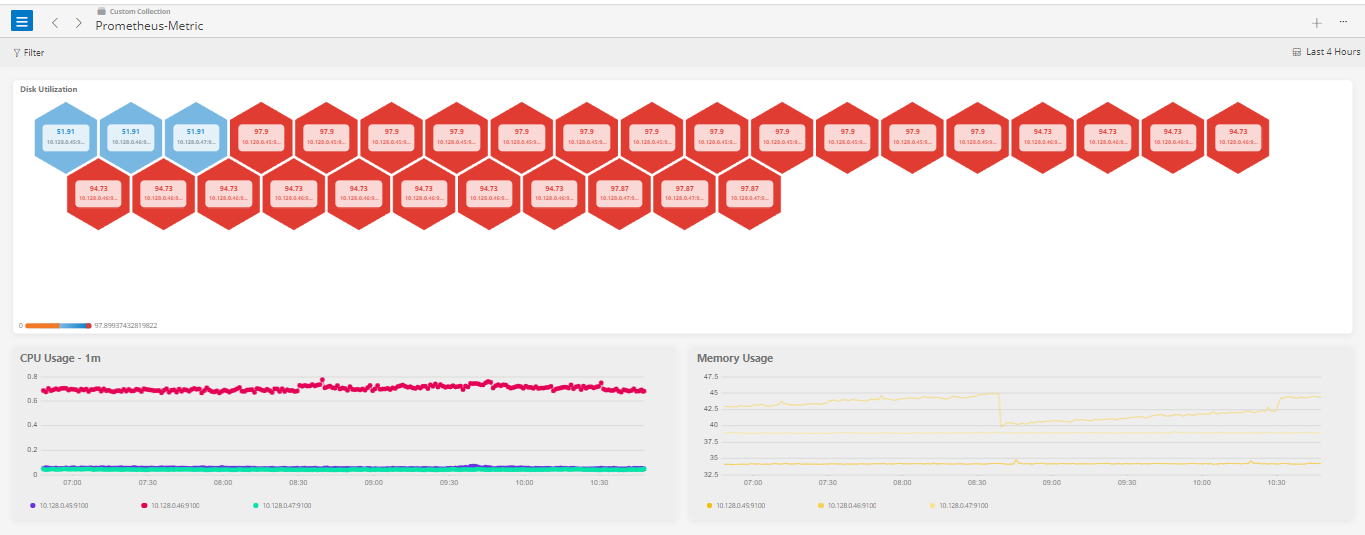
    OpsRamp today announced it has added the ability to ingest data captured via the open source Prometheus monitoring software into its namesake IT operations platform infused with machine learning algorithms.

    In addition, the company is adding support for customizable dashboards using the Prometheus Query Language to create visualizations of hybrid infrastructure performance. Also, a set of available tools makes it easier for IT teams to discover when workloads have been added to a cloud. These capabilities became available with the Spring 2021 Release of OpsRamp’s IT operations platform infused with artificial intelligence (AIOps).

    Finally, OpsRamp has also created an alert definition model that streamlines the alerts generated by the AIOps platform and its integrations for the Microsoft Azure cloud and the Cisco HyperFlex platform deployed in on-premises IT environments.

    Deepak Jannu, senior director of product marketing for OpsRamp, said that as IT becomes more complex to manage, many IT teams are starting to realize that managing these environments without help from an AIOps platform won’t be possible. As such, much of the fear and loathing that was initially associated with AIOps is giving way to acceptance as IT teams start to realize these platforms augment their capabilities versus replace them, added Jannu.

    Much of the complexity is being driven by the rise of cloud-native, microservices-based applications that tend to have lots of dependencies. OpsRamp has primarily been encountering Prometheus in these environments. However, Prometheus can also collect data from legacy applications, as well, so over time, the expectation is the open source monitoring tool will be employed more widely.

    As AIOps platforms become more widely employed, there is no doubt job roles within IT organizations will change. As lower-level tasks become automated, IT teams should have more time to spend resolving complex issues once the AIOps platform has identified a baseline for how applications should optimally behave. In many cases, the need for personnel to perform rote tasks that no one in IT wants to actually do will be eliminated altogether.

    DevOps teams that are committed to automating IT tasks will naturally be among the first to employ an AIOps platform to augment the capabilities of site reliability engineers (SREs) that are often challenging to hire and retain.

    In general, Jannu noted that the observability that many IT organizations now demand can’t be achieved by simply collecting more metrics. IT organizations will need to invest in an AIOps platform capable of making sense of all the instrumentation data being collected. The challenge now will be defining the right division of labor between man and machine in an IT environment, Jannu added.

    At this juncture, AIOps, to one degree or another, is inevitable. In many cases, machine learning algorithms are already being employed to optimize applications or a specific class of hardware. The decision IT teams will ultimately need to make is determining whether to replace their existing IT operations platform or wait for the provider of their existing platform to get around to adding AI capabilities.

  • CircleCI Acquires Vamp to Apply AI to CD

    CircleCI Acquires Vamp to Apply AI to CD

    CircleCI today announced it has acquired Vamp, a provider of an orchestration platform for automating application releases. CircleCI at the same time revealed it has garnered an additional $100 million in financing to attain a $1.7 billion valuation.

    Jim Rose, CircleCI CEO, said Vamp will play a significant role in advancing the capabilities of the CircleCI continuous integration/continuous delivery (CI/CD) platform at a time when the rate at which applications are being deployed continues to steadily increase. In fact, CircleCI claims its platform is now being employed to process 2.5 million jobs processed per day.

    The Vamp platform makes it easier to construct and orchestrate a multi-stage release cycle involving, for example, canary releases of an application. It then employs machine learning algorithms to validate the impact, performance and quality of releases based on the service level objectives defined by an IT team. If anything is determined to be amiss, the platform will then automatically roll back a release.

    CircleCI

    While many organizations have successfully implemented CI best practices, the ability to continuously deploy application releases has proven to be a more elusive goal. Each platform on which an application is deployed has unique attributes. The addition of machine learning algorithms that can provide continuous validation of deployments should help drive a sea change in the way applications are being developed and deployed to improve the overall state of CD, noted Rose.

    Those machine learning algorithms, along with other forms of artificial intelligence (AI) won’t replace the need for DevOps teams as much augment them at a time when IT environments, thanks in part to the rise of microservices, are becoming more complex. In fact, with the arrival of containers, Kubernetes and serverless computing frameworks, it’s becoming next to impossible to manage an IT environment without the use of AI.

    Rose added that, as the line between pre-production and production environments continues to blur, it’s critical for IT teams to more closely align CI and CD workflows. Rather than isolating CD from CI within the context of a GitOps workflow, the goal should be to integrate those processes more closely. It is becoming more apparent that the elements of what constitutes an application are more empirical thanks to, for example, configuration files that are now stored in a Git repository along with application code. That tighter integration ultimately makes it easier to test and validate applications before they are deployed. Metadata that can be analyzed to optimize application development and deployment can also be more easily captured as part of a continuous feedback loop.

    That approach is more critical than ever, because the days of the “Big Bang” deployment of an application update are over. In its place are now a steady stream of updates that deliver new capabilities, which need to be continuously vetted, noted Rose.

    Each successive era of DevOps is, naturally, going to be more automated than the previous one. The challenge is recognizing when those new eras arrive before rivals gain an advantage in speed and agility that becomes too big to overcome.

  • Linux Foundation Embraces Lightweight API Gateway

    Linux Foundation Embraces Lightweight API Gateway

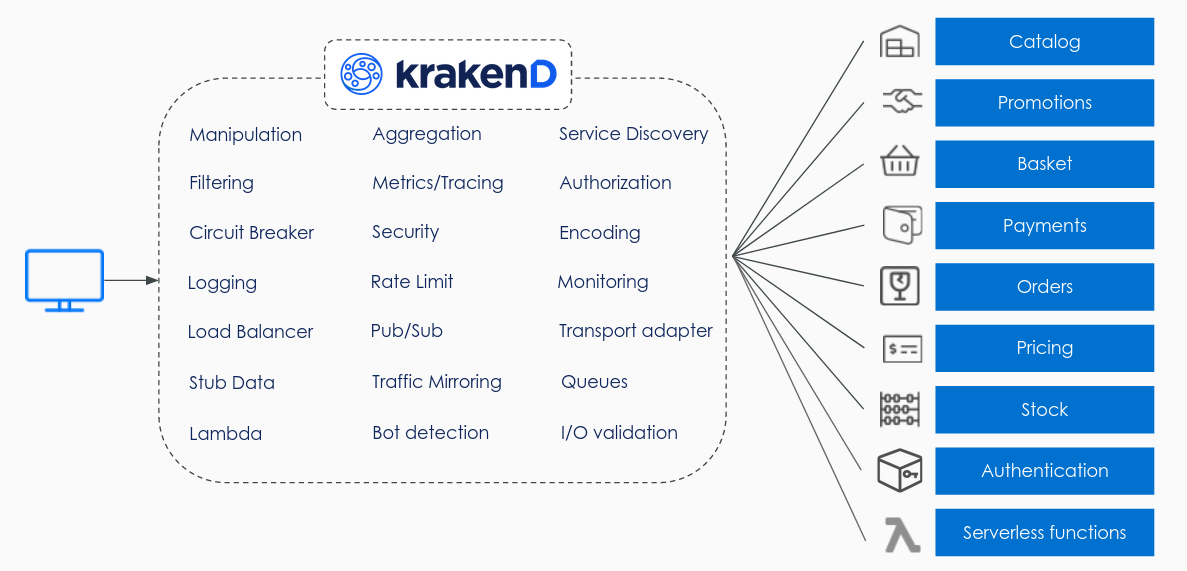
    The Linux Foundation announced today that an open source application programming interface (API) gateway known as KrakenD has become the latest project it will oversee.

    Rechristened the Lura Project, the lightweight stateless API gateway was originally developed by KrakenD, which plans to continue to offer an enterprise edition of the platform.

    KrakenD CEO Albert Lombarte said the API gateway it developed provides a more streamlined approach to managing APIs that doesn’t require an organization to install a separate proxy or database. All the reverse proxy capabilities most organizations require is already embedded within the API gateway. That approach also makes it easier for IT teams to decouple back-end server applications from client applications because now an API can be more easily updated without impacting client applications, Lombarte added.

    KrakenD Linux Foundation

    Organizations that already contribute to the ongoing development of the API gateway include 99P, Hepsiburada, Openroom, Postman and Stayforlong. The API gateway also is embedded in a variety of other platforms, said Lombarte; he noted that the number of servers running the gateway now exceeds more than one million per month.

    API gateways have been available in various forms for years, but with the rise of microservices the number of APIs organizations need to deploy and manage continues to rise steadily. Each microservice added to an environment adds yet another API. At a time when microservices-based applications are at the core of many digital business transformation initiatives, IT teams must employ a more flexible approach to managing the interactions between APIs.

    Thanks in part to the role they play in enabling digital business transformations, APIs are also being targeted more frequently by cybercriminals that have come to view them as an efficient way to exfiltrate data or inject malware into an application environment.

    It’s not clear what impact the Linux Foundation’s support might have on organizations’ selection of one API gateway versus another. In fact, many organizations are still trying to navigate when to employ an API gateway versus relying on proxy software to manage a handful of APIs versus a service mesh to manage thousands. The issue comes down to not just how many APIs there are, but also the overall weight of the platform being employed, said Lombarte. A service mesh typically requires more time and effort to deploy and manage, he noted.

    As the number of APIs in an IT environment continues to increase, there may come a day when organizations will have to revisit how APIs are created and maintained. All too often, APIs are still created as an afterthought once an application is created. They tend to be brittle and, as a consequence, still break often. A more holistic approach to managing APIs based on a set of DevOps best practices is required. The challenge is getting DevOps teams to prioritize APIs when there are so many other issues that require their attention. Nevertheless, it’s become apparent APIs are, in many cases, becoming too strategic to the business for their management to be left in the hands of a single development team.

  • Why Browser and API Testing is Shifting Left

    Why Browser and API Testing is Shifting Left

    For developers working with cloud-native technologies, software testing and quality assurance is a key part of product development. For most teams, testing has “shifted left,” so the quality of the code can be assessed as it moves through the CI/CD pipeline. This approach to quality assurance reflects the rise of DevOps and other modern development practices – developers today own their applications from end-to-end, and conducting testing early in the product life cycle is how they find potential bugs, save their organizations time and money and build products that delight their customers.

    More recently, developers have added end-to-end API and browser tests into their CI/CD practices, extending the scope of their testing and quality assurance practices. By testing how code performs on different browsers and how it interacts with important data sources, developers have added another layer of quality testing to the early stages of their development processes. This has brought added benefits to other “shift left” practices, such as unit testing and security testing, and has led to a new understanding of quality assurance.

    Traditional Approaches to QA Can’t Support the Pace of the Cloud

    As companies have migrated to the cloud and adopted agile development methodologies that align with DevOps practices, they’ve encountered conflicting priorities between releasing code quickly and maintaining the highest level of quality on each release. Traditional manual testing techniques were not built for agile workflows, but instead supported older waterfall methodologies, in which testing could be conducted as a discreet instance before code went to production. With agile development, having a specific team in charge of all testing right before production is not the most sustainable approach, as it hinders the rapid pace of development that the cloud enables. This is why testing is “shifting left” to earlier stages of the development process, and why manual testing is being done by people embedded within each engineering team.

    Cloud-Native Teams Have Shifted Left Into CI/CD Pipelines

    As part of these agile methodologies, companies have moved toward leveraging CI/CD practices to ensure code is always in a state where it’s ready to be deployed. As code moves through these pipelines, developers want to ensure they are able to catch bugs earlier in the development cycle. To do this, they’ve taken to testing earlier and more often.

    In particular, developers have increasingly recognized the value of end-to-end testing throughout their CI builds. API tests allow teams to verify end-to-end workflows by chaining HTTP requests and API calls, so they can validate all the layers of their systems from worldwide locations. Browser tests capture the user’s view during critical transactions, so teams can understand how UI changes are impacting web applications. Shifting both left into CI/CD pipelines saves time and money, as fixing a bug earlier in the development lifecycle is much less expensive than trying to fix it at the last minute, when it has grown in complexity and scope.

    It also means many issues are caught by the developers, without the intervention of another engineer manually validating their work. This reduces the number of cycles required to find a bug, allowing the code to be circled back to developers, fixed and re-deployed to a testing environment. When regressions are caught early, developers can focus on the details that will make the product great.

    Visibility of Metrics, Traces and Logs Drives Value

    Running browser and API tests in your CI pipelines is beneficial, especially when teams can correlate these tests with data from across their stack – front end and back end, application and infrastructure. With correlated metrics, traces and logs that can be accessed easily without toggling between different products, teams will have the full context necessary for both detecting and troubleshooting failed tests. Detecting the failed tests allows for the rollback of bad code before it goes to production, and the correlated full stack data can be used to troubleshoot and fix any issues not caught during the development stage. This creates a new culture of quality assurance, in which maintaining quality is a holistic process that involves every part of the development cycle, and draws on data from every part of the stack.

    Consistent Quality Requires Collaboration

    This change in quality assurance goes beyond the practice of shifting browser and API testing left, and represents a fundamental change in how engineering teams collaborate within an organization. Testing happens before code goes to production, continues with robust monitoring once code is live, involves data from across the stack and is the responsibility of teams from various parts of the business. With this collaborative approach, for example, a front end engineer can easily identify an issue in the integration of their latest changes with the way the back end APIs are structured. They can then engage with the back end team owning this service to collaboratively iterate and find the best solution to resolve the issue. It may start with a shift left, but, ideally, it ends with the removal of silos and the opening of communication channels among teams.

    Automated QA Delivers Customer Value Faster

    A fully operational approach to quality assurance means that issues are resolved faster, or even resolved while code is still in development, so they never become issues at all. This creates a virtuous cycle – fewer regressions means less downtime, which makes customers happy, and frees up engineers to build new products, which makes customers happier still. That baseline of reliability and customer experience enabled by effective quality assurance is what allows for new innovation that delivers value to customers.

  • The Evolution of SRE and Developer Roles

    The Evolution of SRE and Developer Roles

    As an industry, we’ve seen cultures and roles shift throughout IT teams — specifically, the role of ITOps site reliability engineers (SREs), various developer roles and the culture of DevOps. Most of these roles operated – or still operate – in silos, and didn’t understand (or care to understand) how each other’s role worked. More importantly, they didn’t know how to work together. But these roles are starting to overlap, driven by the increase in demand for customer experience and, subsequently, in intelligent observability, or observability with AIOps. Before we dive into the ‘how’ behind the overlap, let’s look at how each of these roles performs today.

    Developer

    While the specifics of what a developer does varies by project, the overarching responsibilities haven’t changed much since the introduction of the role. Simply put, developers write code to create and improve product functionality.

    IT Operations and SRE

    Traditionally, an IT operations professional focused on operating the code a developer put into production; aka keeping the lights on. However, we’re now seeing evolution of the role of highly skilled operations pro to that of an SRE who oversees automation and features surrounding the product, like CI/CD pipelines, infrastructure-as-code and the ability to monitor and observe the services and components within.

    QA

    Traditionally, QA would test the code the developer wrote and move it down the deployment pipeline. But we’re moving away from traditional QA. Now, the role sets up an automated framework for the developer so they can automate tests — similar to how the SRE sets up the CI/CD pipeline and observability framework to build, test, deploy, verify and monitor their code.

    DevOps

    DevOps has, in some cases, evolved from a practice and culture into a role. The DevOps engineer prepares the automation and the CI/CD pipeline for the developer to push out their code to test and, ultimately, production. But let me be clear – I believe the idea behind the practice of DevOps is that the practitioner does everything — they own testing frameworks, CI/CD pipeline and infrastructure. They own end-to-end product development and operation, so when anything does go wrong, they know exactly what to do, where to go and how to fix it.

    In the end, if a SRE can develop everything around the product code and knows how to fix the product — isn’t an SRE actually a developer? What if we have a really skilled developer who sets up the automation and observability framework to get their code from their keyboard to the user as quickly as possible — without breaking anything, of course — while also building and improving all the infrastructure and components surrounding the product? Isn’t the developer an SRE, or at least performing site reliability engineering?

    The short answer, in my opinion, is yes. And there’s one guiding force behind this amalgamation, this crossover; ultimately, this evolution: intelligent observability.

    The role of observability with AIOps

    Traditionally, and with the use of many tools, DevOps practitioners and SREs have had to — manually — battle floods of data coming in from all their endpoints, services and products. This can feel like a never-ending struggle. It can lead to a lot of toil and time spent on maintenance, when what developers really want is focused time to do what they love – write code, create and innovate. Not to mention, the result has a negative impact on the customer experience.

    But now, new tools are surfacing to support the everyday needs of SREs and DevOps practitioners. For example, intelligent observability, or AIOps, applied to observability data like events, metrics, traces, changes and logs, gives teams clearer insight into not only where complex data is coming from, but why an issue is happening and what action they need to take to resolve it. They can spend less time operating and more time innovating.

    As these roles continue to evolve, it’s important SREs and DevOps practitioners remain agile and willing to adjust to keep up with the latest technologies supporting their day-to-day workflow. AI can be the key to keeping the incident count down and the customer experience up.

    Looking Ahead

    If you’re currently in one of these roles, consider how you are practicing. Whether you’re a developer, a QA engineer, a DevOps practitioner, or an SRE, have you evolved your role to fit your company and customers’ needs right now? As these roles overlap with the application of intelligent observability throughout your development life cycle, it’s possible to deliver better products and fix reliability issues faster. It’s up to you to decide if you want to embrace the evolution of your role and intelligent automation or stay put and risk falling behind.

  • ServiceNow Acquires Lightstep to Gain Observability Platform

    ServiceNow Acquires Lightstep to Gain Observability Platform

    ServiceNow today announced it has acquired Lightstep as part of an effort to add an observability platform to its IT operations portfolio. Terms of the deal, expected to close this quarter, were not disclosed.

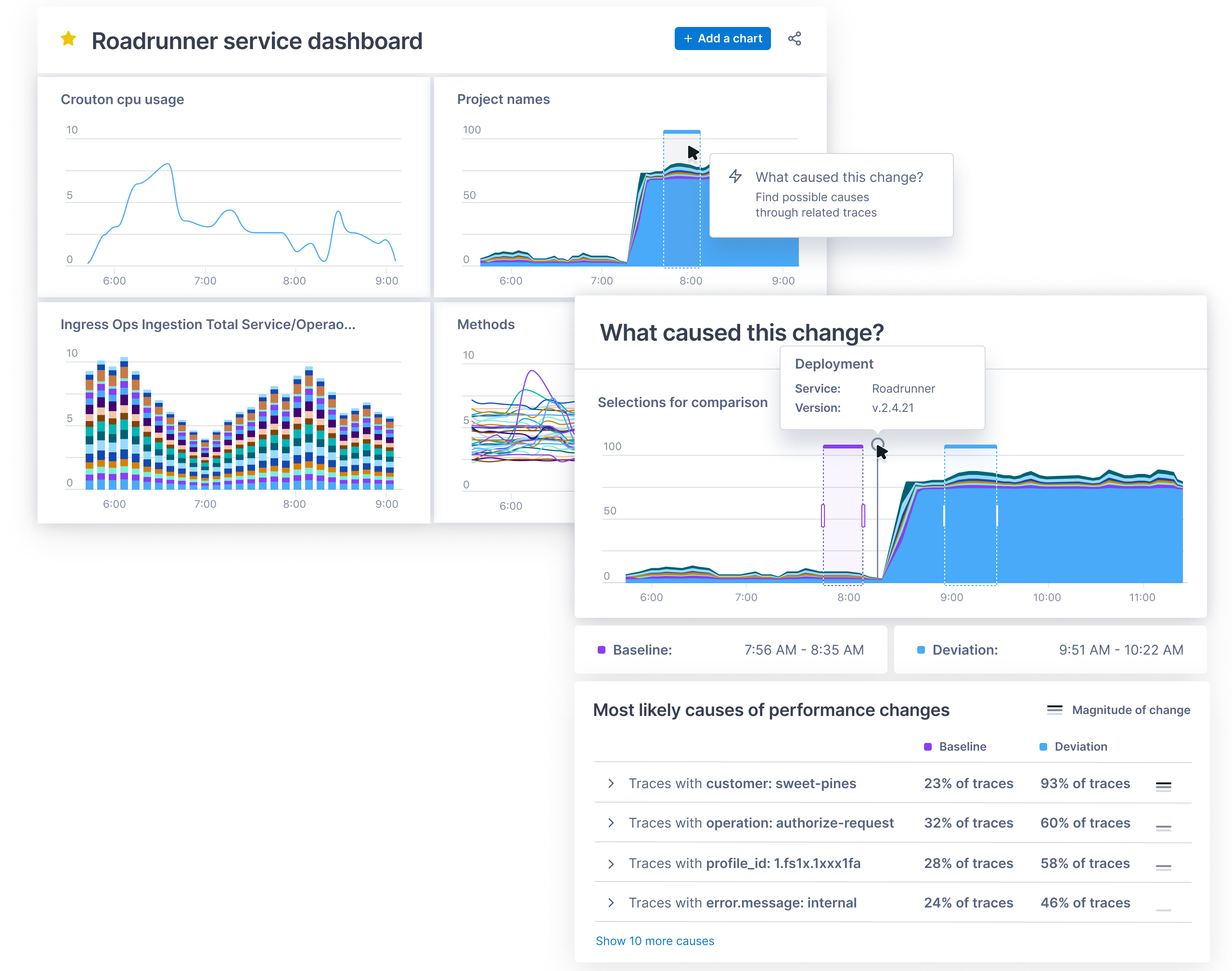
    The Change Intelligence observability platform from Lightstep is based on a time-series database that is capable of processing a trillion events each day. It was built by the same team that created Monarch, the globally distributed in-memory time series database system that Google employs to monitor its applications and systems. Lightstep team members also co-created both the OpenTracing and OpenTelemetry open source projects for collecting traces, metrics and logs.

    Pablo Stern, senior vice president and general manager for IT workflow products at ServiceNow, said ServiceNow will employ Lightstep to enable IT organizations to observe both monolithic and microservices-based applications as IT operations and DevOps teams continue to collaborate more closely with one another. The goal is to provide a single pane of glass through which IT teams can observe their entire IT environment via the Now platform that ServiceNow makes available via a software-as-service (SaaS) delivery model.

    That approach will enable DevOps teams to programmatically manage IT environments alongside IT administrators employing graphical tools, noted Stern.

    Lightstep CEO Ben Sigelman added that, in time, the number of users of that observability will only increase as more application stakeholders start to track software development projects that are at the heart of various digital business transformation initiatives.

    ServiceNow

    Thanks mainly to the rise of microservices that are now being deployed across highly distributed computing environments, it’s become more difficult to discover the root cause of an IT issue. Microservices-based applications have lots of dependencies that, while serving to make the overall application more resilient, conspire to make it difficult to determine which specific microservices might be adversely impacting the performance of an application.

    The time-series database that lies underneath the Change Intelligence observability platform makes it feasible to go beyond logs and metrics to process distributed traces that provide more insight into application behavior. Ultimately, the goal is to enable organizations to innovate faster with a higher degree of confidence in the IT environment, said Sigelman.

    As far as the march to observability in the enterprise is concerned, it’s still early days. While observability may be a core tenet of any DevOps practice, most IT organizations rely on myriad tools that surface data the teams then attempt to correlate. Whenever there is a major issue, those IT teams typically convene in a “war room” to compare reports generated by the various IT monitoring tools employed. Observability platforms that collect and process distributed traces used to instrument an application using a consistent set of specifications, frameworks and libraries. The OpenTracing and OpenTelemetry tools are significant because they provide an open source approach to instrumenting applications that reduces the total cost of observability. In comparison, many legacy application performance management (APM) platforms employ proprietary agents to instrument applications.

    Naturally, each IT organizations will be moving down the path toward an observability platform that provides greater application context. At this point, however, it’s not clear to what degree observability platforms will need to be installed before making the transition to microservices versus being a capability that only gets appreciated once the trouble with microservices finally becomes apparent.