Category: Blogs

  • What Does Observability Mean to You and How Does it Scale? – Observability at Scale TV EP 1

    What Does Observability Mean to You and How Does it Scale? – Observability at Scale TV EP 1

    Observability is evolving quickly as a concept and practice, but what does observability really mean to you and your organization? For many DevOps teams it’s all about speeding MTTR across complex infrastructure and applications. For others, the notion of observability-driven development is being embraced as a strategic business initiative tied to customer success. Where does your team stand in this process, and what are the keys to successfully scaling observability to meet your specific requirements? Join us for this thought leadership discussion. What does observability mean to you, and how does it scale? Alan Shimel is joined by Mitch Ashley, Tomer Levy, co-founder and CEO of Logz.io, Helen Beal of DevOps Institute and Brian Dawson of Linux Foundation. The video and a transcript of the conversation are below.

    Alan Shimel: Hey, everyone, I’m Alan Shimel, CEO of MediaOps, DevOps.com, Security Boulevard, Container Journal, and TechStrong TV. Welcome to a new series that we’re launching here on TechStrong called “Observability at Scale.” I’m really excited to launch this particular series, because to me, it deals with one of the, you know, one of the biggest issues, I think, facing dev ops, SREs, development teams, IT teams, in general, today. And that is what we call observability. Now, yes, ten different people, you’re gonna get ten different definitions of what observability is, and that’s kind of a double-edged sword, it’s a good thing and a bad thing, much like, there was no official definition of dev ops. However, it’s too big, no pun intended, too big an issue, too big a topic for us not to really be able to put our finger on.

    And especially as it continues to scale, because scale is probably the biggest issue around observability. But before we jump into all of this, we’ve assembled what I think is an amazing panel for this first show, and I’m gonna introduce them to you here in just a moment. Before we do, I wanted to give a big shout-out to our friends at Logz.io who are sponsoring this series and making it happen. You know, we need to pay the bills, here, and we can’t do it without sponsors, so many thanks to our friends at Logz.io. Let me now introduce you to our panel. I’m gonna start off with my friend Brian Dawson. Brian’s a frequent contributor to TechStrong TV, has been for years, but I’m gonna let him kind of introduce himself. Brian, say hello.

    Brian Dawson: Hello, Alan. Thanks for having me on. I’m Brian Dawson. I currently am the vice-president of developer relations and ecosystem development at the Linux Foundation. I came here by way of, ah, god, I hate to say _____, a multidecade career in software, as a software professional. Starting with Console Game Development, where we launched the PlayStation, but I spent about the past decade with a focus on optimizing software development and delivery via CICD and dev ops practices.

    Alan Shimel: Fantastic. Thanks, Brian. Next up is our friend, the chief ambassador of the DevOps Institute [laughs], Helen Beal. Helen, welcome.

    Helen Beal: It’s lovely to be here. Thank you, as always for the invitation. As you just said, I am chief ambassador of DevOps Institute. I’m also chair of the Value Stream Management Consortium. I came to all of this via many, many years of being in dev ops in ways of working culture, mainly, in Europe, as you can probably tell from the accent. I’m also, bizarrely, quite a lot in the Middle East, as well. And, yeah, delighted to be here amongst lots of people _____ _____ _____.

    Alan Shimel: Very good, pleasure to have you, Helen. I didn’t recognize any accent. [Laughs] Our third panel member is Tomer Levy – if I mispronounced it, I know it’s Levy, Tomer? Or how do you pronounce Levy? Levy?

    Tomer Levy: Levy, Levy, anything goes, Alan, for you, whatever you want.

    Alan Shimel: Well, no, in New York, we say Levy, but I know in other parts of the world, it’s Levy, so. Anyway, Tomer is CEO, right, of Logz.io, but why don’t you give’em your background, Tomer.

    Tomer Levy: No, absolutely, Alan, thank you, this is an exciting show. I’m Tomer Levy – that’s how I say it. You have to guess where the accent is from, but I’ll leave it to you guys to guess. If you say which accent [crosstalk].

    Alan Shimel: Mm-hmm, what accent?

    Tomer Levy: Exactly, what accent, exactly. Good, so I’m Tomer, I’m the CEO, one of the founders of Logz.io. We’re a cloud observability company, you know, hence the discussion and hence why we’re so excited about this topic. For me personally, I live in Israel, so that’s the accent. I am a second-time founder; I built a company before Logz.io. This company was around containers and, you know, a little bit before _____, we built a really cool container technology, and observability was a huge challenge. And when I moved to my next role, I said, you know, “How am I going to solve this?” and one day I saw this amazing opensource and I said, “I am going to make sure every developer in the world can use this opensource the same way I wanted to use it but could never do it. I had to use other tools _____ _____ which I didn’t like so much. So this is where I’m coming from, this is why I’m passionate about it, and I’m looking forward to this discussion.

    Alan Shimel: Fantastic and welcome, and thank you for the sponsorship. Last but not least is my cohost of the show along with me, and it’s my friend Mitchell Ashley. Mitch, why don’t you introduce yourself.

    Mitchell Ashley: Always good to be here and always good to be amongst friends. Thank you, everyone, for joining. My name is Mitch Ashley. I’m CEO of Accelerated Strategies Group, which is _____ _____ firm that’s focused on dev ops, cloud-native, cybersecurity, digital transformation. And I’m also CTO of MediaOps, where I work very closely with Alan and team, and appear on TechStrong TV on a number of areas. I’m both a product creator as well as a practitioner, CIO, kinda lived with it, so, implemented dev ops on IT teams and on product teams. So, I know the observability challenges well. [Laughs]

    Alan Shimel: Absolutely. Thanks, and thanks for joining us, Mitchell. So, guys, as I mentioned, this is our first show in this series, and I think though we wanna get to the issue of scale, I think before we get to the issue of scale, we need to first define observability. We were talking off-camera, and Helen mentioned that they were chopping down a tree in front of her house out there in the UK, and was it interfering, did anyone hear it, was it a lot of noise. None of us heard it. So of course the issue raised, if no one hears the tree being chopped down at Helen’s house, has it really been chopped down. And, you know, I guess it’s a question of what we observe and what does observability show us.

    But that’s not a great definition of observability. I’d like to – who wants to take a first crack and kind of saying, “Well, what exactly do we mean when we say ‘observability’?” Now, Tomer, I don’t wanna put any pressure on you, but you’re the CEO of the observability company, here, so, I’m gonna ask you to kick us off on that, and then Brian and Helen and Mitchell and I can jump in.

    Tomer Levy: No, for sure, I mean, you know, it’s a good question, how do you define, because people define it as signals, they tell you what the software is doing, and it’s all true. For me, it’s Mitch without glasses is when you don’t observability, right? You take your glasses off and you’re half-blind, right? So, I know you can see well, but for me, it’s these new glasses that you look into software, right, software is there to run a business. It’s e-commerce, it’s gaming, whatever it is, if you have glasses which are really, really good, I imagine, like, you put it on and you see these, you know, especially with _____ architecture, like, hundreds of different cogs moving around. And just to find this one place where the cog is stuck or something in your business is failing, these are the glasses.

    And people need these glasses today more than ever, right, with microservices, with modern architecture, with cloud, there are so many moving cogs, and observability, for me, is just a way to understand how is your business performing on a technical level. And because if some tree fell down inside your, you know, operation, no one cares, but if it impacts the business, then it’s important. That would be my definition.

    Alan Shimel: I think that’s a good one. Helen, Brian, interested in [crosstalk]?

    Helen Beal: [Crosstalk], for me, it’s a characteristic of a system that needs to be instrumented into a system, so I kind of go back to the mechanical engineering roots of it and the control theory. Also, with my dev ops background _____ _____ _____ it’s telemetry everywhere, so, this idea that everything is emitting lots of data, but with observability, I think it’s a more conscious effort in terms of what we’re instrumenting, what data we’re looking to emit. And then, the monitoring part is what we do when we observe our observable system. So, slightly different view, but I think we’re all trying to achieve the goals with this. Brian?

    Brian Dawson: Yeah, well, and I think a key part of the sort of traditional control theory around observability is this concept that I can derive or identify the state of a system based on observing outputs. And I was thinking about it earlier, and seeing it as akin to these Ring cameras that everybody has, right. And, you know, initially, it’s just put up a video camera, see what’s going on around my home. That itself does not provide me, necessarily, with observability. I can observe an aspect, but now imagine, as I start to get 360 cameras around my house, and water sensors, and a smart thermostat, right, I’m establishing a number of outputs that allow me to observe the state of my home: is it empty, is somebody approaching it, what is the temperature. Then I think another layer is when we talk about integrating and extending it to provide for action, right? So when we look at another layer of observability that we get with modern smart home systems is I can not only observe that it’s too hot, but I can respond and quickly resolve that issue to bring my home, the system, into a state that I’d like it to be in.

    Alan Shimel: Fair, good stuff. So, here’s my issue, right, I consider myself a businessperson, right? I know a lot about technology, but I’m not a developer, I’m not an SRE. Truth be told, I’m a half-assed security person, even. [Laughs] But I know enough about this stuff to be dangerous, right? And if I can’t understand what it is that something’s supposed to do and put my finger on it, it’s very hard for me. For our audience out here, guys, right, where does the rubber meet the road on observability?

    Helen Beal: [Crosstalk] start with a crack on that one. 

    Alan Shimel: Go ahead, go ahead. [Laughter]

    Helen Beal: So, we are in a digitally disrupted world, so most organizations are trying to transform to take advantage of the opportunities that the Internet provides us, and that means that they need to leverage a couple of things. They need to leverage dev ops and they need to leverage cloud. Once they start leveraging cloud, they create distributed systems, so we’re moving _____ _____ to microservices to a much more complex environment. So this is one of the issues of scale. I think we’re gonna talk about a different issue of scale, as well. But once we’ve got those microservices environments, we can then apply dev ops principles, because we’re able to build, test, and deploy in very small pieces, so we can go much faster. But there’s always a tradeoff, right, and the tradeoff here is that we’ve now got thousands, maybe even more than thousands, tens of thousands, millions, perhaps, of little bits of things, microservices that we need to manage.

    And therein lies the problem, that now all our traditional monitoring systems don’t really work, because we’ve got all this other stuff to look at. And then, from the business perspective, okay, it’s complicated, but why is it a real problem? Well, it’s a problem when something breaks, ’cause if something breaks, it’s unplanned work, and if we’re doing unplanned work, that means we’re not doing the planned work we want to do, so we’re not innovating. So if we can fix the problems around unplanned work, we are able to become a higher-performing organization, because we are able to deliver more value to our customers. We can, you know, spend more time on technical _____, we can spend more time learning, and become a dynamic learning organization and take that way.

    There’s a whole other bunch of use cases, by the way, around observability, that aren’t about debugging and instant management, which we’ll probably come to, as well. But that’s my view on why this is important and people should be trying to invest in building an observability culture and figuring out what tools they need to implement to support that goal.

    Mitchell Ashley: And I’m gonna really build on that. Helen, I very much agree that it’s, our software architecture is cloud-native, that initially sort of kicked off the observability, how do I manage thousands, maybe millions of bits _____ objects containers with code in it. I think it’s, observability, to me, is sort of an onion, and, yes, it’s managing the complexity of our software architectures like cloud-native, but it’s a lot more than that, ’cause we have infrastructures code, we have multi-cloud, we have distributed applications, we have dynamic environments where software is ephemeral. Those clusters may be running containers _____ _____ now gone, and another five seconds later, how do we know what happened. _____ _____ _____ to get back to Brian’s point about what was the state of something that might have caused an error, so we can get to root cause analysis very quickly. I think, ultimately, to Helen’s point, also, is it’s our ability to operate at speed, just like we can develop software at speed. ‘Cause if we can’t operate it at speed, you know, all we’re doing is building really fast cars and smashing into brick walls. That’s not fun for anybody. [Laughs] So I think that’s what really, you know, if I had to kind of say, I think the most important thing that observability has to do is match and support the pace of the business, and at the _____ _____ rate, as well as the rate we create software.

    Tomer Levy: Yeah, Mitch, I completely agree. If I can piggyback on that, you know, companies today cannot compete if you’re not delivering code fast to production, if you’re not delivering changes, you’re just gonna lose. So there is this tension of, “I have to deploy fast, I need to make my engineering team independent, not fearful of making changes,” whether I’m a Pizza Hut or I’m a Walmart, I have to go [snaps] really fast. And on the other side of it, more and more portions of your business relies, you know, on online to work well. So if you deploy really fast [snaps], you might break the entire business. So there’s enormous risk and enormous opportunity, and I think, in a way, observability is that bridge that connects the risk and the opportunity, right? Because if you have an amazing level of visibility with these glasses, that see the microservices, that see all this complexity, and tell you, “Hey, you just broke something, but you can fix it in 60 seconds before anyone knows.”

    And then, it’s amazing, and this is where it works amazingly well and it’s really hard to get there, it’s an ongoing challenge, because the complexity explodes, Helen, as you said, microservices, serverless, this enormous amount of data and telemetry is just, it becomes a huge data problem rather than – you know, and someone really smart comes and tries to search the metrics _____ _____ _____ it’s really, it’s more of a machine problem than a human problem, and this is where I think the world is going to.

    Brian Dawson: Well, you know, and I’d love to add, I really actually see observability, and speaking as somebody that has asked people, oftentime, “What’s the difference between observability and monitoring?” you know, that said, as my understanding progressed, which I’d love for somebody to comment on, I’ve really started to get bought into the fact that observability is a key manifestation of the contract between dev and ops that a dev ops culture looks to drive or speak to, right. We have tooling technology, at another level process and practice, and also maybe we can talk about kind of the culture around observability. But effectively, building a real communication stream to manifest the construct between developer and operations, that enables us to move fast, right, and all have sort of a shared set of data.

    Helen Beal: I think that’s a really important point that you’re making, as well, that the observability isn’t just for IT ops. It’s for everybody in the value stream, so we have ODD for developers, we have the concept we’re testing, that testability is equivalent _____ _____ to observability. We have people like product owners that will understand about the value, which is a slightly use case that I kind of alluded to earlier, and that observability allows us to understand whether our system’s working, but it also allows us to understand customer behavior, which is a very kind of interesting value realization use case. So, yeah, I completely agree, observability is a culture for everybody to be involved in.

    Alan Shimel: Agreed. So, Brian, you opened a can of worms for me [crosstalk].

    Brian Dawson: Good, I like to do that, you’re welcome.

    Alan Shimel: Yeah, again, you know, we look at it from a business point of view, when I first started DevOps.com, right, one of the important things was APM, right? App Dynamics was a big dev ops company, and they were all about APM. And then, good friend of mine, Dave Link, the CEO at Science Logic said, “Nah, APM – ” he told me, one day, “Alan, APM’s done. It’s AI ops. AI ops is what it’s about, right, and that’s replacing APM.” And, you know, and we’ve had this evolution of names and, you know, three-letter acronyms to describe, as Brian says, that intersection of dev and ops, to describe what to me is to observe, right? To observe and then to act on the data that, you know, the data stream that I’m getting from my applications, from the software I’m developing.

    So to me, at a very elementary level, that’s observability. I’m not sure where it fits in, though, to monitoring and performance management, and AI ops, and all of these things. Is observability the replacement term and the replacement for all of these things [crosstalk] something different? Yeah, is it an umbrella or is it –

    Brian Dawson: I think that’s a good discussion, you know, what is it, is it a component of it? Is it now an umbrella term, for all of the types of monitoring kind of activities, data [crosstalk]?

    Helen Beal: [Crosstalk] I was just gonna say, so one of our other work family, if you like, Eveline Oehrlich, who’s actually the research officer at DevOps Institute, she also does research and research in action. She recently delivered a new vendor matrix to the market, which was virtually an AI ops matrix, and it became an AIPA, so, a predictive analytics. So she’s looking to rename this whole market. And if you take a close look at the report, you’ll see she’s got an evolution curve. She goes from APM through AI ops and up into observability, so, she’s definitely heading in that direction. And some of the reasons that she wanted to move from AI ops to AIPA is that she sees these other use cases. So she’s seeing that there isn’t just instant management; _____ is customer experience and lots of other things, that aren’t just to do whether a system is performing properly.

    I think some of the movement from APM is that, when we think about observability, it isn’t just about the application; it is about the infrastructure and the network, as well. So it’s kind of like everything in the observability bucket, if you like. Just one more note on the predictive analytics that might be worth chatting about, as well. I do quite a lot of work in the AIOps space, and that was, of course, named Will Cappelli, then at Gartner, back in 2015. And that kind of really put it into the instant management slot. And when we talk about that, we then kind of end up talking about higher levels of capability around things like self-healing and predictability. And we always have this conversation about predictability, about whether we should be able to predict, because if we can predict, then we should’ve known about it and fixed it already.

    And I think this is gonna lead us further into the AI conversation, because part of what we’re doing with observability is trying to get to our unknown unknowns. So, in traditional monitoring, we had a pretty good idea about what was going on in our monolith, but in our distributed environment, there are lots of things happening that we just haven’t got a clue about. And this is where observability, particularly, the AI part of observability really helps. I don’t particularly like the term “AI ops,” ’cause I think it really narrows us into the ops side of the house, which for me isn’t very inclusive of everybody in the technology and business team. I’ll stop there.

    Alan Shimel: Tomer?

    Tomer Levy: No, for me it’s, you know, terminology is secondary, and personally, I’m not actually such an expert in that. For me, you mentioned the contract between dev and ops and – and the contract is not just, you know, what measures are you going to use, but this should be a part of this, this should work. What you’re building is gonna work, it’s gonna perform, it’s gonna be, of course, traceable, and it’s gonna generate the right metrics, it’s gonna generate the laws. So, someone on the other side, or you, preferably, can understand how your software works. For me, observability is about accountability, it’s about independence, it’s about unleashing engineering team to be – just to run forward and do things and without kind of, “Okay, I’m gonna take this piece of software, I’m gonna give it to someone else, and I’m gonna wish him all the best and have a great night supporting this software.”

    No, no, no, you own it, you build it, you run it, and you generate everything you need to run. I can give an example: our engineering team, they cannot push anything to production without metrics and laws and _____ without _____ _____ _____ before they write the code. As they write, before they deploy, it has to be read, right? Then you push it and then you’re done. You know, it’s gonna be reported, you know how it’s gonna perform, you know, the business impact of it. It’s pretty amazing the impact of that.

    Alan Shimel: [Crosstalk] I’m sorry, go ahead, Brian.

    Brian Dawson: Well, no, I was just gonna say, you know, an opportunity to disagree, but I think it’s an important topic. I know we often, you know, talk about terminology and how we name things doesn’t matter. I’ve actually found, if you look at our industry and what we invest in it, oftentimes, where we go in and we play to own given terms in the market and we create word soup, there’s a real dollar cost behind that. As people, I’d say, sort of chase red herrings, right? “Well, AI ops is what I need to do to have successful development and stable systems. I’m gonna go figure out what that is and tackle it.” Tomer, I agree, it’s not the end all, be all. At the end of the day, it’s the core principle in practice, but I do think discussions like these that we’re having, “What is APM versus observability? Where does it fit?” enables us to establish a common language, so we can start to share and propagate these practices, you know, across different companies, industries, departments, and teams within our orgs. Anyway, sorry, Mitch, I stepped on you.

    Alan Shimel: No, Brian, that was excellent. I’m sorry, go ahead, Mitch.

    Mitchell Ashley: I think you were spot on, ’cause you were playing into what I was gonna say, and kind of speaking as an analyst. Analysts love to create categories and have people _____ _____ the defined categories, so, you know, there’s the person who created whatever category. And so, to early entrance of companies in those markets, I think there’s a bit of the conqueror writes history, right, as the dominant players tend to help establish what those terms are. But what I would say is I think the fluidity of these terms represents both the pace of innovation and just how much innovation is happening, as we get more and more cloud-native applications into production, as we do more and more cloud, multi-cloud, hybrid cloud, all of that, software, infrastructures, code, I think that’s what’s driving these questions of how do we manage all of this, how do we operate all of this, how do we use this information to inform the business about what’s happening. So we can know that we’re achieving our objectives for the customer, for revenue, for whatever it might be.

    But I think this sort of word soup is gonna be with us for a while, while we still kind of sort out getting more cloud-native types of applications into the cloud.

    Brian Dawson: By the way, I’m trying to stake a miners claim, what is that bad analogy, to DevNL. That’ll be the opposite side of, the counter to AIO.

    Mitchell Ashley: Oh, that means you registered the domain, is that what that – [Laughs]

    Brian Dawson: Yeah, I’m squatting, baby, I’m squatting [laughter] [crosstalk].

    Alan Shimel: Right, you know, and it’s all good [crosstalk]. Interesting stuff, folks. We’re way more than halfway past, you know, our time limit, here. And there was another, on the abstract, for those watching, you maybe read the abstract for this show and said, “Oh, I wanted to talk about scale, I wanted to hear about scale.” Let us talk a little bit about scale, but before we do, folks watching this, look, this is gonna be a series, we’re gonna do this I think it’s every-other-week or so. And, I mean, I want to explore the topics of how opensource really has been driving, the driving force behind observability. How some of the opensource foundations, you know, Brian’s with Linux Foundation, how they’ve fostered this growth and helped create this market and opportunity.

    And also, finally, you know, what it means for you out here, right? Observability can be your best friend or your worst enemy, in some cases, and, you know, we want to help you make sense of that, as well. But let’s talk about scale, now. So, guys, and gals, in my mind, you know, what’s the single-biggest inhibitor to successful observability scale, right? The datasets we’re talking about, just the sheer mass of bits and bytes that we need to wrap our heads and hands and programs around, in order to at least, you know, to have that data feed of which then we have to, you know, do analysis and hopefully come up with something actionable. I think that’s what’s held, you know, up to this point, it’s been a real issue. Tomer, I have to assume that it’s one of the reasons you said, “Hey, we need a solution, here.”

    Tomer Levy: Absolutely. I think scale has so many different factors. There’s obviously the scale of the amount of data, right? If you take a monolithic application, you know, line by line, and it’s creating, you generate some logs, and maybe pick up some metrics. Or you take a monolithic application and move it into 50 microservices, now they all need to report where they are, what do they do. It’s almost 50 times more data, so the amount of data is enormous. Now, we used to be fine with just logs. Then, you know, the app D came to the world and said, “Hey, let’s do some tracing.” Now, you multiply this traceability by 50, so you have _____ data, and you have traces, and you have metrics to report kind of meaningful events, and now you have to collect all this telemetry into one place, and the sheer volumes are just ridiculous.

    I see customers and they’re telling us, “Hey, I’m connecting, you know, 300 terabytes, a day, of telemetry data,” and you know it’s 99.9 percent useless. But there is, like the tree that makes noise, there is a bit of signal there that is important, and they really need it. How do you get to it? So there’s the scale of data, there’s the scale of the types of data, used to be only logs, and then it goes to different types of data that need to be merged together. I think there was a scale of human capacity, right, how can humans actually understand machine-generated data. _____ so much data, so much volatility, you know, so many different messages and types, just, they’re so smart, these engineers, but it’s really impossible to process trillions of messages.

    So, this is where you’re trying to solve that with, you know, AI, machine learning, and _____ _____ _____ technologies, and we do the same. We solve the scale problem, we solve the different types of data problem, and try to solve the intelligence with predictive technologies. And I think there is one that people don’t talk a lot about, which is the scale of teams and people within the organization. Now, you go to an organization and it’s not 1 company; it’s like 50 different organizations within the same company. They do app number one, app number two, they do, you know, PI, they do whatever. Certainly, every one of them need observability, and someone needs a whole enterprise observability.

    So, this is a huge _____ that we have actually _____ focused a lot beyond the normal, “How do we level an enterprise?” to really take all these pieces and _____ continue to work together, independently, unleashing productivity, and then the entire organization working collaboratively. So these are the kind of scale that I’m thinking about.

    Brian Dawson: And if I may quickly, Tomer, just, you know, when we talk about the scale of teams in organizations, right, now you look within that as we look at the scale at which we’re delivering cloud-native applications across multiple containers, across multiple sort of agile pizza-size teams, more and more sort of supporting the micro-architecture approach, right. We have multiple teams delivering at speed to their component or their area of an overall system, which oftentimes a customer, the end user experiencing it views it as one system, right? And that sort of underscores the need, as you said, Logz.io is providing the ability for those multiple teams, those multiple areas of an organization to have a shared view, so they can quickly observe, earn, and respond, to provide a unified customer experience, right? So just, as we scale across teams, it gets harder and harder to provide a holistic experience to those end users. Observability helps enable that.

    Mitch Ashley: Yeah, I think it’s also, another way to look at this is, who is working on this problem? And to be able to scale. And I think one of the healthy things about this part of our industry is there’s a number of opensource projects that are part of consortiums like the Linux Foundation and elsewhere. But I know, you know, that Logz.io is involved with Prometheus, as a number of companies are, and there’s a lot of ecosystem of other opensource projects that have split up kind of alongside Prometheus. There’s also, of course, Jaeger and OpenTelemetry, so, different folks are working on this problem in different ways. And what I like about – one of the main things I like about opensource is it brings people together, and that’s what Linux Foundation obviously does, and CNCF, and folks like that.

    This is a problem that no one person, no one company alone can solve. You could take a leadership role in solving it, you know, like Tomer and Logz.io _____, but that, to me, that’s a positive indicator of where we’re headed. And which one of those or multiple of those or win or lose, it’s not necessarily the questions; it’s, we will figure it out and it will come to fruition. And it’ll be able to be something that can be shared across the industry, at least in the opensource form.

    Brian Dawson: Yeah, and I’m sorry to jump back in, Mitch, but I love what you called out, there, in regards to opensource and Linux Foundation. And what we talk about a lot is, you know, we talked about this word soup, which is oftentimes not only analysts looking to define markets, but vendors. There’s revenue attached to defining market and owning terms, and I know while at the end of the day we’re all going into this with good intention, kind of the natural economics of business risks, someone trying to stake claim or ownership to a shared and important concept in their space. So, what I do think is important, whether it’s Prometheus, Linux Foundation, or other foundations, is that we ensure kind of some unbiased, an unbiased impartial playing field, right? For people to align around and establish sort of the concepts and frameworks, which we can all then go build on as end users, practitioners, vendors, et cetera. So I love the fact that I get to be in an organization that is playing a hand in building those impartial playing fields around spaces like observability.

    Tomer Levy: If I can say one more word, here, which I agree, solving such a huge problem as one company, it’s almost impossible. You know, there are some giants who are able to do it, but we’re true believers in opensource, we’re, you know, contributing to Jaeger, we’re working a lot with Prometheus, it’s part of our offering, we’re contributing to OpenTelemetry, to OpenSearch, and other projects. And this is what we – we literally embraced opensource to say, “Hey, this is the way the community’s going to solve it. We’re, you know, as a commercial organization going to contribute and make it better and more accessible.” And I believe forward, just the sheer power of the community will help bring it to becoming much more common technology that hopefully _____ will be able to adopt more easily.

    Alan Shimel: I hope so. Helen, we haven’t heard from you in a little bit. Thoughts on this?observa

    Helen Beal: _____ just making me remember a presentation I did _____ about a year ago now, about community looking at things like the [crosstalk] _____ _____ talk about industrial revolutions and where we are. So, we’re on the precipice of this golden age and moving into this very sustainable way of work, and I think there is a mind shift _____ _____ it’s like a global human mind shift, that we’re moving away from thinking about shareholder value and really understanding that we’re working together for the good of the planet. And maybe that’s a little bit too highfaluting, but I do think, you know, I’m doing work as a consultant _____ _____ _____ _____ Foundation. I think there’s, increasingly, this understanding that we need to cooperate in order to do the best work.

    Alan Shimel: I agree, I mean, I think that’s been one of the catalyst or gatekeepers of this if you wanna call it golden age of software development and digital adoption has been the coopetition, right? The coopetition aspect of industry joining hands with potential competitors, for the common good, of the whole world, and in the industry itself. And I think you’re dead on, Helen, we could look at value stream management, for instance, right, where we are measuring the flow, we’re examining and analyzing the flow. And based upon the flow of that data, you know, based upon the data that we get from this flow, we make decisions on how to do better. You know, contrast that or compare it to observability, right? Where does one leave off and the other pick up?

    Helen Beal: Yeah, I mean, they’re very much together. Actually, in the value stream management foundation _____ consortium is gonna be releasing _____ _____ partnership _____ _____ _____ _____ towards the end of the month. There is a whole article from I think it’s _____ Nelson, which is about observability being the BSM superpower. ‘Cause it is about _____ to look into our invisible pipeline, and this is – it feels like we’re in some kind of like _____, ’cause value stream management’s been around for a really long time, and, you know, it comes from the 1950s _____ _____. And yet, here we are again, but there’s a big difference, because we’re now talking about digital value streams. And they’ve always been particularly challenging, because we make them out of code, which is pretty much invisible, and we can put some _____ on top and things, and dashboards, but there’s a lot of stuff we can’t see in software.

    So, observability really helps us, not just _____ _____ when something’s broken, to fix it, but we can apply it to our whole value stream, look at our entire dev ops tool chain, and understand how _____ _____ and how well that’s flowing. I keep on talking about the use case, which is about customer experience, which, to me, there’s a duality in value stream management. It is about flow, but it’s also about value realization. So we wanna know how fast we’re getting that value to our customer, but we also want to know how they’re experiencing it. Is it good? Is it bad? Do they like it? Do they want more of it? And that’s another thing that observability can really help us with.

    _____ _____ as we talked about, there’s so much data out there that we have a limited _____ _____ ’cause _____ _____ it’s human, so we do need to use our machines against our machines or with our machines, so turning them in on themselves, so using our AI machines to understand our data, and observability machines. And, yeah, I’ve made it sound very simple, so, why isn’t everyone doing it? [Crosstalk]

    Mitchell Ashley: [Crosstalk] [Laughter]

    Alan Shimel: Guys, we’re coming up on the end of our time. You know, I feel like for every one topic we are broaching, it’s revealing two, three, four topics that we need to dive deeper in on our future episodes in this series. So we have a lot, a lot to cover in this observability area, but we’re gonna need to wrap up today. I wanted to give each of you a chance, you know, maybe your final thoughts on today’s episode, you know, on topic. And, you know, give someone, people watching, out here, a reason why they wanna come back and get more of this. Tomer, you went last, I believe, so I’m gonna ask you to go first. You went last in the beginning of the show; we’re gonna ask you to go first.

    Tomer Levy: Sure, yes, you’re so generous, thank you. So, maybe I’ll start with a quick – because I didn’t really say what Logz.io is doing, so I have to do it, otherwise, my boss is gonna be upset with me. 

    Alan Shimel: Okay. [Laughs]

    Tomer Levy: We’re a cloud observability company. We help companies monitor cloud. We offer metrics tracing and log management in one solution, includes _____ and includes everything for observability. The way we _____ differentiate _____ _____ opensource, actually, as I mentioned, our solutions are based on Grafana, on ELK, on Jaeger, so it’s a fully opensource-compatible solution, delivered from the cloud. One of the biggest advantages is, around AI machine learning, we’ve built some really cool technologies, crowdsourcing, machine learning, and bringing together. This is why we’re excited about observability. We have more than 1,000 paying customers, some of the largest companies in the world. And I’m excited for the rest of this series, so I think we covered a lot. I think scale is just a big problem, but there are other aspects of observability I’m excited to talk about. So thank you for having me, Alan, and it was nice to spend time [crosstalk].

    Alan Shimel: My pleasure, it’s my pleasure to have you on, Tomer. Thank you. It’s good to even see you. Helen, you’re the lady in the middle, it seems, so, why don’t you go next.

    Helen Beal: [Crosstalk] the rose between thorns or something. Yeah, so I’m gonna perform the sin of talking about word soup. I do think, my entire career, that the IT industry has its own jargon, but I think most industries do. If you went and looked in healthcare, I think you’d find a lot of TNAs and things, there, as well. But as Brian said, without language, we can’t communicate, so we do need to name things. But one of the things we didn’t really talk about today, which I’ve been thinking about a lot, lately, is TDD, BDD, HDD, IDD, ODD. So we’ve got all these DDs, so I started calling them XDD. So just to try and make sense of what I’ve just said, we’ve got task-driven development, behavior-driven development, hypothesis-driven development, impact-driven development emerging, and of course observability-driven development emerging, as well.

    And I don’t think they’re mutually exclusive, but I’d love to have a chat, in the future, with all of you in this type of forum or separate, about how to connect all these XDDs and make sense of them, to help that contract between development and operations that we were talking about, earlier. And thank you [crosstalk], as always.

    Alan Shimel: Thank you, and there’s always an invite here for you, Helen, you know that. Brian, do you have anything to say?

    Brian Dawson: Yeah,

    being facetious. [Laughter] [Crosstalk] it’s early, went completely over my head, hm. No, you know, I think an interesting topic to explore, as we kind of hit on here, is gonna be the common lineage between some of these things that become part of word soup: agile, continuous integration, continuous delivery, dev ops, observability. Which, you know, at the core, they really all are about control loops and feedback systems, right? In order to manage, state, and achieve a certain level of determinism for the systems that we’re delivering, I think it would be really interesting to talk about where those overlap and where we could uncover common best practices, as we sort of strive to implement these things. And then lastly, you know, a big of a plug is, look, I think as we embark, as we identify these new spaces, these new practices, and we embark on growing and adopting them, it is important that we find a place to meet on common ground, and if we – what did you call it, competitors?

    [Crosstalk] Coopetition, excuse me, it’s still early. Right? So, do take a chance to look into the opensource solutions that Tomer spoke about, do take a chance to engage with the community around those spaces, so you can not only learn about what these things are, but so you can contribute. And Alan, hopefully, we’ll do some of that here, on this channel, in incoming weeks.

    Alan Shimel: Absolutely, Brian, and the same as I said to Helen, always an open invite to come join us and contribute and help out on this. Mitchell, you wanna bring it home?

    Mitchell Ashley: Yeah, happy to, Alan. You know, it’s such an emerging and fast-moving field, what it makes me think of is, I think what we can do on this show, on this series, is help bring some clarity, as well as kind of tease things apart. I kind of go back to the goal, constraint-based management, you know, what’s the constraint? Where do we need to focus on to help move this forward? What’s the signal? _____ I’m thinking Gary Gruver, he’s always talking about the signal, right? Getting clarity about the things that we’re talking about. And so, I think with the brain power here, the experience, and I know the other guests that we’ll have on over time, I think this is something that we can really strive for is let’s, in addition to explore, let’s see if we can elevate a few areas maybe with some clarity. So it’s a good goal to shoot for.

    Alan Shimel: Absolutely. Well, panel, thank you so much for kicking off our series on observability. You guys have been great. Thanks so much to Logz.io for sponsoring and enabling this. This is needed in our community. We need to explore this. We need to shine a light, here, on maybe some of the dark corners around observability and how it fits into the whole process. So thank you all. Thank you, out here, for watching this. As I said, this will be a reoccurring series, every episode delving into another aspect of observability, so, stay tuned for it. You could always catch it on TechStrong TV, techstrong.tv, or at digitalanarchist.com, as well as on probably DevOps.com and Container Journal, et cetera. For now, though, this is it.

    This is Alan Shimel. I hope you’ve enjoyed our first episode of observability at scale. We’ll see you on the next one, but we’re out. Bye-bye.

    [End of Audio]

  • Techstrong TV: Applications of AI in the Real World

    Techstrong TV: Applications of AI in the Real World

    Alan and Christelle talk about the “hello, Human” podcast series from FortressIQ where they discuss the latest topics in artificial intelligence and how it’s being applied in the real world. The video and a transcript of the conversation are below.

    Intro:  This is Digital Anarchist.


    Alan Shimel: Hey, everyone, welcome to another segment here on TechStrong TV. I’ve got a new guest who’s never been on TechStrong TV with us today. Her name is Christelle Flahaux – Flahaux – did I pronounce it right?


    Christelle Flahaux: You did, yeah, Flahaux, perfect.


    Shimel:                Okay. Hi, Christelle. Welcome.


    Flahaux:                Hi, Alan.


    Shimel:                Thanks for coming on our show, today. Christelle is the VP marketing over at Fortress, and she is gonna tell us about some – well, she’s gonna tell us about the company, number one, and then we’re gonna talk about some interesting podcasting she’s been doing. Christelle, we haven’t had anyone from Fortress, here, in a long, long time, so it falls on you, I’m afraid, to –


    Flahaux:                [Laughs] Give the update.


    Shimel:                Yeah, you’re gonna have to – well, before we even do an update, not everyone out here may be familiar. Let’s get’em familiar.


    Flahaux:                Sure, yeah, so I have actually been with FortressIQ for about a year-and-a-half, now; company’s been around for about four years. And we are in the business of delivering process intelligence. And what that means is, basically, helping large enterprises, large companies, find all the blind spots in their processes, right? Like, processes, the minute you deploy them, they go awry, right? Whether it’s human intervention, or outdated technologies, and so, we help folks kind of figure out what those processes are, and where there’s the ability for transformation. So, whether that be automation, whether that be retraining employees, process reengineering, but we do it from the human perspective, so we follow the human, not just the log file.

    Because not all processes happen just in Oracle or just in, you know, your ERP system. So, we connect all those pieces together, so we can figure out what the human’s actually doing.


    Shimel:                Love it. Love it, love it, love it. All right, and as we mentioned, you are CMO, there?


    Flahaux:                yes, correct.


    Shimel:                And you have been doing some podcasts – well, let me not put words in your mouth.


    Flahaux:                [Laughs] Well, so, yeah, so –


    Shimel:                What have you been up to, lately?


    Flahaux:                What have we been doing. Yeah, so when I started, you know, one of the things, because the company was so new and it’s a relatively new space, that is adjacent to a very hot automation space, right? Like, everyone’s heard of automation anywhere, UI path. So my big challenge was just getting the brand out there, right? Letting people understand what FortressIQ was about. And the other thing, too, was just education around artificial intelligence. I mean, I’ve been in tech for most of my career, but I think, you know, this new wave of artificial intelligence, computer vision, machine learning, I think a lot of people, especially over the age of 40, are afraid, right? Like, “Well, what is AI gonna do? Is it gonna replace my job? Is – ”


    Shimel:                Skynet.


    Flahaux:                Yeah, exactly, Skynet, Terminator, you know, the Borg, right? Like, what is this actually gonna do? And the whole concept of the brand came from, humans and technology are supposed to work together. And they can work together to take away all of those menial tasks, and all those things that get people down and, you know, that are mundane, and let the humans actually use their brains, right? Like what we’re supposed to be, and be the creators and be the innovators, and not getting bogged down in the tasks. So, it really was around creating this brand affinity to a company that’s gonna help you get comfortable with AI, right? And it was Covid, right? I joined the company middle of Covid, and podcasts seemed like a normal thing, right?

    We didn’t have events, anymore, we needed to get the brand out there in a way that would resonate, and so, we created this podcast with the idea of educating people around how AI is actually being used in everyday life, and how AI is being used for good. So that’s why we started it.


    Shimel:                Excellent. You know, I will tell you, not that I’m over 40 – well, I am, but – you know, AI’s gotten a bad rap, right? I think there is the Skynet Terminator people; there are other people who thin AI is like Steven Spielberg’s kid in the movie, you know, the AI movie. And, you know, maybe one day, but that’s not the AI that you’re talking about, that’s not the AI that we deal with a lot in our tech worlds. Most of the AI we do is a lot of machine learning, and then applying what we learned or from what patterns we see, and applying some intelligence to that.


    Flahaux:                Yeah, totally, totally agree, yeah. And that’s, I think, you know, digital transformation, everybody talks about it and, you know, people are going at it very different ways, and a lot of it’s failing, right? I think there was a stat out by McKenzie, you know, 80 to 90 percent of transformation projects fail, because I do think people aren’t looking at it as a big data problem, right? And big data, that’s where you start talking about the machine learning and everything, that it would take humans just years to go do versus a machine can be trained to go do it in weeks or even days. So, I think that’s the crux of it is people want to transform and they wanna embrace, you know, being digital. But, you know, this big data problem and how to attack it, you need things like machine learning and AI to go get it done.


    Shimel:                I agree, I agree with you. You know, I was at a KubeCon in LA, last week, Cloud Native Con, whatever you wanna call it, it’s the first conference I went to [crosstalk].


    Flahaux:                How was it?


    Shimel:                It was good. You know, the Linux Foundation did an amazing job of trying to make you feel safe. You had to have a vaccine to get in, right? No kidding, no BSing, if you didn’t have proof of vaccination, you did not get in. And then, once you were in, I felt like they made the space three times larger than it would’ve been normally, ’cause whether it’s the keynote room or the expo hall floor, everything was really spread out, really spread out. And you had to wear a mask inside. All. Everywhere. You didn’t wear a mask, security came over and said, “Put a mask on or leave.” And, you know, honestly, I thought they did the best they could do, and it was semi-safe.

    But the important thing was, the big buzzword, there, I mean, there had to be 80 vendors, there, you know, they have a lot of vendors. A lot of observability vendors, as they call themselves now. And really, observability is a big data machine learning kind of issue, right? Because observability doesn’t really get good until you have enough data to learn from, to see patterns, you know, to understand what the heck’s going on. And it just reminded me, again, that, really, at the end of the day, it’s always about the data, right? We’re seeing it in security, for instance, people who are getting wise say, “We gotta secure the data. We’ve been securing the applications, we’ve been securing the endpoint, we’ve been – we gotta secure the data.”

    Our data – who told me – one of the interviews I did, out there, the amount of data that’s generated daily, like, you know, petaflops or whatever, it’s just [crosstalk].


    Flahaux:                It’s insanity, yeah.


    Shimel:                Yeah, so without some AI machine learning, some – you know, and then, like, okay, this is data that’s near and dear, and we need to keep it in a very high premium kind of storage area. Other data, we need to do our analysis and we could offload that data to somewhere that’s cheaper. Other data, we can analyze and we don’t necessarily have to keep it. Who makes those decisions, right? How do we make those decisions? All of these things kind of go in there and it’s a crazy world, you know, it’s just – it’s not that it’s crazy. It’s a changing dynamic that we’ve gotta learn to manage and make actionable intelligence out of. ‘Cause at the end of the day, that’s what AI’s about, right? Analysis and taking action.


    Flahaux:                Yup, and making the decision. I always remember, so, I spent two, almost three years at MAPAR .


    Shimel:                Mm-hmm, sure, I remember that.


    Flahaux:                Yep, _____ _____ and lots of data scientists, right, on staff. And, you know, we had a database issue from a marketing perspective, and I wanted to clean out – talk about, like, a very small problem, right? – clean out a bunch of old contacts, ’cause I was, you know, they weren’t responding, it was old, and I didn’t wanna, you know, be on a blacklist. And I remember the head data science was, like, “But we have to save all that data.” And I’m, like, “No, we don’t, ’cause it’s changed,” right, half these people probably –


    Shimel:                It’s useless.


    Flahaux:                Yeah, it’s useless, like, they’re at a different company now, and it’s a wrong e-mail address, wrong address, and – and it was just this argument, right, kind of this philosophical argument about, “You have to keep the data.” [Laughs]


    Shimel:                [Crosstalk] it’s sacrosanct, right, like, it came down from the word of God and it should’ve been included in the Bible, you know, and – but, no, it didn’t, it wasn’t included in the Bible for a reason. It’s not, you know, it’s not the US constitution, either. We can get rid of it. These are people who’ve moved on from their jobs and those e-mail addresses don’t work, anymore.


    Flahaux:                Yeah.


    Shimel:                But let’s talk a little bit about running – is this the first time you’ve kind of hosted a podcast and got that all up and running?


    Flahaux:                Yes, no, it is the first time that we’ve started a podcast. I do remember, back in the early days, though, when I was at Arriba, and we had talked about starting a spend management podcast. And we did, and I don’t think it was very successful, I mean, I don’t think podcasts were that exciting, back then, or people were adopting it. But we actually sent out, you know, actual, you know, the old iPods.


    Shimel:                [Crosstalk], yeah, yeah, [crosstalk] people to listen.


    Flahaux:                The old iPods, and we loaded it with a bunch of episodes and, you know, engraved the back of the iPod. So, I still remember that campaign.


    Shimel:                And a little expensive to do that, kind of defeats the purpose.


    Flahaux:                Yeah, well, Arriba had deep pockets, back then, so it was okay for them to –


    Shimel:                I remember those days, Arriba – who was the flipside of Arriba _____ – yeah, crazy times [crosstalk] dot-coms.


    Flahaux:                Yeah, yeah, they’ve done well.


    Shimel:                Yeah, no, they have. Let’s talk about, like, how do you determine guests and stuff for your podcasts?


    Flahaux:                Yeah, so, you know, we didn’t think this was going to be a big podcast, right? We set out with a goal of having maybe 1,000 listeners, right, like, to start. And so, when we did the first initial list of who we wanted to go after, it was just people in our networks, right? Like, I know Kamal at Eightfold AI who’s doing some really great stuff with HR and talent management, and applying AI to it. You know, the podcast host, John, had a couple of friends, you know, that he knew that were in this space, from his time at the DoD, and obviously, _____, our CEO, was one of’em.

    So it was kind of a small list to start with, and we finished the first season and I looked at everybody who was on the first season and I was, like, “Wow, we have no women. None of these people on here are females.”


    Shimel:                [Crosstalk], yeah.


    Flahaux:                And it’s not like we did it on purpose, right? Like, we literally [crosstalk].


    Shimel:                No, quite the contrary, it’s on purpose, almost, that you have to go get women or other underrepresented communities. I mean, I run into it, frankly, all the time on our video shows, right? [Crosstalk]


    Flahaux:                Yeah, until you make it a priority and – so we wanted to do something for March, for International Day of the Woman, and I had an intern, who actually converted to a fulltime employee, and she’s passionate about this stuff. And so I just told her, I said, “Look, I wanna get four women, for March, right, like, you know, quick little month-long miniseries. Go get us four women.” And we ended up getting eight. People wanted to do it. And that’s the thing, from a podcast perspective, I’m sure you know this, if you ask, people are often [crosstalk].


    Shimel:                There are plenty of people out there, oh, absolutely. You gotta know who to ask is the issue, right? We, you know, we do – so we do a series of – besides this TechStrong TV kind of interview like this, we do 45-minute kind of longform video where we dive in, right, there’s Dev Ops Unbound, CISO Talk, the SRE Show, very nerdy geeky stuff, but it’s who our audience is and what we’re into. And our biggest thing is, once we identify someone, they almost always will do it. It’s just identifying. Go find me some women who talk about SRE stuff, right? Go find me some female CISOs. Well, there actually are a decent amount of female CISOs, now, that you can go to, but, you know, some of the other stuff, female QA testing and stuff like that, you know, it’s hard. It’s constantly a challenge for us.


    Flahaux:                Yeah, it’s hard, and I think now that, you know, we identified that we didn’t do it the first season, and we did this little miniseries and, you know, now I think, when we planned for this next season that just launched last week, it was, you know, “Let’s go cast a wider net and see what we get, and then prioritize.” We put on the show and we can always record and, you know, if we end up having – there’s no rules in podcasting, right, like, how many episodes need to be in a series, right, or how often you do it. And I think that’s the biggest lesson learned is there are no rules to this, right? So just generate content and get it out there and see how people consume it.


    Shimel:                Yeah, I try to do them on a consistent basis. Like, our cadence for a lot of the longform video – ’cause we do more video than audio, now, right, [crosstalk].


    Flahaux:                Okay, yeah.


    Shimel:                And we try to do every-other-week, right, I think that’s a good cadence. I mean, think about how you stream TV, like, you know, this is perfect. When streaming TV first came out, you could binge the whole season in a weekend, right, Netflix and chill. And now, most of the streaming channels don’t do that, they don’t let you do that, right?


    Flahaux:                No.


    Shimel:                They release a new episode every Friday [crosstalk] back to when we were one network TV and, you know, Happy Days was Thursday night, or whenever that was.


    Flahaux:                Yeah, and TGIF, right, you sat in front of the TV or – you know.


    Shimel:                Right, because you knew that was it. We’re almost coming back to that, I think. People, I don’t know if it’s a Covid thing, but people want that kind of regularity.


    Flahaux:                It’s something to look forward to.


    Shimel:                Yeah. Well, that’s totally right, you can schedule around, it’s not, “What do you wanna do?” “Oh, let’s just binge out, you know, and watch 20 episodes of this.”


    Flahaux:                Yeah.


    Shimel:                Anyway, _____ I wish you a ton of luck with this.


    Flahaux:                Thank you.


    Shimel:                It’s always good to see more podcast folks out there. Maybe this is something we could get – you know, we’re doing more and more distribution through TechStrong TV, so, that would be a pretty cool thing –


    Flahaux:                Yeah, no, I think that would be great.


    Shimel:                – we can talk.


    Flahaux:                Yeah, no, that sounds awesome.


    Shimel:                Well, welcome to the ranks, and continued success with it.


    Flahaux:                Thank you. Yeah.


    Shimel:                More importantly is, well, success with FortressIQ, right, it’s important stuff.


    Flahaux:                Yeah, it is, it’s fun, it’s definitely an exciting space to be in, so.


    Shimel:                Very cool. Alrighty – oh, wait, we didn’t tell people, where do they go listen to the podcast?


    Flahaux:                You can go to fortressiq.com/hellohuman, you can find us there, all of our episodes are up there. And if anybody watching wants to be on it as an AI and has an opinion, find me on LinkedIn, Christelle Flahaux, or on Twitter @mktgstella, marketing Stella, and we’ll get you on the show.


    Shimel:                Love it. Thank you, Christelle.


    Flahaux:                Thanks, Alan, I appreciate it.


    Shimel:                Alrighty. Hey, we’re gonna take a break, here, on TechStrong TV. We’ll be right back with another guest.


    [End of Audio]

  • Developer Challenges in Commercial Banking

    Developer Challenges in Commercial Banking

    Much like many other business sectors, the banking industry has had to accelerate their digital transformation efforts as a result of the COVID-19 pandemic.

    Today’s retail banking industry is a far cry from where it was even just five years ago. Consumers no longer have to physically appear in their bank to process payments or open new accounts. Mobile and web apps feature intuitive experiences and sophisticated functionality. Overall, retail banks and their software development teams have done a tremendous job in creating tools that are integral parts of personal banking today.

    However, while significant gains have been made in retail banking over the last few years, the commercial banking sector is lagging behind. For all of the innovation within the retail banking experience space, the commercial banking space is still as fragmented and “untechnical” as ever. For developers, this means they have their work cut out for them.

    If you’re a developer who wants to delve into the banking space or if you’re just beginning to work on commercial banking products, here are a few things to keep in mind.

    Be Prepared to Work with Outdated Tech

    One of the biggest challenges developers will face is that, more often than not, commercial banks are relying on decades-old legacy infrastructure. 

    As banks have evolved, their IT teams, vendors and consultants have routinely built layers on top of and beside core banking systems. The problem is in many cases, these layers were designed and implemented when authentication delegation, microservices and event-driven architecture were either too novel or nonexistent.

    Therefore, developers need to resign themselves to meeting the banks where they are in terms of technology. For example, they might see files instead of APIs, obscure XML schemas (never mind JSON), unexpected throttling and batching in addition to an overall lack of more advanced tools such as webhooks, events, streams and reporting.

    Patience is Key

    While elsewhere in the IT industry speed is king, many large organizations such as commercial banks tend to operate at a much slower pace. This goes beyond just using a “slower” methodology or having a “slower” development process with lengthier iterations. Unlike in a startup, the development process within larger organizations is a part of a bigger business process — and business processes in banks take a lot more time and effort and are subject to much greater scrutiny. Developers should expect a slower pace and must understand the need to be patient. 

    Embrace the Unknown and Experiment (Responsibly)

    Banking, finance and accounting are very complex, intricate domains. Moreover, banks are large and complex organizations whose inner workings most developers are not generally familiar with. Therefore, developers may be afraid of making mistakes and opt for safety over creativity. This simply can’t be allowed to happen.  Of course, no one likes to make mistakes. However, mistakes are often a key building block in innovation. Instead of letting the unknown stunt innovation, developers should embrace this unfamiliar terrain as an opportunity to experiment. Granted, there need to be quality control steps in place to make sure that these experiments don’t cause havoc or send critical functionality off the rails. 

    Here are a few best practices that each role can follow to strike the right balance between experimentation and objective achievement:

    • Engineering managers:
      • Build a culture that encourages writing clean code followed by refactoring.
      • Ensure developers understand the business and prioritize addressing customers’ pain points.
      • Make sure the organization allocates sufficient capacity to accommodate the cost of innovation. 
    • Developers:
      • Don’t rush putting things into the core of your platform. 
      • Move side effects to the edges of your application and decouple them from the business logic. Moreover, strive for keeping business logic as pure as possible when it comes to functionality; for example, make sure the same inputs produce the same outputs without creating side effects or depending on them.
    • Everyone:
      • Use the Theory of Jobs-to-be-Done to better understand the customers’ needs. It takes much longer to understand how the banking industry works than to understand the customers’ jobs-to-be-done and their needs.

    Having these guideposts in place will help developers become more comfortable with sparking innovation in commercial banking and allowing creativity to flourish. Understanding and accepting these challenges will enable developers to build the sophisticated tools and experiences that have been long overdue in the commercial banking space.

  • How do we Bring APIs Into Decentralized Web3?

    How do we Bring APIs Into Decentralized Web3?

    Blockchain-based applications are growing in popularity and underscore the decentralized Web3 movement. Simultaneously, web APIs are helping port data and reusable functionality across application types and are driving microservices development practices. So, how do we bring these two paradigms together?

    There are many cases where a blockchain-based smart contract may require data updates that only a web API request can fulfill. For example, perhaps the smart contract needs to access the latest price of a given stock ticker. Or, perhaps on-chain activities are contingent on the weather at a particular time. The ubiquity of APIs means there are thousands of helpful features available for the task at hand. Yet, integrating them into Web3 applications is tricky.

    Interestingly, the API3 Alliance is making strides to introduce an industry-standard solution to bring APIs to Web3 applications. API3 provides a vendor-neutral standard gateway to apply on top of existing APIs that helps them appeal to decentralized apps. The vendor-neutral API Alliance already consists of many APIs across various verticals and appears to be gaining more traction.

    I recently met with API3’s co-founder, Heikki Vänttinen, to learn more about the challenges of introducing traditional web APIs into blockchain development. According to Vänttinen, whereas previous solutions relied on a third-party middleware or ‘oracle,’ the best way to incorporate an API request and response system into smart contracts is through a node operated by the API provider themselves. Such a system could help blockchain-based applications leverage myriad software-as-a-service solutions, essentially uniting the two worlds.

    The State of APIs in Web3

    The number of APIs is growing exponentially. As companies reinvent themselves with digital transformation, APIs have become the glue for interconnecting the applications we use on a daily basis. When it comes to APIs, there are a growing number of potential use cases for blockchain—the technology is not just relegated to cryptocurrency; rather, it can power a number of scenarios that require smart ledgers.

    Since APIs drive much of the functionality in modern software development, it makes sense that they may be useful in decentralized app development. For example, a blockchain-based decentralized finance (DeFi) app that handles lending and borrowing may want to call an API to collect raw data for a liquidation price, says Vänttinen. Or, a smart contract may wish to acquire the cost of an asset as a conditionality for making a purchase. Hooking into public APIs to check local weather or flight arrival information could affect how smart contracts respond.

    There are many use cases for incorporating APIs into a distributed ledger system. However, “blockchain applications are not able to call APIs natively,” Vänttinen explained. The incompatibility is due to the nature of blockchain technology, said Vänttinen, as it requires consensus from multiple parties to maintain the smart contracts. For this reason, blockchain applications require a middleware piece to connect a blockchain node to an API, relaying data responses from outside of the chain.

    Incorporating APIs Into Blockchain

    As Vänttinen described, previous attempts to connect APIs to Web3 architectures have revolved around a third-party middleware node. Yet, externalizing integration responsibility in this way creates a centralized point of failure, which defeats the purpose of a decentralized environment altogether.

    Instead of relying on such a dependency, Vänttinen advocates for a “first-party oracle approach,” in which API providers operate a layer in front of their APIs. This enables a request-response mechanism for smart contracts, allowing blockchain applications to initiate API requests from on-chain and incorporate the responses into the contracts. This method retains immutability and trustlessness, which is inherent to the distributed ledger.

    One solution enabling such an architecture is Airnode, a Web3 middleware that connects any web API directly to any blockchain application. Companies that have adopted Airnode make up the API3 Alliance, which is “a collective of API providers who have signed up to enable this first-party use of their API for Web3 applications,” said Vänttinen. “Adopting Airnode is a pledge from API companies to make their API blockchain-compatible.”

    The API3 Alliance is one significant initiative aiming to extend the capabilities of smart contracts and blockchain applications. This could enable such environments to call an API to send a text message or email, or grab sports scores, collect maps data and so on. Thus far, participating APIs in the API3 Alliance come from sectors such as agriculture, biotechnology, communications, open banking, insurance, supply chain management and many others. The initiative also accepts applications from API providers that want to join the marketplace.

    Benefits of a Common Web3 Integration Layer

    So, what are the benefits of embracing an industry-standard middleware for web-API-to-blockchain connectivity? Well, according to Vänttinen, it is the best way to enable complex off-chain computation. Enacting intricate computing on the chain is quite resource-intensive, resulting in high transaction fees. By extending particularly complicated calculations externally, blockchain applications could reduce operational overhead. “The industry is long overdue for connection between the real world and blockchain,” said Vänttinen. (By real-world, I assumed he meant other architectural styles that pre-date blockchain.)

    Having a standard implementation could also reduce the development burden for the API provider to support nuanced technologies. Whereas other solutions would require someone in-house to operate blockchain nodes, Airnode is more of a plug-and-play API gateway that could be deployed on AWS as a Lambda function, Vänttinen said. This usability makes it easy for API-based services to appeal to Web3 applications, thus quickly opening a new potential growth segment.

    Of course, Vänttinen admitted, the concept of syncing with off-chain processes is still at a very early stage. There are competing philosophies about how to address it on the market, and some foundational issues have not yet been resolved. For example, most efforts have focused on Read operations to acquire raw data. The next step will be having the middleware ‘oracle’ incorporate off-chain Write capabilities, too. Furthermore, more PubSub-like formats will be important to enable event listeners capable of reactive qualities.

    Final Thoughts

    The Web3 trend is bringing more decentralized, blockchain-based applications to fruition. But, such applications can’t operate in a closed-off world. To experience the full breadth of digital possibilities, they’ll likely need to figure out how to incorporate off-chain computations and mesh with alternative communication software libraries. Naturally, this will require integrations with web APIs, which have become an important method of cloud-based communication.

    The API3 Alliance is “here to propose a solution to the API connectivity problem for Web3,” said Vänttinen. “When a data provider is blockchain-compatible, you can apply the reputation of the data provider in this decentralized data feed … The importance of this becomes more clear when you talk about connecting off-chain services and microservices with smart contracts.”

    Airnode and the surrounding API3 Alliance is one initiative spearheading the connection of APIs and smart contracts. But, this is just one method in a maturing field. What do you think about bridging the two paradigms? Comment on your experience below!

  • Atlassian Survey Shows Lack of Collaboration in Software Development

    Atlassian Survey Shows Lack of Collaboration in Software Development

    A survey of 750 IT and engineering leaders found that while a full 83% of respondents agree that interdepartmental communication is critical for successful software development, only 41% of respondents view cross-collaboration to be a priority.

    The survey gathered responses from within organizations that generated more than $50 million in annual revenue and was conducted by Forrester Consulting on behalf of Atlassian.

    Overall, more than two-thirds of respondents (68%) said more departments than ever are involved with software development. Overall, 80% said they need to improve collaboration with other departments, but 82% don’t feel particularly confident about their ability to accomplish that goal. Three quarters (75%) also noted the need to improve collaboration within their own department.

    Well under half of the respondents (42%) said their culture, processes and tools enable the real-time teamwork and free-flowing information that help leaders make sound decisions.

    Among the subset of respondents that are highly collaborative, however, more than (53%) said they see greater customer satisfaction, with 59% reporting increased revenue because of that increased customer satisfaction.

    Suzie Prince, head of product for DevOps at Atlassian, said the challenge organizations face is finding a way to successfully employ a mix of synchronous versus asynchronous communication mediums to better enable collaboration. In fact, collaboration as part of any DevOps culture needs to be a C-level discussion to consistently accelerate the rate at which software can be developed and deployed, she added. The core issue is that not every management team is equally comfortable with open communications between the various departments that make up an organization, said Prince.

    It’s critical for C-level executives to set that tone and lead by example; DevOps best practices can’t only be adhered to by development teams. The entire business needs to embrace DevOps best practices as an operating model for the business to really attain the maximum benefit.

    Unfortunately, DevOps practices within development teams have been unevenly adopted, so it’s often very difficult to get the rest of the business to embrace DevOps principles. Organizations that do embrace DevOps, however, tend to be much further down the path toward becoming a digital business and can more adroitly take advantage of business opportunities as they arise or shift strategy as changing business conditions may warrant. In fact, organizations that embraced DevOps best practices arguably fared better during the economic decline that followed the onset of the global COVID-19 pandemic that took every business and IT leader by surprise.

    It’s not clear from the Atlassian survey results if a DevOps divide is starting to emerge that makes some organizations more competitive than their rivals. In theory, at least, if every organization is now a software company that happens to build something or deliver a service, then the faster they can reliably build and deliver applications the greater the competitive advantage they can attain and sustain.

    There are, of course, a whole host of factors that determine how competitive any organization might be. However, in the age of digital business transformation, it’s clear that being able to build and deploy software at a fairly regular cadence is the new table stakes required for simple survival.

  • HashiCorp Previews Updates to Consul Service Mesh

    HashiCorp Previews Updates to Consul Service Mesh

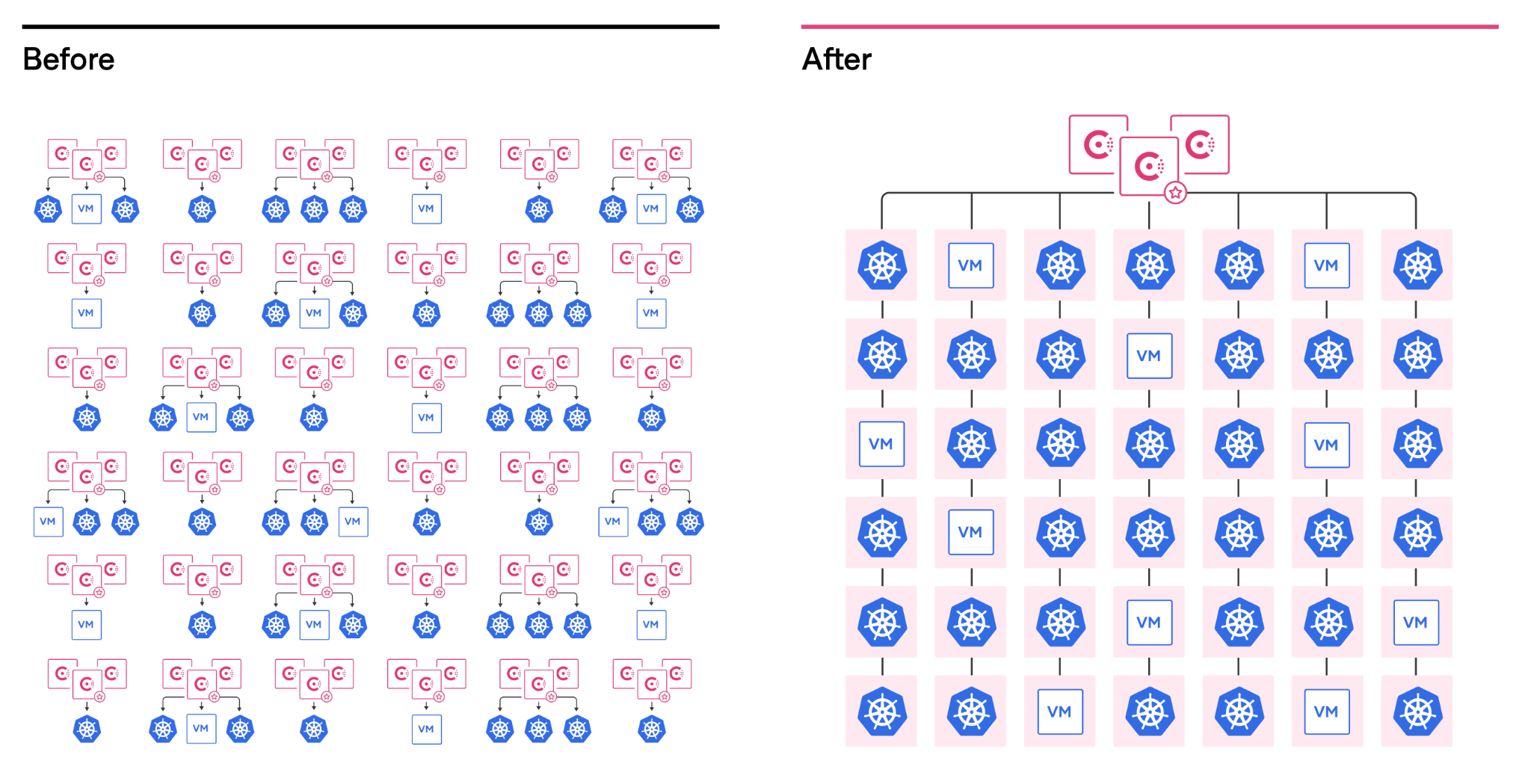
    During an online HashiConf Global conference, HashiCorp today made available a beta of an update to its open source Consul service mesh for virtual machines and Kubernetes clusters that makes it possible for multiple administrators to share the same instance of a multitenant service mesh.

    Version 1.11 of Consul will also add support for a command line interface (CLI) for Kubernetes that will provide an alternative to Helm charts for installing Consul on those clusters.

    Raymond Austin, director of product marketing for HashiCorp, said it’s become apparent that there is a need for a higher level of abstraction for managing application programming interfaces (APIs) that is easy to deploy across both legacy IT environments based on virtual machines and cloud-native environments based on Kubernetes clusters.

    Of course, in many cases, those Kubernetes clusters are deployed on top of virtual machines. However, there are also now more instances of Kubernetes being deployed on bare metal platforms at, for example, the network edge.

    As IT environments become more complex, a service mesh makes it simpler to discover, access and secure APIs that are now rapidly proliferating across the enterprise. That transition requires a more dynamic approach to not only managing APIs but also the network services those APIs depend on, added Austin.

    HashiCorp is betting that many IT organizations will prefer to rely on a lightweight open source platform supported by a single vendor rather than relying on more complex open source service mesh offerings being developed under the auspices of a consortium.

    It’s still not quite clear who within an IT organization is assuming responsibility for deploying a service mesh. Most often, it’s a development team that makes the initial decision. However, as IT operations teams become more aware that service meshes represent a capability that needs to be horizontally made available across multiple applications, it may be only a matter of time before some organizations decide to standardize on a single service mesh to reduce operational overhead, noted Austin.

    Service meshes will also play a critical role in simplifying management of networking and security services at a higher level of abstraction within a larger DevOps workflow.

    It’s still early days as far as service mesh adoption in the enterprise is concerned, but there are already a large number of service mesh options. In fact, there may never be a single dominant service mesh platform. Interoperability standards still need to be ratified that enable organizations that have standardized on different service meshes to apply policies to microservices spanning hybrid cloud computing environments.

    Of course, not every IT organization requires a service mesh yet, either. Many IT teams can still get by using a traditional proxy server or an API gateway until the number of microservices-based applications deployed starts to achieve critical mass. One way or another, however, the more APIs there are to manage, the more inevitable it becomes that an IT team will deploy a service mesh.

  • Pulumi Adds Registry to Share Secure IaC Code

    Pulumi Adds Registry to Share Secure IaC Code

    Pulumi this week added a public registry to its portfolio that makes it easier to discover packages that have been created using its tools to manage infrastructure-as-code (IaC).

    Joe Duffy, Pulumi CEO, said the Pulumi Registry will make it simpler for DevOps teams to share and reuse IaC tools that have been vetted versus always requiring each development team to write new code each time they want to programmatically provision infrastructure. Pulumi Packages provide modern cloud reference architectures in the form of software development kits (SDKs), code samples and how-to guides.

    One of the primary reasons that security has become a major cloud issue is that developers often misconfigure infrastructure. The registry provides a way to reduce those configuration errors by making it easier for developers to reuse code written in TypeScript/JavaScript, Python, Go and .NET that they have stored in repositories such as npm.

    In addition to the major cloud service providers, there are also Pulumi Provider Packages for Auth0, CloudFlare, Confluent Cloud, Datadog, DigitalOcean, Docker, GitHub, Kong, MinIO, MongoDB Atlas, PagerDuty, Snowflake, Spot by NetApp and others.

    There are also Pulumi Component Packages for deploying container applications on instances of Kubernetes and other related platforms in addition to deploying applications on serverless computing frameworks.

    Duffy said in addition to providing a “golden image” of their configurations the registry reduces the overall level of friction that often exists between developers, IT operations teams and cybersecurity professionals.

    The latest Pulumi offering is part of an ongoing effort to democratize cloud computing in a way that is repeatable and reliable, noted Duffy. Pulumi, for example, just added support for a set of AWS Cloud Control application programming interfaces (APIs) that reduce the number of APIs that developers would otherwise have to master. The more APIs there are, the more likely it is a developer will make a mistake.

    IT teams should expect that other cloud service providers will similarly streamline the APIs they present developers as part of an effort to make their services both more accessible and secure. In the meantime, frameworks provided by Pulumi provide a means to invoke those lower-level APIs at a higher level of abstraction for both developers and internal IT operations teams alike.

    It’s not clear today how many developers routinely employ IaC tools, but as the number of workloads deployed in the cloud steadily increases, so too does the percentage of developers that employ these tools. While that shift represents a major boon in productivity for developers, it brings with it additional security risks that many organizations fail to appreciate until it’s too late.

    The only way to really solve that issue is for organizations to adopt DevSecOps best practices that require a level of collaboration between DevOps and security teams that is still relatively rare. However, as the tooling provided continues to improve, the technical challenges associated with achieving that goal continue to decline. The next big issue, as always, is bringing together all the diverse cultures within an IT organization to actually implement those tools and define a set of best practices that work for all concerned.

  • Say Goodbye to Late-Night SRE Wake-Up Calls

    Say Goodbye to Late-Night SRE Wake-Up Calls

    Thousands of SREs, on-call engineers and DevOps pros all over the world dread nothing more than the late-night incident alert. The pager buzzing at 2:00 a.m. can cause panic for SREs and leave IT and DevOps teams with quite a mess to contain. But incident response doesn’t have to cause panic if you have the right automation tools in place. If you have ever wondered why companies like Amazon, Google and Zoom rarely suffer service outages and downtime while other companies struggle to achieve similar efficiencies, you’re not alone. In fact, you’re halfway to understanding what makes incident response automation such a vital component of your workflow. 

    Without a doubt, the best way to take back control over manual incident response and—once again—sleep through the night is to implement a powerful automation solution for incident response. We’ve listened to stories from SREs around the globe about the benefits of automated incident response. Plus, we’ve experienced them ourselves (from companies like Cisco, for example).  In the end, we’ve learned a thing or two about creating efficiency by leveraging automation and integration. Below, we’ll briefly cover how leveraging automation to remediate issues with or without a human in the loop is the best way to say goodbye to 2:00 a.m. wake-up calls.

    An Overview of Incident Response

    First, a staggering fact: In 2019, 17% of global enterprises lost more than $5 million every hour their servers were down, according to Statista. Even for smaller companies, the cost of servers going down is enormous. Following the news of Facebook’s recent outage (losing $13.3 million an hour; not counting the loss from the stock price drop), the need for minimizing downtime and reducing these costs is clear. 

    In order to fix issues faster, organizations need an easy-to-use tool that SREs and DevOps teams can implement to troubleshoot and automate incident response. For one, users should opt for a drag-and-drop system. This method is preferred over headless automation tools that too often result in data loss and extended downtimes.

    Next, IT organizations need to take the next step with automation and implement best practices. We can go from asking “How do we bring in automation?” and start to think in terms of “What are the use cases when I do?” A winning incident response toolset will help customers navigate this challenge. An automation platform should also allow users to fine-tune workflows with a library of connectors and actions that are comprehensive enough to get the job done. Ideally, your cloud stack should include several functions such as alerting (such as PagerDuty), monitoring (like Datadog) and analytics (Splunk, for example), while integrating with collaboration tools like Slack and Jira.

    What Are Some Typical Use Cases?

    Let’s dive deeper into three use cases that incident responders and engineers commonly encounter. These examples demonstrate why a powerful automated platform lets small businesses automate effectively and ensure long-term uptime just like larger enterprises.

    Incident Response Automation

    It’s all hands on deck when that 2:00 a.m. incident response alert goes off. Why rely on manual responses which can often lead to broken uptime SLAs and even drag down a company’s reputation? Automation is the key to operating any large-scale service in the cloud.

    Cost Management

    The costs of extended periods of downtime don’t stop at the checkbook. When incidents occur without drag-and-drop automation, long-term side effects can dramatically up the company’s losses.

    Orchestration

    Orchestrated automation tools provide credential management, templates, playbooks and data processing for any company size. They empower users to curate services to their liking as well.

    Want to Learn More about Automated Incident Response? 

    Sign up for this upcoming DevOps.com webinar on Monday, October 25th at 3:oo p.m. Eastern. We hope you’ll join us to learn more about how to integrate automation into your workflow and stop those pesky 2:00 a.m. wake-up calls.

  • Learn a Bit About AI

    Learn a Bit About AI

    Every once in a while, a trend becomes broad enough that I feel the need to offer career advice. This year it will be simple: Know enough about AI/ML to be dangerous. We are past the point where not having at least a basic understanding is a good idea. Looking around the data center, AI is in use from the earliest stages of development through production network performance evaluation. Somewhere in your environment, you are using AI and ML. More to the point, somewhere in the places you may interview going forward, they are using AI and ML.

    I’m not suggesting you become an AI/ML expert—though you certainly could; I have a relative that is a data scientist and that’s all he does—design and tweak algorithms. He’s learning new things pretty much daily, so if you like that (as I do), it’s an option. But for those of us doing DevOps or SRE or even regular old operations, we’re only going to have to understand a bit.

    Understand what tools like Jupyter are, and what the most commonly used ML algorithms in your space are. Then, learn about how AI and ML help with what you are doing. Just as knowing more about the compiler/interpreter of your chosen language helps you solve more odd problems, AI is going to have that same issue. Think about how those folks who understand the guts of routing are the ones we want solving our routing problems. Again, same scenario.

    Moving forward, AIOps, NetOps, DevSecOps … All intend to increase the amount of work offloaded onto the AI in question. In a lot of cases that is great. We have enough to do; if you can paw through those logs and give me relevant summary info, go for it. But it doesn’t end there—some AI engines are making the calls and implementing changes. In both network and application security, a fair number of vendors will tell you there is no time to wait for humans to stop an attack, and they encourage their customers to turn on automated responses. That’s the first of many applications for AI/ML. We will see an increasing number of AI/MLOps tools being used for full-on automation. We all do difficult jobs with a complex—sometimes bewildering—number of inputs. But we use pattern recognition and experience to make determinations and do what’s best for our organization. Our software has reached the point where sometimes, it can do that for us on the easier tasks so we can focus on the more complex ones. When the AI/ML fails—and it will, because pattern recognition and historical trends are not always indicative of normal usage—knowing what is going on under the covers can help you determine if it did the right thing in the wrong way, or simply did the wrong thing. And it can help you to quickly recover. I can’t speak for every organization, but I’ve never seen one that lamented, “Sure wish that outage had lasted another couple of hours!”

    And keep rocking it. Somewhere in the distant future, an  AI may be able to do your job as well as you. But that isn’t today. Even if it can handle one bit, it certainly isn’t rocking the entire breadth of your responsibilities like you are. Thank you, from all the users that don’t realize you’re keeping them live.