Category: Low-Code/No-Code

  • Copado Acquires New Context to Drive DevSecOps Adoption

    Copado Acquires New Context to Drive DevSecOps Adoption

    Copado, a provider of a DevOps platform for building applications deployed on the Salesforce cloud platform, announced today it has acquired New Context as part of an effort to expand the scope of its portfolio into the realm of DevSecOps best practices.

    Andrew Leigh, chief marketing officer for Copado, said the acquisition brings Copado tools and professional services expertise that will be applied to help organizations build and deploy secure, custom applications on top of the same cloud platform they already use to access a range of software-as-a-service (SaaS) applications.

    The New Context Lean Security Intelligence Platform enables developers to achieve that goal by analyzing code and then surfacing recommendations for when developers should apply specific security controls, Leigh explained. Existing New Context customers include Blue Shield of California, GE, Kaiser Permanente and Royal Dutch Shell.

    Like most organizations that have embraced DevOps best practices, it’s still early days as far as adoption of DevSecOps are concerned. However, it’s already apparent that Copado is well-positioned to advance adoption of a complementary Lean Security Intelligence Platform, said Leigh. Copado, which claims to have more than 1,000 customers, recently raised an additional $96 million in funding to help fuel those efforts. The company also claims it recorded 120% growth in annual recurring revenue (ARR).

    In the wake of the COVID-19 pandemic, more organizations are employing SaaS applications to drive digital business transformation initiatives. Rather than building every application from the ground up, it is often simpler to extend, for example, a Salesforce customer relationship management (CRM) application.

    Once organizations reach a certain level of scale, they then start to apply DevOps best practices to those builds. These efforts, however, are often uneven. A recent survey, conducted on behalf of Copado, found that while 82% have increased or maintained the size of their Salesforce development teams, the change fail rate jumped from 23% last year to 33% in 2020 when compared to a similar survey conducted a year ago. The survey also notes time to recover increased from 110 hours in 2019 to nearly 196 hours in 2020.

    The next major challenge facing organizations that have embraced DevOps is, of course, DevSecOps. The challenge is that, since Salesforce environments are unique, applications are constructed using a set of objects and tables that are specific to that platform. As such, Salesforce environments generally require a DevOps platform designed from the ground up to work with objects and tables.

    Salesforce, in its most recent fourth quarter, reported revenue of $5.82 billion, up 20% year-over-year despite the lingering economic impact of the COVID-19 pandemic. As such, the number of custom applications being developed on top of Salesforce should steadily increase, especially as low-code tools become more widely adopted. It’s now only a matter of time before more organizations reach application development initiative critical mass that warrants investing in a DevOps platform to manage them.

  • ServiceNow Adds Low-Code Tool to Platform

    ServiceNow Adds Low-Code Tool to Platform

    ServiceNow today made available an update, dubbed Quebec, to its Now platform that adds a set of low-code application development tools.

    Marcus Torres, general manager for IntegrationHub and vice president of platform product management at ServiceNow, said the Creator Workflows tool leverages existing App Engine and IntegrationHub capabilities in the platform to make it possible for both end users and professional developers to build custom applications faster using a visual development tool dubbed App Engine Studio. A set of templates that provide a set of pre-built workflows is also included.

    The goal is to make it easier to develop applications that would otherwise not be built because professional developers, using existing tools, would simply not have the time, Torres said.

    The Quebec release of the software-as-a-service (SaaS) platform is also used for IT operations management (ITOM), adding artificial intelligence (AI) capabilities in the form of ITOM Predictive AIOps that surfaces potential issues before they become a major issue. It is now also easier to set up the virtual agents that ServiceNow makes available to enable conversational AI, and there is now an AI search capability built into the ServiceNow portal. ServiceNow gained these capabilities via its recent acquisitions of Loom Systems and Attivio.

    Finally, ServiceNow has added process optimization and workforce optimization modules, along with an engagement messenger module that extends the self-service capabilities it provides to third-party portals, and a universal request tool that enables agents to collaborate and transfer tickets across departments while keeping employees informed of the status of their ticket.

    Thanks to the general enthusiasm for digital business transformation initiatives being accelerated in the wake of the COVID-19 pandemic, reliance on low-code tools to build applications has significantly increased. The challenge organizations encounter, however, is that a low-code tool can build a relatively simple application. However, development means may need to drop down to a lower level of abstraction to address more complex issues as an application continues to evolve. The Creator Workflows tool from ServiceNow is designed to provide development teams with that option.

    In general, ServiceNow is making a case for building applications on the same platform that many IT organizations already employ to manage IT. Many organizations already take advantage of workflows that ServiceNow has built to extend its core platform to address a wide range of uses cases involving, for example, human resources applications. The addition of the low-code tool will make it easier for IT teams to create applications that address use cases unique to their organization.

    Of course, there is no shortage of options when it comes to low-code and no-code tools these days. IT teams will need to decide to what degree platform-specific low-code tools make sense versus adopting low-code tools that enable them to build applications that can be deployed anywhere. Regardless of the path forward, however, it’s clear the number of applications that need to be deployed is dramatically increasing with each passing day.

  • No-Code Tech and the Rise of Citizen Developers

    No-Code Tech and the Rise of Citizen Developers

    In today’s increasingly remote-first work environment, technical frustration affects all levels of an organization. Because of this, IT leadership teams are looking for new ways to empower and streamline their organizations through the use of innovative technologies. And with remote workforces on the rise, it’s an ideal time to implement new solutions that improve how employees interact and collaborate with each other.

    As a result, more organizations are looking to adopt no-code automation in an effort to streamline their workflow processes. By doing so, businesses empower the average employee to become a citizen developer – and with so much room for no-code solutions to grow, it’s safe to say the era of the citizen developer is just beginning.

    No-Code Solutions Empower Employees

    Behind-the-scenes operations are a major contributor to the success of any business. Time wasted on mundane tasks can limit productivity, which, in turn, can minimize output. For example, in the finance world, traders use code to automate financial data scans so they can find the correct information quickly and maximize their gains – transforming an hour-long task into a simple button click.

    The average employee, however, likely lacks the technical ability to create a function like this; and this is where no-code solutions come into play. With the proper no-code solution, any employee can implement solutions to refine and automate their own workflow processes – as well as processes across the entire organization.

    There are a few key benefits to doing this. First, an improved workflow means employees will have more time in their day to focus on the strategic, less-tedious tasks. Assignments that require critical thinking will receive the attention they deserve without being backlogged by other work. Another factor is the current state of the global remote workforce. Although this way of working has become the new normal, connecting to a video conference room to brainstorm or to facilitate meetings can still feel fruitless, at times. An improved workflow can enhance how these remote collaborations take place, and will unlock more potential for those involved.

    Improved operations can also help to achieve a better work-life balance for employees; freeing time to take more breaks and reducing the potential for burnout that so many have faced over the past year. Not to mention the positive impact more streamlined operations can have on creativity across the workforce, which is a crucial part of driving business success. An employee in the role of citizen developer can unlock a spark of creativity when they realize the power they have and the magnitude of what they can accomplish with no-code solutions.

    Let IT Teams Focus on What’s Most Important

    Aside from benefits to themselves and the business, citizen developers can have a positive impact on the IT teams within their organizations. In addition to keeping staff technology in working order through longer-form remote interactions, IT professionals must maintain and monitor a remote infrastructure that limits disturbance to company operations and maintain vigilance for security vulnerabilities that have surfaced due to remote work. With all of these factors in mind, the last thing IT teams should be worrying about is an employee’s effectiveness in their role.

    No-code solutions empower employees to take the reins on their own workflow processes and gives IT teams more time to focus on critical issues related to infrastructure, security and ultimately, business continuity. When employees use these solutions to their fullest potential, it’s a win-win situation. As a result of the pandemic, we’ve had a glimpse into the future of what the digital business world will look like, and we’re only in the early days of this transformation. The earlier employees are able to gain access to no-code solutions and step into their role as citizen developers, the better organizations will be in the long run.

  • Kong Integrates Service Mesh with OPA

    Kong Integrates Service Mesh with OPA

    Kong, Inc. today announced an update to Kong Mesh, built on top of open source Kuma service mesh, that adds support for Open Policy Agent (OPA) software that enables DevOps teams to manage compliance as code.

    Kuma and OPA are both being developed under the auspices of the Cloud Native Computing Foundation (CNCF). Kuma, unlike other service mesh offerings, provides connectivity across both microservices-based applications running on Kubernetes platform and monolithic applications deployed on virtual machines.

    In addition to adding support for OPA, the 1.2 release of Kong Mesh adds authentication mechanisms between the global and remote control planes operating across multiple zones. That functionality extends the Kuma Discovery Service (KDS) to support multiple authentication mechanisms.

    Finally, Kong has added support for the federal information processing standard (FIPS).

    Like the Istio service mesh, advanced by Google and IBM for Kubernetes environments, Kuma is based on open source Envoy proxy software. In contrast, however, Kuma is both lighter-weight and designed to span both cloud-native and legacy application environments.

    Marco Palladino, CTO at Kong, said OPA support will be a significant advance for both classes of workloads as organizations start to employ Kuma within the context of zero-trust computing environments. As DevSecOps processes are extended to include managing compliance as code, OPA will provide a programmable mechanism for ensuring that policies are not only properly implemented, but can also be easily audited, Palladino said.

    In general, an effort led by Kong, VMware and others to elevate the service mesh conversations to more broadly address application connectivity is underway. A service mesh, at its core, provides the means for integrating hundreds of application programming interfaces (APIs) at scale. It also provides a level of abstraction above the network layer that makes it easier to connect applications across a heterogeneous networking environment.

    Kong is making a case for a lighter-weight approach that spans multiple platforms and is highly extensible. As such, third-party vendors and IT teams can add extensions to Kuma as they see fit.

    Ultimately, Palladino said, the time has come to take cloud computing to the next level. If all organizations wind up doing is lifting and shifting monolithic applications to public clouds, an opportunity to advance the state of IT will have been lost.

    Of course, it’s still early days as far as adoption of service meshes are concerned. Most organizations today are relying on API gateways, proxy software or ingress controllers to manage APIs. It’s not clear to what degree a service mesh may remove the need for some of that existing application connectivity middleware.

    Regardless of which approach is ultimately favored, it’s apparent that, as microservices-based applications become more widely deployed, a different approach to application connectivity will be required. Monolithic applications, however, are not going away. In some cases, a monolithic application might be carved up into a smaller set of microservices, but it’s unlikely that every existing monolithic application will lend itself to that architecture any time soon.

  • Could No-Code Enable Everything Ops?

    Could No-Code Enable Everything Ops?

    It feels like DevOps principles are permeating every discipline, creating new buzzwords by the minute. DevSecOps. DatabaseOps. SalesOps. FinOps. MarketingOps. This “JargonOps” is clearly encouraged by marketing campaigns (and bloggers, wink, wink). Yet, the phrases do depict a real trend: all industries are getting an efficiency overhaul in the wake of increased automation.

    As I’ve covered before, low-code and no-code tools lower the barrier to entry to application development, enabling field experts to construct workflows as they see fit. For tech-savvy non-engineers, this could be a huge boon to transform copy-and-paste stopgaps into efficient workflow automations.

    I recently chatted with self-proclaimed “productivity geek” Sean Chou, CEO of Catalytic, to get his take on where this new era of automation is heading. From healthcare to logistics, advertising to supply chain management, every industry is likely to get an efficiency boost — and a lot of this digitization will be constructed using codeless environments.

    But first, how did we get here?

    From RPA to No-Code

    “The story of B2B software is largely about automation,” said Chou. If we consider classic examples of corporate applications, we see one common thread — B2B software has always sought to automate traditional office work.

    And so, it came to pass that computing and software devoured all these office tasks, from accounting to time-tracking, communications and many other areas. Though computer-based office work delivered huge efficiency boosts, these interfaces often introduced new hurdles; bad UI design, difficult navigation and a hundred open tabs, just to name a few.

    From there, robotic process automation (RPA) aimed to operationalize a growing number of tedious digital workflows across Excel spreadsheets, web apps and desktop apps. In Chou’s words, “RPA took the concepts of test automation software, and then pointed it toward production systems.”

    Though RPA’s process of recording screen interactions gathered much interest and attention (and funding), screen scraping is ultimately too fragile to be effective. It adds technical debt over legacy systems. It can be expensive to implement. Lastly, it’s not processes-centric and doesn’t implement reusable software-defined APIs.

    At that point, though, “Pandora’s box was open,” Chou said. Folks started to consider other ways to optimize, and reimagine how end users could automate workflows and stitch together interactions between disparate apps.

    Out of the ashes of RPA rose a new paradigm — low-code and no-code.

    No-Code Addresses Everything Ops

    With developer resources stretched thin and limited engineering talent available, it can be challenging to loop expert programmers into codifying traditionally non-IT processes.

    There’s not often enough developers to help with SalesOps, FinOps or any other Ops areas, explained Chou. “The only thing that can change the narrative is no-code technology that is effective.”

    Similar to how higher-level programming languages made low-level programming more accessible, Chou sees low-code and no-code unlocking accessibility for automation design by orders of magnitude.

    Four Examples of Everything Ops

    So, what are some examples of no-code use cases for automating operations? Chou outlined four specific categories that he believes will see much more citizen developer attention and action in the years to come:

    Customer Ops: “It’s really important to run customer operations as efficiently as possible,” Chou said. Especially in B2B interactions, people need to adopt various systems dictated by the customer. This can result in many ad-hoc implementations that beg for efficiency improvements.

    Financial Ops: Imagine the number of Excel spreadsheets that make up an account’s financial foundation. Consider the tedium of inputting data, generating reports or migrating calculations into other tools. There’s a ton to automate here. Providing no-code platforms to financial minds could have a “really transforming effect,” said Chou.

    People Ops: “The number of mini apps being developed for HR use cases is astounding,” Chou said. Think of all the digital tools HR must use: vacation requests, employee performance reviews, personnel databases – the list goes on. There’s a significant opportunity to clean up legacy applications within many HR departments to build a more coherent platform.

    SupplyChain Ops: Procurement and supply chain operations is another area where no-code could have an impact. Streamlining inter-company communications or engaging with potential customers are areas worthy of automation.

    No-Code? No Problem

    Across all these verticals, Chou notices three common patterns emerging.

    First, groups are using no-code to create standard operating procedures (SOP). SOPs could be used for onboarding or offboarding customers or ensuring compliance with a set of policies.

    Another everyday use is data pipelining — pulling information from many resources for analysis. A common use case is processing financial or customer data to generate a particular output. This is an area where embedded machine learning models could enrich the data.

    Lastly, a third common use case is creating workflow-powered surveys. These online forms could be used to measure employee engagement or to collect customer input. No-code workflows enable not only the collection of that data, but could allow for additional actions to be taken upon input.

    Implications and Governance

    Of course, giving non-developers the keys to the castle could have some downsides. Let’s face it — computer science is, well, a science. There’s a reason engineers are taught strict practices around version control, data governance and peer reviews. All of which must still be upheld when establishing a citizen development culture — especially at scale.

    When it comes to low-code and no-code, “governance is a huge thing,” said Chou. “Any company coming at this with no governance in mind can’t work beyond small teams.” Move beyond 10 or so citizen developers, and you’ll really need to establish some sort of shared framework or center of excellence.

    Making citizen development work in a large company requires IT visibility, data governance and a review process for new workflows, said Chou. IT will likely also want to verify that a new workflow doesn’t make permanent state changes. Otherwise, static apps that don’t touch core systems or affect persistent data stores are probably fine. “Having built-in governance is really key to making this successful,” Chou said.

    A Technology Leap

    No-code is giving more people the ability to produce unique workflows to increase their efficiency and do more with less. But with this movement comes worry. “With every technology leap, there’s always a wave of people concerned,” said Chou. Many naysayers are worried that automation will leave people out of work – “They’re coming for our office jobs!”

    Instead, Chou recommended we curb our expectations. Citizen developers are not going to build sophisticated iPhone apps any time soon. “If you think no-code is a panacea for all software, you’re coming at it all wrong,” he said. Instead, what they can actually can accomplish is far more practical.

    In reality, things are not as dire as some may make it seem. The new age of automation will likely open room for more jobs than it diminishes. “The net is always a plus,” said Chou.

  • Top Misconceptions About Low-Code Development

    Top Misconceptions About Low-Code Development

    Accelerating the pace of development has become one of the biggest goals in DevOps. After all, having teams speed the creation and modification of applications is supposed to be one of the primary advantages of DevOps pipelines. Yet, far too many DevOps teams run into speed bumps that can derail the process. For some, turning to alternative methods to generate and modify code can slay the beast of project deceleration, and that is where low-code platforms come into play.

    However, the waters are muddied by misconceptions about what low-code is and what it isn’t. Here, three industry experts share their own observations about these common misconceptions.

    Low-Code is Only for Citizen Developers

    “People often confuse low-code with no-code platforms,” said Richard Rabins, CEO, Alpha Software Corporation. “No-code platforms, which are driven by visual modeling and user interface builders, are aimed at citizen developers with little or no coding experience to quickly build applications.” Rabins makes some good points; no-code environments are designed to put the power of application development into the hands of a citizen developer, meaning those no-code platforms are optimized for simple workflows and not for teams. On the other hand, low-code platforms can integrate with deployment platforms, which helps expedite delivery while also enforcing consistency.

    Low-Code Makes Collaboration and Reusability Difficult

    “Over time, many developers have come to believe that low-code platforms were built for a single programmer working on a waterfall project,” said Deepak Anupalli, co-founder and VP of Engineering at WaveMaker, Inc. “Today, low-code platforms, like WaveMaker, offer development environments that integrate with code management tools, as well as APIs, to support the sharing of code and fostering team collaboration.” Anupalli’s point is that the majority of low-code platforms incorporate workflows that support team activities. What’s more, those platforms support scale-up, reuse of code and the ability to work within pipelines.

    Low-Code Prevents Custom Development

    “From the beginning, low-code was all about building applications with little or no code needed, creating the perception that low-code platforms did not lend themselves well to customization,” said Rabins. “However, nothing could be further from the truth. Developers are able to expand the functionality of low-code projects as the need arises. They can insert custom code, call APIs, integrate with other platforms, and so on.” Rabins points out that low-code doesn’t mean no-code, simply that low-code can generate code that can be modified and adapted as needed, supporting pipelines that deliver fully customizable applications.

    Low-Code Platforms are Only a Trend

    Many seem to think that low-code platforms are just a trend that will ultimately fade away as other technologies come to light. However, according to Business Wire, the low-code market will grow 44.4% by 2022 to reach $27.23 billion. Anupalli added that WaveMaker has experienced year-over-year growth since the company was founded.

    Leaders in the market today include Visual LANSA, GeneXus, Appian, Mendix, OutSystems, WaveMaker and Alpha Software. 

    Low-Code Solutions are Proprietary

    One of the leading assumptions about low code platforms is that they all use some type of proprietary programming language. That may be true for a few platforms, but many embrace open source ideologies and use common languages, such as Java, PHP, and C#. Take, for example, the RISE Editor, which enables users to output code based on models in a number of different languages. RISE is not alone in the industry; several other platforms embrace either open source or can create easily accessible code. VisionX and WaveMaker create in Java, allowing generated code to be edited with other Java IDEs.

    Low-code development platforms (LCDPs) have come a long way since the term was first coined by Forrester Research back in 2014. And yet, these numerous misconceptions remain, which may have slowed the adoption of LCDP in enterprises using DevOps pipelines. Dispelling these assumptions goes a long way towards helping application developers realize the benefits that LCDP can offer. 


  • Applause Automates App Testing via SaaS Platform

    Applause Automates App Testing via SaaS Platform

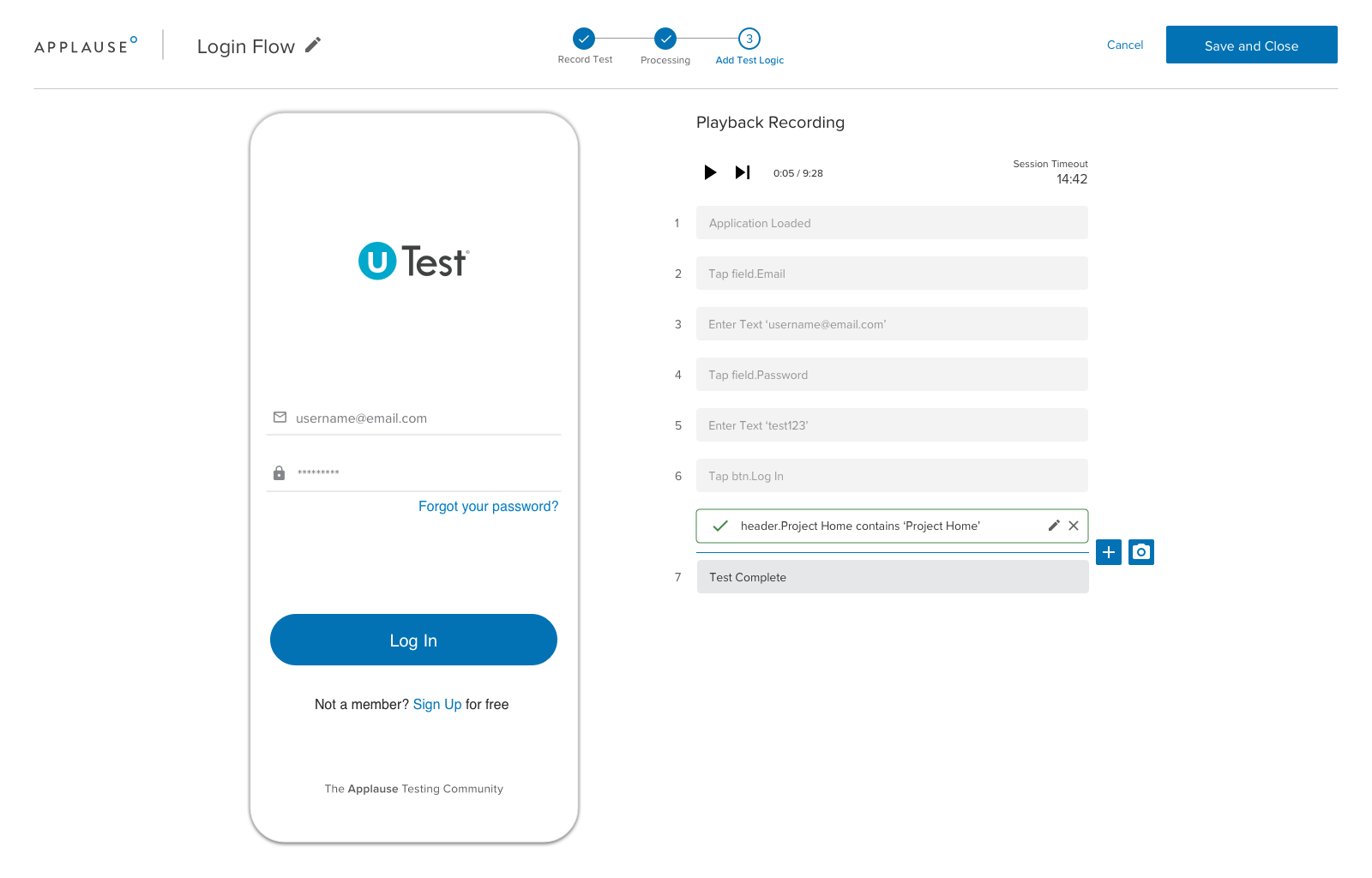
    Applause today unfurled a software-as-a-service (SaaS) platform that makes it easier to automatically create test automation scripts without having to write code.

    At the same time, the company is adding support for an application programming interface (API) through which DevOps teams can send new features to be tested by the Applause platform.

    Both offerings are now being included with a rebranded Product Excellence Platform (PEP) offering, a suite of tools and platform through which Applause is making its portfolio of offerings more accessible.

    Rob Mason, Applause CTO, said the Applause Codeless Automation (ACA) platform makes it possible for testers to record a series of test case scenarios using a SaaS platform that translates those sessions into an automation script without anyone having to write any code. The current offering supports Android and Apple iOS applications with support for web applications planned, Mason said.

    An Applause In-Sprint Testing capability, meanwhile, makes the testing process more iterative using a bi-directional API that can be plugged into any software development life cycle (SDLC) process, Mason said. That bi-directional capability makes it possible to embed the feedback from the testing process into any bug tracking system implemented by an application development team, said Mason.

    Mason said that capability is critical, because it enables DevOps teams to identify issues earlier, thereby avoiding late-stage bug fixes that are more costly to fix. It also provides the added benefit of making it easier for developers to address issues in the moment applications are being written, versus days or weeks later when the context around that issue has long since been lost, Mason added. The SaaS platform provide developers with a just-in-time testing capability, Mason said.

    Ultimately, Mason said the goal is to make it simpler for a wider range of individuals to participate in application testing by making it easier to reuse tests. In addition, he said, it will allow subject matter experts to record tests that can be turned into test scripts on their behalf. That approach will enable organizations to push testing further left, beyond the developers that originally created an application, to include the owners of that application, Mason added.

    The rate at which applications are being built to drive digital business transformation initiatives is increasing, and makes testing more problematic. Automation is the only way to close the gap between the number of application testers an organization can dedicate and all the applications being developed. The automated approach not only reduces the time and effort required to create a test, it also makes it easier to reuse tests across different application use cases.

    Ultimately, it’s only a matter of time before machine learning (ML) algorithms and other AI capabilities play a larger role in application testing. The challenge will be finding exactly where the interface between humans and machines should lie in the context of application testing.

    In the meantime, the more automated testing becomes, the more widely it will be conducted. The results of those tests may not always be welcome news, but the issues they raise are always better addressed sooner than later.

  • Mabl Adds Beta of Desktop Continuous Testing Tool

    Mabl Adds Beta of Desktop Continuous Testing Tool

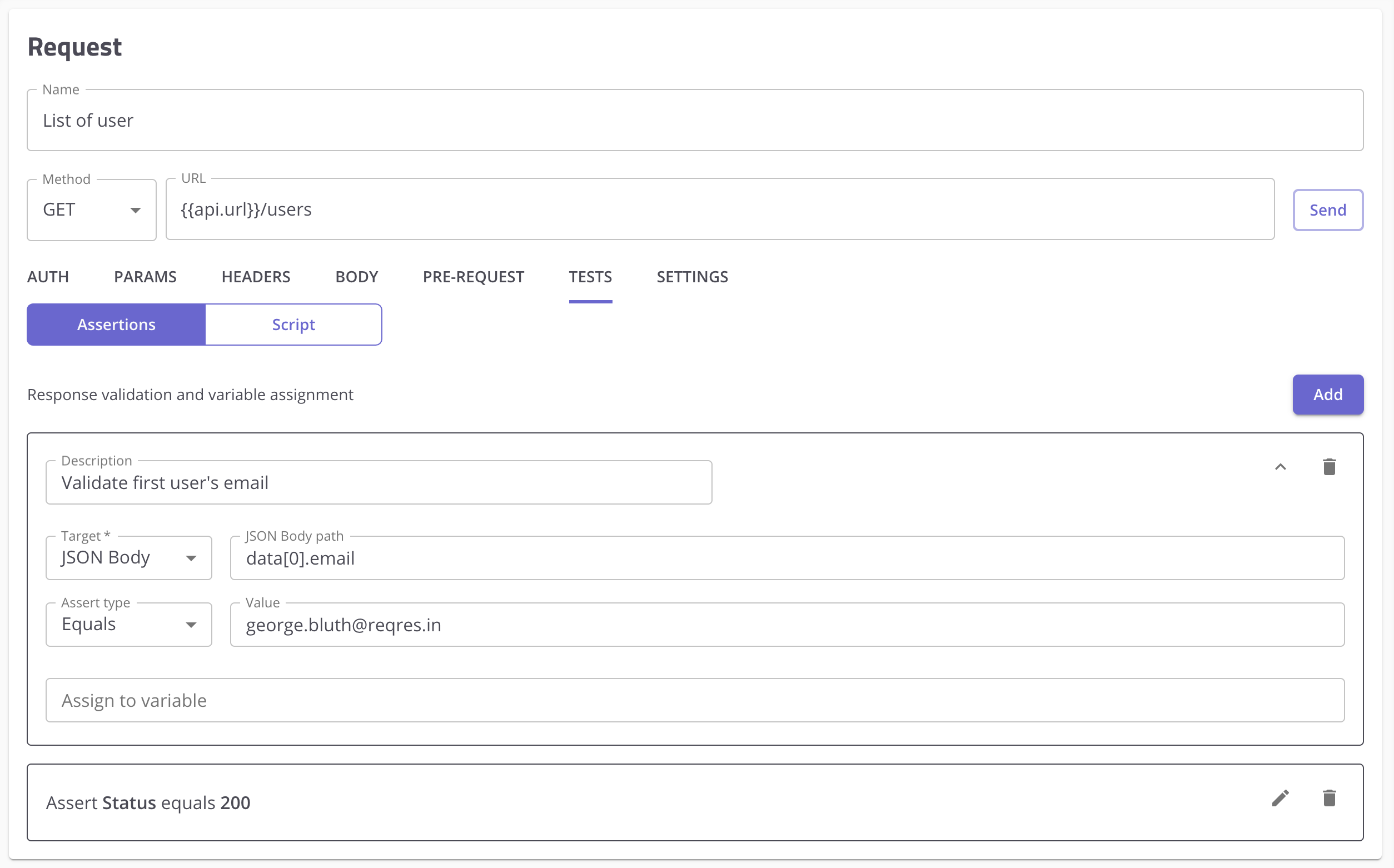
    Mabl today announced availability of a beta version of a desktop tool for creating tests that can be applied to browsers and application programming interfaces (APIs) using a low-code tool.

    Dan Belcher, co-founder of Mabl, said the goal is to make it simpler to streamline testing processes as responsibility for application quality assurance (QA) continues to shift left within the context of a DevOps workflow.

    Mabl provides a low-code tool for testing desktop and mobile browser applications, alongside the APIs they invoke, using an Electron tool that generates tests in a way that eliminates the need to write scripts. Previously available only via a software-as-a-service (SaaS) platform, Belcher said the desktop platform will make it simpler for developers to test code as they develop it on a local machine.

    Developers using the desktop tool can now also manage and run tests instantly via command line interface, versus having to completely exit from a project to invoke a separate testing tool, Belcher said.

    The Mabl testing tools are already integrated with multiple continuous integration/continuous delivery (CI/CD) platforms, such as Bitbucket and Bamboo, as well as the GitHub repository.

    In the longer term, Belcher said it is clear organizations will need to involve more developers in QA testing, as the rate at which applications are being built and deployed continues to increase. Testing teams, on their own, can no longer keep pace with the rate of change, Belcher noted.

    The challenge is achieving that goal in a way that creates the least amount of friction possible, Belcher added. The Mabl platform and desktop application make it feasible for developers to test both web and mobile applications without taking too much time away from developing application code, said Belcher.

    Testing has become a major DevOps issue because, as developers assume more responsibility for applications after they have been deployed in a production environment, they naturally want to vet applications more thoroughly. Issues that arise after an application is deployed simply result in less time available to write new code. There will always be issues that need to be addressed, but the more of them that are resolved as part of a QA process integrated within a DevOps workflow, the more productive an application development team will be.

    Unfortunately, testing is often given short shrift; it primarily occurs at the back end of the application development life cycle. Developers are typically behind schedule, so there is a natural tendency to reduce the amount of time allocated to testing in the hope of making an application delivery deadline. The vicious cycle that ensues is that, inevitably, there are more bugs to fix after an application has been deployed, simply because not enough testing was done during the original development cycle.

    Of course, some development teams have become conditioned to fixing bugs as part of an agile development process that, too often, encourages them to push known issues off to the next sprint. The trouble is, in the absence of continuous testing, it’s not long before all those known bugs start to pile up. It’s not uncommon for applications to be riddled with bugs that development teams – with mixed success – attempt to address all at once. The earlier those issues are addressed, the less stress there will be later for all concerned.

  • Top 4 Challenges for Developer Teams in 2021

    Top 4 Challenges for Developer Teams in 2021

    As remote work continues into 2021, developer teams are still navigating the new landscape for working across distributed teams and how this new way of working affects product delivery. In particular, there are several key challenges that every developer must face this year, including adapting to new tools and workflows internally, balancing the prioritization of keep-the-lights-on initiatives with product initiatives, and understanding how to address emerging customer challenges.

    As developer teams are responsible for keeping both internal systems healthy and maintaining service uptime for customers, addressing these issues and implementing the strategies below will help ensure better delivery, easier deployment of application and software solutions and improved internal communication processes.

    #1 Get Better at Digital Experience Monitoring

    For businesses to survive in this current environment, neglecting to monitor a user’s digital experience across their life cycle can mean losing business to a competitor. At a bare minimum, developer teams must ensure that their application’s basic infrastructure is sound. This means monitoring key metrics like CPU load, memory load, memory used, disk space, queue lengths, API uptime or error codes returned.

    For a fuller user experience, developer teams should also monitor things like page or app load times, drop-off points in an app and crash logs. The third level of digital experience monitoring is keeping tabs on what your users are doing, such as skipping the onboarding flow, inviting friends to your app, posting content or how much total time they’re spending within the app. Robust digital experience monitoring will ensure that you are constantly measuring the quality of your users’ experience and making improvements along the way.

    #2 Expand Where and How You Gather User Feedback

    Beyond initial user monitoring, teams should continuously collect feedback to improve features and fix issues that might not have been discovered during testing. One natural way to do this is to aggregate user reviews and support questions to find common themes that may help product teams prioritize future releases. It is also critical to think outside of the box in terms of where and how feedback is collected. Teams can also collect feedback in other ways, such as conducting data analysis and user research sessions or having direct conversations with customers. Giving key beta users early access to a new release can also help developer teams understand whether their application is meeting users’ needs, and whether it is intuitive to use.

    Ultimately, by engaging with customers in extensive and real conversations, teams may learn where there are disconnects between users and the products, and what they can do to bridge this gap. Once the information is collected, teams should then prioritize what needs to be done first by ranking requests by frequency received, financial value of fixing the issue, strategic importance to the overall organization and engineering effort.

    #3 Prioritize Low-Code and Customer Self-Service Models

    Removing barriers to entry for customers is especially critical right now, as developers consider changing user needs, tighter budgets and fewer personnel to implement new code. Customers just don’t have time for entire enterprise sales and onboarding cycles to implement new solutions, so requiring less code is a great way to introduce a more self-service model. This model is also great for non-developers to implement and ensures that customers (whether fellow developers or even someone on a marketing operations or web team) can easily integrate new tools and software into their existing solutions. This is not only critical for those without a more technical background, but also valuable for time-strapped product teams who want to buy, versus build, a new feature.

    #4 Codify Hiring to Help Developer Teams Succeed

    During the pandemic, both large companies and small startups have pivoted significantly in the way they recruit and onboard engineering, DevOps and technical roles. Leaders of developer teams need to codify their hiring plans and put in place remote work strategies, especially with the hybrid working model that combines remote personnel with in-office staff.

    When hiring for remote teams, consider where individuals are located for both development and customer support purposes. Once you determine these core hubs, there should be guidelines in place to reduce the need for team members to work across major time zone differences. This can mean having a core software team in a centralized region that also overlaps with a major customer base, or having an engineering team located in a similar time zone to the design team for easier communication.

    Overall, the needs of each developer team will differ depending on the size of the company and the industry it serves. That’s why it’s critically important to adapt your systems and infrastructure accordingly. Furthermore, listening to and processing user feedback, building products that meet ever-changing customer demands and continuing to focus on team communications will help ensure long-term success in a post-pandemic world.

  • Citizen Development Program: Enabling Citizen Developers

    Citizen Development Program: Enabling Citizen Developers

    In part one of this series, we made the case for embracing citizen developers to close the developer demand-supply gap while delivering true business agility. We outlined the foundational elements that are consistent across successful citizen development programs: 1) adopting a low-code application platform, 2) embracing the citizen development journey and 3) marketing (internally) citizen development successes.

    citizen development 2


    We also discussed finding the right citizen developers – individuals with the right aptitude and attitude to be successful building applications using low-code tools. Now that we have identified the right use cases and the ideal citizen developer, we will focus on the key decisions for enabling (and empowering) citizen developers.

    Enabling (and Empowering) Citizen Development

    To enable citizen developers, you must focus on the individual and set them up for success through training, support, and recognition. Empowerment addresses the citizen development process, the life cycle of an application and, more importantly, reducing the organizational friction associated with both.

    citizen development 3

    As you look to build out a citizen development enablement program, you need to answer the following questions about training, support and recognition of your citizen developers:

    • Training
      • What is the training curriculum for citizen developers? Do learning paths differ based on developer category?
      • Is there organization-specific content that needs to be included in the training? If so, who owns the creation and maintenance of that content?
      • How will developer proficiency be assessed?
    • Support
      • How will citizen developers obtain ongoing support?
      • Will you schedule office hours hosted by subject matter experts?
      • Will there be an online community?
      • Will citizen developers be aligned with a specific SME / pro developer?
      • How quickly do you want to scale the program?
      • What are the appropriate checkpoints / milestones associated with scale?
    • Recognition
      • Will you formally recognize training accomplishments? Perhaps though gamification via badges?
      • How will you track, celebrate and reward successful applications?
      • Does demonstrated competency equate to increased developer access?

    It is important to remember that the role of “citizen developer” is frequently an additional responsibility beyond an individual’s day job. As such, it is critical to educate them, support them and celebrate their wins in order to ensure success.

    In order to empower your citizen developers, you need to consider both the application development process and the overall application life cycle. You need to answer the following questions about the process and the life cycle:

    • Application Development Process
      • What is the overall objective for citizen development? What metrics will you use to track progress?
      • Does each application require a separate approval or are developers, once approved, able to build multiple applications?
      • What are the technical standards and best practices specific to your organization?
      • What is your development process? Who has authority over development, testing and deployment?
      • Is your core development team / center of excellence structured, resourced and funded to support citizen development?
      • How will citizen developers and pro coders collaborate on applications?
    • Application Life Cycle
      • What is your application intake process? Who evaluates new app requests for platform fit, redundancy, cost, etc.?
      • Once an application is moved to production, who is responsible for the ongoing support and maintenance?
      • What is your process for rationalizing and deprecating applications?

    As low-code platforms continue to evolve, the capabilities that facilitate the collaboration between the citizen developer and the pro coders are critical to deliver a successful application. It is not uncommon for a pro coder to collaborate with a citizen developer to deliver the last 5% to 10% of an application’s necessary functionality.

    We have identified the right use cases and the right citizen developers in part one. We have enabled and empowered the citizen developers in part two. In part three of this series, we will explore establishing technical guardrails to protect the platform from the citizen developers, and the citizen developers from each other.


    This post is the second in a three-part series that provides real-world insights on delivering business value from citizen development initiatives.