Category: Cloud Management

  • Microsoft Previews Additional Copilot Tools for Azure

    Microsoft Previews Additional Copilot Tools for Azure

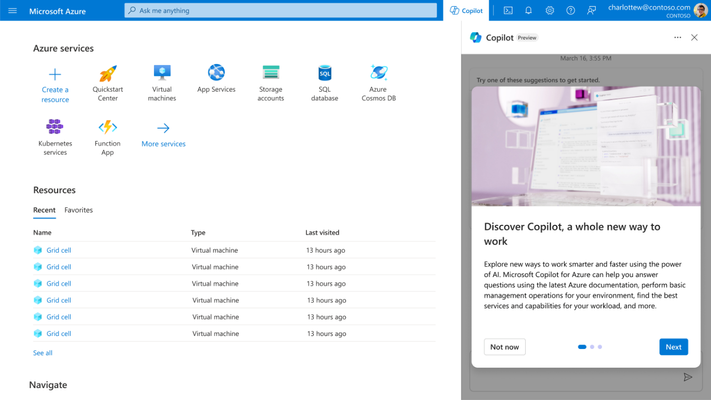
    At its Ignite 2023 conference, Microsoft this week previewed Copilot tools to simplify the management of the Azure cloud service along with a tool that streamlines the building and deploying of artificial intelligence (AI) applications on the Azure platform.

    In addition, Microsoft launched Microsoft Copilot Studio, a low-code tool that automates the process of creating data integration plugins and adding custom copilots within the Microsoft Copilot for Microsoft 365 tool that Microsoft previously launched.

    Microsoft Copilot for Azure leverages large language models (LLMs) to enable IT teams to use natural language to create, configure, discover and troubleshoot Azure services. It also enables IT teams to create complex commands, ask questions and optimize costs.

    Erin Chapple, corporate vice president for Azure Core at Microsoft, told Ignite attendees that Microsoft, along with a handful of customers, is already using Microsoft Copilot Azure to manage Azure infrastructure.

    In the long term, it’s clear that Microsoft is moving toward streamlining the building and deployment of AI applications using Azure AI Studio, a framework for invoking the AI models that Microsoft makes available on the Azure platform. The goal is to make it possible for organizations to create their own copilots based on AI models they have trained.

    It’s still early days in terms of organizations leveraging AI models to build applications, but it’s already apparent that DevOps and machine learning operations (MLOps), along with data engineering and cybersecurity best practices, will need to converge. Microsoft is making a case for Azure AI Studio as the framework that will enable IT organizations to achieve that goal.

    Of course, Microsoft is not the only provider of IT infrastructure resources with similar ambitions, but thanks to its investments in OpenAI and the acquisition of GitHub, it is furthest along in terms of defining a framework for building AI applications at scale. Last week, GitHub previewed an extension of the Copilot tools it already provides to help developers write code that leverages generative AI to automatically propose an editable plan for building an application based on natural language descriptions typed into the GitHub Issues project management software. Copilot Workspace will generate editable documents via a single click that can be used to create code that developers can then visually inspect. Any errors discovered by application developers or the Copilot Workspace platform can also be automatically fixed.

    At the same time, GitHub has extended the scope and reach of Copilot Chat to make it simpler for developers to use natural language to discover issues in their code base.

    Generative AI is already having a massive impact on the rate at which applications are developed, but that code still needs to be reviewed. Chat GPT is based on a general-purpose large language model (LLM) that is trained by pulling in code of varying quality from all across the web. As a result, code generated by the platform might contain vulnerabilities or be inefficient. In many cases, professional developers still prefer to write their own code.

    Of course, not every programming task requires the same level of coding expertise. In many instances, ChatGPT will generate, for example, a script that can be reused with confidence across a DevOps workflow. There is no shortage of mediocre developers who are now writing better code thanks to tools such as GitHub Copilot, and soon, domain-specific LLMs will make it possible to consistently write better code based on validated examples of code.

    The next challenge is going to be finding a way to manage increased volumes of code. There is no doubt that AI will be applied to the management of DevOps pipelines, but for the moment, at least, the pace at which AI is being applied to writing code is already exceeding the ability of DevOps teams to manage it.

  • What the Future Holds for FinOps and DevOps

    What the Future Holds for FinOps and DevOps

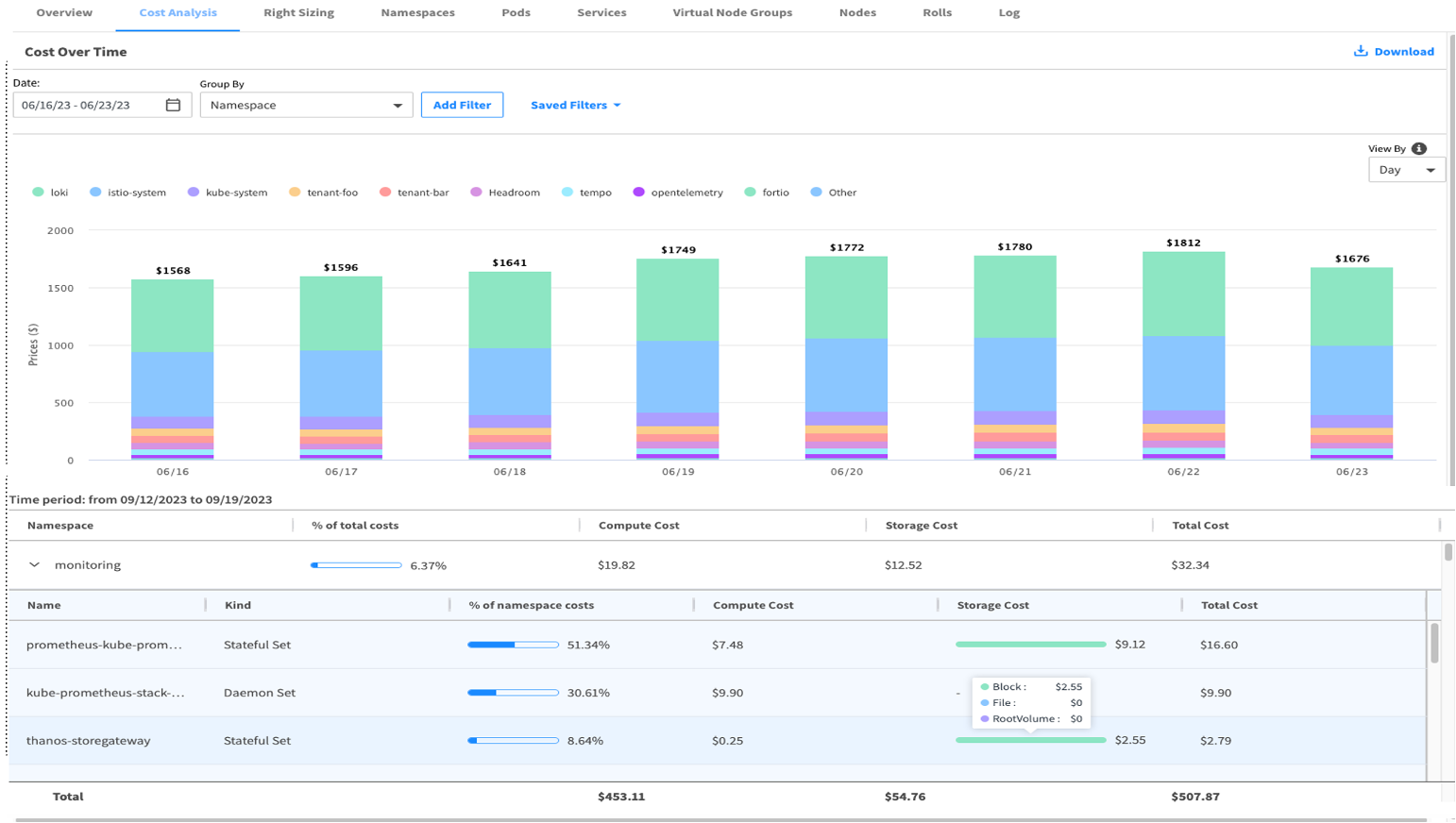
    FinOps, or financial operations, is a cultural practice that brings financial accountability to the variable spend model of the cloud. It’s a strategic approach combining systems, best practices and culture to increase an organization’s ability to understand cloud costs and make informed decisions.

    In essence, FinOps is a framework for managing cloud operating expenses (OpEx). It’s about bringing together technology, business and finance professionals to ensure that companies can get the most out of their cloud investments. The goal is to provide businesses with a better understanding of their cloud usage and costs, enabling them to make strategic decisions about resource allocation and cost management.

    FinOps bridges the gap between finance and operations. It’s not just about monitoring costs; it’s about understanding why those costs occur, how they relate to business value and what can be done to optimize them. It’s a comprehensive, cross-functional and continuous approach to managing cloud expenses, ensuring that businesses can maximize their return on investment (ROI) in the cloud.

    What Does FinOps Mean for DevOps Teams?

    Traditionally, DevOps has been focused on improving the speed, efficiency and quality of software delivery. But with the advent of cloud computing, cost has become a crucial factor. The dynamic nature of the cloud, with its pay-as-you-go model, means that costs can quickly spiral out of control if not properly managed. This is where FinOps comes in.

    Budget Responsibility

    As a DevOps team member, you’re likely used to thinking in terms of speed, performance, and quality. With FinOps, you need to add cost to that equation. You’re not just responsible for delivering high-quality software quickly; you’re also accountable for the cost of that delivery. This requires a shift in mindset, moving from a project-based budgeting approach to a product-based one.

    In a project-based approach, you have a fixed budget for a specific project. Once the project is finished, so is the budget. In a product-based approach, on the other hand, you’re responsible for the ongoing costs of a product throughout its life cycle. This means you need to consider not just the cost of development, but also the cost of maintenance, support, and continuous improvement.

    Resource Optimization

    In the context of FinOps, resource optimization is all about making sure you’re getting the most bang for your buck. You want to ensure that you’re using your cloud resources as efficiently as possible, minimizing waste and maximizing value.

    Resource optimization can involve a variety of strategies, from rightsizing instances to eliminating idle resources. But it’s not just about cutting costs; it’s also about aligning costs with value. You need to understand the value that each resource brings to your organization and allocate costs accordingly. This requires a deep understanding of your cloud usage and a commitment to continuous monitoring and improvement.

    Collaboration With Finance

    One of the key aspects of FinOps is the collaboration between DevOps and finance. You’re no longer working in silos; you’re part of a cross-functional team working towards a common goal. This requires open communication, mutual understanding, and shared responsibility.

    As a DevOps team member, you need to understand the financial implications of your decisions. You need to be able to articulate the value of your work in financial terms, demonstrating how your efforts contribute to the organization’s bottom line. At the same time, you need to be open to feedback and guidance from your finance colleagues, learning from their expertise and incorporating their insights into your decision-making process.

    Performance Metrics

    Performance metrics are crucial in the world of FinOps. They provide the data you need to understand your cloud usage, monitor your costs and make informed decisions. But these aren’t just any metrics; they’re metrics that align with your business goals and reflect the value of your cloud investments.

    These metrics might include cost per workload, cost per user or cost per unit of output. The key is to choose metrics that make sense for your organization, providing meaningful insights that can guide your resource allocation and cost management efforts. And remember, these metrics need to be regularly reviewed and updated to reflect changes in your cloud usage and business needs.

    Automation of Cost Controls

    Automation is a key tool in the FinOps toolkit. It can help you streamline your cost management processes, reduce manual effort and increase accuracy. From automated alerts to automated remediation, there are many ways automation can improve your FinOps efforts.

    With automated alerts, you can be notified when your cloud costs exceed a certain threshold. This allows you to respond quickly, addressing issues before they become major problems. With automated remediation, you can take this a step further, automatically adjusting your cloud resources in response to changes in demand or performance.

    Future FinOps Trends

    The year 2024 promises to be an important one for FinOps, with several trends poised to redefine the landscape:

    1. AI Algorithms for Cost Analysis and Prediction

    The use of AI algorithms for real-time cost analysis and predictions is predicted to be a major trend in 2024. AI enables the automation of complex financial calculations and projections, allowing for more accurate and timely decision-making. AI is already not just analyzing and predicting costs but also providing actionable insights to optimize these costs.

    The power of AI in FinOps lies in its ability to process massive amounts of data quickly and accurately. It can analyze past and current financial data, identify patterns, and predict future trends. This means that instead of reacting to financial changes after they happen, you can be proactive and make strategic decisions based on accurate predictions.

    The use of AI in FinOps will also enhance risk management. By predicting potential financial risks, AI can help organizations take preventive measures and mitigate the impact of these risks. The integration of AI in FinOps is a trend you cannot afford to ignore if you aim for financial operations excellence.

    2. Empowering Teams to Manage Their Own Cloud Costs

    Traditionally, financial operations and cost management have been centralized functions. However, the advent of cloud computing and the shift toward decentralized work models have resulted in a new trend—empowering individual teams to manage their own cloud costs. In 2024, we can expect this trend to gain further momentum.

    In a cloud environment, costs are often directly linked to usage. This means that the teams using the cloud resources are in the best position to control these costs. By empowering these teams to manage their own cloud costs, organizations can promote accountability, encourage resource optimization, and ultimately achieve cost efficiency.

    This approach requires a shift in mindset and the development of new skills. Teams need to understand the financial implications of their actions and make cost-effective decisions. They also need tools and processes to monitor their cloud usage and manage their costs effectively.

    3. Managing Costs Across Multi-Cloud and Hybrid Cloud Deployments

    The use of multiple cloud providers and the coexistence of cloud and on-premises data centers have added a new layer of complexity to financial operations. Managing costs across these diverse environments is a major challenge, and it’s another trend that is expected to shape FinOps in 2024.

    With multiple cloud providers, each with its own pricing model and billing system, cost management can be a daunting task. Add to this the costs of maintaining on-premises data centers, and the complexity multiplies. In 2024, organizations will need to adopt strategies and tools that enable them to manage these costs effectively.

    One of these strategies is the use of cost management platforms that provide a unified view of costs across multiple environments. These platforms can track and analyze costs, allocate them to the appropriate departments or projects, and provide insights for cost optimization. They can also automate cost reporting and forecasting, easing the workload of financial teams.

    4. Emphasizing the Security Aspects of FinOps

    As financial operations become more complex, the risk of abnormal spending patterns or unauthorized activities increases. Identifying and addressing these issues promptly is critical to prevent financial losses and maintain financial integrity. In 2024, the identification of abnormal spending patterns or unauthorized activities will be a key focus area in FinOps.

    Tools and technologies that enable real-time monitoring and anomaly detection will play a crucial role in this regard. These tools can analyze financial data, detect deviations from normal patterns, and alert you to potential issues. They can also help you trace these anomalies back to their source, facilitating investigation and resolution.

    Moreover, organizations will need to strengthen their internal controls and governance mechanisms. They will need to define clear responsibilities and accountabilities, establish robust approval processes and enforce strict access controls. Regular audits and reviews will also be essential to ensure compliance and detect any irregularities.

    5. Measuring and Optimizing for Environmental Impact

    The environmental impact of financial operations is a concern that cannot be overlooked. As organizations strive to be more sustainable, measuring and optimizing for environmental impact is becoming a key aspect of FinOps. This trend is expected to gain prominence in 2024.

    The environmental impact of financial operations is largely tied to energy consumption. In a cloud environment, for instance, the energy consumed by data centers contributes to carbon emissions. Therefore, optimizing cloud usage not only reduces costs but also reduces environmental impact.

    To measure and optimize for environmental impact, organizations will need to track their energy consumption, calculate their carbon footprint, and implement strategies to reduce it. These strategies can include using energy-efficient technologies, optimizing resource usage and sourcing renewable energy.

    Conclusion

    In conclusion, FinOps is a dynamic and evolving field. The trends and predictions outlined above provide a roadmap for achieving financial operations excellence in 2024. By harnessing the power of AI, empowering teams to manage their own cloud costs, managing costs across diverse environments, emphasizing security in FinOps and optimizing for environmental impact, you can take your FinOps program to the next level.

  • BMC Mainframe Survey Results Show a Platform on the Rise

    BMC Mainframe Survey Results Show a Platform on the Rise

    What if I told you that the oldest active computing platform is also one of the most innovative, seen as a platform for growth and new workloads, not just by seasoned professionals, but by a new generation of stewards, too? The 2023 BMC Mainframe Survey shows just that. In addition to an overwhelmingly positive perception and growth mindset regarding the mainframe, the survey reveals that the majority of those who are most enthusiastic about its future are relative newcomers to the platform.

    Now in its 18th edition, the annual BMC Mainframe Survey gauges the opinions of more than 800 executive and technical professionals on a range of topics, from overall perception of the platform to top priorities, common practices and greatest challenges.

    This year’s results show that 94% of respondents have a positive perception of the mainframe, with 62% citing it as a platform to grow and attract new workloads. This tracks the 62% who report adopting DevOps practices on the platform. It’s no surprise, then, that two of the top five priorities cited by respondents are efforts to enhance automation and modernize applications. Organizations around the world recognize that the mainframe can be a leader in innovation, powering their digital transformations.

    Modern Management Approaches

    This innovation goes beyond the software and services developed for the mainframe to include those used to manage the platform. It’s reported that 35% of respondents listed the implementation of cloud technologies as one of their top four priorities for the coming year, with 41% saying they are considering cloud-based storage and backup. With the growing volume of mainframe data and the emergence of new regulations and standards governing data security and recovery, organizations are turning to cloud-based data management to reduce costs and improve recovery options.

    Year over year, the number of survey respondents reporting the use of AIOps hasn’t changed considerably, but those reporting its cross-platform use on both mainframe and non-mainframe systems has jumped 7% from 2021.

    Organizations are recognizing the need to take advantage of the greatest business values of AIOps — cited in the survey as improved uptime and the ability to detect problems quickly, understand trends and respond proactively — as part of a holistic approach to enterprise IT operations management.

    With increased cross-platform use, significant benefits and a decrease in the number of respondents reporting implementation challenges like cost, complexity and the need for specialized skillsets, BMC sees AIOps as an area ripe for significant growth in the coming year.

    Investment Pays Dividends

    Improving the availability, quality and efficiency of the mainframe, of course, requires investment. In our report on the results of the 2023 BMC Mainframe Survey, we compare the responses of maximizers (those planning to increase investment in the platform) with those of minimizers (those planning to decrease investment levels). The results are eye-opening.

    Maximizers have invested in future-proofing their workforce in a variety of ways, and the data bears that out; 81% have ten or fewer years of experience on the platform. The new generation of stewards sees the mainframe not as a legacy platform, but one of continued growth and innovation, worthy of the investment required not just to keep it modern, but to place it at the forefront of digital transformation.

    Another key difference between maximizers and minimizers relates to security, which was cited as the top overall priority of survey respondents for the fourth consecutive year. Maximizers are more likely than minimizers to have a dedicated resource to investigate security events and to have dedicated ransomware recovery capabilities in place. It should come as no surprise, then, that maximizers were 20% more likely than minimizers to report that their mainframe security controls for ransomware are extremely effective.

    These results show that the differences between maximizers and minimizers go beyond outlook, producing tangible effects on outcomes. The maximizers increasing their investment in the mainframe report fewer challenges with staffing and skills shortages and a stronger stance against increasingly sophisticated cyberthreats. The minimizers decreasing their investment in the platform not only have greater difficulty in maintaining a skilled workforce, which increases the risk of falling behind competitively, but it also puts their organizations at serious risk of potentially catastrophic security breaches.

    A Bright Future

    In short, the results of the 2023 BMC Mainframe Survey reflect a positive outlook for the platform’s future. By investing in their workforces and the tools required to advance and protect the platform while adopting modern techniques and practices, organizations can reduce risk and promote innovation that delights their customers.

  • Policy-Based Governance: Modernizing Authorization for the Enterprise

    Policy-Based Governance: Modernizing Authorization for the Enterprise

    As we’ve moved away from on-prem environments to cloud-based ones and policy managed via code, we’ve inadvertently changed the way the infrastructure is managed. The infrastructure that used to be managed by IT/security teams has now shifted to being managed by the engineering operations teams. With that shift, engineering teams have found themselves now in control of new environments, including the access management part. This new change of control and management of access in the privileged environment requires a new approach to the solutions we use for privileged access governance.

    Shift to Cloud-Based Environments

    Cloud adoption has grown rapidly in the past few years, and while many organizations were already moving to the cloud from on-prem, the COVID-19 pandemic accelerated the transition, causing remote working to become the norm and changing the way responsibilities are managed.

    These organizations found they needed to adopt new ways of working to be able to support and provide critical services to off-site workers. As a result, more than 90% of organizations have adopted some form of cloud-based infrastructure, changing the way they work.

    The cloud is prevailing for tech stacks that need to elevate access governance over the cloud infrastructure. In fact, a whopping 94% of enterprises report they are using cloud services today, and 75% say security is a top concern.

    Cloud Shift, Worldwide, 2019 – 2025

    “The shift to the cloud has only accelerated over the past two years due to COVID-19, as organizations responded to a new business and social dynamic,” said Michael Warrilow, research vice president at Gartner.

    Shift to a Fast-Paced, Customer-Value Mindset

    Since switching to a new agile working environment, customers have gotten used to expecting very fast service. Instead of having a change management process that deploys to production once every few weeks, it’s now common to deploy hundreds of times to production every day.

    Access: required more often, more dynamically.

    Dynamic Changes: With the shift to the agile pace in which the new company works, access has been complicated a hundredfold. (Being able to support customers, fix bugs and being able to move very quickly. Needs to support these hundreds of changes to the customer’s product in their hand.

    Scale of Access has Increased: With the shift to cloud-based infrastructure, it’s now possible to create 5000 databases, for example, with a click of a button. All of them require access management because each one requires an understanding of who needs access and in what way.

    New Solutions are Needed

    The cloud providers, AWS, Azure and GCP, are now the way that people work. And most resources, whether databases or the machines that are running are doing so in the cloud environment. However, companies that shifted to the cloud are dissatisfied with what their legacy PAM solutions can provide them for the cloud resources. These solutions are ill-suited for their new needs. Instead, they need a solution that is agile and scalable to match their new working environment.

    With a perceived lack of options, companies are choosing to have the engineering team put in time to create new solutions. These solutions are meant to provide the following benefits: A frictionless way to gain permissions, an easy way to integrate with the tools their team uses today, and instead of manual provisioning and manual access requests, these solutions should automate those tasks.

    They are creating these in a variety of ways, including the following examples:

    1. Dev Portals: Dev portals are internal developer portals that act as a storehouse of information for the developers in a company. They work by centralizing the data in an internal portal, which offers developers and managers the ability to construct a system that facilitates monitoring of the software ecosystem, receiving alerts about alterations, and visually representing interconnected details. This portal additionally simplifies the task of overseeing diverse facets of the software development lifecycle, encompassing aspects like microservices interconnections, ownership statuses, dependencies, resource allocation, and beyond. By utilizing these, companies are delivering and gaining permissions to cloud environments.

    2. Slack Bots: Many times, a developer will need elevated access to resources or databases, so they need an easy way to request and be granted the permissions they need when they need them.

    3. Terraform Automation: Terraform is an infrastructure-as-code tool that lets you build, change, and version cloud and on-prem resources safely and efficiently. Terraform policies and infrastructure code/policies could also be leveraged to define access control policies. The way it works is that engineers or support teams are required to request a change in the Terraform code in order to gain the access they need. If there is a Terraform code in place describing the policy of groups to role access to the relevant infrastructure they would like to gain access to, they can request that access by requesting a Terraform code change. They would need to understand which parts of the code to change and submit a “pull request” to make the desired change which will resolve in the permissions change. Once a Terraform code change is approved, it changes the policy of access to that infrastructure which will change the permissions that the group has.

    (a) Static: The Terraform state is static, meaning that permissions granted in this way are essentially meant to be long-lasting, standing permissions. In addition, these permissions are usually granted to a role and are very coarse-grained(not granularly defined, as they need to suit the whole role’s needs). This creates an environment of over-privileges. That is why, in many cases where the permissions should be granted to a specific task or person or for a limited time, teams choose to use one-off permission granting to manually grant the permissions. However, these one-off permissions create drifts in the environment essentially if they are not revoked. And since there is no process in place for these one-off just-in-time (JIT) permissions, the revocation needs to also be manual and needs to be remembered to be done.

    (b) “Drifts”: (A drift in Terraform is when the environment isn’t accurately reflected in the Terraform policy). Therefore, by changing the access outside of Terraform, you’re creating a drift because it doesn’t match up correctly, making it a poor answer to one-off permissions. For anything needing high privileges, you want it to be dynamic instead of remaining as part of Terraform.

    4. Jira Service Management With Your Cloud Provider: Integrating Jira with GCP (as a cloud provider example), allows the IT security team the ability to automate servicing access tickets by creating forms where teams can request a certain role or be granted access to a certain project.

    5. Manual JIT Cloud Role: This is a method that allows self-serve permissions to engineers to get the permissions they need on demand. The role needs to be predefined, and essentially, as long as the engineer is part of the group, he or she will be able to gain those privileges on-demand. This reduces the standing privileges in the environment at any given point; however, roles granted are usually for a generic cloud admin rather than being granular, as it’s hard to determine ahead of time exactly what permissions will be needed.

    Problems With DIY Solutions

    Because of the lack of the right tool, companies are spending expensive resources creating their own solutions for access control. Team members know they need something that leverages cloud capabilities rather than their PAM for on-premises. These solutions are time-consuming; companies need to build then maintain the infrastructure. They are also very limited in what they can do since they are not the company’s main concern.

    Policy-Based Governance

    With the growing adoption of cloud-based tools, it’s more important than ever that companies learn to adapt. Engineers have now found themselves in control of permissions in new environments they were not looking to manage. It’s clear that a new approach to access governance is necessary.

    The quickest and most sure-fire way to do this is by utilizing tools deliberately made for the new cloud-based era that address the challenge in a way that is suited to the new, fast-paced, dynamic cloud environment. These new solutions are policy-based and leverage the fact that with the shift to new ways of managing infrastructure, it’s necessary to give the IT and Operations teams more control, granularity and automation.

    Platforms such as Apono for cloud-based permissions management allow organizations to benefit from centralized permissions management, enforce dynamic role-based access controls, monitor and audit privileged user activities and mitigate security risks effectively.

    Final Thoughts

    In addition to the shift we have witnessed in the control of the environment and access governance, organizations are also shifting to delegating more ownership to the engineers themselves. This means providing engineering teams more control of their code — all the way to production. However, with that comes the need to give them only granular control over the environment and provide access management to their specific scope without creating a burden on the teams in managing/granting the access. This leads the operations teams to search for solutions to address the need for access management delegation in the environment. New solutions and platforms addressing the new environment’s privileged permissions management challenge need to take that into consideration as well.

    As a final note, I believe the shift in mindset occurred a few years ago already. However, we are only now realizing some of its effects. One of them is the shift in privileged access challenges and all that comes with that. Seeing the many internal solutions that small-to-large companies have created for themselves gives us an understanding of how this evolved market isn’t being addressed with the same platforms that have existed for well over a decade.

  • Avoiding Mistakes in Multi-Cloud Configurations

    Avoiding Mistakes in Multi-Cloud Configurations

    The digital sky is bursting with clouds of every kind, and organizations are reaching out to grasp several at once. They seize the opportunities offered by diverse cloud providers, breaking free from the confines of a single vendor. Their approach is a powerful strategic move. Its promise—slashed costs, bolstered resilience and unmatched data back-ups; its bottleneck—configuration issues. And the tightrope between reaping multi-cloud benefits and stumbling into cybersecurity risks is thin.

    “The foremost area where IT leaders have to adapt is cybersecurity,” said Aleksandr Morozov, a cloud security researcher and CTO at Oasis Defender. “As digital interactions multiply, so does our vulnerability to cybersecurity threats. We have to defend against attacks, safeguard data privacy and adhere to international regulations. The adequacy of cybersecurity measures we take directly impacts business integrity and consumer trust.”

    Given these stakes, multi-cloud configuration seems to be an even more tricky aspect to stay on top of. Any slip-ups can spiral into escalating costs, performance hitches and glaring security vulnerabilities. Knowing how to configure multiple clouds mistake-free is essential to keep the promise of multi-cloud alive.

    Multi-Cloud Adoption is Escalating

    On the brink of adopting multiple clouds, a question arises: Why pay more when you can pay less and get more? Organizations steer towards the most cost-effective cloud services, making sure each application finds its optimal cloud match to optimize performance and costs.

    The global march toward digital transformation results in a whopping 92% of organizations already using a multi-cloud approach or in the process of adopting one. Statistics suggest an average usage of 2.6 public clouds and 2.7 private clouds among organizations.

    The multi-cloud setup beckons organizations to distribute their workload across a spectrum of cloud services, each boasting unique benefits. This distribution not only fuels innovation but also provides organizations with robust data recovery mechanisms to use in the event of breaches.

    Multi-cloud also flings open the gates to escape vendor lock-in. No longer shackled to the offerings of a single cloud provider, organizations go for cherry-picking cloud features, explore diverse pricing options and choose geographical locations for sensitive data storage.

    In many regions worldwide, stringent local data regulations dictate the storage of sensitive data within that region’s borders and within specified cloud environments. By leveraging multiple clouds, global organizations can stay compliant with relevant regulations and data governance policies.

    With digital transformation beckoning, organizations are just beginning to harness the benefits of multi-cloud. However, with multiple clouds come multiple risks. Configuring and orchestrating several clouds typically pose challenges, and businesses across industries require robust multi-cloud tools and strategies in place.

    These Industries Need Multiple Clouds More Than Others

    The shift towards a multi-cloud paradigm among businesses isn’t merely a trend chase. It’s a strategic move to elevate operational processes.

    Although the use of a multi-cloud approach is bound with configuration and data breach risks, employing multiple cloud services from different providers brings game-changing benefits. This approach allows businesses to enhance flexibility and improve service monitoring and cost-efficiency—all while helping them better adapt to market changes and technological advances.

    On top of that, a multi-cloud strategy lays a solid groundwork for implementing advanced analytics and AI solutions. Businesses handling vast data, requiring high computational power, or having strict regulatory compliance needs stand to benefit most from this approach.

    “IT leaders must prioritize the infrastructure for remote work. It’s essential that this infrastructure supports seamless collaboration, regardless of geographical boundaries,” Morozov says.

    The global insurance sector is clearly betting big on multi-cloud, with statistics indicating an average use of 11.4 clouds in 2023. Insurance businesses handling massive amounts of sensitive customer data employ multiple clouds as the key to operational efficiency and compliance with data regulations.

    Banking and finance organizations stick to strict industry regulations and use multi-cloud environments to save costs, improve data security, and recover data easily. They seek to use the best features offered by multiple cloud providers to meet data storage rules and avoid reliance on a single provider.

    Besides, financial service organizations often experience rising costs and growing operational issues. That urged them to shift to a multi-cloud approach — their great strategic move. With this transition, they can see a 40% drop in spending by having a clear view of cloud activities across various regions.

    Similarly, health care businesses embrace multi-cloud to distribute workloads across different cloud services and keep their critical and sensitive data secure. They need a reliable backup in case of system failures to improve and maintain high standards of patient care and operations.

    The telecommunication sector is no less in need of a multi-cloud approach. In this field, escaping vendor lock-in and optimizing costs by combining a variety of vendors serve as the propelling forces.

    Retailers typically use around eight clouds from multiple vendors. Their multi-cloud strategies are cost-efficient, help improve scalability, and enhance customer experience by tailoring different cloud services to specific workloads and geographical locations.

    Configuration Mistakes: Why They Occur While Managing Multiple Clouds

    Managing many clouds means juggling a set of rules and systems from various cloud providers. Different settings in each cloud platform can lead to errors, especially when getting clouds to work together. Even a minor mistake can cause issues affecting performance, security, and costs.

    Besides, handling multiple clouds requires special talent. To err is human; common errors involve setting up access controls incorrectly, mismanaging user permissions or incorrectly configuring workloads. Small oversights lead to huge security and operational problems, and without the right training or experience, the chances of making errors increase.

    Configuration mistakes often come from the complex nature of multi-cloud setups. Moving into many clouds means dealing with different infrastructures, APIs, databases, networks, and security systems daily.

    The complexity of multi-cloud makes getting a full view of the whole setup tricky. This lack of clarity can hide configuration mistakes, letting them linger undetected or delaying fixing processes.

    Last but not least, different policies across cloud environments also complicate things. Each cloud setup might have its specific policies and configurations. Without reliable tools, clear rules and ongoing learning, configuration mistakes are imminent.

    How to Avoid Multi-Cloud Configuration Mistakes With AI

    Navigating through multiple clouds can feel like sailing in stormy seas, and organizations need robust tools and reliable solutions to mitigate performance issues and stay safe.

    AI-driven software allows for unified visualization and configuration of multi-cloud security. Let’s see how it aids in the journey.

    Unified Dashboard

    Multi-cloud management solutions bring together data from different cloud providers onto a single dashboard. This makes it easier to see and manage security across an organization’s cloud setup, making the process less complicated.

    Smooth Integration

    A unified interface helps different cloud systems work together smoothly. That means fewer errors and better cooperation between cloud environments.

    Better Visibility

    Having data put together, organizations get a better view of security setup across different clouds. They can see and fix issues faster while keeping multiple clouds secure.

    AI and Machine Learning

    Solutions hinge on using intelligent technology to spot potential threats quickly. Fast actions help reduce the negative impact of any security issues and keep multi-cloud setups shielded from breaches.

    Compliance Monitoring

    The cloud setup has to align with industry rules and standards, which becomes more complicated while using multiple clouds. Using a unified system, organizations can stay compliant and avoid legal issues.

    AI-driven solutions offer an intelligent way to untangle the complex knots of multi-cloud configurations while assuring a safer and more efficient multi-cloud experience.

    Final Thoughts

    The multi-cloud trend is on the rise, offering both opportunities and challenges for organizations. It allows businesses to pick cloud features from multiple providers, easily comply with regional data rules and avoid being tied to just one vendor.

    Different sectors like finance, health care and retail are adjusting their cloud strategies to adopt multi-cloud. Yet, configuring multiple clouds is a tough nut to crack. Diverse policies, different settings across cloud platforms and possible human error complicate multi-cloud configuration.

    However, AI-driven tools can offer a unified dashboard for a better view and management of security across cloud platforms, simplifying multi-cloud setups. Using AI and machine learning for managing clouds leads to quicker threat detection and resolution and helps organizations keep their strategies within legal limits.

    In the multi-cloud discourse, careful configuration supported by AI is a key to receiving multi-cloud benefits while managing the risks efficiently.