Category: Cloud Management

  • Hybrid Cloud in 2024: Trends and Predictions

    Hybrid Cloud in 2024: Trends and Predictions

    Hybrid cloud environments are becoming increasingly pivotal for DevOps teams, primarily due to their ability to bridge the gap between the rapid deployment of public cloud resources and the security and control of private cloud infrastructure. This blending of environments provides DevOps teams with flexibility and scalability, which is crucial for operating continuous integration and continuous deployment (CI/CD) in large enterprises.

    In a hybrid cloud setup, DevOps teams can swiftly deploy and test new applications in a cost-effective and scalable public cloud environment. Once the applications are ready for production, they can be seamlessly transitioned to a private cloud or on-premises environment, where they benefit from enhanced security and control. This allows DevOps teams to optimize their workflows, reduce time to market, and respond more effectively to business needs.

    The hybrid cloud also enables a more collaborative and agile working environment. DevOps teams can leverage various tools and platforms available in the public cloud while ensuring that sensitive data and critical applications are securely managed in the private cloud. This both enhances operational efficiency and improves compliance with data governance and regulatory requirements. These benefits will make hybrid cloud an indispensable asset for DevOps teams in 2024 and beyond.

    What is a Hybrid Cloud?

    Let’s start with a brief definition. A hybrid cloud is a computing environment that combines a public cloud and a private cloud by allowing data and applications to be shared between them. This combination allows businesses to enjoy the best of both worlds, leveraging the scalability and cost efficiencies of public cloud platforms while enjoying the security and control offered by private cloud infrastructure.

    This hybrid cloud model provides businesses with more deployment options and greater flexibility to scale computing resources. It also helps in reducing capital expenditure and improving security by allowing sensitive data to be stored on a private cloud. A hybrid cloud strategy enables businesses to allocate resources efficiently, keeping less critical applications on the public cloud, while mission-critical applications run on the private cloud.

    Current State of Hybrid Cloud Computing

    The hybrid cloud market is in a state of rapid growth and evolution. As businesses increasingly recognize the benefits of a hybrid approach, the adoption of hybrid cloud strategies is on the rise.

    In a world where digital transformation is the norm, hybrid cloud computing has emerged as a key enabler. It offers the flexibility needed to adapt quickly to changing business conditions, the scalability to handle sudden increases in workload, and the security to protect sensitive data. These benefits have made hybrid cloud a cornerstone of digital transformation strategies.

    However, the journey to hybrid cloud is not without its challenges. Businesses are grappling with issues related to data security, compliance, integration, and management. There are also complexities related to workload portability, interoperability, and the need for skilled resources. Despite these challenges, the adoption of hybrid cloud continues to grow as businesses seek to leverage its benefits to drive innovation and competitive advantage.

    Emerging Trends in Hybrid Cloud for 2024

    Increased Adoption Across Industries

    Many industries, including the banking and finance sector, healthcare, retail, manufacturing, and even the government sector, are seeing increased adoption of hybrid cloud strategies. This trend is driven by the need for greater agility and flexibility, better cost management, and improved security and compliance.

    In the healthcare sector, for example, hybrid cloud is enabling the integration of disparate systems, facilitating the sharing of patient data, and supporting telehealth initiatives. In the banking sector, it is helping to manage risk, improve customer experiences, and drive innovation. In retail, hybrid cloud is supporting omnichannel strategies, personalizing customer experiences, and improving supply chain efficiency.

    Advancements in Cloud Technology

    The hybrid cloud landscape in 2024 will be shaped by advancements in cloud technologies. Technologies like containers and Kubernetes are simplifying the deployment and management of applications, making it easier for businesses to adopt a hybrid cloud strategy. The rise of serverless computing is also contributing to the growth of hybrid cloud by eliminating the need to manage servers and allowing developers to focus on writing code.

    Furthermore, advancements in networking technologies are making it easier to connect and integrate public and private clouds. The emergence of 5G is expected to further accelerate the adoption of hybrid cloud by providing the high-speed connectivity needed to support real-time applications.

    Integration of AI and Machine Learning

    The integration of artificial intelligence (AI) and machine learning (ML) into hybrid cloud environments is a trend that is rapidly gaining momentum. One key aspect of this integration is the ability to use AI for better resource management within the hybrid cloud. AI algorithms can analyze patterns in data usage and application performance, allowing for more efficient allocation of resources across public and private cloud environments.

    Furthermore, AI and ML are also facilitating better data management and analytics. Cloud-based services are making AI/ML more accessible to businesses of all sizes. By integrating these technologies, businesses can unlock insights from vast amounts of data stored across different cloud environments.

    Predictions for Hybrid Cloud in 2024

    Growth in Edge Computing Integration

    By 2024, the integration of edge computing with hybrid cloud architectures is expected to grow significantly. Edge computing brings data processing closer to the location where it is needed, optimizing response times and saving bandwidth. 

    In a hybrid cloud context, this means that organizations can process critical data at the edge, in real-time, while still leveraging the cloud for less time-sensitive tasks. This integration is particularly beneficial for industries like manufacturing and autonomous vehicles, where real-time data processing is crucial. The combination of edge and hybrid cloud computing enables businesses to harness the power of cloud computing while maintaining the speed and efficiency of edge processing.

    Improved Security and Compliance Measures

    In 2024, we anticipate significant advancements in the security and compliance aspects of hybrid cloud environments. As these environments become more complex, the need for robust security measures that span both public and private clouds is crucial. Enhanced encryption techniques, more sophisticated identity and access management systems, and advanced threat detection tools will become standard. 

    Additionally, we expect to see the development of more streamlined compliance benchmarks and frameworks designed specifically for hybrid cloud architectures, simplifying the process of adhering to various regulatory standards and ensuring data privacy and protection across multiple platforms.

    Innovations in Cloud Management Platforms

    The year 2024 is likely to witness substantial innovations in cloud management platforms, driven by the need to manage complex hybrid cloud environments more efficiently. These platforms will offer enhanced capabilities in terms of automation, orchestration, and unified management across multiple cloud services. 

    The use of AI and machine learning for predictive analysis, resource optimization, and proactive problem resolution will become more prevalent. These platforms will also provide better tools for cost management and analytics, giving businesses a more granular understanding of their cloud usage and enabling more cost-effective decision-making.

    Customizable and Flexible Cloud Solutions

    As hybrid cloud environments continue to evolve, 2024 will likely see a rise in more customizable and flexible cloud solutions tailored to specific business needs. Providers will offer a range of options that allow businesses to mix and match services from both public and private clouds, creating highly personalized cloud environments. 

    This customization will extend to aspects like security, performance, and compliance, allowing businesses to fine-tune their cloud infrastructure to their specific requirements. Such flexibility will be particularly beneficial for businesses in niche markets or those with unique operational needs, enabling them to leverage the power of cloud computing without compromising on their specific requirements.

    Conclusion

    By 2024, hybrid cloud computing will have significantly evolved, becoming a critical component in the digital transformation strategies of various industries. This technology offers a blend of public and private cloud benefits, crucial for DevOps teams in terms of flexibility, scalability, and security. The integration of advanced technologies like AI, machine learning, and edge computing will enhance resource management, data analytics, and real-time data processing. Additionally, the hybrid cloud’s role in ensuring agility, better cost management, and compliance is expected to drive its wider adoption across sectors like healthcare, banking, retail, and government.

    The landscape will also see advancements in security and compliance, with sophisticated measures spanning both cloud types and cloud management platforms will evolve to include AI and machine learning for more efficient operations. Customizable and flexible cloud solutions will become prevalent, allowing businesses to tailor their cloud environments according to specific needs. Overall, hybrid cloud in 2024 will be a strategic enabler, equipping businesses with the necessary tools and capabilities to thrive in an increasingly digital world.

  • Massdriver Adds Cloud Cost Controls to Internal Developer Platform

    Massdriver Adds Cloud Cost Controls to Internal Developer Platform

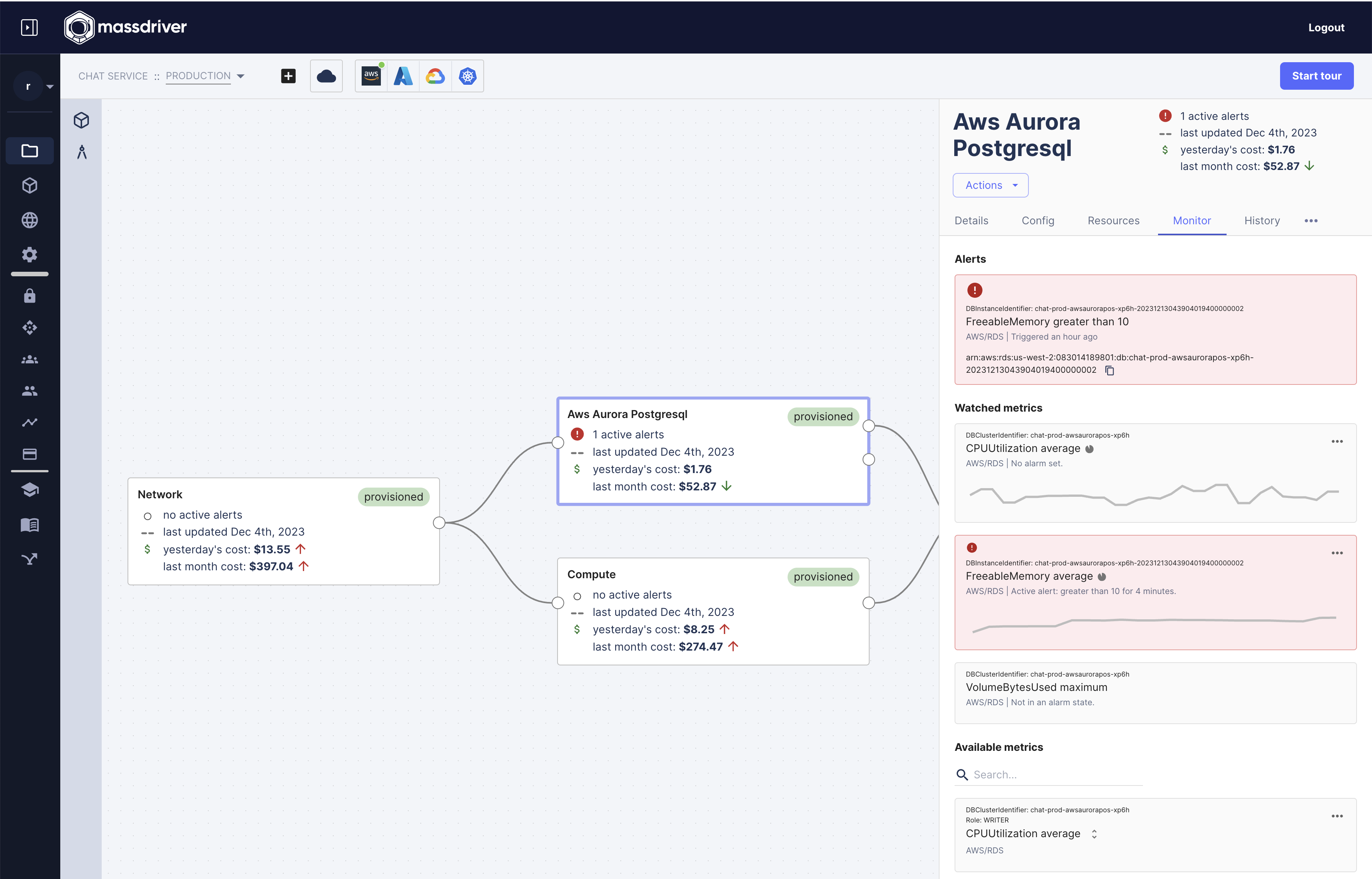
    Massdriver has made available tools for tracking cloud costs and generating a cloud infrastructure bill of materials (Cloud IBOM) to internal developer platforms (IDPs) as part of an ongoing effort to streamline platform engineering workflows.

    The Cloud IBOM makes it possible, with a few clicks, to map hybrid cloud resources such as databases, machine learning pipelines and serverless computing frameworks.

    Massdriver CEO Cory O’Daniel said collectively, these tools reduce expenses by preventing misconfigurations that result in unexpected costs. Rather than solely providing a summary of costs incurred, the tools provided by Massdriver surface how much cloud services are going to cost at the time the developer is invoking them, he noted.

    In the absence of that context, developers will nearly always overprovision cloud resources to ensure maximum availability regardless of cost, says O’Daniel. The overall goal is to help organizations reduce the total cost of IT by providing developers with insights into costs in real-time, he added.

    Earlier this year, the company launched an IDP that comes with platform engineering tools that, for example, make it possible for DevOps teams to build a catalog of infrastructure components that developers can access within the context of guardrails they define. The platform also includes observability and visualization tools that make it simpler to track metrics and monitor the usage of cloud resources.

    Massdriver is making a case for an IDP that provides built-in tools and workflows that enable organizations to embrace platform engineering as a methodology for managing DevOps workflows at scale. The goal is to reduce the level of expertise required to build and deploy applications in cloud computing environments, said O’Daniel. One of the primary reasons there are not more applications running in the cloud today is that these environments are still too complex to successfully manage, he added. An IDP abstracts away that complexity within a set of workflows that have been vetted by a DevOps team, he added.

    There are, of course, multiple approaches to building an IDP, but rival approaches require too much effort to set up and maintain, said O’Daniel. A proprietary platform provides a more turnkey approach that doesn’t require DevOps teams to either build their own or customize an open source platform, he added.

    It’s not clear at what pace organizations are embracing platform engineering, but there is a clear need to strike a balance between delivering IT services managed by a centralized team and the desire a developer might have to embrace new tooling whenever they see fit. Today, too much responsibility for provisioning IT environments has been pushed left toward developers who now have less time than ever to write code.

    There is, naturally, no guarantee that reducing the cognitive load for developers will increase productivity. Building applications requires streaks of inspiration, but, in theory, an IDP should provide more time for inspiration to strike. DevOps teams, as part of that effort, should be continuously working toward eliminating any bottlenecks that have emerged in their DevOps workflows.

  • Key Cost Optimization Strategies for Multi-Cloud Environments

    Key Cost Optimization Strategies for Multi-Cloud Environments

    In today’s ever-changing technology landscape, businesses are realizing the advantages of multi-cloud environments. These environments allow organizations to tap into various cloud platforms and use their services as required. This change signifies a shift away from relying on just one cloud provider. Businesses now embrace the flexibility and adaptability that come with using multiple clouds simultaneously.

    In complex multi-cloud environments, it is crucial to manage costs effectively. It is important to strategically optimize costs while considering your organization’s specific needs. By utilizing tools, implementing processes and continuously monitoring costs, you can save money while still reaping the benefits offered by different cloud providers.

    What is Multi-Cloud?

    A multi-cloud environment describes a setup in which companies or individuals utilize cloud computing platforms or providers to fulfill their computing requirements. In a multi-cloud setup, organizations have the ability to integrate both public clouds (such as Amazon Web Services, Microsoft Azure or Google Cloud Platform) and private clouds (on-premises or hosted private clouds) to establish a diverse and adaptable computing infrastructure. Rather than relying on one cloud provider, multi-cloud strategies distribute workloads across several cloud environments. Rather than depending on a single cloud provider, a multi-cloud strategy involves distributing workloads across various cloud environments.

    Benefits and Challenges

    Multi-cloud environments offer organizations numerous benefits, including flexibility, reliability, scalability and cost optimization. When organizations distribute their workloads across various cloud platforms, they reduce the chances of downtime or service disruptions due to a single provider failure. This guarantees uninterrupted availability and minimizes any potential impact on business operations.

    It is quite challenging to manage a multi-cloud environment for several reasons. Organizations must tackle challenges related to governance, cost management, integration and compatibility. To overcome these obstacles effectively, it is important to implement a well-defined strategy with efficient management tools.

    Since each cloud provider comes with its own set of tools, APIs and policies, ensuring consistent governance across different cloud platforms is challenging. Since different cloud providers have differing pricing structures, it is quite difficult to monitor and optimize costs in a multi-cloud environment.

    Analyzing and understanding each provider’s cost model is necessary when tracking usage patterns across different platforms. Integrating services from different cloud providers into a cohesive system architecture can be challenging due to compatibility issues. Careful planning and expertise are needed to achieve seamless integration without conflicts or performance problems.

    The Importance of Cost Optimization in Multi-Cloud Environments

    In today’s evolving technology landscape, businesses need to make the most of various cloud environments to fully utilize their cloud capabilities. However, great power entails great responsibility and cost optimization is a critical aspect that should not be overlooked.

    As businesses expand their cloud presence across multiple providers, optimizing costs becomes necessary to maximize ROI and stay competitive in today’s fast-paced market. In a multi-cloud environment, organizations typically use several cloud platforms simultaneously, including Amazon Web Services (AWS), Microsoft Azure, and Google Cloud Platform (GCP), to reduce expenses and maximize efficiency by comparing the services, features, and pricing models offered by each of the providers.

    Multi-cloud environments offer opportunities for cost optimization by allowing organizations to choose the cost solutions tailored to their specific needs. With access to pricing models and options offered by providers businesses can optimize their expenditure based on workload requirements.

    Optimizing Costs in Multi-Cloud Environments

    To optimize costs in multi-cloud setups, one must carefully analyze and manage expense factors across providers and services. It involves understanding cost structures, pricing models and usage patterns while considering workload requirements to choose cost-effective options for different tasks. Achieving these financial benefits requires efficient resource allocation and minimizing unnecessary expenses.

    This section discusses the key strategies for optimizing costs in a multi-cloud environment.

    Automating Resource Management

    You can optimize costs in a multi-cloud environment by automating the management of resources. Efficiently optimizing costs in cloud environments relies heavily on automating resource management. This enables organizations to monitor usage levels and resources dynamically as required, effectively implement cost-saving policies and ensure optimal utilization of cloud services without the need for human intervention.

    ​Organizations can automate their processes and tasks to streamline their operations, thereby saving time and reducing the risk of overspending on unnecessary resources. To effectively handle resources, it is crucial to have monitoring tools that offer real-time observations on usage patterns and performance metrics. These tools enable businesses to identify underutilized resources, which can then be automatically shut down or adjusted in size as required.

    Automation also involves implementing automatic resource allocation capabilities based on demand fluctuations. By scaling up or down depending on workload requirements, organizations can optimize costs by ensuring they only pay for the resources they truly need at any given time.  By implementing these automated policies, organizations are able to enforce cost optimization practices. For example, by establishing guidelines for assigning metadata tags to resources, organizations gain visibility and control over expenditure across various cloud platforms.

    Additionally, scheduling non-production environments to automatically shut down during off-business hours can significantly reduce costs. By turning off development and testing environments when they’re not in use, companies can avoid paying for resources during periods of low activity.

    Analyzing Costs in Multi-Cloud Environments

    While analyzing costs in a multi-cloud environment is challenging, it is a crucial strategy for your organization to make the most of its resources and avoid unnecessary expenses. It’s important to understand usage patterns and expenditures to optimize costs effectively. Start by gaining visibility into spending across all clouds. Use cost management tools provided by the cloud platforms or consider third-party solutions that consolidate data. This helps track costs at a detailed level and identify areas of high expenses. Analyze usage patterns to find instances that can be resized or turned off when not needed. By adjusting resources based on demand, overprovisioning can be avoided and unnecessary costs reduced.

    Here are the key steps to analyze costs in a multi-cloud environment:

    • Identify and categorize workloads
    • Track usage patterns and cost
    • Analyze the usage patterns of your workloads
    • Automate cost optimization
    • Incorporate cost analysis into your decision-making process
    • Review cost optimization strategy regularly

    Use Spot Instances

    In multi-cloud environments, using spot instances is crucial for cost optimization. These instances are available from cloud providers at a much lower price than on-demand or reserved instances, leading to substantial cost savings for organizations. With spot instances, you can take advantage of unused or idle capacity on cloud providers’ infrastructure, resulting in substantial cost savings. Being strategic with spot instances provides economical access to compute resources. Cloud providers offer discounted spare resources in the absence of regular customer demand, making it favorable compared to on-demand or reserved instances. Use on-demand or reserved instances for critical tasks while employing spot instances for less critical workloads. To optimize costs, you should leverage on-demand, spot and reserved instances, i.e., a mix of all of them.

    Right-Sizing and Efficient Resource Allocation

    Rightsizing is a key strategy for cost optimization that reduces costs and enhances performance in multi-cloud environments, leading to substantial savings. One of the most important steps in this regard is capturing comprehensive data on resource utilization (CPU, memory, storage and network utilization). By identifying over-provisioned or underutilized instances, organizations can optimize resource allocation. Automated tools simplify this process by monitoring and recommending adjustments. Consolidating workloads into fewer instances and leveraging virtualization technologies or containerization platforms further improves performance and scalability.  Right-sizing and resource allocation are two key techniques that can help optimize costs in a multi-cloud setup.

    Here are the key strategies at a glance:

    • Analyzing workload requirements
    • Selecting the appropriate instance types
    • Regularly review and adjust resource allocations based on actual usage patterns
    • Implementing auto-scaling and load-balancing mechanisms
    • Utilizing resource tagging and monitoring tools for cost visibility
    • Right-sizing resources on demand
    • Automated scaling strategies

    Conclusion

    By implementing key strategies such as using reserved instances or savings plans, automating resource management, implementing rightsizing techniques, leveraging spot instances, optimizing data transfer and storage, applying automation and orchestration principles, practicing financial governance and budget management and keeping an eye on future optimizations, businesses can effectively control their cloud spending and ensure they are making the most of their multi-cloud investments while minimizing costs.

    However, it’s important to acknowledge that cost optimization in cloud environments comes with its own set of challenges. Managing costs can be quite challenging for cloud environments despite their flexibility and scalability. From dealing with pricing models to facing a lack of visibility across clouds, there are obstacles that need to be overcome.

    With careful planning and implementation combined with ongoing monitoring and review processes, organizations can mitigate the challenges and truly harness the power of multi-cloud. Your organization should adhere to the key strategies outlined in this article to take advantage of the benefits of multi-cloud while ensuring optimal costs in their cloud spending.

  • Five Great DevOps Job Opportunities

    Five Great DevOps Job Opportunities

    devopsy.kinsta.cloud is now providing a weekly DevOps jobs report through which opportunities for DevOps professionals will be highlighted to better serve our audience.

    Our goal in these challenging economic times is to make it easier for DevOps professionals to advance their careers.

    Of course, the pool of available DevOps talent is still relatively constrained, so when one DevOps professional takes on a new role it tends to create an opportunity for others.

    The five job postings shared this week are selected based on the company looking to hire, the vertical industry segment and, naturally, the pay scale being offered.

    We’re also committed to providing additional insights into the state of the DevOps job market. In the meantime, for your consideration:

    SimplyHired.com

    Selby Jennings
    Chicago, Illinois
    AWS DevOps Architect
    $191,000 to $242,000

    Indeed.com

    Verizon
    Alpharetta, Georgia
    DevOps Architect
    $159,000 to $201,000

    LinkedIn

    JetBlue
    New York, New York
    Senior Principal DevOps Engineer
    $134,600 to $210,100

    Dice

    Northrop Grumman
    Dulles, Virginia
    Senior Principal DevOps Engineer
    $120,900 to $181,300

    CareerBuilder.com

    Octo
    Washington, D.C.
    Platform DevOps Cloud Engineer
    $110,000 to $170,000

  • How Encryption Innovation Will Power Cloud Privacy for Developers in 2024

    How Encryption Innovation Will Power Cloud Privacy for Developers in 2024

    For developers, the surge in cloud computing adoption has brought both new opportunities and challenges. On the one hand, developers are turning to cloud services for data storage, processing and accessibility due to their flexibility, convenience and cost-effectiveness. And because the cloud takes care of these infrastructure and operational concerns, it’s allowing developers to focus on coding, innovation and delivering value to end-users. It also allows companies to scale more easily when their market grows or when new hardware becomes available.

    However, this paradigm shift has led to the accumulation of vast volumes of sensitive data on remote cloud servers—including personal, health, financial and proprietary business information. As the volume of sensitive data on the cloud continues to grow, it has naturally raised mounting security concerns, from data breaches and cyberattacks, to unauthorised access and the complexities in complying with specific industry regulations, such as GDPR or CCPA.

    For some, having to rely on the cloud provider to maintain robust security practices and data protection has also led to hesitancy in sharing data, both within and between organizations. This not only limits the potential for data-driven collaboration, research, and innovation—essentially halting progress in fields like health care, science, and social sciences—but businesses of all types and sizes could miss opportunities for cost savings, scalability, and efficiency if they’re not willing to adopt innovative technologies. There are also cases when companies are forbidden to do something by law because of privacy, again causing roadblocks.

    All of this has meant that up until now, maintaining data privacy while making the most of cloud computing has been somewhat of a balancing act for developers and companies. Companies want to fulfill their clients’ needs, while developers have to find technical solutions that provide the level of privacy required.

    Traditional Encryption methods Vs. Fully Homomorphic Encryption (FHE)

    Currently, there are several technologies and practices employed to protect data in the cloud, one of the most commonly used being traditional data encryption, which provides protection only during data transmission and storage.

    However, when data is processed, it must be decrypted—at which point it can expose data to eavesdropping, rendering it susceptible to potential threats. The aim of FHE is to ensure that the computations can be carried out on cloud-based machines while the data itself remains encrypted. With FHE, the data is really encrypted end-to-end: not only is it encrypted during transport and storage, but also it is encrypted during computations. It is only when the data or results are sent back to the client side that they are decrypted.

    This means that in the event of a data leak, the exposed information would be rendered meaningless without the decryption key, which stays securely in the hands of the owner. In other words, neither the cloud provider nor any potential spyware on the cloud machine would have the capability to decrypt the encrypted data.

    This approach, which ensures sensitive data remains encrypted throughout its entire life cycle on the cloud, even during processing and analysis, significantly enhances data security and privacy.

    Current Limitations and FHE’s Future Developments

    While developers using traditional cloud services previously had to decide whether to use the cloud with some privacy concerns or forgo its benefits altogether, with FHE we are starting to see a possible shift in attention from users’ reliance on the cloud provider to a more user-controlled approach.

    As FHE becomes more widespread, users gain the ability to make their computations over any cloud provider, even those they may not fully trust. This means the upfront costs of building new cloud platforms can be lowered by providing only FHE computation.

    While the encryption of data ensures that computations are secure and no unauthorized access or breaches can occur, this new tech is not without its limitations. For the enhanced security FHE offers, there may come a trade-off of longer execution times. Presently, we are mainly reliant on CPUs for computations. However it’s worth noting that as the technology advances and hardware accelerators become available, the execution time is expected to improve in the future. In fact, we anticipate that by 2026, FHE implementations will see a considerable increase in speed, potentially by factors of 100x or 1,000x, expanding the applicability of FHE to a wider range of use cases.

    Other benefits currently being worked on include usability. FHE had a reputation of being very complex and so used to be reserved for those with cryptography PhDs. By developing open source tools and extending the community’s knowledge around FHE, the aim is to democratize FHE so that anyone can use it, companies can experiment free of charge and check if it fulfills their needs.

    Looking to the future, privacy will likely remain high on the agenda for almost everyone. Thankfully, with new encryption technologies rapidly developing in terms of speed and usability, developers look set to achieve this, ensuring their cloud-based applications and services are as secure as possible.

  • Couchbase Adds Columnar Database to DBaaS Environment

    Couchbase Adds Columnar Database to DBaaS Environment

    At the AWS re:Invent 2023 conference today, Couchbase, Inc. announced it added a columnar database based on the JSON file format to its database-as-a-service (DBaaS) portfolio to enable organizations to build real-time analytics applications.

    Scott Anderson, senior vice president for product management and business operations at Couchbase, said the Capella columnar database is designed to be integrated with the company’s JSON-based document database via a database change protocol (DCP) that Couchbase has embedded within its DBaaS environment.

    Deployed on cloud services from Amazon Web Services (AWS), the overall goal is to reduce the level of friction that IT teams would otherwise encounter when integrating a document database with a columnar database optimized to process analytics using columns rather than the rows typically associated with a relational database.

    That approach gives IT teams the ability to use a schemaless database architecture that provides an alternative to employing disparate databases that would need to be deployed and then integrated using extract, transform and load (ETL) processes to move data from one database to the other, noted Anderson.

    Capella columnar also uses the same SQL++ language as the company’s document database to streamline queries in addition to supporting Capella iQ, a copilot based on generative artificial intelligence (AI) that enables queries to be crafted in natural language.

    In addition, Capella columnar provides connectors to move data from Amazon DynamoDB, Amazon DocumentDB, Amazon Relational Database Service (Amazon RDS) and other data sources deployed on the AWS cloud.

    In the longer term, Couchbase is also planning to add vector capabilities to its DBaaS environment to make it simpler to securely extend generative AI models, said Anderson.

    In general, document databases have been widely adopted because they provide developers with an alternative to legacy database platforms that they can download and deploy themselves. The Capella DBaaS platform further simplifies that process via a managed service through which Couchbase assumes operational responsibility for managing databases. The columnar database extends that capability using a columnar database that can drive analytics capabilities to deliver a more personalized application experience, noted Anderson.

    It’s not clear to what degree organizations will ultimately wind up relying on as-a-service platforms, but since the start of the COVID-19 pandemic, the shift to this approach to consuming IT resources has increased significantly. As a result, the way internal IT teams are organized is shifting as lower-level tasks are either automated or handled by an external IT team that works for a vendor.

    Regardless of how databases are managed, however, there remains a need to integrate the data operations (DataOps) processes used to manage them with the DevOps workflows used to build modern applications. Each organization will need to determine how much economic sense it makes for them to manage that data versus relying on an external services provider. The challenge when relying on an external service provider is, as always, integrating that service into an existing IT environment.

  • How DevOps Teams Can Unlock Cloud Savings and Improve DevEx

    How DevOps Teams Can Unlock Cloud Savings and Improve DevEx

    Can DevOps engineers unlock cloud cost savings for their organization that are incremental to what cost optimization tools offer (and improve the developer experience in the process)? Absolutely. Allow me to illustrate how.

    Reserve instance buying optimization and auto-stopping are proven tactics to reduce waste, but are those the only forms of waste that exist in your cloud budget? Of course not.

    Think about all the times environments have been brought up and then stayed up longer than required. Consider all of the times a commit changed the way data is stored, which spiked the cost to operate. Or how about the times when a commit changed how memory was used, which resulted in unexpected autoscaling?

    Collaborative Cost Management

    So the question becomes, what is the most efficient way to identify and root out additional savings while also balancing governance and agility? Bottom-up, collaborative cost management may offer a solution.

    A bottom-up approach to cost management involves pushing knowledge and functionality to the edge of the application and data engineering teams that own and operate code every day. This does not mean ceding centralized cost control to developers but rather arming them with timely, actionable insights inside their everyday workflow and, where appropriate, enabling action on a self-serve basis.

    How does this work in practice? It starts by enabling engineering teams to see the costs of the various services and environments they own on a timely basis. This helps teams understand when spikes occur and provides a path they can follow to understand why the spike occurred.

    That path can involve bringing different pieces of information together for engineering teams. They’ll want to see the costs of the individual resources that power their service or environment during the selected timeframe to see what spiked and maybe even drill down further to see the cost drivers of that individual resource. They’ll likely want to see deployments and commits, at a minimum, and maybe even explore observability data as well during this timeframe.

    Once they’ve identified a root cause, to the extent it involves needing to change a configuration setting of a resource, teams may want to understand a resource’s dependents, like other resources that are linked to it as well as any other environments and services that depend on it to size up the blast radius of a potential change. From there, they may wish to view config settings for the resource.

    Collaborative Discussion

    Finally, you want to give teams the ability to take certain actions on their own and, in other cases, foster a collaborative discussion between engineering and DevOps. You can accomplish the former via self-service actions, which are simple no-code workflows in which a developer can see if the DevOps team has allowed an action to be seen by a specific team for a resource via a role-based access control (RBAC) model. These workflows connect to your existing infrastructure-as-code (IaC) or CI/CD tools to orchestrate the desired change, leveraging golden paths defined by DevOps. This approach alleviates developers’ cognitive load and TicketOps for the DevOps team. For various changes that require coordination with DevOps, your engineering teams can have a collaborative discussion on a timely basis thanks to the fresh, actionable information you’ve made available to them.

    So what does it take to actually implement this vision? It’s easier than you might realize.

    Chances are, your existing cost optimization tool cannot provide cost visibility at the level of granularity and freshness developers need – daily cost insights at the service (or data pipeline, ETL job, etc.) level. That’s okay, though. Collaborative cost management is an incremental tactic that can still leverage some of the insights in these tools.

    The easiest way to facilitate this competency across your enterprise is via an internal developer portal. Internal developer portals are living sociotechnical knowledge maps that connect various data from your tools, clouds and teams to your services and the teams that own them. They are the perfect conduit to slice cloud cost data at the service level and put it in front of application and data engineers in their everyday workflow.

    Backstage, an open source framework to build a developer portal, offers a cloud cost plugin, though it involves a time commitment to set up, and the information it makes available to your developers may be limiting in the context of this scenario. For instance, your team may be unable to see per-resource costs, individual resource cost drivers, blast radius information and config settings. You must also expend effort wiring actions to support resource changes.

    You could also try building a BI dashboard for your team to accomplish this. This would require ingesting daily cost feeds from your cloud and then allocating the cost of each resource to each environment and to each service leveraging proprietary resource<->environment<->service mappings you would build and maintain as your system evolves. You would also need to build scripts and leverage IaC and CI/CD tooling and teach your engineers how to discover, configure and execute these actions.

    However you choose to get to this destination, collaborative cost management is a powerful emerging competency that can lead to meaningful savings and improve the developer experience by empowering your teams with the knowledge and functionality they need to manage costs on a proactive and, where appropriate, self-service basis.